
Loading article…

The Daivadnya, (also known as Sonar or Panchal or Vishwa Brahmin), is a community from Goa and Karnataka, who claim to have descended from Vishwakarma. Although they claim themselves to be Brahmin, but these claims are not accepted by Brahmins.[1][2][3][4] They are native to the Konkan and are mainly found in the states of Goa and Damaon, Canara (coastal Karnataka), coastal Maharashtra, and Kerala. Daivadnyas in the state of Karnataka are classified by National Commission for Backward Classes as an Other Backward Class.[5]
Daivadnya Sonars in Maharashtra claim to be Brahmins and call themselves as Daivadnya Brahmins[6] however this is not accepted by Brahmin communities of Maharashtra.[7] The Poona government of the Peshwa era did not accept the claim either but the Bombay Sonars continued with the claim.[4][8] However, Oliver Godsmark, a researcher on late colonial and early postcolonial South Asia, considers them a subcaste of the Brahmins that were originally from the coastal regions of Maharashtra, Karnataka and Goa.[9] They are popularly known in Goa as Shets. This word is derived from the word Shrestha or Shresthin[10][11]
Their name has many alternative spellings, including Daivajna, Daivajnya, Daiwadnya, and Daivadnea.[12]
Daivadnyas are commonly known as Shet. This appellation comes from their guild organisations, during the medieval ages. European documents mentions them as "Chatim" or "Xette", which is corruption of Konkani Shett, or Shetty.[13] The guild or members of the guilds of traders, merchants, and their employees who were mainly artisans, craftsmen, and husband-men in ancient Goa like elsewhere in ancient India, were called Shreni, and the head of the guilds were called Shrestha or Shresthi, which meant His Excellency.[14][15] Of all the trade guilds, the Daivadnya guild, was highly esteemed in Goa. These guilds enjoyed such a reputation for trustworthiness that people deposited money with these guilds, which served as local banks and also made huge donations to the temples.[16] Gomantak Prakruti ani Sanskruti, a comprehensive work on Goan culture also suggests that they called themselves Sreshtha to distinguish themselves from other groups who were assigned status of Sankra jati or mixed origin in the Shastras.[17][18]
Old Portuguese documents mention them as Arie Brahmavranda Daivadnea class (Orgon Somudai).[19]
Though their history is obscure, Daivadnyas claim to have descended from Davidnya or Vishvadnya the younger son of Vishwakarma, the Hindu architect god.[2][20] Shets or Daivadnyas also claim Brahmin varna status, however, this is not accepted by local Brahmins and other communities of the region.[21][22] There is also a claim that Daivdnyas are descent from the Vedic Rathakara as mentioned in Taittiriya Brahmana of Yajurveda, and Smritis, however Daivadnya community deny this.[23] Hindu doctrines Hiraṇyakeśisutra, Bṛhajjātiviveka, Jātiviveka, Saṅkha smṛti, and Añjabila mention different types of Rathakaras. Most of them can be called Saṅkara Jāti or mixed caste, and their social status varies from those with high social status, who are ritually pure and have the right to perform "strata-smarta" rituals and to those considered fallen or degraded.[24][25][26] Daivadnyas (during the conflicts that arose in the 19th century) refuted this claim, which called them Rathakaras of impure descent, on the basis of Shastra
Author Vithal Raghavendra Mitragotri says, The Bhojas are well-known sculptures and have migrated to various regions of India. Therefore, the Sthapatis who themselves claim to be Brahmins may have been descendants of Bhojas. The gold-smiths claim themselves to be Daivadnya Brahmins.[27][28] According to Viṭhṭhala Mitragotrī, the migration to Goa dates back to the early 4th to 6th century CE, with the Bhoja dynasty.[27] Bā. Da. Sātoskār in his encyclopedic work on Goan culture, suggests that they are a part of the tribe and reached Goa around 700 BC. From 1352 to 1366 AD Goa was ruled by Khiljī.In 1472, the Bahāmanī Muslims attacked, demolished many temples, and forced the Hindus to convert to Islam. To avoid this religious persecution, several Śeṭ families fled to the neighbourhood kingdom of Sondā.[29][30] Several families from western India had settled down in Kashi since the late 13th century.[31]
1510年、ポルトガル人がゴアに侵攻した。ポルトガル国王ジョアン3世は1559年にキリスト教の非信者を追放または処刑すると脅迫する布告を出した。ダイヴァドニャ族は改宗を拒否し、退去せざるを得なかった。数千のダイヴァドニャ族の家族がマハラシュトラ州の内陸部とカルナータカ州の沿岸部に逃れた。[ 32 ]ゴアのササシュティ地域(ライア、クンコリム、ロウトリム、ヴェルナなど)の約12,000家族(主にヴァイシャ・ヴァニ、クドゥンビなどを含むシェーナヴィー族とシェット族)が船でホンナヴァラからコジコードまでの南部の港に出発した。[ 32 ] [ 33 ]ポルトガルによるゴア征服後、ゴア出身のシェット族のかなりの数がマハラシュトラ州のラトナギリとターネー地区、特にタンサ川流域に定住した。[ 34 ]
ポルトガル人はゴアのヒンドゥー教徒全員に厳しい制限を課したが、シェット族には特定の義務や責任からの免除が認められた。ゴアのキリスト教徒のシェット族は稀だが、他のカーストは改宗者社会に何らかの代表者を見出している。[ 35 ]これは、16世紀にシェット族が振るった経済力によって、ゴアで自分たちの条件で生活し働くか、宗教をそのままにして移住することが可能になったためである。[ 35 ]彼らの商業知識と技能はポルトガル人から高く評価されていた。[ 35 ]ポルトガル人が彼らに与えた保護のおかげで、彼らは宗教の自由を少し享受できた。[ 15 ]例えば、彼らは額に水平のヴィブティのカーストマークを付けることが許され、犯罪を犯しても罰を免除された。[ 15 ]改宗したごく少数の人々は、ゴアのカトリック教徒の間でバモンというカーストに割り当てられた。ゴア州の地名辞典によると、彼らはカトリックのセツと呼ばれているが[ 36 ] 、ゴアのカトリック教徒の間にはそのような区別はない。Comunidades [h]の詳細な研究によると、ヒンドゥー教徒であろうとカトリック教徒であろうと、コミュニティは常に社会的地位を享受し、目立たないようにし、一定の規律を守り、ポルトガル人に年間3クセラフィム(金モホール)の税金を支払う限り、ゴアのキリスト教化された地域に留まることが許されていた。[ 37 ]
17世紀後半から18世紀初頭にかけてゴアでマラーター族の攻撃を受けたため、カトリックに改宗したダイヴァドニャ族の家族がマンガロールに移住した。 [ 38 ] [ 39 ]
ゴアの貿易は主にガウド・サラスワット・バラモン、ヴァニ、セトの3つのコミュニティ階級の手によって行われていた。[ 40 ]
1348年にカンデパールまたはカテグラムでダイヴァドニャとヴァイシャの間で起きた紛争は、カンデパール銅板に記されている。この問題はカンデパールのガナナータ寺院で解決されたが、その前身は不明である。[ 41 ] [ 42 ] 17世紀には、ゴアのシェンヴィ・バラモンとシェットの間で別の紛争があり、その社会的地位をめぐる争いは、宗教儀式、行事、祭りの際にスーリヤパンやパラソルなどの伝統的なシンボルを使用することに関する議論で明らかになった。憎しみは19世紀まで非常に激しく、警察への恐怖だけが平和を保っていた。その後、ポルトガル人はヒンドゥー教のシンボルと結婚式の行列の使用を禁止した。[ 43 ] [ 44 ] [ 45 ]
文書には、1822年から1825年にかけて、ダイヴァドニャ族とプネーのバラモン、またはプナ・ジョシ族の間で起こったグラマニャ[j]について言及されている。この紛争は、プナ・ジョシ族が、ダイヴァドニャ族が自分たちの司祭を雇い、宗教行事にヴィヤヴァハレ・ジョシ族を雇わないことに反対したことから始まった。 [ 46 ]これらのダイヴァドニャ族の家族は、バジ・ラオ1世の治世中にラトナギリからプネーに移住しており、バジ・ラオ1世は常にヴィヤヴァハレ・バラモン、またはプナ・ジョシ族に対して自分たちの主張を擁護していた。[ 47 ]反対派のバラモンは、ダイヴァドニャ族がヴェーダの儀式であるヴェーダ・カルマを執り行い、ヴェーダを研究し教え、ドーティを着用し、ナマスカールで手を合わせることに反対していた。彼らはペシュワー、そして後にイギリスに対し、ヴェーダ儀式を遵守しないことに対して重い罰金などの法的制裁を課すよう促したが、後者は常にヴェーダの儀式を遵守していた。[ 48 ]ジョシ族はバラモンの主張を否定し、シャイヴァーガマに記載されているウパブラフマナの地位さえも自分たちにはふさわしくないと主張したとされる。[ 49 ]そのため、彼らは後者にはヴェーダ儀式を行う権利はなく、プラノクタの儀式のみに従うべきだと主張した。 [ 46 ]また、彼らはダイヴァドニャのためにヴェーダの儀式を行ったバラモンにも反対し、[ 48 ]ダイヴァドニャは血統が不純であり、混血カーストまたはサンカラ・ジャーティであると非難した。[ 50 ] [ 51 ]イギリス人はまた、ヴェーダを不適切な目的に適用しないこと、バラモンカーストの純粋さを維持すること[ 52 ]、そしてダイヴァドニャに何の制限も課さないことなど、ダイヴァドニャに対する命令も発した。[ 50 ]この論争は1834年のボンベイでほぼダイヴァドニャ側の立場を取り、[ 53 ]伝統に従って自分たちのジャーティの司祭だけを任命し、他のカーストの司祭は任命しないように命じられた。[ 52 ]これらの論争の最中に、ダイヴァドニャの学者たちは、プネーのバラモンによる中傷されたイメージを払拭するために、スカンダプラーナのサヒヤドリカンダの諸版のような広範な文献を生み出した。[ 54 ]
In 1849, the king of Kolhapur, Shahu Maharaj, provided land grants to the Daivadnyas who had migrated to princely states of Kolhapur and Satara and helped them build their hostels for the students pursuing education.[55]
Many families like the Murkuṭes, the Paṭaṇkars, the Seṭs of Karvara and Bhaṭkala kept their tradition alive and excelled in trade, playing a major role in socio-cultural development of the major metropolis of India such as Bombay.[45]
The Daivadnya priests who officiated at the Gokarṇa Mahabaleswara temple were prosecuted in 1927 by the Havyakas of Gokarṇa, who thought they would take over the puja authority at the temple. The case reached the Bombay High Court, which ruled in favour of the Seṭs.[56]
Some Goan Daivadnya families migrated to Pune and overseas. The Akhīla Bharatiya Daivajña Samajonnati Pariṣat has existed since 1908 for their betterment.[45]
Similarly, about 3500 Sheṭts migrated to Bangalore city after 1905 from South Canara.[57] Many families have migrated to Mumbai and have founded organisations such as the Kanara Daivajna Association,[58] and Daivajna Shikṣṇa Maṇḍala.[59] The Shimoga, Chikkamagaluru, Koḍagu, Davangere, and Hubli-Dharwad districts of Karnataka now have a considerable Daivadnya population.[32]
Shetṭs have also migrated abroad. They are found in the Arab countries[60] and have been migrating overseas in pursuit of higher education and employment for number of years, notably to the US and UK.[58] A small number have Portuguese[60] or Kenyan citizenship,[61] and a few live in Karachi, Lahore[62] Pakistan, but most of them have settled as refugees in Ulhasnagar after partition.[58]
彼らの初期の宗教的信仰は、バラモン教、バガヴァタ教、太陽崇拝、シヴァ教の混合に基づいていた可能性があるが、特定の時期や地理的地域に特定することはできない。シヴァ教のさまざまな流派は、古代からゴアとコンカンに存在していた。同様に、シヴァ教はあらゆる階層のゴア人の間で非常に人気があり、広く実践されていた。彼らの宗教的および文化的信仰は、支配王朝が庇護したジャイナ教、仏教、後にナート派などの他の宗教によって絶えず影響を受けていた。1476年まではゴアには適切なヴァイシュナヴァ教はなかったが、後にマドヴァチャリヤの影響で、彼らの多くがマドヴァ哲学を受け入れた。[ 63 ]
ダイヴァドニャーはマドヴァチャリヤとアディ・シャンカラの信奉者です。アディ・シャンカラの信奉者は、彼が定めたパンチャヤタナ・プージャ(シヴァ、デーヴィー、ガネーシャ、ヴィシュヌ、スーリヤ の5つの形態のいずれかで神を崇拝するという概念)に従って神々を崇拝します。これはアディ・シャンカラ(8世紀)によって広められ、今日ダイヴァドニャーによって実践されています。ダイヴァドニャーは、デーヴィーまたはシヴァを主神としてパンチャヤタナの神々を崇拝します。考えられるパンチャヤタナのセットは、シャンタドゥルガー、シヴァ、ラクシュミナラヤン(ヴィシュヌとその配偶者ラクシュミー)、ガネーシャ、スーリヤです。パンチャヤタナには、ヴェータラ、ラヴァルナート、ブータナート、カーラ・バイラヴァ、クシェートラパーラなどの守護神や、グラムプルシャなどの神々も含まれる場合があります。 [ 64 ]
マドヴァチャリヤのヴァイシュナヴァ派に従うダイヴァドニャーは、ヴィシュヌとラクシュミーを主神として崇拝し、ラクシュミナラヤン、クリシュナ、ヴェンカテーシャ、ナラシンハ、ヴィトーバの形でヴィシュヌの多くの寺院を建立した。彼らはヴァディラージャ・ティルタによってマドヴァ派に改宗し、ウディピのアシュタ・マータの1つであるソーデ・マータの信奉者である。[ 65 ] [ 66 ]
彼らの守護神は主に母なる女神の形をとっているが、彼らはヴェーダ、プラーナ、民間の神々を等しく崇拝している。[ 10 ]
イシュタ・デーヴァタは、崇拝者のお気に入りの神を表す用語です。[ 67 ]ガネーシャはすべてのシェの中でイシュタ デヴァタです。ガネーシュ チャトゥルティまたはシッディヴィナーヤカ ヴラタは、ダイヴァドニャの主要な祭りです。
ゴア州カンサルパルのカリカは、 ゴマンタカ・ダイヴァジュニャによってイシュタ・デーヴァタとして崇拝されています。この寺院は800年以上前に建てられ、マプサから約14キロメートル離れた場所にあります。カダンバによって建てられ、マハラシュトラ州サワントワディの王サワント・ボーンサレに仕えていたダイヴァジュニャの大臣によって改修されました。ゴア州北部で最も重要な寺院の1つです。この寺院で祝われる主な祭りは、シシロツァヴァ、ナヴラートリー、ラタサプタミー、アーヴァリーボージャナ、ヴァサンタプジャーです。[ 19 ] [ 68 ] [ 69 ]
他のダイヴァドニャスのイシュタ・デーヴァタには、ラーマ、ダッタトレヤ[ 10 ]ハヌマーン、[ 10 ]パンダルプールのヴィトバ、ウドゥピのハヤグリーヴァ、マハラクシュミ、クリシュナ、ガヤトリ、ドゥルガー・パラメーシュヴァリー、ラクシュミー・ナラヤン、ダルマスタラのマンジュナータ、ゴカルナが含まれます。マハーバレシュヴァラ。ダイヴァドニャはゴアにいくつかの寺院を維持しており、カナラタカ州ノースカナラ地区に約 38 の寺院を維持しており[ 70 ] 、マハーラーシュトラ州カランタカの他の地域には多くの寺院があり、ケーララ州にはいくつかの寺院がある。
ダイヴァジニャはまた、サティヤ サイ ババ、パガオンのダダ マハラジ、ラーガベンドラ スワミ、ナラシンハ サラスワティ、スワミ サマルト マハラジ、シルディのサイ ババ、シュリードル スワミ、マタアムリタナンダマイ、マキプラ スヴァーミーなどのさまざまな聖人を讃えます。
Śeṭs were divided according to the place from where they hailed, the maṭha they followed and other criteria.
Until the early 19th century, Goan Śeṭs were divided into three sub-divisions based on their geographical location, but these divisions no longer exist:
These sub-divisions never intermarried nor did they accept food from their counterparts.[80]
マハラシュトラ州では顕著な区別は見られませんが、ゴアのシェート族、特にサーサシュティー、バルデス、ティースヴァーディー出身の人々がターネ[ 34 ] 、サーヴァントヴァーディー、ラトナギリ、カーレパタン、マールヴァン、クダールなどの場所に上陸したという記述があります[ 81 ]。コンカナ出身のダイヴァジュニャは後にマハラシュトラ州の他の地域に移住し[ 82 ]、そのため古い文書に記載されているようにコンカナまたはコンカネ・デーヴァジュニャとしても知られていました[ 48 ]。
以前は、ゴアのダイヴァジュニャはゴア以外の地域での結婚を避けていた。今日では、カルナータカ州やマハラシュトラ州のダイヴァジュニャと結婚の手配をしている。[ 83 ]
ゴアのシェット族のケララへの移住は13世紀初頭に始まり[ 84 ] 、そのほとんどがコチンの港に定住した。16世紀後半には、ポルトガル人による宗教的迫害のため、ゴアから移住したシェット族もいた。これらの人々は、ケララ沿岸のクィロン、トリチュール、コジコード、カサルゴッドなどの場所に定住した。
ケーララ州のシェット族はゴーパーラクリシュナを祀る寺院を所有しており、それはおそらくフォート・コチンで最も古い寺院である。[ 85 ]
ダイヴァドニャ族はコンカニ語とその方言を話します。[ 86 ]ゴマンタカ・ダイヴァドニャ族は、ゴア・コンカニ語として知られるコンカニ語の方言を話します。これは、Ethnologueではゴマンタキー方言として認識されており、さらにバルデシ・バース(北ゴア)、プラマーナ(標準コンカニ)、サーシュティシー・バース(南ゴア)などの下位方言に分かれています。[ 87 ] [ 88 ]彼らのコンカニ語の社会方言は他の方言とは異なり、サラスワット方言により近いものです。
Daivadnyas in Maharashtra, i.e. Mumbai, Ṭhane, Pune, Kolhapura, Satara, contemporarily speak Maraṭhi. In the Koṅkaṇa region of Maharashtra they speak dialects of Koṅkaṇi such as Malvani, Kudali and others. Daivadnyas in Kanara speak different dialects of Koṅkaṇi, such as Karvari in the Uttara Kannada district and Maṅgluri in the South Canara district.[88]
Almost all of them are bilingual, Goan seṭs can speak Maraṭhi fluently,[83] Canara Seṭs speak Kannaḍa and Tulu outside home,[89] likewise a very small fraction of Keralites can speak Malayalaṃ with an accent, most of them can speak English fluently.[83] Many of them have accepted Maraṭhi/Kannaḍa as their cultural language but noticeably, this has not led to an assimilation of these languages with Koṅkaṇi.[90] Similarly Daivadnyas settled in various parts of Gujarat use the local Gujarati language.[91]Portuguese language is known by many members of older generation of Goans who had done their formal education during the Portuguese rule.
Historians say that the period of migration of Daivajñas and the Kudāldeskārs, from the northern part of India is same, and they settled in Goa in the same period, for this reason members of both the communities speak the same dialect of Koṅkaṇī in Goa.[44][92]
Historically, many scripts have been used writing either Koṅkaṇī or Marāṭhī. An extinct script called as Goykanadi[i] was used by the traders in the early 16th century. The earliest document written in this script is a petition addressed by Ravala Śeṭī to the king of Portugal.[93] Other scripts used include Devanāgarī, Moḍī,[93]Halekannaḍa and Roman script.[93]
Daivajña traders had developed a unique slang called Kalī Bhās, which was used to keep the secrecy of the trade by the traders. Remnants of this jargon are still found in the language used by the Daivajña traders.[94][95][96]
The Daivadnyas are generally non-vegetarians and eat fish, mutton and chicken, but abstain from eating beef, pork and buffalomeat. Rice with fish curry is their main food.[97]
Konkani people in general though speak Indo-Aryan languages follow Dravidian kinship practices (see Karve, 1965: 25 endnote 3).[98] One's father's brother's children as well as mother's sister's children are considered as brothers and sisters, whereas mother's brother's children and father's sisters children are considered as cousins and potential mates. Cross-cousin marriages are allowed and practised. Like dravidian people, they refer to their father's sister as mother-in-law or atte, and their mother's brother as father-in-law – mama, and one's husband's mother is generally referred to as mother-maay.[99]
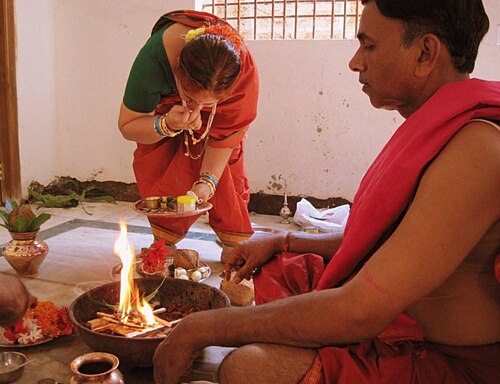
Daivadnya people are not so orthodox but they strictly adhere to all the Ṣoḍaśa Saṃskāra or the 16 sacraments, and other Brahminical rituals according to the Rig Veda.[64][100] The Saṃskāras begin to be observed right from the day of conception, but the prenatal sacraments like Garbhadhāna, Puṃsavana, are usually performed as a part of the wedding ceremony nowadays, unlike some 30 years ago these sacraments were held separately after the wedding ceremony at the right time.[101]
通常、第一子の出産は女性の母親の家で行われることになっています。[ 11 ]子供が生まれた後、10日間の出産穢れまたはスイェルは、10日間油灯を灯し続けることによって行われます。[ 64 ]出産後6日目には、女神シャシュティーが崇拝されます。11日目には、浄化のホーマが行われます。命名式であるナーマカラナまたはバールソは12日目に行われます。 [ 11 ]星の配置が良くない場合は、出産後1か月後に行われることもあります。カルナヴェーダまたはカーントパプの儀式は、男の子の場合は12日目に行われ、女の子の場合は出産後1か月後に行われます。ウシュターヴァナ、アンナプラサナ、つまり最初の授乳の儀式では、子供の母方の叔父が、牛乳と砂糖を混ぜた柔らかいご飯を赤ちゃんに食べさせます。同様の儀式であるダントリョも、赤ちゃんの1歳の誕生日に新しい歯が生えたときに母方の叔父によって行われます。最初の外出やニシュクラマナ、ジャーヴァルまたはチューダカルナ、つまり子供の髪を初めて切る儀式、ヴィディヤーランバ、つまり学習の開始などの儀式は、カーストの規則に従って行われます。[ 64 ]
男の子が成長し、12歳になる前に、ムンジまたはウパナヤナが盛大に行われます。[ 64 ]ケシャーンタまたは初剃髪、ヴェーダランバまたはサマーヴァルタナまたはソードムンジなど、これに関連する他のすべての儀式は、今日では糸の儀式の一部として行われます。女の子の場合(75〜100年前には思春期を迎える前に必ず結婚していました)、昔は女の子の初潮に関連した儀式が行われていました。 [ 102 ]
The most important sacrament for them is Vivāha, Lagna or the wedding. Various ceremonies held before the actual wedding ceremony are Sākarpuḍo or the betrothal, Devkāre or Devkārya that includes Puṇyāhvācana, Nāndi, Halad, Tel, Uḍid muhurtaSome of their customs are different from any others castes.[44] etc. The actual wedding ceremony is performed as per Ṛgveda.[64]Sīmāntapujā, Kanyādāna, Kaṅkaṇa-bandhana, Maṅgalasutra-bandhana, Saptapadi, Lājahoma, Aṣmārohaṇa, Vāyanadāna form the actual parts of the wedding ceremony. Ceremonies like Gṛhapraveśa, changing the maiden name of the bride, and the puja are followed by some games to be played by the newly wed couple, and the visit to the family deity temple.Pancpartavaṇ or a feast is organised five days after marriage.[44] They strictly observe Gotra exogamy.[103] The custom of dowry in its strict form does not exist any more, but SālaṅkṛtaKanyādāna with Varadakṣiṇā is followed as a custom. Intercaste marriages are not common in Daivajñas[104]
A widower is and was allowed to remarry but traditionally this was not the case for widows. In more recent times, post-independence of India, social reforms have allowed widows to remarry but the practice is still frowned upon by the society. The age for girls for marriage is from 18 to 25 and that for boys is from 25 to 30. Child marriage is absent though girls were married off before attaining puberty, this custom was prevalent till the 19th century.[87]
彼らの死者はヴェーダの儀式に従って火葬され、さまざまなシュラーッダ(श्राद्ध)やその他のクリヤー、タルパナは息子または他の父方の親族、あるいは場合によっては故人の婿によって行われる。[ 64 ]ヴェーダによれば、歯のない乳児の死体は火葬してはならず、[ 105 ]埋葬されることになっている。[ 64 ]遺体は通常、故人の息子と近親者によって火葬場に運ばれる。死の穢れまたはスータカは通常12日間続く。[ 64 ]彼らは通常、自分たちの火葬場を所有している。[ 64 ]女性は火葬場に入ることを許されていない。[ 106 ]故人が男性の場合、未亡人は剃髪され、未亡人には厳しい制限が課せられた。[ 107 ]過去には未亡人の再婚の習慣はなく[ 108 ]今もあまり一般的ではない[ 109 ]また離婚の習慣もなかった。[ 108 ]
彼らの司祭は通常、彼ら自身のカースト出身であり、特にカルハデの司祭が彼らの儀式を執り行い、彼らは彼らに深い敬意を示している。[ 110 ] [ 108 ]
ダイヴァジュニャ教徒はすべてのヒンドゥー教の祭りを祝うが、ガネーシャ・チャトゥルティ、ナグ・パンチャミ、ディワリが最も重要な年間祭りである。[ 83 ]彼らによって観察される他の祭りとヴラタは次のとおりです— Saṃvatsarāraṃbha、Saṃvatsar Pāḍvo または Yugādi、Vaṭa Paurṇima、Vadāpunav、Ṛk Śrāvaṇi、Sutapunav、Gokulashtami、Ādityaプジャン、アータラー プージャ、ハリターリカ トゥティヤ、タイまたはタイイー、ナヴラトリ、ラリータ パンチャミ、ダサロ、アーヴァターンシー プージャー、バウビー、トゥラシー ラグナ、アーシャディー、カールティキーなどのエカダシ、マリニー・パウルニマーまたはマンニープナフ、マカール サンクランティ、シグモ、ホーリー、マハシブラトリ、ヴェンカタパティ サマラダーナ[ 111 ]
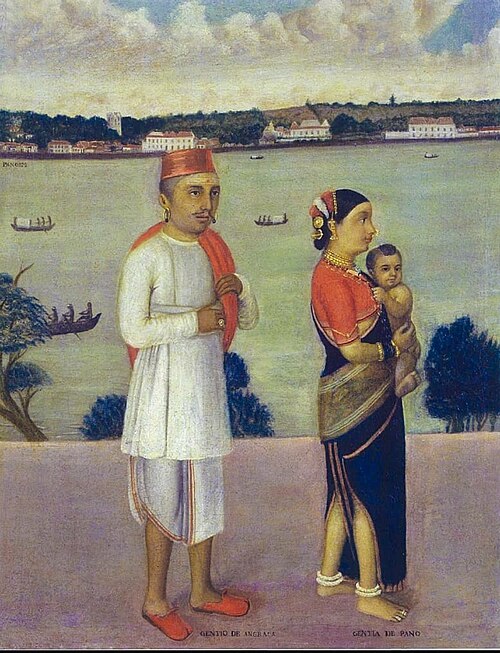
Daivajña men traditionally wear Dhotīs called Puḍve or Aṅgavastra, which cover them from waist to foot. These are made of cotton and sometimes silk on special occasions and wore Judi or Sadro to cover upper part of their bodies, and a piece of cloth called Uparṇe over the shoulders. They wore turbans and Pagdis, Muṇḍāso, a red velvet cap or Topī was used by the traders and merchants so that they would not be troubled by the Portuguese.[112][113] Men had their ears pierced and wore Bhikbālī, sported Śendī and wore Vibhutī or Sandalwood or Gopīcandana paste on their foreheads. Men were fond of gold jewellery, too.[113]
Traditional Daivajña woman wear a nine-yard saree, also known as Kāppad or Cīre in such a way that the back was fully covered.[113] The fashion of wearing a blouse became popular in the 18th century. Ghāgro and a five yards saree was worn by unmarried girls. Women wore gold ornaments on different parts of their bodies (e.g. Ghonṭ, Pāṭlī, Todo, Bājunband, Galesarī, Valesar, Kudī[113]), and wore silver ornaments to decorate their feet (e.g.;Paijaṇ, Salle, Māsolī, Vāle[113]).
The traditional occupation of Daivajña people is the jewellery trade. Why this became their occupation is not known. There are no mentions of the Śeṭs practising this occupation in the early history, although they used to make gold and silver images for the temples, which old texts suggest they have inherited this art from the Bhojaks[27] who made idols of the Sun god, hence were also called as Murtikāras. They were well versed in Śilpaśāstra and in Sanskrit hence received royal patronage.[41] Dhume mentions that the Śeṭs also studied medicine, astrology, astronomy[114] in ancient university of Brahmapuri in Goa.[115]
彼らは西洋世界でもその技術で有名で、ヨーロッパに精巧なジュエリーデザインを初めて紹介し、ポルトガル時代およびポルトガル以前の時代には、金、銀、香水、黒胡椒の輸出、さらには絹、綿織物、タバコ[ 116 ] 、馬の輸入にも幅広く関わっていました[ 117 ] 。文献には、コダネのヴィルパ・セーティー[ 117 ]、シヴァープラまたはシロダー のアーディティヤ・セーティー[ 118 ] 、ポルトガル人によってバトカタ港の管理者として任命されたヴィタラ・セーティー、ダマ・セーティー[ 119 ]など、多くの裕福な商人の名前が残されています。ポルトガル王にリスボンに召喚されたカライム出身のラヴァラ・セティ[ 120 ] [ 121 ]はアフォンソ・デ・アルブケルケの協力者であり、ゴアで高位の役職を保持していた。昔からマンドヴィ川のほとりで商売が盛んであり、歴史記録には彼らが裕福な商人やビジネス階級として記されている。これらの商人や職人たちは、仲間の職人や工芸家とともにシュレニーまたはギルドに組織化されており[ 122 ] 、シュレシュティまたはギルドの長は非常に裕福で、寺院に多額の寄付をし、彼らのギルドは地元の銀行や財務局としても機能していた[ 15 ] 。
彼らの中には王宮で通訳として働いた者もおり、ドゥバシュと呼ばれていた。ロウトリム村のガナ・シェティはカダンバ王宮に仕えていた。[ 123 ]古い文書からは、彼らの中には政治に関わっていた者もおり、[ 124 ]王に雇われて奉仕していた者もいたことがわかる。彼らの中には船舶のサルベージ作業に関わっていた者もおり、時にはポルトガル人に兵士、船、乗組員を提供した者もいた。[ 125 ]
彼らは王の貨幣鋳造とデザインを手伝い、[ 41 ]マラタの統治時代には、ダイヴァドニャ家の一部がポトダールという称号を与えられ、これはペルシア語で文字通り財務官を意味し、鋳造された貨幣の真正性と規定重量の検査を担当し、[ 126 ]マラタの税収制度において重要な役割を果たした。[ 127 ]
ゴアのセート族の間でヴェーダを研究する伝統はもはや存在しないが、[ 71 ]ゴカルナ、ホンナヴァラ、カルナータカ沿岸部およびマハラシュトラ州コンカンナ地区の多くの場所のダイヴァドニャ族がこの伝統を守り続けている。彼らの多くはコミュニティに宗教的奉仕を提供する司祭であり、占星術師や寺院の司祭はごく少数である。[ 10 ]
1850年代の教育的に進んだコミュニティ、CKP S、パタレ・プラブ、サラスワット、パールシー、ダイヴァドニャは、ボンベイ管区で女性の教育を認めていたコミュニティの一つであった。[ 128 ]
カルナータカ州のダイヴァドニャ族は、国家後進階級委員会によってその他の後進階級に分類されている。[ 5 ]
今日では、カースト集団のメンバーが特定のカーストの一員であると自認する場合、それはヴァルナの階層的な理想化された秩序における彼らの位置も示している。したがって、ゴウド・サラスワット・バラモンとソナール(ダイヴァドニャ・バラモン)は自分たちをバラモンと呼ぶが、誰もが彼らをバラモンとみなすわけではない。
子孫であると主張している。彼らはまた、ヴィシュワ・ブラフマン、パンチャル、ソナールといった名称でも呼ばれる。
DAIVADNYA BRAHMAN 同義語 : ソナー、ヴィシュワ バラモン [ カルナータカ州 ]
ソナール、すなわち金細工師のコミュニティがあった。彼らの職業は、非常に多様な社会的地位の人々を惹きつけ、長い間、新しく加わった者は、古くからいる家族と同じカーストの地位を与えられなかった。カースト内で最も高い地位にあったのはデヴァンガであり、ペシュワーの時代には、寺院礼拝との密接な関係から、ダイヴァドニャ・バラモンであると主張していた。この主張は18世紀のプーナ政府には認められなかったが、ボンベイのソナールはそれを堅持し、指導者ジャガンナート・シャンカルシェットの威信に励まされた。
Daivadnya Sonar in Maharashtra, belonging to the caste - cluster Sonar (gold-smith), has claimed to belong to the Brahmin varna by claiming to be Brahmins. This claim has not been accepted by the Brahmin castes.
Not only has the Hindu made no effort for the humanitarian cause of civilizing the savages, but the higher-caste Hindus have deliberately prevented the lower castes who are within the pale of Hinduism from rising to the cultural level of the higher castes. I will give two instances, one of the Sonars and the other of the Pathare Prabhus. Both are communities quite well-known in Maharashtra. Like the rest of the communities desiring to raise their status, these two communities were at one time endeavouring to adopt some of the ways and habits of the Brahmins. The Sonars were styling themselves Daivadnya Brahmins and were wearing their "dhotis" with folds in them, and using the word namaskar for salutation. Both the folded way of wearing the "dhoti" and the namaskar were special to the Brahmins. The Brahmins did not like this imitation and this attempt by Sonars to pass off as Brahmins. Under the authority of the Peshwas, the Brahmins successfully put down this attempt on the part of the Sonars to adopt the ways of the Brahmins. They even got the President of the Councils of the East India Company's settlement in Bombay to issue a prohibitory order against the Sonars residing in Bombay.
daivadnya: brahman sub-caste originally from coastal Maharashtra, Karnataka and Goa
The Daivadnyas in Goa claim that they are the descendants of the youngest son of Vishwakarma, Vishvadnya or Daivadnya.
{{cite book}}: CS1 maint: multiple names: authors list (link) CS1 maint: numeric names: authors list (link)偉大なヴァイシュナヴァの聖者マダヴァチャリヤの霊的影響の下、12世紀にヴァイシュナヴァ教を受け入れたが、他のコミュニティから軽蔑されたため、マハラシュトラ州、そして後にゴア州へと移住し始めた。... ... 彼らには、スマルタ派とヴァイシュナヴァ派の2つの宗派がある。カルナータカ州とケララ州に住む人々のほとんどはヴァイシュナヴァ派である。
ダイヴァドニャ族は現在、一般的に非菜食主義者で、魚、羊肉、鶏肉は食べるが、牛肉、豚肉、水牛肉は食べない。彼らの主食は魚のカレーを添えたご飯である。
{{cite book}}: CS1 maint: 複数の名前: 著者リスト (リンク){{citation}}: CS1メンテナンス: 場所の発行元が見つかりません (リンク){{citation}}: CS1 maint: 複数の名前: 著者リスト (リンク){{cite book}}: CS1メンテナンス: 場所の発行元が見つかりません (リンク)