
Loading article…

音楽教育は、教育者が小学校や中学校の音楽教師、学校や音楽学校のアンサンブルの指揮者などの職業に就くための訓練を受ける実践分野です。音楽教育は、学者が音楽の指導法や学習法 について独自の研究を行う研究分野でもあります。音楽教育の学者は、査読のあるジャーナルに研究結果を発表し、音楽教師になるための訓練を受けている大学教育や音楽学校で学部生や大学院生を指導します。
音楽教育は、音楽鑑賞や感受性など、学習領域(スキルの開発)、認知領域(知識の獲得)、そして特に情緒領域(学習者が学んだことを受け取り、内面化し、共有する意欲)を含むすべての学習領域に関係しています。多くの音楽教育カリキュラムには、数学的スキルの使用、および第二言語または文化の流動的な使用と理解が組み込まれています。これらのスキルを一貫して練習することは、 ACTやSATなどの標準テストのパフォーマンスを向上させるだけでなく、他の多くの学術分野で学生に利益をもたらすことが示されています。音楽への関与は人間の文化と行動の基本的な要素であると考えられているため、幼稚園から高等教育までの音楽トレーニングは一般的です。世界中の文化には、主に歴史と政治の違いにより、音楽教育に対するさまざまなアプローチがあります。研究によると、他の文化の音楽を教えることで、生徒がなじみのない音をより快適に知覚できるようになることが示されており、音楽の好みは、聞き手が話す言語と、自分の文化内でさらされる他の音に関連していることも示されています。
20 世紀には、音楽の指導のために多くの独特なアプローチが開発され、あるいはさらに改良され、そのいくつかは広範囲に影響を与えました。ダルクローズ メソッド (リトミック) は、20 世紀初頭にスイスの音楽家で教育者のエミール ジャック ダルクローズによって開発されました。コダーイ メソッドは、身体的な指導と音楽への反応の利点を重視しています。オルフ シュルヴェルクの音楽教育アプローチは、西洋音楽の発展と並行して、生徒の音楽能力を伸ばすように導きます。
スズキメソッドは、人が母国語を学ぶのと同じ環境を音楽学習にも作り出します。ゴードン音楽学習理論は、音楽教師に、聴覚(ゴードンの用語で、音楽を心で理解しながら聞く)を通じて音楽性を教える方法を提供します。会話ソルフェージュは、生徒を自分の文化(この場合はアメリカ)の音楽文学に浸らせます。カラボコーンメソッドでは、小道具、衣装、おもちゃを使って、子供たちが五線譜、音符の長さ、ピアノの鍵盤などの基本的な音楽概念を学びます。特別に計画された教室の具体的な環境では、子供は触覚を通して探求することで音楽の基礎を学ぶことができます。[1] MMCP (マンハッタンビル音楽カリキュラムプロジェクト)は、態度を形成し、生徒が音楽を個人的、現在的、進化的なものとして見ることができるようにすることを目指しています。ポピュラー音楽教育学は、正式な教室の内外でロック音楽やその他のポピュラー音楽を体系的に教え、学ぶことです。特定の音楽活動は、子供の呼吸、体、声のコントロールを改善するのに役立つと示唆する人もいます。[2]
概要
.jpg/500px-Muziekles_-_Music_lesson_(3915530167).jpg)
ヨーロッパ諸国の小学校では、子供たちはキーボードやリコーダーなどの楽器の演奏、小合唱団での歌唱、音楽の要素や音楽の歴史について学ぶことが多い。インドなどの国では、学校でハーモニウムが使用されているが、キーボードやバイオリンなどの楽器も一般的である。生徒は通常、インドのラガ音楽の基礎を教えられる。小学校や中学校では、生徒は合唱団、オーケストラ、またはスクールバンド(コンサートバンド、マーチングバンド、ジャズバンド)など、何らかのタイプの音楽アンサンブルで演奏する機会がしばしばある。一部の中学校では、追加の音楽クラスも利用できる。中学校またはそれに相当する学校では、音楽は通常、引き続きカリキュラムの必須部分である。[3]
大学レベルでは、ほとんどの芸術・人文科学プログラムの学生は、音楽史(典型的には西洋芸術音楽)や音楽鑑賞(さまざまな音楽様式を聴いて学ぶことに重点を置く)などの音楽コースで単位を取得できます。さらに、北米やヨーロッパのほとんどの大学では、さまざまな研究分野の学生が参加できる音楽アンサンブル(合唱団、コンサートバンド、マーチングバンド、オーケストラなど)を提供しています。ほとんどの大学では音楽教育の学位プログラムも提供しており、学生を初等・中等教育の音楽教師として認定します。DMAやPh.Dなどの上級学位を取得すると、大学に就職できます。これらの学位は、音楽理論、音楽史、テクニッククラス、特定の楽器の個人指導、アンサンブルへの参加、経験豊富な教育者による詳細な観察を修了すると授与されます。北米やヨーロッパの大学の音楽教育学部では、音楽心理学、音楽教育史学、教育民族音楽学、社会音楽学、教育哲学などの分野での学際的研究も行っています。
西洋芸術音楽の研究は、韓国、日本、中国などのアジア諸国を含む北米やヨーロッパ以外の音楽教育でますます一般的になっています。同時に、西洋の大学ではカリキュラムを拡大し、西アフリカ、インドネシア(ガムラン音楽など)、メキシコ(マリアッチ音楽など)、ジンバブエ(マリンバ音楽)などの音楽やポピュラー音楽など、西洋芸術音楽の範疇外の音楽も取り入れています。
音楽教育は、個人、生涯学習、コミュニティの文脈でも行われます。アマチュアとプロのミュージシャンはどちらも、通常、個別の教師との短い個人セッションである 音楽レッスンを受けます。
指導方法
指導戦略は音楽教師とその地域の音楽カリキュラムによって決定されますが、多くの教師は、最近の世代に登場し、20 世紀後半に急速に発展した 多くの指導方法論の 1 つに大きく依存しています。
主な国際音楽教育方法
ダルクローズ法

ダルクローズ・メソッドは、20世紀初頭にスイスの音楽家で教育者のエミール・ジャック=ダルクローズによって考案されました。このメソッドは、ソルフェージュ、即興、リトミックの3つの基本概念に分かれています。「新体操」とも呼ばれるリトミックは、リズム、構造、動きを使った音楽表現の概念を教えるもので、ダルクローズの最も有名な概念です。このメソッドは、すべての感覚、特に運動感覚を刺激するトレーニングを通じて、生徒が身体的な認識と音楽の経験を積めるようにすることに重点を置いています。ダルクローズ・メソッドによると、音楽は人間の脳の基本的な言語であり、したがって私たちの本質と深く結びついています。ダルクローズ・メソッドのアメリカ人提唱者には、ルース・アルパーソン、アン・ファーバー、ハーブ・ヘンケ、バージニア・ミード、リサ・パーカー、マーサ・サンチェス、ジュリア・シュネブリー・ブラックなどがいます。ダルクローズメソッドの現役の教師の多くは、ダルクローズの生徒の一人であったヒルダ・シュスター博士によって訓練を受けました。
コダーイメソッド
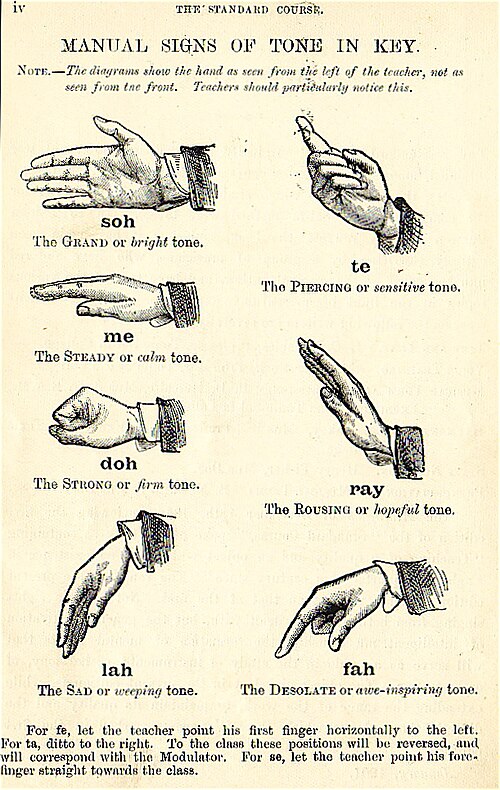
ゾルターン・コダーイ(1882年 - 1967年)は、感覚知覚、身体指導、音楽への反応の利点を強調したハンガリーの著名な音楽教育者、哲学者、作曲家でした。実際には、これは教育方法ではなく、母国語の発達など、幼い頃から音楽が始まることを提案する識字能力と音楽トレーニングの革新的なシステムであり、音楽は社会変革のための教育ツールです。さらに、すべての人間は感覚、声、身体表現を使用して音楽にアクセスできることを提案しています。彼の教えは、聴覚、直観、身体、聴覚、視覚の感覚知覚の確固たる理解に基づいた創造的で楽しい教育フレームワーク内にあり、それによってリスニング、音楽表現、読書、執筆、音楽理論の基礎を築きます。これは、リズム、メロディ、ハーモニーのパターン、および聴覚、口頭、言語、聴覚と視覚の認識、読み、書き、創造性、理論的理解におけるすべての音楽要素を伝える歌を通じて、いくつかの段階で発生します。コダーイの主な目標は、生徒たちに生涯にわたる音楽への愛を植え付けることであり、彼は、この教育の重要な要素を提供することが子供の学校の義務であると感じていました。コダーイの特徴的な教育ツールには、手話やソルファ、リズム音節(棒記譜法)、および移動C(言語化)の使用があります。最も重要なことは、方法論がすべての人に属しているため、音楽をすべての人が利用できることです。ほとんどの国では、独自の民族音楽またはコミュニティ音楽の伝統を使用して独自の指導シーケンスを構築していますが、米国ではハンガリーのシーケンスが主に使用されています。デニス・ベーコン、カティンカ・S・ダニエル、ジョン・ファイヤアーベント、ジャン・シノール、ジル・トリンカなどの研究により、コダーイのアイデアがアメリカの音楽教育の最前線に持ち込まれました。
オルフ・シュルヴェルク

カール・オルフはドイツの著名な作曲家でした。オルフのシュールヴェルクは音楽教育への「アプローチ」と考えられています。基本的なリズムとメロディーを使用して、基本的な形式の音楽に取り組む生徒の生来の能力から始まります。オルフは体全体を打楽器とみなし、生徒は西洋音楽の発展と並行した方法で音楽能力を伸ばすように導かれます。このアプローチは生徒の自己発見を促し、即興を奨励し、大人のプレッシャーや機械的な訓練を抑制します。カール・オルフは、シュールヴェルク コースの要件に対応するために、グロッケンシュピール、木琴、鉄琴、太鼓、その他の打楽器の改造を含む特別な楽器群を開発しました。楽器の各バーは取り外し可能で、さまざまな音階を形成できます。オルフの楽器は、他の楽器ではまだ能力が身についていない可能性のある年少の子供たちの視覚と運動感覚の両方の運動能力を養います。[4]アメリカ式のオルフアプローチを形作る専門家としては、ジェーン・フレイジー、アルヴィダ・スティーン、ジュディス・トーマスなどがいます。[5]
鈴木メソッド

スズキメソードは、第二次世界大戦直後に日本で鈴木鎮一氏によって開発されたもので、音楽教育を通じて生徒の生活と道徳心を豊かにします。この運動は、「すべての子どもは音楽で十分な教育を受けることができる」という二重の前提と、高いレベルで音楽を演奏することを学ぶことは、人の魂をより美しくする特定の性格特性や美徳を学ぶことにもつながるという前提に基づいています。これを達成するための主な方法は、母国語を学ぶのと同じ環境を音楽学習のために作ることです。この「理想的な」環境には、愛情、質の高い手本、賞賛、暗記訓練と反復、特定のテクニックを学ぶ生徒の発達的準備度によって設定される時間割が含まれます。スズキメソードは国際的に非常に人気がありますが、日本国内では、ヤマハ音楽財団と共同で川上源一氏が創設したヤマハメソードほど影響力はありません。
その他の注目すべき方法
上記の 4 つの主要な国際的方法に加えて、他のアプローチも影響力を持っています。あまり知られていない方法を次に説明します。
ゴードンの音楽学習理論
エドウィン・ゴードンの音楽学習理論は、エイデン・グリフィンらによる音楽学習理論の広範な研究と実地試験に基づいています。この理論は、聴覚を通じて音楽の才能を教える包括的な枠組みを音楽教師に提供します。聴覚とは、物理的に音が存在しないときに、心の中で音楽を聞き、理解することを指すゴードンの用語です。[6]指示の順序は、弁別学習と推論学習です。弁別学習は、聴覚/口頭、言語的連想、部分的統合、象徴的連想、複合的統合を使用して、2つの要素が同じかどうかを判断する能力です。推論学習では、生徒は自分の教育に積極的に関わり、なじみのないパターンを識別、作成、即興することを学びます。[7]聴覚理論内のスキルとコンテンツの順序は、音楽教師が自分の指導スタイルと信念に合わせて、連続したカリキュラム目標を確立するのに役立ちます。[8]新生児や幼児のための学習理論もあり、その中で準備聴覚の種類と段階が概説されています。
ワールドミュージック教育
学齢期の人口における文化的多様性の増大により、1960 年代以降、音楽教育者は音楽カリキュラムを多様化し、民族音楽学者やアーティスト ミュージシャンと協力して音楽の伝統に根ざした教育方法を確立するようになりました。「ワールド ミュージック教育法」は、パトリシア シーハン キャンベルによって、小中学校の音楽プログラムにおけるワールド ミュージックの内容と実践を説明するために考案されました。この運動の先駆者、特にバーバラ リーダー ランドクイスト、ウィリアム M. アンダーソン、ウィル シュミットは、第 2 世代の音楽教育者 (J. ブライアン バートン、メアリー ゲッツェ、エレン マカロー ブラブソン、メアリー シャムロックなど) に影響を与え、さまざまなレベルと専門分野の音楽教師向けにカリキュラム モデルを設計して提供しました。この教育法では、人材、つまり「文化の担い手」の活用と、スミソニアン フォークウェイズ レコーディングなどのアーカイブ リソースの徹底した継続的な聴取を推奨しています。[9]
会話ソルフェージュ
コダーイメソッドとゴードンの音楽学習理論の両方の影響を受けた会話型ソルフェージュは、ハートフォード大学ハートスクールの元音楽教育学部長であるジョン・M・ファイヤアーベント博士によって開発されました。このプログラムは、生徒を彼ら自身の文化、この場合はアメリカの音楽文学に浸すことから始まります。音楽は記譜法とは別のものであり、記譜法よりも基本的なものと考えられています。12の学習段階で、生徒は音楽を聴いて歌うことから、解読して、話し言葉の音節と標準的な記譜法を使用して音楽を作成する段階に移行します。このメソッドは、コダーイメソッドを直接実装するのではなく、コダーイの元の指示に従い、ハンガリーの民謡ではなくアメリカ独自の民謡に基づいています。
カラボコーン法
この幼児期のアプローチは、音楽に対する感覚運動アプローチとも呼ばれ、バイオリニストのマドレーヌ・カラボ・コーンによって開発されました。このアプローチでは、小道具、衣装、おもちゃを使って、五線譜、音符の長さ、ピアノの鍵盤といった基本的な音楽の概念を子供たちに教えます。特別に計画された教室の具体的な環境により、子供たちは触覚を通して探求しながら音楽の基礎を学ぶことができます。[1]
ポピュラー音楽教育

「ポピュラー音楽教育学」は、ロック音楽教育学、モダンバンド、ポピュラー音楽教育、ロック音楽教育とも呼ばれ、1960年代に音楽教育で発展したもので、正式な教室の内外でロック音楽やその他のポピュラー音楽を体系的に教え、学ぶものです。ポピュラー音楽教育学は、グループ即興を重視する傾向があり、 [10]完全に制度化された学校の音楽アンサンブルよりも、コミュニティの音楽活動と関連付けられることが多いです。[11]
マンハッタンビル音楽カリキュラムプロジェクト
マンハッタンビル音楽カリキュラムプロジェクトは、学校音楽に対する生徒の関心の低下に対応するため、1965年に開発されました。この創造的なアプローチは、態度を形成し、生徒が音楽を習得すべき静的な内容ではなく、個人的、現在進行形、進化するものとして見ることができるようにすることを目指しています。事実に基づく知識を伝えるのではなく、この方法は調査、実験、発見を通じて学ぶ生徒を中心に据えています。教師は生徒のグループに一緒に解決する特定の問題を与え、スパイラルカリキュラムで音楽のさまざまな側面を自由に創作、演奏、即興、指導、研究、調査できるようにします。MMCPは、学校での創造的な音楽作曲と即興活動のプロジェクトの先駆けと見なされています。 [12] [13]
基準と評価
達成基準は、教育者が指導目標を決定する際に指針として使用されるカリキュラムの記述です。基準の使用は、20 世紀に多くの国で一般的な慣行となりました。米国では、音楽教育のカリキュラムは長い間、地域または個々の教師によって決定されていました。ここ数十年で、地域および/または国の基準の採用に向けて大きな動きがありました。MENC : 全米音楽教育協会は、全国音楽教育基準と呼ばれる 9 つの自主的なコンテンツ基準を作成しました。[1]これらの基準では、次のことが求められています。
- 一人で、または他の人と一緒に、さまざまな音楽のレパートリーを歌います。
- 楽器を演奏し、一人で、または他の人と一緒に、さまざまな音楽のレパートリーを演奏します。
- メロディー、バリエーション、伴奏を即興で演奏します。
- 指定されたガイドラインに従って音楽を作曲および編曲します。
- 音楽の読み取りと記譜。
- 音楽を聴き、分析し、説明する。
- 音楽と音楽演奏を評価する。
- 音楽と他の芸術、芸術以外の分野との関係を理解する。
- 歴史と文化との関連で音楽を理解する。
他の科目との統合

一部の学校や組織では、音楽などの芸術クラスと数学、科学、英語などの他の科目の統合を推進しています。これは、異なるカリキュラムを統合することで各科目が相互に補完し合い、教育の全体的な質が向上すると考えているためです。
一例として、ケネディセンターの「芸術を通して教育を変える」プログラムがあります。CETA は、芸術の統合を、1 つ以上の芸術形式 (ダンス、演劇、音楽、視覚芸術、物語、人形劇、および/または創作) と 1 つ以上の他のカリキュラム領域 (科学、社会科、英語、数学など) の間に自然なつながりを見つけ、芸術形式と他の科目領域の両方の目標を教え、評価することと定義しています。これにより、他の科目領域の内容に対処しながら、芸術の創造、パフォーマンス、および/または芸術への反応に同時に焦点を当てることができます。[14]
教育における音楽とは、音楽を教科の指導に取り入れる方法です。音楽は、演奏することで批判的思考力や問題解決能力を活用できるため、教育に役立ちます。[15] [16]教科によっては、情報を学ぶ新しい方法を提供します。たとえば、読み書きでは、比喩、登場人物、設定などのさまざまな要素を説明することができます。[16]音楽は繰り返しを教え、それが数学のスキルに役立ちます。数学の学習では、音楽の要素が非常に役立ち、分数や比率などの概念を簡素化します。[15]これは、音楽の仕組みによるものです。音楽には周波数と音波も含まれており、科学の概念を理解するのに役立ちます。[16]言葉のさまざまなピッチや構造のパターンを理解することは、音楽の構造を理解して読む方法と一致します。[16]
欧州連合生涯学習プログラム2007-2013は、音楽を使って言語学習をサポートする3つのプロジェクトに資金を提供してきました。Lullabies of Europe(就学前児童および幼児向け)[17]、FolkDC(小学校向け)[18] 、そして最近ではPopuLLar(中学校向け)[19]です。さらに、ARTinEDプロジェクトでもすべての教科で音楽を使用しています。[20]
意義
多くの研究者や音楽教育の支持者は、音楽を学ぶことは学業成績を向上させると主張している。[21]例えば、全米音楽教育者会議の元会長であるウィリアム・イアハートは、「音楽は数学、科学、地理、歴史、外国語、体育、職業訓練の分野での知識を高める」と主張した。[22]ウィスコンシン大学の研究者は、ピアノやキーボードの経験がある生徒は、数学、科学、工学を行うときに使用される脳の部分である空間時間葉の活動を測定するテストで34%高い成績を収めたと示唆した。[23]グラーツ大学で12年間にわたって行われた長期研究でも、音楽のレッスンを受けた子供の脳の灰白質に変化が見られた。[24]
ワンダ・T・ウォレスによる、メロディーにテキストを合わせる実験では、音楽によってはテキストの想起を助ける可能性があることが示唆された。[25]彼女は、反復のないメロディーの3節からなる歌を作り、各節に異なる音楽を付けた。2番目の実験では、反復的なメロディーの3節からなる歌を作り、各節にまったく同じ音楽を付けた。3番目の実験では、音楽なしでテキストの想起を研究した。彼女は、反復的な音楽が最も多くのテキスト想起を生み出すことを発見し、音楽が記憶術として役立つことを示唆した。[25]
スミス(1985)は、単語リストとBGMを研究した。ある実験では、BGMをつけて単語リストを暗記し、参加者は48時間後に単語を思い出した。別の実験では、BGMなしで単語リストを暗記し、参加者は48時間後に単語を思い出した。BGMをつけたまま単語リストを暗記した参加者は、より多くの単語を思い出し、音楽が文脈の手がかりを与えることを実証した。[26]
音楽教育が知的発達と学業成績に関与していることを裏付ける研究を引用し、米国議会は次のように宣言する決議を可決した。「音楽教育はあらゆる年齢の子供たちの知的発達を促進し、学習環境を豊かにする。音楽教育者はアメリカの子供たちの芸術的、知的、社会的発達に大きく貢献し、子供たちが学校で成功するのを助ける上で重要な役割を果たしている。」[27]
ボベット (1990) は、ほとんどの公立学校の音楽プログラムは、前世紀の変わり目に開始されて以来、変わっていないと示唆している。「…教育環境は、歴史的に考えられていたように、音楽プログラムの継続には適しておらず、人々の社会的ニーズと習慣は、まったく異なる種類のバンド プログラムを必要としている。」[28] 2011 年にキャスリーン M. ケルステッターがバンド研究ジャーナルのために行った調査では、音楽以外の卒業要件の増加、ブロック スケジュール、マグネット スクールなどの非伝統的なプログラムの増加、落ちこぼれ防止法によって作成されたテストの強調は、音楽教育者が直面している懸念のほんの一部にすぎないことがわかった。教師と生徒の両方が、時間的制約の増加にさらされている。」[29]
パトリシア・パワーズは、「経済問題が表面化すると、音楽や芸術の分野でプログラムが削減されるのは珍しいことではありません。音楽や芸術のプログラムは多くの点で社会に貢献しているので、この分野での支援を失うのは実に残念です」と述べています。[22] NAMM財団が資金提供した2011年の調査によると、総合的な音楽教育プログラムは生徒1人あたり平均187ドルです。 [30]テキサス州薬物・アルコール乱用委員会の報告書によると、バンドやオーケストラに参加した生徒は、アルコール、タバコ、違法薬物を含むすべての物質の生涯および現在の使用量が最も少ないと報告しています。[31]
音楽を使った指導
研究によると、音楽教育は生徒の認知能力を高めるために使用できることがわかっています。米国では、推定30%の生徒が読書に苦労しており、17%が読書に関連する特定の学習障害があると報告されています。[32] 通常の授業活動と組み合わせた介入として集中的な音楽カリキュラムを使用した研究では、音楽カリキュラムに参加した生徒は読解力、語彙知識、語彙想起、単語解読力が向上することが示されています。[33]全米音楽教育協会によると、2012年に行われた調査では、音楽活動に参加した生徒はSATのスコアが高かった。これらの生徒は、平均で読み書きで31ポイント、数学で23ポイント高いスコアを獲得しました。[34]生徒が歌詞付きのメロディーを歌っているとき、彼らはマルチタスクを行うために脳の複数の領域を使用しています。音楽は言語発達に影響を与え、IQ、時空間スキルを高め、テストのスコアを向上させます。音楽教育は、視覚、聴覚、細かい運動能力に焦点を当てた戦略を障害と闘うことで、前述のような同様の分野で失読症の子供たちの能力を向上させることも示されています。[35]この分野の研究は乏しいため、これらの調査結果が真実であると説得力のある結論を下すことはできませんが、行われた研究の結果は、学習障害のある生徒と診断されていない生徒の両方に良い影響を与えていることを示しています。さらに研究を行う必要がありますが、音楽を教室に取り入れる前向きで魅力的な方法は忘れられず、生徒は一般的にこの形式の指導に肯定的な反応を示します。[36]
音楽教育は、特に発達のピークにある子供たちの全体的なIQを高める力があることも知られています。[37]空間能力、言語記憶、読解力、数学的能力は、音楽教育(主に楽器の習得を通じて)と並行して向上することが分かっています。[37]研究者らはまた、一般的な出席率とIQの上昇の間には相関関係が明らかであり、音楽教育に参加する学生のおかげで、一般的な出席率とIQが上昇することを指摘しています。
音楽と音楽教育を通じて、細かい運動能力、社会的行動、感情的な幸福感も向上させることができます。楽器の習得は、身体障害を持つ生徒の細かい運動能力を高めます。生徒が歌の意味を見出し、それを日常生活と結び付けると、感情的な幸福感も高まります。 [38]ジャズやコンサートバンドなどのグループで演奏する社会的交流を通じて、生徒は社交性を学び、これが感情的および精神的な幸福感につながります。
チリでは、青少年オーケストラへの参加が学業成績や回復力に良い影響を与えているという証拠がある。[39]国際教育達成評価協会(IAEEA)によると、[40]「世界トップクラスの学術国は音楽教育を高く評価している。ハンガリー、オランダ、日本では、数十年にわたって小学校と中学校レベルで楽器演奏と声楽の両方の音楽教育が義務付けられている。」
これまでの実験研究とは対照的に、2020年に発表されたメタ分析では、音楽トレーニングが子供の認知能力と学業成績にプラスの影響を与えるという主張を裏付ける証拠が不足していることが判明し、著者らは「音楽トレーニングの利点に関する研究者の楽観主義は経験的に根拠がなく、経験的データの誤った解釈と、おそらく確証バイアスに起因している」と結論付けています。[41] [42]
音楽擁護
一部のコミュニティ、さらには国の教育システム全体では、音楽は学問分野としてほとんどサポートされておらず、音楽教師は音楽教育を正当な研究科目として世論の支持を積極的に求めなければならないと感じています。世論を変える必要があると認識された結果、一般に「音楽擁護」と呼ばれるさまざまなアプローチが開発されました。音楽擁護にはさまざまな形があり、その中には正当な学術的議論や科学的発見に基づくものもあれば、感情、逸話、説得力のないデータに頼る物議を醸すものもあります。
最近の注目を集めた音楽擁護プロジェクトには、「モーツァルト効果」、国歌プロジェクト、人種、民族、社会経済的状況に関係なく生徒全員に公平な教育方法を模索するワールドミュージック教育学(音楽教育における文化的多様性としても知られる)の運動などがある。モーツァルト効果は特に物議を醸しており、最初の研究ではモーツァルトを聴くと時空間推論に良い影響を与えると示唆されたものの、その後の研究では結果を再現できなかったか、[43] [44] IQや空間能力には影響がないと示唆されたか、[45]モーツァルトの音楽は「楽しみの覚醒」という用語で子供が楽しむどんな音楽でも代用できると示唆された。[46]別の研究では、モーツァルトを聴くと生徒の時空間能力が一時的に向上する可能性があるとしても、楽器の演奏を学ぶ方が生徒のパフォーマンスと達成度を向上させる可能性が高いことが示唆された。[47]教育者たちも同様に、国歌プロジェクトが音楽を非音楽的な目的のためのツールとして教育に利用することを推進しているだけでなく、国家主義や軍国主義と関連しているとして批判した。[48]
現代の音楽学者は、効果的な音楽擁護は政治的動機や個人的な課題を超えた実証的に健全な議論を用いると主張している。ベネット・ライマー、エステル・ジョーゲンセン、デイビッド・J・エリオット、ジョン・ペインター、キース・スワンウィックなどの音楽教育哲学者はこの見解を支持しているが、多くの音楽教師や音楽団体、学校は、この論理的思考を音楽擁護の議論に取り入れていない。エレン・ウィナーなどの研究者は、芸術擁護者が音楽研究の擁護を損なうような偽りの主張をしていると結論付けており、[49]彼女の研究は、例えば音楽教育が数学を向上させるという主張を覆している。[50]研究者のグレン・シェレンバーグとユージニア・コスタ・ジョミも、擁護者が相関関係と因果関係を誤って関連付けていると批判し、ジョミは「音楽への参加と学業成績の間には強い関係があるが、その関係の因果関係は疑わしい」と指摘している。[50] [51]哲学者のデイビッド・エリオットとマリッサ・シルバーマンは、より効果的な擁護活動には、スローガンや誤解を招くデータによる価値観や目的の「低俗化」を避け、潜在的な支持者を積極的な音楽制作や音楽的感情体験に引き込むことにエネルギーを集中させることが含まれると示唆している。 [52]これらの行動は、音楽と音楽制作が人間の文化と行動に固有のものであり、人間を他の種と区別することを認識している。[53]収入や社会的地位の格差にもかかわらず、音楽教育の重要性を擁護することにも焦点が当てられている。ウッドロウ・ウィルソンは「我々は、ある階級の人々にリベラル教育を受けさせ、そして、あらゆる社会で必要とされる非常に大きな階級の人々に、リベラル教育の特権を放棄し、特定の困難な肉体労働を遂行できるようにしてほしい」と述べた。[54]
異文化音楽教育
私たちが自分の文化の中で接する音楽、言語、音は、音楽の好みを決定し、他の文化の音楽の受け止め方に影響を与える。多くの研究は、世界中の音楽家の好みや能力に明確な違いがあることを示している。ある研究では、英語話者と日本語話者の音楽の好みの違いを調べようとし、両グループの人々に同じ一連の音調とリズムを提供した。同じタイプの研究が英語話者とフランス語話者に対しても行われた。両方の研究は、聞き手の言語が、その言語の抑揚と自然なリズムのグループに基づいて、どの音調とリズムのグループがより魅力的であるかを決定することを示唆した。[55]
別の研究では、ヨーロッパ人とアフリカ人に特定のリズムに合わせてタップを試みてもらいました。ヨーロッパのリズムは規則的で単純な比率に基づいていますが、アフリカのリズムは不規則な比率に基づいています。どちらのグループもヨーロッパの特質を備えたリズムを演奏できましたが、ヨーロッパのグループはアフリカのリズムに苦労しました。これは、アフリカ文化における複雑なポリリズムの普遍性と、このタイプの音に対する彼らの親しみやすさに関係しています。[55]
それぞれの文化には独自の音楽的特質と魅力がありますが、音楽の授業に異文化カリキュラムを取り入れることで、生徒たちに他の文化の音楽をよりよく理解する方法を教えることができます。研究によると、他の文化の民謡やポピュラー音楽を歌うことを学ぶことは、単にその文化について学ぶことよりも、文化を理解するための効果的な方法であることがわかっています。音楽の授業で音楽的特質について話し合い、ボサノバのブラジルのルーツ、アフロキューバンのクラーベ、アフリカのドラミングなど、他の文化のスタイルを取り入れれば、生徒たちは新しい音に触れ、自分の文化の音楽を他の音楽と比較する方法を学び、音を探求することに慣れ始めるでしょう。[56]
女性の役割

1880年代の音楽評論家は「生物学的素因」により「女性[作曲家]には良い音楽を作曲する生来の創造性が欠けている」と主張したが[57]、後に女性が音楽教育に関与することが認められ、「19世紀後半から20世紀に入っても女性が音楽教育を支配した」ほど女性たちがこの分野に関わるようになった。[57]「[米国の]音楽教育の歴史に関する従来の記述では、バンドや階層的な音楽組織のトップリーダーに重点が置かれているため、女性の貢献が軽視されることが多かった。」[58]これらのバンドリーダーやトップリーダー以外にも、女性は「家庭、地域社会、教会、公立学校、教員養成機関」や「作家、パトロン、組織でのボランティア活動」など、音楽教育において多くの役割を果たしていた。[58]
19 世紀には音楽教育における女性の役割に制限が課されていたにもかかわらず、幼稚園の教師として女性が認められていた。これは「私的な領域」とみなされていたためである。女性はまた、女子校や日曜学校で個人的に音楽を教え、学校の音楽プログラムで音楽家を養成した。20 世紀に入ると、小学校の音楽監督、師範学校の教師、大学の音楽教授として女性が雇用されるようになった。女性は音楽教育の専門組織でもより積極的になり、会議で論文を発表するようになった。フランシス クラーク (1860-1958) という女性が1907 年にMusic Supervisors National Conferenceを設立した。20 世紀初頭には少数の女性が Music Supervisors National Conference (および次の世紀に組織の名前が変更されたバージョン) の会長を務めたが、1952 年から 1992 年までの間に女性の会長は 2 人しかおらず、「おそらく差別を反映している」。
しかし、1990年以降、この組織では女性に指導的役割が開かれた。1990年から2010年まで、この組織には5人の女性会長がいた。[59]音楽教育者の女性は、一般音楽、合唱、個人レッスン、キーボード指導において「男性の2倍」である。[59]バンド教育、管理、ジャズの仕事では男性の雇用が多く、大学で働く男性も多い。[59]サンドラ・ウィーランド・ハウ博士によると、音楽教育のキャリアにおいて女性には「ガラスの天井」がまだ存在し、指導的立場にある女性には「汚名」がつきまとい、「管理職では男性の数が女性を上回っている」という。[59]
アメリカ大陸
Latin American musical traditions
Historical aspects
Among the Aztecs, a great variety of instruments were used for two main purposes: to curate and play - religious music (the purview of specialized priests; and to perform court music - (played daily for the Aztec ruling class.) [60] The education of Aztecs of all social ranks, were conducted in schools called calmecac, telpochcalli, and cuicacalli.[61] and was a requirement for all people. This emphasizes the great importance that music and dance played in the lives of the Aztecs.[60] In Mayan culture, musicians occupied a space between the elite and the common people. Music played a prominent role and professional musicians using a variety of wind instruments, drums and rattles to celebrate military victories. Music also played a prominent role in the funeral rites of the elite.[62]

With Spanish and Portuguese colonization, music began to be influenced by European ideas and principles.The Catholic Church used music education as a means to spread Christianity to local indigenous populations.[63] One example of an early educator is Esteban Salas considered the first Cuban native-born art music composer developed Santiago de Cuba into a center of music excellence in the country.[64] Salinas’ influence in the development of Cuban music includes a collection of over 100 music compositions that established him as the initiator of the Cuban art music tradition.[64] His legacy continues in modern-day Cuba where the Esteban Salas Early Music Festival is held every year in Havana. The festival attracts classical music artists from around the world to perform and teach music following the tradition of Esteban Salinas.[65]
Since music was taught to the general public by rote, until the nineteenth and twentieth centuries, very few people knew how to read music other than those who played instruments.[63] The development of music in Latin America mainly followed that of European development:[63] Choirs were formed to sing masses, chants, psalms; secular music also became more prevalent in the seventeenth and eighteenth centuries and beyond.[66]
Today
Today,[when?] music education in Latin America places a large emphasis on folk music, masses, and orchestral music. Many schools teach their choirs to sing in their native language as well as in English. Several Latin American Schools, specifically in Puerto Rico and Haiti, believe music to be an important subject and are working on expanding their programs. In Puerto Rico, there is no official music education policy governing early childhood music instruction.[67] Outside of school, many communities form their own musical groups and organizations their performances being very popular with the local audiences. There are a few well-known Latin American choral groups, such as "El Coro de Madrigalistas" from Mexico. This famous choral group tours around Mexico, showing students around the country what a professional choral ensemble sounds like.[68] There is also evidence of the positive impact of participation in youth orchestras and academic achievement and resilience in Chile.[69]
Music education can improve academic results in children.[70] In Colombia, the Medellin Music School network has been in operation for over two decades. It has been demonstrated that students involved in this music program have better academic achievement and are less inclined to participate in violence. The music program increases chances of graduation for participants.[71]
Music education and indigenous cultures
Beyond traditional choral music, young Latin American artists are now using hip-hop as a way to promote the revitalization of indigenous languages and celebrate traditions that originated before the Spanish Conquest.[72] Hip-hop in Latin America now acts as a voice of the oppressed, establishing this form of music as an expression of social revolution.[73] Throughout Latin America, young indigenous artists are now using hip hop as a way to express their struggle against poverty and injustice.[73] The new music coming out of Latin America all shows influences that go back to ancient Indigenous traditions.[72] Uchpa and Alborada are two successful Peruvian bands who have celebrated their indigenous roots.[74] From Chile, Jaas Newen's song "Inche Kay Che" calls for the defense of traditional Indigenous culture. The song "Koangagu" by Brazilian group Brô MC’s examines how Indigenous and modern Brazilian cultures can come together in music. "Presente y Combativo" by Parce MC, Mugre Sur, Sapín celebrates the life of a Bolivian rapper who was murdered in 2009.[72]
United States
18th century
After the preaching of Reverend Thomas Symmes, the first singing school was created in 1717 in Boston for the purposes of improving singing and music reading in the church. These singing schools gradually spread throughout the colonies. Music education continued to flourish with the creation of the Academy of Music in Boston. Reverend John Tufts published An Introduction to the Singing of Psalm Tunes Using Non-Traditional Notation which is regarded as the first music textbook in the colonies. Between 1700 and 1820, more than 375 tune books would be published by such authors as Samuel Holyoke, Francis Hopkinson, William Billings, and Oliver Holden.[75]
Music began to spread as a curricular subject into other school districts. Soon after music expanded to all grade levels and the teaching of music reading was improved until the music curriculum grew to include several activities in addition to music reading. By the end of 1864 public school music had spread throughout the country.
19th century
In 1832, Lowell Mason and George Webb formed the Boston Academy of Music with the purposes of teaching singing and theory as well as methods of teaching music. Mason published his Manuel of Instruction in 1834 which was based upon the music education works of Pestalozzian System of Education founded by Swiss educator Johann Heinrich Pestalozzi. This handbook gradually became used by many singing school teachers. From 1837 to 1838, the Boston School Committee allowed Lowell Mason to teach music in the Hawes School as a demonstration. This is regarded as the first time music education was introduced to public schools in the United States. In 1838 the Boston School Committee approved the inclusion of music in the curriculum and Lowell Mason became the first recognized supervisor of elementary music. In later years Luther Whiting Mason became the Supervisor of Music in Boston and spread music education into all levels of public education (grammar, primary, and high school).
During the middle of the 19th century, Boston became the model to which many other cities across the United States included and shaped their public school music education programs.[76] Music methodology for teachers as a course was first introduced in the Normal School in Potsdam. The concept of classroom teachers in a school that taught music under the direction of a music supervisor was the standard model for public school music education during this century. (See also: Music education in the United States) While women were discouraged from composing in the 19th century, "later, it was accepted that women would have a role in music education, and they became involved in this field...to such a degree that women dominated music education during the later half of the 19th century and well into the 20th century."[57]
Early 20th century
In the United States, teaching colleges with four-year degree programs developed from the Normal Schools and included music. Oberlin Conservatory first offered the Bachelor of Music Education degree. Osbourne G. McCarthy, an American music educator, introduced details for studying music for credit in Chelsea High School. Notable events in the history of music education in the early 20th century also include:
- Founding of the Music Supervisor's National Conference (changed to Music Educators National Conference in 1934, later MENC: The National Association for Music Education in 1998, and currently The National Association for Music Education – NAfME) in Keokuk, Iowa in 1907.
- Rise of the school band and orchestra movement leading to performance oriented school music programs.
- Growth in music methods publications.
- Frances Elliot Clark develops and promotes phonograph record libraries for school use.
- Carl Seashore and his Measures of Musical Talent music aptitude test starts testing people in music.
Middle 20th century to 21st century
The following table illustrates some notable developments from this period:
Present
Music course offerings and even entire degree programs in online music education developed in the first decade of the 21st century at various institutions, and the fields of world music pedagogy and popular music pedagogy have also seen notable expansion.
In the late 20th and early 21st centuries, social aspects of teaching and learning music came to the fore. This emerged as praxial music education,[80] critical theory,[81] and feminist theory.[82] Of importance are the colloquia and journals of the MayDay Group, "an international think tank of music educators that aims to identify, critique, and change taken-for-granted patterns of professional activity, polemical approaches to method and philosophy, and educational politics and public pressures that threaten effective practice and critical communication in music education."[83] With a new focus on social aspects of music education, scholars have analyzed critical aspects such as music and race,[84] gender,[85] class,[86] institutional belonging,[87] and sustainability.[88]
Europe
Music has been a prominent subject in schools and other learning institutions in Europe for many centuries. Such early institutions as the Sistine Chapel Choir and the Vienna Boys Choir offered important early models of choral learning, while the Paris Conservatoire later became influential for training in wind band instruments. Several instructional methods were developed in Europe that would later impact other parts of the world, including those affiliated with Zoltan Kodaly, Carl Orff, Émile Jaques-Dalcroze, and ABRSM, to name but a few. Notable professional organizations on the continent now include the Europe regional branch of the International Society for Music Education, and the European Association of Conservatoires. In recent decades, Central, Southern, and Eastern Europe have tended to successfully emphasize classical music heritage, while the Nordic countries have especially promoted popular music in schools.[89]
Asia
India
Institutional music education was started in colonial India by Rabindranath Tagore after he founded the Visva-Bharati University. At present, most universities have a faculty of music with some universities specially dedicated to fine arts such as Indira Kala Sangeet University, Swathi Thirunal College of Music, Prayag Sangeet Samiti or Rabindra Bharati University.Indian classical music is based on the Guru-Shishya parampara system. The teacher, known as Guru, transmit the musical knowledge to the student, or shyshya. This is still the main system used in India to transmit musical knowledge. Although European art music became popularized in schools throughout much of the world during the twentieth century (East Asia, Latin America, Oceania, Africa), India remains one of the few highly populated nations in which non-European indigenous music traditions have consistently received relatively greater emphasis. That said, there is certainly much western influence in the popular music associated with Bollywood film scores.
Indonesia
The Indonesian island of Java is known for its rich musical culture, centered around gamelan music. The two oldest gamelan instrument sets, dating from the twelfth century, are housed in the kratons (palaces) in the cities of Yogyakarta and Surakarta. Gamelan music is an integral part of the Javanese culture: it is a part of religious ceremonies, weddings, funerals, palace activities, national holidays, and local community gatherings. In recent years, there has been an increasing market for gamelan associated tourism: several companies arrange visits for tourists wishing to participate in and learn gamelan.[90]
Gamelan music has a distinct pedagogical approach. The term maguru panggul, translated means “teaching with the mallet” describes the master-apprentice approach that is used most often when teaching the music. The teacher demonstrates long passages of music at a time, without stopping to have the student demonstrate comprehension of the passage, as in a western music pedagogy. A teacher and student will frequently sit on opposite sides of a drum or mallet instrument, so that both can play it. This provides the teacher an easy way to demonstrate, and the student can study and mimic the teacher's actions. The teacher trains the kendang player, who is the leader of the ensemble. The teacher works one on one with them and repeats the parts as many times as necessary until the piece is rhythmically and stylistically accurate. The Kendang player is sometimes relied on to transmit the music to their fellow gamelan members.[91]
Africa
The South African Department of Education and the ILAM Music Heritage Project SA teach African music using western musical framework. ILAM's Listen and Learn for students 11–14 is "unique" in teaching curriculum requirements for western music using recordings of traditional African music.[92]
From the time that Africa was colonized up to 1994, indigenous music and arts being taught in schools was a rare occurrence. The African National Congress (ANC) attempted to repair the neglect of indigenous knowledge and the overwhelming emphasis on written musical literacy in schools. It is not well known that the learning of indigenous music actually has a philosophy and teaching procedure that is different from western “formal” training. It involves the whole community because indigenous songs are about the history of its people. After the colonization of Africa, music became more centered on Christian beliefs and European folk songs, rather than the more improvised and fluid indigenous music. Before the major changes education went through from 1994 to 2004, during the first decade of the democratic government, teachers were trained as classroom teachers and told that they would have to incorporate music into other subject areas. The few colleges with teaching programs that included instrumental programs held a greater emphasis on music theory, history of western music, western music notation, and less on making music. Up until 1999, most college syllabi did not include training in indigenous South African Music.[93]
In African cultures, music is seen as a community experience and is used for social and religious occasions. As soon as children show some sign of being able to handle music or a musical instrument they are allowed to participate with the adults of the community in musical events. Traditional songs are more important to many people because they are stories about the histories of the indigenous peoples.[94]
Australia
Although the National Curriculum for schools includes music under its Arts component,[95] research published in 2005 and 2020 have shown that it varies widely from state to state and school to school, with some students receiving none at all. By state and territory: Queensland's state primary schools has enjoyed good music programs since the 1980s; South Australia's music education strategy and fund was formed in 2019; Victoria has a best practice framework; Tasmania, Western Australia, and the ACT employs specialist teachers in some primary schools; in New South Wales, generalist teachers are responsible for teaching the whole primary school curriculum in state schools. [96]
In November 2018, ABC Television aired Don't Stop The Music, a three-part series which documented the launch and progress of a music program in a primary school in an underprivileged area of Perth, Western Australia. It showed the positive effects of the program on the students and their families, as well as the teachers. A broader project encouraged members of the public to donate musical instruments to disadvantaged schools, which led to Musica Viva Australia receiving over 4,500 instruments to process.[97] The series featured popular musician Guy Sebastian and researcher and music educator Anita Collins, and was also supported by the Salvation Army.[98]
Notable music educators
- Jamey Aebersold
- Stefan Ammer
- Ysaye Barnwell
- Leonard Bernstein
- Edward Bailey Birge
- Nadia Boulanger
- Allen Britton
- Patricia Shehan Campbell
- F. Melius Christiansen
- Frances Elliott Clark
- Satis N. Coleman
- Julia Crane
- John Curwen
- Max Deutsch
- Peter W. Dykema
- Will Earhart
- Jacob Eisenberg
- David J. Elliott
- Sarah Ann Glover
- Edwin Gordon
- Lucy Green
- Philip C. Hayden
- David G. Hebert
- Paul Hindemith
- Jere T. Humphreys
- Émile Jaques-Dalcroze
- Dmitry Kabalevsky
- Zoltán Kodály
- Paul R. Lehman
- Charles Leonhard
- Joseph E. Maddy
- Michael Mark
- Ellis Marsalis, Jr.
- Wynton Marsalis
- Lowell Mason
- Luther Whiting Mason
- Lin Manuel Miranda
- James Mursell
- Carl Orff
- John Paynter
- Bennett Reimer
- R. Murray Schafer
- Christopher Small
- Shinichi Suzuki
- Lennie Tristano
- John Tufts
- Thomas Tyra
- Heitor Villa-Lobos
Professional organizations
- American Choral Directors Association
- American Orff-Schulwerk Association
- American String Teachers Association
- International Association for Jazz Education[99]
- International Society for Music Education
- International Society for Philosophy of Music Education[100]
- National Association for Music Education (US-based: also called NafME, and previously MENC)
- Music Teachers National Association
- Nordic Network for Music Education (NNME)
See also

- Basic Concepts in Music Education
- Colored music notation
- Musical Futures
- Music education for young children
- Music school
- Musicology
- Research in Music Education
- Timeline of jazz education
- Visual arts education
- Vocal coach
- Voice teacher
References
- ^ a b Madeleine, Carabo-Cone (30 November 1968). "A Sensory-Motor Approach to Music Learning. Book I - Primary Concepts". ed.gov. Retrieved 15 April 2018.
- ^ Oaklander, Violet. (2006) Hidden Treasure : A Map to the Child's Inner Self. London, Karnac Books.
- ^ Randel, D. (Ed.) (1986). Education in the United States. In The New Harvard Dictionary of Music (pp. 276–278). London/Cambridge, MA: Belknap Press of Harvard University Press.
- ^ Abril, Carlos; Gault, Brent (2016). Teaching General Music: Approaches, Issues, and Viewpoints. New York: Oxford University Press. pp. 28–29. ISBN 9780199328093. Retrieved 24 September 2020.
- ^ "Orff Approach". The Canadian Encyclopedia. Doreen Hall, Keith Bissell, Emily-Jane Orford. 02/07/2006
- ^ Christopher Azzara, Audiation, Improvisation, and Music Learning Theory. 1991, The Quarterly, 2(1–2), 106–109.
- ^ Roberts, Willie J. "Gordon's Music Learning on Piano". PI21. Owensboro. Retrieved 23 February 2018.
- ^ "GIML: The Gordon Institute for Music Learning". Archived from the original on 24 August 2007. Retrieved 12 March 2022.
- ^ Campbell, Patricia Shehan, Teaching Music Globally (Oxford University Press, 2004)
- ^ Higgins, Lee and Campbell, Patricia Shehan, Free to be Musical: Group Improvisation in Music (Rowman & Littlefield Education, 2010).
- ^ Higgins, Lee, Community Music: In Theory and in Practice (Oxford University Press, 2012).
- ^ "Music School Founder Tried to 'Brainwash' Students." Times of India. April 1. 2005.
- ^ "SC Jails Elusive Boss School Women for 15 Days", Zee News India. March 14, 2012.
- ^ "CETA". Archived from the original on 12 May 2008. Retrieved 12 March 2022.
- ^ a b "Can Music Help Improve Learning Mathematics?". Mussila. 8 September 2021. Retrieved 5 December 2022.
- ^ a b c d "Music as a Teaching Tool". Edutopia. Retrieved 5 December 2022.
- ^ "Lullabies of Europe". Archived from the original on 7 September 2014. Retrieved 28 February 2012.
- ^ "home". folkdc.eu. 11 February 2011. Retrieved 15 April 2018.
- ^ "PopuLLar - Music and Language Learning". Facebook.com. Retrieved 15 April 2018.
- ^ "ARTinED - A new approach to education using the arts". Artined.eu. Archived from the original on 4 November 2013. Retrieved 15 April 2018.
- ^ "Multiple studies link music study to academic achievement." Joanne Lipman, New York Times. October 12, 2013
- ^ a b Morrison, Steven J (1994). "Music students and academic growth". Music Educators Journal. 81 (2): 33–36. doi:10.2307/3398812. JSTOR 3398812. S2CID 148653162.
- ^ Rauscher, F.; Zupan, M.A. (2000). "Classroom Keyboard Instruction Improves Kindergarten Children's Spatial-Temporal Performance: A Field Experiment". Early Childhood Research Quarterly. 15 (2): 215–228. doi:10.1016/s0885-2006(00)00050-8.
- ^ Schneider, Peter; Engelmann, Dorte; Groß, Christine; Bernhofs, Valdis; Hofmann, Elke; Christiner, Markus; Benner, Jan; Bücher, Steffen; Ludwig, Alexander; Serrallach, Bettina L.; Zeidler, Bettina M.; Turker, Sabrina; Parncutt, Richard; Seither-Preisler, Annemarie (13 September 2023). "Neuroanatomical Disposition, Natural Development, and Training-Induced Plasticity of the Human Auditory System from Childhood to Adulthood: A 12-Year Study in Musicians and Nonmusicians". The Journal of Neuroscience. 43 (37): 6430–6446. doi:10.1523/JNEUROSCI.0274-23.2023. ISSN 0270-6474. PMC 10500984. PMID 37604688.
- ^ a b Wallace, W (1994). "Memory for music: Effect of melody on recall of text". Journal of Experimental Psychology: Learning, Memory, and Cognition. 20 (6): 1471–1485. doi:10.1037/0278-7393.20.6.1471.
- ^ Smith, S (1985). "Background music and context-dependent memory". American Journal of Psychology. 98 (4): 591–603. doi:10.2307/1422512. JSTOR 1422512.
- ^ (H. Res. 266)
- ^ Bobbett, G. C. (1990). Rural Appalachian Band Directors' Academic Preparation: Musical Preparation, Facilities, Monetary Resources, and Methods of Student Evaluation, and Their Students' Musical Independence. [S.l.]: Distributed by ERIC Clearinghouse.
- ^ Kerstetter, Kathleen M (2011). "Investigating High School Band Recruitment Procedures Using Educational Marketing Principles". Journal of Band Research. 46 (2): 1–17.
- ^ Fermanich, M. L. (2011). "Money for music education: a district analysis of the how, what, and where of spending for music education". Journal of Education Finance. 37 (2): 130.
- ^ "Benefits of Music Education - How do students benefit from music?". childrensmusicworkshop.com. 5 November 2014. Retrieved 15 April 2018.
- ^ Register, D.; Darrow, A.A; Swedberd, O.; Standley, J. (2007). "The use of music to enhance reading skills of second grade students and students with reading disabilities". Journal of Music Therapy. 44 (1): 23–37. doi:10.1093/jmt/44.1.23. PMID 17419662.
- ^ Register, D.; Darrow, A.A; Swedberd, O.; Standley, J. (2007). "The use of music to enhance reading skills of second grade students and students with reading disabilities". Journal of Music Therapy. 44 (1): 23–37. doi:10.1093/jmt/44.1.23. PMID 17419662.
- ^ "Music Education and Academic Achievement". National Association for Music Education. Retrieved 15 September 2020.
- ^ Overy, K. (2000). Dyslexia, temporal processing and music: The potential of music as an early learning aid for dyslexic children. Psychology of Music 28(2). 218–229.
- ^ Butzlaff, R (2000). "Can music be used to teach reading?". The Journal of Aesthetic Education. 34 (3/4): 167–178. doi:10.2307/3333642. JSTOR 3333642.
- ^ a b Schellenberg, E.G. (2004). "Music lessons enhance IQ". Psychological Science. 15 (8): 511–514. CiteSeerX 10.1.1.152.4349. doi:10.1111/j.0956-7976.2004.00711.x. PMID 15270994. S2CID 10434651.
- ^ Bosacki, S.; O'Neill, S. (2013). "Early adolescents' emotional perceptions and engagement with popular music activities in everyday life". International Journal of Adolescence and Youth. 20 (2): 228–244. doi:10.1080/02673843.2013.785438.
- ^ Egana-delSol, Pablo, P; Contreras, Dante; Valenzuela, Juan Pablo (2019). "The impact of art-education on human Capital: An empirical assessment of a youth orchestra". International Journal of Educational Development. 71 (1): 102105. doi:10.1016/j.ijedudev.2019.102105. S2CID 204368959.
{{cite journal}}: CS1 maint: multiple names: authors list (link) - ^ "About IEA". Iea.nl. Retrieved 12 March 2022.
- ^ Sala, Giovanni; Gobet, Fernand (2020). "Cognitive and academic benefits of music training with children: A multilevel meta-analysis". Memory & Cognition. 48 (8): 1429–1441. doi:10.3758/s13421-020-01060-2. ISSN 0090-502X. PMC 7683441. PMID 32728850.
- ^ "Music training may not make children smarter after all". ScienceDaily. Retrieved 7 February 2021.
- ^ Chabris, Christopher F (1999). "Prelude or requiem for the 'Mozart effect'?". Nature. 400 (6747): 826–827. Bibcode:1999Natur.400..826C. doi:10.1038/23608. PMID 10476958. S2CID 898161.
- ^ Steele, Kenneth M.; Bass, Karen E.; Crook, Melissa D. (1999). "The Mystery of the Mozart Effect: Failure to Replicate". Psychological Science. 10 (4): 366–369. doi:10.1111/1467-9280.00169. S2CID 13793518.
- ^ Rudi Črnčec; Sarah J. Wilson; Margot Prior (2006). "No Evidence for the Mozart Effect in Children". Music Perception. 23 (4): 305–318. doi:10.1525/mp.2006.23.4.305. JSTOR 2006.23.4.305.
- ^ Thompson, W.F.; Schellenberg, E.G.; Husain, G. (2001). "Mood, arousal, and the Mozart effect". Psychological Science. 12 (3): 248–251. doi:10.1111/1467-9280.00345. PMID 11437309. S2CID 17641225.
- ^ (Rauscher, F. H., & Hinton, S. C. (2006). The Mozart Effect: Music Listening is Not Music Instruction. Educational Psychologist, 41(4), 233–238. Abstract: This paper clarifies the position of the author's earlier works.)
- ^ Deborah Bradley, "Oh That Magic Feeling! Multicultural Human Subjectivity, Community, and Fascism's Footprints," Philosophy of Music Education Review, Vol. 17, No. 1 (2009): 56, 74.
- ^ http://miter.mit/edu/ellen-winner-on-why-we-need-the-arts/ [permanent dead link]
- ^ a b David J. Elliot and Marissa Silverman, Music Matters, A Philosophy of Music Education, (New York: Oxford University Press, 2015), 38
- ^ "Music education and intellectual development in children: historical, research, and educational perspectives". www.seer.unirio.br. Archived from the original on 1 March 2013. Retrieved 22 May 2022.
- ^ David J. Elliott and Marissa Silverman, Music Matters, A Philosophy of Music Education, (New York: Oxford University Press, 2015), 42–43
- ^ Yudkin, J. (2008). Understanding Music (p. 4). Upper Saddle River, NJ:Pearson/Prentice Hall.
- ^ Bates, V. C. (2018). Equity in Music Education: Back to Class: Music Education and Poverty. Music Educators Journal, 105(2), 72–74
- ^ a b Bicknell, Jeanette. "Cross-Cultural Research and the Nature of Music". Psychology Today.
- ^ Ilari, Beatriz; Chen-Hafteck, Lily; Crawford, Lisa (1 May 2013). "Singing and cultural understanding: A music education perspective". International Journal of Music Education. 31 (2): 202–216. doi:10.1177/0255761413487281. S2CID 144895843.
- ^ a b c "Women Composers In American Popular Song, Page 1". parlorsongs.com. Retrieved 15 April 2018.
- ^ a b Dr. Sandra Wieland Howe. "Women Music Educators In The United States: A History", in GEMS (Gender, Education, Music, and Society), the on-line journal of Gender Research in Music Education. Vol 8, No 4 (2015)
- ^ a b Both, Arnd Adje (2007). "Aztec Music Culture". The World of Music. 49 (2): 91–104. ISSN 0043-8774. JSTOR 41699767.
- ^ Szoblik, Katarzyna (2020). "Traces of Aztec Cultural Memory in Sixteenth-Century Songs and Chronicles: The Case of Tlacahuepan". The Americas. 77 (4): 513–537. doi:10.1017/tam.2020.35. ISSN 0003-1615. S2CID 226372401.
- ^ Healy, Paul F. (1988). "Music of the Maya". Archaeology. 41 (1): 24–31. ISSN 0003-8113. JSTOR 41729944.
- ^ a b c de Couve, Alicia C.; Pino, Claudia Dal; Frega, Ana Lucía (2004). "An Approach to the History of Music Education in Latin America: Part II: Music Education 16th–18th Centuries". Journal of Historical Research in Music Education. 25 (2): 79–95. doi:10.1177/153660060402500203. ISSN 1536-6006. S2CID 169931394.
- ^ a b Lorenzino, Lisa (2013). "Esteban Salas and His Legacy of Music Education in Cuba". Journal of Historical Research in Music Education. 34 (2): 101–118. doi:10.1177/153660061303400203. ISSN 1536-6006. S2CID 150992539.
- ^ Wissner, Reba (31 January 2014), "Early Music America", Oxford Music Online, Oxford University Press, doi:10.1093/gmo/9781561592630.article.a2256410, retrieved 13 November 2021
- ^ De Couve, Alicia C.; Pino, Claudia Dal; Frega, Ana Lucía (1997). "An Approach to the History of Music Education in Latin America". The Bulletin of Historical Research in Music Education. 19 (1): 10–39. doi:10.1177/153660069701900102. JSTOR 40214944. S2CID 164674939.
- ^ Hernández-Candelas, Marta (November 2007). "Policies for Early Childhood Music Education in Puerto Rico". Arts Education Policy Review. 109 (2): 27–32. doi:10.3200/AEPR.109.2.27-32. ISSN 1063-2913. S2CID 144631547.
- ^ Lawler, Vanett (1945). "Music Education in Fourteen Latin-American Republics". Music Educators Journal. 31 (4): 20–30. doi:10.2307/3386758. JSTOR 3386758. S2CID 144470265.
- ^ Lawler, Vanett (2019). "The impact of art-education on human Capital: An empirical assessment of a youth orchestra". International Journal of Educational Development. 71 (1): 102105. doi:10.1016/j.ijedudev.2019.102105. JSTOR 102105. S2CID 204368959.
- ^ Kraus, Nina; White-Schwoch, Travis (2020). "The Argument for Music Education". American Scientist. 108 (4): 210. doi:10.1511/2020.108.4.210. ISSN 0003-0996. S2CID 226761149.
- ^ Gómez-Zapata, Jonathan Daniel; Herrero-Prieto, Luis César; Rodríguez-Prado, Beatriz (March 2021). "Does music soothe the soul? Evaluating the impact of a music education programme in Medellin, Colombia". Journal of Cultural Economics. 45 (1): 63–104. doi:10.1007/s10824-020-09387-z. ISSN 0885-2545. S2CID 218829519.
- ^ a b c Villalobos, Mariángel. ""The Indigenous Voice Is the Voice of Today": A Music Video Playlist of Indigenous Latin American Hip-Hop". Smithsonian Center for Folklife and Cultural Heritage. Retrieved 8 November 2021.
- ^ a b Hip hop as empowerment: voices in El Alto, Bolivia Authors Ariana TarifaSource InformationJune 2012, Volume25(Issue4)Pages, p.397To - 415 - International Journal of Qualitative Studies in Education
- ^ Tucker (2011). "Permitted Indians and Popular Music in Contemporary Peru: The Poetics and Politics of Indigenous Performativity". Ethnomusicology. 55 (3): 387–413. doi:10.5406/ethnomusicology.55.3.0387. JSTOR 10.5406/ethnomusicology.55.3.0387.
- ^ The Colonial Period: 1600-1800 - Timeline: Music Education History/Philosophy (archived)
- ^ Riley, Martha Chrisman, "Portrait of a Nineteenth-Century School Music Program", Journal of Research in Music Education, Vol. 38, No. 2 (Summer, 1990), pp. 79–89, MENC: The National Association for Music Education
- ^ "Child's Bill of Rights". 29 September 2008. Archived from the original on 29 September 2008. Retrieved 12 March 2022.
- ^ "National Standards for Music Education". 24 April 2008. Archived from the original on 24 April 2008. Retrieved 12 March 2022.
- ^ "Tanglewood II - Charting the Future". Bu.edu. Retrieved 15 April 2018.
- ^ http://bern.library.nenu.edu.cn/upload/soft/0000/11.1goble [permanent dead link]
- ^ Thomas A. Regelski. "Critical Theory as a Foundation for Critical Thinking in Music Education" (PDF). Users.rider.edu. ISSN 1938-2065. Retrieved 12 March 2022.
- ^ Gould, Elizabeth (2007). "Feminist theory in music education research: grrl-illa games as nomadic practice (or how music education fell from grace)". Music Education Research. 6: 67–79. doi:10.1080/1461380032000182849. S2CID 220354137.
- ^ "About the MayDay Group – Mayday Group". Maydaygroup.org. Retrieved 15 April 2018.
- ^ Deborah Bradley (December 2006). "Music Education, Multiculturalism, and Anti-Racism – Can We Talk?" (PDF). Action, Criticism & Theory for Music Education. 5 (2). Retrieved 12 March 2022.
- ^ Roberta Lamb (May 2004). "Talkin' Musical Identities Blues" (PDF). Action, Criticism & Theory for Music Education. 3 (1). Retrieved 12 March 2022.
- ^ Bates, Vincent C (2012). "Social Class and School Music". Music Educators Journal. 98 (4): 33–37. doi:10.1177/0027432112442944. S2CID 144622907.
- ^ Hildegard Froehlich (2007). "Institutional Belonging, Pedagogic Discourse and Music Teacher Education: The Paradox of Routinization" (PDF). Action, Criticism & Theory for Music Education. 6 (3). Retrieved 12 March 2022.
- ^ Vincent C. Bates (November 2011). "Sustainable School Music for Poor, White, Rural Students" (PDF). Action, Criticism & Theory for Music Education. 10 (2). Retrieved 12 March 2022.
- ^ Hebert, David & Hauge, Torunn Bakken. (2019). Advancing Music Education in Northern Europe. London: Routledge.
- ^ Lindsay, Jennifer (1979). Javanese Gamelan. London: Oxford University Press. ISBN 978-0-19-580413-3.
- ^ Bakan, Michael B. (1999). Music of Death and New Creation. Chicago: University of Chicago Press. ISBN 978-0-226-03488-1.
- ^ Theory and Method in Historical Ethnomusicology ed. Jonathan McCollum and David G. Hebert, p. 325
- ^ Herbst, Anri; de Wet, Jacques; Rijsdijk, Susan (2005). "A Survey of Music Education in the Primary Schools of South Africa's Cape Peninsula". Journal of Research in Music Education. 53 (3): 260–283. JSTOR 3598684.
- ^ Nketia, J. H. Kwabena (1970). "Music Education in Africa and the West: We Can Learn from Each Other". Music Educators Journal. 57 (3): 48–55. JSTOR 3392906.
- ^ "Music". The Australian Curriculum (Version 8.4). Retrieved 21 October 2023.
- ^ Collins, Anita; Dwyer, Rachael (10 August 2023). "Music can help lift our kids out of the literacy rut, but schools in some states are still missing out". The Conversation. Retrieved 21 October 2023.
- ^ "Don't stop the Music". Musica Viva Australia. 31 January 2019. Retrieved 21 October 2023.
- ^ "Don't Stop the Music-ABC Television Documentary. All the links you need to support this amazing series". Australian Society for Music Education. 2 February 2019. Retrieved 21 October 2023.
- ^ "International Association for Jazz Education". Iaje.org. Retrieved 15 April 2018.
- ^ "ISPME – Home". 2.siba.fi. Retrieved 15 April 2018.
Bibliography
- Anderson, William M. and Patricia Shehan Campbell, eds. Multicultural Perspectives in Music Education. Reston, VA: Music Educators National Conference, 1989.
- Campbell, Patricia Shehan. Teaching Music Globally. New York: Oxford University Press, 2004.
- DeBakey, Michael E., MD. Leading Heart Surgeon, Baylor College of Music.
- Kertz-Welzel, Alexandra. "The Singing Muse: Three Centuries of Music Education in Germany." Journal of Historical Research in Music Education XXVI no. 1 (2004): 8-27.
- Kertz-Welzel, Alexandra. "Didaktik of Music: A German Concept and its Comparison to American Music Pedagogy." International Journal of Music Education (Practice) 22 No. 3 (2004): 277–286.
- Kertz-Welzel, Alexandra. Every Child for Music: Musikpädagogik und Musikunterricht in den USA. Musikwissenschaft/Musikpädagogik in der Blauen Eule, no. 74. Essen, Germany: Verlag Die Blaue Eule, 2006. ISBN 3-89924-169-X.
- Machover, Tod, "My Cello" in Turkle, Sherry (editor), Evocative objects : things we think with, Cambridge, Mass. : MIT Press, 2007. ISBN 978-0-262-20168-1
- Pete Moser and George McKay, eds. (2005) Community Music: A Handbook. Russell House Publishing. ISBN 1-903855-70-5.
- National Standards for Arts Education. Reston, VA: Music Educators National Conference (MENC), 1994. ISBN 1-56545-036-1.
- Neurological Research, Vol. 19, February 1997.
- Ratey, John J., MD. A User's Guide to the Brain. New York: Pantheon Books, 2001.
- Rauscher, F.H., et al. "Music and Spatial Task Performance: A Causal Relationship," University of California, Irvine, 1994.
- Seashore, Carl, "The Measurement of Musical Talent", New York, G. Schirmer, 1915
- Seashore, Carl, "The Psychology of Musical Talent", Boston, New York [etc.] Silver, Burdett and Company, 1919
- Seashore, Carl, "Approaches to the Science of Music and Speech", Iowa City, The University, 1933
- Seashore, Carl, "Psychology of Music", New York, London, McGraw-Hill Book Company, Inc., 1938
- Schippers, Huib. Facing the Music. New York: Oxford University Press, 2010.
- Sorce Keller, Marcello (1984). "Music in Higher Education in Italy and in the United States: the Pros and Cons of Tradition and Innovation". Symposium. XXIV: 140–147.
- Sorce Keller, Marcello (1987). "Music Education in Italy: Something New on the Western Front". International Journal of Music Education. 10: 17–19. doi:10.1177/025576148701000103. S2CID 144087060.
- Sorin-Avram, Vîrtop (2015). "The Musical Education: From Testing the Ground to General Culture Acquisition". Procedia - Social and Behavioral Sciences. 191: 2500–4. doi:10.1016/j.sbspro.2015.04.443.
- Weinberger, Norm. "The Impact of Arts on Learning." MuSICa Research Notes 7, no. 2 (Spring 200).
Further reading
- Barrett, Margaret, 2010. A Cultural Psychology of Music Education. New York: Oxford University Press.
- Kertz-Welzel, Alexandra. "Piano Improvisation Develops Musicianship." Orff-Echo XXXVII No. 1 (2004): 11–14.
- Lundquist, Barbara R.; Sims, Winston T. (Autumn 1996). "African-American Music Education: Reflections on an Experience". Black Music Research Journal. 16 (2): 311–336. doi:10.2307/779334. ISSN 0276-3605. JSTOR 779334.
- McPherson, Gary (2006). The Child as Musician. New York: Oxford University Press.
- McPherson, Gary and Graham Welch (2012). The Oxford Handbook of Research in Music Education. New York: Oxford University Press.
- Mark, Michael L.; Gary, Charles L. (2007). A history of American music education (3 ed.). Rowman & Littlefield Education. ISBN 978-1-57886-523-9.
- Schafer, R. Murray (1965). The Composer in the Classroom. Toronto: B.M.I. Canada. 37 p.
- Serenko, A. (2011). Student satisfaction with Canadian music programs: The application of the American Customer Satisfaction Model in higher education. Assessment and Evaluation in Higher Education, 36(3): 281-299.
- Woodall, Laura and Brenda Ziembroski, (2002). Promoting Literacy Through Music.
- Yarbrough, Cornelia (Winter 1984). "A Content Analysis of the "Journal of Research in Music Education", 1953-1983". Journal of Research in Music Education. 32 (4): 213–222. doi:10.2307/3344920. ISSN 0022-4294. JSTOR 3344920. S2CID 144010105.
External links
 Media related to Music education at Wikimedia Commons