Mach, Robert; Schweitzer, Frank (2003). 「生物学的群集のマルチエージェントモデル」. Advances In Artificial Life . Lecture Notes in Computer Science . Vol. 2801. pp. 810–820 . CiteSeerX 10.1.1.87.8022 . doi : 10.1007/978-3-540-39432-7_87 . ISBN978-3-540-20057-4。
Moths may exhibit synchronized mating, during which pheromones released by females initiate searching and swarming behavior in males.[82] Males sense pheromones with sensitive antennae and may track females as far as several kilometers away.[83] Swarm mating involves female choice and male competition. Only one male in the swarm—typically the first—will successfully copulate.[84] Females maximize fitness benefits and minimize cost by governing the onset and magnitude of pheromone deployed. Too little pheromone will not attract a mate, too much allows less fit males to sense the signal.[85] After copulation, females lay the eggs on a host plant. Quality of host plant may be a factor influencing the location of swarming and egg-laying. In one case, researchers observed pink-striped oakworm moths (Anisota virginiensis) swarming at a carrion site, where decomposition likely increased soil nutrient levels and host plant quality.[86]
Flies
Midges, such as Tokunagayusurika akamusi, form swarms, dancing in the air. Swarming serves multiple purposes, including the facilitation of mating by attracting females to approach the swarm, a phenomenon known as lek mating. Such cloud-like swarms often form in early evening when the sun is getting low, at the tip of a bush, on a hilltop, over a pool of water, or even sometimes above a person. The forming of such swarms is not out of instinct, but an adaptive behavior – a "consensus" – between the individuals within the swarms. It is also suggested that swarming is a ritual, because there is rarely any male midge by itself and not in a swarm. This could have formed due to the benefit of lowering inbreeding by having males of various genes gathering in one spot.[87] The genus Culicoides, also known as biting midges, have displayed swarming behavior which are believed to cause confusion in predators.[88]
Cockroaches
Cockroaches leave chemical trails in their feces as well as emitting airborne pheromones for mating. Other cockroaches will follow these trails to discover sources of food and water, and also discover where other cockroaches are hiding. Thus, groups of cockroaches can exhibit emergent behaviour,[89] in which group or swarm behaviour emerges from a simple set of individual interactions.
Scientists have attributed swarm behavior to plants for hundreds of years. In his 1800 book, Phytologia: or, The philosophy of agriculture and gardening, Erasmus Darwin wrote that plant growth resembled swarms observed elsewhere in nature.[131] While he was referring to more broad observations of plant morphology, and was focused on both root and shoot behavior, recent research has supported this claim.
Plant roots, in particular, display observable swarm behavior, growing in patterns that exceed the statistical threshold for random probability, and indicate the presence of communication between individual root apexes. The primary function of plant roots is the uptake of soil nutrients, and it is this purpose which drives swarm behavior. Plants growing in close proximity have adapted their growth to assure optimal nutrient availability. This is accomplished by growing in a direction that optimizes the distance between nearby roots, thereby increasing their chance of exploiting untapped nutrient reserves. The action of this behavior takes two forms: maximization of distance from, and repulsion by, neighboring root apexes.[132] The transition zone of a root tip is largely responsible for monitoring for the presence of soil-borne hormones, signaling responsive growth patterns as appropriate. Plant responses are often complex, integrating multiple inputs to inform an autonomous response. Additional inputs that inform swarm growth includes light and gravity, both of which are also monitored in the transition zone of a root's apex.[133] These forces act to inform any number of growing "main" roots, which exhibit their own independent releases of inhibitory chemicals to establish appropriate spacing, thereby contributing to a swarm behavior pattern. Horizontal growth of roots, whether in response to high mineral content in soil or due to stolon growth, produces branched growth that establish to also form their own, independent root swarms.[134]
Bacteria
Swarming also describes groupings of some kinds of predatory bacteria such as myxobacteria. Myxobacteria swarm together in "wolf packs", actively moving using a process known as bacterial gliding and keeping together with the help of intercellular molecular signals.[61][135]
Piranha have a reputation as fearless fish that swarm in ferocious and predatory packs. However, recent research, which started "with the premise that they school as a means of cooperative hunting", discovered that they were in fact rather fearful fish, like other fish, who schooled for protection from their predators, such as cormorants, caimans and dolphins. A researcher described them as "basically like regular fish with large teeth".[171]
↑Bouffanais, Roland (2016). Design and Control of Swarm Dynamics. SpringerBriefs in Complexity (Firsted.). Springer. doi:10.1007/978-981-287-751-2. ISBN978-981-287-750-5.
↑A Swarm of Ancient StarsEuropean Southern Observatory, 8 December 2010. Accessed: 23 October 2025.
↑Hubble Spots a Swarm of StarsNASA Hubble Mission Team, 6 September 2019. Accessed: 23 October 2025.
↑O'Loan; Evans (1998). "Alternating steady state in one-dimensional flocking". Journal of Physics A: Mathematical and General. 32 (8): L99–L105. arXiv:cond-mat/9811336. Bibcode:1999JPhA...32L..99O. doi:10.1088/0305-4470/32/8/002. S2CID7642063.
↑ Olson RS、Haley PB、Dyer FC、Adami C (2015)。「集団生活生物における警戒と採餌のトレードオフの進化を探る」。Royal Society Open Science。2 ( 9 ) 150135。arXiv : 1408.1906。Bibcode : 2015RSOS....250135O。doi : 10.1098 / rsos.150135。PMC 4593673。PMID 26473039。
↑ Li JN, Li L, Zhao SY (2023). "捕食者-被食者の生存圧力は群れ行動を進化させるのに十分である". New Journal of Physics . 25 (9): 092001. arXiv : 2308.12624 . Bibcode : 2023NJPh...25i2001L . doi : 10.1088/1367-2630/acf33a .
↑ Parunak, H. v D. (2003). "Making swarming happen" In: Proceedings of Conference on Swarming and Network Enabled Command, Control, Communications, Computers, Intelligence, Surveillance and Reconnaissance (C4ISR), McLean, Virginia, USA, 3 January 2003.
1 2 Marsh L.; Onof C. (2008). "スティグマーギー的認識論、スティグマーギー的認知" (PDF) . Cognitive Systems Research . 9 (1): 136– 149. doi : 10.1016/j.cogsys.2007.06.009 . S2CID 23140721 . SSRN 1382262 .
↑ Topaz C、Bertozzi A 、Lewis M ( 2006)。「生物学的凝集のための非局所連続体モデル」。Bull Math Biol . 68 ( 7): 1601–1623。arXiv : q-bio/0504001。doi : 10.1007 / s11538-006-9088-6。PMID 16858662。S2CID 14750061。
↑ Carrillo, J; Fornasier, M; Toscani, G (2010). "群れ行動の粒子モデル、運動モデル、流体力学モデル" (PDF) . Mathematical Modeling of Collective Behavior in Socio-Economic and Life Sciences . Modeling and Simulation in Science, Engineering and Technology. Vol. 3. pp. 297– 336. CiteSeerX 10.1.1.193.5047 . doi : 10.1007/978-0-8176-4946-3_12 . ISBN978-0-8176-4945-6。
↑ A. Colorni、M. Dorigo et V. Maniezzo、 Distributed Optimization by Ant Colonies、actes de la première conférence européenne sur la vie artificielle、パリ、Elsevier Publishing、134–142、1991。
↑ M. Dorigo、最適化、学習、および自然アルゴリズム、博士論文、ミラノ工科大学、イタリア、1992 年。
Beekman M、Sword GA、Simpson SK (2008)群知能の生物学的基礎。 『Swarm Intelligence: Introduction and Applications』、Eds Blum C and Merkle D.シュプリンガー・ジャパン株式会社、ページ 3–43。ISBN978-3-540-74088-9
↑ Brady, Seán G. (2003). "Evolution of the army ant syndrome: The origin and long-term evolutionary stasis of a complex of behavioral and reproductive adaptations" . Proceedings of the National Academy of Sciences of the United States of America . 100 (11): 6575–9 . Bibcode : 2003PNAS..100.6575B . doi : 10.1073/pnas.1137809100 . PMC 164488. PMID 12750466 .
↑ Seeley, Thomas D.; Visscher, P. Kirk (2003). "Choosing a home: how the scouts in a honey bee swarm perceive the completion of their group decision making" (PDF) . Behavioral Ecology and Sociobiology . 54 (5): 511– 520. Bibcode : 2003BEcoS..54..511S . doi : 10.1007 /s00265-003-0664-6 . S2CID 16948152 . 2009年1月31日にオリジナル(PDF)からアーカイブ済み。 2010年12月14日に取得。
↑ Umbers, KDL; Symonds, MRE; Kokko, H. (2015). "The Mothematics of female pheromone signaling: Strategies for aging virgins" (PDF) . American Naturalist . 185 (3): 417– 432. Bibcode : 2015ANat..185..417U . doi : 10.1086/679614 . hdl : 1885/13166 . PMID 25674695 . S2CID 13846468 .
↑ Mason, DS; Baruzzi, C. (2019). "Love in strange places" . Frontiers in Ecology and the Environment . 17 (3): 184. Bibcode : 2019FrEE...17..184M . doi : 10.1002/fee.2027 .
↑ Gugliotta, Guy (2003): Butterflies Guided By Body Clocks, Sun Scientists Shine Light on Monarchs' Pilgrimage Archived 2006-03-05 at the Wayback Machine . Washington Post , May 23, 2003, page A03. Retrieved 2006-JAN-07.
↑ U.キルス; P. マーシャル (1995)。 「Der Okrill, wie er schwimmt und frisst – neue Einsichten mit neuen Methoden (「南極オキアミ – どのように泳ぎ、餌を食べるのか – 新しい方法による新たな洞察」)」。 I. ヘンペルでは、 G. ヘンペル (編)。Biologie der Polarmeere – Erlebnisse und Ergebnisse (極海の生物学の経験と結果)。フィッシャー・フェルラークページ201–210。ISBN978-3-334-60950-7。
↑ R. パイパー (2007). 『並外れた動物たち:奇妙で珍しい動物たちの百科事典』グリーンウッド・プレス。ISBN978-0-313-33922-6。
↑ JS Jaffe; MD Ohmann; A. de Robertis (1999). "Sonar estimates of daytime activity levels of Euphausia pacifica in Saanich Inlet" (PDF) . Canadian Journal of Fisheries and Aquatic Sciences . 56 (11): 2000– 10. doi : 10.1139/cjfas-56-11-2000 . S2CID 228567512 . 2011年7月20日にオリジナル(PDF)からアーカイブ済み。
↑ Geraint A. Tarling & Magnus L. Johnson (2006). "満腹感はオキアミに沈む感覚を与える" . Current Biology . 16 (3): 83– 4. Bibcode : 2006CBio...16..R83T . doi : 10.1016/j.cub.2006.01.044 . PMID 16461267 .
↑ Howard, D.: " Krill ", pp.133–140 in Karl, HA et al. (eds): Beyond the Golden Gate – Oceanography, Geology, Biology, and Environmental Issues in the Gulf of the Farallones , USGS Circular 1198, 2001. URLs last accessed 2010-06-04.
↑ D. ハワード。「コーデルバンク国立海洋保護区のオキアミ」。NOAA。2005年6月15日取得。
↑Gandomi, A.H.; Alavi, A.H. (2012). "Krill Herd Algorithm: A New Bio-Inspired Optimization Algorithm". Communications in Nonlinear Science and Numerical Simulation. 17 (12): 4831–4845. Bibcode:2012CNSNS..17.4831G. doi:10.1016/j.cnsns.2012.05.010.
↑Hamner, WM; Carleton, JH (1979). "Copepod swarms: Attributes and role in coral reef ecosystems". Limnol. Oceanogr. 24 (1): 1–14. Bibcode:1979LimOc..24....1H. doi:10.4319/lo.1979.24.1.0001.
↑Johannes Dürbaum & Thorsten Künnemann (5 November 1997). "Biology of Copepods: An Introduction". Carl von Ossietzky University of Oldenburg. Archived from the original on 26 May 2010. Retrieved 8 December 2009.
↑Harmful algal blooms in the Great LakesArchived 2010-06-16 at the Wayback Machine 2009, NOAA, Center of Excellence for Great Lakes and Human Health.
↑Darwin, Erasmus (1 January 1800). Phytologia: Or, The Philosophy of Agriculture and Gardening. With the Theory of Draining Morasses and with an Improved Construction of the Drill Plough. P. Byrne.
↑Baluška, František; Mancuso, Stefano; Volkmann, Dieter; Barlow, Peter W. (1 July 2010). "Root apex transition zone: a signalling–response nexus in the root". Trends in Plant Science. 15 (7): 402–408. Bibcode:2010TPS....15..402B. doi:10.1016/j.tplants.2010.04.007. PMID20621671.
↑ Gabbai, JME (2005). Complexity and the Aerospace Industry: Understanding Emergence by Relating Structure to Performance using Multi-Agent Systems (Thesis). Manchester: University of Manchester Doctoral Thesis. Archived from the original on 19 December 2014. Retrieved 11 July 2009 .
↑ Livermore R (2008)「事前指定座席と自由選択戦略を用いた航空機搭乗のパフォーマンスを比較するシミュレーション研究へのマルチエージェントシステムアプローチ」 2011年8月13日にWayback Machineにアーカイブ済み オープン大学、技術報告書No.2008/25。
↑ Bouffanais, Roland (2016). Design and Control of Swarm Dynamics . SpringerBriefs in Complexity (First ed.). Springer. doi : 10.1007/978-981-287-751-2 . ISBN978-981-287-750-5。
↑ Saska, Martin; Jan, Vakula; Libor, Preucil (2014).視覚的相対位置推定下で安定化されたマイクロ航空機群。IEEE International Conference on Robotics and Automation (ICRA).
↑ Saska, Martin; Vonasek, Vojtech; Krajnik, Tomas; Preucil, Libor (2014). "Coordination and navigation of heterogeneous MAV–UGV formations localized by a hawk-eye-like approach under a model predictive control scheme" (PDF) . International Journal of Robotics Research . 33 (10): 1393– 1412. doi : 10.1177/0278364914530482 . S2CID 1195374 .
↑ Saska, Martin; Vonasek, Vojtech; Krajnik, Tomas; Preucil, Libor (2012). Coordination and Navigation of Heterogeneous UAVs-UGVs Teams Localized by a Hawk-Eye Approach . IEEE/RSJ International Conference on Intelligent Robots and Systems (IROS).



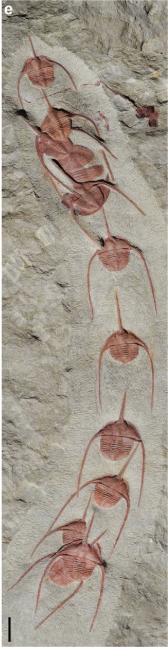


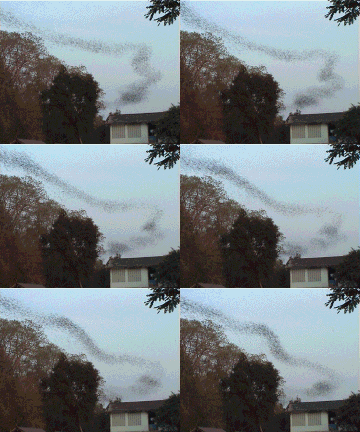
 ムクドリの大群