Loading article…
 | |
| 製品タイプ |
|
|---|---|
| 所有者 | ソニー・インタラクティブエンタテインメント |
| 国 | 南青山、港区、東京都、日本 |
| 紹介された | 1994年12月3日 |
| 市場 | 全世界 |
| キャッチフレーズ | 「遊びには限界がない。」 |
| Webサイト | プレイステーション |
PlayStation (プレイステーション、略称PS)は、 5つの家庭用ビデオゲーム機、2つの携帯型ゲーム機、メディアセンター、スマートフォン、およびオンラインサービスと複数の雑誌で構成されるビデオゲーム ブランドです。このブランドは、ソニーの一部門であるソニー・インタラクティブエンタテインメントによって制作されています。
最初のPlayStationは1994年12月に日本で発売され、翌年には世界中で発売されました。[1]このシリーズのオリジナルゲーム機は、10年足らずで1億台以上を出荷した最初のゲーム機でした。[2]後継機のPlayStation 2は2000年に発売され、2012年末までに1億5500万台以上を販売し、現在までで最も売れている家庭用ゲーム機となっています。 [3]ソニーの次のゲーム機であるPlayStation 3は2006年に発売され、2017年3月までに8740万台以上を販売しました。[4]ソニーの次のゲーム機であるPlayStation 4は2013年に発売され、1日で100万台を販売し、史上最速で売れたゲーム機となりました。[5]シリーズの最新ゲーム機であるPlayStation 5は2020年に発売され[6]、発売後249日間で1000万台を売り上げ、前モデルを抜いてこれまでで最も売れたPlayStationゲーム機となった。[7] PlayStationシリーズで使用されている主なコントローラーシリーズは、 2008年6月までに2800万台を売り上げた振動フィードバックゲームパッドのシリーズであるDualShockである。 [8]
同シリーズ初の携帯型ゲーム機「プレイステーション・ポータブル(PSP)」は、2013年11月までに全世界で累計8000万台を売り上げた。[9]その後継機「プレイステーション・ヴィータ(PSVita)」は、2011年12月に日本で発売され、2012年2月には他の主要地域で発売され、2013年1月までに400万台以上を売り上げた。 [10] プレイステーションTVはマイクロコンソールであり、プレイステーション・ヴィータ携帯型ゲーム機の非携帯型バリエーションである。[11] プレイステーションシリーズとして発売されたその他のハードウェアには、プレイステーションおよびプレイステーション2に統合されたデジタルビデオレコーダーのPSXがあるが、高価格のため短命に終わり、日本国外では発売されなかった。
PlayStation Networkは、登録ユーザー数が約1億1000万人[12](2013年6月現在)、月間アクティブユーザー数が1億300万人を超えるオンラインサービスです。[13](2019年12月現在)。ゲームやさまざまなマルチメディアの購入とダウンロードが可能なオンライン仮想マーケットであるPlayStation Store、サブスクリプションベースのオンラインサービスであるPlayStation Plus、ソーシャルゲームネットワーキングサービスであるPlayStation Homeで構成されており、2015年3月の閉鎖時点では世界中で4100万人以上のユーザーが利用していました。[14] PlayStation Mobile(旧PlayStation Suite)は、モバイルデバイスでPlayStationコンテンツを提供するソフトウェアフレームワークです。バージョン1.xxは、PlayStation Vita、PlayStation TV、およびAndroidオペレーティングシステムを実行する特定のデバイスの両方をサポートしていますが、2014年にリリースされたバージョン2.00はPlayStation VitaとPlayStation TVのみを対象としていました。[15]現在、フレームワークでリリースされる コンテンツは、オリジナルのPlayStationゲームのみで構成されています。[16]
第7世代のPlayStation製品では、テクノロジー&エンジニアリングエミー賞を受賞したグラフィカルユーザーインターフェイスであるXrossMediaBarも使用されています。[17] PlayStation Vitaでは、ソーシャルネットワーキング要素をインターフェイスに統合したLiveAreaと呼ばれるタッチスクリーンベースのユーザーインターフェイスが開始されました。さらに、PlayStation 2とPlayStation 3コンソールは、Linuxベースのオペレーティングシステム(それぞれPlayStation 2用のLinuxとOtherOS)もサポートしていましたが、これはその後廃止されました。このシリーズは、多数のマーケティングキャンペーンでも知られており、最新のものは米国での「Greatness Awaits」および「Play Has No Limits」コマーシャルです。
このシリーズには、 PlayStation Studiosというソニー・インタラクティブエンタテインメントが所有する多くのスタジオのグループがPlayStationコンソール専用にゲームを開発しているため、ファーストパーティのゲームも充実しています。さらに、このシリーズには、地域ごとに異なる名前でソニーが再リリースしたさまざまなゲームがあり、これにはGreatest Hits、Platinum、Essentials、The Bestなどのゲームが含まれます。また、象徴的な4つのPlayStationフェイスボタン ( 、
、 、
、 、
、 )。
)。
歴史
起源

プレイステーションは、ソニーのハードウェアエンジニアリング部門の1つを管理し、後に「プレイステーションの父」と呼ばれるようになったソニーの幹部、久夛良木健の発案によるものである。 [18] [19]
1991年まで、ソニーはビデオゲーム業界に直接関与することはほとんどなかった。同社は任天堂のスーパーファミコン用サウンドチップなど、他のゲーム機の部品を供給し、ビデオゲームスタジオのソニーイメージソフトを運営していた。[20] 1988年に始まった任天堂とソニーの共同プロジェクトの一環として、両社はスーパーファミコンのCD-ROM版の作成に取り組んだが、 [21]任天堂は1991年3月になってもソニーとの契約の存在を否定していた。[22] 1991年6月のコンシューマーエレクトロニクスショーで、ソニーはグリーンブック技術またはCD-iを組み込んだCD-ROMドライブを内蔵したスーパーファミコン、「プレイステーション」(SNES-CDとしても知られる)を発表した。しかし、CESでの発表の翌日、任天堂はソニーとの提携を解消し、代わりに同じ技術を使用するフィリップスと提携することを発表した。 [23]両社間で収益をどのように分配するかについて合意に至らなかったため、任天堂は契約を破棄した。[23]この提携の破棄はソニーの大賀典雄社長を激怒させ、久夛良木を任天堂に対抗するプレイステーションプロジェクトの開発責任者に任命した。[23]

当時、任天堂とソニーの間ではまだ交渉が続いており、任天堂はフィリップスとの新しい提携に関してソニーに「ゲーム以外の役割」を提供していた。この提案は、ソニー社内からビデオゲーム業界に参入したことに対する批判が高まっていた久夛良木によってすぐに拒否された。交渉は1992年5月に正式に終了し、プレイステーションプロジェクトの運命を決定するために、1992年6月にソニー社長の大賀、プレイステーション責任者の久夛良木、およびソニーの取締役会の上級メンバー数名による会議が開催された。会議で久夛良木は、3Dグラフィックでビデオゲームをプレイするという、自身が取り組んでいた独自のCD-ROMベースのシステムを取締役会に発表した。最終的に、ソニー社長の大賀は、久夛良木から任天堂から受けた屈辱を思い出させられた後、プロジェクトを維持することを決定した。しかし、会議に出席していた大多数の強い反対と、ソニーの古い世代の幹部によるプロジェクトに対する広範な社内反対により、久夛良木と彼のチームは、プロジェクトを維持し、MMCD開発プロジェクト(DVDの作成につながった)のためにフィリップスとの関係を維持するために、ソニー本社からソニーが所有する完全に別の金融機関であるソニーミュージックに移らなければなりませんでした。[23]
SCEのプロデューサー赤川良二氏と会長丸山茂雄氏によると、このゲーム機が2D スプライトグラフィックと3Dポリゴングラフィックのどちらに主眼を置くべきかについては不確実性があったという。しかし、日本のアーケードでセガのバーチャファイターが成功したのを見て、ソニーは「プレイステーションの方向性はすぐに明らかになった」と認識し、3Dポリゴングラフィックがゲーム機の主な焦点となった。[24]
プレイステーションのロゴは坂本学がデザインした。坂本は、コンソールの3Dサポートをロゴに反映させたかったが、単に「P」と「S」の文字に見た目の奥行きを加えるのではなく、文字が空間の奥行きの中にあるような錯覚を作った。坂本はまた、赤、黄、緑、青の4つの明るい主要色を使い、ロゴ全体の調和を良くするために緑色を調整するだけで済んだ。坂本は、同じデザインに基づいて白黒のロゴもデザインしたが、これは色が使えない場合のために取っておいた。[25]
ソニー・コンピュータエンタテインメントの設立
ソニー・ミュージックエンタテインメントでは、久夛良木はソニーミュージックのCEOである丸山茂雄や佐藤明と緊密に協力し、1993年11月16日にソニー・コンピュータエンタテインメント株式会社(SCEI)を設立した。 [26] SCEIの基礎となったのはソニーミュージックとの最初の提携であり、これによりSCEIはクリエイティブな才能を社内に引き付けることができ、またソニーミュージックがミュージックディスクで行っていたディスクの製造、マーケティング、プロデュースにおいてもSCEIを支援することができた。SCEIの最後の2人の主要メンバーは、ソニー本社のSCEI社長であったテリー・トクナカとオラフ・オラフソンであった。オラフソンは、1994年に設立されたソニー・コンピュータエンタテインメント・オブ・アメリカ(SCEA)の親会社であるニューヨークに本拠を置くソニー・インタラクティブエンタテインメント[27]のCEO兼社長であった。
SCEIの最初の公式プロジェクトであるPlayStationプロジェクトは、数年の開発期間を経て、1993年にようやくソニーの幹部からゴーサインが出た。また1993年には、後にSCEワールドワイド・スタジオの社長となるフィル・ハリソンがSCEIに採用され、新しいPlayStationプラットフォーム向けのゲームを制作する開発者や出版社を誘致した。[23]
1994年3月のComputer Gaming World誌は、「ソニーPS-X」が「今年末までに日本で発売され、小売価格は400ドル未満になる」という噂を報じた。 [28] 1994年に東京のホテルでソニーがゲーム出版社や開発者に新しいコンソールの技術デモと配布計画を披露した後、多くの開発者がプレイステーションにアプローチし始めた。そのうちの2社は後に主要なパートナーとなった欧米のエレクトロニック・アーツと日本のナムコだった。開発者をこのプラットフォームに惹きつけた要因の1つは、カートリッジシステムを採用した任天堂のライバルコンソールに比べてはるかに安価で製造が容易な、3D対応のCD-ROMベースのコンソールの使用だった。このプロジェクトは最終的に1994年12月に日本の店頭に並び、競合のセガサターンよりも低価格だったため、大ヒットを記録した。このコンソールの人気は、北米とヨーロッパで発売された後、世界中に広まった。 [23]
家庭用ゲーム機
プレイステーション
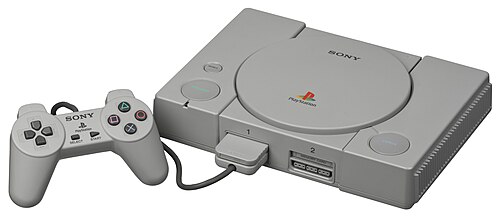
1994年12月3日に日本で発売されたオリジナルのPlayStationは、コンソールおよび携帯型ゲーム機のPlayStationシリーズの初代機でした。その後、ネットやろぜ(PlayStationのゲームやアプリケーションをプログラムするためのツールと説明書が付属した特別な黒いPlayStation)、「PS one」(オリジナルの小型版)、「PocketStation 」 (PlayStationのゲームを強化し、メモリカードとしても機能する携帯型ゲーム機)など、後継機やアップグレード機が発売されました。これは、セガサターンやニンテンドー64と競合する第5世代のビデオゲーム機の一部でした。2003年12月までに、PlayStationとPS oneは合計1億249万台を出荷し、[29]最終的に1億2000万台を売り上げた最初のビデオゲーム機となりました。[2]
PSワン
2000年7月7日[30]に後継機のPlayStation 2と同時に発売されたPS One(PS oneと表記)は、オリジナルのPlayStationビデオゲームコンソールのかなり小型で再設計されたバージョンでした。[31] PS oneは、その年の残りの期間、後継機を含む他のすべてのコンソールよりも売れ続けました。[31]前任者からの主な変更点は2つあり、1つ目はコンソールの外観の変更、2つ目はホームメニューのグラフィカルユーザーインターフェイスです。これは、それまでPALコンソールでのみ使用されていたGUIのバリエーションでした。
プレイステーション2

2000年にドリームキャストの15か月後、他の競合製品であるXboxとゲームキューブの1年前に発売されたプレイステーション2は、第6世代のビデオゲームコンソールの1つであり、ほとんどのオリジナルのプレイステーションゲームと下位互換性があります。前身と同様に、よりスリムな再設計を受けました。これは世界で最も成功したコンソールであり、 [32] 2012年12月28日時点で1億5500万台以上を販売しました。 [3] 2005年11月29日、PS2は発売から5年9か月以内に出荷台数1億台に到達した最速のゲームコンソールになりました。この業績は、同じ数字に達するのに「発売から9年6か月」かかった前身のプレイステーションよりも早く達成されました。[2]日本でのプレイステーション2の出荷は2012年12月28日に終了しました。[33] ガーディアン紙は2013年1月4日にPS2の生産が世界中で終了したと報じましたが、調査によると、世界中で多くの人が使用しなくてもまだ所有していることがわかりました。プレイステーション2は、2015年現在、史上最も売れたゲーム機としてランク付けされています。[34]
スリムラインモデル
オリジナルのPlayStation 2の発売から4年後の2004年に発売されたPlayStation 2 Slimlineは、PlayStation 2の最初の主要な再設計でした。前モデルと比較して、Slimlineはより小さく、より薄く、より静かで、内蔵イーサネットポートも含まれていました(一部の市場では統合モデムも含まれています)。2007年、ソニーはオリジナルのSlimlineよりも軽量なSlimlineの改訂版とより軽量なACアダプターの出荷を開始しました。[35] 2008年、ソニーはSlimlineのさらに別の改訂版をリリースしました。これは、オリジナルのPlayStation 2のように電源をコンソール自体に組み込むという徹底的な内部設計により、コンソールの総重量がさらに軽減されました。[36]
プレイステーション3

2006年11月11日に日本で発売されたプレイステーション3(PS3)は、ソニーの第7世代ゲーム機です。マイクロソフトのXbox 360や任天堂のWiiと競合します。PS3は、 Sixaxisワイヤレスコントローラーを通じてモーションセンサー技術を導入したシリーズ初のコンソールです。このコンソールにはブルーレイディスクプレーヤーも組み込まれており、高解像度を備えています。PS3は当初20GBまたは60GBのハードドライブで提供されていましたが、長年にわたって容量が段階的に増加し、最大500GBまで利用可能になりました。プレイステーション3は、2013年11月時点で世界中で8000万台以上を販売しています。[37]
スリムモデル
PlayStation 3は、前モデルと同様に、2009年に「スリム」モデルとして再リリースされました。再設計されたモデルは、以前のモデルよりも33%小さく、36%軽く、消費電力は34%から45%少なくなっています。[38] [39]さらに、再設計された冷却システムと、45nm製造プロセスに移行したより小さなCellプロセッサを備えています。 [40]発売後3週間で100万台以上を売り上げました。[41]この再設計では、リモコンをコントローラーとして使用してHDMI経由でコンソールを制御できるCEC(メーカーのブランド名ではBraviaSync、VIERA Link、EasyLinkなどと呼ばれます)もサポートされています。PS3スリムは、45nm Cellにより、以前のモデルよりも静かに動作し、発熱も少なくなっています。 PS3 Slimには、以前のPS3モデルのようにコンソールの背面にあった「主電源」スイッチ(PlayStation 2 slimに類似)がなくなりました。 [38] 2009年9月1日に北米とヨーロッパで正式に発売され、2009年9月3日に日本、オーストラリア、ニュージーランドで発売されました。[38] [42] [43]
スーパースリムモデル
2012 年、ソニーは新しい「スーパー スリム」PlayStation 3 を発表しました。新しいコンソールは、完全に再設計されたケースに、ディスク ドライブ (コンソールの上部に移動) を覆うスライド ドアがあり、重量は 4.3 ポンドで、以前の「スリム」モデルよりも約 3 ポンド軽量です。コンソールには、12 GB のフラッシュ メモリまたは 250 GB、500 GB のハード ドライブが搭載されています。スーパー スリム PS3 と厳選されたゲームを含むバンドルがいくつか用意されています。
プレイステーション4
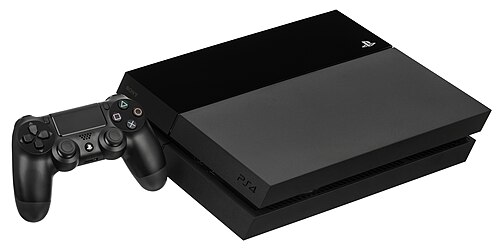
PlayStation 4 (PS4)は、ソニー・コンピュータエンタテインメントが2013年2月20日の記者会見で発表した。この会議で、ソニーは新しいコンソールのハードウェア仕様をいくつか明らかにした。 [44] [45]これにより、PlayStationシリーズにx86アーキテクチャが導入された。主任システムアーキテクトのマーク・サーニーによると、PlayStation 4の開発は2008年に始まったという。[46] PlayStationヨーロッパのCEO、ジム・ライアンは2011年に、ソニーは次世代コンソールを競合他社に遅れをとって発売することは避けたいと強調した。[47]
新しいアプリケーションやサービスの中で、ソニーはPlayStation Appを導入し、PS4の所有者がスマートフォンやタブレットをセカンドスクリーンにしてゲームプレイを強化できるようにした。[48]同社はまた、Gaikaiの技術を搭載したPlayStation Nowゲームストリーミングサービスを開始する予定だった。[49] [50]新しいコントローラーにシェアボタンを組み込み、友人からライブストリーミングされているゲーム内コンテンツを視聴できるようにすることで、ソニーはソーシャルゲームプレイにも重点を置くことを計画していた。[48] PlayStation 4は、2013年11月15日に北米で最初に発売された。ビデオゲーム機の第8世代の一部として、マイクロソフトのXbox One、任天堂のWii UおよびSwitchと競合する。
スリムモデル
PlayStation 4 Slim(公式にはPlayStation 4またはPS4として販売)は、2016年9月7日に発表されました。これは、合理化されたフォームファクタを備えたオリジナルのPS4ハードウェアの改訂版です。新しいケースは40%小さくなり、丸みを帯びたボディを持ち、コンソールの上部はツートン仕上げではなくマット仕上げになっています。前面の2つのUSBポートの間隔は広くなり、光オーディオポートも削除されました。[168] DualShock 4コントローラーのマイナーアップデートが付属し、タッチパッドの上部からライトバーが見えるようになり、部分的に光沢のある黒ではなく、暗いマットグレーの外装になりました。PS4 Slimは2016年9月15日に発売され、500 GBモデルがオリジナルのPS4モデルと同じ価格帯でした。[169]モデル番号はCUH-2000です。[170]
プロモデル
PlayStation 4 Pro、略してPS4 Pro(当初はコードネームNeoで発表された)[35]は、2016年9月7日に発表された。モデル番号はCUH-7000である。[170]これは、4.2テラフロップスの処理能力を備えたアップグレードされたGPUとより高いCPUクロックを含む、ハードウェアが改良されたPlayStation 4のアップデートバージョンである。主に、選択されたゲームを4K解像度でプレイできるようにし、PlayStation VRの品質を向上させるように設計されています。すべてのゲームはPS4とPS4 Proの間で下位互換性と上位互換性がありますが、最適化されたゲームはPS4 Proでグラフィックパフォーマンスが向上します。オンラインソースから4Kビデオをストリーミングすることはできますが、PS4 ProはUltra HD Blu-rayをサポートしていません。[171] [172] [173]さらに、PS4 Proは1080pでリモートプレイできる唯一のPS4モデルです。他のモデルは720pに制限されています。[174]
プレイステーション5

PlayStation 5(PS5)[51]は2020年11月12日に世界中で発売され、同月に発売されたXbox Series XおよびSeries Sとともに、第9世代のビデオゲーム機の一部です。PS5の最初のニュースは、2019年4月にWiredのインタビューでマーク・サーニーから発表されました。 [52]ソニーはPlayStation 5を次世代コンソールにすることを意図しており、2020年末までに世界中に出荷する予定でした。 [53] 2019年初頭、ソニーは2019年3月31日までの四半期の財務報告で、新しい次世代ハードウェアが開発中であることを確認しましたが、出荷は2020年4月より早くなることはないとしました。[54]
現在の仕様は2019年10月に発表された。[55]このコンソールは、 7ナノメートルプロセスノードで製造されたAMDのZen 2マイクロアーキテクチャに基づく8コア16スレッドCPUを使用している。グラフィックプロセッサは、レイトレーシングレンダリングのハードウェアアクセラレーションをサポートし、リアルタイムレイトレーシンググラフィックスを可能にするRDNAマイクロアーキテクチャを使用したAMDのNaviファミリーのカスタムバリアントである。 [55]新しいコンソールにはカスタムSSDストレージが搭載されており、サーニーは、ゲームの没入感を高めるために高速な読み込み時間とより高い帯域幅が必要であること、および8K解像度でディスクから必要なコンテンツのストリーミングをサポートすることを強調した。[52] 2019年10月のWiredとの2回目のインタビューでは、新しいハードウェアの詳細が明らかになった。コンソールの統合型Blu-rayドライブは、100GBのBlu-rayディスク[53]とUltra HD Blu-rayをサポートする。[56] SSDを活用するためにディスクからのゲームのインストールは必須ですが、ユーザーはゲームのマルチプレイヤーコンポーネントのみをインストールするなど、インストールする量を細かく制御できます。[53]ソニーは、PlayStation 5のゲームプレイ中断状態を改善し、PlayStation 4よりも消費電力を抑えるように開発しています。[57]
このシステムの新しいコントローラーであるDualSenseには、ゲーム内で弓矢を引く動作中に抵抗を変えるなど、必要に応じてプレイヤーへの抵抗を変えることができるアダプティブトリガーがあります。[53]このコントローラーはボイスコイルアクチュエーターによる強力な触覚フィードバックも備えており、改良されたコントローラースピーカーと相まって、ゲーム内でのフィードバックを向上させることを目的としています。[53] USB-C接続とより高い定格バッテリーは、新しいコントローラーの他の改良点です。[53]
PlayStation 5は、完全に刷新されたユーザーインターフェースを特徴としている。[51] PlayStation 5は、ほとんどのPlayStation 4およびPlayStation VRゲームと下位互換性があり、サーニーは新しいコンソールへの移行はスムーズなものになると述べた。[52] [55]その後のインタビューで、ジム・ライアンはPlayStation 5がPlayStation 4ゲームの「99%」をプレイできると語ったが、これは「数千」のサンプルサイズから導き出された推定値である。[58] CES 2020で、ソニーはプラットフォームの公式ロゴを発表した。[59]
比較
ハンドヘルドシステム
プレイステーションポータブル
-
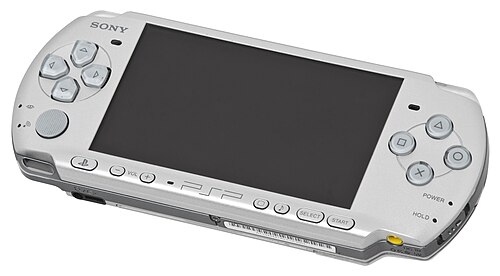
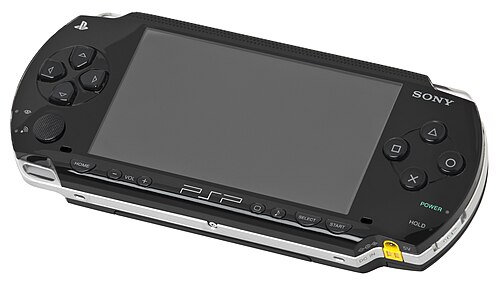 初代プレイステーションポータブル(PSP-1000)
 -
-
-
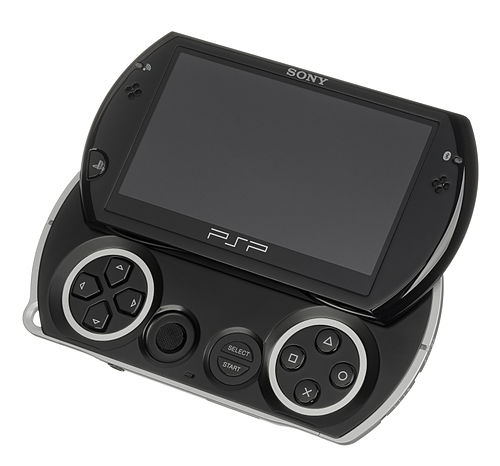 PSP Go
(オープンポジション) -
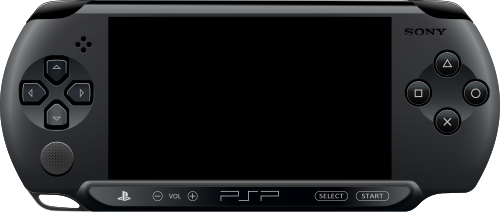 PSP ストリート(PSP-E1000)
プレイステーションポータブル(PSP)は、任天堂のDSコンソールに対抗するソニーの最初の携帯型ゲーム機でした。オリジナルモデル(PSP-1000)は2004年12月と2005年3月に発売されました。[89]このゲーム機は、ゲームと映画の両方を保存できるユニバーサルメディアディスク(UMD)と呼ばれる新しい独自の光学式ストレージメディアを初めて採用しました。 [90] [91] 32MBの内部フラッシュメモリストレージを搭載しており 、メモリースティックPROデュオカードで拡張できます。[92] PS3と同様のコントロールレイアウトで、プレイステーションのロゴボタンと('三角形')、(「丸/O」)、(「クロス/X」)と(「四角い」) ボタンの白色の形状。
PSP-2000およびPSP-3000モデル
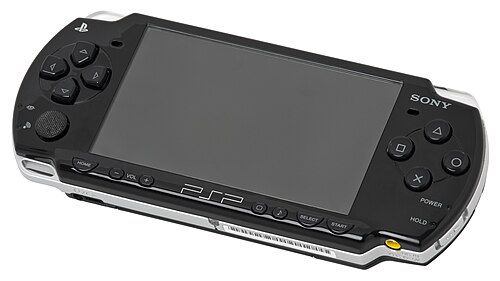
PSP-2000(PAL地域ではSlim & Liteとしても知られる)は、2007年9月に発売されたPlayStation Portableの最初の主要なハードウェア改訂版である。2000シリーズは、オリジナルのPlayStation Portableよりも33%軽く、19%薄型になった。[93] [94]バッテリー容量も1/3に減少したが、消費電力が低減したため、駆動時間は前モデルと同じままであった。旧モデルのバッテリーも引き続き動作し、プレイ時間を延ばすことができる。[95] PSP Slim & Liteは新しい光沢仕上げになっている。シリアルポートも、新しいビデオ出力機能に対応するために変更された(ただし、旧型のPSPリモコンとの互換性はなくなった)。PSP-2000では、PSPゲームは外部モニターまたはテレビにプログレッシブスキャンモードでのみ出力されるため、プログレッシブスキャンをサポートしないテレビではPSPゲームは表示されず、ゲーム以外のビデオはプログレッシブモードまたはインターレースモードで出力される。USB充電も可能になった。[96] PSP-2000ではボタンの反応も良くなったと報告されている。[97] 2008年にソニーはPSP-3000と呼ばれる2番目のハードウェア改訂版をリリースした。これには内蔵マイクやアップグレードされた画面、インターレースモードでPSPゲームを出力する機能など、PSP-2000にはなかったいくつかの機能が含まれていた。
PSP Goモデル
2009年10月に発売されたPSP Goは、これまでで最大のPlayStation Portableの再設計である。以前のPSPモデルとは異なり、PSP GoにはUMDドライブが搭載されていないが、代わりに ゲーム、ビデオ、その他のメディアを保存するための16GBの内蔵フラッシュメモリが搭載されている。[ 98 ]これは、メモリースティックマイクロ(M2)フラッシュカードを使用することで最大32GBまで拡張できる。また、以前のPSPモデルとは異なり、PSP Goの充電式バッテリーはユーザーが取り外したり交換したりできない。このユニットは、オリジナルのPSP-1000よりも43%軽く、56%小さくなっており、[99] PSP-3000よりも16%軽く、35%小さくなっている。[100] 3.8インチ、480 × 272ピクセルのLCDを搭載している[101](以前のPSPモデルのより大きな4.3インチ、480 × 272ピクセルのLCDと比較して)。[102]画面を上にスライドすると、主なコントロールが表示されます。全体的な形状とスライド機構は、ソニーのインターネットデバイスmylo COM-2に似ています。[103] PSP Goは、前身のPSP-3000と並行して製造・販売されましたが、後継機ではありませんでした。[99] PSP Goのすべてのゲームは、PlayStation Storeから購入してダウンロードする必要があります。ハンドヘルドは、オリジナルのPSPの物理メディアであるユニバーサルメディアディスクと互換性がありません。ハンドヘルドは、 Bluetooth接続を介してPlayStation 3のコントローラーであるSixaxisおよびDualShock 3との接続も備えています。[100]
PSPストリート
PSPストリート(PSP-E1000とも呼ばれる)は、以前のPSPモデルとは異なり、Wi-Fiやステレオスピーカー(単一のモノラルスピーカーに置き換えられた)を搭載していない、予算重視のPSPモデルであり[104]、スリムなPlayStation 3に似たマットな「チャコールブラック」仕上げが施されています。[105] E1000はGamescom 2011で発表され、PAL地域全体で希望小売価格99.99ユーロで販売されました。[105]
プレイステーション ヴィータ
PlayStation Vitaは、2011年12月17日に日本で、2012年2月22日に北米で発売され、[106]以前はNext Generation Portable(NGP)というコードネームで呼ばれていました。2011年1月27日のPlayStation Meeting 2011でソニーによって正式に発表されました。[108]ハンドヘルドのオリジナルモデルであるPCH-1000シリーズは、5インチOLEDタッチスクリーン、[109] 2つのアナログスティック、背面タッチパッド、Sixaxisモーションセンサー、4コアARM Cortex-A9 MPCoreプロセッサを備えています。
新しいPCH-2000シリーズシステムは、2013年9月に東京ゲームショウに先立って行われたSCEJAプレスカンファレンスで発表されたデバイスの軽量化再設計です。このモデルは、オリジナルモデルと比較して20%薄く、15%軽く、バッテリー寿命が1時間長く、OLEDの代わりにLCDを搭載し、マイクロUSBタイプBポート、1GBの内部ストレージメモリを備えています。2013年10月10日に日本で発売され、白、黒、ピンク、黄色、青、オリーブグリーンの6色で、2014年5月6日に北米で発売されました。[110]
Vitaは2019年3月に生産終了となった。SIEのジム・ライアン社長は、Vitaは素晴らしいデバイスだったが、携帯型ゲーム機からは離れており、「明らかに、それはもはや我々がやるべきビジネスではない」と述べた。[25]
プレイステーションポータル
2023年初頭、ソニーは家庭用ゲーム機からPS5のゲームをストリーミングできる新しいポータブルシステム(当初はProject Qというコード名で発表されていた)の開発を発表し、2023年8月23日にPlayStation Portalとして正式に発表された。[111] [112] 2023年11月15日に199.99ドルで発売された。
コントローラー
初期のPlayStationコントローラー
-
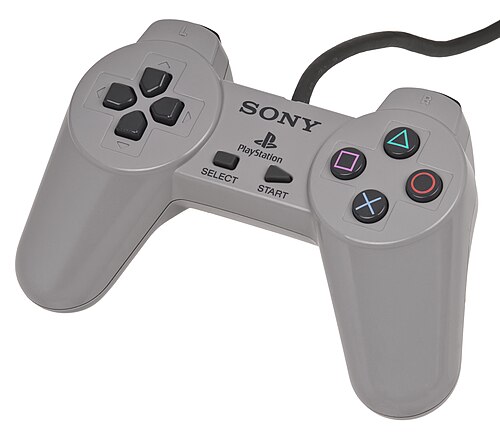 オリジナルのプレイステーションコントローラー
 -
 PlayStation アナログジョイスティック
 -
 プレイステーションマウス
 -
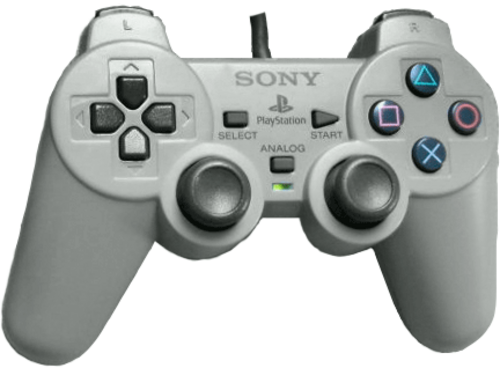 デュアルアナログコントローラ
1994年に発売されたPlayStationコントロールパッドは、初代PlayStation用に作られた最初のコントローラーでした。十字キー、4つのメイン選択ボタン((「グリーントライアングル」)(「赤い丸/赤いO」))、(「ブルークロス/ブルーエックス」)と(「ピンクの四角」)、およびスタートボタンと選択ボタンが前面にあります。 'ショルダーボタン' も上部にあります [L1、L2、R1、R2](側面から名前が付けられています [L = 左、R = 右] と 1 と 2 [上部と下部])。 1996年、ソニーはフライトシミュレーションゲームで使用するためにプレイステーションアナログジョイスティックをリリースしました。[113]その後、オリジナルのデジタルコントローラーは、アナログジョイスティックと同じポテンショメーター技術に基づいて2つのアナログスティックを追加したデュアルアナログに1997年に置き換えられました。[114]このコントローラーは、その後、デュアルショックコントローラーにも引き継がれました。
DualShock、Sixaxis、DualSense
-
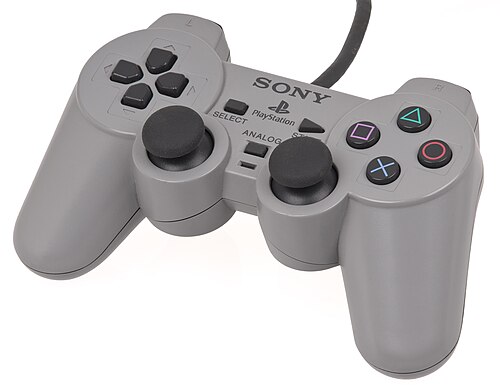 オリジナルのDualShockコントローラー
 -
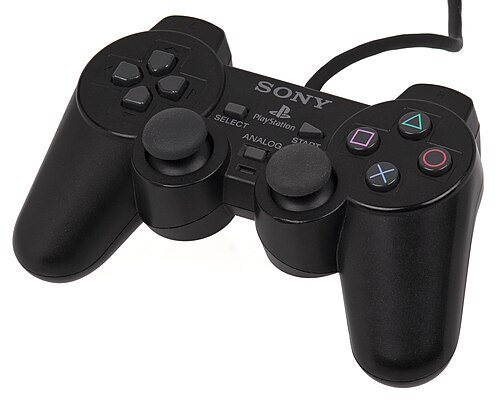 DualShock 2 コントローラー
 -
 Sixaxis コントローラー
 -
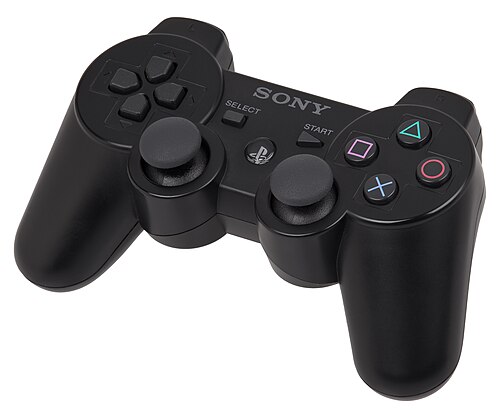 DualShock 3 コントローラー
 -
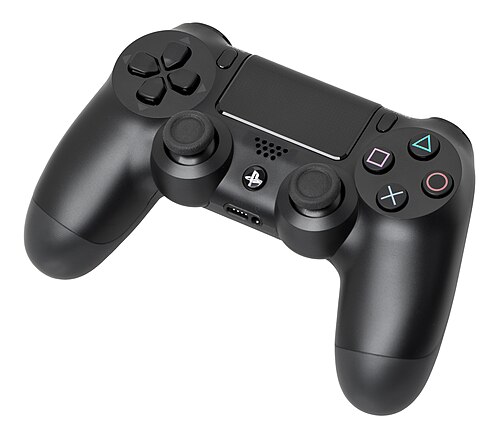 DualShock 4 コントローラー
 -
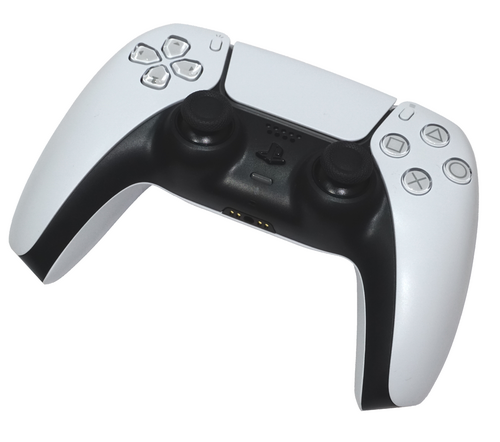 DualSense コントローラー
 -
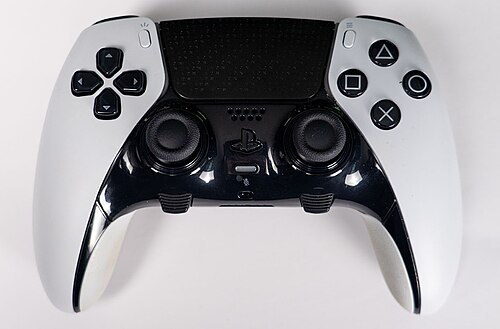 DualSense Edgeコントローラー
1998年に発売されたPlayStation用DualShockコントローラーは、前身のDual Analogの後継機となり、PlayStationブランドのコントローラーとしては最も長く販売されたシリーズとなった。オリジナルのデジタルコントローラー(、、、、L1、L2、R1、R2、スタート、セレクト、およびDパッド)、DualShockには以前のデュアルアナログコントローラーと同様の2つのアナログスティックが搭載されており、これを押下することでL3ボタンとR3ボタンをアクティブにすることもできます。[115]
DualShock シリーズは、PlayStation 用にリリースされた 4 番目のコントローラーである DualShock、PlayStation 2 用にリリースされた唯一の標準コントローラーである DualShock 2、PlayStation 3 用にリリースされた 2 番目で現在のコントローラーである DualShock 3、そして大幅な再設計を経て PlayStation 4 のデフォルト入力となった DualShock 4 の 4 つのコントローラーで構成されています。リリース時には PS3 との互換性は当初 USB 経由でのみでしたが、最終的にはファームウェアの更新により Bluetooth 接続が有効になりました。Sixaxis は PlayStation 3 の最初の公式コントローラーであり、DualShock シリーズと同じデザインに基づいています (ただし、DualShock シリーズのコントローラーの振動モーターはありません)。
Dual Analog と同様に、DualShock と DualShock 2 にはアナログスティックの間に「アナログ」ボタンがあり、アナログスティックのオン/オフを切り替えることができます (元のコントローラーのデジタル入力のみをサポートするゲームで使用)。PlayStation 3 Sixaxisと DualShock 3 コントローラーでは、アナログスティックは常に有効になっています。Sixaxis 以降、コントローラーには「PlayStation ボタン」(PS ロゴが組み込まれており、Xbox 360の「ガイド」ボタンと同様の機能) が含まれていました。PlayStation ボタンは、DualShock と DualShock 2 コントローラーの「アナログ」ボタンに代わるものです。PS3 で PS ボタンを押すと XMB が起動し、押し続けると PS4 で「クイックメニュー」と呼ばれるシステムオプション (ゲームの終了、コントローラー設定の変更、システムの電源オフ、コントローラーの電源オフなど) が表示されます。[116]
プレイステーションムーブ
PlayStation Move は、ソニー・コンピュータエンタテインメント(SCE)のビデオゲームコンソール PlayStation 3 用のモーションセンサー付きゲームコントローラープラットフォームです。 PlayStation Move は、ハンドヘルドモーションコントローラーワンドをベースに、PlayStation Eyeウェブカメラを使用してワンドの位置を追跡し、ワンドの慣性センサーを使用して動きを検出します。 PlayStation Move は、2009 年 6 月 2 日に初めて公開され、2010 年第 3 四半期/第 4 四半期に発売されました。発売時に利用可能なハードウェアには、メインの PlayStation Move モーションコントローラーとオプションの PlayStation Move サブコントローラーが含まれていました。[117] PlayStation Move は既存の PlayStation 3 コンソールに実装されていますが、ソニーは Move のデビューを独自の主要な「プラットフォームの発売」と見なし、積極的なマーケティングキャンペーンを計画していると発表しています。 コントローラーを個別に販売することに加えて、[118]ソニーは PlayStation Move ハードウェアのいくつかの異なるバンドルオプションも提供することを計画しています。これには、PS Eye、Move モーションコントローラー、デモ/サンプラーディスクを含むスターターキット ( 100ドル未満) が含まれます。[119] PS3本体、 DualShock 3ゲームパッド、PS Eye、Moveモーションコントローラがセットになったフルコンソールパック、および一部のゲームとMoveモーションコントローラのバンドル。 [118]
その他のハードウェア
ポケットステーション
PocketStationは、ソニー・コンピュータエンタテインメントが初代PlayStation用に開発したメモリーカード周辺機器である。ソニーではメモリーカードと小型パーソナルデジタルアシスタントを組み合わせたものとして分類されている。[120] 1999年1月23日に日本で独占発売され、[121]モノクロLCD、スピーカー、リアルタイムクロック、赤外線通信機能を備えていた。また、PlayStationのメモリーカードスロットに接続することで、標準のPlayStationメモリーカードとしても使用できた。[120]日本では非常に人気があり、ソニーは当初米国でも発売する予定だったが、製造や需給の問題により最終的に計画は中止された。[122] [123]
PSone用LCDスクリーン
PSone コンソールと同時にリリースされた、または同梱されていたオプションの 5 インチ LCD 画面 (SCPH-131)。
プレイステーション(2003)
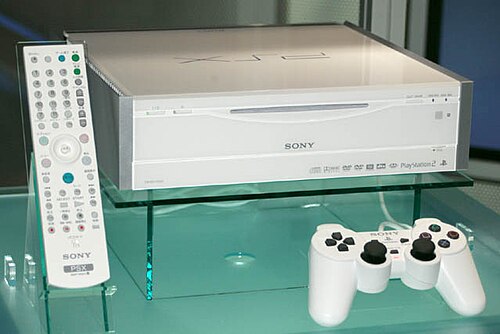
2003年に日本でのみ発売されたソニーPSXは、DVRとPlayStation 2の完全統合型ビデオゲームコンソールでした。XrossMediaBar(XMB)[124]を採用した最初のソニー製品であり、 PlayStation PortableとリンクしてUSB経由でビデオや音楽を転送できます。[125]ビデオ、写真、オーディオ編集用のソフトウェアも搭載されています。 [124] PSXは、内蔵ブロードバンドアダプターを使用してオンラインゲームの互換性をサポートしています。PS2 HDDを使用するゲーム(たとえば、ファイナルファンタジーXI)もサポートされています。[126]これは、デバイス自体にコントローラーが付属していないPlayStationブランドでソニーがリリースした最初の製品でした。[127]
テレビ
2010年に発売されたソニーBRAVIA KDL22PX300は、PlayStation 2コンソールと4つのHDMIポートを搭載した22インチ(56cm)720pテレビです。[128]
24 インチ 1080p PlayStation ブランドの 3D テレビ (正式にはPlayStation 3D Displayと呼ばれます)は、2011 年後半にリリースされました。この 3D テレビの特徴はSimulViewです。マルチプレイヤー ゲーム中、各プレイヤーは分割画面を見るのではなく、それぞれの 3D メガネを通して自分の画面 (フル HD) だけがテレビに表示されます(たとえば、プレイヤー 1 は自分の 3D メガネを通して自分の画面だけが表示されます)。
プレイTV
PlayTV は、PlayStation 3 をHDTVまたはDTV受信機、およびデジタル ビデオ レコーダー(DVR) として機能させることができるPlayStation 3のアドオン ユニットです。
ソニー・エリクソン Xperia Play
Xperia Play は、ソニー・エリクソンがゲーマー向けに開発した、PSP Go に似たスライドアップ式ゲームパッドを備えた Android 搭載スマートフォンで、 PlayStation Certified を取得した初のスマートフォンです。
ソニータブレット
Sony Tablet は、 2011 年、2012 年、2013 年にリリースされたPlayStation 認定Android タブレットです。PlayStation 3 コントローラーとの接続が可能で、専用アプリケーションを使用して PlayStation ネットワークと統合します。2011 年から 2013 年にかけてリリースされたモデルは、S、Sony Tablet S、Sony Tablet P、Xperia Tablet S、Xperia Tablet Z です。
プレイステーションTV
PlayStation TV(アジアではPlayStation Vita TVとして知られている)は、マイクロコンソールであり、PlayStation Vitaハンドヘルドの非ポータブル版である。2013年9月9日にソニー・コンピュータエンタテインメントジャパンのプレゼンテーションで発表された。ディスプレイ画面の代わりに、コンソールはHDMI経由でテレビに接続する。ユーザーはDualShock 3コントローラーを使用してプレイできるが、コントローラーとハンドヘルドの機能の違いにより、システムのタッチスクリーン、背面タッチパッド、マイク、カメラに依存するゲームなど、一部のゲームはPS TVと互換性がない。このデバイスは、100を超えるVitaゲーム、およびさまざまなデジタルPlayStation Portable、PlayStation、PCエンジンタイトルと互換性があると言われている。このシステムはPlayStation 4とのリモートプレイ互換性をサポートしており、プレーヤーはPS4からPS TVに接続された別のテレビにゲームをストリーミングできるほか、ユーザーはHuluやニコニコなどのビデオサービスのコンテンツをストリーミングしたり、PlayStation Storeにアクセスしたりできる。このシステムは、2013年11月14日に日本で、 2014年10月14日に北米で、2014年11月14日に欧州とオーストラリアで発売されました。 [129]
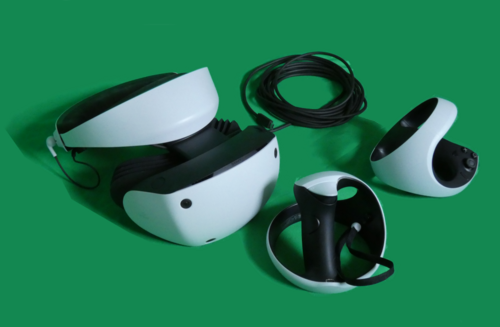
プレイステーションVR
PlayStation VRは、ソニー・コンピュータエンタテインメントが製造するバーチャルリアリティデバイスです。5.7インチ、1920×1080解像度のOLEDディスプレイを搭載し、120Hzで動作するため、ぼやけがなく滑らかな画像を生成します。また、デバイスの遅延は18ms未満と低遅延です。[130]さらに、テレビ用とヘッドセット用の2セットの画像を生成します。また、3Dオーディオ技術を搭載しているため、プレイヤーはあらゆる角度から音を聞くことができます。PlayStation VRは2016年10月に発売されました。[131]
プレイステーション クラシック
プレイステーション クラシックは、1994年モデルのオリジナル プレイステーション コンソール SCPH-1001 のミニチュア版で、20 種類のゲームと 2 つのオリジナル スタイルのコントローラーがプリロードされています。2018年 12 月 3 日、オリジナル コンソールの発売 24 周年にあたる日に発売されました。[132]
画像ギャラリー
-

-
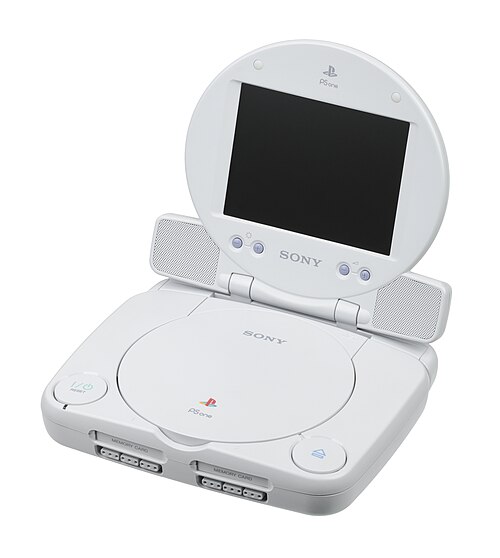 PSone用LCDスクリーン
 -
-
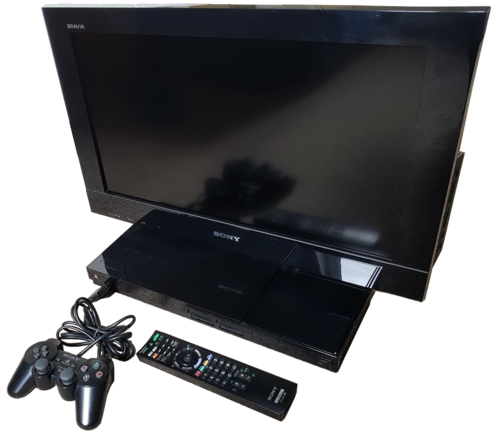 ブラビア KDL22PX300
 -
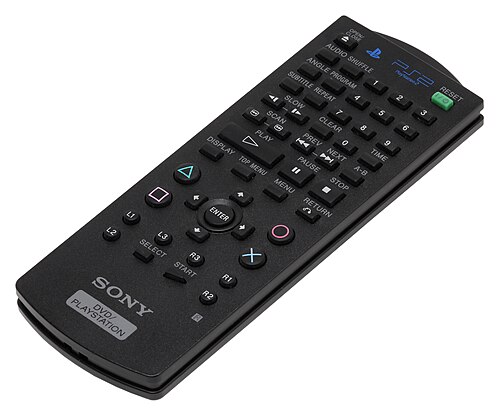 公式PS2 DVDリモコン
 -
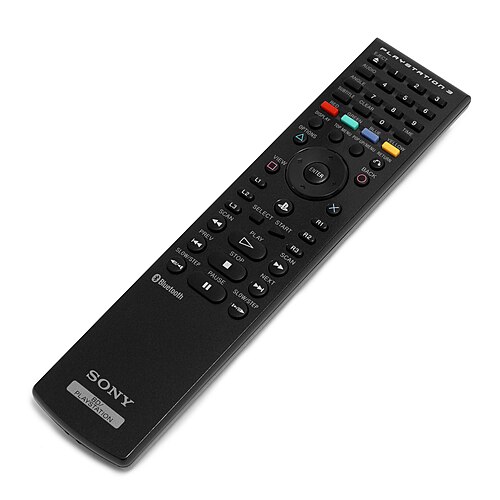 PlayStation 3 公式 Bluetooth リモコン
 -

-

-
 Xperia Play
(オープンポジション) -

-

-

-

-
-

.png/500px-PSVR2_(Non-Stereoscopic).png)
.png/500px-PlayStation_Classic_Konsole_+_Controller_(transparenter_Hintergrund).png)
ゲーム
.jpg/500px-Shopping_for_Games_(29153720530).jpg)
各コンソールにはさまざまなゲームがあります。PlayStation 2、PSX、PlayStation 3は下位互換性があり、オリジナルのPlayStationでリリースされたほとんどのゲームをプレイできます。これらのゲームの一部はPlayStation Portableでもプレイできますが、PlayStation StoreのPS one Classicsリストから購入してダウンロードする必要があります。PlayStation 2でリリースされたゲームは現在、下位互換性のあるオリジナルのコンソール、PSX、およびPlayStation 3の初期モデルでのみプレイできます。PlayStation 3には、Blu-rayディスクでリリースされるゲームとPlayStation Storeからダウンロードできるゲームの2種類のゲームがあります。PlayStation Portableには、物理メディア、ユニバーサルメディアディスク、PlayStation Storeからのデジタルダウンロードの両方で利用できる多数のゲームがあります。ただし、一部のゲームはUMDでのみ利用可能で、他のゲームはPlayStation Storeでのみ利用可能です。PlayStation Vitaには、物理メディア、 PlayStation Vitaカード、およびPlayStation Storeからのデジタルダウンロード の両方で利用できるゲームがあります。
ファーストパーティゲーム

PlayStation Studios は、ソニー・インタラクティブエンタテインメントが所有するビデオゲーム開発グループです。PlayStation シリーズのコンソール専用のビデオゲームの開発に専念しています。このシリーズは、レーシングビデオゲームのグランツーリスモシリーズなどのベストセラーフランチャイズや、アンチャーテッドシリーズなどの高い評価を得ているタイトルを数多く生み出してきました。その他の有名なフランチャイズには、ゴッド・オブ・ウォー、ラチェット&クランク、ツイステッドメタル、最近ではリトルビッグプラネット、インフェイマス、ラストオブアス、スパイダーマンなどがあります。
再リリース
Greatest Hits(北米)、Platinum Range(PAL地域)、The Best(日本とアジア)は、ソニーのPlayStation、PlayStation 2、PlayStation 3、PlayStation Portableコンソール用のビデオゲームで、ソニーにより公式に低価格で再リリースされています。各地域には、再リリースプログラムに参加するための独自の資格があります。当初、PlayStation時代には、ゲームがGreatest Hitsシリーズに入るには、少なくとも150,000コピー(後に250,000コピー) [133]を販売し、少なくとも1年間市場に出ている必要がありました[134] 。PlayStation 2時代には、要件が増え、最小販売数が400,000に増加し、ゲームは少なくとも9か月間市場に出ている必要がありました。[133] PlayStation Portableの場合、ゲームは少なくとも9か月間市場に出ていて、250,000コピー以上を販売する必要がありました。[135]現在、PlayStation 3のゲームがグレイテストヒッツの基準を満たすには、10か月間市場に出回っていて、少なくとも50万本を販売している必要があります。[136] PS one Classicsは、もともとPlayStationでリリースされ、PlayStation 3およびPlayStation Portable用にPlayStation Storeで再リリースされたゲームです。Classics HDは、PlayStation 2のゲームをPlayStation 3用にリマスターしたコンピレーションで、アップスケールされたグラフィック、PlayStation Moveサポート、3Dサポート、PlayStation Networkトロフィーなどの追加機能が1枚のディスクにまとめられています。PlayStation Mobile (旧PlayStation Suite)は、クロスプラットフォーム、クロスデバイスのソフトウェアフレームワークで、現在はオリジナルのPlayStationゲームであるPlayStationコンテンツを、 PlayStation Certified AndroidデバイスやPlayStation Vitaなどの複数のデバイスで提供することを目的と
プレイステーション インディーズ
ソニーはPlayStation 3にデジタル配信ストアを組み込んで以来、インディーズゲーム開発を一般的にサポートしてきましたが、当初は開発者がインディーズゲームをプラットフォームで認定するには複数の手順を完了する必要がありました。ソニーはPlayStation 4への移行時にプロセスを改善し、簡素化しました。[137]
ソニーはPlayStation 4からPlayStation 5への移行の準備として、2020年7月に吉田修平氏が率いる新しいPlayStation Indiesプログラムを導入しました。このプログラムの目標は、PlayStation 4と5向けの新作や近日発売予定のインディーズタイトルにスポットライトを当てることであり、パラッパ・ザ・ラッパー、塊魂、リトルビッグプラネット、風ノ旅ビトなどの過去のタイトルに似た、より革新的で斬新なタイトルに焦点を当てています。ソニーはまた、このプログラムの一環として、PlayStation Nowシリーズにさらに多くのインディーズタイトルを導入する予定です。[138]
オンラインサービス
PlayStation 2オンラインサービス
PlayStation コンソールでのオンライン ゲームは、2001 年 7 月に日本で PlayStation 2 の無名のオンライン サービスがリリースされたときに初めて開始されました。その後、2002 年 8 月に北米でリリースされ、続いて 2003 年 6 月にヨーロッパでリリースされました。このサービスは 2016 年 3 月 31 日に終了しました。
プレイステーションネットワーク
2006年にリリースされたPlayStation Networkは、オンラインマルチプレイヤーゲームとデジタルメディア配信に重点を置いたオンラインサービス[139]です。このサービスは、 PlayStation 3で使用するためにソニー・コンピュータエンタテインメントによって提供および運営されており、後にPlayStation Portable、PlayStation Vita、PlayStation 4、PlayStation 5のビデオゲームコンソールに実装されました。[140]このサービスには、毎月1億300万人を超えるアクティブユーザーがいます(2019年12月現在)。[13] Sony Entertainment Networkは、 PlayStation Home、PlayStation Store、トロフィーなどの他の機能をユーザー向けに提供しています。
プレイステーションストア
PlayStation Store は、PlayStation 3、PlayStation 4、PlayStation 5、PlayStation Portable ゲーム機のユーザーがPlayStation Network経由で利用できるオンライン仮想マーケットです。このストアでは、物理的な通貨とPlayStation Network カードの両方が使用されています。PlayStation Store のゲームコンテンツは毎週火曜日に更新され、購入可能および無料で利用できるさまざまなダウンロードコンテンツが提供されています。利用可能なコンテンツには、フルゲーム、アドオンコンテンツ、プレイ可能なデモ、テーマ、ゲームおよび映画の予告編などがあります。このサービスは、PS3 および PSP のXMBのアイコンからアクセスできます。PS3 ストアには、PS3 へのリモートプレイ接続を介して PSP からアクセスすることもできます。PSP ストアは、PC アプリケーションMedia Goからも利用できます。2009 年 9 月 24 日現在、PlayStation Store からのダウンロード数は世界中で 6 億回を超えています。[141]
映画やテレビ番組などのビデオコンテンツは、PlayStation 3およびPSPのPlayStation Storeからも入手でき、2010年2月からは一部の新しいソニーBRAVIAテレビ、VAIOノートパソコン、ソニーBlu-rayディスクプレーヤーでも利用できるようになります。[142]
PlayStationのある生活
Life with PlayStationはPlayStation 3で利用できるFolding@homeアプリケーションであり、スタンフォード大学のFolding@home分散コンピュータネットワークに接続し、ユーザーが自分のコンソールの余剰処理サイクルをプロジェクトに寄付することを可能にした。[143] Folding@homeはスタンフォード大学によってサポートされており、ボランティアはこのプロジェクトにコンピューティングパワーを寄付することで社会に貢献している。プロジェクトの研究は、最終的には重要な治療法の開発に貢献する可能性があります。Folding@homeクライアントは、ソニー・コンピュータエンタテインメントがスタンフォード大学と共同で開発した。[144] Life with PlayStationは、地球の3D仮想ビューで構成されており、世界中のさまざまな都市や国の現在の天気とニュース情報、歴史的な場所に関する情報を提供する世界遺産チャンネル、世界中のコミュニティと文化に関する情報を共有するように設計されたプロジェクトであるユナイテッドビレッジチャンネルも含まれていた。[145] [146] 2012年10月24日のPlayStation 3システムソフトウェアアップデートバージョン4.30の時点で、Life With PlayStationプロジェクトは終了しました。
プレイステーションプラス
PlayStation Plusは、 PlayStation Networkのサブスクリプションベースのサービスであり、標準のPSNサービスを補完するものである。[147]ゲームパッチやシステムソフトウェアアップデートの自動ダウンロード機能を有効にする。加入者は、一部のベータ版、ゲームデモ、プレミアムダウンロードコンテンツ( InfamousやLittleBigPlanetなどの市販ゲームの完全版トライアルなど)、その他のPlayStation Storeアイテムへの早期または独占アクセス、およびQoreの無料サブスクリプションを得られる。その他のダウンロードアイテムには、PlayStation Storeの割引や無料のPlayStation Networkゲーム、PS one Classics、PlayStation Mini、テーマ、アバターなどがある。[148] 14日間の無料トライアルを提供している。
プレイステーションブログ
PlayStation Blog(略称:PlayStation.Blog)は、PlayStation Networkの一部である、 PlayStationに特化したオンラインゲームブログである。2007年6月11日に開設され[149] 、スクウェア・エニックスなどのサードパーティ企業とのインタビューを数多く取り上げてきた。[150]ソニー・インタラクティブエンタテインメントの高官による投稿を特集している。[151] [152]ブログのサブサイトであるPlayStation Blog Shareは2010年3月17日に開設され、ブログの読者やPlayStation Blogのユーザーは、PlayStationに関連するあらゆることについてPlayStationチームにアイデアを提出したり、他の提出されたアイデアに投票したりできるようになった。[153] [154]ソニー・コンピュータエンタテインメント・ヨーロッパは、 4月17日に閉鎖された「準公式サイト」Three Speechに代わるヨーロッパのサブアウトレットであるPlayStation Blog Europeを2009年5月28日に立ち上げました。[155] [156]この支社は2020年6月1日にメインアウトレットに統合されました。[157]
プレイステーションアプリ
PlayStation Appは、2011年1月11日にヨーロッパのいくつかの国でiOS(バージョン4以上)とAndroid(バージョン1.6以上)向けにリリースされたアプリケーションであり、[158] 2014年3月2日現在で360万回以上インストールされています。[159]このアプリを使用すると、ユーザーはトロフィーを表示したり、PSNの友達のうち誰がオンラインになっているかを確認したり、PlayStationに関する最新情報を読んだりすることができます。[158]ゲーム機能は備えていません。[158]
プレイステーションモバイル
PlayStation Mobile(旧PlayStation Suite )は、 Android 2.3以降を搭載したデバイスやPlayStation Vitaにダウンロード可能なPlayStationコンテンツを提供するために使用されるソフトウェアフレームワークです。このフレームワークはクロスプラットフォーム、クロスデバイスであり、ソニーはこれを「ハードウェア中立」と呼んでいます。2011年末までにリリースされる予定です。さらに、PlayStation Suiteコンテンツをスムーズに再生できることが認定されたAndroidデバイスは、PlayStation Certified認証を受けることになります。 [ 16]
プレイステーションナウ
PlayStation Now (PS Now) は、 PlayStation 3 (PS3)、PlayStation 4 (PS4)、PlayStation 5 (PS5)、PlayStation Vita、PlayStation TV、BRAVIAテレビにPlayStationのゲームコンテンツを提供するために使用されたGaikaiベースのビデオゲームストリーミングサービスでした。[160]このサービスでは、ユーザーはゲームごとまたはサブスクリプションを通じて、選択したオリジナルのPlayStation 3タイトルにアクセスするために料金を支払うことができました。PlayStation Nowは、2014年1月7日に2014 Consumer Electronic Showで発表されました。CESでは、ソニーがThe Last of Us、God of War: Ascension、Puppeteer、Beyond: Two Soulsのデモを発表しました。これらは、PS Nowを通じてBravia TVとPlayStation Vitaでプレイできます。 PlayStation Nowは、2014年7月31日にPS4、2014年9月18日にPS3、2014年10月14日にPS VitaとPS TVで米国とカナダでオープンベータ版としてリリースされ、その年の後半には2014年モデルのBravia TVにも対応する予定でした。 [161] 2022年5月と6月にPlayStation Plusに統合され、単独のサブスクリプションとしては利用できなくなりました。[162]
オンラインソーシャルネットワーキングサービス
プレイステーションホーム
PlayStation Home は、 PlayStation Network (PSN)上の PlayStation 3 向けのコミュニティベースのソーシャル ゲーム ネットワーキング サービスです。PlayStation 3 XrossMediaBarから直接入手できます。メンバーシップは無料で、PSN アカウントのみが必要です。Home は 2005 年初頭から開発されており、2008 年 12 月 11 日に公開ベータテストを開始しました。 [163] Home では、ユーザーはカスタムアバターを作成でき、ユーザーの好みに合わせて作成できます。[164]ユーザーは、デフォルト、購入、または獲得したアイテムでアバターの個人アパート (「HomeSpace」) を飾ることができます。ユーザーは、Sony とパートナーによって常に更新される Home ワールド (クロスリージョンを除く) を移動できます。ワールドの各部分はスペースと呼ばれます。パブリック スペースは、単に表示、楽しみ、または人々との出会いのために使用できます。Home には、シングル プレイヤーまたはマルチ プレイヤーでプレイできるミニ ゲームが多数あります。ユーザーは、アバターまたは HomeSpace を通じて、新しいアイテムを購入して自分を表現できます。[165] Homeには広告用のビデオスクリーンがあちこちに設置されているが、主なビデオコンテンツは娯楽用の劇場で上映される。Homeでは賞品授与イベントから娯楽イベントまで、さまざまな特別イベントが開催されている。ユーザーはまた、Homeを使って友人とつながったりコンテンツをカスタマイズしたりすることもできる。[163] Homeのかつての注目機能であった Xiは、 nDreamsによって制作された、Homeの秘密のエリアで行われる世界初のコンソールベースの代替現実ゲームである。[166] [167]
プレイステーションポータブル用のスペース
「Room」(正式には大文字のR∞Mで、 「oo」の代わりに無限大記号が使われている)は、2009年10月から2010年4月まで日本でベータテストが行われていた。Roomの開発は、コミュニティからの否定的なフィードバックにより、2010年4月15日に中止された。 [168] TGS 2009で発表されたこのサービスは、PlayStation Homeに似たサービスになる予定で、PSP向けに開発されていた。[169] XMBのPlayStation Networkセクションから直接起動することもできるようになる予定だった。Homeと同様に、PSP所有者は他のPSP所有者を自分の部屋に招待して「リアルタイムのコミュニケーションを楽しむ」ことができた。[170]クローズドベータテストは、2009年第4四半期に日本で開始された。[171]
その他
2015年、ソニーはオンライングッズとアパレルのストアであるPlayStation Gearを立ち上げました。[172] ブルームバーグニュースのジェイソン・シュライアーは2021年12月に、ソニーがコードネームSpartacusという新しいサブスクリプションサービスの開発に取り組んでおり、マイクロソフトのXbox Game Passサービスに対抗することを意図しており、2022年第2四半期にリリースする予定であると報じました。この多層サービスには、PlayStation Plus、PlayStation Now、およびプレイヤーがPlayStation 1、2、3のゲームにアクセスできる最も高価な層などの追加機能が組み込まれます。[173]
ソフトウェア
クロスメディアバー
クロスメディアバーは、もともとPSXで使用されていたが、PlayStation 3やPlayStation Portable、その他さまざまなソニーのデバイスで使用されているグラフィカルユーザーインターフェイスである。このインターフェイスには、画面全体に水平に広がるアイコンがある。ナビゲーションでは、カーソルの代わりにアイコンが移動する。これらのアイコンは、ユーザーが利用できるオプションを整理するためのカテゴリとして使用される。水平バーでアイコンを選択すると、その上下にさらにいくつかのアイコンが垂直に表示される(方向パッドの上下方向で選択可能)。[174] XMBは、制限付きではあるがゲーム内でもアクセス可能であり、プレイヤーはゲーム内からXMBメニューの特定の領域にアクセスでき、PlayStation 3でのみ利用できる。[175]このアップデートでユーザー独自の音楽をゲーム内で再生する機能が追加されましたが、この機能はゲーム開発者に依存しており、ゲームで機能を有効にするか、既存のゲームを更新する必要があります。[176]
ライブエリア
LiveAreaはPlayStation Vitaで使用するために設計されており、 PlayStation Networkを介してさまざまなソーシャルネットワーキング機能を組み込むために設定されたグラフィカルユーザーインターフェイスです。ユーザーのためのタッチスクリーンユーザーインターフェイスとして特別に設計されています。[177]
Linux オペレーティングシステム
PlayStation 2 用 Linux
2002年、ソニーは初代プレイステーションのネットやろぜ実験の後、ビデオゲーム機用として初めて実用的で完全に機能するオペレーティングシステムをリリースした。内蔵ハードディスクドライブと必要なソフトウェアツールを含むキットにより、プレイステーション2はLinuxを実行する本格的なコンピュータシステムになった。ユーザーはプレイステーション2をインターネットに接続するためのネットワークアダプタ、プレイステーション2をコンピュータモニタに接続するためのモニタケーブルアダプタ、およびプレイステーション2上でLinuxを制御するために使用できるUSBキーボードとマウスを利用できる。[178] [179]
PlayStation 3 用 Linux
PlayStation 3(PlayStation 3 Slimを除く)は、ハードウェアを追加購入することなく、ファームウェアバージョン3.21より前のバージョンでLinux OSを実行することもできます。Yellow Dog Linuxはダウンロード可能な公式ディストリビューションを提供しており、Fedora、Gentoo、Ubuntuなどの他のディストリビューションもコンソールにインストールして動作させることに成功しています。[40] PlayStation 3でLinuxを使用すると、ユーザーは7つのSynergistic Processing Elementsのうち6つにアクセスできました。ソニーはRSXへのアクセスを制限するハイパーバイザーを実装しました。PlayStation 3に2番目のオペレーティングシステムをインストールする機能は、2010年にリリースされたファームウェアアップデートで削除されました。[180]
メディア
雑誌
PlayStationブランドには、さまざまな大陸のPlayStation関連の記事やストーリーを扱う幅広い雑誌シリーズがあります。これらの雑誌の多くはソニーと密接に協力しているため、PlayStationゲームのデモディスクが付属していることがよくあります。現在も発行されている雑誌は、PlayStation: The Official Magazine、[181] PlayStation Official Magazine、[182] Official PlayStation Magazine (オーストラリア) [183] の3つです。しかし、長年にわたり、多くのPlayStation雑誌が誕生する一方で、Official US PlayStation Magazine、[184] Official UK PlayStation Magazine、[185] Official UK PlayStation 2 Magazineなど、いくつかの雑誌は廃刊になっています。[186]
プレイステーションアンダーグラウンド
PlayStation Undergroundは、ソニー・コンピュータエンタテインメントアメリカが1997年春から2001年春にかけて制作、発行していた非伝統的な雑誌であった。定期購読者は四半期ごとに2枚のPlayStation CDと小冊子、カラフルなパッケージを受け取っていた。 [187] CDにはインタビュー、チート、プログラマーの動き、ゲームデモ、ユニークなメモリーカードセーブが含まれていた。いくつかの号では、ゲームが基本設計から最終製品までどのように作られるかを紹介していた。CDはPlayStationでしか実行できなかったため、便利なマーケティングツールであることが証明され、PlayStation Underground JamPacksデモCDのシリーズが生まれ、 PlayStation Undergroundの最新号のハイライトと、1枚のCDに詰め込めるだけのゲームデモが含まれていた。PlayStation Undergroundと異なり、これらはほとんどの店で4.95ドルで入手でき、夏と冬の年2回発行され、通常は新しくリリースされたゲームや近日発売のゲームにスポットライトを当てていた。 2001年までにソニーはプレイステーション2の発売に伴い、アンダーグラウンドを段階的に廃止し、ジャムパックに注力することを決定した。プレイステーションアンダーグラウンドのCDは現在、主にコレクターの手に渡っている。[188]
マーケティング


スローガン
PlayStation コンソールの各バージョンで使用された広告スローガン:
- プレイステーション
- 「e NoS Lives」(最初の文字「E」は赤で印刷され、 ready(準備完了)という意味です。EnosはReady、Ninth of September(9月9日)の略です)[23](米国のコマーシャル)
- 「UR Not e」(「E」の文字は赤で印刷され、「You Are Not Ready」のように「ready」という単語を表します)[23]
- 「プレイステーションの力を過小評価しないでください。」(SAPS - プレイステーション反対協会 - 広告シリーズより) [189]
- PS1 1つ
- 「どこでも、いつでも、いつまでも。」[190]
- プレイステーション2
- 「始まり」[191]
- 「ライブインYあなたのWrld、Ply インurs.」(プレイステーションのフェイスボタンアイコンは、特定の文字を表すために使用されました:Live In Your World、Play In Ours)[191]
- 「(第三の場所へようこそ)」[191]
- 「楽しい人、誰か?」[191]
- 「究極のプレイステーション9がさらに進化しました。今すぐテレポートしましょう。」[191]
- プレイステーションポータブル
- 「PSP ヘルズ・イェー」(PSP-1000シリーズ)
- 「おい、自分のものを手に入れろ…」(PSP-2000シリーズ)[192]
- "Everywhere Just Got Better" (PSP-3000 Series and PSPgo)[193]
- "It's GO Time" (PSPgo)[194]
- "Your Whole World In Your Hands" (UK & Europe Territories)[195]
- "Step Your Game Up" (US Territory, PSP-3000 Series and PSPgo)[196]
- PlayStation 3
- "The Wait Is Over"
- "Welcome Chang3" (the number three is used to denote an 'e' and was printed in red)[197]
- "This is Living."[198]
- "Play B3yond" (the number three is used to denote an 'e' and was printed in red)[191]
- "It Only Does Everything" (US Commercials) (PS3 Slim)[199]
- "The Game Is Just The Start. Start PS3." (EU countries)[200]
- "Long Live Play" (PS3 Slim)
- "Never Stop Playing" (PS3 Slim)
- "Greatness Awaits" (PS3 SuperSlim)
- PlayStation Move
- "This Changes Everything"[201]
- "Move Into The Action"[202]
- PlayStation Network
- "Download, Play, Connect."
- PlayStation Vita
- "Never Stop Playing."
- "The World is in Play." (EU only)
- PlayStation 4
- "See the Future"
- "Push the boundaries of Play"[203]
- "Greatness Awaits"[204]
- "This is 4 the Players"
- "Where the Greatest Play"[205]
- PlayStation 5
- "Play Has No Limits"[206]
Notable advertising campaigns
It Only Does Everything
The most notable of recent PlayStation commercials is the series of "It Only Does Everything" commercials featuring a fictional character called Kevin Butler who is a Vice President at PlayStation. These commercials usually advertise the PlayStation 3 and its games through a series of comedic answers to "Dear PlayStation" queries.[199] These commercials garnered popularity among gamers, though its debut commercial received criticism from the Nigerian government due to a reference to the common 419 scams originating in Nigeria. Sony issued an apology and a new version of the advert with the offending line changed was produced.[207]
A spin-off of the campaign has been created for the PlayStation Portable which features similar campaign commercials called the "Step Your Game Up" campaign featuring a fictional teenage character named Marcus Rivers acting in a similar fashion to Kevin Butler but answering the "Dear PlayStation" queries about the PSP.[196]
Netherlands Ceramic White PSP Commercials
In July 2006, an advertising campaign in the Netherlands was released in which a white model dressed entirely in white and a black model dressed entirely in black was used to compare Sony's new Ceramic White PSP and the original Piano Black PSP. This series of ads depicted both models fighting with each other[208] and drew criticism from the media for being racist, though Sony maintains that the ad did not feature any racist message.[209]
All I want for Xmas is a PSP
In November 2006, a marketing company employed by Sony's American division created a website entitled "All I want for Xmas is a PSP", designed to promote the PSP virally. The site contained a blog which was purportedly written by "Charlie", a teenage boy attempting to get his friend Jeremy's parents to buy him a PSP, and providing a "music video" of either Charlie or Jeremy "rapping" about the PSP. Visitors to the website quickly recognized that the domain name was registered to a marketing company, exposing the campaign on sites such as YouTube and digg. Sony was forced to admit that the site was in fact a marketing campaign and in an interview with next-gen.biz, Sony admitted that the idea was "poorly executed".[210]
Sponsorship
Between 1999 and 2007 and 2009 to 2010, PlayStation was the main kit sponsor of French Ligue 1 club AJ Auxerre and Olympique Lyonnais, respectively.
Between 2016 and 2022, PlayStation was the sponsor of the Fiesta Bowl.[211]
Reception
In 2005, Australian newspaper The Age wrote an article about the PlayStation brand. Among the numerous interviews conducted with various people in the industry was an interview with Jeffrey Brand, associate professor in communication and media at Bond University who said, "PlayStation re-ignited our imagination with video games". Game designers Yoshiki Okamoto called the brand "revolutionary — PlayStation has changed gaming, distribution, sales, image and more", while Evan Wells of Naughty Dog said "PlayStation is responsible for making playing games cool."[212]
In 2009, ViTrue, Inc. listed the PlayStation brand as number 13 on their "The Vitrue 100: Top Social Brands of 2009". The ranking was based on various aspects mainly dealing with popular social media sites in aspects such as Social Networking, Video Sharing, Photo Sharing and Blogs.[213]
In 2010, Gizmodo stated that the PlayStation brand was one of the last Sony products to completely stand apart from its competitors, stating that "If you ask the average person on the street what their favorite Sony product is, more often than not you'll hear PlayStation".[214] As of April 2012, the PlayStation brand is the "most followed" brand on social networking site, Facebook, with over 22 million fans and followers in total which is more than any other brand in the entertainment industry. A study by Greenlight's Entertainment Retail has also shown that the PlayStation brand is the most interactive making 634 posts and tweets on social networking sites Facebook and Twitter.[215]
In July 2014, Sony boasted in a company release video that the PlayStation 3, PlayStation 4 and PlayStation Vita sold a combined total of 100 million units.[216] It was announced at Tokyo Game Show on September 1, 2014, that PlayStation home game consoles claim 78% market share of all home consoles in Japan.[217]
As of 2015[update], PlayStation is the strongest selling console brand worldwide.[218]
References
- ^ a b c d e f g h "Business Development/Japan". Sony Computer Entertainment Inc. Archived from the original on December 17, 2007. Retrieved December 19, 2007.
- ^ a b c "PlayStation 2 Breaks Record as the Fastest Computer Entertainment Platform to Reach Cumulative Shipment of 120 Million Units" (PDF) (Press release). Sony Computer Entertainment. November 30, 2005. Archived from the original (PDF) on August 23, 2009. Retrieved June 8, 2008.
- ^ a b c "NeoGAF". Archived from the original on August 27, 2017. Retrieved January 22, 2017.
- ^ a b "SIE Business Development". SIE.COM. Archived from the original on April 27, 2019. Retrieved May 2, 2019.
- ^ "SIE Press Release". SIE.COM. Archived from the original on December 3, 2013.
- ^ McWhertor, Michael; Carpenter, Nicole (September 16, 2020). "PlayStation 5 launches Nov. 12 for $499". Polygon. Archived from the original on September 17, 2020. Retrieved September 20, 2020.
- ^ Good, Owen S. (July 28, 2021). "Despite short supply, the PlayStation 5 is Sony's fastest-selling console ever". Polygon. Archived from the original on July 8, 2022. Retrieved July 8, 2022.
- ^ "DualShock 3 Wireless Controller available for PlayStation 3 this summer". Next-Gen.biz. July 1, 2008. Archived from the original on October 22, 2013. Retrieved July 1, 2008.
- ^ rossmcguinness20 (November 27, 2013). "Xbox One v PlayStation 4: Who will win the next-gen console race? – Metro News". Metro. Archived from the original on November 28, 2013. Retrieved January 12, 2014.
{{cite web}}: CS1 maint: numeric names: authors list (link) - ^ Stuart, Keith (January 4, 2013). "PlayStation 2 manufacture ends after 12 years". the Guardian. Archived from the original on March 5, 2017. Retrieved January 22, 2017.
- ^ "News: Sony announces PS Vita TV microconsole". ComputerAndVideoGames.com. September 9, 2013. Archived from the original on September 14, 2013. Retrieved October 2, 2013.
- ^ Boxer, Steve (July 3, 2013). "Sony chief on the PS4 and E3 battle". The Guardian. ISSN 0261-3077. Archived from the original on April 30, 2019. Retrieved May 5, 2019.
- ^ a b "PLAYSTATION NETWORK MONTHLY ACTIVE USERS REACHES 103 MILLION". SIE.COM. Archived from the original on January 13, 2020. Retrieved January 23, 2020.
- ^ "Sony USA – Electronics, PlayStation, Movies, Music, Product Support". Archived from the original on January 22, 2014.
- ^ Unity for PSM and PSM SDK 2.0 are now ready for submission! Archived January 18, 2016, at the Wayback Machine. PSM DevPortal. Retrieved on July 15, 2014.
- ^ a b Plunkett, Luke (January 26, 2011). "PlayStation Games Coming To Android Phones". Kotaku. Gawker Media. Archived from the original on January 29, 2011. Retrieved January 25, 2011.
- ^ "58th Annual Technology & Engineering Emmy Awards". Emmy Online. January 8, 2007. Archived from the original on February 1, 2009. Retrieved November 12, 2008.
- ^ Ashcraft, Brian (February 19, 2010). "What's The Father of the PlayStation Doing These Days?". Kotaku. Archived from the original on October 1, 2021. Retrieved August 11, 2010.
- ^ Magrino, Tom (November 11, 2009). "'Father of the PlayStation' adopts new start up". IGN. Archived from the original on March 3, 2010. Retrieved August 11, 2010.
- ^ DeMaria, Rusel; Wilson, Johnny L. (2003). High Score!: The Illustrated History of Electronic Games (2 ed.). New York: McGraw-Hill/Osborne. p. 376. ISBN 0-07-223172-6.
- ^ "Game Over", by David Scheff
- ^ "Celebrating Software". Computer Gaming World. June 1991. p. 64. Archived from the original on December 3, 2013. Retrieved November 17, 2013.
- ^ a b c d e f g h Edge Staff (April 24, 2009). "The Making Of: PlayStation". Edge Online. Edge Magazine. Archived from the original on February 6, 2014. Retrieved February 2, 2014.
- ^ "How Virtua Fighter Saved PlayStation's Bacon". WIRED. September 5, 2012. Archived from the original on October 14, 2014. Retrieved March 11, 2017.
- ^ a b Cork, Jeff (December 3, 2019). "PlayStation: The First 25 Years". Game Informer. Archived from the original on May 30, 2020. Retrieved December 3, 2019.
- ^ "Corporate History". Sony Computer Entertainment. Archived from the original on January 17, 2011. Retrieved August 14, 2010.
- ^ "75 Power Players: The Heavyweight". Next Generation (11). Imagine Media: 58. November 1995.
- ^ O'Riley, Liam Thomas (March 1994). "A Portrait Of The Journalist As A Dirty Old Man". The Rumor Bag. Computer Gaming World. p. 186. Archived from the original on November 10, 2017. Retrieved November 10, 2017.
- ^ a b "PlayStation Cumulative Production Shipments of Hardware". Sony Computer Entertainment. Archived from the original on May 24, 2011. Retrieved June 5, 2008.
- ^ "SCEE 2000—Key Facts and Figures". Sony Computer Entertainment Europe. Archived from the original on September 19, 2007. Retrieved November 25, 2006.
- ^ a b Smith, Tony (December 6, 2000). "Sony PSone sales rocket as PS Two famine continues". theregister.co.uk. Archived from the original on May 22, 2009. Retrieved January 17, 2011.
- ^ Rick Aristotle Munarriz (February 15, 2007). "PS2 on fool.com". fool.com. Archived from the original on January 21, 2021. Retrieved August 11, 2010.
- ^ プレイステーション2の日本国内での出荷が本日(2012年12月28日)で完了. Famitsu (in Japanese). Enterbrain. December 28, 2012. Archived from the original on December 28, 2012. Retrieved December 28, 2012.
- ^ "PlayStation 2 manufacture ends after 12 years". The Guardian. January 4, 2013. Archived from the original on September 21, 2013. Retrieved January 22, 2017.
- ^ Gantayat, Anoop (June 8, 2007). "PS2 Gets Lighter". IGN.com. Archived from the original on August 9, 2007. Retrieved February 10, 2015.
- ^ "PlayStation 2 (SCPH-90000 SERIES) comes in a new design and in three color variations". Sony Computer Entertainment. Archived from the original on April 30, 2010. Retrieved March 25, 2010.
- ^ "Now PS3 sales reach 80m units". MCV. November 6, 2013. Archived from the original on March 1, 2014. Retrieved November 6, 2013.
- ^ a b c Miller, Paul (August 18, 2009). "Sony unveils slimmer PS3: $300, lands in September (updated!)". Engadget. Archived from the original on August 20, 2009. Retrieved August 18, 2009.
- ^ Miller, Ross (August 27, 2009). "PlayStation 3 Slim review". Engadget. AOL Tech. Archived from the original on August 28, 2010. Retrieved July 26, 2010.[ PlayStation 3 Slim review]
- ^ a b "Sony answers our questions about the new PlayStation 3". Ars Technica. August 18, 2009. Archived from the original on August 20, 2009. Retrieved August 19, 2009.
- ^ "New PS3 has sold over one million". Eurogamer. September 24, 2009. Archived from the original on October 15, 2009. Retrieved November 7, 2009.
- ^ "Entertainment on PS3 has a new look". PlayStation AU. August 18, 2009. Archived from the original on August 21, 2009. Retrieved August 24, 2009.
- ^ Carnoy, David (August 18, 2009). "Sony officially announces $299 PS3 Slim". cnet. Archived from the original on June 17, 2011. Retrieved August 18, 2009.
- ^ Bishop, Bryan (February 20, 2013). "Sony announces the PlayStation 4". TheVerge. Archived from the original on December 7, 2013. Retrieved February 20, 2013.
- ^ Rivington, James (February 20, 2013). "The PlayStation 4 has been officially revealed in New York!". TechRadar. Archived from the original on April 26, 2013. Retrieved February 21, 2013.
- ^ Goldfarb, Andrew (February 20, 2013). "PlayStation 4 Revealed". IGN. Archived from the original on May 17, 2020. Retrieved February 21, 2013.
- ^ Minkley, Johnny (November 23, 2011). "Sony: it would be "undesirable" for PS4 to launch significantly later than the competition". Eurogamer. Archived from the original on November 25, 2011. Retrieved February 21, 2013.
- ^ a b Sony Computer Entertainment Inc. (February 21, 2013). "SONY COMPUTER ENTERTAINMENT INC. INTRODUCES PLAYSTATION 4 (PS4)". Archived from the original on April 24, 2013. Retrieved February 25, 2013.
- ^ "PlayStation Now: Bringing Game Streaming to Consoles". Archived from the original on July 2, 2014. Retrieved April 23, 2014.
- ^ Jackson, Mike (February 20, 2013). "Gaikai tech brings spectating, instant demos, more to PS4". Archived from the original on May 9, 2013. Retrieved February 25, 2013.
- ^ a b Knezevic, Kevin (October 8, 2019). "PS5's Improved UI Will Let You See What's Happening In Games Without Opening Them". GameSpot. Archived from the original on October 8, 2019. Retrieved October 8, 2019.
- ^ a b c Rubin, Peter (April 16, 2019). "Exclusive: What to Expect From Sony's Next-Gen PlayStation". Wired. Archived from the original on April 21, 2019. Retrieved April 16, 2019.
- ^ a b c d e f Rubin, Peter (October 8, 2019). "Exclusive: A Deeper Look at the PlayStation 5". Wired. Archived from the original on October 8, 2019. Retrieved October 8, 2019.
- ^ Warren, Tom (April 26, 2019). "Sony: PlayStation 5 won't launch in the next 12 months". The Verge. Archived from the original on April 26, 2019. Retrieved April 26, 2019.
- ^ a b c 次世代コンソールゲーム機 「プレイステーション 5」に名称決定 [Next generation game console named "PlayStation 5"] (press release) (in Japanese), Sony Interactive Entertainment, October 8, 2019, archived from the original on October 9, 2019, retrieved October 9, 2019
- ^ Square, Push (July 13, 2020). "PS5 and 4K UHD Blu-rays: Can PlayStation 5 Play Them?". Push Square. Archived from the original on April 18, 2021. Retrieved April 18, 2021.
- ^ Yin-Poole, Wesley (September 25, 2019). "PS5 won't waste as much energy as PS4, Sony says". Eurogamer. Archived from the original on September 24, 2019. Retrieved October 9, 2019.
- ^ Tabari, Rami (September 17, 2020). "PS5 confirmed to be backwards compatible with '99%' of PS4 games Sony tested". LaptopMag. Archived from the original on October 26, 2020. Retrieved September 28, 2020.
- ^ Makuch, Eddie Makuch (January 6, 2020). "PS5 Logo Revealed At CES 2020". gamespot.com. Archived from the original on January 7, 2020. Retrieved January 7, 2020.
- ^ a b c d e f g h "Business Development/North America". Sony Computer Entertainment. Archived from the original on February 27, 2012. Retrieved June 5, 2008.
- ^ a b c d e f g h "Business Development/Europe". Sony Computer Entertainment. Archived from the original on June 9, 2008. Retrieved June 5, 2008.
- ^ "History of Sony Interactive Entertainment". SIE.COM. Archived from the original on November 17, 2020. Retrieved November 20, 2020.
- ^ Boxer, Steve (February 1, 2007). "PS3 launch price is no fun for UK gamers". The Guardian. Archived from the original on January 7, 2021. Retrieved February 18, 2015.
- ^ "PS5 Slim Marks the Second Price Increase for the Console in Japan".
- ^ "Business Development/Japan". Sony Computer Entertainment Inc. Archived from the original on June 17, 2008. Retrieved June 5, 2008.
- ^ "SCEE 1995—Key Facts and Figures". Sony Computer Entertainment Europe. Archived from the original on August 12, 2009. Retrieved June 5, 2008.
- ^ Thorsen, Tor (October 26, 2007). "Sony: 120 million PS2s sold". GameSpot. Archived from the original on August 17, 2009. Retrieved July 26, 2010.
- ^ Koller, John (August 20, 2013). "PS4 Launches in North America on November 15th, Gamescom Wrap-up". PlayStation Blog. Archived from the original on October 1, 2013. Retrieved August 26, 2013.
- ^ a b Ryan, Jim (August 21, 2013). "PlayStation at gamescom 2013: The best place to play". PlayStation Blog. Archived from the original on August 24, 2013. Retrieved August 26, 2013.
- ^ Phillips, Tom (September 9, 2013). "PlayStation 4 won't launch in Japan until February 2014". Eurogamer. Archived from the original on September 9, 2013. Retrieved September 11, 2013.
- ^ a b c Walton, Mark (July 9, 2016). "PS4 Slim review: A smaller, sexier console with few compromises". Arstechnica. Archived from the original on December 14, 2020. Retrieved July 9, 2016.
- ^ a b c Layden, Shawn (November 10, 2016). "PlayStation 4 Pro Launches Today". PlayStation Blog. Archived from the original on May 27, 2020. Retrieved November 10, 2016.
- ^ "PS5 shipments top 19.3 million; PS4 tops 117.2 million". Gematsu. May 10, 2022. Archived from the original on November 21, 2022. Retrieved May 15, 2022.
- ^ "PS5 shipments top 61.8 million". August 7, 2024. Retrieved August 9, 2024.
- ^ a b "Gran Turismo Series Shipment Exceeds 50 Million Units Worldwide" (Press release). Sony Computer Entertainment. May 9, 2008. Archived from the original on September 16, 2008. Retrieved June 3, 2008.
- ^ Saed, Sherif (November 18, 2020). "Spider-Man PS4 has sold over 20 million units". VG247. Retrieved September 17, 2023.
- ^ "Marvel's Spider-Man 2 Swings 11 Million Sales as Sony Calls PS5 Exclusive a 'Great Success'". Push Square. May 30, 2024. Retrieved September 12, 2024.
- ^ "PS3 SACD FAQ". ps3sacd.com. Archived from the original on March 26, 2021. Retrieved October 11, 2015.
- ^ "PS5 Slim disc drive easily swaps between consoles, video shows". Eurogamer.net. November 13, 2023.
- ^ "Design and Price Unveiled, Available at $399 in U.S. and at €399 in Europe". PlayStation. Sony Computer Entertainment America LLC. Archived from the original on March 4, 2016. Retrieved January 11, 2014.
- ^ "PS4 Systems". PlayStation. Archived from the original on October 28, 2015. Retrieved June 27, 2015.
- ^ a b Leadbetter, Richard (March 18, 2020). "Inside PlayStation 5: the specs and the tech that deliver Sony's next-gen vision". Eurogamer. Archived from the original on March 18, 2020. Retrieved March 18, 2020.
- ^ "The Xbox One: Hardware Analysis & Comparison to PlayStation 4". Eurogamer.net. Archived from the original on June 7, 2013. Retrieved May 24, 2013.
- ^ Leadbetter, Richard (October 20, 2016). "Inside PlayStation 4 Pro: How Sony made the first 4K games console". Eurogamer. Archived from the original on December 21, 2020. Retrieved August 12, 2019.
- ^ Gantayat, Anoop (November 12, 2006). "PS3 Backwards Compatibility Issues — New system has some problems with past titles". IGN. Archived from the original on February 5, 2012. Retrieved June 5, 2008.
- ^ Hearn, Mark (February 20, 2013). "PlayStation 4 will not have native PS3 backwards compatibility". Archived from the original on May 30, 2013. Retrieved June 8, 2013.
- ^ Anthony, Sebastian. "PS4 runs Orbis OS, a modified version of FreeBSD that's similar to Linux | ExtremeTech". ExtremeTech. Archived from the original on November 18, 2020. Retrieved June 25, 2013.
- ^ Sony Computer Entertainment America Staff. "Open Platform for PlayStation 3". PlayStation.com. Sony Computer Entertainment. Archived from the original on August 6, 2020. Retrieved July 26, 2010.
- ^ Thorsen, Tor (March 24, 2005). "The US PSP Launch". GameSpot. Archived from the original on July 1, 2007. Retrieved March 12, 2008.
- ^ "E3 2003: PSP Press Release". gamedaily.com. December 31, 2003. Archived from the original on March 23, 2008. Retrieved March 12, 2008.
- ^ "Support — PSP — Movies". "Sony Computer Entertainment. Archived from the original on August 5, 2008. Retrieved March 12, 2008.
- ^ Lam, Brian (July 11, 2007). "New PSP Slim Coming September, Kinda Looks the Same". Archived from the original on October 15, 2007. Retrieved October 16, 2007.
- ^ "Get the skinny!". Sony Computer Entertainment Europe. July 12, 2007. Archived from the original on July 15, 2007. Retrieved November 30, 2008.
- ^ Quirk, Gregory A. (November 20, 2007). "Under the Hood: Sony Playstation Portable slims down". EE Times. Archived from the original on April 19, 2016. Retrieved November 30, 2008.
- ^ PlayStation Portable Safety and Support Manual
- ^ "Hands on with PSP Slim". pocketgamer.co.UK. July 12, 2007. Archived from the original on July 14, 2007. Retrieved July 22, 2007.
- ^ "E3 07: Redesigned Sony PSP Hands-On". GameSpot.com. Archived from the original on August 28, 2007. Retrieved July 22, 2007.
- ^ Bramwell, Tom (May 30, 2009). "Sony Qore accidentally outs PSP Go". EuroGamer. p. 1. Archived from the original on June 2, 2009. Retrieved May 30, 2009.
- ^ a b Good, Owen (May 30, 2009). "Qore Lets Slip the First Look at PSP Go". Kotaku. Archived from the original on January 13, 2017. Retrieved July 26, 2010.
- ^ a b "UK Exclusive: More PSPgo Details". TheSixthAxis. June 27, 2009. Archived from the original on June 3, 2019. Retrieved March 28, 2010.
- ^ Sony Computer Entertainment America Staff. "PSP systems". PlayStation.com. Sony Computer Entertainment America. Archived from the original on December 1, 2008. Retrieved July 26, 2010.
- ^ Beaumont, Claudine (May 31, 2009). "Sony PSP: Details of new Go console leak ahead of E3". Telegraph.co.uk. The Daily Telegraph. Archived from the original on June 6, 2009. Retrieved July 26, 2010.
- ^ Chen, Jason (May 30, 2009). "So the PSP Go Is Basically a Sony Mylo 2 With Gaming Then?". Gizmodo. Archived from the original on November 29, 2018. Retrieved September 10, 2017.
- ^ Skipper (August 18, 2011). "Sony has Introduced PSP-E1000 and Slashed Price of PS3". Technorotic.com. Archived from the original on September 12, 2011. Retrieved August 23, 2011.
- ^ a b "New PSP Announced At Gamescom 2011 – PlayStation.Blog.Europe". Blog.eu.playstation.com. April 15, 2009. Archived from the original on September 21, 2011. Retrieved August 18, 2011.
- ^ "Get Ready: PS Vita is Coming To the United Kingdom and North America at February 22nd – PlayStation Blog". PlayStation Blog. Sony. October 18, 2011. Archived from the original on October 20, 2011. Retrieved October 19, 2011.
- ^ "NGP becomes PlayStation Vita". Eurogamer. June 7, 2011. Archived from the original on June 10, 2011. Retrieved June 7, 2011.
- ^ Savov, Vlad (January 27, 2011). "Sony's next PSP, codenamed NGP". Engadget. AOL. Archived from the original on March 15, 2012. Retrieved July 2, 2011.
- ^ "PS Vita 2000 LCD Compared To OLED Display In The PS Vita 1000". NextPowerUp. Archived from the original on November 22, 2013. Retrieved October 20, 2014.
- ^ Koller, John (February 10, 2014). "New PS Vita Model Confirmed for US, Included in Borderlands 2 Bundle". Sony Computer Entertainment. Archived from the original on June 3, 2020. Retrieved February 12, 2014.
- ^ "PlayStation's first Remote Play dedicated device, PlayStation Portal remote player, to launch later this year at $199.99". PlayStation.Blog. August 23, 2023. Retrieved August 23, 2023.
- ^ Axon, Samuel (May 24, 2023). "Sony confirms "PlayStation Q," a handheld device for streaming PS5 games". Ars Technica. Archived from the original on May 26, 2023. Retrieved May 26, 2023.
- ^ "SCPH". Maru-chang.com. Archived from the original on July 19, 2021. Retrieved August 13, 2012.
- ^ IGN staff (April 3, 1997). "Analog Joypad To Go On Sale In Japan". IGN.com. Archived from the original on February 11, 2012. Retrieved July 4, 2008.
- ^ "Dual Shock 2 Review". IGN. September 27, 2001. Archived from the original on May 15, 2011. Retrieved December 7, 2008.
The biggest difference between the Dual Shock 2 and the original ... is the fact that ... all of the buttons and even the digital pad offer analog support. This means that the d-pad, the four face buttons and the four shift buttons are all pressure sensitive and have 255 degrees of sensitivity. ... It's also worth noting that the Dual Shock 2 is a bit lighter than the original Dual Shock.
- ^ Hruschak, PJ (April 10, 2010). "Gamertell Review: Sony Dualshock 3 wireless controller". Gamertell. Archived from the original on November 27, 2010. Retrieved July 5, 2010.
- ^ "PlayStation Move motion controller delivers a whole new entertainment experience to PlayStation 3". Sony Computer Entertainment. March 10, 2010. Archived from the original on March 15, 2010. Retrieved March 11, 2010.
Sony Computer Entertainment (SCE) today announced that PlayStation Move motion controller for PlayStation 3 computer entertainment system, launches worldwide this fall [...] In fiscal year 2010 [ending March 31, 2011], SCE Worldwide Studios will also release more than 20 games that are either dedicated to or supported with the PlayStation Move platform.
- ^ a b Hardy, Mark (March 10, 2010). "Introducing PlayStation Move". PlayStation Blog EU. Sony Computer Entertainment Europe. Archived from the original on November 14, 2012. Retrieved March 11, 2010.
- ^ Bramwell, Tom (March 11, 2010). "PlayStation Move unveiled". Eurogamer. Eurogamer Network. Archived from the original on March 12, 2010. Retrieved March 11, 2010.
Exact pricing and bundling information will follow soon, but in the meantime we've been told that the Move controller, PlayStation Eye camera and a starter disc with game demos will be bundled for under $100 this autumn.
- ^ a b プレイステーションの楽しみをさらに広げる (PDF) (in Japanese). Sony Computer Entertainment. October 8, 1998. Archived from the original (PDF) on October 10, 2009. Retrieved August 28, 2008.
- ^ "PocketStation delayed in Japan". Computer and Video Games. Future Publishing. December 9, 1998. Archived from the original on June 24, 2007. Retrieved August 28, 2008.
Sony has delayed the Japanese release of its PocketStation PDA from December 23 to January 23, 1999.
- ^ Wheeler, Commodore (May 13, 1999). "Pocketstation Cancelled in the US". RPGFan. Archived from the original on November 24, 2011. Retrieved December 2, 2009.
- ^ IGN staff (May 13, 1999). "PocketStation Slips Indefinitely". IGN. Archived from the original on January 14, 2009. Retrieved December 2, 2009.
- ^ a b "聞かせて! みんなの"PSX"生活" (in Japanese). Sony Computer Entertainment. Retrieved January 4, 2010.[dead link]
- ^ "ハードディスク搭載DVDレコーダー"PSX" "PSP"" (in Japanese). Sony Computer Entertainment. Archived from the original on January 8, 2010. Retrieved January 4, 2010.
- ^ "ハードディスク搭載DVDレコーダー"PSX"" (in Japanese). Sony Computer Entertainment. Archived from the original on January 8, 2010. Retrieved January 4, 2010.
- ^ "ハードディスク搭載DVDレコーダー"PSX" Accessories" (in Japanese). Sony Computer Entertainment. Archived from the original on March 12, 2010. Retrieved January 4, 2010.
- ^ "PS2 News: New Sony TV features in-built PS2 - ComputerAndVideoGames.com". Archived from the original on December 6, 2010.
- ^ 2014-08-12, Gamescom 2014: PlayStation TV Launches in October, Bringing PS4 Remote Play to Your TV Archived August 12, 2018, at the Wayback Machine, GameSpot
- ^ "PlayStation VR". PlayStation. Archived from the original on January 25, 2016. Retrieved February 11, 2016.
- ^ Egan, Matt. "The latest leak 'confirms' the PlayStation VR release date". PC Advisor. Archived from the original on February 16, 2016. Retrieved February 11, 2016.
- ^ "Introducing PlayStation Classic, with 20 Pre-Loaded Games". September 18, 2018. Archived from the original on December 22, 2020. Retrieved December 10, 2020.
- ^ a b Sony Computer Entertainment America Staff (September 11, 2003). "Sony Computer Entertainment America Expands Extensive "Greatest Hits" Software Library By Adding Three New Titles". PlayStation.com. Archived from the original on November 24, 2011. Retrieved July 26, 2010.
- ^ Sony Computer Entertainment America Staff (March 3, 1997). "PlayStation Leads Videogame Industry with Aggressive New Price Structure; PlayStation Game Console to Retail for $149 and PlayStation Software to be Targeted at a MSRP of $49.99 or Less". Business Wire. Sony Computer Entertainment America. Archived from the original on March 10, 2006. Retrieved July 26, 2010.
- ^ Haynes, Jeff (May 8, 2006). "E3 2006: PSP Greatest Hits Program to be Launched". IGN. Archived from the original on November 9, 2007. Retrieved July 26, 2010.
- ^ Nguyen, Kim (July 28, 2008). "PS3 Greatest Hits Launch Today". PlayStation Blog. Archived from the original on August 7, 2011. Retrieved March 25, 2010.
- ^ Webster, Andrew (March 29, 2013). "PlayStation and indie games: a love story". The Verge. Archived from the original on June 4, 2019. Retrieved July 1, 2020.
- ^ Yoshida, Shuhei (July 1, 2020). "Introducing PlayStation Indies and a morning of captivating new games". PlayStation Blog. Archived from the original on October 20, 2021. Retrieved July 1, 2020.
- ^ Graft, Kris (March 15, 2006). "PSBB: Kutaragi's 10 PlayStation Points". Next Gen. Archived from the original on March 19, 2008. Retrieved January 15, 2008.
- ^ Hirohiko Niizumi, Tor Thorsen (March 15, 2006). "PlayStation Network Platform detailed". GameSpot. Archived from the original on February 12, 2010.
- ^ Tanaka, John (September 23, 2009). "TGS 2009: Keynote Address". IGN. Archived from the original on May 17, 2012. Retrieved March 28, 2010.
- ^ "Sony "Leveraging" PSN Services for Other Sony Electronics". 1UP.com. July 1, 2010. Archived from the original on January 16, 2013. Retrieved July 1, 2010.
- ^ "Life with PlayStation". PlayStation.com. September 18, 2009. Archived from the original on November 13, 2012. Retrieved October 7, 2009.
- ^ Rimon, Noam (September 17, 2008). "Start your "Life with PlayStation"". PlayStation Blog. Sony Computer Entertainment. Archived from the original on September 19, 2008. Retrieved July 5, 2010.
- ^ "United Village Project". UNESCO World Heritage Site. UNESCO. Archived from the original on September 20, 2010. Retrieved October 1, 2009.
- ^ Ashcraft, Brian (September 18, 2008). "Life With PlayStation out now". Kotaku. Archived from the original on September 26, 2009. Retrieved July 5, 2010.
- ^ Panico, Susan (June 24, 2010). "PlayStation Plus: Your Questions Answered". PlayStation Blog. Sony Computer Entertainment. Archived from the original on June 29, 2010. Retrieved July 5, 2010.
- ^ Reilly, Jim (June 24, 2010). "First PlayStation Plus Details". IGN. Archived from the original on August 26, 2011. Retrieved July 5, 2010.
- ^ Seybold, Patrick (June 11, 2007). "Welcome, You've Been Waiting". PlayStation Blog. Archived from the original on August 6, 2009. Retrieved March 25, 2010.
- ^ Morell, Chris (February 12, 2010). "Final Fantasy XIII Your Questions Answered". PlayStation Blog. Archived from the original on March 25, 2010. Retrieved March 25, 2010.
- ^ Layden, Shawn (April 1, 2016). "A New Chapter in the Story of PlayStation". PlayStation Blog. Archived from the original on December 1, 2017. Retrieved August 19, 2017.
- ^ Tretton, Jack (October 19, 2009). "Welcome to the PlayStation Nation". PlayStation Blog. Archived from the original on March 16, 2010. Retrieved March 25, 2010.
- ^ McWhertor, Michael (March 17, 2010). "What Do PlayStation 3 Owners Want Most From Sony?". Kotaku. Archived from the original on March 3, 2016. Retrieved March 25, 2010.
- ^ Seybold, Patrick (March 17, 2010). "Introducing PlayStation Blog Share". PlayStation Blog. Archived from the original on March 4, 2016. Retrieved March 25, 2010.
- ^ Garratt, Patrick (April 8, 2009). "Three Speech to close, EU PS Blog on the way [Update]". VG247. Archived from the original on November 1, 2022. Retrieved November 1, 2022.
- ^ Large, Charlotte (May 28, 2009). "Welcome – You've Been Waiting". PlayStation Blog Europe. Archived from the original on May 30, 2009.
- ^ Tailby, Stephen (June 1, 2020). "US and EU PlayStation Blogs Merge Into One to Streamline Sony Messaging". Push Square. Archived from the original on November 1, 2022. Retrieved November 1, 2022.
- ^ a b c Orssaud, Emmanuel (December 16, 2010). "The Official PlayStation App, Coming Soon To iPhone And Android Handsets". PlayStation Blog Europe. Sony Computer Entertainment Europe. Archived from the original on October 22, 2011. Retrieved January 12, 2011.
- ^ "PlayStation 4 (PS4) Sales Surpass 6.0 Million Units Worldwide In Less Than 4 Months Since Launch, Rapidly Popularizes A New Way To Enjoy Social Interaction Through Gaming". MarketWatch. Archived from the original on January 18, 2016. Retrieved January 22, 2017.
- ^ "PlayStation Now – Streaming Game Service on Consoles – Devices". PlayStation. Archived from the original on December 16, 2017. Retrieved January 22, 2017.
- ^ PlayStation Now
- ^ "UPDATE: All-new PlayStation Plus launches in June with 700+ games and more value than ever". PlayStation Blog. March 29, 2022. Archived from the original on March 29, 2022. Retrieved July 8, 2022.
- ^ a b Buser, Jack (December 10, 2010). "PlayStation Home Open Beta Launches Tomorrow". PlayStation Blog. Sony Computer Entertainment. Archived from the original on June 17, 2010. Retrieved July 5, 2010.
- ^ Sony Computer Entertainment Europe Staff (2008). "PlayStation Home Online Manual — Your Character". Sony Computer Entertainment. Archived from the original on February 24, 2012. Retrieved July 5, 2010.
- ^ IGN Australia Staff. "IGN:PlayStation Home". IGN. Archived from the original on December 19, 2010. Retrieved July 5, 2010.
- ^ CydoniaX (March 23, 2009). "Xi has begun!". PlayStation Blog. Sony Computer Entertainment. Archived from the original on March 25, 2009. Retrieved June 21, 2009.
- ^ CydoniaX (January 4, 2009). "Xi Has Moved into the Real World". PlayStation Blog. Sony Computer Entertainment. Archived from the original on April 3, 2009. Retrieved June 21, 2009.
- ^ Spencer (April 15, 2010). "Sony Pulls The Plug On PSP Social Network Service". Siliconera. Archived from the original on April 18, 2010. Retrieved April 15, 2010.
- ^ Staff (September 23, 2009). "PSP Room: It's Like PS Home for The PSP". G4 TV. Archived from the original on June 29, 2017. Retrieved December 20, 2009.
- ^ Yoon, Andrew (September 24, 2009). "TGS 2009: Make room for 'PlayStation Room'". Joystiq. Archived from the original on November 26, 2009. Retrieved December 20, 2009.
- ^ "Sony Computer Entertainment Japan Introduces Room for PlayStation Portable this Winter" (Press release). Sony Computer Entertainment. September 24, 2009. Archived from the original on October 9, 2009. Retrieved December 20, 2009.
- ^ Moser, Cassidee (March 11, 2015). "PlayStation Gear Store Features Licensed Clothes, Accessories". IGN. Archived from the original on November 1, 2022. Retrieved November 1, 2022.
- ^ Schreier, Jason (December 3, 2021). "PlayStation Plans New Service to Take On Xbox Game Pass". Bloomberg News. Archived from the original on December 30, 2021. Retrieved December 3, 2021.
- ^ "About XMB (XMediaBar)". Sony Computer Entertainment. 2007. Archived from the original on January 10, 2007. Retrieved November 10, 2006.
- ^ "Firmware v2.40 Walkthrough Part 2: The XMB". Sony. June 30, 2008. Archived from the original on August 27, 2011. Retrieved June 30, 2008.
- ^ "In-Game XMB Support Coming Sometime In 2008". Kotaku. January 8, 2008. Archived from the original on February 12, 2008. Retrieved February 21, 2008.
- ^ Savov, Vlad (January 27, 2011). "Sony's next PSP, codenamed NGP". Engadget. AOL. Archived from the original on March 15, 2012. Retrieved January 29, 2011.
- ^ Nestor, Marius (June 15, 2006). "Linux for PlayStation". Softpedia. Archived from the original on April 5, 2010. Retrieved July 5, 2010.
- ^ Sony Computer Entertainment Staff (January 20, 2002). "Sony Computer Entertainment America Announces Linux for PlayStation(R)2". Sony Computer Entertainment. Archived from the original on May 9, 2012. Retrieved July 5, 2010.
- ^ Seybold, Patrick (March 28, 2010). "PS3 Firmware (v3.21) Update". PlayStation Blog. Archived from the original on June 15, 2011. Retrieved March 29, 2010.
- ^ Future US Staff. "PlayStation: The Official Magazine". Future US. Archived from the original on July 26, 2010. Retrieved July 5, 2010.
- ^ Future Publishing Staff. "PlayStation Official Magazine". Future Publishing. Archived from the original on July 25, 2011. Retrieved July 5, 2010.
- ^ PlayStation Australia Staff (June 16, 2010). "PlayStation News Articles: – Official PlayStation Magazine". PlayStation.com Australia. Sony Computer Entertainment. Archived from the original on March 24, 2012. Retrieved July 5, 2010.
- ^ Ziff Davis Enterprise Staff. "Official U.S. Playstation — Official U.S. Playstation Magazine". Ziff Davis Enterprise. Archived from the original on November 26, 2010. Retrieved July 5, 2010.
- ^ Future plc Staff. "The Official UK Playstation Magazine". Future plc. Archived from the original on November 15, 2009. Retrieved July 5, 2010.
- ^ Future plc Staff. "Official Playstation 2 UK Magazine". Media UK. Archived from the original on July 29, 2010. Retrieved July 5, 2010.
- ^ Chris Kramer, Samantha Sackin (March 26, 1997). "PlayStation goes underground; PlayStation UndergroundClub launches with innovative CD-ROM CD..." Business Wire. Sony Computer Entertainment America. Retrieved June 30, 2010.[dead link]
- ^ Giant Bomb Staff. "PlayStation Underground". Giant Bomb. Archived from the original on June 29, 2010. Retrieved June 30, 2010.
- ^ Fahey, Mike (November 24, 2009). "A Holiday Message From The Society Against PlayStation". Kotaku. Archived from the original on March 10, 2010. Retrieved July 5, 2010.
- ^ "Sony Computer Entertainment America introduces the PSone and LCD Screen". Archived from the original on August 18, 2010. Retrieved July 5, 2010.
- ^ a b c d e f Athab, Majed (June 10, 2008). "Don't Underestimate the Power of PlayStation: 10 best ads". Joystiq. Archived from the original on August 21, 2010. Retrieved July 5, 2010.
- ^ Yoon, Andrew (May 2, 2007). "Dude, Get Your Own campaign expands to television". Joystiq. Archived from the original on February 23, 2011. Retrieved July 5, 2010.
- ^ Yoon, Andrew (December 3, 2008). "Urban PSP campaign moves online". Joystiq. Archived from the original on June 29, 2011. Retrieved July 5, 2010.
- ^ Koller, John (September 28, 2009). "It's GO Time: PSPgo Available October 1st". PlayStation Blog. Archived from the original on August 24, 2010. Retrieved July 5, 2010.
- ^ Yoon, Andrew (November 12, 2008). "Put the whole world in your hands in new PSP ad". Joystiq. Archived from the original on June 29, 2011. Retrieved July 5, 2010.
- ^ a b Lee C Kovacs (May 24, 2010). "Marcus Rivers Is Kevin Butler for PSP". TheSixthAxis. Archived from the original on May 27, 2010. Retrieved June 16, 2010.
- ^ Fran Mirabella III (May 15, 2005). "Pre-E3 2005: PlayStation 3 to Change E3?". IGN. Archived from the original on December 3, 2008. Retrieved July 5, 2010.
- ^ Athab, Majed (May 30, 2008). "This is Advertising: Top 10 worst PlayStation ads, part 3". Joystiq. Archived from the original on July 12, 2010. Retrieved July 5, 2010.
- ^ a b "A First Look At Two of The PS3's Newer, Funnier Ads". Kotaku. August 27, 2009. Archived from the original on June 23, 2022. Retrieved February 9, 2010.
- ^ Sony Computer Entertainment UK (August 26, 2009). "The Game Is Just The Start with PS3". PlayStation.com UK. Sony Computer Entertainment. Archived from the original on April 29, 2010. Retrieved July 5, 2010.
- ^ Islam, Zak (June 12, 2010). "PlayStation Move Slogan Possibly Outed". PlayStation LifeStyle. Archived from the original on June 16, 2010. Retrieved June 30, 2010.
- ^ Crecente, Brian (September 1, 2010). "Eyes Deep In the Magical Playstation Move Dox". Kotaku. Archived from the original on September 2, 2010. Retrieved August 31, 2010.
- ^ Sony Computer Entertainment UK (February 21, 2013). "DualShock 4 revealed: pushing the boundaries of play". blog.eu.playstation.com. Archived from the original on March 11, 2013. Retrieved March 9, 2013.
- ^ Beer, Jeff (November 28, 2016). "Sony Playstation's "Greatness Awaits" Ad Strategy Keeps Aiming For Gamers' Hearts". Fast Company. Archived from the original on December 17, 2019. Retrieved December 17, 2019.
- ^ Makuch, Eddie (June 6, 2014). "Sony: PS4 Is "Where the Greatest Play"". GameSpot. Archived from the original on August 10, 2014. Retrieved August 5, 2014.
- ^ "PS5: Play Has No Limits". PlayStation official website. June 11, 2020. Archived from the original on June 14, 2013. Retrieved June 18, 2020.
- ^ "Sony apologizes, changes PS3 ad after Nigerian backlash". Quickjump Network. September 12, 2009. Archived from the original on June 7, 2014. Retrieved December 20, 2009.
- ^ Grant, Christopher (July 4, 2006). "Sony's racially charged PSP ad". Joystiq. Archived from the original on July 8, 2006. Retrieved July 7, 2006.
- ^ Stuart, Keith (July 5, 2006). "Sony ad causes white riot". The Guardian. Archived from the original on July 16, 2006. Retrieved July 6, 2006.
- ^ Staff (December 13, 2006). "Sony: PSP Viral Campaign 'Poorly Executed'". Edge. Archived from the original on November 19, 2011. Retrieved December 16, 2006.
- ^ "PlayStation Signs Multiyear Deal To Become Title Sponsor Of Fiesta Bowl". November 16, 2016.
- ^ Hill, Jason (November 17, 2005). "Playing for keeps". theage.co.uk. The Age. Archived from the original on February 25, 2011. Retrieved June 30, 2010.
- ^ ViTrue Staff. "The Vitrue 100: Top Social Brands of 2009". ViTrue, Inc. Archived from the original on May 25, 2010. Retrieved June 30, 2010.
- ^ Johnson, Joel (March 5, 2010). "The Return of Sony". Gizmodo. Archived from the original on March 26, 2010. Retrieved March 25, 2010.
- ^ Woollaston, Vicky (June 30, 2010). "PlayStation 'most followed' brand on social sites". Webuser.co.uk. Retrieved June 30, 2010.[dead link]
- ^ "PS4, PS3, and Vita Combined Have Sold Over 100 Million Systems, Sony Says". GameSpot. Archived from the original on January 10, 2016. Retrieved July 20, 2015.
- ^ "Sony wooing Japanese to PS4 with 'Dragon Quest' – The Japan Times". The Japan Times. Archived from the original on January 10, 2016. Retrieved July 20, 2015.
- ^ Leack, Jonathan (April 3, 2015). "370 Million PlayStation Consoles Have Been Sold Since December 1994". CraveOnline. Archived from the original on July 17, 2015. Retrieved February 5, 2016.
External links

Wikimedia Commons has media related to PlayStation.
- Official website