
Loading article…
学士号(中世ラテン語 baccalaureusに由来)またはバカロレア(現代ラテン語 baccalaureatusに由来)は、大学で3年から6年(教育機関と学問分野によって異なります)の学習コースを修了すると授与される学士号です。最も一般的な学士号は、文学士(BA)と理学士(BSまたはBSc)の2つです。一部の教育機関や教育システムでは、特定の学士号は、最初の学位を修了した後にのみ大学院または大学院教育として取得できますが、より一般的には、学士号の修了が修士号や博士号などのさらなるコースの前提条件です。
資格の枠組みがある国では、学士号は通常、枠組みの主要なレベルの 1 つです (場合によっては、優等学位と非優等学位が別々に考慮される 2 つのレベルになることもあります)。ただし、学士号というタイトルの資格の中には、他のレベルである場合 (例: MBBS ) や、学士号以外のタイトルの資格が学士号として分類される場合もあります (例:スコットランドの MAやカナダのMD )。
12 世紀における「バチェラー」という用語は、自分の旗の下に家臣を集めるには若すぎたり貧しすぎたりする独身騎士を指していました。13世紀末までには、ギルドや大学の下級会員にも使用されるようになりました。民間語源または言葉遊びにより、 「バカロレウス」という言葉は「バッカ ラウリ(月桂樹の実)」と関連付けられるようになりました。これは、学業の成功や栄誉に対して授与される月桂樹に由来しています。 [1]
英国の制度、およびその影響を受けた制度では、学部の学位は優等学位(学位の略語の後に「(Hons)」が付くこともある)と非優等学位(合格学位、通常学位、一般学位などと呼ばれる)に区別されている。[2]優等学位は通常、合格学位よりも高い学業水準を要求し、一部の制度では非優等学士号に加えてさらに1年間の勉強が必要となる。オーストラリア、ニュージーランド、南アフリカ、カナダなどの国では、大学院の「優等学士」学位がある。これは、同じ分野の学士課程修了に引き続き、連続した学位として取得することも、統合優等プログラムの一部として取得することもできる。このようなプログラムでは、通常、1年間の研究論文プロジェクトの修了が求められる。
各国の完了期間の計画
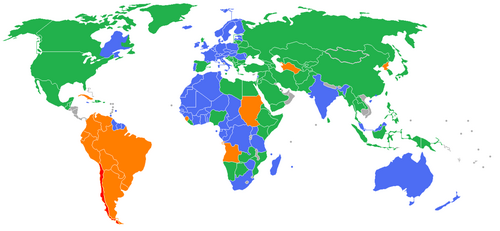
3年
4年
5年
6年
この地図は、さまざまな国の学生が学士号を取得するのにかかる期間を示しています。一般的には 3 年から 6 年かかります。
バリエーション
アフリカ
アフリカ諸国の大半では、大学制度はかつての植民地支配国のモデルに従っています。たとえば、ナイジェリアの大学制度は英国の制度に似ており、コートジボワールの制度はフランスの制度に似ています。
アルジェリア
アルジェリアの大学における学士号は、アラビア語で「 الليسانس 」、フランス語で「la licence」と呼ばれています。この学位は通常、取得に3年かかり、LMD(「licence」、「master」、「doctorat」)改革の一環であり、学生はバカロレア(全国中等教育試験)を取得した後、さまざまな研究分野の学士号プログラムに登録できます。この学位は、LMD改革で指定されているように、通常、フランスの大学のプログラムと同一です。学士号プログラムは、医学や薬学などの一部の分野を除き、アルジェリアの大学のほとんどの分野をカバーしています。
ボツワナ
ボツワナ大学で学士号を取得するには通常 4 年かかります。このシステムは英国と米国の両方のモデルを採用しています。学位は英国の学位と同様に、ファーストクラス、セカンドクラス ディビジョン 1 (2:1)、セカンドクラス ディビジョン 2 (2:2)、サードに分類されますが、優等学位とは呼ばれません。主な学位は英国の伝統 (芸術、科学、法律など) に従って命名されていますが、近年では、図書館情報学士など、特定の科目にちなんで名付けられた学位もいくつかあります。
ケニア
ケニアでは、大学教育は政府によって支援されている。[3]学士号は、研究分野に応じて3年から7年のコースを修了した学生に授与される。ほとんどの学位プログラムでは、研究プロジェクトとインターンシップ期間が必須であり、その後学生はレポートを作成し、卒業が許可される。2012年には、学位プログラムへの学生の受け入れを増やすために、いくつかの選ばれたカレッジが大学に昇格した。[4]
モロッコ
モロッコでは、学士号はal-ʾijāzah (アラビア語、フランス語: licence ) と呼ばれています。学習期間は 3 年で、さらに 2 つのサイクルに分かれています。第 1 サイクルは最初の 1 年間、つまり準備学年です。最初の 2 年間を修了すると、学生は理論の専門 ( études fondamentales ) または専門職の専門 ( études professionalnelles ) のいずれかに進むことができます。第 2 サイクルは 1 年間で、修了すると学生はlicence d'études fondamentalesまたはlicence professionalnelleを受け取ります。[5] この学位制度は 2003 年 9 月に導入されました。[6]
ナイジェリア
大学入学は非常に競争が激しく、それに伴う利点と欠点があります。とはいえ、学士号を取得するには 4 年から 5 年かかります。成績が悪い場合、期限は標準の 2 倍になります。たとえば、5 年間のコースを 10 年を超えて勉強することはできません。さらに勉強する必要がある場合、学生は通常退学を求められます。ナイジェリアの大学では、BSc、BTech (通常は工科大学)、BArch (6 年間)、および BEng などのその他の専門的な学部学位を提供しています。理系の学部学位を取得するには、SIWES (学生産業就労体験制度) に 6 か月または 1 学期を費やすことが必要な場合がありますが、これは通常、すべての工学学位で必須です。最終学年の学士論文期間中は、コースワークを除き、プロジェクト作業/論文のための 1 学期が必要です。学位の分類:一級、二級(上位と下位)、三級(優等学位、すなわちBSc(優等学位))、合格(優等学位なし)。一級と二級の卒業生は、すぐに上級大学院学位(すなわちMScとPhD)を取得する資格がありますが、その資格を得る前に、他のクラスの追加の大学院卒業証書が必要になる場合があります。[7]
さらに、卒業生は全員、国家青年奉仕隊(NYSC) の要件を満たす義務があり、これは通常 1 年間で、その後、高等学位を取得する資格が得られます。NYSC は準軍事的なサービスであり、学生は国内のさまざまな場所に配属され、さまざまな職務に従事します。NYSC の主な目的は、国家の結束を築き、学生が獲得した知識をナイジェリアの農村部の問題の解決に応用することを奨励することなどです。NYSC はナイジェリア内戦後に法律によって設立されました。[8]
ナイジェリアの専門学校 (ポリテクニック) は大学とはみなされていません。これらの学校は優秀な技術者を教育することを義務付けられており、OND (一般国家資格) と HND (高等国家資格) を提供しています。ポリテクニックは実践的な技術トレーニングに重点を置いています。工学界では BSc と HND が比較されますが、トレーニングの理念には大きな違いがあります。
ナイジェリアの優等学位は、成績のみに基づいて区別されます。優等学位には、一級学位、二級学位(上位と下位)、三級学位が含まれますが、合格は含まれません。すべての大学生は、これまでの学習期間中に得た知識を応用した独立した研究プロジェクトを行う必要があります。
プロジェクト作業は卒業前の学期に提出する必要があり、通常はかなりのポイントを要します。プロジェクト作業中も追加のコースワークは禁止されませんが、コース数は少なく、上級レベルです。プロジェクト作業は、教員および同僚の前で口頭で説明されます。科学および工学では、通常、プロジェクトのデモンストレーションが必要です。例外は理論的な作業です。
南アフリカ
南アフリカでは、優等学位は学部専攻と同じ分野における追加の大学院資格であり、少なくともさらに 1 年間の学習と研究レポートが必要です。
チュニジア
チュニジアでは、学士号はアラビア語でal-ʾijāzah、フランス語でla licenseと呼ばれ、取得には3年かかり、LMD (ライセンス、修士、博士) 改革の一環であり、学生はバカロレア(全国中等教育試験)を取得した後、さまざまな研究分野の学士課程に入学することができます。この学位は、LMD 改革で指定されているように、フランスの大学のプログラムと通常同じです。チュニジアのほとんどの大学は、医学、薬学、工学、建築学、経営学の理学士など、一部の分野を除いて、3年間の学士号を提供しています。経営学の理学士は、チュニスビジネススクールによってのみ提供され、4年間続きます。[9]
アメリカ大陸
この地域では、卒業生に通常、準学士、学士、修士、博士、博士研究員の学位を授与します。
ブラジル
ブラジルでは、学士課程の履修期間とプログラムに応じて、学士号を取得するのに 3 年から 6 年かかります。学士号は、ブラジル人が特定の人間知識の分野で専門家になるために取得したい学位です。修士号と博士号は、学術的なキャリアや特定の分野に関する知識を求める人のための追加の学位です。
ボローニャ制度に正式に加入していなくても、ブラジルの「学士」はヨーロッパの「第1サイクル」に相当する。ブラジルの「学士」は、修了までに3年から6年[10]かかり、通常は論文や最終プロジェクトも必要となる。これはヨーロッパの学士が3年から4年で修了できるのと同じで、その後ヨーロッパ人はボローニャ・プロセスに従って、通常「修士」と呼ばれる1年から2年の第2サイクル・プログラムに進むことができる。
プログラムや個人の選択に応じて、ヨーロッパ人は最短 4 年 (3 年間の学士課程と 1 年間の修士課程) から最長 6 年 (4 年間の学士課程と 2 年間の修士課程) の高等教育で修士号を取得できます。ブラジルでは、ブラジルの「厳密な」修士号とは異なる「広義の」専門学位を最短 3 年 (「技術」 [ 11]学位に 2 年間、さらに専門分野に 1 年間) から最長 8 年 (専門学位に 6 年間、さらに医学や工学で一般的な「厳密な」修士号に 2 年間) で取得できます。
カナダ
カナダの教育は各州および準州によって独立して管理されていますが、2007年にカナダ教育大臣会議で学位の共通枠組みが合意されました。[12]この会議では、ボローニャプロセスで定義されたものと意図的に類似した学士、修士、博士の学位の記述が採用されました。[13]
この枠組みでは、学士号の一般的な形態が4つ定義されている。幅広い教育を提供し、卒業生を大学院入学専門プログラムや一般的な雇用に備える一般プログラム、特定の分野の大学院研究や一般的な雇用に備える特定科目の詳細な学術プログラム、知識よりも実践の習得に重点を置く応用プログラム、そして多くの場合(ただし必ずしもそうではないが)大学院入学専門プログラムで、卒業生が特定の分野の専門家として実践できるように備える専門プログラムである。この最後のカテゴリには、MD、JD、DDSなどの博士号のような名称の大学院入学学位が含まれるが、名前にもかかわらず、これらは学士号とみなされる。[13]
学士号の取得には 3 年または 4 年かかり、大学によって授与されます。多くの大学では、学士号は (通常の) 学士号または優等学士号として区別されています。「優等」という用語は学術上の区別であり、学生は十分に高い総合成績平均点で学士号を取得する必要があることを示しています。また、一部のプログラムでは、優等プログラム以外のプログラムよりも多くの教育が要求される場合があります。優等学位は、括弧で「(Hon(s))」という略語で指定されることがあります。
歴史を遡ると、優等学士(ラテン語: baccalaureatus cum honore、フランス語:baccalauréat spécialisé)は伝統的に最高の学部学位とされていました。このプログラムには少なくとも 4 年間の研究が必要で、正式な修士論文とほぼ同等とみなされる研究ベースの優等セミナー論文に重点が置かれています。大学は卒業証書に学位と可能な優等学位(ラテン語:honours )を表示します(例:" BACCALAUREATUS ARTIUM CUM HONORE ... CUM LAUDE ")。
ケベック州では、学生は、例えば3年間の理学士(BSc)または4年間の工学士(BEng)プログラムに入学する前に、最低2年間の大学教育を受ける必要がある。その結果、法律上の「優等学位」は存在しない(ただし、一部の大学は、英語の教材で一部のプログラムを事実上の優等学位として宣伝している)[ 14 ]が、フランス語で「集中コース」と呼ばれる専門分野がいくつかあり、そのほとんどは選択科目として履修される。
オンタリオ州では、オンタリオ州の大学が提供する学士号のほとんどは学術的な性質のものである。対照的に、オンタリオ州の法律では、オンタリオ州のカレッジが提供する学士号は応用的で職業に重点を置いたものであることが義務付けられている。[15]
コロンビア
コロンビアでは、中等学校には 9 年生と 11 年生という 2 つの節目があります。中等学校の最初の 4 年間 (6 年生、7 年生、8 年生、9 年生) を修了すると、生徒は基礎中等学校を修了したとみなされ、最後の 2 年間 (10 年生と 11 年生) を修了すると、「バチレラート」または高校の卒業証書を修了したとみなされます。
この学位は学術的なもの(最も一般的)または次のいずれかになります。
- 軍事専門学校が提供する軍事奨学金。男子生徒に、本来は義務付けられている兵役に就かずに済む機会を提供する。
- 商業会計コースは、学生に会計に特化したスキルを身につけさせます。
- 技術コースでは、電気、機械、関連事項などの技術的能力に重点を置いたスキルを学生に提供します。
- アカデミックは、学生に初等教育に重点を置いたスキルを付与します。
高校卒業後、希望する学生は全国規模の試験を受けなければならず、その試験の得点に応じて希望するプログラムに応募する資格が決定されます。コロンビアの学位制度は米国のモデルに似ています。「bachillerato」(高校)を修了すると、学生は 3 つのオプションのいずれかを選択できます。最初のオプションは「profesional」(専門職)と呼ばれ、選択したプログラムに応じて 4 年から 6 年の学習を必要とする学士号に似ています。ただし、米国では 3 年目から集中的なキャリア関連科目がカリキュラムの一部になるのが一般的ですが、最初から厳密にキャリア関連の科目が履修されます。もう 1 つのオプションは「técnico」(技術者)と呼ばれ、この学位は 2 年半の学習のみで構成され、技術的または機械的な労働に備えるためのものです。最後に、3 番目のオプションは「tecnólogo」(準学士号に相当)と呼ばれ、3 年間の学習で構成されます。専門学校では、2年間のプログラムを修了した学生に、ソフトウェア開発、ネットワークとIT、会計、看護、その他の医療サービス、機械、電気、技術などの分野で 学士号を授与します。
大学では、医学、工学、法律、会計、経営管理、その他の専門分野など、 ICFESが承認したプログラムで大学院の学位を提供しています。一般的な学部課程は通常 10 または 11 学期かかり、一部の課程 (医学など) では学位取得のために追加の勤務期間または実習期間が必要です。学士号を取得した学生は、学士号取得後も修士号や博士号を取得してキャリアの勉強を続けることができます。また、さらに 1 年間勉強して特定の研究分野を専門にすることもできます。
コスタリカ、エルサルバドル、ベネズエラ
これらの国では、混同しないように注意すべき 2 つの称号があります。
- 高校の試験に合格した高校生は、 Bachiller de Educación Secundaria(高等教育の学位の「学士」とは異なります)の証明書を取得します。これは大学に入学するために必要なもので、通常、企業がプロフィールで要求します。
- 大学の学生は、4年間の教育を修了すると、それぞれの分野でアメリカの同等の学士号を取得し、さらに1年間の学習を修了すると、 licenciatura licentiate 学位を取得します (各機関に固有のその他の要件を満たし、専門分野に関する論文を書くのが一般的です)。これにより、学生は選択した分野で専門家として働くことができます。たとえば、Profesor en Enseñanza Secundaria (「中等教育のライセンス学位」) を取得すると、高校の教師として働くことができます。現在、大学では学士号を提供せず、代わりに5年間の教育後にlicentiate 's または「ingeniero」学位を提供する傾向にあります。
ガイアナ
ガイアナの大学では、文学士(BA)、看護学、デザインと芸術、教養学、心理学、医学博士(MD)、その他の健康科学プログラムなどのさまざまな分野の学士プログラムを提供しています。これらのプログラムは、ガイアナ大学、テキシラアメリカン大学、グリーンハート医科大学、レスリー大学などで提供されており、他にも多くの大学が学士プログラムを提供しています。
メキシコ
学士号は、履修科目とプログラムに応じて、平均 5 年 (4 年から 5 年) で取得でき、大学から授与されます。[16]医学は 6 年から 7 年です。各大学には独自のカリキュラムと要件があり、共和国の各州によって独立して管理されています。すべての科目を修了した後、学生は最終課題、つまり特定の優等セミナー、研究開発、または特定の分野の論文の完成が必要です。メキシコの規則では、免許と称号を取得するために、社会活動の形で社会への報酬として、国への「社会奉仕」を遂行することが義務付けられています (通常は公的機関で学業を修了した人向け)。この利益は、学生としてトレーニング中に受けたものです。この要件は、学位の種類に応じて約 6 か月から 1 年かかります。学士号は、職業または学士課程への入学の前提条件を示すスペイン語の同義語「bachiller」と誤って関連付けられるべきではありません。メキシコでの学士号の正式名称は「licenciado」であり、そのような研究は「licenciatura」と呼ばれます。
学士号は工学学位と混同してはならない。工学学位にはIngenieríaという接頭辞が付き、エンジニアとしての認定には追加のコースが必要となる。[17]
アメリカ合衆国
米国の学士号は、通常、フルタイムの勉強を4年間行うことで修了するように設計されており、これは通常、4か月の学期あたり平均週15時間の授業、年間2学期、合計8学期、120授業単位に相当しますが、工学や建築学などの一部のプログラム[18]は5年かかる場合があり、一部の大学では、通常サマースクールの助けを借りて、各学期に多くの授業を受講している学生や、高校のアドバンストプレースメントまたは国際バカロレアコースの試験で既に単位を取得している学生が、より迅速に修了できるようにしています。米国の一部の大学には、「優等生」または「学者」プログラムと呼ばれる別の学術コースがあり、一般的にGPAに基づいて上位10パーセントの学生に提供され、標準的なコアカリキュラムの代わりに、またはそれに加えて、より難しいコースや、より個別に指導されるセミナーや研究プロジェクトを提供します。これらの学生には、標準カリキュラムを修了した学生と同じ学士号が授与されますが、成績証明書と卒業証書には「in cursu honorum」と表記されます。通常、上記のラテン語の栄誉は、この優等コースの表記とは別ですが、優等コースの学生は一般的に、少なくとも「cum laude」表記に値する成績を維持する必要があります。[19]したがって、卒業生は、通常コースではArtium Baccalaureatum riteまたはArtium Baccalaureatum summa cum laude、優等コースではArtium Baccalaureatum summa cum laude in cursu honorumの卒業証書を受け取る場合があります。
学生が特定の分野 (例: 英語と文学) のみで優等学位の要件を満たしている場合、学位はそれに応じて指定されます (例: 「英語で優等学位の BA」)。この場合、学位候補者は選択した分野 (前の例では「英語」) を除くすべての科目の通常のカリキュラムを修了します。どちらの場合も、要件としては通常、特定の優等セミナーの修了、通常よりも高いレベルの自主研究 (通常よりも教員による個人的な指導が厳しい場合が多い)、および専攻科目での優等論文の執筆が求められます。
米国の多くの大学では、ラテン語の栄誉称号をつけて学士号を授与しており、通常は(昇順で)cum laude(「栄誉/賞賛をもって」)、magna cum laude ( 「多大な栄誉/賞賛をもって」)、summa cum laude(「最高の栄誉/賞賛をもって」)、そして時折見られるmaxima cum laude(「最大の栄誉/賞賛をもって」)となっている。このような栄誉称号の要件には通常、最低GPA(成績平均点)が含まれ、最高平均はsummaの優等生(優等生が存在する場合はmaxima )となる。ベイツ大学、カールトン大学、コルビー大学、ミドルベリー大学、ギルフォード大学、フランクリン大学スイスなどの一部の学校や、バージニア大学、プリンストン大学、ノースカロライナ州立大学、マサチューセッツ大学アマースト校などのより大規模な大学では、人文科学の学位の場合は卒業論文、自然科学(場合によっては社会科学)の学位の場合は実験研究も必要です。注目すべき例外は、リード大学、マサチューセッツ工科大学、エバーグリーン州立大学、サラ・ローレンス大学、ベニントン大学の5 校で、これらの大学には学部長表彰、ラテン語栄誉賞、学部優等プログラムや科目はありません。
アジア
バングラデシュ
バングラデシュでは、大学や短大が、理科とビジネスの分野で3年および4年の学位(3年制の学位コースは合格コース、4年制の学位コースは優等コースと呼ばれる)を授与し、BSc、BBS、BBA、 4年3か月[説明が必要]など、また、文学の分野では3年および4年の学位(BA、BSSなど)を授与している。工科大学は、学士課程の学習(BSc in EngおよびBSc)として4年間の学位プログラムを提供している。医科大学には5年間の学位プログラム(MBBS、BDS)がある。法学教育では、BAプログラムで3年間を修了した後、合計5年間の学習となる2年間のLLB学位がある。4年間のLLB優等学位もある。建築学士(BArch)と薬学士(BPharm)は、一部の大学でその分野の5年間の学習コースを修了した学生に授与される専門職学位である。これらのプログラムはすべて、高等中等教育修了証(HSC、合計 12 年間の学校教育)を取得した後に開始されます。
中国
中国には哲学、経済学、法律、教育、芸術、歴史学、理学、工学、農学、医学、経営学、軍事科学、美術学の13種類の法定学士号がある。[20] [21] [22]
中国の大学教育制度は米国の制度をモデルにしているため、学位証書の発行を除き、すべての学位は米国の制度を踏襲している。学生が履修要件を満たすと、「卒業証書」が授与される。学位を取得するには、学生は論文審査を終えて合格する必要があり、その場合にのみ中華人民共和国教育部が認定する学位が授与される。
中国では、医学士の学位取得には5年かかるが、それ以外では学士号取得には4年を要する。[23]一部の大学(中国語:专科学校)、専門学校(中国語:职业学院)、一部の大学の短期大学では2年または3年の課程を提供しているが、[23]在学中に昇格試験に合格し、その後他の大学でさらに2年間の学部課程を履修して論文に合格した者を除いて、学位を取得して卒業することはできない。
中国国民であれば誰でも、高等教育自学考试(中国語:高等教育自学考试)の学部専攻を通じて学士号を取得することもできます。
インド
インドでは、学士号を取得するには通常3年間の勉強が必要ですが、BE / BTech、MBBS、BVSc、BArchなどのコースではさらに長くかかります。BE / BTechは通常4年間、MBBSまたはBArchは通常5年間で修了します。科学、商業、芸術の学位のほとんどは、学生が選択する選択科目による優等学位です。国家教育政策2020の実施により、学部の学位プログラムは4年間で、3年でプログラムを終了できるオプションがあります。
学生は通常、国立または州の教育委員会で クラス 12 を修了した後に学士課程を開始します。
インドネシア
インドネシアでは、現在の学士号のほとんどが分野固有の学位である。そのため、学士号の数は20以上ある。[24]たとえば、Sarjana Psikologiの S.Psi. (文字通り「心理学/BPsy、BAの学士」)、Sarjana Teknikの ST (文字通り「工学の学士」)、Sarjana Sainsの S.Si. (文字通り「理学の学士」)、Sarjana Farmasiの S.Farm. (文字通り「薬学の学士」)、Sarjana Ekonomiの SE (文字通り「経済学の学士」)、Sarjana Ilmu Komputerの S.Kom. (文字通り「コンピューターサイエンスの学士」)、Sarjana Sastraの SS (文字通り「文学の学士」)、S.Sos. Sarjana Ilmu Sosial (文字通り「社会科学の学士」と翻訳されます)の学位です。過去には、インドネシアの学術制度では、工学の学位にIr(オランダ語のingenieurに由来するinsinyur)や、社会科学または自然科学の学位に共通学位(オランダ語で最終的にはラテン語のdoctorandusに由来するdoktorandus)など、古いヨーロッパ/西洋の学位を採用していました。
イラン
イランでは、学生はさまざまな学部または大学院のコースを履修して、他の国で授与される同様の資格と同等と認められる BS、MS、または PhD を取得できます。学生は 3 年から 6 年 (多くの場合 4 年) の教育を受けて BS を取得することもできます。
ヨルダン
ヨルダンの学部教育制度は米国の制度をモデルにしているため、学位証書の発行を除き、すべての学位は米国の制度を踏襲しています。学生がコースの要件を満たすと、卒業証書が授与されます。一部の専攻で学位を取得するには、学生は論文段階を終えて合格する必要があります。その時点でのみ、ヨルダン・ハシミテ王国の高等教育省から認定された学位が授与されます。教育期間は 4 年間が標準です。
マレーシア
マレーシアの高等教育機関は、BSc優等学位(マレー語:Ijazah Sarjana Muda)を取得できる3年または4年の教育を提供しています。分類基準は、マレーシアの大学間でほぼ一貫しています。学業成績が優秀な候補者には、一級の学士優等学位(通常3.67CGPA以上)が授与され、続いて二級上位(通常3.00~3.66CGPA)、二級下位(通常2.50~2.99CGPA)、三級(通常2.00~2.49CGPA)が授与されます。
ネパール
ネパールでは、当初、トリブバン大学、ポカラ大学、プールバンチャル大学、カトマンズ大学の経営学士 (BBS)、理学士(BSc)、教育学士 (BEd)、文学士(BA)などのコースでは学士号は 3年間のプログラムでしたが、現在では経営学士 (BBA)、ビジネス情報システム学士(BBIS)、情報管理学士 (BIM)、工学士 (BE)、コンピューター研究および情報技術の理学士 (BScCSIT) などの新しいコースでは、ほとんどが 4 年間のプログラムになっています。文学士 (BA) や教育学士 (BEd) など、一部の学士プログラムはまだ 3 年間です。これは、10+2 レベル (高校) またはディプロマ、またはその他の同等レベルの学習の後に完了します。経営学士(BBA)、情報管理学士(BIM)、ビジネス情報システム学士(BBIS)、工学士、コンピュータサイエンスと情報技術の理学士(BScCSIT)は、人気のある学士課程プログラムです。BScとBBScは、最近、3年制プログラムから4年制プログラムになりました。ネパールでは、学生数と学部数で最古かつ最大の大学であるトリブバン大学を筆頭に、カトマンズ大学、プルバンチャル大学、ポカラ大学、ネパールサンスクリット大学、その他の新しい地方大学が現在運営されています。すべての大学のMBAとBBAは、パーセンテージとGPAのシステムに基づいて評価され、従来の大学コースは、合格部門、第2部門、第1部門、優秀などの部門ベースでアクセスされます。ネパールでは、ネパール政府や他の教育機関によって認可され実施されているトップアップ、優等学位や交換学位、または関連する提携学位コースはありませんが、今日では、外国の大学との提携、オンラインおよび遠隔教育が現代の若い労働人口に人気があります。MBA、BBA、BPharmacy、BSc看護、看護学士(BN)、BEは、ネパール市場で高い専門的需要があります。大学に入学するには、学生は各大学が実施する必須の入学試験に合格し、特定の科目の分野でその大学の関連カレッジに配置される必要があります。試験では、多様性と平等を生み出すために、女性と恵まれないグループにも別の割り当てが与えられます。
パキスタン
パキスタンでは、芸術、商業、科学の大学が 4 年間の学士号 (BS、BSc (Hons)、BBA (Hons)、BCom (Hons) など) を提供しています。以前は、2 年間の学士号は BA BSc および B.Com. として授与されていましたが、2018 ~ 2019 年に HEC Pakistan によって準学士号 (ADA、ADS) に改名されました。通常、これらのプログラムは世界の他の地域と同様に 4 年間の期間であり、高等学校教育を修了し、高等学校証明書 (各委員会によって 12 年間の学習が認められる) を取得した後に開始されます。これらのプログラムを正常に完了すると、各大学から学士号が授与されます。工学部と医学部では、それぞれ 4 年制と 5 年制の学士号 (BE/BS/BSc 工学および MBBS) プログラムを提供しており、これも高等学校 12 年生の後に開始されます。建築学士 (BArch) の学位プログラムは 5 年間です。
フィリピン
フィリピンでは、「コース」という用語は一般的に学士号の専攻、研究課程、プログラムを指すのに使用され、いくつかの学部のカテゴリーが存在します。授与される最も一般的な 2 つの学位は、理学士 (BSc) と文学士 (BA または AB) です。経済学、経営学、社会福祉、農業、看護学、会計学、建築学、工学の専門分野 (「専攻」) は、ほとんどの大学で BS 学位として提供されています。その他の一般的な学位は、教育学士 (BEd) と法学士 (LLB、専門学位) です。米国に倣って、すべての大学で優等卒業 ( cum laude、magna cum laude、summa cum laude ) を提供しています。
韓国
大学、短期大学、高等教育機関は、「学士」(韓国語:학사)と呼ばれる学士号を授与します。たとえば、文学を専攻して卒業した大学生は、「文学士」(韓国語:문학사 )と呼ばれるBAを取得します。高等教育機関に進学しなくても、独学のための学士学位試験を通じて学士号を取得できます。
スリランカ
スリランカでは、認可された高等教育機関のみが学位を授与する権限を有しています。専門分野を持たない 3 年間のフルタイムの学士号は一般学位と呼ばれます。専門分野 (会計、化学、植物バイオテクノロジー、動物学、物理学、工学、IT、法律など) を持つ学位は優等学位と呼ばれ、4 年間 (120 単位以上) の学習と追加の入学資格が必要です。医学の学位 (MBBS) には、最低 6 年間の学習が必要です。
七面鳥
トルコのほぼすべての都市に学士号を授与する機関があります。例としては、アンカラ大学、ビルケント大学、ボアズィチ大学、マルマラ大学、ハジェテペ大学、イスタンブール・ビルギ大学、イスタンブール工科大学、イスタンブール大学、コチ大学、コジャエリ大学、中東工科大学、サバンジュ大学、イェディテペ大学、ガズィアンテプ大学、イスタンブール・ゲリシム大学、ユルドゥズ工科大学などがあります。これらの大学では、8学期制のコース修了後に文学士号または理学士号を授与しています。ダブルメジャーを取得できる機会もあります。トルコはボローニャ・プロセスに参加しています。
ヨーロッパ
学士号は、ヨーロッパのほぼすべての国に存在します。ただし、これらの学位は、ボローニャプロセス以前には学士号が知られていなかった一部の大陸ヨーロッパ諸国で最近になって導入されました。フランスなどの一部の国では、これをライセンスと呼んでいます。ヨーロッパ全体の学部課程では、次の学位が最も広く受け入れられています。
- 理学士号(BSc)、学部課程の35%~40%
- 文学士(BA)、学部課程の30%~35%
- 法学士(LLB)は、全プログラムの 1% を占め、法律分野で広く受け入れられています。
残りのプログラムは通常、工学士 (BEng)、経営学士 (BBA)、またはその他の学位につながります。また、ヨーロッパでは学部レベルで 準学士号の人気が高まっています。
国別、分野別、場合によっては教育機関別に見ると、学部課程の期間は一般的に 3 年または 4 年ですが、3 年から 6 年までの範囲になることもあります。これは、学生の意思決定プロセスにおける重要な要素です。
オーストリア
オーストリアの歴史的状況はドイツと非常に似ており、伝統的な最初の学位はマギステルとディプロムであり、これらは修士レベルの資格である。2004年から、ボローニャプロセス改革の一環として学士号が再導入された。これらは大学で学ぶことができ、3年または4年で学士号(BAまたはBSc)につながり、専門大学(Fachhochschulen )で学ぶと3年で学士(FH)につながる。[25]
ベルギー
ベルギーの教育は言語共同体によって運営されており、フラマン共同体とフランス語共同体によって別々の高等教育システムが管理されている。両システムはボローニャ・プロセスに沿って改革されており、フラマン共同体は2003年から、フランス語共同体は2004年から改革されている。フラマン共同体では、学士号は学術的なものと専門的なもののどちらかである。これらの学位は3年間で取得でき、どちらの場合もその後に1年間の上級学士ディプロマ(フランス語:Bachelier de spécialisation、「 専門学士」、オランダ語:Bachelor-na-bachelor、 「学士号取得 後の学士」)が続くことがある(オーストラリアの学士優等学位を参照)。これらの資格はすべてEQFのレベル 6 に相当し、2011 年 6 月にフランダース資格枠組みが参照されました。フランス共同体では、大学は学士号に相当するものとしてgrade de bachelier (3 年間) を授与します。大学以外では、専門職プログラムはタイプ long (長期タイプ) またはタイプ court (短期タイプ) であり、どちらもhautes ecolesとecoles supérieures des artsで提供されています。長期タイプではgrade de bachelier (長期タイプ) (3 年間) の後に修士号 (1 年または 2 年間) が続き、短期タイプではgrade de bachelier professionalnalisant (court タイプ) (3 年間) の後にbachelier de spécialisation (1 年間)が続く場合があります。すべての学士号 ( bachelier de spécialisationを含む) は EQF のレベル 6 に相当しますが、正式に参照されていません。[26]
クロアチア
現在クロアチアの公立大学やコミュニティカレッジのほとんどが3年間の学士課程を提供しており、通常はその後2年間の修士課程(大学院)に進むことができます。クロアチアの学士号はすべて専門職学位です。区別のため、大学では「univ. bacc.」(大学学士)という名称で、コミュニティカレッジでは単に「bacc.」という名称です。[27]
ザグレブ経済経営学部には4 年間の学士課程があります。芸術を専門とするアカデミー (ザグレブ美術アカデミーなど)には 4 年間の学士課程があり、その後に 1 年間の修士課程があります。
チェコ
歴史的に、バカロレアは、カレル大学またはオロモウツ大学の教養学部で三学士課程(文法、弁証法、修辞学)を修了した学生に授与される学士号でした。これは、教養学部(修士号、さらに博士号につながる四学士課程)に進学するか、歴史上他の 3 つの学部(法学、医学、神学)のいずれかで学ぶための必須の前提条件でした。
大学や短大の認定学部課程では、美術分野では略して BcA と表記される学士号、その他の分野では Bc (チェコ語では Bakalář ) と表記される学士号が授与されます。
チェコ共和国で提供されている学部課程の大部分は、標準期間が 3 年です。
チェコの高等教育制度では、現在ほとんどの大学やカレッジが 3 年間の学士課程を提供しており、通常はその後 2 年間の修士課程 (大学院) に進むことができます。医学博士や獣医学博士などの一部の専門分野は、一般的な制度とは例外で、学士課程のない 6 年間の修士課程 (博士号取得者) しか選択肢がありません。これは主に、これらの専門分野の教育を意味のある形で分割することが難しいためです。
デンマーク
デンマークの大学では、1775 年に最初の学位 (バカロレア) が廃止された後、1993 年に学士号が再導入されました。学士号は大学で 3 年または 4 年間勉強した後に授与され、英国のものと非常によく似た制度に従っています。現在、大学レベルで授与される学士号には次の 2 種類があります。
- 理学士(BSc)は、科学、医学、または技術分野を主に専攻する学生に授与されます。
- 人文科学、神学、法学の分野を主に専攻する学生に授与される文学士(BA)。
しかし、デンマークのビジネス界と学術界の両方において、学士号は依然として修士号( candidatus )の「前半」とみなされており、政治家が学士号をより受け入れられるように最善を尽くしているにもかかわらず 、学士号はそれ自体が学位であるとはみなされないことが多い[28] 。
1990年代後半から、看護や教育など多くの分野で学士号が使用されるようになりました。通常「専門学士号」(デンマーク語:professionsbachelor)と呼ばれるこれらの学位を取得するには、通常3〜4年の+「専門大学」(デンマーク語: professional university college )または「ビジネスアカデミー」(デンマーク語:erhvervsakademier)で理論と実践を組み合わせた1 ⁄ 2年間の研究。これらの専門学士号を取得すると、一部の大学の修士課程への入学資格が得られます。これらの専門学士号は完全な教育とみなされます。
フランス
伝統的な学士号は、フランスの3 年間のライセンス学位に相当します。2004 年にLMDボローニャ プロセスの新しいヨーロッパのシステムが確立されて以来、3 年間の学士号をライセンス学位、 5 年間の修士号、 8 年間の博士号として認定することが標準となっています。
ただし、一部の私立機関では、学位を文字通り「学士」と名付けています。これらの学士には、「Diplômes visés」(ビジネス、デザイン、映画、ジャーナリズムなどの専門の私立学校が提供していることが多い)や、フランス政府による「 Diplômes certifiés」などがあります。その他の学士は、フランス政府によって認定されていません。
ドイツ
歴史的に、ドイツでは中世後期から「バッカラウレウス」と呼ばれる学士号が存在していました。しかし、1820 年に実施された教育改革によって廃止されました。2 年間の専門的な「大学段階」を経た学校で取得できる最終学位であるアビトゥア学位がこれに取って代わり、大学では大学院の学位のみが授与されました。
大学院の学位であるマギステルは、5年間の学習で授与されました。1899年、工科大学 (TH) が大学の地位を獲得した際に、2つ目の大学院の学位であるディプロムが導入されました。応用科学大学の導入に伴い、後者の短縮版であるディプロム (FH)が3年から4年かけて段階的に導入されました。
しかし、1998年に、欧州のボローニャ・プロセスに準拠するために、ドイツでは新しい教育法により学士号(3年間の学習後の最初の学位)が再導入されました。今日、これらの学位は「Bakkalaureus」または「bachelor」(連邦法による)のいずれかと呼ばれますが、英語の用語の方が一般的です。ボローニャ・モデルによると、学士号の後にさらに2年間の大学院修士号が続きます。伝統的なディプロムとマギステルの学位は2010年にほとんど廃止されましたが、ディプロムはいくつかの分野と大学でまだ存続しており、いくつかの場所では代替学位として再導入されています。
従来の学位は、新しい学士号と同等となるよう、新しい欧州単位互換制度(ECTS) ポイント システムに再マッピングされました。ドイツでは、従来の学位とボローニャ プロセスの学位は次のようにランク付けされています。
- 学士: 180、210、または 240 ECTS ポイントが必要。
- ディプロムFH: 240 ECTS;
- ディプロムユニまたはTH: 300 ECTS;
- 修士:300 ECTS(学士を含む)。
ギリシャ
ギリシャの学士号はπτυχίο(「 ptychio」と音訳される。ギリシャ語:πτυχίο。1976年から現在まではdhimotikiでptychio 、または1976年までは廃止されたπτυχίον。polytonic、katharevousaでptychion )と呼ばれている。分野に応じて4年から6年の学部課程を修了すると取得でき、ボローニャ・プロセスの第1サイクルの資格で、240以上のECTSクレジットを取得する必要がある。[29]これはギリシャの国家資格枠組みのレベル6に位置付けられ、正式にはギリシャ資格枠組み(HQF)と呼ばれている。[30]これは欧州資格枠組みのレベル6を参照している。[31]これはISCEDのレベル6の資格として分類されている。学士号は、大学、専門高等教育機関、旧技術教育機関(TEI) (1983~2019) を含むすべての高等教育機関 (HEI)によって授与されます。
1995年に、TEIは6学期制の学部課程を、通常の学士号(Ord)と法的に同等のものに改正した(3+ギリシャでは、5年間(300 ECTS)の学部課程を提供しており、HQFレベル7の Δίπλωμα(ギリシャ語)ディプロマ(統合修士レベル授与、修士号に相当)が取得できる。
ハンガリー
ボローニャ以前の古典的な教育システムでは、ハンガリーの学術プログラムは学士号と修士号に分かれていませんでした。しかし、平均的な大学 (ハンガリー語: egyetem ) の学位は 5 年間でしたが、学部 (ハンガリー語: főiskola ) の学位は 3 年または 4 年間で取得可能でした。これらのディプロマは、今日では BA/BSc (学部大学) または MA/MSc (大学) の学位に相当するものと考えられています。
ボローニャ制度は2005年に導入され、[34]最後のクラスが2009年に卒業した現在、ハンガリーで唯一の高等教育の形態となっている。学士号(ハンガリー語:alapképzés、「基礎学位」)は通常3年間であるが、教育の特定の分野(特に工学、経済学、一部の自然科学)の学位では追加の学期が必要となり、プログラムが3.5年に延長される。通常の修士号(ハンガリー語:mesterképzés、「修士号」)は、既存の学士号を持っている場合にのみ取得できますが、ハンガリーのシステムでは、法律、教員、医学、およびいくつかのユニークな研究分野(ショプロン大学の森林工学など)については注目すべき例外があります。これらの学位は非部門学位(ハンガリー語:osztatlan képzés)と呼ばれ、技術的にはMA / MSc学位ですが、BA / BSc学位と同じ入学基準があり、5年または6年の期間があります。
イタリア
イタリアの学生は 19 歳で高校を卒業し、現在の高等教育システムには以下が含まれます。
- 「ラウレア・トリエンナーレ」(3年制学位)または単に「ラウレア」は学士号に相当します。このコースは修了に3年かかり、大学院の学位を取得する資格が得られます。
- 「laurea magistrale」は修士号に相当し、修了には2年かかります。
- 「laurea magistrale a ciclo unico」(ワンサイクル学位)は、法科大学院や医学部などの特定の学部によって付与される称号です。修了には5~6年かかり、専門職に就く資格が与えられます。
学士号取得者は「ドクター」の称号を持つ。
修士号取得者は「dottore magistrale」(マスタードクター) の称号を持ちます。
卒業するためには、学生は単位 ( ECTS ) を取得し、教授の指導の下で議論を詳しく述べる論文を書かなければなりません (通常 3 から 8 ECTS)。卒業点数は 66 から 110 です。各学部の内部規則に従って、最終プロジェクトの優秀性を認め、110/110 点の候補者に賞が授与される場合があります。
オランダ
オランダでは、欧州ボローニャ・プロセスによるオランダの学位制度の変更に伴い、2002年に学士号が導入されました。それまで、オランダの大学には学士レベルの学位はありませんでした(ただし、候補者の卒業証書は1982年まで存在し、ほぼ同じレベルでした)。オランダの学位制度の変更以前は、大学の単一のプログラムが、学士プログラムと修士プログラムを合わせたのと同じ授業量で構成されており、博士号(または法学の場合は「Meester in de rechten」、工学の場合は「Ingenieur」)につながっていました。2002年に学士・修士・博士制度が導入されたことで、オランダの大学の単一の(4年または5年)プログラムが変更され、学士号につながる3年プログラムと、その後の修士号につながる1年または2年プログラムに分割されました。
すでにドクターアンドス プログラムを開始した人は、修了後、ドクターアンドス 学位 (名前の前に「drs.」と略される) を選択するか、新しい基準に従って修士号 (名前の後ろに) を使用することもできます。これらの卒業生は別個の学士号 (実際には、振り返ってみるとプログラムに組み込まれている) を持っていないため、修士号が最初の学位となります。
2003/2004 年に、ボローニャ プロセスによりオランダの学位制度が変更されました。以前の学位には次のものがありました。
- baccalaureus (bc. 学士、BASc または BAA 学位に相当。正式には「bc」ではなく「B」に専門分野を続ける場合がある。)
- doctorandus(接頭辞はdrs.と略される。MAまたはMScに相当するが、正式にはdrs.ではなくMと表記されることもある)[35]
- ingenieur (ing.) オランダの高等職業大学 (HBO、つまりhoger beroepsonderwijs ) が提供する 4 年制コースの卒業生向け。university of applied science を参照。これは BASc、BEng、BBE、BAS、または BICT (BIT.) に似ており、正式には ing ではなく、B の後に専門分野が続く形で表記されることがあります。
- ir. は、最低 5 年間の工科大学を卒業した人、つまり MSc に相当するが、正式には ir. ではなく M と表記されることもある。
- meester in de rechten (mr.; LLMに相当しますが、正式にはmr.ではなくMと表記されることがあります)および
- 博士号(dr.;PhDに相当するが、正式にはdr.ではなくDと表記されることもある)[36]は、現在でも国際的に同等の学位とともに授与されている。[37]
ing.、bc.、ir.、mr.、drs.、dr. などの称号は自分の名前の前に付けられますが、学位 B、M、D は自分の名前の後に付けられます。従来の称号を使用することも許可されています。
学士号を授与されるのが大学か高等教育機関かは、非常に重要な意味を持っています。なぜなら、これらの並行する高等教育機関は、伝統的に多少異なる目的を果たしてきたからです。専門学校は主に技能と実務訓練に重点を置いています。大学で BA または BSc を取得すると、修士課程に「すぐに」入学できます。さらに、これは通常、学生が外国の大学の修士課程に転校できるようにするための手続きだと考えられています。一方、職業教育の最高レベルである専門学校で HBO を修了した人は、1 年間の厳しい追加学習を終えて初めて「修士」課程に進むことができます。この追加学習自体が一種の選考プロセスとして機能する可能性があり、将来の MSc 学生は 1 年間で多くのことをカバーする必要があります。
最近、オランダでは HBO (職業) 修士号が導入されました。この学位の卒業生は、「of Arts」(MA) や「of Science」(MSc) の拡張子は使用できません。M に続いて専門分野を使用できます (例: MDes)。
職業教育から学術教育に「転換」するためのこの 1 年間 (WO – wetenschappelijk onderwijs、文字通り「科学教育」) は、「ブリッジ」または「プレマスター」年とも呼ばれます。「応用科学大学」という用語が使用されているにもかかわらず、高等職業大学はオランダでは「大学」とは見なされていません。
オランダの学士課程(およびその他の課程)の、海外で提供されている課程と比較した重要な側面は次のとおりです。
- 期間。多くの国では通常、コースは一定期間内に完了しますが、オランダの最も権威のある機関を含む一部の(すべてではありませんが)教育機関で提供される学位コースは、成績優秀な学生でも 3 年間でしか完了できません。
- 学年。オランダの学年は正式には 42 週間です。実際には、学生は「自由」時間の多くを試験の勉強に費やすことが期待され、義務付けられています。これは他の国では必ずしも当てはまりません。多くの国では夏休みが非常に長く取られたり、試験が冬休みの後ではなく前に行われたりします。
- 学習曲線。一部の教育システム、特に英国のシステムでは、最初の 1 年間は緩やかな導入が行われます。オランダでは一般的にそうではなく、最初の 1 年間の難易度は一種の「自己選択」として機能し、熱意や能力の低い生徒はついていくのが困難になることが常です。
2011 年 2 月、オランダの教育大臣は、ヴェールマン委員会の報告書に記された勧告に従うことを決定しました。近い将来、学術学位と高等職業学位の区別はなくなるでしょう。
北マケドニア
2003 年、ボローニャ プロセスにより、ドイツ式の教育制度は ECTS に準拠するように変更されました。ディプロマで授与される既存の学位は、バカロレア (学士) に変更されました。大学は通常、3 年 (その後、修士号は 2 年間) または 4 年 (その後、修士号は 1 年間) で学士号を授与します。
ノルウェー
ノルウェーで学士号を取得するには、3 年間のフルタイムの学習、つまり 180 ECTS が必要です。理学療法など、いくつか例外があります。ノルウェーの学士号は、プログラム学士号または選択学士号のいずれかです。
ポーランド
ポーランドでは、licentiate 学位は英語圏の国の学士号に相当します。ポーランド語ではlicencjatと呼ばれます。licencjat 学位を取得するには、3 年間の勉強を完了する必要があります。エンジニア ( inżynier ) と呼ばれる同様の学位もありますが、これはlicencjatとは異なり、技術大学によって授与され、プログラムは通常 3.5 年続きます。その後、学生はそれぞれ 2 年または 1.5 年間教育を継続して、修士号に相当する magister学位を取得できます。
ポルトガル
現在、ポルトガルには学士号制度は存在しません。
ボローニャ・プロセス(2006/2007)以前は、ポルトガルの高等教育制度にbacharelato (学士の学位)が存在していました。これは3年間の学習が必要で、現在のlicenciaturaとほぼ同等です。当時、licenciatura はlicentiateの学位(現在の修士号に相当)を指し、通常5年間の学習が必要でした。 licenciatura は、 bacharelato を取得した後、2年間の学習を行うことで取得することもできました。今日、以前の licenciatura の学位と現在のlicenciatura の学位は、ポルトガルではそれぞれプレ・ボローニャおよびポスト・ボローニャのlicenciaturasと呼ばれています。ポスト・ボローニャの学位は、ヨーロッパ全土の他の学士号に相当し、通常3年間の学習で取得する必要があります。
ロシア、アルメニア、アゼルバイジャン
専門学位(ロシア語:специалист )は、ソビエト連邦で最初の学位であり、大学レベルで5年間の研究を修了した学生に授与されました。この学位は、学士号と修士号の両方に相当します。1990年代初頭、バカラーヴル(Бакалавр、「学士」)学位は、トルクメニスタンを除く独立国家共同体のすべての国で導入されました。バカラーヴル学位(通常4年間)を取得した後、古い5年間の専門家制度を維持しながら、修士号(さらに1年または2年)を取得できます。
スペイン
スペインでは、ボローニャ協定に準拠したモデルへの移行が進行中であるため、典型的な英語圏の学士号と修士号に正確に相当する学位が段階的に導入されています。現在、「título de grado」または単に「grado」と呼ばれる学部学士号(通常、期間は4年)、 「título de máster」または「máster」と呼ばれる大学院修士号(1年から2年)、および「título de doctor」または「doctorado」と呼ばれる博士号があります。「título de grado」は現在、修士号を取得するための前提条件です。「título de máster」は現在、博士課程にアクセスするための前提条件であり、その期間とこれらのプログラムを教えることができる機関の種類は、欧州高等教育圏の枠組みで規制されています。
スペインの大学資格は現在法律で定義されており(現在は2008年9月12日のRD1509)、2008年の改革ではタイトルカタログが大学、センター、タイトル登録簿(RUCT)に置き換えられました。
2009/2010 年まで、この制度は 3 つの学位カテゴリーに分かれていました。いわゆる第 1 サイクルの学位、「diplomado」または「ingeniero técnico」があり、名目上の期間は 3 年から 4 年です。また、第 2 サイクルの学位、「licenciado」または「ingeniero」があり、名目上の期間は 4 年から 6 年です。そして最後に、第 3 サイクルの学位、「doctor」があります。公式の第 1 サイクルの学位は、期間、範囲、教育成果の点で、アングロサクソンの学士号に匹敵します。一方、第 2 サイクルの学位は、アングロサクソンの制度と比較すると、期間、範囲、教育成果の点で、アングロサクソンの学士号と修士号の組み合わせに匹敵します。この伝統的なシステムでは、博士課程への進学は「licenciado」、「ingeniero」、または「arquitecto」(第 2 サイクル)の学位保持者にのみ認められ、「master」または「magister」の称号は規制されておらず(そのため、数か月から 2 年までのさまざまな期間の、公式な承認のない大学またはセンターが支援する、いわゆる「master」プログラムが共存していました)、プログラム/機関の評判のみがそれらを裏付けることができました。
専門分野には現在、約800の特定の認定学習プログラムと資格名が含まれていますが、以前の一般的な資格の命名法も維持されており、grade/licencadoはほぼBAまたはBScであり、maestroは一般的にMAに似た実務ライセンスを示し、doctoradoは PhD(出版された独自の研究論文)を示します。[39]
注意:英語圏の学士号は、大学入学資格の公式前段階である、 12年生が取得できるスペインのバカロレア資格と混同しないでください、同様の志を持つ若者向けの 国際バカロレア ディプロマ プログラムとは異なります
スウェーデン
スウェーデンの学士号に相当するものは、kandidatexamen と呼ばれます。これは、専攻科目を少なくとも 1 年半学ぶ 3 年間の学習を経て取得できます。学位には、少なくとも 15 ECTS 単位の論文が含まれている必要があります。
ボローニャ・プロセスの一環として、スウェーデンは学部課程と大学院課程の期間を統一した。以前は、4.5年の学習を必要とする法学士課程 ( juris kandidat ) があったが、この学位は現在、 juristexamenという新しい名前になっている(現在は「Master of Laws」と呼ばれる修士課程である)。同様に、以前は Civilingenjör と呼ばれていた大学院工学課程は 4.5 年の期間であったが、3 年間の学部学士課程 (180 ECTS単位) と2 年間の修士課程(120 単位) に分割された。
スイス
オーストリアやドイツと同様、スイスには学士や修士の学位制度がありませんでした。2003年にボローニャ・プロセスが適用され、学士と修士の学位が従来の学位に取って代わりました。2005年12月1日、スイス大学学長会議は、[update]学位またはディプロマの保持者に、対応する修士の称号を使用する権利を与えました。2006年以降、同等性の証明書は元の学位を発行した大学から発行されます。現在、学士号を取得するには3年から4年の学習が必要です。修士号を取得するには、さらに2年から3年の授業と論文が必要です。 [update]
イギリス
英国では、学士号が標準的な学部学位であり、最も一般的な学位は文学士 (BA) と理学士 (BSc) です。ほとんどの学士課程 (非常にまれな大学院課程および医学、歯学、獣医学の課程を除く) は優等学位につながり、通常の学位は一般的に優等学位に必要な合格点に達しない者に対してのみ授与されます。大学院課程の学士号と医学、歯学、獣医学の学士号を除き、英国の学士号 (優等学位か非優等学位かに関係なく) は、ボローニャ・プロセスに基づく第 1 サイクル (サイクル終了) の資格です。医学、歯学、獣医学の大学院課程の学士号と学士号は、第 2 サイクル (サイクル終了) の資格です。医学、歯学、獣医学の学士号の中には、最終資格取得までの途中で履修できる中間学位を提供しているものもあります。[40] [41] [42]
学士号は、同じ語源から名前が由来するバカロレア資格と混同しないでください。英国では、国際バカロレア、ウェールズバカロレア、イングリッシュバカロレアなどのバカロレア資格は、学位レベルの資格ではなく、中等学校で取得する資格です。
19世紀までは、学士号は特定の学部の最初の学位を表し、芸術は学部課程を表していたため、例えばオックスフォード大学の民法学士(BCL)やケンブリッジ大学の法学士(LLB)は大学院の学位でした。このシステムの名残は古代の大学にまだ残っており、オックスフォード大学とケンブリッジ大学は芸術と科学の両方の学部学位にBAを授与し(ただし、両大学とも関連の神学校を通じて学部のBTh学位を授与し、オックスフォード大学はBAに加えてBFA学位を授与しています)、その他の学士号(例:BPhil、BCL)を修士号に相当する大学院の学位と定義しています[43] [44]。ただし、多くの大学院の学士号は現在、同等の修士号に置き換えられています(例:ケンブリッジ大学のLLBに対するLLM、オックスフォード大学のBScに対するMSc)。[45] [46]学士号ではなく文学部の学位を示すという同じ歴史的な用法から、オックスブリッジMAとスコットランドMAが生まれました。
一般的な学士号と略語:
イングランド、ウェールズ、北アイルランド
イングランド、ウェールズ、北アイルランドでは、学士号を取得するには通常 3 年間の学習が必要ですが、海外留学や実習が含まれるコースでは 4 年間かかることもあります。学位には、BA や BSc など、幅広い科目領域や学部に関連した名称が付いている場合もあれば、より科目に特化した名称が付いている場合もあります (例: BEng や LLB)。現在、学士号の大部分は優等学位ですが、歴史的には常にそうだったわけではありません。
学士号取得コースは通常3年間(360単位)ですが、他のコースから編入する学生や基礎学位を修了した学生は、既習学習の認定やより正式な単位移行の取り決めにより、2年目に直接入学できる場合があります。一部の大学では、標準学年(120単位)ではなく、暦年(180単位)の授業を行うことで3年間のコースを2年間に圧縮し、コースの完全な360単位の範囲を維持しています。[47] [48]
学士号に加えて、一部の教育機関では、一部の科目(特に STEM 分野)での最初の学位として統合修士号を提供しています。これらは、学士レベルと修士レベルの教育を 4 年間(産業経験がある場合は 5 年間)のコースに統合したもので、多くの場合、最初の 2 年間は同等の学士コースと共通です。
イングランド、ウェールズ、北アイルランドにおける学士号の通常の学術基準は優等学位です。これらは通常、試験やその他の評価で獲得した点数に応じて、4 つの優等学位クラスのいずれかに分類されます。
- ファーストクラス栄誉賞(1位)
- 二等栄誉賞は以下のように分けられます:
- 上位部門、または上位2位(2:1)
- 下位区分、または下位 2 番目 (2:2)
- 三等優等(3位)
いくつかの教育機関は、優等学位を分類するこのシステムをアメリカ式のGPA(成績平均点)に置き換える意向を発表している。[49]優等学位の360単位ではなく300単位の合格のみを必要とする通常の(または分類されていない)学位は、学生が優等学位コースを修了したものの、学位を取得するのに十分な合格を得ていない場合に授与される可能性がある。コースの最初の2年間を修了すると高等教育ディプロマが取得でき、1年目のみを修了すると高等教育証明書が取得できる。
高等教育資格フレームワークでは、優等学位の有無にかかわらず標準的な学部学士号はレベル6であるが、コースにはレベル4から6にわたる学習が含まれる。優等学位には通常360単位が必要で、レベル6で最低90単位が必要であり、通常の学位には300単位が必要で、レベル6で最低60単位が必要である。医学、歯学、獣医学の学士号はレベル7で、学習はレベル4から7にまたがり、通常は単位評価されない。高等教育ディプロマはレベル5(学士号の2年目)の資格で、レベル5で最低90単位、240単位が必要である。高等教育証明書はレベル4(学士号の1年目)の資格で、レベル4で最低90単位、120単位が必要である。[50]
高等教育資格枠組みまたは規制資格枠組みのレベル6にあるその他の資格、例えば大学院のディプロマや証明書、一部のBTEC上級専門職賞、ディプロマや証明書、シティ&ギルド・オブ・ロンドン研究所の卒業証書などは、必ずしも同じ単位数を表すわけではありませんが、学士号と同じレベルです。[51]
スコットランド
スコットランドの大学では、学士号(および一部の機関が授与する同等のスコットランドの修士号)は通常、優等学位であり、4年間(または1年間の海外または産業界での研修を含めると5年間)の学習が必要ですが、 3年間の学習を必要とする通常の学位(合格学位、一般学位、指定学位とも呼ばれる)の場合もあります。優等学位は、芸術および社会科学ではBA(優等)またはMA(優等)、科学ではBSc(優等)として授与される場合があり、BEngなどのより具体的な名称が付けられる場合もあります。英国の他の地域と同様に、スコットランドでは5年間の統合修士号も学士号と並んで最初の学位として提供されています。[52]
優等学位は、特に工学、測量、建築などの分野では、専門的または職業的資格に直接結びついている場合があります。これらのコースは、カリキュラムが非常に限定されている傾向があり、学生には幅広い学習の選択肢があまりありません。他のコースでは、より伝統的なルートをたどり、入学を許可した学部全体、またはモジュール学習を介して大学全体にわたる幅広い研究から始めます。これらのコースの学生は、学位プログラムの後半で専門分野を学びます。[52]通常、学位の成績は、専門分野を選択した後の最後の2年間の研究のみに基づいているため、最初の2年間に受講した幅広い学習コースは、最終的な学位の成績には影響しません。[53]
優等学位は、英国の他の大学と同様に、総合成績に応じてクラスに細分化されます。最高から最低の順に、第 1 クラス、上位第 2 クラス (2:1)、下位第 2 クラス (2:2)、第 3 クラスとなります。
普通学位は、様々な関連科目を勉強して大学で3年間を修了した学生に授与される。[54]これらは、幅広い科目で取得することも、(優等学位のように)特定の科目を専門に学ぶこともできる(後者の場合、指定学位と呼ばれることもある)。スコットランドの普通学位は、優等学位より下の等級ではなく、独自の学習コースを構成するため、(最低から最高まで)「合格」、「優秀」、「優等」と等級付けされる。[55] [56]英国の他の地域と同様に、高等教育の証明書とディプロマは、それぞれ1年間と2年間の学士課程を修了した人が取得できる。[52]
通常の学位と優等学位の最初の 2 年間、場合によっては 3 年間はどちらも同じですが、通常の学位の候補者は最終学年であまり深く勉強せず、多くの場合より幅広い科目を勉強し、通常は論文を完成させません。スコットランドの通常の学位は、優等学位とは別の学習コースで構成される点で、英国の他の地域の通常の学位とは異なります。スコットランドの「幅広い教育」の理念に沿って、通常の学位 (およびまれに優等学位) では、異なる学部、場合によっては異なる大学で教えられている科学と人文科学などの異なる分野が混在する場合があります。[57]
優等学位は、スコットランドのクレジットおよび資格フレームワーク(SCQF)のレベル10に相当し、レベル10で最低90単位、レベル9で最低90単位の計480単位が必要です。通常の学位はレベル9に相当し、レベル9で最低90単位の計360単位が必要です。[ 58]優等学位と通常の学位はどちらも、ボローニャ・プロセスの第1サイクル(サイクル終了)資格として認められます。医学、歯学、獣医学の学士号は、SCQFのレベル11に相当し、ボローニャ・プロセスの第2サイクル(サイクル終了)資格です。[59]
オセアニア
オーストラリア
オーストラリアでは、「学士号」[60]は通常3年から4年のプログラムであり、オーストラリア資格フレームワークのレベル7の資格につながります。[61]法律実務や教育など、多くの職業に就くには学士号(「専門」学位)が必要です。文学士などの他の学位は必ずしも専門職への就業につながるわけではありませんが、多くの組織では就職に学士号を必要としています。
1年間の大学院優等学士課程は、同じ分野の学士号取得後に独立した連続コースとして取得することも、学士課程の一部として1年間追加で取得することもできます。[61]優等コースは通常、学士課程で優秀な成績を収めた人のみが受講でき、その学士号よりも高度なレベルの勉強が含まれます。[62]学士号と優等学士課程はどちらもEQFのレベル6に準拠しており、英国とアイルランドの優等学位および非優等学位の学士号、およびその他のボローニャプロセスの第1サイクルの資格と同じです。[63]
一部の学士号(工学や環境科学など)には、4年間のプログラムの一部として統合優等学位が含まれています。優等学位は一般的に、大学院での研究課程を希望する学生向けですが、就職市場でさらに有利になりたい学生向けのものも増えています。優等学位の採点基準は異なりますが、一般的に、First Class Honours(85~100%)は優れた成績基準、Second Class Division 1(75~84%)は高い基準、Second Class Division 2(65~74%)は良好な基準、Third Class(50~64%)は十分な基準、最終評価が50%を下回ると不合格となります。
学士優等学位には、独立した研究という主要な要素が含まれており、学生はさらに研究を進めたり、産業界で研究職に就くためのスキルを身につけることができます。[64]博士課程(PhDなど)に入学するには、通常、一級または二級(上級)優等学位が必要です。博士課程への代替ルートは、「修士号」です。[65] [66]
フィジー
植民地とのつながりと1968年の南太平洋大学の設立により、教育制度は連邦の資格制度に倣うことが可能になった。南太平洋大学は、学士号やその他の賞のプログラムによりオーストラリアとニュージーランド以外で国際的に認められているオセアニア地域で唯一の大学である。また、島嶼地域の大学ランキングでは最高位であり、キャンベラ大学、サンシャインコースト大学などのオーストラリアの大学や、リンカーン大学、ワイカト工科大学などのニュージーランドの大学よりも上位にランクされている。[67]
ニュージーランド
ニュージーランドでは、認可された機関(通常は大学や専門学校)のみが学位授与権を持っています。
ほとんどの学士号はフルタイムで 3 年間の学習期間ですが、法学士や工学士などの特定の学位は 4 年間の学習期間が必要です。優等学士号は 4 年間のプログラムです (例: 優等文学士)。医学士の学位を取得するには、最低 6 年間の学習期間が必要です。
学生が 2 つの学士号を同時に取得することを選択した場合 (「コンジョイント ディグリー」または「ダブル ディグリー」と呼ばれます)、追加の学習年数が追加されます。必要な学習年数は、最も長い年数を持つ学位に基づいて決定されます。たとえば、BCom の学位を取得するには 3 年間のフルタイムの学習が必要ですが、LLB の学位は 4 年間であるため、BCom と LLB のダブル ディグリーを取得するには 5 年間のフルタイムの学習が必要です。優秀な学生は、通常はサマー スクールの助けを借りて、追加のコースを受講することで、より短い期間で学位を取得することを選択できます。ダブル ディグリー プログラムを修了した学生は、学習終了時に 2 つの別々の学士号を取得します。
一貫して優秀な成績を収めている学生は、「優等」プログラムを修了するよう勧められることもある。優等学士号を取得するには通常、追加の優等論文/博士論文を伴う1年間の追加研究が必要となる。この学位は、欧州資格枠組みでは学士レベルと修士レベルの間に位置するとみなされる。[68]優等学位は、学位名または略語に「Hons」を追加することで示される(例:「法学士(優等)」)。一部の優等学位コースでは、修了資格として大学院ディプロマ(PGDip)も提供しており、これは多くの場合、同じ作業量で構成されるが、柔軟性が増している。PGDipには通常、論文は必要ない。ただし、学生は希望する場合は論文を修了することができる。ディプロマは、「PGDip」と学位分野(例:「PGDipArts」または「PGDipScience」)で示される。
科目
他にも多くの専門的な学士号が提供されている。工業デザインの5年間のBIDesまたはBScIDes学位のように、非常に専門的な分野のものもある。[69]ジョージタウン大学ウォルシュ外交学部の外交科学学士(BSFS)など、限られた数の大学でのみ提供されるものもある。デラウェア大学は応用芸術科学学士(BAASc)学位を提供しており、この学位は同大学の文学部内の多くの専攻で学際的な研究課程を意味することが多い。[70]スタンフォード大学の文学科学学士は、1つの学位を取得するが、通常1つはBAにつながり、もう1つは通常BScにつながる芸術と科学の専攻を2つ修了した学生のためのものである。
多くの教育機関では、取得する学士号の種類が異なる場合にのみ、2 つの学位プログラムを修了できます (たとえば、哲学の BA と化学工学の BScCEng を同時に取得できますが、哲学と英語を学ぶ人は、2 つの専攻で 1 つの BA しか取得できません)。ただし、これに関する規則は大きく異なります。
農業
農学士(BAgr)では、科学の幅広いトレーニングが提供されます。この 4 年間の応用学位では、分析、定量、コンピューティング、コミュニケーションのスキルの開発に重点が置かれています。学生は、科学の知識と原理を、農産物の生産、加工、マーケティングの理解と管理、および天然資源の管理と保全に適用する方法を学びます。すべての学生は、農村部のフィールド トリップに参加し、農業または園芸企業、天然資源管理、アグリビジネス産業、またはこの分野で活動している商業組織または政府組織で、承認された専門的経験を積みます。[引用が必要]
これには生態農業も含まれます。
建築とデザイン
建築学士(BArch)の学位は、一部の大学で建築分野の 5 年間の学習課程を修了した学生に授与される専門学位です。多くの大学では、最初の 3 年または 4 年間の学習後に BSc または BA(建築学専攻)を提供し、その後 2 年から 4 年間は大学院のディプロマ、BArch、または MArch を提供します。
デザイン学士(BDes、インドネシアではS.Ds. [24])は、通常インテリアデザインやグラフィックデザインなどの特定のデザイン分野を専攻し、4年または4年半のデザイン研究コースを修了した人に授与されます。
工業デザイン学士( BID) は、工業製品のデザインを専門とする 4 年間の学習コースに対して大学から授与される学部学位です。一部の大学では、4 年間の BID プログラムも提供しています。
芸術
文学士(BA、AB、Artium Baccalaureusとも呼ばれる)は、理学士とともに最も一般的な学部学位です。もともと、オックスフォード大学、ケンブリッジ大学、ダブリン大学では、すべての学部学位は文学部に属していたため、学位の名前も文学部から来ています。応用芸術科学士(BAASc)は、学問と仕事の経験を結びつける学部学位です。
エンジニアリング
- The Bachelor of Engineering degree or Bachelor of Applied Science[71] degree or Bachelor of Science in Engineering degree or Bachelor of Technology or AMIE(A&B) degree is a professional degree awarded to students who have completed the three or four-year course of study in engineering. Common abbreviations include BEng, BASc, BTech and BScEng. The BAI (baccalaureus in arte ingeniaria) degree is awarded by Trinity College Dublin. Some South African universities refer to their engineering degrees as BIng (Baccalaureus Ingeniaria).
- Bachelor of Engineering degrees available to study include: aerospace, automotive, chemical, civil, computer, electrical & electronic (E&E), industrial, mechatronic, and mechanical engineering.
Business and management
Computer science and information systems
There are various undergraduate degrees in information technology incorporating programming, database design, software engineering, networks and information systems. These programs prepare graduates for further postgraduate research degrees or for employment in a variety of roles in the information technology industry. The program focus may be on the technical or theoretical aspects of the subject matter, depending on which course is taken.
- Theoretically oriented degrees focus on computer science and are correspondingly titled. These include the Bachelor of Computing (BComp) and Bachelor of Computer Science (BCompSc) degrees. Computer science is also offered as a major within most Bachelor of Science programs.
- The practically oriented degrees cover many disciplines from within the IT industry including software engineering, information systems, and data communications. Examples here include the Bachelor of Science in Information Technology (BScIT), the Bachelor of Computer Applications (BCA), the Bachelor of Information Technology, and the Bachelor of Applied Science (Information Technology) (BAScIT)) degrees. Many of the disciplines taught as part of these degrees are covered under other degrees, such as engineering, as well.
- Degrees combining IT with business study are also offered at many universities. Specialized programs in information systems—such as the Bachelor of Business Information Systems (BBIS) program—are often positioned as professionally oriented degrees. More general degrees here would include business degrees, such as the BBA or BCom, with information systems as a concentration.
Economics
A Bachelor of Economics (BEcon, BSc(Econ) and BEc) is awarded in British and Commonwealth institutions after following a rigorous programme of theoretical quantitative economic learning. Programmes usually include study of both microeconomics and macroeconomics, alongside empirical work in the form of econometrics. Economics can also be offered as a Bachelor of Science (with a more general focus on the quantitative methods) or a Bachelor of Arts (with a qualitative focus on the concepts). The Bachelor of Economics is substantially more theoretical and mathematical then the more commonly offered brethren.
Health care
Medicine
In countries following British tradition (the University of Malta is an exception), medical students pursue an undergraduate medical education and receive bachelor's degrees in medicine and surgery (MBBChir, MBBS, BMBS, BM, MBChB, etc.). This was historically taken at the universities of Oxford, Cambridge, and Dublin after the initial BA degree, and in Oxford, Cambridge, and Dublin the BA is still awarded for the initial three years of medical study, with the BMBCh, MBBChir, or MBBChBAO, respectively, being awarded for the subsequent clinical stage of training. Some British universities give a bachelor's degree in science, or medical science, midway through the medical course, and most allow students to intercalate a year of more specialized study for an intercalated Bachelor of Science (BSc), Bachelor of Medical Science (BMedSc), or Bachelor of Medical Biology (BMedBiol) degree with honours.
Although notionally MB and BS are two degrees, they must be taken together. In some Irish universities, a third degree, Bachelor of Arts in Obstetrics (BAO), is added. However, this third degree is an anachronism from the 19th century and is not registerable with the Irish Medical Council. In the UK, these qualifications, while retaining the title of bachelor's degrees, are master's degree level qualifications.[72]
Use of the courtesy title of doctor is attached to the profession of doctor or physician and is granted by registration, not by earning the qualifying degree. Trainee doctors in the UK are allowed to use the title once they begin their training and receive provisional registration.[73][74][75]
The Canadian MD degree is, despite its name, classified as a bachelor's degree.[13]
Dentistry
Dentistry is offered both as an undergraduate and a postgraduate course. In countries following the British model, the first degree in dentistry is the Bachelor of Dental Surgery, which is a master's degree level qualification in the UK.[72] In some parts of the world, the doctorate of dental surgery (DDS) is the usual undergraduate program. Postgraduate courses such as the Bachelor of Dentistry (BDent) – awarded exclusively by the University of Sydney in Australia – require a previous bachelor's degree.
Midwifery
The Bachelor of Midwifery degree is a professional degree awarded to students who have complete a three- to five-year (depending on the country) course of study in midwifery. Common abbreviations include BScMid, BM, BMid and BHScMid.
Physiotherapy
Physiotherapy is offered both as an undergraduate and a graduate course of study. Studies leading to the Bachelor of Physiotherapy (BPT) degree usually constitute the undergraduate program. In the graduate program, courses leading to a degree such as the Master of Physiotherapy degree are offered.
In the Canadian province of Quebec, French universities offer both undergraduate and graduate courses leading to the procurement of a Bachelor of Science degree with a major in physiotherapy and a Master of Science degree specialized in physiotherapy. McGill University, the Université de Montréal, and the Université de Sherbrooke are among the post-secondary institutions that offer such programs.
Optometry
Optometry is a four-year or five-year course. Although students graduate with a BSc after three years of study, passing a further supervised preregistration year is required to become a fully qualified optometrist. The National Institute of Ophthalmic Sciences is among the post-secondary institutions that offer such programs. It is the academic arm of The Tun Hussein Onn National Eye Hospital and the only eye hospital based institution in Malaysia.
Nursing
The Bachelor of Nursing degree is a three- to five-year undergraduate degree that prepares students for a career in nursing. Often the degree is required to gain "registered nurse", or equivalent, status—subject to completion of exams in the area of residence. Sometimes, though, the degree is offered only to nurses who are already registered. Alternative titles include Bachelor of Science in Nursing and Bachelor of Nursing Science, with abbreviations BScN, BN and BNSc.
Paramedicine
Paramedicine is offered both as an undergraduate and a postgraduate course in some countries. The Bachelor of Paramedicine (BScP, BP, BHScP) is a three- to a five-year undergraduate degree that prepares students for a career in paramedicine, paramedic services or emergency medical services. Countries such as Canada, United Kingdom, Ireland, Australia, New Zealand and South Africa have established paramedicine degree programs. The United States does not require a degree for paramedicine practice.[citation needed]
Veterinary science
The Bachelor of Veterinary Science program is generally a five-year course of study that is required for becoming a veterinarian. It is also known as the Bachelor of Veterinary Medicine and Surgery at some universities (BVMS). In the UK, this is a master's degree level qualification that retains the title of bachelor's for historical reasons.[72] In the United States, no bachelor's degree of veterinary science is given, only the Doctor of Veterinary Medicine (DVM) degree is.
Pharmacy
The Bachelor of Pharmacy (BPharm) degree is a common undergraduate degree for the practice of pharmacy. In the United States, Canada, and France, however, all colleges of pharmacy have now phased out the degree in favor of the PharmD, or doctor of pharmacy, degree or the PhD, doctor of philosophy, degree in pharmacy. Some universities, such as the University of Mississippi, award a Bachelor of Science in Pharmaceutical Sciences (BScPSc) degree as a part of the seven-year PharmD program after the completion of the first four years. However, the BScPSc degree does not qualify the recipient for the practice of pharmacy, for which students must earn a PharmD degree.[citation needed]
Public health
Public health is usually studied at the master's degree level. Australia is one of the few countries where studies in Public Health are available at undergraduate level. Indeed, Australian undergraduate students may major in specific areas of Public Health such as Health Promotion/Education, Epidemiology, Healthcare Administration and Public Health Nutrition. The Bachelor of Science in Public Health (BScPH) degree is a four-year undergraduate degree that prepares students for careers in the public, private, or nonprofit sectors in areas such as public health, environmental health, health administration, epidemiology, or health policy and planning.
Medical and health sciences
- The Bachelor of Health Science (BHSc/BSHS) is a specialized degree awarded to students whose studies have focused on health care, health sciences, or health professions. Specific areas of study can include nursing, radiography, health care management, and health education among the other broad areas of health sciences. Some BHSc/BSHS programs are intended for prerequisite study to professional graduate programs, including physical therapy, physician assistant studies, and medicine. The degree is typically awarded following four to five years of collegiate study.
- The title BMedSc, BBioMedSc, BMedSc or BVMedSc is granted to students who have qualified in the field of biomedical science and medical science or veterinary medical science respectively. Universities that offer this course include the University of Western Ontario in Canada, University of Birmingham in the UK and the University of New South Wales, the University of Canberra, the University of Queensland, the University of Sydney, RMIT University, Flinders University, Griffith University, Monash University, Australian National University and the University of Melbourne in Australia.
- The degree of BMedSc can be awarded for students completing an intercalated degree whilst studying medicine as an intermediate award. The degree of BMedSc may also be awarded to an individual who, having followed the prescribed course of study for the degrees of MBChB, does not complete the undergraduate clinical training. In brief, this is normally awarded after the candidate has completed successfully the first three years of an undergraduate medical degree at certain UK (and Commonwealth) medical institutions.
- The Bachelor of Science in human biology degree is awarded by several universities around the world and focuses on biomedical research, health care, biotech business, pharmaceutical sciences, or a combination thereof.
Kinesiology
The Bachelor of Kinesiology degree (BK or BScK)is a specialized degree in the field of human movement and kinetics. Some schools still offer the subject under the aegis of a School of Physical Education as a Bachelor of Physical Education (BPE or BPhEd), although "kinesiology" or "human kinetics" is currently[when?] the more popularly accepted term for the discipline.[citation needed]
Nutrition and dietetics
Bachelor of Science in Nutrition and Dietetics (BSND), Bachelor of Food Science and Nutrition (BFSN) Specific areas of study include clinical nutrition, food technology, hospitality and services management, research, community worker, health care management, educator, sports science, agricultural sciences, private practice and other allied health fields. The degree is awarded following four to six years of collegiate study in America (average five years), from three to four in Europe and Australia. In America (especially Latin America), Nutrition per se is separated from Dietetics, where the latter is equivalent to a technical degree.
Aviation
The Bachelor of Aviation (BAv) is awarded to students who complete a four-year course of study in the field of aviation.
Divinity and theology
The Bachelor of Divinity, Bachelor of Theology, Bachelor of Religious Studies, Bachelor of Biblical Studies, and Bachelor of Religious Education (BD, BTh, BRS, BBS, and BRE) degrees are awarded on completion of a program of study of divinity or related disciplines, such as theology, religious studies, or religious education.
Traditionally, the BD was a graduate degree rather than a first degree and typically emphasised academic theology, biblical languages, etc. However, this has become a less common arrangement.
While the theological bachelor's degree is generally conferred upon completion of a four-year program, it is also conferred in some specialized three-year programs. From there, the next level of advancement is generally the Master of Divinity (MDiv), Master of Theology (ThM), Master of Religious Studies, or Master of Religious Education (MRE) degree. In the United States, the "mainline" Protestant clergy typically take a four-year bachelor's degree in whatever field they choose, then earn the MDiv (Master of Divinity) degree in an additional three years as part of preparation for ordination.
Fine arts
The Bachelor of Fine Arts (BFA) degree is a specialized degree awarded for courses of study in the fine arts, frequently by an arts school or conservatory, although it is equally available at a significant number of traditional colleges and universities. In contrast to the BA or BS, which are generally considered to be academic degrees, the BFA is usually referred to as a professional degree, whose recipients have generally received four years of study and training in their major field as compared to the two years of study in the major field usually found in most traditional non-Commonwealth Bachelor of Arts or Bachelor of Science programs.
In the United States, the Bachelor of Fine Arts degree differs from a Bachelor of Arts degree in that the majority of the program consists of a practical studio component, as contrasted with lecture and discussion classes. A typical BFA program in the United States consists of two-thirds study in the arts, with one-third in more general liberal arts studies. For a BA in art, the ratio might be reversed.
Film and television
The Bachelor of Film and Television (BFTV) degree is an undergraduate degree for the study of film and television production including areas of cinematography, directing, film production, script writing, sound, screenwriting, animation, and typography.
Integrated studies
The Bachelor of Integrated Studies (BIS) is an interdisciplinary bachelor's degree offered by several universities in the United States and Canada. It allows students to design a customized and specific course of study to best suit their educational and professional objectives. Generally, this degree is sponsored by two or more departments within the university. Schools which confer the BIS degree include the University of Manitoba, Pittsburg State University, University of South Carolina Upstate, Weber State University, Ferris State University, Arizona State University, University of Minnesota, Miami University (Ohio), the University of Virginia, the University of New Brunswick, George Mason University, and Tallinn University of Technology amongst others.
Journalism
The Bachelor of Journalism (BAJ or BScJ) degree is a professional degree awarded to students who have studied journalism at a four-year accredited university. Not all universities, however, grant this degree. In the United States, schools tend to offer the BA or BS with a major in journalism instead. The world's oldest school of journalism at the University of Missouri offers a BJ degree, not to be confused with the bachelor's degree in jurisprudence at Oxford University. In South Africa, Rhodes University has the oldest school of journalism in Africa and allows students to take a fourth-year specialisation to raise their BA to BAJ status, equivalent to a BA (Hons).
Landscape architecture
The Bachelor of Landscape Architecture (BLArch) degree is awarded to students who complete the five- (in some countries four-) year course of study in the field.
Liberal arts
The Bachelor of Liberal Arts, Bachelor of General Studies, Bachelor of Liberal Studies, Bachelor of Science in general studies, or Bachelor of Applied Studies (BLA, BGS, BLS, BScGS, BAS) degree is sometimes awarded to students who major in the liberal arts, in general, or in interdisciplinary studies. The Bachelor of Professional Studies is awarded to students who major in professional career studies.
Library science
The Bachelor of Library Science or Bachelor of Library and Information Science (BLSc, BLISc) degree is sometimes awarded to students who major in library science, although Master of Library Science degrees are more common.
Music
The Bachelor of Music (BMus) degree is a professional or academic undergraduate degree in music at most conservatories in the US and the UK. It is also commonly awarded at schools of music in large private or public universities. Areas of study typically include music performance, music education, music therapy, music composition, academic fields (music history/musicology, music theory, ethnomusicology), and may include jazz, commercial music, recording technology, sacred music/music ministry, or music business. Small liberal arts colleges and universities without schools of music often award only BA in music, with different sets of requirements. (see also: BFA)
Nonprofit studies
A Bachelor of Nonprofit and Nongovernmental Organization Studies is a multidisciplinary field that focuses on practices of the nonprofit sector. This area of inquiry examines the management and effectiveness of the nonprofit sector, and has sub-areas of research including administration, marketing, communication, economics, human resources, philanthropy, ethics, law, information technology, social entrepreneurship, grant writing, policy, fundraising, advocacy, volunteerism and civic engagement.
A variety of higher education institutions and research organizations are dedicated to the teaching and research of issues related to the nonprofit sector. Additionally, individual courses within related disciplines (e.g. Business, Sociology, Public Policy) examine nonprofit studies in a variety of contexts.
Nonprofit studies may also refer to studies of the voluntary sector, third sector, nongovernmental organizations, or civil society.
Mortuary science
The Bachelor of Mortuary Science (BMS) is a professional undergraduate degree, awarded by the Cincinnati College of Mortuary Science of Cincinnati, Ohio and Southern Illinois University Carbondale. It was introduced in 1986 and it is awarded to students that complete 120 semester hours of course work and receive passing scores on the National Board Exam administered by The International Conference of Funeral Service Examining Boards.[76]
Philosophy
The Bachelor of Philosophy (BPhil. or PhB) degree is either an undergraduate or graduate degree (MPhil). Generally, it entails independent research or a thesis/capstone project.
Psychology
The Bachelor of Psychology degree (BPsych, or PsyB; also Bachelor of Arts or Science in Psychology, BAPsy, BScPsy) is a degree awarded to students who have completed a specialized course of study in the field of psychology – i.e. as opposed to a broad major in the subject within a general BA or BSc degree. Variants include the Bachelor of Arts in Applied Psychology, Bachelor of Arts in Clinical Psychology, Bachelor of Arts in Forensic Psychology, Bachelor of Arts in Organizational Psychology. Courses typically last four years, but may be as long as six. See Psychologist#Licensing and regulation and #Education and training
Education
The Bachelor of Education degree (BEd) is a four-year undergraduate professional degree offered by many American colleges and universities for those preparing to be licensed as teachers. Variants include the BEd, BAEd, BAT (Bachelor of Arts for Teaching), and BST degrees. Preparation for the MS in education, this degree is most often received by those interested in early childhood, elementary level, and special education, or by those planning to be school administrators. Secondary level teachers often major in their subject area instead (i.e., history, chemistry, or mathematics), with a minor in education. Some states require elementary teachers to choose a subject major as well, and minor in education.
In Canada, the bachelor of education is a two-year professional degree in which students will specialise in either elementary or secondary education, and that is taken after the completion of a three or four-year bachelor's degree with a major in a teachable subject, such as English, French, mathematics, biology, chemistry, or a social science. Some universities also offer concurrent, five-year programs with student completing both a bachelor's degree in arts or science as well as their BEd. The possession of a BEd and a second bachelor's degree is required to teach in most public anglophone and francophone schools in Canada. The BEd prepares teachers for completion of either MA (Master of Arts) programs in education, MEd (Master of Education) programs, or postgraduate certificates in education.
Science with education
The Bachelor of Science and/with Education degree (BScEd) is a degree awarded to students who complete the four- to five-year course of study in the field of science (major and minor in general biology, chemistry, physics, and mathematics) and education. Although notionally BSc and BEd are two degrees, they must be taken together. The graduates will work as science (physics, chemistry, biology) teachers in high schools, as lecturers in pre university colleges and matriculation centers and can progress to postgraduate programs (MSc and PhD) in various areas in science or education.
Forestry
The Bachelor of Science in forestry (BScF) is a degree awarded to students who complete a three-year course of study in the field of forestry.
Science
The Bachelor of Science degrees (BSc, ScB) along with the Bachelor of Arts degrees are the most common undergraduate degrees given. The Bachelor of Applied Arts and Sciences (BAASc) is an undergraduate degree that bridges academic and work-life experiences.
Science in law
The Bachelor of Science in Law degree (BScL) is a special-purpose degree that allows someone who has had some prior studies but has not achieved a bachelor's degree to resume his or her education and take up the study of law with the goal of eventually receiving the juris doctor degree.
Social sciences
The Bachelor of Social Science (BSSc) is a three- or four-year undergraduate British degree that enables students to specialize in the area of social science. Compared to the Bachelor of Arts, which allows students to study a vast range of disciplines, the Bachelor of Social Science enables students to develop more central and specialized knowledge of the social sciences. Many universities place the Bachelor of Social Science between the Bachelor of Arts and Bachelor of Science undergraduate degrees.
Social work
The Bachelor of Social Work (BSW) degree is a four-year undergraduate degree. Usually the first two years consist of liberal arts courses and the last two years focus on social work classes in human development, policy/law, research, and practice. Programs accredited by the Council on Social Work Education require BSW students to complete a minimum of 400 field education or internship hours. Accredited BSW programs often allow students who are interested in obtaining a Master of Social Work degree to complete the degree in a shorter amount of time or waive courses.
In Latin America, this is a four to five-year degree that can replace liberal arts subjects into health sciences, resulting in social work as a type of community psychology and socioeconomic studies, focused in hospitals, prisons, or pedagogy, among others.
Technology
The Bachelor of Technology degree (BTech) is a three- or four-year undergraduate degree. Generally, the program is comparable to a Bachelor of Science degree program, which is additionally supplemented by either occupational placements (supervised practical or internships) or practice-based classroom courses.
Law
The Bachelor of Laws (LLB) is the principal academic degree in law in most common law countries other than the United States, and anglophone Canada, where it has been superseded by the juris doctor (JD) degree.
Talmudic law
The Bachelor of Talmudic Law degree (BTL) or a First Talmudic Degree (FTD) is the degree awarded in most Yeshivas around the United States.
Tourism studies
The Bachelor of Tourism Studies (BTS) degree is awarded to those who complete the four- or five-year course of study in tourism, laws regarding tourism, planning and development, marketing, economics, sociology, anthropology, arts and world history (dependent on the country in which one takes the course), ticketing, hospitality, computer applications, and much more. The course would have an interdisciplinary approach with a vast range of units so the tourismologist professional would be able to identify necessary actions toward a sustainable touristic environment focus on local community uniqueness, values and traditions. As tourism is a growing industry, in India there is a lot of opportunity for those who complete this course of study. It is available in select universities of India.
Mathematics
The Bachelor of Mathematics or Bachelor of Mathematical Sciences degree (BMath and BMathSc) is given at the conclusion of a four-year honours program or a three-year general program. Several universities, mostly in Canada and Australia, award such degrees. The usual degree for mathematics in all other countries is the BSc.
Urban and regional planning
The Bachelor of Urban and Regional Planning or Bachelor of Urban Planning or just Bachelor of Planning degree (BURP, BUP, or BPlan) is a degree offered at some institutions as a four or five-year[77] professional undergraduate degree in urban planning. Programs vary in their focus on studio work and may or may not involve professional practice.
Innovation
The Bachelor of Innovation is a four-year degree in a range of different fields.[78][79] The major fields, in engineering, business, arts, science or education, are similar to their associated BA or BSc degrees. The general education elements are restructured to provide a common core of innovation, entrepreneurship and team skills.[80] The degree was created as a direct response to the increasing pace of innovation in today's society and the need for graduates that understanding effective teaming, as well as the innovation process.
See also
- Elective bachelor's degree
- Graduate school
- Honours degree
- Licentiate (degree)
- Licensure
- List of admission tests to colleges and universities
- Master's degree
- Associate degree
- Validation of foreign studies and degrees
References
- ^ Baccalaureate from the Online Etymology Dictionary (etymonline.com). Retrieved 21 December 2011.
- ^ "Beyond the honours degree classification, The Burgess Group final report" (PDF). Universities UK. October 2007. Archived from the original (PDF) on 16 July 2011. Retrieved 4 December 2010.
- ^ "History". Archived from the original on 7 July 2015. Retrieved 29 June 2015.
- ^ Wanyama, Henry (9 March 2012). "Kenya: State to Upgrade Nine Colleges, Says Kamar" – via AllAfrica.
- ^ "Universities in Morocco". Archived from the original on 9 March 2014. Retrieved 29 June 2015.
- ^ (in French) L'enseignement Superieur au Maroc Archived 15 December 2011 at the Wayback Machine, p. 11
- ^ Nigerian Universities Commission "National Universities Commission". Archived from the original on 26 April 2015. Retrieved 5 May 2015..
- ^ National Youth Service Corps
- ^ "TBS| Welcome". www.utunis.rnu.tn.
- ^ Ministério da Educação, Conselho Nacional de Educação, Câmara de Educação Superior. Resolução CES/CNE nº 2/2007 Resolução 4/2009. Retrieved from http://portal.mec.gov.br/
- ^ Assessoria de Comunicação Social. "Diploma dos tecnólogos vale para concurso e pós-graduação". Retrieved 29 June 2015.
- ^ "Ministerial Statement on Quality Assurance of Degree Education in Canada" (PDF).
- ^ a b c "Canadian Degree Qualifications Framework" (PDF). Ministerial Statement on Quality Assurance of Degree Education in Canada. Council of Ministers of Education, Canada. 2007. Retrieved 10 November 2016.
- ^ Québec education system > Higher education > College studies. Gouvernement du Québec.
- ^ Panacci, Adam G. (2014). "Baccalaureate Degrees at Ontario Colleges: Issues and Implications". The College Quarterly. Retrieved 10 February 2014.
- ^ Bachelor’s Degree in Mexico Aljawaz.com.
- ^ 24 Bachelor Programs in Engineering Studies in Mexico 2023. bachelorstudies.com
- ^ "Penn State College of Arts and Architecture". Retrieved 2 July 2013.
- ^ "WVU Honors College". Archived from the original on 4 February 2013. Retrieved 30 December 2012.
- ^ Ministry of Education (22 January 2019). "普通高等学校本科专业目录-国务院国有资产监督管理委员会". State-owned Assets Supervision and Administration Commission of the State Council. Archived from the original on 9 July 2022. Retrieved 9 July 2022.
- ^ National People's Congress (28 August 2004). "中华人民共和国学位条例 – 中华人民共和国教育部政府门户网站". Ministry of Education of the People's Republic of China. Archived from the original on 9 July 2022. Retrieved 9 July 2022.
- ^ "学位授予和人才培养学科目录(2018年4月更新) – 中华人民共和国教育部政府门户网站". Ministry of Education of the People's Republic of China. Archived from the original on 9 July 2022. Retrieved 9 July 2022.
- ^ a b "Higher Education Law of the People's Republic of China". Ministry of Education of the People's Republic of China. Retrieved 13 October 2020.
...Article 17 The basic length of schooling for special course education is from two to three years; for regular course education it is from four to five years...
- ^ a b (in Indonesian) Peraturan Menteri Pendidikan dan Kebudayaan Republik Indonesia Nomor 154 Tahun 2014 (PDF) Archived from the original (PDF) on 14 June 2020. Retrieved 14 June 2020.
- ^ "Education System: Austria" (PDF). EP-Nuffic. January 2015. Retrieved 11 November 2016.
- ^ "Education System: Belgium" (PDF). EP-Nuffic. January 2016. Retrieved 11 November 2016.
- ^ "Degrees and studies". Retrieved 29 June 2015.
- ^ "Kandidatgraden gør dig relevant i arbejdsmarkedets øjne". www.stepstone.dk. 28 January 2015.
- ^ "Greece EQF Referencing Report" (PDF). European Commission. November 2016. pp. 31–34. Retrieved 6 June 2019.
- ^ "Hellenic Qualifications Framework (HQF) Levels". EOPPEP Organization. (in Greek and English)
- ^ "Greece EQF Referencing Report" (PDF). European Commission. November 2016. p. 54. Retrieved 6 June 2019.
- ^ "Law 4589, Government Gazette 13 Α'/29.01.2019". Hellenic Parliament.(in Greek)
- ^ "Law 2916/2001, Government Gazette 114A'/11-6-2001". E-nomothesia. 11 June 2001.Structure of Higher Education and provisions of the TEIs. Qualifications for the TEIs. (in Greek)
- ^ "Diplomán túl – A bolognai rendszer és az új szakok". www.felvi.hu.
- ^ "Citizens' questions letter from Dutch Department of Education, Culture and Science" (PDF). Members.home.nl. 8 September 2009. Archived from the original (PDF) on 7 June 2011. Retrieved 28 November 2014.
- ^ What for title may I bear after completing a promotion? Postbus 51.
- ^ Note: the English prefix 'Mr.' corresponds to the Dutch prefix 'mr.', meaning a 'meester in de rechten', i.e., a Master of Law, or the English equivalent LLM
- ^ "Registro de Universidades, Centros y Títulos (RUCT) – Ministerio de Educación, Cultura y Deporte". www.educacion.gob.es.
- ^ "Observatorio del Sistema Universitario¿Cuántos Y Cuáles? Creative Commons January 2019" (PDF).
- ^ "Intercalated Degrees". School of Medicine, Dentistry and Nursing. University of Glasgow. Retrieved 7 August 2016.
- ^ "Intercalated Degree of Medical Science". The Medical School. University of Sheffield. Retrieved 7 August 2016.
- ^ "The UK Database of Intercalated Medical, Dental and Veterinary Courses". intercalate.co.uk. Hull York Medical School. Retrieved 7 August 2016.
- ^ "University awards framework" (PDF). University of Oxford. 2015. Archived from the original (PDF) on 1 August 2020. Retrieved 6 August 2016.
- ^ "Undergraduate". Cambridge Theological Federation. Retrieved 6 August 2016.
- ^ "The Faculty of Law". University of Cambridge. Retrieved 6 August 2016.
- ^ "Regulations for Degrees, Diplomas, and Certificates". Statutes and Regulations. University of Oxford. 16 September 2015. Conversion of BLitt, BPhil, and BSc to MLitt, MPhil, and MSc. Archived from the original on 27 July 2016. Retrieved 6 August 2016.
- ^ "Two-year Honours Degrees Offered: The 'fast-track' Degrees Will Be Piloted at Five Universities". BBC News, 18 April 2006, accessed 8 October 2007: "Students in England can do honours degrees in two years, under new 'fast track' plans to save time and money."
- ^ "Bachelor's + Master's in Just Three Years". University of Buckingham. Retrieved 6 August 2016.
- ^ Cook, Chris (23 June 2011). "UCL set to abandon old degree classifications. Other British universities to follow suit and adopt US-style grading". Financial Times.
- ^ "Higher education credit framework for England: guidance on academic credit arrangements in higher education in England". Quality Assurance Agency. August 2008. Archived from the original on 17 August 2016. Retrieved 6 August 2016.
- ^ "Compare different qualifications". Gov.uk. Retrieved 13 July 2016.
- ^ a b c "Employer's guide to scottish higher education" (PDF). AGCAS Scotland. April 2008. pp. 4–5. Archived from the original (PDF) on 12 October 2016. Retrieved 7 August 2016.
- ^ Green, Chris (23 July 2008). "Studying in Scotland: Our friends in the north". Independent.
- ^ "The Framework for Qualifications of Higher Education Institutions in Scotland". Quality Assurance Agency. June 2014. Archived from the original on 7 November 2016. Retrieved 7 August 2016.
- ^ "Standard Terminology: Glossary of Terms for Taught Degrees". University of Glasgow. Retrieved 7 August 2016.
- ^ "Assessment and Award of Credit". University of Stirling. Retrieved 7 August 2016.
- ^ "Dundee – Scottish University". Retrieved 18 July 2017.
- ^ "The Scottish Credit and Qualifications Framework". Scottish Credit and Qualifications Framework. Archived from the original on 16 June 2014. Retrieved 7 August 2016.
- ^ "The Frameworks for Higher Education Qualifications of UK Degree-Awarding Bodies". Quality Assurance Agency. November 2014. p. 17. Archived from the original on 13 October 2016. Retrieved 7 August 2016.
- ^ Note the Australian degree is "bachelor", not "bachelor's" in official documents
- ^ a b "Australian Qualifications Framework" (PDF). January 2013. Archived from the original (PDF) on 10 September 2016. Retrieved 11 November 2016.
- ^ "How to apply, honours". monash.edu.au. Archived from the original on 13 April 2015. Retrieved 13 February 2014.
- ^ "Alignment of the AQF with the New Zealand Qualifications Framework and the European Qualifications Framework: consultation paper" (PDF). Australian Qualifications Framework. September 2014. Archived from the original (PDF) on 17 February 2017. Retrieved 11 November 2016.
- ^ "Bachelor of Science (Honours), Courses and Programs". The University of Queensland, Australia. Retrieved 4 September 2011.
- ^ Note the Australian degree is a "masters", not a "master's" in official documents
- ^ Australia Country Education Profiles (PDF). Australian Government Department of Education and Training. 2015. pp. 10–11. ISBN 978-1-76028-290-5. Retrieved 11 November 2016.
- ^ "Ranking Web of World universities: Top Oceania". Webometrics.info. Archived from the original on 22 July 2011. Retrieved 4 September 2011.
- ^ "European Union". New Zealand Qualifications Authority. Retrieved 1 November 2018.
- ^ "Design and Industry, San Francisco State University". Archived from the original on 28 June 2013. Retrieved 2 July 2013.
- ^ "List of Majors: Office of the University Registrar: University of Delaware". Udel.edu. Archived from the original on 29 May 2010. Retrieved 8 July 2010.
- ^ "Electrical and Computer Engineering | University of Waterloo". Ece.uwaterloo.ca. Retrieved 8 July 2010.
- ^ a b c "The Frameworks for Higher Education Qualifications of UK Degree-Awarding Bodies" (PDF). Quality Assurance Agency. November 2014. p. 29. Archived from the original (PDF) on 5 March 2016. Retrieved 9 November 2016.
First degrees in medicine, dentistry and veterinary science comprise an integrated programme of study and professional practice spanning several levels. While the final outcomes of the qualifications themselves typically meet the expectations of the descriptor for a higher education qualification at level 7/level 11, these qualifications may often retain, for historical reasons, titles of Bachelor of Medicine/Bachelor of Surgery, Bachelor of Dental Surgery, Bachelor of Veterinary Medicine, or Bachelor of Veterinary Science and are abbreviated to MBChB or BM BS, BDS, BVetMed, and BVSc, respectively.
- ^ "Medicine". Debrett's. Retrieved 18 September 2016.
- ^ "The Frameworks for Higher Education Qualifications of UK Degree-Awarding Bodies" (PDF). Quality Assurance Agency. October 2014. p. 29. Archived from the original (PDF) on 5 March 2016. Retrieved 1 October 2016.
- ^ "Medical Training in the UK". British Medical Association. 28 September 2012. Archived from the original on 10 October 2016. Retrieved 20 September 2016.
Individuals in F1 posts receive a salary and are allowed to use the courtesy title 'Dr'.
- ^ "Bachelor". Ccms.edu. Archived from the original on 13 August 2011. Retrieved 4 September 2011.
- ^ "Bachelor of Urban Planning". College of Design, Architecture, Art and Planning, University of Cincinnati. Retrieved 3 April 2015.
- ^ Boult, T. E., Chamillard, A. T., Lewis, R., Polok, N., Stock, G., & Wortman, D. (2009). Innovations in University Education in Innovation: Moving Beyond the BSc International Journal of Innovation Science, 1(4), 167–178.
- ^ Wits, W. W., Bakker, H. M., & Chechurin, L. S. (2012). Towards multidisciplinary support tools for innovation tasks. Procedia CIRP, 2, 16–21
- ^ "What is the BI?". Retrieved 29 June 2015.
External links
- College.gov, US Department of Education
- "Education and Learning: Bachelor's Degrees: Qualifications Explained" UK Government site listing qualifications for bachelor's degrees in the UK
- 「バカロレアの意味」、全米大学レベル学習フォーラム(米国)バカロレアの統計パイロット調査(2004 年)