
Loading article…

インディペンデント音楽(一般的にはインディー音楽、または単にインディーとも呼ばれる)は、創造的な自由、低予算、そしてDIY的な音楽制作アプローチを特徴とする幅広い音楽スタイルである。これは、独立系レコードレーベルによって与えられた自由から生まれた。インディペンデント音楽は、関連する多くのスタイルを指すが、一般的には主流の慣習から逸脱したギター中心の音楽を指す。インディペンデント音楽には、インディーポップ、インディーロック、インディーフォーク、インディーエレクトロニックなど、他のジャンルと特徴を組み合わせたサブジャンルが数多く存在する。さらに、一部の界隈では、インディーという用語は、1980年代の典型的なインディペンデント音楽のサウンドのみに基づいて定義されるようになり、制作スタイルとの関連性を失っている。
インディペンデント音楽の起源は、1960年代から1970年代にかけての自主制作アルバムの初期の流通[ 1 ]、そして70年代後半のイギリスのインディペンデントレコードレーベル、ラフ・トレード、ファクトリー、インダストリアル・レコード、ミュートといった初期のオルタナティブ音楽シーンに遡り、これらは後にオルタナティブロック音楽の発展に貢献した。NMEは1986年に影響力のあるコンピレーションアルバムC86をリリースし、これがインディロックの定義に役立った。アメリカのインディペンデント音楽は1980年代に初めて登場し、カレッジラジオを通じて広まり、カレッジロックという言葉が生まれた。インディペンデント音楽から発展し、1990年代に商業的に大きな成功を収めたスタイルには、グランジ(ニルヴァーナ、パール・ジャム)やブリットポップ(ブラー、パルプ、オアシス)などがある。21世紀には、インターネットのおかげで、インディペンデント音楽の人気は世界的に広がり、音楽ファンは新しい音楽を見つけるために物理的な出版物に頼る必要がなくなった。
インディーズ音楽の発展に重要な役割を果たす独立系レコードレーベルは、大手レーベルに比べて運営規模が小さく、資金も少なく、クリエイティブ面でのコントロールが大きいという特徴があります。独立系レーベルは様々な流通方法を用い、一般的に音源の著作権はレーベル自身が所有しています。前払い金は少額、あるいは全く支払われない場合もあり、大手レーベルよりも高いロイヤリティ分配率を提示するレーベルもあります。
Although "indie" was first used to describe music released on independent record labels, the term grew to describe a specific sound because of the creative freedom of its initial bands and artists. A defining characteristic of indie music is that artists retain much more creative control over their music as compared to major labels.[2] Bands often have small budgets, and employ a do-it-yourself ethos which influences their sound.[3] Indie music generally represents guitar-oriented music which strays away from commercial conventions. It often features lyrics that are earnest and emotive, with many cultural and sociopolitical references.[2] Many artists signed to major labels have retained creative control and are still considered indie artists.[3]
Independent labels have a long history of promoting developments in popular music, stretching back to the post-war period in the United States, particularly in genres overlooked by major labels.
During the 1940s–1950s, labels such as King Records, Sun Records, and Stax[4] played a crucial role in the development of jazz, rhythm and blues, and early rock and roll, which were initially sidelined by the majors and were also responsible for pioneering both musical innovation and production techniques that major labels would later emulate, with Atlantic being the first label to make recordings in stereo, while Sun and Chess introduced slapback echo and makeshift echo chambers.[5] Additionally, independent labels were often the only platforms available for marginalized artists in America at the time, which included many Black musicians, as viable mediums to release and distribute their work.[6]
By the 1960s, several British producers and artists launched independent labels as outlets for their work and artists they liked[4]Joe Meek (Triumph Records), Andrew Loog Oldham (Immediate Records), Chris Wright with Terry Ellis (Chrysalis Records) and Larry Page (Page One Records).[7][8] Independent labels gained further prominence in the American 1960s underground music scene such as ESP-Disk and International Artists.[9] Other independent labels included those in Germany's krautrock scene like Kraftwerk's own label Kling Klang Records as well as Ohr, Brain,[10] and Sky Records.
Prior to the late 1970s, major record companies held so much power that independent labels struggled to establish themselves. During this time, some popular artists formed their own labels, such as the Beatles' Apple Records, Frank Zappa's Straight and Bizarre Records, as well as the Rolling Stones' Rolling Stones Records and Grateful Dead's Grateful Dead Records. However, these ventures often failed commercially or were eventually absorbed by major labels, until the launch of new labels like Virgin Records.[11]
However, this dynamic began to change in 1979 when Rough Trade released the album Inflammable Material by Stiff Little Fingers which went on to be the first independently-released album to sell over 100,000 copies. This success sparked major record companies' interest in independent music and by the end of the decade, the establishment of the UK indie charts signaled the growing popularity of the movement.[12] The BBC documentary Do it Yourself: The Story of Rough Trade stated that "when Rough Trade began in 1976 there were about a dozen independent labels in Britain, by the end of the decade there were over 800."[13] Other notable early indie labels include Mute, 4AD, Factory and Creation Records.[14]
During the punk rock era, the number of independent labels grew as they became integral to the early years of punk rock musical distribution, as seen with Beserkley Records in the US, who put out the debut album of the Modern Lovers which was recorded years earlier.[4] In the UK, independent label Stiff Records released the first UK punk single "New Rose" by the Damned. In Australia, Brisbane band the Saints had their first punk release outside the US, "(I'm) Stranded", on their own "Fatal Records" label.[15][16]
1977年までに、マンチェスターのバンド、バズコックスはスパイラル・スクラッチをリリースし、デスペレート・バイシクルズの初期シングルと共に、リスナーに非常に低コストで自主的にレコードを制作・流通する方法を示しました[ 17 ]。これにより、スウェル・マップス、'O'レベル、テレビジョン・パーソナリティーズなどのDIYパンクバンドの波が起こり、自主制作のロックリリースを普及させるのに貢献しました[ 12 ] [ 18 ]。流通は、レッド・ライノやラフ・トレード・レコードなどの企業がこれらの小規模レーベルのリリースを引き受け、全国のレコード店に届ける「ザ・カルテル」の設立によってさらに改善されました[ 15 ] 。

1970年代後半、Rough Trade、Factory、Fiction、Muteなどのイギリスのインディーズレーベルは、ポストパンクやニューウェーブの影響を受けたインディーズ音楽特有の音楽スタイルの出現に貢献した。このスタイルに貢献した重要なアルバムには、Joy DivisionのUnknown Pleasures (1979)やDepeche ModeのSpeak & Spell (1981)などがある。[ 2 ] Rough TradeからリリースされたInflammable Material (1979)は、10万枚以上を売り上げた最初のインディーズアルバムとなった。[ 12 ] 1980年代までに、 Rough Tradeと契約したインディーズポップバンドのThe Smithsは、 The Conversationによると「音楽的にも文化的にもインディーズを体現する存在となった」 。The Smithsのオーセンティックなサウンドは、当時の一般的な高度にプロデュースされたポップミュージックとは対照的だった。 [ 2 ]
The UK Indie Chart was first compiled in 1980, and independent distribution became better organized from the late 1970s onward.[15] In 1986, NME released the compilation album C86, which was influential to the development of indie music.[12][19] In the United States, independent music was first spread by in the 1980s by college radios and thus dubbed college rock (also later termed modern rock and alternative rock).[20] Defining American albums of this era include Sonic Youth'sDaydream Nation (1988) and Pixies' Doolittle (1989).[12]Indie rock was also heavily promoted by magazines like SPIN throughout the 1980s and 1990s, and books celebrating American indie bands of the era include Our Band Could Be Your Life and Gimme Indie Rock.[21][22]
Indie music reached wide commercial success in the 1990s, especially with Britpop bands like Blur, Pulp, and Oasis.[2] As well, American grunge bands like Nirvana, Pearl Jam, and the Smashing Pumpkins received mainstream success.[12] In 1991, the Grammys added an Alternative section to its awards ceremony, for "non-traditional form[s]" existing "outside of the mainstream music consciousness".[20]

The internet's ease of spreading information influenced indie music's popularization in the United States and global spread. Music fans no longer relied on publications or magazines to hear about new artists.[20] At the beginning of the 21st century, the term indie came to describe a number of related but distinct subgenres. One example is indie folk, a stripped-back low fidelity approach to folk music, as seen in Fleet Foxes or Bon Iver's first album, For Emma, Forever Ago. Widely popular indie rock bands of this era include Arcade Fire and Arctic Monkeys.[2] By this time, the term indie had transcended the definition of solely independently released music, and came to represent a "general resistance to popular and mainstream culture, evoking realism, independence and authenticity".[2]
An independent record label is one that operates outside of the funding and creative control of major record labels. Independent labels generally have greater creative freedom, at the cost of smaller budgets and personnel.[23] They are often able to support artists working in niche styles of music,[24] and rely heavily on personal networking, or word of mouth, to expose their acts.[25] Indie labels are usually small operations, with almost no outside assistance and run out of tiny offices.[26] Some artists choose to go from an independent label to a major label if given the opportunity, as major labels have considerably more power and financial means to promote and distribute products, sometimes increasing the chances of greater success.[27]
There are a few ways an independent label may go about distributing its music. Some independent labels are owned by major labels, who carry out the distribution for them. Other labels instead go through independent distributors.[24] Many current artists use their own resources to produce, record, market and release music through Spotify, SoundCloud, and other streaming platforms with social media in a direct, do-it-yourself manner allowing creative distribution.[28] There is the potential for artists to gain large numbers of streams on Spotify if their music is included in certain popular playlists or has gained traction on social media.[29]
For both independent and major labels, the label generally owns the copyright to the sound recording. Artists who maintain their copyrights usually must sacrifice other parts of their deal, and must give the label a temporary license to the recordings.[24]
An advance is a pre-payment of royalties from the label for the artist to record the album; it is paid back through the album's royalties.[30] Independent labels generally give out much smaller advances than major labels, if any.[24][30] Additionally, some independent labels will cover an album's recording costs instead of proving a set dollar amount as an advance. One advantage of smaller advances is that artists have less to pay back, and therefore can begin to profit quicker.[24]
There are a number of ways that an independent label may structure their contract. Some independent labels have contracts that are essentially equivalent to major label deals.[24] On a major label, a typical royalty rate (what the artist takes) is 13% to 16%;[30] however, some independent labels offer 50-50 splits, which functions more as a partnership.[31][24] One issue is that artists often forgo their mechanical royalties in 50-50 deals,[24] and it can be more difficult to recoup the advance, meaning it takes longer to turn a profit.[30] Some labels forgo a formal contract altogether, and their deals include few restrictions.[24]
Independent music is a broad category that is made up of distinct subgenres with influences from various other genres.[2]
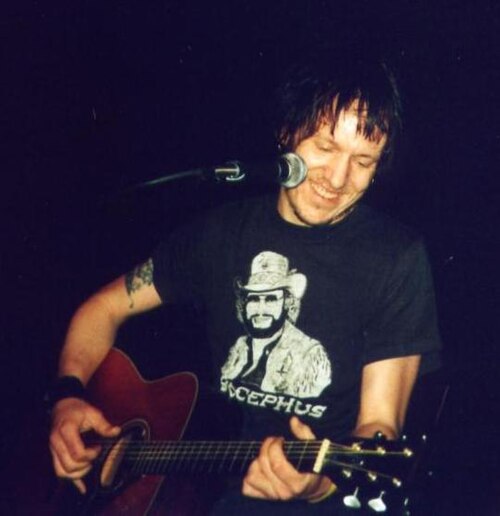
Indie pop is a style of pop music that originally grew out of British post-punk in the late 1970s.[32][33] Indie pop was one of the first independent music genres, and was initially synonymous with "indie".[33] Indie pop is characterized by a focus on melody, arrangements, and harmony, with less angst and distortion as compared to indie rock.[32][34] It features the homemade intimacy commonly found in independent music.[32] Notable subgenres include chamber pop, which adds lush chamber orchestration, and twee pop, which features "primitive simplicity".[34]

Indie rock (also referred to as simply "indie")[35][12] is a style of rock music and is one of the most popular independent music genres. It originally grew out of the alternative rock, punk rock, and independent movements of the 1980s,[3][35] with local scenes emerging in many American cities and college towns.[36] The New Zealand Dunedin sound of the 1970s and 80s was also influential in indie rock's development.[37] By the 1990s, indie rock had separated from alternative rock and gained popularity in the mainstream,[3] pushed along by the popularity of Seattle's grunge scene, especially Nirvana.[3][35] Notable artists of the 2000s included the Strokes, Yeah Yeah Yeahs, and the Arctic Monkeys,[12] while some of the 2010s included the 1975 and Vampire Weekend.[35] Indie rock went onto inspire a multitude of subgenres and derivative styles, such as dream pop, noise pop, lo-fi, math rock, emo, and more.[3]

Indie folk is a style of folk music which originated in the 1990s with artists like Elliott Smith and Will Oldham.[38] The genre grew from traditional and contemporary folk, but took a distinctly independent approach inspired by indie rock.[39] The genre gained further popularity and support in the 2000s from labels such as Saddle Creek, Barsuk, and Sub Pop.[38] Notable 21st century indie folk artists include Fleet Foxes, Bon Iver, Great Lake Swimmers, Sufjan Stevens, and Phoebe Bridgers.[39][40][41] Indie folk is distinguished by its acoustic instrumentation – and often consists of just vocals and acoustic guitar – although some artists experiment with more diverse instrumentation. As well, indie folk artists are often singer-songwriters.[39]

Indie electronic, also known as indietronica, is a broad categorization of music that combines independent and electronic music styles.[42][43] It is not considered a scene or movement, and often combines influences from a variety of genres.[43] It has origins in the 1990s, with artists like Stereolab, Arab Strap, and Disco Inferno contributing to the style.[42][43] Indietronica largely grew in popularity in the 2000s, with the rising accessibility to home recording and software synthesizers.[42] Influential artists of this era include Hot Chip, Metronomy, and the Postal Service. Some 2010s artists achieved wider success with their music, for example, James Blake and the xx.[44] Indietronica artists usually release their music on independent labels, with examples including Sub Pop, Warp, and Ghostly International.[42]