
Loading article…
マラガの聖週間(スペイン語:Semana Santa en Málaga )は、スペインのマラガで毎年行われるイエス・キリストの受難を記念する行事です。四旬節の最後の週、つまりイースターの直前の週に行われます。マラガ市の主要な文化的・宗教的行事の一つです。
聖週間中、42の兄弟団(コフラディア)がマラガの街路を45回にわたって行列し、キリストの受難の場面を描いた写実的な木彫りの像や、悲しみに暮れる聖母マリアの像を披露する。
マラガの聖週間は1965年にスペインの国際観光重要祭典に指定されました。[ 1 ]

スペインの他の聖週間行事と同様に、行列の参加者の中にはナザレノ(懺悔のローブ)を着用する者もいる。この衣服は、チュニック、着用者の顔を隠すためのカピロテ(円錐形の先端を持つフード)、そして時にはマントから構成される。これらの衣服に通常使用される生地は、ベルベット、ダマスク織、サテン、またはツイルである。一部の兄弟団のナザレノには、手袋、スカプラリオ、ストール、そしてエスパルトで作られた帯で留められたチュニックも含まれる。ローブの正確な色と形状は、それぞれの兄弟団によって異なる。マラガの行列では、キリストと聖母のセクションで色が異なっている。通常、ナザレノはろうそくを持ち、先頭のセクションで玉座の前を進む。

ほとんどの兄弟団は、ナザレノによって運ばれる行列の中で、かなりの数の記章を携えている。
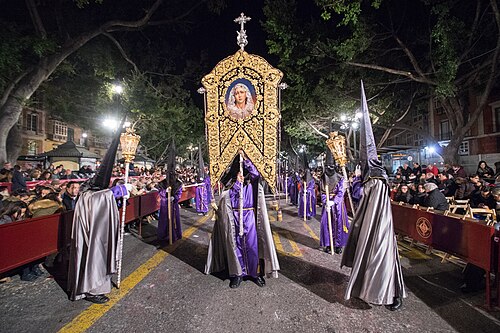
行列の中には、マンティラを身に着けた女性が同行するものもあります。マンティラは、喪と苦痛の象徴である黒いドレスに、頭と背中を覆うレースやシルクのベールまたはショールであるマンティラを身に着けたものです。大きな櫛に似たペイネタは、マンティラを留めるために使われます。[ 2 ]
玉座の前には、祭服を身に着けた6人または8人の侍者が配置され、その多くはダルマティカを着用している。また、行列用の燭台(キリアレス)を運ぶセロフェラリオ、香を焚いて拡散させる香炉を運ぶ香炉係もいる。

玉座(場所によってはパソスとも呼ばれる)は巨大な台座で、キリストの受難や聖母マリアの悲しみに関連する福音書のさまざまな場面を描いた彫刻が設置されている。各信徒団体は通常2つの玉座を展示しており、1つ目はキリストの受難の場面を描いた彫刻、またはキリスト像、2つ目はドロローサとして知られる聖母マリア像である。
カヒージョと呼ばれる玉座の構造は、木材、銀、青銅、またはニッケルシルバーで精巧に彫刻されており、一部は金箔で装飾されています。カヒージョの四隅には、上部に配置された像や彫刻群を照らすための燭台(アルボタンテス)またはランタンが置かれています。
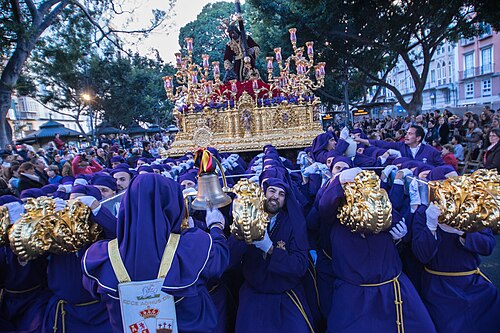
キリストの玉座の上部は、カーネーションやアイリスなどの花の絨毯、あるいはコルクの山で飾られている一方、聖母の玉座のほとんどは、 12本または16本のパリオ棒でカヒージョに固定された装飾的な天蓋で覆われている。天蓋の前面、背面、側面からは、金、銀、絹で刺繍されたベルベットまたはメッシュのドレープであるバンバリナが垂れ下がっている。聖母像の前には、段状に配置された燭台であるカンデレリアが置かれている。
玉座は、玉座の男または担ぎ手と呼ばれる男性と女性の肩に、通常8メートルから14メートルの長さのバラレスと呼ばれる長い棒または梁を通して運ばれます。玉座の大きさに応じて、各玉座には6つまたは8つのバラレスがあります。重さによっては、最大5トンになるものもあり、[ 3 ]玉座を移動させるには120人から270人のポルタドーレス(担ぎ手)が必要です。行列の間、6時間から14時間の間、各人は20キログラムから40キログラムの重さを運ぶことができます。 [ 4 ] [ 5 ]
玉座のヴァラレスの正面には大きな鐘がある。これは玉座執事(玉座係の長)がハンマーで鳴らし、運搬人を誘導したり休憩させたりするために鳴らす。[ 4 ]

The sculptures are located at the top of the throne and are the central axis of each brotherhood, most of the sculptures are carved wood (or recently, polychrome), often life-size or somewhat smaller. Some of these carvings are great works of art with centuries of antiquity,[6] although unfortunately during the burning of churches and convents in the 1931 riots, a great number of these sculptures were destroyed, between them the great majority of works of Pedro de Mena y Medrano.[6] After the Civil War, authors such as Mariano Benlliure y Gil, Francisco Palma Burgos, Antonio Castillo Lastrucci or José-Navas Parejo Pérez began to make new sculptures to replace the destroyed works.
These sculptures are in their respective churches and chapels during the rest of the year where they receive veneration.

The images of Jesus are situated on the first throne, which represents a biblical passage of the Gospels: triumphal entry into Jerusalem, Jesus carrying the cross, Jesus crucified, descent from the Cross, etc. Depending on the scene depicted the carving of Jesus may appear alone or accompanied by other statues related to the biblical passage. Some images of Christ wear tunics, smooth or richly embroidered over much of its surface.[6]
In the second throne is located the Virgin of Sorrow, mostly alone but sometimes accompanied by sculpture St. John the Evangelist. The statue of the Virgin usually is of a mannequin, with only the hands and the head carved. The body and arms are covered with luxurious dresses embroidered with gold and silver thread as well as colored silks.[6] Around the head is placed a veil and usually carry a crown or halo. In the back is placed long capes embroidered in gold and silver thread and taking forms that are generally inspired by vegetable motifs, in Malaga these capes can reach up to 8 meters in length.[6]
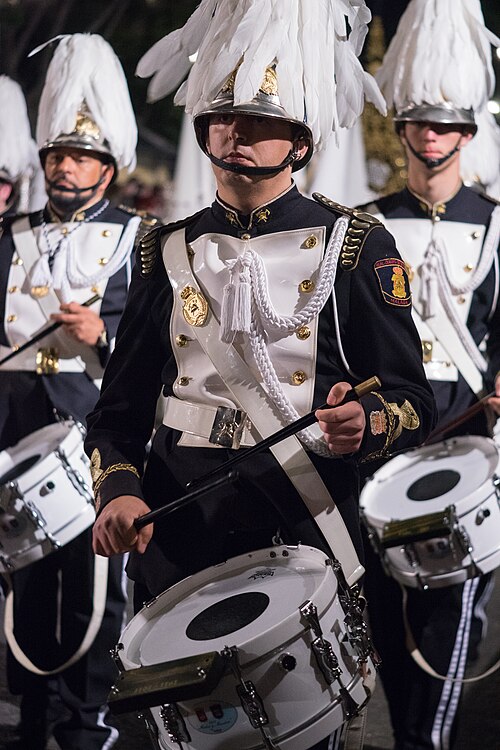
Most of the thrones are accompanied by marching bands. Each procession usually has 3 bands, the first band, a drum and bugle band is located behind the lead cross. The second band walks behind the first float, this band is usually of bugles and drums, military band or concert band with woodwind instrument, brass instrument and percussion. Finally, the throne of the virgin is only accompanied by a concert band. Many of these bands are created by the brotherhoods themselves, a few being made up of personnel of the Armed Forces.
These bands play processional marches during processions, most of these marches have been created to accompany the movement of the thrones. It is a tradition that the Marcha Real is played at the departure and entrance of the images in the home churches or chapels of the confraternities and once it is played, everyone pays respect to the anthem (military, police and fire personnel out of formation salute when it is performed).
As throughout the Spanish world, and especially in Andalucía, during the processions saetas are sung to the sculptures. The saeta is a religious song, generally improvised and without accompaniment, which is usually sung from a balcony or on the street. It is a melody of free and full of lyricism. It recalls the style of cante jondo typical of the musical tradition of flamenco.
This is the place from which the great majority of the corporations begin their processional route, because the dimensions of the thrones do not allow them to begin the procession at their associated churches.
It is also where they keep the heritage throughout the year, occupying many positions in their museum during the rest of the year.[7][8][9][10]

In Holy Week, the official route is made up of those streets that share each and every one of the brotherhoods.[11]
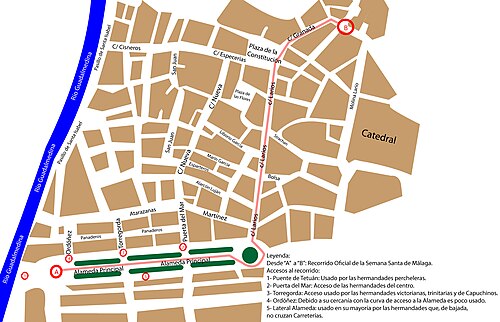
聖週間中、マラガの兄弟団は寺院または兄弟団の家を出て、公式ルートに向かいます。このルートは以前はアラメダ・プリンシパルから始まり、ラリオス・ラウンドアバウト、マルケス・デ・ラリオス通り、憲法広場、グラナダ通りを通りました。[ 5 ]このルートの距離は約850メートルでした。このルートの後、兄弟団はそれぞれの兄弟団または寺院に戻るか、大聖堂に入って懺悔の場所を設けます。2026年現在、ルートは別の経路をたどり、憲法広場を通過してからラリオス通り、マルティネス通り、アタラサナス通りを下り、アラメダ・プリンシパル、トレガルダ通り、モリーナ・ラリオ通りを通過し、公式にはマラガ大聖堂で終了します。その後、兄弟団はそれぞれ自分の寺院または家に戻ります。
マラガ聖兄弟会連合は、公式ルート上に約1万6000脚の椅子と複数の観覧席を設置する。中でも憲法広場の観覧席はひときわ目を引く存在で、市長や市議会議員が聖像の行列を見守るために集まる場所となっている。
マラガからカレテリア通りを進み、サンタ・イサベルホールと合流する地点には階段があり、聖週間にはそこがマラガの行列を観覧するための自然な観覧席となる。いくつかの兄弟団が大きな熱意と民衆の熱狂とともにそこに集まることが期待されている。ここは無料であることから、当局者が座る憲法広場にある公式演壇とは対照的であることから、このように呼ばれている。[ 12 ] [ 13 ]
2017年には、聖週間に参加した45の行列のうち、28の行列がこの場所を通過した。
マラガ大聖堂内に懺悔の場を設ける兄弟団もいくつか存在する。大聖堂内には15の兄弟団が入り込んでいる。残りの兄弟団は、その玉座の大きさが大聖堂の正門からの入場を妨げるため、大聖堂内に懺悔の場を設けていない。
聖週間、特に悲しみの金曜日と受難の土曜日の前には、いくつかの兄弟団が行列を行います。これらの兄弟団は通常、プエルト・デ・ラ・トーレの悲しみの兄弟団やチュリアーナの悲しみの兄弟団のように、中心部から遠く離れた地域にある歴史ある兄弟団、あるいはまだ兄弟団グループに属していない若い兄弟団であり、そのため公式ルートを通ることができません。

像の移送は小規模な行列で、通常は小型の玉座一つに兄弟団の二つの彫像が乗せられ、神殿の像を兄弟団の本部へ移送する。通常は聖週間前の週に行われるが、一部の兄弟団は聖週間中に行う。
これらの移送の中には、市民病院の患者を訪問する捕虜のイエスや聖木曜日の朝にレジオ・マリエによって行われる善き死のキリストの移送のように、よく知られ、大きな期待をもって待たれているものもあります。彼らは船でマラガ港に到着し、[ 14 ]そこからサント・ドミンゴ教会へ移動し、教会の隣にある兄弟会の建物にある玉座に善き死のキリストを移します。[ 15 ] [ 16 ]
聖週間中、兄弟会協会に所属する41の兄弟会が、マラガの街路で45回の懺悔行列を行います。以下のリストは、これらの「兄弟会」を日別、公式ルートでの通過順で示したものです。

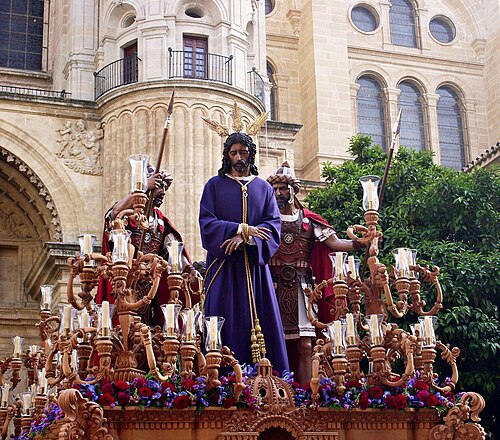
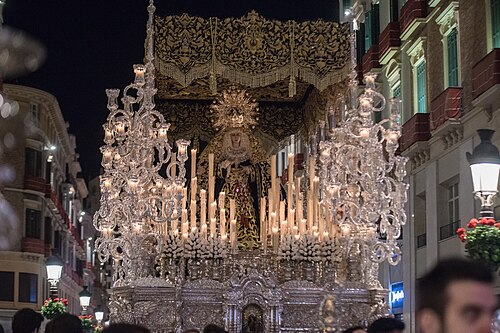
聖週間初日は、さらに多くの兄弟団が行列を行う日でもあり、9つの兄弟団が市内のさまざまな地区から通りを練り歩く。[ 17 ] [ 18 ]

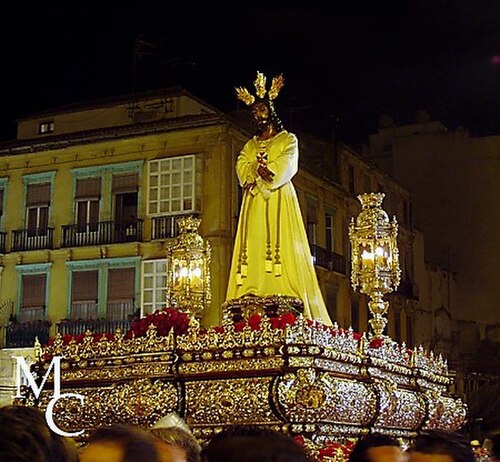
On Holy Monday, six brotherhoods go in procession through the streets of Malaga.[23][24]

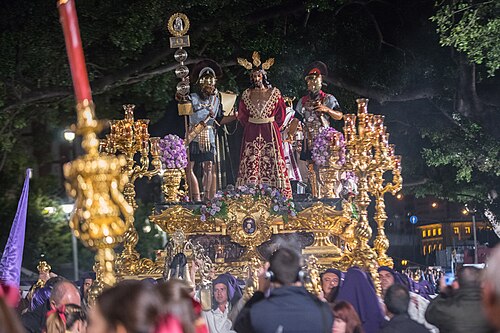
この日、マラガの街路で行われる行列には、他に6つの兄弟団が参加する。[ 12 ] [ 30 ]

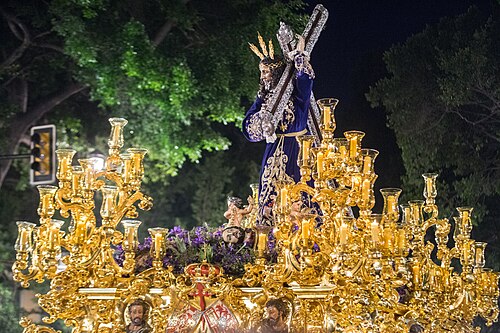

On this day, some of the oldest and most traditional brotherhoods participate in the processions.[31] 7 brotherhoods with 15 thrones in total take to the streets of the city.


聖木曜日は、最も人気があり歴史のある兄弟団のいくつかが参加するもう1つの日です。[ 35 ]この日には8つの兄弟団が参加します。[ 36 ]


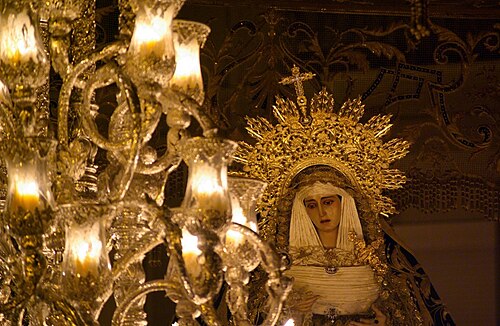
The "cofradías" that participate in this day usually are "cofradías" showing the seriousness of the occasion being marked.[38]

復活した至聖なるキリストと天の女王至聖なるマリアの行列は、聖週間の最後の行列です。この行列は信心会グループによって組織され、すべての兄弟会が参加します。 [ 40 ] [ 41 ]山車は、イエスが死から復活した後、イエスと彼の母が出会う様子を描いています。山車の存在は、この都市での聖週間の祝祭の終わりを告げます。