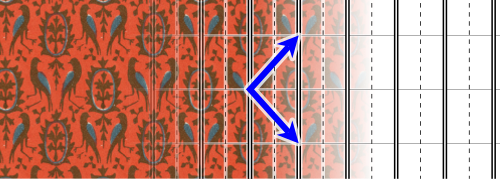
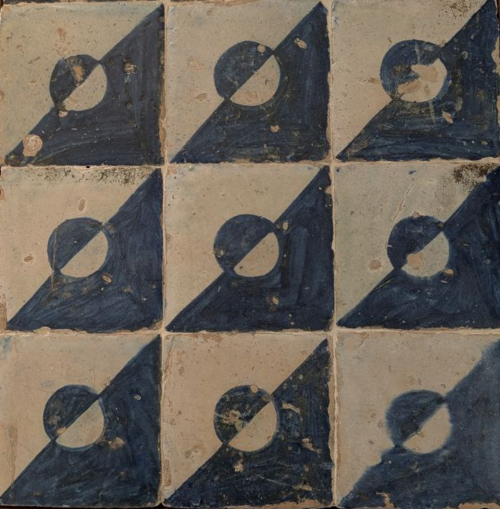
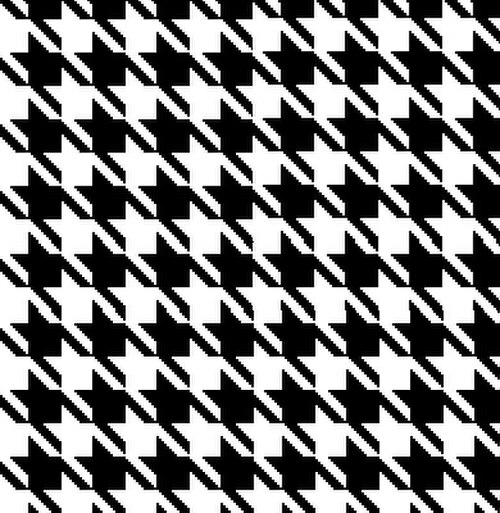
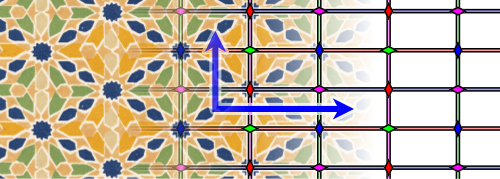
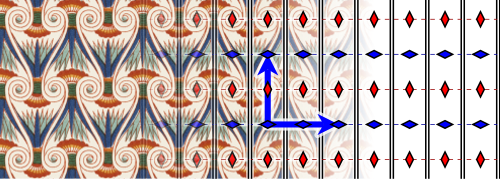
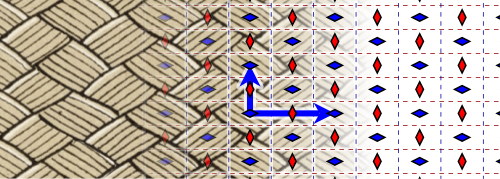
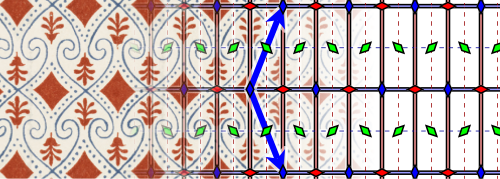
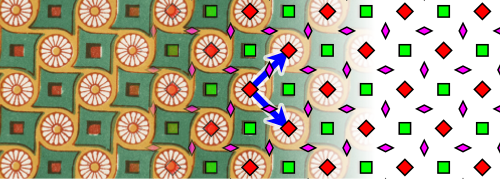
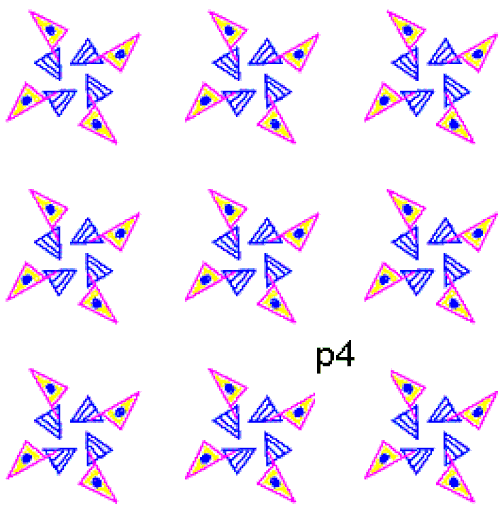
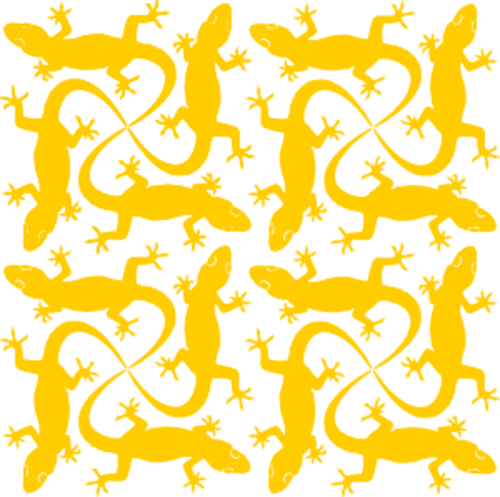
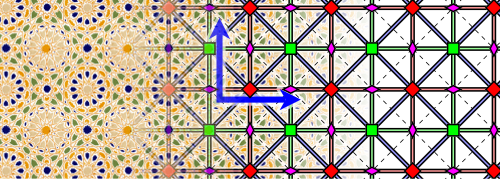
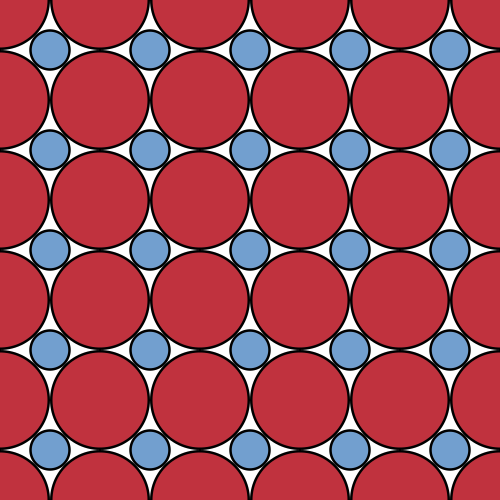
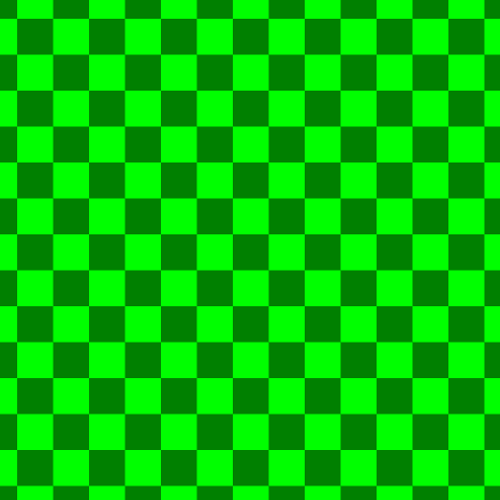
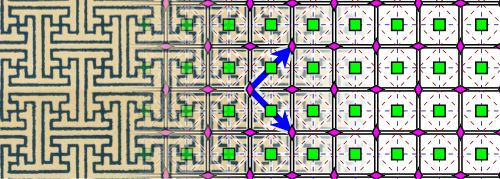
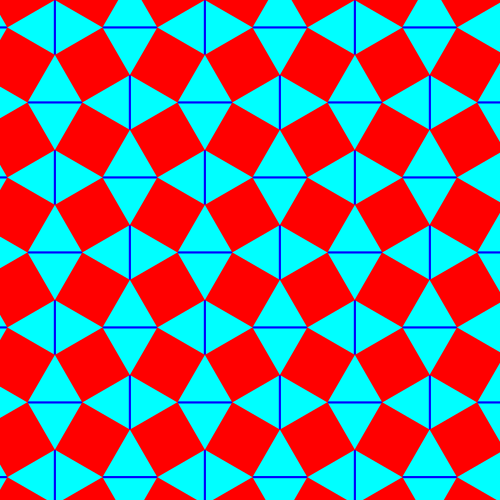
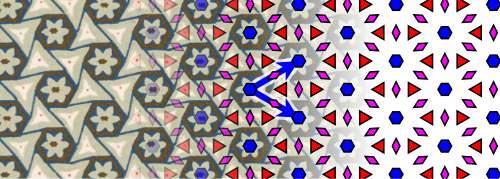
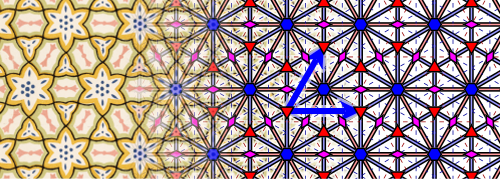
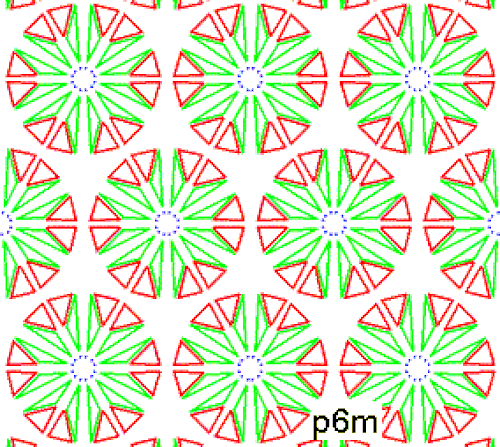
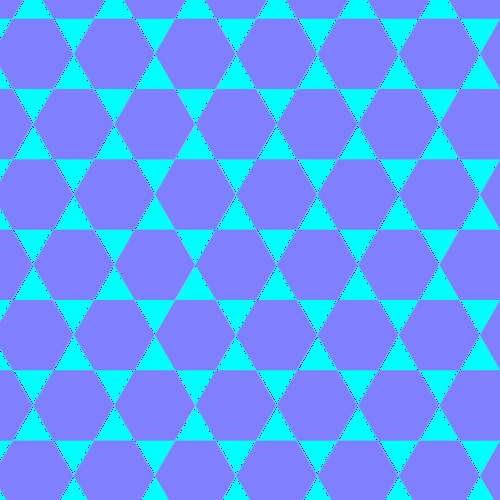
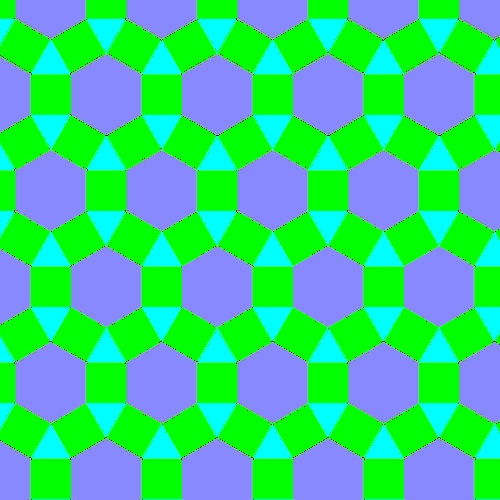
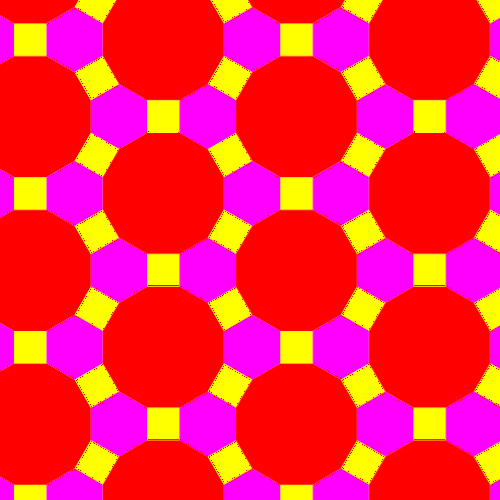
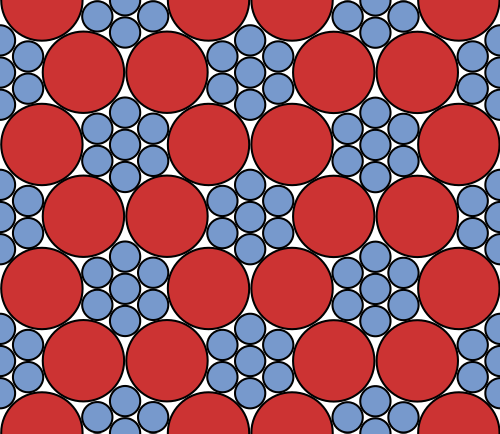
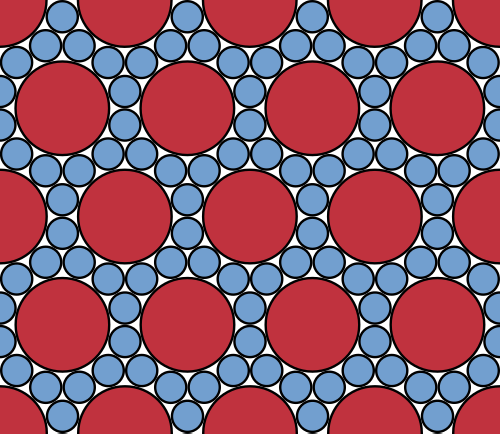
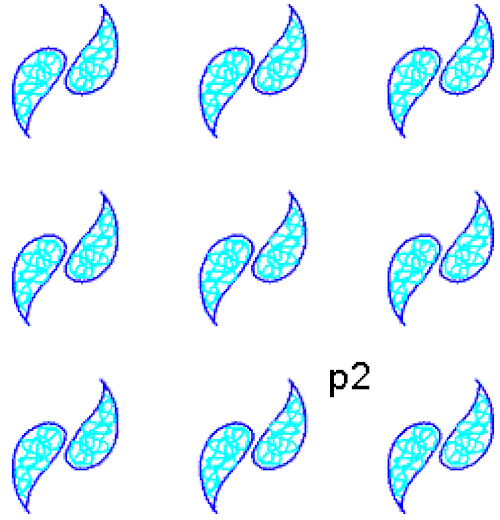
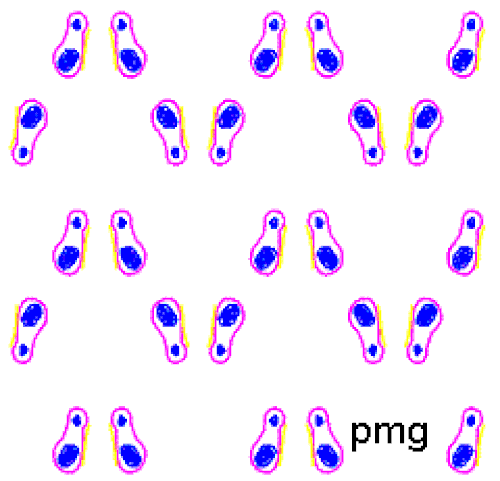
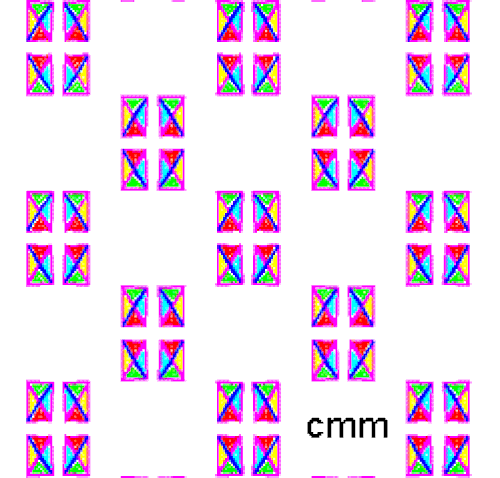
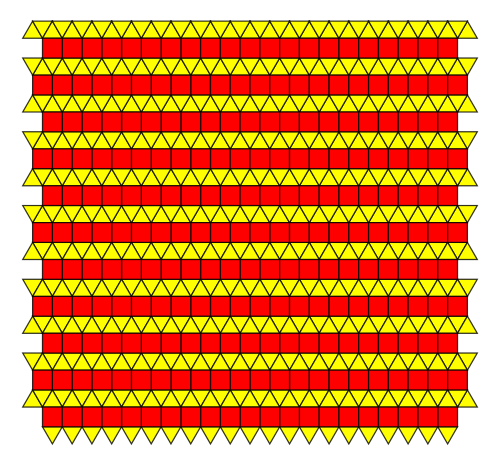
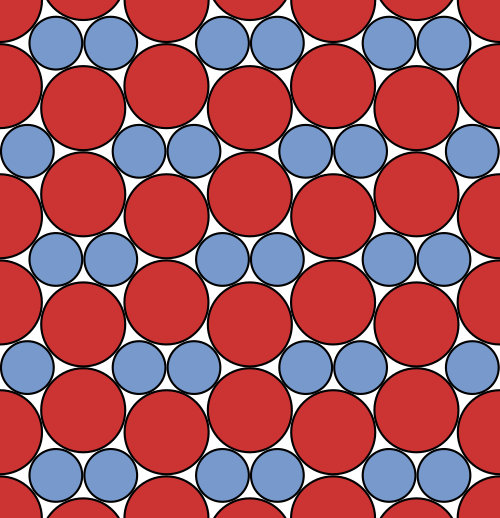
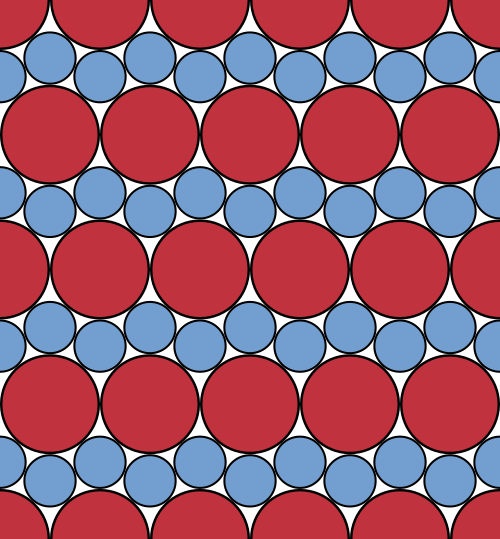
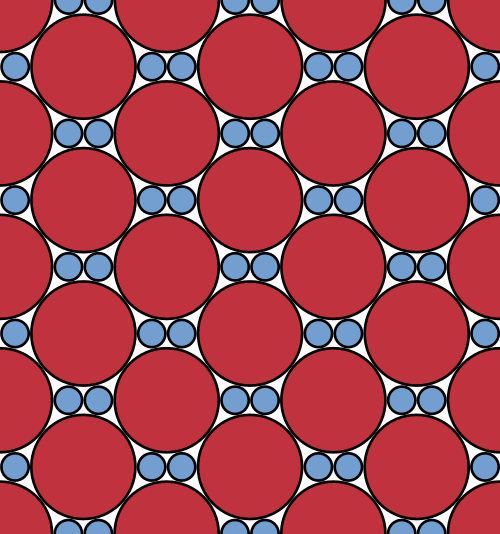
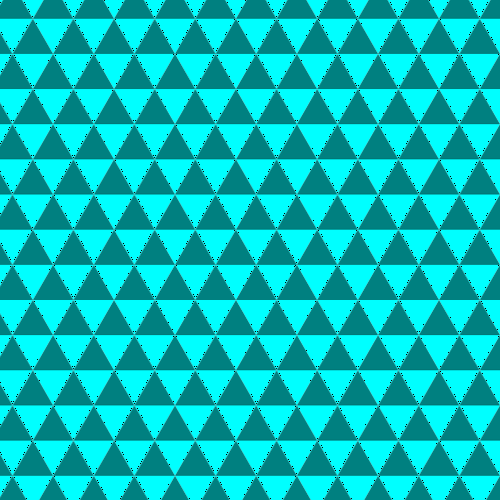
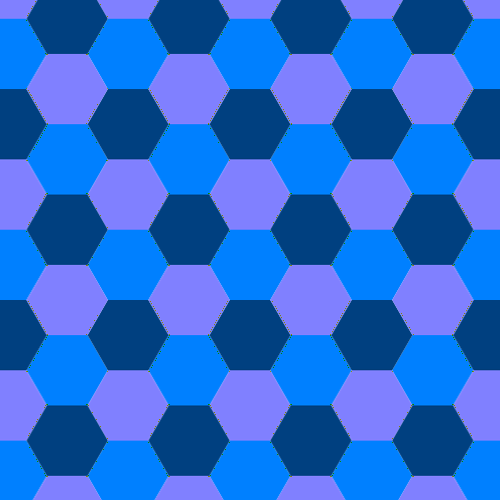
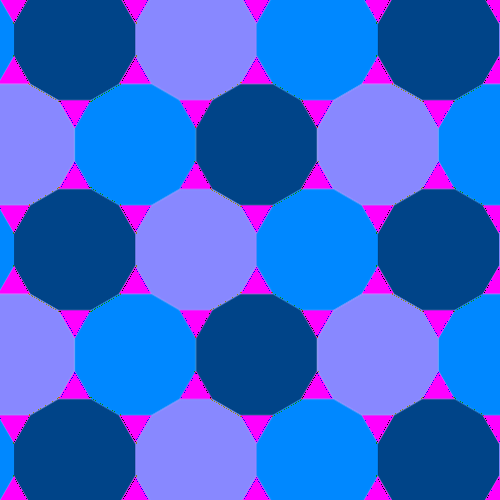
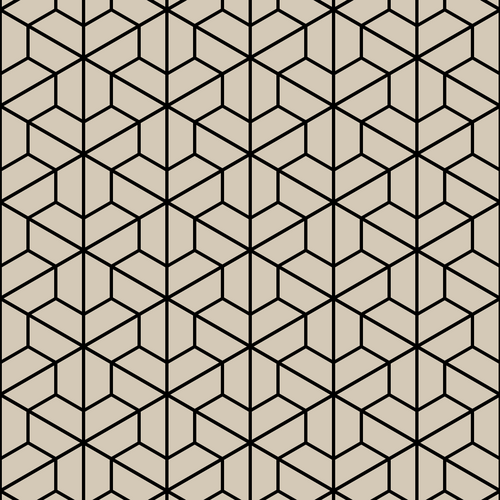
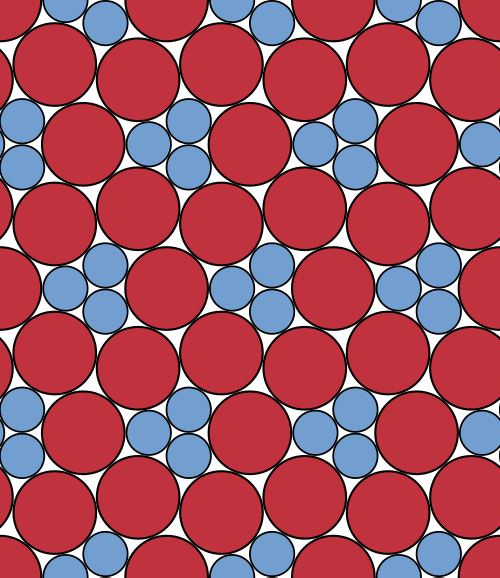
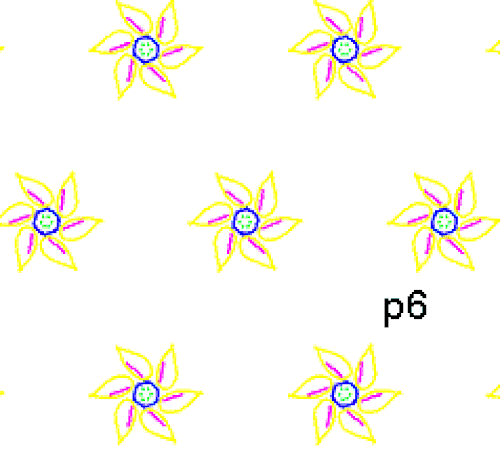
オービフォールドは、面、辺、頂点を持つ多角形と見なすことができ、展開すると球面、平面、または双曲平面をタイル状に敷き詰める可能性のある無限の多角形の集合を形成できます。平面をタイル状に敷き詰めると壁紙群が得られ、球面または双曲平面をタイル状に敷き詰めると球対称群または双曲対称群が得られます。多角形がタイル状に敷き詰める空間の種類は、オイラー標数χ = V − E + Fを計算することで見つけることができます。ここで、 Vは角(頂点)の数、Eは辺の数、Fは面の数です。オイラー標数が正の場合、オービフォールドは楕円(球面)構造を持ち、ゼロの場合は放物線構造、つまり壁紙群を持ち、負の場合は双曲構造を持ちます。可能なオービフォールドの全セットを列挙すると、オイラー標数が0であるものはわずか17個であることがわかります。
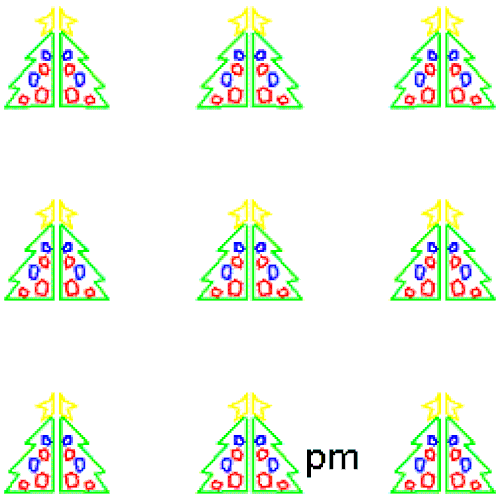
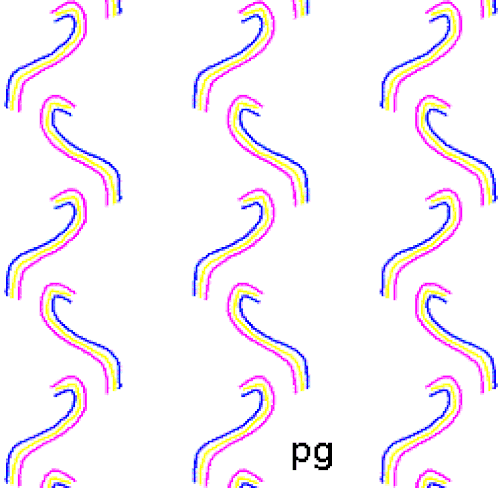
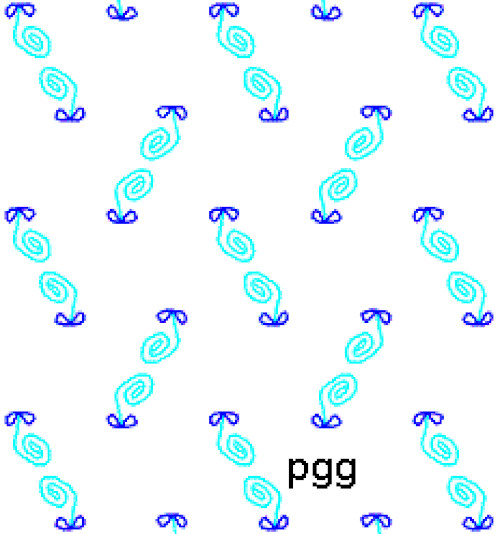
壁紙群の各対称要素は、特定の点群の要素であるか、そのような要素と平行移動の組み合わせのいずれかです。この点群は、以下の説明で示されています。必ずしも、その点群対称性を持つ点が存在するとは限りません。例えば、群pgは、反射を含む点群 D 1に関連付けられていますが、反射も対称性を持つ点もありません。一方、同じ点群に関連付けられている群pm は、反射線を持っています。
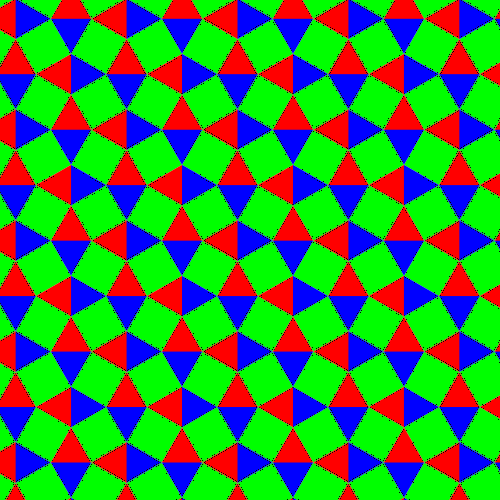
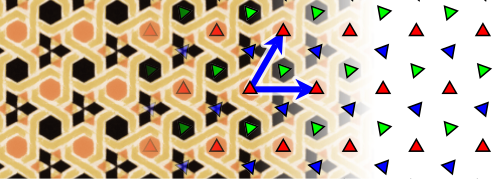
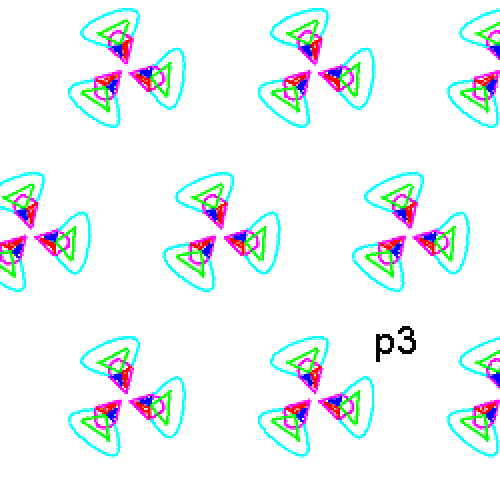
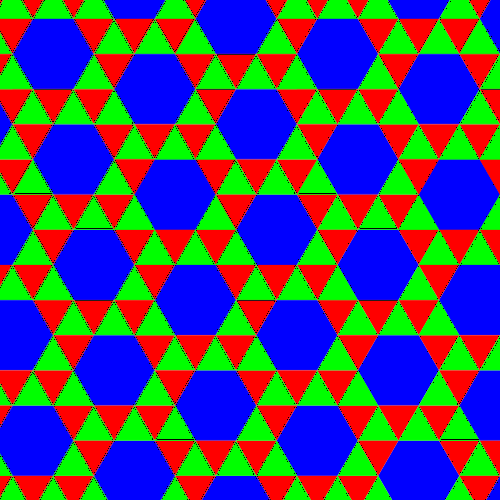
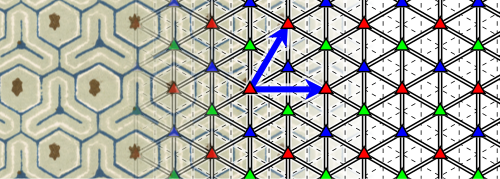
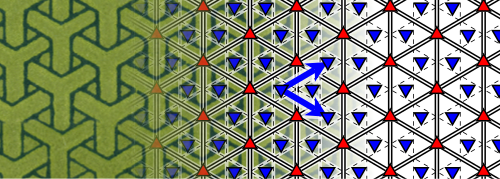
p 3とp 3 m 1の場合と同様に、最小の平行移動に対応する辺を持つ、同じ大きさの正三角形で平面を敷き詰めることを想像してください。すると、三角形の半分は一方の向きになり、残りの半分は上下逆になります。この壁紙グループは、同じ向きのすべての三角形が等しい場合に対応し、両方のタイプは 3 次の回転対称性を持ち、互いに鏡像ですが、それ自体は対称ではなく、等しくもありません。与えられた画像に対して、このような敷き詰めは 1 つしかできません。画像に関して言えば、頂点は青い三角形ではなく、赤い三角形でなければなりません。
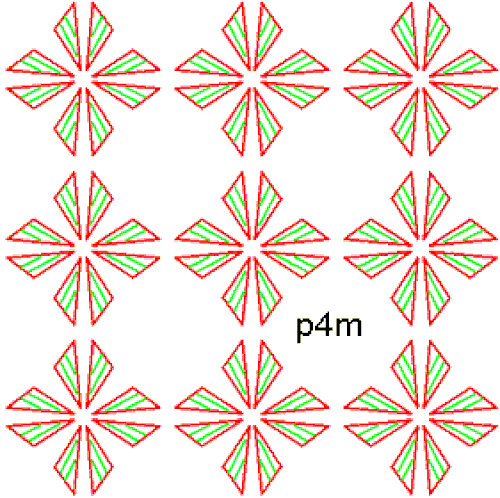
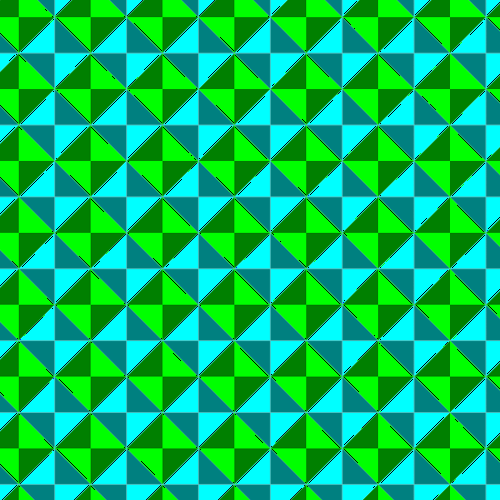
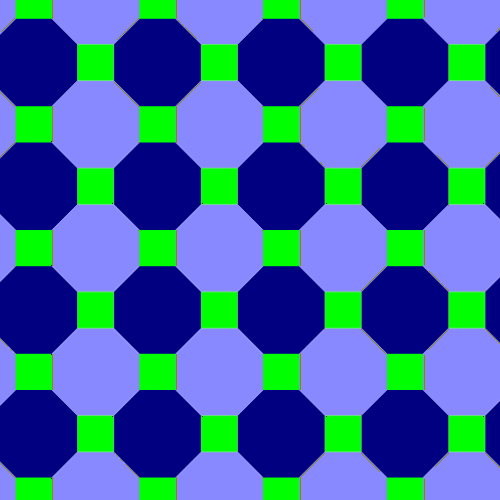
In the 3 cases of rotational symmetry of order 4, the cell is a square (square lattice, itself p4m).
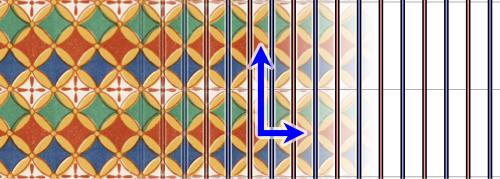
In the 5 cases of reflection or glide reflection, but not both, the cell is a rectangle (rectangular lattice, itself pmm). It may also be interpreted as a centered rhombic lattice. Special cases: square.
In the 2 cases of reflection combined with glide reflection, the cell is a rhombus (rhombic lattice, itself cmm). It may also be interpreted as a centered rectangular lattice. Special cases: square, hexagonal unit cell.
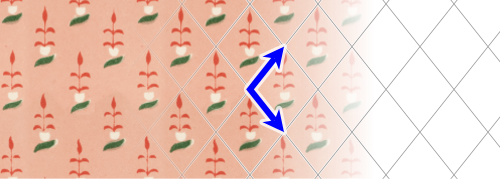
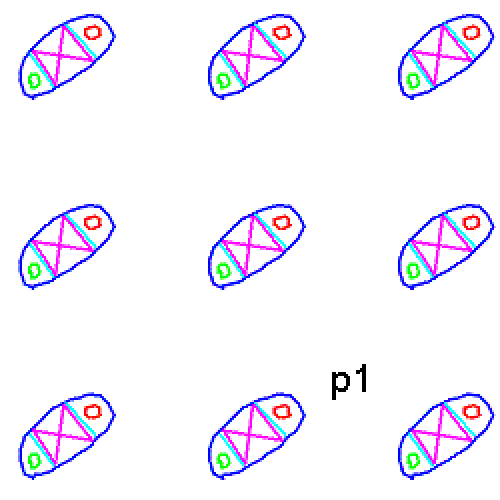
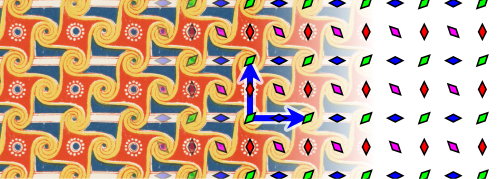
In the case of only rotational symmetry of order 2, and the case of no other symmetry than translational, the cell is in general a parallelogram (parallelogrammatic or oblique lattice, itself p2). Special cases: rectangle, square, rhombus, hexagonal unit cell.
Symmetry groups
The actual symmetry group should be distinguished from the wallpaper group. Wallpaper groups are collections of symmetry groups. There are 17 of these collections, but for each collection there are infinitely many symmetry groups, in the sense of actual groups of isometries. These depend, apart from the wallpaper group, on a number of parameters for the translation vectors, the orientation and position of the reflection axes and rotation centers.
Rotational symmetry of order two ditto; this means also that 4- and 6-fold rotation centres at least keep 2-fold rotational symmetry.
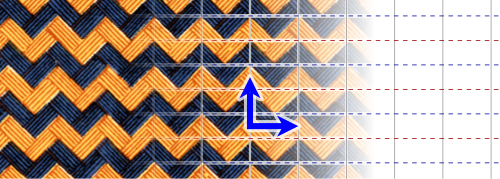
Reflection in a line and glide reflection are preserved on expansion/contraction along, or perpendicular to, the axis of reflection and glide reflection. It changes p6m, p4g, and p3m1 into cmm, p3m1 into cm, and p4m, depending on direction of expansion/contraction, into pmm or cmm. A pattern of symmetrically staggered rows of points is special in that it can convert by expansion/contraction from p6m to p4m.
Note that when a transformation decreases symmetry, a transformation of the same kind (the inverse) obviously for some patterns increases the symmetry. Such a special property of a pattern (e.g. expansion in one direction produces a pattern with 4-fold symmetry) is not counted as a form of extra symmetry.
Change of colors does not affect the wallpaper group if any two points that have the same color before the change, also have the same color after the change, and any two points that have different colors before the change, also have different colors after the change.
If the former applies, but not the latter, such as when converting a color image to one in black and white, then symmetries are preserved, but they may increase, so that the wallpaper group can change.
Web demo and software
Several software graphic tools will let you create 2D patterns using wallpaper symmetry groups. Usually you can edit the original tile and its copies in the entire pattern are updated automatically.
MadPattern, a free set of Adobe Illustrator templates that support the 17 wallpaper groups
Tess, a shareware tessellation program for multiple platforms, supports all wallpaper, frieze, and rosette groups, as well as Heesch tilings.
Wallpaper Symmetry is a free online JavaScript drawing tool supporting the 17 groups. The main page has an explanation of the wallpaper groups, as well as drawing tools and explanations for the other planar symmetry groups as well.
TALES GAME, a free software designed for educational purposes which includes the tessellation function.
KaliArchived 2018-12-16 at the Wayback Machine, online graphical symmetry editor Java applet (not supported by default in browsers).
KaliArchived 2020-11-21 at the Wayback Machine, free downloadable Kali for Windows and Mac Classic.
Inkscape, a freevector graphics editor, supports all 17 groups plus arbitrary scales, shifts, rotates, and color changes per row or per column, optionally randomized to a given degree. (See )
SymmetryWorks is a commercial plugin for Adobe Illustrator, supports all 17 groups.
EscherSketch is a free online JavaScript drawing tool supporting the 17 groups.
Repper is a commercial online drawing tool supporting the 17 groups plus a number of non-periodic tilings
↑E. Fedorov (1891) "Симметрія на плоскости" (Simmetrija na ploskosti, Symmetry in the plane), Записки Императорского С.-Петербургского минералогического общества (Zapiski Imperatorskogo Sant-Petersburgskogo Mineralogicheskogo Obshchestva, Proceedings of the Imperial St. Petersburg Mineralogical Society), series 2, 28: 345–390 (in Russian).
↑Pólya, George (November 1924). "Über die Analogie der Kristallsymmetrie in der Ebene" [On the analog of crystal symmetry in the plane]. Zeitschrift für Kristallographie (in German). 60 (1–6): 278–282. doi:10.1524/zkri.1924.60.1.278. S2CID102174323.
↑Klarreich, Erica (5 March 2013). "How to Make Impossible Wallpaper". Quanta Magazine. Retrieved 2021-04-07.
↑Radaelli, Paulo G. Symmetry in Crystallography. Oxford University Press.
↑If one thinks of the squares as the background, then one can see a simple patterns of rows of rhombuses.
References
The Grammar of Ornament (1856), by Owen Jones. Many of the images in this article are from this book; it contains many more.
John H. Conway (1992). "The Orbifold Notation for Surface Groups". In: M. W. Liebeck and J. Saxl (eds.), Groups, Combinatorics and Geometry, Proceedings of the L.M.S. Durham Symposium, July 5–15, Durham, UK, 1990; London Math. Soc. Lecture Notes Series 165. Cambridge University Press, Cambridge. pp.438–447