
Loading article…
| アイ・ラブ・ルーシー | |
|---|---|
 シンジケート版のロゴ | |
| ジャンル | シットコム |
| に基づく | 私の大好きな夫 |
| 主演 | |
| テーマ音楽作曲家 |
|
| 作曲家 | |
| 原産国 | アメリカ合衆国 |
| 元の言語 |
|
| シーズン数 | 6 |
| エピソード数 | 180 [a] (エピソード一覧) |
| 生産 | |
| エグゼクティブプロデューサー | デジ・アーナズ |
| プロデューサー | ジェス・オッペンハイマー |
| 生産拠点 | デシル スタジオ、ロサンゼルス |
| カメラのセットアップ | マルチカメラ |
| 実行時間 | 23~26分 |
| 制作会社 | デシルプロダクション |
| オリジナルリリース | |
| ネットワーク | CBS [1] |
| リリース | 1951年10月15日 – 1957年5月6日 |
| 関連している | |
『アイ・ラブ・ルーシー』は、アメリカのテレビコメディで、1951年10月15日から1957年5月6日までCBSで放送され、全6シーズンにわたり30分のエピソードが合計180話放送された。 [2]このシリーズは、と夫のデジ・アーナズ、ヴィヴィアン・ヴァンス、ウィリアム・フローリーが主演し、ニューヨーク市に住む若い中流階級の主婦ルーシー・リカルド(ボール)の人生を追う。ルーシーは、親友で家主のエセルとフレッド・マーツ(ヴァンスとフローリー)とよく計画を立て、バンドリーダーの夫リッキー・リカルド(アーナズ)と一緒に彼のナイトクラブに出演する。ルーシーがショービジネス界に溶け込み、その一員になるためにさまざまな策略を練る様子が描かれている。 1957年にシリーズが終了した後、番組の修正版がさらに3シーズン続き、1957年から1960年にかけて13回の1時間スペシャルが放送された。最初は『ルシル・ボール–デジ・アーナズ・ショー』として知られ、後に再放送で『ルーシー–デジ・コメディ・アワー』となった。
アイ・ラブ・ルーシーは全6シーズン中4シーズンで米国で最も視聴された番組となり、ニールセンの視聴率調査でトップの座を維持した最初の番組となった。[3] 2011年現在、同番組のエピソードは世界中で数十の言語で配信されており、毎年4000万人のアメリカ人視聴者を抱え、人気を保っている。 [4] [5] [6]クリスマスエピソードのカラー版は、番組が初放送されてから62年後の2013年にCBSでゴールデンタイムに放送され、800万人以上の視聴者を集めた。[7]
この番組は、撮影監督カール・フロイントによってスタジオの観客の前で35ミリフィルムで撮影された最初の脚本付きテレビ番組であり、5つのエミー賞を受賞し、多くのノミネートと栄誉を受けた。アンサンブルキャストをフィーチャーした最初の番組であった。[8]そのため、歴史上最も影響力のあるテレビ番組の1つと見なされることが多い。2012年には、 ABCニュースとピープル誌が実施した調査で「史上最高のテレビ番組」に選ばれた。[9] 2013年には、全米脚本家組合が「最も脚本が優れたテレビシリーズ101選」のリストで12位にランク付けした。[10]
前提
もともとニューヨーク市のアパートを舞台とした『アイ・ラブ・ルーシー』は、ルーシー・リカルド(ルシル・ボール)と歌手でバンドリーダーの夫リッキー・リカルド(デジ・アーナズ)、そして彼らの親友で家主のフレッド・マーツ(ウィリアム・フローリー)とエセル・マーツ(ビビアン・ヴァンス)を中心に展開する。第2シーズンでは、ルーシーとリッキーにリッキー・リカルド・ジュニアという息子が生まれる。リッキーは「リトル・リッキー」と呼ばれることが多く、シーズンを通して複数の俳優が演じる。彼の誕生は、ボールの息子であるデジ・アーナズ・ジュニアの実際の誕生と一致するようにタイミングが合わされた。[11]
ルーシーは世間知らずで野心家で、スターダムに飢えており、ショービジネスで大成功したいと願うたびに自分と夫の両方をトラブルに巻き込む才能がある。リカルド家の親友であるフレッドとエセルは元ボードビリアンである。マーツ家のエンターテイメント業界での経験は、ルーシーがパフォーマーとして自分を証明しようとする決意を強めるだけであるが、リッキー、フレッド、エセルに比べて業界への関与が限られているため、疎外感を感じることが多い。カリスマ性があるものの、シリーズ全体を通して、彼女は市場価値のあるパフォーマンススキルをほとんど持っていないと描写されており、音痴で、サックスで「グローワーム」などの曲を音程を外して演奏する以外は何も歌うのに苦労しているように描かれ、彼女のパフォーマンスの多くは悲惨な結果に終わっている。しかし、彼女に才能が全くないと言うのは真実ではなく、時には彼女が優れたダンサーであり有能な歌手であることが示されている。彼女はまた、少なくとも2回、テレビや映画会社から契約のオファーを受けている。最初はシーズン1のエピソード「オーディション」で、トロピカーナ・ナイトクラブでのリッキーの演技で負傷したピエロの代わりを務めたとき、そしてその後のシーズン5のエピソード「ルーシーとダミー」で、彼女はハリウッドのスタジオパーティーで、ゴム製のリッキーのダミーをダンスパートナーとして使って踊ったときである。
ルーシーの過去についてはほとんど情報が語られていない。いくつかのエピソードでは、ルーシーはニューヨーク州ジェームズタウン(ボールの実生活の故郷)で生まれ、後にウェストジェームズタウンと特定されたこと、ジェームズタウン高校を卒業したこと、旧姓は「マクギリカディ」(少なくとも父方の祖先はスコットランドまたはアイルランドの民族であることを示しているが、祖母はスウェーデン人だと一度言及したことがある)、かつて働いていた代理店の友人とクルーズ旅行中にリッキーと出会ったことなどが語られている。ルーシーの家族は登場せず、時々登場する母親のマクギリカディ夫人(キャサリン・カード)はリッキーの名前を決して正しく言えない。ルーシーは年齢や本当の髪の色についても秘密にしており、金銭面で無頓着な傾向があった。また、いくぶん物質主義的で、あらゆる機会に新しいドレスや帽子を買うことにこだわり、古い友人には自分とリッキーは裕福だと語っていた。彼女は献身的な主婦、料理上手、そして気配りのできる母親としても描かれていた。ルーシーの役割の一部は夫の世話をすることだったので、夫のリッキーが仕事に出ている間、彼女は家にいて家事を担当していた。[12]戦後、ルーシーは家の外の仕事に就いたが、これらの仕事では、彼女は通常の家事以外のことは不器用な人物として番組で描かれた。[13]

ルーシーの夫、リッキー・リカルドは、キューバ系アメリカ人の新進気鋭の歌手兼バンドリーダーで、興奮しやすい性格である。彼の忍耐力は、妻が芸能界入りを試みたり、衣服や家具に法外な出費をしたりすることで、しばしば試される。彼はいらだつと、スペイン語で早口で話すようになることが多い。ルーシーと同様、彼の過去や家族についてはあまり明らかにされていない。リッキーの母親(女優メアリー・エメリーが演じる)は2つのエピソードに登場し、別のエピソードでは、ルーシーは彼に5人の兄弟がいると述べている。リッキーはまた、自分は叔父のアルベルト(キューバへの家族旅行中に目撃されている)に「実質的に育てられた」こと、そしてハバナ大学に通っていたことを述べている。リッキーと強く結びついたキャッチフレーズは「ルーシー、説明しなきゃいけないことがあるのよ」(時には「ルーシー、説明しなきゃいけないことがたくさんあるのよ」)である。これはルーシーがリッキーに秘密にしていたことが複雑で問題のある状況になり、最終的に彼に明かされるときに使われる。このセリフは今でも「アイ・ラブ・ルーシー」の記事でよく言及され[14]、公式グッズにも印刷されている[15] が、リッキーがこの文をこのように言うことは決してない。[16] [17]
1957年のルシル・ボール・デジ・アーナズ・ショーのエピソード「ルーシー、クルーズでハバナへ」の長い回想シーンでは、ルーシーとリッキーがどのように出会い、リッキーがアメリカに来たのかが詳細に描かれている。少なくとも新聞コラムニストのヘッダ・ホッパーに関する限り、このカップルは1940年にルーシーとメルツェス夫妻が休暇でハバナを訪れたときに出会ったという。大学を卒業し英語も堪能であるにもかかわらず、リッキーは船で観光客が到着する桟橋で客待ちをする馬車の運転手として描かれている。リッキーはルーシーのツアーガイドの1人として雇われ、2人は恋に落ちる。偶然にもクルーズ船で人気歌手のルディ・ヴァレーと出会ったルーシーは、リッキーのオーディションを手配し、ヴァレーのオーケストラに雇われ、ルーシーとメルツ一家が乗っていた船でアメリカに移住することができた。ルーシーは後に、リッキーがヴァレーで演奏したのは、ザビエル・クガのオーケストラ に移される前のたった一晩だけだったと述べている。
長い回想シーン「ルーシーがクルーズでハバナへ」とルーシーとリッキーの出会いの物語は、シーズン 4 のエピソード「ドン・ファンとスターレット」と矛盾している。そのエピソードのある時点で、ルーシーは、映画のプレミアにリッキーと一緒に行くように誘われなかったことを知り、15 年前に友人のマリオン・ストロングからキューバのドラマーとブラインド デートをしないかと誘われて「いいよ」と答えたことが間違いだったと嘆く。
シリーズ全体を通して、ルーシーは親友のエセルと一緒にいることが多い。ニューメキシコ州アルバカーキの元歌手兼女優のエセルは、ボードビルでの栄光の日々をもう一度味わおうとしている。リッキーは、ルーシーと違ってエセルは歌もダンスもかなり上手なので、ナイトクラブでのパフォーマンスにエセルを参加させたいと思っている。
番組では、エセルの夫フレッドが第一次世界大戦に従軍し、大恐慌を生き抜いたことが語られている。そのため、このシリーズでは、フレッドは金銭に非常にケチで、短気で生真面目な人物として描かれている。しかし、彼はまた、特にリトル・リッキーに対しては優しいところがあることも明かしている。リトル・リッキーのゴッドファーザーであり、名誉ある「叔父」でもあるフレッドは歌とダンスもでき、エセルとデュエットすることも多い。
シーズン6でコネチカット州ウェストポートに引っ越す前に彼らが全員住んでいたマンハッタンの建物は、架空の623 East 68th Streetで、最初はアパート4A、その後マンハッタンのアッパーイーストサイドにあるより大きなアパート3B(その後3Dに再指定され、マーツ家のアパートは3Bの番号)に移動しました。ただし、実際には、住所は通りがイーストリバーで終わる前の500番台までです。
キャスト
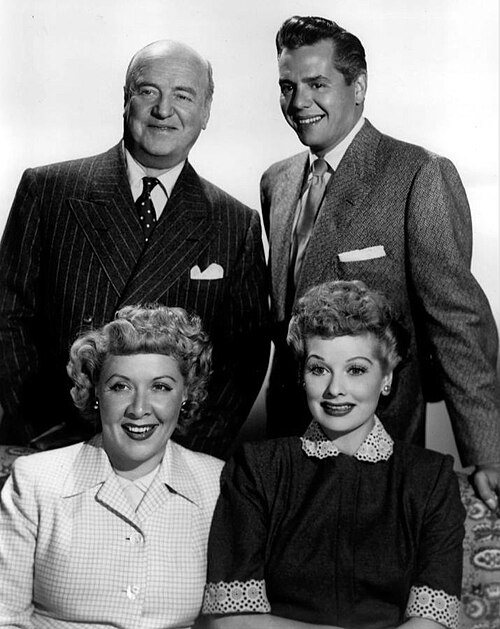

- ルシル・ボール(ルシール・エスメラルダ・「ルーシー」・マクギリカディ役)
- エンリケ・アルベルト・フェルナンドとデ・アチャ・“リッキー”・リカルド三世役のデジ・アーナズ
- ヴィヴィアン・ヴァンス、エセル・メイ・ポッター・メルツ役(別名「エセル・ルイーズ」または「エセル・ロバータ」)
- ウィリアム・フローリー(フレデリック・「フレッド」・イーディー役)
- リチャード・キース:エンリケ・アルベルト・フェルナンド・イ・デ・アチャ・リカルド4世(「リッキー・リカルド・ジュニア」)
- 双子のマイク・メイヤーとジョー・メイヤーは幼児期に「リトル・リッキー」を演じた
- キャサリン・カード:ルーシーの母、マクギリカディ夫人(以前のエピソード「ファン・マガジン・インタビュー」ではミニー・フィンチ役も演じた)
- メアリー・ジェーン・クロフト(ベティ・ラムジー役)
- フランク・ネルソンがフレディ・フィルモアと様々なキャラクターを演じる
- ジェリー・ハウスナー、リッキーのエージェント、ジェリー役(『ルーシーはテレビコマーシャルをする』のジョー役も)
- ドリス・シングルトン、キャロリン・アップルビー役(元々はリリアンという名前だったが、「クラブ選挙」でシングルトンが初登場した後、キャロリンに改名された)
- シャーリー・ミッチェルがマリオン・ストロング役を演じる。この役はマージー・リストが最初に演じた。
- エリザベス・パターソン、マチルダ・トランブル夫人役(以前のエピソード「結婚許可証」ではウィロビー夫人役も演じた)
- ハリウッドを舞台にしたエピソードでベルボーイのボビーを演じるボブ・ジェリソン(以前のエピソード「ゴシップ」ではミルクマンも演じる)
- ハリウッドを舞台にしたエピソードでリッキーの広報担当者を演じるロス・エリオット(以前のエピソード「ルーシーがテレビコマーシャルをする」ではディレクターも演じる)
もともと『マイ・フェイバリット・ハズバンド』の脇役であるゲイル・ゴードンとビー・ベナデレットはフレッドとエセル役のオファーを受けていたが、二人とも以前の約束があったため断られた。ゴードンは3つのエピソードにゲスト出演し、2つのエピソードでリッキーの上司であるリトルフィールド氏を演じ、後に『ルシル・ボール–デジ・アーナズ・ショー』のエピソードで民事裁判所の判事を演じた。ゴードンはラジオの古典時代からのベテランで、『フィバー・マッギー』や『モリーと私たちのミス・ブルックス』でいらだつキャラクターの役を完璧に演じた。彼はその後、ボールの『アイ・ラブ・ルーシー』以降のシリーズのすべて( 『ルーシー・ショー』、 『ヒアズ・ルーシー』、 『ライフ・ウィズ・ルーシー』)で共演することになる。ベナデレットは1つのエピソードでリカルド家の隣人である年老いたミス・ルイス役でゲスト出演した。
バーバラ・ペッパー(後にテレビドラマ『グリーン・エーカーズ』でドリス・ジッフェル役で出演)もエセル役に検討されたが、ペッパーは夫クレイグ・W・レイノルズの死後、酒浸りになっていた。ボールとの友情は映画『ローマのスキャンダル』 (1933年)にまで遡り、二人ともゴールドウィン・ガールズ役で出演した。しかし、彼女は『アイ・ラブ・ルーシー』の少なくとも9話に端役で出演している。 [18]
シリーズの登場人物の多くは、ボールの家族や親しい友人にちなんで名付けられました。たとえば、マリオン ストロングは彼女の親友の 1 人で、ニューヨークでルームメイトだったこともあり、ボールとアーナズの初デートのセッティングも彼女が行いました。リリアン アップルビーは、ボールがアマチュア舞台に出演していたときの先生でした。さらに、ポーリン ロパスは幼なじみで、フレッドは彼女の兄弟と祖父の名前です。ボールとアーナズには、アンドリュー ヒコックス氏という名のビジネス マネージャーがいました。シーズン 4 の最初のエピソード「ビジネス マネージャー」では、リッキーがヒコックス氏という男性を雇います。
主要制作チーム
- 監督:マーク・ダニエルズ(33 エピソード、1951–53)、ウィリアム・アッシャー(101 エピソード、1952–57)、ジェームズ・V・カーン(39 エピソード、1955–57)
- プロデューサー:ジェス・オッペンハイマー(153 エピソード、1951–56)、デジ・アーナズ (エグゼクティブ プロデューサー - 124 エピソード、1952–56、プロデューサー - 26 エピソード、1956–57)
- 脚本家: ジェス・オッペンハイマー (主任脚本家、シーズン 1~5)、マデリン・ピュー・デイビスとボブ・キャロル・ジュニア(ルーシー・デシ・コメディー・アワーを含む全シーズン)、ボブ・シラーとボブ・ワイスコフ(シーズン 5~6 とルーシー・デシ・コメディー・アワー)
- オリジナル音楽:ウィルバー・ハッチ(33 エピソード、1951–54); エリオット・ダニエル (135 エピソード、1952–57);マルコ・リゾ(1951–1957)
- 撮影:カール・フロイント(149話、1951年~1956年)
- 衣装デザイン:エロイス・ジェンセン(57話、1953年~1955年)、エドワード・スティーブンソン(66話、1955年~1960年)
- 編集者:ダン・カーン、バド・モーリン
背景と発展
背景
ルシル・ボールはニューヨークでモデルとして成功した後、ハリウッドにやってきた。彼女はサミュエル・ゴールドウィンに選ばれ、映画『ローマのスキャンダル』(1933年)で映画スターのエディ・カンターと共演する16人のゴールドウィン・ガールズの一人となった。[19]熱心で勤勉なボールは、サミュエル・ゴールドウィン・スタジオやコロンビア映画で短期間映画の仕事を確保し、その後RKOラジオ映画で最終的に仕事をするようになった。ボールはRKOで着実に映画の仕事を得ており、最初はエキストラや端役として、やがて長編映画で共演したり二流B級映画で主演したりするようになり、「B級映画の女王」というあだ名が付けられた。[20] RKO在籍中、ボールは他のほとんどの女優が避ける身体的コメディやスタントをこなすことで評判となり、安定した仕事を得ることができた。 1940年、ボールはキューバのバンドリーダーで、1939年から1940年にかけてブロードウェイのショー「Too Many Girls」で成功を収めたばかりのデジ・アーナズと出会った。RKOはショーの映画化権を購入した後、映画の中でアーナズの恋人役としてボールをキャスティングした。[21]二人は急速に交際を始め、1940年11月にコネチカットで駆け落ちした。しかし、結婚したにもかかわらず、二人は仕事の都合で離れ離れになった。ボールは映画の仕事でハリウッドにとどまり、アーナズはオーケストラとのナイトクラブ出演でツアーに出た。
映画界では着実に活躍していたにもかかわらず、ボールの映画キャリアは主役級の長編映画女優のレベルまで進むことはなかった。しかし、彼女は映画ファンの間で人気を博し続けた。ボールは、1942年のデイモン・ラニヨン監督の映画『ビッグ・ストリート』で主演を務め、批評家から高い評価を受けた後、メトロ・ゴールドウィン・メイヤーの目に留まり、同社が契約を買い取った。[22]しかし、MGMとの契約により、以前は金髪だったボールは、テクニカラーの映画に彼女を起用する予定だったため、髪を赤く染めた。 [23] MGMはボールを様々な映画に出演させたが、1943年の映画『デュバリーは淑女』で同僚のコメディアン、レッド・スケルトンと共演したことで、ボールの身体的コメディが前面に押し出され、「あのクレイジーな赤毛」という評判が彼女にもたらされた。後にリッキーは番組で彼女をそう呼んだ。[24]とはいえ、ボールの目を見張るような美しさは、彼女が映画で演じた身体的悪ふざけとは際立った対照をなしていた。彼女のキャリアを通じて、MGMは彼女を複数の異なる映画ジャンルで起用しようとしたが、彼女のスキルをあまり目立たせなかった。彼女をキャスティングするのが困難だったため、MGMは1946年に契約が切れたときに彼女と契約を更新しないことを選択した。[25]
ボールは映画のフリーランス・アーティストとして働き始め、また他の場を模索し始めた。[25]第二次世界大戦前と戦中、ボールはジャック・ヘイリーのラジオ番組やバンドリーダーのケイ・カイザーのラジオ番組など、いくつかのラジオ番組にゲスト出演し、注目を集めた。[26] [27]これらの出演により、ボールはCBSの目に留まり、1948年にCBSは彼女を、制作中だった2つの新しい30分シチュエーション・コメディー『Our Miss Brooks』と『My Favorite Husband』のどちらかに主演するよう依頼した。後者を選んだボールは、ミネアポリスの銀行家の欲求不満で陰険な主婦リズ・クガット(後に英語版でクーパーに改名)を演じた。この役は当初パイロット版で俳優リー・ボウマンが演じ、後に俳優リチャード・デニングが演じた。イザベル・スコット・ロリックの小説『ミスター・アンド・ミセス・クガット』を基にした『マイ・フェイバリット・ハズバンド』はジェス・オッペンハイマーがプロデュースし、オッペンハイマーに加え、脚本家のマデリン・ピューとボブ・キャロル・ジュニアが脚本を担当した。 1948年7月23日に初放送され、ゼネラル・フーズがスポンサーとなった『マイ・フェイバリット・ハズバンド』はCBSでヒットした。[28]ラジオ番組の放送中、ボールはボブ・ホープと共に1949年の『ソロウフル・ジョーンズ』、 1950年の『ファンシー・パンツ』という2本の長編映画にも出演した。両作品とも興行的にも批評的にも成功し、[29] [30]ボールは一流の第一級のコメディアンとしての評判をさらに固めた。これらの作品は彼女の観客の間での人気の高まりを浮き彫りにし、CBSが彼女のスキルをさらに活用するよう誘った。
1950年、CBSはボールに対し、共演者のリチャード・デニングと共に『My Favorite Husband』をテレビで放送するよう依頼した。[31]ボールはテレビ番組がアーナズと共演する絶好の機会だと考え、自分の夫役をボールに演じてほしいと強く主張したが、アーナズがキューバ人だったためその役に消極的だったCBSは落胆した。[32] CBSの幹部は、アメリカ人女性とラテン系男性の結婚に視聴者が納得するとは思わなかった。[32] CBSの考えが間違っていることを証明するため、2人はキャロルとピューが脚本を書いたボードビルの演目を考案し、ニューヨーク州ニューバーグの歴史あるリッツ劇場でアーナズのオーケストラと共に上演した。[33]この演目はヒットし、CBSの幹部ハリー・アッカーマンはボールとアーナズのペアは価値のある冒険だと確信した。同時に、ライバルネットワークのNBC、ABC、デュモントがボールとアーナズのシリーズに興味を示しており、アッカーマンはそれを利用してCBSにこの2人組と契約するよう説得した。
1951年3月にパイロット版が発注されハリウッドでキネスコープ撮影されたが、これはボールの最初の妊娠と、1951年3月31日に最後のラジオ番組が放送された『ハズバンド』の終了と一致していた。ボールとアーナズは、オッペンハイマー、ピュー、キャロルからなる同じラジオチームを使って『アイ・ラブ・ルーシー』と名付けられたテレビシリーズを制作した。カップルのエージェントであるドン・シャープはパイロット版をいくつかの広告代理店に持ち込んだがあまりうまくいかなかったが、最終的にミルトン・H・バイオウ代理店で成功した。バイオウの代理店はパイロット版を顧客に提示し、タバコ大手のフィリップモリスに番組のスポンサーになってもらうことに成功した。 [34]
生産
1951年の春から夏にかけて、『アイ・ラブ・ルーシー』の製作が始まった。オッペンハイマー、ピュー、キャロルは番組の構想を微調整し、シリーズの最初の脚本を書き始めた。3人は『マイ・フェイバリット・ハズバンド』の未公開エピソードを使って、多くのストーリーをテレビ用に翻案することにした。さらに、シリーズのキャストとスタッフが集結した。アーナズはオーケストラを引き継ぎ、シリーズのミュージカルナンバーや、番組の背景音楽やつなぎ音楽のスコアリングに使用した。アーナズの幼なじみのマルコ・リゾが曲のアレンジとピアノ演奏を担当し、ウィルバー・ハッチがオーケストラの指揮を務めた。[35]

フィリップモリスが番組のスポンサー契約を結んだ後、最終的に『アイ・ラブ・ルーシー』の運命を変えることになる2つの問題が浮上した。ボールとアーナズは当初、このシリーズを『ザ・ジョージ・バーンズ・アンド・グレイシー・アレン・ショー』のように隔週で放送することに決めていた。しかしフィリップモリスは番組を毎週放送することにこだわったため、ボールがテレビ番組と並行して映画キャリアを続ける可能性は低くなった。[36]もう1つの問題は、フィリップモリスがシリーズをハリウッドではなくニューヨークで制作したかったという事実にあった。当時、ほとんどのテレビ番組はニューヨークで制作され、東部と中西部の視聴者向けに番組の生放送が放送されていた。西海岸の視聴者は、テレビモニターから番組を録画するために35mmまたは16mmのフィルムカメラを使用して画像を生成する低品質のキネスコープでのみ生放送の番組を視聴できた。 [37]
フィリップモリスに見せられたパイロットフィルムはキネスコープだったが、スポンサーは質の高い放送に慣れている利益の多い東海岸の市場に低品質のキネスコープフィルムを見せたくなかった。[37]第一子の誕生が迫っていたため、ボールとアーナズの両者はハリウッドに留まり、ハリウッドを拠点とするいくつかのシリーズが始めていたフィルムで番組を制作することを主張した。[38] CBSとフィリップモリスは当初、番組の撮影にかかる費用が高額になることを理由にこのアイデアに難色を示したが、夫婦が追加費用を賄うために週給を1,000ドル削減することを申し出た後、ようやく同意した。[39]引き換えに、ボールとアーナズは『アイ・ラブ・ルーシー』シリーズの所有権の80%を要求し、それを認められた(残りの20%はオッペンハイマーが所有し、オッペンハイマーはピューとキャロルに5%ずつ譲渡した)。[要出典]しかし、この番組をフィルムで撮影するには、ボールとアーナズが自らシリーズの制作を担当する必要があった。当時の労働組合協定では、スタジオで撮影する作品は映画スタジオの従業員を使うことが規定されていた。CBS のスタッフはテレビやラジオの従業員であり、異なる労働組合協定の対象となっていた。そこでアーナズは、オーケストラの予約を管理するために設立した会社を再編し、アイ・ラブ・ルーシーの番組を制作する法人として利用した。この会社は、2 人のファーストネーム「デシ」と「ルシール」を組み合わせた「デシル」と名付けられた。 [独自の調査? ]
すでにハリウッドでいくつかのテレビシリーズが撮影されていたが、ほとんどは映画でおなじみのシングルカメラ形式を使用し、観客の反応をシミュレートするためにコメディに笑い声を加えた。ボールは、ラジオで披露したようなコメディのエネルギーを生の観客の前で作りたかったのだ。[40]観客を収容できる映画スタジオというアイデアは当時としては新しいものだった。火災安全規則によりスタジオに観客を入れることが困難だったからだ。アーナズとオッペンハイマーは、ハリウッドのラスパルマス通りにある、財政難のゼネラル・サービス・スタジオを見つけた。スタジオ所有者のジミー・ナッサーはデシル社を喜んで受け入れ、CBSの資金援助を得て、観客を収容でき、地元の消防法に準拠できるようにスタジオ2つを改装することを許可した。[41] [42]

番組の撮影にもうひとつの要素が加わった。それは、番組を同時に撮影するために 3 台の 35 mm フィルムカメラを使うという決定だった。このアイデアはジェリー・フェアバンクスが考案したもので、ライブアンソロジーシリーズ「ザ・シルバー・シアター」やゲーム番組「トゥルース・オア・コンシクエンシズ」、その後の「エイモス・アンド・アンディ」でもコスト削減の手段として使われていたが、「エイモス・アンド・アンディ」では観客は使わなかった。エドワーズのアシスタントであるアル・サイモンは、このシリーズのために新しい技術を完成させるためにデシルに雇われた。このプロセスは、必要なショットをすべて撮影するために観客に 1 つのシーンを 3 回か 4 回見て反応してもらうという問題がなくなるため、 「ルーシー」の制作に適していた。また、複数のカメラを使うことで、演劇のようにシーンを順番に演じることも可能になった。これは、当時の映画シリーズでは珍しいことだった。撮り直しはまれで、セリフの間違いがエピソードに残ることが多かった。[要出典]
ボールとアーナズは、メトロポリス(1927年)や魔人ドラキュラ(1931年)、『大地』(1937年)、『デュバリーは淑女』(1943年)(ボールも主演)などの映画を手掛け、またハムナプトラ(1932年)の監督も務めた撮影監督カール・フロイントをシリーズの撮影監督として起用した。フロイントは当初テレビとは一切関わりたくなかったが、夫妻の個人的な懇願により仕事を引き受けることにした。[37]
フロイントは、3台のカメラがそれぞれ同じ画質の映像を撮影できるように、セットを均一に照らす方法の開発に尽力した。フロイントは、典型的なエピソード(20~22分)は約60分で撮影され、送信と放送の各段階でコントラストが誇張されるため、最終プリントのグレーの濃淡のコントラストが常に懸念事項であったと指摘した。[43]フロイントはまた、影をなくし、何度も照明を当て直す必要がないようにすべてを明るく照らす「フラット照明」の先駆者となった。[44] [45]
観客の反応はライブで、当時のほとんどのシットコムで使用されていた録音された笑い声よりも本物の笑い声を生み出した。エピソードごとに常連の観客の声が聞こえることがあり、アーナズが出演していないシーンでは彼独特の笑い声がバックグラウンドで聞こえた。また、ボールの母親であるデデの「あーあ」という独特の声も多くのエピソードで聞こえた。後年、CBS は『アイ・ラブ・ルーシー』の観客から笑い声を集め、それを観客なしで行われる番組の録音された笑い声として使った。[要出典]
『アイ・ラブ・ルーシー』は3台のカメラを先駆的に使用したことで、観客の前で撮影されるほとんどのシットコムの制作において標準的な手法となった。[46]観客を使わないシットコムでは、1台のカメラのセットアップが依然として好まれる手法であった。これは、シリーズの第2シーズンでボールが妊娠していることが判明したときに、デシルーに予期せぬ利益をもたらした。番組の39エピソードの約束を果たせなかったデシルーとオッペンハイマーの両者は、ボールが出産後に必要な休息を取れるよう、シリーズの最初のシーズンの人気エピソードを再放送することに決め、そのシーズンの撮影エピソード数を実質的に減らすことができた。予想外に、再放送は視聴率の勝利となり、事実上再放送が生まれ、これが後に再放送シンジケーション市場の収益性の高い発展につながった。[47]
番組の当初のオープニングとコマーシャルのバンパーは、ボールとアーナズのアニメ風の似顔絵だった。これらは、MGMのキャラクターデザイナーで、後に「原始家族フリントストーン」の漫画家となるジーン・ヘイゼルトン(1917年 - 2005年)によってデザインされ、プロデューサーのウィリアム・ハンナが個人的に獲得した契約に基づいて制作された。[48] [49]番組スポンサーのフィリップモリスタバコは、これらのシーンの多くに組み込まれていたため、「アイ・ラブ・ルーシー」が再放送されたとき、今ではおなじみのハートのロゴに置き換えられた。しかし、ヘイゼルトンのオリジナルアニメーションは生き残っており、DVDボックスセットで当初の形で見ることができる。[要出典]
ボールとアーナズが共同所有していたデシル・プロダクションズは、徐々に事業を拡大し、他の多くの番組のスタジオ・スペースのレンタルも手掛けるようになった。シーズン1と2(1951年 - 1953年)では、デシルはジェネラル・サービス・スタジオ(後にハリウッド・センター・スタジオとして知られるようになる)でスペースを借りて『アイ・ラブ・ルーシー』を撮影した。 1953年、デシルはハリウッドの846 Cahuenga Blvd. にあるモーション・ピクチャー・センターを借りてデシル・スタジオと改名し、『アイ・ラブ・ルーシー』シーズン3 - 6(1953年 - 1957年)を撮影した。1956年以降、デシルが買収した他のスタジオとの混同を避けるため、デシル・カフエンガ・スタジオと呼ばれるようになった。スタジオの成長と追加のサウンドステージの必要性に対応するため、アーナズとボールは1957年にゼネラル・タイヤからRKOラジオ・ピクチャーズを600万ドル以上で購入し、契約俳優としてスタートしたスタジオを事実上所有した。デシルは、ハリウッドのガワー ストリートとカルバー シティ(現在はそれぞれパラマウントスタジオとカルバー スタジオの一部) にある RKO の 2 つのスタジオ コンプレックスと、カルバー シティのバック ロット (愛称は「フォーティ エーカーズ」) を買収しました。この売却は、2 人がかつては価値がないと思われていた『アイ ラブルーシー』シリーズの所有権を CBS に 400 万ドル以上で売却することで実現しました。 [引用が必要]
1962年、結婚生活が破綻してから2年後、ボールはアーナズのデシル株を買い取り、スタジオの単独所有者となった。彼女は最終的に1967年にデシルをパラマウント映画の所有者であるガルフ+ウエスタンに売却した。[50]売却後、デシル・カフエンガは民間の制作会社となり、 2010年にレッド・デジタル・シネマ・カメラ・カンパニーに買収され、レッド・スタジオ・ハリウッドに改名されるまで、レン・マー・スタジオとして知られていた。[51]
メルツ家
『マイ・フェイバリット・ハズバンド』と同様に、アイ・ラブ・ルーシーの脚本家たちは、リカルド夫妻の相手役には年配のカップルが必要だと判断した。『ハズバンド』に出演中、ベテラン性格俳優のゲイル・ゴードンとビー・ベナデレットは、ジョージ・クーパーの上司だったアッターベリー氏に倣い、年配で経済的に安定したカップル、ルドルフとアイリス・アッターベリーを演じた。ボールは当初、両俳優にテレビでその役を再演してもらいたいと考えていたが、番組の制作開始時には、ベナデレットがすでに『バーンズ&アレン・ショー』でブランシュ・モートンを演じており、ゴードンはCBSと契約して『ミス・ブルックス』のラジオ版とテレビ版の両方でコンクリン氏を演じていたため、2人とも出演できなかった。
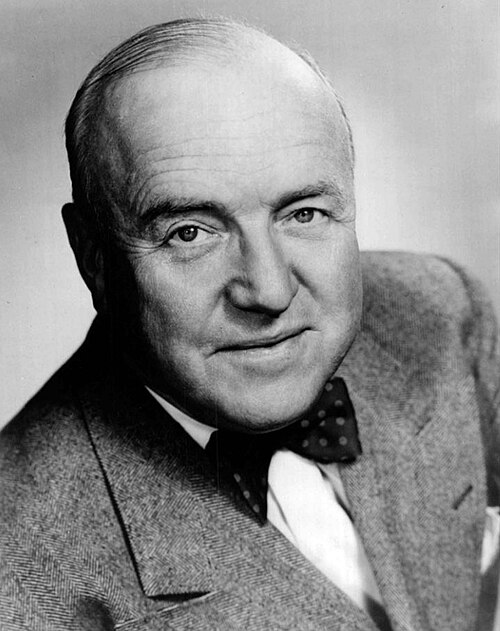
マーツ兄弟(現在はこう呼ばれている)のキャスティングは(『アイ・ラブ・ルーシー』の脚本家マデリン・ピューがインディアナポリスで子供の頃に知っていた医師の姓から取った)、困難であることが判明した。ボールは当初、コロンビア・ピクチャーズの映画『ミス・グラント、リッチモンドへ行く』 (1949年)で共演した性格俳優のジェームズ・グリーソンにフレッド・マーツ役を依頼した。しかし、グリーソンは役を演じるにあたり1エピソードあたり約3,500ドルを要求し、それは維持するには高すぎる金額だった。[52]
64歳のウィリアム・フローリーは、100本近くの映画に出演しているベテランのヴォードヴィリアン兼映画性格俳優だが、フレッド・マーツ役にはなりそうになかった。彼がボールに直接電話をかけ、彼女の新番組に自分の役があるか尋ねたことで、ようやく候補に挙がった。RKO時代にフローリーと少しだけ面識があったボールは、アーナズとCBSの両社に彼を推薦した。ネットワーク側は、ハリウッドではよく知られた彼の過度の飲酒[52]が生番組への出演に支障をきたすのではないかと懸念し、フローリーを起用することに反対した。それでもアーナズはフローリーを気に入り、彼がこの役を演じるよう熱心に働きかけ、ルーシーの脚本家にフレッド・マーツ役を、フローリーのペルソナに合うように、経済的に成功していない、より気難しい(ゴードンのアッターベリー氏とは対照的)キャラクターに作り直させたほどだった。 CBSが態度を軟化させたのは、アーナズが契約上、番組制作中はフローリーに完全に飲酒しないことを義務付けた後で、伝えられるところによると、このベテラン俳優は、酔った状態でセットに一度以上現れた場合は解雇すると告げられた。[52] 『アイ・ラブ・ルーシー』の9シーズン中、フローリーの飲酒が演技の妨げになることは一度もなく、時が経つにつれてアーナズはフローリーの数少ない親しい友人の一人となった。
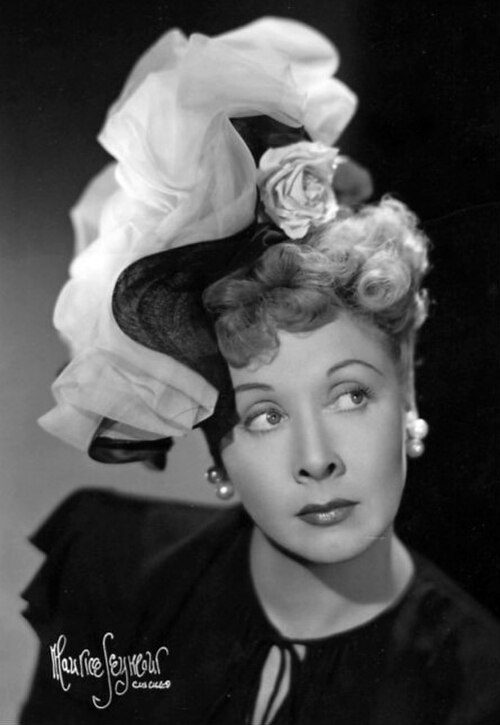
エセル・マーツ役のキャスティングにもかなりの時間がかかった。『ルーシーの夫』で共演したビア・ベナデレットが出演できなかったため、長年の友人であるメアリー・ウィックスにオファーがあったが、ボールとの友情にひびが入るのを嫌がって辞退した。ボールの親友である女優バーバラ・ペッパーもこの役の候補に挙がった。ペッパーは1933年にルーシーとともにハリウッドにやってきたゴールドウィン・ガールズの1人だったため、2人には長い付き合いがあった。ペッパーもフローリーと同じく飲酒問題を抱えていたため、ボールとアーナズによって除外された。[53]
ヴィヴィアン・ヴァンスは『アイ・ラブ・ルーシー』の監督マーク・ダニエルズの推薦で候補になった。ダニエルズは1940年代初頭、ニューヨークのブロードウェイでヴァンスと共演していた。ヴァンスはすでにブロードウェイで20年近く様々な舞台に出演し、舞台スターとして成功を収めており、さらに1940年代後半にハリウッドに拠点を移してからは、映画にも2本出演していた。とはいえ、1951年になっても彼女はハリウッドではまだあまり知られていない女優だった。ヴァンスはカリフォルニア州ラホヤで舞台『 The Voice of the Turtle』の再演に出演していた。アーナズとジェス・オッペンハイマーが彼女の舞台を見に行き、その場で雇った。[54]ヴァンスは映画や舞台の仕事を諦めてテレビ番組に出ることに気が進まなかったが、ダニエルズにそれが彼女のキャリアにとって大きな転機になると説得された。しかし、ボールは、エセルが持つ年上でやや地味な女性という概念よりも若く、はるかに魅力的なヴァンスを雇うことに多くの不安を抱いていた(ヴァンスはボールより2歳年上だった)。ボールはまた、当時のハリウッドの格言である、セットには美しい女性は1人だけいるべきだという信念を持っており、ショーのスターであるボールがその一人になるはずだった。しかし、アーナズはヴァンスの演技に感銘を受け、彼女を雇った。その後、ヴァンスの魅力を抑えるために、よりダサい服を着せることにした。やがて、ヴァンスは脅威ではなく、プロフェッショナルだと気づき、ボールは彼女に好感を抱き始めた。1954年、ヴァンスはエミー賞の助演女優賞を受賞した最初の女優となった。ヴァンスとボールは親密で生涯にわたる友情を築き、ボールはエピソード制作中にヴァンスの意見に頻繁に耳を傾けた。1962年、 「アイ・ラブ・ルーシー」の終了後、ボールはヴァンスに、彼女の新シリーズ「ルーシー・ショー」で共演するよう依頼した。[オリジナル調査? ]
ヴァンスとフローリーはお互いを嫌っていた。しかし、番組出演中は常にプロフェッショナルだった。フローリーはヴァンスの容姿を「ドアノブの袋」と嘲笑した。[55]フローリーより22歳年下のヴァンスは、彼女の演じるエセルが父親ほど年上の男性と結婚するという設定にあまり乗り気ではなかったと報じられた。ヴァンスはフローリーの歌とダンスのスキルが以前ほどではないとも不満を漏らした。番組の放送中ずっと、フローリーとヴァンスは敵対関係にあった。[56]

1957年、『アイ・ラブ・ルーシー』は1時間の番組に作り直され、当初は『ルシル・ボールとデジ・アーナズ・ショー』と題され、ウェスティングハウス・デジルー・プレイハウスと呼ばれるアンソロジーシリーズの一部となる予定だった。1時間のルーシーとデジのショーは、プレイハウスの他の1時間の番組と毎月交互に放送されることになっていた。新シリーズでは、ストーリーの一部として大物ゲストスターに重点が置かれ、マーツの登場人物は新シリーズでも続いたものの、その役割はいくぶん縮小された。仕事量が減ったことはフローリーには歓迎されたが、ヴァンスはこの変更に多少不満を抱くようになった。アーナズは、自分がとても尊敬していたヴァンスを喜ばせようと、『アイ・ラブ・ルーシー』のスピンオフ作品として『マーツ家の人々』の制作を提案した。儲かるチャンスと自分の番組に主演するチャンスを見て、フローリーは乗り気だった。しかし、ヴァンスはいくつかの理由で断った。最大の要因は、当時やっていたアンサンブル番組では彼女とフローリーが一緒に仕事をするのはほとんど不可能だと感じていたため、2人が自分のシリーズで一緒に仕事をする可能性はかなり低いと感じていたことだった。ヴァンスはまた、メルツ家のキャラクターはリカルド家と共演しなければ成功しないだろうと感じており、彼女にとって最大の成功であったにもかかわらず、エセルよりももっと華やかな役を演じることに興味を持ち始めていた。ルーシーとデシの1時間番組の13話の放送中、ヴァンスはエセルとしてより魅力的に見える自由を大いに与えられたが、これは『アイ・ラブ・ルーシー』のエピソードの放送中は認められなかった。スピンオフ番組への出演を断った後、フローリーのヴァンスに対する恨みは強まり、2人はお互いのキャラクター同士のセリフ以外ではほとんど話をしなくなった。
妊娠と小さなリッキー
番組の撮影直前、ボールとアーナズは、彼女が(結婚当初に何度も流産した後)再び妊娠し、第一子となるルーシー・アーナズを出産したことを知った。彼らはルーシーが「お腹をはっている」状態で最初のパイロット版を撮影したが、エピソードには妊娠に関する言及は一切なかった。これは、CBSが妊娠の話は悪趣味かもしれないと考え、広告代理店がアーナズに妊婦を登場させないよう指示したためである。[57]
その後、第2シーズン中に、ボールは再び第2子デジ・アーナズ・ジュニアを妊娠し、今度は妊娠がシリーズのストーリーラインに組み込まれました。(一般に信じられているのとは異なり、ボールの妊娠はテレビ初のスクリーン上の妊娠ではなく、その栄誉は1940年代後半のシットコム「メリー・ケイとジョニー」のメアリー・ケイ・スターンズが獲得したものです。)
CBSは『アイ・ラブ・ルーシー』で「妊娠」という言葉を使うことを許可しなかったため、代わりに「妊娠中」という言葉が使われた。 [58]さらに、スポンサーのフィリップモリスは、ボールが妊娠のエピソードで喫煙しているところを見られないように要求した。[59]「ルーシーは出産する」というエピソードは、1952年12月8日に初めて放映された(「出産する」はフランス語で「出産する」または「妊娠している」を意味する)。1週間後の1952年12月15日には、「妊婦は予測できない」というタイトルのエピソードが放映された(番組では放送中にエピソードのタイトルは表示されなかった)。ルーシー・リカルドが出産する「ルーシーは病院へ行く」というエピソードは、ドワイト・アイゼンハワーがアメリカ合衆国大統領に就任する前日の1953年1月19日に初めて放映された。このエピソードの宣伝効果を高めるため、当初の放送日はボールが帝王切開でデシ・ジュニアを出産した日と一致するように設定された。[11]「ルーシーは病院へ行く」は、当時のどのテレビ番組よりも多くの人に視聴され、全米のテレビの71.7%が視聴し、翌朝の就任式の視聴率67.7%を上回った。
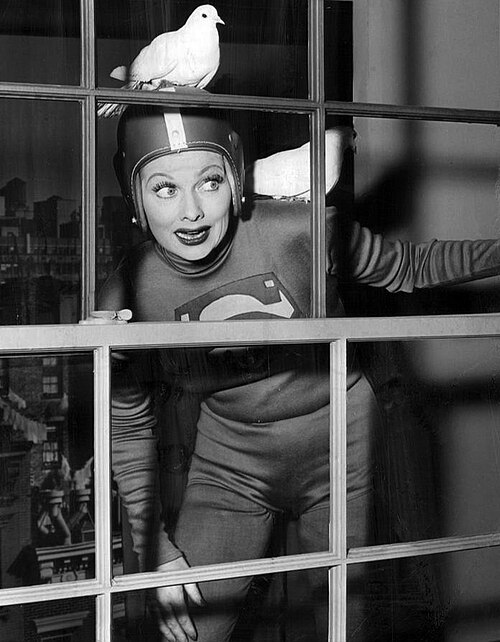
新生児の年齢を短期間で早める一部の番組とは異なり、「アイ・ラブ・ルーシー」では当初、リカルド家の息子リトル・リッキーがリアルタイムで成長していく様子が描かれていた。アメリカでは、1952~53年のシーズンではリトル・リッキーが乳児として、1953~1956年は幼児として描かれていた。しかし、1956~57年のシーズンでは、リトル・リッキーは突然2歳成長し、1956~1960年にかけて学齢期の少年となった。この役は5人の俳優が演じ、2組の双子と、後にリッキー・リカルド・ジュニアを演じた時の芸名がリチャード・キースだったキース・ティボドーが演じた。(「ルーシーとスーパーマン」ではリトル・リッキーが5歳とされているが、「ルーシー病院へ行く」の放送から4年も経っていなかった。)
Jess Oppenheimer stated in his memoir, Laughs, Luck...and Lucy: How I Came to Create the Most Popular Sitcom of All Time, that the initial plan was to match the sex of the Ricardo's baby with Ball's real baby, inserting one of two alternate endings into the broadcast print at the last minute. When logistical difficulties convinced Oppenheimer to abandon this plan, he advised Desi Arnaz that as head writer, he would have Lucy Ricardo give birth to a boy. Desi Arnaz agreed, telling Oppenheimer that Ball had already given him one girl, and might give him another—this might be his only chance to get a son. When the baby boy was born, Desi Arnaz immediately called Oppenheimer and told him, "Lucy followed your script. Ain't she something?", to which Oppenheimer replied "Terrific! That makes me the greatest writer in the world!"[60]
Opening

The opening familiar to most viewers, featuring the credits superimposed over a "heart on satin" image, was created specifically for the 1959–67 CBS daytime network rebroadcasts, and subsequent syndication. As originally broadcast, the episodes opened with animated matchstick figures of Arnaz and Ball making reference to whoever the particular episode's sponsor was. These sequences were created by the animation team of William Hanna and Joseph Barbera, who declined screen credit because they were technically under exclusive contract to MGM at the time.
The original sponsor was cigarette maker Philip Morris, so the program opened with a cartoon of Lucy and Ricky climbing down a pack of Philip Morris cigarettes. In the early episodes, Lucy and Ricky, as well as Ethel and Fred on occasion, were shown smoking Philip Morris cigarettes. Lucy even went so far as to parody Johnny Roventini's image as the Philip Morris "bellhop" in the May 5, 1952, episode, "Lucy Does a TV Commercial". Since the original sponsor references were no longer appropriate when the shows went into syndication, a new opening was needed, which resulted in the classic "heart on satin" opening. Other sponsors, whose products appeared during the original openings, were Procter & Gamble for Cheer and Lilt Home Permanent (1954–57), General Foods for Sanka (1955–57), and Ford Motor Company (1956–57). The later Lucille Ball-Desi Arnaz Show was sponsored by Ford Motor Company (1957–58) and Westinghouse Electric Corporation (1958–60), as part of the Westinghouse Desilu Playhouse.
The original openings, with the sponsor names edited out, were revived on TV Land showings, with a TV Land logo superimposed to obscure the original sponsor's logo. However, this has led some people to believe that the restored introduction was created specifically for TV Land as an example of kitsch.
The animated openings, along with the middle commercial introductory animations, are included, fully restored, in the DVDs. However, the openings are listed as special features within the disks with the "heart on satin" image opening the actual episodes.
The complete original broadcast versions of Seasons 1 and 2, as seen in 1951–1953 with intros, closings, and all commercials, are included on their respective Ultimate Season Blu-ray editions.
Theme song
The I Love Lucy theme song was written by two-time Oscar-nominee Eliot Daniel.[63] Lyrics were later written by five-time Oscar-nominee Harold Adamson, for Desi Arnaz to sing in the 1953 episode "Lucy's Last Birthday":[64]
I love Lucy and she loves me.
We're as happy as two can be.
Sometimes we quarrel but then
How we love making up again.
Lucy kisses like no one can.
She's my missus and I'm her man,
And life is heaven you see,
'Cause I love Lucy, Yes I love Lucy, and Lucy loves me!
"I Love Lucy," sung by Desi Arnaz with Paul Weston and the Norman Luboff Choir, was released as the B-side of "There's A Brand New Baby (At Our House)" by Columbia Records (catalog number 39937) in 1953.[65] The song was covered by Michael Franks on the album Dragonfly Summer (1993). In 1977, the Wilton Place Street Band had a Top 40 hit with a disco version of the theme, "Disco Lucy".[66]
Episodes
Broadcast history
I Love Lucy aired Mondays from 9:00 to 9:30 PM ET on CBS for its entire first run. Each year during its summer hiatus its timeslot was occupied by various summer replacement series. Beginning in April 1955 CBS added reruns from the show's early years to its early evening weekend schedule. This would be the first of several occasions when I Love Lucy reruns would become part of CBS's evening, prime time, and (later on) daytime schedules.[73]
In fall 1967, CBS began offering the series in off-network syndication; As of August 2017[update], the reruns air on the Hallmark Channel and MeTV networks, and scores of television stations in the U.S. and around the world, including Fox's KTTV/KCOP in Los Angeles until December 31, 2018. It is currently on Paramount+.
In addition, CBS has run numerous specials, including a succession of annual specials which feature episodes which have been newly colorized.
On February 14, 2023, Pluto TV launched a 24-hour I Love Lucy channel in the United States.[74]
Nielsen ratings
The episode "Lucy Goes to the Hospital", which first aired on Monday, January 19, 1953, garnered a then-record rating of 71.7, meaning that 71.7% of all households with television sets were tuned to the program, the equivalent of some 44 million viewers.[75] That record is surpassed only by Elvis Presley's first of three appearances on The Ed Sullivan Show, which aired on September 9, 1956 (82.6% share, 60.710 million viewers and a 57.1 rating ).[75] The overall rating of 67.3 for the entire 1952 season of I Love Lucy continues to be the highest average rating for any single season of a TV show.[76]
Primetime Emmy Awards and nominations
- 1952
- Best Comedy Show—Nominated (Winner: The Red Skelton Hour)
- 1953
- Best Situation Comedy—Won
- Best Comedienne: Lucille Ball—Won
- 1954
- Best Female Star of a Regular Series: Lucille Ball—Nominated (Winner: Eve Arden for Our Miss Brooks)
- Best Series Supporting Actor: William Frawley—Nominated (Winner: Art Carney for The Jackie Gleason Show)
- Best Series Supporting Actress: Vivian Vance—Won
- Best Situation Comedy—Won
- 1955
- Best Actress Starring in a Regular Series: Lucille Ball—Nominated (Winner: Loretta Young for The Loretta Young Show)
- Best Situation Comedy Series—Nominated (Winner: The Danny Thomas Show)
- Best Supporting Actor in a Regular Series: William Frawley—Nominated (Winner: Art Carney for The Jackie Gleason Show)
- Best Supporting Actress in a Regular Series: Vivian Vance—Nominated (Winner: Audrey Meadows for The Jackie Gleason Show)
- Best Written Comedy Material: Jess Oppenheimer, Bob Carroll Jr. and Madelyn Davis—Nominated (Winners: James B. Allardice, Jack Douglas, Hal Kanter and Harry Winkler for The George Gobel Show)
- 1956
- Best Actor in a Supporting Role: William Frawley—Nominated (Winner: Art Carney for The Honeymooners)
- Best Actress—Continuing Performance: Lucille Ball—Won
- Best Comedy Writing: Jess Oppenheimer, Madelyn Davis, Bob Carroll Jr., Bob Schiller and Bob Weiskopf for "L.A. at Last"—Nominated (Winners: Nat Hiken, Barry E. Blitzer, Arnold M. Auerbach, Harvey Orkin, Vin Bogert, Arnie Rosen, Coleman Jacoby, Tony Webster and Terry Ryan for The Phil Silvers Show: "You'll Never Get Rich")
- 1957
- Best Continuing Performance by a Comedienne in a Series: Lucille Ball—Nominated (Winner: Nanette Fabray for Caesar's Hour)
- Best Supporting Performance by an Actor: William Frawley—Nominated (Winner: Carl Reiner for Caesar's Hour)
- Best Supporting Performance by an Actress: Vivian Vance—Nominated (Winner: Pat Carroll for Caesar's Hour)
- 1958
- Best Continuing Performance (Female) in a Series by a Comedienne, Singer, Hostess, Dancer, M.C., Announcer, Narrator, Panelist, or any Person who Essentially Plays Herself: Lucille Ball—Nominated (Winner: Dinah Shore for The Dinah Shore Show)
- Best Continuing Supporting Performance by an Actor in a Dramatic or Comedy Series: William Frawley—Nominated (Winner: Carl Reiner for Caesar's Hour)
- Best Continuing Supporting Performance by an Actress in a Dramatic or Comedy Series: Vivian Vance—Nominated (Winner: Ann B. Davis for The Bob Cummings Show)
In other media
Radio
There was some thought about creating an I Love Lucy radio show to run in conjunction with the television series as was being done at the time with the CBS hit show Our Miss Brooks. On February 27, 1952, a sample I Love Lucy radio show was produced, but it never aired. This was a pilot episode, created by editing the soundtrack of the television episode "Breaking the Lease", with added Arnaz narration (in character as Ricky Ricardo). It included commercials for Philip Morris, which sponsored the television series. While it never aired on radio at the time in the 1950s (Philip Morris eventually sponsored a radio edition of My Little Margie instead), copies of this radio pilot episode have been circulating among "old time radio" collectors for years, and this radio pilot episode has aired in more recent decades on numerous local radio stations that air some "old time radio" programming.[77]
Merchandise
Ball and Arnaz authorized various types of I Love Lucy merchandise. Beginning in November 1952, I Love Lucy dolls, manufactured by the American Character Doll Company,[78] were sold. Adult-size I Love Lucy pajamas and a bedroom set were also produced; all of these items appeared on the show.
-
 I Love Lucy doll
 -
 I Love Lucy bedroom set
 -
 I Love Lucy pajamas
Comic book and comic strip
Dell Comics published 35 issues of an I Love Lucy comic book between 1954 and 1962 including two try-out Four Color issues (#535 and #559). King Features syndicated a comic strip (written by Lawrence Nadel and drawn by Bob Oksner, jointly credited as "Bob Lawrence") from 1952 to 1955.[79][80] Eternity Comics in the early 1990s issued comic books that reprinted the strip and Dell comic book series.
After I Love Lucy
Hour-long format

After the conclusion of the sixth season of I Love Lucy, the Arnazes decided to cut down on the number of episodes that were filmed. Renamed The Lucille Ball-Desi Arnaz Show, also known as The Lucy-Desi Comedy Hour, the program was extended to an hour and included guest stars in each episode. Thirteen episodes aired from 1957 to 1960. The main cast, Lucille Ball, Desi Arnaz, Vivian Vance, William Frawley and Little Ricky/Richard Keith (birth name Keith Thibodeaux) were all in the show. The Lucy-Desi Comedy Hour is available on DVD, released as I Love Lucy: The Final Seasons 7, 8, & 9. On March 2, 1960, Arnaz's birthday, the day after the last hour-long episode was filmed, Ball filed for divorce from Arnaz.[citation needed]
Vivian Vance and William Frawley
As previously mentioned, Vance and Frawley were offered a chance to take their characters to their own spin-off series. Frawley was willing, but Vance refused to ever work with Frawley again since the two did not get along. Frawley appeared once more with Lucille Ball — in an episode of The Lucy Show in 1965, which did not include Vance (who by then had ceased to be a regular on that show). This was his last screen appearance with Ball. Frawley died in Hollywood on March 3, 1966, of a heart attack at age 79.
Lucille Ball's subsequent network shows
In 1962, Ball began a six-year run with The Lucy Show, followed immediately in 1968 by six more years on a third sitcom, Here's Lucy, ending her regular appearances on CBS in 1974. Both The Lucy Show and Here's Lucy included Vance as recurring characters named Viv (Vivian Bagley Bunson on The Lucy Show and Vivian Jones on Here's Lucy), so named because she was tired of being recognized on the street and addressed as "Ethel". Vance was a regular during the first three seasons of The Lucy Show but continued to make guest appearances through the years on The Lucy Show, and on Here's Lucy. In 1977, Vance and Ball were reunited one last time in the CBS special, Lucy Calls the President,[81] which co-starred Gale Gordon (whom Ball had known for very many years by 1977 and who had appeared as a regular on her television shows since 1963; becoming even more prominent once Vance left The Lucy Show in 1965.)
In 1986, Ball tried another sitcom, Life with Lucy. The series debuted on ABC to solid ratings, landing in Nielsen's Top 25 for the week. Its ratings quickly declined, however, and resulted in a cancellation after eight episodes.
Legacy, critical acclaim and other honors
In 1989, the never-seen pilot episode was discovered and revealed in a CBS television special, hosted by Lucie Arnaz, becoming the highest rated program of the season.
In 2012, Emily VanDerWerff of The A.V. Club wrote retrospectively:[82]
I Love Lucy […] is one of the two foundational texts of American TV comedy, along with The Honeymooners. The series is legitimately the most influential in TV history, pioneering so many innovations and normalizing so many others that it would be easy to write an appreciation of simply, say, the show’s accidental invention of the TV rerun.
I Love Lucy continues to be held in high esteem by television critics, and remains perennially popular. It was one of the first American programs seen on British television — which became more open to commerce with the September 1955 launch of ITV, a commercial network that aired the series; in 1982, the launch of a second terrestrial TV station devoted to advertising funded broadcasting (Channel 4) saw the show introduced to a new generation of fans in the UK, with the Channel 4 network repeating the program several times between 1983 and 1994. As of January 2015, meanwhile, it remains the longest-running program to air continuously in the Los Angeles area, almost 60 years after production ended. However, the series is currently aired on KTTV on weekends and now KCOP on weekdays because both stations are a duopoly. KTTV was the original CBS affiliated station in Los Angeles until 1951, just before I Love Lucy premiered on KNXT Channel 2 (now KCBS-TV) when CBS bought that station the same year. In the US, reruns have aired nationally on TBS (1980s–1990s), Nick at Nite (1994–2001) and TV Land (2001–2008) in addition to local channels. TV Land ended its run of the series by giving viewers the opportunity to vote on the show's top 25 greatest episodes on December 31, 2008, through the network's website. Unlike some shows to which a cable channel is given exclusive rights to maximize ratings, I Love Lucy has been consistently broadcast on multiple channels simultaneously. Hallmark Channel is now the home for I Love Lucy in the United States, with the show having moved to the network on January 2, 2009, while the national version of Weigel Broadcasting's MeTV digital subchannel network has carried the program since its debut on December 15, 2010, depending on the market (in markets where another station holds the rights, The Lucy Show is substituted). The show is seen on Fox Classics in Australia.
In addition to Primetime Emmy Awards and nominations, I Love Lucy's many honors include the following:
- The Lucille Ball-Desi Arnaz Center in Jamestown, New York is a museum memorializing Lucy and I Love Lucy, including replicas of the NYC apartment set (located in the Desilu Playhouse facility in the Rapaport Center).[83]
- In 1990, I Love Lucy became the first television show to be inducted into the Television Hall of Fame.[84]
- In 1997, the episodes "Lucy Does a TV Commercial" and "Lucy's Italian Movie" were respectively ranked No. 2 and No. 18 on TV Guide's list of the 100 Greatest Episodes of All Time.[85]
- In 1999, Entertainment Weekly ranked the birth of Little Ricky as the fifth greatest moment in television history.[86]
- In 2002, TV Guide ranked I Love Lucy No. 2 on its list of the 50 greatest shows, behind Seinfeld and ahead of The Honeymooners[87] (According to TV Guide columnist Matt Roush, there was a "passionate" internal debate about whether I Love Lucy should have been first instead of Seinfeld. He stated that this was the main source of controversy in putting together the list.[88])
- In 2007, Time magazine placed the show on its unranked list of the 100 best television shows.[89]
- In 2012, I Love Lucy was ranked the Best TV Comedy and the Best TV Show in Best in TV: The Greatest TV Shows of Our Time.[90]
- In 2013, TV Guide ranked I Love Lucy as the third greatest show of all time.[91]
- In 2015, a survey of 2,800 actors, producers, directors, and other industry people conducted by The Hollywood Reporter named I Love Lucy as their #8 favorite show.[92]
- In 2023, Variety chose I Love Lucy as the greatest TV show of all time.[93]
Documentaries and dramatizations
On April 28, 1990, CBS aired a television movie titled I Love Lucy: The Very First Show hosted by Lucie Arnaz, daughter of Lucille Ball and Desi Arnaz, with commentary that showed the original unaired pilot episode of I Love Lucy that was produced by Ball and Desi Arnaz themselves and found after 40 years. The movie was nominated for a Primetime Emmy Award as an "Outstanding Informational Special".[94][95]
On February 10, 1991, CBS aired a television movie titled Lucy & Desi: Before the Laughter, about the lives of Ball and Desi Arnaz. The movie recreated a number of scenes from classic I Love Lucy episodes, including "Lucy Thinks Ricky Is Trying to Murder Her" and "Lucy Does a TV Commercial". Frances Fisher starred as Ball and Maurice Benard as Desi Arnaz.[96]
On May 4, 2003, CBS aired a television movie titled Lucy, portraying the life of Ball and recreating a number of scenes from classic I Love Lucy episodes, including "Lucy Does a TV Commercial", "Lucy Is Enceinte", and "Job Switching". Near the end of the movie, a selection of TV Guide covers is seen in a hallway, showing I Love Lucy franchises on their covers. Also included is close-up of a New York Post article about the birth of Little Ricky. Rachel York starred as Ball and Danny Pino as Desi Arnaz.[97]
In October 2011, the stage play I Love Lucy Live on Stage premiered to sold-out houses at the Greenway Court Theatre in Los Angeles. Staged and directed by Rick Sparks, the show featured the performance of two I Love Lucy episodes – "The Benefit" and "Lucy Has Her Eyes Examined", presented to the theatre audience as though they were attending a filming at the Desilu Playhouse in the 1950s. In 2012, the show began a national tour which lasted until 2015.[98]
In July 2018, I Love Lucy: A Funny Thing Happened on the Way to the Sitcom, a behind-the-scenes comedy about I Love Lucy by Gregg Oppenheimer (son of series creator Jess Oppenheimer), had its world premiere in a Los Angeles production by L.A. Theatre Works. Recorded before a live audience at the James Bridges Theater, UCLA, the production, directed by Michael Hackett, aired on public radio and was released on Audio CD and as a downloadable mp3 in September of that year.[99] The performance starred Sarah Drew as Ball, Oscar Nuñez as Desi Arnaz, and Seamus Dever as Oppenheimer.[100] A serialized version, titled LUCY LOVES DESI: A Funny Thing Happened on the Way to the Sitcom, was produced in August 2020 by Jarvis & Ayres Productions and aired in the UK on BBC Radio 4, starring Anne Heche as Ball, Wilmer Valderamma as Desi Arnaz, Jared Harris as Oppenheimer, Stacy Keach as William Frawley, and Alfred Molina as CBS Executive Harry Ackerman.[52] In January 2023, L.A. Theatre Works mounted a 22-city U.S. national tour of the play as LUCY LOVES DESI: A Funny Thing Happened on the Way to the Sitcom.[101] In November 2023, Next Stage Press published the play's script, making performance licenses available to schools, community theatre groups, and local theatre companies.[102]
In the spring of 2020, NBC's sitcom Will & Grace paid tribute to I Love Lucy with a special episode titled "We Love Lucy".[103] During the episode Lucy and Ricky Ricardo, along with Ethel and Fred Mertz, appear in dream sequences based on scenes from the 1951 CBS series. Lucie Arnaz made a cameo in the episode in the role originated in the "Job Switching" episode by actress Elvia Allman as the Factory Foreperson.[104]
In 2021, Being the Ricardos, a film written and directed by Aaron Sorkin, about the relationship between I Love Lucy stars Ball and Desi Arnaz was released. Nicole Kidman and Javier Bardem star as Ball and Desi Arnaz, while J. K. Simmons, Nina Arianda, Tony Hale, Alia Shawkat, Jake Lacy, and Clark Gregg are featured in supporting roles. It received a limited theatrical release by Amazon Studios in the United States on December 10, 2021, prior to streaming worldwide on Prime Video on December 21, 2021.[105]
In 2022, Amazon Prime Video released the documentary Lucy and Desi. Directed by Amy Poehler, it was nominated for a Primetime Emmy Award for Outstanding Directing for a Documentary/Nonfiction Program.[106]
In color

Several classic episodes of I Love Lucy have been colorized. Star and producer Desi Arnaz had expressed interest in airing the show in color as early as 1955, but the cost of such a presentation was prohibitive at the time.
The first episode to be colorized was the Christmas special, which had been feared to be lost for many years, as it was not included in the regular syndication package with the rest of the series. A copy was discovered in 1989 in the CBS vaults[107] and was aired by CBS during December of that year in its original black-and-white format. In 1990, this episode was again aired in the days prior to Christmas, but this time the framing sequence was in color, while the clips from earlier episodes remained in black and white. The special performed surprisingly well in the ratings during both years, and aired on CBS each December until 1994.
In 2007, as the "Complete Series" DVD set was being prepared for release, DVD producer Gregg Oppenheimer decided to have the episode "Lucy Goes to Scotland" digitally colorized (referencing color publicity stills and color "home movies" taken on the set during production), making it the first I Love Lucy episode to be fully colorized. Four years later, Time Life released the "Lucy's Italian Movie" episode for the first time in full color as part of the "Essential 'I Love Lucy'" collection.
The colorized "Lucy Goes to Scotland" episode has never aired on television, but that episode, along with the Christmas special and "Lucy's Italian Movie", were packaged together on the 2013 "I Love Lucy Colorized Christmas" DVD.[108] In 2014, Target stores sold an exclusive version of the DVD that also included "Job Switching".[109]
Annual colorized specials
On December 20, 2013, CBS revived an annual holiday tradition when it reaired the Christmas special for the first time in nearly two decades. The Christmas special's framing sequence was colorized anew. The network paired this special with the color version of "Lucy's Italian Movie" episode.[110][111] This special attracted 8.7 million people.[112] Nearly a year later, on December 7, 2014, the Christmas special was again aired on CBS, but this time paired with the popular episode "Job Switching", which was newly colorized for that broadcast.[113] That episode appeared on the "I Love Lucy: The Ultimate Season 2" Blu-ray edition released on August 4, 2015. CBS aired the Christmas special again on December 23, 2015, with the flashback scenes being colorized for the first time, and with a colorized "Lucy Does a TV Commercial" replacing "Job Switching".[114][115] CBS next aired the Christmas special on December 2, 2016, this time paired with the newly colorized "Lucy Gets in Pictures".[116] On December 22, 2017, the Christmas episode was followed by a newly colorized episode, "The Fashion Show".[117] On December 14, 2018, the Christmas episode was paired with a newly colorized episode, "Pioneer Women".[118]
On May 17, 2015, CBS began a new springtime tradition when it aired two newly colorized episodes in an "I Love Lucy Superstar Special" consisting of "L.A. at Last" and "Lucy and Superman",[119] which attracted 6.4 million viewers.[120] A DVD of this special was released on October 4, 2016.[121] A second "Superstar Special" containing the newly colorized two-part episode "Lucy Visits Grauman's" and "Lucy and John Wayne" aired on May 20, 2016[122] and was released on DVD on January 17, 2017.[123] A third "Superstar Special" aired on May 19, 2017, featuring two more newly colorized Hollywood-based episodes: "The Dancing Star" featuring Van Johnson, and "Harpo Marx".[124] A two-episode "Funny Money Special" was introduced on April 19, 2019, featuring the episodes "The Million-Dollar Idea" and "Bonus Bucks", both from early 1954.[125] On December 20, 2019, CBS aired its annual I Love Lucy Christmas episode along with a new colorized episode, "Paris At Last". The I Love Lucy Christmas Special scored a 4.9 million in the ratings, becoming the night's most-watched show on television.[126]
Colorized feature film
On August 6, 2019, Ball's would-be 108th birthday, a one-night-only event took place in movie theaters around the United States, I Love Lucy: A Colorized Celebration, a feature film consisting of five colorized episodes, three of which contain never-before-seen content. The episodes included are: "The Million Dollar Idea" (1954), "Lucy Does a TV Commercial" (1952), "Pioneer Women" (1952), "Job Switching" (1952) and "L.A. at Last!" (1955). A short documentary on the colorization process of the episodes was also included.[127] The film proved to be very successful, grossing $777,645 from 660 theaters across the country, coming in at #6 at the domestic box office and beating Disney's Aladdin.[128]
Home media
Beginning in the summer of 2001, Columbia House Television began releasing I Love Lucy on DVD in chronological order. They began that summer with the pilot and the first three episodes on a single DVD. Every six weeks, another volume of four episodes would be released on DVD in chronological order. During the summer of 2002, each DVD would contain between five and seven episodes on a single DVD. They continued to release the series very slowly and would not even begin to release any season 2 episodes until the middle of 2002. By the spring of 2003, the third season on DVD began to be released with about six episodes released every six weeks to mail order subscribers. All these DVDs have the identical features as the DVDs eventually released in the season box sets in retail.
By the fall of 2003, season four episodes began to be offered by mail. By the spring of 2004 season five DVDs with about six episodes each began to be released gradually. Columbia House ended the distribution of these mail order DVDs in the Winter of 2005. They began releasing complete season sets in the summer of 2004 every few months. They stated that Columbia House Subscribers would get these episodes through mail before releasing any box sets with the same episodes. They finally ended gradual subscriptions in 2005, several months before season 5 became available in retail. Columbia House then began to make season box sets available instead of these single volumes.
CBS DVD (distributed by Paramount) has released all six seasons of I Love Lucy on DVD in Region 1, as well as all 13 episodes of The Lucy and Desi Comedy Hour (as I Love Lucy: The Final Seasons – 7, 8, & 9). Bonus features include rare on-set color footage and the "Desilu/Westinghouse" promotional film, as well as deleted scenes, original openings and interstitials (before they were altered or replaced for syndication) and on-air flubs. These DVDs offered identical features and identical content to the mail order single sets formerly available until 2005. [129]
In December 2013, the first high-definition release of I Love Lucy was announced, with the Blu-ray edition of the first season, scheduled for May 5, 2014.[130] The Second Season Ultimate Blu-ray was released on August 4, 2015. On September 25, 2024, it was announced that a complete series Blu-ray box set would be releasing on November 5, 2024.[131]
Other releases
- I Love Lucy's Zany Road Trip: California Here We Come!, a compilation of 27 episodes, released by CBS/FOX Video on VHS in 1992[135]
- "I Love Lucy – Season 1" (9 separate discs labeled "Volumes", the first volume released July 2, 2002, final volume released September 23, 2003)
- "I Love Lucy – Season 1" (9 Volumes in a box set, released September 23, 2003)
- "I Love Lucy – 50th Anniversary Special" (1 disc, released October 1, 2002)
- "I Love Lucy: The Movie and Other Great Rarities" (1 disc, released April 27, 2010)[136] (Also included as a bonus disc in the complete series set.)
- "The Best of I Love Lucy" (2 discs: 14 episodes, released in June 2011 in conjunction with the 60th anniversary of the series and Lucille Ball's 100th birthday; sold exclusively through Target.)[137]
The DVD releases feature the syndicated heart-opening and offer the original broadcast openings as bonus features. Season 6 allows viewers to choose whether to watch the episodes with the original opening or the syndicated opening. The TV Land openings are not on these DVDs.
Initially, the first season was offered in volumes, with four episodes per disc. After the success of releasing seasons 2, 3, and 4 in slim packs, the first season was re-released as a seven-disc set, requiring new discs to be mastered and printed to include more episodes per disc so there would be fewer discs in the set. For the complete series box set, the first season would be redone again, this time to six DVDs, retaining all bonus features. The individual volume discs for the first season are still in print, but are rare for lack of shelf space and because the slim packs are more popular. In 2012, all-season sets were reissued in slipcovered clear standard-sized Amaray DVD cases, with season 1 being the 6-disc version as opposed to the 7-disc version.
Episodes feature English closed-captioning, but only Spanish subtitles.
In Australia and the UK, the first three seasons were finally released in Region 2 & Region 4 on August 3, 2010, by CBS, distributed by Paramount. Season 1 includes the pilot and all 35 Season 1 episodes in a 7-disc set. Season 2 includes all 31 Season 2 episodes in a 5-disc set. Season 3 includes all 31 Season 3 episodes in a 5-disc set. Season 2 and 3 are in a slimline pack. All three seasons have been restored and digitally remastered. All episodes appear in order of their original air dates, although it states that some episodes may be edited from their original network versions. It is unknown if the remaining seasons will be released individually. A complete series box set titled I Love Lucy: Complete Collection was scheduled for release on April 6, 2016, and in the UK on May 30, 2016.[138] This collection contains 34 DVDs with all six seasons of I Love Lucy and all 13 episodes of The Lucy-Desi Comedy Hour.
In September 2018, Time-Life released a DVD, Lucy: The Ultimate Collection, which collected 76 episodes of I Love Lucy, The Lucy-Desi Comedy Hour, The Lucy Show, Here's Lucy, and the short-lived ABC-TV series Life with Lucy (which had at the time never before been released to home media), plus a wide variety of bonus features.[139][140]
A DVD collection, I Love Lucy: Colorized Collection was released on August 13, 2019. It contains every colorized episode of I Love Lucy aired to date of the set's release date.[141] Due to a delay or possible all out cancellation of any future colorized releases, this means that "Paris at Last", which aired as part of the December 2019 edition of the Christmas Special after the colorized DVD collection had been released, is the only colorized episode currently not available on home media.
See also



Notes
- ^ This total includes the "lost" Christmas episode but not the original pilot.
References
- ^ de Moraes, Lisa (April 16, 2015). "CBS Dusts Off And Colorizes 'I Love Lucy' Episodes For May Sweep Tryout". Deadline. Archived from the original on April 17, 2015. Retrieved October 1, 2022.
- ^ "BBC - Comedy Guide - I Love Lucy". Archived from the original on December 5, 2004.
- ^ DOSTIS, MELANIE (October 15, 2015). "Looking back at 'I Love Lucy' 64 years later". nydailynews.com. Archived from the original on May 22, 2020. Retrieved May 18, 2020.
- ^ "I love Lucy – 100 Years and Going Strong". Videomaker. August 5, 2011. Archived from the original on July 26, 2018. Retrieved July 26, 2018.
- ^ Elber, Lynn (August 5, 2011). "Legacy of 'I Love Lucy' a force in comedy". The Durango Herald. Archived from the original on July 26, 2018. Retrieved July 26, 2018.
- ^ "I Love Lucy Goes Live! – Today's News: Our Take". TVGuide.com. September 14, 2011. Archived from the original on September 15, 2013. Retrieved November 22, 2012.
[...]which owns the rights to the series still seen on TV by 40 million Americans each year.
- ^ Kozinn, Allan (December 23, 2013). "Viewers Found Much to Love in 'Lucy' Christmas Show". The New York Times. Archived from the original on December 24, 2013. Retrieved December 23, 2013.
- ^ "I Love Lucy". oldtimecooking.com. 2014. Archived from the original on April 5, 2016. Retrieved March 7, 2018.
- ^ "I Love Lucy Voted the Best TV Show of All Time". ABC News. Disney-ABC Television Group. September 18, 2012. Archived from the original on November 18, 2018. Retrieved July 16, 2014.
- ^ "101 Best Written TV Series". Writers Guild of America West. June 2, 2013.
- ^ a b "Birth of a Memo". Time magazine. January 26, 1953. Archived from the original on June 18, 2008. Retrieved January 16, 2008.
- ^ Carini, Susan (2003). "Love's Labors Almost Lost: Managing Crisis during the Reign of 'I Love Lucy'". Cinema Journal. 43 (1): 44–62. doi:10.1353/cj.2003.0022. JSTOR 1225930. S2CID 194068713.
- ^ Landay, Lori (1999). "Millions 'Love Lucy': Commodification and the Lucy Phenomenon". NWSA. 11 (2): 25–47. JSTOR 4316654.
- ^ "Why Lucy and Ricky are still the gold standard for television couples". Entertainment Weekly.
- ^ https://www.lucystore.com/i-love-lucy-you-got-a-lotta-splainin-to-do-t-shirt.html [bare URL]
- ^ "One of the Most Famous Lines from 'I Love Lucy' Was Never Actually Said on the Show". December 16, 2021.
- ^ "9 famous TV catchphrases that were never actually said on their shows".
- ^ Filmography: Barbara Pepper, archived from the original on July 15, 2015, retrieved October 16, 2015
- ^ Lester, Peter (February 11, 1980). "Ask Her Anything About Desi Sr., Divorce, Drugs, Gay Rights—Lucy Ball Hasn't Become Bashful at 68". People. Archived from the original on October 19, 2018. Retrieved October 18, 2018.
- ^ Shreve Jr., Ivan G. (August 6, 2018). "Happy Birthday, Lucille Ball!". Radio Classics. Archived from the original on October 21, 2018. Retrieved October 20, 2018.
- ^ Martin, Pete (February 12, 2018). "Lucille Ball: The Making of a Comic". The Saturday Evening Post. Archived from the original on October 20, 2018. Retrieved October 20, 2018.
I met [Desi Arnaz] at the RKO studio in May 1940. We were filming Too Many Girls, the stage show in which Desi made his first big hit. He asked me for a date that very night, and pretty soon we were married.
- ^ Silverman, Stephen M. (August 6, 2011). "Lucille Ball Lovingly Remembered on Her 100th Birthday". People. Archived from the original on October 20, 2018. Retrieved October 20, 2018.
- ^ Shales, Tom (December 6, 1998). "'TECHNICOLOR': WONDERFUL HUE". Washington Posts.
- ^ Marla Brooks (2005). The American family on television: a chronology of 121 shows, 1948–2004. McFarland & Co. p. 25.
- ^ a b Kanfer, Stefan (January 1, 2003). Ball of Fire: The Tumultuous Life and Comic Art of Lucille Ball. Knopf Doubleday Publishing Group. ISBN 978-1422350614. Archived from the original on August 5, 2020. Retrieved May 8, 2020.
- ^ Sheridan, James; Monush, Barry (June 1, 2011). Lucille Ball FAQ: Everything Left to Know About America's Favorite Redhead. Applause Theatre & Cinema Books. ISBN 978-1617740824.
In the fall of 1938, Ball joined the cast of "The Wonder Show", which was headlined by Jack Haley.
- ^ "A Forgotten Star". Our State. December 3, 2012. Archived from the original on October 21, 2018. Retrieved October 21, 2018.
In its day, Kay Kyser's band scored 35 top-10 hits, blazed across stages in Hollywood and New York, hobnobbed with the likes of Bette Davis and Lucille Ball [...]
- ^ Atkin, David J.; Abelman, Robert (2011). The Televiewing Audience: The Art and Science of Watching TV. Hampton Press. p. 95. ISBN 9781433110542.
CBS asked actress Lucille Ball to star in a radio sitcom called My Favorite Husband. The program rose to popularity [...]
- ^ "Top Grossers of 1949". Variety. January 4, 1950. p. 59.
- ^ 'The Top Box Office Hits of 1950', Variety, January 3, 1951
- ^ Sanders, Coyne; Gilbert, Tom (1994). Desilu: The Story of Lucille Ball and Desi Arnaz. Harper Collins. pp. 23–25. ISBN 0-688-13514-5. Archived from the original on August 12, 2020. Retrieved May 31, 2017.
- ^ a b Silver, Allison (August 16, 2009). "Sotomayor: More 'Splainin' to Do". HuffPost. Archived from the original on October 5, 2017. Retrieved October 24, 2018.
- ^ Finley, Michaela (May 15, 2014). "Lucy and Desi return to Newburgh". Poughkeepsie Journal. Archived from the original on December 13, 2019. Retrieved October 24, 2018.
- ^ Andrews, Bart (1985). The "I Love Lucy" Book (1st ed.). Garden City, N.Y.: Doubleday. p. 25. ISBN 0-385-19033-6. OCLC 10697263. Archived from the original on July 6, 2020. Retrieved July 6, 2020.
- ^ Kosovsky, Bob (August 11, 2011). "Celebrating Lucille Ball with Music". The New York Public Library Blog. Archived from the original on July 7, 2020. Retrieved July 6, 2020.
- ^ Andrews (1985), p. 25.
- ^ a b c Elrick, Ted (July 2003). "I Love Lucy -". Directors Guild of America. Archived from the original on July 27, 2020. Retrieved July 6, 2020.
- ^ MediaVillage (October 15, 2019). "HISTORY'S Moments in Media: Launching a Legend With "I Love Lucy"". MediaVillage. Archived from the original on July 6, 2020. Retrieved July 6, 2020.
- ^ Bianculli, David (2016). The Platinum Age of Television : From I Love Lucy to The Walking Dead, How TV Became Terrific (First ed.). New York: Knopf Doubleday Publishing Group. p. 267. ISBN 978-0-385-54027-8. OCLC 957223334. Archived from the original on July 7, 2020. Retrieved July 6, 2020.
- ^ Andrews (1985), pp. 31–32.
- ^ McGrath, Douglas (October 14, 2001). "Television/Radio: The Good, the Bad, the Lucy: A Legacy of Laughs; The Man Behind the Throne: Making the Case for Desi". The New York Times. ISSN 0362-4331. Archived from the original on July 8, 2020. Retrieved July 6, 2020.
- ^ Sanders, Steven Coyne (1993). Desilu : the story of Lucille Ball and Desi Arnaz. Gilbert, Thomas W. (1st ed.). New York: Morrow. p. 42. ISBN 0-688-11217-X. OCLC 26635480. Archived from the original on July 6, 2020. Retrieved July 6, 2020.
- ^ Freund, Karl (July 1952). "Filming 'Lucy'" (PDF). Television Magazine. Vol. IX, no. 7. p. 22. Retrieved August 6, 2014.
- ^ Allen, Leigh (January 1952). "Filming the I Love Lucy Show - The American Society of Cinematographers". American Cinematographer. Archived from the original on September 30, 2020. Retrieved July 6, 2020.
- ^ Oppenheimer, Jess (1999). "Three Cameras or Four?". Laughs, luck -- and Lucy : how I came to create the most popular sitcom of all time. Oppenheimer, Gregg. (1st ed.). New York: Syracuse University Press. pp. 157–160. ISBN 0-585-27545-9. OCLC 45730998. Archived from the original on July 6, 2020. Retrieved July 6, 2020.
- ^ Adir, Karin (2001). The Great Clowns of American Television. Jefferson, NC: McFarland & Co. pp. 4–10. ISBN 0-7864-1303-4.
- ^ VanDerWerff, Emily Todd (April 9, 2012). "Why does I Love Lucy endure after all these years?". The A.V. Club. Archived from the original on July 6, 2020. Retrieved July 6, 2020.
- ^ Lenburg, Jeff (2006). Who's who in animated cartoons : an international guide to film & television's award-winning and legendary animators. New York: Applause Theatre & Cinema Books. p. 135. ISBN 1-55783-671-X. OCLC 63187407. Archived from the original on July 6, 2020. Retrieved July 6, 2020.
- ^ Kazaleh, Mike (November 9, 2013). "Commercials Animated by "Those MGM Guys" |". cartoonresearch.com. Archived from the original on July 6, 2020. Retrieved July 6, 2020.
- ^ "Desi Arnaz & Lucille Ball". Entrepreneur. October 9, 2008. Archived from the original on July 16, 2022. Retrieved July 6, 2020.
- ^ Kaufman, Debra (January 17, 2010). "RED buys Ren Mar Studios in Hollywood". Studio Daily. Archived from the original on July 7, 2020. Retrieved July 6, 2020.
- ^ a b c d "Lucy Loves Desi: A Funny Thing Happened on the Way to the Sitcom". BBC. Archived from the original on October 29, 2020. Retrieved October 23, 2020.
- ^ Kupferberg, Audrey; Edelman, Rob (September 18, 1999). Meet the Mertzes : The Life Stories of I Love Lucy's Other Couple. New York: St. Martin's Press. p. 140. ISBN 978-1-4668-5046-0. OCLC 865112864. Archived from the original on July 7, 2020. Retrieved July 7, 2020.
- ^ Oppenheimer, Jess (April 1999). Laughs, luck -- and Lucy : How I Came to Create the Most Popular Sitcom of All Time. Oppenheimer, Gregg. (1st ed.). New York: Syracuse University Press. p. 149. ISBN 0-585-27545-9. OCLC 45730998. Archived from the original on July 6, 2020. Retrieved July 6, 2020.
{{cite book}}: CS1 maint: date and year (link) - ^ Carman, John (November 7, 2001). "A poignant look at Lucy's last days". The San Francisco Chronicle. Archived from the original on May 31, 2011. Retrieved April 20, 2010.
- ^ Sanders, Coyne Steven; Gilbert, Tom (1993). Desilu: The Story of Lucille Ball and Desi Arnaz. William Morrow & Company, ISBN 978-0-688-11217-2[page needed]
- ^ McClay, Michael (2001). The complete picture history of the most popular TV show ever "I Love Lucy". Barnes & Noble, Inc. p. 68. ISBN 9780760727560.
- ^ Bianco, Robert (February 9, 2004). "10 turning points for television". USA Today. Archived from the original on June 19, 2008. Retrieved January 13, 2008.
- ^ "Lucille Ball: Who Doesn't Love Lucy? (Radio-TV)". Newsweek. Vol. 41, no. 3. January 19, 1953. p. 56. Archived from the original on November 15, 2019. Retrieved June 11, 2017.
- ^ Oppenheimer, Jess; Oppenheimer, Gregg (1999). Laughs, Luck...and Lucy: How I Came to Create the Most Popular Sitcom of All Time. Syracuse University Press. pp. 210–211. ISBN 0-8156-0406-8. Archived from the original on February 4, 2021. Retrieved June 13, 2017.
- ^ "On the Ball: Views and Reviews". www.lucyfan.com. Archived from the original on March 4, 2016. Retrieved December 16, 2015.
- ^ I Love Lucy: The Complete Series (disc four). 2015.
- ^ "Eliot Daniel; Composer of 'I Love Lucy' Theme Song". Los Angeles Times. December 10, 1997. Archived from the original on January 7, 2017. Retrieved February 19, 2020.
- ^ "I Love Lucy" theme song with less-well known Lyrics on YouTube
- ^ "There's A Brand New Baby (At Our House)/I Love Lucy 78 RPM". Archived from the original on October 1, 2022. Retrieved April 18, 2014.
- ^ Whitburn, Joel (2000), The Billboard Book of Top 40 Hits (7 ed.)
- ^ "TV Ratings: 1951–1952". ClassicTVHits.com. Retrieved July 15, 2021.
- ^ "TV Ratings: 1952–1953". ClassicTVHits.com. Retrieved July 15, 2021.
- ^ "TV Ratings: 1953–1954". ClassicTVHits.com. Retrieved July 15, 2021.
- ^ "TV Ratings: 1954–1955". ClassicTVHits.com. Retrieved July 15, 2021.
- ^ "TV Ratings: 1955–1956". ClassicTVHits.com. Retrieved July 15, 2021.
- ^ "TV Ratings: 1956–1957". ClassicTVHits.com. Retrieved July 15, 2021.
- ^ Brooks, Tim; Marsh, Earle (1999). The Complete Directory to Prime Time Network and Cable TV Shows – 1946–Present (7th ed.). Ballantine Books. p. 479. ISBN 9780345429230. Archived from the original on January 26, 2021. Retrieved July 22, 2017.
- ^ @PlutoTv (February 14, 2023). "Lucy, you're home! 💖 That's right, I Love Lucy now has its own channel on Pluto TV! Watch classic episodes of this groundbreaking sitcom, streaming 24/7" (Tweet) – via Twitter.
- ^ a b Karol, Michael (2010). "Ratings Record". The Lucy Book of Lists: Celebrating Lucille Ball's Centennial and the 60th Anniversary of "I Love Lucy". iUniverse. ISBN 978-1-4502-7414-2. Archived from the original on November 19, 2019. Retrieved June 13, 2017.
- ^ Brooks, Tim; Marsh, Earle (2007). "Appendix 3: Top Rated Programs by Season". The Complete Directory to Prime Time Network and Cable TV Shows – 1946–Present (9th ed.). Ballantine Books. pp. 1679–1698. ISBN 978-0-345-49773-4.
- ^ I Love Lucy at the Internet Archive
- ^ "Advertising & Merchandising News," Archived January 10, 2020, at the Wayback Machine New York Times (November 15, 1952), p. 24.
- ^ Steven Thompson (February 8, 2006). "BOOKSTEVE'S LIBRARY: I Love Lucy Comics". Archived from the original on May 25, 2015. Retrieved April 20, 2015.
- ^ "Bob Oksner, R.I.P." Archived from the original on June 4, 2011.
- ^ Lucy Calls the President at IMDb
- ^ VanDerWerff, Emily (April 9, 2012). "Why does I Love Lucy endure after all these years?". The A.V. Club. Archived from the original on August 21, 2017. Retrieved August 2, 2019.
- ^ Fryling, Kevin (May 27, 2007). "UB faculty member loves Lucy". UB Reporter. buffalo.edu. Archived from the original on September 8, 2008. Retrieved February 29, 2008.
- ^ "Honorees". Television Academy. Archived from the original on October 13, 2018. Retrieved January 3, 2021.
- ^ "Special Collector's Issue: 100 Greatest Episodes of All Time". TV Guide. No. June 28 – July 4. 1997.
- ^ Connolly, Kelly (February 19, 1999). "The Top 100 Moments in Television". Entertainment Weekly. Archived from the original on October 16, 2007. Retrieved November 27, 2007.
- ^ "TV Guide Names Top 50 Shows". CBS News. April 26, 2002. Archived from the original on September 4, 2012. Retrieved October 6, 2007.
- ^ "Ask Matt". TV Guide. April 22, 2005. Retrieved January 20, 2008.
- ^ Poniewozik, James (September 6, 2007). "The 100 Best TV Shows of All-TIME". Time. Time.com. Archived from the original on October 28, 2007. Retrieved March 4, 2010.
- ^ John Green; Alice Gomstyn (September 18, 2012). "'I Love Lucy' Voted the Best TV Show of All Time". ABC News. Archived from the original on November 18, 2018. Retrieved April 20, 2015.
- ^ Fretts, Bruce; Roush, Matt. "The Greatest Shows on Earth". TV Guide Magazine. Vol. 61, no. 3194–3195. pp. 16–19.
- ^ "Hollywood's 100 Favorite TV Shows". The Hollywood Reporter. September 16, 2015. Archived from the original on July 17, 2019. Retrieved July 17, 2019.
- ^ "The 100 Greatest TV Shows of All Time". Variety. December 20, 2023.
- ^ "I Love Lucy: The Very First Show". imdb.com. IMDb.com, Inc., an Amazon company. Archived from the original on September 27, 2020. Retrieved June 5, 2021.
- ^ Hemming, Roy (June 10, 1994). "I Love Lucy: The Very First Show". Entertainment Weekly. Meredith Corporation. Archived from the original on June 5, 2021. Retrieved June 5, 2021.
- ^ "Lucy & Desi: Before the Laughter (TV Movie 1991)". IMDb. Archived from the original on October 1, 2022. Retrieved December 18, 2019.
- ^ "Lucy (TV Movie 2003)". IMDb. Archived from the original on July 18, 2014. Retrieved December 18, 2019.
- ^ "I Love Lucy Live | Live on Stage". Archived from the original on December 18, 2019. Retrieved December 18, 2019.
- ^ Amazon.com product page Archived October 1, 2022, at the Wayback Machine for "I Love Lucy: A Funny Thing Happened on the Way to the Sitcom" recording.
- ^ L.A. Theatre Works catalog page Archived August 5, 2020, at the Wayback Machine for "I Love Lucy: A Funny Thing Happened on the Way to the Sitcom" recording.
- ^ "LA Theatre Works 17th Annual National Tour Brings Hilarious LUCY LOVES DESI to Performing Arts Venues Across US". Archived from the original on March 12, 2023. Retrieved March 12, 2023.
- ^ "Lucy Loves Desi".
- ^ "'Will & Grace' will do a special 'I Love Lucy' episode — here are the details". TODAY.com. November 25, 2019. Archived from the original on November 27, 2019. Retrieved January 4, 2020.
- ^ "'Will & Grace' Will Air An 'I Love Lucy'-Themed Special Episode". DoYouRemember?. November 26, 2019. Archived from the original on November 28, 2019. Retrieved January 4, 2020.
- ^ Lee Linker, Maureen (October 19, 2021). "Aaron Sorkin shows a new side of Lucille Ball and Desi Arnaz in Being the Ricardos teaser". Entertainment Weekly. Archived from the original on October 19, 2021. Retrieved October 19, 2021.
- ^ "Nominees/Winners | Television Academy". Academy of Television Arts & Sciences. Archived from the original on July 12, 2022. Retrieved July 12, 2022.
- ^ Shales, Tom (December 18, 1989). "Lucy, Lost and Found". The Washington Post. Archived from the original on August 13, 2017. Retrieved June 10, 2017.
- ^ "CBS DVD Announces a Release of 'The I Love Lucy Christmas Special". August 5, 2013. Archived from the original on March 19, 2015. Retrieved December 8, 2014.
- ^ "CBS Press Release: The I Love Lucy Christmas Special: Colorized For Kids Of All Ages". December 1, 2014. Archived from the original on January 15, 2016. Retrieved January 16, 2016.
- ^ "CBS Sets Record Straight on its 'I Love Lucy' Christmas Special". October 22, 2013. Archived from the original on December 25, 2014. Retrieved December 8, 2014.
- ^ "Fans Not Quite in Love with Colorized 'I Love Lucy' Christmas Special". October 23, 2013. Archived from the original on December 14, 2014. Retrieved December 8, 2014.
- ^ Kissell, Rick (December 21, 2013). "America Still Loves 'Lucy' As 8.7 Million Watch Colorized CBS Special". Variety. Archived from the original on December 24, 2017. Retrieved December 7, 2017.
- ^ "The 'I Love Lucy' Christmas Special Featuring Two Classic Episodes to Air Sunday, December 7 on CBS". November 11, 2014. Archived from the original on November 14, 2014. Retrieved December 8, 2014.
- ^ Cooper, Matt (December 22, 2015). "Wednesday's TV highlights: 'I Love Lucy Christmas Special' and more". The Los Angeles Times. Archived from the original on December 6, 2017. Retrieved June 10, 2017.
- ^ "Ratings: I Love Lucy Easily Draws Biggest Audience on Quiet Wednesday". TVLine. December 24, 2015. Archived from the original on December 25, 2015. Retrieved December 25, 2015.
- ^ Cooper, Matt (December 1, 2016). "Friday's TV Highlights: A new 'I Love Lucy Christmas Special' on CBS". The Los Angeles Times. Archived from the original on June 15, 2017. Retrieved June 10, 2017.
- ^ Chow, Andrew (December 22, 2017). "What's on TV Friday: 'I Love Lucy' and 'Split'". The New York Times. Archived from the original on December 22, 2017. Retrieved December 22, 2017.
- ^ Barney, Chuck (December 14, 2018). "TV tonight: The 'I Love Lucy Christmas Special'". The Mercury News. Archived from the original on December 15, 2018. Retrieved December 14, 2018.
- ^ Baron, Steve (April 16, 2015). "New 'I Love Lucy Superstar Special' With 2 Colorized Classic Episodes to Air Sunday, May 17 on CBS". Archived from the original on July 9, 2017.
- ^ Baron, Steve (May 19, 2015). "Sunday Final Ratings: 'The Simpsons' & 'Billboard Music Awards' Adjusted Up". Archived from the original on December 23, 2016.
- ^ "I Love Lucy DVD news: Announcement for Superstar Special #1 - TVShowsOnDVD.com". www.tvshowsondvd.com. Archived from the original on November 10, 2016.
- ^ Cooper, Matt (May 19, 2016). "Friday's TV Highlights: 'New I Love Lucy Superstar Special". The Los Angeles Times. Archived from the original on June 10, 2017. Retrieved June 10, 2017.
- ^ "I Love Lucy DVD news: Announcement for Superstar Special #2 - TVShowsOnDVD.com". www.tvshowsondvd.com. Archived from the original on November 3, 2016.
- ^ Cooper, Matt (May 18, 2017). "Friday's TV highlights: 'The New I Love Lucy Superstar Special' on CBS". The Los Angeles Times. Archived from the original on January 8, 2018. Retrieved June 10, 2017.
- ^ "Banish Those Tax-Day Blues with the "I Love Lucy Funny Money Special," A New One-Hour Special Featuring Two Episodes of the Classic Series, To Be Broadcast Friday, April 19 on CBS". CBS Press Express. March 11, 2019. Archived from the original on April 5, 2019. Retrieved September 14, 2021.
- ^ Webb Mitovich, Matt (December 21, 2019). "Ratings: I Love Lucy Leads Quiet Friday in Audience, SmackDown Tops Demo". TVLine. Archived from the original on December 28, 2019. Retrieved December 28, 2019.
- ^ Lenker, Maureen Lee (June 5, 2019). "I Love Lucy Headed to Movie Theaters to Celebrate Lucille Ball's Birthday". Entertainment Weekly. Archived from the original on June 8, 2019. Retrieved June 20, 2019.
- ^ McClintock, Pamela (August 7, 2019). "Box Office: 'I Love Lucy' Tribute Posts Huge Grosses on Lucille Ball's Birthday". The Hollywood Reporter. Archived from the original on August 10, 2019. Retrieved August 12, 2019.
- ^ "I Love Lucy Goes HD". Below the Line. January 2004. Archived from the original on April 22, 2015. Retrieved April 20, 2015.
- ^ "I Love Lucy: Ultimate Season 1 Blu-ray". Blu-ray.com. Archived from the original on September 24, 2015. Retrieved April 20, 2015.
- ^ I Love Lucy: The Complete Series Blu-ray. Retrieved September 26, 2024 – via www.blu-ray.com.
- ^ "I Love Lucy DVD news: Date Change for I Love Lucy - The Ultimate Season 2 - TVShowsOnDVD.com". tvshowsondvd.com. Archived from the original on June 14, 2015.
- ^ ISBN 978-1415711552 OCLC 84674312, 59170060
- ^ ISBN 978-1415729564 OCLC 226035428
- ^ ISBN 0793934249 ISBN 978-0793934249 ISBN 0793934257 ISBN 978-0793934256 OCLC 222813918
- ^ David Lambert (February 2, 2010). "I Love Lucy – Pricing and Early Cover Art for The Movie and Other Great Rarities". tvshowsondvd.com. Archived from the original on February 6, 2010. Retrieved February 7, 2010.
- ^ "The Best of I Love Lucy (Target Exclusive): DVD Talk Review of the DVD Video". Dvdtalk.com. Archived from the original on October 18, 2012. Retrieved November 22, 2012.
- ^ "I Love Lucy: Complete Collection (DVD)". EzyDVD. Archived from the original on March 13, 2016. Retrieved March 13, 2016.
- ^ Robert Jay (September 23, 2018). "New Lucille Ball DVD Collection Includes Life with Lucy Episodes". TwoObscurities.com. Archived from the original on March 23, 2019. Retrieved March 23, 2018.
- ^ "Lucy: The Ultimate 12 DVD Lucille Ball TV Series Collection". Archived from the original on March 23, 2019. Retrieved March 23, 2019.
- ^ "I Love Lucy: Colorized Collection". Amazon. Archived from the original on August 3, 2019. Retrieved July 8, 2019.
Further reading
- Garner, Joe (2002). Stay Tuned: Television's Unforgettable Moments (Andrews McMeel Publishing) ISBN 0-7407-2693-5
- Andrews, Bart (1976). The 'I Love Lucy' Book (Doubleday & Company, Inc.)
- Sanders, Coyne Steven; Gilbert, Tom (1993). Desilu: The Story of Lucille Ball and Desi Arnaz (William Morrow & Company, Inc.)
- McClay, Michael (1995). I Love Lucy: The Complete Picture History of the Most Popular TV Show Ever (Kensington Publishing Corp.)
- Oppenheimer, Jess; with Oppenheimer, Gregg (1996). Laughs, Luck...and Lucy: How I Came to Create the Most Popular Sitcom of All Time (Syracuse Univ. Press) ISBN 978-0-8156-0584-3
- Pérez Firmat, Gustavo. "I Love Ricky," in Life on the Hyphen: The Cuban-American Way. Austin: The University of Texas Press, 1994. Rpt. 1996, 1999. Revised and expanded edition, 2012.
- Pérez Firmat, Gustavo. "Cuba in Apt. 3-B," in The Havana Habit. New Haven and London: Yale University Press, 2010.
- Karol, Michael; (2008). Lucy A to Z: The Lucille Ball Encyclopedia (iUniverse) ISBN 978-0-5952-9761-0
- Edelman; Rob; Kupferberg, Audrey (1999). Meet the Mertzes (Renaissance Books)
External links

Wikiquote has quotations related to I Love Lucy.

Wikimedia Commons has media related to I Love Lucy.