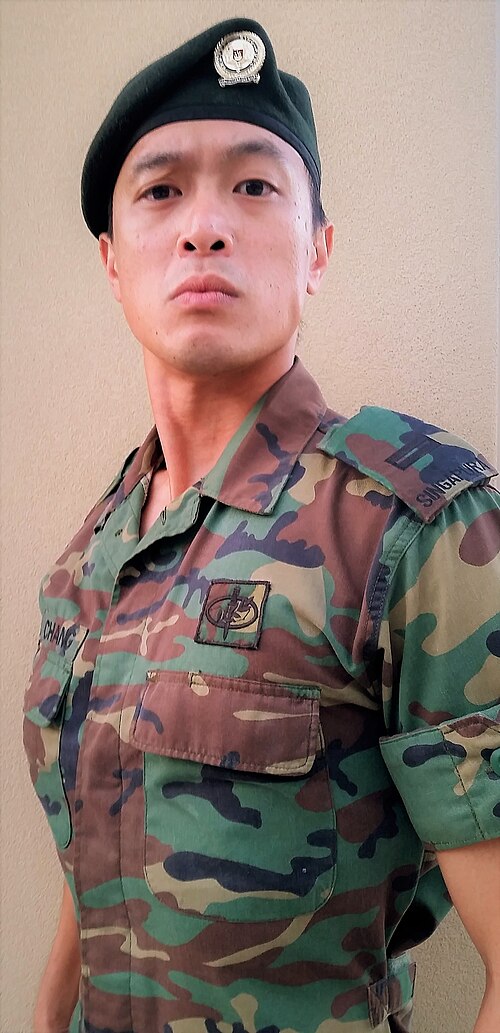
The berets are all adorned with the Singapore Armed Forces coat of arms, with the exception of the Air Force beret, Military Police beret, navy beret, Digital and Intelligence Service beret which are adorned with their respective cap-badge. Officers in the navy have a different cap-badge from the ratings. Officers of the rank of colonel and above have a different cap-badge.
Brigadier General Odowaa Yusuf Rageh wearing the Khaki Infantry Beret and rank slide
The Somali Armed Forces has the beret has the standard headgear since its inception in 1960. Each function within the security forces of Somalia has a unique colour.
Other than these units, several secret commando units (mostly disbanded in the mid-1990s, among them the "Unit 684" which became infamous for its mutiny) formed to infiltrate North Korea during the Cold War days wore black berets and adorned them with the badges of individual units. Korean liaison soldiers serving in the U.S. Eighth Army (KATUSA) have also been wearing black berets along with American uniforms since that beret became a standard headgear of the U.S. Army in 2001.
South Vietnam
American advisers assigned to these units wore the berets.[47]
In the Soviet Union berets were sewn together from three pieces of material (top, front and rear) with four air holes two per side seam, one per each side, worn with the service badge centered between the eyes and draped to the right in most circumstances. When appearing in public on parade, the berets were draped to the left side so that the insignia shows to observing dignitaries and the public. Berets were worn only by:
During this period berets were also worn by female personnel of the Armed Forces for everyday and parade uniform. The colour of the beret corresponded with that of the main uniform (e.g. Army and Air Force everyday uniform – olive, Navy uniform – navy blue or white, Army parade uniform – sea green, Air Force parade uniform – dark blue).
Spain
Spain's Crown Prince Felipe de Borbon (in blue beret of the Royal Guard) speaks with a Spanish engineer soldier about the capabilities of a bomb disposal robot during a visit to Spain's San Gregorio training area to meet with participants in exercise Interdict 12, Oct. 30.
The beret is used in the various armed forces of Spain. The colours used are:[48][49]
Commando green – Sri Lanka Sinha Regiment, Mechanized Infantry Regiment, Military Intelligence Corps, Sri Lanka Army Women Corps, Sri Lanka Rifle Corps, Special Task Force
Green – Gajaba Regiment (Infantry)
Blue – Vijayabahu Infantry Regiment, The Gemunu Watch (Infantry) & All Other Ranks of Artillery, Engineers, Signals, Light Infantry & all Service Corps
Khaki – All Officers of Sri Lanka Artillery, Corps of Engineers, Corps of Signals, Light Infantry, Service Corps, Corps Engineer Services, General Service Corps, Electrical & Mechanical Engineers, Sri Lanka National Guard, Sri Lanka Army Pioneer Corps
The beret is worn by all police and military personnel.
Maroon – Paratroops
Pink – special police
Switzerland
Since 1995, when it replaced the grey side cap, the beret is worn with the dress uniform and with the personally issued battle dress uniform by all Swiss soldiers. In training, a black beret (without insignia) is worn by mechanised units, otherwise a camouflage-coloured field cap is worn instead.
The colours used are:[54]
Black — armoured and mechanised units; signals and headquarters troops; rescue troops; NBC specialists; intelligence, military justice and general staff personnel
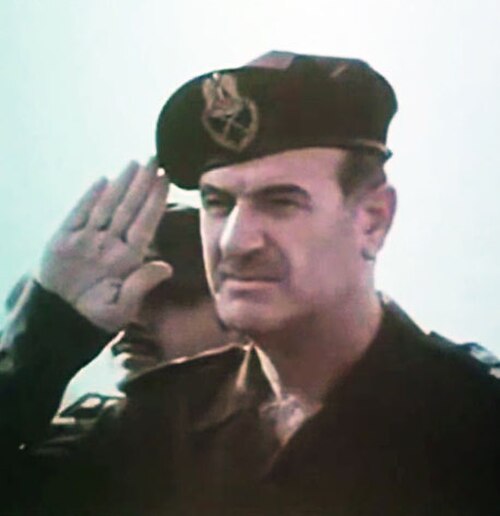
The beret is used uncommonly in the Syrian Arab Armed Forces as the patrol cap is the standard headgear in all branches of the military, Syria inherited most of their beret colors from Egypt during the period of the United Arab Republic.
UN blue – Personnel serving with the United Nations on peacekeeping missions
The black beret is also worn by ordinary police in certain situations.
Togo
The beret colours worn by the Togolese Army are as follows:
Black — Armoured Corps
Maroon — Para-Commando Regiment
Green — Presidential Guard Commando Regiment.
Dark blue – All other Arms and Corps
Turkey
U
Ukraine
Ukrainian paratrooper wearing maroon beretMarines in black berets, 2003Tankman in black beret, 2017Ukrainian national guard, 2020
In the Ukrainian army, the tradition of wearing a beret in uniform begins in 1991 - after the collapse of the USSR. In many respects, the young army imitated and actually continued the traditions of the Soviet Army, in particular, the Airborne Assault Troops and the Marines of the Armed Forces of Ukraine wore the corresponding berets of blue and black colours.
The situation changed radically after the beginning of the hybrid war against Russia starting in 2014, when the society, and in particular the Ukrainian servicemen, fundamentally revised their attitude towards the eastern neighbour and their recent past. After fierce battles with Russian special forces, among whom there were paratroopers and marines of the Russian armed forces that fought against Ukrainians in the Donbas during 2014-2015,[56] Ukrainians were disgusted with the military traditions that the russian army inherited from the Soviet Army. In 2017, new elements of the uniform, including berets, were officially introduced in the Armed Forces. Thus, the Special Operations Forces created in 2016 started wearing light grey berets. Meanwhile, Ukrainian paratroopers as well as marines of the Armed Forces of Ukraine that joined them later have been willingly wearing the new colours since then.
Since 2017, the Armed Forces have worn berets of the following colours:[57]
Other formations:
United Arab Emirates
The Armed Forces of the UAE and National Service use berets with distinct colours to display the specific branch of the armed forces. All berets displays the United Arab Emirates Armed Forces emblem.[58]
Emirati military personnel may also choose to wear military camo coloured ghutra in a turban fashion in keeping with traditional Arabic attire.
The British Army beret dates back to 1918 when the French 70th Chasseurs alpins were training with the British Tank Corps. The Chasseurs alpins wore a distinctive large beret and Major-General Sir Hugh Elles, the TC's Colonel, realised this style of headdress would be a practical option for his tank crews, forced to work in a reduced space. He thought, however, that the Chasseur beret was "too sloppy" and the Basque-style beret of the French tank crews was "too skimpy", so a compromise based on the Scottish tam o'shanter was designed and submitted for the approval of King George V in November 1923. It was adopted in March 1924.
During the Second World War, the use of the black beret was extended to all the regiments of the Royal Armoured Corps in 1940. The maroon beret was adopted by British airborne forces in 1941 (the Special Air Service had adopted a sand coloured beret, was subsequently compelled to change to maroon in common with other airborne units, but resumed wear of the sand beret after the Second World War) and the green beret by the Commandos in late 1942. A khaki beret was worn by the Reconnaissance Corps from 1941 until 1944,[59] and the Royal Air Force Regiment adopted a blue-grey beret in 1943.[60] Later in the war, a rather baggier beret-like hat, called the General Service Cap, was issued to all ranks of the British Army (with RAC, parachute, commando, Scottish and Irish units excepted), to replace the earlier Field Service Cap.[61] The GS Cap was not popular, and after the war was replaced with a true beret.[62][63]
Royal Military Police, 1984RAMCLieutenant GeneralMartin Bricknell wearing a dark-blue beret with ACDS insignia.A soldier of the Parachute Regiment wearing the maroon beretThe pale "Cambridge blue" berets of the Army Air Corps in London, 2006
Royal Marine berets; blue berets with red cap badge backing are worn by personnel who are not commando-qualified, while green berets without any cap badge backing are worn by personnel with commando qualification.
An officer of the Princess of Wales's Royal Regiment (on the right), showing the coloured backing patch behind the regimental cap badgeRoyal Air Force airman wearing that service's blue-grey beret
Beret colours
The colours are as follows:
General rule for wearing a British Army berets taught at training depots is to shape the head dress back and to the right for the material and to have the leather band level around the head with the cap badge two fingers above the left eye. Scottish Infantry have different rules for the Tamo'shanter with the cap badge worn on the left side of the head.
Other adornments
Some regiments and corps wear a coloured backing behind the cap badge. These include:
Royal Air Force: Officer cadets wear a white disc behind their cap badge.
Members of the Royal Tank Regiment, 4/73 (Sphinx) Special OP Battery Royal Artillery,[70] Royal Regiment of Fusiliers, Army Air Corps, Parachute Regiment, SAS and Intelligence Corps wear berets in Nos 1, 2, 3 and 6, Dress. Other English and Welsh Regiments and Corps wear peaked caps in these orders of dress.[71] Troops from other services, regiments or corps on attachment to units with distinctive coloured berets often wear those berets (with their own cap badge). Colonels, brigadiers and generals usually continue to wear the beret of the regiment or corps to which they used to belong with the cap badge distinctive to their rank.
Brown with a broad crimson headband and NO hat badge – 11th Hussars (PAO)
United States
Berets were originally worn by select forces in the United States Army. The first were worn during World War II, when a battalion of the 509th Parachute Infantry Regiment were presented maroon berets by their British counterparts.[72] Though unofficial at first, the green beret of the US Army Special Forces was formally adopted in 1961. Maroon airborne and black US Army Ranger berets were formally authorized in the 1970s.
"D" Troop 17th Cavalry were authorized a maroon beret in Vietnam.[73]
After the Vietnam War, morale in the US Army waned. In response, from 1973 through 1979 HQDA permitted local commanders to encourage morale-enhancing uniform distinctions; however, these distinctions were allowed to be worn only on the post. Consequently, many units embraced various colored berets, for example armor and armored cavalry units often adopted the black beret. Similarly many other units embraced various colored berets in an attempt to improve dwindling morale. In particular, the First Cavalry Division assigned various colored berets to its three-pronged TRICAP approach. In this implementation, armored cavalry, airmobile infantry units, air cavalry units, division artillery units, and division support units all wore different colored berets, including black, light blue, Kelly green, and red. The 101st Airborne Division was authorised a dark-blue beret.
In 1975 all female soldiers of the Women's Army Corps were authorized to wear a black beret variant as standard headgear for the service uniform.[74]
In 1975 the 172nd Light Infantry Brigade at Fort Richardson and Fort Wainwright, Alaska, wore olive-drab berets.
In 2001, Army Chief of Staff Eric Shinseki ordered the black beret worn as standard headgear army-wide, a controversial decision because it was previously reserved for the rangers. The rangers were then authorized to wear a tan beret, exclusive to them. The decision was implemented in hopes of boosting morale among conventional units. However, many soldiers began complaining that the new black beret was not practical with the utility uniform. In June 2011, Army Secretary John McHugh, acting on the recommendations made by Chief of Staff Martin Dempsey and Sergeant Major of the Army Raymond F. Chandler, once again chose the traditional patrol cap to be worn with the utility uniform. The black beret may be authorized with utility uniforms at commander's discretion for special ceremonies. The beret remains part of the Army's dress uniform for all units.
United States Army berets now use the following distinctive colors:
Special forces, ranger, and airborne unit berets sport distinctive organizational flashes. All other units use a standard pale blue flash bordered with 13 white stars. Officers wear their rank insignia within the flash, while enlisted ranks wear their distinctive unit insignia.
In the United States Navy, female officers and sailors were allowed to wear black berets instead of a combination hat or garrison cap while in service uniforms until 2016. The black berets were phased out in October of that year due to a lack of widespread use and a desire by the U.S. Navy to make its uniforms more unisex in appearance. During the Vietnam War, the U.S. Navy created special boat teams, unofficially dubbed the brown-water navy, to patrol coastlines, estuaries and rivers. Naval personnel assigned to these teams wore black berets as part of their uniform, as portrayed in the movie Apocalypse Now.[79] U.S. Navy SEAL teams serving in Vietnam wore camouflage berets in the field, the only beret somewhat standardized in the SEALs.
The Pontifical Swiss Guard wears large black berets.
Venezuela
Berets are worn by some units in the Venezuelan National Armed Forces, with distinctive colors for some units or functions. The beret colours are as follows:
Note: Before the conversion to the red berets, the Caracas Battalion wore dark blue berets similar to those used by the O'Leary Battalion.
Bangladesh officer (Major Tasawar) wearing UN blue beret
Multinational Force and Observers
A Canadian Army officer and U.S. Army soldier wearing the MFO beret
African Union
Officers wearing the African Union beret
NATO Multinational Corps Northeast
Multinational Corps Northeast
European Gendarmerie Force
Polish officer serving in an EUROGENDFOR beret
Camouflage berets
A U.S. Navy SEAL in Vietnam with a camouflage beret
A camouflage beret is intended for use on the battlefield when wearing combat fatigues. They are mostly issued to the likes of special forces, particularly in jungle warfare operations.
History
Students of the Polish high school in Casarano, Italy wearing the Cap, General Service
Camouflage berets possibly originate from the General Service cap "Cap, General Service" issued to the British Army in a Khaki material before the introduction of berets. It was first introduced under "Army Council Instruction 1407" of September 1943. This cap was designed to replace the "Field Service cap" or "FS Cap" that had been worn since the outbreak of war. These caps were issued in priority to units serving overseas. UK based units got theirs later on. It was at first unpopular due to its over large appearance. This cap was not a beret. It was made from several pieces of drab cloth material, whereas a beret was a one piece item. It was based on the Scottish balmoral bonnet in design. First issues were made from the same gaberdine cloth as the old "FS" cap. Badges worn on it were the conventional officers' bronze, and ORs' badges in both plastic and metal. Units which had special distinctions could still wear these on the "GS" cap. The General Service cap was worn by regulation one inch above the eyebrows, with the badge over the left eye and the cap pulled down to the right. But many wartime photos will show it worn pushed back on the head, which seemed to be a fashion with many soldiers late in the war.
Officers could only obtain the cap upon repayment to the RAOC. They were not allowed to buy the cap until their unit had been issued with it wholesale. Higher ranking officers often got away with wearing a khaki beret, which was against regulations. Fashion conscious ORs would also risk punishment from NCOs/officers buying one of these for "walking out".
Not exactly camouflage, but an early example is the Jungle Beret issued to the Australian Army during WW2.[85][86][87]
Users
Argentina – Jungle Troops (Brigada de Monte XII "General Manuel Obligado")[88]
^Bell, Raymond E. (January 1966). "Caps and Unit Pride". Army. 16 (1). Association of the United States Army: 84. Retrieved 12 May 2021.
^Forty, George. A Pictorial History of the Royal Tank Regiment, Halsgrove Publishing 1988, ISBN 978-1-84114-124-4
^Krawczyk, Wade (1999). Army Panzer Uniforms in Colour Photographs: No.13. Marlborough, Wiltshire: The Crowood Press Ltd. p. 5. ISBN 978-1861263032.
^Skinner, Rebecca (2010). British Paratrooper 1940–45. Osprey Publishing. p. 6. ISBN 978-1472805126.
^Bull, Stephen (2010). Commando Tactics: The Second World War. Pen & Sword Military. p. 98. ISBN 978-1848840744.
^"A Short History of the Use of Berets in the U.S. Army". Archived from the original on 24 June 2001.
^Pictures of the Argentine Armed Forces http://www.taringa.net/comunidades/naiem/7914799/Fuerzas-Especiales-Argentinas.html
^Pictures of the Argentine Armed Forces http://www.taringa.net/posts/imagenes/17507569/Cazadores-del-Ejercito-Argentino.html
^"Army Dress Manual Chapter 3 - Items of Dress, Embellishments and Accoutrements" (PDF). Australian Army. Retrieved 29 May 2020.
^"Uniform instructions for the Royal Australian Navy" (PDF). Royal Australian Navy. 2019. Retrieved 29 May 2020.
^ a b"Air Force Vol.55, No.12" (PDF). Royal Australian Air Force. 4 July 2013. Retrieved 29 May 2020.
^"Air Force Vol.55, No.13" (PDF). Royal Australian Air Force. 18 July 2013. Retrieved 29 May 2020.
^S.A.P, El Mercurio (8 March 2013). "Militares bolivianos reciben equipo satelital para operar en límite con Chile - Emol.com". Emol.
^ a bGovernment of Canada, National Defence (2019-04-15). "Article | Army returns to dark blue or khaki berets for Foot Guards and technical corps". www.army-armee.forces.gc.ca. Retrieved 2019-04-24.
^"PLA Caps and decorations". Archived from the original on May 18, 2011.
^ a b c d"TITULO - Historia :: Revista Bohemia". bohemia.cu.
^ a b c"WordPress › Error". ventanadecuba2.bloguea.cu.
^ a b c"40 imágenes aéreas y terrestres de este 2 de enero". www.juventudrebelde.cu.
^"Aniversario de Tropas de Prevención - Sitio Web de la defensa de la República de Cuba". www.cubadefensa.cu.
^"La pertinencia de prevenir". www.granma.cu.
^"Cuba en Marcha y Desfile Militar en la Plaza de la Revolución (+ Video e Infografía) | Cubadebate". Cubadebate.cu. Retrieved 2019-06-18.
^"Edict about military uniforms (in Czech)". Archived from the original on December 19, 2009.
^"Legionářské stejnokroje v jedné řadě". Vojenský historický ústav. Retrieved 8 April 2024.
^"Nové khaki barety pro pozemní síly". Agentura Logistiky. Retrieved 8 April 2024.
^"Československý baret pro výsadkáře, 80. léta". Vojenský historický ústav. Retrieved 8 April 2024.
^"Armáda mění barvu baretů. Zelenou střídá khaki, odkazuje na tradice". iDNES.cz (in Czech). 2023-01-12. Retrieved 2023-03-17.
^Bager, Susanne Bach (April 2014). "Blå er det nye sort". Forsvarsavisen (in Danish). 3 (3): 16–17. Retrieved 15 March 2020.
^"Gyldendal's Encyclopedia" (in Danish). Retrieved October 31, 2014.
^"Nye myndigheder, nye baretmærker og farver". Forsvaret (in Danish). Archived from the original on 2015-11-17. Retrieved 2015-10-12.
^Coune, Frederic (25 June 2012). Les Coiffures Militaires Francaises 1870-2000. Histoire et Collections. p. 74. ISBN 978-2-35250-241-8.
^Général Voyron, Rapport sur l'Expédition de Chine. 1900–1901, Paris, 1902, p. 99.
^Gaujac, Paul (2012). Officiers et soldats de l'Armee francaise 1943–1956. Histoire & Collections. p. 89. ISBN 9-782352-501954.
^"Mengenal Baret Pada TNI | Website Resmi Kodam XVII Cenderawasih Papua". Archived from the original on 2018-04-02. Retrieved 2018-04-30.
^ a b c dJenis Jenis Baret TNI, retrieved 2022-04-22
^ a b c dMedia, Indo Mitra (2020-03-07). "Warna Warna Baret Pada TNI-AD ini Detailnya..?". Indo Mitra Media (in Indonesian). Retrieved 2022-04-03.
^Pertahanan Strategis, Lembaga Kajian (14 November 2022). "Komandan Pusat Penerbangan Angkatan Darat (Danpuspenerbad), Mayjen Dwi Wahyu Winarto meresmikan penggunaan baret merah marun khas Penerbad". Facebook (in Indonesian). Retrieved 2022-11-16.
^"Peraturan Kapolri Nomor 06 Tahun 2018 tentang Pakaian Dinas Pegawai Negeri Pada Polri" (in Indonesian). Retrieved 2022-08-29.
^"Los colores de las boinas de las distintas unidades del Ejército de Tierra de España". ASOCIACIÓN ESPAÑOLA DE SOLDADOS VETERANOS DE MONTAÑA (AESVM) (in Spanish). 9 April 2023.
^@EMADmde (18 December 2014). "El Mando Conjunto de Ciberdefensa estrena prenda de cabeza. Así es la nueva boina de los #cibersoldados" (Tweet) – via Twitter.
^ https://vicentetoledo.es/sites/default/files/1949_compa%C3%B1%C3%ADa_piqueros__jefe_estado_6%C2%AA_cia.pdf. {{cite web}}: Missing or empty |title= (help)
^Laestadius, Patrik, ed. (2015). Reglemente: uniformsbestämmelser 2015 : Unibest FM 2015 (PDF) (in Swedish). Stockholm: Swedish Armed Forces. pp. 117, 134, 178–179, 307, 429. SELIBR 19513428. Archived from the original (PDF) on 22 January 2019.
^Laestadius, Patrik, ed. (2010). INSTRUKTION FÖR FÖRSVARSMAKTEN - UNIFORMSBESTÄMMELSER 2009: KAPITEL 8 AV 8 TJÄNSTETECKEN (PDF) (in Swedish). Stockholm: Swedish Armed Forces. p. 99. M7739-350014. Archived from the original (PDF) on 5 December 2011.
^Kommunikation Verteidigung (2009). Schweizer Armee. p. 356. ISBN 978-3-7193-1515-3.
^"У російських новинах показали морську піхоту РФ у Донецьку". ua.korrespondent.net.
^{{[https://zakon.rada.gov.ua/laws/show/z1502-17#n644 Наказ МОУ №606 від 20.11.2017 ″Про затвердження Правил носіння військової форми одягу та знаків розрізнення військовослужбовцями Збройних Сил України, Державної спеціальної служби транспорту та ліцеїстами військових ліцеїв″}}
^Wafa Al Suwaidi (2015-01-05). الزي العسكري هوية اكتساب وتعزيز الطاعة [Military uniform identity acquisition and promotion of obedience]. Al-Bayan. Retrieved November 5, 2018.
^Jewell, Brian (1981), British Battledress, 1937-61, Osprey Publishing, ISBN 0-85045-387-9 (p. 22)
^Oliver, Kingsley M (1997), Through Adversity: History of the Royal Air Force Regiment, Forces & Corporate Publishing Ltd, ISBN 978-0952959700 (p. 49)
^Hallett, Edward (24 November 2014). "General Service Cap". Tales from the Supply Depot - Collecting British Empire Militaria. Retrieved 10 December 2023.
^Gordon, David. Uniforms of the World War II Tommy (Pictorial Histories Publishing Company, Missoula, MT, 2005). ISBN 1-57510-122-X
^Hallett, Edward (26 February 2016). "Post War Blue Beret". Tales from the Supply Depot - Collecting British Empire Militaria. Retrieved 10 December 2023.
^"Yorkshire Gunners honoured for Service in Iraq and Afghanistan". Ministry of Defence. Archived from the original on 2012-09-29. Earlier in the day, in what marks a historic change in the history of one of the Batteries from the Regiment - 4/73 (Sphinx) Battery, the traditional dark blue beret of the Royal Artillery was replaced with a khaki-coloured beret. The change came about as a result of the Battery working closely, in times of war, with the Honourable Artillery Company
^"Request for a copy of any Army Dress Committee notes that have been issued since the 359th meeting" (PDF). Retrieved 2023-09-18.
^"Dress Regulations: Chapter 40" (PDF). Royal Navy. Retrieved 21 March 2017.
^"BBC website on British headdress".
^"Yorkshire Gunners honoured for Service in Iraq and Afghanistan". Ministry of Defence.
^"AUTHORISED HEADDRESS". Archived from the original on 2008-05-29. Retrieved 2009-12-31.
^Powers, Rod (2019-01-29). "Army And Air Force Beret Use - Uniform Headgear". Usmilitary.about.com. Archived from the original on 2011-08-10. Retrieved 2019-06-18.
^Stanton, Shelby (1994). US Army Uniforms of the Cold War 1948–1973. Stackpole Books. p. 223.
^Lopez, C. Todd (June 15, 2011). "ACU changes make Velcro optional, patrol cap default headgear". United States Army. Retrieved February 27, 2017.
^Cadet News: Uniform Dos and Don’ts Archived 2020-10-17 at the Wayback Machine, Official website of the US Army Junior ROTC, last accessed 23 December 2020
^ a b cAuthorized Air Force JRTOC Badges and Insignia; Union County Public Schools, Monroe, NC; last accessed 23 December 2020
^Por redacción NotiTotal · noviembre 27, 2016 (27 November 2016). "Crean nuevo grupo de Fuerzas Especiales para proteger espacios aéreos". NotiTotal. Retrieved 2019-06-18.{{cite web}}: CS1 maint: numeric names: authors list (link)
^"Aviación Militar Bolivariana se fortalece con la creación de un nuevo grupo de Fuerzas Especiales No 20 - MippCI". Archived from the original on 2018-07-26. Retrieved 2018-07-26.
^"UN police into Darfur refugee camp". sudantribune.com. Abou Shouk. AP. 29 January 2008. Archived from the original on 31 July 2011. Retrieved 5 March 2021.
^"Hybrid force for Darfur set to deploy on 31 December – UN". UN News. 28 December 2007.
^"International assistance force for Mali transformed into UN peacekeeping mission". news.un.org. 1 July 2013. Retrieved 5 March 2021.
^The Australian Army in World War II - Page 57 Mark Johnson ISBN 1472805224
^"Uniform & Kit issued to the AIF During WW2". www.medalsgonemissing.com.
^http://www.austcdoassocvic.com/history1.htm [permanent dead link]
^The other Cazadores de Monte brigades use Dark Green berets



.jpg/500px-Afghan_Generals_Honor_Newly-Graduated_Commandos_(4904080701).jpg)
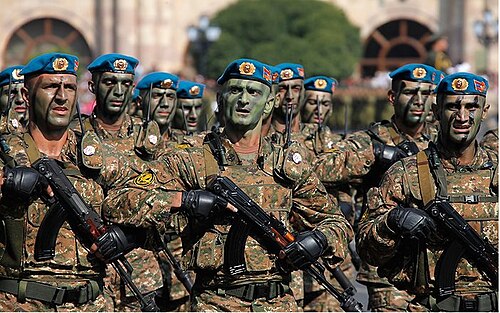


.jpg/500px-Bangladesh_Army._(30840401884).jpg)

.jpg/500px-Ministro_da_Defesa_visita_Comando_de_Opera%C3%A7%C3%B5es_Especiais_do_ex%C3%A9rcito_em_goi%C3%A2nia-GO_(45753860441).jpg)


.jpg/500px-Miembros_del_Ej%C3%A9rcito,_visitaron_la_Obra_del_Complejo_Legislativo_(9576536219).jpg)


_(cropped).jpg/500px-Maj._Mohit_Sharma_(1_Para_SF)_(cropped).jpg)


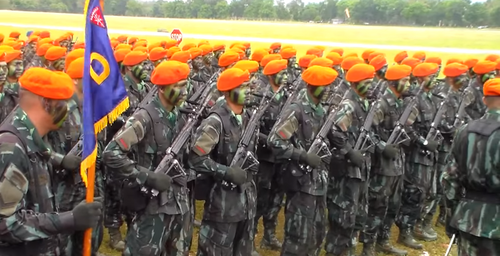

.jpg/500px-Iranian_green_beret_commandos_(2).jpg)


.jpg/500px-Minister_(28340309721).jpg)

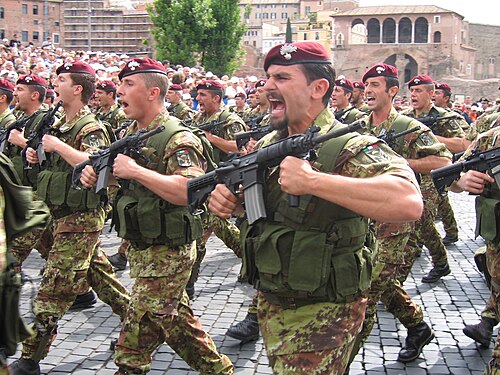


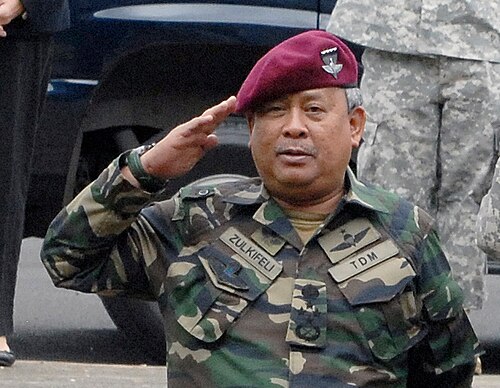

.jpg/500px-Desfile_Militar_Conmemorativo_del_CCV_Aniversario_del_Inicio_de_la_Independencia_de_M%C3%A9xico._(21286968438).jpg)

.jpg/500px-US_and_Mozambique_boarding_parties_train_together_(32625601616).jpg)

.jpg/500px-Veteranendag_2014_(14533944835).jpg)
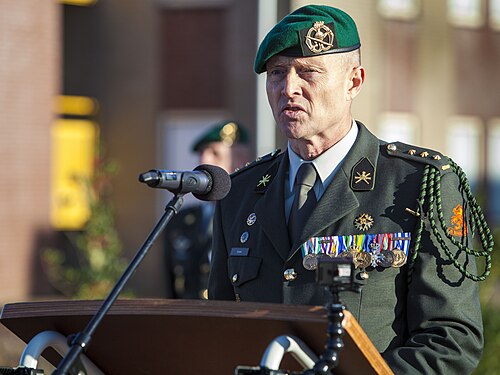
_(2).jpg/500px-Get_out_of_our_way_(15640843399)_(2).jpg)
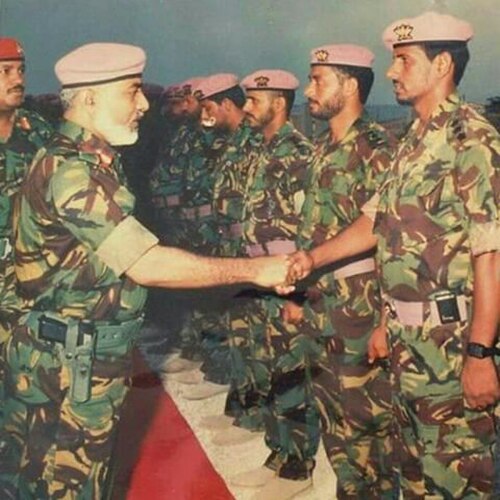


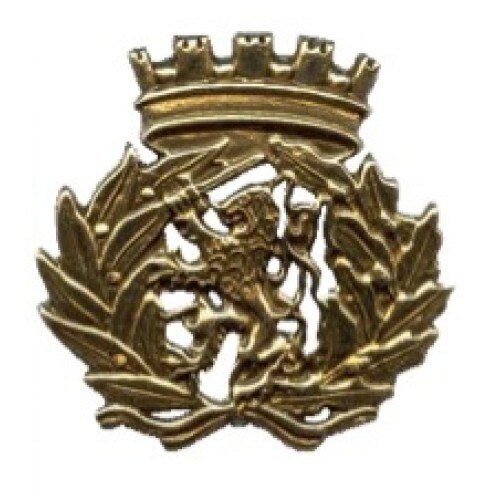
 陸軍の黒いベレー帽
 陸軍特殊作戦部隊(レンジャー)モス/ドライグリーンベレー
 陸軍空挺部隊のグリーンベレー
 海軍海兵隊の濃紺のベレー帽
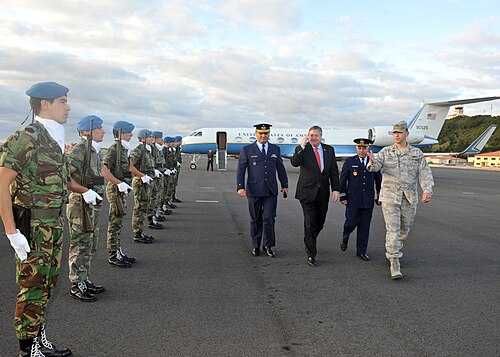 空軍警察の水色のベレー帽
.jpg/500px-thumbnail.jpg)
_Beret.jpg/500px-Portuguese_Army_Special_Operations_(_Ranger_)_Beret.jpg)

_during_a_Raven_UAV_familiarization_flight_at_the_Romanian_Land_Forces_facility_in_Buzau,_Romania,_June_2,_2011_110602-M-GN320-005.jpg/500px-thumbnail.jpg)

 ロシア空挺部隊第106空挺師団
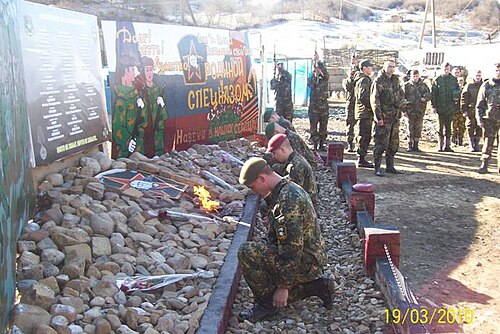 追悼記念日にオリーブと赤のベレー帽をかぶった州兵
 2018年モスクワ戦勝記念日パレードで栗色のベレー帽をかぶった国家警備隊の兵士たち
 2018年モスクワ戦勝記念日パレードで行進する非常事態軍部隊。
.jpg/500px-Saudi_security_forces_on_parade_-_Flickr_-_Al_Jazeera_English_(15).jpg)
.jpg/500px-Military_Parade_Belgrade_2014_-_Serbian_Soldiers_with_Russian_Knights_-_The_Swifts_(15816841463).jpg)




.jpg/500px-NGU_vs_COVID19_0036_(49756527387).jpg)


.jpg/500px-Lt_Gen_Martin_Bricknell_(cropped).jpg)

.jpg/500px-Lord_Mayor's_Show,_London_2006_(295292714).jpg)
.jpg/500px-120221-A-YI377-128_(6963410303).jpg)
.jpg/500px-RAF_Reservist_MOD_45156514_(Beret_crop).jpg)


.jpg/500px-2015_04_18_AU_UN_Joint_Benchimarking_Team-2_(17198100671).jpg)


_-_1946-03-12_-_Casarano.jpg/500px-Polish_II_Corps_(21a)_-_1946-03-12_-_Casarano.jpg)
 Argentina – Jungle Troops (Brigada de Monte XII "General Manuel Obligado")[88]
 Bolivia – Special Forces "Bolivian Condors"
 Brazil – Jungle Troops
 China – During the 80s, camo berets were issued to some of the recon forces of PLA. It has no cap badge on it.
 Denmark – Naval Infantry, Armoured forces of Bornholm (Bornholms Værn's Marineinfantery) Disbanded
 Ecuador – IWIA (indigenous tribal members unit) forces
 Israel – Kfir Brigade (Urban Combat)
 Paraguay – Special Naval Forces
 Panama – 7th Infantry Company "Macho de Monte"; Comando Operacional de Fuerzas Expeciales (Cadre)
 Philippines – Philippine Air Force pararescue
 Portugal – "Flechas" and Guinea 3rd Commando Company both wore vertical lizard pattern.
 South Africa – 32 Buffalo Battalion, 61 Mechanised Battalion Group and the Special Task Force
 South Korea – Army armoured units
 Thailand – Royal Thai Marine Corps and Navy SEALs