Loading article…
This is a list of coats of arms of Ireland. In the majority of cases these are arms assigned to county councils created by the Local Government (Ireland) Act 1898 or later legislation, either by the Chief Herald of Ireland in what is now the Republic of Ireland or by the College of Arms in Northern Ireland. All but two county councils in the Republic have a coat of arms. In Northern Ireland, county councils were abolished in 1973, but the traditional arms are still occasionally used.
The arms of the county town have sometimes been used as an unofficial symbol of a county instead of those of its county council, or when the council had no arms. There are no official county flags. Flags with the GAA county colours serve as de facto county flags. County flags flown at Dublin Castle incorporate the county council arms, while those sold by the GAA county board include the county GAA crest. Coats of arms granted in recent decades often incorporate the GAA colours in the field.
The earliest Irish county arms date from the late 17th century, when those of counties Carlow, Kilkenny and "Typerary" were recorded by Richard Carney, Ulster King of Arms.[1] In each case the arms consist of an ermine shield bearing a fesse or central horizontal band on which heraldic devices of local families are displayed. The arms of Tipperary became obsolete when the county was divided into North and South Ridings in 1838.
When county councils were established in 1899, each was obliged to adopt a seal. In some cases these used an unofficial coat of arms, but no arms were officially granted prior to the splitting of heraldic jurisdiction in 1943.[2]
In 1914 a system of county and city flags were designed as unit colours for the Irish Volunteers. Each county flag was to include a coat of arms, with a list of suggested designs drawn by The O'Rahilly. While few of these colours were ever manufactured, some of the county devices were later to occur in official grants.[3]
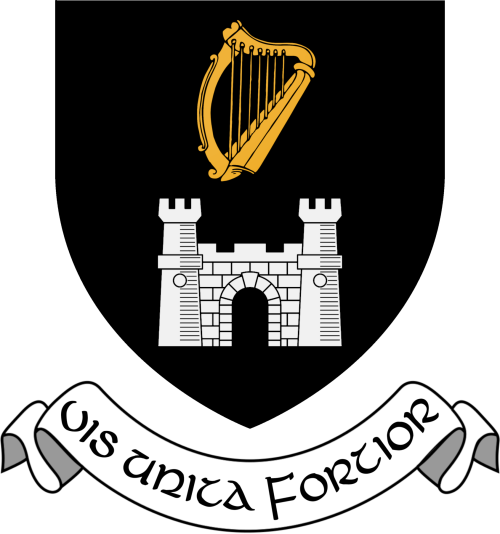
1943年に系図局が設立されたことで、アイルランド固有の紋章管轄が確立されました。新局による最初の認可の一つは、1944年9月30日にダブリン県議会に与えられたものでした。この認可は、北欧の象徴の使用とアイルランド語のモットーで注目されました。[ 4 ] 1949年、首席紋章官のエドワード・マクレイサグトは、カーロウ県とキルケニー県の17世紀の紋章を発見し、関係する県議会にその存在を知らせる手紙を書きました。[ 5 ] 1956年からは、県議会への認可が途切れることなく続きました。1990年には、ティペラリー・サウス・ライディング県議会がリチャード・カーニーによって記録された紋章に基づいて認可されました。[ 6 ]
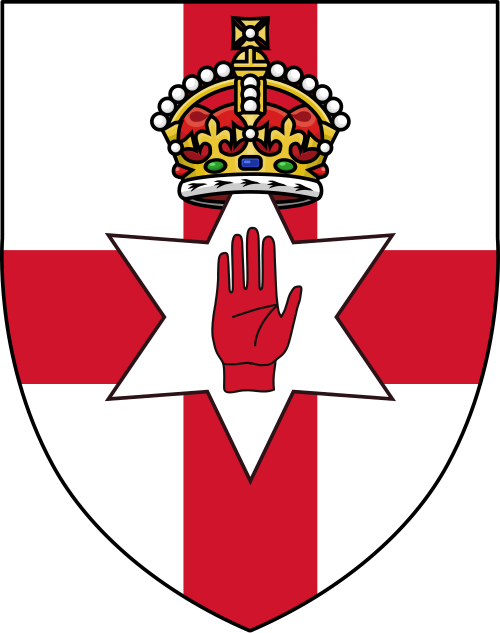
1943年、北アイルランドの紋章管轄権はロンドンの紋章院に移管され、ノーロイとアルスターのキング・オブ・アームズが統合された。[ 4 ] 6つの郡議会のうち5つがロンドンから紋章の授与を受けた。いずれの場合も、サポーターも授与された。[ 7 ]いずれの場合も、これらの紋章は1972年の地方自治法(北アイルランド)による郡議会の廃止に伴い廃止された。




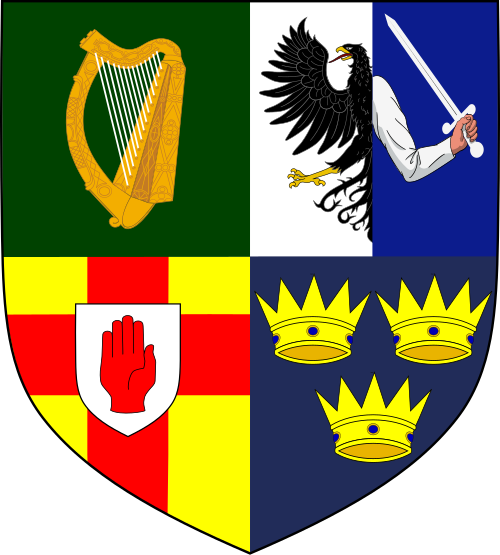

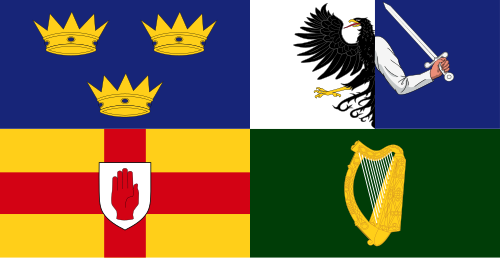
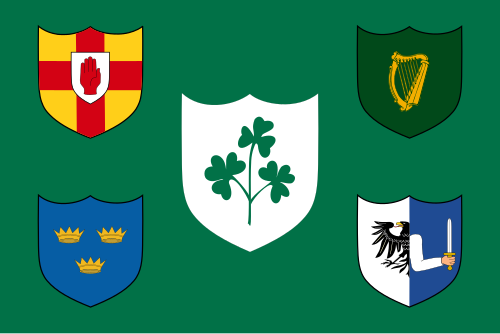
州の紋章は、アイルランド全島の紋章として四分割されて一緒に掲示されるのが一般的です。このシンボルとそれに相当する旗は、さまざまなアイルランド全土のスポーツチームや文化団体で使用されています。旗の表示順序は様々です。[ 8 ]この旗とそのバリエーションは現在、アイルランドの多くの団体、特にアイルランド全土の文脈で活動している団体、例えばアイルランドラグビーリーグチームで使用されています。他のチームは、アイルランドホッケーチーム、アイルランドラグビーユニオンチーム、アイルランドアマチュアボクシング協会など、旗のバリエーションを使用しています。


アイルランドの町や都市を表すために現在または過去に使用されていた紋章には、次のものがあります。[ 6 ]