Loading article…
The University of California (UC) is a publicland-grantresearchuniversity system in the U.S. state of California. Headquartered in Oakland, the system is composed of its ten campuses at Berkeley, Davis, Irvine, Los Angeles, Merced, Riverside, San Diego, San Francisco, Santa Barbara, and Santa Cruz, along with numerous research centers and academic centers abroad.[4] The system is the state's land-grant university.[5]
In 1900, UC was one of the founders of the Association of American Universities and since the 1970s seven of its campuses, in addition to Berkeley, have been admitted to the association. Berkeley, Davis, Irvine, Los Angeles, Santa Barbara, Santa Cruz, Riverside, and San Diego are considered Public Ivies, making California the state with the most universities in the nation to hold the title.[6][7] UC campuses have large numbers of distinguished faculty in almost every academic discipline, with UC faculty and researchers having won 75 Nobel Prizes as of 2025.[8]
このシステムの10のキャンパスには、合計で299,407人の学生、26,100人の教員、192,400人の職員、そして250万人以上の卒業生がいます。[ 2 ]最新のキャンパスであるマーセドのキャンパスは2005年の秋に開校しました。9つのキャンパスには学部生と大学院生の両方が在籍していますが、UCサンフランシスコの1つのキャンパスには、医学と健康科学の大学院生と専門職学生のみが在籍しています。さらに、サンフランシスコにあるカリフォルニア大学ロースクールは、法的にはUCと提携しており、同じ名前ですが、それ以外は自治権を持っています。カリフォルニア高等教育マスタープランの下で、カリフォルニア大学は、カリフォルニア州立大学システムとカリフォルニアコミュニティカレッジシステムを含む、州の3つの公立高等教育システムの一部です。UCは理事会によって運営されており、その自治権は州憲法によって州政府の他の部分から保護されています。[ 9 ]カリフォルニア大学は、米国エネルギー省のために、ローレンス・バークレー国立研究所(LBNL)、ローレンス・リバモア国立研究所(LLNL)、ロスアラモス国立研究所(LANL)の3つの国立研究所を管理または共同管理している。[ 10 ]
The University of California was founded on March 23, 1868, and operated in Oakland, where it absorbed the assets of the College of California before moving to Berkeley in 1873.[11][12] It also affiliated itself with independent medical and law schools in San Francisco. Over the next eight decades, several branch locations and satellite programs were established across the state. In March 1951, the University of California began to reorganize itself into something distinct from its campus in Berkeley, with UC president Robert Gordon Sproul staying in place as chief executive of the UC system, while Clark Kerr became Berkeley's first chancellor[13][14][15][16] and Raymond B. Allen became the first chancellor of UCLA.[17] However, the 1951 reorganization was stalled by resistance from Sproul and his allies,[18] and it was not until Kerr succeeded Sproul as UC president that UC was able to evolve into a university system from 1957 to 1960.[19] At that time, chancellors were appointed for additional campuses and each was granted some degree of greater autonomy.[20]

In 1849, the state of California ratified its first constitution, which contained the express objective of creating a complete educational system including a state university.[21] Taking advantage of the Morrill Land-Grant Acts, the California State Legislature established an Agricultural, Mining, and Mechanical Arts College in 1866.[22][23] However, it existed only on paper, as a placeholder to secure federal land-grant funds.[23]
Meanwhile, CongregationalministerHenry Durant, an alumnus of Yale, had established the private Contra Costa Academy, on June 20, 1853, in Oakland, California.[22] The initial site was bounded by Twelfth and Fourteenth Streets and Harrison and Franklin Streets in downtown Oakland[22] (and is marked today by State Historical Plaque No. 45 at the northeast corner of Thirteenth and Franklin). In turn, the academy's trustees were granted a charter in 1855 for a College of California, though the college continued to operate as a college preparatory school until it added college-level courses in 1860.[22][23] The college's trustees, educators, and supporters believed in the importance of a liberal arts education (especially the study of the Greek and Roman classics), but ran into a lack of interest in liberal arts colleges on the American frontier (for post-secondary degrees, the college was graduating only three or four students per year).[23]
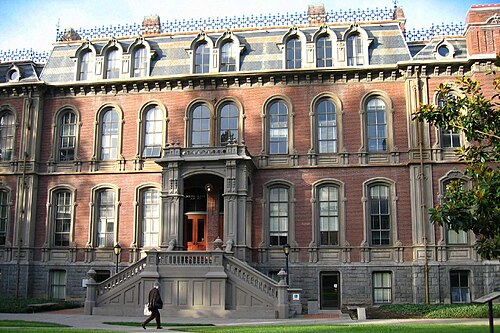
In November 1857, the college's trustees began to acquire various parcels of land facing the Golden Gate in what is now Berkeley for a future planned campus to the north of Oakland.[22] But first, they needed to secure the college's water rights by buying a large farm to the east.[22] In 1864, they organized the College Homestead Association, which borrowed $35,000 to purchase the land, plus another $33,000 to purchase 160 acres (650,000 m2) of land to the south of the future campus.[24] The association subdivided the latter parcel and started selling lots with the hope it could raise enough money to repay its lenders and also create a new college town.[22] But sales of new homesteads fell short.[22]
Governor Frederick Low favored the establishment of a state university based upon the University of Michigan plan, and thus in one sense may be regarded as the founder of the University of California.[22][23] At the College of California's 1867 commencement exercises, where Low was present, Yale University professor Benjamin Silliman Jr. criticized Californians for establishing a polytechnic school, instead of a real university.[22][23] That same day, Low reportedly first suggested a merger of the already-functional College of California (which had a liberal arts focus, land, buildings, faculty, and students, but not enough money) with the nonfunctional state college (which had a polytechnical focus, money and nothing else), and went on to participate in the ensuing negotiations.[22][23]
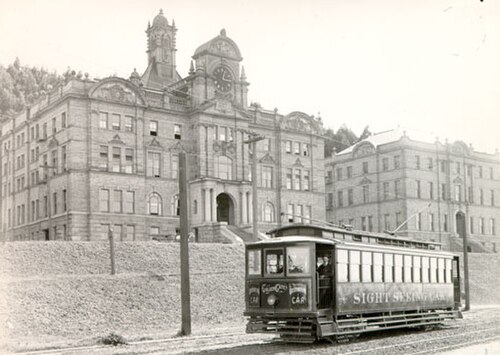
On October 9, 1867, the college's trustees reluctantly agreed to join forces with the state college to their mutual advantage, but under one condition—that there not be simply an "Agricultural, Mining, and Mechanical Arts College", but a complete university, within which the assets of the College of California would be used to create a College of Letters (now known as the College of Letters and Science).[22][23][25] Accordingly, the Organic Act, establishing the University of California, was introduced as a bill by AssemblymanJohn W. Dwinelle on March 5, 1868, and after it was duly passed by both houses of the state legislature, it was signed into state law by Governor Henry H. Haight (Low's successor) on March 23, 1868.[22][23][26]
However, as legally constituted, the new university was not an actual merger of the two colleges, but was an entirely new institution which merely inherited certain objectives and assets from each of them.[27] Governor Haight saw no need to honor any tacit understandings reached with his predecessor about institutional continuity.[23] Only two college trustees became regents and a single faculty member (Martin Kellogg) was hired by the new university.[23] By April 1869, the trustees had second thoughts about their agreement to donate the college's assets and disincorporate. To get them to proceed, regent John B. Felton helped them bring a "friendly suit" against the university to test the agreement's legality—which they promptly lost.[28]
The University of California's second president, Daniel Coit Gilman, opened its new campus in Berkeley in September 1873.[29]

Section 8 of the Organic Act authorized the Board of Regents to affiliate the University of California with independent self-sustaining professional colleges.[30][31] "Affiliation" meant UC and its affiliates would "share the risk in launching new endeavors in education".[30] The affiliates shared the prestige of the state university's brand, and UC agreed to award degrees in its own name to their graduates on the recommendation of their respective faculties, but the affiliates were otherwise managed independently by their own boards of trustees, charged their own tuition and fees, and maintained their own budgets separate from the UC budget.[30] It was through the process of affiliation that UC was able to claim it had medical and law schools in San Francisco within a decade of its founding.[30]
1879年、カリフォルニア州は2番目で現在の憲法を採択したが、そこにはUCが州政府の他の機関から独立していることを保証する異例に強い文言が含まれていた。[ 9 ] [ 32 ]これは、創設者セラヌス・クリントン・ヘイスティングスの要請により、1878年に州議会の法律によって別個に認可され、提携していたヘイスティングス法科大学院に永続的な影響を与えた。[ 33 ]自らが選任した理事会との意見の相違の後、創設者は1883年と1885年に州議会を説得し、彼の法科大学院を理事会の直接管理下に置くための新しい法律を可決させた。[ 34 ] 1886年、カリフォルニア州最高裁判所は、1879年の州憲法にあるUCの独立性を保護する条項が州議会から1878年の法律を改正する権限を奪ったため、これらの新しい法律は違憲であると宣言した。[ 35 ] [ 36 ]今日に至るまで、法科大学院(2023年に名称からヘイスティングスを削除)はUCの関連機関であり、独自の理事会を維持し、評議員会によって統治されていない。[ 30 ] [ 35 ]

対照的に、トーランド医科大学(1864年創立、1873年提携)や、後にサンフランシスコの歯学部、薬学部、看護学部は、裁判所の判決によって憲法上の重要性を与えられた法令ではなく、書面による協定によってUCと提携した。[ 30 ] 20世紀初頭、提携大学(後にそう呼ばれるようになった)は、ベンジャミン・アイデ・ウィーラー学長の任期中に理事会の統治に従うことに同意し始めた。理事会は、UCブランドを共有しながらもUCが実質的な支配権を持たない独立した組織の存在に内在する問題を認識するようになったからである。[ 30 ]ヘイスティングスは独立したままであったが、提携大学はUC学長と理事会の監督の下で互いの運営をますます調整できるようになり、今日カリフォルニア大学サンフランシスコ校として知られる保健科学キャンパスへと発展した。[ 30 ]
Section 1 of the Organic Act authorized the university to "provide instruction and complete education" in many different fields and professions,[37] but the text of the Organic Act is notably silent about research.[38] It was not until the 1930s, during the administration of President Sproul, that UC's mission drifted away from its traditional focus on instruction—which became the province of the California State University—and towards research.[38] Sproul started to speak of UC's missions as "teaching, research, and public service",[38] which remains true today.[39] Thus, UC evolved into a research university whose faculty and staff would perform research to contribute directly to society, as opposed to indirect contributions by instructing students to equip them with the skills needed to later perform research in their own careers.[38] The Master Plan for Higher Education, as enacted into state law in 1960, provides that UC "shall be the primary state-supported academic agency for research".[40]
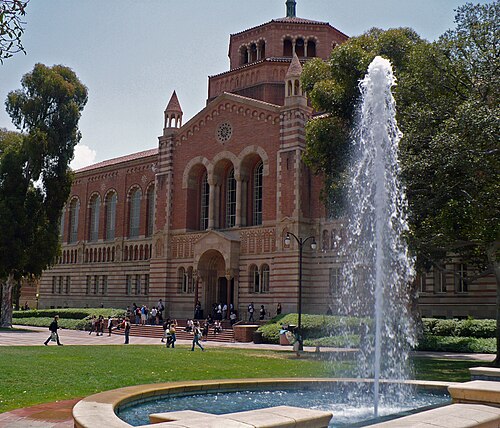
In August 1882, the California State Normal School (whose original normal school in San Jose is now San Jose State University) opened a second school in Los Angeles to train teachers for the growing population of Southern California.[41] In 1887, the Los Angeles school was granted its own board of trustees independent of the San Jose school.[42] The state constitution prohibited the legislature from directly commanding the Board of Regents to create a southern campus, but it did not prohibit the state legislature from passing legislation to create additional state universities, and the supporters of the Los Angeles State Normal School used the possibility of that scenario to pressure the Board of Regents to voluntarily accept the normal school as UC's southern campus.[43] In 1919, the state legislature transferred the normal school to UC control and renamed it the Southern Branch of the University of California.[44] In 1927, it became the University of California at Los Angeles; the "at" would be replaced with a comma in 1958.[45]
Los Angeles surpassed San Francisco in the 1920 census to become the most populous metropolis in California. Because Los Angeles had become the state government's single largest source of both tax revenue and votes, its residents felt entitled to demand more prestige and autonomy for their campus. Their efforts bore fruit in March 1951, when UCLA became the first UC site outside of Berkeley to achieve de jure coequal status with the Berkeley campus. That month, the regents approved a reorganization plan under which both the Berkeley and Los Angeles campuses would be supervised by chancellors reporting to the UC president.[13][14][15][46] However, the 1951 plan was severely flawed; it was overly vague about how the chancellors were to become the "executive heads" of their campuses. Due to stubborn resistance from President Sproul and several vice presidents and deans—who simply carried on as before—the chancellors ended up as glorified provosts with limited control over academic affairs and long-range planning while the president and the regents retained de facto control over everything else.[18]

Upon becoming president in October 1957, Clark Kerr supervised UC's rapid transformation into a true public university system through a series of proposals adopted unanimously by the regents from 1957 to 1960.[19][20] Kerr's reforms included expressly granting all campus chancellors the full range of executive powers, privileges, and responsibilities which Sproul had denied to Kerr himself, as well as the radical decentralization of a tightly knit bureaucracy in which all lines of authority had always run directly to the president at Berkeley or to the regents themselves.[19][20][46] In 1965, UCLA Chancellor Franklin D. Murphy tried to push this to what he saw as its logical conclusion: he advocated for authorizing all chancellors to report directly to the Board of Regents, thereby rendering the UC president redundant.[47] Murphy wanted to transform UC from one federated university into a confederation of independent universities, similar to the situation in Kansas (from where he was recruited).[47] Murphy was unable to develop any support for his proposal, Kerr quickly put down what he thought of as "Murphy's rebellion", and therefore Kerr's vision of UC as a university system prevailed: "one university with pluralistic decision-making".[47]
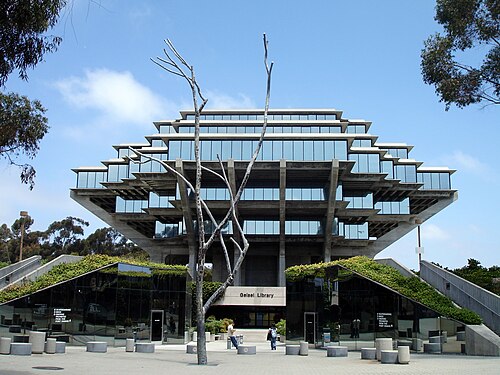
During the 20th century, UC acquired additional satellite locations which, like Los Angeles, were all subordinate to administrators at the Berkeley campus. California farmers lobbied for UC to perform applied research responsive to their immediate needs; in 1905, the Legislature established a "University Farm School" at Davis and in 1907 a "Citrus Experiment Station" at Riverside as adjuncts to the College of Agriculture at Berkeley. In 1912, UC acquired a private oceanography laboratory in San Diego, which had been founded nine years earlier by local business promoters working with a Berkeley professor. In 1944, UC acquired Santa Barbara State College from the California State Colleges, the descendants of the State Normal Schools.[48] In 1958, the regents began promoting these locations to general campuses, thereby creating UCSB (1958), UC Davis (1959), UC Riverside (1959), UC San Diego (1960), and UCSF (1964).[49][50] Each campus was also granted the right to have its own chancellor upon promotion. In response to California's continued population growth, UC opened two additional general campuses in 1965, with UC Irvine opening in Irvine and UC Santa Cruz opening in Santa Cruz.[49] The youngest campus, UC Merced opened in fall 2005 to serve the San Joaquin Valley.
After losing campuses in Los Angeles and Santa Barbara to the University of California system, supporters of the California State College system arranged for the state constitution to be amended in 1946 to prevent similar losses from happening again in the future.[48]
With decentralization complete, it was decided in 1986 that the UC president should no longer be based at the Berkeley campus, and the UC Office of the President moved to Kaiser Center in Oakland in 1989.[51] That lakefront location was subject to widespread criticism as "too elegant and too corporate for a public university".[52] In 1998, the Office of the President moved again, to a newly constructed but much more modest building near the former site of the College of California in Oakland.[53]
1960年の高等教育マスタープランでは、カリフォルニア大学はカリフォルニア州の高校卒業生の上位12.5%(8分の1)から学部生を受け入れなければならないと定められました。マスタープランが公布される前は、カリフォルニア大学は上位15%から学部生を受け入れることになっていました。カリフォルニア大学は現在、どのキャンパスも総学生数が27,500人を超えてはならない(質の確保のため)ことや、カリフォルニア州の住民は公立高等教育を無償で受けるべきであることなど、当初のマスタープランのすべての原則に従っているわけではありません。バークレー、デイビス、アーバイン、ロサンゼルス、サンディエゴの5つのキャンパスは、それぞれ総学生数が30,000人を超えており、この5つのうちアーバインを除くすべてのキャンパスで学部生の在籍者数が30,000人を超えています。[ 54 ]
1978年に州の有権者が提案13号を制定して長期的な固定資産税収入を大幅に制限した後、UCは、結果として生じた州の財政支援の崩壊を補うために、名ばかりの授業料であるさまざまな料金を課すことを余儀なくされた。[ 55 ] [ 56 ] [ 57 ] 2010年11月18日、理事会はついに、UCが授業料を徴収していないという長年の法的虚構を放棄し、教育費を「授業料」と改名した。 [ 58 ] 2000年代と2010年代の資金調達の一環として、UCは他の州や国からの優秀な(そしてより収益性の高い)学生の割合を静かに増やし始めたが、[ 59 ] 2015年に避けられない世論の反発を受けて方針転換を余儀なくされ、カリフォルニア州民の受け入れを増やし始めた。[ 60 ] [ 61 ]
2022年11月14日、全10のカリフォルニア大学キャンパスとローレンス・バークレー国立研究所の約4万8000人の教職員が、全米自動車労働組合(UAW)の承認を得て、賃上げと福利厚生の改善を求めてストライキを行った。[ 62 ] UAWは、一方的な方針変更や労働者の交渉妨害など、20件以上の不当労働行為をカリフォルニア大学に対して申し立てた。[ 63 ]ストライキはほぼ6週間続き、12月23日に正式に終了した。[ 64 ]

All University of California campuses except the College of the Law in San Francisco are governed by the Regents of the University of California as required by the Constitution of the State of California.[32] Eighteen regents are appointed by the governor for 12-year terms.[32]One member is a student appointed for a one-year term.[32] There are also seven ex officio members—the governor, lieutenant governor, speaker of the State Assembly, State Superintendent of Public Instruction, president and vice president of the UC alumni associations, and the UC president.[32] The Academic Senate, made up of faculty members, is empowered by the regents to set academic policies.[32] In addition, the system-wide faculty chair and vice-chair sit on the Board of Regents as non-voting members.[32]

Originally, the president was the chief executive of the first campus, Berkeley. In turn, other UC locations (with the exception of the Hastings College of the Law) were treated as off-site departments of the Berkeley campus, and were headed by provosts who were subordinate to the president. In March 1951, the regents reorganized the university's governing structure. Starting with the 1952–53 academic year, day-to-day "chief executive officer" functions for the Berkeley and Los Angeles campuses were transferred to chancellors who were vested with a high degree of autonomy, and reported as equals to UC's president.[13][14][15] As noted above, the regents promoted five additional UC locations to campuses and allowed them to have chancellors of their own in a series of decisions from 1958 to 1964,[49] and the three campuses added since then have also been run by chancellors. In turn, all chancellors (again, with the exception of Hastings) report as equals to the University of California President. Today, the UC Office of the President (UCOP) and the Office of the Secretary and Chief of Staff to the Regents of the University of California share an office building in downtown Oakland that serves as the UC system's headquarters.[65]
Kerr's vision for UC governance was "one university with pluralistic decision-making".[66] In other words, the internal delegation of operational authority to chancellors at the campus level and allowing nine other campuses to become separate centers of academic life independent of Berkeley did not change the fact that all campuses remain part of one legal entity. As a 1968 UC centennial coffee table book explained: "Yet for all its campuses, colleges, schools, institutes, and research stations, it remains one University, under one Board of Regents and one president—the University of California."[67] UC continues to take a "united approach" as one university in matters in which it inures to UC's advantage to do so, such as when negotiating with the legislature and governor in Sacramento.[66] The University of California continues to manage certain matters at the systemwide level in order to maintain common standards across all campuses, such as student admissions, appointment and promotion of faculty, and approval of academic programs.[68]
The following persons have led the University of California as president since 1869:[69]
Table notes:
All UC presidents had been white men until 2013, when former Homeland SecuritySecretary, and Governor of Arizona, Janet Napolitano became the first woman to hold the office of UC President.[129] On July 7, 2020, Dr. Michael V. Drake, a former UC chancellor and medical research professor, was selected as the 21st president of the University of California system, making him the first black president to hold the office in UC's 152-year history. He took office on August 1, 2020.[130]

Besides substantial six-figure incomes, the UC president and all UC chancellors enjoy controversial perks such as free housing in the form of university-maintained mansions.[131] In 1962, Anson Blake's will donated his 10-acre (40,000 m2) estate (Blake Garden) and mansion (Blake House) in Kensington to the University of California's Department of Landscape Architecture. In 1968, the regents decided to make Blake House the official residence of the UC president. As of 2005, it cost around $300,000 per year to maintain Blake Garden and Blake House; the latter, built in 1926, is a 13,239-square-foot (1,229.9 m2) mansion with a view of San Francisco Bay.[131]
Blake House has sat vacant since President Dynes departed in 2008, due to the high cost of needed seismic strengthening and renovating its dilapidated interior (estimated at $3.5 million in 2013).[132] From 2008 to 2022, all three UC presidents during that timeframe (i.e., Yudof, Napolitano, and Drake) lived in rented homes.[132] In 2022, UC finally purchased the Selden Williams House, a 6,400-square-foot (590 m2) house in Berkeley, for $6.5 million to serve as the UC president's official residence.[132] UC had previously owned the same home from 1971 to 1991, when it served as the official residence of the UC vice president.[132] (UC no longer has a single "vice president"; the president's direct reports now have titles like "executive vice president", "senior vice president", or "vice president".[133])

All UC chancellors traditionally live for free in a mansion on or near campus that is usually known as University House, where they host social functions attended by guests and donors.[134] Berkeley's University House formerly served as the official residence of the UC president, but is now the official residence of Berkeley's chancellor. UCSD's University House was closed from 2004 to 2014 for $10.5 million in renovations paid for by private donors, which were so expensive because the 12,000-square-foot structure sits on top of a sacred Native American cemetery and next to an unstable coastal bluff.[135][136] Not all chancellors prefer to live on campus; at Santa Barbara, Chancellor Robert Huttenback found that campus's University House to be unsatisfactory, then was convicted in 1988 of embezzlement for his unauthorized use of university funds to improve his off-campus residence.[137]
The State of California currently (2021–2022) spends $3.467 billion on the UC system, out of total UC operating revenues of $41.6 billion. The "UC Budget for Current Operations" lists the medical centers as the largest revenue source, contributing 39% of the budget, the federal government 11%, Core Funds (State General Funds, UC General Funds, student tuition) 21%, private support (gifts, grants, endowments) 7%, and Sales and Services at 21%. In 1980, the state funded 86.8% of the UC budget.[138] While state funding has somewhat recovered, as of 2019 state support still lags behind even recent historic levels (e.g. 2001) when adjusted for inflation.[138][139]
According to the California Public Policy Institute, California spends 12% of its General Fund on higher education, but that percentage is divided between the University of California, California State University and California Community Colleges. Over the past forty years, state funding of higher education has dropped from 18% to 12%, resulting in a drop in UC's per student funding from $23,000 in 2016 to a current $8,000 per year per student.[140]

In May 2004, UC President Robert C. Dynes and CSU Chancellor Charles B. Reed struck a private deal, called the "Higher Education Compact", with Governor Schwarzenegger. They agreed to slash spending by about a billion dollars (about a third of the university's core budget for academic operations) in exchange for a funding formula lasting until 2011. The agreement calls for modest annual increases in state funds (but not enough to replace the loss in state funds Dynes and Schwarzenegger agreed to), private fundraising to help pay for basic programs, and large student fee hikes, especially for graduate and professional students. A detailed analysis of the Compact by the Academic Senate "Futures Report" indicated, despite the large fee increases, the university core budget did not recover to 2000 levels.[141] Undergraduate student fees have risen 90% from 2003 to 2007.[142] In 2011, for the first time in UC's history, student fees exceeded contributions from the State of California.[143]
The First District Court of Appeal in San Francisco ruled in 2007 that the University of California owed nearly $40 million in refunds to about 40,000 students who were promised that their tuition fees would remain steady, but were hit with increases when the state ran short of money in 2003.[144]
In September 2019, the University of California announced it will divest its $83 billion in endowment and pension funds from the fossil fuel industry, ostensibly to avoid the "financial risk" inherent in that industry because of climate change, but also in response to pleas to stop investing in fossil fuel.[145]
In 2008, the Western Association of Schools and Colleges, the regional accreditor of the UC schools, criticized the UC system for "significant problems in governance, leadership and decision making" and "confusion about the roles and responsibilities of the university president, the regents and the 10 campus chancellors with no clear lines of authority and boundaries".[146]
In 2016, university system officials admitted that they monitored all e-mails sent to and from their servers.[147]
At present, the UC system officially describes itself as a system of "10 campuses" consisting of the campuses listed below.[148] These campuses are under the direct control of the regents and president.[149] Only ten campuses are listed on the official UC letterhead.[150]
Although it shares the name and public status of the UC system, the College of the Law, San Francisco (formerly Hastings College of the Law) is not controlled by the regents or president; it has a separate board of directors and must seek funding directly from the Legislature. However, under the California Education Code, Hastings degrees are awarded in the name of the regents and bear the signature of the UC president.[151] Furthermore, Education Code section 92201 states that Hastings "is affiliated with the University of California, and is the law department thereof".[152]
Annually, UC campuses are ranked highly by various publications. Six UC campuses rank in the top 50 U.S. National Universities of 2026 by U.S. News & World Report: Berkeley, UCLA, UC Santa Barbara, UC San Diego, UC Irvine, and UC Davis. Four UC campuses also ranked in the top 50 in the U.S. News & World Report Best Global Universities Rankings in 2026, namely Berkeley, UCLA, UCSF, and UC San Diego. UCSF is ranked as one of the top universities in biomedicine in the world[153][154][155][156][157][158] and the UCSF School of Medicine is ranked 3rd in the United States among research-oriented medical schools and for primary care by U.S. News & World Report.[159]
Three UC campuses: Berkeley, UCLA, and UC San Diego all ranked in the top 15 universities in the US according to the 2020 Academic Ranking of World Universities (ARWU) US National University Rankings and also in the top 20 in World University Rankings. The Academic Ranking of World Universities also ranked UCSF, UC Davis, UC Irvine, and UC Santa Barbara in the top 50 US National Universities and in the top 100 World Universities in 2020.
Berkeley, UCLA, and UC San Diego all ranked in the top 50 universities in the world according to both the Times Higher Education World University Rankings for 2021 and the Center for World University Rankings (CWUR) for 2020, while UC Irvine, UC Santa Barbara, and UC Davis ranked in the top 100 universities in the world.Forbes also ranked the six UC campuses mentioned above as being in the top 50 universities in America in 2021.[160] Forbes also named the top three public universities in America as all being UC campuses, namely, Berkeley, UCLA, and UCSD, and ranked three more campuses, UC Davis, UC Santa Barbara, and UC Irvine as being among the top 20 public universities in America in 2021.[161] The six aforementioned campuses are all considered Public Ivies.[6] The QS World University Rankings for 2021 ranked three UC campuses: Berkeley, UCLA and UC San Diego as being in the top 100 universities in the world.
Individual academic departments also rank highly among the UC campuses. The 2021 U.S. News & World Report Best Graduate Schools report ranked Berkeley as being among the top 5 universities in the nation in the departments of Psychology, Economics, Political Science, Computer Science, Engineering, Biological Sciences, Chemistry, Mathematics, Earth Sciences, Physics, Sociology, History, and English, and ranked UCLA in the top 20 in the same departments.[162][163]U.S. News & World Report also ranked the same departments at UC San Diego among the top 20 in the nation, with the exception of the departments of Sociology, History, and English.[164] UC Davis, UC Irvine and UC Santa Barbara ranked in the top 50 in the departments of Psychology, Economics, Political Science, Computer Science, Engineering, Biological Sciences, Chemistry, Mathematics, Earth Sciences, Physics, Sociology, History, and English, with the exception of UC Santa Barbara's Psychology and Political Science departments, according to U.S. News & World Report. UC Santa Cruz and UC Riverside ranked in the top 100 in the nation in the same departments, along with UC Merced's Psychology and Political Science departments.[165][166][167]


As of the end of fiscal year 2023, UC controls 13,810 active patents. UC researchers and faculty were responsible for 1,440 new inventions that same year.[2] On average, UC researchers create four new inventions per day.[2]
Eight of UC's ten campuses (Berkeley, UC Davis, UCI, UCLA, UC Riverside, UCSD, UC Santa Barbara, and UC Santa Cruz) are members of the Association of American Universities (AAU),[2] an alliance of elite American research universities[177] founded in 1900 at UC's suggestion.[178] Collectively, the system counts among its faculty (as of 2002):
Of the twelve Nobel laureates named in 2024, five have prior UC affiliations as alumni (Gary Ruvkun and David Baker), faculty (John Hopfield, Geoffrey Hinton, and James A. Robinson), and postdocs (Baker and Hinton).[179]
As of October 2021, the following data are taken from List of Nobel laureates by university affiliation, which counts university alumni and staff, and are not the official count from the University of California.

At 40.8 million print volumes,[180] the University of California library system is home to one of the largest collections of printed materials in the world. On July 27, 2021, all ten campuses went live with a unified online library catalog, UC Library Search. Besides on-campus libraries, the UC system also maintains two regional library facilities (one each for Northern and Southern California), which each accept older items from all UC campus libraries in their respective region. As of 2019, Northern Regional Library Facility is home to 7.4 million items, while Southern Regional Library Facility is home to 6.5 million items.
In 1966, UC switched its academic calendar from the semester system to the quarter system. This was "part of a national trend to join state campuses across the U.S. that were aligning with private universities, including Stanford, that had operated on quarters since World War I to accommodate students in military training programs".[181]
Berkeley returned to the semester system in 1983, and Merced has operated on the semester system since its 2005 opening. However, all five law schools operate on the semester system, as does the David Geffen School of Medicine at UCLA.
In fall 2024, with the quarter system in decline nationwide (down to about 50 institutions and falling), UC initiated a systemwide study of switching all campuses back to the semester system.[181]
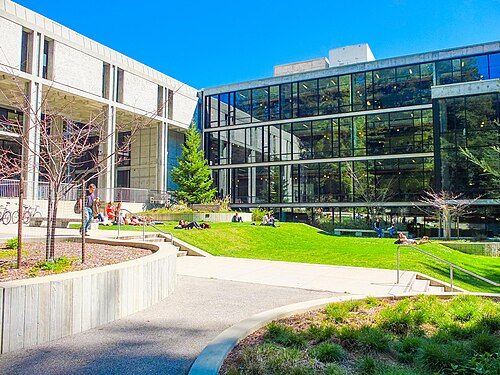
Davis, Los Angeles, Riverside, and Santa Barbara all followed Berkeley's example by aggregating the majority of arts, humanities, and science departments into a relatively large College of Letters and Science. Therefore, at Berkeley, Davis, Los Angeles, and Santa Barbara, their respective College of Letters and Science is by far the single largest academic unit on each campus. The College of Letters and Science at Los Angeles is the largest academic unit in the entire UC system.[182] Riverside later separated the natural sciences and kept only social sciences grouped with arts and humanities, an example followed by Merced at its founding (although Merced organizes its departments into schools and not colleges).
Due to President Kerr's interest in not reproducing the impersonal undergraduate experience often seen in such gigantic academic units, San Diego and Santa Cruz both implemented residential college systems inspired by British models (in which each college has distinctive general education requirements reflecting its chosen theme)[183] and grouped most academic departments into a small number of broadly defined divisions which are all independent of the colleges. In February 2022, San Diego turned its divisions into schools.
Irvine is organized into 13 schools and San Francisco is organized into four schools, all of which are relatively narrow in scope. Originally, Irvine was also going to have a College of Letters and Science, like Berkeley. But the original UCI plan, written by Ivan Hinderaker, granted the college's five divisions so much autonomy from one another that by 1967, the UCI Academic Senate voted to transform the divisions into "schools" whose deans would report directly to the vice chancellor for academic affairs.[184]
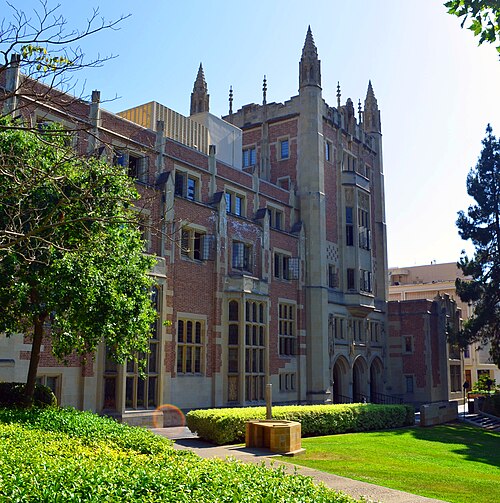
Each UC campus handles admissions separately, but a student wishing to apply for an undergraduate or transfer admission uses one application for all UC campuses. Graduate and professional school admissions are handled directly and separately by each department or program to which one applies.
In May 2020, UC approved plans to suspend standardized testing score requirements in admissions until 2024.[185] In May 2021, after a student lawsuit, the University of California announced that it would no longer consider SAT and ACT scores in admissions and scholarship decisions.[186]
The Early Academic Outreach Program (EAOP) was established in 1976 by University of California (UC) in response to the State Legislature's recommendation to expand post-secondary opportunities to all of California's students including those who are first-generation, socioeconomically disadvantaged, and English-language learners.[187] As UC's largest academic preparation program, EAOP assists middle and high school students with academic preparation, admissions requirements, and financial aid requirements for higher education.[188] The program designs and provides services to foster students' academic development, and delivers those services in partnership with other academic preparation programs, schools, other higher education institutions and community/industry partners.[189]

The University of California admits a significant number of transfer students primarily from the California Community Colleges.[190] Approximately one out of three UC students begin at a community college before graduating.[190] In evaluating a transfer student's application the universities conduct a "comprehensive review" process that includes consideration of grade point averages of the generally required, transferable and or related courses for the intended major. The review may also include consideration of an applicant's enrollment in selective honor courses or programs, extracurricular activities, essay, family history, life challenges, and the location of the student's residence. Different universities emphasize different factors in their evaluations.[191]
Before 1986, students who wanted to apply to UC for undergraduate study could only apply to one campus. Students who were rejected at that campus but otherwise met the UC minimum eligibility requirements were redirected to another campus with available space.[192][193] Students who did not want to be redirected were refunded their application fees. UC Riverside chancellor Ivan Hinderaker explained in 1972: "Redirection has been a negative rather than a plus. Some come with a chip on their shoulders so big they never give the campus a chance. They poison the attitudes of the students around them."[193]

そのため、1986年に学部入学願書制度が現在の「複数出願」制度に変更され、学生は1つの願書でUCのキャンパスにいくつでも出願でき、各キャンパスごとに手数料を支払うようになった。これにより、学生は合格通知を受け取った後に、希望しないキャンパスに振り分けられる心配をせずに通学するキャンパスを選択できるようになったため、バークレー校とロサンゼルス校への出願数が大幅に増加した。[ 192 ]
カリフォルニア大学は、州全体の通常の入学選考を通じてカリフォルニア州の公立高校卒業生の上位 8 分の 1 を、または地域的文脈での資格 (下記参照) を通じて各高校のクラスの上位 9% から、資格要件を満たした学生を受け入れています。資格要件の一部は、高校でAG 要件を満たすことです。資格のあるカリフォルニア州の高校生で出願した学生は全員、大学に受け入れられますが、必ずしも希望するキャンパスに受け入れられるとは限りません。[ 194 ] [ 195 ]希望するキャンパスに受け入れられなかった資格のある学生は、「紹介プール」に入れられ、空きのあるキャンパスがこれらの学生に入学許可を出す可能性があります。2003 年に、この紹介プロセスを通じてオファーを受けた学生の 10% がそれを受け入れました。[ 196 ] 2007 年に、希望するキャンパスに入学許可が出なかった UC 資格のある学生約 4,100 人が、UC リバーサイドまたはシステムの最新のキャンパスである UC マーセドに紹介されました。[ 197 ]
2026年現在サンフランシスコ・クロニクル紙は、「競争率の高いUC」をUCLA、バークレー、アーバイン、デイビス、サンタバーバラ、サンディエゴと定義しており、UCLAとバークレーが最も選抜性が高い。サンタクルーズ、リバーサイド、マーセドは選抜性が最も低い。[ 198 ] 2015年には、希望するキャンパスで不合格となったUCの資格のある学生全員がUCマーセドに振り分けられ、現在では資格のある応募者全員を受け入れることができる唯一のキャンパスとなっている。[ 199 ]

The old undergraduate admissions were conducted on a two-phase basis. In the first phase, students were admitted based solely on academic achievement. This accounted for between 50 and 75% of the admissions. In the second phase, the university conducted a "comprehensive review" of the student's achievements, including extracurricular activities, essay, family history, and life challenges, to admit the remainder. Students who did not qualify for regular admission were "admitted by exception"; in 2002, approximately 2% of newly admitted undergraduates were admitted by exception.[200]
The process for determining admissions varies. At some campuses, such as Santa Barbara and Santa Cruz, a point system is used to weight grade point average, SAT Reasoning or ACT scores, and SAT Subject scores, while at San Diego, Berkeley, and UCLA, academic achievement is examined in the context of the school and the surrounding community, known as a holistic review.
Race, gender, national origin, and ethnicity were not used as UC admission criteria due to the passing of Proposition 209. This information was collected for statistical purposes.
Eligibility in the Local Context, commonly referred to as ELC, is met by applicants ranked in the top 9% of their high school class in terms of performance on an 11-unit pattern of UC-approved high school courses. Beginning with fall 2007 applicants, ELC also requires a UC-calculated GPA of at least 3.0. Fully eligible ELC students are guaranteed a spot at one of UC's undergraduate campuses, though not necessarily at their first-choice campus or even to a campus to which they applied.[194]
In 2021, the University of California freshmen class was its most diverse and largest ever, with 84,223 students.[201] Latinos were the largest group at 37%; Asian Americans at 34%; white non-Hispanics at 20%; African-Americans at 5%; and 4% composed of American Indians, Pacific Islanders or those who declined to state their race or ethnicity.[201]

近年、カリフォルニア大学は、州内学生よりも州外学生や留学生の入学が多いことで批判が高まっている。特に、UCバークレー校とUCLAは、システム内の他のキャンパスと比較して入学率が極めて低いことから、この現象について激しく批判されている。[ 205 ] 2015年の理事会で、カリフォルニア州知事ジェリー・ブラウンは、この問題について次のように述べたと伝えられている。「留学生やGPA4.0の学生はいるが、成績は良いがトップクラスではない普通の学生は、締め出されている。」[ 206 ]州議会議員は、州外からの入学を減らす法案を提案している。[ 207 ]
2020年のカリフォルニア州監査官の報告書によると、少なくとも64人の裕福な学生が有力者への便宜を図るためにUCの学校に不正に入学していたことが明らかになった。[ 208 ] [ 209 ] [ 210 ]入学の多くは、志願者を学生アスリートとして偽って分類することで正当化されていた。これらの事件は、 UCバークレー校で不均衡に多く発生している(64件中55件)。
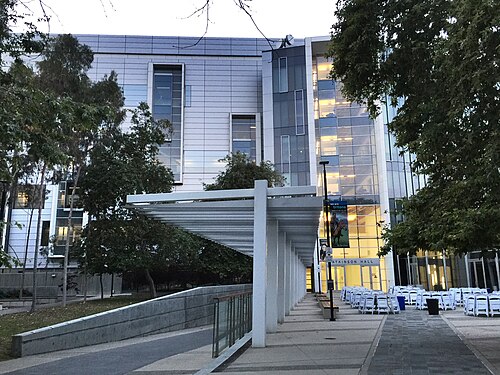
2006年、学術出版・学術資源連合(SPARC)は、カリフォルニア大学に「学術コミュニケーションを前進させるための極めて効果的な大学全体のビジョンと取り組み」に対してSPARCイノベーター賞を授与した。これには、1997年に(当時のカリフォルニア大学総長リチャード・C・アトキンソンの下で)設立されたカリフォルニア・デジタル・ライブラリー(CDL)と、2002年に機関リポジトリであるCDLのeScholarshipを立ち上げたことが含まれる。この賞はまた、出版社との契約を公に交渉することで「市場を変える」という、広く影響力のある2005年のカリフォルニア大学の教員と図書館員による学術誌出版改革の取り組み、およびカリフォルニア大学の教員の研究へのオープンアクセスを可能にするためにカリフォルニア大学の著作権ポリシーを改正するという2006年の提案を具体的に挙げた。[ 211 ]
2013年7月24日、UC学術評議会はオープンアクセス方針を採択し、同日以降に出版契約が締結されたすべてのUC教員の研究成果は、まずUCのeScholarshipオープンアクセスリポジトリに登録しなければならないと定めた。[ 212 ]
カリフォルニア大学システム全体で行われたSAT試験に関する研究では、家族の収入と親の教育を調整した後、SAT IIとして知られるいわゆる達成度テストは、SAT Iよりも大学適性を予測する能力が10倍高いことがわかりました。[ 213 ]
カリフォルニア大学は、国立研究所、天文台、病院、生涯教育プログラム、ホテル、会議センター、空港、港湾、美術研究所など、地理的または組織的に通常のキャンパスとは離れた多くの事業に長年関わってきた伝統がある。

カリフォルニア大学は、米国エネルギー省国立研究所の1つを直接管理・運営しています。[ 214 ]
UCは、エネルギー省傘下の他の2つの国立研究所を管理・運営する2つの独立した非公開有限責任会社の有限責任パートナーである。

ローレンス・バークレー国立研究所は、宇宙の基礎研究、定量的生物学、ナノサイエンス、新エネルギーシステムと環境ソリューション、そして発見のためのツールとしての統合コンピューティングの活用に重点を置いた、幅広い科学分野にわたる非機密研究を実施している。
ローレンス・リバモア国立研究所は、最先端の科学技術を用いて、米国の核兵器の信頼性を維持しています。LLNLはまた、スーパーコンピューティングと予測モデリング、エネルギーと環境、生命科学とバイオテクノロジー、基礎科学と応用技術、大量破壊兵器の拡散防止、国土安全保障といった分野で主要な研究プログラムを実施しています。さらに、世界で最も強力なスーパーコンピューターを擁する研究所でもあります。
ロスアラモス国立研究所は、その活動の大部分を米国の核兵器の信頼性確保に集中させている。LANLにおけるその他の活動には、大量破壊兵器の拡散防止や、テロ攻撃から米国本土を守るといった米国の国家安全保障に関する研究プログラムが含まれる。
UC システムと 3 つの研究所との関係は、3 つの研究所すべてが核兵器の開発と密接に関係していたため、時折論争や抗議を引き起こしてきました。第二次世界大戦 中のマンハッタン計画では、ローレンス バークレー研究所が最初の原子爆弾の開発に使用されたウラン同位体の分離のための電磁法を開発しました。ロスアラモス研究所とローレンス リバモア研究所は、冷戦終結後の備蓄管理への移行まで、米国の核兵器の設計に関わってきました。歴史的に、アーネスト O. ローレンスにちなんで名付けられたバークレーとリバモアの 2 つの国立研究所は、研究プロジェクトで非常に緊密な関係を持ち、一部の業務やスタッフを共有してきました。実際、LLNL がLBNLから正式に行政的に分離されたのは1970 年代初頭になってからです。また、ロスアラモス研究所よりも大学とのつながりがはるかに深く、これはそれぞれの元の名称からもわかります。カリフォルニア大学バークレー校放射線研究所およびカリフォルニア大学リバモア校放射線研究所。

UC システムと研究所との関係は、これまで内部論争のあらゆる時期を乗り越えてきた。しかし、2003 年、米国エネルギー省は初めてロスアラモス国立研究所(LANL) の契約を他の業者に入札させた。UC はベクテル社、BWXT、ワシントン グループ インターナショナルと提携し、ロスアラモス ナショナル セキュリティ LLC (LANS)という民間企業を設立した。LANL 契約の入札に参加した他の唯一の企業は、テキサス大学システムなどを含むロッキード マーティン社が設立した会社だった。2005 年 12 月、研究所の管理に関する 7 年間の契約がロスアラモス ナショナル セキュリティ LLC に授与された。[ 215 ] 2007 年 10 月 1 日、カリフォルニア大学はローレンス リバモア国立研究所の運営への直接的な関与を終了した。研究所の運営は、ベクテル・ナショナル、カリフォルニア大学、バブコック・アンド・ウィルコックス、URSコーポレーションのワシントン支社、バテル記念研究所、テキサスA&M大学システムを構成員とする有限責任会社、ローレンス・リバモア・ナショナル・セキュリティLLCが引き継いだ。UCは、LANSとLLNLを監督する2つの独立した理事会(それぞれ11名で構成)に3名を任命した以外は、LANLとLLNLのいずれに対しても、事実上何の責任も直接的な関与も負っていない。UCのキャンパスとカリフォルニア州のローレンス・バークレー国立研究所に適用されるUCの方針と規則は、LANLとLLNLには適用されなくなり、LANLとLLNLの所長はUC理事会やUC総長室に報告しなくなった。

カリフォルニア大学は、UCサンタクルーズ校に本部を置く複数キャンパスにまたがる研究組織として、 2つの天文台を運営している。
カリフォルニア大学は、カリフォルニア州の幼稚園から大学までの教育研究コミュニティに高性能なインターネットベースのネットワークを提供する非営利団体である、カリフォルニア教育ネットワークイニシアチブ公社の創設メンバーであり、設立当初からのメンバーです。
NRSは、UCの教員が観光客などの外部からの妨害を気にすることなく、長期的な生態系研究を行える広大な土地を提供するために、1965年1月に設立されました。現在、NRSは総面積75万6000エーカー(3060平方キロメートル)を超える39の保護区を管理しています。


カリフォルニア大学農業天然資源学部[ 216 ] (UCANR、農業天然資源部門) は、UC が土地付与大学としての歴史を持つため、州の農業産業において重要な役割を果たしています。農業および青少年育成の研究を行うことに加えて、州内のすべての郡に郡農業アドバイザーを擁する協同普及事務所があります。郡事務所は4-Hプログラムも支援しており、栄養、家庭、消費者科学のアドバイザーが地方自治体を支援しています。現在、同部門のカリフォルニア大学 4-H 青少年育成プログラム[ 217 ]は、青少年育成の分野での成功を研究する全国的なリーダーです。 [ 218 ]
2003年9月から2016年7月まで、カリフォルニア大学(UC)は、モフェット連邦飛行場にあるNASAエイムズ研究センターに大学付属研究センター(UARC)を設立・運営するための、総額3億3000万ドルを超える契約を管理しました。これは、同大学がこれまでに獲得した最大の助成金でした。UCサンタクルーズ校は、カリフォルニア大学のためにUARCを管理し、新しい技術と科学的手法を通じてNASAのミッションの科学的成果、安全性、有効性を向上させることを目標としました。
2002年以来、米国科学財団(NSF)の資金援助を受けて運営されているカリフォルニア大学サンディエゴ校のサンディエゴ・スーパーコンピューターセンターは、以前の運営会社であるゼネラル・アトミックス社から引き継ぎ、カリフォルニア大学によって管理されている。

カリフォルニア大学は州内に5つの医療センターを運営している。


UCLAの名前を冠しているものの、UCLAが運営していない医療センターが2つあります。ハーバーUCLAメディカルセンターとオリーブビューUCLAメディカルセンターです。これらは実際にはロサンゼルス郡が運営する施設で、UCLAは教育病院として利用しています。
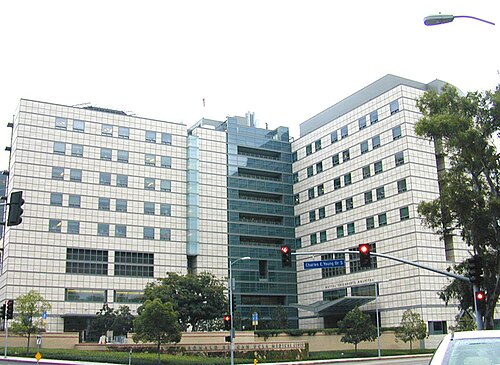
各医療センターは、そのキャンパスの医学部の主要な教育拠点として機能しています。UCSFは、研究とプライマリケアの両方で常にトップ5のプログラムにランクインしており、UCLAとUCサンディエゴは、US News & World Reportが毎年発表するランキングによると、常にトップ15の研究校にランクインしています。[ 219 ]各学校に付属する教育病院も高く評価されており、UCSF医療センターは、 US News & World Reportの2017年米国ベスト病院名誉リストで、カリフォルニア州で1位、全米で5位にランクインしました。 [ 220 ] UCには、UCシステムで唯一独自の病院を持たない6番目の医学部、 UCリバーサイド医学部もあります。
20世紀後半、UC病院は本格的な地域医療システムの中核となり、徐々に多くの外来診療所、事務所、研究所によって補完されるようになりました。UC病院のうち3つは、実際にはUCに売却された郡立病院であり、つまりUCは現在、貧困層への医療提供において重要な役割を果たしています。UCアーバイン(1976年買収)、UCデイビス(1978年買収)、UCサンディエゴ(1984年買収)が運営する医療病院は、それぞれオレンジ郡、サクラメント郡、サンディエゴ郡の郡立病院として始まりました。2025年現在、UC医療センターは毎年約1,080万件の外来受診、47万4,000件の救急外来受診、約132万日の入院に対応しています。[ 2 ]

UCは、教職員、学生、研究者を支援するため、主要キャンパス以外にも複数の拠点を運営している。

他の州立大学(例えばコーネル大学)とは異なり、カリフォルニア大学はホスピタリティマネジメントの専門プログラムは提供していませんが、一部の施設では一般的なホスピタリティ関連サービスを提供しています。

カリフォルニア大学デービス校は、大学職員や農産物サンプルの輸送を契約に基づいて行う航空シャトルサービスのためのユーティリティ空港として、大学空港を運営しています。また、一般航空用の公共空港でもあります。大学空港のICAO識別子はKEDUです。
カリフォルニア大学サンディエゴ校のスクリップス海洋研究所は、サンディエゴのポイント・ロマにあるシェルター島のすぐ南に、ニミッツ海洋施設という港を所有している。この港は、同研究所のすべての海洋調査船とプラットフォームの運用拠点として使用されている。
1世紀以上にわたり、同大学は社会人や専門家向けの継続教育プログラムを運営してきました。現在、UC Extensionは3,000以上のコースに70万人以上の学生(うち50万人は重複なし)を登録しており、2022年から2023年にかけて約10万人の学生が受講しました。UC Extensionの規模が大きい理由の1つは、UC Extensionがカリフォルニア州のWIOAおよびTAAP労働者向けの教育の承認を受けた主要なプロバイダーであることです。[ 223 ]また、UC Extensionのシステム全体にわたる部分(UC総長室が直接管理)は、カリフォルニア州弁護士会との合弁事業契約に基づいて、弁護士向けの継続教育を運営しています。
・コント教授が大学の暫定学長に選出される―カリフォルニア大学理事会からの通信―など。
デュラント氏が大学の学長に選出されたと宣言され、ハガー氏の動議により、知事はデュラント氏に通知し、その職を受諾するよう要請された。
今月30日、理事会は、イェール大学の元教授であるDCギルマンをカリフォルニア大学総長に選出した。トンプキンスは辞退した。
明日(木曜日)、オイルマン教授が州立大学の学長に就任します。
昨日はバークレーで盛大な一日だった。ギルマン学長の退任と、ジョン・ル・コント教授のその重要な役職への就任式が行われた。
大学の混乱に関する記事が書かれて以来、理事会は諮問委員会の勧告を実行し、ルコント学長の辞任を受理し、ウェルカー教授を解任しました。
リード学長辞任…私はここに辞任届を提出します。辞任は学年度末の1885年8月1日に発効します。
ウィスコンシン大学のエドワード・S・ホールデン教授が、他に候補者がいなかったため、カリフォルニア大学総長とリック天文台長に選出された。
エドワード・S・ホールデンの大学総長辞任を受理する決議、リック天文台の所長と天文学者を任命する決議、秘書と司書、さらに機械工、労働者、用務員を任命する決議を審議するために任命された特別委員会は、ALローズを通じて報告した。
カリフォルニアで最も有名な市民の一人であるホレス・デイビスは、昨日、メカニクス・インスティテュートの特許室で開催されたカリフォルニア大学理事会の特別会議で、バークレー州立大学の学長に選出された。
ホレス・デイビスは本日午後、カリフォルニア大学の学長に就任した。バークレーのハーモン体育館で行われた式典は、大学設立記念日の祝典と併せて行われ、大勢の人々が集まった。
昨日、ホレス・デイビスが州立大学の学長を退任した。マーティン・S・ケロッグ教授が暫定学長を務める。
大学理事会は本日、暫定総長マーティン・ケロッグを州立大学の正式な総長に選出した。
ウィーラー教授は10月1日まで新しい職務に就かない。
20年弱の在任期間を終え、火曜日の夜にカリフォルニア大学総長を退任した。 カリフォルニア大学の運営は、理事会が新総長を指名するまで、学部長委員会が担当する。ウィリアム・ケアリー・ジョーンズ学部長が、
チャールズ・ミルズ・ゲイリー
学部長とラルフ・メリット会計監査官の補佐を受け、運営委員会を率いる。
彼は7月1日に就任し、バローズ博士は政治学の教授となる。
産業関係研究所所長のクラーク・カー博士は、7月1日にカリフォルニア大学バークレー校の初代総長に就任する予定である。
アメリカの教育界で最も輝かしい経歴の1つが、ロバート・ゴードン・スプラウルがカリフォルニア大学学長を退任する来年6月30日に正式に幕を閉じます。
カリフォルニア大学の副学長兼会計監査官であるロバート・G・スプロールが、1930年7月1日に退任予定のキャンベル学長の後任に指名された。
彼は、カーの任命は、ロバート・ゴードン・スプラウルの以前の退職日である1958年7月1日に発効すると述べた。
公式声明には次のように記されている。「評議員会は本日、クラーク・カー氏の大学学長としての任期を即時終了することを決議した。投票結果は14対8であった。」
クラーク・カーの解任から新学長の任命までの暫定期間中、正式なリーダーシップは大学副学長のハリー・R・ウェルマン博士に委ねられる。
金曜朝の会議で発表を行うよう求めたヒッチは、用意した声明文を読み上げた。その冒頭は「私は1975年6月30日をもって、カリフォルニア大学総長およびバークレー校経済学教授を退任することを決定しました」というものだった。
歳のデイビッド・S・サクソン氏が、本日(3月1日)当地で開催された理事会の特別会議で、カリフォルニア大学の第14代総長に任命された。チャールズ・J・ヒッチ氏が退任する7月1日に就任する。
デビッド・サクソン氏は本日、9つのキャンパスからなるカリフォルニア大学システムの総長の職を学年末で辞任し、非常勤講師として教壇に戻ると発表した。
カリフォルニア大学の学長としてデイビッド サクソン氏の後任となったデイビッド ガードナー氏は、8 月 1 日月曜日に正式に新職に就任した。
歳のガードナー氏は、1991年11月に、妻リビーの死後、職務を続けることができなくなったとして、10月1日に辞任すると発表した。
アーバイン校のジャック ペルタソン総長が金曜日、カリフォルニア大学の第 16 代学長として紹介された。UC 理事会は、10 月 1 日に退任する前 UC 学長のデビッド ガードナー氏の後任として、ペルタソン氏を全会一致で選出した。ガードナー氏は昨年 11 月、妻の死後、学長職を続けることができないとして辞任を発表した。
アトキンソン氏の任命は10月1日付で発効し、ペルタソン氏は3年間の総長を務めた後、同日退任する。
リチャード・C・アトキンソン氏は、2003年10月1日付でカリフォルニア大学総長を辞任すると発表した。
月 2 日金曜日、リチャード・アトキンソンがカリフォルニア大学総長を辞任し、物理学者で元カリフォルニア大学サンディエゴ校総長のロバート・C・ダインズが後任となった。
本日、理事会は、著名な物理学者であり、献身的な教師であり、UCサンディエゴの非常に有能な総長であるロバート・C・ダイネス氏を、2003年10月2日付でカリフォルニア大学システムの第18代総長に任命したことをお知らせいたします。
学長は2008年6月に正式に辞任する予定。
ユドフ氏は、昨年8月に約5年間務めた学長職を2008年6月までに辞任する意向を発表したロバート・C・ダインズ氏の後任となる。ユドフ氏の任命は今夏に発効する予定で、正確な日付は後日決定される。
そして月曜日、テキサス大学を6年間率いてきた、明らかに運動神経のない弁護士がアーノルドの地へ向かう。ちょうどシュワルツェネッガーが、UCの大幅な支出削減につながる州予算を提唱している時期だ。
教育行政官であり法学教授でもあるユドフ氏の後任には、元米国国土安全保障長官のジャネット・ナポリターノ氏が就任する。
。カリフォルニア大学は本日(9月30日)、米国国土安全保障省の元長官であり、アリゾナ州知事を2期務めたジャネット・ナポリターノ氏を第20代学長として迎えました。
カリフォルニア大学総長に正式に就任。
発表した。
ドレイク氏は、カリフォルニア大学理事会によって同システムの最高指導者に選出された。同氏は、8月1日に退任するジャネット・ナポリターノ氏の後任となる。
カリフォルニア大学総長マイケル・V・ドレイク医学博士は本日、世界的に有名なカリフォルニア州の公立研究大学システムを5年間率いた後、2024-25年度末をもって退任すると発表した。ドレイク博士は2020年7月にカリフォルニア大学の第21代総長に任命され、この職は50年にわたる高等教育のキャリアの一部となった。
ミリケン氏は2025年8月1日にカリフォルニア大学学長に就任し、理事会の承認を受けた年俸は147万5000ドルとなる。同氏は、2020年から学長を務め、2025年7月に退任を発表したドレイク学長の後任となる。
{{cite web}}: CS1 maint: 複数の名前: 著者リスト (リンク) ウィキソースのカリフォルニア大学に関する著作物