
Loading article…


A rite of passage is a ceremony or ritual of the passage which occurs when an individual leaves one group to enter another. It involves a significant change of status in society. In cultural anthropology, the term is the anglicisation of rite de passage, a French term innovated by the ethnographerArnold van Gennep in his work Les rites de passage, The Rites of Passage.[1] The term is now fully adopted into anthropology as well as into the literature and popular cultures of many modern languages.
In English, Van Gennep's first sentence of his first chapter begins:[2]
"Each larger society contains within it several distinctly separate groupings. ... In addition, all these groups break down into still smaller societies in subgroups."
The population of a society belongs to multiple groups, some more important to the individual than others. Van Gennep uses the metaphor, "as a kind of house divided into rooms and corridors."[3] A passage occurs when an individual leaves one group to enter another; in the metaphor, he changes rooms.
Van Gennep further distinguishes between "the secular" and "the sacred sphere." Theorizing that civilizations are arranged on a scale, implying that the lower levels represent "the simplest level of development," he hypothesizes that "social groups in such a society likewise have magico-religious foundations." Many groups in modern industrial society practice customs that can be traced to an earlier sacred phase. Passage between these groups requires a ceremony: a ritual rite of passage, that is, a life cycle ritual.
The rest of Van Gennep's book presents a description of rites of passage and an organization into types, although in the end he despairs of ever capturing them all:[4] "It is but a rough sketch of an immense picture ...." He is able to find some universals, mainly two: "the sexual separation between men and women, and the magico-religious separation between the profane and the sacred." (Earlier the translators used secular for profane.) He refuses credit for being the first to recognize type of rites. In the work he concentrates on groups and rites individuals might normally encounter progressively: pregnancy, childbirth, initiation, betrothal, marriage, funerals and the like. He mentions some others, such as the territorial passage, a crossing of borders into a culturally different region, such as one where a different religion prevails.
Rites of passage have three phases: separation, liminality, and incorporation, as van Gennep described. "I propose to call the rites of separation from a previous world, preliminal rites, those executed during the transitional stage liminal (or threshold) rites, and the ceremonies of incorporation into the new world postliminal rites."[5]
In the first phase, people withdraw from their current status and prepare to move from one place or status to another. "The first phase (of separation) comprises symbolic behavior signifying the detachment of the individual or group ... from an earlier fixed point in the social structure."[6] There is often a detachment or "cutting away" from the former self in this phase, which is signified in symbolic actions and rituals. For example, the cutting of the hair for a person who has just joined the army. He or she is "cutting away" the former self: the civilian.
The transition (liminal) phase is the period between stages, during which one has left one place or state but has not yet entered or joined the next. "The attributes of liminality or of liminal personae ("threshold people") are necessarily ambiguous."[7]
第 3 段階 (再統合または統合) では、儀式の主体によって通過が完了する。」[ 8 ]儀式を完了し、「新しい」アイデンティティを身に付けた人は、新しい地位で社会に復帰する。再統合は、デビュタント ボールや大学の卒業式のような精巧な儀式や式典、そして新しい絆の外的シンボルによって特徴付けられる。したがって、「統合の儀式では、『神聖な絆』、『神聖な紐』、結び目、そしてベルト、指輪、ブレスレット、王冠などの類似の形態が広く使用されている。」[ 9 ]
実験室での実験では、厳しい入会儀式が認知的不協和を生み出すことが示されている。[ 10 ]このような不協和は、その経験の後、入会者間の集団への魅力を高め、費やした努力の内的正当化から生じると考えられている。[ 11 ]入会儀式中の報酬は重要な結果をもたらし、より多くの報酬を得たと感じる入会者はより強い集団アイデンティティを表現する。[ 12 ]入会儀式は集団への魅力だけでなく、新メンバー間の同調性も生み出す可能性がある。[ 13 ]心理学の実験では、入会儀式が所属意識を高めることも示されている。[ 14 ]
アロンソンとミルズは、フェスティンガー(1957)の認知的不協和理論を検証するため、3つのグループに、恥ずかしい内容、それほど恥ずかしくない内容、または何も読ませないという実験を行った。アロンソンとミルズは、研究の根拠を説明する際に、フェスティンガーの認知的不協和理論を次のように要約した。「どんなに魅力的な集団であっても、完全に肯定的な側面を持つことは稀である。つまり、通常、その集団には個人が好まない側面がいくつか存在する。もしその人が集団への加入のために不快な入会儀式を受けた場合、自分がその集団の一員となるために不快な経験をしたという認識は、その集団に自分が好まない側面があるという認識と不協和を生じる。この不協和を軽減するには、2つの方法がある。入会儀式はそれほど不快ではなかったと自分に言い聞かせるか、集団の肯定的な特徴を誇張し、否定的な側面を過小評価するかのどちらかである。入会儀式の厳しさが増すにつれて、入会儀式がそれほどひどいものではなかったと信じることはますます難しくなる。したがって、苦痛を伴う入会儀式を経て集団の一員となった人は、集団の魅力を過大評価することで不協和を軽減しようとする傾向がある。」非常に恥ずかしい資料を読んだ人は、やや恥ずかしい資料を読んだ人や何も読まなかった人よりも、そのグループをより魅力的に感じた。[ 15 ]数学の引き算課題を用いた別の研究では、正反対の結論に達したが[ 16 ]、電気ショックを用いた研究では、苦痛が参加者のグループに対する好感度を高めるという概念が支持された。[ 17 ]

アフリカの多くのコミュニティでは、通過儀礼は人間の成長と発達、そして社会化の根幹であると考えられています。これらの儀礼は、ある人が完全なグループの一員となることを儀式的に示すことで機能します。[ 18 ]また、個人をコミュニティに、コミュニティをより広範で強力な精神世界に結びつけます。通過儀礼は「腕や脚が人間の体の自然で必要な延長であるのと同様に、コミュニティの自然で必要な部分」です。これらの儀礼は、個人とコミュニティの発展に関連しています。マヌ・アンピム博士は、誕生の儀礼、成人の儀礼、結婚の儀礼、長老の儀礼、祖先の儀礼の 5 つの段階を特定しています。[ 19 ]ズールー文化では、女性になることはウムランガによって祝われます。

通過儀礼は多様で、世界中の多くの文化に見られます。西洋社会の多くの儀式は通過儀礼のように見えるかもしれませんが、重要な構造的および機能的要素の一部が欠けています。しかし、多くのネイティブアメリカンやアフリカ系アメリカ人のコミュニティでは、Man Up Globalのようなコミュニティベースの組織によって伝統的な通過儀礼プログラムが実施されています。通常、欠けているのは社会の認識と再統合の段階です。Outward Boundのようなアドベンチャー教育プログラムは、潜在的な通過儀礼として説明されることがよくあります。パメラ・クッシングは、カナダの Outward Bound School で青少年に対する通過儀礼の影響を調査し、再統合の段階が欠けているために通過儀礼の影響が弱まっていることを発見しました。[ 20 ]ベル (2003) は、この欠落した第 3 段階のさらなる証拠を提示し、「通過儀礼の現代アドベンチャーモデル」を、アウトドアアドベンチャープログラムで一般的に使用される通過儀礼の現代的で弱いバージョンとして説明しました。




様々な部族社会や先進社会において、年齢階級(一般的には男女別)への加入は、(年齢集団とは異なり)通過儀礼によって特徴づけられ、それは時に隠遁生活を伴う、長く複雑な準備の集大成となる場合がある。
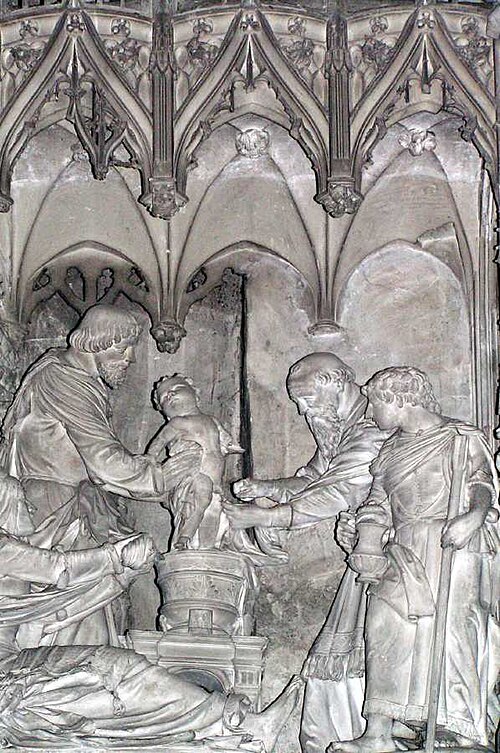
寮、男子学生クラブ、チーム、その他のクラブなど、一部の学術サークルでは、新入生いじめ、新入生いじめ、新入生いじめが行われている。ハンガリーの一部の高等学校では、軽度のいじめであるセチスカズタタシュ(通常は身体的虐待や性的虐待を伴わない)が行われている。1年生の生徒は、恥ずかしい服を着せられたり、上級生がマーカーペンで顔に焼き印を押されたりして、公然と辱めを受ける。時にはコンテスト形式で行われ、勝者は通常、次のイベントを企画する権利を得る。男子学生クラブや女子学生クラブは、他の私的な団体と同様に、入会希望者と会員を区別する儀式として、成文化された入会式を行うことが多い。

Chaque société générale peut être considérée comme une sorte de maison divisée en Chambres et couloirs を検討する
一方、コプト正教会、エチオピア正教会、エリトリア正教会では、割礼の儀式は行われており、生後1週間から数年の間に息子に割礼を施す。
世界の多くの地域、特にアフリカ、南アジア、東アジア、オセアニア、英語圏諸国で依然として広く行われている。
{{cite book}}: CS1 maint: location missing publisher (link)