Loading article…
The University of Canterbury (Māori: Te Whare Wānanga o Waitaha) is a public research university based in Christchurch, New Zealand. It was founded in 1873 as Canterbury College, the first constituent college of the University of New Zealand. It is New Zealand's second-oldest university.
Its original campus was in the Christchurch Central City, but in 1961 it became an independent university and began moving out of its original neo-Gothic buildings, which were re-purposed as the Christchurch Arts Centre. The move was completed on 1 May 1975[7] and the university now operates its main campus in the Christchurch suburb of Ilam.
The university offers bachelors, masters, and doctoral degrees in, among others, Arts, Commerce, Education (physical education), Fine Arts, Forestry, Health Sciences, Law, Criminal Justice, Music, Social Work, Speech and Language Pathology, Sports Coaching and Teaching.
On 16 June 1873, the university was founded in the centre of Christchurch as Canterbury College, the first constituent college of the University of New Zealand and was funded by the then Canterbury Provincial Council. It became the second institution in New Zealand providing tertiary-level education (following the University of Otago, established in 1869), and the fourth in Australasia.[8] It was founded on the basis of the Oxbridge college system, but it differed from Oxbridge in that it admitted female students from its foundation. Its foundation professors arrived in 1874, namely, Charles Cook (Mathematics, University of Melbourne, St John's College, Cambridge), Alexander Bickerton (Chemistry and Physics, School of Mining, London), and John Macmillan Brown (University of Glasgow, Balliol College, Oxford).[9] A year later the first lectures began and in 1875 the first graduations took place. In 1880, Helen Connon was the first woman to graduate from the college, and in 1894, Āpirana Ngata became the first Māori-born student to graduate with a degree.[10] The School of Art was founded in 1882, followed by the faculties of Arts, Science, Commerce, and Law in 1921, and Mental, Moral, and Social Sciences in 1924. The Students' Union, now known as the University of Canterbury Students Association, was founded in 1929 operating out of the Arts Centre of Christchurch Old Student Union Building, and the first edition of the student magazine Canta was published in 1930. In 1933, the name changed from Canterbury College to Canterbury University College.
College House, a student dormitory that maintains its old tradition by adopting the Oxbridge college system, broke away from Christ's College in 1957 and relocated to the Ilam suburb of Christchurch in 1966 as a hall of residence at the University of Canterbury.[11] In 1957 the name changed again to the University of Canterbury.[12]
Until 1961, the university formed part of the University of New Zealand (UNZ), and issued degrees in its name. That year saw the dissolution of the federal system of tertiary education in New Zealand, and the University of Canterbury became an independent University awarding its own degrees. Upon the UNZ's demise, Canterbury Agricultural College became a constituent college of the University of Canterbury, as Lincoln College.[13] Lincoln College became independent in 1990 as a full university in its own right and is now known as Lincoln University.[14]


Relocation to Ilam campus
Over the period from 1961 to 1974, the university campus relocated from the centre of the city to its much larger current site in the suburb of Ilam. 1973 saw the university celebrate its centenary, during which the neo-Gothic buildings of the old campus were gifted to the City of Christchurch, which became the site of the Christchurch Arts Centre, a hub for arts, crafts and entertainment in Christchurch.[15] 1974 also marked the opening of the James Hight Library, which at the time, was New Zealand's largest university building. Ilam's three university halls of residence were renamed University Hall in 1974, and the student dormitory was used as the Athletes Village dormitory for the 1974 British Commonwealth Games hosted in Christchurch.[16]
In 2004, the university underwent restructuring into four Colleges and a School of Law, administering a number of schools and departments (though a number of departments have involvement in cross-teaching in numerous academic faculties). For many years the university worked closely with the Christchurch College of Education, leading to a full merger in 2007, establishing a fifth College.[17]
On 4 September 2010 at 4:35 am local time an earthquake struck the South Island of New Zealand with a moment magnitude of 7.1; several aftershocks followed the main event, the strongest of which was a magnitude 6.3 shock known as the Christchurch earthquake that occurred nearly six months later on 22 February 2011.[18] Although there was no serious injuries to staff or students on campus and only minor damage to buildings, the initial quake closed the university for a week, and the library was shut for months while shelves were repaired and half a million books placed back on shelves.[19] The Student Volunteer Army was a group of around 10,000 university students and others who worked over a period of months to help clean up liquefaction.[20]
In the months following the earthquake, the university lost 25 per cent of its first-year students and 8 per cent of continuing students. The number of international students, who pay much higher fees and were a major source of revenue, dropped by 30 per cent.[21][22] In October 2011, staff were encouraged to take voluntary redundancies.[23] As well in September 2011, plans were announced to demolish some University buildings that were damaged from an earthquake.[24]

By 2013, the university had lost 22 per cent of its students.[25] However, a record number of 886 PhD students were enrolled at the University of Canterbury as of 2013.[26] Other New Zealand universities, apparently defying an informal agreement, launched billboard and print advertising campaigns in the earthquake-ravaged city to recruit University of Canterbury students who were finding it difficult to study there.[27] In 2013 the New Zealand Government also agreed to provide $260m to support the university's rebuild programme.[28]
Student numbers were steadily on the rise, with a 4.5% increase in students enrolled from 2013 to 2016. International numbers also increased, nearing pre-earthquake figures at 1,134 enrolled in 2016.[29]
In March 2016, Vice-Chancellor Dr Rod Carr said in The Press newspaper: "In 2014, [students] wanted to leave Christchurch and went to Wellington, Otago and into the workforce. Now we're retaining Christchurch school leavers and we're getting our fair share of provincial students, as well as attracting greater numbers from the Auckland region." "Living on or near the UC campus, and having a lifestyle that can take you from lectures to skifields in 90 minutes or the beach in 20 minutes, is much more appealing and affordable than living in Auckland."[30]
In January 2017, the University of Canterbury released its campus master plan – 50 building and landscape projects proposed over three stages by 2045, the cost could exceed $2bn.[31] In a comment to The Press, Rod Carr said that the plans were proof the university was moving away from the falling enrolments post-earthquake.[31]

The University of Canterbury celebrated its 150th anniversary in 2023.[32] In the same year the university experienced a surge in enrolments, reaching a record high of 21,361 students by late March, compared to 20,223 at the same period in the previous year. Among these figures, UC counted 19,975 domestic students, witnessing a substantial increase from the preceding year's count. Concurrently, the international student body also expanded to 1,393, marking a rise from 1,098 in the prior year. This growth in enrolment stands in contrast to a decline in domestic student numbers across all five North Island universities during this period.[33] According to a spokesperson for the university, in 2023 every affiliated hall was "at 100% occupancy" and "may be a record-breaker for highest number of enrolments".[34]
The University of Canterbury has three campuses spread throughout the city of Christchurch:

The university also maintains additional small campuses in Nelson, Tauranga and Timaru, and teaching centres in Greymouth, New Plymouth, Rotorua and Timaru. The university has staff in regional information offices in Nelson, Timaru, and Auckland.
The UC Library was first established at Canterbury College in 1879. Today there are three libraries on campus each covering different subject areas.[38]
Central library
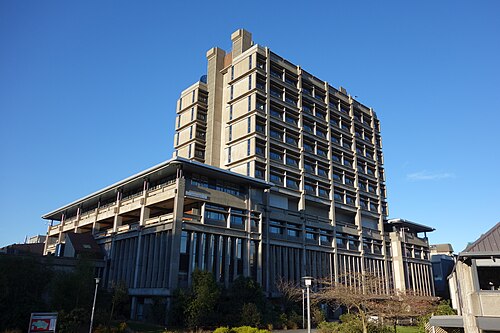
The Central Library (Māori: Te Puna Mātauraka o Waitaha)[38] – is housed in the Puaka–James Hight Building that is designed in the brutalist style architecture. In 1974, the old city campus library moved to the Ilam campus and was housed in the newly constructed James Hight building, originally named after former Canterbury professor James Hight.[39] The building was renamed Puaka-James Hight in 2014, after the brightest star in the cluster Matariki, to reflect the growing strength of UC's relationship with Ngāi Tahu and the mana of Te Ao Māori at the heart of the university's campus.[40] The University of Canterbury Central Library is the largest university library in New Zealand.[41] The Central Library has collections of over 2 million physical items including books, archives, journals and a miscellany of other items that support research and teaching in Humanities, Social Sciences, Law, Commerce, Music, Fine Arts and Antarctic Studies.[42]
EPS library
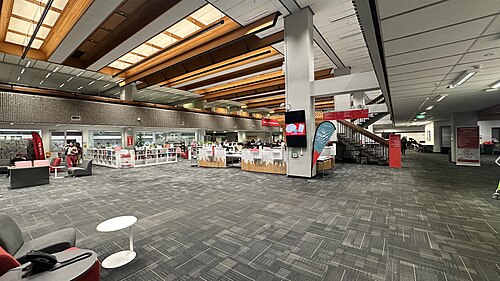
The EPS Library (Engineering and Physical Sciences Library, Māori: Kā Puna Pūkahataka me te Pūtaiao)[38] supports research and teaching in Engineering, Forestry and Sciences.[38] With the move to the Ilam campus, the Library was split. First the Engineering Library, and later the Physical Sciences Library, moving to the new campus however the old Physical Sciences Library closed and its collections moved to the Engineering Library now called the EPS Library.
Macmillian Brown library
The Macmillan Brown Library (Māori: Te Puna Rakahau o Macmillan Brown)[38] is a research library, archive, and art gallery that specialises in collecting items related to New Zealand and Pacific Islands history.[44][45] It holds over 100,000 published items including books, audio-visual recordings, and various manuscripts, photographs, works of art, architectural drawings and ephemera. The Macmillan Brown Library's art collection also has over 5,000 works, making it one of the largest collections in the Canterbury Region.[46] Some notable items in its collections include copies of Māori Land Court Records, official and government documents from various Pacific Islands states, trade union records, and the personal papers of various Members of Parliament and government ministers. The library is named after John Macmillan Brown, a prominent Canterbury academic who helped found the library, allocated a large proportion of his fortune to the Macmillan Brown Library.[44][45]


The university has ten student residences throughout its Ilam and Dovedale campuses: five fully-catered halls of residence exclusively for first-year undergraduate students: Arcady, College House, Rochester and Rutherford, Tupuānuku and University Hall; and five other self-catered student accommodation houses which are home to both undergraduate and postgraduate students: Sonoda Christchurch Campus, Hayashi, Kirkwood Avenue, Waimairi Village and Ilam Apartments. The largest, Ilam Apartments, houses 831 students during the academic year.[47] Some of the halls at UC have storied histories; Tupuānuku is named for the star of the same name that is connected to food grown in the ground in the cluster Matariki in Māori Mythology;[48] Rochester and Rutherford is named for former alumni Ernest Rutherford and John Fisher Bishop of Rochester; while Arcady, previously Bishop Julius Hall, was founded by the first Archbishop of New Zealand, Churchill Julius;[49] additionally, College House is the oldest residential college in New Zealand.[50][51]
The University also has a new hall, Tupuārangi, planned for completion in 2026. At Tupuārangi, every room will have its own ensuite.[52]
The University of Canterbury has the most field stations of any New Zealand university.[53] The Field Facilities Centre[54] administers four of these field stations:

The university and its project partners also operate an additional field station in the Nigerian Montane Forests Project;[59] this field station stands on the Ngel Nyaki forest edge in Nigeria.
The Department of Physical and Chemical Sciences runs its own field laboratories:

The Department of Physical and Chemical Sciences also has involvement in the Southern African Large Telescope[65] and is a member of the IceCube collaboration which is installing a neutrino telescope at the South Pole.[66][67]

The University of Canterbury Teece Museum of Classical Antiquities opened in May 2017, and showcases the James Logie Memorial Collection, a collection of Greek, Roman, Egyptian and Near Eastern artefacts in New Zealand.[68] The Teece Museum is run as a part of the faculty of Arts. The museum is named for University of Canterbury Alumni Professor David Teece and his wife Leigh Teece, who donated a substantial amount of money to the city for earthquake recovery. The money was used by the university to install the classics and music school in the Old Chemistry building at the Christchurch Arts Centre.[69]
The James Logie Memorial Collection was established in 1957 as a result of Miss Marion Steven, a Classics faculty member, donating Greek pottery to Canterbury University College. Steven established the James Logie Memorial Collection to honour her husband, who served as registrar of the college from 1950 until his death in 1956.[70]
The Logie Collection includes a wide range of pottery, beginning with the Bronze Age cultures of Cyprus, Crete and Mycenae it also includes vases that come from Corinth and Athens, the islands in the Aegean, East Greece and the Greek colonies in South Italy and Sicily.[71]
The university was first governed by a board of governors (1873–1933), then by a college council (1933–1957), and since 1957 by a university council.[72] The council is chaired by a chancellor.[73] The Council includes representatives from the faculties, students and general staff, as well as local industry, employer and trade union representatives.[74]
理事会の当初の構成は、カンタベリー州議会で可決されたカンタベリー大学条例1873年[ 75 ]で定められ、終身制の可能性のある23名の理事が指名されました。当初、理事会には欠員を補充する権限が与えられていましたが、その数が30名を超えると、この権限は卒業生に移譲されました[ 76 ]。当時、州政府の廃止(1876年に実際に廃止されました)についての議論があり、理事会メンバーに「威信、権力、永続性」を与え、「州の権限とその構成員および資源がウェリントンの強欲な手から安全に永続化される」ように統治構造が構築されました[ 77 ] 。

理事会の初代メンバーは、次のとおりです。[ 78 ]チャールズ・ボーエン、ジェームズ・ブラー牧師、[ 79 ] [ 80 ] [ 81 ]ウィリアム・パッテン・コーリショー、[ 82 ]ジョン・エニス、[ 83 ]チャールズ・フレイザー、ジョージ・グールド・シニア、[ 84 ]ヘンリー・バーンズ・グレソン、[ 85 ]ウィリアム・ハーベンス、ジョン・ホール、ヘンリー・ハーパー、ジョン・イングリス、[ 86 ]ウォルター・ケナウェイ、[ 87 ]アーサー・C・ナイト、[ 88 ]トーマス・ウィリアム・モード、[ 89 ]ウィリアム・モンゴメリー、トーマス・ポッツ、ウィリアム・ロレストン、ジョン・スタッドホルム、ヘンリー・タンクレッド、ジェームズ・サマービル・ターンブル、[ 90 ]ヘンリー・リチャード・ウェッブ、ジョシュア・ウィリアムズ、ウィリアム・ウェリントン・ウィロック牧師。[ 91 ]
Professor Roy Sharp assumed the position of Vice-Chancellor on 1 March 2003.[92] In May 2008 he announced his imminent resignation from the position, following his acceptance of the chief executive position at the Tertiary Education Commission (TEC)[93][94] which he took up on 4 August 2008.[95] The then current Deputy Vice-Chancellor, Professor Ian Town, assumed the role of acting Vice-Chancellor on 1 July 2008. On 15 October 2008 the university announced that Rod Carr, a former banker and the CEO of a local software company, would begin a five-year appointment as Vice-Chancellor on 1 February 2009.[96]
Council member and former Pro-Chancellor, Rex Williams, became Chancellor in 2009.[97] Council member John Wood became the new Pro-Chancellor. On 1 January 2012, Wood became Chancellor after Williams retired from the role.[97] In 2019, a new Vice Chancellor, Cheryl de la Rey, was appointed from the University of Pretoria, and Susan McCormack took over as Chancellor.[98][99]
As of 2026 the University of Canterbury is divided into seven faculties, which encompass all major departments of both research and teaching.
羊毛は牧歌的な雰囲気を、下部の鋤はカンタベリー地方の農業的背景を象徴している。司教の覆い布と百合の十字架はカンタベリーの教会とのつながりを表し、開いた本は学問を表している。[ 115 ]学問機関として、大学の紋章には兜、クレスト、マントはない。大学の非公式の紋章にはラテン語のモットーが添えられていた。
Ergo tua rura manebunt (それゆえ、その土地はあなたのものとなる)。
州政府が初期の大学に寄贈した土地の規模を考えると、これは適切な措置だった。紋章が再デザインされた際、このモットーは削除され、現在では非公式にのみ使用されている。

カンタベリー大学は、147の学部専攻[ 116 ]と61の大学院学位[ 117 ] [ 118 ]を提供しています。 2020年度には、同大学は2,257の学士号、1,003の大学院学位、384の優等学位を授与しました[ 119 ]。通常の3年間でフルタイムの学部学位を取得するには、学部生は通常、1学期に4つのコースを受講します。ほとんどの専攻では、優等学位を取得するには、高度なコースワークと論文が必要であり、これには通常、さらに1年かかります。ただし、法学士(LLB)、工学士(BEng)、林業科学士(BForSc)などの専門学位でもある一部の学部学位は、通常4年間かかります。

UCの年次報告書によると、2024年12月31日時点で、同大学の学生総数は26,433人(フルタイム換算で18,319人)で、前年比9%増となっている。うち2,587人がマオリの学生である。UCの職員総数は2,484人である。[ 120 ]
地震後、UCの学生数は2010年の18,783人から2014年には14,725人に減少したが、2014年には新規入学者数が増加した。2016年には学生数は15,564人に増加した。[ 29 ] 2020年現在、UCの学生数は18,364人で、地震前の水準に達している。
QS、THE、ARWUのランキング全体で総合的なパフォーマンスを測定する2024年のトップ大学総合ランキングでは、同大学は360位(国内4位)を獲得した。[ 132 ]
2026年クアクアレリ・シモンズ世界大学ランキング(2025年発表)では、同大学は261位(国内5位)にランクインした。[ 133 ]
タイムズ・ハイヤー・エデュケーション世界大学ランキング2026(2025年発表)では、同大学は601位から800位(国内8位)の順位を獲得した。[ 134 ]
2025年の世界大学学術ランキングでは、同大学は401位から500位(国内では2位から4位タイ)の順位を獲得した。[ 135 ]
2025~2026年のUS News & World Reportのベストグローバル大学ランキングでは、同大学は542位タイ(国内4位)を獲得した。[ 136 ]
CWTSライデンランキング2024では、[ a ]同大学は927位(全国4位)の順位を獲得した。[ 137 ]


カンタベリー大学には、カンタベリー大学学生協会(UCSA)とテ・アカトキ・マオリ学生協会という2つの主要な学生団体があります。[ 138 ] UCSAは、大学の学生会館であり、イラムキャンパスの学生活動の中心地であるハエレロアに拠点を置いています。元のUCSAビルは2010年と2011年の地震で被害を受け、その後取り壊されましたが、2019年に再建され完成しました。ハエレロアには、学生バーのザ・ファウンドリーと、同名の卒業生にちなんで名付けられたンガイオ・マーシュ劇場があります。ハエレロアには、多くの学生団体や組織のオフィスがあります。USCAは、キャンパス周辺でいくつかのカフェやレストランも運営しています。[ 139 ]
同大学の学生は、1930年に創刊された主要な学生雑誌「Canta」を運営している。年間12号発行され、学期中は隔週月曜日にUCキャンパス内で配布される。[ 140 ]新聞社のオフィスはハエレロアにある。
カンタベリーの学生たちはラジオ局も運営しており、1976年にRDUとして放送と運営を開始しました。 [ 141 ] 1986年にはFM周波数での放送を開始しました。RDUは2003年に現在の周波数である98.5を取得しました。
同大学には、140を超える学術、スポーツ、レクリエーション、文化のサークルやクラブがあります。[ 145 ]これらの中でも特に有名なのは、学生ボランティア軍、カンタベリー大学工学協会(ENSOC)、カンタベリー大学法学部協会(LAWSOC)、カンタベリー大学商学部協会(UCOM)のほか、PongSoc(カンタベリー大学ポン協会)、Motosoc(モータースポーツ協会)、Lads without Labels、CUBA(カンタベリー大学ボードライダー協会)、CUTC(トレッキングクラブ)、UC Global Society(UCGS)、UC Bike、Opsoc、The Gentlemen's Clubなどの学部外の大規模なクラブです。CUSSC(カンタベリー大学スノースポーツクラブ、1997年以前はCUスキークラブ)は、テンプルベイスンスキー場にスキー場ロッジを所有するニュージーランド唯一の大学クラブです。[ 146 ]このクラブは、ロッジの維持費を募るために多くのイベントを開催しています。カンタベリー大学演劇協会(Dramasoc)は、デイム・ナイオ・マーシュの下で1942年から1969年にかけて上演したシェイクスピア作品で有名になりましたが、小規模なクライストチャーチの演劇界では、学生と卒業生が運営する活発な芸術団体として定期的に公演を行っています。

2011年、SVAはクライストチャーチ地震の後に設立されました。カンタベリー大学の学生サム・ジョンソンが仲間の学生たちに呼びかけ、壊滅的な被害からの復旧を支援しました。クラブは成長し、現在ではカンタベリー大学で最大のクラブとなっています。[ 147 ] 2020年、 COVID-19パンデミックに対応して、SVAはロックダウン中に買い物をする弱者を支援しました。[ 148 ] [ 149 ]
Lads without Labels は、キャンパス内外で男性のメンタルヘルスを改善することに専念する非営利の慈善団体です。2021 年 10 月 5 日から 8 日にかけて、Lads without Labels は、カンタベリー大学のキャンパスで 72 時間リレーを行う募金活動 Project 72 を開始し、男性のメンタルヘルスのために 12,000 ドルを集めました。また、2021 年に Lads without Labels は、裏庭で 24 時間クリケットマラソンを企画し、45,000 ドルを集めました。[ 150 ]

学生の主要な伝統の 1 つは、ENSOCが主催するクライストチャーチからダニーデンまでの毎年恒例の自動車ラリーであるUndie 500 でした。ルールでは、500ドル以下の公道走行可能な車と、飲酒していない運転手のみを使用することが求められていました。[ 151 ] 2007 年のイベントは、ダニーデンの学生街とノースイーストバレーで暴動が発生し、国際的なニュース ( CNNやBBC Worldを含む) で報道されました。ENSOC は、計画されていた 2008 年のイベントを中止しました。Undie 500 は 2011 年に Roundie 500 に置き換えられました。このイベントは同じ原則ですが、カンタベリーの田園地帯を通るルートをたどり、その日のうちにクライストチャーチに戻ります。[ 152 ]
カンタベリー大学は創立以来、卒業生が社会、芸術と科学、ビジネス、ニュージーランド国内、国際情勢に重要かつ創造的な貢献をしてきた。[ 153 ]

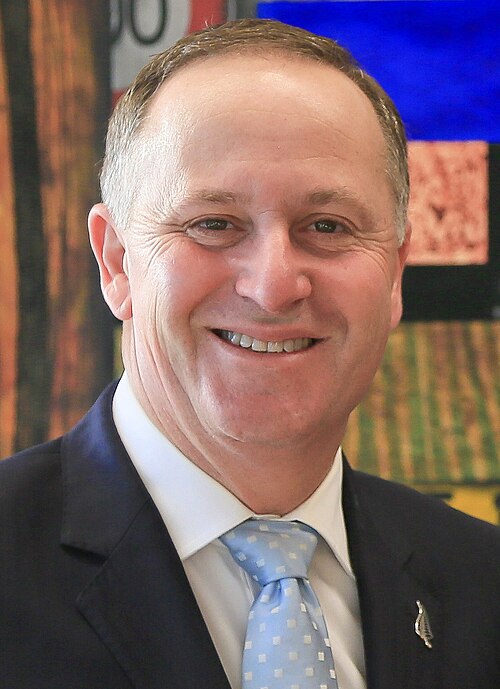

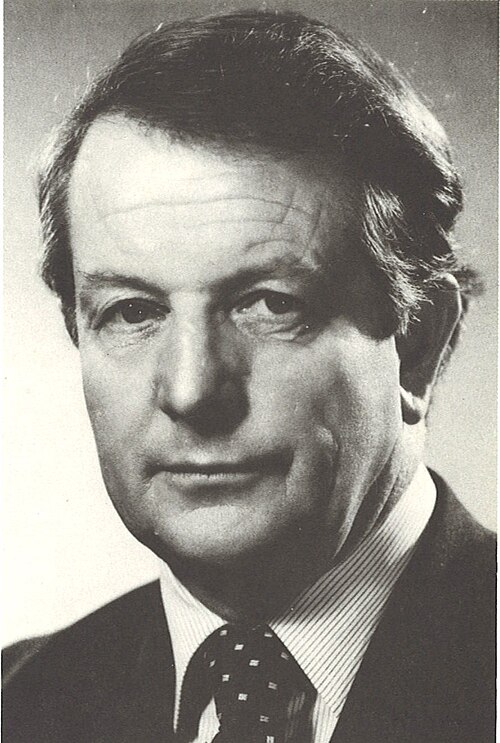
ニュージーランドの首相のうち、クリストファー・ラクソン、ジョン・キー、ビル・ローリング、ジェニー・シップリーの4人がカンタベリー大学に通った。シップリーはクライストチャーチ教員養成大学(現在はカンタベリー大学と合併)に通っていた。[ 154 ] [ 155 ]カンタベリー大学で教育を受けた国際的な指導者には、トンガのフェレティ・セベレ首相、ツバルのフェレティ・テオ首相、キリバスのアノテ・トン 大統領などがいる。



カンタベリーで学んだ著名な政治家には、次のような人物がいる。ルース・リチャードソン財務大臣。「史上最大の予算」の策定を担当し、メディアでは「ルーサナシア」として知られる経済改革のきっかけとなった。[ 156 ] [ 157 ]現在の財務大臣であるニコラ・ウィリスもカンタベリーに通っており、他の元財務大臣であるマイケル・カレンとデイビッド・ケイギルも同様である。元野党党首のジュディス・コリンズ(学位は取得していない)とドン・ブラッシュ。後者はオレワ演説で悪名高い。[ 158 ] [ 159 ] [ 160 ]その他重要な人物には、ニック・スミス、ロドニー・ハイド、スチュアート・ナッシュ、ピーター・ダン、マリアン・ホッブス、キャサリン・アイザックなどがいる。クライストチャーチ市長には、リアンヌ・ダルジエル、ボブ・パーカー、ヴィッキー・バック、ジョージ・マニングなどがいる。[ 161 ]
また、学位を取得した最初のマオリであり、最も優れたマオリの政治家と評されるアピラナ・ンガタも含まれている。彼はマオリの文化と言語の促進と保護に尽力したことで知られている。 [ 162 ]彼はニュージーランドの50ドル紙幣にも描かれている。


カンタベリー大学は、世界中で数多くの著名な法学者、裁判官、弁護士を輩出してきた。卒業生の中には、ニュージーランドで最も長く裁判官を務めた最高裁判事のアンドリュー・ティッピング(25年間在任)や、元控訴院長のウィリアム・ヤングなどがいる。[ 163 ]同じく元控訴院長のアイヴァー・リチャードソンは、ニュージーランドの税法と税政策の発展に大きな影響を与えたとされている。[ 164 ]
さらに、カンタベリー大学は、元高等裁判所長官のジェフリー・ヴェニングを含む、現在高等裁判所判事6名を輩出している。[ 165 ]その他の著名な弁護士には、控訴裁判所判事のマシュー・パーマー(ただし、カンタベリー大学で学士号を取得したのみ)、 [ 166 ]高等裁判所判事でパイク・リバー炭鉱事故に関する王立委員会の委員長を務めたグラハム・パンクハースト、ニュージーランド第6代最高裁判所長官のマイケル・マイヤーズなどがいる。[ 167 ]ニュージーランド政府の司法長官には、ジュディス・コリンズとマイケル・カレンがいる。


カンタベリー大学の最も著名な卒業生の一人は、物理学者で「原子核物理学の父」と呼ばれ、ニュージーランドの100ドル紙幣に肖像が描かれているアーネスト・ラザフォードです。1908年に彼は「元素の崩壊と放射性物質の化学の研究」によりノーベル化学賞を受賞しました。1917年にラザフォードは「原子を分裂させた」のです。[ 168 ]ロイ・カーもカンタベリー大学で教育を受け、一般相対性理論のアインシュタイン場方程式の厳密解であるカー解を発見しました。[ 169 ]天文学者で宇宙論者のベアトリス・ティンズリーは、 1960年代と1970年代に米国で行った研究により、宇宙は無限であり、永遠に膨張し続けることを証明しました。[ 170 ]リチャード・バラーはゼオライト科学とその応用の「創始者」であり、ゼオライトであるバラーライトと、ガス透過率の単位であるバラーに彼の名前が付けられました。 [ 171 ]他の著名な科学者には、イアン・アクスフォード、トビー・ヘンディ、イアン・フォスター、クレイグ・ネビル=マニング、ミシェル ・ローガン=フィネモアなどがいます。
著名なエンジニアには、国際サーキットで数々のレースに勝利し、スピード記録を樹立したブリテン・モーターサイクルを設計した機械エンジニアのジョン・ブリテン[ 172 ]、カリフォルニア州パサデナのジェット推進研究所を22年間率いた航空宇宙エンジニアのビル・ピッカリング[ 173 ]などがいる。その他の著名なエンジニアには、ナイジェル・プリーストリー、トーマス・ポーレイ、デビッド・ボーチャンプなどがいる。
経済学者のレックス・バーグストロム、ブライアン・イーストン、ケン・ヘンリー、グラハム・スコット、ジョン・マクミランはカンタベリー大学に通った。経済学の学士号と修士号を取得したドン・ブラッシュは、準備銀行総裁も務めた。彼は1989年公共財政法に基づく中央銀行の自治と説明責任の改革を主導し、それは「真の革新」と評された。[ 174 ]


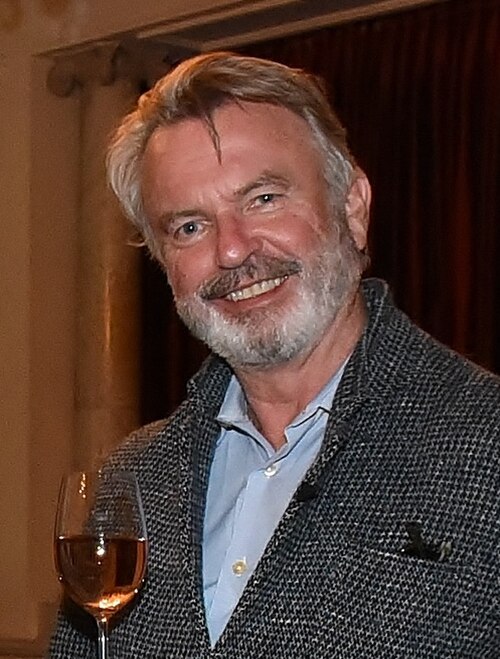
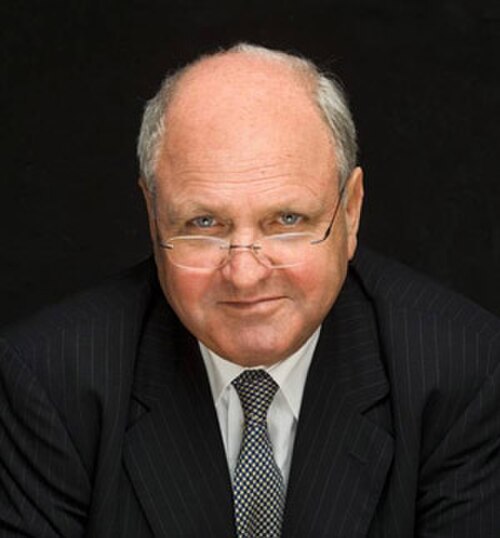
カンタベリー大学は1962年以来、名誉博士号を授与している。授与が行われなかった年もあったが、ほとんどの年で複数の博士号が授与された。名誉博士号の授与数が最も多かったのは1973年で、7名が受賞した。[ 179 ]

{{cite web}}: CS1 maint: url-status (リンク)