
Loading article…
博士号(ラテン語のdoctorから来ており、「教師」を意味する)または博士号は、大学やその他の教育機関によって授与される大学院レベルの学位であり、古代の形式であるlicentia docendi(「教授免許」)に由来しています。
ほとんどの国では、研究学位を取得すると、その学位の分野で大学レベルで教える資格、または特定の職業に就く資格が得られます。博士号にはさまざまな種類がありますが、最も一般的なのは哲学博士号(PhD) で、人文科学から科学分野まで、さまざまな分野で授与されます。
多くの大学では、学術的な業績や大学や社会へのその他の貢献に対して特別な表彰に値するとみなされる個人に 名誉博士号を授与しています。
歴史
中世
ドクターという用語はラテン語に由来し、「教師」または「指導者」を意味します。博士号(ラテン語:doctoratus)は、大学でラテン語を教える資格(licentia docendi)として中世ヨーロッパで登場しました。[1]その起源は初期の教会にまで遡ることができ、ドクターという用語は、聖書を教え、解釈した使徒、教会の父、その他のキリスト教の権威者を指していました。[1]
博士号( licentia docendi )を授与する権利はもともとカトリック教会に留保されており、申請者は試験に合格し、忠誠の宣誓を行い、料金を支払う必要がありました。 1179年の第3回ラテラノ公会議は、当時は実質的に無料で、すべての適性のある申請者に博士号の取得を保証しました。申請者は適性試験を受けました。[2]この権利は教会当局と大学の間の論争の種となり、大学は徐々に教会から距離を置いていきました。1213年にこの権利は教皇からパリ大学に与えられ、そこではそれが普遍的な教育免許(licentia ubique docendi)となりました。[2]しかし、licentiaは学士号(baccalaureus )よりも高い権威を持ち続けましたが、最終的には後者は修士号(magister)と博士号への中間段階に格下げされ、どちらも今や認められた教育資格となりました。[2]キース・アラン・ノーブル(1994)によると、最初の博士号は1150年頃に中世のパリでパリ大学によって授与されました。[3]
ジョージ・マクディシは、初期のイスラムのマドラサで発行されたイジャザが、中世ヨーロッパの大学で後に発行される博士号の起源であると理論づけている。[4] [5]アルフレッド・ギヨームとサイード・ファリド・アル・アッタスは、イジャザとlicentia docendiの間に類似点があることに同意している。[6]しかし、トビー・ハフらはマクディシの理論を否定している。[7] [8] [9] [10]デヴィン・J・スチュワートは、授与機関(イジャザの場合は教授個人、大学博士号の場合は法人)の違いを指摘している。[11]
17世紀と18世紀

哲学博士号は、17世紀(おそらく1652年頃)にドイツで誕生しました。[12]ここでの「哲学」という用語は、哲学の分野や学問分野を指すものではありません。より広い意味で、ギリシャ語の「知恵への愛」という本来の意味のもとで使用されています。ヨーロッパのほとんどの国では、すべての分野(歴史、哲学、社会科学、数学、自然哲学/自然科学)[13]が伝統的に哲学として知られており、ドイツやヨーロッパの他の地域では、教養学部の基礎となる学部は「哲学部」として知られていました。哲学博士号は、ほとんどの学位が哲学の研究のためのものではないにもかかわらず、この歴史的慣習に従っています。クリス・パークは、19世紀初頭に正式な教育と学位プログラムが標準化されて初めて、哲学博士号が研究学位としてドイツで再導入され、[14] Dr. phil.(アングロ・アメリカ諸国のPh.D.に類似)と略されたと説明しています。しかし、ドイツでは、哲学の博士号と自然科学の博士号(略称はDr. rer. nat.)と、社会科学/政治科学の博士号(略称は Dr. rer. pol.)とをより細かく区別しており、これは他の伝統的な医学(Dr. med.)や法学(Dr. jur.)の博士号に似ています。
大学の博士課程は、ギルドへの徒弟制度の一種でした。新任教師が「芸術の修士」ギルドに入会するまでの伝統的な学習期間は 7 年で、他の職業の徒弟期間と一致していました。もともと「修士」と「博士」という用語は同義語でしたが、時が経つにつれて、博士号は修士号よりも高い資格と見なされるようになりました。
博士号を含む大学の学位は、もともと男性に限定されていた。女性として初めて博士号を授与されたのは、1608年にリヨンでジュリアナ・モレル[15]、あるいはアヴィニョンで (彼女は 1606 年か 1607 年に「論文を発表」したが、 1608 年に教会法の博士号を取得したという主張は信用されていない)、[要出典] 、 パドヴァ大学でエレナ・コルナロ・ピスコピア(1678 年) 、ボローニャ大学でラウラ・バッシ(1732 年) 、ハレ大学でドロテア・エルクスレーベン(1754 年) 、マドリード・コンプルーテンセ大学でマリア・イシドラ・デ・グスマン・イ・デ・ラ・セルダ(1785 年) であった。[16]
現代

博士号の使用法と意味は、時代とともに変化し、地域によっても異なります。たとえば、20世紀初頭までは、英語圏の大学では、非常に上級の学者と聖職者を除いて、博士号を持つ教員や教授はほとんどいませんでした。その後、講師に研究博士号の取得を求めるドイツの慣習が広まりました。大学が研究指向の教育(科学的方法、探究、観察に基づく)に移行したことで、博士号の重要性が高まりました。今日では、研究博士号(PhD)またはそれに相当するもの(米国のNSFによる定義による)は、一般的に学術的なキャリアの前提条件となっています。ただし、多くの取得者は学術界で働いていません。
専門職博士号は、19世紀以降、米国で発展してきました。米国で最初に授与された専門職博士号は、1767年に医学部が設立されたキングス・カレッジ(現在のコロンビア大学)の医学博士号でした。 [17]しかし、これは現代のアメリカの意味での専門職博士号ではありませんでした。これは、資格取得のための学位ではなく、資格取得のための医学士(MB)取得後のさらなる研究に対して授与されたものでした。[18] MDは、19世紀に米国で医学の標準的な最初の学位になりましたが、3年間の学部学位でした。大学院の学位として確立されたのは1930年になってからでした。医学の標準的な資格取得学位として、MDは(この目的で1847年に設立された米国医師会を通じて)専門職に専門職への参入基準を設定し、引き上げる能力を医師に与えました。[19] [20]
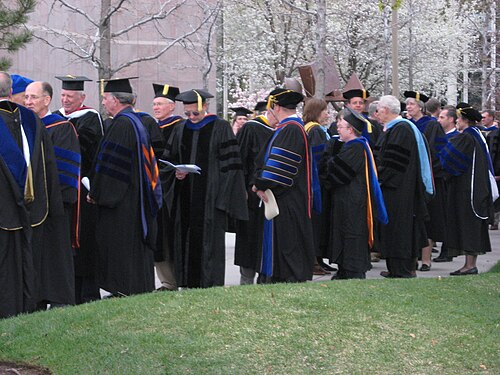
ドイツ式の博士号の形で、現代の研究学位は1861年に米国で初めてイェール大学で授与されました。[21]これはMDとは違い、後者は職業上の「専門学位」であり、専門学校や研究所の他の学生と同様に、知識を生み出すのではなく、学生に知識を適用または実践するよう訓練しました。英国では、研究博士号は当初、科学と文学の高等博士号を取得しており、1882年にダラム大学で初めて導入されました。 [22] PhDは米国からカナダを経由して英国に広がり、1917年から英国のすべての大学で導入されました。最初の博士号(DPhilと名付けられました)はオックスフォード大学で授与されました。[23] [24]
MD に続いて、米国で次の専門博士号である法学博士(JD) がシカゴ大学によって 1902 年に設立されました。しかし、この学位が受け入れられるまでには長い時間がかかり、法学士 (LLB) に取って代わったのは 1960 年代になってからで、その頃には LLB は大学院の学位として一般的に取得されていました。注目すべきは、JD と LLB のカリキュラムは同一で、学位は博士号に改名され、MD と同様に PhD と同等ではなかったため、「真の博士号ではない」という批判が起こりました。 [ 25] [26] 1980 年代後半から 1990 年代前半に英国で専門博士号が設立されたとき、米国のモデルには従いませんでした。それでも、PhD と同じレベルの研究学位として設定されましたが、いくつかの教育要素と研究作業に専門的に焦点を当てていました。[27]
現在、英国では通常、高等博士号と呼ばれている旧式の博士号は、候補者が自分の研究分野の第一人者であることを証明する必要があるため、取得にかなり長い時間がかかります。これらの博士号は、一部の国ではPhDよりも一般的ではなく、名誉博士号が授与されることもよくあります。EU内の多くの国では、ハビリテーションは依然として学術的な採用目的で使用されています。これには、長い新しい論文(2冊目の本)または研究出版物のポートフォリオのいずれかが含まれます。ハビリテーション(取得可能な最高の学位)は、独立した徹底した研究、教育および講義の経験、さらに最近では、支援資金を生み出す能力を証明します。ハビリテーションは研究博士号の後に取得するもので、ドイツでは、私講師または教授としての任命の要件となる場合があります。
種類
中世以来、大学が授与する博士号の数と種類は世界中で急増してきました。その慣習は国によって異なります。博士号を取得すると通常は「博士」と呼ばれる資格が得られますが、その称号の使い方は、博士号の種類と関連する職業によって大きく異なります。
研究博士号
研究博士号は、少なくとも原則的には査読のある 学術雑誌に掲載可能な学術研究に対して授与される。英語圏で最もよく知られている研究学位の名称は、世界中の多くの国で授与される哲学博士号(略称はPh.D. [28] PhD [29]、または英国の一部の大学ではDPhil [30] [31] [32])である。例えば米国では、最も一般的な研究博士号はPhDであり、授与される研究博士号の約98%を占めているが、研究博士号には15を超える他の名称がある。[28] [33]その他の研究指向の博士号(一部は専門的実践に重点を置いたもの)には、教育学博士(Ed.D. [28]または EdD [29])、 理学博士( D.Sc. または Sc.D. [28])、文学博士( DA [28] )、法学博士(JSD または SJD [28])、音楽芸術博士(DMA [28])、専門研究博士/専門博士(ProfDoc または DProf)、[29]公衆衛生博士(Dr.PH [28])、社会科学博士(DSSc. または DSocSci [29])、経営学博士(DM または D.Mgt.)、[34]経営管理博士(DBA [28]または DBA [35])、英国の経営学博士(DMan)、[36]米国の工学博士( D.Eng.、DESc. またはDES [28] 、日本と韓国でも授与されている)、英国の工学博士号(EngD)[37] 、ドイツの工学博士号Doktoringenieur(Dr.-Ing.)、ドイツの自然科学博士号Doctor rerum naturalium(Dr. rer. nat.)、および経済学と社会科学の博士号Doctor rerum politicarum(Dr. rer. pol.)がある。英国の医学博士号(MDまたはMD(Res))と歯科外科博士号(DDS)は研究博士号である。[29]神学博士号(Th.D.、[28] D.Th.またはThD [29] )、実践神学博士号(DPT)[29]、神学博士号(STD、[28]またはDSTh.)は、神学の研究博士号です。[38]
研究博士号の基準はさまざまですが、通常は、単一の論文または学位論文、またはより短いプロジェクトレポートのポートフォリオ(論文発表)として提出される、相当量の独自の研究の完了が必要です。提出された論文は、通常、内部および外部の審査員で構成される委員会によって評価されます。その後、通常は委員会による口頭試問(英国とインドではviva (voce)と呼ばれる)で候補者が論文を擁護し、委員会はその後、無条件で学位を授与するか、条件付きで学位を授与するか(文法の訂正から追加の研究までさまざま)、または学位を拒否します。候補者は、自分の分野の大学院レベルのコースを修了し、研究方法論を学ぶ必要がある場合もあります。
博士課程への入学基準はさまざまです。米国と英国では学士号があれば入学できますが、フィンランドやその他のヨーロッパ諸国などでは修士号が必要です。研究博士号を取得するのに必要な期間は、学部課程を除いて 3 年から 6 年以上までさまざまです。
免許取得
ライセンシエイト学位の意味は多岐にわたり、いくつかの国では博士レベルの資格となっている。スウェーデンでは、ライセンシエイト学位は博士レベルの2年間の資格として授与され、博士号(PhD)は4年間の資格として授与される。[39]スウェーデンは1969年にライセンシエイト学位を廃止したが、企業からの要望に応えて再導入した。[40]フィンランドにも、スウェーデンと同様の2年間の博士レベルのライセンシエイト学位がある。[41]スカンジナビア諸国以外では、ライセンシエイトは通常、より低レベルの資格である。ベルギーでは、ライセンシエイトはボローニャ・プロセス以前の大学の基礎学位であり、学士号に相当した。[42] [43]フランスやその他の国では、ボローニャ・プロセスにおける学士レベルの資格である。[44]教皇庁制度では、神学のライセンス(STL)は上級修士号、または博士号取得準備に必要な修士課程修了後の課程(スウェーデン/フィンランドのライセンスと同等のレベル)に相当します。一方、他のライセンス(教会法のライセンスなど)は修士号レベルです。[45]
高等博士号および博士号取得後
より上位の研究博士号は、非常に高い水準の公表された研究のポートフォリオを正式に提出することで授与される場合があります。例としては、英国、アイルランド、一部の英連邦諸国で取得できる理学博士号(DSc または ScD) 、神学博士号(DD) 、文学博士号 ( DLitt または LittD) 、法学博士号(LLD)、民法博士号(DCL)、およびスカンジナビア諸国の伝統的な博士号などがあります。
論文と試験を伴う大学の手続きによるハビリテーション教員資格(facultas docendiまたは「教員資格」)は、ドイツ、オーストリア、フランス、リヒテンシュタイン、スイス、ポーランドなどで一般的にこのカテゴリーに属すると見なされています。この学位は、19世紀に「博士号を取得するだけでは次世代への知識の熟練した伝達を保証するのに十分ではないと思われた」ときにドイツで開発されました。[ 46]ドイツの多くの州では、ハビリテーションにより正式な「Dr. habil.」学位が授与されるか、学位取得者は「Dr. phil. habil.」または「Dr. rer. nat. habil.」のように研究博士号に「habil.」を付加することができます。一部のヨーロッパの大学、特にドイツ語圏の大学では、 Privatdozentなどの追加の教育タイトルがなければ、教授の監督なしで教育業務を行う(または博士課程の学生を独自に教え、指導する)には学位では不十分です。オーストリアでは、ハビリテーションにより卒業生にfacultas docendi、venia legendi が授与されます。2004年以降は、「Privatdozent」の名誉称号が与えられます (これ以前は、ハビリテーションを修了すると公務員に任命されました)。多くの中央および東ヨーロッパ諸国では、この学位により、ラテン語で「講義の許可」を意味するvenia legendi、または「教える権利」を意味するius docendiが与えられ、大学で特定の学問分野を終身にわたって学ぶことができます。フランスの学術制度にはかつて「国家博士号」( doctorat d'État ) と呼ばれる高等博士号がありましたが、1984 年に、博士号取得者を指導し、教授職に応募するための前提条件であるハビリテーション ( Habilitation à diriger des recherches、「(博士課程および博士課程修了後の) 研究を指導する資格」、略して HDR) に取って代わられました。旧ソビエト連邦 ( USSR ) の多くの国、例えばロシア連邦やウクライナでは、「科学博士」という称号の下に、より高等な博士号 (「科学候補者」/PhD の称号より上位の称号) が存在します。
このセクションでは、出版された著作やそれに相当する業績によって授与される資格に焦点を当てていますが、大学が自らの主導で、または推薦を受けて、公的名声、機関への貢献、慈善活動、または専門的業績を認めて、高等博士号を名誉として授与することもあります。資格の正式な一覧では、また多くの場合、他の文脈でも、名誉高等博士号は「DCL、honoris causa」、「Hon LLD」、「LittD h.c.」などの言葉で識別されます。
専門博士号
国によっては、専門職博士号は博士号と同レベルの研究学位である場合もある。研究と実践の関係が重要視されており、研究内容がほとんどまたは全くない専門職学位は、通常、専門的なパフォーマンスを目的としている。多くの専門職博士号は「Doctor of [科目名]」と名付けられ、「D[科目略語]」または「[科目略語]D」という形で略される[29] 。または、より一般的な称号である「Professional Doctorate」が使用され、「ProfDoc」または「DProf」と略される[29] 、 「Doctor of Professional Studies」(DPS)[47] [48]または「Doctor of Professional Practice」(DPP)[49] [50]
米国では、専門職博士号(政府の分類では正式には「博士号 - 専門職実務」)は、米国教育省の国立教育統計センターによって、大学レベルの最低6年間の研究(専門職前の学士号または準学士号を含む)を必要とし、その分野の専門資格の学業要件を満たす学位と定義されています。専門職博士号の定義には、研究博士号の定義(「博士号 - 研究/奨学金」)とは対照的に、修士レベルを超える論文または研究の要件は含まれていません。ただし、個々のプログラムには異なる要件がある場合があります。[51] [52]また、「専門職実務」または「研究/奨学金」のいずれのカテゴリにも属さない博士号には、「博士号 - その他」というカテゴリがあります。[53]これらはすべて博士号と見なされます。[54]
米国とは対照的に、多くの国では「博士号」という用語を研究学位に限って使用している。カナダやオーストラリアのように、専門職学位に「Doctor of ...」などの名称が付いている場合は、それが博士号ではないことが明確にされている。この例としては、薬学博士号 (PharmD)、医学博士号 (MD)、歯科外科医博士号 (DDS)、看護実践博士号 (DNP)、法学博士号 (JD) などがある。対照的に、例えば、経営学博士号 (DBA)、教育学博士号 (EdD)、社会科学博士号 (DSS) などの研究博士号は、カナダでは完全な学術博士号とみなされるが、通常、完全な論文に加えて専門職実践の側面も組み込まれている。[55] [56]フィリピンでは、フィリピン大学オープン大学がコミュニケーション博士号 (DComm) の専門職博士号を提供している。[57]
英国とアイルランドのすべての博士号は、ボローニャ・プロセスの第3サイクルの資格であり、米国の研究博士号に相当します。すべての博士号は研究学位ですが、専門職博士号には通常、教育要素が含まれますが、PhD/DPhilという名称は通常、論文のみの博士号に使用されます。DClinPsy、MD、DHSc、EdD、DBA、EngD、DAg [58]などの専門職、実務家、または実践ベースの博士号は、完全な学術博士号です。これらは、国家資格フレームワークのPhDと同じレベルであり、最初の専門学位ではなく、「多くの場合、経験後の資格」であり、研究の文脈で実践が重要視されます。[27] [29] [35] [59] 2009年には英国には308の専門博士課程があり、1998年の109から増加しており、最も人気のあるのはEdD(38機関)、DBA(33)、EngD/DEng(22)、MD/DM(21)、DClinPsy/DClinPsych/ClinPsyD(17)でした。[60]同様に、オーストラリアでは、「専門博士号」という用語はScientiae Juridicae Doctor(SJD)に適用される場合があります。 [61] [62]これは英国の専門博士号と同様に研究学位です。[63] [64]
名誉博士号
大学が特定の分野や慈善活動への個人の貢献を正式に認めたい場合、通常の学位授与要件を免除し、名誉博士号(「名誉のために」)を授与することを選択できます。[65] [66]名誉学位を授与しない大学もあります。たとえば、コーネル大学、[67]バージニア大学、[ 68]マサチューセッツ工科大学です。[69]
国による違い
アルゼンチン
アルゼンチンでは、博士号(doctorado)[70]が最高の学位である。その目的は、候補者が学術的卓越性の枠組みの中で、自分の分野の知識において独自の貢献をすることである。[71]論文または学位論文は、指導教員またはディレクターの監督の下で準備される。それは、プログラム外部の審査員と少なくとも1人の機関外部の審査員で構成される博士委員会によって審査される。学位は、論文審査に合格した後に授与される。[72] 2006年には、国内の大学院生のキャリアは約2,151人で、そのうち14%が博士号であった。[71]アルゼンチンの博士課程は、アルゼンチン教育科学技術省の機関である国立大学評価認定委員会 [es] [認証失敗]によって監督されている。 [74]
オーストラリア
オーストラリア資格枠組み( AQF )は、高等教育資格を10のレベルに分類し、複雑さと深さの昇順で1から10までの番号が付けられています。[75]これらの資格レベルのうち、6つは高等教育資格であり、5から10までの番号が付けられています。 [75]博士号はこれらのレベルのうち最高のレベル10を占めます。[75] : 63 すべての博士号には研究が含まれており、これが博士号の特徴です。[75] : 63 AQFが認定する博士号には、研究博士号、専門職博士号、高等博士号の3つのカテゴリがあります。[75] : 63–64
研究博士号と専門博士号は、どちらも学習プログラムと指導研究の一環として取得します。[75] : 63 どちらも、研究を指導することに同意した指導教員がいること、および学生が上位二級優等以上の成績で優等学位を取得していること、または研究要素がかなりある修士号を取得していることが入学要件となっています。[76] [77]研究博士号は通常、「哲学博士」と題され、知識に対する独創的で重要な貢献に基づいて授与されます。[75] : 63 専門博士号は通常、「(研究分野)博士」と題され、専門職の実践に対する独創的で重要な貢献に基づいて授与されます。[75] : 63
高等博士号は通常、専門職博士号と同様の名称が付けられ、一貫したテーマに沿って提出された研究ポートフォリオに基づいて授与され、研究博士号の授与に求められるものを超えて、知識に対する独創的で実質的な貢献として国際的に認められている。[75] : 64 [78] [79]通常、高等博士号を授与される資格を得るには、学生は高等博士号を授与するために使用された研究ポートフォリオを提出する少なくとも7年から10年前に研究博士号を取得している必要がある。[78] [80]
ブラジル
博士課程の候補者は通常、関連分野の修士号を取得している必要があります。例外は個人の学業成績に基づきます。第 2 外国語および第 3 外国語も一般的な要件ですが、能力に関する要件は一般に厳しくありません。入学手続きは機関によって異なります。候補者にテストの受験を要求する機関もあれば、研究計画書の申請書と面接のみで入学を認める機関もあります。ただし、どちらの場合も、入学前に教員が志願者を指導することに同意する必要があります。
要件には通常、大学院の上級コースで満足のいく成績を収め、口頭の適格性試験に合格し、既存の知識に対する独創的で関連性のある貢献を示す論文を提出することが含まれます。論文は、少なくとも 5 人の教員 (そのうち 2 人は外部教員) によって実施される最終公開口頭試験で審査されます。通常 4 年かかる修了後、候補者は通常、Doutor (博士) の学位を授与され、その後に主な専門分野が示されます。たとえば、Doutor em Direito (法学博士)、 Doutor em Ciências da Computação (コンピューター科学博士)、Doutor em Filosofia (哲学博士)、Doutor em Economia (経済学博士)、Doutor em Engenharia (工学博士)、Doutor em Medicina (医学博士) などです。Doutor em Ciências (理学博士) という総称は、通常、自然科学 (物理学、化学、生物学、生命科学など) の博士号を総称するために使用されます。
ブラジルの公立大学の大学院プログラムはすべて授業料が無料です(ブラジル憲法で義務付けられています)。大学院生の中には、CNPq(国立科学技術開発評議会)やCAPES(高等教育研究員調整委員会)などの連邦政府機関が授与する団体奨学金によってさらに支援を受けている人もいます。個人奨学金は州レベルのさまざまなFAP(学生支援基金)、特にサンパウロ州のFAPESP 、リオデジャネイロ州のFAPERJ 、ミナスジェライス州のFAPEMIGによって提供されています。大学院の財政援助をめぐる競争は激しく、ほとんどの奨学金は最大で修士課程2年間と博士課程4年間を支援します。ブラジルの博士課程の学生への通常の月額奨学金は 500 ~ 1,000 米ドルです。
ドトールの学位を取得すると、通常は米国の助教授に相当する若手教員の職に応募できる。教授職(Professor Titular)に昇進するには、競争の激しい公開試験に合格する必要があり、通常はさらに数年かかる。連邦大学システムでは、若手教員として認められた博士は(通常は勤続年数によって)准教授に昇進し、その後、空席となっている教授職の競争試験を受ける資格を得る。サンパウロ州立大学では、准教授職とそれに続く教授職への応募資格は、Livre-docente [pt]の資格を条件としており、博士号に加えて、2つ目の論文または査読済み出版物の累積ポートフォリオ、専門家パネル(他大学の外部メンバーを含む)の前での公開講演、および筆記試験が必要となる。
近年、大学を留学生に開放する取り組みの一環として、共同指導による博士号取得制度(「コチュテル」など)が国内でますます一般的になってきている。[81]
デンマーク
デンマークでは、 2 種類の「博士号」に似た学位が提供されています。
- 1992年に同等の学位であるlicentiatに取って代わった3年間の博士課程[82]では、博士号や博士号の称号を得る権利は付与されない。[ 83]同時に、ボローニャ・プロセスの国際基準を満たすために、 「magister」の称号につながる2年間のマイナーな研究研修プログラムは段階的に廃止された。
- 1479年に導入された「完全な」博士号(例:dr.phil.、Doctor Philosophiae、人文科学およびSTEM科目)-高等博士号-です。[84]学位の2番目の部分は研究分野を伝えます – 例:dr.scient(科学)、dr.jur(法律)、dr.theol(神学)。[84]
博士号を取得するには、修士号を取得している必要がある候補者(博士課程の学生または研究員)は、大学の博士課程に入学し、研究トレーニング プログラムに参加します。終了後、各自が論文を提出し、正式な討論で口頭で論文を防御します。討論では、候補者は 3 人の公式の反対者を相手に論文を防御し、講堂 (exauditorio)にいる人から反対意見や質問を受ける場合があります。
上級博士号の場合、候補者( præsesと呼ばれる)は、主要な科学的意義を持つ論文を提出し、2人の公式反対者と、講堂(exauditorio)からのあらゆる反対者に対して口頭で弁論する必要があります。これは、審理にどれだけ時間がかかるかに関係なく行われます。公式反対者は、教授である必要があります。候補者は修士号を取得している必要がありますが、必ずしも博士号である必要はありません。
博士号は、新しい学位構造への移行の一環として、1992年に高等博士号とは別の称号として導入されました。そうしないと、学位制度の変更により、国際的な場ですぐに認識できる資格を持たない学者が多数残ることになるためです。当初の構想は、高等博士号を段階的に廃止して博士号を導入する(または両者を統合する)こととされていましたが、これまでのところ、これが実現する兆候はありません。[83]デンマークの常勤学者の多くは、制度が新しい90年代に博士論文を書いています。[82]その当時、デンマークでは特定の学術職に就くには博士号または同等の資格が必要になり始めたためです。20世紀後半まで、高等博士号は教授職を得るための条件でした。もはやいかなる職にもそれ自体は必要ありませんが、学術職に応募する際には博士号と十分に同等であると見なされています。
エジプト
エジプトでは、最高学位の博士号はアズハル大学est. 970 から授与され、同大学から ( العالمية Ālimiyya\ Habilitation ) が授与されます。
医学博士号(略称MD)はPh.D.の学位に相当します。[85]理系の専門分野でMDを取得するには、申請前に修士号(M.Sc.)(またはエジプトでM.Sc.学位が導入される前は2つの学位)を取得している必要があります。MD学位には、当該分野のコースの受講と論文審査が含まれます。取得には平均3年から5年かかります。
大学院の医学および外科専門の学生の多くは博士号を取得します。6 年間の医学部と 1 年間の研修 (研修医) を終えた医師と外科医は、米国のMD学位に相当する MBBCh 学位を取得します。その後、修士号または専門ディプロマの取得を申請し、専門分野で MD 学位を取得できます。
エジプトの医学博士号は専門分野の名前を使って表記されます。たとえば、MD (Geriatrics) は老年医学博士号を意味し、老年医学博士号に相当します。
フィンランド
フィンランドでは、博士課程への入学には修士号またはそれに相当する学位が必要です。すべての大学には博士号を授与する権利があります。[86]アマティコルケアコウル研究所(大学ではないが、英語では「応用科学大学」と呼ばれることが多い高等職業教育機関)は、博士号やその他の学位を授与しません。学生は以下を満たしている必要があります。
- 自分の分野とその意味を理解していることを示し、その分野での科学的または学術的な研究を活用して新しい知識を創造する準備をします。
- 開発、基本的な問題、研究方法についての十分な理解を得る
- 科学と文学の一般理論を理解し、隣接する研究分野に関する知識を身につけ、これらの分野の発展に追従できるようになる。
これらの一般的な要件が満たされていることを示す方法は次のとおりです。
- 大学院課程を修了する。
- 批判的かつ独立した思考を示す
- 論文(モノグラフまたは査読済み記事の編集論文)を準備し、公開で審査します。美術分野では、学部が認める作品やパフォーマンスで論文を代用することができます。
博士課程への入学は修士号取得者のみ対象で、学士課程の採用には優等生制度はない。厳格な定員制限が適用される学部課程ほど入学は厳しく管理されていない。通常、入学希望者は教授と計画について話し合う。教授が学生の受け入れに同意すれば、学生は入学を申請する。教授は自分のグループに学生を募集することがある。[87]正式な入学許可は資金提供を意味するものではない。学生は研究ユニットで働くか、私費奨学金を通じて資金を獲得しなければならない。資金は文学よりも自然科学や工学の方が手に入りやすい。通常の仕事と研究活動が組み合わされることもある。[88]
ボローニャ・プロセスが導入される前、フィンランドでは少なくとも 42 単位週 (1,800 時間) の正式なコースワークが義務付けられていました。この要件は 2005 年に削除され、各大学の決定に委ねられました。各大学は学部または個々の教授に権限を委譲することができます。工学および科学では、必須コースワークは 40 から 70 ECTSの範囲です。
大学院での研究期間はさまざまです。修士号取得後 3 年で卒業することも可能ですが、それより長い期間も珍しくありません。研究は論文で終わります。論文では、新しい科学的/学術的知識をかなり多く提示する必要があります。論文はモノグラフか、3 ~ 7 件のジャーナル記事の編集コレクションのいずれかになります。論文を書くことができない、または書きたくない学生は、コースワーク要件を完了し、通常 1 年間の研究を要約した短い論文を書くことで、修士号を取得できます。
論文が完成すると、学部は学外から博士号を持つ専門家2名を予備審査員として指名する。予備審査の過程で、学生は論文に対するコメントを受け、修正を加えて応答することができる。[89]予備審査員が承認した後、博士課程の学生は学部に論文の印刷許可を申請する。この許可を与える際、学部は論文審査の相手を指名する。相手も博士号以上の外部専門家でなければならない。フィンランドのすべての大学では、印刷された論文は論文審査の少なくとも10日前から公立大学の掲示板のそばに紐で吊るしておくことが長い伝統となっている。[90]
博士論文審査は公開で行われます。指導教員の監督の下、反対者と候補者が通常、白ネクタイを着用して正式な討論を行います。家族、友人、同僚、研究コミュニティのメンバーが審査に出席するのが通例です。正式な入場後、候補者は約 20 分間の一般向け講義 ( lectio praecursoria ) を行います。これは、一般の人々に論文のトピックを紹介するためのものです。反対者が続いてトピックについて短い講演を行い、その後、2 人で論文について批判的に議論します。審査には 2 ~ 3 時間かかります。最後に、反対者が最終声明を発表し、教員に論文の受理を推奨するかどうかを明らかにします。その後、一般の人は誰でも質問することができますが、これはまれです。審査の直後、指導教員、反対者、候補者は一般の人々とコーヒーを飲みます。通常、審査の出席者には印刷された論文が渡されます。[91]夕方には、合格した候補者が対立候補に敬意を表して夕食会(フィンランド語:カロンッカ)を主催する。通常、候補者は家族、同僚、協力者を招待する。[92]
博士課程の卒業生は哲学博士 ( filosofian tohtori ) となることが多いですが、多くの分野では、医学博士 ( lääketieteen tohtori )、技術科学博士 ( tekniikan tohtori )、芸術科学博士 (芸術とデザイン) など、従来の称号が保持されています。
博士号は、教授や教員の職に就くための正式な要件ですが、実際には、博士研究員としての研究とさらなる経験が必要です。大学の理事会によって例外が認められる場合もありますが、これはまれであり、通常は同等とみなされる他の研究と専門知識によるものです。
フランス
- 歴史
1984 年以前、フランスには 3 つの研究博士号が存在していました。国家博士号( doctorat d'État、"DrE"、1808 年に導入された古い博士号)、第 3 サイクル博士号 ( Doctorat de troisième cycle、専門博士号、Doctorat de spécialitéとも呼ばれ、1954 年に創設され、国家博士号よりも短い)、および技術研究のための博士エンジニア資格( diplôme de docteur-ingénieur、1923 年に創設) です。
20 世紀前半、パリ大学文学部 (フランス語では「letters」は「humanities」に相当)に 2 つの論文 (主論文、 thèse primaryeと副論文、thèse complémentaire ) を提出すると、博士課程の候補者にはDoctorat ès lettres が授与されました。また、1 つの論文を提出するだけで取得できる、 それほど権威のない「大学博士号」であるDoctorat d'universitéもありました。
1950年代には、文学博士号は国家博士号に改名された。[93] 1954年(理学系)と1958年(文学と人文科学系)には、アメリカの博士号をモデルに、より難易度の低い三者択一の学位が創設された。その目的は、典型的な学生が高等教育学位(Diplôme d'études supérieures、文学修士号にほぼ相当)を修了してから国家博士号を取得するまでの期間が長くなっていったのを短縮することであった。[93]
1984年以降、博士号は「博士号」( Doctorat ) 1種類だけになった。博士課程を指導するための専門資格である「研究指導資格」(Habilitation à diriger des recherches)という特別な資格が作られた。(この資格は、以前の国家博士号と精神が似ており、取得要件は他の制度で終身在職権を得るために必要な要件と似ている。)以前は、教授または同等のランクの上級研究者だけが博士課程の候補者の研究を指導する権限を通常与えられていた。[94]現在、habilitationは、大学教授(Professeur des universités )の称号、およびCNRS、INRIA、INRAEなどの国立公的研究機関の研究ディレクター(Directeur de recherche )の称号の前提条件となっている。
- 入場料
現在、博士号は研究のみの学位である。これは国家学位であり、その要件は高等教育研究大臣によって定められている。博士号は公的機関のみが授与する。どの研究分野でも授与できる。修士号が必須である。通常、期間は3年である。包括的な論文の執筆が博士課程の大部分を占める。論文の長さは分野によって異なるが、150ページ未満になることはめったになく、それよりかなり長い場合が多い。毎年約15,000人の新しい博士課程の入学があり、約10,000人の博士号が授与されている。[95]
博士課程の候補者は、3年間のフェローシップに応募できます。最もよく知られているのは、コントラト・ドクトラル(2016年9月現在、毎年4,000ユーロが支給され、月額給与総額は1,758ユーロ[update])です。
2002年以降、候補者は研修を受けるが、博士号取得のための筆記試験はない。候補者は、2人の外部審査員が読む論文を書かなければならない。機関長は、外部審査を考慮した上で、候補者が論文審査を受けることができるかどうかを決定する。審査員は機関長によって指名される。候補者の指導教員と外部審査員が審査員となるのが一般的である。審査員の最大人数は8人である。審査は通常、科学分野では45分、その後1~2分間行われる。+陪審員または他の出席医師からの1/2時間の質問。弁論と質問は公開されます。その後、陪審員は非公開で審議し、候補者の合格または「延期」を宣言します。後者はまれです。2016 年に新しい規則が設定され、特別賞は授与されません 。
医師の称号 ( docteur ) は、医師の国家資格 ( diplôme d'État de docteur、上記のdoctorat d'Étatとは異なります)を持つ医療従事者や薬学従事者も使用できます。この資格は第一学位です。
2018年にはフランス研究省の資金援助を受けて、国立医師協会(ANDès)と若手科学者連盟(CJC)によって優れた実践と法的分析を盛り込んだガイドラインが出版された。[96]
ドイツ
ドイツの博士号は研究博士号であり、プロモーションと呼ばれるプロセスによって授与されます。入門レベルの専門資格としての米国式の専門博士号という概念は存在しません。ほとんどの博士号は、すべての分野に対する一般的な名称 ( Ph.D.など) ではなく、研究分野に応じた特定のラテン語の名称 (工学はドイツ語の名称) で授与されます。最も重要な学位は次のとおりです。
- Dr. rer. nat. (rerum naturalium; natural and formal sciences, i.e. physics, chemistry, biology, mathematics, computer science and information technology, or psychology);
- Dr. phil. (philosophiae; humanities such as philosophy, philology, history, and social sciences such as sociology, political science, or psychology as well);
- Dr. iur. (iuris; law);
- Dr. oec. (oeconomiae; economics);
- Dr. rer. pol. (rerum politicarum; economics, business administration, political science);
- Dr. theol. (theologiae; theology);
- Dr. med. (medicinae; medicine);
- Dr. med. dent. (medicinae dentariae; dentistry);
- Dr. med. vet. (medicinae veterinariae; veterinary medicine);
- Dr.-Ing. (engineering).
In medicine, "doctoral" dissertations are often written alongside undergraduate study therefore, European Research Council decided in 2010 that such Dr. med. degrees do not meet the international standards of a Ph.D. research degree.[97][98] The duration of the doctorate depends on the field: a doctorate in medicine may take less than a full-time year to complete; those in other fields, two to six years.
Over fifty doctoral designations exist, many of them rare or no longer in use. As a title, the degree is commonly written in front of the name in abbreviated form, e.g., Dr. rer. nat. Max Mustermann or Dr. Max Mustermann, dropping the designation entirely. However, leaving out the designation is only allowed when the doctorate degree is not an honorary doctorate, which must be indicated by Dr. h.c. (from Latin honoris causa). Although the honorific does not become part of the name, holders can demand that the title appear in official documents. The title is not mandatory. The honorific is commonly used in formal letters. For holders of other titles, only the highest title is mentioned. Multiple holders of doctorate degrees can be addressed as Dres. (from Latin doctores). Professional doctorates obtained in other countries, not requiring a thesis or not being third cycle qualifications under the Bologna process, can only be used postnominally, e.g., "Max Mustermann, MD", and do not allow the use of the title Dr.[99] In contrast to English, in which a person's name is preceded by at most one title (except in very ceremonious usage), the formal German mode of address permits several titles in addition to "Herr" or "Frau" (which, unlike "Mr" or "Ms", is not considered a title at all, but an Anrede or "address"), including repetitions in the case of multiple degrees, as in "Frau Prof. Dr. Dr. Schmidt",[100] for a person who would be addressed as "Prof. Schmidt" in English.
In the German university system it is common to write two doctoral theses, the inaugural thesis (Inauguraldissertation), completing a course of study, and the habilitation thesis (Habilitationsschrift), which opens the road to a professorship.[101] Upon completion of the habilitation thesis, a Habilitation is awarded, which is indicated by appending habil. (habilitata/habilitatus) to the doctorate, e.g., Dr. rer. nat. habil. Max Mustermann. It is considered as an additional academic qualification rather than an academic degree formally. It qualifies the owner to teach at German universities (facultas docendi). The holder of a Habilitation receives the authorization to teach a certain subject (venia legendi). This has been the traditional prerequisite for attaining Privatdozent (PD) and employment as a full university professor. With the introduction of Juniorprofessuren—around 2005—as an alternative track towards becoming a professor at universities (with tenure), Habilitation is no longer the only university career track.
India
In India, doctorates are offered by universities. Entry requirements include master's degree. Some universities consider undergraduate degrees in professional areas such as engineering, medicine or law as qualifications for pursuing doctorate level degrees. Entrance examinations are held for almost all programs. In most universities, coursework duration and thesis is 3–7 years. The most common doctoral degree is Ph.D.
Italy
Until the introduction of the dottorato di ricerca in the mid-1980s, the laurea generally constituted the highest academic degree obtainable in Italy. The first institution in Italy to create a doctoral program was Scuola Normale Superiore di Pisa in 1927 under the historic name "Diploma di Perfezionamento".[102][103] Further, the dottorato di ricerca was introduced by law and presidential decree in 1980,[104][105] in a reform of academic teaching, training and experimentation in organisation and teaching methods.[106][107]
Italy uses a three-level degree system following the Bologna Process. The first-level degree, called a laurea (Bachelor's degree), requires three years and a short thesis. The second-level degree, called a laurea magistrale (Master's degree), is obtained after two additional years, specializing in a branch of the field. This degree requires more advanced thesis work, usually involving academic research or an internship. The final degree is called a dottorato di ricerca (Ph.D.) and is obtained after three years of academic research on the subject and a thesis.
Alternatively, after obtaining the laurea or the laurea magistrale, one can complete a "Master's" (first-level Master's after the laurea; second-level Master's after the laurea magistrale) of one or two years, usually including an internship. An Italian "Master's" is not the same as a master's degree; it is intended to be more focused on professional training and practical experience.
Regardless of the field of study, the title for Bachelors Graduate students is Dottore/Dottoressa (abbrev. Dott./Dott.ssa, or as Dr.), not to be confused with the title for the Ph.D., which is instead Dottore/Dottoressa di Ricerca. A laurea magistrale grants instead the title of Dottore/Dottoressa magistrale. Graduates in the fields of Education, Art and Music are also called Dr. Prof. (or simply Professore) or Maestro. Many professional titles, such as ingegnere (engineer) are awarded only upon passing a post-graduation examination (esame di stato), and registration in the relevant professional association.
The Superior Graduate Schools in Italy[108] (Italian: Scuola Superiore Universitaria),[109] also called Schools of Excellence (Italian: Scuole di Eccellenza)[108][110] such as Scuola Normale Superiore di Pisa and Sant'Anna School of Advanced Studies keep their historical "Diploma di Perfezionamento" title by law[103][111] and MIUR Decree.[112][113]
Japan
Dissertation-only
Until the 1990s, most natural science and engineering doctorates in Japan were earned by industrial researchers in Japanese companies. These degrees were awarded by the employees' former university, usually after years of research in industrial laboratories. The only requirement is submission of a dissertation, along with articles published in well-known journals. This program is called ronbun hakase (論文博士). It produced the majority of engineering doctoral degrees from national universities. University-based doctoral programs called katei hakase (課程博士), are gradually replacing these degrees. By 1994, more doctoral engineering degrees were earned for research within university laboratories (53%) than industrial research laboratories (47%).[114] Since 1978, Japan Society for the Promotion of Science (JSPS) has provided tutorial and financial support for promising researchers in Asia and Africa. The program is called JSPS RONPAKU.[115]
Professional degree
The only professional doctorate in Japan is the Juris Doctor, known as Hōmu Hakushi (法務博士)[116] The program generally lasts two or three years. This curriculum is professionally oriented,[117] but unlike in the US the program does not provide education sufficient for a law license. All candidates for a bar license must pass the bar exam (Shihou shiken), attend the Legal Training and Research Institute and pass the practical exam (Nikai Shiken or Shihou Shushusei koushi).[118]
Netherlands and Flanders
The traditional academic system of the Netherlands provided basic academic diploma: propaedeuse and three academic degrees: kandidaat (the lowest degree), depending on gender doctorandus or doctoranda (drs.) (with equivalent degrees in engineering – ir. and law – mr.) and doctor (dr.). After successful completion of the first year of university, the student was awarded the propaedeutic diploma (not a degree). In some fields, this diploma was abolished in the 1980s. In physics and mathematics, the student could directly obtain a kandidaats (candidate) diploma in two years. The candidate diploma was all but abolished by 1989. It used to be attained after completion of the majority of courses of the academic study (usually after completion of course requirements of the third year in the program), after which the student was allowed to begin work on their doctorandus thesis. The successful completion of this thesis conveyed the doctoranda/us title, implying that the student's initial studies were finished. In addition to these 'general' degrees, specific titles equivalent to the doctorandus degree were awarded for law: meester (master) (mr.), and for engineering: ingenieur (engineer)(ir.). Following the Bologna protocol the Dutch adopted the Anglo-Saxon system of academic degrees. The old candidate's degree was revived to become the bachelor's degree and the doctorandus' (mr and ir degree) were replaced by master's degrees.
Students can only enroll in a doctorate system after completing a research university level master's degree; although dispensation can be granted on a case-by-case basis after scrutiny of the individual's portfolio. The most common way to conduct doctoral studies is to work as promovendus/assistent in opleiding (aio)/onderzoeker in opleiding (oio) (research assistant with additional courses and supervision), perform extensive research and write a dissertation consisting of published articles (over a period of four or more years). Research can also be conducted without official research assistant status, for example through a business-sponsored research laboratory.
The doctor's title is the highest academic title in the Netherlands and Flanders. In research doctorates the degree is always Ph.D. or dr. with no distinction between disciplines, and can only be granted by research universities.
Netherlands
Every Ph.D. thesis has to be promoted by research university staff member holding ius promovendi (the right to promote). In the Netherlands all full professors have ius promovendi, as well as other academic staff granted this right on individual basis by the board of their university (almost always senior associate professors).[119] The promotor has the role of principal advisor and determines whether the thesis quality suffices and can be submitted to the examining committee. The examining committee is appointed by the academic board of the university based on recommendation of the promotor and consists of experts in the field. The examining committee reviews the thesis manuscript and has to approve or fail the thesis. Failures at this stage are rare because promotors generally not submit work they deem inadequate to the examining committee, supervisors and promotor lose prestige among their colleagues should they allow a substandard thesis to be submitted.
After examining committee approval, the candidate publishes the thesis (generally more than 100 copies) and sends it to the examining committee, colleagues, friends and family with an invitation to the public defence. Additional copies are kept in the university library and the Royal Library of the Netherlands.
The degree is awarded in a formal, public, defence session, in which the thesis is defended against critical questions of the "opposition" (the examining committee). Specific formalities differ between universities, for example whether a public presentation is given, either before or during the session, specific phrasing in the procedure, and dress code. In most protocols, candidates can be supported by paranymphs, a largely ceremonial role, but they are formally allowed to take over the defence on behalf of the candidate. Doctoral candidates The actual defence lasts exactly the assigned time slot (45 minutes to 1 hour exactly depending on the university) after which the defence is suspended by the bedel who stops the examination, frequently mid sentence. Failure during this session is possible, but extremely rare. After formal approval of the thesis and the defence by the examining committee in a closed discussion, the session is resumed and the promotor grants the degree and hands over the diploma to the candidate, and usually congratulates the candidate and gives a personal speech praising the work of the young doctor (laudatio), before the session is formally closed.
Dutch doctors may use PhD behind their name instead of the uncapitalized dr. before their name.[120] Those who obtained a degree in a foreign country can only use one of the Dutch title dr. if their grade is approved as equivalent by the Dienst Uitvoering Onderwijs[121] though according to the opportunity principle, little effort is spent in identifying such fraud.
Those who have multiple doctor (dr.) titles may use the title dr.mult.[120] Those who have received honoris causa doctorates may use dr.h.c. before their own name.[120]
The Dutch universities of technology (Eindhoven University of Technology, Delft University of Technology, University of Twente, and Wageningen University) also award a 2-year (industry oriented) Professional Doctorate in Engineering (PDEng), renamed EngD from September 2022 onwards,[122] which does not grant the right to use the dr. title abbreviation. In 2023, a pilot started at universities of applied sciences with a professional doctoral programme, in which the focus is on applying knowledge to improve or solve professional processes or products.[123][124]
Flanders
In Belgium's Flemish Community the doctorandus title was only used by those who actually started their doctoral work. Doctorandus is still used as a synonym for a Ph.D. student. The licentiaat (licensee) title was in use for a regular graduate until the Bologna reform changed the licentiaat degree to the master's degree (the Bologna reform abolished the two-year kandidaat degree and introduced a three-year academic bachelor's degree instead).
Russia
Introduced in 1819 in the Russian Empire, the academic title Doctor of the Sciences (Russian: Доктор наук) marks the highest academic level achieved by a formal process.
The title was abolished with the end of the Empire in 1917 and revived by the USSR in 1934 when a lower complementary degree was added - the Candidate [Doctor] of the Sciences' (Russian: Кандидат наук).[125]
In this system, the Candidate of the Sciences title is seen as roughly equivalent to the research doctorates in Western countries while the Doctor of the Sciences title retains the exclusivity it had in the times of The Empire.
Similar title/degree systems were adopted by many of the Soviet bloc countries.
Spain
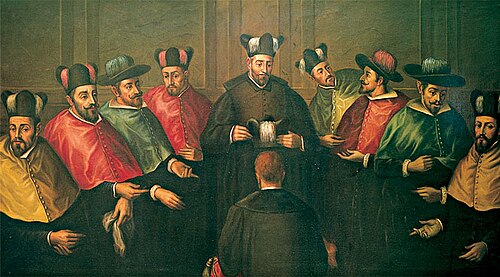
Doctoral degrees are regulated by Royal Decree (R.D. 778/1998),[126] Real Decreto (in Spanish). They are granted by the university on behalf of the king. Its diploma has the force of a public document. The Ministry of Science keeps a national registry of theses called TESEO.[127] According to the National Institute of Statistics (INE), fewer than 5% of M.Sc. degree holders are admitted to Ph.D. programmes.

All doctoral programs are research-oriented. A minimum of 4 years of study is required, divided into 2 stages:
- A 2-year (or longer) period of studies concludes with a public dissertation presented to a panel of 3 Professors. Upon approval from the university, the candidate receives a Diploma de Estudios Avanzados (part qualified doctor, equivalent to M.Sc.). From 2008 it is possible to substitute the former diploma by a recognized master program.
- A 2-year (or longer) research period includes extensions for up to 10 years. The student must present a thesis describing a discovery or original contribution. If approved by their thesis director, the study is presented to a panel of 5 distinguished scholars. Any Doctor attending the public defense is allowed to challenge the candidate with questions. If approved, the candidate receives the doctorate. Four marks used to be granted: Unsatisfactory (Suspenso), Pass (Aprobado), Remarkable (Notable), "Cum laude" (Sobresaliente), and "Summa cum laude" (Sobresaliente Cum Laude). Those Doctors granted their degree "Summa Cum Laude" were allowed to apply for an "Extraordinary Award".
Since September 2012 and regulated by Royal Decree (R.D. 99/2011) (in Spanish),[128] three marks can be granted: Unsatisfactory (No apto), Pass (Apto) and "Cum laude" (Apto Cum Laude) as maximum mark. In the public defense the doctor is notified if the thesis has passed or not passed. The Apto Cum Laude mark is awarded after the public defense as the result of a private, anonymous vote. Votes are verified by the university. A unanimous vote of the reviewers nominates Doctors granted Apto Cum Laude for an "Extraordinary Award" (Premio Extraordinario de Doctorado).
In the same Royal Decree the initial 3-year study period was replaced by a Research master's degree (one or two years; Professional master's degrees do not grant direct access to Ph.D. Programs) that concludes with a public dissertation called Trabajo de Fin de Máster or Proyecto de Fin de Máster. An approved project earns a master's degree that grants access to a Ph.D. program and initiates the period of research.
A doctorate is required in order to teach at the university.[129] Some universities offer an online Ph.D. model.[130]
Only Ph.D. holders, Grandees and Dukes can sit and cover their heads in the presence of the King.[131]
From 1857, Complutense University was the only one in Spain authorised to confer the doctorate. This law remained in effect until 1954, when the University of Salamanca joined in commemoration of its septcentenary. In 1970, the right was extended to all Spanish universities.[132]
All doctorate holders are reciprocally recognised as equivalent in Germany and Spain (according to the "Bonn Agreement of November 14, 1994").[133]
United Kingdom
History of the UK doctorate
The doctorate has long existed in the UK as, originally, the second degree in divinity, law, medicine and music. But it was not until the late 19th century that the research doctorate, now known as the higher doctorate, was introduced. The first higher doctorate was the Doctor of Science at Durham University, introduced in 1882.[22] This was soon followed by other universities, including the University of Cambridge establishing its ScD in the same year, the University of London transforming its DSc from an advanced study course to a research degree in 1885, and the University of Oxford establishing its Doctor of Letters (DLitt) in 1900.[134][135]

The PhD was adopted in the UK following a joint decision in 1917 by British universities, although it took much longer for it to become established. Oxford became the first university to institute the new degree, although naming it the DPhil.[134] The PhD was often distinguished from the earlier higher doctorates by distinctive academic dress. At Cambridge, for example, PhDs wear a master's gown with scarlet facings rather than the full scarlet gown of the higher doctors, while the University of Wales gave PhDs crimson gowns rather than scarlet.[136] Professional doctorates were introduced in Britain in the 1980s and 1990s. The earliest professional doctorates were in the social sciences, including the Doctor of Business Administration (DBA), Doctor of Education (EdD) and Doctor of Clinical Psychology (DClinPsy).[137]
British doctorates today
Today, except for those awarded honoris causa (honorary degrees), all doctorates granted by British universities are research doctorates, in that their main (and in many cases only) component is the submission of an extensive and substantial thesis or portfolio of original research, examined by an expert panel appointed by the university. UK doctorates are categorised as:[29]
- Junior doctorates
-
- Subject specialist doctorates – normally PhD/DPhil; the most common form of doctorate
- Integrated subject specialist doctorates – integrated PhDs including teaching at master's level
- Doctorates by publication – PhD by Published Works; only awarded infrequently
- Professional / practice-based / practitioner doctorates – e.g. EdD, ProfDoc/DProf, EngD, etc.; usually include taught elements and have an orientation that combines professional and academic aspects
- Subject specialist doctorates – normally PhD/DPhil; the most common form of doctorate
- Higher doctorates
- e.g. DD, LLD, DSc, DLitt; higher level than junior doctorates, usually awarded either for a substantial body of work over an extended period or as honorary degrees.
The Quality Assurance Agency states in the Framework for Higher Education Qualifications of UK Degree-Awarding Bodies (which covers junior doctorates but not higher doctorates) that:[27]
Doctoral degrees are awarded to students who have demonstrated:
- the creation and interpretation of new knowledge, through original research or other advanced scholarship, of a quality to satisfy peer review, extend the forefront of the discipline, and merit publication
- a systematic acquisition and understanding of a substantial body of knowledge which is at the forefront of an academic discipline or area of professional practice
- the general ability to conceptualise, design and implement a project for the generation of new knowledge, applications or understanding at the forefront of the discipline, and to adjust the project design in the light of unforeseen problems
- a detailed understanding of applicable techniques for research and advanced academic enquiry
In the UK, the (junior) doctorate is a qualification awarded at FHEQ level 8/level 12 of the FQHEIS on the national qualifications frameworks.[27][29][138] The higher doctorates are stated to be "A higher level of award", which is not covered by the qualifications frameworks.[29]
Subject specialist doctorates
These are the most common doctorates in the UK and are normally awarded as PhDs. While the master/apprentice model was traditionally used for British PhDs, since 2003 courses have become more structured, with students taking courses in research skills and receiving training for professional and personal development. However, the assessment of the PhD remains based on the production of a thesis or equivalent and its defence at a viva voce oral examination, normally held in front of at least two examiners, one internal and one external.[29] Access to PhDs normally requires an upper second class or first class bachelor's degree, or a master's degree. Courses normally last three years, although it is common for students to be initially registered for MPhil degrees and then formally transferred onto the PhD after a year or two. Students who are not considered likely to complete a PhD may be offered the opportunity to complete an MPhil instead.[139]
Integrated doctorates, originally known as 'New Route PhDs', were introduced from 2000 onwards. These integrate teaching at master's level during the first one or two years of the degree, either alongside research or as a preliminary to starting research. These courses usually offer a master's-level exit degree after the taught courses are completed. While passing the taught elements is often required, examination of the final doctorate is still by thesis (or equivalent) alone.[29] The duration of integrated doctorates is a minimum of four years, with three years spent on the research component.[140]
In 2013, Research Councils UK issued a 'Statement of Expectations for Postgraduate Training', which lays out the expectations for training in PhDs funded by the research councils.[141] In the latest version (2016), issued together with Cancer Research UK, the Wellcome Trust and the British Heart Foundation, these include the provision of careers advice, in-depth advanced training in the subject area, provision of transferable skills, training in experimental design and statistics, training in good research conduct, and training for compliance with legal, ethical and professional frameworks. The statement also encourages peer-group development through cohort training and/or Graduate schools.[142]
Higher doctorates
Higher doctorates are awarded in recognition of a substantial body of original research undertaken over the course of many years. Typically the candidate submits a collection of previously published, peer-refereed work, which is reviewed by a committee of internal and external academics who decide whether the candidate deserves the doctorate. The higher doctorate is similar in some respects to the habilitation in some European countries. However, the purpose of the award is significantly different. While the habilitation formally determines whether an academic is suitably qualified to be a university professor, the higher doctorate does not qualify the holder for a position but rather recognises their contribution to research.[22]
Higher doctorates were defined by the UK Council for Graduate Education (UKCGE) in 2013 as:[22]
an award that is at a level above the PhD (or equivalent professional doctorate in the discipline), and that is typically gained not through a defined programme of study but rather by submission of a substantial body of research-based work.
In terms of number of institutions offering the awards, the most common doctorates of this type in UKCGE surveys carried out in 2008 and 2013 were the Doctor of Science (DSc), Doctor of Letters (DLitt), Doctor of Law (LLD), Doctor of Music (DMus) and Doctor of Divinity (DD); in the 2008 survey the Doctor of Technology (DTech) tied with the DD.[22] The DSc was offered by all 49 responding institutions in 2008 and 15 out of 16 in 2013 and the DLitt by only one less in each case, while the DD was offered in 10 responding institutions in 2008 and 3 in 2013. In terms of number of higher doctorates awarded (not including honorary doctorates) the DSc was most popular, but the number of awards was very low: the responding institutions had averaged an award of at most one earned higher doctorate per year over the period 2003–2013.[22]
Honorary degrees
Most British universities award degrees honoris causa to recognise individuals who have made a substantial contribution to a particular field. Usually an appropriate higher doctorate is used in these circumstances, depending on the candidate's achievements. However, some universities differentiate between honorary and substantive doctorates, using the degree of Doctor of the University (D.Univ.) for these purposes, and reserve the higher doctorates for formal academic research.
United States

U.S. research doctorates are awarded for advanced study followed by successfully completing and defending independent research presented in the form of a dissertation. Professional degrees may use the term "doctor" in their titles, such as Juris Doctor and Doctor of Medicine, but these degrees rarely contain an independent research component and are not research doctorates.[143] Law school graduates, although awarded the J.D. degree, are not normally addressed as "doctor". In legal studies, the Doctor of Juridical Science is considered the equivalent to a Ph.D.
Many universities offer Ph.D./D.Phil. followed by a professional doctorate or joint Ph.D./D.Phil. with a professional degree. Often, Ph.D. work is sequential to the professional degree, e.g., Ph.D./D.Phil. in law after a J.D. or equivalent[144][145][146][147] in physical therapy after DPT,[148][149] in pharmacy after Pharm.D.[150][151] Such professional degrees are referred to as an entry-level doctorate program[152][153][154] and Ph.D. as a post-professional doctorate.[149]
Research degrees
The most common research doctorate is the Doctor of Philosophy (Ph.D. or D.Phil.). This degree was first awarded in the U.S. at the 1861 Yale University commencement.[155] The University of Pennsylvania followed in 1871,[156] with Cornell University (1872),[157] Harvard (1873),[158] Michigan (1876) [159] and Princeton (1879)[160] following suit. Controversy and opposition followed the introduction of the Ph.D. into the U.S. educational system, lasting into the 1950s, as it was seen as an unnecessary artificial transplant from a foreign (Germany) educational system, which corrupted a system based on England's Oxbridge model.[161]
Ph.D.s and other research doctorates in the U.S. typically entail successful completion of coursework, passing a comprehensive examination, and defending a dissertation.[162]
The median number of years for completion of U.S. doctoral degrees is seven.[38] Doctoral applicants were previously required to have a master's degree, but many programs accept students immediately following undergraduate studies.[163][164] Many programs gauge the potential of applicants to their program and grant a master's degree upon completion of the necessary course work. When so admitted, the student is expected to have mastered the material covered in the master's degree despite not holding one, though this tradition is under heavy criticism.[165] Successfully finishing Ph.D. qualifying exams confers Ph.D. candidate status, allowing dissertation work to begin.
The International Affairs Office of the U.S. Department of Education has listed 18 frequently awarded research doctorate titles identified by the National Science Foundation (NSF) as representing degrees equivalent in research content to the Ph.D.[166][167][168]
Professional degrees
Many fields offer professional doctorates (or professional master's degrees) such as engineering, pharmacy, medicine, etc., that require such degrees for professional practice or licensure. Some of these degrees are also termed "first professional degrees", since they are the first field-specific master's or doctoral degrees.
A Doctor of Engineering (DEng) is a professional degree. In contrast to a PhD in Engineering where students usually conduct original theory-based research, DEng degrees are built around applied coursework and a practice-led project and thus designed for working engineers in the industry. DEng students defend their thesis at the end of their study before a thesis committee in order to be conferred a degree.
A Doctor of Pharmacy is awarded as the professional degree in pharmacy replacing a bachelor's degree. It is the only professional pharmacy degree awarded in the US. Pharmacy programs vary in length between four years for matriculants with a B.S./B.A. to six years for others.
In the twenty-first century professional doctorates appeared in other fields, such as the Doctor of Audiology in 2007. Advanced Practice Registered Nurses were expected to completely transition to the Doctor of Nursing Practice by 2015, and physical therapists to the Doctor of Physical Therapy by 2020. Professional associations play a central role in this transformation amid criticisms on the lack of proper criteria to assure appropriate rigor. In many cases master's-level programs were relabeled as doctoral programs.[169]
Revocation
A doctoral degree can be revoked or rescinded by the university that awarded it. Possible reasons include plagiarism, criminal or unethical activities of the holder, or malfunction or manipulation of academic evaluation processes.[170]
See also
- Postdoctoral researcher
- Compilation thesis
- Habilitation thesis
- Doctor (title)
- Eurodoctorate
- List of fields of doctoral studies
References
- ^ a b Verger, J. (1999), "Doctor, doctoratus", Lexikon des Mittelalters, vol. 3, Stuttgart: J.B. Metzler, pp. 1155–1156
- ^ a b c Verger, J. (1999), "Licentia", Lexikon des Mittelalters, vol. 5, Stuttgart: J.B. Metzler, pp. 1957–1958
- ^ Keith Allan Noble, Changing doctoral degrees: an international perspective, Society for Research into Higher Education, 1994, p. 8.
- ^ Makdisi, George (April–June 1989), "Scholasticism and Humanism in Classical Islam and the Christian West", Journal of the American Oriental Society, 109 (2): 175–182 [175–77], doi:10.2307/604423, JSTOR 604423
- ^ Devin J. Stewart, Josef W. Meri (2005). Degrees, or Ijazah. Routledge. pp. 201–203. ISBN 9781135455965.
{{cite book}}:|journal=ignored (help) - ^ Al-Attas, Syed Farid (1 January 2006). "From Jāmi' ah to University: Multiculturalism and Christian–Muslim Dialogue". Current Sociology. 54 (1): 112–132. doi:10.1177/0011392106058837. ISSN 0011-3921. S2CID 144509355.
In the 1930s, the renowned Orientalist Alfred Guillaume noted strong resemblances between Muslim and Western Christian institutions of higher learning. An example he cited is the ijazah, which he recognized as being akin to the medieval licentia docendi, the precursor of the modern university degree.
- ^ Huff, Toby E. (2007). The rise of early modern science : Islam, China, and the West (2. ed., repr. ed.). Cambridge [u.a.]: Cambridge University Press. p. 155. ISBN 978-0521529945.
It remains the case that no equivalent of the bachelor's degree, the licentia docendi, or higher degrees ever emerged in the medieval or early modern Islamic madrasas.
- ^ Verger, J. (1999), "Doctor, doctoratus", Lexikon des Mittelalters, vol. 3, Stuttgart: J.B. Metzler, cols 1155–1156
- ^ Rüegg, Walter: "Foreword. The University as a European Institution", in: A History of the University in Europe. Vol. 1: Universities in the Middle Ages, Cambridge University Press, 1992, ISBN 0-521-36105-2, pp. XIX: "No other European institution has spread over the entire world in the way in which the traditional form of the European university has done. The degrees awarded by European universities – the bachelor's degree, the licentiate, the master's degree, and the doctorate – have been adopted in the most diverse societies throughout the world."
- ^ Norman Daniel: Review of "The Rise of Colleges. Institutions of Learning in Islam and the West by George Makdisi", Journal of the American Oriental Society, Vol. 104, No. 3 (Jul. – Sep., 1984), pp. 586–588 (587)
- ^ Devin J. Stewart (2005). "Degrees, or Ijazah". In Josef W. Meri (ed.). Medieval Islamic Civilization: An Encyclopedia. Routledge. pp. 201–203. ISBN 9781135455965.
The license to teach law and issue legal opinions [...] is the type of ijazah that resembles the medieval European university degree most closely [...] The main difference between the two is that the granting authority is an individual professor, in the Islamic case, rather than a corporate institution in the case of the university. Despite this point, Makdisi has likened the ijazat al-ifta' wa'l-tadris to the medieval Latin licentia docendi and suggests that it served as a model for that degree.
- ^ "Erhard-Weigel-Gesellschaft: Biographie Weigels". Erhard-weigel-gesellschaft.de. Archived from the original on 2016-11-14. Retrieved 2016-10-29.
- ^ Sooyoung Chang, Academic Genealogy of Mathematicians, World Scientific, 2010, p. 183.
- ^ Park, C. (2007), Redefining the Doctorate Archived 2016-10-06 at the Wayback Machine, York, UK: The Higher Education Academy, p. 4.
- ^ "Juliana Morell". Catholic Encyclopaedia. 1913. Archived from the original on 2016-10-18. Retrieved 2016-10-14.
- ^ Universidad de Alcala (UAH), Madrid. "Universidad de Alcalá". uah.es. Archived from the original on 2012-10-07. Retrieved 2012-11-23.
- ^ "A Brief History of Columbia". columbia.edu. Archived from the original on 2016-05-17. Retrieved 2016-05-14.
- ^ "History of the College of Physicians and Surgeons". Columbia University. Archived from the original on 5 October 2016. Retrieved 7 October 2016.
King's College organized a medical faculty in 1767 and was the first institution in the North American Colonies to confer the degree of Doctor of Medicine. The first graduates in medicine from the College were Robert Tucker and Samuel Kissarn, who received the degree of Bachelor of Medicine in May 1769, and that of Doctor of Medicine in May 1770 and May 1771, respectively.
- ^ Reed, A. (1921). Training for the Public Profession of the Law. Boston: Merrymount Press. pp. 162–164.
{{cite book}}:|work=ignored (help) - ^ "Doctor of medicine profession (MD)". Medical Encyclopedia. MedlinePlus. Archived from the original on 9 October 2016. Retrieved 7 October 2016.
- ^ "Landmarks in Yale's history". yale.edu. 3 August 2015.
- ^ a b c d e f Tina Barnes (2013). Higher Doctorates in the UK 2013. UK Council for Graduate Education. p. 6. ISBN 978-0-9563812-7-9. Archived from the original (PDF) on 2021-10-20. Retrieved 2016-09-27.
The UK higher doctorate has a long history with the first (a DSc) being offered by Durham University in 1882
- ^ H. Perraton (17 June 2014). A History of Foreign Students in Britain. Springer. ISBN 9781137294951.
- ^ "Doctoral degree characteristics" (PDF). Quality Assurance Agency. September 2011. p. 12. Archived from the original (PDF) on 18 September 2017. Retrieved 18 June 2017.
The first Doctor of Philosophy (DPhil) in the UK was awarded by the University of Oxford in 1917
- ^ Kenneth K. Mwenda (2007). Comparing American and British Legal Education Systems: Lessons for Commonwealth African Law Schools. Cambria Press. pp. 20–25. ISBN 9781621969594.
- ^ David Perry (June 2012). "HOW DID LAWYERS BECOME 'DOCTORS'? FROM THE LL.B. TO THE J.D." (PDF). New York State Bar Association Journal. New York State Bar Association. Archived (PDF) from the original on 2017-01-03. Retrieved 2016-10-13.
- ^ a b c d "The Frameworks for Higher Education Qualifications of UK Degree-Awarding Bodies" (PDF). Quality Assurance Agency. November 2014. pp. 16–17, 30, 36. Archived from the original (PDF) on 2016-03-05. Retrieved 2016-09-19.
'doctoral degree' is used only in respect of qualifications at level 8 on the FHEQ/SCQF level 12 on the FQHEIS.
- ^ a b c d e f g h i j k l "Structure of the U.S. Education System: Research Doctorate Degrees". U.S. Department of Education. Archived from the original on 27 January 2012. Retrieved 1 October 2016.
- ^ a b c d e f g h i j k l m n o "Characteristics Statement: Doctoral Degree" (PDF). Quality Assurance Agency. September 2015. Archived from the original (PDF) on 6 October 2016. Retrieved 16 September 2016.
- ^ "University of Oxford answers". University of Oxford. Archived from the original on 2015-10-17.
- ^ "BUCSIS Research Programme". University of Buckingham. Archived from the original on 22 June 2016. Retrieved 1 October 2016.
We offer research degrees both at Master's level (represented by the two-year MPhil programme) and at DPhil (PhD level).
- ^ "DPhil in Economics". University of Oxford Department of Economics. Archived from the original on 6 October 2016. Retrieved 1 October 2016.
The DPhil is the name Oxford gives to its doctoral degree rather than the more familiar name PhD. used in most other universities, but the structure of the degree is identical to that of the PhD at leading economics graduate schools worldwide.
- ^ Survey of Earned Doctorates (SED)2022
- ^ Grabowski, Louis; Miller, Jeanette (2015). "Business Professional Doctoral Programs: Student Motivations, Educational Process, and Graduate Career Outcomes" (PDF). International Journal of Doctoral Studies. 10: 257–278. doi:10.28945/2295.
- ^ a b "Status of the Doctorate of Business Administration (DBA) in the UK" (PDF). Quality Assurance Agency. 2016. Archived from the original (PDF) on 17 September 2016. Retrieved 16 September 2016.
- ^ "Research degrees: Doctoral College". University of Hertfordshire. Archived from the original on 4 October 2016. Retrieved 4 October 2016.
- ^ "Engineering doctorate". epsrc.ac.uk. Archived from the original on 2016-06-04. Retrieved 2016-04-06.
- ^ a b "Research Doctorate Programs". americangraduateeducation.com. Archived from the original on 2008-05-03. Retrieved 2008-04-20.
- ^ "National Qualifications Framework" (PDF). Swedish National Agency for Higher Education. May 2011. pp. 14–15, 26. Archived (PDF) from the original on 6 October 2016. Retrieved 1 October 2016.
- ^ Helena Mähler (2004). Jan Sadlak (ed.). Sweden (PDF). UNESCO. p. 202. ISBN 92-9069-179-4. Archived (PDF) from the original on 2 October 2016. Retrieved 1 October 2016.
{{cite book}}:|work=ignored (help) - ^ "University Degrees". Finnish National Board of Education. Archived from the original on 6 October 2016. Retrieved 1 October 2016.
- ^ "University Education". Fulbright Commission Belgium and Luxembourg. Archived from the original on 2 October 2016. Retrieved 1 October 2016.
- ^ "American Studies". Embassy of the United States Brussels. Retrieved 1 October 2016.
The degree is open to everyone (including non-Belgians) who has earned the B.A. (in Belgium: licentiaat or licence) or an equivalent degree
[permanent dead link] - ^ "Licence, Master's, Doctorate and Other Academic Programs". Campus France. Archived from the original on 6 October 2016. Retrieved 1 October 2016.
- ^ "Quadro Nazionale delle Qualifiche della Santa Sede [National Qualifications Framework of the Holy See]". Congregazione per l'Educazione Cattolica. Archived from the original on 5 October 2016. Retrieved 1 October 2016.
- ^ Christian Fleck, Sociology in Austria, Palgrave Macmillan, 2015.
- ^ "Doctor of Professional Studies Program". Gabelli School of Business. Fordham University. Archived from the original on 17 October 2016. Retrieved 5 November 2016.
- ^ "Homeland Security, Doctor of Professional Studies | St. John's University". www.stjohns.edu. Archived from the original on 2018-08-23. Retrieved 2018-08-23.
- ^ "Doctorate of Professional Practice". Robert Gordon University. Archived from the original on 17 October 2016. Retrieved 5 November 2016.
- ^ "Doctor of Professional Practice". Carnegie Mellon University. Archived from the original on 8 October 2016. Retrieved 5 November 2016.
- ^ "Doctor's degree-professional practice". National Center for Educational Statistics. US Department of Education. Archived from the original on 2 September 2018. Retrieved 1 September 2018.
- ^ "Doctor's degree-research/scholarship". National Center for Educational Statistics. US Department of Education. Archived from the original on 2 September 2018. Retrieved 1 September 2018.
- ^ "Doctor's degree-other". National Center for Educational Statistics. US Department of Education. Archived from the original on 2 September 2018. Retrieved 1 September 2018.
- ^ "Glossary". National Center for Educational Statistics. US Department of Education. Archived from the original on 2 September 2018. Retrieved 2 September 2018.
Doctor's degree: The highest award a student can earn for graduate study. The doctor's degree classification includes such degrees as Doctor of Education, Doctor of Juridical Science, Doctor of Public Health, and the Doctor of Philosophy degree in any field such as agronomy, food technology, education, engineering, public administration, ophthalmology, or radiology. The doctor's degree classification encompasses three main subcategories—research/scholarship degrees, professional practice degrees, and other degrees—which are described below.
Doctor's degree-research/scholarship: A Ph.D. or other doctor's degree that requires advanced work beyond the master's level, including the preparation and defense of a dissertation based on original research, or the planning and execution of an original project demonstrating substantial artistic or scholarly achievement. Examples of this type of degree may include the following and others, as designated by the awarding institution: the Ed.D. (in education), D.M.A. (in musical arts), D.B.A. (in business administration), D.Sc. (in science), D.A. (in arts), or D.M (in medicine).
Doctor's degree—professional practice: A doctor's degree that is conferred upon completion of a program providing the knowledge and skills for the recognition, credential, or license required for professional practice. The degree is awarded after a period of study such that the total time to the degree, including both preprofessional and professional preparation, equals at least 6 full-time-equivalent academic years. Some doctor's degrees of this type were formerly classified as first-professional degrees. Examples of this type of degree may include the following and others, as designated by the awarding institution: the D.C. or D.C.M. (in chiropractic); D.D.S. or D.M.D. (in dentistry); L.L.B. or J.D. (in law); M.D. (in medicine); O.D. (in optometry); D.O. (in osteopathic medicine); Pharm.D. (in pharmacy); D.P.M., Pod.D., or D.P. (in podiatry); or D.V.M. (in veterinary medicine).
Doctor's degree—other: A doctor's degree that does not meet the definition of a doctor's degree—research/scholarship or a doctor's degree—professional practice. - ^ "Canadian Degree Qualifications Framework" (PDF). Ministerial Statement on Quality Assurance of Degree Education in Canada. Council of Ministers of Education, Canada. Archived (PDF) from the original on 14 March 2016. Retrieved 3 October 2016.
Though considered to be bachelor's programs in academic standing, some professional programs yield degrees with other nomenclature. Examples: DDS (Dental Surgery), MD (Medicine), LLB, or JD (Juris Doctor)
- ^ "AQF qualification titles" (PDF). Australian Qualifications Framework Council. June 2013. Archived from the original (PDF) on 13 December 2016. Retrieved 3 October 2016.
- ^ "Doctor of Communication – Faculty of Information and Communication Studies". Retrieved 2019-01-18.
- ^ "Aberystwyth University – Professional Doctorate in Agriculture D4201 DAg". Aberystwyth University. Archived from the original on 12 January 2022. Retrieved 11 January 2022.
- ^ "Review of Professional Doctorates" (PDF). European Universities Association. National Qualifications Authority of Ireland. October 2006. Archived from the original (PDF) on 6 October 2016. Retrieved 16 September 2016.
- ^ Kathryn Brown & Carlton Cooke. "Professional Doctorate Awards in the UK" (PDF). University of Leicester. UK Council for Graduate Education. Archived (PDF) from the original on 6 October 2016. Retrieved 16 September 2016.
- ^ "C02027v4 Doctor of Juridical Science". UTS Handbook. University of Technology Sydney. 30 October 2009. Archived from the original on 2010-08-14. Retrieved 26 October 2010.
- ^ "Doctor of Juridical Science (20810)". UWA Handbooks 2010. 24 June 2010. Archived from the original on 10 October 2010. Retrieved 26 October 2010.
- ^ Doctor of Philosophy. Doctor of Juridical Science. Master of Laws by Research. Master of Taxation by Research. Faculty of Law Archived 2011-07-06 at the Wayback Machine, The University of New South Wales 2009
- ^ "Higher Degrees by Research". monash.edu.au. Archived from the original on 2009-09-12. Retrieved 2009-09-01.
- ^ "University of Berkley. Doctoral, Masters, Bachelors and Associate Degrees Online". Archived from the original on 2008-09-30. Retrieved 2008-04-20.
- ^ "Three to Receive Honorary Degrees for Contributions to Science and Technology, and Public Policy". cmu.edu. Archived from the original on 2008-07-09. Retrieved 2008-04-20.
- ^ "Dear Uncle Ezra: Question 19". Cornell University. 15 May 2003. Archived from the original on 2010-08-25. Retrieved 2010-09-05.
- ^ "University Regulations: Academic Regulations: Graduate Record 2005–2006". virginia.edu. Archived from the original on 2008-10-10. Retrieved 2021-09-18.
- ^ "No honorary degrees is an MIT tradition going back to ... Thomas Jefferson". MIT News. 8 June 2001. Archived from the original on 14 April 2006. Retrieved 10 December 2009.
- ^ "Tipos de posgrado". Coneau (in Spanish). Archived from the original on 2008-06-12. Retrieved 2008-04-25.
- ^ a b "Argentina" (PDF). Archived from the original (PDF) on 2006-10-31. Retrieved 2010-04-28.
- ^ "Types of Graduate Programs". Coneau. Archived from the original on 2010-08-25. Retrieved 2010-04-28.
- ^ "Study in Argentina". Archived from the original on 2008-09-16. Retrieved 2008-06-20.
- ^ "Origin". Coneau. Archived from the original on 2008-12-06. Retrieved 2008-04-28.
- ^ a b c d e f g h i Australian Government Department of Education (January 2013). Australian Qualifications Framework (2nd ed.). South Australia: Australian Qualifications Framework Council. ISBN 978-0-9870562-2-1. Retrieved 17 February 2024.
- ^ "Professional Doctorate | UNSW Sydney". UNSW Sites. University of New South Wales. Retrieved 17 February 2024.
- ^ "Doctor of Philosophy (PhD) | UNSW Sydney". UNSW Sites. University of New South Wales. Retrieved 17 February 2024.
- ^ a b "Higher Doctorates Procedure - University of Southern Queensland". policy.usq.edu.au. University of Southern Queensland. Retrieved 17 February 2024.
- ^ "What is a higher doctorate? - Support - my.UQ - The University of Queensland". support.my.uq.edu.au. University of Queensland. Retrieved 17 February 2024.
- ^ "Higher Doctorate Admission Requirements Schedule" (PDF). my.uq.edu.au. University of Queensland. 23 May 2023. Retrieved 17 February 2024.
- ^ Olavo Leite, André; Carmo, Valter Moura (2014). "Os doutorados em cotutela no Brasil e em seus principais parceiros acadêmicos". Revista Brasileira de Pós-Graduação. 11 (26): 969–997. Archived from the original on 2015-05-22. Retrieved 2015-05-21.
- ^ a b "Ph.d. | lex.dk". 29 January 2024.
- ^ a b Bjørn-Hansen, Søren (16 April 2016). "Undskyld mig men hvad betyder ph.d. egentlig?". dr.dk (in Danish). DR. Retrieved 13 April 2022.
- ^ a b "Doktor | lex.dk". 20 June 2021.
- ^ "Archived copy". www.seci.info. Archived from the original on 13 April 2018. Retrieved 17 January 2022.
{{cite web}}: CS1 maint: archived copy as title (link) - ^ "Valtioneuvoston asetus yliopistojen tutkinnoista 794/2004 – Säädökset alkuperäisinä – FINLEX ®". Finlex.fi. Archived from the original on 2016-10-19. Retrieved 2016-10-29.
- ^ (in Finnish) Peura, A (2004) Tohtoriksi tulemisen tarina. Kasvatustieteen laitoksen tutkimuksia 219. Page 27. University of Helsinki. ISBN 978-952-10-4386-4. Retrieved 1-14-2009.
- ^ (in Finnish) Peura, A (2004) Tohtoriksi tulemisen tarina. Kasvatustieteen laitoksen tutkimuksia 219. Page 108. University of Helsinki. ISBN 978-952-10-4386-4. Retrieved 1-14-2009.
- ^ (in Finnish) Peura, A (2004) Tohtoriksi tulemisen tarina. Kasvatustieteen laitoksen tutkimuksia 219. Pages 29 and 125–126. University of Helsinki. ISBN 978-952-10-4386-4. Retrieved 1-14-2009.
- ^ (in Finnish) Peura, A (2004) Tohtoriksi tulemisen tarina. Kasvatustieteen laitoksen tutkimuksia 219. Pages 29 and 129. University of Helsinki. ISBN 978-952-10-4386-4. Retrieved 1-14-2009.
- ^ (in Finnish) Peura, A (2004) Tohtoriksi tulemisen tarina. Kasvatustieteen laitoksen tutkimuksia 219. Pages 130–160. University of Helsinki. ISBN 978-952-10-4386-4. Retrieved 1-14-2009.
- ^ (in Finnish) Peura, A (2004) Tohtoriksi tulemisen tarina. Kasvatustieteen laitoksen tutkimuksia 219. Pages 160–180. University of Helsinki. ISBN 978-952-10-4386-4. Retrieved 1-14-2009.
- ^ a b Alan D. Schrift (2006), Twentieth-Century French Philosophy: Key Themes And Thinkers, Blackwell Publishing, p. 208.
- ^ H. D. Lewis, The French Education System, Routledge, 1985, ISBN 0-7099-1683-3, ISBN 978-0-7099-1683-3
- ^ "La formation doctorale – ESR". Enseignementsup-recherche.gouv.fr. Archived from the original on 2016-12-02. Retrieved 2016-10-29.
- ^ ANDès & CJC (2022). "Guide to a Doctorate in France".
- ^ Sarah Schmidt (1 October 2015). "Kommt ein Doktor zum Arzt ..." Süddeutsche Zeitung. Archived from the original on 6 April 2018. Retrieved 14 April 2018.
- ^ Bernd Kramer (28 September 2015). "Akademische Ramschware". Der Spiegel. Archived from the original on 24 June 2018. Retrieved 14 April 2018.
- ^ "Führung ausländischer Hochschulgrade". Archived from the original on 11 April 2009.
- ^ "Duden: Professorinnen und Professoren anschreiben oder anreden".
- ^ Carl Brockelmann, History of the Arabic Written Tradition, Volume 1, BRILL, 2016, p. vii.
- ^ "Archived copy" (PDF). Archived from the original (PDF) on 2012-04-26. Retrieved 2012-02-02.
{{cite web}}: CS1 maint: archived copy as title (link) - ^ a b (in Italian) STATUTO DELLA SCUOLA NORMALE SUPERIORE DI PISA (legge 18 giugno 1986, n. 308) Archived 2012-02-17 at the Wayback Machine
- ^ Law of February 21, 1980, No. 28
- ^ Presidential Decree No. 382 of 11 July 1980
- ^ "LEGGE del 21 FEBBRAIO 1980 n. 28". Archived from the original on 2011-11-04. Retrieved 2012-02-02.
- ^ Dario Cillo. "Decreto Presidente Repubblica 11 luglio 1980, n. 382". Edscuola.it. Archived from the original on 2016-09-29. Retrieved 2016-10-29.
- ^ a b (in Italian) Ricerca Italiana, Scuole di Eccellenza Archived 2012-03-07 at the Wayback Machine
- ^ "Italy's big six form network for elite". Times Higher Education. 18 February 2000. Archived from the original on 2012-09-23. Retrieved 2012-02-02.
- ^ (in Italian) Scuole di Eccellenza Archived 2012-05-22 at the Wayback Machine
- ^ "Article 3 of the Law of 14 February 1987, No.41 | L. 14 febbraio 1987, n. 41 Istituzione della Scuola superiore di studi universitari e di perfezionamento S. Anna di Pisa" (PDF). Archived (PDF) from the original on 14 February 2012. Retrieved 2 February 2012.
- ^ "Ministry of Education, Universities and Research (MIUR) Decree" (PDF). Archived (PDF) from the original on 2012-03-20. Retrieved 2012-02-02.
- ^ "2005 Universita in Italia Guida" (PDF). Guidalaureebiennali.miur.it (in Italian). Archived (PDF) from the original on 2017-01-07. Retrieved 2016-10-29.
- ^ The Science and Technology Resources of Japan: A Comparison with the United States Archived 2016-03-05 at the Wayback Machine Nsf.gov (2004-11-10). Retrieved on 2010-10-26.
- ^ Ronpaku (Dissertation Phd) Program Archived 2009-04-24 at the Wayback Machine. JSPS. Retrieved on 2010-10-26.
- ^ The Justice System Reform Council (2001). For a Justice System to Support Japan in the 21st Century.
- ^ "Program Introduction and Dean's Message". Yokohama National University Law School. Archived from the original on 2009-09-10. Retrieved April 7, 2008.
- ^ Foote, D. (2005). "Justice System Reform in Japan" (PDF). Archived from the original (PDF) on 2009-03-20.. Annual meeting of the Research Committee of Sociology of Law, Paris. European Network on Law and Society.
- ^ "VSNU Guidelines on Granting Ius Promovendi to Associate Professors at Dutch Research Universities" (PDF). Universiteiten van Nederland. Archived from the original (PDF) on 2019-05-11. Retrieved 2021-03-03.
- ^ a b c "Informatie van de Rijksoverheid | Rijksoverheid.nl". Postbus51.nl. 20 July 2009. Archived from the original on 2010-03-23. Retrieved 2016-10-29.
- ^ "DUO – IB-Groep/An academic title". Archived from the original on 2010-12-17. Retrieved 2011-01-07.
- ^ "PDEng becomes EngD as of 1 September 2022". Stan Ackermans Institute. Retrieved 2022-12-18.
- ^ Houten, Maarten M. Van (2021-12-30). "Anders dan 'Doctor' of 'PhD': Waarom het Professional Doctorate in Nederland niet het academische professional doctorate in het Verenigd Koninkrijk is". Tijdschrift voor Hoger Onderwijs (in Dutch). 39 (3–4): 23–35. doi:10.59532/tvho.v39i3-4.13389. ISSN 2468-9483.
- ^ Vereniging Hogescholen (March 2021). "University of Applied Sciences Professional Doctorate. A professional degree programme focusing on practice-based research" (PDF). Vereniging Hogescholen.
- ^ Leitenberg, Milton and Raymond A. Zilinskas (2012), The Soviet Biological Weapons Program: A History, Cambridge, Massachusetts: Harvard University Press, 2012, Table 2.1.
- ^ "Real decreto 778/1998 de 30 de abril (B.O.E. De 1 de mayo)" (PDF). Archived from the original (PDF) on 2008-02-16. Retrieved 2007-12-30.
- ^ "Consulta de la Base de datos de Tesis Doctorales (TESEO)". educacion.gob.es. Retrieved 2021-07-14.
- ^ "Archived copy" (PDF). Archived from the original (PDF) on 2012-06-09. Retrieved 2013-01-03.
{{cite web}}: CS1 maint: archived copy as title (link) - ^ "Archived copy" (PDF). Archived from the original (PDF) on 2014-07-27. Retrieved 2014-06-05.
{{cite web}}: CS1 maint: archived copy as title (link) - ^ Melián, Efrem; Meneses, Julio (2024-05-16). "Alone in the Academic Ultraperiphery: Online Doctoral Candidates' Quest to Belong, Thrive, and Succeed". The International Review of Research in Open and Distributed Learning. 25 (2): 114–131. doi:10.19173/irrodl.v25i2.7702. ISSN 1492-3831.
- ^ "Raíces de las normas y tradiciones del protocolo y ceremonial universitario actual: las universidades del Antiguo Régimen y los actos de colación". Protocolo y Etiqueta. 26 October 2007. Archived from the original on 2008-03-04. Retrieved 2007-12-30.
- ^ "Ley Moyano de Instrucción Pública de 1857: 14". wikisource.org. Archived from the original on 2012-03-07. Retrieved 2010-12-26.
- ^ "BOE.es, Documento BOE-A-1995-12243". boe.es. Archived from the original on 2008-12-19. Retrieved 2018-12-14.
- ^ a b John Aldrich. "The Mathematics PhD in the United Kingdom: Historical Notes for the Mathematics Genealogy Project". Archived from the original on 2016-03-04. Retrieved 2016-01-04.
- ^ M.G. Brock and M.C Curthouys, eds., The History of the University of Oxford., vol. VII, part 2: Nineteenth Century Oxford, (Oxford: Oxford University Press, 2000), p. 619.
- ^ George W. Shaw (1995). Academical Dress of British and Irish Universities. Phillmore & Co. Ltd. pp. 35, 40, 219–220. ISBN 0-85033-974-X.
- ^ "Professional Doctorates". International Association for Practice Doctorates. Archived from the original on 30 September 2016. Retrieved 27 September 2016.
- ^ "Compare different qualifications". ofqual.gov.uk. Archived from the original on 2013-01-16. Retrieved 2012-12-16.
- ^ "What is a PhD?". Graduate Prospects Ltd. Archived from the original on 6 October 2016. Retrieved 1 October 2016.
- ^ "Characteristics Statement: Master's Degree" (PDF). Quality Assurance Agency. September 2015. p. 6. Archived from the original (PDF) on 6 October 2016. Retrieved 1 October 2016.
- ^ "RCUK unveils expectations for doctoral training support". Vitae.ac.uk. Archived from the original on 6 October 2016. Retrieved 1 October 2016.
- ^ "Statement of Expectations for Postgraduate Training". September 2016. Archived from the original on 1 October 2016. Retrieved 1 October 2016.
- ^ "Credential Creep" (DOC). 2.ed.gov. Archived from the original on 2016-08-23. Retrieved 2016-10-30.
- ^ "Ph.D. Program – Yale Law School". Law.yale.edu. Archived from the original on 2013-09-06. Retrieved 2016-10-29.
- ^ "Distance Learning Ph.D. in Law". le.ac.uk. Archived from the original on 2013-10-20. Retrieved 2013-10-19.
- ^ "Berkeley Law, Ph.D. Program (JSP)". berkeley.edu. Archived from the original on 2013-10-20. Retrieved 2013-10-19.
- ^ "Ph.D. Program, UW School of Law". washington.edu. Archived from the original on 2013-10-20. Retrieved 2013-10-19.
- ^ "Ph.D. in Rehabilitation Sciences". College of Nursing and Health Professions. Archived from the original on 2013-10-24. Retrieved 2013-10-19.
- ^ a b "Directory of Postprofessional Ph.D. and ScD/DSc Programs". apta.org. Archived from the original on 2013-10-20. Retrieved 2013-10-19.
- ^ "PharmD/Ph.D. Combined Degree Program". ucsf.edu. Archived from the original on 2013-10-20. Retrieved 2013-10-19.
- ^ "University of Texas, College of Pharmacy, Pharm. D./Ph.D." utexas.edu. Archived from the original on 2013-10-24. Retrieved 2013-10-19.
- ^ "Doctor of Pharmacy Degree (Pharm.D.)". ufl.edu. Archived from the original on 2013-10-20. Retrieved 2013-10-19.
- ^ "PharmD Program". osu.edu. Archived from the original on 2013-10-20. Retrieved 2013-10-19.
- ^ "What is the difference between a Pharm.D. and a Ph.D. degree?: College of Pharmacy". ferris.edu. Archived from the original on 2013-10-20. Retrieved 2013-10-19.
- ^ "Office of Public Affairs at Yale – News Release". Archived from the original on September 9, 2006. Retrieved 2015-01-16.
{{cite web}}: CS1 maint: bot: original URL status unknown (link). Retrieved on 2010-10-26. - ^ American higher education in the ... – Google Books Archived 2015-09-13 at the Wayback Machine. Books.google.com. Retrieved on 2010-10-26.
- ^ Cornell University Graduate School – Our History Archived 2009-08-29 at the Wayback Machine. Gradschool.cornell.edu. Retrieved on 2010-10-26.
- ^ [1] Archived October 30, 2009, at the Wayback Machine
- ^ [2] Archived 2016-06-21 at the Wayback Machine. Bicentennial Timeline
- ^ History & Purpose – The Graduate School – Princeton University Archived 2009-07-19 at the Wayback Machine. Gradschool.princeton.edu (2010-10-01). Retrieved on 2010-10-26.
- ^ Prior, Moody E. (1965). "The Doctor of Philosophy Degree". in Walters, E. (ed.) Graduate Education Today. Washington, D.C.: American Council on Education, p. 32.
- ^ "Graduate Degree Requirements". arizona.edu. Archived from the original on 2008-04-13. Retrieved 2008-04-20.
- ^ "Vanderbilt Owen Graduate School of Management : PhD Admissions". Archived from the original on 2010-06-13. Retrieved 2015-01-16.
- ^ "Admissions Information". purdue.edu. Archived from the original on 2009-02-25.
- ^ "Tradition of Oxbridge 'free' Masters degrees under fire". Telegraph.co.uk. 23 October 2011. Archived from the original on 8 May 2016. Retrieved 22 April 2016.
- ^ "Structure of the U.S. Education System : Research Doctorate Degrees". Ed.gov. Archived from the original (DOC) on 2012-01-27. Retrieved 2016-10-30.
- ^ "Technical Notes". Doctorate Recipients from U.S. Universities: 2014. National Science Foundation. December 2015. Archived from the original on 6 October 2016. Retrieved 4 October 2016.
- ^ "Table A-1. Types of research doctoral degrees recognized by the Survey of Earned Doctorates: 2016". National Science Foundation. March 2018. Archived from the original on 2 September 2018. Retrieved 1 September 2018.
- ^ 「高等教育クロニクル:教員:資格の侵害」(PDF)。Csun.edu 。 2017年3月29日時点のオリジナルよりアーカイブ(PDF) 。 2016年10月30日閲覧。
- ^ 「学位を取り消された著名人10人」Usnews.com。2016年8月14日時点のオリジナルよりアーカイブ。2016年10月30日閲覧。