
Loading article…
これは、アメリカ合衆国アリゾナ州フェニックスに残る、歴史的に重要な建造物や記念碑の一部を写真ギャラリー付きで紹介したリストです。フェニックス市が実施したアフリカ系、アジア系、ヒスパニック系の歴史的建造物調査で特定された物件の写真が含まれており、1870年から1975年までのフェニックスの歴史をテーマとしています。
しかし、このリストは歴史的建造物や記念碑に限定されるものではありません。プエブロ・グランデ遺跡や灌漑施設、ディアバレー岩絵センターなど、国家歴史登録財に登録されている歴史的建造物も含まれています。これらには、非ネイティブアメリカンの入植者が到着する以前に、現在のフェニックス市街地に住んでいたホホカム族の建造物や遺物の遺跡が残されています。
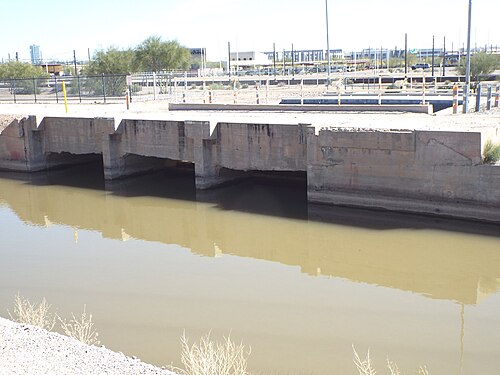
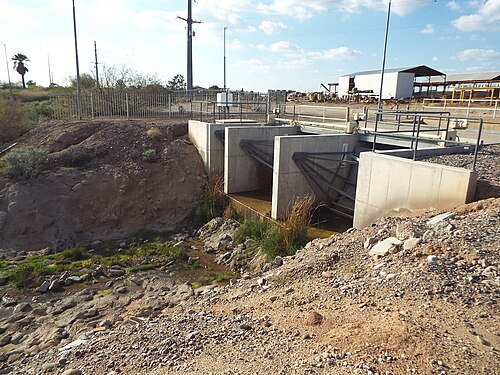
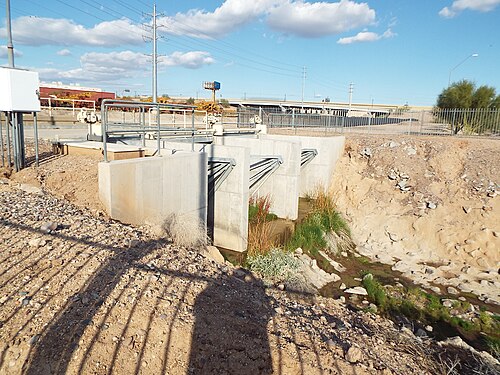
放棄されたジョイントヘッドダムと、ヨーロッパ系移民の初期開拓者によって建設された初期の運河は、フェニックスとその周辺地域の灌漑と発展において重要な役割を果たしました。写真には、1884年に建設された放棄されたジョイントヘッドダムの遺跡が写っています。また、1877年に開拓者によって建設されたフェニックス最古の運河であるグランド運河と、1888年に建設されたオールドクロスカット運河も写っています。
このリストには、フェニックスとアリゾナ州にとって歴史的に重要な人物で、フェニックスの歴史的な墓地に埋葬されている様々な著名人の最終的な安息の地の写真が含まれています。「パイオニア墓地協会(PCA)」の定義によれば、「歴史的な墓地」とは、50年以上存在している墓地のことです。リストに掲載されている墓地の中には、1870年に設立され、フェニックス最古の墓地である廃墟となったクロスカット墓地や、国家歴史登録財に登録されているパイオニア・アンド・ミリタリー・メモリアル・パークなどがあります。
フェニックスにある歴史的に重要な遺物を展示している博物館をいくつか紹介します。例えば、歴史的な路面電車116号が展示されているフェニックス路面電車博物館などが挙げられます。その他にも、1886年以降の自動車を展示するマーティン自動車博物館や、楽器博物館などがあります。
ラビーンとサニースロープ地区は、住民がそれぞれ独立した町として宣言することを望んでいたにもかかわらず、最終的にフェニックス市に合併されたため、別々に記載されています。

フェニックスは、アメリカ合衆国アリゾナ州の州都であり、最大の都市です。[ 1 ]フェニックスは、1867年にソルト川とギラ川の合流点近くに設立され、1881年に市として法人化されました。市内には、国家歴史登録財に登録されている歴史的建造物が数多くあります。また、フェニックス市内には、市の最高の特徴を表しているとされるランドマークやアトラクションが33箇所あります。これらは「フェニックスの誇り」[ 2 ]に指定されているか、フェニックス歴史的建造物登録簿に登録されています。フェニックス歴史的建造物登録簿は1986年に設立されました。これは、保存に値するとみなされた歴史的および先史時代の建造物の市の公式リストです。これらの建造物の中には、国家歴史登録財とフェニックス歴史的建造物登録簿の両方に登録されているものもあります。[ 3 ] [ 4 ] [ 5 ] [ 6 ]
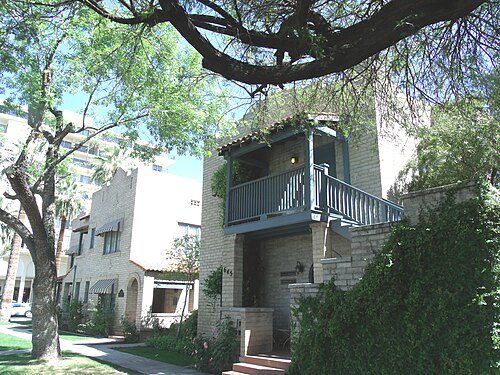
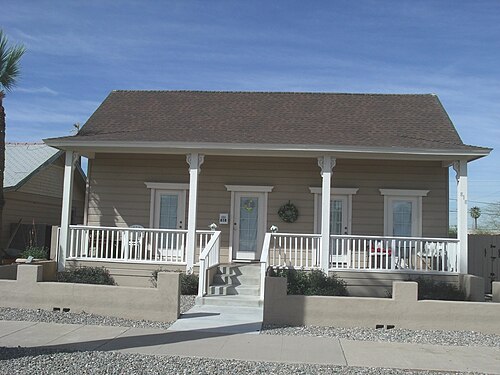
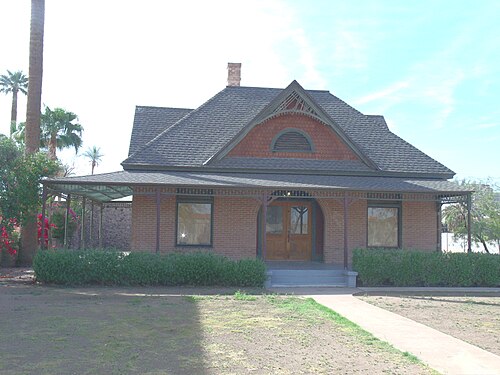
ヒストリック・ヘリテージ・スクエアは、ダウンタウンの東端にあるヘリテージ・アンド・サイエンス・パークの一部です。ここは、フェニックスの元の町跡から残っている唯一の住宅群を包含しています。[ 7 ]これらの建物の画像と簡単な説明が掲載されています。

『消えゆくフェニックス』の著者であるロバート・A・メリキアンによれば、フェニックスの保存局には解体許可を拒否する権限はない。そのため、国家歴史登録財またはフェニックス歴史的建造物登録簿に登録されている物件の所有者は、歴史的建造物を解体することができる。[ 8 ]ゴールデンゲートのような、少数派コミュニティの人々が住んでいた地域全体が取り壊された。アリゾナ州初の黒人医師であるウィンストン・C・ハケット博士の住居兼診療所として使われていた、元準州知事ジョセフ・キビーの邸宅(イースト・ジェファーソン通り1334番地)と、ハケットがブッカー・T・ワシントン記念病院を設立した建物(イースト・ジェファーソン通り1342番地)の両方が取り壊された。[ 9 ] [ 10 ]歴史的なセント・ジェームズ・ホテルは、保存団体の抗議にもかかわらず、フェニックス・サンズのシーズンチケット所有者のためのVIP駐車場を作るために取り壊される予定の、国家歴史登録財に登録されている建物の例です。国家歴史登録財に登録され、取り壊された物件には、次のものがあります。[ 11 ]
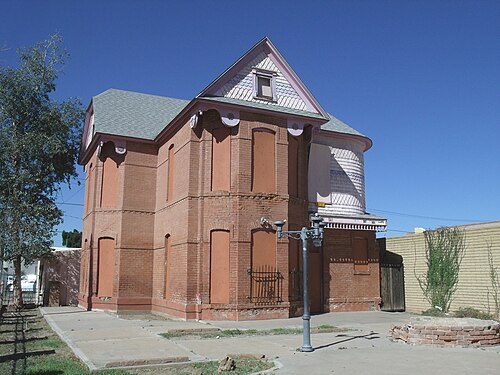
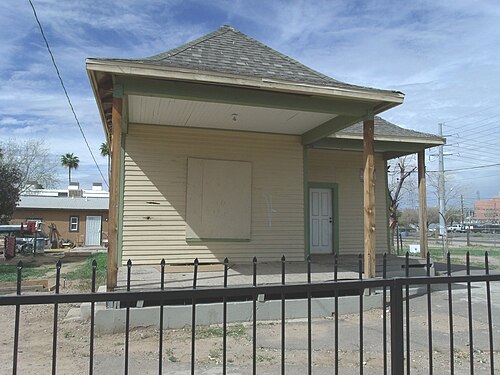
国立歴史登録財および/またはフェニックス歴史的建造物登録簿に登録されている歴史的家屋や建物の中には、フェニックス歴史的地区連合が発表した「危機に瀕している12の歴史的建造物リスト」にも掲載されているものがあります。これらの建造物は破壊行為や風雨にさらされやすいです。放置され、近い将来消滅する危険性が最も高い建造物の中には、次のものがあります。[ 12 ]
プエブロ・グランデ遺跡は、紀元前450年頃の先史時代のホホカム族の村の遺跡です。理由は不明ですが、この遺跡は西暦1450年までに放棄されました。ここに掲載されているのは、発掘されたホホカム族の建造物の遺跡の一部で、プエブロ・グランデ博物館・考古学公園内にあります。


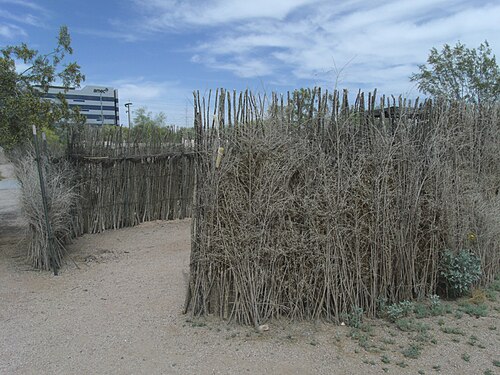


ヨーロッパ系の開拓者たちがフェニックスに入植した当時、この地域は大部分が砂漠でした。ジャック・スウィリングのような入植者たちは、ホホカム族の古代の運河に触発されました。開拓者たちはすぐに、ソルト川から農地を灌漑するための水路を掘り始めました。やがて、 1882年12月に設立されたアリゾナ運河会社のような運河建設会社が組織され、この地域の現在の運河を建設しました。ジョイントヘッドダムは1884年に建設され、ジャック・スウィリングが「スウィリング水路」として知られる水路を掘った場所、そしてソルト川が流れている場所に位置しています。このダムはグランド運河(1878年建設)と、最終的にはオールドクロスカット運河(1888年建設)に水を供給しました。放棄されたジョイントヘッドダムは、地域にとって重要な開墾の歴史との関連性から、基準「A」に基づき国家歴史登録財への登録資格があると判断され、したがってセクション4(f)の資源となっています。[ 13 ]




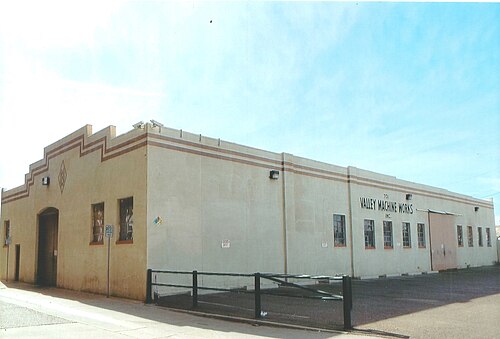
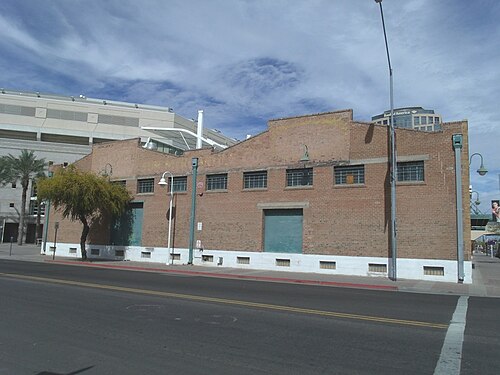
フェニックスのヘリテージスクエアは、かつてフェニックスの町の14番街区だった場所に位置しています。この広場は1800年代後半のビクトリア朝時代に遡ります。町は1978年11月7日に国家歴史登録財に登録されました(登録番号:#78000550)。現在ビクトリア朝時代の歴史的建造物博物館となっているローランド・リー・ロッソン博士邸(1895年)とベアード機械工場(1920年)も、それぞれ国家歴史登録財に登録されており、この歴史的な広場にあります。[ 14 ]


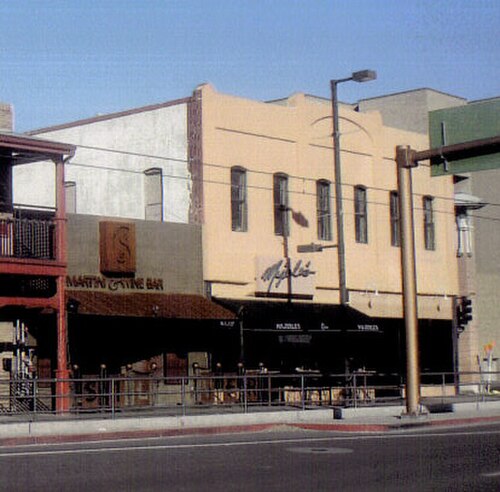
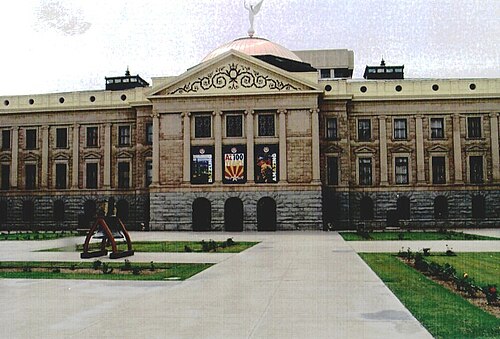
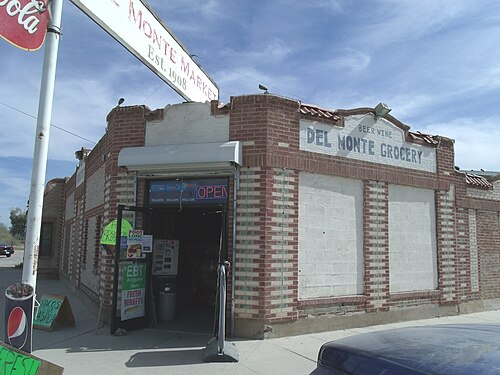
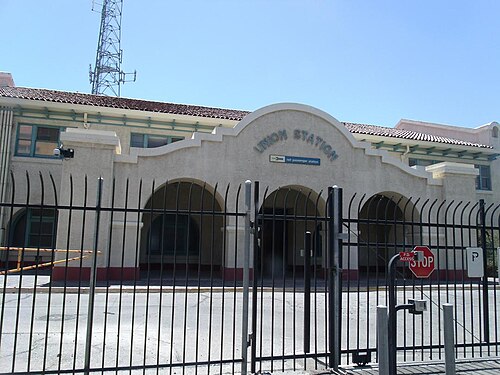
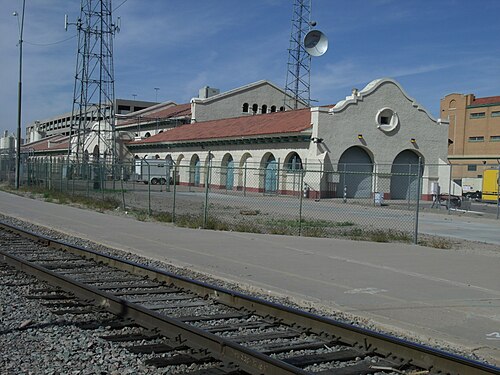
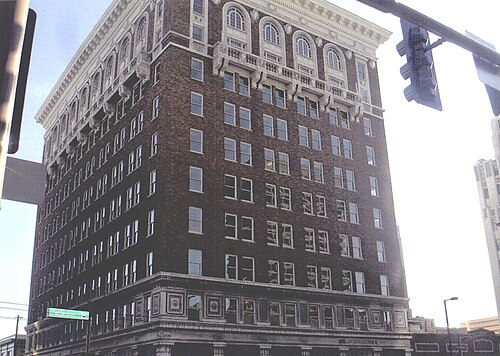
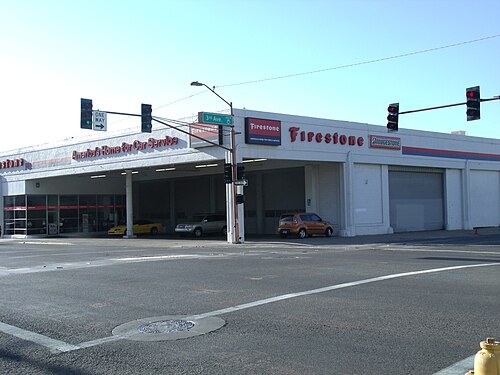
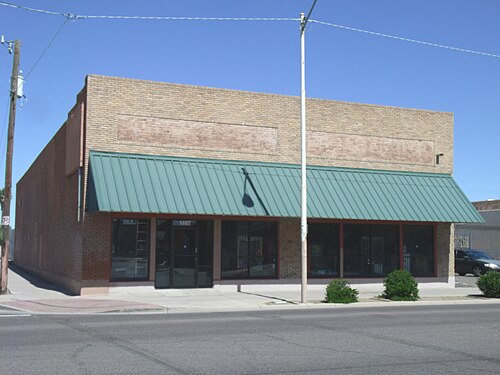
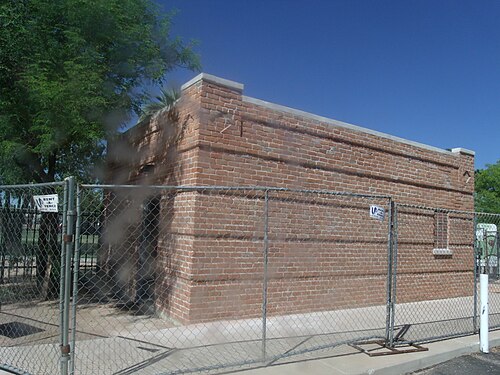
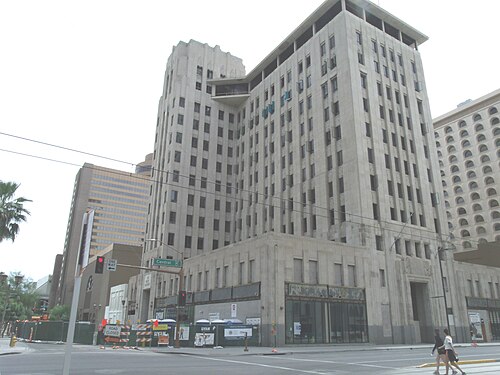
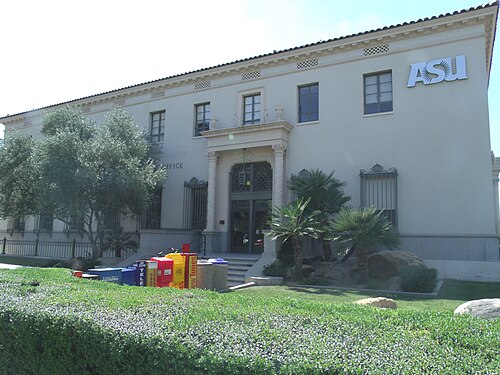
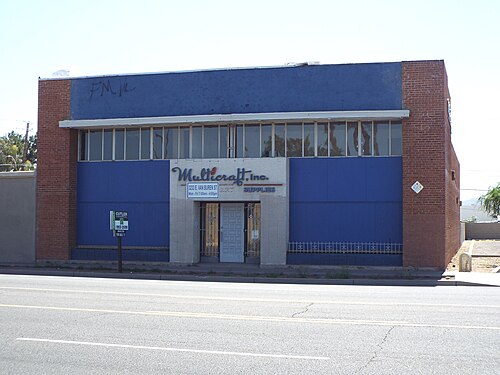
このセクションには、国家歴史登録財またはフェニックス歴史的建造物登録簿に登録されている歴史的建造物が含まれています。現存し、現在も使用されている最古の建物は、1885年に建てられた「フライズ・ビルディング」です。1893年に完成し、現在も使用されている最古のホテルは「ウィンザー・ホテル」です。
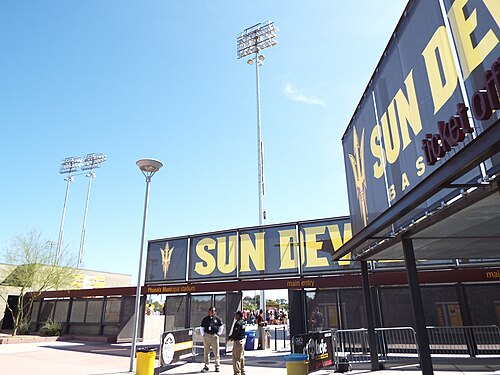
また、このセクションには、PHPR plus に登録されている「ハード牧場穀物サイロ」などの歴史的建造物、1900 年代初頭に建設されたアリゾナ州立博覧会グランドスタンド、「17th アベニュー地下道」と「セントラルアベニュー地下道」などが含まれており、これらはどちらも国家歴史登録財に登録される資格があります。[ 15 ]








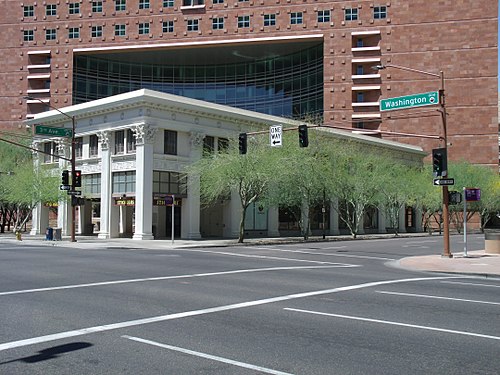
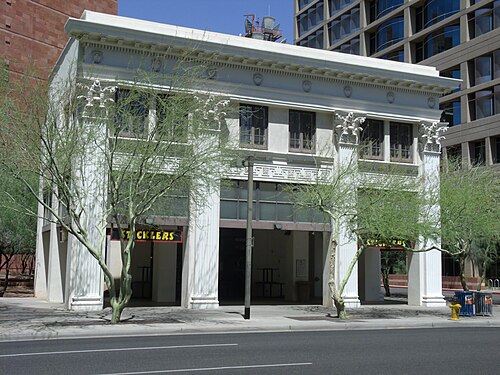
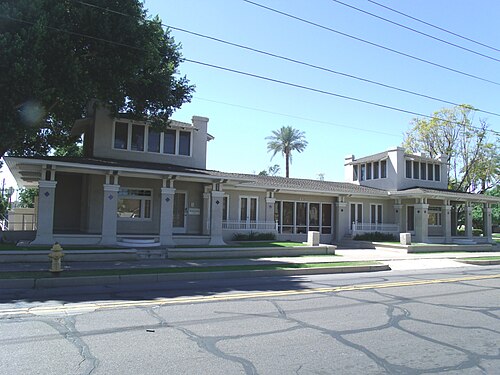


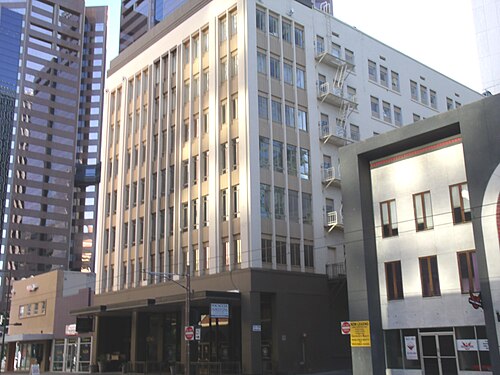
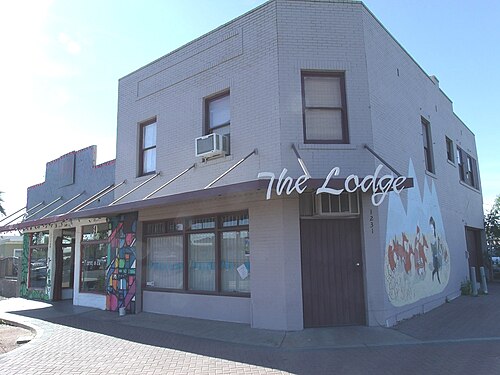


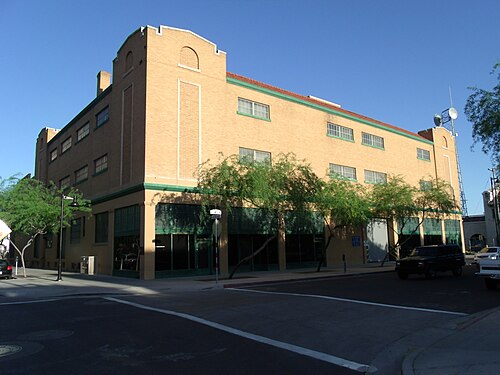






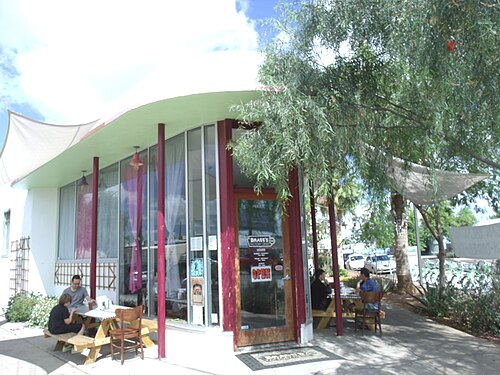


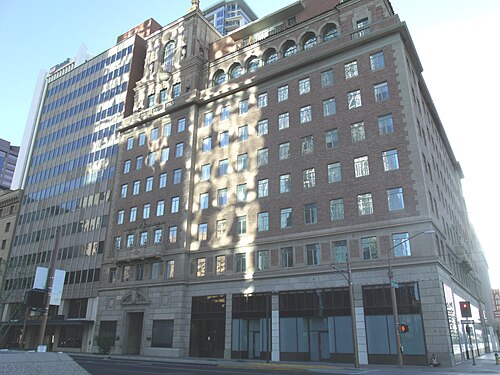
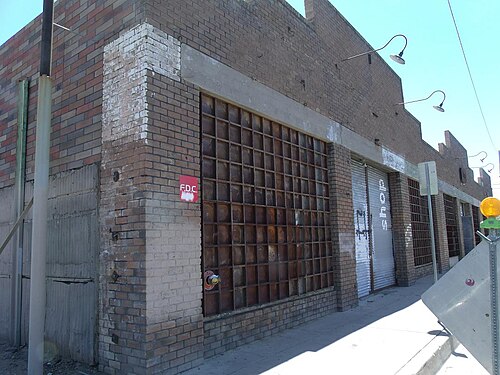
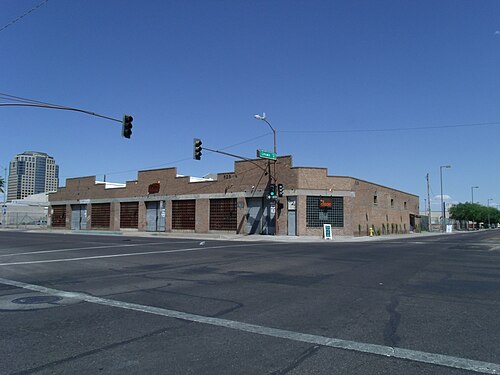



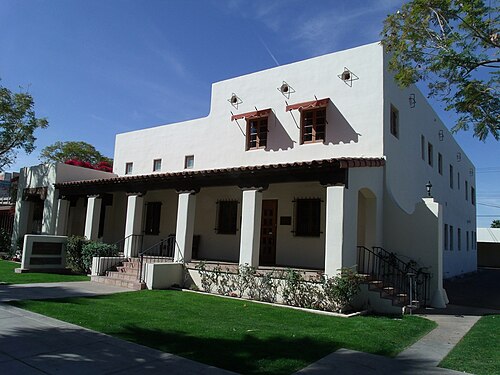


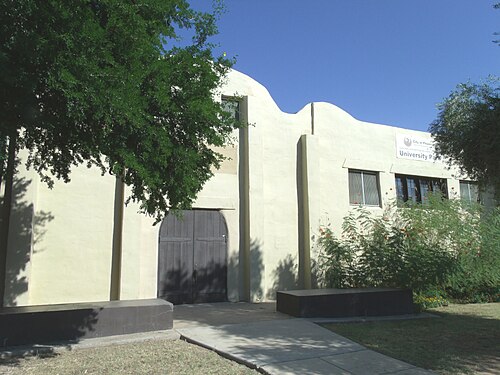


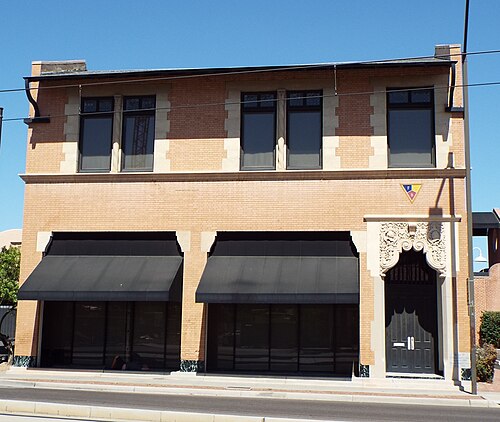


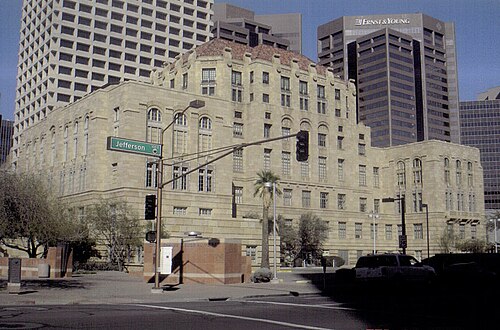


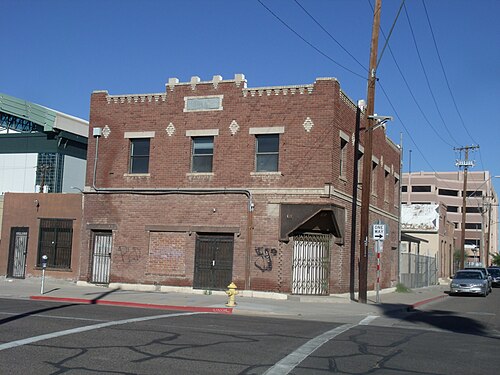









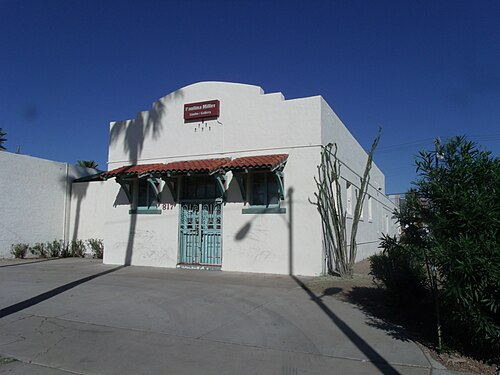









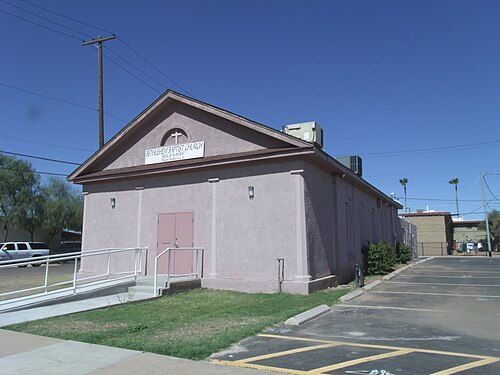
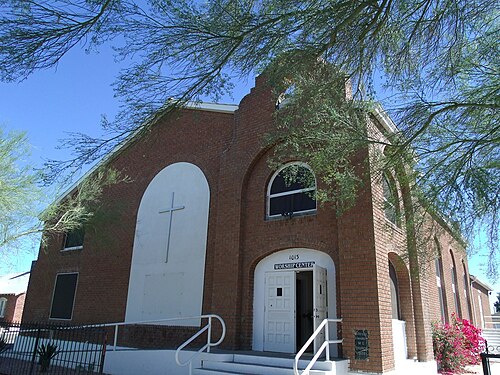
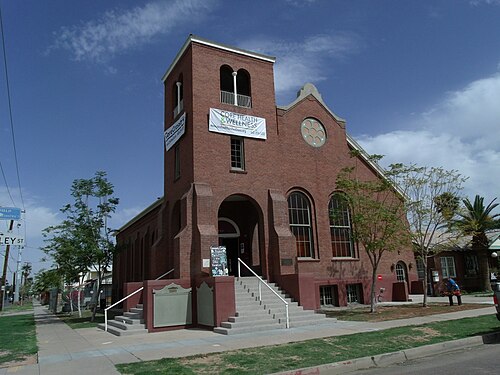
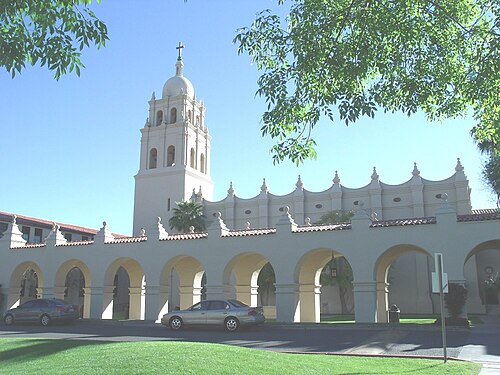
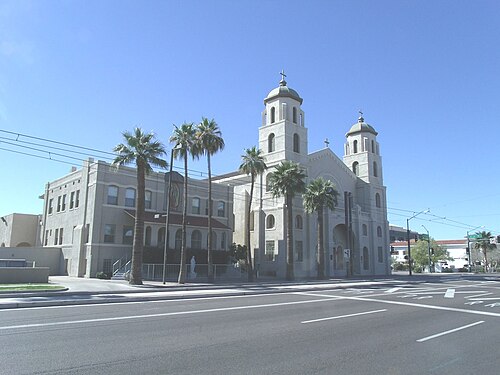
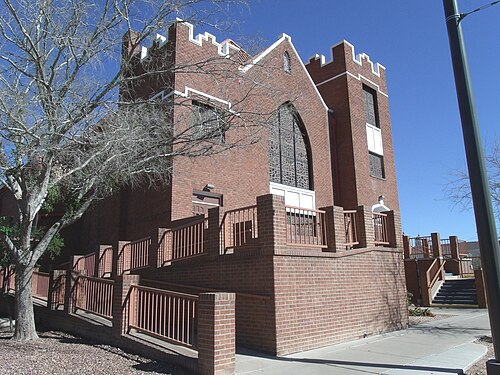
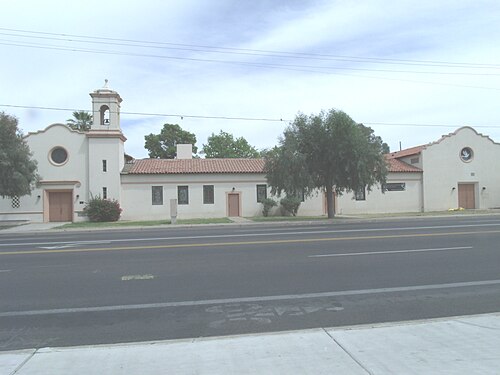
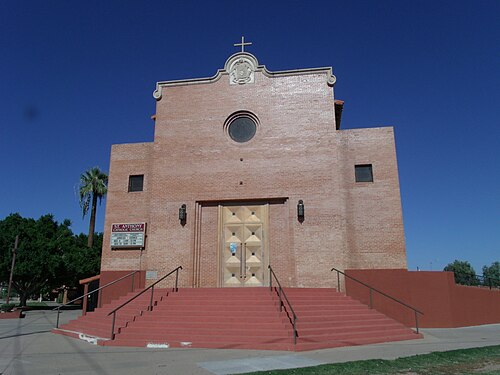
Many of the historic houses of religious worship, such as the "First Presbyterian Church" (1892), are listed in the National Register of Historic Places. Others, such as the "Tanner Chapel A.M.E. Church" (1929), have been designated historic by the Phoenix Historic Property Register. The Tanner Chapel A.M.E. Church, one of the oldest African-American churches in the state, is the only Arizona church where civil rights leader Martin Luther King Jr. is known to have given a sermon. Houses of religious worship such as the "First Mexican Baptist Church" (1920), Phoenix's oldest Hispanic church, are recognized as historic by surveys, as in the case of the Hispanic American Historic Property Survey of the City of Phoenix.


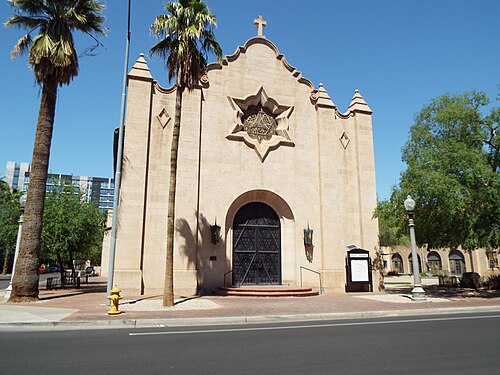
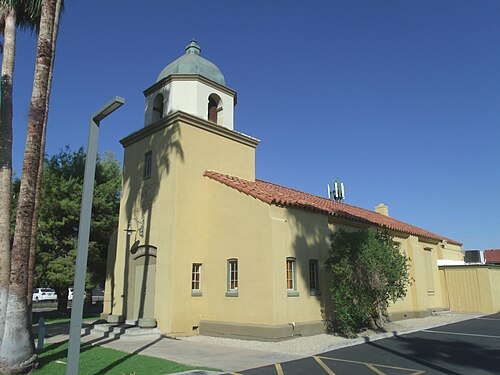
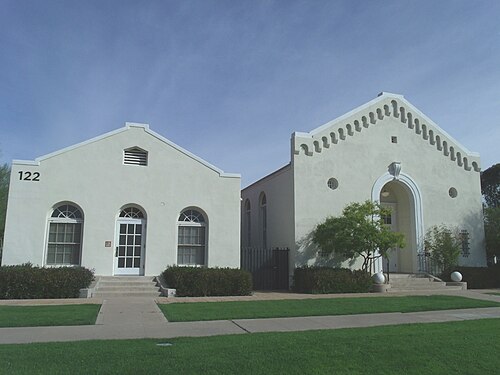


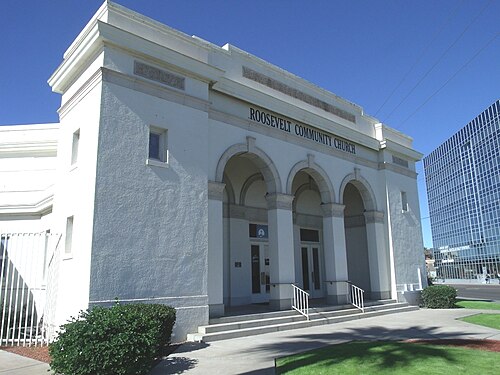








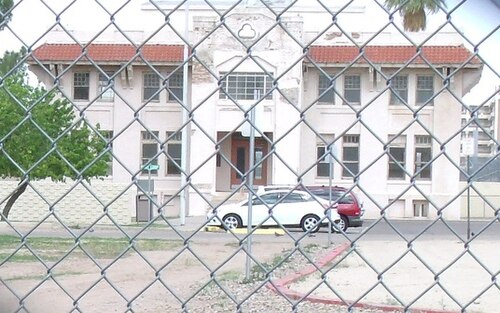
The first school in Phoenix was established in 1873. It was known as the Little Adobe School and it was located in 202 N. Central Avenue where the San Carlos Hotel currently stands. Schools were segregated then and therefore, so were many of the historic schools on this list. The Phoenix Indian School was established in 1891 under the federal "assimilation" policy which sought to regimentalize and culturally exterminateNative American students.[26] African-American students were only allowed to attend racially segregated schools such as the Dunbar School which was built in 1925, the Phoenix Union Colored High School (Later renamed George Washington Carver High School) built in 1926, and the Booker T. Washington Elementary School built in 1928.


Some of these houses meet the National Register criteria for evaluation. The quality of significance in American history, architecture, archeology, engineering, and culture is present in districts, sites, buildings, structures, and objects that possess integrity of location, design, setting, materials, workmanship, feeling, and association and that are associated with the lives of persons significant in Phoenix's past. The following prominent people who at one time or another lived in Phoenix and whose houses are listed here are:






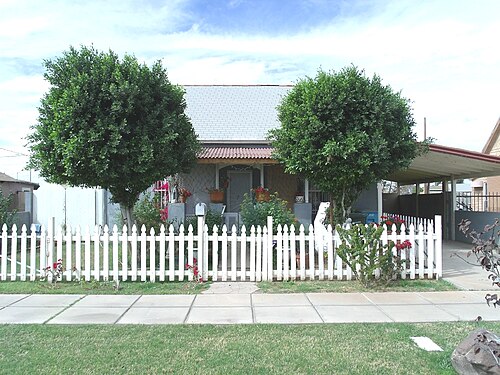


The following prominent people who at one time or another lived in Phoenix and whose houses are listed here are:
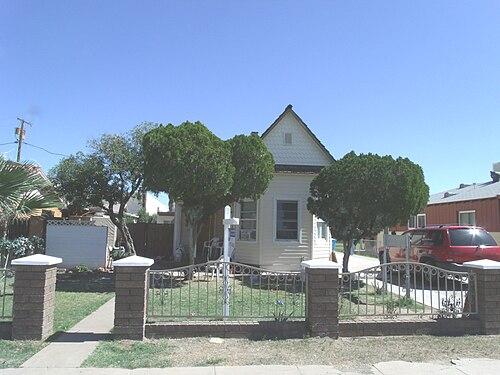
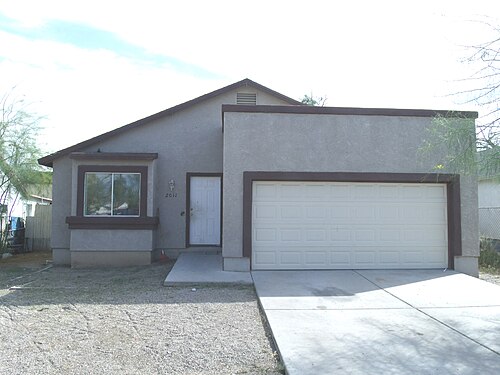


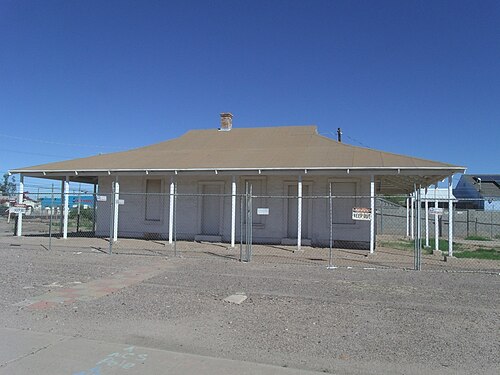


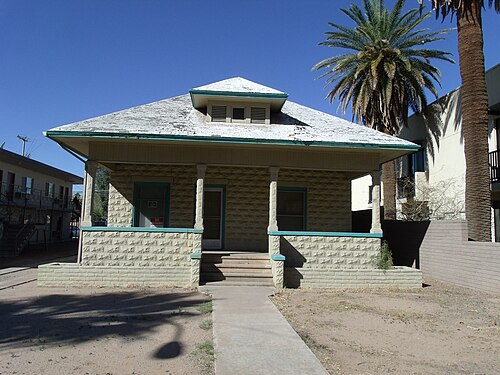
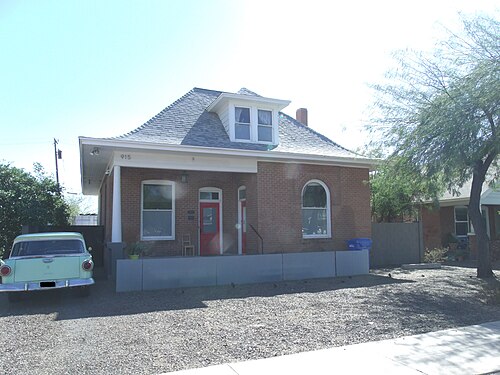

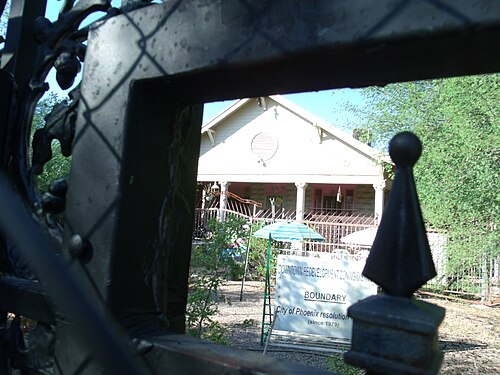


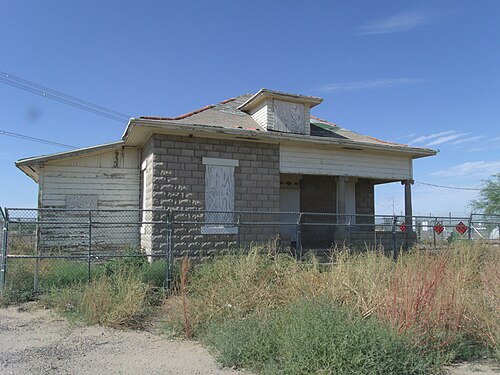


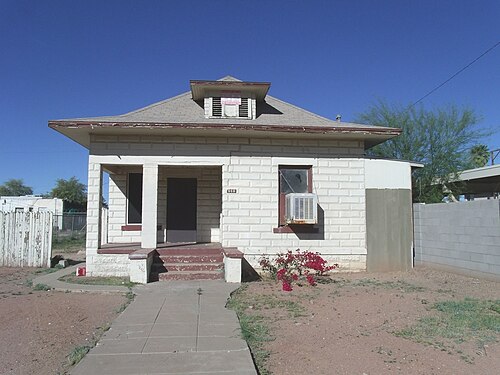


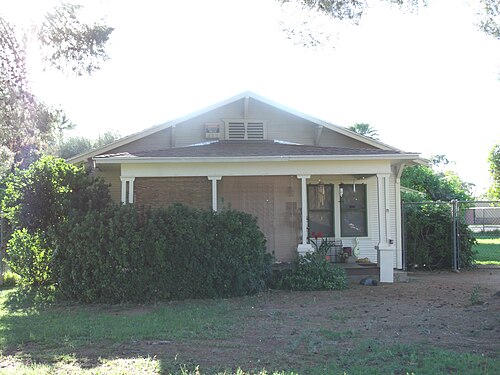


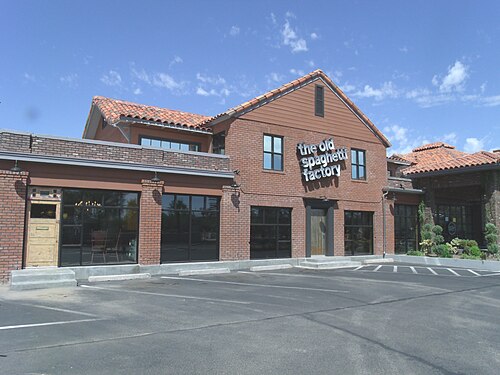
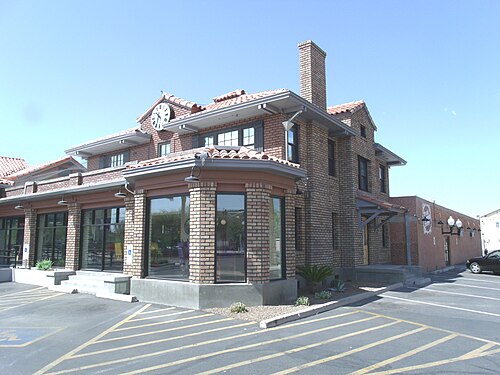

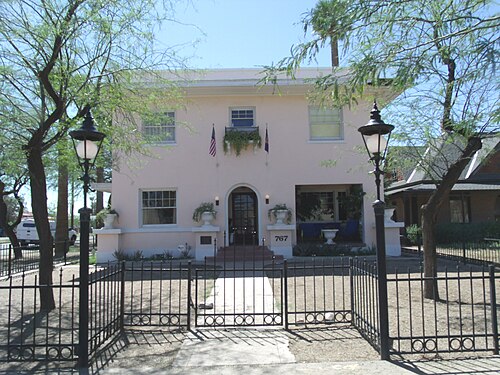


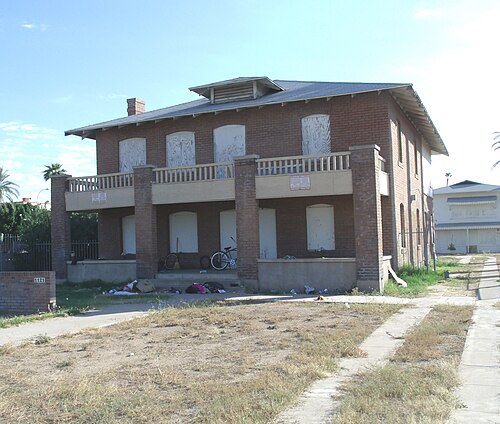


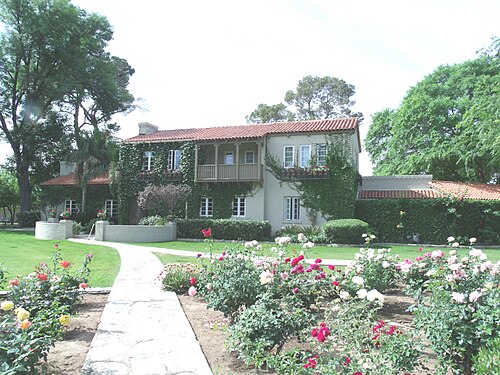

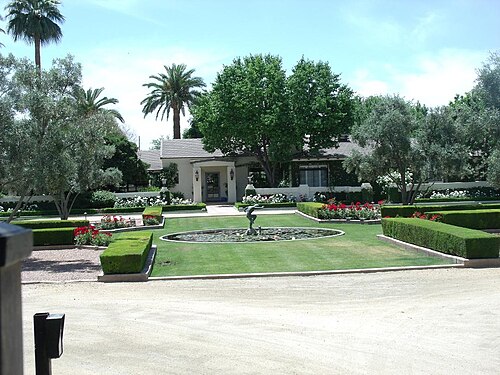


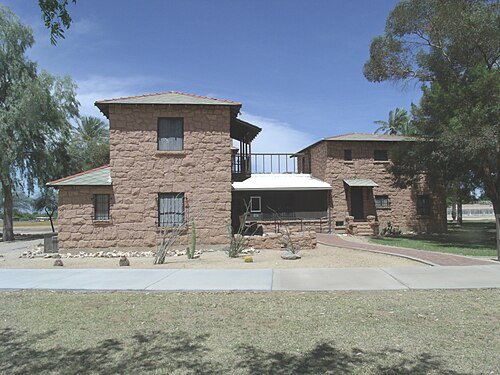
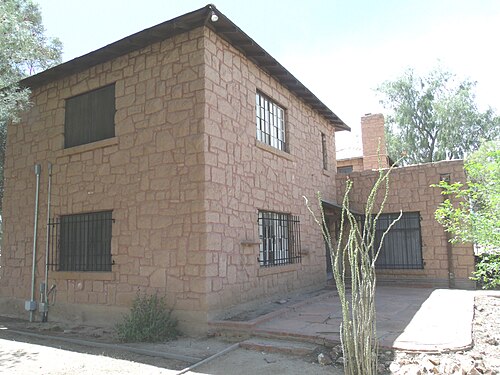

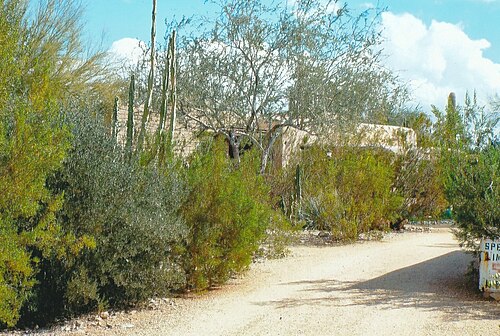
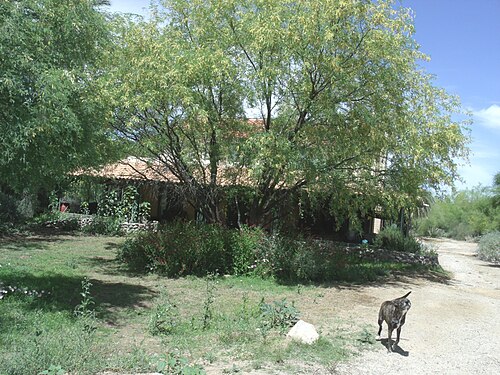


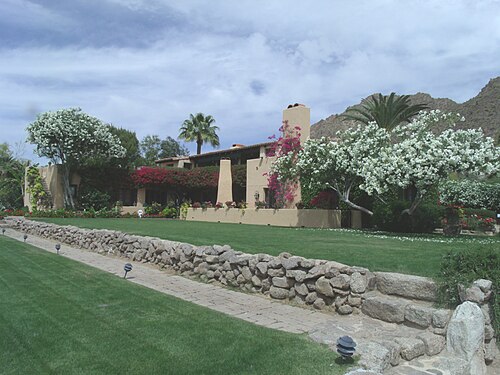
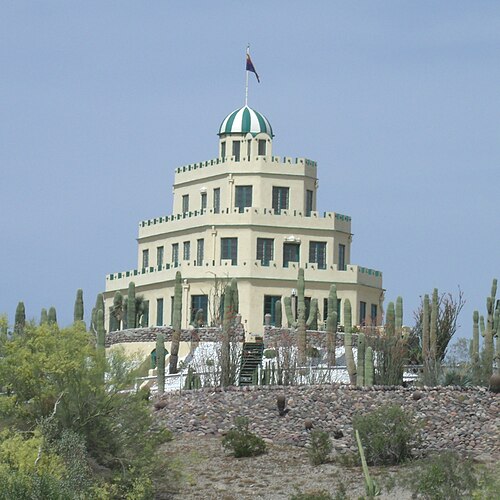


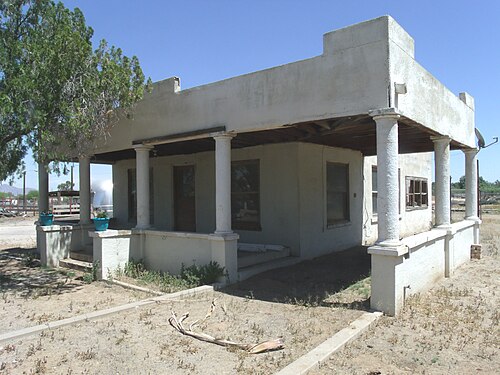
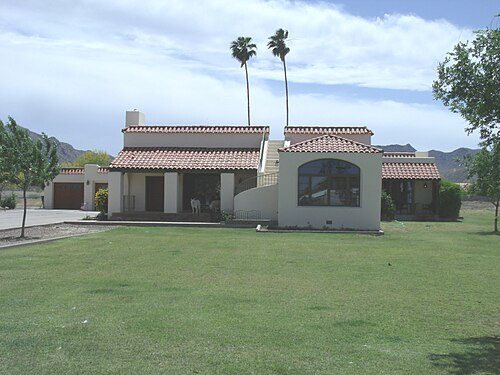


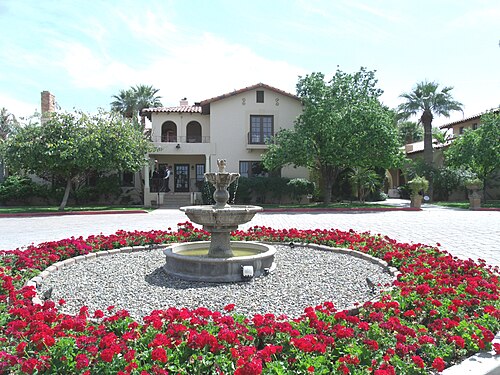


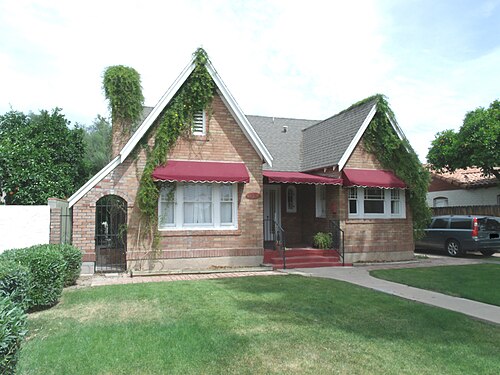


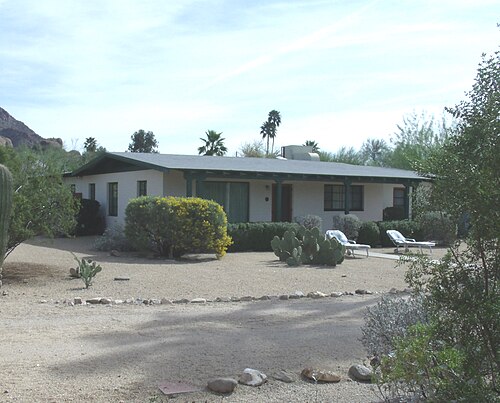


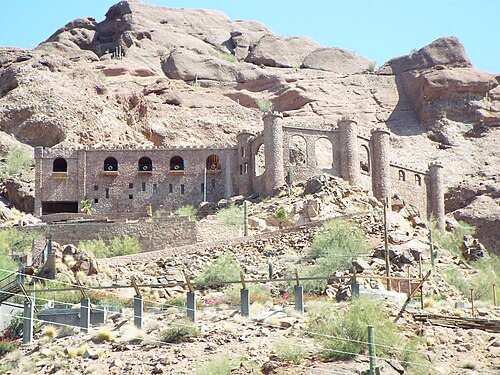
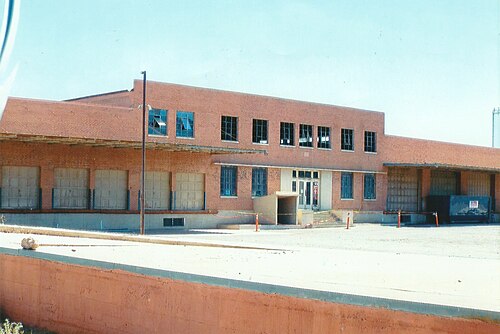
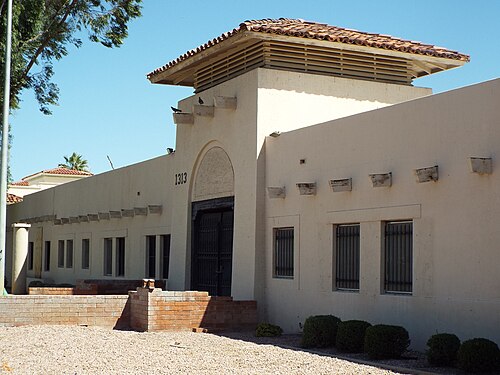
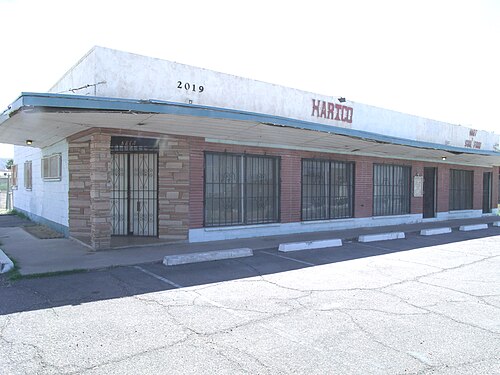
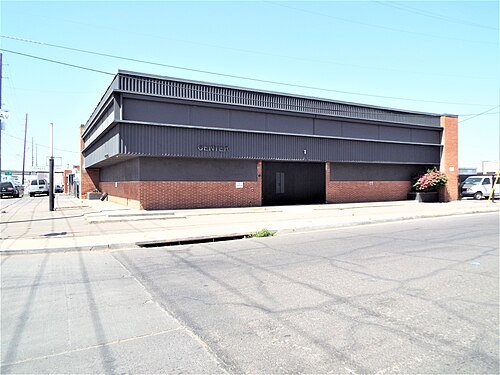
The City of Phoenix conducted various historic property surveys focusing on the themes of African, Asian and Hispanic history in Phoenix from 1870 to 1975. The purpose of the surveys was to identify the number and locations of minority associated historic properties citywide and to document their significance to their community. The surveys were funded by the Phoenix Historic Preservation Bonds funds as well as a Certified Local Government grant received from the National Park Service through the Arizona State Historic Preservation Office. While the National Register of Historic Places Criteria is only concentrated on the properties of these communities prior to 1955, the study included in the surveys take into consideration the significance of the struggle for civil rights and equality. Therefore, the properties which were involved in ending segregation in Phoenix are also included.[32][33][34]
The areas covered in the African American Historic Property Survey are 1. East – the region south of Van Buren Avenue to the Southern Pacific Railroad tracks, east of Central Avenue to 24th Street; 2. West – the region south of Grant Avenue to the Salt River, west of 7th Avenue to 19th Avenue; and 3. South – the region south of the Salt River to Southern Avenue, east of 16th Street to 28th Street.[32]
The areas covered in the Asian American Historic Property Survey are spread throughout Phoenix and not concentrated in one area. The concentration of the areas depends on the nationality from which they are descended, such as Chinese, Japanese, Filipino and Asian Indian.[33]
The areas covered in the Hispanic American Historic Property Survey are the regions south of the Southern Pacific Railroad tracks to the Salt River, east of Central Avenue to 24th Street; west of Central Avenue to 27th Avenue and south of the Salt River to Baseline, east to 48th Street and west to 35th Avenue. One of the structures considered as iconic is the Sacred Heart Church which is located in 920 S. 17th St. The church was built in 1900 in what was once a Hispanic neighborhood called "Golden Gate". The City of Phoenix forced the residents of the community in question to move and demolished the entire neighborhood. The reason given for this act was that the city needed the land to expand Sky Harbor Airport. The church was added to National Register of Historic Places on March 20, 2012. Reference number 12000124.[35][34]
The following prominent people who at one time or another lived in Phoenix and whose houses are listed here are:


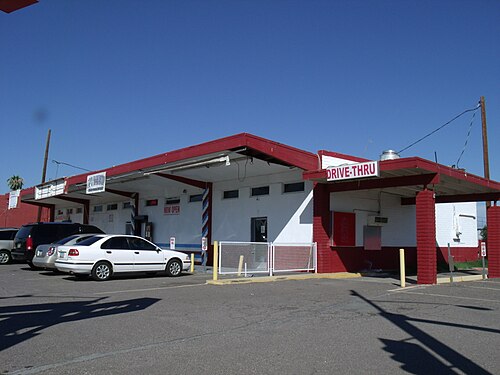


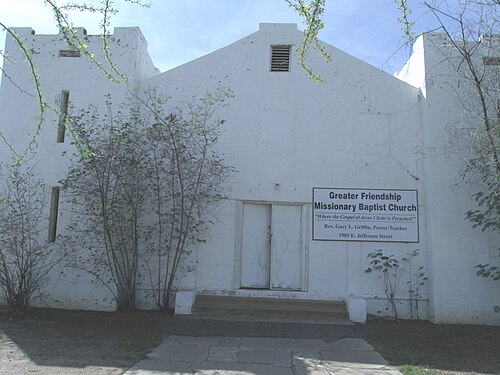


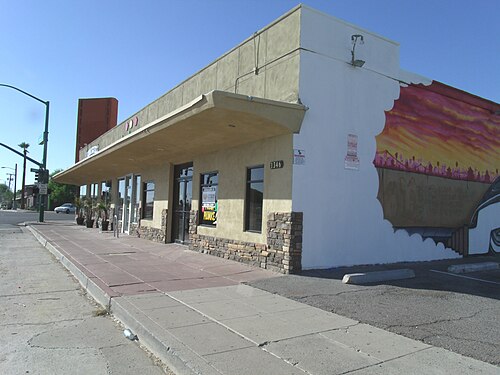


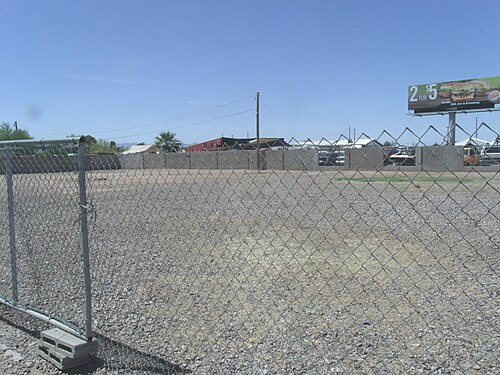

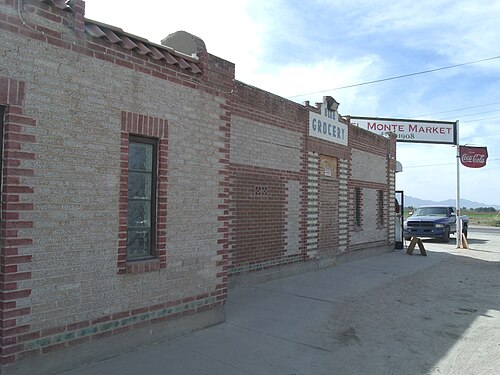

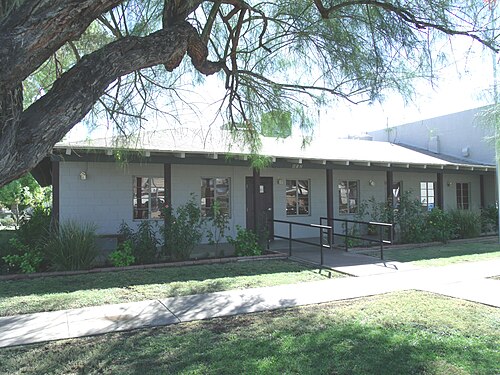


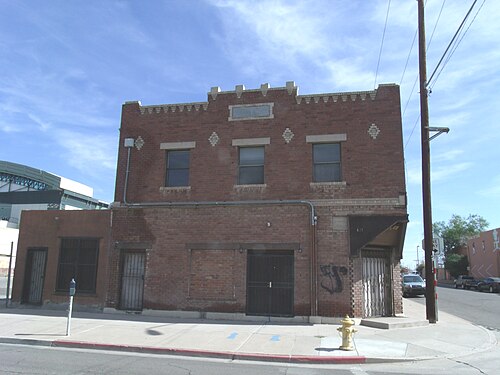


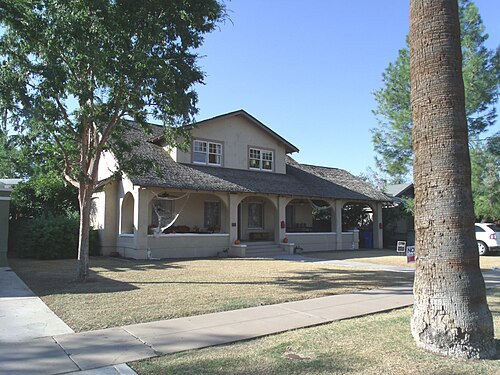
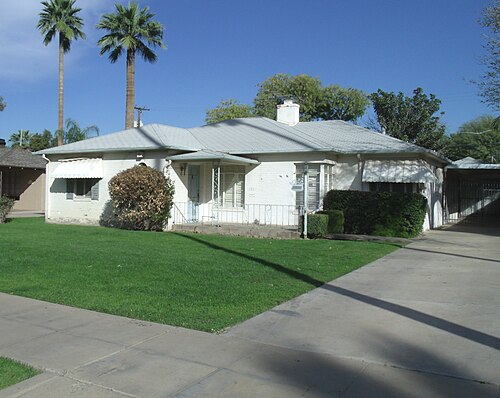


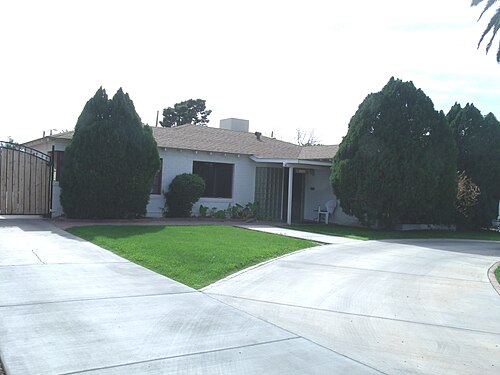


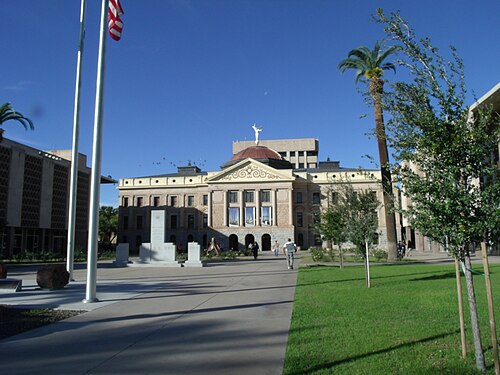
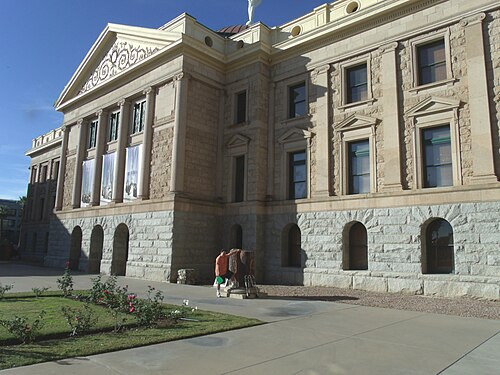
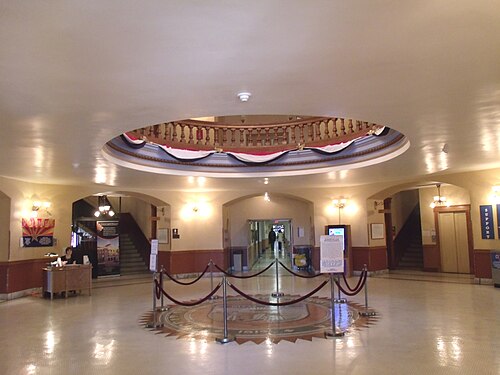


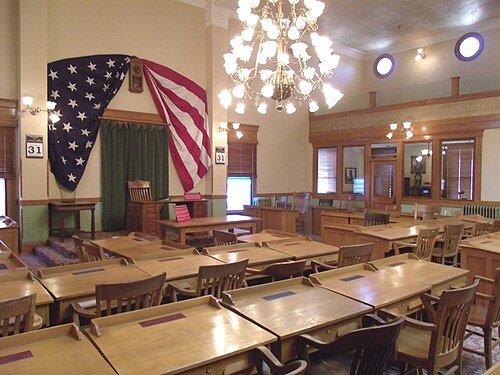

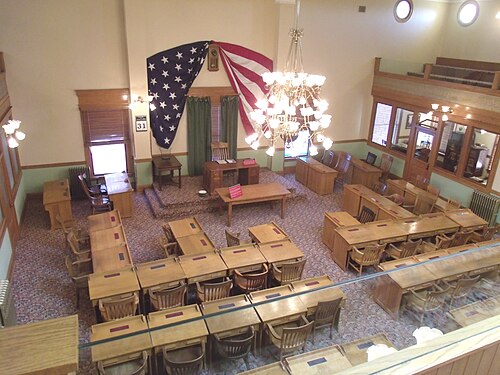


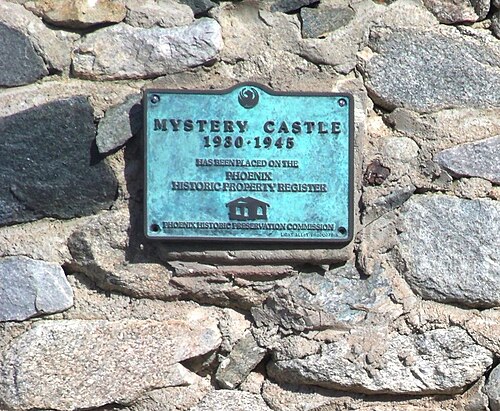




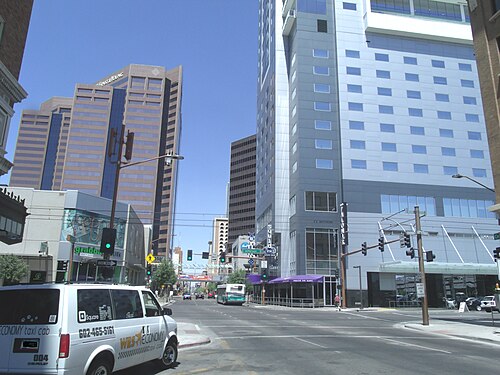
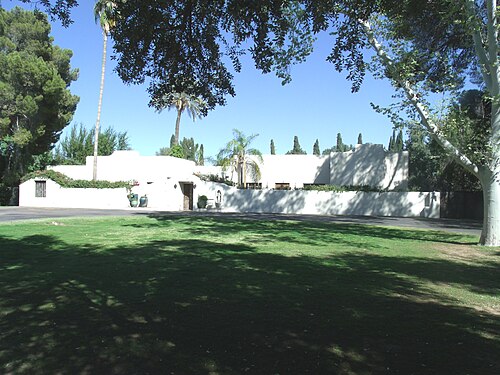
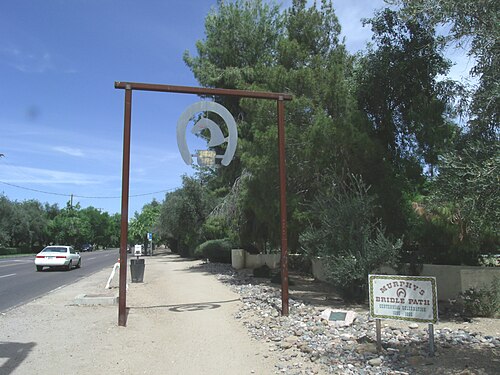
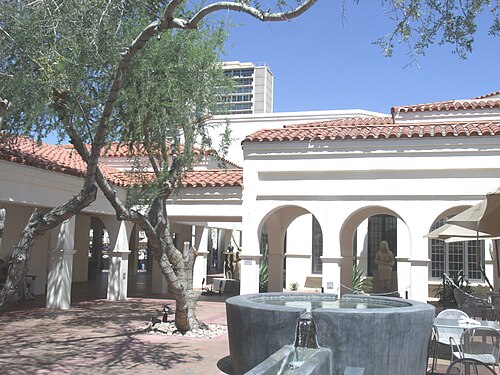
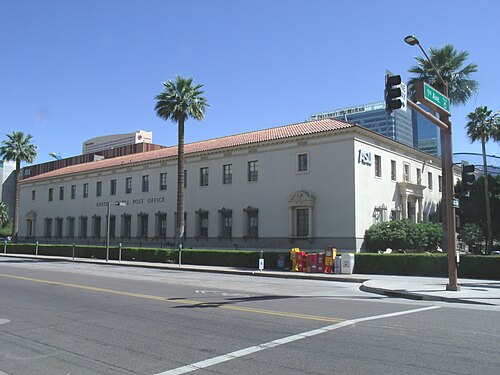
The north and south sides of the Central Avenue Corridor of Phoenix are lined with historical houses and buildings. These are the images of those properties. Some are listed in the National Register of Historic Places and some are listed in the Phoenix Historic Properties Register. There are also some historic properties which are listed in both registers.





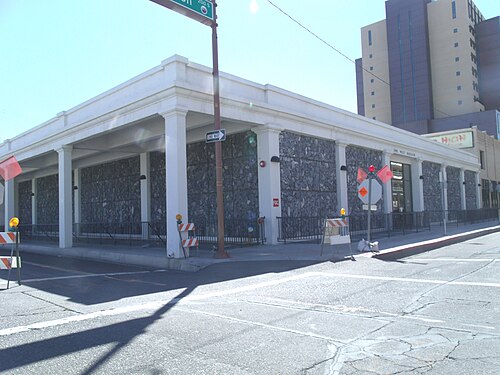
The Pioneers' Cemetery Association (PCA) defines an "historic cemetery" as one which has been in existence for more than fifty years.[42] There are various historic cemeteries which were established in the late 19th century. These cemeteries serve as the final resting place of various notable citizens of Arizona. Among which can be found pioneers, governors, congressman, government officials, journalists, race car drivers, soldiers, actors and actresses.
The four historic cemeteries listed are:
The Crosscut Cemetery, a.k.a. the Williams Crosscut Cemetery, was established in 1870 by John Wesley and Amanda "Manda" Williams. The historic cemetery, which at the time was located in the desert far from central Phoenix, is the oldest pioneer cemetery in Phoenix.[43] It is located in what is now the corner of 48th St. and East. Van Buren St. Many of the headstones are missing and some of the graves vandalized. The cemetery, which continues to belong to the Williams family, has a locked gate and a chained-linked fence with barbered wire surrounding it.[44]


The Pioneer and Military Memorial Park is the official name given to seven historic cemeteries in Phoenix. The cemeteries were founded in 1884 in what was known as "Block 32". On February 1, 2007, "Block 32" was renamed Pioneer and Military Memorial Park.


St. Francis Catholic Cemetery, established in 1897, is one of the oldest in the city. Its inhabitants represent pioneer families, community and business leaders, miners, those who succumbed to tuberculosis, and others who helped write the history of Phoenix and Arizona. Margaret Geare of Dublin, Ireland, who was buried on October 12, 1897, is believed to be the first to be buried in the cemetery. The cemetery is located at 2033 N. 48th Street.


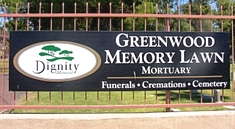
Greenwood/Memory Lawn Mortuary & Cemetery is the final resting place of various notable people. Among them are three Arizona Territory Governors, six Arizona State Governors, a Secretary of Arizona Territory, the founder of Glendale, Arizona, the 1958 Indianapolis 500 winner and a journalist.


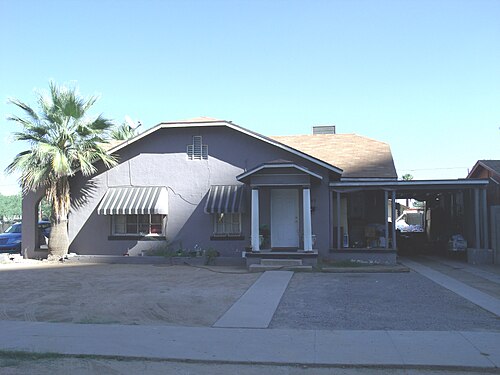
Winnie Ruth Judd was a native of Indiana who worked in Phoenix as a medical secretary. Judd was accused of murdering and dismembering the bodies of her two roommates, friends Agnes Anne LeRoi and Hedvig Samuelson. The prosecutors in her trial alleged that she placed the dismembered parts of the bodies in two trunks (suitcases) and took them to Los Angeles. According to prosecutors, the murders were committed by Judd and an accomplice, Phoenix businessman John "Happy Jack" Halloran, whom she claimed was her lover. Her trial was marked by sensationalized nationwide newspaper coverage, who referred to Judd as "The Trunk Murderess". She was pronounced guilty and sentenced to death by hanging. The sentence she received raised debate about capital punishment. Days before her execution Winnie Ruth was called back to the courtroom for an insanity hearing. In 1933, she was found to be insane and moved from prison to the Arizona State Mental Hospital.[47]
The historic properties pictured are all either directly or indirectly related to Judd and the infamous crime. Three of the buildings are listed in the National Register of Historic Places, two of the houses are located in the Historic Roosevelt District which is listed in the National Register of Historic Places and the house where the murders took place was once listed in the "enDangered Dozen Historic Places List," released by the Phoenix Historic Neighborhoods Coalition.[48] It is now in the process of restoration and will be used to house a law firm.


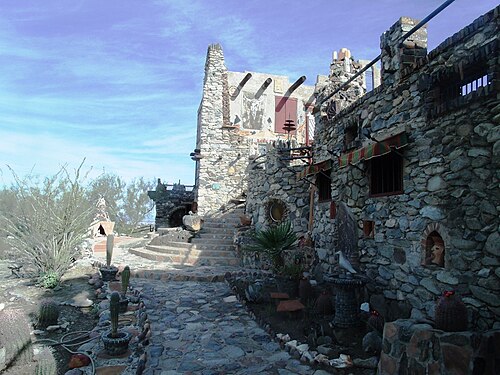
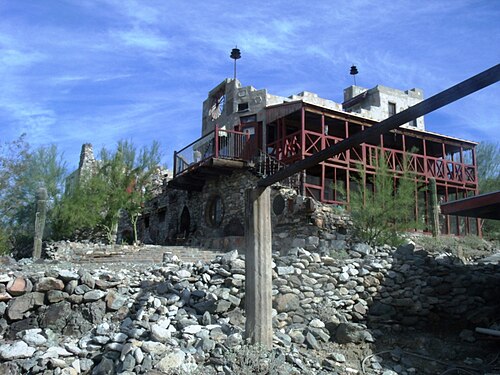
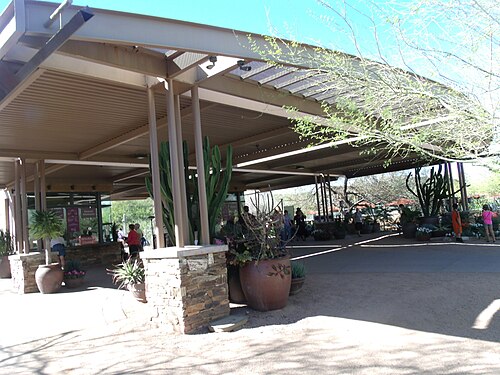
Among the landmarks that are pictured and included in this article are the Deer Valley Rock Art Center and Papago Park. The Deer Valley Rock Art Center, also known as the Hedgpeth Hills Petroglyph Site and the Sonoran Desert preserve, is a 47-acre archaeological site containing over 1500 Hohokam, Patayan, and Archaic petroglyphs.[49] The petroglyphs are between 500 and 7,000 years old,[50] and at least one source dates the petroglyphs to 10,000 years ago.[51] The site was listed on the National Register of Historic Places in 1984, and it was also listed with the Phoenix Points of Pride. A museum designed by Will Bruder was constructed on the site in 1994.[52][53][54][55]
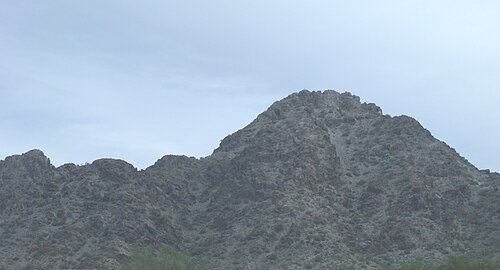
Papago Park is a hilly desert park covering 1200 acres in its Phoenix extent and 296 acres in its Tempe extent. It is where the Desert Botanical Garden, the Phoenix Zoo, and Hunt's Tomb, the pyramidal tomb of Arizona's first governor, George W. P. Hunt are located.


The Desert Botanical Garden, Hole-in-the-Rock and Hunt's tomb are located in Papago Park. Papago Park was listed in the Phoenix Historic Property Register in October 1989. The Desert Botanical Garden is designated as a Phoenix Point of Pride. The Webster Auditorium is listed in the National Register of Historic Places.
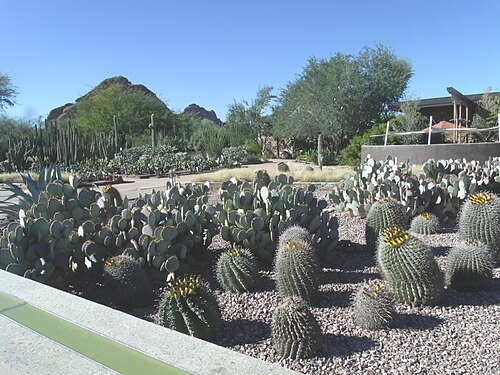


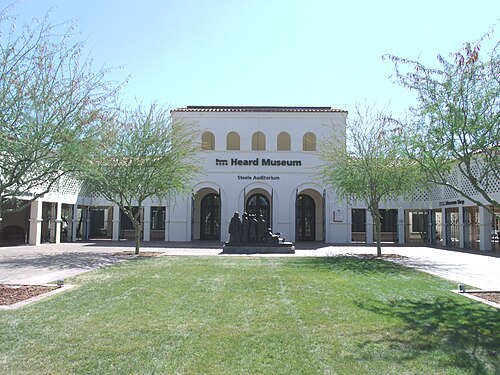
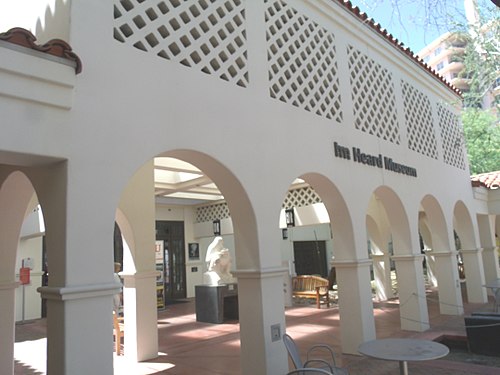
A museum is a building or place where objects of historical, artistic, or scientific interest are exhibited, preserved, or studied. There are many museums in Phoenix, among them the Heard Museum, an Art Museum which serves as a showcase for Native American culture and the Phoenix Art Museum, an Art Museum, which showcases artwork from the Renaissance to today.
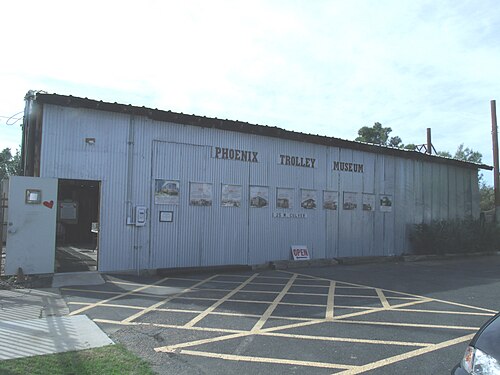
This section of the list includes the Pioneer Living History Museum and the Phoenix Trolley Museum. The Pioneer Living History Museum has 30 historic original and reconstructed buildings from the 1880s and early 1900s on its 90-acre property. The main exhibit of the Phoenix Trolley Museum is the historic trolley car #116, a restored 1928 trolley which served the original Phoenix trolley system.
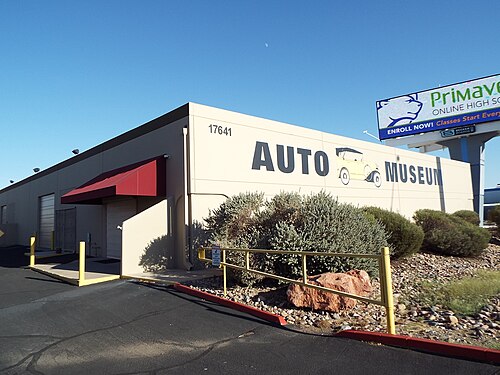
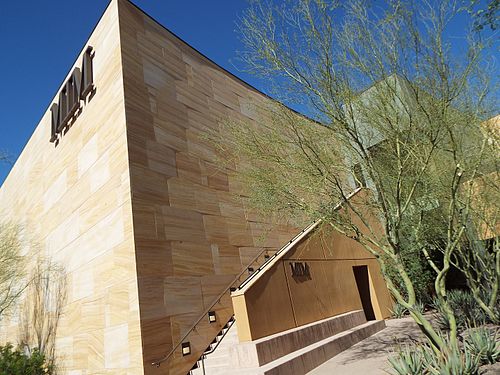
This section also includes some images of cars exhibited in the Martin Auto Museum and some of the historic musical instruments on exhibit in the Musical Instrument Museum. The Martin Auto Museum is dedicated to the preservation of historical and collectible automobiles for educational purposes and the Musical Instrument Museum, which bills itself as "The World's Only Global Musical Instrument Museum", displays more than 6,500 instruments collected from around 200 of the world's countries and territories. Among the exhibits is the Steinway piano that John Lennon used to compose the song "Imagine", Elvis Presley's guitar, a 1900 Cuatro, and displays dedicated to various countries.[56]








Laveen, an urban village within the city of Phoenix, which was first settled by farmers and dairymen in 1884. In the early 1900s, Walter E. Laveen and his family homesteaded an area encompassing all four corners of present-day 51st Avenue and Dobbins Road, where they also built the area's first general store –the Laveen Store –on the southeast corner.[61] Two properties in Laveen are listed in the National Register of Historic Places.


The Sunnyslope community is a long-established cohesive neighborhood within the borders of the city of Phoenix. It has its own "small town" identity and a sense of place that is a point of pride embraced by community members. Sunnyslope has attempted to be incorporated as its own town on four occasions but failed every time. In 1959 the City of Phoenix annexed the community of Sunnyslope. Most of the structures of historic significance have been razed.[62][63]








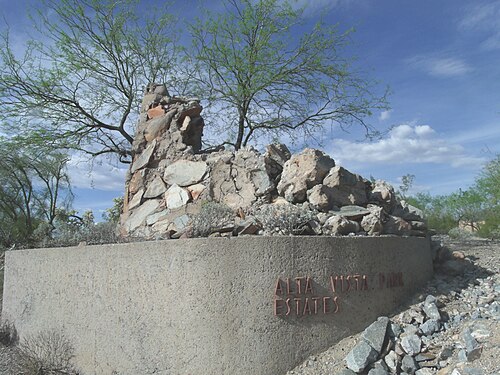
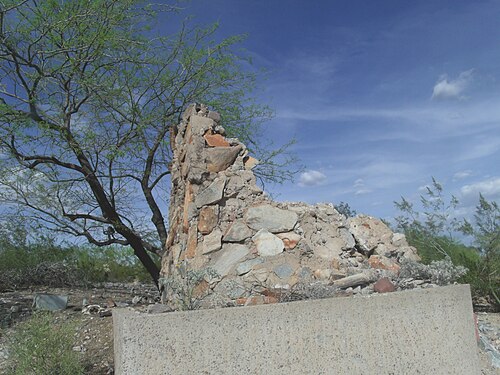


Historic structures in Phoenix with articles
Winnie Ruth Judd, who spent three decades in an Arizona state mental hospital as the notorious trunk murderess in one of the most sensational criminal cases of 1930s, died in Phoenix on Friday. She was 93.