
Loading article…

ナシはバラ科のPyrus属(学名: Pyrus / ˈ p aɪ r ə s /)に属する樹木で、リンゴに似た食用果実を実らせます。ナシのいくつかの種は果実や果汁を目的として栽培され、その他は観賞用の花木として栽培されています。
ナシの木は、ほとんどが中型から小型ですが、低木状に育つものもあります。アジア原産で、ヨーロッパや北アフリカの山岳地帯に広く分布しており、温帯地域に生育します。ナシの木材は、高品質の木管楽器や家具の製造において好んで用いられる素材です。
世界中で約3,000種類の梨が栽培されており、形も味も様々です。2024年の世界の梨の生産量は約2,800万トンで、中国が全体の76%を占めています。梨は生食、缶詰、ジュース、乾燥、または洋梨酒(ペリー)として発酵させて消費されます。
梨という単語は、古英語のpereまたはperuから、俗ラテン語のperaから、ラテン語のpirumに由来し、おそらく同じ意味を持つギリシャ語の άπιον apionと関連がある。その語源はおそらく古代地中海言語、おそらくセム語である。[ 1 ]梨の木を表す古典ラテン語はpirusである。[ 2 ] pyrus は中世ラテン語で時々使われるこの単語の別形である。[ 3 ]
ナシは大部分が小型または中型の樹木で、低木状の種やとげのある種もあります。[ 4 ]葉は互生で単葉、長さ2 ~12cm (1~4 + 1 / 2インチ)で、種によっては光沢のある緑色、他の種では銀色の毛が密生しています。葉の形は、幅広の楕円形から細長い披針形まで様々です。[ 5 ]ほとんどのナシは落葉性ですが、東南アジアには常緑性の種が1、2種あります。[ 5 ] [ 6 ]ナシの中には耐寒性があり、冬には-25~-40 ℃(-13~-40 °F)の低温にも耐えられるものもありますが、農業用に栽培されている多くの種は寒害を受けやすいです。[ 7 ] [ 8 ]常緑種は、約-12 ℃(10 °F)までの低温にしか耐えられません。[ 9 ]
花は白で、まれに黄色やピンク色を帯び、直径は2~4センチメートル(1~1 + 1/2インチ)で、花弁が5枚、萼片が5枚、雄しべが多数ある。[ 5 ] [ 10 ]近縁のリンゴと同様に、ナシの果実は仁果で、ほとんどの野生種では直径1~ 4センチメートル(1 / 2~1 + 1/2インチ)だが、栽培種の中には長さ18センチメートル(7インチ) 、幅9センチメートル(3 + 1/2インチ)に達するものもある。[ 5 ]果実の形は、ほとんどの種で扁平形や球形から、基部が長く先端が球根状になったヨーロッパナシの典型的な洋梨形まで様々である。 [ 8 ]
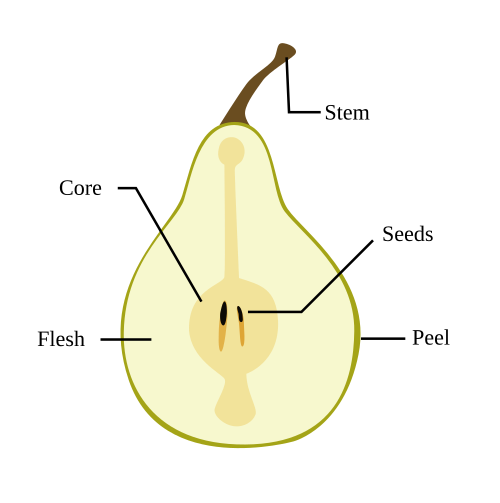
The fruit is a pseudofruit composed of the greatly swollen receptacle or upper end of the flower stalk (the so-called calyx tube).[5] Enclosed within its cellular flesh is the true fruit: 2–5 'cartilaginous' carpels,[7][11] known colloquially as the "core".[5] Pears and apples cannot always be distinguished by the form of the fruit;[12] some cultivated pears look very much like some apples, e.g. the nashi pear.[13]



The genus is generally thought to have originated in Central Asia. More specifically, it is thought to have originated in the foothills of the Tian Shan, a mountain range in present-day Western China,[14] and to have spread to the north and south along mountain chains, evolving into a diverse group of over 20 widely recognized primary species.[6]
The word pear, or its equivalent, occurs in all the Celtic languages, while in Slavic and other dialects, differing appellations still referring to the same thing are found—a diversity and multiplicity of nomenclature, which led Alphonse Pyramus de Candolle to infer a very ancient cultivation of the tree from the shores of the Caspian to those of the Atlantic.[15]
Pears are distributed across Europe, in the mountains of North Africa, and temperate regions of Asia.[7][16]
Pear cultivation in temperate climates extends to the remotest antiquity, with evidence of its use as a food since prehistoric times. Many traces have been found in prehistoric pile dwellings around Lake Zurich.[17] Pears were cultivated in China as early as 2000 BC.[18] An article on pear tree cultivation in Spain is included in Ibn al-'Awwam's 12th-century agricultural work, Book on Agriculture.[19]
栽培されているヨーロッパナシ( Pyrus communis subsp. communis)の膨大な品種は、ヨーロッパ全土に広く分布し、時には森林の自然植生の一部を形成している1つまたは2つの野生亜種(P. c. subsp. pyrasterとP. c. subsp. caucasica )に由来する可能性が高い。 [ 7 ] [ 5 ]イングランドのヘンリー3世の宮廷記録には、ロンドン市の保安官によってラ・ロシェル=ノルマンディーから出荷され、国王に献上されたナシが記録されている。[ 20 ]中世イングランドの庭園で栽培されたナシのフランス語名から、少なくともその評判はフランスにあったことがうかがえる。記録の中で好まれていた品種は、フランス北部のサンリスの司教サン・リウルにちなんで名付けられていた。 [ 21 ]
食用となる中型から大型の果実を持つアジア原産の種には、P. pyrifolia、P. ussuriensis、P. × bretschneideri、P. × sinkiangensisなどがある。[ 5 ] Pyrus calleryanaなどの小果実種は、栽培品種の台木として使用できる。 [ 7 ] [ 22 ]
梨はローマ人によって栽培され、リンゴと同じように生で食べたり、調理して食べたりした。[ 23 ]彼らは梨をブリテン島に持ち込んだ。[ 24 ]プリニウスの博物誌では、梨を蜂蜜で煮込むことを推奨し、30種類以上の品種について言及している。ローマの料理書『De re coquinaria』には、スパイスを効かせた梨の煮込みパティナ、またはスフレのレシピがある。[ 25 ]
葉の裏側に白い綿毛があるPyrus nivalis は、主にヨーロッパでシードルに似た飲み物であるペリーの製造に使用されています。 [ 15 ] [ 26 ] [ 27 ]早熟で球形の果実が特徴の他の小果梨は、南西ヨーロッパに自生する種であるP. cordataと呼ばれることがあります。 [ 28 ] [ 29 ] [ 30 ]
ナシ属は、 1753 年にカール・リンネが著書『植物種誌』で記載した。[ 31 ] [ 32 ]この属は、 PyrusとPashia の2つの亜属に分けられる。亜属Pyrus は、西側クレードであり、主にユーラシア大陸の西部と北アフリカに分布している。一方、亜属Pashia は、東洋クレードであり、東アジア原産である。この 2 つの亜属は中国の新疆で接触しており、実際、P. sinkiangensis は、 P. communisとP. pyrifoliaまたはP. bretschneideriのいずれかとの交雑、つまり西側クレードのメンバーと東洋クレードのメンバーとの交雑によって生じたものと思われる。[ 33 ]ナシは原産地全域で栽培されており、北アメリカ、イギリス諸島、スカンジナビア、南アフリカ、オーストラリアにも栽培用に導入されている。[ 34 ] 2024年12月現在、Plants of the World Onlineでは以下の74種が認められている。[ 34 ]


北西部梨協会によると、世界中で約3,000種類の梨が栽培されている。[ 36 ] [ 37 ]梨は通常、選抜した品種を梨またはマルメロの台木に接ぎ木して繁殖させる。マルメロの台木は樹高が低いため、商業果樹園や家庭菜園では好ましい場合が多い。新しい品種の場合、望ましい形質を維持または組み合わせるために花を交配することができる。梨の果実は、1年以上経過した枝に現れる短果に実る。[ 38 ]
食用果実生産のために主に栽培されている種は 4 つあります。ヨーロッパと北アメリカで主に栽培されているヨーロッパナシPyrus communis subsp. communis 、中国白梨 ( bai li ) Pyrus × bretschneideri、中国ナシPyrus ussuriensis、そして東アジアで主に栽培されているナシPyrus pyrifolia (アジアナシまたはアップルナシとも呼ばれる) です。[ 7 ]これら 3 つの種には何千もの栽培品種があります。 [ 36 ]中国西部で栽培されているP. sinkiangensisと、中国南部と南アジアで栽培されているP. pashiaも少量生産されています。[ 7 ] [ 5 ]
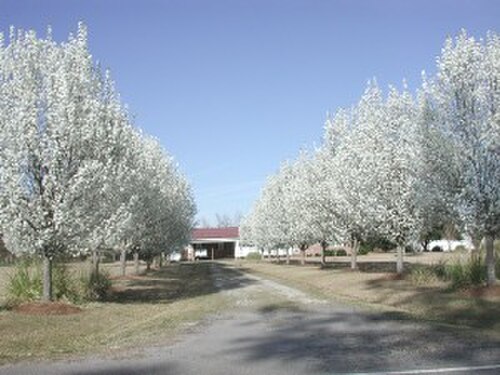
他の種は、ヨーロッパナシやアジアナシの台木や観賞用樹木として使用されています。[ 7 ] [ 22 ]ナシの木材は木目が細かく、高級家具や木版画の版木を作るための特殊な木材として使用されてきました。[ 39 ] [ 40 ]マンシュウナシまたはウスリーナシ、Pyrus ussuriensis(主に缶詰に使用される不味い果実を生産する)は、より丈夫なナシの栽培品種を育成するためにPyrus communisと交配されました。[ 41 ]ブラッドフォードナシ(Pyrus calleryana 'Bradford')は、北米で観賞用樹木として広く普及しており、一部の地域では侵略的外来種となっています。[ 42 ] [ 43 ] [ 44 ]また、 Pyrus communis果樹園の病害抵抗性台木としても使用されています。[ 41 ] [ 42 ]ヤナギ葉梨(Pyrus salicifolia)は、銀色の葉、花、そして「垂れ下がる」樹形のために栽培されている。[ 7 ] [ 45 ]
夏と秋に栽培されるセイヨウナシ(Pyrus communis)の品種はクライマクテリック果実であるため、完全に熟す前に、まだ緑色のうちに収穫されますが、持ち上げると折れてしまいます。[ 5 ] [ 46 ] Pyrus pyrifoliaやP. × bretschneideriなど、他のいくつかのナシには、クライマクテリック品種と非クライマクテリック品種の両方があります。[ 7 ] [ 47 ] [ 48 ]
以下の品種は、英国王立園芸協会のガーデンメリット賞を受賞しています。[ 49 ]
垂れ下がる枝と銀色の葉を持つ、純粋に観賞用の品種であるP. salicifolia 'Pendula'も受賞した。[ 57 ]
2024年の世界の梨の生産量は2760万トンで、中国が全体の76%を占めてトップでした(表)。[ 58 ]南半球の梨の約48%は、アルゼンチンのパタゴニア地方のリオネグロ渓谷で生産されています。[ 59 ]
Pears may be stored at room temperature until ripe.[60] Pears are ripe when the flesh around the stem gives to gentle pressure. Ripe pears are optimally stored refrigerated, uncovered in a single layer, where they have a shelf life of 2 to 3 days.[60] Pears ripen at room temperature. Ripening is accelerated by the gas ethylene, a plant hormone.[61] If pears are placed next to bananas in a fruit bowl, the ethylene emitted by the banana causes the pears to ripen.[62] According to Pear Bureau Northwest, most varieties show little colour change as they ripen (though the skin on Bartlett pears changes from green to yellow).[63]
Raw pear is 84% water, 15% carbohydrates and contains negligible protein and fat (table). In a 100 g (3+1⁄2 oz) reference amount, raw pear supplies 239 kilojoules (57 kilocalories) of food energy, a moderate amount of dietary fiber, and no micronutrients in significant amounts (table).
A 2019 review found preliminary evidence for the potential of pear consumption to favorably affect cardiovascular health.[66]
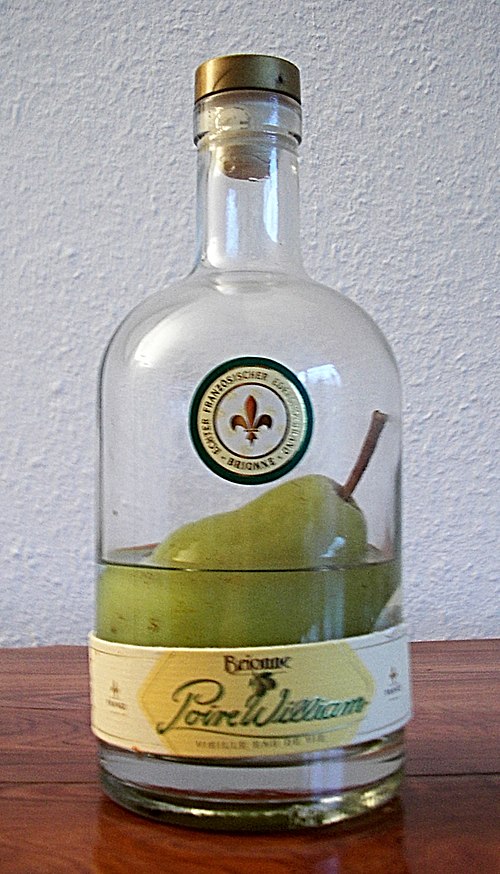
Pears are eaten fresh, canned, as juice, and dried. The juice can also be used in jellies and jams, usually in combination with other fruits, including berries. Fermented pear juice is called perry or pear cider and is made in a way that is similar to how cider is made from apples.[7][8] Perry can be distilled to produce an eau de vie de poire, a colourless, unsweetened fruit brandy.[67]
Pear purée is used to manufacture snack foods such as Fruit by the Foot and Fruit Roll-Ups.[68]
The culinary or cooking pear is green but dry and hard, and only edible after several hours of cooking. Two Dutch cultivars are Gieser Wildeman (a sweet variety) and Saint Remy (slightly sour).[69]




Pear wood is one of the preferred materials in the manufacture of high-quality woodwind instruments and furniture, and was used for making the carved blocks for woodcuts. It is also used for wood carving, and as a firewood to produce aromatic smoke for smoking meat or tobacco. Pear wood is valued for kitchen spoons, scoops and stirrers, as it does not contaminate food with colour, flavour or smell, and resists warping and splintering despite repeated soaking and drying cycles. Lincoln[70] describes it as "a fairly tough, very stable wood... (used for) carving... brushbacks, umbrella handles, measuring instruments such as set squares and T-squares... recorders... violin and guitar fingerboards and piano keys... decorative veneering." Pearwood is the favored wood for architect's rulers because it does not warp. It is similar to the wood of its relative, the apple tree (Malus domestica) and used for many of the same purposes.[70]


"A Partridge in a Pear Tree" is the first gift in the cumulative song"The Twelve Days of Christmas".[71]
 ウィキメディア・コモンズにあるPyrus関連のメディア
 Wikibooksの料理本サブプロジェクトにおける梨