November 7, 1929: New York City's Museum of Modern Art (MoMA) opens in the 26-story Heckscher buildingNovember 11, 1929: The Ambassador Bridge between the U.S. and Canada opens to traffic at Detroit, Michigan and Windsor, Ontario [1]
The following events occurred in November 1929:
Friday, November 1, 1929
Germany and Poland signed an agreement settling frontier questions of an economic nature.[2]
André Tardieu became the third person within a week to try to form the next French government.[4]
The New York Stock Exchange stayed closed until Monday so a "clean up day" could be held to fix bookkeeping errors that had been made during the avalanche of transactions over the past few days.[5][6]
Official returns showed that the anti-Young Planreferendum narrowly surpassed the threshold to make it binding on the Reichstag. 10% of Germany's eligible voters had to subscribe to the referendum, and it passed that mark by less than 1 percent. The prospects of the referendum actually succeeding were still very low, since a turnout of 50% would be required to make it pass.[8]
The former Emir of Afghanistan, Habibullāh Kalakāni, who had surrendered to the new Emir, Nadir Shah on condition of having his life spared, was executed by a firing squad.[9]
German National People's Party members in Berlin publicly celebrated their success in obtaining enough signatures to trigger the anti-Young Plan referendum. Fighting then broke out in Berlin between Der Stahlhelm and German Communists.[10]
During ceremonies marking the eleventh anniversary of the Italian armistice, Benito Mussolini told wounded veterans that pacifist movement discussions could not be trusted. "There is a lot of peace talk going on in the world these days, I dare say too much! We must not be deluded by all these sort of things. The truth is that nobody is frankly and effectively disarming," he said.[11]
Monday, November 4, 1929
Connecticut U.S. Senator Hiram Bingham III was censured by his colleagues by a 54–22 vote for allowing a paid lobbyist to accompany him during closed-session meetings of the Smoot-Hawley tariff subcommittee.[12]
Stock market trading returned to a manageable volume of 6.1 million shares. The Dow Jones Industrial Average fell 5.79%, snuffing the brief rally that followed the crash, as an expected buying frenzy failed to materialize.[13][14]
At Dessau, the large German transport plane Junkers G.38 made its first flight. In an aviation first, space for passengers was included inside the plane's wings.[19]
The Museum of Modern Art opened inside the Herckscher Building at 730 Fifth Avenue near West 57th Street in Manhattan.[20] In 1939, a larger building would be constructed at 11 West 53rd Street near Sixth Avenue.
James J. Riordan, president of the County Trust Company and a friend of former presidential candidate Al Smith, took a pistol from the teller's cage at his bank, went to his home in Manhattan and committed suicide. Though he left no note, those who knew him said he had been distraught after the Wall Street Crash. The news was suppressed until after the bank closed on Saturday to prevent a run by depositors. Riordan's suicide made front-page news in the Sunday papers and may have contributed to the popular but exaggerated image of mass waves of investors killing themselves after the crash.[22][23][24]
Born: Bobby Bowden, American college football coach who transformed the Florida State University program into a national champion, including NCAA championships in 1993 and 1999; in Birmingham, Alabama (d. 2021)
Abd al-Muhsin as-Sa'dun, 50, Prime Minister of Iraq, unpopular with both the Iraqi public and with British authorities and the international community, committed suicide with a self-inflicted gunshot wound to the head. He left a suicide note that stated, "I have suffered with forbearance all possible insults and contempt.[33]
Richard Henry, 84, New Zealand conservationist and reserve manager
Princess Viktoria of Prussia, 63, daughter of Emperor Frederick III of Germany, granddaughter of Queen Victoria of the United Kingdom
Thursday, November 14, 1929
The Italian Fascist government seized two large estates in the provinces of Arezzo and Taranto because their owners had failed to cultivate the land. "Property is not an end in itself. Those who own it have special duties with regard to the collectivity of the people, represented by the state", read the government decree.[34]
In Paris, actress Constance Bennett divorced her second husband, the millionaire socialite Philip Morgan Plant.[35]
The front page of all newspapers owned by William Randolph Hearst ran "An Open Letter to President Hoover" written by Hearst himself, in which he proposed various methods to restore economic confidence. Hearst's primary solution was for the Federal Reserve to lower interest rates.[36]
President Hoover announced he was calling a conference of the nation's business leaders to meet with government departmental heads to discuss the economy.[37]
In Berlin, 10 were wounded and 20 arrested in fighting between political extremist factions on the eve of town council elections.[38]
International Chamber of Commerce President Dr. Albert Pirelli said in a speech in Rome that the Wall Street Crash posed a threat to European business, as diminished American purchasing power meant that auto manufacturers may attempt to dump their cars on the European market at cheap prices.[39]
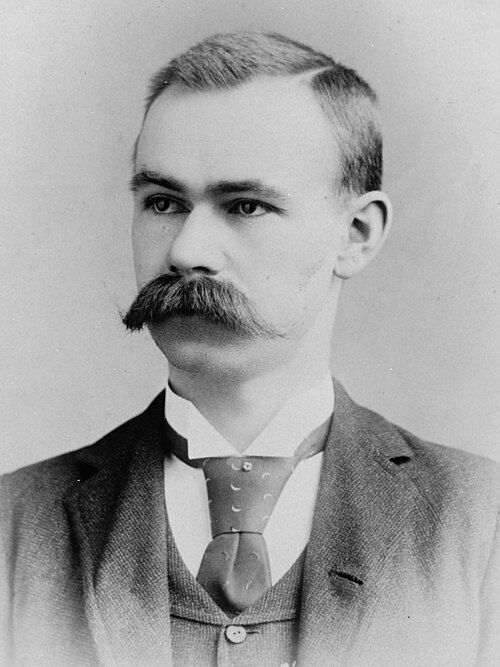
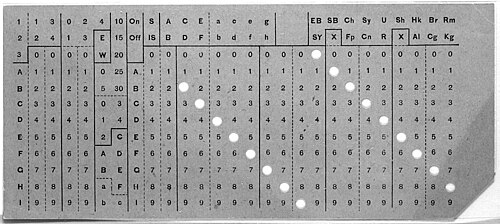
Died:Herman Hollerith, 69, American businessman and inventor known for creating the Hollerith card, setting the model for punch cards that were later used for decades in computer programming, along with the first keypunch and the tabulating machine to process its data.
Monday, November 18, 1929
The Grand Banks earthquake occurred in the Atlantic Ocean 265 kilometres off the coast of Newfoundland. The magnitude 7.2 earthquake created a tsunami that killed 28 people in southern Newfoundland, making it the worst recorded earthquake-related disaster in Canadian history.[43]
Georges Clemenceau was buried in Vendée next to his father in a small ceremony attended by only 20 people, in accordance with his wishes to eschew a state funeral. A 101-gun salute in Paris was the only official tribute. Clemenceau had also requested to be buried upright facing the sea so he could remain standing up as he did in life, but the grave could not be dug deep enough due to solid rock in the burial plot and so he was buried in the usual horizontal orientation.[56][57]
The 6,997-ton oil tanker British Chemist exploded in Grangemouth port in Scotland, shaking the town but causing no casualties.[58]
The League of Nations opened a conference on the transportation of magazines and newspapers, trying to ensure the free flow of information across borders.[3]
In the first attempted homicide ever recorded in Vatican City, a Swedish woman in St. Peter's Basilica tried to shoot an archbishop that had disappointed her after she had approached him requesting employment. She was believed to have a mental disorder.[59][60]
A district court in Cambridge, Massachusetts, found two men guilty of obscenity for selling the D H Lawrence novel Lady Chatterley's Lover. The owner of the bookstore and the clerk were both ordered to pay fines and serve jail sentences of four months and two weeks, respectively. The conviction triggered a public backlash against the Watch and Ward Society which had instigated the legal proceedings in the case.[61]
Tuesday, November 26, 1929
The Chinese government submitted an appeal to the League of Nations and signatories of the Kellogg-Briand Pact urging that steps be taken to punish the Soviet Union for its aggression in Manchuria.[62]
The ocean liner RMS Mauretania, departing from New York en route to Europe, collided with a car ferry near Robbins Reef Light. There were no casualties but the ferry sank and a pair of holes were ripped into the Mauretania, requiring it to return to New York for repairs.[63]
As Soviet planes bombed the Manchurian town of Pokutu, one bomb struck a train bearing the American Red Cross committee. Many were killed but the committee chairman was unharmed.[71]
↑Wasson, Haidee. "Studying Movies at the Museum: The Museum of Modern Art and Cinema's Changing Object." Inventing Film Studies. Ed. Lee Grieveson and Haidee Vasson. Duke University Press, 2008. p. 125. ISBN978-0-8223-8867-8.
↑"Tageseinträge für 8. November 1929". chroniknet. Retrieved March 18, 2015.
↑"J.J. Riordan, Smith's Friend, Ends Life; News Withheld a Day to Protect His Bank". Brooklyn Daily Eagle: 1. November 10, 1929.
↑Adams, Cecil (August 30, 2002). "After the 1929 stock market crash, did investors really jump out of windows?". The Straight Dope. Retrieved March 18, 2015.
12Powell, John (November 10, 1929). "Russian Troops Crash Across Amur into China". Chicago Daily Tribune. p.27.
↑"Portugal Pardons 86 in Exile for Political Plot". Chicago Daily Tribune. November 11, 1929. p.5.
↑Galbraith, John Kenneth (2009). The Great Crash 1929. New York: Houghton Mifflin Harcourt. pp.144–145. ISBN978-0-547-24816-5.
↑Mason, Philip Parker (1987). The Ambassador Bridge: A Monument to Progress. Wayne State University Press. p.215. ISBN978-0-8143-1840-9.
1 2 3 Holston, Kim R. (2013). Movie Roadshows: A History and Filmography of Reserved-Seat Limited Showings, 1911–1973 . Jefferson, North Carolina: McFarland & Company, Inc. pp. 68–69 . ISBN978-0-7864-6062-5。
↑Boyer, Paul S. (2002). Purity in Print: Book Censorship in America from the Gilded Age to the Computer Age. University of Wisconsin Press. pp.196–197. ISBN978-0-299-17583-2.
↑McKelway, St. Clair (November 26, 1929). "Hands Off Our Citizens! Japs Warn Russia". Chicago Daily Tribune. p.1.