
Loading article…
| バーニングマン | |
|---|---|
 | |
 寺院、バーニングマン 2016 | |
| 始まり | 2024年8月25日 |
| 終了 | 2024年9月2日 |
| 会場 | ブラックロックシティ |
| 場所 | ブラック ロック砂漠、 パーシング郡、ネバダ州、米国 |
| 座標 | 北緯40度47分13.088秒 西経119度12分14.764秒 / 北緯40.78696889度 西経119.20410111度 / 40.78696889; -119.20410111 |
| 活動年数 | 38 |
| 開館 | 1986年6月22日 |
| 創設者 | カコフォニー協会 ラリー・ハーヴェイ ジョン・ロー ジェリー ・ジェームス |
| 参加者 | 2019年(公式):78,850 2021年(非公式):20,000 |
| 主催 | バーニングマンプロジェクト |
| Webサイト | このサイトについて |
バーニングマンは、毎年アメリカ西部で開催される「コミュニティ、アート、自己表現、自立」に焦点を当てた、1週間にわたる大規模な砂漠のイベントです。[1] [2]イベントの名前は、そのクライマックスの儀式である、レイバーデーの前日の土曜日の夜に行われる、マンと呼ばれる大きな木製の彫像の象徴的な燃焼に由来しています。[3] 1991年以来、このイベントはネバダ州北西部のブラックロックシティで開催されています。ブラックロックシティは、リノの北北東約100マイル(160 km)のブラックロック砂漠に建設された仮設都市です。バーニングマンの共同創設者ラリー・ハーベイが2004年に述べたところによると、このイベントは、ラディカルな包摂、贈与、脱商品化、ラディカルな自立、ラディカルな自己表現、共同体の努力、市民としての責任、痕跡を残さないこと、参加、即時性の10の原則に基づいています。[4]
バーニングマンには主役や予定されている出演者はいません。代わりに、参加者がすべてのアート、アクティビティ、イベントを作り上げます。[5]アート作品には、実験的でインタラクティブな彫刻、建物、パフォーマンス、アートカーなどが含まれます。これらの作品は、バーニングマンプロジェクトが毎年選ぶテーマに触発されています。[6]このイベントは「カウンターカルチャーのお祭り」と呼ばれ、主催者からは「砂漠でパーティーをする口実」と表現されています。[7]しかし、NPRは2019年にバーニングマンについて、「かつてはボヘミアンやあらゆる種類の自由奔放な精神を持つ人々のアンダーグラウンドの集まりと考えられていたバーニングマンは、その後、ソーシャルメディアのインフルエンサー、有名人、シリコンバレーのエリートの目的地へと進化しました」と述べています。[8]


ブラックロックシティ
バーニングマンは、1986年6月22日にサンフランシスコのベイカービーチで、最初のバーニングマンを作ったラリー・ハーベイとジェリー・ジェームズが主催した小さなイベントとして始まりました。それ以来、レイバーデーの前後9日間にわたって毎年開催されています。イベントの歴史を通じて、参加者は概ね増加しています。2019年には78,850人が参加しました。[9]
バーニングマンは、2013年に営利目的の有限責任会社であるブラックロックシティLLCを引き継いだ非営利団体であるバーニングマンプロジェクトによって主催されています。ブラックロックシティLLCは、イベントの主催者を代表するために1999年に設立され、現在は非営利団体の子会社と見なされています。バーニングマンプロジェクトは、米国および国際的に、バーニングマンの原則に従って開催される複数の小規模な地域イベントを支持しています。
タルコフスキーの映画『ストーカー』は、1986年にサンフランシスコ湾岸地域で始まり、参加者のために「ゾーン・トリップ」を企画したカコフォニー協会に大きな影響を与えた。 [10]
ネバダ州ブラックロック砂漠で、象徴的な木製の男が初めて焼かれたのは、1990年の「ゾーン・トリップ・ナンバー4」のときでした。この出来事は、バーニングマンと呼ばれる芸術、音楽、文化の大規模な年次フェスティバルへと発展しました。[10] [11]
歴史
1980年代
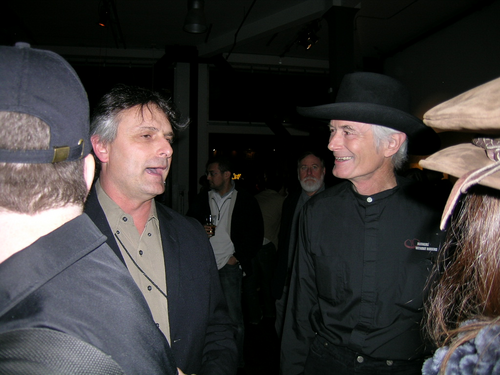
バーニングマンは夏至の焚き火の儀式として始まった。ラリー・ハーヴェイの恋人ジャネット・ローアの友人で彫刻家のメアリー・グラウバーガーは、1986年より数年前からベイカービーチで夏至の焚き火の集まりを開催しており、ハーヴェイもそのうちのいくつかに参加していた。グラウバーガーが主催をやめたとき、ハーヴェイはグラウバーガーの許可を得て「その火を拾い上げ」、それを実行に移した。[12]彼とジェリー・ジェームズは1986年6月21日、その夜に燃やされる廃材を使って最初の木製の彫像を作った。6月22日、ハーヴェイ、ジェームズ、そして数人の友人がサンフランシスコのベイカービーチで会い、 [13] [14] 8フィート (2.4 m) の高さの木の人形と小さな木の犬を燃やした。ハーヴェイは後に、これらの人形を燃やすきっかけを「過激な自己表現」という自発的な行為だったと述べている。[12] 1987年、男は15フィート(5メートル)の高さに成長し、1988年には30フィート(9メートル)に成長した。[15] [16]
1988年までに、ハーヴェイは夏至の儀式を正式に「バーニングマン」と名付け、イベントのチラシにそのようにタイトルを付けた。これは明らかに、人型の籐の檻で生きた犠牲を焼くケルト異教の有名な慣習である「ウィッカーマン」への言及を避けるためだった。ハーヴェイは、1973年のカルト映画「ウィッカーマン」を何年も後まで見たことがなく、それがこの行動のきっかけになったわけではないと述べている。[15] [17]
1990年から1996年
1990年、ケビン・エヴァンスとジョン・ローは、ネバダ州リノの北約110マイル(180キロ)にある、人里離れたほとんど知られていないプラヤ、ブラックロック砂漠で別のイベントを企画した。 [18]エヴァンスはそれを、燃やされる彫刻とシチュアシオニストパフォーマンスアートを備えたダダイストの一時的な自治区として構想した。彼は、同じく乾燥湖での経験があり、カコフォニー協会の決定的な創設者であるジョン・ローに、イベントの中心的な組織機能を引き受けるよう依頼した。カコフォニー協会のニュースレターでは、それはゾーントリップNo.4、ブラックロックでの悪い日(1955年の同名映画に触発された)として発表された。
一方、ベイカービーチでの夏至の焚き火は、許可証を持っていないという理由で公園警察によって中断された。イベント主催者は、マンを燃やさずに上げるという取り決めをした後、マンを解体し、建てられた空き地に戻した。その後まもなく、その場所が予期せず駐車場として貸し出されたため、マンの脚と胴体はチェーンソーで切断され、破片が取り除かれた。マンは、ハーヴェイの長年の同居人であるダン・ミラーの指揮のもと、ゾーン・トリップ第4回に間に合うように再建された。[19]
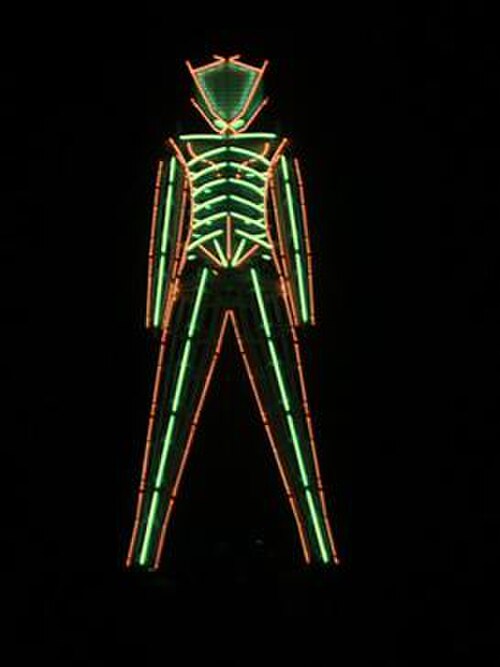
もう一人の活動的なカコフォニスト、マイケル・ミケルは、乾いた湖の環境に不慣れな参加者は、深い乾いた湖で迷子になって脱水症状や死の危険に遭わないように、知識のある人が手助けをしてくれると助かるだろうと気づいた。彼はデンジャー・レンジャーという名前をもらい、彼らを助けるためにブラックロック・レンジャーズを作った。こうして、ブラックロック・シティは、エバンスとグラウバーガーのアイデア、そしてハーベイとジェームズの象徴的な男に基づいて、ローとミケルによって組織された仲間として始まった。ローは、看板ビジネスと光の彫刻の経験を生かして、1991年から男のために特注のネオン管を準備し、道路が計画されるずっと前から、夜間の航行を助けるビーコンとして見られるようにした。
初期の頃、コミュニティは口コミだけで成長し、誰もが騒々しいシチュアシオニストの雰囲気に貢献していると見なされていました (そして、一般的には期待できるまで招待されませんでした)。有料または予定されているパフォーマーやアーティストはおらず、芸術と生活、芸術空間と生活空間の区別はなく、「他の人の直接的な体験を邪魔しない」と「中央キャンプに銃を持ち込まない」以外のルールはありませんでした。
1991年は、このイベントがBLM(土地管理局)から法的許可を得た最初の年でした。[20]また、この年は、アートモデルでファイヤーダンサー(後にバーニングマンの初代アートディレクター)のクリムゾン・ローズがこのイベントに参加した年でもありました。[21] 1992年には、ウィリアム・ビンゼンが考案・監督し、ジュディ・ウェストと共同制作(1993年と94年)した「デザート・サイトワークス」という小規模で集中的な近隣イベントが誕生しました。[22]初年度の参加者は約20名、2年目と3年目には約100名でした。毎年数週間にわたって開催されるこのイベントは、夏至に砂漠周辺のさまざまな肥沃な温泉で開催されました。参加者はアートを制作し、自主的なパフォーマンスに参加しました。[23]
バーニングマンの主要主催者の中にはデザート・サイトワークスのメンバーもおり(ロー、ミケル)、ビンゼンはハーヴェイの友人でもあった。そのため、この2つのイベントではアイデアや参加者の交流が盛んだった。[23]デザート・サイトワークス・プロジェクトは3年間(1992~1994年)続いた。1996年は「バーニングマン」という名前を所有するための正式なパートナーシップが結成された最初の年であり、また、フェンスで囲まれていないブラックロック砂漠の真ん中でイベントが開催された最後の年でもあった。
1996年にイベントが一般公開される前に、マイケル・フューリーという名の作業員が、ネバダ州ガーラックからブラックロック砂漠のバーニングマンキャンプに向かう途中、バイク事故で死亡した[24]。ハーヴェイは、ゲートがまだ開いていなかったため、バーニングマンでは死亡事故は起きていないと主張した。別のカップルは、当時メインキャンプから離れた「レイブキャンプ」へ向かうアートカーにテントの中で轢かれた。1996年のイベントの後、ローはバーニングマンと決別し、イベントを継続すべきではないと公に述べた。
1997年から2013年
1997年は、このイベントにとってもう一つの重要な年となった。1997年のイベントでブラックロックの許可が却下されたため、イベントを移転する必要があった。陸上速度試験を実施していたチームが、競合する許可を持っていたため、それが優先された。ブラックロック砂漠のすぐ西にある、隣接する小さなワラパイの乾燥湖床のあるフライランチが代替会場として選ばれた。これにより、バーニングマンはパーシング郡/連邦BLMの土地からワショー郡の管轄下に移され、許可要件のリストが長くなった。[25]
新しい要件に準拠し、増大した責任を管理するために、主催者は「ビズ・ベイブ」ダナ・ハリソンの支援を受けてブラックロック・シティLLCを設立した。ウィル・ロジャー・ピーターソンとフリン・マウスは公共事業局(DPW)を設立し、「都市」のグリッドレイアウトを構築した。これは、建築家ロッド・ギャレットが設計した「住所」に緊急車両を誘導するための要件であった。ギャレットは2011年に76歳で亡くなるまで都市設計者として活躍した。彼はまた、2001年から2012年までのすべてのマン基地、センターキャンプカフェ、および最初のキャンプの設計も手がけたとされている。 [26] 1998年には、一時的な周囲フェンスとともに、ディーププラヤではないものの、ブラックロック砂漠に戻った。イベントはそれ以来そこで行われている。
ブラック ロック シティの人口が増えるにつれて、BLM による規制が強化され、イベントへの招待方法が変更されました。特に、すべての来場者を対象としたオンライン チケット販売の公開が追加され、イベントの存続に関するさらなる規則が制定されました。イベントの後半の段階に対する批評家の中には、これらの規則が当初の自由と原則を侵害し、体験の範囲を容認できないほど縮小していると指摘する人もいますが、新しい参加者の多くは、活動レベルの増加が変更を補って余りあると感じています。
- 格子状の街路構造。[27]
- 制限速度は時速5マイル(8km/h)です。[28]
- 認可された「ミュータント車両」とサービス車両を除き、運転禁止。[29]
- ミュータント車両の安全基準。[28]
- いかなる芸術作品の焼却も、認可された焼却プラットフォーム上で行われなければならない。[30]
- 花火の禁止。[31]
- 動物の禁止。[32]
参加者に対するもう一つの注目すべき制限は、イベントを囲み、ブラックロック乾燥湖の南端にあるイベントで使用される五角形の土地を定義する、長さ9.2マイル(14.8 km) [33]の一時的なプラスチックフェンスです。 [34]この高さ4フィート(1.2メートル)の障壁は、「ゴミフェンス」として知られています。これは、当初、イベント中にキャンプ場から逃げる可能性のある風で飛ばされたゴミを捕らえるために使用されていたためです。2002年以来、このフェンスの向こうのエリアは、イベント中にバーニングマンの参加者が立ち入ることはできません。[35]
2005年のイベントで誤って火傷を負った訪問者の1人が、サンフランシスコ郡上級裁判所でブラックロックシティLLCを訴えたが、敗訴した。2009年6月30日、カリフォルニア州第一地区控訴裁判所は、点火後に故意にザ・マンに向かって歩く人は、そのような危険な物体によって火傷を負うリスクを負うという理由で、ブラックロックシティLLCに対する裁判所の略式判決を支持した。 [36]
2013年から2019年
2013年12月、[37]ブラックロックシティLLCはバーニングマンプロジェクトとして知られる新しい非営利団体の子会社となったが、これは創設者の間で物議を醸す動きであった。[38]
2017年9月3日[39] 、 41歳の男性、アーロン・ジョエル・ミッチェルは、ボランティアと消防士の安全地帯を突破し、ザ・マンの炎の中に身を投じた。ミッチェルは翌日、心停止、身体的ショック、および体の97%に及ぶ第三度熱傷により死亡した。彼の死は自殺と判断された。[40] [41] [42]
2020年から2021年

2020年4月10日、バーニングマンプロジェクトは、COVID-19パンデミックの影響で2020年のバーニングマンを中止すると発表しました[43]。これにより、2020年はバーニングマンが創設以来初めて開催されなかった年となりました。その後、チケットは返金不可として販売されていたにもかかわらず、チケットの払い戻しを行うことを決定しました[44] 。
2020年9月7日、サンフランシスコのオーシャンビーチでは推定1,000人のバーナーが祝った。サンフランシスコ市長のロンドン・ブリードはこのイベントについて「無謀で利己的だ。祝うどころか、人々の命と私たちの進歩を危険にさらしている。誰もウイルス拡散から逃れることはできない」とツイートした。[45]また、数千人がブラックロック砂漠に非公式イベントのために集まり、これを「昔」への回帰と表現する人もいた。[46] [47]
2021年のイベントは、COVID-19パンデミックの継続により、2021年4月27日にキャンセルされました。ワクチン接種の進展にもかかわらず、主催者は「解決する必要がある不確実性は、私たちが持っている時間内に解決することは不可能です」と述べました。[48] 2021年5月14日、バーニングマンプロジェクトは、2021年8月22日から9月7日までに予定されているオンラインイベントのチケットをウェブサイトでリリースしました。[49]
この非公式イベントは2020年よりも規模が大きく、推定2万人が参加した。ブラックロック・プランBやローグ・バーンなど、さまざまな団体が緩やかに調整した。土地管理局は日陰以外の建造物の禁止やキャンプファイヤー以外の火気の禁止などの制限を設けた。マンの像を燃やす代わりに、マンの輪郭を描く巨大な照明付きドローンディスプレイが使用された。 [50]
2023
2023年のバーニングマンではレイバーデーの週末に雨が降り、その後洪水が発生し、ロックダウンにより会場全体での車両の移動が禁止された。[51] [52]主催者は携帯電話サービスを手配し、2023年のウェットプラヤサバイバルガイドを共有した。「緊急サービスを除き、プラヤの表面が乾くまで車の運転は禁止されています…参加者は食料、水、燃料を節約し、暖かく安全な場所に避難することをお勧めします」と述べ、バーニングマン情報ラジオ(BMIR)94.5 FMとゲート情報ラジオ局(GARS)95.1について参加者に伝えた。[53]洪水により1人が死亡し、さらに数千人が取り残された。[54]
2024
2024年8月25日、2024年バーニングマンフェスティバルの初日に、女性参加者が死亡した。[55] [56] 8月26日、2011年以来初めてフェスティバルのチケットが売れ残ったと報じられた。[57]
イベント最終日には大規模な砂嵐が報告され、出発時の渋滞が発生し、行列は4時間以上も続いた。
イベントタイムライン
以下の統計は、場所、中央のマン彫刻の高さ、人口、チケット価格、登録されたキャンプやアートの数の点で、バーニングマンの規模と範囲の成長を示しています。
当初8フィート(2.4メートル)の高さだったこの男は、その後3年間ごとに高さを増していき、1989年から2013年の間は40フィート(12メートル)の高さに留まった。この間、木製の男が立つ台座の大きさや形が変化したため、全体の構造物の高さが異なっていた。[58] 2014年に、この男の構造は、台座なしで地面に直接立つ高さ105フィート(32メートル)の像に変更された。2015年から2019年にかけて、この男は高さ40フィート(12メートル)に戻った。
人口数
人口カウントは、毎年のイベントのために BLM がバーニングマン プロジェクト (旧ブラック ロック シティ LLC (BRC)) に付与する特別レクリエーション許可 (SRP) の規定です。元々は料金を計算するために使用されていましたが、現在はイベントが SRP で指定された最大許可人口を超えないようにするために使用されています。イベントの参加者全員が人口カウントに含まれるわけではありません。政府職員と政府請負業者はカウントから除外されますが、これは時間の経過とともに変更されています。
人口カウントはもともとBLMに支払うべき料金を計算するために使用されていました。BLMがイベントに参加できる人数に制限を設けることを検討し始めるまで、それほど時間はかかりませんでした。これは、BLMがイベントの規模を実質的に前年の規模に制限する複雑な使用法を提案した1998年には早くも論争の的となりました。[140] [141]
2006年から、SRPはBRCが「イベントの最大人口が前年の最高人口より6%以上増加しないようにチケット販売を管理する」ことを規定しました。[70] : 1 料金は、正午のブラックロックシティの毎日の人口カウントに基づいていました。[70] : 12 これは、BRCスタッフの料金が明示的に免除された最初の年でした。[70] : 12 。
2011年に料金体系は調整後総所得に基づくものに変更され、毎日の人口数に縛られなくなった。[142] : 5
2012年のSRPでは、人口カウントにカウントされる対象がさらに定義されました。その年の環境アセスメント(EA)で定義された「参加者」という用語は、「イベントのすべての出席者(有料参加者やボランティアを含む)を含む」ものとして導入されました。人口には、政府職員、ハンボルト総合病院の緊急サービス提供者、ベンダー、請負業者は含まれません。」[143] :2–1 現在、最大認可人口は「参加者」に適用されます。[85] :1
2014年には、ボランティアは人口カウントから明示的に除外され、人口上限は「有償参加者」にも適用されるようにさらに精緻化されました。[93] : 1
2019年に「人口」の定義が再び変更され、今回はBRCのスタッフとボランティアが含まれ、現在は総称して「参加者」と呼ばれています。[117] : 1 これは、この定義の変更を導入した2019-2028 SRP申請のための新しい環境影響評価書(EIS)の必要性と一致しました。[144] : ES-1 バーニングマンプロジェクトは、その年の人口が78,850人で、前年から約8,600人増加したと報告し、「全員」が最大人口数にカウントされるようになったことを指摘しました。[145]これは、バーニングマンプロジェクトの2019年のフォーム990開示で、986人の従業員と10,000人のボランティアがいると記載されていることとほぼ一致しています。[146] : 1
2022年には、イベント全体の参加者総数に対する追加の制限が導入されました。「2022年のイベントの累積最大許可人口は、参加者総数87,000人です。」プラヤでの同時参加者の最大数は、2019年と同じ80,000人でした。[130] : 1
原則

「バーナー」と呼ばれる参加者によって促進されるさまざまな目標のため、バーニングマンには単一の焦点はありません。イベントの特徴は参加者次第であり、コミュニティ、アートワーク、不条理、脱商品化、お祭り騒ぎなどが含まれます。参加は奨励されています。[147] [148]
バーニングマンイベントとその関連コミュニティは、イベントから生まれた文化的精神を呼び起こすための10の原則に従っています。これらはもともと2004年にラリー・ハーヴェイによって地域組織化のガイドラインとして書かれたもので[149]、後に多面的な運動の一般的な文化の普遍的な基準となりました。10の原則は次のとおりです。[150]
- 根本的な包含
- 贈与
- 非商品化
- radical self-reliance
- radical self-expression
- communal effort
- civic responsibility
- leaving no trace
- participation
- immediacy
The descriptions in quotes are the actual text:
Radical inclusion
"Anyone may be a part of Burning Man. We welcome and respect the stranger. No prerequisites exist for participation in our community." This was written with a broad stroke for general organizing, meaning anyone is welcome to the Burning Man culture. Prerequisites for the Burning Man[150] event are: participants are expected to provide for their own basic needs, follow the guidelines in the annually updated event "survival guide", and purchase a $475 ticket to get in.[151]
Gifting
"Burning Man is devoted to acts of gift-giving. The value of a gift is unconditional. Gifting does not contemplate a return or an exchange for something of equal value." Instead of cash, burners are encouraged to rely on a gift economy, a sort of potlatch. In the earliest days of the event, an underground barter economy also existed, in which burners exchanged "favors" with each other. While this was originally supported by the Burning Man organization, it is now largely discouraged. Instead, burners are encouraged to give one another gifts unconditionally.
Decommodification
"To preserve the spirit of gifting, our community seeks to create social environments that are unmediated by commercial sponsorships, transactions, or advertising. We stand ready to protect our culture from such exploitation. We resist the substitution of consumption for participatory experience." No cash transactions are permitted between burners. Cash can be used for a select few charity, fuel, and sanitation vendors as follows:[152]
- Café beverages such as coffee, chai, lemonade, etc., which are sold at Center Camp Café, operated by the organizers of the event.[153] Citing cost, decreased need, environmental impact, and decommodification, beverage sales were halted in 2022.[154]
- Ice sales benefit the local Gerlach-Empire school system.[155]
- Tickets for the shuttle bus to the nearest Nevada communities of Gerlach and Empire which is operated by a contractor not participating in the event: Green Tortoise.[156]
- A reentry wristband, which allows a person to leave and reenter the event and may be purchased at the gate upon exit.[157]
- An airport use fee, payable at the airport upon first entry.[158]
- Diesel and biodiesel sold by third-party contractors.
- RV dump service and camp graywater disposal service.[159]
- Private portable toilets and servicing, which can be arranged with the official contractor.
Radical self-reliance
.jpg/500px-Burning_Man_2012_(7942014474).jpg)
"Burning Man encourages the individual to discover, exercise, and rely on his or her inner resources." The event's harsh environment and remote location require participants to be responsible for their subsistence. Since the LLC forbids most commerce, participants must be prepared and bring all their own supplies with the exception of the items stated in Decommodification.[160] Public portable toilets are also available throughout the city; some of these are, like art cars, decorated in imaginative ways by volunteers.[161]
Radical self-expression
"Radical self-expression arises from the unique gifts of the individual. No one other than the individual or a collaborating group can determine its content. It is offered as a gift to others. In this spirit, the giver should respect the rights and liberties of the recipient." Burners are encouraged to express themselves in a number of ways through various art forms and projects. The event is clothing-optional and public nudity is common, though not practiced by the majority.[162][163][164]
Communal effort
"Our community values creative cooperation and collaboration. We strive to produce, promote and protect social networks, public spaces, works of art, and methods of communication that support such interaction." Burners are encouraged to work with and help one another.[165]
Civic responsibility
"We value civil society. Community members who organize events should assume responsibility for public welfare and endeavor to communicate civic responsibilities to participants. They must also assume responsibility for conducting events in accordance with local, state and federal laws."
Leave no trace

"Our community respects the environment. We are committed to leaving no physical trace of our activities wherever we gather. We clean up after ourselves and endeavor, whenever possible, to leave such places in a better state than when we found them."
Participation
"Our community is committed to a radically participatory ethic. We believe that transformative change, whether in the individual or in society, can occur only through the medium of deeply personal participation. We achieve being through doing. Everyone is invited to work. Everyone is invited to play. We make the world real through actions that open the heart." People are encouraged to participate, rather than observe.
Immediacy
"Immediate experience is, in many ways, the most important touchstone of value in our culture. We seek to overcome barriers that stand between us and a recognition of our inner selves, the reality of those around us, participation in society, and contact with a natural world exceeding human powers. No idea can substitute for this experience."
The Temple


.jpg/500px-Burning_Man_2012_(7941972948).jpg)
.jpg/500px-Burning_Man_2014-_Caravansary_(14953605920).jpg)
.jpg/500px-Burning_Man_Art_2015_(21067016923).jpg)


The Temple is the secondary major recurring art installation at Burning Man after the Man, and is considered just as important to the event culture. According to the Burning Man Project, "The Temple is a community shared space that is an important part of Black Rock City. It is not a temple in recognition of any religion; it's a neutral, non-denominational spiritual space where everyone can gather to share in the experience of remembering the past, honoring or cursing the present, and pondering the future to come."[166]
The prime function of the Temple is to be a canvas upon which people can leave words and objects behind to be burned, and to serve as "a place of contemplation, a place to rest, a place of reflection, a place of rituals, weddings, reunions, etc".[167] During the event, 400 volunteer Temple Guardians monitor the Temple 24 hours a day.[168] The Temple is burned on the eighth and final night of the festival, following the "Man burn" on the previous night.[166]
Timeline
Source:[169]
Art
A hallmark of Burning Man is large-scale interactive installation art inspired by the intersection of maker culture, technology, and nature. Many works invite participation through climbing, touch, technological interfaces, or motion. At night much of the artwork is illuminated by fire or LEDs. Creative expression through art is encouraged at Burning Man in many forms. Music, performance art, and guerrilla theatre are art forms commonly presented within the camps and developed areas of the city. Artwork is placed in the open playa beyond the streets of the city. Each year hundreds of works of art, ranging from small to very large-scale, are brought to Black Rock City.
Art on the playa is assisted by a department of the Burning Man Project called the Artery, which helps artists place their art in the desert and ensures lighting to prevent collisions, burn platform to protect the integrity of the dry lake bed and that fire safety requirements are met.[190] Art grants are available to participants via a system of curation and oversight, with application deadlines early in the year. Grants are intended to help artists produce work beyond the scope of their own means, and are generally intended to cover only a portion of the costs associated with creation of the pieces, usually requiring considerable reliance on an artist's community resources. Aggregate funding for all grants varies depending on the number and quality of the submissions (usually well over 100) but amounts to several percent (in the order of $500,000 in recent years) of the gross receipts from ticket sales. In 2006, 29 pieces were funded.
Various standards regarding the nature of the artworks eligible for grants are set by the Art Department, but compliance with the theme and interactivity are important considerations. This funding has fostered artistic communities, most notably in the Bay Area of California, the region that has historically provided a majority of the event's participants. There are active and successful outreach efforts to enlarge the regional scope of the event and the grant program.
No Spectators: The Art of Burning Man
In 2018, the Renwick Gallery of the Smithsonian American Art Museum in Washington, D.C., brought art from Burning Man to the nation's capital.[191] The exhibition took over the entire Renwick Gallery building and surrounding neighborhood. The exhibit featured room-sized installations, costumes, and jewelry, while photographs and archival materials from the Nevada Museum of Art trace Burning Man's growth and its bohemian roots.[191]
Large-scale installations form the core of the exhibition. Individual artists and collectives featured in the exhibit include David Best, Candy Chang, Marco Cochrane, Duane Flatmo, Michael Garlington and Natalia Bertotti, Five Ton Crane Arts Collective, FoldHaus Art Collective, Scott Froschauer, HYBYCOZO, (Yelena Filipchuk and Serge Beaulieu), Android Jones, Aaron Taylor Kuffner, Christopher Schardt, Richard Wilks, and Leo Villareal.
In addition, multiple large-scale public Burning Man art installations were exhibited throughout the neighborhood surrounding the museum, for an extension of the show No Spectators: Beyond the Renwick, which included works by Jack Champion, Mr. and Mrs. Ferguson, HYBYCOZO, Laura Kimpton, Kate Raudenbush, and Mischell Riley. All outdoor works had been installed as honorarium artwork at Burning Man in years past, except for the artwork by Hybycozo. This outdoor exhibition was co-produced by a first ever collaboration with the Golden Triangle BID (Business Improvement District in Washington DC), curated by Karyn Miller.
Mutant vehicles
.jpg/500px-Burning_Man_The_Largest_Mobile_Disco_%E2%80%94_the_Burning_Man_747_(48936393357).jpg)
.jpg/500px-Burning_man_2010_(4966356687).jpg)
Mutant Vehicles are purpose-built or creatively altered motorized vehicles. The term "Mutant Vehicle" was coined by organizers of the Burning Man event to delineate a type of "Art Car" that was more dramatically modified than simply decorating an existing vehicle.
Burning Man participants who wish to bring motorized mutant vehicles must submit their designs in advance to the event's own DMV or "Department of Mutant Vehicles"[192] for consideration. If a vehicle design meets the "Mutant Vehicle Criteria,"[193] the vehicle is invited to the event for a final physical inspection and licensing at the event. Not all designs and proposals are accepted.
The event organizers, and the DMV, have set the bar high for what it deems an acceptable MV each year, in effect capping the number of Mutant Vehicles. This is in response to constraints imposed by the U.S. Bureau of Land Management, which grants permits to hold the event on federal property, and to participants who want to maintain a pedestrian-friendly environment. Vehicles that are minimally altered, and/or whose primary function is to transport participants, are discouraged and not invited.
One of the criteria the DMV employs to determine whether an application for a proposed Mutant Vehicle is approved is "can you recognize the base vehicle". For example, if a 1967 VW van covered with glitter, dolls' heads, and old cooking utensils can still be recognized as a VW van, the DMV would consider it an "Art Car," but it would not be sufficiently altered to meet the Mutant Vehicle Criteria.
There were over six hundred approved Mutant Vehicles at the event in 2010.
Bicycles
.jpg/500px-BURNING_MAN_2010_(4962240955).jpg)
Bicycles and tricycles are popular for getting around on the dry lake. Mountain bikes are generally preferred over road bikes for riding on the dried silt, which is normally hard but becomes loose with traffic. Participants often decorate their bikes to make them unique. Since lighting on the bikes is critically important for safety at night, many participants incorporate the lighting into their decorations, using electroluminescent wire (a thin, flexible tube that glows with a neon-like effect when energized with electricity, also known as el wire) to create intricate patterns over the frame of the bike. Every night during Burning Man, thousands of people on their bikes and art cars, illuminated sculptures and stages create a unique visual effect.[194]
Theme camps
Electronic music
Camps focusing on electronic music, often played by live DJs, began to appear in 1992, an influence of the rave culture of the San Francisco area. Terbo Ted was identified as the first ever DJ in Burning Man history, opening with a Jean Michel Jarre song played off a vinyl record.[citation needed] DJs typically occupied an area on the outskirts of the Playa nicknamed the "Techno Ghetto". In later years, certain spokes of the main camp were designated for "sound camps", with limits on volume and speaker positioning, angled away from the center of Black Rock City.
To work around the rules, mutant vehicles with live DJs and large sound systems began to appear as well. A number of major electronic music camps have been well-known returnees at Burning Man, including Opulent Temple and Robot Heart. Major producers and DJs representing various eras and genres have performed at Burning Man, however DJ events or "lineups" are discouraged from being publicized in the spirit of decommdification and immediacy.
In recent years, concerns began to surface among attendees that a growing number of "mainstream" electronic dance music acts had begun to appear. In 2015, organizers established a new area known as the "Deep Playa Music Zone" (or DMZ), to serve as a new host for art cars featuring live DJs.[195]
Black Rock City

Black Rock City, often abbreviated to BRC, is the temporary city created by Burning Man participants. Much of the layout and general city infrastructure is constructed by Department of Public Works (DPW) volunteers who often reside in Black Rock City for several weeks before and after the event.[196][197] The remainder of the city including theme camps, villages, art installations and individual camping are all created by participants.
City planning
The developed part of the city is arranged as a series of concentric streets in an arc composing, since 1999, two-thirds of a 1.5-mile (2.4-km) diameter circle with the Man at the center. Radial streets, sometimes called Avenues, extend from the Man to the outermost circle. The outlines of these streets are visible on aerial photographs. The "missing" third of the circle, along with the open interior, is used for art installations.

The innermost street is named the Esplanade. The remaining streets are given names to coincide with the overall theme of the burn, and ordered in ways such as alphabetical order or stem to stern, to make them easier to recall. For example, in 1999, for the "Wheel of Time" theme, and again in 2004 for "The Vault of Heaven" theme, the streets were named after the planets of the solar system. The radial streets are usually given a clock designation, for example, 6:00 or 6:15, in which the Man is at the center of the clock face. 12:00 is in the middle of the third of the arc lacking streets, usually at a bearing of 60° true from the Man.
These avenues have been identified in other ways, notably in 2002, in accordance with "The Floating World" theme, as the degrees of a compass. For example 175 degrees, and in 2003 as part of the Beyond Belief theme as adjectives ("Rational, Absurd") that caused every intersection with a concentric street, named after concepts of belief such as "Authority, Creed", to form a phrase such as "Absurd Authority" or "Rational Creed." These proved unpopular with participants due to difficulty in navigating the city without the familiar clock layout.
The Black Rock City Airport is constructed adjacent to the city, typically on its southern side .[198]
Center Camp
_(3).jpg/500px-Burning_Man_2013_Cargo_Cult_(9625733758)_(3).jpg)
Center Camp is along the midline of Black Rock City, facing the Man at the 6:00 position on the Esplanade. This area serves as a central meeting place for the city and contains the Center Camp Cafe, and a number of other city operations such as camps supporting public radio (BMIR 94.5 FM), Earth Guardians, Recycling Camp, Ranger Outposts, BLM and ESD (Emergency Response), and Arctica (ice).
Villages and theme camps
Villages and theme camps are along the innermost streets of Black Rock City, often offering entertainment or gifts to participants.[199]
Theme camps are a collective of anywhere between several, to several hundred participants, representing theirselves under a unique value offering. To qualify as a "theme camp", and therefore be granted placement in BRC, you must apply through official Burning Man placement channels, and remain in good standing to be placed for future years.
Furthermore, "Villages" exist in Black Rock City and are collections of theme camps which share common values, and coordinate resources between their "village" of individual theme camps.
Theme camps and villages, as well as "open campers" who are free to camp outside of Placement boundaries, form to create an atmosphere in Black Rock City that they have collectively envisioned. As Burning Man grows it attracts an ever more diverse crowd. Subcultures form around theme camps at Black Rock City similar to what can be found in other cities.
Volunteers
The Burning Man event is heavily dependent on a large number of volunteers.[200]
Safety, policing and regulations
Black Rock City is patrolled by various local and state law enforcement agencies as well as the Bureau of Land Management Rangers. The local police issue $1,500 fines for drug use and serving alcohol to minors. Burning Man also has its own in-house group of volunteers, the Black Rock Rangers,[201] who act as informal mediators when disputes arise.
Firefighting, emergency medical services (EMS), mental health, and communications support is provided by the volunteer Black Rock City Emergency Services Department (ESD). Three "MASH"-like stations are set up in the city: station 3, 6, and 9. Station 6 is staffed by physicians and nurses working with a contracted state licensed ALS Medical provider. Stations 3 and 9 are staffed by Black Rock City ESD personnel. While Station 3 and 9 provide emergency services and basic life support, the volunteers are generally doctors, nurses, EMTs/paramedics, and firefighters. Both station 3 and 9 have a small fire engine available in addition to a Hazardous material/Rescue truck and quick response vehicle for medical emergencies.
In documents from February 2013 first made public in August 2015, it was revealed that in August 2010, the Federal Bureau of Investigation had sent a memo to its field offices in Nevada stating that it would patrol Burning Man to "aid in the prevention of terrorist activities and intelligence collection". Although a threat assessment performed by the FBI determined that drug usage and crowd control were the only major threats to Burning Man, the Bureau still sent an unspecified number of undercover agents to the event, with "no adverse threats or reactions".[citation needed]
Black Rock City design evolution
1986–1991
From the very beginning on Baker Beach, to 1991 when Burning Man was set into its desert home, there was no real organizational structure to the city. According to Rod Garrett, designer of Black Rock City, "The original form of the camp was a circle. This was not particularly planned, but formed instinctively from the traditional campfire circle and the urge to 'circle the wagons' against the nearly boundless space." This didn't work much longer, as attendance was reaching into the hundreds, and such a large gathering required some planning.[16][202]
1992–1995
The Bureau of Land Management took notice of the event, and required that plans be drawn up to maintain safety. They required the Burn to be registered as an official event. In response, four cardinal roads were added emanating from center camp. The Man was located 100 yd (91 m) west of Center camp, due to the camp being oriented with the path of the sun across the sky, as opposed to north-to-south. The center circle from the birth of the event was maintained.
In 1993, the first sound camp was opened. It was known as the Techno Ghetto, and it was located two miles north of Center Camp. It was not a usual theme camp, but was instead a mini hub on its own. There was a small "center camp" with a message board and Port-a-potties. The center was surrounded by a circle of camping area 1,200 ft (370 m) across. Six massive sound systems faced out from the circle.[203] The Techno Ghetto was placed separately to keep the 'rave' out of the main event. As time has progressed, music has become more and more closely tied into the core culture of Burning Man, even spawning a unique genre known as Playa Tech.[204]
1996
With the population growing to 8,000 in 1996, more structure was essential to both appease the Bureau of Land Management and to maintain safety. A ring around Center Camp, named Ring Road, was added to provide for a second circle of theme camps. The eastern section of the circle around Center Camp, in a cone shape, was declared a "No Man's Land", devoid of all art installations and campsites. The goal was to provide a picturesque view from Center Camp of the Man in the distance. In addition to the camps circling the center, there were camps lining the outside of the No Man's Land cone.
The techno ghetto had its last year in 1996. Regardless, the spark of music had ignited, and other sound camps followed.
1997
In 1997 Burning Man was relocated off of the Playa to the Hualapai Flat, due to political problems with Washoe County. Black Rock City truly became a city in 1997, with formal, labeled streets, zoning, and registration for vehicles and theme camps. Rod Garret was brought on board as the lead designer of Black Rock City from then on.[205] In his design, Center Camp remained the starting point, with two angular arms reaching out on either side to form a shallow "V" shape around the Man. These main arms consisted of six annular roads, and two outlying plazas. 1997 was the first year of a Ranger-patrolled perimeter, and the first year of one entry gate.
1998
Burning Man returned to the playa in 1998, and the basis of the modern layout was implemented. The idea was to "recreate some of the intimacy of our original camping circle, but on a much larger civic scale". Rod Garret's design smoothed out the angular "V" from 1997 and implemented the arc. In 1998, it stretched less than half-way around the circle. The radial streets were numbered North 1–20 and South 1–20, instead of the modern clock face system of names such as 11:30 or 5:15. There were four large plazas, each occupied by a major theme camp.
1999–2010
In 1999, for the Wheel of Time theme, the great arc of the city was expanded to the full 240° (2⁄3 of a circle) that it is today. The streets were renumbered to correspond to a clock face. The Man was in the center, Center Camp at 6:00, and streets every 30 minutes (15°) 2:00 through 10:00.
2000 saw the introduction of the Temple as a fixture on the playa, and it has grown to be easily as important as the Man. It was placed at 12:00 out in the deep playa in the open third of the circle. 2000 introduced the concept of a loud side. A quiet side was replaced by the rule that large scale sound camps would be placed at the 10:00 and 2:00 edges, facing out into the deep playa.[206]
Extra annular streets have been added, as need has increased.
2011–present
In 2011, extra radial streets were added, from G street out, to make outer-city navigation easier. These streets were added at intervals of fifteen minutes.
Transportation
Road access
Highway 34 provides access to the main entrance to Black Rock City. The highway connects to Highway 447 north of Gerlach, which then runs south to Highway 427 in Wadsworth near Interstate 80.[207]
Vehicles then proceed from the Highway 34 entrance north to the main gate via Gate Road, a desert dirt road with a speed limit of 10 mph. All vehicles driving into the city must have the appropriate vehicle pass. All occupants are required to have valid tickets in order to get in. Vehicles are searched for any items that are prohibited in the city. For those who have their tickets held at Will Call, the booths are located between the Highway 34 entrance and the main gate.[208]
All tickets and vehicle passes must be bought in advance. They are not directly sold outside the gate or at the Will Call booths.[208][209] Unless they have a valid early arrival pass for the pre-event set up, any vehicle who arrives before the gate opens is turned away and told to go back to Reno, and not to wait along the side of the road on either Highways 34 or 447, which would be a safety hazard, nor stay in Gerlach, and overcrowd the small town.[208]
When the Burning Man ends, and the mass exodus from Black Rock City begins, a road traffic control procedure called "Pulsing" is used to direct vehicles out of the city. At regular intervals, usually an hour during the peak periods, all vehicles are "pulsed" forward all at once for about a mile along Gate Road. This allows vehicles to stop and turn off their engines, while those at the southernmost mile of the multi-lane Gate Road slowly merge and then turn onto the two-lane Highway 34.[210]
Commercial airports
The airport with regular commercial service closest to the event is the Reno–Tahoe International Airport in Reno, Nevada, over two hours' drive away. In 2018 an estimated 18,000 burners arrived and departed through Reno's airport for the event, giving the airport an $11 million boost. Inside the airport that year, a Burning Man-specific information table was created and placed near the baggage claim area.[211]
San Francisco International Airport, nearly six hours away by car, is the nearest airport with a high volume of international service. Other prominent airports, albeit with less international passenger traffic and more domestic services, are Sacramento International Airport, a 4.5 hour drive from Black Rock City, as well as other Bay Area airports such as Oakland International Airport and San Jose International Airport.
Salt Lake City International Airport, serving Salt Lake City, Utah, and Harry Reid International Airport, serving Las Vegas, Nevada, are both an 8.5 hour drive to Black Rock City.
Temporary airport
A section of the Playa is used for a temporary airport, which is set up before each event and completely erased afterward.[212] It serves both general aviation and charter flights. Pilots began camping there about 1995. Once compelled to add structure, in 1999, it was established in a form acceptable to the BLM through the efforts of Tiger Tiger (Lissa Shoun) and LLC board member Mr. Klean (Will Roger). In 2009, it was recognized by the FAA as a private airport and designated 88NV. It is found on the Klamath Falls Sectional, using a CTAF of 122.9 MHz.[213]
Black Rock UNICOM and the airport are operational on that frequency from 6:00 am to 7:30 pm PDT each day during the event. The runway is simply a compacted strip of playa, and is not lighted.[213] Because of the unique air traffic and safety issues associated with the airport, pilots are strongly encouraged to familiarize themselves with published information and procedures provided by, for example, AOPA. Because of the changes in the surface of the playa each year, information about the airport is subject to change.[214]
Shuttles
There are prepaid shuttles originating in Reno and San Francisco that move participants to and from the event. During the event there was also a paid shuttle between the event and the nearby towns of Gerlach and Empire, but this has been discontinued. Exiting and reentering the event requires an additional fee, and is highly discouraged.
Other
Participants share rides[215] and hitchhike, although walking or bicycling into the event is not allowed.
"Leave No Trace" policy

Burning Man takes place in the middle of a large playa. While not inhabited by humans itself, the area around the playa is home to many animals and plants.[216] Supporters of Burning Man point out that participants are encouraged to leave no trace (LNT) of their visit to Black Rock City (BRC) and to not contaminate the area with litter, commonly known as MOOP (Matter Out of Place). Despite the BLM and LLC's insistence on the practice of LNT, the amount of residual trash at the site has increased over the years.[217]
While fire is a primary component of many art exhibits and events, materials must be burned on a burn platform.[30] From 1990 through 1999, burning was allowed to take place directly on the surface of the playa, but this left burn scars (fired pinkish clay-like playa surface). When it was determined in 2000 that the burn scars do not dissipate with the annual winter rains and flooding, the organization declared that fires had to be elevated from the playa surface for its protection.
When it was discovered by two of the founders of the Friends of Black Rock / High Rock (Garth Elliott and Sue Weeks) and BLM Winnemucca district director Terry Reid that burn scars from prior sites (numbering 250) still remained, they were eradicated in 2000 by the DPW clean up crew headed by Dan Miller.
On the last day of the event, public shared burn areas are prepared for participants to use. It is an ongoing educational process each year to encourage participants to protect the environment and other participants by not burning toxic materials.[218][219]
Even gray water is not to be dumped on the playa. Used shower water must be captured and either evaporated off or collected and carried home with participants or disposed of by roving septic-pumping trucks, which also service RVs. Methods used for evaporating water often include a plastic sheet with a wood frame.
The Bureau of Land Management, which maintains the desert, has very strict requirements for the event. These stipulations include trash cleanup, removal of burn scars, dust abatement, and capture of fluid drippings from participant vehicles. For four weeks after the event has ended, the Black Rock City Department of Public Works (BRC – DPW) Playa Restoration Crew remains in the desert, cleaning up after the temporary city in an effort to make sure that no evidence of the event remains.[220]
In spite of the festival's clean up policies, Pershing County Sheriff Jerry Allen has stated that each festival "typically leaves a fair amount of detritus littered across the desert". He said that the leftover trash, including abandoned vehicles, was particularly heavy after the 2023 event.[221]
Lawsuit against geothermal energy exploration
In 2023, Burning Man filed a lawsuit against exploration of geothermal energy, a renewable green energy source, in the Nevada desert.[222][223] Subsequently, county commissioners rescinded a permit for the geothermal energy exploration, putting the project indefinitely on halt and potentially scuttling it all together.[224] The Burning Man organization celebrated the move.[224]
Criticism
Negative effects on the environment
.jpg/500px-Burning_Man_2014_(15128868536).jpg)
Burning Man's carbon footprint is primarily from transportation to the remote area. The CoolingMan organization[clarification needed] has estimated that the 2006 Burning Man was responsible for the generation of 27,000 tons of carbon dioxide, with 87% being from transportation to and from the location.[225] In 2010, The Sierra Club criticized Burning Man for the "hundreds of thousands" of plastic water bottles that end up in landfills, as well as ostentatious displays of flames and explosions.[226]
Burning Man's 2007 theme, "Green Man," received criticism for the artwork Crude Awakening, a 99-foot (30 m) oil derrick that consumed 900 U.S. gallons (3,400 L) of jet fuel and 2,000 U.S. gallons (7,600 L) of liquid propane to blast a mushroom cloud 300 feet (91 m) high into the sky.[227][228][229]
In an attempt to offset some of the event's carbon footprint, 30- and 50-kilowatt solar arrays were constructed in 2007 as permanent artifacts, providing an estimated annual carbon offset of 559 tons.[230] The Burn Clean Project is a volunteer organization that has helped replace the use of fossil fuel with biodiesel. In 2023 a group of climate activists blockaded the road into Black Rock city.[231]
Scientists have noted "scars" on the playa, the dry lake bed the festival takes place upon, especially during rainy years. The playa hosts fairy shrimp, water fleas and tadpole shrimp eggs which hatch only after rain and which may be harmed by mechanical damage to the playa during the event. Burning Man also increases wind erosion, which changes the way that the playa absorbs rain in the future.[232]
Gentrification
Burning Man has attracted a number of billionaires and celebrities, many of them from Silicon Valley and Hollywood.[233] It has become a networking event for them,[234] with Tesla Motors CEO Elon Musk once stating that Burning Man "is Silicon Valley."[233]
These billionaires have paid for more luxurious camps to be set up in recent years. Derisively nicknamed "plug-n-play" or "turnkey" camps, they in general consist of lavish RVs and luxury restroom trailers that are driven into the city and connected together to form de facto gated areas. These billionaires then fly in to the airport on private planes, are driven to their camps, served by hired help, nicknamed "sherpas", and sleep in air-conditioned beds.[233] One venture capitalist billionaire threw a $16,500-per-head party at his camp.[235] In 2017, Google employees shipped in a box of lobsters for a meal.[236]
Despite allowing the rich to participate in Burning Man per the "radical inclusion" principle, many traditional attendees have spoken out against their exclusive practices.[237] Larry Harvey wrote that they also conflict with the "radical self-reliance" and other principles,[238] but has also said that permitting the wealthy to attend is beneficial to Burning Man.[239] Vandalism that occurred at the White Ocean sound camp in 2016 was said to have been a "revolution" against these attendees, describing them as a "parasite class" or "rich parasites".[237][240][241][242]
Meanwhile, the regular admission price has increased over the years. In addition, Nevada lawmakers have modified the state's entertainment and sales tax code to include nonprofit organizations like Burning Man that sell more than 15,000 tickets. As a result, an individual ticket, including taxes, cost $424 in 2016. Even tickets sold under Burning Man's low-income program are subject to these taxes.[243] Including transportation, food, camp fees, clothing and costumes, and gifts, CNBC estimated in 2016 that the total cost of attending could range from $1,300 up to $20,000.[244] In 2017, Money magazine estimated an average total cost of $2,348 to attend.[245]
According to the racial makeup of Burning Man attendees in 2014, 87% of them identified themselves as White, 6% as Hispanic / Latino, 6% as Asian, 2% as Native American, and 1% as Black (figures rounded). (Nevada's population, per the 2022 census, is 51% White, 29% Hispanic, 11% Asian, 2% Native, 11% Black).[246] When interviewed by The Guardian about these figures, Harvey replied, "I don't think Black folks like to camp as much as White folks... . We're not going to set racial quotas.... This has never been, imagined by us, as a utopian society."[247]
While there has been criticism that Burning Man has "jumped the shark," this proposition was criticized by cultural anthropologist Graham St John in 2020, who said that Burning Man was never a utopia in the first place.[248]

Hedonism and paganism
Some conservative commentators have criticized Burning Man as sinful and hedonistic. For example, Ben Shapiro writes that Burning Man's ten principles are a "paganistic morality" which cover for hedonistic acts of sex and drug use. He holds the event as an example of "countercultural garbage that eats at the roots of fundamental societal institutions" in America.[249] Similarly, James Goll and Lou Engle write that Burning Man "exalts Satan, mocks God, and demeans Christianity" because of its nudity, open sexuality, and neo-paganism.[250]
Photography restrictions
The terms of the Burning Man ticket require that participants wishing to use photo and video-recording equipment share a joint copyright of their images of Black Rock City with Burning Man and forbid them from using their images for commercial purposes. This has been criticized by many,[who?] including the Electronic Frontier Foundation (EFF).[251][252] The amount of casual nudity at the event has significantly decreased over the years, due to the rise of ubiquitous cell phone cameras and the ability to easily upload photos to the Internet.
A Burning Man spokeswoman replied that the policies are not new, were written by a former head of the EFF, were used when suing to block pornographic videos, and ultimately arose from participant concerns: "We're proud that Black Rock City (a private event held on public land) is widely acknowledged as a bastion of creative freedom. [B]ut that protection [of participants' freedoms] does necessitate the acceptance of some general terms of engagement when it comes to cameras.... EFF seems to think that anyone attending any event somehow has an absolute right to take photographs, and then to do whatever they want with those images without any effective restriction or manner of enforcement. While we believe that such rights do make sense for any of us taking pictures in purely public spaces, this is not true in the private space of Burning Man – if it were, it would mean that Burning Man couldn't protect participant privacy or prevent commercialization of imagery."[253]
The Burning Man organization has since worked with the EFF and with Creative Commons and other parties and has revised and clarified the photography policies.[254]
Regional events
.jpg/500px-Afrika_Burns,_South_Africa_(2122918628).jpg)
Burning Man's popularity has encouraged other groups and organizations to hold similar events, some of which serve as an epilogue for participants.
Burners have created smaller regional events modeled on Burning Man, such as Burning Flipside in Texas; Apogaea in Colorado; Playa del Fuego in Delaware; Firefly in New England; Kiwiburn in New Zealand; Blazing Swan in Australia; Transformus in West Virginia; AfrikaBurn in South Africa; NoWhere near Zaragoza in Spain; Midburn in Israel; and many others.[255]
Some of the events are officially affiliated with the Burning Man organization via the Burning Man Regional Network.[256] This official affiliation usually requires the event to conform to the 10 principles and certain standards outlined by the Burning Man organization and to be accompanied by a "Burning Man Regional Contact," a volunteer with an official relationship to the Burning Man Project via a legal Letter of Agreement. The Netherlands was the first country outside the United States to have an event officially associated with Burning Man named Where the Sheep Sleep since 2016.[257]
In exchange for conforming to these standards, the event is granted permission to officially communicate itself as a Burning Man Regional Event. The regional event organizers are enabled to exchange best practices with each other on a global level via online platforms and in-person conferences, which are partly sponsored by the Burning Man Project.
In popular culture
- In an episode of The Office [S06E16] Jim comments that he and his wife, Pam, conceived their child at Burning Man.[258]
- The Man Burns Tonight: A Black Rock City Mystery, a 2005 novel by Donn Cortez [Don DeBrandt], is set at Burning Man 2003.
- The 2010 South Park episode "Coon vs. Coon and Friends" features Cartman manipulating the Dark Lord Cthulhu to do his bidding, which includes destroying Burning Man.[259]
- Cory Doctorow's 2013 novel Homeland opens at a near-future Burning Man.[260]
- The 2016 video game Watch Dogs 2 features the characters visiting a Burning Man-themed event.[261]
- The Simpsons 2014 episode "Blazed and Confused" features "Blazing Guy", an event based on Burning Man, with one character even referencing "Burning Man" before correcting herself to "Blazing Guy".[262]
- The first Google Doodle, a playful adaptation of the Google logo, announced the founders' attendance at Burning Man in 1998.[263][264]
- The plot of the 2005 Malcolm in the Middle episode "Burning Man" takes place during the event.[265]
- The 2007 Xavier: Renegade Angel episode "Escape from Squatopian Freedom" features protagonist Xavier going to an event known as "Burning Person".[266]
- The 2020 song "Burningman" by Jeff Wittek, Simon Rex and Jonah.
- The festival is one of the major settings of the 2011 French-language novel Tuer le père (literally: Killing the Father) by Belgian writer Amélie Nothomb.
- The ninth and final novel of Armistead Maupin's Tales of the City series ends with many of the characters from the saga assembling at Burning Man.
- The festival was parodied in a literal sense in the third episode of the Amazon Prime Video series Sausage Party: Foodtopia, where the foods opted to sacrifice a human captive by burning him alive, complete with a music festival leading up to the main event.
Films
- Dust & Illusions, a 2009 documentary about 30 years of Burning Man history from the perspective of 20 interviewees.
- Taking My Parents to Burning Man, a 2014 film documenting the adventures and misadventures as Bryant Boesen takes his parents on their first Burn.
- Spark: A Burning Man Story, a 2013 documentary about Burning Man, which includes behind-the-scenes footage and interviews with the founders.
See also
Festival gatherings
- Böögg
- Holika Dahan
- Lohri
- Rainbow Gathering
- Robodonien
- Rubber Tramp Rendezvous
- Saint John's Eve
- Vijayadashami
- Zozobra
Music festivals
- Boom Festival
- Boomtown
- Creamfields
- Fusion Festival
- Glastonbury Festival
- Mysteryland
- Ozora Festival
- Psy-Fi
- Tomorrowland (festival)
- Transformational festival
Yoga festivals
Places
Others
References
- ^ "These Photos Prove How Wild Burning Man Really Is". Travel. August 7, 2017. Archived from the original on January 28, 2021. Retrieved February 16, 2021.
- ^ "The Extraordinary History of Burning Man". farandwide.com. Archived from the original on June 21, 2020. Retrieved June 18, 2020.
- ^ Warren, Katie. "Everything You've Been Wanting to Know about Burning Man, the Wild 9-Day Arts Event in the Nevada Desert Frequented by Celebs and Tech Moguls". Business Insider. Archived from the original on May 29, 2020. Retrieved May 25, 2020.
- ^ "The 10 Principles of Burning Man". Burning Man. Archived from the original on May 27, 2020. Retrieved June 18, 2020.
- ^ "Art and Performance". Burning Man. Archived from the original on May 11, 2020. Retrieved May 25, 2020.
- ^ "Burning Man 2020: The Multiverse". Burning Man Journal. October 15, 2019. Archived from the original on April 13, 2020. Retrieved May 25, 2020.
- ^ Holtermann, Callie (September 4, 2023). "What Is Burning Man, and Why Have Paris Hilton and Elon Musk Shown Up?". The New York Times. ISSN 0362-4331. Archived from the original on September 4, 2023. Retrieved September 4, 2023.
- ^ Bowman, Emma (July 14, 2019) "Federal Clampdown on Burning Man Imperils Festival's Free Spirit Ethos, Say Burners" Archived July 15, 2019, at the Wayback Machine. NPR.com. (Retrieved July 14, 2019.)
- ^ "Burning Man Timeline - 2019". burningman.org. Archived from the original on June 9, 2020. Retrieved June 18, 2020.
- ^ a b "Into the Zone — Episode 2: A Bad Day at Black Rock". Burning Man Journal. September 3, 2021. Retrieved June 28, 2024.
- ^ "Enter the Zone — Episode 1: How a Band of Pranksters Inadvertently Created Burning Man". Burning Man Journal. August 23, 2021. Retrieved June 28, 2024.
- ^ a b (Doherty, Brian (July 2006). This Is Burning Man. Benbella Books. p. 28. ISBN 978-1-932100-86-0.)
- ^ "StJ's Encyclopedia of New Religious Movements" (PDF). Archived from the original (PDF) on February 22, 2014. Retrieved September 5, 2010.
- ^ Morehead, John W. (2009). "Burning Man Festival in Alternative Interpretive Analysis". Sacred Tribes Journal. 4 (1): 19–41. ISSN 1941-8167. Archived from the original on January 27, 2022. Retrieved October 25, 2018.
- ^ a b "Burning Man 1986–1990 – The Early Years". Archived from the original on June 17, 2016. Retrieved May 24, 2016.
- ^ a b "Timeline – Burning Man". Archived from the original on December 20, 2014. Retrieved May 24, 2016.
- ^ Doherty, Brian (September 3, 2007). This Is Burning Man. Little, Brown. ISBN 9780316028929. Archived from the original on October 10, 2023. Retrieved November 9, 2020 – via Google Books.
- ^ "Bad Day at Black Rock (Cacophony Society Zone Trip #4)". Laughingsquid.com. January 18, 2007. Archived from the original on September 14, 2009. Retrieved March 31, 2012.
- ^ "What is Burning Man?: Early Years". Burning Man. Archived from the original on October 14, 2008. Retrieved March 31, 2012.
- ^ "BURNING MAN RECEIVES FIVE-YEAR PERMIT". BLM News. United States Department of the Interior, Bureau of Land Management. June 8, 2006. Archived from the original on September 23, 2006.
- ^ "Meet the Woman Who Brought Fire Dancing to Burning Man". Everfest. Archived from the original on March 9, 2018. Retrieved March 9, 2018.
- ^ (Doherty, Brian (July 2006). This Is Burning Man. Benbella Books. ISBN 978-1-932100-86-0. Archived from the original on October 10, 2023. Retrieved June 13, 2014.)
- ^ a b Olivier, Bonin (March 2009). "Dust & Illusions. Documentary on 30 Years of Burning Man history". Archived from the original on May 31, 2017. Retrieved July 9, 2020.
William Binzen was extensively interviewed for the film, with cross-references from Burning Man organizations' co-founders.
- ^ Doherty, Brian (July 2006). This Is Burning Man. Benbella Books. ISBN 978-1-932100-86-0. Archived from the original on October 10, 2023. Retrieved October 21, 2018.
- ^ (Doherty, Brian (July 2006). This Is Burning Man. BenBella Books. p. 124. ISBN 978-1-932100-86-0.)
- ^ Andrew Dalton (August 29, 2011). "Burning Man Architect Rod Garrett Dies at Age 76". SFist. Archived from the original on July 15, 2014. Retrieved March 31, 2012.
- ^ "Preparation – 2007 BRC MAP". Burning Man. Archived from the original on January 16, 2008. Retrieved March 31, 2012.
- ^ a b "On The Playa: Playa Vehicles: DMV". Burning Man. Archived from the original on September 3, 2007. Retrieved March 31, 2012.
- ^ "On The Playa". Burning Man. Archived from the original on July 29, 2007. Retrieved March 31, 2012.
- ^ a b "Playa Protection and Burn Scar Prevention". Burning Man. Archived from the original on January 3, 2008. Retrieved March 31, 2012.
- ^ "Preparation: Law Enforcement at". Burning Man. Archived from the original on December 21, 2007. Retrieved March 31, 2012.
- ^ "The Pet Unfriendly". Burning Man. Archived from the original on November 15, 2007. Retrieved June 22, 2012.
- ^ "2017 AfterBurn". Burning Man Journal. Archived from the original on July 9, 2018. Retrieved July 9, 2018.
- ^ "The Origin Story of the BRC Trash Fence". Burning Man Journal. Archived from the original on July 9, 2018. Retrieved July 9, 2018.
- ^ "Federal Register Volume 67, Number 139 (Friday, July 19, 2002)". Gpo.gov. Archived from the original on August 12, 2014. Retrieved March 31, 2012.
- ^ Beninati v. Black Rock City, LLC, 175 Cal. App. 4th 650 Archived October 17, 2015, at the Wayback Machine (2009).
- ^ "Burning Man Transitions to Non-Profit Organization". Burning Man Journal. March 3, 2014. Archived from the original on August 11, 2020. Retrieved May 25, 2020.
- ^ Steven, Jones (April 5, 2011). "Man on the Move". San Francisco Bay Guardian. Archived from the original on July 27, 2020. Retrieved May 25, 2020.
- ^ "Burning Man Festival: One Man Dead, Another in Critical Condition". Rolling Stone. Archived from the original on March 1, 2018. Retrieved March 1, 2018.
- ^ "Burning Man death details emerge; family, friends still wonder why". Reno Gazette Journal. Archived from the original on October 10, 2023. Retrieved March 1, 2018.
- ^ "Burning Man victim was 'in high spirits', grieving mum says". NewsComAu. Archived from the original on March 1, 2018. Retrieved March 1, 2018.
- ^ Purtill, James (September 4, 2017). "Burning Man eyewitness describes horrific festival death". triple j. Archived from the original on March 12, 2018. Retrieved March 1, 2018.
- ^ "The Burning Man Multiverse in 2020". Burning Man Journal. April 10, 2020. Archived from the original on April 14, 2020. Retrieved November 10, 2020.
- ^ "Are my 2020 Black Rock City tickets refundable?". Burning Man. Archived from the original on July 27, 2020. Retrieved May 25, 2020.
- ^ Holcombe, Madeline (September 7, 2020) "A 1,000-person gathering to celebrate Burning Man culture put people's lives at risk, San Francisco mayor says." Archived September 8, 2020, at the Wayback Machine CNN
- ^ "Burning Man Goes Rogue As 20,000 Devotees Still Plan To Gather In The Black Rock Desert". Forbes. August 27, 2020. Archived from the original on September 9, 2021. Retrieved September 9, 2021.
- ^ a b "Not Burning Man 2020: Burners at scaled-down gathering say It feels like the old days". September 5, 2020. Archived from the original on October 10, 2023. Retrieved September 9, 2021.
- ^ "Burning Man's 2021 festival canceled due to COVID-19". DJMag.com. April 28, 2021. Archived from the original on April 29, 2021. Retrieved April 29, 2021.
- ^ "After another canceled year in the desert, Burning Man plans for a virtual event". TechCrunch. May 13, 2021. Retrieved May 14, 2021.
- ^ a b "To many Renegade Burn brought a week of good times in a hellish year". September 9, 2021. Archived from the original on October 10, 2023. Retrieved September 9, 2021.
- ^ "Burning Man festival-goers told to conserve food and water". BBC News. September 2, 2023. Archived from the original on September 3, 2023. Retrieved September 3, 2023.
- ^ Miranda, Shauneen (September 3, 2023). "What we know about the flooding at Burning Man". Axios. Archived from the original on September 3, 2023. Retrieved September 3, 2023.
- ^ "2023 Wet Playa Survival Guide". Burning Man. Archived from the original on September 3, 2023. Retrieved September 3, 2023.
- ^ "Live updates: Thousands stranded at Burning Man as death under investigation". The Independent. September 3, 2023. Archived from the original on September 3, 2023. Retrieved September 3, 2023.
- ^ Lenthang, Marlene (August 26, 2024). "Death of female participant at Burning Man 2024 under investigation". NBC News. Retrieved August 26, 2024.
- ^ Czachor, Emily Mae (August 26, 2024). "Woman dies on first day of Burning Man festival, prompting police investigation". CBS News. Retrieved August 26, 2024.
- ^ a b "Burning Man tickets remain unsold for the first time in 13 years". USA Today. August 26, 2024. Retrieved August 31, 2024.
- ^ "Timeline | Burning Man". burningman.org. Archived from the original on September 12, 2018. Retrieved April 7, 2020.
- ^ "The Art & History of Burning Man Tickets and Entry Fees". Trippingly. February 26, 1999. Archived from the original on March 19, 2023. Retrieved January 27, 2021.
- ^ "Mary Grauberger". Trippingly. June 16, 2008. Archived from the original on February 2, 2021. Retrieved January 27, 2021.
- ^ "Burning Man 1987". Trippingly. June 21, 1987. Archived from the original on August 14, 2020. Retrieved January 27, 2021.
- ^ "Burning Man 1986-1990 - The Early Years". BURN.LIFE. Archived from the original on January 23, 2021. Retrieved January 27, 2021.
- ^ "Burning Man 1991–1996". Life. Archived from the original on August 28, 2016. Retrieved August 17, 2016.
- ^ "Death and Ecstasy, The Rise and Fall of Burning Man's Original Rave Ghetto Thump". August 31, 2015. Archived from the original on October 2, 2016. Retrieved August 17, 2016.
- ^ Gensler, Andy (September 2, 2015). "Desert Music: Burning Man Confronts The Rising Beat". NPR. Archived from the original on April 30, 2018. Retrieved August 17, 2016.
- ^ "Portfolio: Writing – "Where the Wild Things Are"". factoid labs. September 4, 1996. Archived from the original on February 25, 2012. Retrieved March 31, 2012.
- ^ Sterling, Bruce (November 1996). "Greetings from Burning Man!". Wired. Vol. 4, no. 11. Archived from the original on September 12, 2011. Retrieved August 6, 2011.
- ^ "Burning Man Festival searches for new home". Las Vegas Reviewjournal.com. October 29, 1997. Archived from the original on September 15, 2006. Retrieved March 31, 2012.
- ^ "Woman dies when run over by 'art car'". CNN. August 31, 2003. Archived from the original on January 1, 2008. Retrieved November 16, 2009.
- ^ a b c d e f g h "Special Recreation Permit Stipulations Burning Man 2006–2010" (PDF). Bureau of Land Management. August 23, 2010. Archived from the original (PDF) on September 24, 2015. Retrieved August 6, 2015.
- ^ "2007 Event Archive". Burning Man. Archived from the original on September 4, 2017. Retrieved September 10, 2017.
- ^ Ohtake, Miyoko (August 30, 2007). "A Fiery Q&A With the Prankster Accused of Burning the Man". Wired. Archived from the original on August 26, 2014. Retrieved August 29, 2011.
- ^ Burningman.com 2007 news Archived September 14, 2007, at the Wayback Machine
- ^ "2008 AfterBurn Report History". Burning Man. Archived from the original on September 10, 2017. Retrieved September 10, 2017.
- ^ "The (hopefully) All-Inclusive List of Questions Regarding 2008 Tickets". Burning Man. Archived from the original on March 30, 2012. Retrieved March 31, 2012.
- ^ "2009 AfterBurn Report History". Burning Man. Archived from the original on September 10, 2017. Retrieved September 10, 2017.
- ^ "2010 Art Theme: Metropolis – Life of Cities | Burning Man". burningman.org. Archived from the original on August 24, 2015. Retrieved September 3, 2015.
- ^ "2010 Event Archive". Burning Man. Archived from the original on September 4, 2017. Retrieved September 10, 2017.
- ^ "2011 Art Theme: Rites of Passage | Burning Man". burningman.org. Archived from the original on August 24, 2015. Retrieved September 3, 2015.
- ^ "The Jack Rabbit Speaks Volume 16, Issue No. 3 October 24, 2011".
- ^ "Burning Man 2011 Special Recreation Permit Stipulations" (PDF). Bureau of Land Management. March 30, 2011. Archived from the original (PDF) on September 24, 2015. Retrieved August 6, 2015.
- ^ a b "2011 Burning Man ticket information". Burning Man. Archived from the original on May 25, 2002. Retrieved August 6, 2011.
- ^ "2012 Art Theme: Fertility 2.0 | Burning Man". burningman.org. Archived from the original on August 24, 2015. Retrieved September 3, 2015.
- ^ "Black Rock City 2012 Population Update". December 11, 2012. Archived from the original on January 16, 2014. Retrieved December 11, 2012.
- ^ a b "Burning Man 2012 Special Recreation Permit Stipulations" (PDF). Bureau of Land Management. June 11, 2012. Archived from the original (PDF) on September 11, 2019. Retrieved August 6, 2015.
- ^ "2013 Art Theme: Cargo Cult | Burning Man". burningman.org. Archived from the original on August 24, 2015. Retrieved September 3, 2015.
- ^ "Black Rock City 2013 Population". Burning Man. Black Rock City, LLC. September 13, 2013. Archived from the original on October 24, 2014. Retrieved August 21, 2014.
- ^ "Burning Man 2013 Special Recreation Permit Stipulations" (PDF). Bureau of Land Management. July 17, 2013. Archived from the original (PDF) on December 5, 2019. Retrieved August 6, 2015.
- ^ "2013 Art Theme: Cargo Cult". Burning Man. Archived from the original on December 3, 2012. Retrieved November 30, 2012.
- ^ Chase, Will (January 4, 2013). "Burning Man 2013 Ticket Sales". Burning Man. Archived from the original on January 7, 2013. Retrieved January 5, 2013.
- ^ "2014 Art Theme: Caravansary". Burning Man. Archived from the original on January 9, 2014. Retrieved January 9, 2014.
- ^ "2014 AfterBurn Report". Burning Man. Black Rock City, LLC. Archived from the original on September 4, 2017. Retrieved September 10, 2017.
- ^ a b "The population cap does not include volunteers, government personnel, emergency service providers, vendors and contractors.""Burning Man 2014 Special Recreation Permit Stipulations" (PDF). Bureau of Land Management. July 31, 2014. Archived from the original (PDF) on April 20, 2020. Retrieved August 6, 2015.
- ^ "Jackrabbit Speaks Vol. 18". Burning Man. Archived from the original on December 13, 2014. Retrieved January 9, 2014.
- ^ Marcus, Emerson (August 28, 2014). "Woman killed at Burning Man had 'caring spirit'". Reno Gazette-Journal. Reno. Archived from the original on October 10, 2023. Retrieved August 28, 2014.
- ^ "2015 Art Theme: Carnival of Mirrors | Burning Man". burningman.org. Archived from the original on September 5, 2015. Retrieved September 3, 2015.
- ^ "2015 AfterBurn Report". Burning Man. Archived from the original on September 4, 2017. Retrieved September 10, 2017.
- ^ "Burning Man 2015 Special Recreation Permit Stipulations" (PDF). Bureau of Land Management. August 7, 2015. Archived from the original (PDF) on April 20, 2020. Retrieved August 12, 2015.
- ^ "The Jackrabbit Speaks V19:#9:12.23.14". Burning Man. Archived from the original on October 17, 2015. Retrieved September 3, 2015.
- ^ "Burning Man 2016 Ticket Information | Burning Man". February 3, 2016. Archived from the original on April 3, 2016. Retrieved March 23, 2016.
- ^ "Burning Man Timeline - 2016". burningman.org. Archived from the original on June 22, 2020. Retrieved June 18, 2020.
- ^ "Burning Man 2016 Special Recreation Permit Stipulations" (PDF). Bureau of Land Management. August 3, 2016. Archived from the original (PDF) on April 20, 2020. Retrieved August 7, 2016.
- ^ "Behind The Scenes at the Most Ambitious Man Build in Burning Man History". Fast Company. August 29, 2016. Archived from the original on August 30, 2016. Retrieved August 30, 2016.
- ^ "Update: Burning Man is fixed, kinda, and open". RGJ. Archived from the original on October 10, 2023. Retrieved October 11, 2016.
- ^ Bein, Kat (December 7, 2016). "Burning Man Announces 2017 Theme". Billboard. Archived from the original on December 8, 2016. Retrieved December 8, 2016.
- ^ "Burning Man Timeline – 2017". burningman.org. Archived from the original on August 13, 2018. Retrieved July 3, 2018.
- ^ "Burning Man 2017 Special Recreation Permit Stipulations" (PDF). Bureau of Land Management. July 30, 2017. Archived from the original (PDF) on January 31, 2020. Retrieved August 7, 2017.
- ^ a b "2017 AfterBurn". Burning Man Journal. Archived from the original on July 9, 2018. Retrieved June 9, 2020.
- ^ "Man dies at Burning Man arts and music festival after running into flames". Archived from the original on September 4, 2017. Retrieved September 4, 2017.
- ^ "I, ROBOT". Burning Man Journal. Archived from the original on April 24, 2018. Retrieved July 3, 2018.
- ^ "Burning Man Timeline - 2018". burningman.org. Archived from the original on January 31, 2020. Retrieved January 31, 2020.
- ^ "2018 DNA for Burning Man" (PDF). Bureau of Land Management. July 31, 2018. Archived from the original (PDF) on December 5, 2019. Retrieved September 25, 2018.
- ^ a b c "2018 AfterBurn". Burning Man Journal. Archived from the original on January 31, 2020. Retrieved June 9, 2020.
- ^ "Burning Man resolves population issue, re-admitting event-goers after overselling event". USA Today. Archived from the original on January 26, 2019. Retrieved January 26, 2019.
- ^ "Burning Man 2019: Metamorphoses". Burning Man Journal. Archived from the original on October 11, 2018. Retrieved October 11, 2018.
- ^ "Burning Man Timeline - 2019". burningman.org. Archived from the original on June 9, 2020. Retrieved June 9, 2020.
- ^ a b c "Burning Man 2019 Special Recreation Permit Additional Stipulations" (PDF). Bureau of Land Management. July 24, 2019. Archived (PDF) from the original on April 1, 2022. Retrieved September 14, 2019.
- ^ a b c "2019 AfterBurn". Burning Man Journal. Archived from the original on June 9, 2020. Retrieved June 9, 2020.
- ^ "Record Of Decision And Special Recreation Permit, Burning Man Special Recreation Permit Renewal Final Environmental Impact Statement" (PDF). Bureau of Land Management. July 17, 2019. Archived from the original (PDF) on December 5, 2019. Retrieved September 14, 2019.
- ^ "Burning Man 2020: The Multiverse". Burning Man Journal. October 15, 2019. Archived from the original on April 13, 2020. Retrieved January 31, 2020.
- ^ a b "Renegade Burning Man festival draws thousands to Nevada desert, including Paris Hilton". TheGuardian.com. September 7, 2020. Archived from the original on November 5, 2021. Retrieved September 9, 2021.
- ^ Kreps, Daniel (April 11, 2020). "Burning Man Cancels 2020 Festival Due to Coronavirus". Rolling Stone. Archived from the original on May 30, 2020. Retrieved May 25, 2020.
- ^ Burning Man Project (July 2, 2020). "New Universes Discovered in the Burning Man Multiverse!". Burning Man Journal. Archived from the original on May 1, 2021. Retrieved May 14, 2021.
- ^ "Burning Man 2021: The Great Unknown". Burning Man Journal. March 19, 2021. Archived from the original on July 11, 2021. Retrieved March 22, 2021.
- ^ "Rogue Burning Man 2021: Should you go? Probably not". Mashable. August 25, 2021. Archived from the original on September 10, 2021. Retrieved September 10, 2021.
- ^ "Burning Man 2021: Terra Incognita | Burning Man Journal". March 9, 2021. Archived from the original on March 9, 2021. Retrieved March 22, 2021.
- ^ Lisa Respers France and Andy Rose (April 27, 2021). "Burning Man festival cancels in-person event again because of Covid-19". CNN. Archived from the original on April 28, 2021. Retrieved April 28, 2021.
- ^ "Burning Man 2022: Waking Dreams". Burning Man Journal. October 14, 2021. Archived from the original on December 15, 2021. Retrieved December 15, 2021.
- ^ "Leaving No Trace 2022: MOOP Maps, Inspection, and the New #1 MOOP". burningman.org. March 17, 2023. Archived from the original on March 19, 2023. Retrieved March 18, 2023.
- ^ a b "Burning Man 2022 Special Recreation Permit Additional Stipulations" (PDF). Bureau of Land Management. July 28, 2022. Archived (PDF) from the original on August 21, 2022. Retrieved August 20, 2022.
- ^ "The Long Way Home — Back to Black Rock City (Part 1: Winter 2021)". Burning Man Journal. December 10, 2021. Archived from the original on December 15, 2021. Retrieved December 15, 2021.
- ^ "Burning Man 2023: ANIMALIA". Archived from the original on August 7, 2023. Retrieved August 8, 2023.
- ^ "Burning Man 2023 Special Recreation Permit Additional Stipulations" (PDF). Bureau of Land Management. July 12, 2023. Archived (PDF) from the original on August 4, 2023. Retrieved August 8, 2023.
- ^ "Death under investigation at Burning Man as flooding strands thousands at Nevada festival site". ABC News. Archived from the original on September 3, 2023. Retrieved September 3, 2023.
- ^ "Burning Man 2024: Curiouser & Curiouser". Burning Man Journal. October 27, 2023. Archived from the original on March 14, 2024. Retrieved August 12, 2024.
- ^ "Burning Man 2024 Special Recreation Permit Additional Stipulations" (PDF). Bureau of Land Management. July 24, 2023. Archived (PDF) from the original on August 3, 2024. Retrieved August 12, 2024.
- ^ "Burning Man makes unprecedented move weeks before the event". August 6, 2024. Archived from the original on August 12, 2024. Retrieved August 13, 2024.
- ^ Solis, Nathan (August 26, 2024). "A woman died on Burning Man's opening day. The cause is under investigation". Los Angeles Times. Retrieved August 26, 2024.
- ^ "Burning Man tickets haven't sold out for the first time since 2011. Here's why". CBS News. August 19, 2024. Retrieved August 31, 2024.
- ^ "Larry Harvey - The Numbers Game - BLM Permit 1999". February 26, 1999. Archived from the original on March 19, 2023. Retrieved March 19, 2023.
- ^ "Jack Rabbit Speaks - On Pending Permit Issues". October 30, 1998. Archived from the original on June 30, 2022. Retrieved August 1, 2022.
- ^ "Burning Man 2011 Special Recreation Permit Stipulations" (PDF). Archived from the original (PDF) on July 10, 2012.
- ^ "BRC Burning Man 2012-2016 Environmental Assesment" (PDF). Archived (PDF) from the original on August 1, 2022. Retrieved August 1, 2022.
- ^ "Burning Man Event Special Recreation Permit Environmental Impact Statement, Volume 1, 2019" (PDF). Archived (PDF) from the original on April 19, 2023. Retrieved August 1, 2022.
- ^ "*Now including everyone!""Timeline | Burning Man". Archived from the original on September 12, 2018. Retrieved July 4, 2018.
- ^ "2019 Form 990" (PDF). Archived (PDF) from the original on August 1, 2022. Retrieved August 1, 2022.
- ^ What is Burning Man? Archived March 6, 2012, at the Wayback Machine "There are no rules about how one must behave or express oneself at this event (save the rules that serve to protect the health, safety, and experience of the community at large); rather, it is up to each participant to decide how they will contribute and what they will give to this community. ... Participants are encouraged to find a way to help make the theme come alive ..."
- ^ Schmeiser, Lisa. ""Burning Man: Recession Proof?" SF Gate". San Francisco Chronicle. Archived from the original on August 27, 2010. Retrieved March 31, 2012.
- ^ "Larry Harvey Talk Burning Man 2010 Regional Summit". May 15, 2011. Archived from the original on January 5, 2016. Retrieved June 22, 2012 – via YouTube.
- ^ a b "10 principles of Burning Man". Burning Man. Archived from the original on February 26, 2012. Retrieved March 31, 2012.
- ^ "10 Burning Man Survival Guide". Burning Man. Archived from the original on June 21, 2012. Retrieved March 31, 2012.
- ^ "No Cash Transactions". Burning Man. August 29, 2011. Archived from the original on February 3, 2007. Retrieved March 31, 2012.
- ^ "Coffee". Burning Man. Archived from the original on February 3, 2007. Retrieved March 31, 2012.
- ^ "Reimagining Center Camp". Burning Man. December 10, 2021. Archived from the original on December 15, 2021. Retrieved March 8, 2022.
- ^ "Camp Arctica". Burning Man. Archived from the original on February 3, 2007. Retrieved March 31, 2012.
- ^ "Shuttle Service". Burning Man. August 29, 2011. Archived from the original on February 3, 2007. Retrieved March 31, 2012.
- ^ "What is Burning Man?: FAQ". Burning Man. Archived from the original on October 22, 2014. Retrieved March 31, 2012.
- ^ "On The Playa". Burning Man. Archived from the original on January 20, 2012. Retrieved March 31, 2012.
- ^ "Preparation". Burning Man. Archived from the original on November 2, 2007. Retrieved March 31, 2012.
- ^ "preparation :: Radical Self Reliance". Burning Man. Archived from the original on January 5, 2008. Retrieved March 31, 2012.
- ^ "The secret life of Burning Man's 1,700 Porta Potties". Reno Gazette Journal. Archived from the original on October 10, 2023. Retrieved March 8, 2022.
- ^ "Event Preparation". Burning Man. Archived from the original on April 4, 2006. Retrieved March 31, 2012.
- ^ "What I Saw at Burning Man". Jewishworldreview.com. September 24, 1999. Archived from the original on July 1, 2006. Retrieved March 31, 2012.
- ^ Wohltmann, Glenn (August 29, 2011). "The Ultimate Festival – Burning Man: a 50,000-person celebration in the Nevada desert for one week each year". Pleasanton Weekly. Pleasanton, California. Archived from the original on October 10, 2023. Retrieved August 27, 2015.
- ^ "Participate Main". Burning Man. Archived from the original on February 7, 2006. Retrieved March 31, 2012.
- ^ a b "Black Rock City Temple Grant". Burning Man. Archived from the original on January 19, 2021. Retrieved January 15, 2021.
- ^ "What is The Temple? – Temple Guardians". templeguardians.burningman.org. Archived from the original on January 28, 2021. Retrieved January 15, 2021.
- ^ "The Temple Guardians website". Archived from the original on December 12, 2019. Retrieved December 12, 2019.
- ^ "Temple History – Temple Guardians". templeguardians.burningman.org. Archived from the original on January 24, 2021. Retrieved January 15, 2021.
- ^ "Black Rock City Temple Grant". Burning Man. Archived from the original on January 19, 2021. Retrieved January 16, 2021.
- ^ "2002 Art Installations". Burning Man. Archived from the original on January 18, 2021. Retrieved January 16, 2021.
- ^ "2008 Art Installations". Burning Man. Archived from the original on March 4, 2021. Retrieved January 16, 2021.
- ^ Making the Fire of Fires, archived from the original on January 27, 2022, retrieved January 16, 2021
- ^ "Burners in flux". San Francisco Bay Guardian. Archived from the original on February 24, 2021. Retrieved January 16, 2021 – via San Francisco Bay Guardian Archive 1966–2014.
- ^ "Temple of Flux". Temple2010.org. Archived from the original on April 17, 2010. Retrieved March 31, 2012.
- ^ "Temple of Transition: It's Big and It's Happening". Burning Man Journal. June 15, 2011. Archived from the original on February 25, 2021. Retrieved January 16, 2021.
- ^ "The Temple of Juno 2012". thetemplecrew.org. Archived from the original on November 12, 2020. Retrieved January 16, 2021.
- ^ "Artist Interview with the Temple of Whollyness Builders". Ignitechannel.com. Archived from the original on March 28, 2014. Retrieved May 20, 2013.
- ^ "Art Versus Money". Burners. Me: Me, Burners and The Man. November 16, 2014. Archived from the original on February 25, 2021. Retrieved January 16, 2021.
- ^ "Burning Man Timeline - 2015". burningman.org. Archived from the original on March 4, 2021. Retrieved January 16, 2021.
- ^ "2015 Art Installations". Burning Man. Archived from the original on November 30, 2020. Retrieved January 16, 2021.
- ^ "Why this year's Burning Man temple has no name". Archived from the original on October 10, 2023. Retrieved September 13, 2016.
- ^ "Introducing the 2017 Black Rock City Honoraria". March 8, 2017. Archived from the original on July 23, 2017. Retrieved March 8, 2017.
- ^ "Galaxia: The 2018 Temple". Burning Man Journal. December 21, 2017. Archived from the original on April 29, 2018. Retrieved January 16, 2021.
- ^ "Your 2019 Temple: The Temple of Direction". Burning Man Journal. December 18, 2018. Archived from the original on April 20, 2019. Retrieved January 16, 2021.
- ^ "Temple of Contraints". September 8, 2021. Archived from the original on September 10, 2021. Retrieved September 10, 2021.
- ^ "Art Is Back! 2022 Honoraria Program Opening, the Temple, & More". Burning Man Journal. Archived from the original on December 15, 2021. Retrieved December 15, 2021.
- ^ "General 2". Empyrean Temple | Burning Man 2021. Archived from the original on December 15, 2021. Retrieved December 15, 2021.
- ^ "Temple of Together". Temple of Together. Retrieved September 12, 2024.
- ^ Burningman.com Art Installations Archived August 30, 2007, at the Wayback Machine
- ^ a b "No Spectators: The Art of Burning Man". Smithsonian American Art Museum. Archived from the original on November 21, 2021. Retrieved March 21, 2018.
- ^ "Dept. of Mutant Vehicles". Burning Man. Archived from the original on May 5, 2020. Retrieved May 4, 2020.
- ^ "Mutant Vehicle Criteria and Licensing". Burning Man. Archived from the original on May 3, 2020. Retrieved May 4, 2020.
- ^ Veber, Vasja (October 18, 2019). "How much will Burning Man Cost You? Plus, the Ultimate Black Rock City Survival Guide". Viberate.com. Archived from the original on November 7, 2019. Retrieved November 7, 2019.
- ^ Gensler, Andy (September 2, 2015). "Desert Music: Burning Man Confronts The Rising Beat". NPR. Archived from the original on September 2, 2015. Retrieved September 3, 2015.
- ^ "On The Playa". Burning Man. Archived from the original on December 18, 2007. Retrieved March 31, 2012.
- ^ "On The Playa". Burning Man. Archived from the original on July 14, 2005. Retrieved March 31, 2012.
- ^ "Black Rock City Airport". Burning Man. Archived from the original on October 26, 2007. Retrieved March 31, 2012.
- ^ May, Meredith (August 31, 2005). "Theme Camps". San Francisco Chronicle. Archived from the original on June 7, 2006. Retrieved March 31, 2012.
- ^ Burningman.com Volunteering page Archived August 30, 2007, at the Wayback Machine
- ^ "Who are the Rangers? | Black Rock Rangers". rangers.burningman.com. May 7, 2019. Archived from the original on June 16, 2012. Retrieved August 16, 2019.
- ^ "Designing Black Rock City". Burning Man Journal. Archived from the original on July 14, 2018. Retrieved July 10, 2018.
- ^ "Death and Ecstasy: The Rise and Fall of Burning Man's Original Rave Ghetto". Thump. August 31, 2015. Archived from the original on July 14, 2018. Retrieved July 14, 2018.
- ^ "Interview with the founder of Burning Man's first sound camp". Life. Archived from the original on July 14, 2018. Retrieved July 14, 2018.
- ^ "Burning Man 1997–2000". Life. Archived from the original on July 14, 2018. Retrieved July 14, 2018.
- ^ "History | Burning Man". burningman.org. Archived from the original on July 14, 2018. Retrieved July 14, 2018.
- ^ "Nevada State Maintained Highways: Descriptions, Index and Maps" (PDF). Roadway Systems Division. January 2008. Archived from the original (PDF) on November 9, 2009. Retrieved May 28, 2010.
- ^ a b c "Getting In: The Gate". Burning Man. Archived from the original on September 4, 2016. Retrieved September 2, 2016.
- ^ "Will tickets be sold at the gate to Black Rock City?". Burning Man. Archived from the original on September 11, 2016. Retrieved September 2, 2016.
- ^ "Getting Out: Exodus". Burning Man. Archived from the original on September 4, 2016. Retrieved September 2, 2016.
- ^ Gross, Sam (August 27, 2018). "Burning Man: 18,000 people expected through Reno's airport on their way to the playa". Reno Gazette Journal. Archived from the original on October 10, 2023. Retrieved November 7, 2019.
- ^ Hartley, Brandon (August 6, 2011). "Burning Man Airport". AWB. Archived from the original on April 25, 2012. Retrieved October 14, 2011.
- ^ a b "On The Playa". Burning Man. Archived from the original on May 9, 2012. Retrieved March 31, 2012.
- ^ "Black Rock City Airport". AOPA. Archived from the original on December 9, 2014. Retrieved December 5, 2014.[]
- ^ "rideshare.burningman.com". Burning Man. Archived from the original on January 12, 2012. Retrieved June 22, 2012.
- ^ "Burning Man 2006–2010 Environmental Assessment" (PDF). Archived from the original (PDF) on April 16, 2014.
- ^ Bureau of Land Management. Burning Man Post-Event Inspection, 2009 Archived 31 October 2012 at the Wayback Machine
- ^ "Resources – Burn Effects". Burning Man. Archived from the original on February 20, 2008. Retrieved March 31, 2012.
- ^ "Preparation". Burning Man. Archived from the original on January 13, 2008. Retrieved March 31, 2012.
- ^ "Bureau of Land Management". Archived from the original on May 25, 2006.
- ^ Merrill, Monique, "Abandoned Vehicles Reportedly ‘Strewn for Miles’ as Burning Man Revelers Finally Able to Leave Archived October 10, 2023, at the Wayback Machine", San Francisco Chronicle, (reprinted on MSN.com), 7 September 2023
- ^ "Burning Man latest foe of 'green energy' project in Nevada". Associated Press. January 12, 2023. Archived from the original on April 17, 2023. Retrieved April 17, 2023.
- ^ Paul, Arielle (May 17, 2023). "Burning Man Becomes Latest Adversary in Geothermal Feud". The New York Times. ISSN 0362-4331. Archived from the original on May 17, 2023. Retrieved May 17, 2023.
- ^ a b "Burning Man cheers county's overturning geothermal permit". Associated Press. April 14, 2023. Archived from the original on April 17, 2023. Retrieved April 17, 2023.
- ^ "Cooling Man". Cooling Man. Archived from the original on May 14, 2016. Retrieved March 31, 2012.
- ^ "The Sierra Club". The Sierra Club. Archived from the original on November 12, 2010. Retrieved March 31, 2012.
- ^ Jolia Sidona Allen (May 2008) "Green Party", Archived June 12, 2008, at the Wayback Machine Common Ground Magazine
- ^ Elsa Wenzel (September 17, 2007) "How green was Burning Man?" Archived July 29, 2009, at the Wayback Machine
- ^ Brian Doherty (August 2007) "Crude Awakening Arises at Burning Man" Archived September 2, 2007, at the Wayback Machine, Wired Blog Network Underwire
- ^ Scheff, Jonathan (September 2007). "Data Points: Green Burning Man". Scientific American. Vol. 297, no. 3. Black Rock City: Scientific American, Inc. p. 34. Archived from the original on January 14, 2009. Retrieved August 3, 2008.
- ^ Estes, Adam Clark (August 30, 2023). "Burning Man's climate protesters have a point". Vox. Archived from the original on September 28, 2023. Retrieved September 29, 2023.
- ^ Alonzo, Amy (September 10, 2023). "'Scars on the playa': Rushed exodus from rain-soaked Burning Man could have adverse environmental impacts". The Nevada Independent.
- ^ a b c Bilton, Nick (August 21, 2014). "A Line Is Drawn in the Desert". The New York Times. Archived from the original on February 23, 2017. Retrieved February 21, 2017.
- ^ Bowles, Nellie (August 24, 2014). "Burning Man becomes a hot spot for tech titans". SFGate. Archived from the original on September 3, 2016. Retrieved September 3, 2016.
- ^ Spencer, Keith (August 27, 2015). "Why the rich love Burning Man". Jacobin. Archived from the original on September 9, 2016. Retrieved September 3, 2016.
- ^ de Guzman, Dianne (August 31, 2017). "Google employees order 10-pound box of live lobsters for Burning Man meal". San Francisco Chronicle. Archived from the original on July 18, 2019. Retrieved August 16, 2019.
- ^ a b Allen, Nick (September 5, 2016). "Revolution against 'rich parasites' at utopian Burning Man Festival as 'hooligans' attack luxury camp". The Daily Telegraph. Archived from the original on April 13, 2018. Retrieved April 5, 2018.
- ^ Garfield, Leanna (September 2, 2016). "Burning Man has a temporary airport for the 1% who take luxury helicopter rides to the playa". Business Insider. Archived from the original on September 3, 2016. Retrieved September 3, 2016.
- ^ "The Billionaires at Burning Man". Bloomberg Business Week. February 5, 2015. Archived from the original on February 23, 2017. Retrieved March 5, 2017.
- ^ "Burning Man Camp Attacked by Vandals Over Outrage at 'Parasite Class'". Time. Archived from the original on September 5, 2016. Retrieved September 5, 2016.
- ^ "Burning Man plug-n-play camp vandalized". Reno Gazette Journal. Archived from the original on October 10, 2023. Retrieved September 5, 2016.
- ^ ""BAND OF HOOLIGANS" VANDALISE PAUL OAKENFOLD'S BURNING MAN CAMP". DJMag.com. September 5, 2016. Archived from the original on November 7, 2019. Retrieved November 7, 2019.
- ^ Levin, Sam (February 9, 2016). "Burning Man tickets just got even more expensive thanks to new Nevada tax". The Guardian. Archived from the original on September 4, 2016. Retrieved September 3, 2016.
- ^ Anderson, Tom (August 26, 2016). "How to enjoy Burning Man without burning your cash". CNBC. Archived from the original on August 27, 2017. Retrieved September 9, 2017.
- ^ Leonhardt, Megan (August 3, 2017). "How Much It Really Costs to Go to Burning Man This Year". Money Magazine. Archived from the original on April 3, 2020. Retrieved August 27, 2017.
- ^ "QuickFacts Nevada; United States". 2022 Population Estimates. United States Census Bureau, Population Division. July 1, 2022. Archived from the original on April 6, 2022. Retrieved January 2, 2023.
- ^ Thrasher, Steven (September 4, 2015). "Burning Man founder: 'Black folks don't like to camp as much as white folks'". The Guardian. Archived from the original on September 4, 2016. Retrieved August 16, 2019.
- ^ John, Graham St (April 29, 2020). "Jumping the Shark? The Enigma of Burning Man". Beyond Burning Man. Archived from the original on August 12, 2021.
- ^ Shapiro, Ben (September 6, 2023). "How Burning Man Became Uncool". Facts & Furious. Creators. ISBN 9781962693141.
- ^ Goll, James W.; Engle, Lou (2011). "For the Nazirites to Arise". The Call of the Elijah Revolution. Destiny Image Publishers. ISBN 9780768497847. OCLC 878847951.
- ^ "Video/DV/Film/Digital Camera Personal Use Agreement Burning Man 2009" (PDF). Archived from the original (PDF) on February 20, 2012. Retrieved June 22, 2012.
- ^ "Snatching Rights on the Playa | Electronic Frontier Foundation". Eff.org. August 12, 2009. Archived from the original on December 28, 2016. Retrieved March 31, 2012.
- ^ "Burning Blog " Blog Archive " "Snatching Digital Rights" or Protecting Our Culture? Burning Man and the EFF". Burning Man. August 14, 2009. Archived from the original on September 18, 2009. Retrieved March 31, 2012.
- ^ Updated Terms and Conditions for 2011 Archived January 21, 2011, at the Wayback Machine. Burning Man blog.
- ^ "Regionals | Welcome home!". regionals.burningman.org. Archived from the original on July 14, 2018. Retrieved July 14, 2018.
- ^ "regionals.burningman.com". Burning Man. Archived from the original on October 25, 2005. Retrieved June 22, 2012.
- ^ "Le mythique festival Burning Man va s'installer aux Pays-Bas cet été". Metrotime (in French). June 17, 2016. Archived from the original on November 17, 2021. Retrieved September 5, 2023.
- ^ "Yarn" The Office Season 6 Episode 16. 2006.
- ^ O'Neal, Sean (November 10, 2010). "South Park: "Coon vs. Coon and Friends"". The A.V. Club. Archived from the original on December 1, 2016. Retrieved December 1, 2016.
- ^ "About Homeland". Archived from the original on June 14, 2013. Retrieved June 14, 2013.
- ^ "Watch Dogs 2 (PS4) Review". ZTGD. November 21, 2016. Archived from the original on February 2, 2017. Retrieved January 23, 2017.
- ^ Perkins, Dennis (November 16, 2014). "The Simpsons: "Blazed And Confused"". The A.V. Club. Archived from the original on November 18, 2014. Retrieved November 18, 2014.
- ^ "Doodle 4 Google". Archived from the original on February 5, 2014. Retrieved April 23, 2014.
- ^ "Burning Man Festival". August 30, 1998. Archived from the original on May 11, 2020. Retrieved April 23, 2014.
- ^ "Burning Man". IMDb. September 30, 2005. Archived from the original on April 3, 2017. Retrieved April 2, 2017.
- ^ "Escape from Squatopian Freedom". IMDb. December 23, 2007. Archived from the original on March 26, 2023. Retrieved August 23, 2017.[unreliable source?]
Further reading
- Bőnner, Bertine 2005. Das Burning Man Projekt – Religiosität und Spiritualität in Black Rock City? Eine ethnologische Perspektive. Magisterarbeit. Grin Verlag
- Bowditch, Rachel. 2010. On the edge of utopia: Performance and ritual at Burning Man. Seagull books.
- Chen, Katherine K. 2009. "Authenticity at Burning Man." Contexts 8(3): 65–67.
- Chen, Katherine K. (2009). Enabling Creative Chaos: The Organization Behind the Burning Man Event. University of Chicago Press. p. 242. ISBN 9780226102399. Retrieved February 22, 2021.
- Chen, Katherine K. 2012. "Artistic Prosumption: Cocreative Destruction at Burning Man." American Behavioral Scientist 56(4): 570–595.
- Cortez, Donn 2005. The Man Burns Tonight: A Black Rock City Mystery.
- Doherty, Brian. 2004. This is Burning Man. The Rise of a New American Underground. Boston/New York: Little, Brown and Company.
- Diehl, Ronny. 2010. The American Frontier in Acoustic Space. MA Thesis. Humboldt-University of Berlin. Grin Verlag.
- Gauthier, François. 2013. "The Enchantments of Consumer Capitalism: Beyond Belief at the Burning Man Festival" in Religion in Consumer Society, ed. François Gauthier. Ashgate, 143–158.
- Gilmore, Lee and Mark Van Proyen, eds. 2005. AfterBurn: Reflections on Burning Man. New Mexico: University of New Mexico Press.
- Hockett, Jeremy 2004. Reckoning Ritual and Counterculture in the Burning Man Community: Communication, Ethnography, and the Self in Reflexive Modernism. Dissertation. Albuquerque, New Mexico: The University of New Mexico.
- Kreuter, Holly. 2002. Drama in the Desert: The Sights and Sounds of Burning Man. San Francisco: Raised Barn Press.
- Kristen, Christine. "Reconnecting art and life at Burning Man" in: Raw Vision, Nr. 57 (Winter 2006), S. 28–35.
- Morehead, John W. 2007. Burning Man Festival as Life-Enhancing, Post-Christendom 'Middle Way'. MA Thesis. Salt Lake City, Utah: Salt Lake Theological Seminary.
- Nash, A. Leo. 2007. Burning Man: Art in the Desert, Introduction by Daniel Pinchbeck. New York: Harry N. Abrams.
- Pike, Sarah M. 2001. Desert Goddesses and Apocalyptic Art. Making Sacred Space at the Burning Man Festival. In: Mazur, Eric Michael/McCarthy, Kate (Hrsg.): God in the Details. American Religion in Popular Culture. London/New York: Routledge, 155–176.
- Post, George P. 2012. Dancing with the Playa Messiah: A 21-Year Burning Man Photo Album. Richmond, CA: Dragon Fotografix.
- Roberts, Adrian, ed. "Burning Man Live: 13 years of Piss Clear, Black Rock City's alternative newspaper" San Francisco: RE/Search Publications.
- St John, Graham. 2017. Blazing Grace: The Gifted Culture of Burning ManNANO: New American Notes Online, 11.
- St John, Graham. 2018. The Big Empty Aeon, 10 September.
- White, Carolyn L. 2020. The Archaeology of Burning Man: The Rise and Fall of Black Rock City. University of New Mexico Press. online review
External links
Burning Man at Wikipedia's sister projects
 Media from Commons
 Quotations from Wikiquote
 Travel information from Wikivoyage
- Official website
- Burning Man page Annual coverage from SFGate.com and the San Francisco Chronicle
- Burning Man at Curlie
- FBI file on Burning Man