
Loading article…
ブラジル人 | |
|---|---|
| 総人口 | |
| 約 2億300万人[1] (2022年国勢調査)  | |
| 人口の多い地域 | |
| ブラジル人ディアスポラ: 約 459万人(2022年)[2] | |
 アメリカ合衆国 アメリカ合衆国 | 1,900,000 [3] |
 ポルトガル ポルトガル | 360,000 [3] |
 パラグアイ パラグアイ | 254,000 [3] |
 イギリス イギリス | 220,000 [3] |
 日本 日本 | 211,840 [4] [5] [6] |
 イタリア イタリア | 157,000 [3] |
 スペイン スペイン | 165,000 [3] |
 ドイツ ドイツ | 160,000 [3] |
.svg/500px-Flag_of_Canada_(Pantone).svg.png) カナダ カナダ | 133,170 [3] |
 アルゼンチン アルゼンチン | 90,320 [3] |
 フランス フランス | 90,000 [a] [3] |
.svg/500px-Flag_of_Switzerland_(Pantone).svg.png) スイス スイス | 64,000 [b] [3] |
| フランス領ギアナ | 91,500 [3] |
.svg/500px-Flag_of_Australia_(converted).svg.png) オーストラリア オーストラリア | 46,630 [3] |
 アイルランド アイルランド | 80,000 [3] |
 メキシコ メキシコ | 45,000 [3] |
 ウルグアイ ウルグアイ | 59,090 [3] |
.svg/500px-Flag_of_Belgium_(civil).svg.png) ベルギー ベルギー | 40,000 [3] |
 ボリビア ボリビア | 56,500 [3] |
 オランダ オランダ | 76,500 [3] |
 スリナム スリナム | 30,000 [3] |
| 言語 | |
| ポルトガル語(99.7%)[7] | |
ブラジル人(ポルトガル語:Brasileiros、IPA: [bɾaziˈlejɾus] )は、ブラジルの市民です。ブラジル人は、ブラジル人の親または法的保護者のもとで海外で生まれた人、およびブラジルの市民権を取得した人も含まれます。ブラジルは多民族社会であり、多くの民族的起源を持つ人々が住んでいますが、人の家系とブラジル人としてのアイデンティティの間には相関関係はありません。
ブラジル人であることは、民族的現象というよりは、市民的現象です。その結果、ブラジル国民が祖先のルーツをどの程度認識しているかは、個人、国内の地域、および特定の民族的起源によって大きく異なります。しかし、ほとんどの場合、英語圏で理解されているような民族性の概念は、ブラジルでは一般的ではありません。
16世紀の大半、ポルトガル人によるブラジルの植民地化の後、「ブラジル人」という言葉はブラジルウッドの木を扱うポルトガル商人に与えられ、その職業の名称としてのみ使われた。なぜなら、その土地の住民のほとんどが先住民、つまりポルトガルか現在ブラジルと呼ばれる地域で生まれたポルトガル人だったからである。[8]
しかし、 1822年のブラジル独立よりはるか以前から、ブラジルでもポルトガルでも、ブラジル・ジェンティーレを、ポルトガル帝国に属するブラジル国(1530年 - 1815年)に居住しているかその家族が住んでいた、通常は明らかにポルトガル系の人物とみなすことがすでに一般的であった。しかし、ポルトガル・ブラジル・アルガルヴェ連合王国(1815年 - 1822年)の存続期間中、この名称については混乱があった。
意味
ブラジル憲法によれば、ブラジル国民とは以下の者を指します。
- ブラジルで生まれた人であれば、両親が外国生まれであっても対象となります。ただし、外国人の両親が外国の政府に勤務していた場合(外交官など)、その子供はブラジル人ではありません。
- ブラジル人の父または母のもとで海外で生まれ、ブラジル大使館または領事館に出生登録されている者。また、ブラジル人の父または母のもとで海外で生まれ、出生登録はされていないが、18歳になった後にブラジルに移住した者。[9]
- ブラジル在住の外国人で、ブラジル国籍を申請し認められた者。
憲法によれば、ブラジル国籍を持つすべての人は、人種、民族、性別、宗教に関係なく平等です。
外国人は、ブラジルに4年間連続して居住し、ポルトガル語を話せれば、ブラジル国籍を申請できる。公用語がポルトガル語の国(ポルトガル、アンゴラ、モザンビーク、カーボベルデ、サントメ・プリンシペ、ギニアビサウ、赤道ギニア、東ティモール)の出身者は、ブラジルに1年間連続して居住するだけで、ブラジル国籍を申請できる。ブラジル国籍を持つ外国生まれの人は、出生によるブラジル国民と全く同じ権利と義務を有するが、共和国大統領、共和国副大統領、国防大臣(長官)、上院議長(議長)、下院議長(議長)、軍将校、外交官などの特別な公職に就くことはできない。[9]
2021年、ブラジルの人口は2億1,400万人です。この数字はブラジル地理統計研究所(IBGE - 国勢調査)によってリアルタイムで更新されています。[1]
歴史と概要
ブラジル人のほとんどは、ポルトガル人入植者、ポスト植民地移民グループ、奴隷化されたアフリカ人、ブラジルの先住民の子孫です。ブラジルへの移民の主な歴史的波は1820年代から1970年代にかけて発生し、入植者のほとんどはポルトガル人、イタリア人、ドイツ人、スペイン人で、日本人、 ポーランド人、ウクライナ人、レバント・アラブ人などの少数民族もいました。[10]
ブラジル人の祖先
ブラジルとなる地域に最初に住んだのは、ベーリング海峡を越えてシベリアからアメリカ大陸に渡ったアジア人に祖先を遡ることができる人々だった。[11] [12] [13] [14]現在のブラジル領土には、ラゴア・サンタでは紀元前16,000年、リオ・クラロでは紀元前14,200年、イビクイ(リオ・グランデ・ド・スル州)では紀元前12,770年以来、先住民族が存在していたことを示す証拠がある。1500年に現在のブラジルに住んでいたネイティブ・アメリカンの数は、100万から500万人と推定されている。[15] [16] [17]彼らは、マクロ・ジェー語とマクロ・トゥピ語という2つの主要な言語族に分かれていた。1500年にポルトガル人が現在のブラジルに到着すると、先住民のかなりの部分が、天然痘、麻疹、黄熱病、インフルエンザなど、先住民が生物学的免疫を持たないユーラシアの病気による汚染により死亡した。ほとんどの場合、これらの汚染は不本意なものであったが、意図的な感染の報告もある。[15]それにもかかわらず、何百万人ものブラジル人が先住民の祖先を持っている。ブラジルの歴史では、「クンハディスモ」という慣習が非常に一般的であった。これは、先住民の少女を妻として引き取ることで、よそ者をコミュニティに組み込む古代の先住民の慣習であった。この文脈で、多くのポルトガル人入植者は先住民の女性と関係を持ち、その子孫が現在のブラジル人口の大部分を占めている。[18] [19] [20]
ブラジル人のヨーロッパ系祖先は主にポルトガル人である。[c] 1500年から1822年の間、ブラジルはポルトガルの植民地であり、この時期にブラジルに移住したポルトガル人の数は50万から70万人と推定されている。IBGEによると、植民地化の最初の2世紀で10万人のポルトガル人がブラジルに移住した。[21]歴史家のジェームズ・ホーンとフィリップ・D・モーガンは、この数は25万人とはるかに多いと推定している。[22]当時、ブラジルは世界最大の砂糖生産国であり(特に北東部のペルナンブコ州とバイーア州)、この経済成長により多くのポルトガル人移民が集まってきた。[23]しかし、植民地ブラジルに最も多くのポルトガル人が到着したのは18世紀であった。 IBGEによると、1701年から1760年の間に60万人のポルトガル人がブラジルに移住した。[21]ジェームズ・ホーンとフィリップ・D・モーガンはより少ない数字を指摘し、1700年から1760年の間に25万人、1760年から1820年の間に10万5千人だった。 [22] セルソ・フルタードは、18世紀全体を通して30万人から50万人のポルトガル人がブラジルに到着したと推定した。[24]マリア・ルイザ・マルシリオは中間の数字である40万人を指摘した。1700年のポルトガルの人口はわずか200万人だったことを考えると、これは大量移民だった。[25]この大量移住の理由はミナスジェライス州での金の発見にあり、ミナスジェライス州だけでなくブラジル沿岸部でも経済的繁栄の時代をもたらした。[26]
大西洋奴隷貿易の結果、16世紀半ばから1855年までの間に、約500万人のアフリカ人奴隷がブラジルに連れてこられた。アメリカ大陸に連れてこられた奴隷の40%がブラジルに上陸した。ブラジル人のアフリカ人の祖先は主に西中央アフリカから連れてこられた。全体のうち、3,396,910人がこの地域から連れてこられた。この地域はかつてコンゴアンゴラとして知られており、おおよそ現在のアンゴラ、コンゴ共和国、コンゴ民主共和国、ガボンの領土に相当します。[27] [28] 2番目に重要な地域はベニン湾で、877,033人のアフリカ人がここから来ました。この地域は現在のガーナ南東部、トーゴ、ベニン、ナイジェリア南西部に相当します。[29] [27]
奴隷労働はブラジルの砂糖経済成長の原動力であり、1600年から1650年まで砂糖は植民地の主な輸出品だった。1690年以降、ブラジルで金とダイヤモンドの鉱床が発見され、鉱山労働力を供給するために奴隷の輸入が増加した。18世紀後半の鉱業の衰退によって奴隷の需要が減ることはなかった。家畜と食料生産は人口増加とともに急増したが、どちらも奴隷労働に大きく依存していた。1830年代以降のコーヒー経済の台頭により、大西洋奴隷貿易はブラジルにさらに拡大した。[18]
ブラジルがポルトガルの植民地だった頃、ブラジルに入国したアフリカ人の数はヨーロッパ人よりもはるかに多かった。歴史家ジェームズ・ホーンとフィリップ・D・モーガンによると、1500年から1820年の間に、60万5000人のポルトガル人がブラジルに移住したのに対し、連れてこられたアフリカ人は320万人で、その5倍に上った。[22]しかし、出生率の違いを考えると、時間が経つにつれてアフリカ系の人口がポルトガル系の人口を同じ割合で上回り続けたわけではない。ブラジルでは、奴隷の死亡率は自由人よりもはるかに高く、奴隷の子供の乳児死亡率は栄養失調と不健康な環境のために非常に高かった。ブラジルの歴史のほとんどの期間、奴隷人口の自然増加率はマイナス、つまり出生数よりも死亡数が多かった。[30] [31] [18] [32] [33]
多くのブラジル人は、過去2世紀にやって来た移民の子孫でもある。ブラジルは1822年にポルトガルから独立した後、500万人以上の移民を受け入れたが、そのほとんどは1880年から1920年の間にやって来た。ラテンヨーロッパ人が移民の80%を占めた(180万人のポルトガル人、150万人のイタリア人、70万人のスペイン人)。残りの20%は主にドイツ、東ヨーロッパ、日本、中東から来た。[34] 1920年のブラジル国勢調査では、外国人の90%以上が南東部と南部の州に集中しており、70%以上がサンパウロとリオデジャネイロの2つの地域に集中していた。[35]この移民の大部分はブラジル政府によって奨励され、コーヒーの生産に関連していた。 19世紀末、ブラジルは世界最大のコーヒー生産国であり、ブラジル政府の財政健全性の大部分はコーヒー輸出に依存していた。1880年代に奴隷制度が廃止され、コーヒー栽培の労働者が不足することを恐れたサンパウロ州は、ヨーロッパからの労働者の移民を補助し始めた。ブラジル政府は、移民家族全員が約5年間コーヒー農園で働くための船旅費を支払い、その後は他の場所で自由に働くことができた。[36] [37] [38] [39]
ブラジル政府が奨励したもう一つの移民モデルは、主にブラジル南部での農業植民地化を目的としており、ヨーロッパからの移民が小さな農村地帯にアクセスしやすくし、主に人口の空白を埋め、ブラジルの食糧不足の絶え間ない脅威を克服する手段としていた。[40] [41] [42] [37] [39] [38]
しかし、これらの移民の多くはブラジル政府の援助なしに自発的に到着し、コーヒー産業によって生み出された富の余剰と主に関連した南東部の都市の活力の増加に惹かれ、工業化の初期プロセスと貿易およびサービス部門の拡大を引き起こした。[43] [44] [45]
1500年から1972年まで、ブラジルに入国した人々のうち、58%はヨーロッパから、40%はアフリカから、2%はアジアから来た。[46]ブラジル人のほとんどは混血である。遺伝子研究によると、ブラジル人は「褐色」、「白色」、「黒色」のいずれに分類されても、通常は3つの祖先(ヨーロッパ、アフリカ、先住民)のすべてを持ち、程度の違いのみがある。[47] [48] [46]


.jpg/500px-Brazil_and_Colombia_match_at_the_FIFA_World_Cup_2014-07-04_(33).jpg)
外国生まれの人口
2011年から2019年までに1,085,673人の移民がブラジルに移住したが、そのほとんどはベネズエラ(142,250人)、 パラグアイ(97,316人)、ボリビア(57,765人)、ハイチ(54,182人)、コロンビア(32,562人)からの移民であった。[49]
2021年、ブラジルには130万人の外国生まれの人が住んでいました。[50]
難民
2021年、ブラジルでは60,011人が難民として認定された。[51]
2011年から2020年の間に、ブラジル国立難民委員会(コナーレ)による難民認定は、ベネズエラ人(46,412人)、シリア人(3,594人)、コンゴ人(1,050人)がほとんどであった。[50]
国内の人種と肌の色の分散
ブラジルの国勢調査では、回答者は自分の肌の色や人種を、ブランカ、プレタ、アマレラ、パルダ、インディヘナ(白人、黒人、黄色人、茶色人、先住民と訳される)の5つのカテゴリーから選択する必要がある。回答は自己申告に基づいている。国勢調査マニュアルによると、黄色カテゴリーは「東洋系の人々:日本人、中国人、韓国人など」である。[52]
ブラジルの国勢調査は、インタビューを受けた人の人種の自己申告に基づいていることを考慮すると、データに矛盾が生じる可能性がある。例えば、2010年の国勢調査では、特にピアウイ州では、何らかの理由で東洋系ではない多くの人々が国勢調査で自分自身を「黄色人種」と分類した。その結果、歴史的にサンパウロに定住したのはほとんどのアジア系移民、主に日本人であったにもかかわらず、ピアウイ州や他の州は黄色人種の割合に関してサンパウロ州よりも上位にランクされた。[53] [54]
ブラジルの人種分類は流動的である。多くのブラジル人は生涯を通じて人種を「変える」。ある研究によると、2002年から2014年までの9か月の分析期間中に、ブラジル人の22.9%が人種を「変えた」。例えば、最初のインタビューで褐色人種だと答えた人のうち19.6%が白人と再分類し、8%が2回目のインタビューで黒人と再分類した(褐色人種のままだったのは72%のみ)。これらのデータはブラジル政府から得たものである。[55]
2010年の国勢調査では、ブラジル人の47.51%が白人、43.42%が褐色人、7.52%が黒人、1.10%が黄色人、0.43%が先住民族と回答し、0.02%は回答しなかった。[56]
ブラジル人の肌の色や人種構成は地域によって大きく異なります。例えば、2010年の国勢調査では、南部のサンタカタリーナ州の人口の83.9%が白人に分類されましたが、北部のロライマ州ではわずか20.9%でした。以下の表は、ブラジルの連邦単位における肌の色や人種の分布を示しています。[57]
ブラジル人のほとんどは白人、褐色人、黒人であると自認しているが、遺伝子研究では、圧倒的多数のブラジル人がヨーロッパ人、アフリカ人、先住民族の祖先を持つ、ある程度の三人種の混血であることがわかっている。[58] [59]
サンパウロ州は白人の絶対数が3000万人と最も多く、ミナスジェライス州、リオグランデドスル州、リオデジャネイロ州、パラナ州がそれに続く。一方、サンタカタリーナ州は人口の83%が白人と分類され、最も高い割合に達している。[60]
アシュケナージ系ユダヤ人の人口が最も多い都市は、サンパウロ、リオデジャネイロ、ポルトアレグレ、クリチバ、ブラジリア、ベロオリゾンテの各都市である。[61]

東アジア人の大部分、特に最大のグループである日系ブラジル人は、サンパウロとパラナに住んでいます。[62] [63]
ブラジル北部は大部分がアマゾンの熱帯雨林に覆われており、アメリカ先住民の影響が強いため、ほとんどが茶色です。[64] 残りの2つの南東部州とブラジル中西部では、人種グループ間の比率がよりバランスが取れています(約50%白人、43%パルド人、5%黒人、1%黄色人種(東アジア人)/アメリカ先住民)。
白人ブラジル人
ブラジルの白人人口はアメリカ大陸でアメリカに次いで2番目に多く、その数は約91,051,646人である。[67]また、白人ブラジル人は、アメリカとロシアに次いで世界で3番目に多い白人人口を構成しており、これも総数で数えられる。[67] [68] [69]
混血ブラジル人
混血ブラジル人は約8,470万人で、ブラジルで2番目に大きなグループを構成しています。
黒人ブラジル人
黒人は約1,450万人、人口の7.6%を占め、ブラジルで3番目に大きな民族グループを構成しています。

黄色人種のブラジル人(東アジア人)


ブラジルでは、アマレラ(黄色)という用語は東アジア人を指します。この国で最大の東アジア系グループは日本人コミュニティです。
日系ブラジル人の数は約200万人で、日本人コミュニティも約5万人の日本人で構成されています。[75] [76] [62] [77]
先住民
先住民は約 80 万人で、ブラジルで 5 番目に大きな民族グループを構成しています。これは、ブラジルの「人種」分類の中で、肌の色ではなく、文化や民族の帰属に基づいて分類される唯一のカテゴリです。
遺伝学研究

.jpg/500px-Carmen_Miranda_no_filme_Uma_Noite_no_Rio_(1941).jpg)
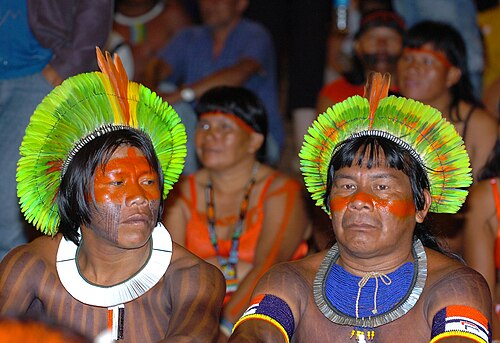

遺伝子研究により、ブラジルの人口全体にはヨーロッパ人、アフリカ人、アメリカ先住民の要素が含まれていることがわかっています。
常染色体研究
2015年に実施された常染色体遺伝子研究では、38の異なるブラジル人集団を対象とした25の研究のデータも分析され、次のような結論が出ている。ヨーロッパ系がブラジル人の62%を占め、アフリカ系(21%)、ネイティブアメリカン(17%)がそれに続く。ヨーロッパ系の割合が最も高いのはブラジル南部(77%)、アフリカ系の割合が最も高いのはブラジル北東部(27%)、ネイティブアメリカンの割合が最も高いのはブラジル北部(32%)である。[78]
2013 年にブラジル全土から集められた 1,300 近くのサンプルを使った常染色体研究で、ヨーロッパ系の祖先が、程度の差はあるもののアフリカ系およびアメリカ先住民の寄与と組み合わさっていることがわかった。北から南への勾配が大きくなり、ヨーロッパ系の祖先が都市部の人口全体で最も多く見られました (最大 74%)。
北部の人口は、アフリカ系人口の約2倍のネイティブアメリカンの祖先がかなりの割合を占めていた。逆に、北東部、中西部、南東部では、アフリカ系が2番目に多かった。人口内レベルでは、すべての都市 人口は高度に混合しており、祖先の割合の変動のほとんどは、人口間ではなく、各人口内の個人間で観察された。[79]
2011年に行われた常染色体DNA研究では、全国のあらゆる主要人種グループ(それぞれの割合に応じて「白人」、「黒人」、「黒人」)から約1000のサンプルが採取され、ヨーロッパ人が大きく寄与し、次いでアフリカ人が大きく寄与し、ネイティブアメリカンの要素が重要であることが判明した。[81]
「研究対象となったすべての地域で、ヨーロッパ系の祖先が優勢であり、その割合は北東部で60.6%、南部で77.7%に及んだ」。2011年の常染色体研究サンプルは、献血者(ブラジルでは最下層階級が献血者の大多数を占めている[82])、および公衆衛生機関の職員と医療系の学生から採取された。
2010年の常染色体DNA研究によると、ブラジルの5つの地域から採取したサンプルを用いて、ブラジル人のDNAに対する各民族の寄与を新たに描写したところ、平均してヨーロッパ人の祖先がブラジル人の遺伝的遺産の約80%を占めていることが示された。


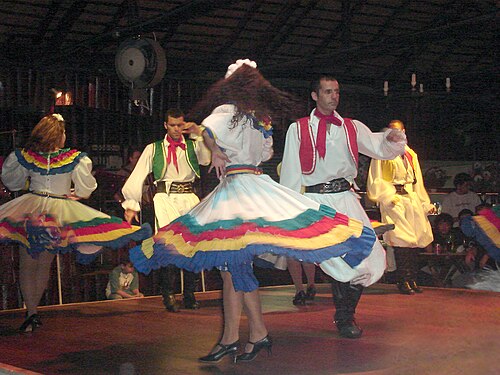
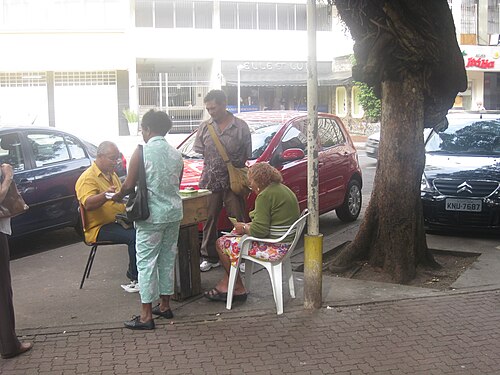
地域間の差異は小さいが、南部は例外で、南部ではヨーロッパ人の寄与が90%近くに達する。ブラジリア・カトリック大学のチームが科学誌「アメリカ人類生物学ジャーナル」に発表した結果によると、ブラジルでは、肌の色、目の色、髪の色などの身体的指標は、これまでの研究で示されてきたように、各人の遺伝的祖先とはほとんど関係がない(国勢調査の分類に関係なく)ことがわかった。[83]
祖先に関する情報を提供する SNP は、個人および集団の生物地理学的 祖先を推定するのに役立ちます。ブラジルの集団は、3 つの親集団 (ヨーロッパ、アフリカ、ブラジル先住民) の遺伝的背景を持ち、混合の程度は幅広く、パターンも多様です。
この研究では、3 つの親集団ソース (アフリカ系、アメリカインディアン系、ヨーロッパ系) を使用して、28 の祖先情報 SNP の情報内容を多重パネルに分析し、ブラジルの 5 つの地政学的地域の都市サンプルにおける遺伝的混合を推測しました。SNP は親 集団を互いに分離しているため、3 つの雑種混合集団における祖先の推定に適用できます。
データは混合モデルを用いてブラジル人の遺伝的祖先を推測するために使用された。ブラジルの 5 つの地政学的地域間の F(st) のペアワイズ推定では、南部と残りの地域の間でのみ遺伝的差異がほとんどないことが示唆された。祖先の結果の推定値はブラジル人の異質な遺伝的プロファイルと一致しており、ヨーロッパの祖先 (0.771) が大きな寄与をし、アフリカ (0.143) とアメリカインディアン (0.085) がそれに続く。説明した多重 SNP パネルは生物人類学的研究に有用なツールとなり得るが、主に混合集団の遺伝的関連研究における誤った結果を制御するのに有益である」。[80]
注目すべきは、「サンプルは無料で父子鑑定を受けた人々から採取されたもので、研究者らが明確に述べているように、「父子鑑定は無料で、母集団サンプルにはさまざまな社会経済的階層の人々が含まれていたが、おそらくパルドグループにわずかに傾いている」ということである。」[80]
2009年の常染色体DNA研究では、同様のプロファイルが見つかり、「ブラジルのすべてのサンプル(地域)は、アフリカ人やメスティーソよりもヨーロッパのグループに近い」ことが判明しました。[84]
2008年にブラジリア大学(UnB)が実施した別の常染色体DNA研究によると、ブラジル全土(全地域)ではヨーロッパ系が人口の65.90%を占め、アフリカ系(24.80%)、ネイティブアメリカン(9.3%)がそれに続く。 [85] [86] 2013年のより最近の研究では、サンパウロ州の構成は次の通りであることが判明した:ヨーロッパ系61.9%、アフリカ系25.5%、ネイティブアメリカン11.6%。[79]
A 2014 autosomal DNA study, which analysed data from 1594 samples from all of the Brazilian regions, found that Brazilians show widespread European ancestry with the highest levels being observed in the south. African ancestry is also widespread (except for the south) and reaches its highest values in the East of the country. Native American ancestry is highest in the north-west (Brazilian Amazon).[87]
MtDna and y DNA studies
Haplogroup frequencies do not determine phenotype nor admixture. They are very general genetic snapshots, primarily useful in examining past population group migratory patterns. Only autosomal DNA testing can reveal admixture structures, since it analyses millions of alleles from both maternal and paternal sides. Contrary to yDNA or mtDNA, which are focused on one single lineage (paternal or maternal) the autosomal DNA studies profile the whole ancestry of a given individual, being more accurate in describing the complex patterns of ancestry in a given place.
According to a genetic study in 2000 who analysed 247 samples (mainly identified as "white" in Brazil) who came from four of the five major geographic regions of the country, the mtDNA pool (maternal lineages) of present-day Brazilians clearly reflects the imprints of the early Portuguese colonization process (involving directional mating), as well as the recent immigrant waves (from Europe) of the last century.[88]
According to a study in 2001, the vast majority of Y chromosomes (male lineages) in white Brazilian males, regardless of their regional source, is of European origin (>90% contribution), with a very low frequency of sub-Saharan African chromosomes and a complete absence of Amerindian contributions. These results configure a picture of strong directional mating in Brazil involving European males, on one side, and European, African and Amerindian females, on the other.[10]
In a study from 2016, the authors investigated a set of 41 Y-SNPs in 1217 unrelated males from the five Brazilian geopolitical regions. A total of 22 haplogroups were detected in the whole Brazilian sample, revealing the three major continental origins of the current population, namely from America, Europe and Africa. The genetic differences observed among regions were, however, consistent with the colonization history of the country.
The Central-Western and Southern samples showed the higher European contributions (95.7% and 93.6%, respectively). The Southeastern region presented significant European (86.1%) and African (12.0%) contributions. Portugal was estimated to be the main source of the male European lineages to Central-West, Southeast and South Brazil.
The North and the Northeast showed the highest contribution from France and Italy, respectively. The highest migration rate from Lebanon was to the Central-West, whereas a significant migration from Germany was observed to the Central East, Southeast and South. The sample from the Northern region presented the highest Native American ancestry (8.4%), whereas the more pronounced African contribution could be observed in the Northeastern population (15.1%).[89]
In the Brazilian "white" and "pardos" the autosomal ancestry (the sum of the ancestors of a given individual) tends to be in most cases predominantly European, with often a non European mtDNA (which points to a non European ancestor somewhere down the maternal line), which is explained by the women marrying newly arrived colonists, during the formation of the Brazilian people.[90]
See also

- Lists of Brazilians
- Brazilian diaspora
- Immigration to Brazil
- Demographics of Brazil
- Pardo (Brown) Brazilians
- European immigration to Brazil
- White Brazilians
- Portuguese Brazilians
- Italian Brazilians
- Spanish Brazilians
- German Brazilians
- Arab Brazilians
- Confederados
- History of the Jews in Brazil
- Native Brazilians
- Afro-Brazilians
- Asian Brazilians
- Japanese Brazilians
- Racial whitening
- Romani people in Brazil
- Brazilian Americans
- Lusitanics
- Brazilians in Japan
- Brazilians in Portugal
Notes
- ^ Includes Monaco.
- ^ Includes Liechtenstein.
- ^ "In Brazil the predominant European sub-component matches mostly the Portugal/West-Spain reference group while in Mexico, Colombia, Peru and Chile mostly Central/South-Spanish ancestry is inferred (Figures 1C and 2B). This differentiation matches the colonial history, Portuguese migration having concentrated in Eastern South America while the Spanish settled mainly in Central America and Western South America".[19]
References
- ^ a b Araujo, Gabriel (28 June 2023). Grattan, Steven; Rumney, Emma (eds.). "Brazil census shows population growth at its slowest since 1872". Reuters. Archived from the original on 29 June 2023.
- ^ Figueiredo, Carolina (10 August 2023). Ferneda, Gabriel (ed.). "Around 4.5 million Brazilians live abroad, says Itamaraty". CNN Brazil. Archived from the original on 10 August 2023.
- ^ a b c d e f g h i j k l m n o p q r s t "Comunidade Brasileira no Exterior - Estimativas referentes ao ano de 2022" (PDF) (in Brazilian Portuguese). Ministry of External Relations. 2 August 2023. Retrieved 19 September 2023.
- ^ "【在留外国人統計(旧登録外国人統計)統計表】 | 出入国在留管理庁". Archived from the original on 28 September 2023. Retrieved 31 May 2024.
- ^ "令和5年末現在における在留外国人数について". Archived from the original on 30 May 2024. Retrieved 31 May 2024.
- ^ "Archived copy" (PDF). Archived (PDF) from the original on 10 November 2023. Retrieved 31 May 2024.
{{cite web}}: CS1 maint: archived copy as title (link) - ^ "Brazil". Ethnologue. Archived from the original on 8 July 2015. Retrieved 21 July 2015.
- ^ Facioli, Valentim (25 February 2018). Um defunto estrambótico: análise e interpretação das Memórias póstumas de Brás Cubas. EdUSP. ISBN 9788531410833. Archived from the original on 18 January 2024. Retrieved 25 October 2020 – via Google Books.
- ^ a b Constituição da República Federativa do Brasil, Artigo 12, I.
- ^ a b Carvalho-Silva, DR; Santos, FR; Rocha, J; Pena, SD (January 2001). "The Phylogeography of Brazilian Y-Chromosome Lineages". Am. J. Hum. Genet. 68 (1): 281–6. doi:10.1086/316931. PMC 1234928. PMID 11090340.
- ^ "Who Were the Ancestors of Native Americans? A Lost People in Siberia, Scientists Say". The New York Times. 5 June 2019. ISSN 0362-4331. Archived from the original on 26 March 2023. Retrieved 10 December 2022.
- ^ "O "elo perdido" entre os povos asiáticos e os índios das Américas". Super (in Brazilian Portuguese). Archived from the original on 26 March 2023. Retrieved 10 December 2022.
- ^ "What the ancient DNA discovery tells us about Native American ancestry". The Guardian. 3 January 2018. Retrieved 10 December 2022.
- ^ "All Native Americans Descended from One Ancestral Population". The Scientist Magazine®. Archived from the original on 4 February 2023. Retrieved 10 December 2022.
- ^ a b "Índios - O Brasil antes do descobrimento". Archived from the original on 16 January 2023. Retrieved 25 February 2023.
- ^ "Brasil: 500 anos de povoamento – História indígena". Instituto Brasileiro de Geografia e Estatística (IBGE). Archived from the original on 30 January 2023. Retrieved 10 December 2022.
- ^ "População indígena no Brasil: números e motivos da redução". Mundo Educação (in Brazilian Portuguese). Archived from the original on 27 January 2023. Retrieved 10 December 2022.
- ^ a b c Ribeiro, Darcy. O Povo Brasileiro, Companhia de Bolso, fourth reprint, 2008 (2008)
- ^ a b "Latin Americans show wide-spread Converso ancestry and the imprint of local Native ancestry on physical appearance" (PDF). Archived (PDF) from the original on 14 November 2020. Retrieved 25 February 2023.
- ^ Souza, Aracele Maria de; Resende, Sarah Stela; Sousa, Taís Nóbrega de; Brito, Cristiana Ferreira Alves de (14 November 2019). "A systematic scoping review of the genetic ancestry of the Brazilian population". Genetics and Molecular Biology. 42 (3): 495–508. doi:10.1590/1678-4685-GMB-2018-0076. ISSN 1415-4757. PMC 6905439. PMID 31188926.
- ^ a b "Brasil: 500 anos de povoamento – Presença portuguesa: de colonizadores a imigrantes - imigração de transição (1701-1850)". Instituto Brasileiro de Geografia e Estatística (IBGE). Archived from the original on 26 February 2022. Retrieved 10 December 2022.
- ^ a b c Horn, James, and Philip D. Morgan. "Settlers and Slaves: European and African Migrations to Early Modern British America." In The Creation of the British Atlantic World, edited by Elizabeth Manke and Carole Shammas. Baltimore, MD: Johns Hopkins University Press, 2005.
- ^ Altman, Ida, and James Horn, eds. "To Make America": European Emigration in the Early Modern Period. Berkeley: University of California Press, 1991.
- ^ Furtado, Celso. Formação econômica do Brasil. São Paulo: Editora Nacional, 1971.
- ^ Marcílio, Maria Luiza. A população do Brasil Colonial. In: BETHELL, Leslie (Org.). História de América Latina: América Latina Colonial. São Paulo: Edusp; Brasília: Fundação Alexandre de Gusmão, 1999. p. 311-338. v. 2.
- ^ "José Moya. Canada and the Atlantic World: Borderlands and Transnationalism in the United States and Canada". Archived from the original on 26 March 2023. Retrieved 25 February 2023.
- ^ a b "Assessing the Slave Trade: Estimates". The Trans-Atlantic Slave Trade Database. Emory University, Atlanta, Georgia. Archived from the original on 28 October 2023. Retrieved 23 February 2023.
- ^ "Detalhes da imagem". Archived from the original on 8 February 2023. Retrieved 23 February 2023.
- ^ "Bight of Benin". Archived from the original on 10 December 2023. Retrieved 23 February 2023.
- ^ Schwarcz, Lilia Moritz. Starling, Heloisa Murgel. Brasil: Uma Biografia. Companhia das Letras; Edição: 1ª (27 de abril de 2015)
- ^ Klein, Herbert S. (2012). "A experiência afro-americana numa perspectiva comparativa: a situação atual do debate sobre a escravidão nas Américas". Afro-Ásia (in Portuguese) (45): 95–121. doi:10.1590/S0002-05912012000100004. ISSN 0002-0591. Archived from the original on 10 December 2022. Retrieved 10 December 2022.
- ^ "Expectativa de Vida e Mortalidade de Escravos". Archived from the original on 15 August 2020. Retrieved 25 February 2023.
- ^ Pedro Carvalho de Mello. Estimativa da Longevidade de Escravos no Brasil na Segunda Metade do Seculo XIX
- ^ Moya, Jose (2020). "Immigration and the Historical Formation of Brazil". Oxford Research Encyclopedia of Latin American History. doi:10.1093/acrefore/9780199366439.013.894. ISBN 978-0-19-936643-9. Archived from the original on 18 December 2021. Retrieved 24 December 2021.
- ^ "População estrangeira e naturalizada em 1920". Archived from the original on 27 February 2009. Retrieved 10 December 2022.
- ^ "Mediterraneo Economico. Procesos migratorios, economía y personas" (PDF). Archived from the original (PDF) on 13 February 2023. Retrieved 25 February 2023.
- ^ a b Balán, J. (1973) - Migrações e desenvolvimento capitalista no Brasil: ensaio de interpretação histórico-comparativa. Estudos Cebrap, São Paulo, (5).
- ^ a b França, Thiago de Novaes (4 June 2008). "A substituição da mão-de-obra escrava e a opção pela grande imigração no estado de São Paulo". Retrieved 10 December 2022.
{{cite journal}}: Cite journal requires|journal=(help)[permanent dead link] - ^ a b Costa, Emília Viotti da. A Abolição. 9. ed. São Paulo. Editora Unesp, 2010
- ^ "As políticas públicas de imigração européia não-portuguesa para o Brasil – de Pombal à República*". www.feth.ggf.br (8 ed.). 2005. ISSN 1677-650X. Archived from the original on 26 March 2023. Retrieved 10 December 2022.
- ^ "Abasteciment Alimentar e Compras Públicas No Brasil: Um Resgate Histórico" (PDF). Archived (PDF) from the original on 16 January 2023. Retrieved 25 February 2023.
- ^ Diego Antonelli (2 December 2018). "O Paraná germânico". Revista Ideias. Archived from the original on 6 June 2020. Retrieved 12 May 2020.
- ^ "Economia cafeeira e industrialização do Brasil". Brasil Escola (in Brazilian Portuguese). Archived from the original on 26 March 2023. Retrieved 10 December 2022.
- ^ "O Rio de Janeiro da Primeira República e a imigração portuguesa: panorama histórico" (PDF). Archived (PDF) from the original on 26 March 2023. Retrieved 25 February 2023.
- ^ "Soares, Carlos Eugénio Líbano. Dos fadistas e galegos: os portugueses na capoeira" (PDF). Archived (PDF) from the original on 27 March 2023. Retrieved 25 February 2023.
- ^ a b "A systematic scoping review of the genetic ancestry of the Brazilian population". Archived from the original on 16 January 2023. Retrieved 25 February 2023.
- ^ Reinaldo José Lopes (19 February 2011). "DNA de negros e pardos do Brasil é 60% a 80% europeu". ambientebrasil. Folha de S.Paulo. Archived from the original on 7 June 2022. Retrieved 6 May 2022.
- ^ V. Bonifaz-Peña; A. V. Contreras; C. J. Struchiner; R. A. Roela; T. K. Furuya-Mazzotti; R. Chammas; et al. (2014). "Exploring the Distribution of Genetic Markers of Pharmacogenomics Relevance in Brazilian and Mexican Populations". PLOS ONE. 9 (11): e112640. Bibcode:2014PLoSO...9k2640B. doi:10.1371/journal.pone.0112640. PMC 4242606. PMID 25419701.
{{cite journal}}: CS1 maint: multiple names: authors list (link) - ^ "Latino-americanos são maioria entre estrangeiros no Brasil nos últimos 10 anos". Archived from the original on 25 February 2023. Retrieved 25 February 2023.
- ^ a b "Número de novos imigrantes cresce 24,4% no Brasil em dez anos". Archived from the original on 25 February 2023. Retrieved 25 February 2023.
- ^ "Dados sobre refúgio no Brasil". Archived from the original on 25 February 2023. Retrieved 25 February 2023.
- ^ "Manual do Recenseador Parte 2" (PDF). censo2022.ibge.gov.br. Rio de Janeiro: IBGE. August 2019. Archived (PDF) from the original on 18 January 2024. Retrieved 5 May 2022.
- ^ Revista Veja, ed. (2011). "Censo 2010 erra ao indicar aumento de asiáticos no país". Archived from the original on 18 September 2016. Retrieved 4 June 2015.
- ^ "Japanese Immigration to Brazil". Archived from the original on 25 February 2023. Retrieved 25 February 2023.
- ^ Adriano Souza Senkevics (2017). "De brancos para negros? Uma análise longitudinal da reclassificação racial no Enem 2010-2014" (PDF). São Luís, Maranhão: 38ª. Reunião Nacional da Anped. Retrieved 9 May 2022.
- ^ "População Brasileira – 2010 (Censo IBGE)" (in Portuguese).
- ^ "Sistema IBGE de Recuperação Automática - SIDRA". Tabela 2094 - População residente por cor ou raça e religião. Instituto Brasileiro de Geografia e Estatística (IBGE). 2010. Archived from the original on 5 June 2017. Retrieved 13 January 2019.
- ^ Pena, Sérgio D. J.; Di Pietro, Giuliano; Fuchshuber-Moraes, Mateus; Genro, Julia Pasqualini; Hutz, Mara H.; Kehdy, Fernanda de Souza Gomes; Kohlrausch, Fabiana; Magno, Luiz Alexandre Viana; Montenegro, Raquel Carvalho; Moraes, Manoel Odorico; de Moraes, Maria Elisabete Amaral (16 February 2011). "The Genomic Ancestry of Individuals from Different Geographical Regions of Brazil Is More Uniform Than Expected". PLOS ONE. 6 (2): e17063. Bibcode:2011PLoSO...617063P. doi:10.1371/journal.pone.0017063. ISSN 1932-6203. PMC 3040205. PMID 21359226.
- ^ "Brazil, the case of triracial white people". Discover Magazine. Archived from the original on 10 August 2020. Retrieved 13 August 2020.
- ^ "Sistema IBGE de Recuperação Automática - SIDRA". ibge.gov.br. Archived from the original on 24 September 2015. Retrieved 3 August 2016.
- ^ "Brazil - Modern-Day Community". www.jewishvirtuallibrary.org/. 2013. Archived from the original on 4 November 2013. Retrieved 22 December 2013.
- ^ a b Bianconi, Nara (27 June 2008). "Nipo-brasileiros estão mais presentes no Norte e no Centro-Oeste do Brasil". Centenário da Imigração Japonesa (in Portuguese). www.japao100.com.br. Archived from the original on 13 August 2017. Retrieved 3 August 2016.
- ^ "Japan-Brazil Relations". Ministry of Foreign Affairs of Japan. Archived from the original on 13 October 2019. Retrieved 3 August 2016.
- ^ Sources :: Indigenous Peoples in Brazil – ISA. socioambiental.org
- ^ Instituto Brasileiro de Geografia e Estatística Archived 2007-08-25 at the Wayback Machine. IBGE (2007-05-25). Retrieved on 2012-05-19.
- ^ 2008 PNAD, IBGE. "População residente por cor ou raça, situação e sexo Archived 2011-06-14 at the Wayback Machine".
- ^ a b "Censo Demográfi co 2010 Características da população e dos domicílios Resultados do universo" (PDF). 8 November 2011. Archived (PDF) from the original on 13 November 2012. Retrieved 12 July 2014.
- ^ "CIA data from The World Factbook's Field Listing :: Ethnic groups and Field Listing :: Population". cia.gov. Archived from the original on 6 January 2019. Retrieved 9 May 2011.
- ^ Fran cisco Lizcano Fernández (May 2005). "Composición Étnica de las Tres Áreas Culturales del Continente Americano al Comienzo del Siglo XXI" (PDF). Convergencia. Archived from the original (PDF) on 24 February 2014. Retrieved 26 May 2016.
- ^ Nova Veneza Archived 2008-08-19 at the Wayback Machine
- ^ Pomerode-SC
- ^ Ucranianos no Brasil[permanent dead link]
- ^ História de Treze Tílias Archived 2008-11-02 at the Wayback Machine
- ^ Prefeitura de D. Feliciano Archived July 6, 2011, at the Wayback Machine
- ^ Gonzalez, David (25 September 2013). "Japanese-Brazilians: Straddling Two Cultures". Lens Blog. The New York Times. Archived from the original on 2 October 2013. Retrieved 27 September 2013.
- ^ "Japan-Brazil relations". Archived from the original on 13 October 2019. Retrieved 19 March 2022.
- ^ IBGE traça perfil dos imigrantes Archived November 19, 2012, at the Wayback Machine
- ^ a b Rodrigues De Moura, Ronald; Coelho, Antonio Victor Campos; De Queiroz Balbino, Valdir; Crovella, Sergio; Brandão, Lucas André Cavalcanti (2015). "Meta-analysis of Brazilian genetic admixture and comparison with other Latin America countrieBold text". American Journal of Human Biology. 27 (5): 674–80. doi:10.1002/ajhb.22714. hdl:11368/2837176. PMID 25820814. S2CID 25051722.
- ^ a b Saloum De Neves Manta, Fernanda; Pereira, Rui; Vianna, Romulo; Rodolfo Beuttenmüller De Araújo, Alfredo; Leite Góes Gitaí, Daniel; Aparecida Da Silva, Dayse; De Vargas Wolfgramm, Eldamária; Da Mota Pontes, Isabel; Ivan Aguiar, José; Ozório Moraes, Milton; Fagundes De Carvalho, Elizeu; Gusmão, Leonor (2013). "Revisiting the Genetic Ancestry of Brazilians Using Autosomal AIM-Indels". PLOS ONE. 8 (9): e75145. Bibcode:2013PLoSO...875145S. doi:10.1371/journal.pone.0075145. PMC 3779230. PMID 24073242.
- ^ a b c d Lins, T. C.; Vieira, R. G.; Abreu, B. S.; Grattapaglia, D.; Pereira, R. W. (March–April 2009). "Genetic composition of Brazilian population samples based on a set of twenty-eight ancestry informative SNPs". American Journal of Human Biology. 22 (2): 187–192. doi:10.1002/ajhb.20976. PMID 19639555. S2CID 205301927. Archived from the original on 20 October 2020. Retrieved 13 September 2020.
- ^ a b Pena, Sérgio D. J.; Di Pietro, Giuliano; Fuchshuber-Moraes, Mateus; Genro, Julia Pasqualini; Hutz, Mara H.; Kehdy, Fernanda de Souza Gomes; Kohlrausch, Fabiana; Magno, Luiz Alexandre Viana; et al. (2011). Harpending, Henry (ed.). "The Genomic Ancestry of Individuals from Different Geographical Regions of Brazil Is More Uniform Than Expected". PLOS ONE. 6 (2): e17063. Bibcode:2011PLoSO...617063P. doi:10.1371/journal.pone.0017063. PMC 3040205. PMID 21359226.
- ^ Profile of the Brazilian blood donor Archived October 28, 2011, at the Wayback Machine. Amigodoador.com.br. Retrieved on 2012-05-19.
- ^ DNA de brasileiro é 80% europeu, indica estudo Archived 7 May 2021 at the Wayback Machine. .folha.uol.com.br (1970-01-01). Retrieved on 2012-05-19.
- ^ a b De Assis Poiares, Lilian; De Sá Osorio, Paulo; Spanhol, Fábio Alexandre; Coltre, Sidnei César; Rodenbusch, Rodrigo; Gusmão, Leonor; Largura, Alvaro; Sandrini, Fabiano; Da Silva, Cláudia Maria Dornelles (2010). "Allele frequencies of 15 STRs in a representative sample of the Brazilian population" (PDF). Forensic Science International: Genetics. 4 (2): e61–3. doi:10.1016/j.fsigen.2009.05.006. PMID 20129458. Archived from the original (PDF) on 8 April 2011.
- ^ "the impact of migrations in the constitution of Latin American populations". Archived from the original (PDF) on 6 July 2011. Retrieved 22 February 2016.
- ^ Ferreira, L. B.; Mendes-Junior, C. T.; Wiezel, C. E.; Luizon, M. R.; Simões, A. L. (2006). "Genomic ancestry of a sample population from the state of São Paulo, Brazil". American Journal of Human Biology. 18 (5): 702–705. doi:10.1002/ajhb.20474. PMID 16917899. S2CID 10103856.
- ^ Ruiz-Linares, Andrés; Adhikari, Kaustubh; Acuña-Alonzo, Victor; Quinto-Sanchez, Mirsha; Jaramillo, Claudia; Arias, William; Fuentes, Macarena; Pizarro, María; Everardo, Paola; De Avila, Francisco; Gómez-Valdés, Jorge; León-Mimila, Paola; Hunemeier, Tábita; Ramallo, Virginia; Silva De Cerqueira, Caio C.; Burley, Mari-Wyn; Konca, Esra; De Oliveira, Marcelo Zagonel; Veronez, Mauricio Roberto; Rubio-Codina, Marta; Attanasio, Orazio; Gibbon, Sahra; Ray, Nicolas; Gallo, Carla; Poletti, Giovanni; Rosique, Javier; Schuler-Faccini, Lavinia; Salzano, Francisco M.; Bortolini, Maria-Cátira; et al. (2014). "Admixture in Latin America: Geographic Structure, Phenotypic Diversity and Self-Perception of Ancestry Based on 7,342 Individuals". PLOS Genetics. 10 (9): e1004572. doi:10.1371/journal.pgen.1004572. PMC 4177621. PMID 25254375.
- ^ Alvessilva, J; Dasilvasantos, M; Guimaraes, P; Ferreira, A; Bandelt, H; Pena, S; Prado, V (2000). "The Ancestry of Brazilian mtDNA Lineages". The American Journal of Human Genetics. 67 (2): 444–61. doi:10.1086/303004. PMC 1287189. PMID 10873790.
- ^ Resque, Rafael; Gusmão, Leonor; Geppert, Maria; Roewer, Lutz; Palha, Teresinha; Alvarez, Luis; Ribeiro-Dos-Santos, Ândrea; Santos, Sidney (2016). "Male Lineages in Brazil: Intercontinental Admixture and Stratification of the European Background, Resque et al. (2016)". PLOS ONE. 11 (4): e0152573. Bibcode:2016PLoSO..1152573R. doi:10.1371/journal.pone.0152573. PMC 4821637. PMID 27046235.
- ^ "Laboratório Gene – Núcleo de Genética Médica". Laboratoriogene.com.br. Archived from the original on 6 July 2011. Retrieved 29 December 2011.
Works cited
- Bethell, Leslie (6 December 1984). The Cambridge History of Latin America. Vol. 2. Cambridge: Cambridge University Press. ISBN 978-0-521-24516-6. Archived from the original on 31 August 2022. Retrieved 31 August 2022.
- Telfer, William (1932). The treasure of São Roque: a sidelight on the counter-reformation. London, UK: Society for Promoting Christian Knowledge. ISBN 9785871241141. Archived from the original on 31 August 2022. Retrieved 31 August 2022.
External links

Wikiquote has quotations related to Brazilians.
- (in Portuguese) Lusotopia