
Loading article…

ボディイメージとは、自分の体の美しさや性的魅力についての人の考え、感情、認識のことである。 [1]ボディイメージの概念は、神経科学、心理学、医学、精神医学、精神分析、哲学、文化研究、フェミニズム研究など、いくつかの分野で使用されており、メディアでもよく使用されている。これらの分野全体で単一のコンセンサスのある定義はないが、大まかに言えば、ボディイメージは、人々が自分自身をどのように見ているか、外見に関する記憶、経験、想定、比較、そしてそれぞれの身長、体型、体重に対する全体的な態度から成り立っている[2]。これらはすべて、一般的な社会的、文化的理想によって形作られている。
ボディイメージは、ネガティブなもの(「ボディネガティブ」)、ポジティブなもの(「ボディポジティブ」)、または中立的なものになり得る。ネガティブなボディイメージを持つ人は、自意識過剰になったり恥ずかしくなったり、他の人の方が魅力的だと感じたりすることがある。[2]ソーシャルメディアが非常に重要な位置を占め、日常生活で頻繁に使用される時代において、さまざまな年齢の人々は、自分たちが住む社会が設定した外見や体のサイズ/形の理想によって感情的および精神的に影響を受けています。社会によって作成され、絶えず変更されているこれらの基準は、ボディシェイミング(人の生理的な外見について嘲笑したり批判的なコメントをしたりすることで個人を辱める行為)に部分的に寄与する可能性があります。
自尊心が低いことに加え、患者は通常、認識されている基準を満たすために身体的外見を変えることに固執します。このような行動は、長期的には身体への不満や摂食障害、孤立、精神疾患のリスクを高めます。 [2]摂食障害では、否定的な身体イメージが身体イメージ障害、つまり自分の体全体に対する認識の変化につながることもあります。身体への不満は、身体醜形障害の特徴でもあります。これは、身体の特定の部分(通常は顔、皮膚、髪)に対する懸念を特徴とする強迫性障害で、その部分には重大な欠陥があり、それを隠したり修正したりするために特別な手段を講じる必要があります。身体イメージの低い人は、ダイエットや美容整形手術など、何らかの方法で自分の身体を変えようとすることがよくあります。一方、ポジティブなボディイメージとは、自分の体型をはっきりと正しく認識し、自分の体を称賛し評価し、自分の外見が性格や価値を反映するものではないことを理解することです。[2]
家族の力学、精神疾患、生物学的素因、肥満や栄養失調の環境的要因、文化的期待(メディアや政治など)など、多くの要因が人の体のイメージに影響を及ぼします。体重が不足している人も、太りすぎの人も、体のイメージが悪い場合があります。[3]
アメリカ心理学会の2007年の報告書では、文化全体における少女や女性の性的対象化が、女性の身体イメージに関連する不安の増加に寄与していることが判明した。 [4]オーストラリア政府 上院常任委員会によるメディアにおける児童の性的対象化に関する報告書でも、身体イメージに関連する同様の調査結果が報告されている。 [5]しかし、他の学者は、これらの主張は確かなデータに基づいていないと懸念を表明している。[6]
歴史
.jpg/500px-Italian_-_Portrait_of_a_Woman_as_Cleopatra_-_Walters_37534_(2).jpg)

「ボディイメージ」という言葉は、オーストリアの神経学者ポール・シルダーが著書『人体のイメージと外観』(1935年)で初めて作った造語である。[7]
歴史の大半を通じて、社会的地位や富を暗示する特徴はどれも理想的とされた。歴史的に富は食物と結びついていたため、豊満な体型の人は裕福または権力者とみなされた。他の地域では、文化的価値観や信仰も身体イメージに大きな影響を与えた。漢王朝では、先祖から受け継いだ皮膚や髪を傷つけることは失礼だと考えられていたため、透明感のある肌や黒い髪などの特徴が非常に高く評価された。 [8]
求められる特性は、歴史を通じて道徳的、文化的価値観や感性の進化とともに常に変化してきました。しかし、ハリウッド、ファッションデザイナー、女優などの文化的象徴も、身体イメージの認識に影響を与えてきました。
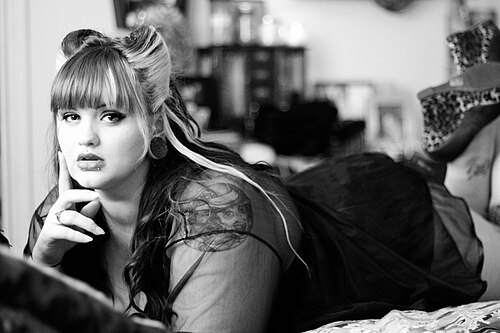
今日、コミュニケーション技術の進歩により、「自分自身、自分の価値、自分の体に関するメッセージを傍受し解釈する配信プラットフォーム」が生まれました。特にソーシャルメディアは「完璧な体」の形を変え、髪、体型、肌の色について一貫性のない理想を提示しています。[9]
人口統計
女性
「少女や女性にとっての社会的価値は、容姿に根ざしたままである」[10] 。 「世界中の女性は、年齢、肌の色、体型など、容姿によって評価され、抑圧されている」 [11]。
多くの広告は、視聴者に不安を煽って解決策を売りつけようとするため、修正された画像や性的対象化、そして「非現実的な美のイメージ」を助長し、特に女性の視聴者の身体イメージを損なうような露骨なメッセージを提示することがある。[12] [13 ] [14] [15]
体への不満は、若い女性に否定的な態度、有害な精神、そして否定的な習慣を生み出します。[16] [17]理想的な女性の体型とサイズを強調することは、若い女性にとって心理的に有害であり、[18]幸せになるために身だしなみを整えたり、ダイエットしたり、手術を受けたりすることがあります。[19] 「女子大生の摂食障害発症率は特に高く、大学生の間では最大24%に達します。」[20]少女の体への不満は、喫煙率の増加や、年をとったときの性に対する安心感の低下と関連しており、美容整形を検討する可能性があります。[21] [22]「文化的に誘発された体への不安の影響に対処する」という女性と少女へのプレッシャーは「深刻」です。[23]多くの人が、「外見や体型で判断されなければ、人生はもっと良くなるだろう。[これは]低い自尊心、摂食障害、精神衛生上の問題、うつ病につながるからだ」と報告しています。[24]
メディアのイメージと自分を比べる女性は、実際よりも太っていると思い込んでいる。[25]その理由の1つは、「メディアの理想化されたイメージは、エアブラシ(太ももを細くしたり、筋肉の緊張を高めるなど)などのコンピューター操作技術に日常的にさらされているためです。その結果得られるイメージは、生物学的な現実に基づかない、実現不可能な『美的完璧さ』を提示します。」[26]
拒食症や過食症などの摂食障害は、世界的に10代の少女の間で徐々に増加している。全米摂食障害協会は、摂食障害に苦しむ人の95%が12歳から26歳であると報告しており、[27]拒食症は10代の若者の間で3番目に多い病気である。[27] 10代の少女は「ネガティブなメッセージを内面化し、痩せた外見を得るために減量に執着する」傾向が最も強い。[28]「美しさに関する文化的メッセージ(つまり、美しさとは何か、どのように培うべきか、そして美しさがどのように報われるか)は、メディアにおける女性の表現を通じて暗黙のうちに伝えられることが多い。」[29]
しかし、他の研究者はメディア効果パラダイムの主張に異議を唱えています。例えば、クリストファー・ファーガソン、ベンジャミン・ワインガード、ボー・ワインガードによる論文では、メディア効果よりも仲間効果の方が体への不満を引き起こす可能性がはるかに高く、メディア効果は過度に強調されてきたと主張しています。[6]また、特定の環境条件が体への不満を引き起こす可能性があるという主張から、それらの条件が診断可能な摂食障害を引き起こす可能性があるという主張に飛躍することについては注意が必要であるとも主張しています。
女子大学生が痩せた女性の描写にさらされると、彼女たちの体への満足度は低下し、より太ったモデルにさらされると、満足度は上昇した。[30] [31]多くの女性が「ファットトーク」(体重に関連した体の大きさや形について否定的に話すこと)に従事しており、これは体重への不満、体への監視、体への恥辱と関連付けられている行動である。[32]他の人がファットトークをしているのを耳にした女性も、体への不満や罪悪感の増加を経験する可能性がある。[33]
モンテスとマッケイブは、女性の44%が身体の個々の部位と身体全体の両方に対して否定的な感情を表明していることを発見しました。[34]若いアメリカ人男性の37.7%と若いアメリカ人女性の51%が自分の身体に不満を表明しています。[35]
アメリカでは、ダイエット産業は年間およそ400億ドルの利益を上げています。2000年に発表されたハーバード大学の研究(Fat Talk、ハーバード大学出版)によると、10代の女の子の86%がダイエット中、またはダイエットすべきだと考えていることが明らかになりました。ダイエットは幼い子供の間でも一般的になっています。9歳と10歳の女の子の51%は、ダイエットをしていると自分に自信が持てると感じています。[36]
ダヴの調査によると、自分は美しいと思っている女性はわずか4%で[10]、英国の女性と少女の約70%は、メディアが描く非現実的な美の基準が外見に対する不安を煽っていると考えている。[37]その結果、米国保健福祉省は、女性の91%が自分の体に不満を抱いており、[38] 40%が欠点を直すために美容整形手術を検討すると報告している。[38]
男性
同様に、筋肉質の体格を理想化するメディアの描写は、若い男性の体への不満につながっています。10代の少年の45%が身体醜形障害(BDD)を患っている可能性があります。これは、個人が強迫的に自己認識した身体の欠陥に焦点を当てる精神疾患です。[28]男性も筋肉醜形障害を患い、自分の体格に完全に満足することなく、筋肉質を絶えず追求する場合があります。[39]
研究によると、男性の体に対する批判に最も大きな影響を与えるのは、恋人や女性の同僚、父親や兄弟などの男性の親戚ではなく、同じ考えを持つ人や、同年代で尊敬する可能性のある人を含む男性の同僚であることがわかっています。 [ 40] 10代の男性の18%が最も心配しているのは体重と体格で(Malcore、2016)、29%が自分の容姿について頻繁に考えていました。[28] 50%が最近、自分の容姿について不満を言っていました。[28]男性の25%が体重のことでからかわれたと報告し、[28] 33%がソーシャルメディアを自意識過剰の原因として挙げています。[28]ソーシャルメディアサイトで有名人をフォローすると、有名人と個人的に交流することができ、それが男性の体のイメージに影響を与えることが示されています。[41]また、多くの回答者が、他人の体に関する否定的な話に影響されていることを認めました。男子の53%は、広告を「見栄えを良くしなければならないというプレッシャーの主な源泉」として挙げている。しかし、ソーシャルメディア(57%)と友人(68%)の影響力はより大きく、有名人(49%)はやや説得力が劣っていた。[42]思春期の男子の22%は、メディアが描く理想は憧れの的であると考えており、33%はそれを健全だとしている。[42]
理想的な男性の体型は、細いウエストとヒップ、広い肩、よく発達した上半身、引き締まった「シックスパック」の腹筋を特徴とすると考えられています。[19]この体型は、理想化された男性人形、 G.I.ジョーにまで遡ることができます。「筋肉質のアクションヒーローや多くのビデオゲームのたくましいキャラクターは、男の子にとって解剖学的に不可能な理想を提示します。バービーが女の子には物理的に不可能な体型を推進するのと同じです。」[43]拳で問題を解決する筋肉質の戦士の描写にさらされた男の子は、攻撃性と筋肉が男らしさに不可欠であるという教訓を内面化するかもしれません。[43]
いくつかの研究では、韓国の男女の体型不満の発生率は米国に住む男女のそれよりも高いと報告されているが、[44] [45]これらの研究では、韓国人が西洋人に比べてスリムで体格が小さいことを考慮に入れていないと指摘されている。[46]ソーシャルメディアに焦点を当てた米国と韓国の異文化分析では、韓国人男性と米国人男性を比較すると、韓国人男性の方がソーシャルメディアの使用に関連して自分の体のイメージをより気にしていることが判明した。[47]
10代の少年たちは、筋肉量をさらに増やすために、過激なトレーニングやウェイトトレーニングに参加したり、サプリメントやステロイドを乱用したりすることがある。2016年には、10.5%が筋肉増強剤の使用を認め、[28]回答者の5~6%がステロイドの使用を認めた。[28]ダイエットは見落とされがちなものの、男性の間で摂食障害が大幅に増加している。現在、男性の4人に1人が摂食障害に苦しんでおり、[28] 31%が過去に嘔吐や過食症を認めている。 [28]
男性はしばしば最大26ポンドの筋肉量の増加を望む。[48]伝統的な男性観を支持する男性は、筋肉量の増加を望む可能性が高い。[49] [50] 男らしさと筋肉の関係は古代にまで遡ることができる。[51]
ウエストヒップ比(WHR)が低く、より女性的な男性は、 WHRが高く、より男性的な男性に比べて、不快感を覚え、身体に対する自尊心や自己効力感が低いと自己申告しています。[52]
性差
体への不満は女性に多いが、男性もその悪影響をますます受けている。[53]男女の身体イメージを時系列で評価した縦断的研究では、女性の方が身体イメージへの不満をより頻繁に報告しているにもかかわらず、男性は女性よりも身体的容姿を重視する傾向にあった。この差は思春期の若者の間で最も顕著であった。この食い違いを説明する理論の1つは、女性は既にメディアの監視に慣れて鈍感になっているということである。[54]
研究によると、女性は年齢を重ねるにつれて、体のイメージを重視する傾向が強まったのに対し、男性はそれに比べて態度にほとんど変化が見られなかった。[55] [56]別の研究では、「男性に比べて、女性は心理的に外見をかなり意識している。さらに、女性の体のイメージに対する関心の高さは、日常生活に大きな影響を与えている」と示唆されている。[57]
男性も女性も年齢を重ねるにつれて、体のイメージは異なる意味を持つようになる。研究によると、身体的外見の重要性は年齢とともに低下する。[55] [58]
重さ
体重を減らしたいという欲求は、体のイメージの悪さと高い相関関係にある。カシュベック・ウェストらは、体重を減らしたい男性と女性だけを考慮すると、体のイメージにおける性差は消えると報告している。[59]
ナオミ・ウルフは著書『美の神話』で、「3万3000人の女性が、他のどんな目標よりも10~15ポンド痩せたいとアメリカの研究者に語った」と報告している。[60]メディア、広告、モデルなどで過度に痩せた女性のイメージが繰り返されたことで、痩せていることは美しさだけでなく、幸福や成功とも結び付けられるようになった。シャリース・グッドマンが記事「一枚の写真は千のダイエットに値する」で述べたように、広告は社会の美と醜さの考え方を変えた。「実際、広告の言い回しから判断すると、『ほっそり』と『魅力的』は一つの言葉であり、『太っている』と『醜い』のように二つの言葉ではない。」
マーティンとザビエル(2010)による研究によると、スリムなモデルを起用した広告を見た人は、社会から痩せることへのプレッシャーをより強く感じるそうです。体格の大きいモデルを起用した広告では、痩せることへのプレッシャーはより少なくなります。また、スリムなモデルを見た人は、体格の大きいモデルを見たときよりも、実際の体のサイズが大きいと感じます。[61]
ジャーナリストのマリサ・メルツァーのように、現代の美の基準は拒食症的な痩せであり、自然な人間の体型を表さない不健康な考えだと主張する人は多い。「『完璧な』体型がこれほど私たちの本当のサイズとかけ離れたことはかつてなかった」。[60] [62] [63]しかし、これらの数字は、実際には太りすぎである低体重または健康体重の人、太りすぎという自己認識が間違っている人と太りすぎという認識が正しい人を区別していない。
1997年以降の研究[64]によると、アメリカ人の成人の約64%が太りすぎであり、Psychology Todayの調査で女性/男性の不満率が56%/40%であったのが発表以来変わっていないとすれば、その不満率はむしろ不釣り合いに低いと言えます。太りすぎではないのに太りすぎだと信じ続けている人もいますが、自分の体に不満を持っていると予想されるが実際にはそうではない人の数が、今ではその数を上回っています。
減量への社会的圧力が、一般用語と学術用語の両方で「肥満の流行」と呼ばれている現象を軽減したと主張する人もいるが、その悪影響は大きい。[65] [66] [ 67]太りすぎの子供は差別だけでなく、全体的な体への不満、自尊心の低さ、社会的孤立、うつ病を経験する。この否定的な烙印により、子供は精神的および身体的疾患にひどく苦しみ、それが幼少期を過ぎて成人期まで続く可能性がある。[68] [69]
人種
白い肌と道徳的美徳との関連は、少なくとも中世にまで遡り、大西洋奴隷貿易の間に強化されました。すべての人種は白人種から始まったという中世の理論は、白人の体と美の理想が「正常」であり、他の人種の表現型が異常であるという長年の関連の初期の原因でした。[70] 1960年代のブラック・イズ・ビューティフル運動は、この考え方を終わらせようとしました。
ファッション業界における黒人女性の不足は、アフリカ系アメリカ人女性のボディイメージ問題の一因となっている。[71]しかし、2003年の実験では、魅力的な白人、黒人、アジア人女性の写真を3枚ずつ、白人、黒人、アジア人の学生に提示した。この研究では、アジア人女性と白人女性はどちらも体への不満のレベルが同程度であったのに対し、黒人女性は自分の容姿への不満が少なかったと結論付けられた。[72] [73] [74]これらの結果は、アメリカでは黒人女性が一般的に白人女性やアジア人女性よりも自尊心が高いことを示した以前の研究と一致している。[75]
ある研究によると、女性の中では東アジアの女性の方が白人女性よりも自分の体に満足していることがわかりました。東アジアの男性は白人男性よりも体への不満を多く報告しています。[76] [77]西洋人男性はアジア人男性よりも30ポンドも多くの筋肉量を望んでいます。[48]
セクシュアリティ
性的指向が身体イメージにどう影響するかについては、科学的コンセンサスはない。例えば、2013年の研究では、レズビアンを自認する女性は異性愛者の女性よりも身体への不満が少ないことがわかった。[78]対照的に、2015年の研究では、異性愛者の女性とレズビアンやバイセクシュアルの女性の間で体重に対する満足度に違いはなく、メディア、性的パートナー、友人、家族から受ける痩せることへのプレッシャーにも違いはなかった。この研究では、異性愛者の女性はレズビアンやバイセクシュアルの女性よりも痩せている理想を内面化している可能性が高い(痩せていることが魅力であるという西洋の概念を受け入れている)ことがわかった。[79]
レズビアンやバイセクシャルの女性は、主流の体のサイズや形の理想に対してしばしば批判的であるが、それでもなお、社会から従わなければならないというプレッシャーを感じている理想である、と述べている。[80] 2017年に実施された調査で、ヘンリックス・ベックとシマンスキは、レズビアン文化におけるレズビアンのジェンダー定義が、彼女たちが自分の体に不満を持っているかどうかを決定づける可能性があると主張した。[81]彼女たちは、よりステレオタイプ的に「女性的」であると自認するレズビアンは体への不満のリスクが高いのに対し、より「男っぽい」と自認するレズビアンは伝統的に自分の体に満足していると示唆した。[81]非異性愛女性を対象とした質的研究では、女性の性的/恋愛パートナーが体への自信と不安の両方の原因であることが判明した。これらの女性たちは、自分の体の大きさや形をパートナーのそれと比較し、パートナーが自分よりもスリムだと自意識過剰になることがある一方で、西洋の狭い「美しさ」の定義に当てはまらない女性に惹かれることで、自分の外見に自信が持てるようになったと報告している。[82]
2005年の研究では、ゲイの男性はストレートの男性よりも体のイメージに不満を持ち、ダイエットを多く行い、太ることを恐れる傾向が強いことがわかった。[83]ゲイの男性と異性愛者の女性が男性によって性的対象化されていることが、これらのグループにおける摂食障害や覚醒剤中毒の増加の原因であるという証拠もある。バイセクシュアルの人々は歴史的に体のイメージの研究では見過ごされ、ゲイ/レズビアンのラベルに包摂されるか、完全に無視されてきた。[84]
原因
ファッション業界
女性向けのファッション雑誌は、やせやダイエットをさりげなく推奨しており、10代の若者は美容やファッションのアドバイスをこれらの雑誌に頼っている。特に『セブンティーン』は、容姿に関する記事が最も多く掲載されており、69%の少女が理想の体型に影響を与えたと回答している。[85]掲載されている広告の50%も、商品を売るために美的魅力を利用している。[86]米国保健福祉省は、10代の少女の90%が容姿を変える必要性を感じており、[87] 10歳の81%がすでに太っていることを恐れていると報告している。[87]マンチェスター・メトロポリタン大学の調査によると、「参加者が雑誌のモデルの写真を見せられた後、自尊心と身体イメージに対する見方が悪化した。これは、メディアによるイメージの描写が女性の拒食症や過食症を長引かせ、原因となる可能性さえあることを示唆している」。[23] 2014年に13歳から17歳のアメリカ人を対象に行われた調査では、90%が「ファッション業界やメディア業界から痩せるようにプレッシャーを感じていた」と回答し、[88] 65%が描写された体型が細すぎると感じていた。[88] 60%以上が習慣的に自分をモデルと比較し、[88] 46%がモデルの体型に似せようと努めていた。[88]
ダヴの2017年版「ダヴ グローバル ビューティー&コンフィデンス レポート」によると、「女性の71%と少女の67%が、メディアに対して、多様な容姿、年齢、人種、体型、体格の女性をより良く描写するよう求めたいと考えている」とのことです。[37]さらに、男性の67%は、ブランドが写真加工技術を使ってモデルの体のイメージを変えることは受け入れられないと強く考えています。[42]これに対応して、ファッション雑誌業界は「リアル」な女性を取り上げ、エアブラシツールの使用を減らすか禁止する努力をしてきました。同様に、一部のファッションブランドや小売業者は、店舗で買い物をしている顧客の自尊心を意図的に高めようと、品揃えに虚栄心サイズを採用しています。これには、消費者をだまして引き付けるために、実際のアイテムのカットよりも小さいサイズのラベルを服に付けることが含まれます。
ファッションモデル自身も、業界からのプレッシャーにより、体のイメージに否定的な影響を受けている。69%が体を引き締めるよう言われたと回答し、[89] 62%がエージェンシーから減量や体型変更を求められたことがあると回答した。 [89]モデルの54%は、従わなければエージェンシーから契約を解除されると明かした。[89] モデルは低体重のボディマス指数(BMI)であることが多い。国際摂食障害ジャーナルに掲載された研究によると、モデルの大多数がBMI17.41で、[89]拒食症に該当する。過去20年間で、ランウェイモデルは典型的なサイズ6~8から0~2に変身した。アメリカ人モデルの平均体重は、平均的なアメリカ人女性よりも23%少ないと記録されている。 2006年、ファッション業界は、摂食障害を患い、極度の低体重だった2人のモデル、ルイゼル・ラモスとアナ・カロライナ・レストンが早すぎる死を遂げたことで非難を浴びた。他のモデルたちは、体重を維持または減らすために、集中的な運動、食事制限、断食、デトックスを行っている。さらに、17%が覚醒剤の乱用を認めており、[89]さらに8%が減量を促すために頻繁に自発的な嘔吐を行っていた。[89]
ファッション業界関係者は、背が高くて細いキャットウォークモデルの方が服が似合うと主張するが、批評家は、その体型を過度に強調すると、不健康で非現実的な体のイメージを大衆に伝えることになると反論する。[90]
ボディポジティブを推進する試み
様々な管轄区域でモデルを保護し、より健康的なボディイメージを促進するための措置が講じられています。英国と米国は社会教育キャンペーンを展開しています。スペイン、イタリア、ブラジル、イスラエルでは、BMIが18.5未満のモデルが仕事をすることを禁止しています。[91] フランスも同様に、極端に痩せたモデルの雇用を禁止しており、[92]健康を証明するために医師の診断書を義務付けています。[92]
フランスでは、小売業者が雑誌、ウェブサイト、広告で画像がエアブラシ加工されている場合にその旨を明記するよう取り組んでいますが、[93]消費者がデジタルレタッチ技術をすでに認識しているかどうかは不明です。[93] [94]罰金を回避したいフランスの企業は、画像が美化のために変更されている場合、投稿にラベルを付ける必要があります。[95]
ファッション複合企業のケリングとLVMHは最近、「今後は米国サイズ2より小さいモデルを雇用しないと発表した」[92] 。モデルの労働条件を改善し、他の人にも追随するよう促すためだ。批評家は、サイズ0のモデルを働くことを禁止することは差別または痩せていることへの侮辱に当たると異議を唱えている。[96]さらに、ほとんどの国の平均的な体型に合わない小さな最小ドレスサイズの発表は、「超スリムな体型が「理想的」であるというメッセージを送り続けている」。[97] プラスサイズのモデルが徐々に主流メディアに登場しており、ボディイメージが向上する可能性がある。[98] [99]著名なプラスサイズモデルには、人気のあるプラスサイズ小売業者レーンブライアントの顔であるアシュリーグラハムや、ランジェリーと水着の小売業者エアリーのロールモデルであるイスクラローレンスがいる。クリスチャンシリアノはニューヨークファッションウィークのショーに5人のプラスサイズモデルを起用した。[100]シリアーノはプラスサイズの女優レスリー・ジョーンズのためにドレスをデザインしたことで世界的な注目を集めた。[101]
ファッション業界における流行に敏感なプラスサイズの服の不足が、#PlusIsEqual運動の台頭につながった。フォーエバー21やASOSなどのハイストリートブランドは、プラスサイズの商品の提供を増やしている。[102]他のブランドには、XXXLサイズまでのハイストリート服の発売を計画しているビクトリア・ベッカムや、 [103]プラスサイズコレクションのサイズを1Xから3Xに拡大したナイキなどがある。 [104]プラスサイズという言葉が不必要なラベル付けを引き起こしているという批判に応えて、Kマートは数字によるサイズ表記を「素敵」や「素晴らしい」などの肯定的なタグに置き換えた。[105]
モデルたちは、インスタグラムを「自己受容を促し、ボディシェイミングに反撃し、自分の体型を称賛する自撮りをたくさん投稿する」ツールとして特に活用している。[106] [要ページ]米国では、プラスサイズのモデルのグループが#DearNYFWキャンペーンを立ち上げ、ファッション業界の彼女たちの体に対する「有害なアプローチ」を標的とした。[107]この運動はさまざまなソーシャルメディアプラットフォームで放送され、他のモデルたちもハッシュタグを使って自分たちの体験を共有し、アメリカのファッション業界が「健康を優先し、ランウェイで多様性を称賛」するよう説得しようとした。[107]ファッション写真家のタリック・キャロルは、EveryMANプロジェクトと題した写真シリーズを発表し、大柄な有色人種のクィアやトランスジェンダーの男性を紹介し、「過剰な男らしさやジェンダー規範に挑戦し、ボディポジティブを前面に押し出す」ことを目的とした。 [108]
ボディポジティブを推進するもう一つの戦術は、写真の修正に抗議することだ。2014年、アーリー・リアルのキャンペーンは「キャンペーン広告やブランドイメージに、お腹のたるみや隙間のない太もも、その他、通常であれば広告から編集される欠点を盛り込む」ことを約束した。[102]ロンドンのフェミニストランジェリーブランド、ネオンムーンは、美的目的でモデルを修正する必要性ではなく、欠点の美しさを主張している。別の戦術は、米国のオンライン小売業者モッドクロスが使用したもので、同社は自社のスタッフを水着コレクションのモデルとして採用した。[109]
ソーシャルメディア
美の基準はソーシャルメディアによって強制され、形作られています。[110]ユーザーは、他の人の生活に関する通知、投稿、写真に常にさらされています。[111]ソーシャルメディアではコンテンツを作成および制御できるにもかかわらず、オンライン環境では、従来のメディアが推進してきたのと同じ美の基準が依然として強制されています。[112]ソーシャルネットワーキングプラットフォームや画像に過度に関与すると、達成不可能な美の基準の考えにつながる可能性があります。[112]多くの場合、彼らが理想とする人々の外見は、医療処置の結果です。[113]インフルエンサーや有名人は、医療処置の助けを借りて外見を変えます。たとえば、「ふっくらとした唇」のトレンドは数年前に登場し、有名人によって宣伝され、2000年代以降、ボトックス処置が759%増加しました。[114]
ソーシャルメディアアプリに関する国際調査では、写真ベースのソーシャルメディアアプリ(主にFacebook、Instagram、Snapchat)は、写真ベースでないソーシャルメディアアプリよりも男性の体のイメージに悪影響を及ぼすことがわかった。[115]フロリダ・ヘルス・エクスペリエンスによる別の調査では、「女性の87%と男性の65%が、ソーシャルメディアや従来のメディアで見る画像と自分の体を比較している」ことがわかった。[116]また、ユーザーは、自分の体を何らかの形で変えると、より好意的な注目を集めると感じることもわかった。[116]南オーストラリア大学の調査では、容姿に関するアイテムを頻繁にアップロードしたり閲覧したりする人は、痩せているという理想を内面化する可能性が高いことがわかった。[112]
Instagramなどのアプリは「ボディイメージの戦場」となっている[117]一方、「セルフィー」は個人が自分の体や他人を批判するために使用されている。[118] FacebookやSnapchatでは、閲覧数、コメント数、いいね数の割合を通じて、ユーザーが外見の承認やコミュニティの承認を受けることもできる。ソーシャルメディアプラットフォームを使用する個人は、自分の人生のハイライトのみを公開することが多いため、Common Sense Mediaの調査では、投稿が無視されたり、期待したほどの注目を得られなかったりすると、22%が気分が悪くなると報告されている。 [ 119 ]英国王立精神衛生協会の調査によると、Instagramは精神衛生に最も有害であると評価されている。[120] SnapchatやFacetuneなどの体や顔の整形アプリの使用増加は、身体醜形障害の潜在的な原因であることが判明している。体を変えるフィルターを備えたソーシャルメディアアプリは、体のイメージの問題の一因となり、ほとんどの場合、摂食障害や身体醜形障害につながる。[121]最近では、「スナップチャット醜形障害」と呼ばれる現象が、スナップチャットのフィルターを通して表示される編集された自分自身のように見えるように整形手術を要求する人々を説明するために使用されています。[122]
多くのユーザーは、ソーシャルメディアに投稿する自画像をデジタル的に加工している。レンフルーセンター財団の調査によると、男性の50%と18歳から35歳の女性の70%が、アップロードする前に画像を編集している。[123]回答者の35%は、魅力のない写真にタグ付けされることを積極的に懸念しており、27%はオンラインでの自分の容姿を心配していた。[123]
報告によると、「フィットネス・インスピレーション」ウェブサイトが発信するメッセージは、「痩せること」や拒食症を推奨するタイプのメッセージとまったく同じであることもある。 [124]これは、「体重や体型について罪悪感を抱かせ、ダイエットを推奨する言葉」から明らかである。 [125]若い女性にセルフケアの一形態として制限的なダイエットを売り込むことは、 「ますます摂食障害」 [125]や、正しい食べ物と間違った食べ物への執着であるオルトレキシアを引き起こす可能性がある。 [124]
ソーシャルメディアでこの問題に取り組もうとした
こうした問題に取り組むため、英国では、授業で容姿への自信について学んだ中学生の76%が自分に対してより肯定的な気持ちになったという調査結果を受けて、「Be Real」という全国キャンペーンを立ち上げた。 [ 126]この運動の目標は、学校に提供される教育リソースを通じて容姿への自信を高め、メディア、企業、ダイエット業界に、さまざまな体型やサイズを推奨するよう説得することだった。[123]
Instagramなどのソーシャルメディアプラットフォームは、「thinspiration」や「thinspo」関連のハッシュタグの使用を禁止している。他の解決策としては、#SelfLoveや#BodyPositivityなどのハッシュタグの推進[127]や、個人のフィットネスや減量の進捗状況を並べて表示する「変身写真」の推進などがあり、ユーザーはこれをソーシャルメディアの欺瞞性を示すために利用してきた。Eating Disorder Hopeは、回復をテーマに、患者が自己愛とポジティブなボディイメージを祝うことを奨励するライブTwitterチャットであるPro-Recovery Movementを開始した。[128] Project HEALは、#WhatMakesMeBeautifulと呼ばれるキャンペーンを開始した[129]。外見以外の称賛に値する属性を祝うことを目的とした。[128]
最近、ソーシャルメディアサイトに対して、編集された写真を強調し、広く公開されることを防ぐよう求める声が上がっている。[130]
測定
ボディイメージは、一連の描写を使用して、被験者に現在の体型と理想の体型を評価するよう依頼することで測定できます。これら 2 つの値の差が、体への不満の尺度となります。
現在、ボディイメージを測定するために使用されている「機器」は40種類以上あります。[131]これらの機器はすべて、体型の好み、ビデオ投影技術、アンケートの3つのカテゴリに分類できます。ボディイメージを測定する方法は非常に多いため、意味のある研究の一般化を導き出すことは困難です。ボディイメージを測定する際には、性別、民族、文化、年齢など、多くの要因を考慮する必要があります。[132]
図の評価尺度
ボディイメージを測る尺度の1つに体型評価尺度があり、痩せ型から筋肉質型、または痩せ型から肥満型まで段階的に並べた一連のボディイメージを提示する。[133]被験者は、どの体型が現在の自分の体型を最もよく表しているか、またどの体型が理想または望ましい体型を表しているかを尋ねられる。体型評価尺度で描かれる体は、手描きのシルエット、[134]コンピューターでレンダリングされた画像、[135]または写真画像である。[136]
ビデオ投影技術
ある研究では、参加者に体重が増えた、または減った自分自身の一連の画像を見せた。参加者はそれぞれ画像に反応するよう求められ、驚愕反応と瞬き反応が測定された。[137]「感情調節驚愕瞬き反応のような客観的な心理生理学的測定は、報告バイアスの影響を受けにくい。」[137] [138]
アンケート
BASSは、多次元身体自己関係質問票の9項目のサブスケールです。-2から+2の評価尺度を使用し、8つの身体部位と属性、および全体的な外観(顔、髪、下半身、中半身、上半身、筋肉の緊張、身長、体重)を評価します。[139]
アンケートの回答は多様です。例えば、「黙認的回答スタイル(ARS)、つまりアンケートの項目に同意する傾向は、アジアやアフリカの文化圏の人々によく見られます。」[140] [141] [142] [143]
参照
参考文献
- ^ Grogan, S (2016).ボディイメージ:男性、女性、子供の身体に対する不満を理解する。Taylor & Francis。
- ^ a b c d "What is Body Image?". National Eating Disorders Association. Retrieved October 31, 2017.
- ^ Derenne, J. L.; Beresin, E. V. (June 1, 2006). "Body Image, Media, and Eating Disorders". Academic Psychiatry. 30 (3): 257–261. doi:10.1176/appi.ap.30.3.257. PMID 16728774. S2CID 11131622.
- ^ "Report of the APA Task Force on the Sexualization of Girls" (PDF). American Psychological Association. 2007.
- ^ "Sexualisation of children in the contemporary media". Parliament of Australia. June 26, 2008. Retrieved May 3, 2016.
The committee considers that the inappropriate sexualisation of children in Australia is of increasing concern...In particular, the onus is on broadcasters, publishers, advertisers, retailers and manufacturers to take account of these community concerns.
- ^ a b Ferguson, Christopher J.; Winegard, Benjamin; Winegard, Bo M. (March 2011). "Who is The Fairest One of All? How Evolution Guides Peer and Media Influences on Female Body Dissatisfaction". Review of General Psychology. 15 (1): 11–28. doi:10.1037/a0022607. S2CID 4848392.
- ^ Schilder, Paul (1999) [1935]. The Image and Appearance of the Human Body: Studies in the Constructive Energies of the Psyche. Psychology Press. p. 11. ISBN 978-0-415-21081-2.
The body schema is the tri-dimensional image everyone has about himself. We may call it 'body-image'.
This work translates and expands Schilder's 1923 work: Schilder, Paul (1923). Das Körperschema: Ein Beitrag zur Lehre vom Bewusstsein des Eigenen Körpers [The body-schema: a contribution to the study of the consciousness of one's own body] (in German) (reprint ed.). Berlin: Springer-Verlag (published 2013). p. 2. ISBN 9783662397954. Retrieved October 12, 2018.Als Körperschema bezeichne ich das Raumbild, das jeder von sich selber hat. [I refer to the body-schema as the spatial image which each person has of himself.]
- ^ Lullo, Sheri A. (August 7, 2016). "Making up Status and Authority: Practices of Beautification in Warring States through Han Dynasty China (Fourth Century BCE–Third Century CE)". Fashion Theory. 20 (4): 415–440. doi:10.1080/1362704X.2015.1085205. ISSN 1362-704X. S2CID 156907456.
- ^ "How Technology Influences Body Image". Eating Disorder Hope. Retrieved November 1, 2017.
- ^ a b Pierce, Cindy (2016). Sex, College, and Social Media: A Commonsense Guide to Navigating the Hookup Culture. Taylor & Francis. pp. 1–. ISBN 978-1-351-81858-2.
- ^ "How should we tackle fashion's body image issues?". Dazed. March 4, 2016. Retrieved October 31, 2017.
- ^ "Advertising Sets Impossible Standards for Women". The Balance. Retrieved December 14, 2017.
- ^ Spettigue, Wendy; Henderson, Katherine A. (February 2004). "Eating Disorders and the Role of the Media". The Canadian Child and Adolescent Psychiatry Review. 13 (1): 16–9. PMC 2533817. PMID 19030149.
- ^ Hargreaves, Duane (2003). "Longer-term implications of responsiveness to 'thin-ideal' television: support for a cumulative hypothesis of body image disturbance?". European Eating Disorders Review. 11 (6): 465–477. doi:10.1002/erv.509. S2CID 54012822.
- ^ Grabe, Shelly; Ward, L. Monique; Hyde, Janet Shibley (2008). "The role of the media in body image concerns among women: A meta-analysis of experimental and correlational studies". Psychological Bulletin. 134 (3): 460–476. doi:10.1037/0033-2909.134.3.460. PMID 18444705. S2CID 152637.
- ^ Chang, Edward (2016). "Evaluative Concerns and Personal Standards Perfectionism as Predictors of Body Dissatisfaction in Asian and European American Female College Students". Journal of American College Health. 64 (7): 580–584. doi:10.1080/07448481.2016.1178121. PMID 27089244. S2CID 29922678.
- ^ Zajac, Agnieszka; Shier, Katarzyna (December 2011). "Body Image Dysphoria and Motivation to Exercise: A Study of Canadian and Polish Women Participating in Yoga or Aerobics". Archives of Psychiatry & Psychotherapy. 13 (4): 67.
- ^ Linardon, Jake; McClure, Zoe; Tylka, Tracy L.; Fuller-Tyszkiewicz, Matthew (2022). "Body appreciation and its psychological correlates: A systematic review and meta-analysis". Body Image. 42: 287–296. doi:10.1016/j.bodyim.2022.07.003. PMID 35878528. S2CID 251001266.
- ^ a b Cash, Thomas F.; Smolak, Linda (2011). Body Image, Second Edition: A Handbook of Science, Practice, and Prevention. Guilford Press. pp. 1–. ISBN 978-1-60918-184-0.
- ^ Javier, Sarah; Belgrave, Faye (November 2015). "Examination of Influences on Boy Dissatisfaction among Asian American College Females:Do Family, Media, or Peers Play a Role?". Journal of American College Health. 63 (8): 579–583. doi:10.1080/07448481.2015.1031240. PMID 25825925. S2CID 6626052.
- ^ "Healthy body image: tips for guiding girls". MayoClinic.
- ^ Halliwell, Emma; Malson, Helen; Tischner, Irmgard (March 1, 2011). "Are Contemporary Media Images Which Seem to Display Women as Sexually Empowered Actually Harmful to Women?". Psychology of Women Quarterly. 35 (1): 38–45. doi:10.1177/0361684310385217. ISSN 0361-6843. S2CID 143146656.
- ^ a b Mair, Avril (November 21, 2014). "how the fashion industry affects the bodies of young women". i-D. Retrieved November 16, 2017.
- ^ Campbell, Denis (January 6, 2012). "Body image concerns more men than women, research finds". The Guardian. Retrieved October 31, 2017.
- ^ Brodie, D., Slade, P., & Riley, V. (1991). Sex differences in body image perceptions.Perceptual and Motor Skills, 72(1), 73–74.
- ^ Paraskeva, Nicole (2016). "Consumer opinion on social policy approaches to promoting positive body image: Airbrushed media images and disclaimer labels" (PDF). Journal of Health Psychology. 22 (2): 164–175. doi:10.1177/1359105315597052. PMID 26261016. S2CID 4589249 – via sage Journals.
- ^ a b "National Eating Disorder Awareness Week (NEDAW) | Impero". Impero UK. February 22, 2016. Archived from the original on November 7, 2017. Retrieved October 31, 2017.
- ^ a b c d e f g h i j "Body Image Issues: The Teen Male Edition [Infographic]". Rawhide. April 26, 2016. Retrieved October 31, 2017.
- ^ Rubin, L (2004). "Exploring Feminist Women's Body Consciousness". Psychology of Women Quarterly. 28 (1): 27–37. doi:10.1111/j.1471-6402.2004.00120.x. S2CID 145499712.
- ^ Tucca, Sonia; Peters, Jennifer (November 2008). "Media influences on body satisfaction in female students" (PDF). Psicothema. 20 (4): 521–524. PMID 18940045.
- ^ Hawkins, N; Richards, PS; Granley, HM; Stein, DM (Spring 2004). "The Impact of Exposure to the Thin-Ideal Media Image on Women". Eating Disorders. 12 (1): 35–50, 16p, 2 charts. doi:10.1080/10640260490267751. ISSN 1064-0266. PMID 16864303. S2CID 28802161.
- ^ Engeln-Maddox, R.; Salk, R. H.; Miller, S. A. (2012). "Assessing women's negative commentary on their own bodies: A psychometric investigation of the Negative Body Talk Scale". Psychology of Women Quarterly. 36 (2): 162–178. doi:10.1177/0361684312441593. S2CID 144038786.
- ^ Salk, R. H.; Engeln-Maddox, R. (2011). "If you're fat then I'm humongous": Frequency, content, and impact of fat talk among college women". Psychology of Women Quarterly. 35: 18–25. doi:10.1177/0361684310384107. S2CID 145182587.
- ^ Monteath, Sheryl A.; McCabe, Marita P. (1997). "The Influence of Societal Factors on Female Body Image". The Journal of Social Psychology. 137 (6): 708–727. doi:10.1080/00224549709595493. ISSN 0022-4545. PMID 9414624.
- ^ Al Sabbah, Haleama; Vereecken, Carine A; Elgar, Frank J; et al. (January 1, 2009). "Body weight dissatisfaction and communication with parents among adolescents in 24 countries: international cross-sectional survey". BMC Public Health. 9 (1): 52. doi:10.1186/1471-2458-9-52. PMC 2645388. PMID 19200369.
- ^ Nault, Kelly. "How the Media Affects Teen Girls". Archived from the original on March 25, 2012. Retrieved March 26, 2012.
- ^ a b "Dove's Largest Ever Body Image Report Proves The Media Needs To Up Its Game". HuffPost UK. June 21, 2016. Retrieved November 1, 2017.
- ^ a b "Body Image Statistics". Statistic Brain. February 19, 2017. Retrieved November 1, 2017.
- ^ Mosley, Philip E. (May 1, 2009). "Bigorexia: bodybuilding and muscle dysmorphia". European Eating Disorders Review. 17 (3): 191–198. doi:10.1002/erv.897. ISSN 1099-0968. PMID 18759381. S2CID 20128770.
- ^ Lin, L (2020). "Appearance-based praise and criticism: does the source matter?". Communication Research Reports. 37 (4): 149. doi:10.1080/08824096.2020.1796616. S2CID 229392378.
- ^ Ho, Shirley S.; Lee, Edmund W. J.; Liao, Youqing (2016). "Social Network Sites, Friends, and Celebrities: The Roles of Social Comparison and Celebrity Involvement in Adolescents' Body Image Dissatisfaction". Social Media + Society. 2 (3): 205630511666421. doi:10.1177/2056305116664216. ISSN 2056-3051.
- ^ a b c "Ads add to boys' body-image pressure". WARC. Retrieved November 1, 2017.
- ^ a b Adams, Rebecca (September 17, 2014). "It's Not Just Girls. Boys Struggle With Body Image, Too". The Huffington Post. Retrieved November 1, 2017.
- ^ Jung, J. (2006). "Cross-Cultural Comparisons of Appearance Self-Schema, Body Image, Self-Esteem, and Dieting Behavior Between Korean and U.S. Women". Family and Consumer Sciences Research Journal. 34 (4): 350–365. doi:10.1177/1077727X06286419.
- ^ Jung, J; Forbes, GB; Lee, Y (2009). "Body Dissatisfaction and Disordered Eating among Early Adolescents from Korea and the U.S." Sex Roles. 61 (1–2): 42–54. doi:10.1007/s11199-009-9609-5. S2CID 144938127.
- ^ Jung, Forbes & Lee 2009, p. 44: "Unfortunately, the available studies are difficult to interpret because most of them have one or more important limitations. First, comparison groups from other cultures have been absent from most studies. This means it is extremely difficult to identify cross-cultural differences. Second, most studies have failed to control for body size. Because body dissatisfaction is related to body size(Grogan 1999), and Korean and other East Asian groups typically have bodies that are smaller and slimmer than Western bodies (Jung and Lee 2006), controls for body size are essential."
- ^ Lee, H-R; et al. (2014). "Social media use, body image, and psychological well-being: A cross-cultural comparison of Korea and the United States". Journal of Health Communication. 19 (12): 1343–1358. doi:10.1080/10810730.2014.904022. PMID 24814665. S2CID 10273278. "While social media use for self-status seeking is not related to body image in the United States, it is positively related to body image in Korea. Koreans who actively posted messages and pictures on various websites and blogs have a better body image than those who did not. Americans whose perceptions and attitudes are more deter-mined by internal attributes (Markus & Kitayama, 1991) are relatively free from the external influence of other people’s opinions in terms of their own body image. Although Americans use social media for self-status more than Koreans do, their social media use is not associated with their body image. In contrast, as they desire to live up to the social standards of body image (White & Lehman, 2005), Koreans are concerned with how others’ perceive them and require approval from others regarding their body image."
- ^ a b Pope, Harrison; Phillips, Katharine A.; Olivardia, Roberto (2000). The Adonis Complex: The Secret Crisis of Male Body Obsession. Simon and Schuster. ISBN 978-0-684-86910-0.
- ^ McCreary, Donald R.; Saucier, Deborah M.; Courtenay, Will H. (2005). "The Drive for Muscularity and Masculinity: Testing the Associations Among Gender-Role Traits, Behaviors, Attitudes, and Conflict". Psychology of Men & Masculinity. 6 (2): 83–94. doi:10.1037/1524-9220.6.2.83. ISSN 1939-151X. S2CID 53535560.
- ^ Kimmel, Sara B.; Mahalik, James R. (2004). "Measuring masculine body ideal distress: Development of a measure". International Journal of Men's Health. 3 (1): 1–10. doi:10.3149/jmh.0301.1 (inactive September 12, 2024). Archived from the original on October 8, 2015. Retrieved December 24, 2018.
{{cite journal}}: CS1 maint: DOI inactive as of September 2024 (link) - ^ Sideris, A. (2005). "The Athletic Body: Image and Power". Imeros. 5 (1): 287–308.
- ^ Pazhoohi, Farid; Hosseinchari, M.; Doyle, J. F. (2012). "Iranian men's waist-to-hip ratios, shoulder-to-hip ratios, body esteem and self-efficacy". Journal of Evolutionary Psychology. 10 (2): 61–67. doi:10.1556/JEP.10.2012.2.2. ISSN 1789-2082.
- ^ Brennan, Maggie A.; Lalonde, Christopher E.; Bain, Jody L. (2010). "Body image perceptions: Do gender differences exist?" (PDF). Psi Chi Journal of Undergraduate Research (PDF). 15 (3): 130–8. doi:10.24839/1089-4136.JN15.3.130.
- ^ Mellor, David; Fuller-Tyszkiewicz, Matthew; McCabe, Marita P.; Ricciardelli, Lina A. (July 15, 2010). "Body image and self-esteem across age and gender: A short-term longitudinal study". Sex Roles (PDF). 63 (9–10): 672–81. doi:10.1007/s11199-010-9813-3. S2CID 145386623.
- ^ a b Gillen, Meghan M.; Lefkowitz, Eva S. (January 2012). "Gender and racial/ethnic differences in body image development among college students". Body Image (PDF). 9 (1): 126–30. doi:10.1016/j.bodyim.2011.09.004. PMC 3246027. PMID 21983339.
- ^ Baker, Lucie; Gringart, Eyal (August 2009). "Body image and self-esteem in older adulthood". Ageing & Society (PDF). 29 (6): 977–95. doi:10.1017/S0144686X09008721. S2CID 55939513.
- ^ Cash, T. F.; Ancis, J. R. (1997). "Gender attitudes, feminist identity, and body image among college women". Sex Roles. 36 (7/8): 433–447. doi:10.1007/bf02766682. S2CID 144876192.
- ^ Esnaola, Igor; Rodríguez, Arantzazu; Goñi, Alfredo (February 21, 2010). "Body dissatisfaction and perceived sociocultural pressures" (PDF). Salud Mental (PDF). 33 (1): 21–9. Retrieved June 26, 2012.
- ^ Kashubeck-West S, Mintz LB, Weigold I (October 2005). "Separating the Effects of Gender and Weight-Loss Desire on Body Satisfaction and Disordered Eating Behavior". Sex Roles. 53 (7–8): 505–518. doi:10.1007/s11199-005-7138-4. S2CID 145544847.
- ^ a b Wolf, Naomi (1991). The Beauty Myth: How Images of Beauty are Used Against Women. Vintage. ISBN 978-0-09-986190-4.
- ^ Martin Brett A. S.; Robina, Xavier (2010). "How do consumers react to physically larger models? Effects of model body size, weight control beliefs and product type on evaluations and body perceptions" (PDF). Journal of Strategic Marketing. 8 (6): 489–501. doi:10.1080/0965254X.2010.525252. S2CID 167961694. Archived from the original (PDF) on August 1, 2013.
- ^ Meltzer, Marisa. "Absolutely Flabulous". Blogs & Stories. The Daily Beast, September 2, 2009. Retrieved January 25, 2010.
- ^ Goodman, W. Charisse (2013). "One Picture is Worth a Thousand Diets". In Lunsford, Andrea A.; Ruszkiewicz, John J.; Walters, Keith (eds.). Everything's an Argument with Readings (4th ed.). Bedford Books. pp. 605–611. ISBN 978-1-4576-3149-8.
- ^ "Obesity Statistics: U.S. Obesity Trends". North American Association for the Study of Obesity. 2006. Archived from the original on February 6, 2006. Retrieved March 8, 2008.
- ^ "Statistics Related to Overweight and Obesity". CDC. 2006. Archived from the original on January 30, 2009. Retrieved January 23, 2009.
- ^ Wang, Youfa; Beydoun, May A (2007). "The obesity epidemic in the United States—gender, age, socioeconomic, racial/ethnic, and geographic characteristics: a systematic review and meta-regression analysis". Epidemiologic Reviews. 29: 6–28. doi:10.1093/epirev/mxm007. PMID 17510091.
- ^ Thompson, J. Kevin; Heinberg, Leslie J. (1999). "The Media's Influence on Body Image Disturbance and Eating Disorders: We've Reviled Them, Now Can We Rehabilitate Them?". Journal of Social Issues. 55 (2): 339–353. doi:10.1111/0022-4537.00119. ISSN 0022-4537. S2CID 8279216.
- ^ Rankin, Jean; Matthews, Lynsay; Cobley, Stephen; Han, Ahreum; Sanders, Ross; Wiltshire, Huw D.; Baker, Julien S. (November 14, 2016). "Psychological consequences of childhood obesity: psychiatric comorbidity and prevention". Adolescent Health, Medicine and Therapeutics. 7: 125–146. doi:10.2147/AHMT.S101631. PMC 5115694. PMID 27881930.
- ^ Chao, Hai-Lun (May 6, 2015). Hills, Robert K (ed.). "Body Image Change in Obese and Overweight Persons Enrolled in Weight Loss Intervention Programs: A Systematic Review and Meta-Analysis". PLOS ONE. 10 (5): e0124036. Bibcode:2015PLoSO..1024036C. doi:10.1371/journal.pone.0124036. ISSN 1932-6203. PMC 4422747. PMID 25946138.
- ^ Camp, Stephanie (April 2015). "Black Is Beautiful: An American History". Journal of Southern History. 3: 678.
- ^ Bryant, Susan L (n.d.). "The Beauty Ideal: The Effects of European Standards of Beauty on Black Women" (PDF). Columbia Social Work Review. Archived from the original (PDF) on December 10, 2013. Retrieved October 25, 2015.
- ^ McConnell, Allen (2003). "Do Racial Minorities Respond in the Same Way to Mainstream Beauty Standards? Social Comparison Processes in Asian, Black, and White Women" (PDF). Self and Identity. 2. Retrieved October 25, 2015.
- ^ McConnell 2003, p. 161: "As shown in Table 1, Asian targets were perceived to be equally attractive by Asian women and White women, but they were perceived as less attractive by Black women. Similarly, White targets were perceived to be equally attractive by Asian women and White women, but they were perceived as less attractive by Black women. Black targets, however, were perceived to be equally attractive by all participants. Thus, Asian women and White women reacted equivalently to the target Asian, White, and Black women. However, Black women viewed outgroup targets as less attractive than did Asian and White participants, suggesting that Black women only viewed other Black target women as relevant social comparisons, consistent with our hypotheses."
- ^ McConnell 2003, p. 161: ""As shown by participants’ attractiveness ratings of the mainstream standards of beauty and their ratings of the yearbook photographs, Black women were less likely than Asian women or White women to report mainstream standards as attractive or to perceive mainstream standards as relevant social comparisons. Accordingly, Black women reported greater Overall Self-Attractiveness scores, as well as more positive Self-BES scores than did Asian or White women, whose scores on these measures did not differ from each other. Thus, Black women should also be less likely than Asian women or White women to experience a drop in overall feelings of self-worth following exposure to mainstream standards of beauty. To assess the possibility that exposure to mainstream beauty standards affected self-esteem, a mixed-design ANOVA was conducted to test whether there were racial differences (betweensubjects variable) between Time 1 and Time 2 Self-Esteem, which was a repeated measure. As Table 1 reveals, a significant main effect of race was found, F(2,167) ¼ 10.93, p < .001, indicating that Asian women’s (M ¼ 19.5) and White women’s (M ¼ 19.8) Self-Esteem were significantly lower than Black women’s Self-Esteem (M ¼ 21.9). These results are consistent with past findings showing that Black selfesteem is as high as, or greater than, White self-esteem (Crocker & Major, 1989;Rosenberg, 1979; Wylie, 1979)."
- ^ McConnell 2003, p. 161: "The current work indicates that Asian women resemble White women in their desire to strive for mainstream beauty ideals. However, both Asian women and White women differ from Black women, who apparently rejected mainstream standards for their comparisons. This is consistent with other research that shows that Black women do not subscribe to the thinness ideals that are prescribed in mainstream culture (Hebl & Heatherton, 1998; Quinn & Crocker, 1998)."
- ^ Barnett, Heather L.; Keel, Pamela K.; Conoscenti, Lauren M. (2001). "Body Type Preferences in Asian and Caucasian College Students". Sex Roles. 45 (11): 867–878. doi:10.1023/A:1015600705749. ISSN 1573-2762. S2CID 141429057. "Post hoc tests revealed that among Caucasian students, women reported greater body dissatisfaction compared to men, t(267) = −6.92, p < .001. However, among Asian students, men reported more body dissatisfaction than women, t(83) = −5.92, p < .001."
- ^ Barnett, Keel & Conoscenti 2001: "In this study, we examined body type preferences in females and males of different ethnic groups. Similar to previous findings for females, both Caucasian and Asian women rated their current figure as larger than their ideal figure, repre- senting a desire to be thinner. However, Asian women reported a current figure that was similar to the ideal figure reported by Caucasian women. Thus, while Caucasian and Asian women show the same patterns, Asian women in our culture select a more extreme ideal of thinness. Similar to ethnic differences in body size reported by women, Asian men were smaller than Caucasian men. However, there was no difference in the ideal figures selected by Caucasian and Asian men, resulting in a discrepancy between current and ideal figures in only Asian males. Specifically, Asian males re- ported an ideal figure that was larger than their current figure. An interaction between gender and ethnicity revealed that Caucasian females and Asian males reported the largest degree of body dissatisfaction"
- ^ Alvy, Lisa M. (September 1, 2013). "Do lesbian women have a better body image? Comparisons with heterosexual women and model of lesbian-specific factors". Body Image. 10 (4): 524–534. doi:10.1016/j.bodyim.2013.06.002. PMID 23927850.
- ^ Huxley, CJ (2015). "An examination of the tripartite influence model of body image: Does women's sexual identity make a difference?" (PDF). Psychology of Women Quarterly. 39 (3): 337–348. doi:10.1177/0361684314554917. S2CID 56269690.
- ^ Huxley, C (2014). "A qualitative exploration of whether lesbian and bisexual women are 'protected'from sociocultural pressure to be thin" (PDF). Journal of Health Psychology. 19 (2): 273–284. doi:10.1177/1359105312468496. PMID 23297393. S2CID 22398466.
- ^ a b Moreno-Domínguez, Silvia; Raposo, Tania; Elipe, Paz (2019). "Body Image and Sexual Dissatisfaction: Differences Among Heterosexual, Bisexual, and Lesbian Women". Frontiers in Psychology. 10: 903. doi:10.3389/fpsyg.2019.00903. ISSN 1664-1078. PMC 6520663. PMID 31143139.
- ^ Huxley, CJ (2011). ""It's a comparison thing, isn't it?" Lesbian and bisexual women's accounts of how partner relationships shape their feelings about their body and appearance" (PDF). Psychology of Women Quarterly. 35 (3): 415–427. doi:10.1177/0361684311410209. S2CID 145515130.
- ^ Kaminski, P (2005). "Body image, eating behaviors, and attitudes toward exercise among gay and straight men". Eating Behaviors. 6 (3): 179–187. doi:10.1016/j.eatbeh.2004.11.003. PMID 15854864.
- ^ Clarke, V (2012). "Lesbian, gay, bisexual and trans appearance and embodiment: A critical review of the psychological literature" (PDF). Psychology of Sexualities Section Review. 3 (1): 51–70. doi:10.53841/bpssex.2012.3.1.51. S2CID 142769818.
- ^ "Eating Disorders: Body Image and Advertising". HealthyPlace. Retrieved November 1, 2017.
- ^ "Body Culture: How Media Shapes Our Thoughts and Ideas About Beauty, Eating and Image [INFOGRAPHIC]". Infographic List. May 18, 2012. Retrieved November 1, 2017.
- ^ a b "What is Body Image?". National Eating Disorders Association. Retrieved November 1, 2017.
- ^ a b c d Gallivan, H (2014). Teens, Social Media And Body Image. MN: Park Nicollet Melrose Cente.
- ^ a b c d e f "Fashion Week brings questions about body image front and center". Retrieved November 1, 2017.
- ^ "Dior and Gucci ban super-skinny models". BBC News. September 6, 2017. Retrieved November 1, 2017.
- ^ Oakes, Summer Rayne (May 22, 2013). "The Skinny of Fashion's Body-Image Issue". The Huffington Post. Retrieved November 1, 2017.
- ^ a b c "French Fashion Brands Are Refusing to Hire Models Under Size 2. Here's Why That's So Important". Health.com. Retrieved November 1, 2017.
- ^ a b Ellen, Barbara (May 6, 2017). "Digital fakery? My dear, that is just so last year". The Guardian. Retrieved November 1, 2017.
- ^ Kim Willsher (December 18, 2015), Models in France must provide doctor's note to work, The Guardian.
- ^ "Is she Photoshopped? In France, they now have to tell you". BBC News. September 30, 2017. Retrieved April 3, 2021.
- ^ "This Isn't the Answer to Fashion's Body-Image Issues". Racked. Retrieved November 1, 2017.
- ^ "Will French Fashion Brands' Ban On Size Zero And Underage Models Really Make A Difference?". HuffPost UK. September 7, 2017. Retrieved November 1, 2017.
- ^ Roxby, Philippa (October 13, 2014). "Does social media impact on body image?". BBC News. Retrieved May 6, 2018.
- ^ "News Bites | NYFW Gets Real About Plus-Size, Kelly Slater Says #itsnotok and More..." The Business of Fashion. February 16, 2017. Retrieved November 1, 2017.
- ^ "Christian Siriano talk about Plus Size Models". On Breaking. September 14, 2016. Archived from the original on November 7, 2017. Retrieved November 1, 2017.
- ^ "Christian Siriano Confirms that Leslie Jones Is a Pretty Woman at the Ghostbusters Premiere". People. July 10, 2016. Retrieved November 1, 2017.
- ^ a b "'Loud and proud': How social media pushed retail to be more body-positive - Digiday". Digiday. February 25, 2016. Retrieved November 1, 2017.
- ^ "The beauty curve: Here's how the fashion industry is embracing plus sized clothes". Hindustan Times. July 12, 2017. Retrieved November 1, 2017.
- ^ "Nike has finally launched its first plus size range". The Independent. March 3, 2017. Retrieved November 1, 2017.
- ^ "#NoSizeFitsAll: The rise of body-positive fashion". Cafe Babel. Retrieved November 1, 2017.
- ^ Bazilian, Emma (April 25, 2016). "Real Women Have Curves". Adweek.
- ^ a b Rahim, Lucy (June 1, 2017). "'I started breaking my ribs': Fashion week models hit back against the pressure to lose weight". The Telegraph. Retrieved November 1, 2017.
- ^ "Fashion photographer promotes acceptance of "EveryMAN"". NBC News. Retrieved November 1, 2017.
- ^ Murray, Rheana. "'We all have swimsuit bodies': See Modcloth's empowering new campaign". Today. Retrieved November 1, 2017.
- ^ "Social media effects on body image and eating disorders". News. April 21, 2021. Retrieved December 2, 2021.
- ^ Pierce, Cindy (2016). Sex, College, and Social Media: A Commonsense Guide to Navigating the Hookup Culture. Taylor & Francis. pp. 1–. ISBN 978-1-351-81858-2.
- ^ a b c "The beauty myth puts big users of social media at risk of low self-esteem". University of South Australia. Retrieved November 1, 2017.
- ^ Beaulieu, Éliciane (November 12, 2021). "The Dark Side of Social Media: Unrealistic Beauty Standards". HEC Montréal. Retrieved November 21, 2021.
- ^ Hahn, Elizabeth (November 15, 2019). "The toxicity of beauty standards". The catalyst. Retrieved November 21, 2021.
- ^ Griffiths, S (2018). "The contribution of social media to body dissatisfaction, eating disorder symptoms, and anabolic steroid use among sexual minority men". Cyberpsychology, Behavior, and Social Networking. 21 (3): 149–156. doi:10.1089/cyber.2017.0375. PMC 5865626. PMID 29363993. S2CID 4763178.
- ^ a b "Link Between Social Media & Body Image". King University Online. Retrieved December 2, 2021.
- ^ Friedman, Vanessa (October 13, 2015). "Instagram Has Become a Body-Image Battleground". The New York Times. ISSN 0362-4331. Retrieved December 3, 2021.
- ^ "Here's How Body Image Issues Can Affect You (Even if You Don't Have an Eating Disorder)". Verily. Retrieved November 1, 2017.
- ^ Knorr, Caroline. "How girls use social media to build up, break down self-image". CNN. Retrieved November 1, 2017.
- ^ RSPH. "Instagram Ranked Worst for Young People's Mental Health". www.rsph.org.uk. Retrieved November 30, 2021.
- ^ "A Psychiatrist's Perspective on Social Media Algorithms and Mental Health". Stanford HAI. September 14, 2021. Retrieved November 30, 2021.
- ^ "A new reality for beauty standards: How selfies and filters affect body image". eurekalert. the American Association for the Advancement of Science (AAAS). Retrieved February 4, 2019.
- ^ a b c Ratcliffe, Rebecca (March 5, 2017). "Friends' pictures on social media have biggest impact on body image". The Observer. ISSN 0029-7712. Retrieved November 1, 2017.
- ^ a b "The Unhealthy Truth Behind 'Wellness' and 'Clean Eating'". Vice. May 13, 2016. Retrieved November 1, 2017.
- ^ a b "How Social Media Is a Toxic Mirror". Time. Retrieved November 1, 2017.
- ^ "Almost a third of 11-16 year-olds have body image anxiety". Academy Today. Retrieved November 1, 2017.
- ^ Lanquist, Lindsey. "20 Side-by-Side Photos That Show How Misleading Social Media Can Be". Self. Retrieved November 1, 2017.
- ^ a b "Positive Uses of Social Media in Body Image Advocacy". Eating Disorder Hope. October 6, 2016. Retrieved November 1, 2017.
- ^ "#WhatMakesMeBeautiful Campaign With Heal Project". HuffPost UK. February 22, 2016. Retrieved November 1, 2017.
- ^ Leon, Harmon (August 15, 2019). "The Dark Truth Behind Photo Editing Apps That 'Perfect' Your Appearance". Observer. Retrieved March 22, 2021.
- ^ Thompson, J. K.; Altabe, M.; Johnson, S.; Stormer, S. M. (November 1, 1994). "Factor analysis of multiple measures of body image disturbance: are we all measuring the same construct?". The International Journal of Eating Disorders. 16 (3): 311–315. doi:10.1002/1098-108x(199411)16:3<311::aid-eat2260160314>3.0.co;2-p. ISSN 0276-3478. PMID 7833967.
- ^ Cullari, S.; Vosburgh, M.; Shotwell, A.; Inzodda, J.; Davenport, W. (2002). "Body-image assessment: A review and evaluation of a new computer-aided measurement technique". North American Journal of Psychology. 4 (2): 221–232.
- ^ Grogan, Sarah (2016). Body Image. doi:10.4324/9781315681528. ISBN 9781315681528. S2CID 19565790.
- ^ Hildebrandt, Tom; Langenbucher, Jim; Schlundt, David G (May 1, 2004). "Muscularity concerns among men: development of attitudinal and perceptual measures". Body Image. 1 (2): 169–181. doi:10.1016/j.bodyim.2004.01.001. ISSN 1740-1445. PMID 18089149.
- ^ Talbot, Daniel; Smith, Evelyn; Cass, John; Griffiths, Scott (July 2019). "Development and validation of the New Somatomorphic Matrix–Male: A figural rating scale for measuring male actual–ideal body discrepancy". Psychology of Men and Masculinity. 20 (3): 356–367. doi:10.1037/men0000165. ISSN 1939-151X. S2CID 149542364.
- ^ Swami, Viren; Salem, Natalie; Furnham, Adrian; Tovée, Martin J. (June 1, 2008). "Initial examination of the validity and reliability of the female photographic figure rating scale for body image assessment". Personality and Individual Differences. 44 (8): 1752–1761. doi:10.1016/j.paid.2008.02.002. ISSN 0191-8869.
- ^ a b Grillon, Christian; Baas, Johanna (September 1, 2003). "A review of the modulation of the startle reflex by affective states and its application in psychiatry". Clinical Neurophysiology. 114 (9): 1557–1579. doi:10.1016/s1388-2457(03)00202-5. ISSN 1388-2457. PMID 12948786. S2CID 32546086.
- ^ Spresser, C. D.; Keune, K. M.; Filion, D. L.; Lundgren, J. D. (2012). "Self-report and startle-based measures of emotional reactions to body image cues as predictors of drive for thinness and body dissatisfaction in female college students". Body Image. 9 (2): 298–301. doi:10.1016/j.bodyim.2011.12.005. PMID 22305111.
- ^ Giovannelli, Thorayya Said; Cash, Thomas F.; Henson, James M.; Engle, Erin K. (June 1, 2008). "The measurement of body-image dissatisfaction-satisfaction: is rating importance important?". Body Image. 5 (2): 216–223. doi:10.1016/j.bodyim.2008.01.001. ISSN 1873-6807. PMID 18463010.
- ^ Fuller-Tyszkiewicz, M.; Skouteris, H.; McCabe, M.; Mussap, A.; Mellor, D.; Ricciardelli, L. (2012). "An evaluation of equivalence in body dissatisfaction measurement across cultures". Journal of Personality Assessment. 94 (4): 410–417. doi:10.1080/00223891.2012.662186. PMID 22404741. S2CID 2008880.
- ^ Chen, Chuansheng; Lee, Shin-ying; Stevenson, Harold W. (May 1, 1995). "Response Style and Cross-Cultural Comparisons of Rating Scales Among East Asian and North American Students" (PDF). Psychological Science. 6 (3): 170–175. doi:10.1111/j.1467-9280.1995.tb00327.x. ISSN 0956-7976. S2CID 56465998.
- ^ Dolnicar, Sara; Grün, Bettina (April 24, 2007). "Cross-cultural differences in survey response patterns". International Marketing Review. 24 (2): 127–143. doi:10.1108/02651330710741785. ISSN 0265-1335. S2CID 12836324.
- ^ Hamamura, Takeshi; Heine, Steven J.; Paulhus, Delroy L. (March 1, 2008). "Cultural differences in response styles: The role of dialectical thinking". Personality and Individual Differences. 44 (4): 932–942. doi:10.1016/j.paid.2007.10.034.
Further reading
- Blakeslee, S. "Out-of-Body Experience? Your Brain is to Blame". The New York Times, October 3, 2006.
- Coy, Anthony E.; Green, Jeffrey D.; Price, Michael E. (June 2014). "Why is low waist-to-chest ratio attractive in males? The mediating roles of perceived dominance, fitness, and protection ability". Body Image. 11 (3): 282–289. doi:10.1016/j.bodyim.2014.04.003. PMID 24958664.
- Gimlin, Debra L. (2002). Body Work: Beauty and Self-image in American Culture. University of California Press. ISBN 978-0-520-22856-6.
- Grogan, Sarah (1999). Body Image: Understanding Body Dissatisfaction in Men, Women, and Children. Psychology Press. ISBN 978-0-415-14785-9.
- Melzack, R. "Phantom Limbs". Scientific American. 2006: 53–59.
- Olivardia, Roberto; Pope, Harrison G.; Borowiecki, John J.; Cohane, Geoffrey H. (July 2004). "Biceps and Body Image: The Relationship Between Muscularity and Self-Esteem, Depression, and Eating Disorder Symptoms". Psychology of Men & Masculinity. 5 (2): 112–120. doi:10.1037/1524-9220.5.2.112. S2CID 1539255.
- Ramachandran, V.S. A Brief Tour of Human Consciousness. New York: Pearson Education, 2004.
- Ramachandran, Vilayanur S.; Rogers-Ramachandran, Diane (2007). "It's All Done with Mirrors". Scientific American Mind. 18 (4): 16–18. doi:10.1038/scientificamericanmind0807-16. JSTOR 24939678.
- Guenther, Katja (2016). "'It's All Done With Mirrors': V.S. Ramachandran and the Material Culture of Phantom Limb Research". Medical History. 60 (3): 342–358. doi:10.1017/mdh.2016.27. PMC 4904333. PMID 27292324.
- Ridgeway, Rebekah T.; Tylka, Tracy L. (July 2005). "College Men's Perceptions of Ideal Body Composition and Shape". Psychology of Men & Masculinity. 6 (3): 209–220. doi:10.1037/1524-9220.6.3.209. S2CID 26994523.
- Sacks, Oliver. The Man Who Mistook His Wife for a Hat. New York: Simon & Schuster, 1985.
- Sherrington, C. S. The Integrated Action of the Nervous System. C Scribner's Sons, 1906.
- Smetacek, Victor; Mechsner, Franz (November 3, 2004). "Making sense". Nature. 432 (7013): 21. Bibcode:2004Natur.432...21S. doi:10.1038/432021a. PMID 15525964. S2CID 4412419.
- Volkow ND, O'Brien CP (May 2007). "Issues for DSM-V: should obesity be included as a brain disorder?". Am J Psychiatry. 164 (5): 708–10. doi:10.1176/appi.ajp.164.5.708. PMID 17475727.
- Cullari, S.; Vosburgh, M.; Shotwell, A.; Inzodda, J.; Davenport, W. (2002). "Body-image assessment: A review and evaluation of a new computer-aided measurement technique". North American Journal of Psychology. 4 (2): 221–232.
- Fuller-Tyszkiewicz, Matthew; Skouteris, Helen; McCabe, Marita; Mussap, Alexander; Mellor, David; Ricciardelli, Lina (July 2012). "An Evaluation of Equivalence in Body Dissatisfaction Measurement Across Cultures". Journal of Personality Assessment. 94 (4): 410–417. doi:10.1080/00223891.2012.662186. PMID 22404741. S2CID 2008880.
- Giovannelli, Thorayya Said; Cash, Thomas F.; Henson, James M.; Engle, Erin K. (June 2008). "The measurement of body-image dissatisfaction–satisfaction: Is rating importance important?". Body Image. 5 (2): 216–223. doi:10.1016/j.bodyim.2008.01.001. PMID 18463010.
- Spresser, Carrie D.; Keune, Kristen M.; Filion, Diane L.; Lundgren, Jennifer D. (March 2012). "Self-report and startle-based measures of emotional reactions to body image cues as predictors of Drive for Thinness and Body Dissatisfaction in female college students". Body Image. 9 (2): 298–301. doi:10.1016/j.bodyim.2011.12.005. PMID 22305111.
- MayoClinic. "Healthy body image: tips for guiding girls". CNN Health. Archived from the original on January 19, 2013.
- Story, Marilyn (July 2, 2010). "Comparisons of Body Self-Concept Between Social Nudists and Nonnudists". The Journal of Psychology. 118 (1): 99–112. doi:10.1080/00223980.1984.9712599.
- Paap, Colleen E.; Gardner, Rick M. (October 2011). "Body image disturbance and relationship satisfaction among college students". Personality and Individual Differences. 51 (6): 715–719. doi:10.1016/j.paid.2011.06.019.