
Loading article…
スッカデとは、柑橘類の皮を砂糖漬けにしたもの、特に皮が非常に厚いことで知られるシトロン(Citrus medica)の皮を指します。また、シトロンの内皮は他の柑橘類に比べて苦味が少ないのが特徴です。[ 1 ]ただし、この用語は、苦味のあるパセリ、フェンネル[ 3 ]、キュウリ[ 4 ]などの果物や野菜の皮、根[ 2 ]、あるいは果物や野菜全体にも適用されることがあり、これらは砂糖で煮詰めることで独特の「甘酸っぱい」味になります。[ 5 ]
砂糖漬けにされる一般的な果物には、ナツメヤシ[ 6 ] 、サクランボ、パイナップル、ショウガ[ 7 ] 、スイカの皮[ 8 ]などがある。
スッカデという言葉は、おそらくラテン語のsuccidusに由来すると思われますが、[ 9 ]他の説では、この名前は、ユダヤ人が仮庵祭に建てる仮小屋を意味するヘブライ語のsukkahに由来する可能性があるとされています。ヘブライ語でエトログとして知られるシトロンは、この祭りで使用される象徴的な4 つの植物の 1 つです。仮庵祭の後、一部のユダヤ人はエトログを砂糖漬けにしたり、マーマレードを作ったりします。[ 10 ]
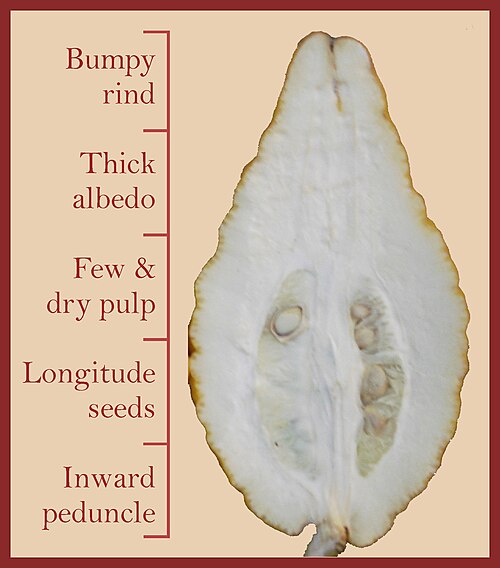
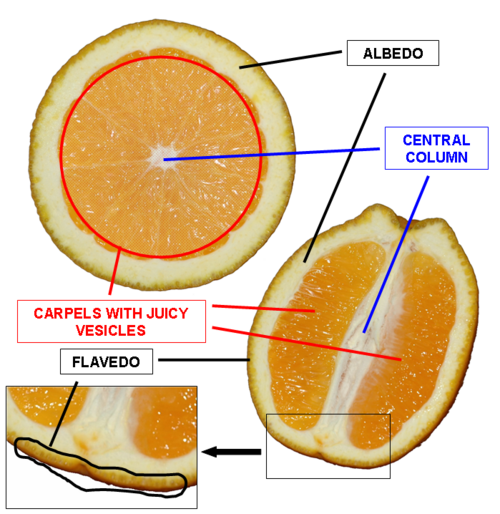
ドイツ語ではSuccadeという言葉が広く使われていましたが、[ 11 ]今日では一般的にZitronatと呼ばれています。フランス語ではfruit glacéまたはfruit confitと呼ばれ、砂糖漬けフルーツまたは結晶化フルーツとしても知られています。14 世紀から存在しています。
The citron fruits are halved, depulped, immersed in seawater or ordinary salt water to ferment for about 40 days, the brine being changed every two weeks, rinsed, and put in denser brine in wooden barrels for storage and for export. After partial de-salting and boiling to soften the peel, it is candied in a strong sugar solution. The candied peel is sun-dried or put up in jars for future use. Candying is traditionally done in Livorno, Italy, where they gathered the Corsican citrons from Corsica, the Diamante citrons from Liguria, Naples, Calabria and Sicily, and the Greek citron from Greece through Trieste.[12][13]
The continual process of drenching the fruit in syrup causes the fruit to become saturated with sugar, thereby preventing the growth of spoilage microorganisms.[14]
In the Eastern Bloc, ersatz succade and orangeat were prepared from unripe tomatoes and carrots respectively, as citrus fruits were scarce goods that could not be produced domestically.[15]
Succade is sometimes used in cakes, as a filling for pound cake, oliebol, plum pudding, florentines, sfogliatelle, fruitcake or ontbijtkoek. It is also added to raisin bread. Succade is often combined with currants, raisins, cherries and hazelnuts. Candied citron peel is often coated in chocolate and eaten as confectionery. Chopped succade is also used in cannoli.
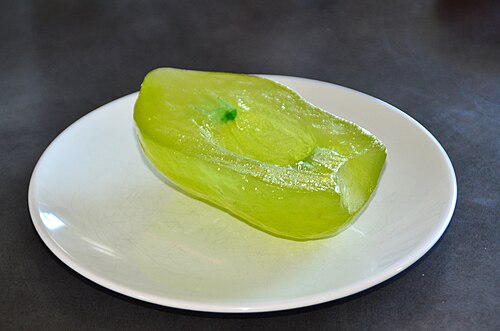
Recipes vary from region to region, but the general principle is to boil the fruit, steep it in increasingly strong sugar solutions for a number of weeks, and then dry off any remaining water.
The high sugar content of finished glacé fruits inhibits the growth of microorganisms, and glacé fruits will keep for a number of years without any additional methods of preservation.
この方法で保存しても状態の良い果物には、サクランボ、プラム、桃、杏、梨、スターフルーツ、パイナップル、リンゴ、オレンジ、レモン、ライム、クレメンタインなどがあります。アンゼリカは、砂糖漬けの果物として以外は、西洋料理ではあまり見かけません。
{{cite book}}ISBN /日付の不一致(ヘルプ)