
Loading article…
 | |
| Formerly | Sopwith Aviation Company |
|---|---|
| Industry | Aviation |
| Founded | 15 December 1913 |
| Founder | Thomas Sopwith |
| Defunct | 16 September 1920 |
| Fate | Ceased trading |
| Successor | H.G. Hawker Engineering |
| Headquarters | Kingston-on-Thames, UK |
| Products | Aircraft |
Number of employees | 5,000 |
The Sopwith Aviation Company was a British aircraft company that designed and manufactured aeroplanes mainly for the British Royal Naval Air Service, the Royal Flying Corps and later the Royal Air Force during the First World War, most famously the Sopwith Camel. Sopwith aircraft were also used in varying numbers by the French, Belgian and American air services during the war.
In April 1919, the company was renamed as the Sopwith Aviation & Engineering Company Limited. In September 1920, the company entered voluntary liquidation after an attempt to build motorcycles failed. The patents and other assets were bought by a new company, H.G. Hawker Engineering.
Early years
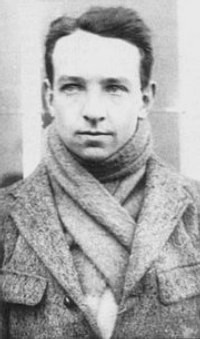
The Sopwith Aviation Company (based at Brooklands) was created in June 1912 by Thomas Sopwith, a wealthy sportsman interested in aviation, yachting and motor-racing, when he was 24 years old. Following their first military aircraft sale in November 1912, Sopwith moved to the company's first factory premises which opened that December in a recently closed roller skating rink in Canbury Park Road near Kingston Railway Station in South West London.[1][2] An early collaboration with the S. E. Saunders boatyard of East Cowes on the Isle of Wight, in 1913, produced the Sopwith "Bat Boat", an early flying boat with a Consuta laminated hull which could operate on sea or land.[3] A small factory subsequently opened in Woolston, Hampshire in 1914.[3]
First World War
The company made more than 16,000 aircraft during the First World War. Many more of the company's aircraft were built by subcontractors rather than by Sopwith themselves. These included Fairey, Clayton and Shuttleworth, William Beardmore and Company and Ruston Proctor.
Towards the end of the war, Sopwith took out a lease on National Aircraft Factory No.2, constructed in 26 weeks during the winter of 1917 a mile to the north of the Canbury works in Ham. The company were able to greatly increase production of Snipe, Dolphin and Salamander fighter planes as a result.[4] At the beginning of the war the company had 200 employees; this had reached 6,000 employees by the Armistice.
Post-war diversification and failure
After the war, the company attempted to produce aircraft for the civil market based on their wartime types. These included aircraft such as a single-winged Camel and the Dove, a derivative of the Pup and the Swallow, but the wide availability of war-surplus aircraft at knock-down prices meant this was never economical. In 1919 the company was renamed as Sopwith Aviation & Engineering Company and the factory was re-organised to produce ABC motorcycles under licence; this included an investment of £100,000 in new machinery.[5] In September 1920 the Kingston factory closed for stocktaking and the company decided to enter voluntary liquidation; the works manager at Kingston announced in a letter to the 1400 employees:
We much regret we find it impossible to reopen the works, as the difficulties caused by restricted credit prevent the company from finding sufficient capital to carry on the business, and it will be therefore wound up.
— H G Mitchell, [6]
At a meeting of creditors held in October 1920 it was explained that although the company had previously accumulated a surplus of £900,000 in 1918, following a slump in the sale of motorcycles the company had liabilities of £705,430 (which included £583,510 for excess profits duty) and assets of £862,630. The amount of excess profit duty was being disputed by the company which had already paid £450,000 in duty. The meeting concluded that the best result would be to sell the business as a going concern.[5]
The Ham factory, which was included in 38 acres of freehold land, was sold to Leyland Motors.[4] The newly formed H.G. Hawker Engineering Company obtained the Sopwith patent rights and a government contract to refurbish Sopwith Snipe biplanes.
Hawker Engineering
Upon the liquidation of the Sopwith company, Tom Sopwith himself, together with Harry Hawker, Fred Sigrist and Bill Eyre, immediately formed H.G. Hawker Engineering, forerunner of the Hawker Aircraft and Hawker Siddeley lineage. Sopwith was Chairman of Hawker Siddeley until his retirement. Hawker and its successors produced many more famous military aircraft, including the inter-war Hart, and Demon; World War II's Hurricane, Typhoon, and Tempest; and the post-war Sea Fury, Hunter and Harrier. These later jet types were manufactured in the same factory buildings used to produce Sopwith Snipes in 1918 as Hawker Aircraft bought the Ham Factory when Leyland's lease expired in 1948.[4]
Present day

In 2021, the Sopwith Aviation name was acquired by Bevan Davidson International based in Swaffham, Norfolk, who plan to release a line of celebratory motor vehicles in celebration of the history of Sopwith.[7] A two-seater sports car, styled and named after the Sopwith Dove was revealed at the London Concours car show later that year.[8]
Famous Sopwith aircraft

Initially, Tom Sopwith himself, assisted by his former personal mechanic Fred Sigrist, led the design of the company's types. Following a number of pre-war designs for the Royal Naval Air Service, such as the Three-seater and the Bat Boat, Sopwith's first major success was the fast and compact (hence the name) Tabloid, a design which first showed the influence of the company's test pilot, the Australian Harry Hawker. A float-equipped version of this aircraft won the Schneider Trophy in 1914. The landplane version was used by both the RNAS and RFC at the start of the war. With higher power and floats, the type evolved into the Sopwith Baby, which was a workhorse of the RNAS for much of the First World War.
1916年、ハーバート・スミスがソッピース社の主任技師となり、彼の設計指導の下、第一次世界大戦で成功を収めた他の機種には、より大型の9901型が含まれる。この航空機は、その型破りなキャバネ・ストラット配置から1½ストラッターとしてよく知られ、1916年からRNAS、RFC、フランス空軍によって単座爆撃機、複座戦闘機、砲兵観測機および練習機として使用された。その後すぐに小型で機動性の高い単座スカウトが登場し、1½ストラッターの系統であることが明らかなため、すぐにパップとして知られるようになった。 [9]パップと1½ストラッターは、回転するプロペラを通して機関銃を発射できるようにする同期装置を備えた、イギリス初の成功した牽引戦闘機であった。この装置は設計者からソッピース・カウパー装置と呼ばれていたが、後に他の設計がいくつか使用された。パップは、1916 年秋から 1917 年初夏にかけて、RFC によって西部戦線で、また RNAS によって艦上で広く使用され、パイロットからは飛ぶのが楽しいとみなされました。戦争の残りの期間、上級練習機として使用され続けました。パップは、戦争中に動物の名前を付けられた有名なソッピース航空機シリーズの始まりであり、全体として航空史において「空飛ぶ動物園」として有名になりました。
試験的に3本の狭弦翼とより強力なエンジンを装備したパップは、1917年に RNAS のわずか4個飛行隊によって使用されたが、その驚くべき戦闘能力でよく知られるようになり、レイモンド・コリショーの有名な「海軍第10飛行隊」( RNAS 第10飛行隊) の「ブラックフライト」で最大限に活用された。この飛行隊は、飛行隊の航空機の識別色が黒であったことからこのように呼ばれ、ブラックマリア、ブラックプリンス、ブラックデス、ブラックロジャー、ブラックシープと名付けられた。このタイプの衝撃は大きく、あらゆる方面のメーカーから多数の実験的な三葉機の設計が生まれたが、その後成功を収めたのは フォッカー三葉機だけであった。
1917 年の初夏、双銃式キャメル戦闘機が導入されました。この航空機は機動性が高く、武装も充実しており、戦争の終わりまでに 5,000 機以上が生産されました。この航空機は他のどのイギリス製タイプよりも多くの敵機を撃墜しましたが、飛行の難しさから、多くの初心者パイロットが事故で亡くなりました。夜間戦闘機と艦上機の両方として改造され、イギリスだけでなくベルギーとアメリカの航空隊によって戦闘で飛行されました。
その後、前線で活躍したのは、固定エンジンの4連装銃ドルフィンと、究極の回転式エンジン戦闘機であるスナイプです。スナイプは戦時中はほとんど運用されず、前線に少数が配備されただけですが、カナダのエース、ウィリアム・ジョージ・バーカーは、非常に困難な状況下での壮大な単独空中戦で、スナイプ飛行中 ヴィクトリア十字章を獲得しました。
戦争の終わりごろ、同社はカッコー雷撃機とスナイプの地上攻撃用装甲機サラマンダーを生産したが、これらの機種は実戦には間に合わなかった。戦争中は他にも多くの実験的な試作機が生産され、そのほとんどは動物にちなんで名付けられ(カバ、ヌーなど)、一部は「ソッピース動物園」と呼ばれるようになった。
第一次世界大戦後、ソッピース スナイプは大幅に縮小されたイギリス空軍の標準戦闘機として選ばれ、1920 年代後半に最終的に置き換えられるまで使用され続けました。
航空機
第一次世界大戦前
- ソッピース・ライト複葉機(1912年)
- ソッピース ハイブリッド複葉機 (1912)
- ソッピース 3人乗り(1912)
- ソッピース バット ボート(1913)
- ソッピース・ソーシャブル(1913)
- ソッピース 1913 サーキット オブ ブリテン水上機-ソッピース バット ボート改良型 2 (サーキット オブ ブリテン)を参照
- ソッピース アドミラルティ タイプ C (1914)
- ソッピース スペシャル 魚雷水上機 タイプ C
- ソッピース 1914 シュナイダー レーサー
- ソッピース型 SPGNまたは「ガンバス」
第一次世界大戦
- ソッピース アドミラルティ タイプ 137
- ソッピース タイプ 806
- ソッピース タイプ 807
- ソッピース タイプ 860
- ソッピース 2人乗りスカウト
- ソッピースタブロイド
- ソッピースベイビー
- ソッピース スパロー
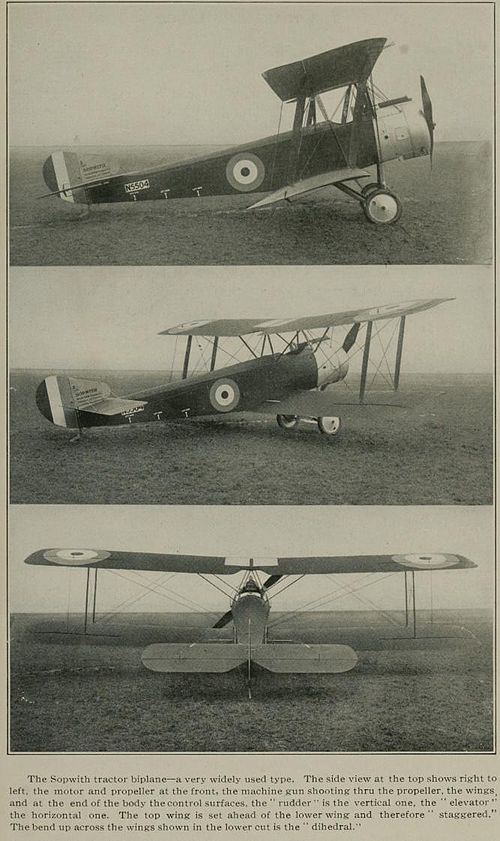
ソッピース 1½ ストラッターの単座爆撃機バージョンの 3 つのビュー - ソッピース 1½ ストラッター
- ソッピース パップ
- ソッピース三葉機
- ソッピースLRTTr.
- ソッピース イスパノ - スイザ トライプレーン[10]
- ソッピースビー
- ソッピースキャメル
- ソッピース B.1
- ソッピース ヒッポ
- ソッピース コブハム双発爆撃機
- ソッピース AT「空中標的」 – 無線制御誘導ミサイル
- ソッピースドラゴン
- ソッピース・スナイプ
- ソッピース ドルフィン
- ソッピースサラマンダー
- ソッピースカッコウ
- ソッピースブルドッグ
- ソッピースバッファロー
- ソッピース ライノ
- ソッピーススクーター
- ソッピース スワロー
- ソッピースカタツムリ
- ソッピース スナッパー
- ソッピース スナーク
第一次世界大戦後
参照
参考文献
ウィキメディア・コモンズには、ソッピース航空に関連するメディアがあります。
- ブルース、JMソッピース戦闘機ヴィンテージ ウォーバーズ No. 5 アームズ&アーマー プレス 1986 ISBN 0-85368-790-0
- ブルース、JM「ソッピース バットボート」パート 1。エアロプレーン マンスリー、1991 年 8 月、第 19 巻第 8 号。ロンドン:IPC。ISSN 0143-7240。pp. 484–487、500。
- キング、HF 『ソッピース航空機1912-1920』ロンドン:パトナム、1981年。ISBN 0-370-30050-5。
注記
- ^ ロバートソン、ブルース・ソッピース – 人間と彼の航空機、レッチワース、ハーツ。エアレビュー社、1970年 – p.32
- ^ ブルース・エアロプレーン・マンスリー1991年8月号、486ページ。
- ^ ab ソレントの飛行艇、ノーマン・ハル。ISBN 1-85794-161-6
- ^ abc 「ノースキングストンのハム工場にあるソッピースとホーカー」(PDF)。キングストン航空100周年記念プロジェクト。2012年7月9日。
- ^ ab 「ソッピース社の損失」。タイムズ。第42535号。ロンドン。1920年10月7日。7ページ。
- ^ 「ソッピース工場閉鎖へ」。タイムズ。第42513号。ロンドン。1920年9月11日。8ページ。
- ^ 「Sopwith Aviation」 . 2024年3月14日閲覧。
- ^ 「SOPWITH DEBUT THE DOVE AT LONDON CONCOURS – Sopwith Aviation」2019年1月29日。 2024年3月14日閲覧。
- ^ 「Sopwith Pup Archived 10 October 2008 at the Wayback Machine」Royal Air Force Museum。2008年8月18日閲覧。
- ^ ブルース、JMソッピース トライプレーンフライト マガジン、1957 年 4 月 26 日、556 ページ