
Loading article…
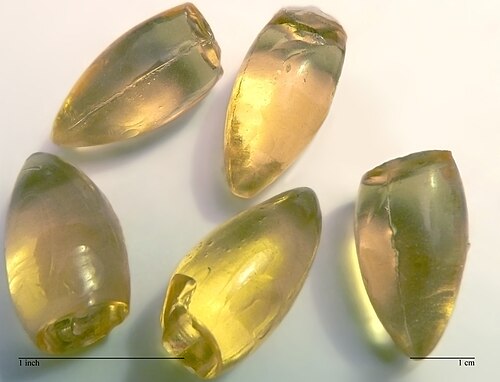
下剤、緩下剤、または便秘薬は、便を柔らかくし[ 1 ]、排便を促進する物質です。これらは便秘の治療と予防に使用されます。
下剤は作用機序や副作用が様々です。刺激性下剤、潤滑性下剤、塩類下剤など、特定の下剤は直腸検査や腸検査のために結腸を空にするのに使用され、状況によっては浣腸を併用することもあります。下剤を過剰に服用すると下痢を引き起こす可能性があります。複数の有効成分を配合した下剤もあり、経口投与または直腸投与が可能です。
膨張性下剤(粗繊維とも呼ばれる)は、食品中の食物繊維や市販薬中の親水性物質など、便に量と水分を加えて腸(消化管の下部)をより容易に通過できるようにする物質である。[ 2 ]
不動産
膨張性下剤は一般的に下剤の中で最も穏やかな作用を持ち、[ 1 ]規則的な排便を長期的に維持するのに理想的です。
便通を助ける食品には、食物繊維が豊富な食品が含まれます。食物繊維には、不溶性食物繊維と水溶性食物繊維が含まれます。例: [ 4 ]
Emollient laxatives, also known as stool softeners, are anionic surfactants that enable additional water and fats to be incorporated in the stool, making movement through the bowels easier.
Properties
Emollient agents prevent constipation rather than treating long-term constipation.[3]
Lubricant laxatives are substances that coat the stool with slippery lipids and decrease colonic absorption of water so the stool slides through the colon more easily. Lubricant laxatives also increase the weight of stool and decrease intestinal transit time.[9]
Properties
Mineral oils, such as liquid paraffin, are generally the only nonprescription lubricant laxatives available, but due to the risk of lipid pneumonia resulting from accidental aspiration, mineral oil is not recommended, especially in children and infants.[10][11] Mineral oil may decrease the absorption of fat-soluble vitamins and some minerals.[9]
Hyperosmotic laxatives cause the intestines to hold more water, creating an osmotic gradient, which adds more pressure and stimulates bowel movement.[12][10]
Properties
Lactulose works by the osmotic effect, which retains water in the colon; lowering the pH through bacterial fermentation to lactic, formic, and acetic acids; and increasing colonic peristalsis. Lactulose is also indicated in portal-systemic encephalopathy. Glycerin suppositories work mostly by hyperosmotic action, but the sodium stearate in the preparation also causes local irritation to the colon.
Solutions of polyethylene glycol and electrolytes (sodium chloride, sodium bicarbonate, potassium chloride, and sometimes sodium sulfate) are used for whole bowel irrigation, a process designed to prepare the bowel for surgery or colonoscopy and to treat certain types of poisoning. Brand names for these solutions include GoLytely, GlycoLax, Cosmocol, CoLyte, Miralax, Movicol, NuLytely, Suprep, and Fortrans. Solutions of sorbitol (SoftLax) have similar effects.
Saline laxatives are nonabsorbable, osmotically active substances that attract and retain water in the intestinal lumen, increasing intraluminal pressure that mechanically stimulates evacuation of the bowel. Magnesium-containing agents also cause the release of cholecystokinin, which increases intestinal motility and fluid secretion.[3] Saline laxatives may alter a patient's fluid and electrolyte balance.
Properties
Stimulant laxatives are substances that act on the intestinal mucosa or nerve plexus, altering water and electrolyte secretion.[13] They also stimulate peristaltic action and can be dangerous under certain circumstances.[14]

Properties
刺激性下剤の長期使用は、結腸のハウストラ襞を損傷し、薬物依存を引き起こす可能性があり、使用者は自力で結腸を通して便を移動させることができなくなります。慢性便秘患者を対象とした研究では、慢性的に刺激性下剤を使用している患者の28%が1年間でハウストラ襞を失ったのに対し、対照群では誰も失わなかったことがわかりました。[ 15 ]
ヒマシ油はグリセリドの一種であり、膵リパーゼによって加水分解されてリシノール酸となり、その作用機序は不明ながら下剤効果を発揮する。
不動産
ヒマシ油を長期使用すると、体液、電解質、栄養素が失われる可能性がある。[ 3 ]
これらは、消化管の腸管神経系の5-HT4受容体を活性化することによって作用する運動促進薬です。しかし、心血管系に有害な副作用が生じる可能性があるため、一部は販売中止または使用制限されています。
テガセロド(商品名ゼルノーム)は、心臓発作や脳卒中のリスク増加の報告を受けて、2007年に米国およびカナダの一般市場から撤去されました。ただし、生命を脅かす緊急事態や入院が必要な患者に対しては、医師が引き続き使用できます。[ 16 ]
プルカロプリド(商品名:Resolor)は、現在EUで2009年10月15日から[ 17 ] 、カナダ(商品名:Resotran)で2011年12月7日から[ 18 ] 、米国で2018年12月から使用が承認されている薬剤です。
ルビプロストンは、慢性特発性便秘および過敏性腸症候群の治療に用いられます。腸管に塩化物に富む分泌液を生成させ、便を軟化させ、腸の蠕動運動を促進し、自然な排便を促します。
For adults, a randomized controlled trial found PEG (MiraLax or GlycoLax) 17 grams once per day to be superior to tegaserod at 6 mg twice per day.[21] A randomized controlled trial found greater improvement from two sachets (26 g) of PEG versus two sachets (20 g) of lactulose.[22] 17 g per day of PEG has been effective and safe in a randomized, controlled trial for six months.[23] Another randomized, controlled trial found no difference between sorbitol and lactulose.[24]
For children, PEG was found to be more effective than lactulose.[25]
Some of the less significant adverse effects of laxative abuse include dehydration (which causes tremors, weakness, fainting, blurred vision, kidney damage), low blood pressure, fast heart rate, postural dizziness and fainting;[26] however, laxative abuse can lead to potentially fatal acid-base, and electrolyte imbalances.[26] For example, severe hypokalaemia has been associated with distal renal tubular acidosis from laxative abuse.[26]Metabolic alkalosis is the most common acid-base imbalance observed.[26] Other significant adverse effects include rhabdomyolysis,[26]steatorrhoea,[26]inflammation and ulceration of colonic mucosa,[26]pancreatitis,[26][27]kidney failure,[26][28][29]factitious diarrhea[26][30] and other problems.[26] The colon will need more quantities of laxatives to keep functioning, this will result in a lazy colon, infections, irritable bowel syndrome, and potential liver damage.
Although some patients with eating disorders such as anorexia nervosa and bulimia nervosa abuse laxatives in an attempt to lose weight, laxatives act to speed up the transit of feces through the large intestine, which occurs after the absorption of nutrients in the small intestine is already complete. Thus, studies of laxative abuse have found that effects on body weight reflect primarily temporary losses of body water rather than energy (calorie) loss.[26][31][32]
Physicians warn against the chronic use of stimulant laxatives due to concern that chronic use could cause the colonic tissues to get worn out over time and not be able to expel feces due to long-term overstimulation.[33] A common finding in patients having used stimulant laxatives is a brown pigment deposited in the intestinal tissue, known as melanosis coli.
Laxatives, once called "physicks" or "purgatives", were used extensively in historic medicine to treat many conditions for which they are now generally regarded as ineffective in evidence-based medicine.[34] Likewise, laxatives (often termed colon cleanses) may be promoted in alternative medicine for various conditions of quackery, such as "mucoid plaque".[35]
{{cite book}}: CS1メンテナンス: 場所 (リンク){{cite book}}: CS1 maint: 複数の名前: 著者リスト (リンク)