
Loading article…
| エジプトのファラオ | |
|---|---|
 | |
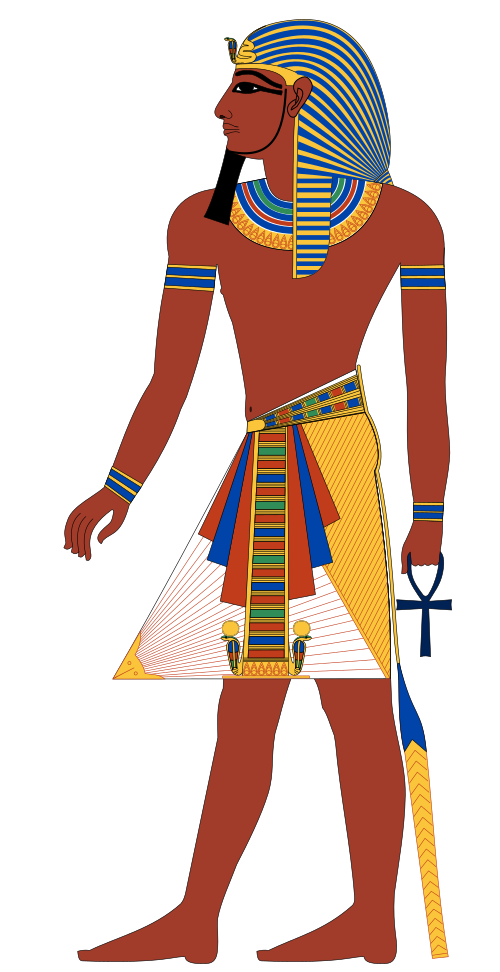 ファラオの典型的な描写 | |
| 詳細 | |
| スタイル | 5つの名前の冠 |
| 最初の君主 | ナルメル(別名メネス) |
| 最後の君主 | [2] |
| 形成 | 紀元前 3100年頃 |
| 廃止 |
|
| 住居 | 時代によって異なる |
| 任命者 | 神の権利 |
「ファラオ」という称号は、ナルメルによる上エジプトと下エジプトの統一後、紀元前3100年頃の初期王朝時代に統治した古代エジプトの支配者に対して使用されている。しかし、この特定の称号が同時代のエジプトの王を呼ぶのに使われるようになったのは、新王国時代の第18王朝、紀元前1400年頃になってからである。後の支配者に対するファラオという称号とともに、エジプトの王が使用した古代エジプトの王族の称号があり、これは古代エジプトの歴史を通じて比較的一定しており、最初はホルス名、スゲとハチ( nswt-bjtj ) 名、および二人の貴婦人 ( nbtj ) 名を特徴としており、後の王朝の間に黄金のホルス、名および前名という称号が次々に追加されていった。
エジプトは紀元前8世紀後半にクシュ王国に征服されるまで、少なくとも部分的には約2500年間、現地のファラオによって継続的に統治されていました。クシュ王国の支配者は、伝統的なファラオの称号を採用しました。クシュ人の征服の後、エジプトは独立した現地統治の期間を経た後、アケメネス朝に征服され、その支配者もファラオの称号を採用しました。エジプト最後の現地のファラオはネクタネボ2世で、アケメネス朝が2度目にエジプトを征服する前にファラオでした。
アケメネス朝によるエジプト支配は、紀元前 332 年のアレクサンダー大王の征服によって終わりを迎え、その後はプトレマイオス朝のギリシャのファラオによって支配されました。彼らの支配とエジプトの独立は、エジプトが紀元前 30 年にローマの属州になったときに終わりました。アウグストゥスとその後のローマ皇帝は、紀元後 314 年のマクシミヌス・ダザの治世まで、エジプトにいる間はファラオと呼ばれていました。
このファラオ一覧 に記載されている日付はおおよそのものです。これらは主に古代エジプトの従来の年代記に基づいており、主にペトリーエジプト考古学博物館が開発した大学向けデジタルエジプト[3]データベースに基づいていますが、他の権威ある機関から引用した代替日付が別途示されている場合があります。
古代エジプトの王名簿
現代のファラオ一覧は、古代エジプトの王一覧やマネトの『エジプト史』などの後世の歴史書、考古学的証拠などの歴史的記録に基づいています。古代の資料については、エジプト学者も歴史家も、その多くが報告されている統治よりずっと後に書かれたものであるため、その信頼性、正確性、完全性について注意を呼びかけています。[4]さらに問題なのは、古代の王一覧は損傷していたり、互いに矛盾していたり、選択的であったりすることが多いことです。
古代の王名表には、以下のものが知られています(作成された王朝も記載されています)。[5]
- デンの印章(第1王朝);デンの墓の円筒印章に発見された。ナルメルからデンまでの第1王朝の王全員のホルス名が記載されている。[6]
- パレルモ石(第 5 王朝);オリビン玄武岩の板に彫刻されています。粉々に砕け散ったため、現在は不完全です。
- ギザの筆記板(第 6 王朝)。石膏と杉材に赤、緑、黒のインクで描かれています。非常に厳選されています。
- 南サッカラ石(第 6 王朝); 黒色玄武岩の板に彫刻されています。非常に厳選されています。
- カルナック王名表(第 18 王朝);石灰岩に彫刻されています。非常に厳選されています。
- アビドスのセティ 1 世 (第 19 王朝) の王名表。石灰岩に彫られています。非常に詳細ですが、エジプトの第 1 中間期の王の一部と第 2 中間期の王はすべて省略されています。
- ラムセス2世(第19王朝)のアビドス王名表。石灰岩に彫られたもの。非常に厳選されており、現在は損傷している。
- ラムセス2世までの新王国時代のファラオのほとんどが記載されている。(第19王朝)ラムセス2世の王名簿。石灰岩に刻まれている。
- サッカラ タブレット(第 19 王朝)、石灰岩に彫刻されています。非常に詳細ですが、理由は不明ですが、第 1 王朝の王のほとんどが省略されています。
- トリノ王名表(第 19 王朝);パピルスに赤と黒のインクで書かれています。おそらく史上最も完全な王名表ですが、現在は損傷しています。
- メディネト・ハブ王名簿(第 20 王朝); 石灰岩に彫られており、ラムセス王名簿と非常によく似ています。
- アンケフェネシュクメト(第 22 王朝)の系図。石灰岩に彫られており、現在は損傷している。
- マネトの『エジプト記』(ギリシャ時代)は、おそらくパピルスに書かれたものと思われる。原文は現在失われており、特定の王に割り当てられた逸話の多くは架空のものであると思われる。
先王朝時代
先王朝時代は、エジプトが初めて単一の王国として統一された紀元前 3100 年頃に終わります。
下エジプト
下エジプトは地理的にはナイル川北部とナイル川デルタから構成されています。
次のリストは不完全な可能性があります:
上エジプト
ここで再編成されているのは、ナカダ3世時代後期(非公式には第0王朝とも呼ばれる) に属する上エジプトの前王朝支配者たちです。
先王朝の統治者: 王朝 0
これらの王は第 1 王朝に先立つため、非公式に「第 0 王朝」としてグループ化されています。[説明が必要]
以下の先王朝の統治者リストは不完全な可能性があります。
初期王朝時代
エジプトの初期王朝時代は紀元前3100年から紀元前2686年頃まで続く。[30]
第一王朝
第一王朝は紀元前3100年から紀元前2890年頃まで統治した。[31]
第二王朝
第二王朝は紀元前2890年から2686年まで統治した。[31]
古王国時代
エジプト古王国時代は、初期王朝時代の後、混乱した第一中間期に先立つ長期にわたる安定と成長の時代です。王国は紀元前 2686 年から 2181 年まで続きました。
第三王朝
第三王朝は紀元前2686年から2613年まで統治した。[31]
第四王朝
第4王朝は紀元前2613年から紀元前2496年まで統治した。[31]
第五王朝
第五王朝は紀元前2496年から紀元前2345年まで統治した。[31]
第六王朝
第六王朝は紀元前2345年から2181年まで統治しました。
第一中期
第一中間期(紀元前2183年~2060年)は、古王国時代の終焉から中王国時代の到来までの混乱と混沌の時代である。
ペピ2世の死後、古王国は急速に崩壊した。ペピ2世は64年以上、おそらくは94年も統治し、歴史上のどの君主よりも長かった。彼の統治の後半は高齢のため非効率が目立った。2王国の連合は崩壊し、地域の指導者たちはその結果生じた飢饉に対処しなければならなかった。
第6王朝の後継者となった第7王朝と第8王朝の王たちはメンフィスで権力を維持しようとしたが、その多くは有力な貴族たちによるものだった。20年から45年後、彼らはヘラクレオポリス・マグナを拠点とする新しいファラオの一族によって倒された。これらの出来事からしばらくして、テーベを拠点とするライバルの一族が名目上の北方領主に対して反乱を起こし、上エジプトを統一した。紀元前2055年頃、ファラオ・インテフ3世の息子で後継者のメンチュホテプ2世がヘラクレオポリスのファラオたちを倒して二つの国を再統一し、中王国時代が始まった。
第七王朝と第八王朝
第7 王朝と第 8 王朝は、およそ 20 年から 45 年にわたって統治した。この王朝は、メンフィスからおそらくは分割されたエジプトを統治した多数の短命の王で構成されており、いずれにしても、統治が実質的に封建制へと発展したため、権力は限られていた。以下のリストは、セティ 1 世の治世に遡るアビドス王名表に基づいており、ユルゲン フォン ベッケラートのHandbuch der ägyptischen Königsnamen [71]およびキム ライホルトの最新のトリノ王名表の再構成 (ラムセス朝時代の別の王名表) から引用されている。[72]
第九王朝
第9王朝[77]は紀元前2160年から紀元前2130年まで統治した。[31]
トリノ王名表には第9王朝と第10王朝に君臨した18人の王の名前が記載されている。このうち12人の名前は欠落しており、4人の名前は不完全である。[77]
第10王朝
第10王朝は下エジプトを支配し、紀元前2130年から2040年まで統治した地方集団であった。 [31]
第11王朝
第11 王朝は、紀元前 2134 年から 1991 年まで統治した 上エジプトに起源を持つ第 8、第 9、または第 10 王朝の王に仕えたテーベの貴族の一団から始まりました。
メンチュホテプ1世に始まる大インテフの後継者たちは北方の領主たちから独立し、最終的にメンチュホテプ2世の指揮下でエジプトを征服した。
中王国時代
エジプト中王国時代(紀元前2040年 - 紀元前1802年)は、第1中間期の終わりから第2中間期の初めまでの期間である。第12王朝に加え、第11王朝、第13王朝、第14王朝も中王国時代に 含める学者もいる。
中王国時代は、この時期に王国外との貿易が拡大したことで知られています。
第11王朝続き
第11 王朝の後半は、通常、エジプト中王国の始まりと考えられています。
下ヌビアでのみ確認されている謎の王たち:
第12王朝
第12王朝は紀元前1991年から1802年まで統治しました。
追加の統治者である可能性のあるSeankhibtawy Seankhibraの地位は不明です。彼は短命の王、または第 12 王朝または第 13 王朝の王の名前の異形である可能性があります。
第2中期
第2中間期(紀元前1802年~1550年)は、中王国の終わりから新王国の始まりまでの混乱期である。第15王朝の統治者であったヒクソスがエジプトに現れた 時期として最もよく知られている。
第13 王朝は第 12 王朝よりもずっと弱く、エジプトの 2 つの領土を保持することができませんでした。王朝の始まりの紀元前 1805 年頃か、王朝の中期の紀元前 1710 年頃に、東デルタの沼地に位置するソイスの地方統治者一族が中央政府から離脱し、カナン人の第 14 王朝を形成しました。
ヒクソスはソベクホテプ4世の治世中に初めて登場し、紀元前1720年頃にアヴァリス(現代のテル・エル・ダバ/カタナ)の町を支配し、第14王朝の王国を征服した。紀元前1650年頃、おそらく第15王朝の創始者サリティスに率いられたヒクソスはメンフィスを征服し、第13王朝を終わらせた。第13王朝の崩壊によって上エジプトに権力の空白が生じ、第16王朝はテーベで独立を宣言したが、その後まもなくヒクソスの王たちに征服された。
その後、ヒクソスが上エジプトから撤退すると、テーベのエジプト原住民の統治家が第17王朝を樹立した。この王朝は、セケネンラー・タオ、カーメス、そして新王国時代の最初のファラオであるアフメスの指揮下で、最終的にヒクソスをアジアに追い返した。
第13王朝
第13 王朝(トリノ王名表による) は紀元前 1802 年から 1649 年頃まで統治され、マネトによれば 153 年または 154 年間続いた。
この表は、第 13 王朝の既知の王たちと比較する必要があります。
以下の王の地位は不明です。
第14王朝
第14王朝は東デルタの地方集団で、アヴァリスを拠点とし、[116]紀元前1805年か紀元前1710年頃から紀元前1650年頃まで統治した。
第14王朝(キム・ライホルトが提唱)の議論を呼んだ統治者の一部は、王や王子の名前の独特の起源から、エジプト学者によってカナン(セム)系であると一般的に特定されている。しかし、トリノ王名簿では、この王朝の統治者はヒクソスとは呼ばれていない。[117]ここではライホルトに従っているが、この王朝の再構築は激しく議論されており、ネヘシ王に先立つ5人の王の位置づけは大いに議論されている。
以下のファラオの地位と身元は不明です。
トリノ王名表には追加の名前が記載されているが、そのリスト以外では証明されていない。
第15王朝
第15 王朝は、肥沃な三日月地帯から出現し、ナイル川流域の大半に短期間統治権を確立した ヒクソス人の中から生まれ、紀元前 1674 年から 1535 年まで統治しました。
アビドス王朝
第2中間期には、紀元前1650年頃から紀元前1600年頃までアビドスを統治した独立した王朝が含まれていた可能性がある。 [121] [122] [123]
アビドス王朝には暫定的に 4 人の王がいたと推定されており、ここでは年代順 (不明) に関係なく記載します。
第16王朝
第16 王朝は、紀元前 1650 年頃のメンフィスを拠点とする第 13 王朝の崩壊から生まれた、テーベ固有の王朝でした。最終的には、紀元前 1580 年頃、ヒクソスの第 15 王朝によって征服されました。
第16王朝は上エジプトのみを支配した。
第16王朝には、スネフェルアンクル・ペピ3世[129]とネブマートラーの治世も含まれていた可能性がある。彼らの年代順の位置は不明である。[124] [125]
第17王朝
第17 王朝は上エジプトを拠点とし、紀元前 1650 年から 1550 年まで統治しました。
第17王朝初期にはネブマートラーというファラオの治世も含まれていた可能性があるが、その年代的な位置は不明である。[113]
新王国
新王国時代(紀元前1550年 - 1077年)は、エジプトの第18王朝、第19王朝、第20王朝の時代であり、紀元前16世紀から11世紀にかけて、第2中間期と第3中間期の間にあたる。
新王国時代は、海外での軍事的優位性により、エジプトの領土が最大となった。南部のヌビアまで勢力を拡大し、近東に広大な領土を保有した。エジプト軍は、現代のシリアを支配するためヒッタイト軍と戦った。
新王国時代の最もよく知られたファラオのうち3人は、アメンホテプ4世としても知られるアケナテン(彼のアテン神への独占的な崇拝は一神教の最初の例として解釈されることが多い)、ほぼ無傷の墓の発見で知られるツタンカーメン、そして第18王朝が保持していた現代のイスラエル/パレスチナ、レバノン、シリアの領土の回復を試みたラムセス2世である。ラムセス2世による再征服はカデシュの戦いにつながり、そこで彼はエジプト軍を率いてヒッタイト王ムワタリ2世の軍と戦った。
第18王朝
第18 王朝は紀元前 1550 年から 1292 年まで統治しました。
第19王朝
第19 王朝は紀元前 1292 年から 1186 年まで統治され、最も偉大なファラオの 1 人であるラムセス 2世が在位しました。
第20王朝
第20王朝は紀元前1190年から1077年まで統治しました。
第三中期
第3中間期(紀元前1077年~664年)は、青銅器時代の終わりにエジプト帝国が崩壊した後、新王国時代の終わりを告げる時期です。リビア起源の2つの王朝が統治したため、この時代はリビア時代とも呼ばれています。
第21王朝
第21 王朝はタニスを拠点とし、比較的弱いグループでした。理論上はエジプト全土の支配者でしたが、実際の影響力は下エジプトに限られていました。彼らは紀元前 1077 年から 943 年まで統治しました。
テーベのアメン大祭司
テーベのアメン大祭司は正式にはファラオではないものの、第21王朝時代の上エジプトの事実上の支配者であり、カルトゥーシュに名前が刻まれ、王家の墓に埋葬された。
第22王朝
第22王朝のファラオはリビア人で、紀元前943年から728年頃まで統治しました。
第23王朝
第23 王朝は、やはりリビア起源の地方集団であり、ヘラクレオポリスとテーベを拠点とし、紀元前 837 年から紀元前 735 年頃まで統治しました。
テーベではルダムンの後継者として地元の支配者が就任した。
第24王朝
第24 王朝は、西デルタ (サイス)に位置した短命のライバル王朝であり、紀元前 732 年から 720 年まで 2 人のファラオのみが統治していました。
Twenty-Fifth Dynasty
Nubians invaded Lower Egypt and took the throne of Egypt under Piye although they already controlled Thebes and Upper Egypt in the early years of Piye's reign. Piye's conquest of Lower Egypt established the Twenty-fifth Dynasty which ruled until 656 BC.
They were ultimately driven back into Nubia, where they established a kingdom at Napata (656–590), and, later, at Meroë (590 BC – AD 500).
Late Period
The Late Period runs from around 664 to 332 BC, and includes periods of rule by native Egyptians and Persians.
Twenty-Sixth Dynasty
The Twenty-sixth Dynasty ruled from around 664 to 525 BC.[144]
The son and successor of Nekau I, Psamtik I, managed to reunify Egypt and is generally regarded as the founder of the Twenty-sixth Dynasty.
Twenty-Seventh Dynasty
Egypt was conquered by the Persian Empire in 525 BC by king Cambyses II, the son of Cyrus the Great, and remained Persian satrapy for more than one hundred years until regaining independence in 404 BC. The Achaemenid kings were acknowledged as Pharaohs in this era, forming the 27th Dynasty:
Several native rebellions took place during the 27th dynasty:
Twenty-Eighth Dynasty
The Twenty-eighth Dynasty lasted only 6 years, from 404 to 398 BC, with one pharaoh:
Twenty-Ninth Dynasty
The Twenty-ninth Dynasty ruled from 398 to 380 BC:
Thirtieth Dynasty
The Thirtieth Dynasty ruled from 379/8 until Egypt once more came under Persian rule c. 340 BC:[147][148]
Thirty-First Dynasty
Egypt again came under the control of the Achaemenid Persians. After the practice of Manetho, the Persian rulers from 340 to 332 BC are occasionally designated as the Thirty-first Dynasty:
Native rebellions again took place during the 31st dynasty:
Hellenistic period
Argead Dynasty
The Macedonian Greeks under Alexander the Great ushered in the Hellenistic period with his conquest of Persia and Egypt. The Argeads ruled from 332 to 309 BC:
Ptolemaic Dynasty
The second Hellenistic dynasty, the Ptolemies, ruled Egypt from 305 BC until Egypt became a province of Rome in 30 BC (whenever two dates overlap, that means there was a co-regency). The most famous member of this dynasty was Cleopatra VII, in modern times known simply as Cleopatra, who was successively the consort of Julius Caesar and, after Caesar's death, of Mark Antony, having children with both of them.
Cleopatra strove to create a dynastic and political union between Egypt and Rome, but the assassination of Caesar and the defeat of Mark Antony doomed her plans.[citation needed]
Caesarion (Ptolemy XV Philopator Philometor Caesar) was the last king of the Ptolemaic Dynasty of Egypt, and he reigned jointly with his mother Cleopatra VII of Egypt, from September 2, 47 BC. He was the eldest son of Cleopatra VII, and possibly the only son of Julius Caesar, after whom he was named. Between the alleged death of Cleopatra, on August 12, 30 BC, up to his own alleged death on August 23, 30 BC, he was nominally the sole pharaoh. It is tradition that he was hunted down and killed on the orders of Octavian, who would become the Roman emperor Augustus, but the historical evidence does not exist.[citation needed]
Native rebellions also took place under Greek rule:
Rome

Cleopatra VII had affairs with Roman dictator Julius Caesar and Roman general Mark Antony, but it was not until after her suicide (after Mark Antony was defeated by Octavian, who would later be Emperor Augustus Caesar) that Egypt became a province of the Roman Republic in 30 BC. Subsequent Roman emperors were accorded the title of pharaoh, although exclusively only while in Egypt.
The last Roman emperor to be conferred the title of pharaoh was Maximinus Daza (reigned 311–313 AD).[2][153]
See also


References
- ^ a b Clayton 1995, p. 217. "Although paying lip-service to the old ideas and religion, in varying degrees, pharaonic Egypt had in effect died with the last native pharaoh, Nectanebo II in 343 BC"
- ^ a b c von Beckerath, Jürgen (1999). Handbuch der ägyptischen Königsnamen. Verlag Philipp von Zabern. pp. 266–267. ISBN 978-3-422-00832-8.
- ^ "Digital Egypt for Universities". www.ucl.ac.uk. Retrieved 2019-02-12.
- ^ Toby A. H. Wilkinson: Royal Annals Of Ancient Egypt. Routledge, London 2012, ISBN 1-136-60247-X, p. 50.
- ^ Toby A. H. Wilkinson: Royal Annals Of Ancient Egypt. Routledge, London 2012, ISBN 1-136-60247-X, p. 61.
- ^ Cervello-Autuori, Josep (2003). "Narmer, Menes and the Seals from Abydos". In Hawass, Zahi (ed.). Egyptology at the Dawn of the Twenty-first Century: Proceedings of the Eighth International Congress of Egyptologists, 2000. Vol. 2. Cairo: American University in Cairo Press. pp. 168–75. ISBN 978-977-424-714-9.
- ^ Baker, Darrell D. (2008). Encyclopedia of the Pharaohs Volume 1: Predynastic to the Twentieth Dynasty 3300-1069 BC. Egypt: The American University in Cairo Press. p. 298. ISBN 978-977-416-221-3.
- ^ a b Thomas Schneider: Lexikon der Pharaonen. Albatros, Düsseldorf 2002, ISBN 3-491-96053-3, p. 259.
- ^ Thomas Schneider: Lexikon der Pharaonen. Albatros, Düsseldorf 2002, ISBN 3-491-96053-3, p. 139.
- ^ Thomas Schneider: Lexikon der Pharaonen. Albatros, Düsseldorf 2002, ISBN 3-491-96053-3, p. 199.
- ^ Thomas Schneider: Lexikon der Pharaonen. Albatros, Düsseldorf 2002, ISBN 3-491-96053-3, p. 138.
- ^ Thomas Schneider: Lexikon der Pharaonen. Albatros, Düsseldorf 2002, ISBN 3-491-96053-3, p. 181.
- ^ Thomas Schneider: Lexikon der Pharaonen. Albatros, Düsseldorf 2002, ISBN 3-491-96053-3, p. 311.
- ^ a b Thomas Schneider: Lexikon der Pharaonen. Albatros, Düsseldorf 2002, ISBN 3-491-96053-3, p. 137.
- ^ Baker, Darrell D. (2008). Encyclopedia of the Pharaohs Volume 1: Predynastic to the Twentieth Dynasty 3300-1069 BC. Egypt: The American University in Cairo Press. p. 3. ISBN 978-977-416-221-3.
- ^ Baker, Darrell D. (2008). Encyclopedia of the Pharaohs Volume 1: Predynastic to the Twentieth Dynasty 3300-1069 BC. Egypt: The American University in Cairo Press. p. 288. ISBN 978-977-416-221-3.
- ^ Wilke, Matthias (2015-04-22), "Emanuel Hirsch (1888 –1972) – "Jene zwei Göttinger Stiftsinspektorenjahre haben die Liebe zu Göttingen für immer in mir erweckt […] Aber […]", Stiftsgeschichte(n), Göttingen: Vandenhoeck & Ruprecht, pp. 187–196, doi:10.13109/9783666570377.187, ISBN 978-3-525-57037-1
- ^ Baker, Darrell D. (2008). Encyclopedia of the Pharaohs Volume 1: Predynastic to the Twentieth Dynasty 3300-1069 BC. Egypt: The American University in Cairo Press. p. 104. ISBN 978-977-416-221-3.
- ^ Felde, Rolf: Gottheiten, Pharaonen und Beamte im alten Ägypten, Norderstedt 2017, S. 125.
- ^ Baker, Darrell D. (2008). Encyclopedia of the Pharaohs Volume 1: Predynastic to the Twentieth Dynasty 3300-1069 BC. Egypt: The American University in Cairo Press. p. 5. ISBN 978-977-416-221-3.
- ^ a b c d Barry Kemp (a1), Andrew Boyce and James Harrell, The Colossi from the Early Shrine at Coptos in Egypt, in: Cambridge Archaeological Journal Volume 10, Issue 2 April 2000, 233
- ^ Altenmüller, Hartwig; Kloth, Nicole (January 1, 2008). Studien zur Altägyptischen Kultur Band 37. Helmut Buske Verlag. ISBN 978-3-87548-937-8 – via Google Books.
- ^ Ludwig David Morenz: Bild-Buchstaben und symbolische Zeichen. Die Herausbildung der Schrift der hohen Kultur Altägyptens (= Orbis Biblicus et Orientalis 205). Fribourg 2004, ISBN 3-7278-1486-1, p. 91.
- ^ "Aufstand gegen den Tod". Der Spiegel. 24 December 1995.
- ^ "Pharaonenliste 1". nefershapiland.de.
- ^ Günter Dreyer: Horus Krokodil, ein Gegenkönig der Dynastie 0. In: Renee Friedman and Barbara Adams (Hrsg.): The Followers of Horus, Studies dedicated to Michael Allen Hoffman, 1949–1990 (= Egyptian Studies Association Publication, vol. 2). Oxbow Publications, Bloomington (IN) 1992, ISBN 0-946897-44-1, p. 259–263.
- ^ P. Tallet, D. Laisnay: Iry-Hor et Narmer au Sud-Sinaï (Ouadi 'Ameyra), un complément à la chronologie des expéditios minière égyptiene. In: Bulletin de L'Institute Français D'Archéologie Orientale (BIFAO) 112. Ausgabe 2012, S. 381–395.
- ^ Jürgen von Beckerath: Handbuch der ägyptischen Königsnamen (= Münchner ägyptologische Studien, vol. 49. von Zabern, Mainz 1999, ISBN 3-8053-2591-6, p. 36–37.
- ^ Toby Wilkinson: Early Dynastic Egypt: Strategy, Society and Security. Routeledge, London 1999, ISBN 0-415-18633-1, p. 38, 56 & 57.
- ^ Stewart, John (2006). African States and Rulers (Third ed.). London: McFarland. p. 77. ISBN 0-7864-2562-8.
- ^ a b c d e f g h i j k l m n o p q r s t Stewart, John (2006). African States and Rulers (Third ed.). London: McFarland. p. 81. ISBN 0-7864-2562-8.
- ^ a b Elizabeth BLOXAM; Wouter CLAES; Tiphaine DACHY; Maude EHRENFELD; Ashraf EL-SENUSSI; Chloé GIRARDI; James HARRELL; Thomas C. HEAGY; Stan HENDRICKX; Christiane HOCHSTRASSER-PETIT; Dirk HUYGE; Clara JEUTHE; Adel KELANY; Christian KNOBLAUCH; Béatrix MIDANT-REYNES; Norah MOLONEY; Aurélie ROCHE; Adel TOHAMEY (January 2014). "Who Was Menes?" (PDF). Archéo nil. 24: 59–92. doi:10.3406/arnil.2014.1071. S2CID 248280047. Retrieved 24 September 2022.
- ^ Toby A.H. Wilkinson (1999). Early Dynastic Egypt. Routledge. p. 67. ISBN 0-415-26011-6.
- ^ Baker, Darrell D. (2008). Encyclopedia of the Pharaohs Volume 1: Predynastic to the Twentieth Dynasty 3300-1069 BC. Egypt: The American University in Cairo Press. p. 7. ISBN 978-977-416-221-3.
- ^ a b Toby A.H. Wilkinson (1999). Early Dynastic Egypt. Routledge. p. 71. ISBN 0-415-26011-6.
- ^ Baker, Darrell D. (2008). Encyclopedia of the Pharaohs Volume 1: Predynastic to the Twentieth Dynasty 3300-1069 BC. Egypt: The American University in Cairo Press. p. 92. ISBN 978-977-416-221-3.
- ^ Wolfgang Helck: Untersuchungen zur Thinitenzeit (= Ägyptologische Abhandlungen (ÄA), Vol. 45). Harrassowitz, Wiesbaden 1987, ISBN 3-447-02677-4, p. 124.
- ^ Baker, Darrell D. (2008). Encyclopedia of the Pharaohs Volume 1: Predynastic to the Twentieth Dynasty 3300-1069 BC. Egypt: The American University in Cairo Press. p. 95. ISBN 978-977-416-221-3.
- ^ Toby A.H. Wilkinson (1999). Early Dynastic Egypt. Routledge. p. 73. ISBN 0-415-26011-6.
- ^ a b Wolfgang Helck: Untersuchungen zur Thinitenzeit (Agyptologische Abhandlungen), ISBN 3-447-02677-4, O. Harrassowitz (1987), p. 124
- ^ Baker, Darrell D. (2008). Encyclopedia of the Pharaohs Volume 1: Predynastic to the Twentieth Dynasty 3300-1069 BC. Egypt: The American University in Cairo Press. p. 78. ISBN 978-977-416-221-3.
- ^ a b Toby A.H. Wilkinson (1999). Early Dynastic Egypt. Routledge. p. 75. ISBN 0-415-26011-6.
- ^ Toby A.H. Wilkinson (1999). Early Dynastic Egypt. Routledge. p. 77. ISBN 0-415-26011-6.
- ^ Quiles, Anita; Tristant, Yann (April 2023). "Radiocarbon-Based Modeling of the Reign of King Den (1st Dynasty, Egypt) and the Start of the Old Kingdom". Radiocarbon. 65 (2): 485–504. Bibcode:2023Radcb..65..485Q. doi:10.1017/RDC.2023.15. ISSN 0033-8222.
- ^ Baker, Darrell D. (2008). Encyclopedia of the Pharaohs Volume 1: Predynastic to the Twentieth Dynasty 3300-1069 BC. Egypt: The American University in Cairo Press. p. 55. ISBN 978-977-416-221-3.
- ^ Nicolas-Christophe Grimal: A History of Ancient Egypt. Blackwell, Oxford UK / Cambridge USA 1992, ISBN 978-0-631-19396-8, p. 53.
- ^ Baker, Darrell D. (2008). Encyclopedia of the Pharaohs Volume 1: Predynastic to the Twentieth Dynasty 3300-1069 BC. Egypt: The American University in Cairo Press. p. 376. ISBN 978-977-416-221-3.
- ^ Toby A.H. Wilkinson (1999). Early Dynastic Egypt. Routledge. p. 79. ISBN 0-415-26011-6.
- ^ Baker, Darrell D. (2008). Encyclopedia of the Pharaohs Volume 1: Predynastic to the Twentieth Dynasty 3300-1069 BC. Egypt: The American University in Cairo Press. p. 299. ISBN 978-977-416-221-3.
- ^ Wilkinson (1999) pp. 83–84
- ^ a b c Toby A.H. Wilkinson (1999). Early Dynastic Egypt. Routledge. p. 83. ISBN 0-415-26011-6.
- ^ Dietrich Wildung: Die Rolle ägyptischer Könige im Bewußtsein ihrer Nachwelt. Teil I. Posthume Quellen über die Könige der ersten vier Dynastien. In: Münchener Ägyptologische Studien, vol. 17. Deutscher Kunstverlag, Munich/Berlin 1969, p. 31–33.
- ^ Wilkinson (1999) p. 79
- ^ Wilkinson (1999) pp. 87–88
- ^ Pascal Vernus, Jean Yoyotte, The Book of the Pharaohs, Cornell University Press 2003, p. 27
- ^ Jürgen von Beckerath: Handbuch der ägyptischen Königsnamen. Deutscher Kunstverlag, Munich/Berlin 1984, ISBN 3-422-00832-2, p. 171.
- ^ Toby A. H. Wilkinson: Early Dynastic Egypt. Routledge, London/New York 2002, ISBN 1-134-66420-6, p. 75–76.
- ^ Jürgen von Beckerath: Handbuch der ägyptischen Königsnamen. 2. verbesserte und erweiterte Auflage. von Zabern, Mainz 1999, S. 44–45.
- ^ Thomas Schneider: Lexikon der Pharaonen. Albatros, Düsseldorf 2002, ISBN 3-491-96053-3, page 175.
- ^ Toby A.H. Wilkinson (1999). Early Dynastic Egypt. Routledge. p. 93. ISBN 0-415-26011-6.
- ^ Wilkinson, Toby (1999). Early Dynastic Egypt. Routledge. pp. 83 & 95. ISBN 0-415-18633-1.
- ^ Wilkinson, Toby. Royal Annals of Ancient Egypt. pp. 79 & 258.
- ^ "Pharaohs - Timeline Index". www.timelineindex.com. Retrieved 2020-03-23.
- ^ Clayton (1994) p.32
- ^ Lehner, Mark (1997). Geheimnis der Pyramiden (in German). Düsseldorf: Econ. pp. 94–96. ISBN 3-572-01039-X.
- ^ Clayton (1994) p.42
- ^ Thomas Schneider: Lexikon der Pharaonen. Albatros, Düsseldorf 2002, ISBN 3-491-96053-3, pp. 278–279.
- ^ Miroslav Verner (2000): "Who was Shepseskara, and when did he reign?", in: Miroslav Bárta, Jaromír Krejčí (editors): Abusir and Saqqara in the Year 2000, Academy of Sciences of the Czech Republic, Oriental Institute, Prague, ISBN 80-85425-39-4, p. 581–602, available online Archived 2011-02-01 at the Wayback Machine.
- ^ Dodson & Hilton (2004) p.73
- ^ Ryholt & Bardrum (2000) pp.87–100.
- ^ Jürgen von Beckerath: Handbuch der ägyptischen Königsnamen, Münchner ägyptologische Studien, Heft 49, Mainz : P. von Zabern, 1999, ISBN 3-8053-2591-6, available online Archived 2015-12-22 at the Wayback Machine
- ^ Kim Ryholt: "The Late Old Kingdom in the Turin King-list and the Identity of Nitocris", Zeitschrift für Ägyptische Sprache und Altertumskunde, 127, 2000, p. 99
- ^ Kamal, Ahmed Bey (1912). "Annales du Service des antiquités de l'Egypte". Journal des savants. 12: 132. doi:10.3406/jds.1913.4146. ISSN 0021-8103.
- ^ Gustave Jéquier, Maṣlaḥat al-Āthār (1993): Les pyramides des reines Neit et Apouit (in French), Cairo: Institut français d'archéologie orientale, OCLC 195690029, see plate 5.
- ^ Percy Newberry (1943): "Queen Nitocris of the Sixth Dynasty", in: The Journal of Egyptian Archaeology, vol. 29, pp=51–54
- ^ Gae Callender: "Queen Neit-ikrety/Nitokris", in: Miroslav Barta, Filip Coppens, Jaromic Krecji (editors): Abusir and Saqqara in the year 2010/1, Prague: Czech Institute of Egyptology, Faculty of Arts, Charles University, 2011, ISBN 978-80-7308-384-7, see pp. 249–250
- ^ a b Turin Kinglist, Columns IV,18 to V,10, Ancient Egypt dot org. Accessed 10 February 2010.
- ^ Lepsius, Karl (1859). Denkmaler aus Aegypten und Aethiopien. pp. 115h.
- ^ Breasted, James (1906). Ancient Records of Egypt (PDF). Vol. 1. The University of Chicago Press. p. 175.
- ^ Gauthier, Henri (1907). MIFAO 17 Le livre des rois d'Egypte Des origines à la fin de la XIIe dynastie. The French Institute of Oriental Archeology. pp. 143–144.
- ^ Couyat, Jean; Montet, Pierre (1912). MIFAO 34 Les inscriptions hieroglyphiques et hieratiques du Ouâdi Hammâmât (PDF). The French Institute of Oriental Archeology. pp. 96, 103–104 Plate=XXXIX.
- ^ Baker, Darrell (2008). The Encyclopedia of the Pharaohs. Predynastic to the Twentieth Century: 3300-1069 BC. Vol. 1. Stacey International. p. 133. ISBN 978-1-905299-37-9.
- ^ Schenkel, Wolfgang (1965). Memphis Herakleopolis Theben Die Epigraphischen Zeugnisse Der 7.-11. Dynastie Ägyptens. Wiesbaden: Otto Harrassowitz. pp. 27–28.
- ^ Margaret Bunson: Encyclopedia of Ancient Egypt, Infobase Publishing, 2009, ISBN 978-1-4381-0997-8, available online, see p. 181
- ^ Labib Habachi: King Nebhepetre Menthuhotep: his monuments, place in history, deification and unusual representations in form of gods, in: Annales du Service des Antiquités de l'Égypte 19 (1963), pp. 16–52
- ^ Wolfram Grajetzki (2006) pp. 23–25
- ^ Wolfram Grajetzki (2006) pp. 25–26
- ^ a b c Wolfram Grajetzki (2006) pp. 27–28
- ^ http://www.digitalegypt.ucl.ac.uk//chronology/amenemhatI.html Amenemhat I
- ^ Wolfram Grajetzki (2006) pp. 28–35
- ^ Baker, Darrell D. (2008). Encyclopedia of the Pharaohs Volume 1: Predynastic to the Twentieth Dynasty 3300-1069 BC. Egypt: The American University in Cairo Press. p. 20. ISBN 978-977-416-221-3.
- ^ a b c d Marc Van De Mieroop (2021). A History of Ancient Egypt. Wiley Blackwell. p. 98. ISBN 978-1-119-62087-7.
- ^ Marc Van De Mieroop (2021). A History of Ancient Egypt. Wiley Blackwell. p. 99. ISBN 978-1-119-62087-7.
- ^ Murnane (1977) p.2
- ^ Baker, Darrell D. (2008). Encyclopedia of the Pharaohs Volume 1: Predynastic to the Twentieth Dynasty 3300-1069 BC. Egypt: The American University in Cairo Press. p. 391. ISBN 978-977-416-221-3.
- ^ Marc Van De Mieroop (2021). A History of Ancient Egypt. Wiley Blackwell. pp. 112–113. ISBN 978-1-119-62087-7.
- ^ Murnane (1977) p.7
- ^ Baker, Darrell D. (2008). Encyclopedia of the Pharaohs Volume 1: Predynastic to the Twentieth Dynasty 3300-1069 BC. Egypt: The American University in Cairo Press. p. 24. ISBN 978-977-416-221-3.
- ^ a b Marc Van De Mieroop (2021). A History of Ancient Egypt. Wiley Blackwell. p. 109. ISBN 978-1-119-62087-7.
- ^ Murnane (1977) p.9
- ^ Baker, Darrell D. (2008). Encyclopedia of the Pharaohs Volume 1: Predynastic to the Twentieth Dynasty 3300-1069 BC. Egypt: The American University in Cairo Press. p. 395. ISBN 978-977-416-221-3.
- ^ Marc Van De Mieroop (2021). A History of Ancient Egypt. Wiley Blackwell. p. 100. ISBN 978-1-119-62087-7.
- ^ Josef Wegner, The Nature and Chronology of the Senwosret III–Amenemhat III Regnal Succession: Some Considerations based on new evidence from the Mortuary Temple of Senwosret III at Abydos, JNES 55, Vol.4, (1996), pp.251
- ^ Baker, Darrell D. (2008). Encyclopedia of the Pharaohs Volume 1: Predynastic to the Twentieth Dynasty 3300-1069 BC. Egypt: The American University in Cairo Press. p. 398. ISBN 978-977-416-221-3.
- ^ Marc Van De Mieroop (2021). A History of Ancient Egypt. Wiley Blackwell. p. 104. ISBN 978-1-119-62087-7.
- ^ Wolfram Grajetzki (2006) pp. 56–61
- ^ Baker, Darrell D. (2008). Encyclopedia of the Pharaohs Volume 1: Predynastic to the Twentieth Dynasty 3300-1069 BC. Egypt: The American University in Cairo Press. p. 26. ISBN 978-977-416-221-3.
- ^ "Amenemhat III". University College London.
- ^ "Amenemhat IV Maakherure (1807/06-1798/97 BC)". Digital Egypt for Universities.
- ^ Baker, Darrell D. (2008). Encyclopedia of the Pharaohs Volume 1: Predynastic to the Twentieth Dynasty 3300-1069 BC. Egypt: The American University in Cairo Press. p. 30. ISBN 978-977-416-221-3.
- ^ Grajetzki (2006) pp. 61–63
- ^ Baker, Darrell D. (2008). Encyclopedia of the Pharaohs Volume 1: Predynastic to the Twentieth Dynasty 3300-1069 BC. Egypt: The American University in Cairo Press. p. 456. ISBN 978-977-416-221-3.
- ^ a b c d e f g h i j k l m n o p q r s t u v w x y z aa ab ac ad ae af ag ah ai aj ak al am an ao K. S. B. Ryholt, The Political Situation in Egypt during the Second Intermediate Period, c.1800–1550 BC, Carsten Niebuhr Institute Publications, vol. 20. Copenhagen: Museum Tusculanum Press, 1997
- ^ a b Thomas Schneider: Lexikon der Pharaonen, Albatros, Düsseldorf 2002, ISBN 3-491-96053-3
- ^ Thomas Schneider: Lexikon der Pharaonen, Albatros, 2002
- ^ a b c d e f g h i j k l m n K.S.B. Ryholt: The Political Situation in Egypt during the Second Intermediate Period, c.1800–1550 BC, Carsten Niebuhr Institute Publications, vol. 20. Copenhagen: Museum Tusculanum Press, 1997
- ^ Ilin-Tomich, Alexander (2016). "Second Intermediate Period". UCLA Encyclopedia of Egyptology: 3.
- ^ a b "Kings of the 2nd Intermediate Period". www.ucl.ac.uk.
- ^ Baker, Darrell D. (2008). Encyclopedia of the Pharaohs Volume 1: Predynastic to the Twentieth Dynasty 3300-1069 BC. Egypt: The American University in Cairo Press. p. 12. ISBN 978-977-416-221-3.
- ^ a b Baker, Darrell D. (2008). Encyclopedia of the Pharaohs Volume 1: Predynastic to the Twentieth Dynasty 3300-1069 BC. Egypt: The American University in Cairo Press. p. 4. ISBN 978-977-416-221-3.
- ^ Detlef Franke: "Zur Chronologie des Mittleren Reiches. Teil II: Die sogenannte Zweite Zwischenzeit Altägyptens", In Orientalia 57 (1988), p. 259
- ^ Ryholt, K. S. B. (1997). The Political Situation in Egypt During the Second Intermediate Period, C. 1800–1550 B.C. Museum Tusculanum Press. p. 164. ISBN 978-87-7289-421-8.
- ^ "Giant Sarcophagus Leads Penn Museum Team in Egypt To the Tomb of a Previously Unknown Pharaoh". Penn Museum. January 2014. Retrieved 16 January 2014.
- ^ a b Jürgen von Beckerath: Untersuchungen zur politischen Geschichte der Zweiten Zwischenzeit in Ägypten, Glückstadt, 1964
- ^ a b c d Jürgen von Beckerath: Chronologie des pharaonischen Ägyptens, Münchner Ägyptologische Studien 46. Mainz am Rhein, 1997
- ^ Jürgen von Beckerath: Handbuch der ägyptischen Königsnamen, Münchner ägyptologische Studien 49, Mainz 1999.
- ^ a b Marcel Marée: A sculpture workshop at Abydos from the late Sixteenth or early Seventeenth Dynasty, in: Marcel Marée (editor): The Second Intermediate period (Thirteenth-Seventeenth Dynasties), Current Research, Future Prospects, Leuven, Paris, Walpole, Massachusetts. 2010 ISBN 978-90-429-2228-0. p. 247, 268
- ^ Baker, Darrell D. (2008). Encyclopedia of the Pharaohs Volume 1: Predynastic to the Twentieth Dynasty 3300-1069 BC. Egypt: The American University in Cairo Press. p. 111. ISBN 978-977-416-221-3.
- ^ Wolfgang Helck, Eberhard Otto, Wolfhart Westendorf, Stele – Zypresse: Volume 6 of Lexikon der Ägyptologie, Otto Harrassowitz Verlag, 1986, Page 1383
- ^ Christopher Bronk Ramsey et al., Radiocarbon-Based Chronology for Dynastic Egypt, Science 18 June 2010: Vol. 328. no. 5985, pp. 1554–1557.
- ^ a b c d Marc Van De Mieroop (2021). A History of Ancient Egypt. Wiley Blackwell. p. 146. ISBN 978-1-119-62087-7.
- ^ Marc Van De Mieroop (2021). A History of Ancient Egypt. Wiley Blackwell. p. 168. ISBN 978-1-119-62087-7.
- ^ Marc Van De Mieroop (2021). A History of Ancient Egypt. Wiley Blackwell. p. 169. ISBN 978-1-119-62087-7.
- ^ Dodson & Hilton 2004: 126, 131
- ^ "Ramesses I Menpehtire". Digital Egypt. University College London. 2001. Retrieved 2007-09-29.
- ^ "King Merenptah". Digital Egypt. University College London. 2001. Retrieved 2007-09-29.
- ^ "Sety II". Digital Egypt. University College London. 2001. Retrieved 2007-10-27.
- ^ "Siptah Sekhaenre/Akhenre". Digital Egypt. University College London. 2001. Retrieved 2007-10-27.
- ^ Grimal (1992) p.291
- ^ "Ramesses XI Menmaatre-setpenptah". Retrieved 2007-10-28.
- ^ Cerny p.645
- ^ a b c F. Payraudeau, Retour sur la succession Shabaqo-Shabataqo, Nehet 1, 2014, p. 115–127
- ^ Stewart, John (1989). African States and Rulers. London: McFarland. p. 88. ISBN 0-89950-390-X.
- ^ "Late Period Kings". Retrieved 2007-10-27.
- ^ a b c d e f g h i j k l m n o p q r s t u v w x y z aa ab Stewart, John (2006). African States and Rulers (Third ed.). London: McFarland. p. 83. ISBN 0-7864-2562-8.
- ^ a b Placed in this dynasty only for chronological reasons, as he was not related to the Achaemenids.
- ^ Lloyd 1994, p. 358.
- ^ Depuydt 2006, pp. 269–270.
- ^ "Nakhthorhebyt". Digital Egypt for Universities. Retrieved March 1, 2011.
- ^ Depuydt 2010, pp. 192, 202.
- ^ Tyldesley, Joyce (2006), Chronicle of the Queens of Egypt, WW Norton, p. 200, ISBN 0-500-05145-3.
- ^ Roller, Duane W. (2010). Cleopatra: a Biography. Oxford University Press. p. 27. ISBN 978-0-195-36553-5.
- ^ Vernus, Pascal; Yoyotte, Jean (2003). The Book of the Pharaohs. Cornell University Press. pp. 238–256. ISBN 978-0-8014-4050-2.
maximinus pharaoh.
Further reading
- Breasted, J. H., History of Egypt from the Earliest Time to the Persian Conquest, 1909
- Cerny, J. 'Egypt from the Death of Ramesses III to the End of the Twenty-First Dynasty' in: The Middle East and the Aegean Region c.1380–1000 BC, Cambridge University Press, 1975 ISBN 0-521-08691-4
- Clayton, Peter A. (1995). Chronicle of the Pharaohs: The Reign-by-Reign Record of the Rulers and Dynasties of Ancient Egypt. The Chronicles Series (Reprinted ed.). London: Thames and Hudson. ISBN 978-0-500-05074-3.
- Depuydt, Leo (2006). "Saite and Persian Egypt, 664 BC–332 BC". In Erik Hornung; Rolf Krauss; David A. Warburton (eds.). Ancient Egyptian Chronology (PDF). Leiden: Brill. pp. 265–283. ISBN 978-90-04-11385-5.
- Depuydt, Leo (2010). "New Date for the Second Persian Conquest, End of Pharaonic and Manethonian Egypt: 340/39 B.C.E.". Journal of Egyptian History. 3 (2): 191–230. doi:10.1163/187416610X541709.
- Dodson, Aidan and Hilton, Dyan. The Complete Royal Families of Ancient Egypt. Thames & Hudson. 2004. ISBN 0-500-05128-3
- Gardiner, Sir Alan, Egyptian Grammar: Being an Introduction to the Study of Hieroglyphs, Third Edition, Revised. London: Oxford University Press, 1964. Excursus A, pp. 71–76.
- Grimal, Nicolas, A History of Ancient Egypt, Blackwell Books: 1992
- Lloyd, Alan B. (1994). "Egypt, 404–332 B.C.". In D.M. Lewis; John Boardman; Simon Hornblower & M. Ostwald (eds.). The Cambridge Ancient History VI: The Fourth Century B.C. (2nd ed.). Cambridge University Press. pp. 337–360. ISBN 0-521-23348-8.
- Murnane, William J. Ancient Egyptian Coregencies, Studies in Ancient Oriental Civilization. No. 40. The Oriental Institute of the University of Chicago, 1977
- Rice, Michael, Who's Who in Ancient Egypt, Routledge 1999
- Ryholt, Kim & Bardrum, Steven, The Late Old Kingdom in the Turin King-list and the Identity of Nitocris. Zeitschrift für ägyptische Sprache und Altertumskunde 127. 2000.
- Shaw, Garry. The Pharaoh, Life at Court and on Campaign, Thames and Hudson, 2012.
- Wilkinson, Toby A. H., Early Dynastic Egypt, Routledge 1999, ISBN 0-415-18633-1
- Ventura Dr. R., Egypt, History & Civilisation Published by Osiris, PO Box 107 Cairo.
- Verner, Miroslav, The Pyramids – Their Archaeology and History, Atlantic Books, 2001, ISBN 1-84354-171-8
External links
- Egyptian Royal Genealogy (Old Broken Link) Archived 2009-04-07 at the Wayback Machine
- Manetho and the King Lists Review of different primary king lists
- Chronology Table - 0 Dynasty&History Period, by Dariusz Sitek Multi-pages of list of pharaohs in different king lists, without the god kings, in Egyptian hieroglyphs and English
- Egyptian Journey 2003: History: King Lists Hyperlink texts of the Manetho, Abydos & Turin king lists, without the god-kings
- Comparing the major Egyptian king lists Compares the Karnak, Adydos and Saqqara king lists
- Digital Egypt for Universities
- List of all female Pharaohs