
Loading article…
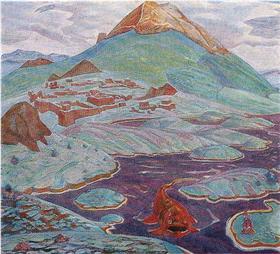
プララヤ(サンスクリット語: प्रलय 、ローマ字表記: Pralaya、文字通り「破壊」 )は、ヒンドゥー教の終末論における概念です。一般的には4つの異なる現象を指しますが、[ 1 ] [ 2 ] [ 3 ]最も一般的には、ブラフマプララヤと呼ばれるカルパ(43億2000万年の期間)の後に起こる全宇宙の崩壊の出来事を指すのに使われます。[ 4 ] [ 5 ]
プララヤは、毎日起こるすべての生物と無生物の継続的な破壊であるニティヤプララヤ、1,000チャトゥルユガ(4 時代) サイクルの完了後にすべての創造を終わらせるプラクリティ(自然)によって引き起こされる大洪水であるプラクリタプララヤ、およびブラフマン(究極の実在)との合一によるアートマン(自己)の消滅であるアティヤンティカプララヤも指します。[ 6 ]ウパニシャッド以来文献で言及されている概念であるプララヤの概念は、ヒンドゥー教の宇宙論と哲学で広く議論されています。[ 7 ]
ヒンドゥー教の宇宙論では、宇宙の周期的な創造と破壊の終わりのないサイクルが想定されている。[ 8 ] [ 9 ]
ニティヤプララヤとは、絶え間ない崩壊、すなわち、すべての生物および非生物の心身の日々のエントロピーを表す現象を指します。[ 10 ]創造されたすべての物質は絶え間ない衰退と破壊の対象であり、しばしば一時的な地上の死につながる個人的な経験として説明されます。[ 11 ]スカンダ・プラーナでは、ニティヤプララヤは、強盗に遭う、妻を盗まれる、敵が現れる、熱病の発症、疫病など、人間が経験するさまざまな否定的な経験と損失であり、これらすべてが最も苦痛な経験である死に至ると説明されています。このような精神的苦痛は、その人のカルマの結果であるとされています。また、カルマはさまざまな下等な獣への転生を決定し、そのような転生中の存在の行動が今度はその人のカルマを決定するとも言われています。[ 12 ]
バガヴァタ・プラーナによれば、1カルパ(時代)は、サティヤ、トレタ、ドヴァパラ、カリの4つの時代が千回繰り返され、 14人のマヌが統治する期間であり、創造神ブラフマーの生涯では1日である。プララヤは、それと同等の長さの時間であり、神の生涯では夜と呼ばれる。この消滅の形態はブラフマーの眠りによって引き起こされるため、彼の名にちなんで名付けられている。また、ナイミッティカとも呼ばれ、「一時的な」という意味である。この期間中、ナーラーヤナは宇宙を自分の中に引き込み、蛇の乗り物シェーシャの上で休息する。[ 13 ]
The Agni Purana describes that the resources of the earth are depleted by the end of the four-age cycle, leading to a severe drought for a century. All beings perish on earth during this period. The waters that are present in the three worlds are dried up due to their consumption by Vishnu. The seven rays of the sun become seven suns, and burn the three worlds, as well as the netherworld. The earth is described to resemble a tortoise during this event. A fire of dissolution, a manifestation of Rudra, along with the breath of Shesha, burn the netherworld. The inhabitants of the three worlds first travel to Maharloka, and then to Janaloka. Vishnu causes a century of rain upon the worlds to douse the fire. He returns to his yogic sleep for an age, and waking up in his form of Brahma, he creates the universe once more. The universe is stated to remain in a non-manifested state for two parārdhas (311.04 trillion years).[14]
The term Mahapralaya stands for "Great Dissolution", and is synonymous with the Brahmapralaya.[15] According to the Shiva Purana, the lower ten realms (lokas) are destroyed during this phenomenon,[16] while the higher four realms called the Satyaloka, Tapa-loka, Jana-loka, and Mahar-loka, are preserved. During each Mahapralaya, all 14 realms are destroyed.
The Vishnu Purana describes the Prakritapralaya. After the completion of 1,000 four-age cycles or a kalpa, a great flood is unleashed on Bhumi, the earth, by Prakriti, the personification of nature. When Jala (water) reaches the abode of the Saptarishis, the entire world is encompassed by a single ocean. The breath of Vishnu disperses all the clouds and reabsorbs them, after which he proceeds to sleep. When Agni destroys the world and nature, elemental dissolution begins. Jala swallows the gunas of the earth, and subsequently the universe, after which its rasa is devoured by Agni. When Akasha is consumed by the flames of Agni, Vayu and sound permeate throughout, becoming one with Agni by absorbing its guna. When Vayu comes into contact with ether, it loses its elemental potency, causing ether alone to occupy the vacuum. Consciousness, combined with darkness, take over the universe, which in turn is conquered by Buddhi. At this juncture, the seven components of Prakriti recombine. At that point Urvashi is impregnated by the pious seeds of those who dwell in Swarg lok and engage in passionate coitus. The Hiranyagarbha of Brahma dissolves in the waters that surround Prakriti. Prakriti fuses with Purusha, assimilating Buddhi, becoming Brahman.[17][18]
This form of pralaya is referred to as absolute dissolution. The Agni Purana states that such a dissolution may be achieved with knowledge acquisition, after recognising the suffering caused by one's mind. It explains the cycles of birth and rebirth (samsara), and a temporary residence at abodes in between. It states that a person is born on earth based on their deeds in their previous life. It states that a person who had led a mostly sinful life would experience their fruits of performing good deeds at Svarga first, before assuming a new form to suffer for their sins at Naraka. A person who had led a mostly pious life would suffer the consequences of their sins first, after which they would enjoy the fruits of Svarga.[19]
アティヤンティカとは、自己意識の解放を指します。アティヤンティカプララヤは、至高の自己であるパラマートマンへの奉仕に没頭することで得られる神の知識によって達成されます。これは、現象宇宙で起こる原因と結果のほとんどがマーヤー(幻影)であり、始まりと終わりがあるものはすべて実在しないという認識を伴います。自分のアートマン(自己)とパラマートマンの間に区別がないことを悟ることで、アヴィディヤー(無知)を克服します。最終的にこの真理を悟ると、自己意識はブラフマンに溶け込み、ブラフマンと一体化し、ムクティ(解脱)を達成します。[ 20 ]
インド古典哲学の六大学派の一つであるサーンキヤ哲学において、プララヤとは「非存在」を意味し、三つのグナ(物質の原理)が完全に均衡した状態を指します。プララヤという言葉はサンスクリット語に由来し、「溶解」または転じて「再吸収、破壊、消滅、あるいは死」を意味します。