
Loading article…

東洲斎写楽という芸名で知られる日本人画家の作品とスケッチは158点現存する。それらのほとんどは1794年から1795年の10ヶ月間に制作されたもので、4つの期間に分けられる。
版画のサイズは次第に小さくなり、焦点は胸像から全身像へと移っていった。描写は表現力が薄れ、より様式化されたものとなった。1789年頃の絵入りカレンダー2点と、1803年頃の装飾扇子3点が写楽の作品とされているが、いずれも真作として認められていない。半下絵の下絵も多数発見されている。
写楽の時代には、河原崎座、桐座、都座が江戸の三大歌舞伎劇場、すなわち江戸三座であった。[ a ] [ 1 ]
写楽の版画は600点強しか知られておらず、日本国内には約100点しか残っていない。[ 2 ] 写楽の作品は世界中に散らばったコレクションに所蔵されているため、写楽の作品に関する一般的な研究は日本と西洋で異なる方向性で進められており、時間のかかる作業となっている。日本の研究者は写楽の時代や状況に関連する文書や文献についてより深い知識とアクセス力を持っている。一方、写楽の作品は西洋のコレクションに所蔵される傾向があり、現存する版画は1点のみのものも約30点ある。そのうち3点は所在不明で、出版された写真でのみ知られている。西洋最大のコレクションはボストン美術館の70点の作品で、そのうち6点は唯一無二のものである。シカゴ美術館(唯一無二の作品8点)、ニューヨークのメトロポリタン美術館、大英博物館、パリのギメ美術館も相当数のコレクションを所蔵している。 1920年、松方幸次郎はパリで多数の浮世絵版画を購入し、日本に持ち帰った。これらの70点は東京国立博物館に所蔵されており、そのうち3点は一点ものである。[ 3 ]
これらの版画にはタイトルがなく、説明的なタイトルは日本語と英語で様々である。日本語における差異の一つとして、俳優の世代番号の付け方が挙げられる。例えば、二代目俳優の名前には、資料によっては二代目(にだい)または二代目(にだいめ)が前に付く場合もあれば、二世(にせい)が付く場合もあり、世代番号が省略されている場合もある。ここに掲載されているリストには、異稿のタイトルは含まれておらず、記載されているタイトルは公式なものではない。
写楽の版画は、大判、細判、あい判という一般的な版画サイズ で出ている。これらのサイズの概寸は以下の通りである。[ 4 ]
写楽の版画は4つの時期に分けられる。[ 5 ] 最初の2つの時期の版画には「東洲齊冩樂」 [ b ]の署名があり、後の2つの時期には「冩樂」のみの署名がある。
版画のサイズは次第に小さくなり、焦点は胸像から全身像へと移っていった。描写は表現力が乏しくなり、より慣習的になった。[ 6 ] 1789年頃の絵入りカレンダー2点と、1803年頃の装飾扇子3点が写楽の作品とされているが、いずれも彼の真作とは認められていない。[ 7 ]
写楽の初期の作品は、大判サイズの28点の版画で構成されている。これらは寛政 6年5月29日から6月26日までの1794年に発表された。 [ 5 ] 歌舞伎の演目『花あやめ文六曽我』、 『片木内則合誦』、『恋女坊染脇多綱』、『義経千本桜』で役を演じる役者を描いている。
劇作家松井雄介の『花菖蒲文禄曽我』は、18世紀初頭の実話「亀山の復讐」[8]を歌舞伎化したもので、石井兄弟の半蔵と源蔵が父ウエモンの仇討ちを28年かけて成し遂げた物語である。この物語は大変人気 があり、何度も舞台化されている[ 9 ] 。
この劇は寛政6年5月に都座で初演された。[ 8 ] 詳細は不明な点が多い。石井源蔵は敵である藤川水右衛門を殺そうとするが、逆に源蔵とその妻が殺されてしまう。その後、源蔵の家臣である田辺文蔵と、源蔵の孤児となった息子が復讐のために旅立つ。大岸蔵堂は、無私で威厳のある侍を演じ、文蔵の家臣である宗介は喜劇的な役割を担う。白人おなよの役柄は不明だが、復讐に加担したと考えられている。[ 9 ]

曽我介は石井家の忠実な従者です。彼は最初の場面に登場し、遠江国浜松の神社で主君の石井兵衛に会うために遅れて到着します。彼は、藤川水右衛門を含む一団が神社の前で暗闇に紛れて兵衛を待ち伏せし殺害するのを目撃します。曽我介は兵衛の遺体を、源蔵の結婚式の最中に兵衛の長男源蔵に運び、何が起こったのかを説明します。写楽は、主君の殺害現場に到着した曽我介の衝撃的な姿を描いています。[ 10 ]
大谷徳次(1756-1807)が召使いの袖助として描かれた大判版画(初世大谷徳次奴袖助Shosei Ōtani Tokuji no yakko Sodesuke)は18点現存することが知られており、東京国立博物館、日本浮世絵美術館、浮世絵大田記念美術館、バウアー財団、アジア美術館、大英博物館、ボストン美術館、ブルックリン美術館、シカゴ美術館、クリーブランド美術館、エドアルド・キオッソーネ東洋美術館、ホノルル美術館、ハーバード美術館、メトロポリタン美術館、ネルソン・アトキンス美術館、フィラデルフィア美術館、ウースター美術館にそれぞれ1点ずつ所蔵されており、もう1点は個人コレクションにある。[ 11 ]

権力を持つ水右衛門は、後援者である石井兵衛との剣術対決に敗れたことを恨み、兵衛を殺害し、彼から日本の剣術に関する秘伝書を奪う。兵衛の息子たちは復讐を試みるが、第三幕で水右衛門は隣接する駿河国の阿部川で兵衛の長男源蔵とその妻を殺害する。写楽は源蔵殺害現場の水右衛門を描いている。この版画は、石井源蔵役の坂東三津五郎二世の版画と対になっている。[ 12 ]
三世坂田半五郎の大判 版画は、藤川水右衛門(三世坂田半五郎の藤川水右衛門)として13部知られている。各1点は、東京国立博物館、浮世絵太田記念美術館、山種美術館、アッヘンバッハグラフィックアート財団、サンフランシスコ美術館、アムステルダム国立美術館、ベレスギャラリー、大英博物館、ボストン美術館、シカゴ美術館、ギメ美術館、メトロポリタン美術館、アレン記念美術館、個人的なコレクション。[ 11 ]

石井源蔵は結婚式の最中に父が殺されたことを知り、復讐を誓う。第二幕では殺人犯である水右衛門の父を襲撃し、第三幕では駿河国阿部川で水右衛門を殺そうとするが、水右衛門が形勢を逆転させ、源蔵とその妻を殺害する。写楽は阿部川で水右衛門と対峙する源蔵を描いている。この版画は、三代目坂田半五郎が藤川水右衛門を演じた版画と対になっている。[ 12 ]
二世坂東三津五郎の石井源蔵(二世坂東三津五郎の石井源蔵)の大判版画9部。それぞれ 1 点が東京国立博物館、奈良県立美術館、ギャラリー ベレス、大英博物館、ボストン美術館、王立美術歴史博物館、シカゴ美術館、ギメ美術館、メトロポリタン美術館に収蔵されています。[ 11 ]

藤真は水右衛門の弟子の一人で、おなよは祇園の遊女である。この版画は第4幕で、藤真が経済的に破綻し、文楽人形浄瑠璃の義太夫として働くようになった場面を描いている。この時、彼は祇園の遊女である白人おなよと関係を持つようになる。[ 12 ]
三世佐野川市松を祇園の白人おなよとして、市川富右衛門を蟹坂当麻として描いた大判版画が6部知られている(三世佐野川市松の祇園町の白人おなよと市川富右衛門の蟹坂藤馬)。それぞれ 1 点は東京国立博物館、アムステルダム国立美術館、アジア美術館、王立美術歴史博物館、シカゴ美術館のコレクションにあり、もう 1 点は個人コレクションにあります。[ 11 ]

白人おなよは祇園の遊女で、女形(女役を演じる男優)の市松が演じた。[ 12 ] 物語における彼女の役割は不明だが、復讐に加担したと考えられている。[ 9 ]彼女は『奏手本忠臣蔵』 のおかるに似た役割を演じた可能性がある。[ 12 ]おかるは復讐資金を稼ぐために自ら売春に身を投じた。 彼女は服に丸で囲まれたひらがな「い」を着けている。これは、かろうのオギシ・クランドが着けている家紋と同じである。[ 12 ]
三世佐野川市松の大判版画は、「三世佐野川市松の祇園町の白人おなよ」 として10部が知られている。東京国立博物館、平木浮世絵財団、アッヘンバッハグラフィックアート財団、サンフランシスコ美術館、大英博物館、ボストン美術館、王立美術歴史博物館、シカゴ美術館、エドアルド・キヨッソーネ東洋美術館、ギメ美術館に各1部ずつ所蔵されている。そして1つは個人コレクションにあります。[ 11 ]

大岸蔵堂は亀山城の桃井大名の家長で、石井兄弟に同情している。彼は服にひらがな「い」を丸で囲んだ家紋をつけており、第5幕で水右衛門は彼を石井家の者と勘違いし、祇園の茶屋で彼を襲撃する。蔵堂は襲撃者が水右衛門であり、彼が剣術の秘伝書を持っていることを知る。蔵堂は第7幕で石井兄弟の復讐を助ける。写楽は第5幕の茶屋での蔵堂を描いている。[ 12 ]
三世沢村宗十郎の大岸蔵人(さんせいさわむらそうじゅうろうのおうぎしくらんど)として、三世沢村宗十郎の大判版画が11部知られている。各 1 点は、東京国立博物館、大英博物館、ボストン美術館、シカゴ美術館、ホノルル美術館、ハーバード美術館、およびフィラデルフィア美術館のコレクションにあります。 2 つはギメ美術館のコレクションにあります。そして2つは個人コレクションにあります。[ 11 ]

おしずは、主君に忠実に仕えた結果、経済的に破綻した石井家の歩兵、田辺文蔵の妻である。この版画は、第六幕で、高利貸しへの返済に苦労し、娘のおみつを売春させるに至ったおしずを描いている。彼女は、歌舞伎で病気を表すためによく着用される紫色の絹の鉢巻である病鉢巻を頭に巻いている。[ 12 ]その上に は黄色の櫛が髪を飾っている。着物は白地に色あせた紫色の模様があり、その下には緑とバラ色の衣服が着られ、すべて黒い帯で結ばれている。肖像は暗い雲母の背景に描かれ、襟には雲母が散りばめられている。[ 13 ]
三世瀬川菊之丞の大判版画には、田辺の妻おしず(三世瀬川菊之丞の田辺文蔵妻おしづ三世瀬川菊十郎の田辺文蔵おしず)として16部が知られている。東京国立博物館、萩浦上美術館、平木浮世絵財団、大英博物館、フランス国立図書館、ボストン美術館、シカゴ美術館、エドアルド・キヨッソーネ東洋美術館、ギメ美術館、ハーバード美術館、五大陸美術館、フィラデルフィア美術館、美術館に各1点ずつ収蔵応用芸術学部、ウィーン;そして3つは個人コレクションにあります。[ 11 ]

文蔵は石井家の家臣で、兄弟の復讐に身を捧げた。第三幕では駿河国阿部川で水右衛門の一団が源蔵の一団を撃退し、源蔵とその妻を殺害し、文蔵の脚に傷を負わせて不具にする。この版画では、第六幕で文蔵は近江国石部宿で貧しい浪人として描かれている。[ 14 ]
三世市川八百蔵の田辺文蔵(さんせいいちかわやおぞうのたなべぶんぞう)として三世市川八百蔵の大判版画が11部知られている。東京国立博物館、平木浮世絵財団、大英博物館、ボストン美術館、王立美術歴史博物館、シカゴ美術館、サンフランシスコ・アジア美術館のグラブホーン・コレクション、ギメ美術館、ホノルル美術館、ハーバード美術館のコレクションに各1点。そして1つは個人コレクションにあります。[ 11 ]

「石部近畿吉」という名前は、日本語では融通の利かない性格の人を指す普通名詞として使われています。この劇の登場人物である近江国石部宿の金貸しは、人間性や共感に欠ける性格です。第6幕では、貧しい田辺文蔵とその妻おしずが借金を返済できないため、近畿吉は娘のおみつを売春婦として売り飛ばします。俳優の龍蔵は悪役の名手として知られており、写楽の版画はこの場面で彼の冷酷で共感力のない性格を表現しています。[ 14 ]
二世嵐竜蔵の金貸石部金吉を描いた大判版画は22点現存する。東京国立博物館、城西大学、平木浮世絵財団、山種美術館、大英博物館、ブルックリン美術館、ロイヤル・ミュージアム・オブ・アート・アンド・ヒストリー、シカゴ美術館、ギメ美術館、ホノルル美術館、ハーバード美術館、ケルン東アジア美術館、ミネアポリス美術館、メトロポリタン美術館、イェール大学美術館にそれぞれ1点ずつ所蔵されている。ボストン美術館には2点、個人コレクションには4点所蔵されている。[ 11 ] 写楽版画としてはオークション最高額を記録しており、€ 2009年にパリのピアサで389,000ドルで落札された。 [ 15 ] 1975年にはサザビーズで389,000ドルで 落札されていた。25,000ポンド、1989年にクリスティーズでGBP£22,000 . [ 2 ]

この場面は第七幕、亀山城の麓にある大岸屋敷での出来事である。この版画では、富三郎の細面と、たるんだ顔の万葉が対比されている。[ 14 ]
二世瀬川富三郎の大岸 蔵夫人やどり木と中村万世の腰元若草(二世瀬川富三郎の大岸蔵夫人やどり木と中村万世の腰元若草)は、大岸蔵人の妻やどり木を演じる二世瀬川富三郎と、女中若草を演じる中村万葉の大判版画が7部知られている。それぞれ 1 点が東京国立博物館、平木浮世絵財団、アムステルダム国立美術館、ボストン美術館、シカゴ美術館、オランダ国立民族学博物館、メトロポリタン美術館に収蔵されています。[ 11 ]

富三郎は瀬川菊之丞三世の弟子で、女形としての作風を模倣した。彼は多才な役者とされ、若い娘や遊女役を得意としたが、社交性に欠ける役柄だったため、「イヤトミ」や「ニクトミ」(いずれも「ひどいトミ」という意味)などのあだ名で呼ばれた。[ 14 ]
この画像がどの場面を描いているのかは不明だが、ヤドリギのもう一方の肖像画とは服装が異なるため、別の場面であると推測されている。第5幕の場面ではないかと示唆する者もいる。[ 14 ]
二世瀬川富三郎の大判版画には、大岸蔵人 の妻やどり木が描かれており、10部が知られている。それぞれ 1 点が東京国立博物館、萩浦上美術館、城西大学、大英博物館、ボストン美術館、王立美術歴史博物館、シカゴ美術館、メトロポリタン美術館に収蔵され、2 点がギメ美術館に収蔵されています。[ 11 ]
寛政6年5月、劇作家・桜田治助の『敵討乗合話』が桐座で初演された。この劇は、片木内巌流島( 「巌流島」 ) と「五太平記白石噺」( 「白石と太平年代記」) の 2 つの復讐物語を組み合わせたものです。芝居の悪役である志賀大七は、山谷の魚屋五郎兵衛の助けを借りて、松下幹之進を殺害する。松下幹之進の死に娘の宮城野と忍は何年もかけて復讐する。 [ 17 ]

御木之心は病に倒れ貧困に陥った浪人で、宮城野と忍という二人の娘の父親である。写楽は第三幕で御木之心を惨めな姿で描き、そこで悪役の志賀大七とその共犯者に殺害される。尾上松助は悪役として最もよく知られていたが、この劇では主役を演じた。[ 14 ]
松下幹之 進役の初代尾上松助の大判版画

三世市川高麗蔵の志賀大七三世市川駒蔵の 志賀大七の大判版画

次郎作は宮城野の駕籠担ぎで、宮城野を遊郭に連れて行き、売春婦として売り飛ばした娘に会わせた。次郎作は第4幕の舞踊「花菖蒲思笄」の演目に登場する。舞踊では、彼はヒメウソの役を演じ、ゴロベに扮した曽我十郎助成と対をなす。十郎は曽我家の忠実な召使いである。[ 18 ]
八世森田勘弥の駕篭舁鴬の治郎作八世森田勘弥の籠書き鶯の次郎作として知られる八世森田勘弥の大判版画は9部知られている。それぞれ 1 点が東京国立博物館、山種美術館、アジア美術館、大英博物館、ボストン美術館、王立美術歴史博物館、ギメ美術館、メトロポリタン美術館、アレン記念美術館に収蔵されています。[ 11 ]

初代松本米三郎の化粧坂の少将、実はしのぶの大判版画 (初世松本米三郎の化粧坂の少将、実はしのぶ翔生 松本米三郎の化粧坂の少将、実はしのぶ)

初代中山富三郎の宮城野(中山富三郎の宮城野)の大判版画は8点現存することが知られている。東京国立博物館、奈良県立美術館、大英博物館、ボストン美術館、エドアルド・キオッソーネ東洋美術館、ハーバード美術館、メトロポリタン美術館にそれぞれ1点ずつ所蔵されており、もう1点は個人コレクションにある。[ 11 ]

四世松本幸四郎 の山谷の肴屋五郎兵衛(四世松本幸四郎の山谷の肴屋五郎兵衛)の大判版画

初代中島和田右衛門の坊 陀羅長左衛門と初代 中村幸三の金川屋権の大判版画
この版画に一緒に描かれている房達長左衛門と神奈川屋の権については詳細がほとんど残っていないが、『片木内則合誦』では脇役だったと言われている。しかし、写楽は主要人物と同様に彼らの特徴も丁寧に描写している。[ 17 ]
『恋女房染分手綱』は、1751 年に文楽人形劇として大阪で初演され、同年後半に中村座(後の都座) の歌舞伎として江戸に到着しました。[ 19 ]
この場面は丹波国ゆるぎ氏の家臣である伊達与作と女官の重乃井の不倫関係に焦点を当てている。二人は、悪名高い家臣の鷲塚八平寺などによって災難に見舞われ、重乃井は男娼の江戸兵衛に与作の公金を盗ませる。重乃井は与作の息子を産み、その父である能楽師の竹村貞之心は責任を取って切腹する。ゆるぎ大名は重乃井を娘の調姫の乳母として引き取るが、重乃井は与作と息子と別れざるを得なくなる。写楽が描く他の登場人物には、ゆるぎ家の使者である鷺坂佐内、与作の男娼の一平などがいる。二代目長川恒代が演じる人物は定かではないが、一平の妹のおさんかもしれない。[ 19 ]

初代市川おめぞうの下男 一平の大判版画

三世大谷鬼次の下男江戸兵衛の大判版画 (三世大谷鬼次の奴江戸兵衛三世大谷鬼次の奴江戸兵衛)
同年、三代目大谷鬼 次が初代中村仲蔵の芸名を襲名し 、二代目中村仲蔵となった 。『うるおう都市名華の誉』に出演し、二代目中村仲蔵の写楽版画には才若才蔵として登場する。[ 20 ]

乳母重乃井役の四世岩井半四郎の大判版画

二世市川門之助の伊達 与作「二世市川門之助の伊達与作」大判版画

三代目坂東彦三郎の鷺坂 左内役の大判版画

初代谷村虎蔵の鷲塚 八平次大判版画

初代市川海老蔵竹村定之進の大判版画

二世小佐川常世の 一平姉おさん(二世小佐川常世の一平姉おさん)二世長川恒代の一平姉おさんの大判版画

鷺坂左内の妻藤波役の初代岩井清太郎と鷲塚勘太夫 の妻小笹役の初代坂東禅師の大判版画

二代目沢村淀五郎の川連 法眼と初代坂東禅師の鬼左道坊 の大判版画

公演前や幕間には、舞台裏の担当者や役者の一人が舞台に上がり、場面転換、役者の名前変更、役者の昇格などについて観客に口上告知を行った。ここでは、役者の篠塚浦右衛門1世が袖に都座の紋章をつけ、手に持った巻物に透けて見える告知文を読んでいる。その内容は以下の通りである。 [ 21 ]
篠塚浦右衛門の都座口上 篠塚浦右衛門の都座口上 篠塚浦右衛門の都座 口上 の写本は 7 部存在することが知られており、東京国立博物館、大英博物館、フランス国立図書館、ボストン美術館、ロイヤル美術館、シカゴ美術館、メトロポリタン美術館にそれぞれ 1 部ずつ所蔵されている。[ 11 ]巻物に文字が書かれていない 別の状態の写本も存在する。[ 22 ]

山科四郎十郎の細版画は、名古屋三左衛門(山科四郎十郎の名護屋三左衛門山科四郎十郎の名古屋三左衛門)として3 部知られており、それぞれ 1 部がシカゴ美術館、サンフランシスコアジア美術館のグラボーン・コレクション、およびメトロポリタン美術館に所蔵されている。[ 11 ]

三世佐野川市松の不破弁左衛門の妻、関の戸を演じた三世佐野川市松の細版画は、フリッツ・ルンプの『写楽』( 1932 年)の白黒複製によってのみ知られています。複製されたコピーがどこにあるのかは不明です。[ 23 ]

六世市川團十郎の不破の伴作として六世市川團十郎の細版画が4部知られており、それぞれ1部ずつアッヘンバッハグラフィック芸術財団のサンフランシスコ美術館、シカゴ美術館、ホノルル美術館、メトロポリタン美術館に所蔵されている。[ 11 ]

二世嵐龍蔵の奴浮世又平の細版画は3部知られており、東京国立博物館、城西大学、シカゴ美術館にそれぞれ 1 部ずつ所蔵されている。[ 11 ]

二世嵐龍蔵が下男浮世又兵衛、三世大谷広次が下男土佐又兵衛を描いた大判版画が4部知られている(二世嵐龍蔵の奴浮世又平と三世大谷広次の奴土佐の又平、二世嵐龍蔵の奴浮世又兵衛と三世大谷広次の奴土佐の又兵衛)。東京国立博物館、日本浮世絵博物館、平木浮世絵財団のコレクションのほか、個人コレクションに所蔵されている。[ 11 ]

三世大谷広次の奉公人(やっこ)土佐の又兵衛の細版は 2 部知られている(三世大谷広次の名護屋が下部土佐の又平)。それぞれ 1 つが東京国立博物館とボストン美術館に収蔵されています。[ 11 ]

二世坂東三津五郎を百姓深草の次郎作として描いた細版画は 4 部、東京国立博物館、ボストン美術館、メトロポリタン美術館に 1 部ずつ所蔵され、もう 1 部は個人蔵となっている。[ 11 ]

初代市川富右衛門の猪熊門兵衛の細版画は7枚が知られており、東京国立博物館、アムステルダム国立美術館、M.ウォルター・アムシュトゥッツ・コレクション、ボストン美術館、シカゴ美術館、ギメ美術館、ホノルル美術館にそれぞれ1枚ずつ所蔵されている。[ 11 ]

初代大谷徳次の「紋草太郎」としての細版版画は 4 部が知られており、それぞれ 1 部が東京国立博物館、ボストン美術館、エドアルド・キヨッソーネ東洋美術館に所蔵され、もう 1 部が個人コレクションに所蔵されている[ 11 ]。

三世坂田半五郎のこそだて観音坊としての三世坂田半五郎の細版画2部 (三世坂田半五郎の子育て観音坊三世坂田半五郎のこそだて観音坊)。それぞれ 1 つがボストン美術館とシカゴ美術館のコレクションにあります。[ 11 ]

二世瀬川富三郎の傾城遠山と市川栗蔵の東山義若丸(二世瀬川富三郎の傾城遠山と市川栗蔵の東山義若丸)の細版は、二世瀬川富三郎の傾城遠山と市川栗蔵の東山吉若丸の版画が2枚知られており、ボストン美術館とメトロポリタン美術館にそれぞれ1枚ずつ所蔵されている。24 ]

三世市川八百蔵の不破の伴左衛門重勝役の三世市川八百蔵の不破伴左衛門重勝の細版画

三世瀬川菊之丞(1751–1810) 遊女葛城役 (三世瀬川菊之丞の傾城かつらぎ)

三代目沢村宗十郎の名護屋三座 の細版画

三世沢村宗十郎の 名古屋三座と三世瀬川菊之丞の 花魁葛城の大判版画

三世市川八百蔵の不破伴左衛門 と 三世坂田半五郎の子育観音坊三世市川八百蔵の不破伴左衛門と三世坂田半五郎のこそだて観音坊の大判版画

初代中山富三郎が義興の妻筑波御前を描いた細版は4部が知られている(初世中山富三郎の義興御台つくば御前翔生中山富三郎の義興御台つくば御前)。それぞれ 1 点は萩浦上美術館、ボストン美術館、シカゴ美術館のコレクションにあり、もう 1 点は個人コレクションにあります。[ 24 ]

二世中村粢太郎の由良兵庫之助妻みなと二世中村粢太郎の由良兵庫之助妻みなと二世中村粢太郎の由良兵庫之助妻みなととして描かれた二世中村粂太郎の細版画は3部知られている。 1 つはボストン美術館のコレクションにあり、2 つはメトロポリタン美術館のコレクションにあります。[ 24 ]

1 つのコピーは、三世市川高麗蔵の南瀬六郎宗純(裃姿) 三世市川高麗蔵の南瀬六郎宗純(裃姿) として三世市川高麗蔵の細版画として知られています。それはギメ美術館のコレクションにあります。[ 24 ]

三世市川高麗蔵の南瀬六郎宗澄(六部姿)三世市川高麗蔵の南瀬六郎宗澄(六部姿) 三世市川高麗蔵としての水無瀬六郎宗澄(裃姿)の細版画が 2 枚知られている。それぞれ 1 つが東京国立博物館とボストン美術館に収蔵されています。[ 24 ]

二世中島勘蔵の細版画は、「中島勘蔵の馬士ねぼけ長蔵二世中島勘蔵の 橋ねぼけの長蔵」として3部知られている。 1 つは東京国立博物館のコレクションにあり、他の 1 つはボストン美術館のコレクションにあります。[ 24 ]

八世森田勘弥の由良兵庫之助(八世森田勘弥の由良兵庫之助八世森田勘弥の由良兵庫之助)の細版画は5部が知られている。それぞれ 1 点が城西大学とシカゴ美術館に所蔵され、その他は個人コレクションに収蔵されています。[ 24 ]
寛政6年8月、桐座にて『四方錦故郷旅路』が初演。[ 24 ]

初代松本米三郎が女中お露を描いた細版画は2枚知られており、東京国立博物館とアジア美術館にそれぞれ1枚ずつ所蔵されている。[ 24 ]

初代中島和田右衛門の細版のうち、丹波屋八右衛門( 初世中島和田右衛門の丹波屋八右衛門正生中島和田右衛門の丹波屋八右衛門)として知られるものがある。それは個人のコレクションにあります。[ 24 ]

四世松本幸四郎の大和の浪費家、実は新口村の孫右衛門(四世松本幸四郎の大和のやぼ大尽実は新口村の孫右衛門)の細版画として知られる四世松本幸四郎の大和のやぼ大臣実像は二ノ口村孫右衛門であることが知られている。それはシカゴ美術館のコレクションにあります。[ 24 ]

三代目市川駒蔵が亀屋忠兵衛、中山富三郎が梅川を描いた大判版画は6枚が知られており(二世市川高麗蔵の亀屋忠兵衛と初世中山富三郎の梅川)、東京国立博物館、平木浮世絵財団、大英博物館、国立図書館にそれぞれ1枚ずつ所蔵されている。フランス美術館に 1件、ボストン美術館に 2 件あります。[ 24 ]

四世松本幸四郎の新口村孫右衛門と中山富三郎の梅川を描いた四世松本幸四郎の大判版画は6部知られており(四世松本幸四郎の新口村孫右衛門と中山富三郎の梅川)、東京国立博物館、バウル財団、王立美術歴史博物館に各1部ずつ所蔵されている。、ハーバード美術館、ボストン美術館の美術館の 2 か所にあります。[ 24 ]

二世大谷鬼次の川島治部五郎(にせいおおたにおにじのかわしまじぶごろう)として二世大谷鬼次の細版版画が2枚知られており、1枚は東京国立博物館に所蔵され、もう1枚は個人蔵となっている。[ 24 ]

初代市川大梅蔵の富田兵太郎(いちかわおめぞう)の細版画として知られるのが1部であり、「市川男女蔵の富田兵太郎書生 市川おめぞうの富田兵太郎」である。それはシカゴ美術館のコレクションにあります。[ 24 ]

Eight copies are known of the ōban print of Ichikawa Omezō I as Tomita Hyōtarō and Ōtani Oniji III as Kawashima Jibugorō (初世市川高麗蔵の富田兵太郎と三世大谷鬼次の川島治部五郎Shosei Ichikawa Omezō no Tomita Hyōtarō to Sansei Ōtani Oniji no Kawashima Jibugorō), one each in the collections of the Tokyo National Museum, the British Museum, the Museum of Fine Arts, Boston, the Royal Museums of Art and History, the Art Institute of Chicago, the Guimet Museum, the Honolulu Museum of Art, and the Metropolitan Museum of Art. The print was earlier thought to be of Ichikawa Omezō I as Sekitori Ikazuchi Tsurunosuke and Ōtani Oniji III as Ukiyo Tsuchihei (初世市川高麗蔵の関取雷鶴之助と三世大谷鬼次の浮世土平Shosei Ichikawa Omezō no Sekitori Ikazuchi Tsurunosuke to Sansei Ōtani Oniji no Kawashima Jibugorō).[24]
Nihon-matsu Michinoku Sodachi Niban-me (日本松陸奥生長二番目)

Two copies are known of the hosoban print of Bandō Hikosaburō III as Obiya Chōemon (三世坂東彦三郎の帯屋長右衛門Sansei Bandō Hikosaburō no Obiya Chōemon); one is in the collection of the Museum of Fine Arts, Boston, and the other in the Grabhorn Collection at the Asian Art Museum of San Francisco.[24]

One copy is known of the hosoban print of Iwai Hanshirō IV as O-Han of the Shinanoya (四世岩井半四郎の信濃屋お半Yonsei Iwai no Hanshirō Shinanoya O-Han); it is in the collection of the Museum of Asian Art.[24]

One copy is known of the hosoban print of Iwai Kiyotarō II as O-Sode, daughter of Futamiya (二世岩井喜代太郎の二見屋娘お袖Nisei Iwai Kiyotarō no Futamiya musume O-Sode); it is in the collection of the Hiraki Ukiyo-e Foundation.[24]

One copy is known of the hosoban print of Tanimura Torazō I as Kataoka Kōemon (初世谷村虎蔵の片岡幸右衛門Shosei Tanimura Torazō no Kataoka Kōemon); it is in the collection of the Tokyo National Museum.[24]

One copy is known of the hosoban print of Ichikawa Ebizō I as Ranmyaku no Kichi (初世市川鰕蔵のらんみゃくの吉Shosei Ichikawa Ebizō no Ranmyaku no Kichi); it is in the collection of the Tokyo National Museum.[24]

One copy is known of the hosoban print of Osagawa Tsuneyo II as Chōemon's wife Okinu (二世小佐川常世の長右衛門妻おきぬOsagawa Tsuneyo no Chōemon tsuma Okinu); it is in the collection of the Rijksmuseum.[24]

Three copies are known of the ōban print of Bandō Hikosaburō III as Obiya Chōemon and Iwai Hanshirō IV as O-Han of the Shinanoya (三世坂東彦三郎の帯屋長右衛門と四世岩井半四郎の信濃屋お半Sansei Bandō Hikosaburō no Obiya Chōemon to Yonsei Iwai no Hanshirō Shinanoya O-Han), one each in the Art Institute of Chicago, the Grabhorn Collection at the Asian Art Museum of San Francisco, and the Metropolitan Museum of Art.[24]
47 hosoban, 13 aiban, and 4 ōban prints make up the third period (1794–1795).[5] They appeared in the eleventh month of the 6th year of Kansei.[25]
11 of the 13 aiban prints are ōkubi yakusha-e. Amongst the details that set these works apart from Sharaku's earlier and later ones are the inclusion of a crest in the corner of each, and five of these prints feature clearly visible ears drawn with six lines, whereas those of Sharaku's other works are drawn with five lines. Hiroshi Matsuki proposed that these 11 prints could be attributed to Kabukidō Enkyō, an artist who produced 7 known prints in c.1796 and whose identity is unknown. Enkyō is the only other ukiyo-e artist known to have produced aiban-sized ōkubi-e yakusha-e during the Edo period.[26]
Uruō Toshi Meika no Homare (閏訥子名和歌誉) débuted at the Miyako-za in the 11th month of the 6th year of Gansei.[24]

Four copies are known of hosoban print of Arashi Ryūzō II as Ōtomo Yamanushi (二世嵐竜蔵の大友山主Nisei Arashi Ryūzō no Ōtomo Yamanushi), one each in the collections of the Museum of Fine Arts, Boston, the Grabhorn Collection at the Asian Art Museum of San Francisco, the Guimet Museum, and the Minneapolis Institute of Art.[24]

Two copies of the hosoban print of Sanokawa Ichimatsu III as Ihohata (三世佐野川市松のいほはたSansei Sanokawa Ichimatsu no Ihohata) are known, one in the collection of Tokyo National Museum and the other at the Museum of Fine Arts, Boston.[24]

One copy is known of the hosoban print of Bandō Mitsugorō III as Katsura Kokingo Haruhisa (三世坂東三津五郎の桂金吾春久, Sansei Bandō Mitsugorō no Katsura Kokingo Haruhisa) and is at the Museum of Fine Arts, Boston.[24]

Three copies are known of the hosoban print of Segawa Kikunojō III as the shirabyōshi Hisakata disguised as Yamato Manzai (三世瀬川菊之丞の大和万歳実は都九条の白拍子久かたSansei Segawa Kikunojō no Yamato Manzai, jitsu wa shirabyōshi Hisakata); one copy each in the collections of the Tokyo National Museum, the Museum of Asian Art, and the Metropolitan Museum of Art.[24]
This print pairs with Nakamura Nakazō II as Saizō Saiwaka[27] and comes from the fourth part of Uruō Toshi Meika no Homare, Ōshukubai Koi no Hatsune (鴬宿梅恋初音).[28] Saiwaka and Manzai emerge from the hanamichi and perform a seated dance with three other characters. Manzai then acts as one of the go-betweens in a love affair between Princess Konohana and Munesada.[27]

One copy is known of the hosoban print of Nakamura Nakazō II as Aramaki Mimishirō Taketora disguised as Saizō Saiwaka (二世中村仲蔵の才蔵才若、実は荒巻耳四郎金虎, Nisei Nakamura Nakazō no Saizō Saiwaka, jitsu wa Aramaki Mimishirō Taketora); it is at the Art Institute of Chicago.[24]
This print pairs with Segawa Kikunojō III as Yamato Manzai[27] and comes from the fourth part of Uruō Toshi Meika no Homare, Ōshukubai Koi no Hatsune (鴬宿梅恋初音).[28] Saiwaka and Manzai emerge from the hanamichi and perform a seated dance with three other characters. Saiwaka then acts as one of the go-betweens in a love affair between Princess Konohana and Munesada before finally revealing himself as Aramaki Mimishirō before Hatano Daizen Taketora.[27]
Nakamura Nakazō II succeeded to this stage name in the eleventh month of Kansei 6; before this he was known as Ōtani Oniji III, who appears in several other Sharaku prints, including Ōtani Oniji III as the manservant Edobei.[20]

Two copies known of the hosoban print of Nakamura Nakazō II as Aramaki Mimishirō Kanetora (二世中村仲蔵の荒巻耳四郎金虎, Nisei Nakamura Nakazō no Aramaki Mimishirō Kanetora), one each at the Art Institute of Chicago and the Museum of Fine Arts, Boston.[24]

One copy is known of the hosoban print of Nakamura Noshio II as the poet Ki no Tsurayuki's daughter Konohana (二世中村野塩のしおの紀貫之娘この花Nisei Nakamura Noshio no Ki no Tsurayuki musume Konohana); it is at the Museum of Fine Arts, Boston.[24]

One copy is known of the hosoban print of Segawa Kikunojō III as the shirabyōshi Hisakata of Miyako Kujō (三世瀬川菊之丞の都九条の白拍子久かたSansei Segawa Kikunojō no Miyako Kujō no shirabyōshi Hisakata) and is at the Art Institute of Chicago.[24]

Four copies are known of the hosoban print of Sawamura Sōjūrō III as Kujaku Saburō Narihira (三世沢村宗十郎の孔雀三郎なり平Sansei Sawamura Sōjūrō Kujaku Saburō Narihira), one each in the collections of the Tokyo National Museum, the Ukiyo-e Ōta Memorial Museum of Art, the Royal Library of Belgium, and the Art Institute of Chicago.[24]

One copy is known of the hosoban print of Kataoka Nizaemon VII as Ki no Natora; it is at the Ukiyo-e Ōta Memorial Museum of Art.[24]

One copy of the hosoban print of Segawa Kikunojō III as Hanazono, wife of Ōtomo no Kuronushi (三世瀬川菊之丞の大伴の黒主妻花園御前); it is in a private collection.[24]

Six copies are known of the hosoban print of Sawamura Sōjūrō III as the poet Ōtomo no Kuronushi, one each at the Tokyo National Museum, the Ukiyo-e Ōta Memorial Museum of Art, the Edoardo Chiossone Museum of Oriental Art, and the Nelson-Atkins Museum of Art, and two at the Museum of Fine Arts, Boston.[24]

Three copies are known of the hosoban print of Nakamura Noshio II as the poet Ono no Komachi (二世中村野塩の小野小町Nisei Nakamura Noshio no Ono no Komachi), one each at the Tokyo National Museum, the Ukiyo-e Ōta Memorial Museum of Art, and one in a private collection.[24]

Two copies of the hosoban print of Bandō Hikosaburō III as Godai Saburō are known, one at the Art Institute of Chicago and the other in the Grabhorn Collection at the Asian Art Museum of San Francisco.[24]

double check this
Three copies of the hosoban print of Segawa Tomisaburō II as Prince Koretaka disguised as the Ōtomos' maid Wakakusa are known, one each in the collections of the Museum of Fine Arts, Boston, the Art Institute of Chicago, and the Metropolitan Museum of Art.[24]

One copy of the hosoban print of Ōtani Hiroji III as Hata no Daizen Taketora (三世大谷広次の秦の大膳武とらSansei Ōtani Hiroji no Hata no Daizen Taketora) is known and is at the Tokyo National Museum.[24]

Three copies are known of the aiban print of Nakamura Nakazō II as Prince Koretaka disguised as the farmer Tsuchizō (二世中村仲蔵の百姓つち蔵実は惟高親王Nisei Nakamura Nakazō no hyakushō Tsuchizō, jitsu wa Koretaka Shinnō), one each in the collections of the Tokyo National Museum, the Museum of Fine Arts, Boston, and the Metropolitan Museum of Art.[24]

Two copies are known of the aiban print of Sawamura Sōjūrō III as Kujaku Saburō Narihira (三世沢村宗十郎の孔雀三郎なり平(紀伊国屋納子)Sansei Sawamura Sōjūrō Kujaku Saburō Narihira (Kinokuniya Tosshi)), one each in the collections of the Tokyo National Museum and the Art Institute of Chicago.[24]
Otokoyama Oedo no Ishizue (男山御江戸盤石) débuted at the Kiri-za in the 11th month of the 6th year of Gansei.[29]

Two copies are known of the hosoban print of Ichikawa Ebizō I as Kamakura Gongorō Kagemasa (初世市川海老蔵の鎌倉権五郎景政Shosei Ichikawa Ebizō no Kamakura Gongorō Kagemasa), one each in the collections of the Kunsthalle Bremen and the Harvard Arthur M. Sackler Museum.[24]

Three copies are known of the hosoban print of Sakakiyama Sangorō II as Michinaga's daughter Princess Odae (榊山三五郎の関白道長の息女おだへ姫Sakakiyama Sangorō no kanpaku Michinaga no musume Odae-hime), one each in the collections of the Royal Museums of Art and History, the Art Institute of Chicago, and the Metropolitan Museum of Art.[24]

Three copies are known of the hosoban print of Ichikawa Danjūrō VI as Mimana Yukinori (六世市川團十郎のみまな行教Rokusei Ichikawa Danjūrō no Mimana Yukinori); it is in the collections of the Museum of Fine Arts, Boston, the Kunsthalle Bremen, and the Museum für Kunst und Gewerbe Hamburg.[24]

One copy is known of the hosoban print of Ichikawa Yaozō III as Chūzō Sanekata disguised as the sparrow-seller Bunji Yasukata (三世市川八百蔵の雀売文次安方実は中将実方Sansei Ichikawa Yaozō no suzume-uri Bunji Yasukata jitsu wa Chūzō Sanekata) and is in the collection of the Art Institute of Chicago.[24]

One copy is known of the hosoban print of Sakata Hangorō III as Yahazu no Yahatei (三世坂田半五郎の矢筈の矢田平Sansei Sakata Hangorō no Yahazu no Yahatei); it is in the collections of the Art Institute of Chicago.[24]

Two copies are known of the hosoban print of Nakayama Tomisaburō I as the cowherd Ofude (初世中山富三郎の牛飼いおふでShosei Nakayama Tomisaburō no ushikai Ofude); one each are in the collections of the Museum of Fine Arts, Boston, and the Portland Art Museum.[29]

Two copies of the hosoban print of Ichikawa Yaozō III as a kamuro performing a Lion Dance are known, one in the Museum of Fine Arts, Boston, and the other in the Metropolitan Museum of Art.[29] It forms the right half of a diptych with Nakayama Tomisaburō I as a kamuro performing a Lion Dance.

Three copies of the hosoban print of Nakayama Tomisaburō I as a kamuro performing a Lion Dance are known, two in the Museum of Fine Arts, Boston, and the other in the Metropolitan Museum of Art.[29] It forms the left half of a diptych with Ichikawa Yaozō III as a kamuro performing a Lion Dance.

Five copies of the hosoban print of Ichikawa Ebizō I as Abe no Sadatō disguised as the itinerant monk Ryōzan are known, one each in the collections of the Tokyo National Museum, the Rijksmuseum, the Museum of Fine Arts, Boston, the Art Institute of Chicago, and in a private collection.[29]

Have to figure out what's going on with this title
One copy of the hosoban print of Morita Kan'ya VIII as Genkaibō Ajari is known and is in the collection of the Metropolitan Museum of Art.[29]

One copy is known of the hosoban print of Nakayama Tomisaburō I as Teriha, the younger sister of Sadatō, disguised as Ohisa, the wife of Sazanami Tatsugorō (初世中山富三郎のさざ波辰五郎妻おひさ実は安倍貞任妹てりはShosei Nakayama Tomisaburō no Sazanami Tatsugorō tsuma Ohisa jitsu wa Abe Sadatō imōto Teriha); it is in the collection of the Tokyo National Museum.[29]

double check this
Two copies are known of the aiban print of Ichikawa Yaozō III as Hachiman Tarō Minamoto no Yoshiie, one each in the collections of the Tokyo National Museum and the Art Institute of Chicago.[29]

Three copies are known of the aiban print of Ichikawa Danjūrō VI as Arakawa Tarō Takesada (六世市川団十郎の荒川太郎武貞Roku-sei Ichikawa Danjūrō VI no Arakawa Tarō Takesada); they are in the collections of the Tokyo National Museum, the Art Institute of Chicago, and the Museum für Kunst und Gewerbe Hamburg.[29]

Three copies are known of the aiban print of Nakayama Tomisaburō I as Teriha, the younger sister of Sadatō, disguised as Ohisa, the wife of Sazanami Tatsugorō (初世中山富三郎のさざ波辰五郎妻おひさ実は安倍貞任妹てりはShosei Nakayama Tomisaburō no Sazanami Tatsugorō tsuma Ohisa jitsu wa Abe Sadatō imōto Teriha); one each are in the collections of the Tokyo National Museum, the Museum of Fine Arts, Boston, and the Art Institute of Chicago.[29]

One copy is known of the hosoban print of Ichikawa Ebizō I as Abe no Sadatō disguised as Kamakura Gondayū (初世市川鰕蔵の鎌倉権太夫景成実は安倍貞任Shosei Ichikawa Ebizō no Kamakura Gondayū jitsu wa Abe no Sadatō); it is in the collection of the Harvard Arthur M. Sackler Museum.[29]
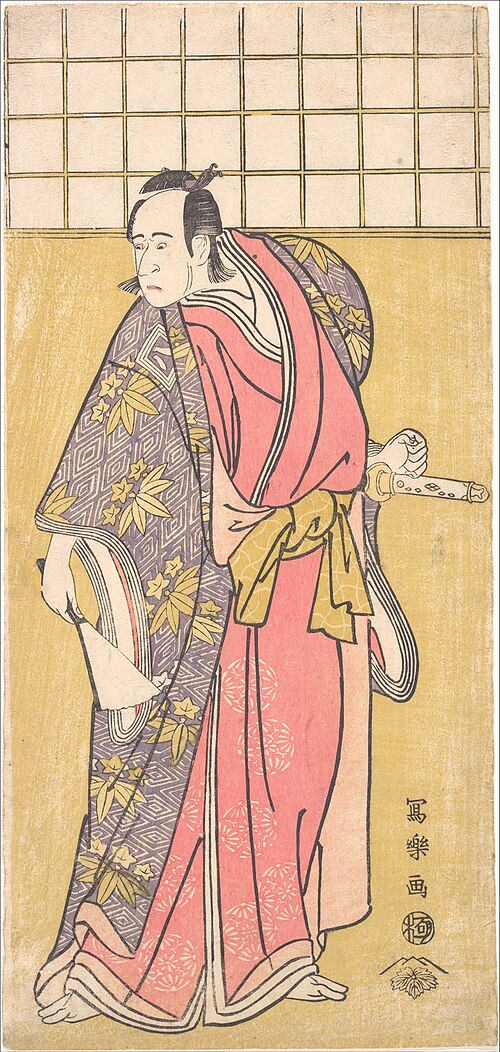
One copy is known of the hosoban print of Ichikawa Yaozō III as Hachiman Tarō Yoshiie (三世市川八百蔵の八幡太郎義家Sansei Ichikawa Yaozō no Hachiman Tarō Yoshiie); it is in the collection of the Metropolitan Museum of Art.[29]
Otokoyama Oedo no Ishizue Niban-me (男山御江戸盤石二番目) débuted at the Kiri-za in the 11th month of the 6th year of Gansei.[29]

Seven copies are known of the aiban print of Yamashita Kinsaku II as Abe Sadatō's wife Iwate Gozen disguised as the maid Ebizō Okane (Tennōjiya Rikō) (二世山下金作の仲居 おかね実は安倍貞任妻岩手御前(天王子屋里虹)[d]Nisei Yamashita Kinsaku no nakai Okane jitsu wa Abe Sadatō tsuma Iwate Gozen) known; one each are in the collections of the Tokyo National Museum, the Japan Ukiyo-e Museum, the British Museum, the Art Institute of Chicago, and the Philadelphia Museum of Art, and two in the Museum of Fine Arts, Boston.[29]

One copy is known of the hosoban print of Ichikawa Yaozō III as Saeki Kurando Tsunenori (三世市川八百蔵の佐伯蔵人経のりSansei Ichikawa Yaozō no Saeki Kurando Tsunenori) and is in the collection of the Art Institute of Chicago.[29]

Two copies are known of the hosoban print of Yamashita Kinsaku II as Abe Sadatō's wife Iwate Gozen disguised as the maid Ebizō Okane (plum-tree background) (二世山下金作の仲居おかね実は安倍貞任妻岩手御前(背景に梅)Nisei Yamashita Kinsaku no nakai Okane jitsu wa Abe Sadatō tsuma Iwate Gozen (haikei ni ume)); one each are in the collections of M. Walter Anstutz and the Metropolitan Museum of Art.[29]

Two copies are known of the hosoban print of Yamashita Kinsaku II as Iwate Gozen, wife of Abe Sadatō, holding an umbrella (二世山下金作の安倍貞任妻岩手御前(手に傘)Nisei Yamashita Kinsaku no Abe Sadatō tsuma Iwate Gozen (te ni kasa)); one each are in the collections of the Hiraki Ukiyo-e Foundation and the Museum of Fine Arts, Boston.[29]

One copy is known of the hosoban print of Sakata Hangorō III as Kurisaka Tarō Tomonori disguised as the groom Abumizuri no Iwazō in Koriyama (三代目坂田半五郎の郡山の馬士あぶみずりの岩蔵実は栗坂太郎友則Sansei Sakata Hangorō no Koriyama no bashi Abumizuri no Iwazō, jitsu wa Kurisaka Tarō Tomonori) and is in the collection of the Art Institute of Chicago.[29]
Matsu wa Misao Onna Kusunoki (松貞婦女楠, "Steadfast as the pine tree is the woman of the Kusanoki clan") débuted at the Kawarazaki-za in the 11th month of the 6th year of Gansei.[29]

One copy is known of the hosoban print of Onoe Matsusuke I as Ashikaga Takauji (初世尾上松助の足利尊氏Shosei Onoe Matsusuke no Ashikaga Takauji); it is in the Toledo Museum of Art.[29]

Three copies are known of the hosoban print of Ichikawa Komazō III as Shinozuka Gorō (Sadatsuna) (三世市川高麗蔵の篠塚五郎(貞綱)Sansei Ichikawa Komazō no Shinozuka Gorō (Sadatsuna)); one each are in the collections of the Museum of Fine Arts, Boston, the Minneapolis Institute of Art, and another in a private collection.[29]

Three copies are known of the hosoban print of Iwai Hanshirō IV as Kōtō no Naishi (四世岩井喜代太郎の先帝の上わらは勾当内侍Yonsei Iwai Hanshirō no Sentei no ue-warawa Kōtō no Naishi); one each are in the collections of the Tokyo National Museum and the Museum of Fine Arts, Boston, and another is in a private collection.[29]
The print was earlier believed to have been of Osagawa Tsuneyo II as Kojima, the wife of Bingo Saburō (二世小佐川常世の備後三郎妻児島Nisei Osagawa Tsuneyono Bingo Saburō tsuma Kojima).[29]

Two copies are known of the hosoban print of Ichikawa Komazō III as Oyamada Tarō Takaie disguised as Nitta Yoshisada (三世市川高麗蔵の新田義貞実は小山田太郎高家Sansei Ichikawa Komazō no Nitta Yoshisada jitsu wa Oyamada Tarō Takaie); one is in the collection of the Hagi Uragami Museum and the other in a private collection.[29]

Three copies are known of the hosoban print of Iwai Hanshirō IV as Chihaya, the younger sister of the Shintō priest Kenkō (四世岩井半四郎の神祇官兼好が妹千はやIwai Hanshirō no shingikan Kenkō ga imōto Chihaya); one each are in the collections of the Museum of Fine Arts, Boston, and the New York Public Library, and another is in a private collection.[29]

Three copies known of the hosoban print of Iwai Hanshirō IV as the pilgrim O-Toma, daughter of O-Hina from Inamuragasaki in Kamakura 四世岩井半四郎の鎌倉稲村が崎のおひな娘おとま(巡礼姿)Yonsei Iwai Hanshirō Kamakura no Inamuragasaki no O-Hina musume O-Toma (junrei sugata)); one each is in the collections of the Tokyo National Museum, the Museum of Fine Arts, Boston, and the Art Institute of Chicago.[29]

One copy is known of the hosoban print of Onoe Matsusuke I as the lay priest Yuasa Magoroku (初世尾上松助の湯浅孫六入道Shosei Onoe Matsusuke no Yuasa Magoroku nyūdō); it is in the collection of the Museum of Fine Arts, Boston.[29]

One copy of the hosoban print of Ichikawa Komazō III as the monk Saihō no Mida Jirō, actually Sagami Jirō Tokiyuki (三世市川高麗蔵の廻国の修行者西方の弥陀次郎実は相模次郎時行Sansei Ichikawa Komazō no kaikoku no shūgyōsha Saihō no Mida Jirō jitsu wa Sagami Jirō Tokiyuki); it is in the collection of the Royal Museums of Art and History.[29]

One copy is known of the hosoban print of Iwai Hanshirō IV as Kusunoki Masashige's wife Kikusui disguised as O-Hina's daughter O-Toma from Inamuragasaki in Kamakura (四世岩井半四郎の鎌倉稲村が崎のおひな娘おとま実は楠政成妻菊水Iwai Hanshirō Kamakura no Inamuragasaki no O-Hina musume O-Toma, jitsu wa Kusunoki Masashige tsuma Kikusui); it is in the collection of the Royal Library of Belgium.[29]

Matsu ha Misao Onna Kusunoki Niban-me (松貞婦女楠二番目) débuted at the Kawarazaki-za in the 11th month of the 6th year of Gansei.[29]
The five prints here form a pentaptych.[30]

Three copies are known of the hosoban print of Osagawa Tsuneyo II as the hairdresser O-Roku (二世小佐川常世の女髪結すきぐしのお六Nisei Osagawa Tsuneyo no onnakamiyui sukigushi O-Roku); one each are in the collections of the Museum of Fine Arts, Boston, the Guimet Museum, and the Metropolitan Museum of Art.[29]

One copy is known of the hosoban print Ichikawa Komazō III as Oyamada Tarō Takaie (市川高麗蔵の小山田太郎高家Ichikawa Komazō III as Oyamada Tarō Takaie); it is in the collection of the Art Institute of Chicago.[29]

One copy is known of the hosoban print of Iwai Hanshirō IV as Otoma, daughter of Ohina from Inamuragasaki in Kamakura (四世岩井半四郎の鎌倉稲村が崎のおひな娘おとまYonsei Iwai Hanshirō no Kamakura Inamuragasaki no O-Hina musume Otoma); it is in the collection of the Art Institute of Chicago.[29]

Six copies are known of the hosoban print of Matsumoto Kōshirō IV as Hata Rokurōzaemon Tokiyoshi disguised as the boatman Minagawa Shin'emon of Reisengasaki in Kamakura (四世松本幸四郎の鎌倉霊仙が崎の船頭皆川新左衛門実は畑六郎左衛門時能Yonsei Matsumoto Kōshirō IV no Kamakura Reisengasaki no sendō Minagawa Shin'emon jitsu Hata Rokurōzaemon Tokiyoshi), one each in the collections of the Waseda University Tsubouchi Memorial Theatre Museum, the Art Institute of Chicago, and the Portland Art Museum, and one each in three private collections.[29]

Three copies are known of the hosoban print of Nakajima Wadaemon I as Migawari no Jizō, the master of the house (初世中島和田右衛門の家主身替りの地蔵Shosei Nakajima Wadaemon no yanushi Migawari no Jizō); one each are in the collections of the Museum of Fine Arts, Boston, the Brooklyn Museum, and the Art Institute of Chicago.[29]
Matsu ha Misao Onna Kusunoki Shin Kyōgen (松貞婦女楠新狂言) débuted at the Kawarazaki-za in the 11th month of the 6th year of Gansei.[29]

Three copies are known of the aiban print of Ichikawa Komazō III as Ōdate Sabanosuke Terukado (三世市川高麗蔵の大館左馬之介てるかどSansei Ichikawa Komazō no Ōdate Sabanosuke Terukado), one each in the collections of the Art Institute of Chicago, the National Museum, Kraków, and the Portland Art Museum. The print was earlier thought to be of Ichikawa Komazō III as Oyamada Tarō (三世市川高麗蔵の小山田太郎Sansei Ichikawa Komazō no Oyamada Tarō).[29]

One copy is known of the aiban print of Iwai Hanshirō IV as Sabanosuke's younger sister Saeda disguised as Ukiyonosuke's maid servant San (四世岩井半四郎の浮世之助下女さん実は左馬之助妹さへだ(大和屋杜若)Yonsei Iwai Hanshirō no Ukiyonosuke gejo San jitsu wa Sabanosuke imōto Saeda (Yamatoya Tojaku)); it is in the collection of the Art Institute of Chicago.[29]
Hana no Miyako Kuruwa no Nawabari (花都廓縄張) débuted at the Miyako-za in the 11th month of the 6th year of Gansei.[29]

Two copies are known of the aiban print of Bandō Mitsugorō II as the manservant Kugahei (二世坂東三津五郎の奴くが平(大和屋是業)Nisei Bandō Mitsugorō no yakko Kugahei); one is at the Tokyo National Museum, the other in a private collection.[29]

Four copies are known of the aiban print of Segawa Kikunojō III as the maid O-Hama (三世瀬川菊之丞の仲居おはま実は稲波六郎太夫妻(浜村屋路孝)Sansei Segawa Kikunojō no nakai O-Hama jitsu ha Inanami Rukurōdayū tsuma (Hamamuraya Rokō); one each are in the collections of the Tokyo National Museum, the Museum of Fine Arts, Boston, the Art Institute of Chicago, and the Guimet Museum.[29]

One copy is known of the aiban print of Arashi Ryūzō II as the manservant Namihei (Toraya Toramaru) (二世嵐龍蔵の奴なみ平(とら屋虎丸)Nisei Arashi Ryūzō no yakko Namihei (Toraya Toramaru)); it is in the Royal Museums of Art and History.[29]
10 hosoban and 5 aiban prints make up the fourth period from the first month of Kansei 7 (1795).[5] 3 prints come from Nido no Kake Katsuiro Soga at the Kiri-za; 7 from Edo Sunago Kichirei Soga and Godairiki Koi no Fūjime at the Miyako-za; 1 is a sumo print; 2 are musha-e warrior prints; and 1 is of the god of luck Ebisu.[31]
Edo Sunago Kichirei Soga (江戸砂子慶書我) débuted at the Miyako-za in the 1st month of the 7th year of Gansei.[29]

Two copies are known of the hosoban print of Bandō Hikosaburō III as Kudōzaemon Suketsune (三世坂東彦三郎の工藤左衛門祐経Bandō Hikosaburō no Kudōzaemon Suketsune); one each is in the collections of the Tokyo National Museum and the National Museum of Ethnology.[29]

Three copies are known of the hosoban print of Sawamura Sōjūrō III as Soga Jūrō Sukenari (三世澤村宗十郎の曾我十郎祐成Sansei Sawamura Sōjūrō no Soga Jūrō Sukenari); one each is in the collections of the Tokyo National Museum and the Metropolitan Museum of Art, and in the M. Walter Amstutz Collection.[29]

One copy is known of the hosoban print of Bandō Mitsugorō II as Soga Gorō Tokimune (坂東三津五郎の曽我五郎時致Bandō Mitsugorō no Soga Gorō Tokimune); it is in the collection of the Tokyo National Museum.[29]
Edo Sunago Kichirei Soga Niban-me (江戸砂子慶書我二番目, later titled Godairiki Koi no Fūjime五大力恋緘) débuted at the Miyako-za in the 1st month of the 7th year of Gansei. It is based on an incident from 1742 in which the Satsuma samurai Hayata Hachiemon killed five people in Osaka. This version is a revision of an adaptation under the title Godairiki Koi no Fūjime that débuted in Kyoto the previous year; the Edo version did not take the title Godairiki Koi no Fūjime until 1800.[32]

One copy of the hosoban print of Segawa Tomisaburō II as the maid Ochiyo is known and is in the collection of the Metropolitan Museum of Art. The print was earlier believed to have been of the geisha Asaka.[29]

One copy is known of the hosoban print of Segawa Yūjirō II as the maid Otowa (二世瀬川雄次郎の仲居おとわNisei Segawa Yūjirō no nakai Otowa); it is in a private collection.[29]

Two copies are known of the hosoban print of Sawamura Sōjūrō III as Satsuma Gengobei (三世沢村宗十郎の薩摩源五兵衛Sawamura Sōjūrō no Satsuma Gengobei), one each in the collections of the Tokyo National Museum and the Museum of Fine Arts, Boston.[29]

One copy is known of the hosoban print of Iwao Kumesaburō I as the geisha Kumekichi (初世岩井粂三郎芸者久米吉Shosei Iwao Kumesaburō no geisha Kumekichi); it is in the collection of the Museum of Fine Arts, Boston.[29]
Nido no Kake Katsuiro Soga (再魁槑曾我) débuted at the Kiri-za in the 1st month of the 7th year of Gansei.[29]

Three copies are known of the hosoban print of Ichikawa Ebizō I as Kudōzaemon Suketsune (初世市川海老蔵の工藤左衛門祐経Shosei Ichikawa Ebizō no Kudōzaemon Suketsune); one each are in the collections of the Museum of Fine Arts, Boston, the Art Institute of Chicago, and the Guimet Museum.[29]

Two copies are known of the hosoban print of Ichikawa Danjūrō VI as Soga Gōrō Tokimune (六世市川団十郎の曽我五郎時宗Rokusei Ichikawa Danjūrō no Soga Gōrō Tokimune); one each are in the collections of the Museum of Fine Arts, Boston and the Art Institute of Chicago.[29]

Ichikawa Yaozō III as Soga Jūrō Sukenari (市川八百蔵の曽我十郎祐成Ichikawa Yaozō no Soga Jūrō Sukenari)
One copy is known of the hosoban print of Ichikawa Yaozō III as Soga Jūrō Sukenari (市川八百蔵の曽我十郎祐成Ichikawa Yaozō no Soga Jūrō Sukenari); it is in the collection of the Art Institute of Chicago.[29]
Daidōzan Bungorō was born in what is now Yamagata Prefecture in 1788.[33] By 1794 he weighed 83 kilograms (183 lb) at a height of 117 centimetres (46 in). He attracted attention for his size, and drew crowds at sumo tournaments, where he dressed as a sumo wrestler and performed ring-entering ceremonies. Such was his popularity that he appeared in at least 25 prints between 1794 and 1798 by popular ukiyo-e artists[34] such as Utamaro.[33]
aibantriptych of Daidōzan Bungorō entering the sumo ring (大童山文五郎の土俵入りDaidōzan Bungorō no Dohyōiri)
Two sets of the triptych are known, one at the MOA Museum of Art and the other in a private collection. The Sumo Museum in Tokyo has another copy of the central print.[35]


One copy is known of the single sheet aiban print of Daidōzan Bungorō entering the sumo ring (大童山文五郎の土俵入りDaidōzan Bungorō no dohyōiri) and is in the collection of the Hiraki Ukiyo-e Foundation.[36]
The legend at the top of the print reads:[36]

Daidōzan Bungorō quelling a demon (大童山文五郎 鬼退治Daidōzan Bungorō Oni-taiji)

The print depicts Daidōzan standing on the back of a blue oni demon, poised to strike at it with a wooden mallet. The legend at the top gives Daidōzan's weight as 21kan, 500monme (about 79kg), and his girth as 3shaku, 9sun (about 121cm)—measurements considerably larger than the year before.[33]
Sharaku produced only two known musha-e warrior prints: one of Soga Gorō battling Gosho Gorōmaru and the other of Taira no Koremichi battling an oni demon at a maple-leaf viewing party. Such prints may have been an attempt by Sharaku to avoid being pigeon-holed as an actor-print designer.[37]

One copy is known of the aiban print of Soga Gorō and Gosho Gorōmaru 曽我五郎と御所五郎丸Soga Gorō and Gosho Gorōmaru); it is in the collection of the Hiraki Ukiyo-e Foundation.[35]
In 1193 the shōgunMinamoto no Yoritomo held the Fuji no Makigari, a grand hunting party in the area of Mount Fuji. There, the Soga brothers Jurō and Gorō killed Kudō Suketsune, a retainer of Yoritomo's and the murderer of the soga brothers' father. In the ensuing fighting Jurō was killed and Gorō captured by the sumo wrestler Gosho Gorōmaru, who served at Yoritomo's palace (御所gosho).[38]
Gorōmaru's hair is tied in a karawa-mage topknot, a hairstyle worn by male youths during the Kamakura period.[37]

One copy is known of the aiban print of maple[e] leaf-viewing (紅葉狩 写楽Momiji-gari); it is in the collection of the Art Institute of Chicago.[35]
The print illustrates the Momiji Densetsu, which has had various theatrical and other adaptations. The story tells of the Heian-period warrior Taira no Koremichi, who comes across a respectable woman and her handmaidens holding a maple leaf-viewing party. He joins the party and drinks himself unconscious. When he awakens, the women have revealed themselves as oni demons. The print illustrates a fierce battle between Koremichi and a demon who holds him by the topknot.[38]

One copy is known of the aiban print of Ebisu (恵比寿), one of the Seven Lucky Gods in Japanese mythology; it is in the collection of the Japan Ukiyo-e Museum.[35]
Since the beginning of the Edo period, merchants in particular worshipped Ebisu as the god of wealth, long life, and happiness. He wears a pointed kazaori eboshi hat, sits beneath a Shintō shimenawa rope, and fishes from a waterside boulder. He has abnormally large ears and grins widely, despite his entangled fishing line.[2]

One example is known of the sensu folding hand fan bearing the likeness of Otafuku (扇面お多福図Senmen Otafuku zu); it is in the collection of the Art Institute of Chicago.[35] The printed fan measures 21.2 × 40.8 cm and depicts Otafuku throwing roasted soybeans to ward away oni demons during Setsubun, at the traditional Japanese Lunar New Year.[39]

The sensu folding hand fan of an old man (扇面老人図Senmen rōjin zu)[35] is a nikuhitsu-ga painting on chikushi bamboo paper.[40] To the left is a portrait of an old man, and to the right is a young boy standing on an actor portrait by Utagawa Toyokuni.[41] The fan was in the collection of Handeishi Kawakita (1878–1963), which now is held by the Sekisui Museum.[40]

The sensu folding hand fan of Matsumoto Kōshiro IV as Kakogawa Honzō and Matsumoto Yonesaburō as Konami is in the collection of the Museum of Asian Art of Corfu.[42]
The fan measures about 50cm. It was identified and confirmed as a Sharaku work in 2008 and is believed to depict a scene from a May 1795 performance of Kanadehon Chūshingura.[42] Rather than a print, the fan is a nikuhitsu-ga painting on chikushi bamboo paper. It is signed (not stamped) Tōshūsai Sharaku ga (東洲齊冩樂画).[43]
Preparing a print involved having the print designer produce an ink drawing, which was then transferred to thin Mino paper. The woodblock carver pasted this tracing, called a hanshita-e (版下絵), face-down onto the woodblock. The carver cut around the lines visible through the paper to make the key printing block.[44]

A hanshita-e in a private collection, depicting the sumo wrestlers Tanikaze and Daidōzan Bungorō.[35]
At the turn of the 19th to 20th centuries, Kobayashi Bunshichi travelled abroad and amassed a collection of ukiyo-e. Amongst the items in his collection were seven hanshita-e sumo drawing signed Sharaku Ga (冩樂画). These were lost with the rest of Kobayashi's collection in a fire during the 1923 Great Kantō earthquake. This portrait of Tanikaze and Daidōzan is thought to be from the same series.[45]

The whereabouts are unknown of the hanshita-e of Onoe Matsusuke I and Ichikawa Ebizō I (初世尾上松助・初世市川鰕蔵Shosei Onoe Matsusuke, Shosei Ichikawa Ebizō).[46]

The whereabouts are unknown of the hanshita-e of Sansei Sanokawa Ichimatsu III, Sakata Hangorō III, and Ichikawa Tomizaemon I (三世佐野川市松・三世坂田半五郎・初世市川富左衛門Sansei Sanokawa Ichimatsu, Sansei Sakata Hangorō, Shosei Ichikawa Tomizaemon).[46]

The hanshita-e of Segawa Tomisaburō II, Ichikawa Omezō I, Ichikawa Komazō III (二世中川富三郎・初世市川男女蔵・三世市川高麗蔵Nisei Segawa Tomisaburō, Shosei Ichikawa Omezō, Sansei Ichikawa Komazō) is in a private collection.[46]

A hanshita-e in the collection of the Museum of Fine Arts, Boston, depicts the actors Bandō Mitsugorō II, Ōtani Oniji III, and Segawa Kikunojō III.[46]

A hanshita-e in the collection of the Museum of Fine Arts, Boston, depicting the actors Ichikawa Yaozō III, Sawamura Sōjūrō III, and Osagawa Tsuneyo II.[46]

A hanshita-e in the collection of the Art Institute of Chicago, depicting the actors Arashi Ryūzō II and Morita Kan'ya VIII.[46]

A hanshita-e in a private collection depicts Iwai Kiyotarō I, Nakamura Sukegorō II, and Bandō Hikosaburō III (初世岩井喜代太郎・二世中村助五郎・三世坂東彦三郎Shosei Iwai Kiyotarō, Nisei Nakamura Sukegorō, Sansei Bandō Hikosaburō).[46]

The Guimet Museum has a hanshita-e depicting Ichikawa Monnosuke II, Matsumoto Kōshirō IV, and Iwai Hanshirō IV (二世市川門之助・四代目松本幸四郎・四世岩井半四郎Nisei Ichikawa Monnosuke, Yonsei Matsumoto Kōshirō, Yonsei Iwai Hanshirō).[46]

The Guimet Museum has a hanshita-e depicting Segawa Yūjirō II and Matsumoto Yonesaburō I (二世瀬川雄次郎・初世松本米三郎Nisei Segawa Yūjirō, Shosei Matsumoto Yonesaburō).[46]