Loading article…
FN Minimi (フランス語: mini-mitrailleuse、「ミニ機関銃」の略)は、ベルギー製の5.56mmまたは7.62mm軽機関銃で、 FN HerstalのためにErnest Vervierによって開発された分隊支援火器としても分類されています。1970年代後半に導入され、75か国以上で使用されています。[ 14 ]この武器は、FNのHerstal工場と、その米国子会社であるFN Manufacturing LLCで製造されています。[ 15 ]
ミニミはオープンボルト方式で発射する。空冷式、ガス作動式のロングストロークピストン式機関銃で、フルオート射撃のみ可能である。弾帯給弾式とマガジン給弾式がある。ミニミにはいくつかのバリエーションがあり、小隊または分隊支援火器としての標準型、空挺部隊向けの短縮型パラバージョン、戦闘車両の副武装としての車両型などがある。

ミニミはガス作動式のロングストロークピストンシステムを採用しています。銃身は回転ボルトでロックされ、ボルトキャリア内のらせん状カムガイドによって押し込まれる2つの大きなロッキングラグを備えています。発射時には、銃口付近の銃身のポートから噴射された膨張ガスによってピストンが後方に押し戻されます。ピストンロッドはボルトキャリアに作用し、ボルトキャリアはレシーバー壁に溶接された2本のレールに沿って後退運動を開始します。この間、ボルト自体はロックされたままです。この一連の動作により、ボルトキャリア内のカムが回転してボルトのロックを解除するまでに薬室圧力が安全なレベルまで低下するわずかな遅延が生じ、空薬莢が冷却・収縮して薬室壁との摩擦が軽減されるため、排莢の信頼性が向上します。
ミニミはオープンボルト方式を採用しているため、長時間の連続射撃後でも弾薬が暴発する危険性が軽減されます。これは、点火前に薬室に装填されるのはごく短時間であり、ボルトとボルトキャリアの動きによって発射ごとに薬室と銃身に空気が送り込まれ、銃身が換気されて熱が放出されるためです。ガスシリンダーから噴出するガスは上向きに排出されるため、射手の位置を露呈するような塵や破片が舞い上がるのを防ぎます。
ミニミには、ノーマルとアドバンスという2つの位置を持つ手動調整式ガスバルブがあります。アドバンス設定では、発射速度が毎分700~850発から毎分950~1,150発に増加し、極端な環境条件下または銃のガスチューブにひどい汚れがある場合にのみ使用されます。スプリング式エキストラクターはボルト内部にあり、傾斜レバー式エジェクターはレシーバーハウジング内に収められています。使用済み薬莢は、レシーバー右側下部にあるポートから取り出され、スプリング式のダストカバーで破片から保護されています。ミニミはストライカー式で、ボルトキャリアがストライカー機構として機能します。
ミニミには、ピストルグリップ上部のトリガーハウジング内にプッシュボタン式の手動安全装置が装備されている。「武器安全」位置では、シア機構が無効になる。ボタンを右側に押すと、銃の左側に赤い縁が現れ、発射準備完了状態であることを示す。当初はFALおよびFNCライフルと同じ黒色のポリマー製ピストルグリップが使用されていたが、現在ミニミには、レシーバーに対してより小さな角度で取り付けられた、横溝付きの改良型グリップが装着されている。
ミニミは、プレス加工された鋼鉄製の溶接レシーバーを備えています。標準型とパラ型の両方に、ガスチューブに取り付けられ、ハンドガードの下に収納される固定式の折りたたみ式バイポッドが装備されています。バイポッドは高さ調整が可能で、各脚に3段階の高さ設定があります。また、バイポッドは左右に15°の回転範囲があります。バイポッドを完全に伸ばすと、銃身軸は465 mm (18.3インチ)の高さになります。ミニミは、ベルギー製のFN360°三脚またはM60ピントルを使用したアメリカ製のM122マウントからも発射できます。車両搭載型のミニミには、装甲戦闘車両内から遠隔操作で発射できる電動トリガーが装備されています。
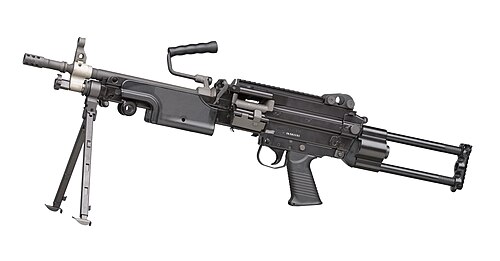
標準軽機関銃バージョンは、 465 mm (18.3インチ)の銃身と、折りたたみ式ワイヤーショルダーストラップ付きのスケルトンアルミニウムストックを備えています。短縮型の Para モデルは、 349 mm (13.7インチ) の銃身と折りたたみ式金属製ストックを備え、車両搭載型は465 mm (18.3インチ)の銃身を備えていますが、ストックやアイアンサイトはありません。すべてのモデルは、M249 で使用されているものと同じ固定式合成ストックを取り付けることができ、このストックには発射速度の安定化と反動の軽減に貢献する油圧バッファーが内蔵されています。[ 16 ]

The weapon is fed from the left-hand side by disintegrating-link M27 ammunition belts (a miniaturized version of the 7.62mmM13 belt), from either an unsupported loose belt, enclosed in a polymer ammunition box with a 200-round capacity attached to the base of the receiver, or from detachable STANAG magazines, used in other NATO 5.56 mm assault rifles such as the M16 and FNC. Magazine feeding is used only as an auxiliary measure, when belted ammunition has been exhausted. The ammunition belt is introduced into the feed tray, magazines are seated inside the magazine port at a 45° angle, located beneath the feed tray port. When a belt is placed in the feed tray it covers the magazine port. Likewise, a magazine inserted into the magazine well will prevent the simultaneous insertion of a belt. The magazine port, when not in use, is closed with an L-shaped hinged flap equipped with a tooth, which engages a corresponding opening in the magazine and serves as a magazine release. This feature was developed by FN's Maurice V. Bourlet and allows the Minimi to be instantly changed from belt feed to magazine feed without any modification.[17]
The pawl-type feeding mechanism is modelled on the system used in the MAGgeneral-purpose machine gun, which was originally used in the World War II-era MG 42. The belt is moved in two stages during both the forward and rearward movement of the reciprocating bolt carrier, which provides for a smooth and continuous feeding cycle. The feeding mechanism top cover features a device that indicates the presence of a cartridge in the feed path.
The barrels used in the Minimi have an increased heat capacity for sustained fire, feature a chrome-lined rifled bore (six right-hand grooves) and are manufactured in two versions: with a 178 mm (1:7 in) twist rate used to stabilize the heavier Belgian 5.56×45mm SS109 projectile, or a 305 mm (1:12 in) twist for use with American M193 ammunition. The barrels have a quick-change capability; a lever is provided on the left side of the weapon that unlocks the barrel allowing the shooter to push it forward removing it from its trunnion. A carrying handle is also fixed to the barrel and assists in the barrel change process. A trained soldier can perform a barrel change and ready the weapon for aimed fire in 6 to 7 seconds. Early models of the Minimi had a flash suppressor with side ports as seen on the FN FAL, FN CAL, and FN FNC rifles; new production guns have a shorter, cone-shaped slotted flash suppressor.
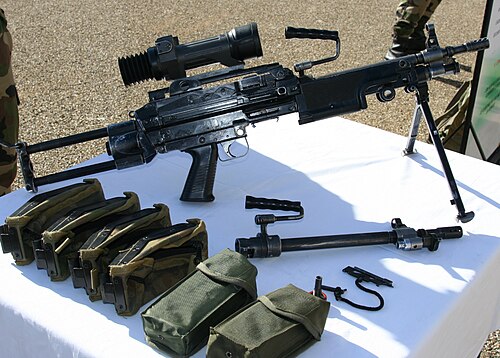
Both the standard and Para models come with a rear sight, adjustable for windage and elevation, that provides a peep aperture for ranges from 300–1,000 m (980–3,280 ft), in 100 m (330 ft) increments. The sight line radius is 490 millimeters (19.3 in). The hooded front sight is installed in a post on the gas block and is also adjustable for elevation and windage. Early models of the Minimi had the rear sight mounted forward of the feed cover and the front post secured to the barrel, closer to the muzzle end. An adapter can also be used that allows the use of standard NATO night and day sights.
Standard equipment supplied with the Minimi consists of three ammunition boxes, a cleaning kit stored inside the forearm, lubricant bottle, sling and blank-firing barrel.

The M249 version of the Minimi was adopted by the US military in 1982; since 1984, production for the US military has been carried out entirely in the US by a local subsidiary, FN Manufacturing LLC in South Carolina.
As part of the US military's M249 Product Improvement Program (PIP), the M249 was updated with: a new synthetic stock and modified buffer assembly, a single-position gas regulator, a so-called birdcage type flash hider/compensator from the M16A2, a polymer barrel heat guard, and a folding carry handle. As a result, the weapon's weight increased to 7.47 kg (16.5 lb). Many of the PIP upgrades were later incorporated by FN for the Minimi.
ピカティニーレールアダプターを備えた軽量版パラは、ミニミ特殊用途武器(SPW)として知られています。さらなる軽量化のためにマガジン給弾口が取り除かれ、標準的なタクティカルアクセサリーの使用を可能にするレール付きMIL-STD-1913ハンドガードが採用されています。
米特殊作戦部隊が要求したSPWの別の派生型は、軽量の溝付きバレルを採用しているが、マガジン給弾システム、車両取り付けラグ、キャリングハンドルを欠くMk 46 Mod 0である。レール付きフォアエンドによりモジュール性と任務への適応性が確保され、フラッシュライト、垂直グリップ、赤外線レーザー照準器の使用が可能となる。改良されたフォアレールと軽量チタン製バイポッドを備えた改良型Mk 46 Mod 1は、米国海軍に採用されている。


ミニミの試作機は当初7.62×51mm NATO弾用に設計されたが、後に 5.56mm弾用に再設計された。
USSOCOMが2000年代初頭にMk 48 Mod 0の要求仕様を発表した際、Minimiの当初の設計図が回収され、この新型モデルの開発に使用された。Mk 48 Mod 0に対する好意的な評価と、Minimiのより強力な派生型に対する需要の高まりを受けて、FN HerstalはMinimi 7.62を発表した。2006年11月、FN Herstalのプレスリリースによると、Minimi 7.62は最近「市場に投入された」ばかりで、「固定式または伸縮式の銃床と、標準またはトリプルレールハンドガードが選択可能」とのことである。[ 19 ]
口径が異なることに加えて、Minimi 7.62は、調整不可能な自己調整式ガスシステムと、銃床アセンブリに油圧式反動緩衝装置を組み込んでいる。
Minimi 7.62は、より大きな弾薬に合わせて調整された異なる照準器を備えています。リアサイトは300~1,000m (980~3,280フィート)の範囲で100m (330フィート)刻みで調整可能です。また、風による弾道補正も可能です。Minimi 7.62 TRは、工場出荷時からピカティニーレールハンドガードを装備したバリエーションです。
オーストラリア軍では、ミニミ7.62は「マキシミ」として知られている。[ 20 ]

2013年11月、FNハースタル社はミニミ軽機関銃のMk3バージョンであるミニミ5.56 Mk3とミニミ7.62 Mk3を発表した。Mk3への改良は、過去10年から15年間の運用経験とユーザーからのフィードバックに基づいて行われた。
ストックは5段階に調整可能で、折りたたみ式ショルダーレストと油圧バッファーによりチークレストの高さも調整できます。フィードトレイには、装填中にベルトから弾薬を所定の位置に保持するための保持爪が付いています。ハンドガードには前方に3つのピカティニーレールがあります。新しいバイポッドは3段階に高さ調整可能で、取り付けられているアクセサリーに関係なく、折りたたむとハンドガードの形状にシームレスに統合されます。その他の機能には、より人間工学に基づいたコッキングハンドルと、バレルの熱から保護するための追加の長いピンによって可能になるオプションのヒートシールドが含まれます。Minimi 7.62 Mk3は、5.56×45mm弾を発射するように変換できます。
既にMinimi機関銃を所有しているユーザーは、既存の武器をMk3の機能で部分的または完全にアップグレードできます。[ 21 ]
標準的な工場出荷時のFN Minimiで、スチール製のチューブ型銃床が装備されています。
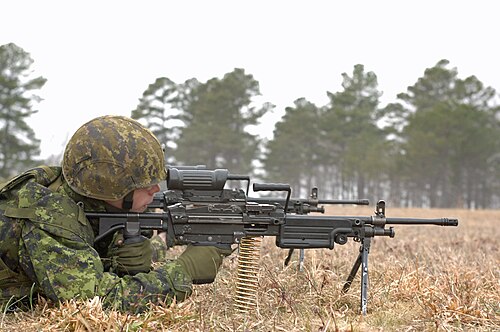
C9A1には、給弾カバーにピカティニーレールが装備されており、3.4倍のELCAN C79望遠照準器を取り付けることができます。また、銃床の下側には垂直グリップを取り付けることができ、伏せ撃ち時の安定性を高めることができます。
C9A2の中期改良では、より短い2本目の銃身(どちらも改良されたマズルデバイス付き)、IRグリーンのパーツの削減、C8スタイルの折りたたみ式ストック、折りたたみ式垂直フォアグリップ、 C9専用のレーザー照準モジュール(LAM)TRIADが導入されました。
スチール製のチューブ型銃床を備えた標準的な工場出荷時のFN Minimiで、「マシンガン90」(スウェーデン語:Kulspruta 90)としても知られています。
Ksp 90のパラモデル。
標準的な工場出荷時のFN Minimiで、スチール製のチューブ型銃床を備えているが、この機関銃の特徴はSTANAG規格のマガジンを使用できないことである。
SM-3 A1は、ARスタイルの伸縮式ストックと給弾カバーにピカティニーレールを装備している。さらに、長距離射撃用に「直視スコープ」(スコープ)を取り付けることも可能である。
The Japan Self-Defense Forces (JSDF) adopted the locally produced Minimi under the name "5.56mm Machine Gun MINIMI" (Japanese: 5.56mm機関銃MINIMIcode: jpn promoted to code: ja ) since the 1993 fiscal year as a successor to the Type 62 7.62mm machine gun until 2019.[36]
The license-produced MINIMI can be equipped with the Type 62 GPMG tripod using a special attachment, and is used when precise shooting is required. Additionally, for long-range shooting, a “direct sight scope” (scope) may be mounted. The model adopted by the JSDF is the so-called standard type with a metal tube stock, and it has unique modifications such as a different shape for the barrel change lever. The side of the gun body is marked with 5.56mm Machine Gun MINIMI.
A distinctive feature is the unique heat cover (upper sleeve) mounted on the top of the barrel. This cover, similar to the M249 used by US Military, is an added component that became equipped after adoption. However, the number of cooling vents in the central column has been reduced from 8 (on the original version) to 7, indicating a shape difference. The magazine stop for STANAG magazines is not used because it prevents training with blank rounds.[37][38]
On December 18, 2013, the Ministry of Defense announced that Sumitomo Heavy Industries had falsified inspection data over several decades and had delivered machine guns that did not meet the required performance standards.[39] As a result, the company was placed under a 5-month suspension of designation. It is reported that at least 5,350 units, including 12.7mm heavy machine guns, 7.62mm machine guns, and 5.56mm machine guns, were delivered since 1979. Even before the data falsification was discovered, personnel in the field had recognized that the Minimi produced by Sumitomo Heavy Industries was of low performance.[40]
In April 2021, Sumitomo Heavy Industries announced its withdrawal from the production of machine guns and the development of 5.56mm machine guns due to budget constraints and reduced order volumes.[41] However, the company stated it would continue producing parts for maintenance and repair.
ミニミMk1の旧式化と調達の中止に伴い、陸上自衛隊は次期機関銃の選定を行った。陸上自衛隊は5.56mm口径の使用を継続することを決定し、ドイツのヘッケラー&コッホMG4ではなくミニミMk3を選んだ。[ 42 ]「5.56mm機関銃ミニミ(B)」は国内生産ではなく輸入によって調達されている。調達計画には3,100丁のミニミ(B)が含まれており、既存のミニミMk1を徐々に置き換えていく予定である。[ 43 ]
標準バージョンとパラバージョンの両方が使用されており、標準バージョンは通常1.5倍の照準器を装備し、パラバージョンは通常ホログラフィックサイト、取り外し可能なフォアグリップ、取り外し可能なバイポッドを装備している。1994年には、精度を向上させるためにF89にさまざまなフラッシュサプレッサーを使用するテストが行われた。[ 44 ]
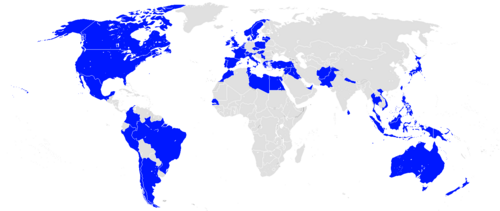


Minimiは45カ国以上で採用されている。[ 54 ]
 アルゼンチン:M249の派生型が使用されている。[ 55 ]
 オーストラリア:オーストラリア軍ではF89と指定されている。製造元はリズゴー・アームズ社である。[ 23 ]マキシミはアフガニスタンでの試験運用を経て2011年に配備され、限定的に使用されている。[ 20 ] [ 56 ]
 ベルギー:ベルギー陸軍の標準的な歩兵支援兵器。[ 28 ]標準型(Minimi Mk2と呼ばれる)とパラ型(Minimi Mk3)の両方のモデルが使用されている。[ 57 ]
 ブラジル:リオデジャネイロ憲兵隊の特別軍事警察(BOPE) 、リオデジャネイロ民間警察の特殊部隊特別部隊[ 58 ] 、連邦警察 GPI によって使用されている[ 59 ]だけでなく、ブラジル陸軍、海兵隊(17 の軍事組織によって 399 人、うち 13 人が Minimi を採用) 5,56 標準と 4 Minimi 5,56 Para を採用) およびブラジル空軍。[ 60 ] 陸軍特殊部隊は 38 Minimi 5,56 特殊用途武器 (SPW) を使用しています。[ 61 ]
 ブルンジ: ブルンジの反政府勢力。[ 62 ]
 カナダ: C9軽機関銃は1980年代に採用された。[ 63 ]
 チリ:チリ軍が使用。[ 64 ]
 中国:中国警察は国産のクローンを使用している。[ 65 ]
 コロンビア:コロンビア軍が使用(M249およびMK3)。[ 66 ] [ 67 ]
 クロアチア:[ 68 ]
 キプロス:キプロス国家警備隊が使用。[ 69 ]
 チェコ共和国:チェコ軍の標準機関銃として、Uk vz. 59に代わり、7.62×51mm NATO ミニミが採用された。 [ 70 ] 2016 年 1 月までに 317 丁が納入された。 [ 71 ]第601 特殊部隊グループはMk 48 Mod 0を使用している。[ 72 ] 5.56mm M249 の派生型も使用されていた。[ 73 ]
 デンマーク:イェーガー軍団が使用。[ 74 ]
 東ティモール:東ティモール国防軍[ 75 ]
 フランス:パラバージョンはフランス陸軍で広く使用されている。FN MAG GPMGと並んで配備されている。[ 76 ]
 ギリシャ:ギリシャ軍が使用。[ 77 ]
 ハンガリー:ハンガリー特殊部隊はM249 SAWを使用している。[ 78 ]
 インドネシア:インドネシア軍の標準軽機関銃。[ 28 ] SM3は2007年から使用されている。[ 79 ]
 イラク[ 9 ]
 アイルランド:陸軍レンジャーウィング(ARW)特殊部隊で使用されているパラシュート。[ 80 ]
 イタリア:ミニミはFNと提携しているベレッタ社がライセンス生産しており、イタリア軍で分隊支援火器としてMG 42/59(第二次世界大戦時のMG 42の派生型で、現在も広く使用されている)に取って代わっている。ミニミはイタリア軍によって、最近および現在のすべての国際作戦地域で広く使用されている。[ 81 ]
 日本:陸上自衛隊のNTK-62を部分的に置き換えた。住友重機械工業がライセンス生産している。[ 31 ] [ 82 ]陸上自衛隊はそれらを置き換える計画を立てているが、住友重機械工業は潜在的な軽機関銃の入札には関与しないことを確認した。[ 83 ] 2023年1月、FN製のミニミMK3が選定され、MINIMI(B)として設計された。[ 84 ]約3,100丁のMk3が輸入される予定である。[ 85 ]
 クウェート[ 86 ]
 ラトビア:ラトビア軍の標準的な軽機関銃。[ 87 ] [ 88 ]
 レバノン[ 89 ]
 リビア[ 1 ] [ 90 ]
 リトアニア: 7.62×51mm FN Minimi MK 3。[ 91 ]
 ルクセンブルク:ルクセンブルク軍はこれを分隊自動火器として使用している。パラバリアントは、大公警察の特別警察部隊で使用されている。[ 92 ] [ 93 ] [ 94 ]
 マレーシア:マレーシア陸軍はHK11A1機関銃をミニミに置き換えた。警察の特殊部隊でも使用されている。[ 95 ]
 メキシコ:メキシコ空軍はヘリコプターにこれを使用している。[ 1 ]
 ネパール:2002年に5,500台を購入した。[ 96 ]
 オランダ:オランダ王立陸軍は、歩兵の一部の役割でFN MAGを置き換えるためにMinimiのパラバージョンを導入した。オランダ軍コマンド部隊はMinimi 5.56パラバージョンを使用している。[ 97 ] MAGは依然として汎用機関銃、支援火力兵器、車両搭載兵器として使用されている。[ 98 ]
 ニュージーランド:ニュージーランド国防軍は、 C9 Minimi という名称で Minimi を使用しています。この銃は、1988 年以来、陸軍の軽支援火器 (LSW) として使用されています。[ 99 ] 7.62 Minimi TR は、2012 年 2 月に C9 LSW Minimi の後継として選定され、ニュージーランド国防軍では 7.62 LSW Minimi として知られるようになります。[ 100 ]
 ノルウェー: 1980年代後半からHJK / FSKおよびMJKでパラバージョンが使用されており、2011年からはノルウェー軍で使用されている(2011年に1,900丁の機関銃が購入された)。 [ 101 ] 2021年9月、FN Herstalとノルウェー国防資材庁は、4,000丁のMinimi 7.62 Mk3の納入に関する枠組み協定に署名した。[ 102 ]
 パキスタン:SSG、SSW、SSGN。[ 103 ] [ 104 ]
 パプアニューギニア:F89に指定。[ 105 ]
 ペルー: Infantería de Marina del Perú (ペルー海軍歩兵)によって使用されます。 [ 106 ]
 フィリピン:フィリピン軍(AFP)で使用されている。2002年5月にFN Minimiを購入し、402丁を取得した。[ 107 ] [ 108 ]アロヨ政権時代の汚職疑惑のため、追加発注はキャンセルされ、再入札が行われた。[ 108 ]
 ポーランド:JW GROM [ 109 ] [ 110 ]
 ポルトガル:ポルトガル陸軍は2019年に5.56×45mmと7.62×51mm口径のMinimi MK3機関銃を受領した。[ 111 ] 2022年にはポルトガル海兵隊が5.56×45mm Minimi MK3を数量不明で受領した。[ 112 ]
 セルビア:軍の特殊部隊(第72特殊作戦旅団および第63空挺旅団)と警察の特殊対テロ部隊で使用されている。 [ 113 ] [ 114 ]
 セネガル:セネガルの特殊部隊が使用。[ 115 ]
 スロベニア:ミニミパラはスロベニア軍で使用されている。[ 116 ]
 スペイン:スペイン海軍は、5.56×45mmパラベラム弾と7.62×51mm弾を使用するミニミ軽機関銃を取得した。[ 117 ]
 スリランカ[ 28 ]
 シリア:シリア・アラブ軍(旧称:砂漠の鷹旅団)[ 9 ]
 スウェーデン:Ksp 90(Kulspruta 90 )として知られている。パラモデルはKsp 90Bと指定されている。どちらもボフォース・カール・グスタフ社製である。[ 118 ] [ 119 ]
 スイス: LMg 05 ( Leichtes Maschinengewehr 05 ) または FM 05 ( Fusil mitrailleur 05 ) に指定されています。[ 120 ]
 台湾:中華民国陸軍で使用。現地生産用に再設計されたバージョンはT75と命名され、中華民国海兵隊で使用されている。[ 105 ]
 タイ:タイ王国海軍海兵隊とタイ王国陸軍(M249型)で使用されている。[ 105 ]
 チュニジア[ 8 ]
 トルコ:治安総局とトルコ陸軍で使用されている。[ 105 ]また、警察特殊作戦部が使用していた旧型のFN Minimi MK 1の代替として中国からCS/LM8も購入されている。[ 121 ]
 ウクライナ:2022年にカナダとベルギーから受領し、ロシア・ウクライナ戦争中に使用された。[ 12 ] [ 122 ]また、2024年と2025年には、カムバックアライブ財団から7.62×51mmのミニミMk3が300丁、AFUに寄贈された。[ 123 ] [ 124 ]
 アラブ首長国連邦[ 28 ]
 イギリス: 標準型とパラ型が使用され、それぞれL108A1と L110A2 と命名された。[ 125 ]陸軍は、4 人編成の各分隊にパラ型を装備した。軽機関銃には通常、4 倍SUSAT標準ライフル照準器が装着されていた。また、イギリス海軍、イギリス海兵隊コマンドー、イギリス空軍連隊でも使用された。7.62 ミニミがいくつか運用されている。[ 126 ] L110A3 は、2019 年初頭までに、より古いL7A2 汎用機関銃に置き換えられ、段階的に廃止されたが、統合軍司令部の使用者はこの武器の在庫を保持した。[ 127 ] [ 128 ]
 アメリカ合衆国:アメリカ合衆国軍はこれをM249軽機関銃として使用している。[ 28 ]
 イエメン:アムネスティは、2018年のホデイダ攻勢中に民兵がFNミニミを使用したと報告した[ 129 ]
 アフガニスタン:アフガニスタン国軍は、タリバンの反乱中に米国から供与されたM249を使用した。 [ 130 ]
5.56には、発射速度を安定させ、反動を軽減するための油圧バッファーを取り付けることができます。銃床のデザインは、シンプルで快適かつ正確な射撃に貢献します。
{{cite web}}: CS1 maint: bot: 元の URL の状態が不明です (リンク){{cite web}}: CS1メンテナンス: アーカイブサービスは非推奨になりました (リンク)ニュージーランド国防軍は、現在運用中の 5.56 mm LSW C9 の後継として FN Herstal 7.62 mm Minimi TR を選定した。この兵器は現在調達中で、ニュージーランドへの納入は今年 4 月より開始され、運用開始と部隊への配備は 2012 年第 4 四半期に予定されている。7.62 LSW Minimi は特定の陸軍および空軍部隊に配備される。これにより C9 の能力が置き換えられ、野戦部隊および地域装備プールが優先される。
Herstal は最近、英国国防省 (MoD) から 2011 年末までに最大 176 丁の MINIMI™ 7.62 軽機関銃を供給する新たな契約を獲得しました。この契約には、オプションが行使された場合、2012 年から 2014 年までの 3 年間にわたって毎年追加で 250 丁の MINIMI 7.62 機関銃を納入するオプションも含まれています。