
Loading article…
.png/500px-Detective_Comics_27_(May_1939).png)
『ディテクティブ・コミックス』 (後に『バットマン・ディテクティブ・コミックス』に改題)は、後にDCコミックスに短縮されたディテクティブ・コミックスが発行するアメリカン・コミック・シリーズです。1937年から2011年にかけて(そして後に2016年に続編が発行)発行された第1巻は、 『ディテクティブ・コミックス』第27号(表紙の日付は1939年5月)でスーパーヒーローのバットマンが登場したことで最もよく知られています。
同名の2番目のシリーズは2011年9月に開始されましたが、2016年に元の巻数に戻りました。このシリーズは出版社の名前の由来であり、スーパーマンのデビューとともに開始されたシリーズであるアクションコミックスと並んで、このメディアの代表的なシリーズの1つです。1937年から2011年の間に、このシリーズは881号発行されました。これは米国で最も長く続いている漫画シリーズです。[1] [注 1]
出版履歴
『Detective Comics』は起業家マルコム・ウィーラー=ニコルソン少佐 の最後の出版物である。彼の漫画会社、ナショナル・アライド・パブリケーションズは、創設者が去ってからかなり経った後ではあるが、世界二大漫画出版社の一つであるDC Comicsへと発展した。ウィーラー=ニコルソンの最初の2冊は、画期的な『 New Fun: The Big Comic-Magazine #1』(表紙の日付は1935年2月)で、通称『New Fun Comics #1』と呼ばれ、新聞の漫画と漫画風の新しい素材を混ぜたものではなく、完全にオリジナルの内容を含む最初の初期の漫画であった。彼の2冊目の作品である『New Comics #1』は、2度改題されて『 Adventure Comics』となり、これもまた独創的なシリーズとなり、1983年の第503号まで数十年にわたって連載され、後に2009年に復活した。
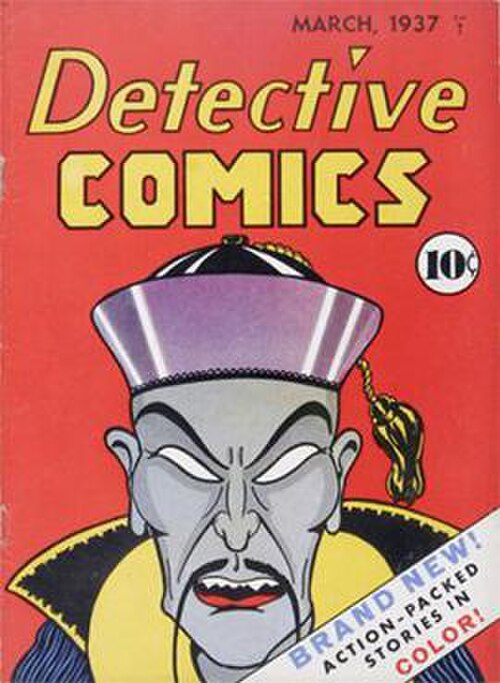
彼の指導の下で出版された3冊目で最後の雑誌は『Detective Comics』で、1936年12月の表紙イラストで宣伝されたが、結局3ヵ月後の1937年3月の表紙日付で初版となった。ウィーラー・ニコルソンは印刷工場の所有者で雑誌販売業者のハリー・ドネンフェルドに借金があった。ドネンフェルドはパルプ雑誌の 発行者でもあり、雑誌販売業者インディペンデント・ニュースの代表者でもあった。ウィーラー・ニコルソンはドネンフェルドをパートナーとして迎え、新たに設立された『Detective Comics, Inc.』から『Detective Comics #1』を出版した。所有者にはウィーラー・ニコルソンとドネンフェルドの会計士ジャック・S・リーボウィッツが記載されていた。[2]ウィーラー・ニコルソンは1年後に追い出された。
元々は当時のアンソロジーコミックだった『 Detective Comics #1』(1937年3月)は、チン・ルン(フー・マンチュー風の「黄禍」の悪役) 、スラム・ブラッドリー(ジェリー・シーゲルとジョー・シュスターによって生み出され、2年後に彼らのキャラクターであるスーパーマンが出版された)、スピード・サンダースなどの「ハードボイルド探偵」ジャンルのストーリーを特集した。初代編集者のヴィン・サリバンは、デビュー号の表紙も描いた。『The Crimson Avenger』は、第20号(1938年10月)でデビューした。[3]
このシリーズの初期の作品は人種差別や外国人嫌悪の表現で批判されてきた。[4] [5] [6] [7]
バットマン / ブルース・ウェイン
探偵コミックス第27号(1939年3月、印刷日は1939年5月)は、バットマンが初めて登場した。 [8]このスーパーヒーローは最終的にこのタイトルの主役となり、表紙のロゴには「バットマンをフィーチャーした探偵コミックス」と書かれていることが多い。その重要性から、第27号は現存するコミックの中で最も価値のあるものの1つと広く考えられており、2010年2月のオークションでは1冊が1,075,000ドルで落札された。 [9]
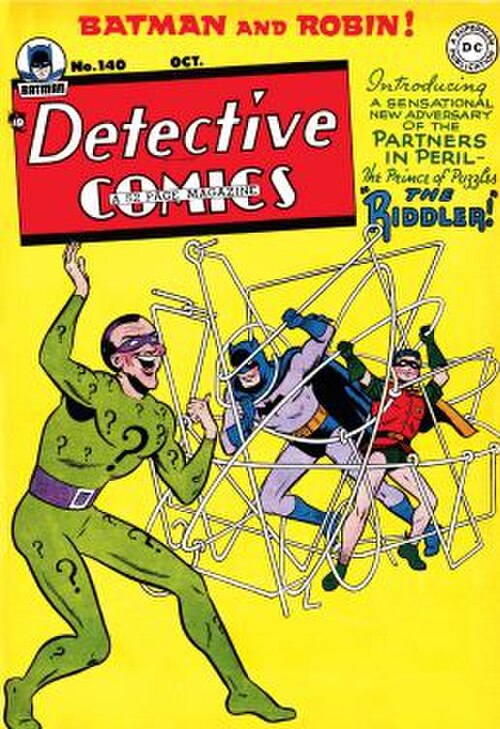
バットマンの起源は、第33号(1939年11月)の2ページのストーリーで初めて明らかにされました。[10]バットマンは、第35号(1940年1月)からこの雑誌の表紙を飾るようになりました。[11]第38号(1940年4月)では、表紙で「1940年のセンセーショナルなキャラクター発見」と宣伝され、「バットマンファミリー」を構成するいくつかのキャラクターの最初のものとなったバットマンの相棒ロビンが登場しました。[ 12]ロビンの登場とその後の本の売上増加は、すぐにファンや歴史家が「コミックブックの黄金時代」と呼ぶ時代を特徴付けるスーパーヒーローと若い相棒のトレンドにつながりました。この時代には、ペンギン(第58号)、[13]トゥーフェイス(第66号)、[14]リドラー(第140号)など、バットマンの最も有名な悪役の多くが『探偵コミックス』のページでデビューしました。[15]
バットウーマンは、ディテクティブ・コミックス#233(1956年7月)で初めて登場した。 [16]スーパーマン・フランチャイズではファミリー方式が大成功を収めていたため、編集者のジャック・シフはバットマンの共同制作者であるボブ・ケインにバットマンのファミリーを作るよう提案した。フレドリック・ワーサムによるバットマンとロビンは同性愛者であるという非難を相殺するため、最初に女性が選ばれた。[17]作家のビル・フィンガーとアーティストのシェルドン・モルドフは、#267(1959年5月)でバットマイトを、#298(1961年12月)でクレイフェイスを登場させた。 [19 ]
1964年、ジュリアス・シュワルツは衰退しつつあったバットマンのタイトルを復活させる責任を負わされた。[20]作家のジョン・ブルームとアーティストのカーマイン・インファンティーノは、エース・ザ・バサウンドやバットマイトなど、フランチャイズに忍び込んでいたばかげた側面を捨て去り、キャラクターに「新しい外観」を与え、それが探偵コミックス#327(1964年5月)で初公開された。 [21]シュワルツ、ガードナー・フォックス、インファンティーノは、ウィリアム・ドジャーがプロデュースしたテレビシリーズから、バーバラ・ゴードンをバットガールの新しいバージョンとして、#359(1967年1月)の「バットガールの百万ドルデビュー!」と題されたストーリーで紹介した。[22] マイク・フリードリヒは探偵コミックス#387(1969年5月)で、ボブ・ブラウンが描いたバットマン30周年記念ストーリーを書いた。[23]
作家のデニス・オニールとアーティストのニール・アダムスは、バットマンでの最初のコラボレーションを、第395号(1970年1月)のストーリー「待つ墓場の秘密」で行った。[24] シュワルツの指揮の下、[25] 2人は、バットマンの暗く陰気な性質を再構築し、1966-68年のABCテレビシリーズの大げさな外観と雰囲気から本を脱却させた一連の注目すべきストーリーでキャラクターを活性化させた。[26]漫画史家のレス・ダニエルズは、「オニールがバットマンを復讐心に燃える強迫性障害として解釈したことは、控えめに言ってもルーツへの回帰であり、実際には創造的想像力の行為であり、その後のダークナイトのすべてのバージョンに影響を与えた」と述べている。[27]アダムスは、作家のフランク・ロビンズと共に、探偵コミックス第400号(1970年6月)でマンバットを登場させた。[28]オニールとアーティストのボブ・ブラウンは、探偵コミックス#405(1970年11月)でバットマンと暗殺者同盟との初遭遇を描き[29]、 #411(1971年5月)でタリア・アル・グールを創作した。[30]
『Detective Comics』は連載中は月刊で発行されていたが、第435号(1973年6月 - 7月)から第445号(1975年2月 - 3月)までは隔月刊となった。このシリーズの第438号(1973年12月 - 1974年1月)から第445号(1975年2月 - 3月)までは100ページのスーパースペクタキュラー形式であった。[31]オニールとアーティストのディック・ジョルダーノは、第457号(1976年3月)に掲載されたストーリー「There Is No Hope in Crime Alley」でバットマンの脇役レスリー・トンプキンスを創作した。 [32]作家のスティーブ・エングルハートとアーティストのマーシャル・ロジャースは、Detective Comics #471-476(1977年8月-1978年4月)でバットマンのストーリーシリーズを制作し、高く評価されました。 [33]また、1989年のバットマン映画に影響を与え、1990年代のアニメシリーズに採用される決定的な解釈の1つを提供しました。[34]エングルハートとロジャースのコンビは、2009年にコミックライター兼歴史家のロバート・グリーンバーガーによって、バットマンのキャラクターを手がけた「最も優れた」クリエイティブチームの一つと評されました。[35]彼らのストーリー「笑う魚」では、ジョーカーは魚を口角を上げて傷つけるほど厚かましく、次にその魚に連邦商標が付与されることを期待しますが、天然資源に対するそのような権利を取得することは法的に不可能であると説明しようとする官僚を殺し始めます。[36] 作家のレン・ウェインとロジャースは、探偵コミックス#478(1978年7月 - 8月)でスーパーヴィランのクレイフェイスの3番目のバージョンを共同で作成しました。[37] 481号(1978年12月 - 1979年1月)から495号(1980年10月)まで、雑誌はキャンセルされたバットマンファミリーで使用された拡張ダラーコミックスフォーマットを採用し、[38]「ロビン:ティーンワンダー」、「バットガール」、「ヒューマンターゲット」 、そして街の普通の人々を特集したアンソロジー「ゴッサムシティの物語」などの単独作品を追加しました。 1964年以来、連載の大半で編集を担当していたジュリアス・シュワルツは、第484号(1979年6月 - 7月)をもってシリーズを離れた。 [20]オリジナルのキャサリン・ケインは「バットウーマン」としても知られ、第485号(1979年8月 - 9月)のトップストーリーで暗殺者連盟によって殺害された。[39]
この雑誌の500号目(1981年3月)には、テレビ脚本家のアラン・ブレナートや、パルプ・フィクションのキャラクター「シャドウ」の作品で最もよく知られているウォルター・B・ギブソンなど、いくつかの有名なクリエイターによるストーリーが掲載されました。[40] [41]また、1980年代には、メインのバットマンストーリーの連載が使用され、探偵コミックスとバットマンの物語が1冊の本から次の本に直接流れ込み、各本の月間ストーリーの最後にはクリフハンガーがあり、その月の別のタイトルで解決されました。当時は、ジェリー・コンウェイから始まり、ダグ・メンチが続き、 1人の作家が両方の本を担当しました。スーパーヴィランのキラークロックは、第523号(1983年2月)で影のカメオ出演しました。[42]著名な作家ハーラン・エリスンが第567号でバットマンのストーリーを執筆しました。[43]
ライターのマイク・W・バーとアーティストのアラン・デイヴィス、トッド・マクファーレンは、フランク・ミラーの「バットマン:イヤーワン」の続編として、ディテクティブ・コミックス#575-578で「バットマン:イヤーツー」のストーリーラインを作成した。[44]ライターのアラン・グラントとアーティストのノーム・ブレイフォグルは、最初のバットマンストーリーで腹話術師を、 3番目(#585)でラットキャッチャーを導入した。 [46]ティム・バートンのバットマンの脚本を書いたサム・ハムは、ディテクティブ・コミックス#598-600号で「ブラインド・ジャスティス」のストーリーを書いた。[47]チャック・ディクソンは、 #644号(1992年5月)からシリーズのライターになった。[48]彼とトム・ライルは、探偵コミックス#644(1992年5月)でエレクトロキューショナーを共同制作しました。 [49]また、探偵コミックス#647(1992年8月)ではステファニー・ブラウンを共同制作しました。[50]
「バットマン:レガシー」のストーリーラインは、第700号(1996年8月)から始まりました。[51] 「ノーマンズランド」のストーリーラインは、第730号から741号でディテクティブコミックスにクロスオーバーしました。ライターのグレッグ・ルッカとアーティストのショーン・マーティンブローは、第742号(2000年3月)からクリエイティブチームになり、 [52]第751号(2000年12月)でサーシャ・ボルドーのキャラクターを作成しました。 [53]第800号(2005年1月)は、アンダーセン・ガブリヒによって書かれ、ピート・ウッズによって描かれました。[54]ポール・ディーニは、第821号(2006年9月)からシリーズのライターになり、[55]第827号(2007年3月)で腹話術師の新しいバージョンを作成しました。[56] スコット・スナイダーは、第871号(2011年1月)から探偵コミックスの作家になった。 [57]
バックアップ機能
バットマンの物語に加えて、このタイトルには多数のバックアップ ストリップがありました。ジョー サイモンとジャック カービーによるボーイ コマンドーは、ディテクティブ コミックス#64 (1942 年 6 月)でデビューし、すぐに独自のタイトルにスピンオフしました。[58]ロイ レイモンド というキャラクターは、#153 (1949 年 11 月) で初めて登場しました。[59]マーシャンマンハンターは、ライターのジョセフ サマクソンとアーティストのジョー セルタによって、ディテクティブ コミックス#225 (1955 年 11 月)のバックアップ ストーリー「エルデル博士の奇妙な実験」で作成されました。 [60] #326 (1964 年 4 月) の後、マーシャン マンハンターはハウス オブ ミステリーに移動され、#327 では、ダシール ハメットのニックとノラ チャールズに似せてリメイクされたエロンゲイテッド マンとその妻が引き継ぎました。キャラクターはバットマンと 3 回クロスオーバーしました。エロンゲイテッド・マンの連載は383号(1969年1月)まで続き、572号まで15回散発的に登場した。572号では、バットマン、ロビン、スラム・ブラッドリー、シャーロック・ホームズとチームを組み、モリアーティ教授の曾孫であるエドガー・モリアーティと戦うという作品で、このタイトルの50周年を祝った。エロンゲイテッド・マンのバックアップ特集が終了した後、バットガールはその役割を424号まで務めた。彼女はバットマン・ファミリーに移動された後、481号から519号まで復帰した。ジェイソン・バードは、Detectiveの奇数号の425号から435号までバックアップ特集として登場した。[61]マンハンターは、アーチー・グッドウィンとウォルト・シモンソンによるストーリーで437号(1973年10月-11月)に復活した。[62] [63]シリーズの最終エピソードでは、マンハンターがバットマンとフルレングスのチームアップで本の先頭に移動しました。グリーンアローは、第521号(1982年12月)[64]から第567号(1986年10月)までバックアップ機能になりました。[65]ブラックキャナリーは、第554号(1985年9月)のバックアップストーリーで新しいコスチュームを受け取りました。[66] DCコミックスボーナスブックは、第589号(1988年8月)[67]と第595号(1989年1月)に収録されました。[68]
長い休止期間の後、バックアップ特集は第746号から第810号まで復活した。これらはバットマン神話の新キャラクターや既存のキャラクターをフィーチャーした、よりクローズドエンドなストーリーだった。最初は第746号から第757号の「ジャコビアン」で、続いて第758号で1号のみのバットマンストーリーが続いた。次の第759号から第762号ではスラム・ブラッドリーをフィーチャーし、2002年のキャットウーマンシリーズへの導入となった。第763号から第772号では、ゴッサム警察の刑事ジョセフィン「ジョシー・マック」マクドナルドをフィーチャーした。第773号から第775号は「ゴッサムの物語」と題され、クリスプス・アレン刑事とレニー・モントーヤ刑事をフィーチャーした。第776号から第780号の「スポア」ではバットマンが主役だった。第781号では特別なエルスワールドの物語を、第782号ではバットマンのソロストーリーをフィーチャーした。 783号では「死と乙女たち」ミニシリーズの序章が、784号ではジョシー・マックの物語が取り上げられた。「テイルズ・オブ・ゴッサム」の物語は785号から788号で「ドッグキャッチャー」で再開され、789号から794号では「仕立て屋」が取り上げられた。グリーンアローとオニキスをフィーチャーした「ポリッシュド・ストーン」は795号から796号に掲載された。リドラーとポイズン・アイビーをフィーチャーした「ロー」は797号から799号に掲載された。「テイルズ・オブ・ゴッサム」というタイトルで、ディテクティブ・コミックス800号には短いバットマンのバックアップストーリーが掲載された。次にバーカーをフィーチャーした4号(801号から805号)のストーリー「あなたが奇妙になったら」が続き、805号では「マッド」が続いた。最後のバックアップはキラークロックをフィーチャーした3号(808号から810号)のストーリーだった。これはアルフレッドに関する2号(第806号~第807号)の記事の後に発表されました。
1973年から1974年にかけて『ディテクティブ・コミックス』のバックアップとして連載された「マンハンター」シリーズは、アーチー・グッドウィンとウォルト・サイモンソンが執筆した第441号の「Cathedral Perilous」で、1974年にシャザム賞の「最優秀短編小説(ドラマティック)」を受賞した。
バットウーマン
2009年、 『バットマンRIP』と『ファイナル・クライシス』で示された出来事によるバットマン・ユニバースの再編計画の一環として、『ディテクティブ・コミックス』は3か月間休刊し、その間DCコミックスは『バトル・フォー・ザ・カウル』のミニシリーズを出版した。シリーズは復活し、(52年に)新たに再登場したバットウーマンが本の新しい主役として登場し、また、レニー・モントーヤが新しいクエスチョンとして主演する10ページのバックアップ特集が掲載された。 [69]シリーズは2010年初頭にバットマンを主役に戻した。
ニュー52
DCコミックスは、2011年9月にThe New 52と呼ばれる取り組みの一環として、Detective Comicsを第1号でリニューアルしました。[70]このシリーズは第12号までトニー・ダニエルによって書かれ、描かれ、第13号からはジョン・レイマンとジェイソン・ファボックのチームが担当しました。[71] [72]
リニューアルされた『Detective Comics』の初版は6回刷られ、リニューアルされた『Justice League』の7回刷に次ぐ売り上げとなった。[73]同シリーズの第7号はDC Comicのデジタルコミックの売り上げで6位となり、バットマン部門の他の多くのシリーズを上回った。[74] Sciencefiction.comのスコット・ウェストはシリーズの第3章に肯定的なレビューを与え、「先月の『Night of the Owls』タイアップ号が期待外れだった後、『Detective Comics』が本来あるべき場所、つまり良い探偵小説に戻ってきているのを見るのは嬉しい」と述べた。[75]リニューアルされた『Detective Comics』は2012年のスタン・リー賞で「ベストシリーズ」賞を受賞した。[76]同シリーズの最初のコレクション版は、ニューヨークタイムズのベストセラーリストで「ハードカバーグラフィックブック」部門の1位を獲得した。[77]
ダニエルは『 Night of the Owls』のクロスオーバーまでシリーズの執筆と鉛筆を担当し、その時点でエド・ベネス、フリオ・フェレイラ、エドゥアルド・パンシカが3号構成でシリーズの作画を始めた。[78] [79] 『Detective Comics』の価格は、ダニエルが執筆しシズモン・クドランスキーがイラストを担当したバットマンの悪役トゥーフェイスを主役とするバックアップ特集の追加により値上げされた。これはヒューゴ・ストレンジ教授を主役とする同様のバックアップに続くものだった。[80]ダニエルは第12号を作家として最後の号として、第0号を鉛筆担当として最後の号としてシリーズを去った。[81]
DCは2012年9月にニュー52の1周年を祝い、各オリジナルニュー52タイトルの「0」号を出版した。これはシリーズの前編として機能し、これまで説明されていなかったプロット要素を明らかにする。[82] グレッグ・ハーウィッツが「0」号を書いた。[83]ダニエルはハーウィッツに「0」号の執筆を依頼したが、これはダニエルの多忙なスケジュールのためだった。[84] [85]探偵コミックスの「ふくろうの夜」の要素をフォローアップするために、ダニエルはロマーノ・モレナーが鉛筆書き、サンドゥ・フロレアがインクを塗った探偵コミックス・アニュアル#1を書いた。 [86]
ダニエルのシリーズ執筆期間終了後、ジョン・レイマンが新ライター、ジェイソン・ファボックが新アーティストとなり[87] 、ジェームズ・タイニオン4世がバックアップ作品を執筆し、シズモン・クドランスキーがタイニオン初の長編作品のアーティストとして残った。 2013年4月3日に発売された『Detective Comics』第2巻第19号をもって、シリーズは第1巻と合わせて900号に達し、記念すべき特大号となった。レイマンの指揮下で、シリーズ初のクロスオーバー作品『Gothtopia』が刊行され、その後レイマンとファボックは『Batman Eternal』シリーズに移り、『Detective Comics』はブレイン・ブッカレトとフランシス・マナプルに引き継がれた。[88]
DCコミックスはニュー52の2周年を記念して「悪役月間」を発表し、探偵コミックスは4号発行された。これらの号にはポイズン・アイビー、ハーレイ・クイン、スケアクロウ、マンバットが主役で、作家とアーティストのアンサンブルによってそれぞれ#23.1、#23.2、#23.3、#23.4と番号が付けられた。[89]
バットマン75周年を記念した第27号は、ブラッド・メルツァーとブライアン・ヒッチ、[90] スコット・スナイダーとショーン・マーフィー、ピーター・トマージとイアン・バートラム、ジョン・レイマンとジェイソン・ファボック、グレッグ・ハーウィッツとニール・アダムス、マイク・W・バーとギエム・マーチによる新しいストーリーと、フランチェスコ・フランカビラが執筆・描いたストーリーを掲載した大判の号となった。さらに、この号の別バージョンの表紙は、グレッグ・カプロ、フランク・ミラー、クリス・バーナム、ジム・リー、ジェイソン・ファボック、トニー・ダニエルによるものであった。1ページのアートワークには、ケリー・ジョーンズ、マイク・オルレッド、パトリック・グリーソン、ジョックの作品が含まれていた。
2016年~現在

2016年2月、DCコミックスは、同社の連続性再始動であるDCリバースの一環として、 2016年6月発行の934号から『Detective Comics』が元のナンバリングシステムを再開すると発表した。 『Detective Comics』第2巻(2011年 - 2016年)の52号が『Detective Comics』第1巻(1937年 - 2011年)の元の881号に追加され、 『Detective Comics』第934号がDCリバース構想の終了後のプレミア号となった。このシリーズは月2回発行された。[91]
934号から始まったクリエイティブチームには、ライターのジェームズ・タイニオン4世とアーティストのエディ・バローズとアルバロ・マルティネスが含まれていた。[92]このシリーズでは、バットマンとバットウーマン(ケイト・ケイン)が率いるチームが取り上げられ、ゴッサムの中心部にあるベルフライと呼ばれる第2の基地を拠点に活動していた。チームのメンバーは当初、レッドロビン(ティム・ドレイク)、スポイラー(ステファニー・ブラウン)、オーファン(カサンドラ・ケイン)、クレイフェイス(ベイジル・カーロ)で、後にバットウィング(ルーク・フォックス)とアズラエル(ジャン=ポール・ヴァレー)が新メンバーとして採用された。[93] ザターナも数号でゲスト出演としてチームに短期間参加した。この現状は、2018年5月発行の第981号でタイニオンの連載が終了したことで終了しました。常任のライターがいない暫定期間中、ブライアン・エドワード・ヒルは、継続中のシリーズであるバットマン・アンド・ジ・アウトサイダーズの前身として、第983号から第987号にかけてバットマン、オーファン、シグナル、カタナ、ブラックライトニングを主役とするストーリーアーク「オン・ジ・アウトサイド」を執筆しました。次の常任ライターであるピーター・トマシは、2018年12月発行の第994号からシリーズを開始しました。トマシのライターとしての執筆は、2020年12月発行の第1033号まで2年間続きました。
2019年3月27日、DCコミックスはシリーズの1,000号をリリースしました。[94]これは、2018年のアクションコミックスに続いて歴史上2番目のマイルストーンに到達したアメリカンコミックブックとなりました。[95] [96] [97]この号はバットマン80周年と一致しており、[98]さまざまなクリエイティブチームによるいくつかのストーリーを特集したアンソロジーです。[94]
作家のマリコ・タマキは、インフィニット・フロンティアの全シリーズリニューアルの一環として、第1034号からシリーズを開始しました。 [99] 2022年4月、ラムVとラファエル・アルバカーキが第1062号から新しいクリエイティブチームを務めることが発表されました。 [100]
重要な問題
初登場
注記
- ^ 『アクション・コミックス』は『ディテクティブ』より1年遅れて創刊されたにもかかわらず、1988年から1989年にかけて42号(601号から642号)が週刊で発行され、また『ディテクティブ・コミックス』が1973年から1975年まで隔月刊だったため、合計904号とより多くの号数を獲得した。アメリカで最も多くの号数を刊行した記録保持者はデル・コミックスの『フォー・カラー』シリーズで、23年間の連載で1,300号以上を売り上げた。
- ^ Detective Comics #523(1983年2月)に影のカメオ出演があり[42]、最初の完全な登場はBatman #357(1983年3月)とされています。
全集
第1巻(1937年~2011年)
『探偵コミックス』シリーズは、数多くのトレードペーパーバックやハードカバーのコレクションにまとめられています。
バットマン アーカイブ エディション
すべてのDC アーカイブ エディションはハードカバーのみで、高品質のアーカイブ用紙に印刷されています。
バットマン クロニクルズ
バットマン クロニクルシリーズでは、バットマンの冒険のすべてをカラーで年代順に、手頃な価格のトレード ペーパーバックで再版する予定です。これは、すでに終了した同名のシリーズとは混同しないでください。
ショーケースプレゼント
Showcase Presentsコレクションはすべて、大判 (500 ページ以上) で、ソフトカバー、白黒のみの再版です。
セレブレーションハードカバー
2014年からDCはキャラクター回顧アンソロジーのリリースを開始し、その中には探偵コミックスの号もいくつか含まれている。
バットマンの物語/ダークナイトの伝説
これらのハードカバーの本は、特定のクリエイターによる号を再版したもので、Detective Comicsの多くの号や、その他のバットマンのタイトルが収録されています。
その他のエディション
これらの他の版の多くは、 『Detective Comics』以外のタイトルのコミックを収録したアンソロジーです。ここでのタイトルは、可能な限り年代順に表示されます。
New 52では、DC コミックスの全シリーズがトレード ペーパーバック形式で完全に収集されました。特に、Detective Comics vol. 2 のコレクションは最初にハードカバー版で出版され、ペーパーバック版は次のハードカバー版のリリースまで延期されました。
Material from Detective Comics vol. 2 was also included in several collections of crossover events, each printed in both hardcover and softcover. In each case, the material consisted of tie-ins to the main event.
DC Rebirth to present
Volumes 1–5 were published with DC Rebirth trade dress on the cover. This was dropped from volume 6 onwards, coinciding with the end of "DC Rebirth" branding on the series from issue #970 onwards.
Numbering on the collected editions was restarted from volume 1 with the start of Peter Tomasi's run as writer in issue #994. The first three volumes were published in hardcover editions first, before being reprinted in paperback.
Millennium Editions
In 2000 and 2001, DC reprinted several of its most notable issues in the Millennium Edition series. Seven issues of Detective Comics were reprinted in this format.[101]
References
- ^ "Detective Comics recognized by Guinness World Records as longest-running comic book periodical". DC Comics. July 25, 2009. Archived from the original on July 24, 2012. Retrieved April 22, 2012.
DC Comics President and Publisher Paul Levitz accepted an award on behalf of DC from the Guinness World Records, recognizing Detective Comics as the longest-running comic book periodical in the United States of America.
- ^ Wallace, Daniel; Dolan, Hannah (2010). "1930s". DC Comics Year By Year A Visual Chronicle. London, United Kingdom: Dorling Kindersley. p. 17. ISBN 978-0-7566-6742-9.
The launch of Detective Comics defined [Malcolm] Wheeler-Nicholson's young comics company and set it on an ascendant path within the industry...His smart business decision to partner with businessmen Harry Donenfeld and Jack Liebowitz on Detective Comics guaranteed that his company's third title would at least be solvent.
- ^ Wallace "1930s" in Dolan, p. 21: "Alongside more typical fare...came the debut of the Crimson Avenger, the first masked crime fighter in comics."
- ^ Cronin, Brian (June 13, 2016). "The 25 Most Important "Detective Comics" Issues Ever Published". CBR.
Released over two years before Batman's debut, this issue (marred by its grotesquely racist cover) [...]
- ^ Funk, Matthew (March 2, 2017). "Before Batman: looking back at Detective Comics #1 80 years later". SYFY WIRE. Archived from the original on January 6, 2019. Retrieved January 5, 2019.
Hindsight is 20/20, [...] and being published in 1937, there's a fair bit of racism and xenophobia as is clearly shown by the cover.
- ^ Dong, Lan (2011). "Reimagining the Monkey King in Comics: Gene Luen Yang's American Born Chinese". The Oxford handbook of children's literature. Oxford University Press. pp. 241 & 248. ISBN 978-0-19-537978-5.
- ^ McCool, Ben (August 19, 2015). "Exploring The Forgotten Back-Up Stories In Batman, Superman And Spider-Man's First Appearances". Tech Times.
Prior to Batman's arrival, stars of the book included [...] Ching Lung (a "yellow peril" villain...and yes, it's every bit as racist/cringeworthy as it sounds)
- ^ Wallace "1930s" in Dolan, p. 24: "DC's second superstar debuted in the lead story of this issue, written by Bill Finger and drawn by Bob Kane, though the character was missing many of the elements that would make him a legend."
- ^ Cavna, Michael (February 27, 2010). "Batman, Superman comic books set records for sale price". The Washington Post. Archived from the original on November 12, 2012. Retrieved September 14, 2016.
- ^ Wallace "1930s" in Dolan, p. 25: "In November's Detective Comics #33, a two-page story titled 'The Batman and How He Came to Be' recounted the Dark Knight's tragic and driven origin."
- ^ Desris, Joe (1994). "Cops, Crooks, and Creeps". The Golden Age of Batman The Greatest Covers of Detective Comics From the '30s to the '50s. New York, New York: Artabras. p. 11. ISBN 0896600467.
Gotham City's most famous detective ultimately usurped the coveted cover position with issue 35.
- ^ Wallace "1940s" in Dolan, p. 31: "Writer Bill Finger and artist Bob Kane justified any hyperbole in this issue, for with the introduction of Robin, Batman's world changed forever."
- ^ Wallace "1940s" in Dolan, p. 37: "One of Batman's most peculiar foes first appeared in this issue, and naturally he brought his trademark umbrella with him. The Penguin was a squat dandy with a beaked nose and a tuxedo."
- ^ Wallace "1940s" in Dolan, p. 41: "The nightmarish Two-Face debuted as Batman's antagonist in this story by writer Bill Finger and artist Bob Kane."
- ^ Wallace, Daniel "1940s" in Dolan, p. 59: "The Riddler debuted as a perplexing foe of Batman in a story by writer Bill Finger and artist Dick Sprang."
- ^ Irvine, Alex "1950s" in Dolan, p. 80: "In the story 'The Batwoman' by writer Edmond Hamilton and penciller Sheldon Moldoff (as Bob Kane), Bruce Wayne took notice of a young admirer who...was fighting crime while wearing a bat-costume."
- ^ Daniels, Les (2004). Batman: The Complete History. San Francisco, California: Chronicle Books. ISBN 0-8118-4232-0.
- ^ Irvine "1950s" in Dolan, p. 94: "The impish Bat-Mite made his first appearance in Detective Comics #267, care of writer Bill Finger and artist Sheldon Moldoff."
- ^ McAvennie, Michael "1960s" in Dolan, p. 103: "Scribe Bill Finger and artist Sheldon Moldoff reshaped the face of evil with the second – and perhaps most recognized – Clayface ever to challenge the Dark Knight."
- ^ a b "Julius Schwartz' run on Detective Comics". Grand Comics Database.
- ^ McAvennie "1960s" in Dolan, p. 110: "The Dark Knight received a much-needed facelift from new Batman editor Julius Schwartz, writer John Broome, and artist Carmine Infantino. With sales at an all-time low and threatening the cancelation of one of DC's flagship titles, their overhaul was a lifesaving success for DC and its beloved Batman."
- ^ McAvennie "1960s" in Dolan, p. 122 "Nine months before making her debut on Batman, a new Batgirl appeared in the pages of Detective Comics...Yet the idea for the debut of Barbara Gordon, according to editor Julius Schwartz, was attributed to the television series executives' desire to have a character that would appeal to a female audience and for this character to originate in the comics. Hence, writer Gardner Fox and artist Carmine Infantino collaborated on 'The Million Dollar Debut of Batgirl!'"
- ^ Forbeck, Matt; Dougall, Alastair (2014). "1960s". Batman: A Visual History. London, United Kingdom: Dorling Kindersley. p. 101. ISBN 978-1465424563.
The main story, written by Mike Friedrich and drawn by Bob Brown, celebrated Batman's 30th anniversary by updating the first Batman story [from Detective Comics #27].
- ^ McAvennie "1970s" in Dolan, p. 143: "Artist Neal Adams and writer Denny O'Neil rescued Batman from the cozy, campy cul-de-sac he had been consigned to in the 1960s and returned the Dark Knight to his roots as a haunted crime fighter. The cover of their first collaboration, "The Secret of the Waiting Graves", was typical of Adams' edgy, spooky style."
- ^ Greenberger, Robert; Manning, Matthew K. (2009). The Batman Vault: A Museum-in-a-Book with Rare Collectibles from the Batcave. Philadelphia, Pennsylvania: Running Press. p. 26. ISBN 978-0-7624-3663-7.
Editor Julius Schwartz had decided to darken the character's world to further distance him from the camp environment created by the 1966 ABC show. Bringing in the talented O'Neil as well as the innovative Frank Robbins and showcasing the art of rising star Neal Adams...Schwartz pointed Batman in a new and darker direction, a path the character still continues on to this day.
- ^ Goulart, Ron, Ron Goulart's Great History of Comic Books (Contemporary Books, Chicago, 1986) ISBN 978-0-8092-5045-5, p. 297
- ^ Daniels, Les (1995). "Revamping the Classics The Old Guard Gets a New Look". DC Comics: Sixty Years of the World's Favorite Comic Book Heroes. New York, New York: Bulfinch Press. p. 157. ISBN 0821220764.
- ^ Greenberger and Manning, p. 177 "Adams helped darken Gotham City in the 1970s [and] the scene was set for a new host of major villains. One of the first was Man-Bat, who debuted in the pages of 1970's Detective Comics #400."
- ^ Manning, Matthew K. "1970s" in Dougall, p. 109: "Batman had his first brush with the mysterious League of Assassins in this issue written by Dennis O'Neil and illustrated by Bob Brown."
- ^ McAvennie "1970s" in Dolan, p. 145 "Before Batman first encountered one of his greatest adversaries, Ra's al Ghul, he met his daughter, the lovely but lethal Talia [in a story by] writer Denny O'Neil and artist Bob Brown."
- ^ Eury, Michael (July 2015). "A Look at DC's Super Specs". Back Issue! (#81). Raleigh, North Carolina: TwoMorrows Publishing: 23–24.
- ^ Greenberger and Manning, p. 30: "It was Dick Giordano who, among many other similar feats, drew the March 1976 fan-favorite issue #457 of Detective Comics to illustrate the fabled Denny O'Neil yarn 'There is No Hope in Crime Alley'."
- ^ McAvennie "1970s" in Dolan, p. 174: "...first-time collaborators Steve Englehart and artist Marshall Rogers firmly entrenched Batman in his dark, pulp roots."
- ^ "Batman Artist Rogers is Dead". SciFi Wire, Syfy.com. March 28, 2007. Archived from the original on July 9, 2007.
Even though their Batman run was only six issues, the three laid the foundation for later Batman comics. Their stories include the classic 'Laughing Fish' (in which the Joker's face appeared on fish); they were adapted for Batman: The Animated Series in the 1990s. Earlier drafts of the 1989 Batman movie with Michael Keaton as the Dark Knight were based heavily on their work.
- ^ Greenberger and Manning, p. 27: "Batman was now a true creature of the night, and every artist and writer team worth their creative salt wanted a piece of him. One of the greatest of such pairs consisted of writer Steve Englehart and artist Marshall Rogers...when Rogers joined Englehart in Detective Comics issue #471 (August 1977), their styles meshed with such ease that the result gave the impression of years' worth of collaboration."
- ^ Greenberger and Manning, p. 163: "In this fondly remembered tale that was later adapted into an episode of the 1990s cartoon Batman: The Animated Series, the Joker poisoned the harbors of Gotham so that the fish would all bear his signature grin, a look the Joker then tried to trademark in order to collect royalties."
- ^ McAvennie "1970s" in Dolan, p. 179: "Writer Len Wein and artist Marshall Rogers vividly depicted Batman's battle with a third Clayface."
- ^ Romero, Max (July 2012). "I'll Buy That For a Dollar! DC Comics' Dollar Comics". Back Issue! (#57). Raleigh, North Carolina: TwoMorrows Publishing: 39–41.
- ^ McAvennie "1970s" in Dolan, p. 183: "September's Detective Comics #485 featured...the League of Assassins' murder of Kathy (Batwoman) Kane [an event] that sent Batman out for revenge in a story by scripter Denny O'Neil and artist Don Newton."
- ^ Manning, Matthew K. "1980s" in Dolan, p. 193: "The comic responsible for DC's name reached its 500th issue with the help of a variety of talented comic book icons...In a dimension-spanning story by writer Alan Brennert and fan-favorite artist Dick Giordano, Batman traveled to an alternate Earth to save the parents of a young Bruce Wayne...Writer of pulp icon the Shadow, Walter Gibson, spun a prose story of the Dark Knight, illustrated by Tom Yeates."
- ^ Greenberger, Robert (December 2013). "Memories of Detective Comics #500". Back Issue! (#69). Raleigh, North Carolina: TwoMorrows Publishing: 54–57.
- ^ a b Manning "1980s" in Dolan, p. 200: "Killer Croc made his mysterious debut in the pages of Detective Comics #523, written by Gerry Conway, with art by Gene Colan...Croc would soon become a major player in Gotham's underworld."
- ^ Ellison, Harlan (w), Colan, Gene (p), Smith, Bob (i). "The Night of Thanks, But No Thanks!" Detective Comics, no. 567 (October 1986).
- ^ Manning "1980s" in Dolan, p. 229: "In 'Year Two', a four-part sequel [to "Batman: Year One"] set in Batman's second year as a crime fighter, writer Mike W. Barr and artists Alan Davis and Todd McFarlane challenged the Caped Crusader with the threat of the Reaper."
- ^ Manning "1980s" in Dolan, p. 235: "In February [1988], the Batman crossed paths with Scarface and the Ventriloquist in Detective Comics #583 by writer John Wagner and Alan Grant and artist Norm Breyfogle."
- ^ Manning "1980s" in Dougall, p. 171: "Writers John Wagner and Alan Grant and artist Norm Breyfogle introduced the Ratcatcher in this two-part story."
- ^ Greenberger and Manning, p. 41: "In the pages of Detective Comics, Batman screenwriter Sam Hamm took advantage of that year's ongoing writers' strike to write a three-issue story entitled "Blind Justice", which culminated in that title's 600th issue."
- ^ Manning "1990s" in Dougall, p. 195: "Chuck Dixon became the new writer on Detective Comics, starting with this issue with the help of the pencils of Tom Lyle and the inks of Scott Hanna."
- ^ Manning "1990s" in Dougall, p. 195
- ^ Manning "1990s" in Dougall, p. 196
- ^ Manning "1990s" in Dolan, p. 274: "['Legacy'] kicked into full speed in the anniversary issue of Detective Comics (#700), which came with a unique envelope wrapping."
- ^ Manning "2000s" in Dougall, p. 246: "Greg Rucka was handed the reins of Detective Comics, alongside artist Shawn Martinbrough...To visually distinguish the title from other Batman books, Martinbrough employed a minimal color palette, using shades of only one or two colors per issue."
- ^ Manning "2000s" in Dougall, p. 252: "Greg Rucka and artist Shawn Martinbrough debuted a major new character and love interest into the life of Batman: Sasha Bordeaux."
- ^ Cowsill, Alan "2000s" in Dolan, p. 318: "Detective Comics ' 800th issue was extra large to celebrate the comic's anniversary and set up a new direction for the Dark Knight...Scripted by Andersen Gabrych and pencilled by Pet Woods, the issue took Batman back to basics."
- ^ Manning "2000s" in Dougall, p. 290: "Paul Dini came aboard Detective Comics as its new ongoing writer as of this issue."
- ^ Manning "2000s" in Dougall, p. 293: "Paul Dini and artist Don Kramer introduced a new Ventriloquist in this self-contained issue."
- ^ Phegley, Kiel (July 14, 2012). "Snyder Goes Exclusive With Detective Comics". Comic Book Resources. Archived from the original on July 18, 2010. Retrieved April 1, 2012.
- ^ Wallace "1940s" in Dolan, p. 41: "The inaugural issue of Boy Commandos represented Joe Simon and Jack Kirby's first original title since they started at DC though the characters had debuted earlier that year in Detective Comics #64."
- ^ Wallace "1940s" in Dolan, p. 61: "Television was a new medium in 1949, and this issue saw the debut of Roy Raymond, adventurer and star of the fictional TV program 'Impossible _ But True!'"
- ^ Irvine "1950s" in Dolan, p. 77: "The Martian called J'onn J'onzz debuted as a regular feature in Detective Comics #225. 'The Strange Experiment of Dr. Erdel', by writer Joe Samachson and artist Joe Certa, gave the origin for the lonely Martian Manhunter."
- ^ Wells, John (May 2013). "The Master Crime-File of Jason Bard". Back Issue! (#64). Raleigh, North Carolina: TwoMorrows Publishing: 39–43.
- ^ McAvennie "1970s" in Dolan, p. 157: "Together with exciting new artist Walt Simonson, [Archie] Goodwin executed seven flawless tales that chronicled Paul Kirk's hunt for the world's deadliest game...Manhunter's award-winning revival earned undying acclaim for its talented storytellers."
- ^ Boney, Alex (May 2013). "Hunting the Hunters: Manhunter and the Most Dangerous Game". Back Issue! (#64). Raleigh, North Carolina: TwoMorrows Publishing: 44–50.
- ^ Manning "1980s" in Dolan, p. 199: "Green Arrow netted the coveted position as backup story to the Dark Knight's adventures in Detective Comics. Written by Joey Cavalieri, with art by Trevor Von Eeden, the new feature saw Star City's renowned archer renew his war on crime."
- ^ Kingman, Jim (May 2013). "The Ballad of Ollie and Dinah". Back Issue! (#64). Raleigh, North Carolina: TwoMorrows Publishing: 10–21.
- ^ Manning "1980s" in Dolan, p. 214: "Dinah Lance adopted a new costume tailor-made for the 1980s in the pages of this issue's 'Green Arrow' back-up feature."
- ^ Detective Comics #589 at the Grand Comics Database
- ^ Detective Comics #595 at the Grand Comics Database
- ^ "Batwoman takes over Detective". ICv2. February 9, 2009. Archived from the original on September 27, 2012. Retrieved April 21, 2012.
- ^ Manning "2010s" in Dougall, p. 319: "For the first time, Batman starred in a first issue of Detective Comics as the title was restarted to reflect the revised continuity of DC Comics' New 52 universe."
- ^ Khouri, Andy (June 6, 2011). "Batman Relaunch: New #1s for Batgirl, Batman, Detective, Catwoman, Birds of Prey". ComicsAlliance. Archived from the original on May 17, 2012. Retrieved April 21, 2012.
- ^ Truitt, Brian (September 5, 2011). "Tony Daniel makes history with Detective Comics No. 1". USA Today. Archived from the original on June 29, 2012. Retrieved April 21, 2012.
- ^ West, Scott (February 28, 2012). "Holy Sales, Batman! Action Comics, Batman, Batman: The Dark Knight, and Detective Comics #1s Getting Reprints". ScienceFiction.com. Archived from the original on April 15, 2012. Retrieved April 15, 2012.
- ^ Phegley, Kiel (April 6, 2012). "Exclusive: DC Execs On Sales In Digital, Print & New 52 Wave Two". Comic Book Resources. Archived from the original on April 10, 2012. Retrieved April 15, 2012.
- ^ West, Scott (June 10, 2012). "Comic Book Review: Detective Comics #10". Sciencefiction.com. Archived from the original on November 20, 2014.
- ^ Langshaw, Mark (May 19, 2012). "Detective Comics, Batman: Arkham City win Stan Lee Awards". Digital Spy. Archived from the original on June 24, 2012. Retrieved June 10, 2012.
- ^ "Best Sellers Hardcover Graphic Books". The New York Times Best Seller list. July 1, 2012. Archived from the original on June 28, 2012. Retrieved July 2, 2012.
- ^ Kushins, Josh (March 8, 2012). "Guest Artists Join Batwoman and Detective Comics". DC Comics. Archived from the original on May 12, 2012. Retrieved April 21, 2012.
- ^ "Exclusive DC Sneak Peek: Detective Comics #11". Newsarama. June 29, 2012. Archived from the original on July 4, 2012. Retrieved July 2, 2012.
- ^ "DC Announces Detective Comics Two-Face Back-Up Feature". Newsarama. January 10, 2012. Archived from the original on May 17, 2012. Retrieved April 21, 2012.
- ^ Zechs (June 29, 2012). "Tony Daniel Off Detective Comics". Theouthousers.com. Archived from the original on July 2, 2012. Retrieved July 2, 2012.
- ^ Johnston, Rich (April 19, 2012). "DC Comics To Launch Zero Issues For The New 52 In September". BleedingCool.com. Archived from the original on April 21, 2012. Retrieved April 21, 2012.
I understand that for one month all the original new 52 books will be numbered #0 instead of being #13. And that their #13s will run in October instead.
- ^ "DC's September 2012 Solicits Preview: Batman". Newsarama. June 11, 2012. Archived from the original on June 15, 2012. Retrieved June 12, 2012.
- ^ Rogers, Vaneta (June 26, 2012). "Origin, Early Years Expanded In Detective, Dark Knight #0's". Newsarama. Archived from the original on June 29, 2012. Retrieved July 2, 2012.
Tony was so busy on so many different fronts that we thought it could be really fun for us to collaborate, with him handling the art and me handling the story on this one. And so we just jumped in.
- ^ "Several 'Zero Month' Creative Changes One-Time Confirms DC". Newsarama. June 12, 2012. Archived from the original on September 13, 2014. Retrieved June 12, 2012.
- ^ Nagorski, Alex (May 7, 2012). "Announcing Detective Comics Annual #1". DC Comics. Archived from the original on May 17, 2012. Retrieved May 12, 2012.
- ^ Nagorski, Alex (July 5, 2012). "Announcing a New Writer and Artist for Detective Comics". DC Comics. Archived from the original on August 15, 2012. Retrieved August 19, 2012.
- ^ Rogers, Vaneta (November 6, 2013). "New Detective Comics Creative Team Bring Unique Visual Style to Batman". Newsarama. Archived from the original on December 12, 2013. Retrieved December 8, 2013.
- ^ Hunsaker, Andy (June 3, 2013). "Exclusive: DC's Detective Comics Group Solicits for Villains Month". CraveOnline. Archived from the original on June 10, 2013. Retrieved July 7, 2013.
- ^ Rogers, Vaneta (January 6, 2014). "Brad Meltzer Honors, Modernizes Batman's First Appearance in Detective Comics #27". Newsarama.com. Archived from the original on May 21, 2014.
Perhaps the most daunting task was given to Brad Meltzer and Bryan Hitch, who have created what DC is calling a 'modern-day retelling' of the first Batman story – the one in the original Detective Comics #27.
- ^ White, Brett (February 18, 2016). "Action, Detective Comics Return To Original Numbering For Rebirth". CBR.com. Archived from the original on March 3, 2017.
Action Comics numbering will pick up with #957 and Detective will be at #934. Both series will be released on twice-monthly schedule, at a $2.99 price.
- ^ Marston, George (March 26, 2016). "DC Comics Rebirth Recap – Creative Teams, Schedule & a Few New Details". Newsarama. Archived from the original on October 11, 2016. Retrieved March 28, 2016.
- ^ Detective Comics #944 DC Comics (Burbank, California).
- ^ a b Jackson, Matthew (February 15, 2019). "COMICS: DETECTIVE COMICS #1000 FULL LINEUP REVEALED, BATMAN AND TMNT TEAM UP AGAIN, MARVEL LAUNCHES AVENGERS: NO ROAD HOME". SyFy Wire. Archived from the original on April 11, 2019. Retrieved April 11, 2019.
- ^ Lawson, Corrina (April 25, 2018). "DC Comics Milestone #1000 Issues Are Missing Representation". Geek Mom. Archived from the original on April 11, 2019. Retrieved April 11, 2019.
- ^ Pollack, Sarabeth (March 2019). "Detective Comics #1000 will be ultimate issue for Batman fans". FanSided. Archived from the original on April 11, 2019. Retrieved April 11, 2019.
- ^ Sava, Oliver (April 25, 2018). "Action Comics #1000 is a powerful tribute to Superman's enduring legacy". The A.V. Club. Archived from the original on April 11, 2019. Retrieved April 11, 2019.
- ^ Spry, Jeff (February 19, 2019). "EXCLUSIVE REVEAL: ALEX ROSS SALUTES BATMAN'S 80TH BIRTHDAY WITH TWO DETECTIVE COMICS #1000 COVERS". SyFy Wire. Archived from the original on April 11, 2019. Retrieved April 11, 2019.
- ^ "Mariko Tamaki". DC. September 19, 2016. Retrieved February 17, 2023.
- ^ "Ram V and Rafael Albuquerque Take the Stage in Detective Comics". DC. April 13, 2022. Retrieved May 16, 2022.
- ^ Millennium Edition: Detective Comics at the Grand Comics Database
Further reading
- Jones, Gerard (2004). Men of Tomorrow: Geeks, Gangsters, and the Birth of the Comic Book. New York, New York: Basic Books. ISBN 0-465-03657-0.
External links
- Detective Comics at DC Comics official site
- Detective Comics at the Grand Comics Database
- Detective Comics at the Comic Book DB (archived from the original)