
Loading article…
2010年10月29日、それぞれ300 ~400グラム(11~14オンス)のプラスチック爆薬と起爆装置からなる爆弾が入った2つの小包が、別々の貨物機で発見された。爆弾はサウジアラビアの治安責任者から得た情報に基づいて発見された。爆弾はイエメンから米国へ輸送中で、経由地で発見された。1つは英国のイースト・ミッドランズ空港、もう1つはアラブ首長国連邦のドバイである。
1週間後、アラビア半島のアルカイダ(AQAP)は爆破計画と9月3日のUPS航空6便墜落の犯行声明を出した。[ 1 ] UPS航空6便墜落は後に爆破計画とは無関係の技術的な問題であることが確認されたが、アメリカとイギリスの当局は、10月の爆破未遂事件の背後にはAQAPのアンワル・アル・アウラキがおり、爆弾はAQAPの主任爆発物専門家イブラヒム・ハッサン・アル・アシリによって製造された可能性が高いと考えていた。[ 2 ] [ 3 ]爆弾はおそらく飛行中に爆発するように設計されており、シカゴまたは他のアメリカの都市上空で両方の飛行機を破壊する意図があった。[ 4 ] [ 5 ]それぞれの爆弾は発見された時点で既に旅客機と貨物機で輸送されていた。

10月28日、サウジアラビアのテロ対策担当内務副大臣ムハンマド・ビン・ナーイフ王子は、米国国家安全保障担当副補佐官(国土安全保障・テロ対策担当)で元中央情報局リヤド支局長のジョン・ブレナンに電話をかけ、陰謀を警告した。[ 6 ]サウジアラビアは米国とドイツに荷物の追跡番号と宛先を伝え、トナーカートリッジを探すよう指示した。[ 7 ] [ 8 ]荷物は10月27日にイエメンのサナアにあるフェデックスとUPSの営業所に女性によって預けられ、11月1日にシカゴに到着する予定だった。[ 8 ] [ 9 ]
Saudi Arabia had reportedly learned of the plot through Jabir Jubran Al Fayfi, a former Guantánamo Bay detention camp inmate who had been remanded to Saudi Arabia for rehabilitation in 2006. Al-Faifi had escaped in 2008 and rejoined AQAP, but surrendered to Saudi authorities on October 16, 2010, and provided them with information about the plot.[10][11] Yemeni officials suspected that al-Faifi had not actually rejoined al-Qaeda but had become a double agent.[11] They said that his tip appeared to be based on more recent information than al-Faifi could access, and that the information must have come from a Saudi double agent in AQAP.[12]
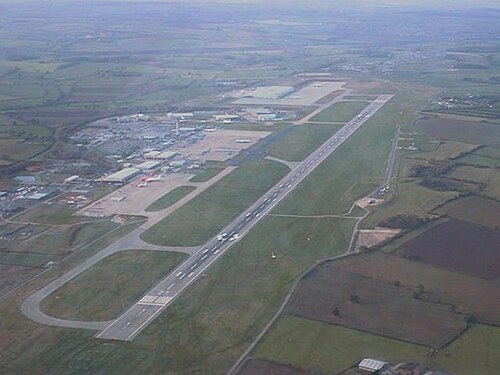
The first package left Sana'a, Yemen, on a passenger plane, flying to Dubai, United Arab Emirates.[13] It then was next placed on a UPS cargo plane to Cologne/Bonn Airport in Germany, where UPS Airlines has a hub.[13][14] There, it was placed on UPS Flight 232, a Boeing 767 cargo plane bound for East Midlands Airport in Leicestershire.[15][16] From there, it was to fly to O'Hare International Airport in Chicago via Philadelphia, Pennsylvania.[3][15][17]
The UPS plane landed at East Midlands Airport at 2:13 a.m. local time on October 29.[18] British military and police explosives experts had been alerted to the existence of the bomb, and conducted an initial search of the plane's cargo in the airport's UPS parcels distribution depot.[19] Officers from Scotland Yard Counter Terrorism Command joined them.[20]
U.S. authorities provided the tracking number of the package, and the computer printer inside was scanned with explosives detection equipment, x-rayed, subjected to chemical swabs, and sniffed by sniffer dogs. No explosives were detected.[21][22] Removing the suspect package for further examination, the authorities allowed the UPS plane to proceed to Philadelphia at 4:20 a.m. local time.[18][23] At 10:00 a.m. the British gave the all-clear, and removed safety cordons from the airport.[9][24][25]
Later forensic examination indicated that the bomb was inadvertently disarmed by Scotland Yard explosive officers, who took the printer cartridge out of the printer during their examination that morning, around three hours before the bomb was due to explode at 10:30 a.m. (5:30 a.m. Eastern time).[18][19][26] The officers were unaware when they took the device apart that it was a bomb.[20]
British officials continued to believe that there were no explosives in the package,[18] but U.S. authorities insisted that the package be inspected again. British authorities then consulted with officials in Dubai, who had discovered a similar bomb in a printer cartridge, and MI6 spoke with the Saudi tipster. Scotland Yard explosives officers flew the printer and the cartridge in a police helicopter to the Defence Science and Technology Laboratory at Fort Halstead near London, and discovered the bomb at around 2:00 p.m.[18][20][23]

Qatar Airways said that the package with the second bomb had been carried on two of its commercial passenger jets. The first was a 144-seat Airbus A320 that flew from Sana'a, Yemen, to Doha International Airport in Doha, Qatar, on October 28.[9] The second passenger plane was an Airbus A321 or Boeing 777 flying from Doha to Dubai. The seating capacity of the second plane was anywhere from 144 to 335, depending on which aircraft was used.[14][22][27]
The second package was discovered on a FedEx Express plane at the FedEx depot at the Dubai airport at around 9:00 a.m. GMT on October 29.[28] The plane was scheduled to fly to Newark Liberty International Airport in Newark, New Jersey, and then on to O'Hare International Airport in Chicago.[29][30]
The packages were addressed to former locations of two synagogues in Chicago. Investigators believe the terrorists used outdated information that they found online.[31] One package was addressed to a church in Lakeview that had once been the meeting place of Congregation Or Chadash, and the other had been sent to a closed synagogue in East Rogers Park.[2][31][32]Simon Calder observed in The Independent:
Yemen is not a natural provider of office supplies to organisations such as synagogues in the Chicago area. Therefore, you might fondly imagine that the staff in the parcels offices in the capital, Sana'a, might have checked the despatches more closely before allowing them anywhere near an aircraft, cargo or passengers. But they didn't.[33]
The packages were addressed to specific people at the addresses—the names used were those of historical figures from the Spanish Inquisition and the Crusades.[2][34] One package was addressed to Diego Deza, a Grand Inquisitor during the Spanish Inquisition. The other was addressed to Reynald Krak (Raynald of Châtillon), a French crusader who was beheaded in 1187 by Sultan Saladin of the 12th-century Muslim Ayyubid dynasty.[34]
Brian Fishman of the New America Foundation said the choice of names was an inside joke.[34] "The jihadis ... narrative is that non-Muslims are always on the attack, always trying to take Muslim lands. The jihadis like the narrative, because it justifies violence, since they claim that they’re only defending Islam," he said.[34] He felt the destination of Chicago may have had meaning as well, as the latest edition of Inspire (AQAP's online magazine) may have had a photo of Chicago on its cover.[34][35] Fishman points out that this parallels Osama bin Laden posing in front of a map of East Africa shortly before the 1998 United States embassy bombings.[34] U.S. and UK officials believed the planes, and not the addresses on the ground, were the targets.[36]

各パッケージには、HP LaserJet P2055 デスクトップレーザープリンターが入っていた。各プリンターのトナーカートリッジの中には、高度な爆弾が仕掛けられていた。[ 37 ] [ 38 ]カートリッジにはペンタエリスリトールテトラニトラート(PETN) が充填されていた。[ 29 ] [ 37 ] [ 38 ]英国で発見された爆弾には400 グラム (14オンス)の PETN が含まれており、これは家を破壊するのに必要な量の 5 倍である。[ 37 ]ドバイで発見された爆弾には300 グラム (11オンス)の PETN が含まれていた。[ 37 ]ユニバーシティ・カレッジ・ロンドンの安全工学教授であるハンス・ミヒェルス氏は、使用された量の約 2% にあたるわずか 6グラム (0.2オンス) の PETN で、航空機の外板の 2 倍の厚さの金属板に穴を開けるのに十分であると述べた。[ 39 ]英国の犯罪捜査官によると、PETN は「極めて高濃度」であった。ドイツの捜査官は、この装置の製造には「国家施設のみがアクセスできるはずの物流」が必要だと考えた。[ 40 ]
ドバイで押収された荷物は、お土産、衣類、コンパクトディスク、英語で書かれた数冊の本も入った段ボール箱で発送された。[ 37 ] [ 38 ] [ 41 ]
英国で発見された爆弾はケント州フォート・ハルステッドの国防科学技術研究所に送られ[ 25 ]、アラブ首長国連邦のアメリカ人技術者がもう1つの爆弾を調査した[ 42 ] 。
各爆弾は携帯電話のアラームによって作動し、電話のバッテリーが作動して、強力な化学起爆剤であるアジ化鉛5グラム(0.18オンス)を含む注射器内の細いワイヤーフィラメントに電力が送られる仕組みになっていた。[ 29 ] [ 40 ] [ 43 ]熱せられたアジ化鉛が発火し、PETNが爆発する。[ 44 ] [ 45 ] [ 46 ]デバイスの配線は、X線検査を受けた場合、プリンターのすべての部品が正しく見えるように設定されていた。[ 43 ]ディスプレイなど、アラームタイマー機能に関係のない機能は、バッテリー寿命を延ばすために取り外されていた。[ 45 ]このデバイスには、 Bird D736携帯電話に似たマークが付けられていたと報告されている。[ 47 ] [ 48 ]
当初は、電話やテキストメッセージの受信によって爆弾が爆発するのではないかという憶測があったが、通話を受信するために必要なSIMカードが取り外されていたため、電話は通信を受信できなくなっていたが、バッテリー寿命は延びていた。[ 37 ] [ 45 ] [ 49 ]米当局は、爆弾は飛行機が着陸する直前に爆発するように設定されていたと述べた。[ 9 ] [ 45 ]
イギリスのデービッド・キャメロン首相とアメリカの当局者は、爆弾は飛行機が飛行中に爆発し、空中で飛行機を破壊するように設計されていたと考えている。[ 43 ]イギリスの内務大臣テリーザ・メイは、イギリスの調査官は、イギリスの装置は飛行機を撃墜するのに十分な威力を持つ機能的な爆弾であり、「超音速爆発」を引き起こしたと結論付けたと述べた。[ 6 ] [ 40 ]ブレナンはこの評価に同意した。
ブレナン氏は、爆破を試みた者たちが、荷物が貨物機か旅客機のどちらで運ばれるかを知っていたかどうかは不明だと述べた。[ 43 ]イエメンには定期貨物便がないため、犯人たちは爆弾が旅客機に積まれることを知っていた可能性が高い。[ 13 ]米国に到着する航空貨物のほとんどは旅客機で運ばれる。[ 50 ]
Like many explosives, PETN has a low vapor pressure. This makes it difficult to detect, because the chemical releases little vapor into the surrounding air.[38] Frank Cilluffo, the director of the Homeland Security Policy Institute at George Washington University, said: "It is evident that had we not had the intelligence, our security countermeasures would not have identified these improvised explosive devices."[51] Qatar Airways said that "the explosives discovered were of a sophisticated nature whereby they could not be detected by x-ray screening or trained sniffer dogs", and were only discovered after intelligence services received a tip.[27]
Both packages were x-rayed in Sana'a, and the one in Dubai was x-rayed there, without the bombs being spotted.[8] A spokesman for the German Federal Criminal Police Office, where the Dubai x-rays were reviewed, stated they would not have detected the bomb.[8] When X-rayed, PETN would resemble the cartridge's powdered ink,[9] and the timers resembled the normal printer cartridge electronics.[13]
Previously, in mid-September 2010, U.S. intelligence intercepted three packages linked to AQAP that had been shipped from Yemen to Chicago.[20][37][52] They searched the packages, but did not find any explosives.[37] One of the packages included the 1860 novel The Mill on the Floss, by English novelist George Eliot, a woman who wrote under an assumed identity.[52] The packages, addressed to "random addresses" in Chicago, were not confiscated.[37]
Authorities surmised, after the October incident, that the September parcels may have been a test run.[37]
2010年11月5日、アラビア半島のアルカイダ(AQAP)は、SITEインテリジェンスグループとNEFA財団が監視する多数の過激派イスラム主義ウェブサイトに投稿し、この計画の責任を認めた[ 1 ]。「我々はアメリカの利益とアメリカの同盟国の利益に対する攻撃を続ける」と実行犯は述べた。「両方の作戦が成功したので、我々はこの考えを世界のムジャヒディンの兄弟たちに広め、西側の民間航空機や貨物機にも適用範囲を広げるつもりだ」[ 53 ] [ 54 ] [ 55 ] 。米国国土安全保障長官ジャネット・ナポリターノ、英国内務大臣テリーザ・メイ、ドバイ警察は、これらの種類の爆発物はAQAPの「特徴」であると指摘し、攻撃の背後にAQAPがいると疑っていた[ 14 ] 。
AQAPは、9月3日にドバイで墜落したボーイング747-400型貨物機UPS航空6便の墜落についても犯行声明を出した。米国とアラブ首長国連邦の捜査官は、この事件で爆発やテロの関与を示す証拠は見つかっていないとし、この主張に懐疑的だった。彼らは、これはAQAPが自らのイメージを高めるための試みである可能性が高いと示唆した。[ 41 ] [ 56 ] 9月10日、FBIと米国国土安全保障省は、AQAPが9月3日の墜落に関与していないことを確認した。[ 57 ]
11月21日、AQAPは英語の雑誌「Inspire」で、プリンター爆弾の写真を含む計画の詳細を報じた。記事によると、この作戦はわずか4,200ドルという低コストで世界の航空交通とセキュリティシステムに甚大な混乱を引き起こしたため、成功だったという。[ 58 ] [ 59 ]

The Guardian reported that unnamed U.S. counter-terrorism officials suspected that Anwar al-Awlaki of AQAP was behind the plot. "Anybody associated with al-Qaeda in the Arabian Peninsula is a subject of concern," Brennan said.[60]The New York Times reported that "some analysts believe the [attempted Chicago bombing] may also be linked to Mr. Awlaki".[61]The Daily Telegraph reported that "U.S. and British security officials believe" al-Awlaki was behind the attack.[62]
Al-Awlaki had also been linked to the 2009 Fort Hood shooting, the failed 2009 Christmas Day bombing, the failed 2010 Times Square car bombing attempt, and other terrorist incidents,[60] and had been placed by U.S. President Barack Obama on a targeted killing list.[63] The American Civil Liberties Union and the Center for Constitutional Rights sued in an attempt to prevent his death.[64] Al-Awlaki was killed in a targeted killing in September 2011.[65]
US officials suggested that Ibrahim Hassan al-Asiri, the main explosives expert for Al-Qaeda in the Arabian Peninsula, likely built the bombs. He has a history of creating explosive devices using PETN.[3][29][62] Brennan said that the evidence pointed to the bombs having been built by the same person who made the device worn by Umar Farouk Abdulmutallab, who attempted to detonate a bomb on a plane on Christmas Day 2009.[27] One of the detonators was almost identical to the one used in that attack.[66]
Al-Asiri had previously recruited his younger brother Abdullah as a suicide bomber, hiding a PETN bomb in his rectum in an attempt on the life of security chief Mohammed bin Nayef. Abdullah died in the attempt, but Nayef survived with minor injuries.[27][67]
On October 30, 2010, a 22-year-old female Yemeni engineering student was arrested in Sana'a, Yemen, on suspicion of having shipped the packages. Her mother was also arrested. Both were released the following day when it was determined that the woman's identification had been stolen.[43]
Obama and his administration reacted quickly to the incident, making public statements that it was a "credible threat". A New York Times opinion piece suggested that the quick response would be well received politically for the 2010 U.S. elections.[63]
Security alerts were triggered in the U.S., the UK, and the Middle East.[29] An Emirates flight containing a package in transit from Yemen to the U.S. was intercepted by Canadian CF-18 and U.S. F-15fighter jets and escorted to New York as a precaution.[9][68] Two FedEx planes containing packages originating from Yemen were also searched.[69]
The UK, the U.S., Germany, France, and Belgium stopped accepting freight package cargo shipments from Yemen, and the Netherlands and Canada suspended all cargo flights from Yemen.[70][71] Germany suspended passenger flights from Yemen until November 15.[3][72][73] Britain and the U.S. stopped accepting air cargo from Somalia, and prohibited passengers from carrying certain printer cartridges on flights.[49] The Swedish government recommended that its citizens not travel to Yemen until further notice.[74][75]
FedEx, UPS, and Mideast-based shipper Aramex suspended their shipping operations in Yemen.[9][29] The airlines Emirates and Air Arabia stopped carrying cargo from Yemen, and Abu Dhabi-based Etihad Airways stopped carrying cargo from Yemen and Somalia.[76]
The U.S. increased air passenger screenings and initiated a more detailed passenger search procedure.[77] American Civil Liberties Union counsel Chris Calabrese said that "Americans now must choose between a virtual strip search and a grope."[77]
The incident was one of the factors leading the European Commission to review the European Union's approach to customs risk management and supply chain security in 2012–13.[78]
On November 2, four days after the bombs were discovered, al-Awlaki was charged in absentia in Sana'a with plotting to kill foreigners and being an al-Qaeda member in an unrelated matter.[79] On November 6, Yemeni Judge Mohsen Alwan ordered that al-Awlaki be caught dead or alive.[80]