
Loading article…
ナクシュバンディー教団(ペルシア語: نقشبندیه )は、スンニ派イスラム教の主要なスーフィー教団であり、14世紀の創始者バハー・アルディン・ナクシュバンドにちなんで名付けられました。ナクシュバンディーと呼ばれる信者たちは、ジャアファル・アル=サーディクを経て、初代カリフのアブー・バクルからイスラム教の預言者ムハンマドに直接つながる霊的系譜(シルシラ)をたどります。ナクシュバンディー教団は、シャリーア(イスラム法)への厳格な遵守と、中央アジアの初期の師から受け継いだ沈黙のズィクル実践で特徴づけられます。 [ 1 ]
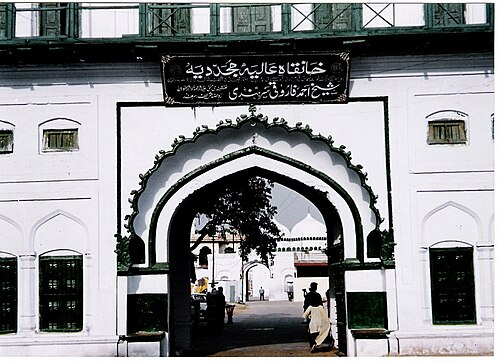


この教団は、アブー・バクルとジャアファル・アル=サーディクが教団に存在し、「ジャアファル・アル=サーディクのスーフィー教団」であることから、「二つの海の合流」としても知られています。[ 2 ] [ 3 ] [ 4 ] [ 5 ] [ 6 ] [ 7 ]ナクシュバンディー教団は、12 世紀のユースフ・ハマダーニーとアブドゥル・ハーリク・ギジュドゥワーニーから多くの洞察を得ており、後者は実践の組織者と見なされ、アッラーの純粋な沈黙の想起を強調した責任があります。[ 8 ]後に14 世紀のバハー・アル=ディン・シャー・ナクシュバンドと結びつき、それが教団の名前の由来となりました。 [ 9 ]
Since it was founded the Naqshbandi order has split into multiple sub-orders founded by several prominent figures within the chain of succession. 'Ubeydullah Ahrar founded the Naqshbandiyya-Ahrariyya; Ahmad Sirhindi founded the Naqshbandiyya-Mujaddidiyya; Shamsuddin Mirza Mazhar founded the Naqshbandiyya-Mazhariyya; and Mawlana Khalid founded the Naqshbandiyya-Khalidiyya.[9]
The Naqshbandiyya order became an influential factor in Indian Muslim life, and for two centuries it was the most common Sufi order in the Indian subcontinent. Khwaja Baqi Billah, who was born in Kabul and brought up and educated in Kabul and Samarkand, is credited for bringing the order to India during the end of the 16th century. He tried to spread his knowledge about the order but died three years later. His disciple Ahmad Sirhindi took over after his death, and it was through him that the order gained popularity within a short period of time. Shah Waliullah Dehlawi was an 18th-century member of the order.[10]
The Naqshbandi order entered Anatolia during the Ottoman Empire, especially in the 15th and 16th centuries. It became particularly influential in the 18th and 19th centuries, often seen as a more orthodox alternative to the Mevlevi (Rumi followers) or Bektashi orders. After the fall of the Ottoman Empire, during Atatürk's secular reforms, Sufi lodges (tekkes) were banned in 1925. Despite this, the Naqshbandi order continued underground and remained influential.
The Naqshbandiyya order was introduced into Syria at the end of the 17th century by Murad Ali al-Bukhari, who established himself in Damascus and traveled throughout Arabia. His branch became known as the Muradiyya and was led by his descendants. In 1820, Khalid Shahrazuri rose as a prominent Naqshbandi leader in the Ottoman world and his order became known as the Khalidiyya which spread for at least two decades. In Syria and Lebanon, the leaders of every active Naqshbandiyya group acknowledged its spiritual lineage. Later, a strife between Khalid's khalifas led to disruption of the order and it divide. The Farmadiyya branch, which practices silent and vocal invocation, is still present in Lebanon and is named after Ali-Farmadi. The pre-Mujaddidi line of the Naqshbandiyya in Greater Syria came to an end when political leader Musa Bukhar died in 1973. The only branch to have survived till recently is the one based in the Khanqah al-Uzbakiyya in Jerusalem.[11]
ナクシュバンディー教団は19世紀にエジプトで隆盛を極めた。1851年、アッバース1世はナクシュバンディー教団のシェイク、アフマド・アシクへの恩恵として、大規模なハーンカーを建設した。アフマド・アシクは1883年に亡くなるまで教団を率いていた。アフマド・アシクはハリディー教団のディヤイーヤ派を実践していた。19世紀末には、ナクシュバンディー教団の他の2つの流派がエジプトに広まった。シェイク・ジュダ・イブラヒムが率いるジュディーヤ派と、スーダン出身のアル・シャリーフ・イスマイル・アル・シンナリとその後継者が率いるハリディーヤ派である。これらの流派は成長を続け、今日でも活動している。しかし、初期の教団はいずれも20世紀まで存続せず、エジプトのすべてのハーンカーは1954年に閉鎖され、建物は別の用途に転用されるか、取り壊された。[ 11 ]
マレー諸島で最初に知られているナクシュバンディー教団のムルシドは、17世紀のイスラム学者で、同地域にハルワティーヤ教団も紹介したユスフ・アル・マカッサリである。しかし、この教団はすぐに消滅し、19世紀に再び紹介された。東南アジアには、ナクシュバンディー教団のよく知られた2つの分派がある。1つ目は、メッカでアブドゥッラー・アル・アルジンジャニの弟子であるイスマイル・アル・ミナンカバウィによって紹介され、スマトラ島、ジャワ島、マレー半島に広がったハルワティーヤ教団である。インドネシアのミナンカバウ高地のイスラム組織であるPERTIは、スレイマン・アル・ラスリと他のハルワティーヤ教団の聖職者によって設立された。もう一つの支部はマザリヤで、アブドラ・デラウィーのハリファの一つ、アブ・サイド・アル・アフマディを通じたナクシュバンディー支部であるシャムスッディーン・マザールにちなんで名付けられた。マザリヤはマドゥラのナクシュバンディの主要支部で、メッカで学んだ後アブドゥル・アジム・アル・マドゥリによって持ち込まれました。もう 1 つの関連する命令は、カディリヤとナクシュバンディヤを融合したカディリヤ ワ ナクシュバンディヤです。カディリヤとナクシュバンディヤの首長は、19 世紀末にオランダ領東インドに対する反乱を主導しました。 [ 12 ]
馬来市は中国にナクシュバンディ(نقشبندية)納克什班迪令をもたらし、クーフィーヤ(خفيه)虎夫耶Hua Si Sufi华寺を創設した。 (「色とりどりのモスク」)メンフアン。Ma Mingxinも Naqshbandi 秩序をもたらし、Jahriyya ( جهرية )哲赫林耶門環を創設しました。これら 2 つのメンフアンはライバルであり、互いに戦い、それがジャハリヤの反乱、ダンガンの反乱、そしてダンガンの反乱 (1895 年)につながりました。[ 13 ]
ナクシュバンディー教団の教えは「11の原則」を中心としており、沈黙のズィクルと日々のマインドフルネスを組み合わせている。[ 14 ]これらには、内なる気づき、思考への注意深さ、意識的な呼吸が含まれる。
この教団はシャリーアの厳格な遵守を強調し、静かな内省的なズィクルを導入しており、他のスーフィー教団で一般的な声に出して唱える実践とは区別される。[ 1 ]
ナクシュバンディー教団には、11のナクシュバンディー教義として知られる11の基本教義がある。最初の8つはアブドゥル・ハリク・ギジュドゥワニによって定式化され、最後の3つはバハ・ウッディーン・シャー・ナクシュバンドによって追加された。[ 8 ]
{{cite book}}: |work= ignored (help){{cite book}}: |work= ignored (help)Excerpt from note 11: "There are some Naqshbandi branches which trace their silsila through Ali ibn Abi Taleb." See Algar, 1972, pp. 191-3; al-Khani, 1308. pg 6
{{cite book}}: |work= ignored (help){{cite book}}:|work=無視されました (ヘルプ) CS1 メンテナンス: 場所が見つかりません パブリッシャー (リンク) Media related to Naqshbandi order at Wikimedia Commons