Loading article…
コリンエステラーゼ(EC 3.1.1.8、コリンエステラーゼ;系統名アシルコリンアシルヒドロラーゼ)という酵素は、コリンをベースとしたエステルの加水分解を触媒し、そのうちのいくつかは神経伝達物質として機能します。[ 1 ]
これらの反応は、コリン作動性ニューロンが活性化後に静止状態に戻るために必要である。例えば、筋肉の収縮では、神経筋接合部におけるアセチルコリンが収縮を引き起こすが、その後筋肉が緊張状態のままではなく弛緩するためには、アセチルコリンがコリンエステラーゼによって分解されなければならない。
コリンエステラーゼには2種類が特徴づけられています。1つは主にアセチル化学、もう1つは主に血漿中に存在するブチリルコリンエステラーゼ(コリンエステラーゼII[2]または血漿コリンエステラーゼとも呼ばれる)です。
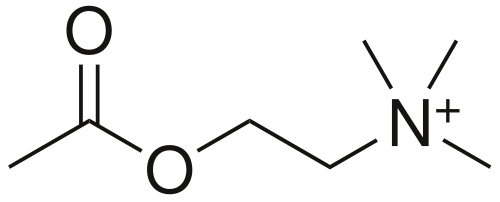
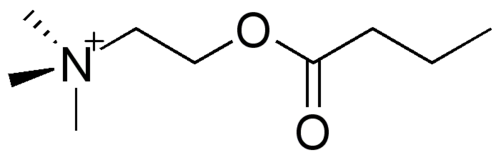
コリンエステラーゼには、アセチルコリンエステラーゼ(AChE )とブチリルコリンエステラーゼ(BChE)の2種類がある。両者は基質、前者はアセチルコリンをより速やかに加水分解し、後者はブチリルコリンをより速やかに加水分解する。
アセチルコリンエステラーゼ(AChE)[ 3 ]は、コリンエステラーゼI、赤血球コリンエステラーゼ、または赤血球コリンエステラーゼ、真のコリンエステラーゼ、コリンエステラーゼI、または(最も正式には)アセチルコリンアセチルヒドロラーゼとしても知られ、主に赤血球の膜、神経筋接合部、およびその他の神経シナプスに存在します。アセチルコリンエステラーゼは複数の分子形態で存在します。哺乳類の脳では、AChEの大部分は四量体G4型(10)として存在し、単量体G1(4S)型ははるかに少量存在します。[4 ]
ブチリルコリンエステラーゼ(EC 3.1.1.8)(BChE)は、コリンエステラーゼ、コリンエステラーゼII、BuChE、擬似コリンエステラーゼ( PCE)、血漿コリンエステラーゼ(PChE)、血清コリンエステラーゼ(SChE)、ブチルコリンエステラーゼ、または(最も正式には)アシルコリンアシルヒドロラーゼとも呼ばれ、肝臓で産生され、主に血漿。ブチルとブチリルの音節はどちらも、末端のメチル基の1つが置換されたブタンを指します。
BChEの半減期は約10~14日である。[ 5 ]進行した肝疾患の患者ではBChEレベルが低下する可能性がある。サクシニルコリンによる神経筋遮断の著しい延長が起こるには、75%以上の低下が必要である。[ 6 ] [ 7 ]
1968年、ワロ・ロイジンガーらはニューヨークのコロンビア大学でデンキウナギからアセチルコリンエステラーゼを精製し結晶化することに成功した。 [ 8 ] [ 9 ]
アセチルコリンエステラーゼの3D構造は、1991年にジョエル・サスマンらが太平洋電気エイのタンパク質を用いて初めて決定した。[ 10 ]
臨床的に有用な量のブチリルコリンエステラーゼは、2007年にPharmAthene社によって遺伝子組み換えヤギを用いて合成された。 [ 11 ]
BCHE酵素の欠損または変異は、偽コリンエステラーゼ欠損症と呼ばれる病態を引き起こします。これは無症状の病態であり、欠損症の患者が手術中に筋弛緩剤であるサクシニルコリンまたはミバクリウムを投与された場合にのみ症状が現れます。
偽コリンエステラーゼ欠損症は、歯科処置における局所麻酔薬の選択にも影響を与える可能性があります。この酵素はエステル系局所麻酔薬の代謝において重要な役割を果たしており、欠損するとこの種の麻酔薬の安全性が低下し、全身作用のリスクが高まります。このような患者には、アミド系麻酔薬の選択が推奨されます。
急性心筋梗塞の症例の90.5%で血漿BCHEレベルの上昇が観察された。[ 12 ]
The presence of ACHE in the amniotic fluid may be tested in early pregnancy. A sample of amniotic fluid is removed by amniocentesis, and presence of ACHE can confirm several common types of birth defect, including abdominal wall defects and neural tube defects.[13]
BCHE can be used as a prophylactic agent against nerve gas and other organophosphate poisoning.[11]
Some early research points to genetic butylcholinesterase deficiency as a possible candidate component in sudden infant death syndrome.[14]
The enzyme Acetylcholin esterase, and its inhibition, plays a role in the development of myofascial trigger points and the associated myofascial pain syndrome. By injecting a mouse with acetylcholin esterase inhibitors and electrical stimulation, the muscle develops trigger points.[15][16]
A cholinesterase inhibitor (or "anticholinesterase") suppresses the action of the enzyme. Because of its essential function, chemicals that interfere with the action of cholinesterase are potent neurotoxins, causing excessive salivation and eye-watering in low doses, followed by muscle spasms and ultimately death (examples are some snake venoms, and the nerve gases sarin and VX). One counteracting medication is pralidoxime. The so-called nerve gases and many substances used in insecticides have been shown to act by combining with a residue of serine in the active site of acetylcholine esterase, inhibiting the enzyme completely. The enzyme acetylcholine esterase breaks down the neurotransmitter acetylcholine, which is released at nerve and muscle junctions, in order to allow the muscle or organ to relax. The result of acetylcholine esterase inhibition is that acetylcholine builds up and continues to act so that any nerve impulses are continually transmitted and muscle contractions do not stop.
Among the most common acetylcholinesterase inhibitors are phosphorus-based compounds, which are designed to bind to the active site of the enzyme. The structural requirements are a phosphorus atom bearing two lipophilic groups, a leaving group (such as a halide or thiocyanate), and a terminaloxygen. The entry on Lawesson's reagent has some details on one sub-class of the phosphorus-based compounds.
ベンゾジアゼピン系薬剤の中には、例えばテマゼパムのように、コリンエステラーゼ阻害作用を持つものがある。[ 17 ]
コリンエステラーゼ値は、ヒ素曝露の間接的な指標として使用できる。[ 18 ]
生化学兵器以外にも、抗コリンエステラーゼは麻酔中の薬物誘発性麻痺の解除、重症筋無力症、緑内障、アルツハイマー病の治療にも使用されています。これらの化合物は、羊用薬浴剤、有機リン系殺虫剤、カルバメート系殺虫剤など、さまざまな製品で殺虫剤として使用されています。上記のような急性中毒に加えて、強い精神障害を特徴とする半急性中毒も起こり得ます。また、長期暴露は先天異常を引き起こす可能性があります。