
Loading article…
| プリンスジョージズ郡 公立学校 | |
|---|---|
 | |
| 位置 | |
| アメリカ合衆国 | |
| 座標 | 北緯38°48′54″ 西経76°45′32″ / 北緯38.8151140° 西経76.7588578° / 38.8151140; -76.7588578 [2] |
| 地区情報 | |
| タイプ | 公共 |
| モットー | 選択によって偉大になる |
| 成績 | 幼稚園から12歳まで |
| 設立 | 1899 |
| 監督 | ミラードハウス II |
| 副監督官 |
|
| 学校 | 201 |
| 予算 | 23億ドル(2022年)[3] |
| NCES地区 ID | 2400510 [4] |
| 学生と教職員 | |
| 学生 | 131,146(2022–23)[3] |
| 教師 | 9,274(2021–22)[4] |
| スタッフ | 17,389(2021–22)[4] |
| 生徒と教師の比率 | 13.89(2021–22)[4] |
| その他の情報 | |
| Webサイト | 詳しくはこちら |
プリンスジョージズ郡公立学校区(PGCPS )は、メリーランド州プリンスジョージズ郡に管轄する公立学区です。2023〜24年度、学区には約133,000人の生徒が在籍し、200校以上の学校を運営しています。[5] PGCPSはメリーランド州で2番目に大きい学区、[6]ワシントン・ボルチモア都市圏で3番目に大きい学区、[7] [8]米国で18番目に大きい学区であり、黒人の生徒人口が過半数を占める国内最大の学区です。
アッパー・マールボロに本部を置くPGCPS [9]は、郡の唯一の学区です。[10]プリンスジョージズ郡教育委員会(BoE)は、学区長を監督する14人の委員で構成されています。[11]
現在の監督官はミラード・ハウス2世である。[12]
歴史
PGCPS の初期 (1899–1974)
1899年、ローレル高校はプリンスジョージズ郡初の高校として設立されました。ローレルのダウンタウンにあるモンゴメリー通りと8番街に位置し、9人の教師と59人の生徒で始まり、1900年の卒業生はすべて女性でした。[13]学校の屋上は第二次世界大戦中に民間防衛隊の航空機観測所として使われました。[14] 1965年までに、学校はより広いキャンパスに移転しました。 1979年に国家歴史登録財に登録された元の建物は、現在コミュニティセンターとして機能しています。[15]
1952年、学区は黒人の生徒が1年生から12年生まで通学することを許可した。それ以前は、郡内の黒人の生徒は11年生までしか通学できず、12年生に進学できるのは白人の生徒のみであった。[16]
PGCPSは人種差別撤廃以前に黒人生徒専用の高校を3校運営していた。アッパー・マールボロのマールボロ・カラード高校(現フレデリック・ダグラス高校)、カレッジ・パークのレイクランド高校、フェアモント・ハイツ高校である。[17]
人種差別撤廃(1974年~2009年)
1974年、プリンスジョージ郡は人種隔離政策の解消のためバス輸送計画の実施を義務付けられた国内最大の学区となった。当時、郡の人口構成は白人が80%を超えていたが、ワシントンDC近郊の特定のコミュニティには黒人人口が密集していた。学校の境界はコミュニティに基づいていたが、NAACPはそれが人種隔離された住宅パターンを反映していると主張した。その結果、連邦裁判所はスクールバス輸送計画を義務付けた。1974年のギャラップの世論調査によると、郡の75%が強制バス輸送に反対し、黒人回答者のわずか32%が賛成した。[18]
裁判所が命じたバス輸送は、高校最終学年の生徒を除いて、学期の途中で突然開始されました。この急激な移行により、通常の学校活動が妨げられ、スケジュールの変更、交通手段の問題、課外活動の中断により家族生活にも影響が出ました。
2001年までに、裁判所は人種隔離政策は十分に解決されたとの結論を下した。バス通学命令は終了し、地域中心の学校境界が復活した。[18]
学校の合併と統合(2009~2019年)
2009年、プリンスジョージズ郡公立学校委員会は、生徒数の少ない8校を統合し、マグネットプログラムの提供を強化することを決議した。この決定は、地域の協議、公聴会、2,500件を超えるアンケートの回答に基づいて行われた。[19]
2009 年の統合の主な側面:
- バークシャー小学校、ジョン・キャロル小学校、ジョン・E・ハワード小学校を含む 8 つの学校が、2009 年から 2010 年の学年度で永久に閉校となりました。
- アンドリュー・ジャクソン中学校やサミュエル・P・マッシー小学校など 5 校が K-8 プログラムに移行しました。
- ベンジャミン D. ファウロイス小学校は、K-8 クリエイティブ & パフォーミング アート マグネット センターに改装されました。
- コンコード、ドッジパーク、ディストリクトハイツ、オーククレストの各小学校は、閉鎖の可能性も検討されていたにもかかわらず、開校を継続した。
2016年までに、特に郡の南部で生徒数の変化により、さらなる学校統合が行われました。逆に、ベルツビルやハイアッツビルを含む北部地域では、生徒数が増加し、過密状態になりました。[20]
データ侵害と COVID-19 の影響 (2020 年現在)
COVID-19の影響により、PGCPSの学校は2020年3月13日以降ロックダウンされました。2020~21年度は、2021年4月までハイブリッド学習でオンラインで行われました。2021~22年度は、一部はバーチャル、一部は対面で行われました。2021年後半にCOVID-19の症例が増加したため、PGCPSは、対面の生徒については2022年1月18日まで、バーチャルの生徒については2022年1月31日まで対面で学校に通うために、再びオンライン授業モードに移行しました。
2023年8月14日、PGCPSはデータ侵害を経験し、すべての生徒と職員のアカウントがロックアウトされました。生徒は8月28日の週にパスワードをリセットする必要があり、職員はすぐにリセットする必要がありました。PGCPSは12時間以内にシステムの制御を取り戻すことができ、学区内のすべての生徒にサイバー攻撃に関するメッセージを送信しました。[21]
2023-24年度から、学区内での銃撃事件に対抗するため、高校生と非伝統的プログラムの北部、南部、中部では透明なバックパックの着用が義務付けられ、中学生は任意となります。[22]
人口統計
2023-24年度、PGCPSは133,000人を超える生徒数を誇ります。ワシントンDC地域では、メリーランド州のモンゴメリー郡公立学校とバージニア州フェアファックス郡公立学校のみがこの数字を上回っています。 [7]
2022年9月の人口統計データに基づくと、[3] PGCPSの生徒の人種と民族の構成は次のとおりです。
さらに、生徒の60.4%が連邦政府の無料・割引ランチプログラムに参加しており、10.4%が特別教育コースに登録しており、PGCPSの生徒の約25%が英語を学習しています。[23]
監督/CEO
2013年、当時の郡長ラシャーン・ベイカーが主導した統治再編により、PGCPSの教育長の職名が最高経営責任者( CEO)に変更された。郡の学校システムの「乗っ取り」と呼ばれるこの変化は、CEOの運営管理を強化し、教育委員会の権限を制限するものであった。 [24]ケビン・マクスウェル博士はプリンスジョージズ郡公立学校の初代CEOであり、2018年まで務めた。 [25] [26]彼の後任にはモニカ・ゴールドソン博士が就任し、2022-23年度までその職に留まった。[27] [28]
6か月に及ぶ全国規模の厳格な選考の後、学区は3人の候補者を絞り込んだ。アンジェラ・アルソブルックス郡長との面接の後、ヒューストン独立学区の元学区長であるミラード・ハウス2世がゴールドソン博士の後任に選ばれた。[28] 2023年6月にハウスが学区長に任命されたことに伴い、学区は学区長をCEOと呼ぶことをやめました。
監督官一覧
- ミラードハウス II (2023年~現在)
- モニカ・ゴールドソン、CEO(暫定2018~2019年、2019~2023年)
- ケビン・M・マクスウェル、CEO(2013~2018年)
- アルヴィン・クローリー(2012~2013年暫定)
- ウィリアム・R・ハイト・ジュニア(2008~2009年暫定、2009~2012年)
- ジョン・E・ディージー(2006年~2008年)
- ハワード A. バーネット (2005-2006 暫定)
- アンドレ・J・ホーンズビー(2003年~2005年)
- アイリス・T・メッツ(1999年~2003年)
- ジェローム・クラーク(1995–1999)
- エドワード M. フェレジー (1991–1995)
- ジョン・A・マーフィー(1984年~1991年)
- エドワード・J・フィーニー(1976年~1984年)
- カール・W・ハッセル(1970年~1976年)
- ウィリアム・S・シュミット(1951年~1970年)
- G. ガードナー シュガート (1944–1951)
- ニコラス・オレム・シニア (1921–1943)
- ES バロウズ (1915–1921)
- フレデリック・サッサー・ジュニア(1902–1914)
交通機関
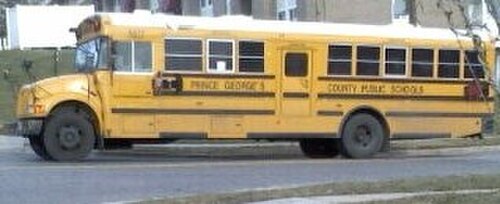
プリンスジョージズ郡公立学校はバスシステムを運営し、生徒の輸送を行っています。車両はブルーバード社、ICバス、トーマスビルトバスの様々なスクールバスモデルで構成されており、すべてディーゼル燃料で走行しています。特別な支援が必要な子供にはバリアフリーバスも利用できます。すべてのバスにはプリンスジョージズ郡公立学校のマークが付いています。[29]
交通局は12のバス駐車場を持ち、1,900人以上の運転手と1,200台のバスを5,000以上の路線に派遣しています。毎年、少なくとも83,000人の学生がこれらのサービスを利用しています。路線には615のような3桁の数字、またはB12のような文字と数字の組み合わせが付けられています。[30]
毎日の通勤のほかに、バスは学校の校外学習、運動会、メリーランド州内および周辺地域でのその他の認可された活動にも利用されています。[31]バスの乗車率は生徒の学校からの距離によって決まりますが、一般的には中等学校では約2マイル、初等学校では1.5マイルです。[32]
注目すべきことに、学区はマグネットプログラムの生徒に郡内全域のバスサービスを提供しており、その利用者数は生徒の学校への近さに左右されない。[33]
学校一覧
高校

プリンスジョージズ郡のすべての高校は、中等教育プログラムであるプリンスジョージズコミュニティカレッジの健康科学アカデミーを除いて、「総合」モデルを基本として運営されています。すべての生徒は、通学区域に基づいて高校に割り当てられます。
マグネット プログラムは「学校内学校」モデルとして運営されており、マグネットはメインの総合プログラムに加えて代替プログラムとして機能し、高校の通常の通学区域外の生徒は継続(中学校のマグネット プログラムから高校レベルの同等プログラムへの自動継続)またはより一般的なマグネット抽選(生徒がマグネット プログラムに応募し、抽選で合格が認められる)を通じて登録され、マグネットに受け入れられます。[34]視覚芸術および舞台芸術センターへの入学はオーディションのみで行われます。[35]
いくつかの高校では、小規模学習コミュニティモデルも導入しており、2つ以上のアカデミープログラムを提供しています。[36]これは、学生が「芸術、メディア、コミュニケーション」や「全米金融アカデミー」などのキャリアアカデミーを通じて、基本的に専攻科目を宣言できるようにすることで(大学に通う学生のように)、学校を学校内に複数の小規模な学校に分割することを意味します。[37]
PGCPS 内のすべての高校は、時差制の授業スケジュールを採用しており、一部の高校は午前 7:45 に始まり、午後 2:25 に終わり、他の高校は午前 9:30 に始まり、午後 4:10 に終わる。[38]すべての高校は、A/B 日交代ブロック スケジューリングシステムを採用しており、1 つのグループの授業は「A 日」に、別のグループの授業は「B 日」に行われ、このサイクルが繰り返される。ほとんどの高校では、入学者数と食事の設備に応じて、3 ~ 4 回のランチ シフトがある。唯一の例外は、エレノア ルーズベルト高校と、プリンス ジョージズ コミュニティ カレッジの健康科学アカデミーである。この高校は、従来の 1 時間制コースと 2 時間制 (ブロック スケジュール) コースの両方を統合した、 修正ハイブリッド ブロック スケジュール[39]を採用している。
中学校

中学校はPGCPSシステムでは「ミドルスクール」と呼ばれ、6年生から8年生までの中学校として運営されています。7年生から9年生までの中学校は1980年代半ばに段階的に廃止されました。最近では、ほとんどの中学校をより人気のある6年生から8年生までのモデルに転換する取り組みが行われています。過去には、入学者数超過、教室スペースの不足、資金不足などの問題により、すべての中学校を6年生から8年生までの構成に転換することは困難でしたが、資金の増加と新しい中学校の追加により、移行は徐々に行われており、2024-2025年度の初めまでに完了する予定です。
プリンスジョージズ郡の中学校のほとんどは、「総合」モデルを基本として運営されています。ほとんどの生徒は、「通学区域」に基づいて中学校に割り当てられます。ほとんどのマグネットプログラムは、「学校内学校」モデルとして運営されており、マグネットはメインの総合プログラムに加えて代替プログラムとして機能し、中学校の通常の通学区域外の生徒は、「継続」(小学校のマグネットプログラムから中学校レベル相当への自動継続)またはより一般的なマグネット抽選(生徒がマグネットプログラムに応募し、無作為の抽選で合格が認められる)を通じて登録され、マグネットに受け入れられます。ほぼすべての中学校には、学校の総合プログラムの基礎となる専門の指導プログラムを含む、学校全体の「シグネチャープログラム」があります。
PGCPS のすべての中学校は、時差制の授業スケジュールを採用しており、一部の中学校は午前 7:30 に始まり、午後 2:25 に終わり、他の中学校は午前 9:00 に始まり、午後 4:20 に終わる。すべての中学校は、修正されたブロック スケジューリング システムを採用しており、一部のクラスは毎日 70 分も授業が行われる。2012-13 年度以降、学区内のすべての中学校とその生徒の授業時間が 40 分追加される。[45]
郡政府、教育委員会、メリーランド州国立首都公園計画委員会(M-NCPPC)[46]の協力により、M-NCPPCコミュニティセンターの一部は地区内の中学校と物理的に接続されています。ユニークなコミュニティパーク/スクールセンターには、体育館、多目的ルーム、エクササイズ/フィットネスルーム、ダンスルーム、美術工芸室、コンピューターラボ、オフィス、保管エリア、パティオエリア、トイレなどの共有エリアがあります。一部のセンターにはテニスコートと照明のないフィールドがあります。
マグネットスクール
専用マグネットスクールは、PGCPSシステムにおいて、PreKから8年生までの小学校と中学校レベルでのみ提供されています。2012-13年現在、グレナーデン・ウッズとヘザー・ヒルズは、システム内で小学校レベルの完全専用マグネットスクールです。[51]専用マグネットスクールは「全校」プログラムであり、従来の総合学校とは異なり、(1)学校の生徒全員がマグネットプログラムに登録され、指導を受けます。(2)生徒を学校に割り当てる従来の通学区域は、通常、ノースカウンティ(セントラルアベニューの北側)とサウスカウンティ(セントラルアベニューの南側)に分割される、はるかに広い地理的通学区域に置き換えられます。全校の専用マグネットプログラムは、クリエイティブ・パフォーミングアート、フレンチイマージョン、モンテッソーリ、およびタレンテッド&ギフテッドセンターマグネットプログラムを通じて提供されます。生徒は、他のほとんどの学校で提供される典型的な総合プログラムとは異なる特別な指導を受けます。マグネット プログラムに参加する生徒は、フレンチ イマージョン プログラムとモンテッソーリ プログラムのマグネット抽選によって選ばれ、小学校レベルではクリエイティブ アートおよび舞台芸術プログラムにも参加します。クリエイティブ アートおよび舞台芸術プログラムへの入学は、中学校レベルではオーディションのみで受け付けられます。グレナーデン ウッズ小学校とヘザー ヒルズ小学校の TAG センターへの入学は、特別な TAG テストのみで受け付けられます。
小中学校併設
幼稚園から8年生までの学校は、基本的に小学校と中学校が一体となったもので、1つの建物で運営されています。これらの学校のほとんどは、学区内で「アカデミー」と呼ばれています。小学校は通常、幼稚園から5年生まで、中学校は6年生から8年生までです。これらの学校は通常、少し高めの学習基準を提供しており、研究によると、幼稚園から8年生まで1つの連続した施設で過ごすことで、中学校時代に新しい学校に通うという混乱がなく、生徒にとってメリットがあることが示されています。Cora L. Rice小学校とG. James Gholson中学校は、真のアカデミーではありません。両校とも1つの施設に収容されていますが、事実上、完全に別の2つの学校として運営されています。
小学校

.jpg/500px-Lewisdale_Elementary_School_(cropped).jpg)
プリンスジョージズ郡の小学校は、プレキンダーガーテン(ヘッドスタート)から6年生まで、いくつかの構成で運営されています。ほとんどの小学校は幼稚園から6年生の構成で運営されており、プレキンダーガーテン/ヘッドスタートプログラムはありません。最近では、過密状態を緩和するための境界の再調整、新しく大規模な学校の開校、資金の増加により、いくつかの学校がプレキンダーガーテンから6年生の構成に変更し、他の学校はプレキンダーガーテンを追加したものの6年生を削除し、プレキンダーガーテンから5年生の学校に変更しました。これらの学校の6年生は、小学校のフィーダー中学校に追加されました。
郡政府、教育委員会、メリーランド国立首都公園計画委員会 (M-NCPPC) の協力により、地区内の小学校に物理的に接続された M-NCPPC コミュニティ センターがいくつか設置されました。このユニークなコミュニティ パーク/スクール センターには、体育館、多目的ルーム、エクササイズ/フィットネス ルーム、ダンス ルーム、美術工芸室、コンピューター ラボ、オフィス、保管エリア、パティオ エリア、トイレなどの共用エリアがあります。一部のセンターにはテニス コートと照明のないフィールドも設置されています。
出身校:
- ポトマックランディング小学校:2023年にコリンパウエルアカデミーに統合される。[56]
賞賛と功績
ニューズウィーク'アメリカの最高の高校
2010年6月、ニューズウィーク誌が毎年発表する国内トップ1600高校リストにPGCPSの高校7校が掲載された。前年のリストに掲載された郡立高校5校より増えた。2010年のリストには、グリーンベルトのエレノア・ルーズベルト高校(第409位)、オクソンヒルのオクソンヒル高校(第957位)、ボウイのボウイ高校(第1,173位)、ローレルのローレル高校(第1,343位)、ベルツビルのハイポイント高校(第1,361位)、キャピトルハイツのセントラル高校(第1,429位)、リバーデールのパークデール高校(第1,481位)が含まれていた。[59]
学校は、2009年に全校生徒が受験したアドバンストプレースメントテスト、国際バカロレア、ケンブリッジテストの数を卒業生数で割った「チャレンジインデックス」に基づいてランク付けされている。これらの学校は、アメリカの公立高校の上位6%を占めている。2009年6月、PGCPSの5つの高校がベスト高校リストに選ばれた。[60] [61]リストには、ボウイのボウイ高校、スプリングデールのチャールズ・ハーバート・フラワーズ高校、ベルツビルのハイポイント高校、オクソンヒルのオクソンヒル高校、グリーンベルトのエレノア・ルーズベルト高校が含まれていた。エレノア・ルーズベルト高校は、全国リストで郡外の学校の中で最高位の372位にランクされ、オクソンヒルは918位、ハイポイントは961位、ボウイは1,370位、チャールズ・ハーバート・フラワーズは1,445位だった。
USニュース&ワールドレポート'最高の高校
2007年以来、USニューズ&ワールド・レポートはPGCPSの高校をアメリカのベスト高校にランク付けしています。ハイポイント高校、ノースウェスタン高校、エレノア・ルーズベルト高校はシルバーメダルスクールとして認められています。[62]
州および全国のブルーリボンスクール
PGCPSには16の州立ブルーリボンスクールがあり、そのうち13校はUSDEの全国ブルーリボン優秀学校です。[63] [64] [65]
全国優秀ブルーリボン校
- ビーコンハイツ小学校、リバーデール、2003-04年
- コロンビアパーク小学校、ランドーバー、1987-88年
- フォートフット小学校、フォートワシントン、2000~2001年
- グレナーデン・ウッズ小学校、グレナーデン、2005~2006年
- グリーンベルトセンター小学校、グリーンベルト、1991-92
- ヘザーヒルズ小学校、ボウイ、1989-90年
- テンプルトン小学校、リバーデール、1998-99年
- ホワイトホール小学校、ボウイ、2011~2012年
- ケンモア中学校、ランドオーバー、1988-89年
- ドラ・ケネディ フレンチ・イマージョン、グリーンベルト、2013~2014
- ケタリング中学校、アッパーマールボロ、1992-93
- マーティン・ルーサー・キング・ジュニア中学校、ベルツビル、1992-93年
- エレノア・ルーズベルト高校、グリーンベルト、1990-91年および1997-98年
- スーツランド高等学校、フォレストビル、1988-89年
メリーランドブルーリボンスクール
- ビーコンハイツ小学校、リバーデール、2003-04年
- ボンド ミル小学校、ローレル (学年 N/A)
- コロンビアパーク小学校、ランドーバー、1987-88年
- フォートフット小学校、フォートワシントン、2000~2001年
- グレナーデン・ウッズ小学校、グレナーデン、2005~2006年
- グリーンベルトセンター小学校、グリーンベルト、1991-92
- ヘザーヒルズ小学校、ボウイ、1989~90年および2006~07年
- ロックレッジ小学校、ボウイ、1997-98年
- ホワイトホール小学校、ボウイ、2011~2012年
- テンプルトン小学校、リバーデール、1998-99年
- ケンモア中学校、ランドオーバー、1988-89年
- ドラ・ケネディ フレンチ・イマージョン、グリーンベルト、2013~2014
- ケタリング中学校、アッパーマールボロ、1992-93
- マーティン・ルーサー・キング・ジュニア中学校、ベルツビル、1992-93年
- エレノア・ルーズベルト高校、グリーンベルト、1990-91年および1997-98年
- スーツランド高等学校、フォレストビル、1988-89年
マグネットプログラムとセンター
Magnet programs were first implemented in PGCPS in 1985, to fulfill a court-ordered desegregation mandate. Up until as late as the late 80s, Prince George's County had been predominantly white in terms of racial demographics. In order to desegregate mostly all-White schools in the school system, PGCPS created several magnet programs that eventually were instituted in over fifty schools, spread throughout the county.
By the late 1990s, the population demographics of the county had shifted towards a mostly African American majority. Magnet programs (as they were set up) were costing PGCPS approximately $14 million per year, to operate. The programs were costly and this was exacerbated by the fact that the school system's operating budget was greater than the final budget the school system had traditionally been allotted, an issue that had plagued the school system for years. Since the county's population now primarily consisted of African Americans, and due to the expense of operating the Magnet Schools Program, courts began to investigate the justification of PGCPS's magnet program. In 2004, a court ruled to discontinue court-ordered busing which had existed in the county, for over 30 years, based primarily on the fact that desegregation was no longer an issue in the predominantly Black Prince George's County.
With the ending of the court-ordered busing, also came changes to the school system's Magnet Schools Program. The program had gained national attention, as it was one of the largest in the country. It served as a model for school systems across the nation. Dr. Iris T. Metts, the superintendent of schools at the time, formulated an ambitious plan to actually expand the magnet programs in PGCPS, as well as reassign magnet programs that weren't performing well at one location, to other schools. Due to long and highly publicized in-house issues between Metts and the board of education, Metts was replaced by Dr. Andre Hornsby at the end of her contract with PGCPS. When Hornsby arrived, he essentially reversed the decision that Metts had made, in regards to the future of the county's magnet programs, and he decided to instead eliminate most of the school system's magnet programs, most of which had been identified as under-performing for several years. Ten magnet programs were identified for elimination, which proved extremely controversial because some of the proposed eliminated programs were located at sites in which the program in question had been extremely successful, such as the Academic Center magnet program at Martin Luther King, Jr. Academic Center, which had been the highest performing middle school in the system for several years and also was a blue ribbon school.
Despite the opposition by parents, in 2006 the magnet programs in PGCPS underwent an overhaul, and most of the magnets were eliminated. A few programs that were determined to be "successful" were either expanded and replicated at other locations, or consolidated and relocated to a dedicated magnet school that would serve large geographic areas of the county.
Current magnet programs
ES = elementary school; MS = middle school; HS = high school
- Aerospace Engineering and Aviation Technology Program (HS)
- Biomedical (HS)
- Biotechnology (HS)
- Career and Technical Education (HS)
- Centers for Visual and Performing Arts (HS)
- Chinese Immersion (ES, MS)
- Creative and Performing Arts (ES, MS)
- French Immersion (ES, MS, HS)
- International Baccalaureate (HS)
- Montessori (ES, MS)
- Science and Technology Center (HS)
- Spanish Dual Language Program (ES)
- Spanish Immersion (ES, MS)
- Talented and Gifted Center (ES, MS)
Magnet program descriptions
Aerospace Engineering and Aviation Technology
The Aerospace Engineering and Aviation Technology program[66] is a college and career preparatory program, offering areas of study in Aerospace Engineering and Aviation Technology. It is supported by partnerships with the College Park Aviation Museum, NASA, local colleges and universities, and private industry.[66] This program is designed to prepare students for college and high-demand careers.[66] Each student receives a laptop upon entry into the program, and is provided with transportation.[66]
Admission to the program is based on the same criteria and examination used for the Science and Technology Center.
Locations:
Biomedical
The Biomedical Program at Bladensburg High School is a high school curriculum that focuses on medical and health careers, such as physicians and research doctors. Students who have a strong interest in pursuing a career in health-related fields have an opportunity to engage in biomedical research, internships, and practicums, and to enroll in medical-related science courses and other advanced placement courses. The curriculum introduces students to a wide variety of medical careers through field trips, speakers in the medical field, internships, accelerated courses, a wide variety of electives related to the biological and social sciences, and independent research.
Locations:
Biotechnology
The Biotechnology Program offers a four-year, college-preparatory program of study in molecular biology, biochemistry and technical career training that includes scanning electron microscopy. Students have first-hand experience with the advanced technologies used in biotechnology research, academia, and industry.
Courses are taught in modern laboratory classrooms equipped with the latest biotechnology instrumentation. The facilities include gel electrophoresis, refrigerated centrifugation, scanning spectrophotometry, high pressure liquid chromatography, gas chromatography and access to scanning electron microscopy. Computers will support classroom instruction as well as student initiated research projects.
Students study biotechnology theory and technique in a cyclic fashion where concepts introduced in beginning courses will be emphasized in depth during upper level classes. Mini-research projects are conducted by science students to demonstrate their understanding of course content and laboratory procedures. Complementing the specific science offerings of the Biotechnology Program is a full selection of courses, including Advanced Placement level in English, social studies and mathematics.
Eligibility Requirements: Students who express interest are eligible to apply. No pre-testing is required. Admission to the program is through a race-neutral random magnet lottery application process, on a space-available basis.
Locations:
Career and Technical Education (CTE) Program
The Technical Academy is a program that provides students with technical skills and knowledge. Benefits to students include gaining a foundation for a college major in a technical field, having access to a technical career after high school if college is postponed, and having access to a part-time technical job to help with college expenses.
Locations:
- Bladensburg High School
- Crossland High School
- Gwynn Park High School
- Laurel High School
- Suitland High School
Centers for the Visual and Performing Arts
The Centers for the Visual and Performing Arts (CVPA) has been in existence since 1986, originally at Suitland High School. The program was expanded to Northwestern High School in the fall of 2013. The CVPA is a rigorous four-year arts program that offers artistically talented high school students educational opportunities designed to prepare them artistically for college, professional study, or career options in the arts. Strong association with the arts in the Washington, DC-area offers distinct advantages. Students study with professional artists, dancers, actors, musicians, singers, directors/producers, and radio/television personalities. Students explore, and eventually major, in any one of the six principal concentrations: vocal music, instrumental music, dance, theatre, visual arts, and interactive media production. Suitland High School offers a 1000-seat auditorium and experimental theatre, a fully equipped dance studio, and a television and recording studio. Northwestern High School offers an 1100-seat auditorium, fully equipped dance studio, state-of-the-art music rooms, several music practice rooms, a piano lab, and a television and recording studio. Admission into the CVPA magnet program is through audition only.
Locations:
Creative and Performing Arts
The Creative and Performing Arts Magnet Program is located at three sites. The programs at Thomas G. Pullen and Benjamin D. Foulois are open to students in Kindergarten through eighth grade; the program at Hyattsville Middle School is open to students in seventh and eighth grade (Hyattsville Middle School has a limited program boundary).
The Creative and Performing Arts Magnet Program is designed to develop the interest and talents of students in the arts, and feature an enhanced interdisciplinary academic program that encourages creative and artistic expression. Experiences and training are designed to challenge and develop skills of all students, as well as to provide exceptional opportunities for artistically talented students.
The curriculum provides in-depth experiences in each art discipline, plus related arts experiences and an infusion of the arts in the overall curriculum. The arts are provided as an integral part of a strong academic program.
The Creative Arts Schools follow the general curriculum guidelines that are used for all Prince George's County public elementary and middle schools. Basic instruction is provided in reading, mathematics, English, science, and social studies, as well as specialized instruction in the arts - art, drama, music, dance, physical education, creative writing, media production, literary arts, and related computer lab experiences.
Locations:
- Thomas G. Pullen Creative and Performing Arts Academy
- Hyattsville Middle School for the Creative and Performing Arts
- The Benjamin D. Foulois Creative and Performing Arts Academy
French Immersion
The French Immersion Magnet Program is designed for kindergarten through twelfth grade. It is referred to as a "full immersion program" as all academic subjects are taught through French, in grades K-5. In grades 6-8, the students have two periods per day of French, one period for French Language Arts and one period of world studies in French. In high school, students have two courses in grades 9 and 10 with a focus on literature and the francophone world, which are part of the Pre-International Baccalaureate (IB) Program. At the elementary level, students are immerse totally in French by their bilingual teachers, as they learn math, science, social studies and language arts.
At the middle school level, students also study Italian. In addition, Algebra and Geometry are possible options in mathematics. The interdisciplinary approach for English, Art and World Studies includes special themes, seminars, field trips, and a strong focus on essay writing. International travel is an enrichment part of the French Immersion Program.
At the high school level, students may take one of the immersion courses and the continuation of the second foreign language started at the middle school level. Other options are IB preparation courses for English, history, science, and access to Chemistry and Calculus. Higher level IB or Advanced Placement (AP) courses, are available. There is an Exchange Program with a school in France and other exchanges are being explored for high school students. In addition to the immersion continuity, students may continue the study of their second foreign language which began in middle school — either Russian, Italian, Latin, or German.
Locations:
International Baccalaureate
The International Baccalaureate (IB) Diploma Magnet Program is an academically challenging and balanced course of study, that prepares students for success in college and life beyond. The mission of the program is to develop inquiring, knowledgeable, and caring young people who help to create a better, more peaceful world through intercultural understanding and respect.
The IB program offers many benefits to its participants, such as: higher university and college acceptance rates for IB graduates; increased scholarship and grant opportunities; a college-level academic program that transitions students to university and college standards; and teacher development using IB strategies.
Locations:
- Central High School
- Crossland High School
- Laurel High School
- Parkdale High School
- Suitland High School
Montessori
Prince George's County Public Schools has implemented two facilities dedicated to the Montessori instructional program — the Robert Goddard Montessori School and the John Hanson Montessori School. As dedicated facilities, these schools do not have a neighborhood attendance area. Entry into the program is through the random lottery application process only.
The Montessori Primary Program for children ages 3 to 6 years old is based on the Montessori educational philosophy. Taught by Montessori accredited teachers, young children are guided in developing an inner discipline, strengthening their coordination, and extending their concentration span. These accomplishments result with their readily learning to read, write and grasp mathematics. The program consists of a half-day morning for preschoolers (ages 3 ). Children older than four must be enrolled in a certified Montessori program to be accepted into the program.
The Montessori Lower Elementary Program is designed for students ages 6 to 9 years old with prior Montessori experience. Rapid growth and learning is observed in classrooms filled with appropriate educational materials. The Montessori Upper Elementary Program continues for the next age grouping of students ages 9–12 with prior Montessori experience. Taught by Montessori accredited teachers, these elementary program students study an integrated curriculum that includes: mathematics, geometry, language, cultural studies, astronomy, biology, chemistry, geography, history, geology, philosophy, art, music and physical education.
The Montessori Middle School Program completes the Montessori studies for students progressing to the seventh and eighth grades. An interdisciplinary teaching team provides the Montessori Program for multidisciplinary learning to include English Language Arts, mathematics, science and social studies. At the high school level, the student can apply for entry to Biotechnology, Biomedical, Military Academy, Center for the Visual & Performing Arts and/or the Science & Technology Center.
Locations:
- Robert Goddard Montessori School
- John Hanson Montessori School
- Judith P. Hoyer Montessori School Archived September 29, 2015, at the Wayback Machine
Science and Technology Center
The Science and Technology Center (S/T) is a highly challenging four-year curriculum which provides college-level academic experiences in science, mathematics, and technology. The program is not a true magnet program, as students are admitted into the S/T program based on competitive examination only, as opposed to the standard magnet lottery process. Of twenty-eight possible credits, a student is required to obtain a minimum of thirteen credits in specific mathematics, pre-engineering technology, research and science courses. In grades nine and ten, the program consists of common experiences courses for all student. In grades eleven and twelve, each student must choose course work from at least one of four major study areas. Students are expected to be enrolled in a full schedule of classes during the entire four-year program. External experiences are possible and encouraged, but must be a direct extension or enrichment of the Science and Technology Program, and have the recommendation of the Science and Technology Center Coordinator prior to approval by the principal.
The program is offered at three centers — Eleanor Roosevelt High School in northern Prince George's County, Oxon Hill High School in southern Prince George's County, and Charles Herbert Flowers High School in central Prince George’s County. Students attend the center that serves their legal residence. Transportation is provided for all students. Each school is a four-year comprehensive high school, as well as a Science and Technology Center. Each school is an active member of the National Consortium for Specialized Secondary Schools of Mathematics, Science and Technology (NCSSSMST).
Admission into the Science and Technology Center is highly competitive and contingent upon three criterion, with all criterion weighed equally. The criterion are:
- Grades from four quarters of 7th grade and the first quarter of 8th grade (or four quarters of 8th grade and first quarter of 9th grade) in math, science, English, and social studies
- A standardized reading comprehension test
- A standardized numerical test
All of these are factored into a final score. The number of students admitted into the S/T program vary from each school, but as an example, 225-250 students with the top scores are admitted to Roosevelt's Science and Technology Program. The next 60 students are placed on a waiting list. All interested 8th and 9th grade students who are residents of Prince George's County are eligible to apply for admission to the Science and Technology Center.
Locations
Spanish Dual Language Program
The Spanish Dual Language Program gives equal emphasis to English and non-English language speakers. Students learn Spanish and English through content based instruction in selected core subjects with a cross cultural understanding for both native and non-native speakers. Students read, write, listen and speak in both languages, becoming bilingual, biliterate and bicultural.
Locations
- Cesar Chavez Elementary School
Spanish Immersion
Language Immersion is an educational approach in which students are taught the curriculum content through the medium of a second language, Spanish. Children learn their entire core subjects (reading, writing, mathematics, social studies, and science) in Spanish. Spanish speaking teachers immerse student completely in Spanish as they learn. In this way, immersion students not only learn the content, but also gain knowledge of the language in which it is taught.
Locations
- Overlook Elementary School
- Phyllis E. Williams Elementary School
Talented and Gifted Center (TAG)
Talented and Gifted Center (TAG) Magnet Schools provide a full-day intensive educational program appropriate for identified talented and gifted students, in grades 2-8. Each school offers a full-day of enriched and accelerated educational experiences in the four major content areas. Special offerings include elementary foreign language programs, computer laboratories, laboratory based science program, and fine arts programs.
Locations:
- The Accokeek Academy
- Capitol Heights Elementary School
- Glenarden Woods Elementary School
- Heather Hills Elementary School
- Highland Park Elementary School
- Longfields Elementary School
- Valley View Elementary School
- Greenbelt Middle School
- Kenmoor Middle School
- Walker Mill Middle School
See also

- List of Prince George's County Public Schools Middle Schools
- Prince George's County Public Schools Magnet Programs
- List of schools in Prince George's County, Maryland
References
- ^ "Contact Us – Prince George's County Public Schools, Prince George's County, Maryland". PGCPS.org. 2018. Archived from the original on November 6, 2018. Retrieved November 6, 2018.
- ^ "Frederick Sasscer High School". Geographic Names Information System. United States Geological Survey, United States Department of the Interior. September 12, 1979. Retrieved November 6, 2018.
- ^ a b c "PGCPS Facts and Figures". Prince George's County Public Schools. Retrieved November 30, 2023.
- ^ a b c d "Search for Public School Districts – District Detail for Prince George's County Public Schools". National Center for Education Statistics. Institute of Education Sciences. Retrieved August 30, 2011.
- ^ "Prince George's County Public Schools". www.pgcps.org. Retrieved September 3, 2023.
- ^ "2023 Largest School Districts in Maryland". Niche. Retrieved September 3, 2023.
- ^ a b "2023 Largest School Districts in the Washington, D.C. Area". Niche. Retrieved September 3, 2023.
- ^ "2023 Largest School Districts in the Baltimore Area". Niche. Retrieved September 3, 2023.
- ^ "Contact Us". Prince George's County Public Schools. Retrieved February 5, 2024.
Sasscer Administration Building 14201 School Lane Upper Marlboro, MD 20772
- The school headquarters are in the Upper Marlboro limits. - ^ "2020 CENSUS - SCHOOL DISTRICT REFERENCE MAP: Prince George's County, MD" (PDF). U.S. Census Bureau. Retrieved February 5, 2024. - Text list
- ^ "Board of Education". www.pgcps.org. Retrieved September 3, 2023.
- ^ "Millard House II Appointed PGCPS Superintendent". www.pgcps.org. Retrieved September 3, 2023.
- ^ "In trivia contest, Laurel is always the category - Washington Post". December 3, 2013. Archived from the original on December 3, 2013. Retrieved September 3, 2023.
- ^ Leonard, Kevin (July 1, 2019). "Some of the most notable years in Laurel's robust history as midpoint between Baltimore and Washington". The Baltimore Sun. Retrieved November 2, 2024.
In April [1942], ... the cupola at the top ... was converted to an Air Raid Observation Post
- ^ "Maryland Historical Trust". mht.maryland.gov. Retrieved September 3, 2023.
- ^ Beachum, Lateshia (March 28, 2023). "Preserving a powerful legacy in a county transformed by Black people". Washington Post. ISSN 0190-8286. Retrieved September 3, 2023.
- ^ Meyer, Eugene L. (September 28, 2000). "Douglass High: A School of Their Own". Washington Post. ISSN 0190-8286. Retrieved September 3, 2023.
- ^ a b DeWitt, Douglas (January 20, 2010). "Busing". In Hunt, Thomas C.; Raisch, C. Daniel; Carper, James C.; Lasley II, Thomas J. (eds.). Encyclopedia of Educational Reform and Dissent. SAGE Publications, Inc. pp. 123–124. ISBN 978-1412956642. Archived from the original on July 2, 2020. Retrieved June 25, 2020.
- ^ "BOE Approves Expanding Choices, Consolidating Under-enrolled Schools". Prince George's County Public Schools. March 26, 2009. Archived from the original on July 17, 2011. Retrieved March 27, 2009.
- ^ Hernández, Arelis R.; St. George, Donna (January 17, 2016). "Pr. George's community opposes Forestville High School's closure". Washington Post. Archived from the original on August 29, 2018. Retrieved August 29, 2018.
- ^ "PGCPS Information Protection & Cyber Updates". September 18, 2023.
- ^ "PGCPS Clear Backpack Policy". Fox 5 DC. August 21, 2023.
- ^ "Facts and Figures". www.pgcps.org. Retrieved September 3, 2023.
- ^ Wiggins, Ovetta (March 16, 2013). "Prince George's executive moves to take over struggling school system". The Washington Post. Retrieved September 3, 2023.
- ^ "County Executive Baker to Introduce Dr. Kevin Maxwell as New Prince George's County Public Schools (PGCPS) Chief Executive Officer (CEO)". The Prince George's County Government Office of the County Executive. Retrieved June 27, 2013.[permanent dead link]
- ^ Lane, Hilary; Thacker, Erin (July 12, 2018). "PGCPS CEO Dr. Kevin Maxwell gets nearly $800k severance package". W*USA Channel 9. Archived from the original on July 24, 2018. Retrieved July 23, 2018.
- ^ St. George, Donna (July 23, 2018). "Interim leader named for Md. school system after string of scandals". The Washington Post. Archived from the original on July 23, 2018. Retrieved July 23, 2018.
- ^ a b "News Release: Millard House II Appointed PGCPS Superintendent". www.pgcps.org. Retrieved September 3, 2023.
- ^ "Transportation: Frequently Asked Questions". Prince George's County Public Schools. Archived from the original on September 22, 2012. Retrieved March 6, 2010.
- ^ "Transportation". Prince George's County Public Schools. Archived from the original on September 22, 2012. Retrieved March 6, 2010.
- ^ "Transportation-Special Programs". Prince George's County Public Schools. Archived from the original on September 22, 2012. Retrieved March 6, 2010.
- ^ "Safety Meetings and Topics - Training". Prince George's County Public Schools. Archived from the original on September 22, 2012. Retrieved March 6, 2010.
- ^ Prince George's County Public Schools. (2013). Administrative procedure (3541). https://www.pgcps.org/globalassets/offices/general-counsel/docs---general-counsel/administrative-procedures/3000/administrative-procedure-3541---student-transportation.pdf
- ^ "PGCPS Lottery for Specialty Programs". Prince George's County Public Schools. Archived from the original on April 4, 2015. Retrieved March 27, 2015.
- ^ "Welcome to the CVPA/CPA Application Site". Prince George's County Public Schools. Archived from the original on April 7, 2015. Retrieved March 27, 2015.
- ^ "Career Academies". Prince George's County Public Schools. Archived from the original on April 2, 2015. Retrieved March 27, 2015.
- ^ "Choose an Academy". Prince George's County Public Schools. Archived from the original on April 2, 2015. Retrieved March 27, 2015.
- ^ "Bell Times for 2012-2013 School Year". Prince George's County Public Schools. Archived from the original on September 4, 2012. Retrieved September 2, 2012.
- ^ "Academics". Eleanor Roosevelt High School. Archived from the original on April 2, 2015. Retrieved March 27, 2015.
- ^ "America's Choice School Design". Archived from the original on October 11, 2008. Retrieved November 4, 2008.
- ^ "AVID". Archived from the original on January 15, 2010. Retrieved July 2, 2021.
- ^ a b c d e f g h i j "DC, DE, MD, & VA – IB World Schools". Mid-Atlantic Association of IB World Schools. Archived from the original on February 17, 2015. Retrieved April 19, 2015.
- ^ "International Baccalaureate (IB) Middle Years Programme". Archived from the original on September 13, 2017. Retrieved November 4, 2008.
- ^ National Academy of Finance Archived 2008-10-07 at the Wayback Machine
- ^ Nunn, Holly (August 20, 2012). "First day of school launches longer day for Prince George's middle-schoolers". The Washington Post. Archived from the original on March 10, 2016. Retrieved September 2, 2012.
- ^ Maryland-National Capital Park & Planning Commission (M-NCPPC) Archived 2009-05-21 at the Wayback Machine
- ^ "Greenbelt Middle is Prince George's newest 'green' school". WTOP Radio. August 20, 2012. Archived from the original on July 2, 2021. Retrieved September 2, 2012.
- ^ "New Greenbelt Middle School Opens on Monday". Prince George's County Public Schools. Archived from the original on August 26, 2012. Retrieved September 2, 2012.
- ^ Wiggins, Ovetta (March 8, 2012). "Prince George's fills waiting list for gifted and talented program". The Washington Post. Archived from the original on February 10, 2012. Retrieved September 2, 2012.
- ^ a b c d e f g h i j k l "Maryland's Excellence in Gifted and Talented Education (EGATE) Schools 2010-2013" (PDF). Maryland State Department of Education. Archived from the original (PDF) on August 12, 2014. Retrieved March 28, 2015.
- ^ a b c d e "Lottery Status/Updates". Prince George's County Public Schools. Archived from the original on January 9, 2012. Retrieved September 2, 2012.
- ^ "Robert Goddard French Immersion Named National Blue Ribbon School". Prince George's County Public Schools. Archived from the original on April 27, 2015. Retrieved April 19, 2015.
- ^ "2014 Maryland Blue Ribbon Schools - Honored December 11, 2013". Maryland State Department of Education. Archived from the original on July 4, 2015. Retrieved April 19, 2015.
- ^ "Current Green Schools". Maryland Association for Environmental and Outdoor Education. Archived from the original on October 31, 2014. Retrieved April 19, 2015.
- ^ a b c d e f g h Gross, Daniel (May 22, 2012). "Accokeek Academy breaks ground on new building". The Gazette. Archived from the original on April 3, 2015. Retrieved March 28, 2015.
- ^ a b c Tansill-Suddath, Callan (November 21, 2022). "Here Is What's Happening With School Boundaries In Prince George's County". dcist.com. Retrieved September 28, 2024.
- ^ "Congratulations to 2014-2015 recipients of the EGATE Award WINNERS!". Prince George's County Public Schools. Archived from the original on April 5, 2015. Retrieved March 28, 2015.
- ^ a b "Whitehall Elementary Receives National Blue Ribbon Award". Prince George's County Public Schools. Archived from the original on October 14, 2012. Retrieved September 7, 2012.
- ^ "America's Best High Schools: The List". Newsweek. Archived from the original on August 8, 2010. Retrieved June 13, 2010.
- ^ "Five county schools make top high school list". The Gazette. June 9, 2009. Archived from the original on June 14, 2009. Retrieved June 12, 2009.
- ^ "The complete list of the 1,600 top U.S. high schools". Newsweek Magazine. June 8, 2009. Archived from the original on June 24, 2009. Retrieved June 12, 2009.
- ^ Duffy, Brian, ed. (December 10, 2007). "U.S. News & World Report". United States News--World Report (print magazine). Vol. 143, no. 20. U.S. News & World Report Inc. ASIN B00VZFLJC2. ISSN 0041-5537. LCCN n80001295. OCLC 809250707. Archived from the original on November 6, 2018. Retrieved November 6, 2018.
- ^ "USDE Blue Ribbon Schools 1982-2002" (PDF). U.S. Department of Education. Archived from the original (PDF) on March 26, 2009. Retrieved November 19, 2009.
- ^ "USDE Blue Ribbon Schools 2003-2006" (PDF). U.S. Department of Education. Archived (PDF) from the original on November 6, 2008. Retrieved November 19, 2009.
- ^ "Maryland Blue Ribbon Schools Program". Maryland State Department of Education. Archived from the original on February 7, 2011. Retrieved November 19, 2009.
- ^ a b c d "NOW TAKING OFF AT PGCPS: THE AEROSPACE ENGINEERING & AVIATION TECHNOLOGY PROGRAM". Prince George's County Public Schools. Archived from the original on June 5, 2014. Retrieved February 25, 2013.
External links

Wikimedia Commons has media related to Prince George's County Public Schools.
- Official website
- "Prince George's County Public Schools, Maryland". Ballotpedia.
- "Prince George's County Public Schools District – Districts – Maryland – Best High Schools" (online). U.S. News & World Report. Washington, D.C.: U.S. News & World Report, L.P. LCCN n80001295. OCLC 809250707.
Prince George's County Public Schools District contains 27 high schools.
- Prince George's County Public Schools at the Wayback Machine (archive index)