
Loading article…

ハイランドダンス(スコットランドゲール語: dannsa Gàidhealach)[ 1 ]は、19世紀から20世紀にかけてスコットランド高地で、ハイランドゲームなどの公共イベントでの競技会の文脈で発展した競技ダンスのスタイルです。ゲール語のフォークダンスのレパートリーから作られましたが、バレエの慣習で形式化され[ 2 ]、高地以外の影響を受けています。ハイランドダンスは、ハイランドバグパイプの音楽に合わせて踊られることが多く、ダンサーはギリーまたはパンプスと呼ばれる特別な靴を履きます。現在では、現代のハイランドゲームイベントのほぼすべてで見ることができます。
ハイランドダンスは、スコットランドのカントリーダンス、ケイリーダンス、クロッグダンスと混同してはならない。ただし、これらもハイランドゲームやそれに類する競技会で披露されることがある。

ハイランドダンスは、技術、体力、筋力を必要とする競技性の高いダンスであり、スコットランドスポーツ評議会によってスポーツとして認められている。
ハイランドダンスでは、ダンサーはつま先立ちで踊ります。[ 3 ]ハイランドダンスは、そこから発展したソロステップダンス の一種ですが、ステップダンスの中には純粋に打楽器的な性質を持つものもあるのに対し、ハイランドダンスはステップの組み合わせだけでなく、上半身、腕、手の動きも不可欠な要素となっています。(ストラスペイやタロックなどのダンスは最大4つのダンスで構成されますが、ダンサーは個別に審査されます。)
ハイランドダンスは、社交ダンス(つまり、ボールルームダンスのようにパートナーと踊るダンス)であり、フォーメーションダンス(つまり、ダンスフロアでのグループの動きのパターンが重要な要素となるダンス)(スクエアダンス)でもあるスコットランドのカントリーダンスと混同してはならない。
Some Highland dances do derive from traditional social dances. An example is the Highland reel, also known as the foursome reel or strathspey, in which groups of four dancers alternate between solo steps facing one another and a figure-of-eight style with intertwining progressive movement. Even so, in competitions, the Highland reel dancers are judged individually. All but three Highland dances are danced solo and those three dances are variations of each other.
Many non-practitioners think the two Celtic forms are synonymous. While some dance studios teach both, they are two distinct styles, not just in the attire. In comparison to Scottish Highland dance, Irish dancers rarely use their arms which are held beside their bodies (rather than raised above the shoulders), legs and feet are frequently crossed (not turned out at 45°), and frequent use of the hard-soled step shoes (compared to ghillies or "pumps"). There is a greater use of choreography than traditional movements.[4]
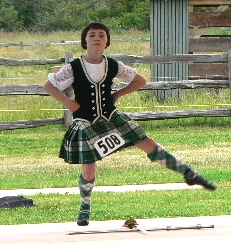
Modern Highland dancing emerged in the 19th and 20th centuries. It was "created from the Gaelic folk dance repertoire, but formalised with the conventions of ballet".[2]
It seems that forms of sword dancing were performed by warriors in many parts of Europe in the prehistoric period. Forms of sword dancing are also attested in the late Medieval period. Ritualistic and combative dances that imitated epic deeds and martial skills were a familiar feature in Scottish tradition and folklore. The earliest reference to these dances in Scotland is mentioned in the Scotichronicon which was compiled in Scotland by Walter Bower in the 1440s. The passage regards Alexander III and his second marriage to the French noblewoman Yolande de Dreux at Jedburgh on 14 October 1285.
At the head of this procession were the skilled musicians with many sorts of pipe music including the music of bagpipes, and behind them others splendidly performing a war-dance with intricate weaving in and out. Bringing up the rear was a figure regarding whom it was difficult to decide whether it was a man or an apparition. It seemed to glide like a ghost rather than walk on feet. When it looked as if he was disappearing from everyone's sight, the whole frenzied procession halted, the song died away, the music faded, and the dancing contingent froze suddenly and unexpectedly.
1573年、ストックホルム城で開かれた宴会で、スコットランドの傭兵たちがスウェーデン国王ヨハン3世の前でスコットランドの剣舞を披露したと言われている。この舞は「祝祭の自然な一部」であったが、国王暗殺計画の一環として利用され、陰謀者たちは疑われることなく武器を露わにすることができた。幸いにも、決定的な瞬間に、事前に取り決められた合図は発せられなかった。
1590年5月にエディンバラで行われたデンマーク王妃アンの歓迎会では剣舞とハイランドダンスが披露され、 [ 5 ] [ 6 ] 1617年にはジェームズ6世の前で剣舞とアクロバットが披露され、[ 7 ] 1633年にはパースの皮革職人組合と手袋職人組合によってチャールズ1世の前でも再び披露された。
陛下の椅子はテイ川のほとりの壁に設置され、その上には白樺で覆われた木製の浮き舞台が設けられていました。陛下の歓迎と入場のために、緑の帽子、銀の紐、赤いリボン、白い靴、足に鈴をつけた手袋職人の同胞13人が、手にレイピアを持ち、その他あらゆる装束を身に着け、多くの難解な結び目とアラパラジェスを伴った剣舞を踊りました。5人が肩の下、5人が肩の上に乗り、3人が足の間や周りを踊りながらワインを飲み、グラスを割りました。幸いにも、この舞は誰にも危害や災難を与えることなく行われました。
1747年、1746年服装法( 1746年禁止法の一部)が施行され、民間男性のキルト着用が禁止されました。この法律は1782年に廃止され、19世紀初頭には、ハイランド文化(あるいはそのイメージ)がロマンチックに美化されるようになりました。この復興は、後にヴィクトリア女王の熱意によって大きく後押しされ、現在私たちが知るハイランドゲームの始まりとなりました。ハイランドダンスは、近代的な復興の当初からゲームの不可欠な要素でしたが、ゲームで披露されるダンスの選択は、主に審査員の便宜のために意図的に絞り込まれました。そのため、ハイランドゲームの伝統は一見ハイランドダンスを育み、保存してきたように見えますが、競技に必須ではないため練習する価値がないとみなされ、多くの古いダンスが失われてしまいました。こうした催しや競技の性質は、ダンスそのもののスタイルにも影響を与えた。
1900年代以前のダンスは、ほとんどが国レベルや国際レベルで組織化されていませんでした。競技会の審査員は地元の人々で、服装やステップに関する明確な基準もありませんでした。地元のカレドニア人協会が、それぞれの協会の流儀で若いダンサーを育成していました。徐々にステップの統一性が確立され、ダンス専門の組織が設立されていきました。
現在、ダンサーは教師になるために筆記試験と実技試験を受け、その後さらに訓練と試験を経てダンサー審査員、そして競技会の審査員または審査委員となる。
世界中のハイランドダンスの集まりの多く、あるいはほとんどは、1950 年に設立されたロイヤル スコティッシュ オフィシャル ボード オブ ハイランド ダンシング (RSOBHD) をハイランドダンスの世界統括団体として認めています。英国女王からの「ロイヤル」の称号は、2019 年 11 月 16 日に承認されました。[ 8 ] RSOBHD は、競技用のダンス ステップを標準化し、競技と服装のルールを確立し、競技とインストラクターを認定しています。RSOBHD 世界ハイランドダンス選手権は、 1934 年以来、コーワル ハイランド ギャザリングで毎年開催されています。現在、この RSOBHD 世界選手権は、ジュニア、ジュニア、大人の 3 つのレベルで RSOBHD によって認可されています。RSOBHD に登録されたダンサーのみが、この RSOBHD 選手権で競技することができます。
RSOBHDは、世界中のさまざまなハイランドダンス団体や協会からの代表者で構成されています。理事会は、審査機関(専門指導者協会)、オーストラリア(Australian Board of Highland Dancing Inc.)、カナダ(ScotDance Canada)、南アフリカ(Official Board of Highland Dancing (South Africa))、ニュージーランド(Scot Dance New Zealand)、米国(Federation of United States Teachers and Adjudicators)の関連団体からの代表者で構成されており、これらの国々の多くのハイランドダンス団体を代表しています。
RSOBHD 理事会はハイランドダンス選手権を認可していますが、実際に主催しているわけではありません。RSOBHD と提携していない団体が主催する、RSOBHD 非認可の選手権では、RSOBHD 登録ダンサーは参加を禁じられています。RSOBHD 非認可団体が主催する競技会や選手権では、すべてのダンサーが歓迎されますが、参加を選択した場合、RSOBHD から出場禁止処分を受ける可能性があります。同様に、RSOBHD に登録していないダンサーは、RSOBHD 認可の競技会で踊ることを禁じられています。RSOBHD は毎年、世界中の選手権でダンサーが踊る選手権ステップを選定しています。ダンサーと教師向けの公式 RSOBHD ハイランドダンス技術書が出版されています。
ハイランドダンスのダンサー、教師、審査員の資格認定を行い、競技会を開催するその他の団体には、以下のようなものがあります。
Such organisations provide a wide syllabus of Highland and national dances and steps within their teaching.

At Highland games, the Highland dances were at first danced only by men. Women would take part in social dances, and girls did learn solo dances as part of their general dance classes. In fact, dancing masters would often encourage their most promising students (male or female) to perform solo dances at their end-of-term 'assemblies'.
In the late 19th century a young woman named Jenny Douglas (the name of Lorna Mitchell is also suggested) decided to enter a Highland dance competition. As this was not expressly forbidden, she was allowed to enter. Since then the number of females participating in the sport has increased until today where almost all dancers are female. There have been numerous female World Champions crowned at the Cowal Highland Gathering since they began organising the competition in 1948. The first international competitor to win the Adult World Championship was Flora Stuart Grubb of Australia (1960)[9] with Hugh Bigney being the first American to win the title in 1973.[10][11][note 1] Indeed, the first three Adult World Championships were won by ladies: May Falconer, Motherwell (1948), Margaret Samson, Stirling (1949 and 1950). This feminisation of folk arts is a common pattern in the process of their 'gentrification', especially after they no longer serve a functional role in a male-centred, warrior culture. Males are still well represented at the world championships.
Highland dancing competitions may be held solely or as part of larger events. The small annual Scottish Glen Isla competition is almost inconspicuous on the roadside, and is beside piping events and some heavy game events. Canada's Glengarry Highland Games on the other hand is one of the largest dancing and piping events on the North American calendar. Many of Australia's competitions are held indoors as a solo activity, while Canadian and Scottish competitions are associated with Highland games with a nearby hall available in case of inclement weather. Competitions can also be held without being associated with a Highland games, usually in a local hall or sports centre. Similarly, Championships where set steps must be danced are often held inside sports centres across Scotland due to the space needed for the number of dancer.
競技会に関して言えば、20世紀初頭までは、剣舞、ショーン・トリウバス、ストラスペイとハイランド・リール、タロック・リール、ハイランド・フリングが一般的なダンスでした。それ以降、様々な(既存の)ダンスが競技会のレパートリーに追加されました。例えば、船乗りのホーンパイプとアイリッシュ・ジグという2つのキャラクターダンスは、ミュージックホールやボードビルの公演で人気を博しました。
今日、ほとんどの審査員はダンサーを3つの主要な基準、すなわちタイミング、テクニック、そして解釈/全体的な立ち居振る舞いで評価する。
ハイランドダンスの様々な統括団体は、ダンス自体の基準と、ダンサーを評価し、クラス分けやクラス間の昇級を決定するための採点システムを定めています。これらの競技会の採点システムは、各ダンサーが100点からスタートします。ミス、不十分な演技、衣装の問題などがあった場合、審査員の裁量で減点されます。ダンサーは得点の高い順にランク付けされ、上位6名には、公認競技会の場合はRSOBHDの規定に基づき、非公認競技会の場合は主催者によって決定された得点が与えられます。メダルや賞金も授与されます。すべてのダンサーが競技会に出場できるわけではありません。
ダンスの表現方法に関する概念は、長年にわたって劇的に変化してきました。例えば、現代の競技会で20世紀初頭のスタイルの剣舞を披露すれば、ほぼ即座に失格となるでしょう。かつては、どの場面で何が許されるのか(あるいは規定されるのか)について、ひどい混乱がありましたが、RSOBHD(英国王立オックスフォード・ダンス・ダンス協会)が、競技ダンサーの大多数に受け入れられる基準を打ち立てたことで、状況は改善されました。
スコットランドのハイランドダンスは、一般的にいくつかの種類に分けられます。分類は、厳密なスタイルよりも、着用する衣装に基づいて行われます。
ステップダンスや木靴ダンスも、かつては定期的に競技会の一部となっていた。
各ダンスのステップは、RSOBHD、United Kingdom Alliance Ltd (UKA)、Scottish Dancing Teacher Association (SDTA)、British Association of Teachers of Dancing (BATD) の教科書など、国内外のカリキュラムに記載されています。各ダンスは、番号または言葉で示される複数のステップで構成されています。RSOBHD の 4 ステップのハイランド フリングは、1 番目のステップ、7 番目のステップ、5 番目の代替ステップ、そして 8 番目のステップで終了する場合があります。または、ステップ名で、シェディング、ダブル シェイク アンド ロック、セカンド バック ステッピング、ラスト シェディングとすることができます。[ 12 ]
ハイランダーは「特定のダンスで巧みさを披露するために使われるブロードソードの扱いに必要な準備として」発展しました。[ 13 ]これには、床に交差して置かれた2本のむき出しの剣の上で踊ることも含まれ、中にはダンサーが軽やかにその周りを動き回るものもあります。ギリー・カラムのように、交差した刃の間の間隔に独特のステップで足を巧みに置くことは、決定的な戦いの前のダンスや勝利のダンスとして長い間関連付けられてきました。伝説によると、戦いの前夜にハイランドの族長は氏族の最高のダンサーを呼び出し、剣のダンスを踊らせました。ダンサーがどちらの刃にも触れずに済んだ場合、翌日の戦いが氏族に有利になるという吉兆と考えられていました。この踊りの意味をより実践的に説明するなら、古いスタイルのフェンシングの訓練場にその痕跡を見出すことができる。そこでは、剣術を学ぶ生徒たちが、床に描かれた十字、四角、三角形といった幾何学的なパターンに従って足さばきを磨いていたのだ。
スコットランドの剣舞の別のバージョンでは、ハイランダーはタージュの盾の上で踊りました。これは、盾の上に立っている人が、他の人が盾を下に引き抜こうとする間、身を守り、直立していなければならないという古代ローマの訓練と似ています。現在では失われてしまったハイランドダンスの多くは、かつてロッハバーの斧、ブロードソード、タージュ、ダガー、フレイルなどの伝統的な武器を使って踊られていました。古いスカイのダンスソング、Buailidh mi thu anns a' cheann(スコットランド・ゲール語で「私はあなたの頭を叩く」)は、音楽に合わせて何らかの武器を使った遊びがあったことを示しています。「頭を折る」ことは、イギリス全土の棍棒試合で勝利の決め手でした。「眉毛より上のどこかで1インチでも血が流れた瞬間、その血の持ち主である老練な闘士は負け、試合を止めなければならない」のです。
ハイランド地方の短剣舞は、踊り手が武器を振り回す舞で、剣舞、あるいは「森番の息子」を意味するmac an fhorsair 、ブロードソードの練習、またはbruicheath(「戦闘舞踊」)と呼ばれる舞と関連付けられることが多い。これらの舞は、主に軍事関連の多くの資料に記載されており、決闘形式で2人の踊り手が練習したり、ソロで踊ったりするなど、さまざまな形式で上演されていた可能性がある。
Gille Chaluim(英語では「Gillie Callum」、意味は「カラムの召使い」)の曲は、スコットランド王マルコム3世(1031~1093年)の時代に遡ると主張されているが、この主張は、1800年以前に考案されたとは考えにくいこのダンスの古さを偽って証明するために捏造されたものであることは確実である。ある伝承によれば、交差した剣は戦闘前に地面に置かれ、兵士はその剣の周りを踊ったとされている。兵士の足が剣に当たれば戦闘で負傷し、蹴れば死ぬとされていた。これは戦士文化によく見られる民間伝承に由来するのかもしれないが、このダンスのスタイルはフェアバーンのマクレナン兄弟によって変更された。[ 14 ]
ハイランド・フリングに関する一つの説は、戦いの終わりに勝利を祝う踊りだったというものです。もう一つの(同じくらいロマンチックな)説は、剣舞のように、戦いの前に踊り手の盾の上で踊られたというものです。盾の中央には尖った部分があり、踊り手はその周りで足を軽く動かし、ジャンプし、慎重にステップを踏むことで悪霊を追い払うという踊りを踊りました。踊り手は一箇所に留まり、指を鳴らします(近年では、親指を中指の第二関節に当て、残りの3本の指を空中に伸ばすというシンプルな動作に簡略化されています)。盾の尖った部分の周りで踊るという明らかな難しさはさておき、より説得力のある説は、ハイランド・フリングは、プログレッシブな部分を省いたフォーサム・リールに他ならないというものです。社交の場では、ハイランド・ゲームで正式な競技が考案されるずっと前から、踊り手たちは自分が踊れる華麗なソロステップを披露して「競い合っていた」のです。
フリングにまつわる別の話では、鹿を模倣しているという説がある。その話によると、鹿を見た少年が父親に鹿の特徴を説明するように頼まれた。少年は言葉が見つからず、代わりに踊った。手の位置が鹿の頭と角に似ているというのだ。この都市伝説は、ハイランドの人々が踊るときに指を鳴らしていたという事実を隠している。[ 14 ]
Ruidhle Thulaichean (anglicised as 'reel of Tulloch') is supposed to have originated in the churchyard of Tullich, Aberdeenshire, where the congregation awaited the late minister. During the delay they whistled a highland tune and began to improvise a dance.[15][16] A more gruesome version of the story is that the dance derives from a rough game of football that the inhabitants of Tulloch played with the severed head of an enemy; the Gaelic words to the tune bear this out.
The seann triubhas means 'old trousers' in Gaelic and is romantically associated with the repeal of the proscription of the kilt by the government after the failed Jacobite Uprising of 1745.[16] However, the dance is considerably younger, with most of the steps performed today dating from the late 19th century.
Like other dance traditions, what is called "Highland dancing" is a hybrid form that has been constantly changing according to contemporary aesthetics and interpretations of the past. While some elements may be centuries old, other elements are much more modern. The vast majority of dances now performed were composed in the 20th century.
Highland dances are now supplemented at Highland games and dance competitions by what are known as national dances.

At competitions, the national dances include the Scottish Lilt, Flora MacDonald's Fancy, the Earl of Errol, Blue Bonnets, Heilan' Laddie, the Barracks Johnnie, the Scotch Measure, and the Village Maid which illustrate the history of dancing and other aspects of Scottish culture and history. Some of the national dances were taught by dancing masters in the 19th century and show a balletic influence, while others derive from earlier traditions and were adapted to later tastes. The Earl of Errol, for example, is based on an 18th-century percussive hard-shoe footwork, although today's Highland dancers perform it in soft Ghillies. Some of the national dances were preserved and taught by dance masters such as D. G. MacLennan and Flora Buchan, while some were interpreted and reconstructed in the mid-20th century from notes written in Frederick Hill's 1841 manuscript.[17]
The sailor's hornpipe was adapted from an English dance, and is now performed more frequently in Scotland, while the Irish Jig is a humorous caricature of, and tribute to, Irish step dancing (the dancer, in a red and green costume, is an interpretation of an Irish person, gesturing angrily and frowning). If the Irish jig is danced by a woman or girl, it is about either the distressed wife scolding her husband, a woman being tormented by leprechauns, or a washerwoman chasing taunting boys (or children in general) away who have dirtied her washing – the showing of the woman's fist symbolises her wanting to beat up the children, the leprechauns, or the husband. If it is danced by a man or boy, it is the story of Paddy's leather breeches, in which a careless washerwoman has shrunk Paddy's fine leather breeches and he is waving his shillelagh at her in anger and showing his fist, intending to hit her.[3]
The hornpipe mimics a sailor in Royal Navy doing work aboard ship: hauling rope, sliding on the rollicking deck, and getting his paycheck, and has quite a lot of detail involved that portrays the character (e.g. the dancer does not touch his palms, assumed to be dirty, on his uniform). Performed in a British sailor's uniform, its name derives from the accompanying instrument, the hornpipe.[18] It is performed to tunes such as "Crossing the Minch" (Pipe Major Donald MacLeod) "Jackie Tar" (Traditional), and many other both contemporary and traditional tunes.[19]
現代のハイランドダンス競技会におけるキャラクターダンスの最も異例な要素の1つは、ケークウォークの採用であった。2021年、RSOBHDは、有色人種に対する侮辱であるという理由で、このダンスを競技から除外することを決定した。[ 20 ]ケークウォークは元々、アメリカ南部の黒人奴隷が、奴隷所有者の威厳ある求愛舞踏会ダンスを誇張したスタイルで模倣して踊ったダンスである。競技ハイランドダンスでは、常にデュオで踊られる唯一のダンスであり、イギリス諸島以外で生まれた唯一のダンスであるという点で独特であった。また、芸術性の審査の一部が基づいていた、奇抜でしばしばとんでもない衣装の採用も独特であった。他のダンスの衣装に関するコスチュームコンテストが時折開催されるものの、それらのダンスの衣装は非常に厳密に規定されているため(違いは主にタータンの選択、ジャケットやサッシュの色、レースの袖やベルベットのベストをベルベットのジャケットの代わりに着用するなどの選択に限られる)、衣装はダンス競技において重要な役割を果たすことはなく、ダンサー間で大きな違いはない。対照的に、ケークウォークは伝統的なスコットランドの衣装で踊ることもできるが、ケークウォークに参加するダンサーは、フランケンシュタインの怪物とその花嫁、あるいはミッキーマウスとミニーマウスなど、できる限り独創的なペア衣装を考案しようと試みることが多かった。ケークウォークは一般的に、全国選手権や地方選手権などの非常に大規模な競技会でのみ踊られ、一般的に「プレミア」(以前は「オープン」)と呼ばれる最高レベルの競技ダンサーに限定されていた。ケークウォークは一般的に、1899年にケリー・ミルズによって書かれた「ホイッスリング・ルーファス」に合わせて踊られた。[ 21 ]競技ハイランドダンスにケークウォークを取り入れたのは、ダンサー、審査員、試験官のジェームズ・L・マッケンジーの功績とされており、彼はこのダンスをアメリカからスコットランドに紹介した。[ 19 ]
ヘブリディーズ諸島のダンスはヘブリディーズ諸島で生まれ、現在ではハイランドダンスのダンサーによって踊られています。これらのダンスがいつ、誰によって作られたのかは不明ですが、19世紀半ばにダンスマスターのユーウェン・マクラクランが西諸島でこれらのダンスを教えていました。
それらの名前は、アバディニアン・ラッシー、ブルー・ボネッツ、オーバー・ザ・ウォーター・トゥ・チャーリー、タロック・ゴーム(またはゴーラム)、エディンバラの花、スコッチ・メジャー(トゥワサム)、そして8月1日です。ヘブリディーズ諸島の他の多くのダンスは、部分的にまたは完全に失われています。他のダンスよりもリラックスした雰囲気で、ステップダンスの影響もより強く受けています。[ 22 ]
以下のリストは決して網羅的なものではありません。アスタリスク(*)が付いているものは、RSOBHDの競技会で定期的に観察されているものです。
ハイランドダンス
民族舞踊と(ソフトシュー)ステップダンス
キャラクターダンス
各ダンス協会(RSOBHD、SOHDA、VSUなど)は独自の服装規定を設けており、ハイランドゲームやその他のイベントにもそれぞれ独自のルールがある場合があります。口紅、イヤリング、タトゥー、宝飾品の着用などは、団体によっては禁止されている場合があります。
以下は、一般的に見られる服装の一例です。服装も数十年の間に変化してきました。かつては、首元や袖口にフリルがあしらわれたものがよく見られました。20世紀初頭のダンサーの写真を見ると、様々なドレスやスカートが着用されていたことがわかります。今日では、気候によっては長袖のキルトジャケットから半袖のジャケットに変わることもあります。ダンサーのスキルレベルや性別によっても服装が決まる場合があります(RSOBHDの規定では、プレミアレベルのダンサーはプレプレミアレベルのダンサーよりも規定のアイテムが多くなります)。


柔らかいソールのダンス用ギリーシューズは男女ともに着用されます。これらは硬いソールのギリーブローグとはかなり異なりますが、足首まで紐で結ぶ方法は同じです。スコットランドでは、ほとんどのダンサーが代わりに足の甲にパンプスを結びます。また、硬いソールのアイリッシュダンスシューズとも大きく異なります。後述するダンスウェアに使用されるタータンは、今日では白を基調としたダンス用またはドレス用のタータンであることがほとんどです。
男性は、バルモラルまたはあまり一般的ではないグレンギャリースタイルの伝統的なスコットランドのボンネット(帽子)と、黒または色付きのベルベットまたは布のダブレットを着用します。このジャケットがプリンス・チャーリー・スタイルの場合は、シャツと蝶ネクタイ、ウエストコート(ベスト)、カマーバンド、またはベルトを合わせます。モントローズ・スタイルのダブレットは、白いレースのジャボットと、オプションで袖のフリルを付けて着用します。タータンのキルトとホース(キルトに合わせた配色で、タータン、アーガイル、またはダイシング)を着用します。または、ショーン・トゥルーバスや、より一般的には、キルトの代わりにタータンのトラウザーを着用することもできます。キルトの前にスポーランを着用するかどうかは、協会またはその他の規則制定機関によって異なります。フライ・プレイド(細長いタータンの肩掛けケープのようなもの)は、男性のダンスでは通常着用されません。
女性は、レースのインサートが付いたベルベットのジャケット、または白いブラウスの上に同様の袖なしのベルベットのベストを着たタータンのキルト(スポーランなし)を着用します。ジャケットまたはベストは黒または色付きで、金または銀のブレードと前ボタンが付いています。お揃いの靴下も着用します。アボインドレスは、近年、女性の一般的なダンスウェアとして(特に北米で)より一般的になっていますが、これも協会やその他の規則制定団体によって異なります。髪は(すでに非常に短い場合を除き)通常はお団子にまとめます。20世紀初頭の写真には、かつてはより幅広い種類のドレスやスカートのスタイル(時にはかなり長い)があり、フルチェック、装飾的なボンネット、その他ダンスで一般的に使用されていないアクセサリーが使用されていたことも示されています。
ハイランドダンスの世界統括団体であるロイヤル・スコティッシュ・オフィシャル・ボード・オブ・ハイランド・ダンシングは、公認競技会で踊るすべての競技者に対して定められた服装規定を設けている。[ 24 ]
男性は民族舞踊でもハイランドダンスでも同じ服装を着用しますが、キルトの代わりにタータンチェックのズボンを着用することもあります。
Females may wear a white dress with a tartan plaid (shoulder shawl) with a brooch, pinned to the right shoulder and waist. Alternatively, they may wear the increasingly popular Aboyne dress, which consists of a velvet bodice joined to a knee-length tartan skirt (which differs from a kilt in being pleated all the way around, without a flat front); it is worn over a white blouse and white underskirts, and a matching tartan plaid is usually pinned at the right shoulder and hangs down the back. Depending on the rules-making body, skin-coloured tights or white socks may be permitted instead of coloured ones that match the tartan.
Both sexes wear the same sailor outfit for this dance, in either navy blue or white. A v-neck jumper is worn over a square-necked white vest with bell-bottom trousers. A navy or light blue collar (with three stripes) and a sailor's regulation cap are also worn. There used to be horizontal creases in the trousers.
Irish jig shoes are black, green or red and, though they closely resemble ghillies, are hard-soled shoes with heels.
Males wear a Paddy hat, red or green muffler and tailcoat, brown or khaki breeches, and a waistcoat in a contrasting colour to that of the tailcoat. A shillelagh, a kind of Irish cudgel, is carried for twirling.
Females may wear one of several combinations of red, green and white blouses, dresses, skirts and cummerbunds. Dancers also wear white underskirts and a white apron. Often a clover is featured on the apron.
役員一同は、女王陛下が「ロイヤル・スコティッシュ公式ハイランドダンス委員会」という王室称号を承認されたことを喜んでお知らせいたします。
{{cite web}}: CS1メンテナンス: アーカイブサービスは非推奨になりました (リンク){{cite book}}ISBN /日付の不一致(ヘルプ){{cite web}}: CS1メンテナンス: アーカイブサービスは非推奨になりました (リンク)