
Loading article…
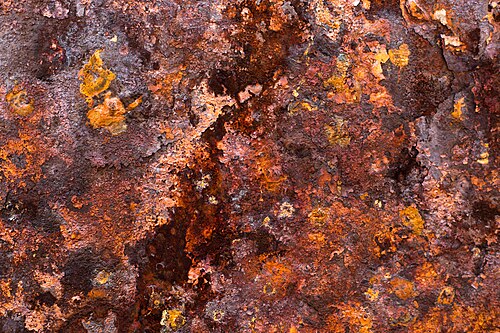
Rust is an iron oxide, a usually reddish-brown oxide formed by the reaction of iron and oxygen in the catalytic presence of water or air moisture. Rust consists of hydrous iron(III) oxides (Fe2O3·nH2O) and iron(III) oxide-hydroxide (FeO(OH), Fe(OH)3), and is typically associated with the corrosion of refined iron.
Given sufficient time, any iron mass in the presence of water and oxygen will form rust and could eventually convert entirely to rust. Surface rust is commonly flaky and friable, and provides no passivational protection to the underlying iron unlike other metals such as aluminum, copper, and tin which form stable oxide layers. Rusting is the common term for corrosion of elemental iron and its alloys such as steel. Many other metals undergo similar corrosion, but the resulting oxides are not commonly called "rust".[1]
Several forms of rust are distinguishable both visually and by spectroscopy, and form under different circumstances.[2] Other forms of rust include the result of reactions between iron and chloride in an environment deprived of oxygen. Rebar used in underwater concretepillars, which generates green rust, is an example. Although rusting is generally a negative aspect of iron, a particular form of rusting, known as stable rust, causes the object to have a thin coating of rust over the top; this results from reaction with atmospheric oxygen. If kept free of moisture, it makes the "stable" layer protective to the iron below, albeit not to the extent of other oxides such as aluminium oxide on aluminium.[3]
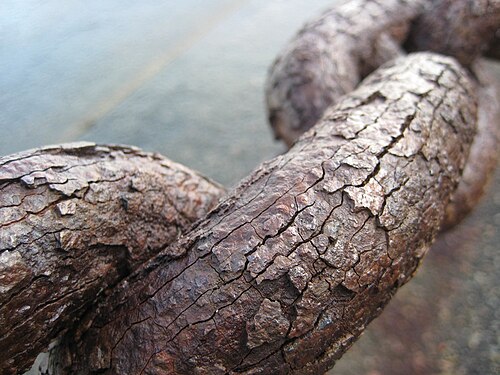

Rust is a general name for a complex of oxides and hydroxides of iron,[4] which occur when iron or some alloys that contain iron are exposed to oxygen and moisture for a long period of time. Over time, the oxygen combines with the metal, forming new compounds collectively called rust, in a process called rusting. Rusting is an oxidation reaction specifically occurring with iron. Other metals also corrode via similar oxidation, but such corrosion is not called rusting.
The main catalyst for the rusting process is water. Iron or steel structures might appear to be solid, but water molecules can penetrate the microscopic pits and cracks in any exposed metal. The hydrogen atoms present in water molecules can combine with other elements to form acids, which will eventually cause more metal to be exposed. If chloride ions are present, as is the case with saltwater, the corrosion is likely to occur more quickly. Meanwhile, the oxygen atoms combine with metallic atoms to form the destructive oxide compound. These iron compounds are brittle and crumbly and replace strong metallic iron, reducing the strength of the object.
When iron is in contact with water and oxygen, it rusts.[5] If salt is present, for example in seawater or salt spray, the iron tends to rust more quickly, as a result of chemical reactions. Iron metal is relatively unaffected by pure water or by dry oxygen. As with other metals, like aluminium, a tightly adhering oxide coating, a passivation layer, protects the bulk iron from further oxidation. The conversion of the passivating ferrous oxide layer to rust results from the combined action of two agents, usually oxygen and water.
Other degrading solutions are sulfur dioxide in water and carbon dioxide in water. Under these corrosive conditions, iron hydroxide species are formed. Unlike ferrous oxides, the hydroxides do not adhere to the bulk metal. As they form and flake off from the surface, fresh iron is exposed, and the corrosion process continues until either all of the iron is consumed or all of the oxygen, water, carbon dioxide or sulfur dioxide in the system are removed or consumed.[6]
When iron rusts, the oxides take up more volume than the original metal; this expansion can generate enormous forces, damaging structures made with iron. See economic effect for more details.
The rusting of iron is an electrochemical process that begins with the transfer of electrons from iron to oxygen.[7] The iron is the reducing agent (gives up electrons) while the oxygen is the oxidizing agent (gains electrons). The rate of corrosion is affected by water and accelerated by electrolytes, as illustrated by the effects of road salt on the corrosion of automobiles. The key reaction is the reduction of oxygen:
Because it forms hydroxideions, this process is strongly affected by the presence of acid. Likewise, the corrosion of most metals by oxygen is accelerated at low pH. Providing the electrons for the above reaction is the oxidation of iron that may be described as follows:
The following redox reaction also occurs in the presence of water and is crucial to the formation of rust:
In addition, the following multistep acid–base reactions affect the course of rust formation:
as do the following dehydration equilibria:
From the above equations, it is also seen that the corrosion products are dictated by the availability of water and oxygen. With limited dissolved oxygen, iron(II)-containing materials are favoured, including FeO and black lodestone or magnetite (Fe3O4). High oxygen concentrations favour ferric materials with the nominal formulae Fe(OH)3−xOx⁄2. The nature of rust changes with time, reflecting the slow rates of the reactions of solids.[5]
さらに、これらの複雑なプロセスは、 Ca 2+などの他のイオンの存在によって影響を受けます。Ca 2+は電解質として働き、錆の形成を促進したり、鉄の水酸化物や酸化物と結合してさまざまな Ca、Fe、O、OH 種を沈殿させたりします。
錆の発生は、実験室でフェロキシル指示薬溶液を用いることによっても検出できる。この溶液は、Fe²⁺イオンと水酸化物イオンの両方を検出する。Fe²⁺イオンと水酸化物イオンの生成は、それぞれ青色とピンク色の斑点で示される。
鉄鋼製品は広く普及し、その重要性も高いため、また錆びは製品の強度、機能性、外観を著しく損なうため、錆びの防止と制御は、多くの専門技術分野における主要な経済活動の基盤となっています。ここでは、その方法の概要を簡単に紹介します。詳細については、相互参照されている記事をご覧ください。
錆は空気や水を通すため、錆層の下にある金属鉄は腐食が進行します。したがって、錆の発生を防ぐには、錆の発生を阻害するコーティングが必要です。
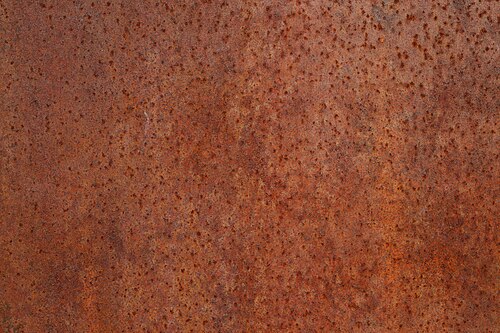
ステンレス鋼は酸化クロム(III)の不動態層を形成する。[ 8 ] [ 9 ]マグネシウム、チタン、亜鉛、酸化亜鉛、アルミニウム、ポリアニリン、その他の電気活性導電性ポリマーでも同様の不動態化挙動が見られる。[ 10 ]
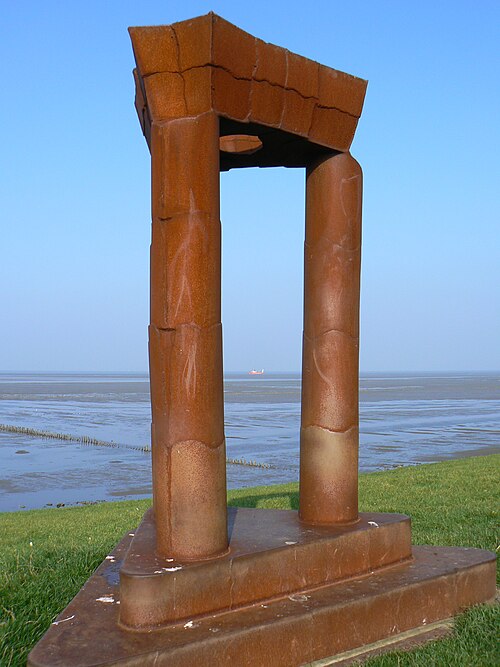
Cor-Tenなどの特殊な「耐候性鋼」合金は、錆が金属表面に保護層として付着するため、通常の鋼材よりもはるかに遅い速度で錆びます。この材料を使用する設計では、ほぼ理想的な条件下でも材料がゆっくりと錆び続けるため、最悪の暴露を避けるための対策を講じる必要があります。[ 11 ]

Galvanization consists of an application on the object to be protected of a layer of metallic zinc by either hot-dip galvanizing or electroplating. Zinc is traditionally used because it is cheap, adheres well to steel, and provides cathodic protection to the steel surface in case of damage of the zinc layer. In more corrosive environments (such as salt water), cadmium plating is preferred instead of the underlying protected metal. The protective zinc layer is consumed by this action, and thus galvanization provides protection only for a limited period of time.
More modern coatings add aluminium to the coating as zinc-alume; aluminium will migrate to cover scratches and thus provide protection for a longer period. These approaches rely on the aluminium and zinc oxides protecting a once-scratched surface, rather than oxidizing as a sacrificial anode as in traditional galvanized coatings. In some cases, such as very aggressive environments or long design life, both zinc and a coating are applied to provide enhanced corrosion protection.
Typical galvanization of steel products that are to be subjected to normal day-to-day weathering in an outside environment consists of a hot-dipped 85 μm zinc coating. Under normal weather conditions, this will deteriorate at a rate of 1 μm per year, giving approximately 85 years of protection.[12]
Cathodic protection is a technique used to inhibit corrosion on buried or immersed structures by supplying an electrical charge that suppresses the electrochemical reaction. If correctly applied, corrosion can be stopped completely. In its simplest form, it is achieved by attaching a sacrificial anode, thereby making the iron or steel the cathode in the cell formed. The sacrificial anode must be made from something with a more negative electrode potential than the iron or steel, commonly zinc, aluminium, or magnesium. The sacrificial anode will eventually corrode away, ceasing its protective action unless it is replaced in a timely manner.
Cathodic protection can also be provided by using an applied electrical current. This would then be known as ICCP Impressed Current Cathodic Protection.[13]

錆の発生は、鉄を環境から隔離する塗料、ラッカー、ワニス、ワックステープなどのコーティングによって制御できます[ 14 ] 。 [ 15 ]船舶や現代の自動車など、箱型断面の密閉構造を持つ大型構造物には、ワックスベースの製品(技術的には「スラッシュオイル」)がこれらの断面に注入されることがよくあります。このような処理には通常、錆抑制剤も含まれています。鋼をコンクリートで覆うことで、鋼とコンクリートの界面のアルカリ性pH環境により、鋼をある程度保護することができます。しかし、コンクリート中の鋼の錆は、膨張する錆が内部からコンクリートを破壊できるため、依然として問題となる可能性があります。[ 16 ] [ 17 ]
密接に関連する例として、 1898年にギリシャのアテネにあるパルテノン神殿の修復作業中に大理石のブロックを接合するために鉄製のクランプが使用されましたが、保護されていない鉄が錆びて膨張したため、大理石に大きな損傷を与えました。古代ギリシャの建築家は、建設中に大理石のブロックに同様の固定システムを使用していましたが、地震の衝撃や腐食から保護するために、鉄の接合部に溶融鉛を流し込んでいました。この方法は2500年前の建造物には成功しましたが、1世紀も経たないうちに、粗雑な修復は崩壊の危機に瀕していました。 [ 18 ]保管や輸送のために一時的な保護だけが必要な場合は、鉄の表面に油、グリース、またはコスモリン などの特殊な混合物を薄く塗布することができます。このような処理は、鋼鉄製の船、自動車、その他の機器を長期保管するために「防錆」する際に広く使用されています。
特殊な焼き付き防止潤滑剤混合物が市販されており、金属ねじやその他の精密機械加工面に塗布して錆から保護します。これらの化合物は通常、グリースに銅、亜鉛、またはアルミニウム粉末、およびその他の独自の成分を混合したものです。[ 19 ]
ブルーイングとは、銃器などの小型鋼製品に対して、錆びに対する限定的な耐性を与えることができる技術です 。この技術を成功させるには、ブルーイング処理を施した鋼材やその他の鋼材に、撥水性の油を塗り込む必要があります。
気相型や揮発性などの腐食抑制剤は、密閉されたシステム内部の腐食防止に使用できます。しかし、空気循環によってこれらの抑制剤が拡散し、新鮮な酸素や水分が流入すると、効果は低下します。
大気中の水分を制御することで錆を防ぐことができます。[ 20 ]その一例として、海上輸送される機器の湿度を制御するためにシリカゲルパックを使用することが挙げられます。
電気分解による小型鉄または鋼鉄製品の錆除去は、水道水に溶かした炭酸ナトリウムからなる電解液を入れたプラスチック製のバケツ、陽極として機能する溶液中に垂直に吊るされた鉄筋、対象物を吊るすための支えとして機能するバケツの上部に渡された別の鉄筋、水平の鉄筋から溶液中の対象物を吊るすための結束線、および正極端子を陽極に、負極端子を陰極となる処理対象物にクランプする電源としてのバッテリー充電器などの簡単な材料を使用して、家庭の作業場で行うことができます。[ 21 ]陰極と陽極ではそれぞれ水素ガスと酸素ガスが発生します。この混合物は可燃性/爆発性です。[ 22 ]水素脆化を避けるように注意する必要があります。過電圧は、非常に有毒なオゾンを少量生成するため、低電圧の電話充電器ははるかに安全な直流電流源です。水素が地球温暖化に及ぼす影響も最近注目されています。[ 23 ]
錆は、タンニン酸やリン酸を含む錆転換剤と呼ばれる市販製品で処理したり、クエン酸や酢などの有機酸で除去したり、一部の市販製剤に含まれるキレート剤や糖蜜溶液で除去したりすることができる。[ 24 ]
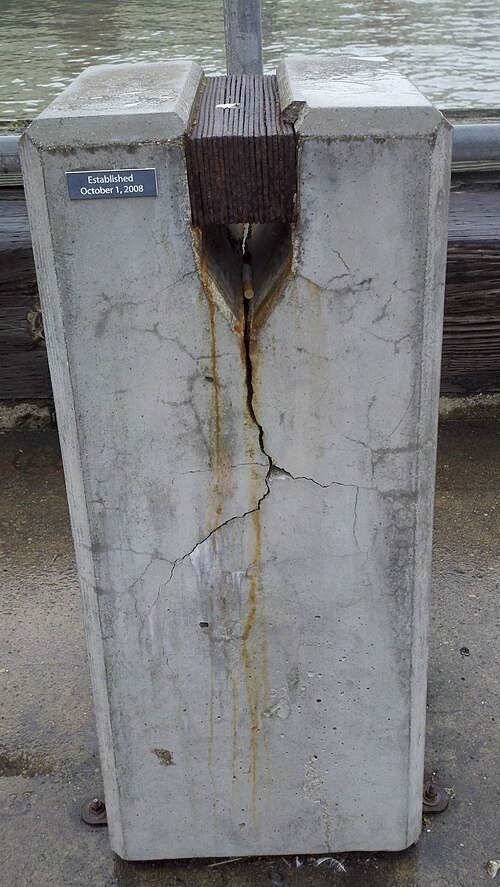
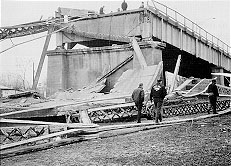
錆は鉄製の工具や構造物の劣化と密接に関係しています。錆は元の鉄の質量よりもはるかに体積が大きいため、その蓄積によって隣接する部品が押し離され、構造物の破損を引き起こすことがあります。これは「錆ジャッキ」と呼ばれる現象です。 1983年にミアヌス川の橋が崩落した際も、この錆が原因でした。ベアリングが内部で錆び、道路スラブの一角が支持部から押し出されたのです。
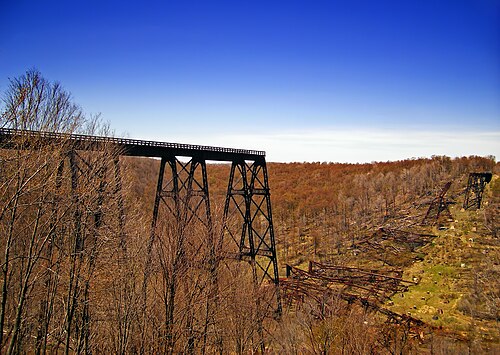
1967年にウェストバージニア州で発生したシルバーブリッジの事故では、鋼鉄製の吊り橋が1分足らずで崩落し、当時橋の上にいた運転手や乗客46人が死亡した。ペンシルベニア州のキンズア橋は2003年に竜巻によって倒壊したが、これは主に橋を地面に固定していた中央の基部のボルトが錆びて腐食し、橋が重力だけで支えられていたためである。
鉄筋コンクリートは錆による損傷にも弱い。コンクリートで覆われた鋼材や鉄の腐食が拡大することで生じる内部圧力により、コンクリートが剥離し、深刻な構造上の問題を引き起こす可能性がある。これは、鉄筋コンクリート製の橋梁や建築物において最も一般的な破損形態の一つである。


錆は、放置による緩やかな衰退を表す比喩としてよく用いられます。なぜなら、錆は頑丈な鉄や鋼を徐々に柔らかく崩れやすい粉末に変えてしまうからです。かつて製鉄所、自動車産業、その他の製造業が盛んだったアメリカ中西部と北東部の工業地帯の大部分は、厳しい経済縮小を経験し、「ラストベルト(錆びついた地帯)」と呼ばれるようになりました。
音楽、文学、美術において、錆は色褪せた栄光、放置、エントロピー、衰退、そして破滅といったイメージと結び付けられている。
従来の鋼よりも錆びにくく、錆が保護膜を形成して将来の腐食速度を遅らせます。
大気腐食については、亜鉛めっき協会のミレニアムマップ(平均亜鉛腐食速度)を参照してください。イングランドとウェールズの約50%は、腐食速度が1μm
/年未満です。
{{cite book}}: CS1 メンテナンス: その他 (リンク)