
Loading article…
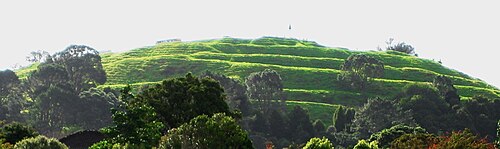
pā(マオリ語の発音:[ ˈpaː ]、英語ではpaと綴られることが多い)という言葉は、マオリの村や防御集落全般を指すが、多くの場合、柵や防御段丘を備えた要塞集落である丘陵要塞や、要塞化された村を指す。pāの遺跡は主にニュージーランドの北島、タウポ湖の北に分布している。5,000以上の遺跡が発見され、写真撮影や調査が行われているが、詳細な分析の対象となったものはごくわずかである。pāに似たバリエーションは、中央ポリネシア全域、フィジー、トンガ、マルケサス諸島の島々に見られる。
マオリ文化において、巨大なパ(砦)は、ランガティラ(首長)によって象徴されるイウィ(部族または部族連合)のマナ(威信または権力)と戦略的能力を表していた。マオリは、肥沃な農地や食料供給を守るため、イウィの領土(ロヘ)周辺の様々な防御に適した場所にパを築いた。
ほぼすべてのパは、特に火山丘などの目立つ高台に建設されました。丘の自然な傾斜はその後段々畑になります。現在のオークランドでは、休火山がパによく利用されていました。パは多目的に機能します。ニュージーランド戦争後、そして最近では広範囲に研究されたパは、食料や水の貯蔵場所や井戸、食料貯蔵穴(特にサツマイモ用)[ 1 ] 、そしてパ内部で維持された小規模な統合プランテーションを保護する役割を果たしていたことがわかっています。
近年の研究によると、ほとんどの場合、単一のパに長期にわたって居住する人は少なく、イウィは複数のパを同時に維持しており、多くの場合、ハプー(支族)の支配下にあった。初期のヨーロッパの学術研究では、パはヨーロッパの町に類似した孤立した集落とみなされていた。通常、パは季節的に居住するより広い地域の一部であった。[ 2 ]パ間の地域は主に共同の居住地および園芸地であった。時間の経過とともに、一部のパは純粋な防御場所というよりも、展示場所および地位の象徴(te tohu rangatira)としてより重要になった可能性がある。[ 3 ] [ 2 ]

伝統的なパはさまざまなデザインがありました。最もシンプルなパであるパ・トゥワタワタは、一般的に村の要塞を囲む単一の木製の柵と、防御と攻撃のためのいくつかの高台で構成されていました。パ・マイオロは、複数の土塁、待ち伏せの隠れ場所として使用される土の溝、および複数の列の柵を使用しました。最も洗練されたパはパ・ワキノと呼ばれ、一般的に他のすべての特徴に加えて、より多くの食料貯蔵エリア、井戸、より多くの段々畑、土塁、柵、戦闘ステージ、前哨ステージ、地下の掘られた柱、より多くの地下通信通路、脱出通路、精巧な伝統的な彫刻が施された入口、芸術的に彫刻された主柱を備えた「ティヒ」と呼ばれる山または丘の頂上エリアが含まれていました。
イギリスの砦と異なるパの重要な特徴は、食料貯蔵用の穴が組み込まれていることでした。中には、食料を安全に保管するためだけに作られたパもありました。パの立地には、火山、尾根、岬、尾根、半島、そして人工島を含む小さな島々などがあります。
標準的な特徴としては、長期的な水の供給のための共同井戸、指定された廃棄物処理場、山頂にある前哨基地または高台があり、そこにパフが枠に吊るされ、叩くと住民に攻撃を知らせる仕組みになっていた。パフは中央に溝のある大きな長方形の木片で、重い木片を溝の両側に叩いて警報を鳴らした。[ 4 ]ランガティラとアリキ(首長)のワレ(マオリの住居または小屋)は、武器庫とともに山頂に建てられることが多かった。17 世紀と 18 世紀には、タイアハが最も一般的な武器だった。山頂にある首長の要塞は通常のワレよりも大きく、4.5 メートル x 4 メートルのものもあった。
ノースランドで発掘されたパ(要塞)からは、黒曜石(火山ガラス)、チャート、粘板岩玄武岩、剥片、ポウナム(ニュージーランド翡翠)の鑿、手斧 、骨や象牙の武器、そして何百年にもわたって蓄積された多種多様なハンマーなど、マオリ族の道具や武器の製造に関する数多くの手がかりが得られている。
Chert, a fine-grained, easily worked stone, familiar to Māori from its extensive use in Polynesia, was the most commonly used stone, with thousands of pieces being found in some Northland digs. Chips or flakes of chert were used as drills for pā construction, and for the making process of other industrial tools like Polynesian fish hooks. Another find in Northland pā studies was the use of what Māori call "kokowai", or red ochre, a red dye made from red iron or aluminium oxides, which is finely ground, then mixed with an oily substance like fish oil or a plant resin. Māori used the chemical compound to keep insects away in pā built in more hazardous platforms in war. The compound is still widely used on whare and waka, and is used as a coating to prevent the wood from drying out.
Pā studies showed that on lower pā terraces were semi-underground whare (huts) about 2.4 m x 2 m for housing kūmara. These houses or storage houses were equipped with wide racks to hold hand-woven kūmara baskets at an angle of about 20 degrees, to shed water.
These storage whare had internal drains to drain water.[5] In many pā studies, kūmara were stored in rua (kūmara pits). Common or lower rank Māori whare were on the lower or outer land, sometimes partly sunk into the ground by 30–40 cm. On the lower terraces, the ngutu (entrance gate) is situated. It had a low fence to force attackers to slow and take an awkward high step. The entrance was usually overlooked by a raised stage so attackers were very vulnerable.
Most food was grown outside the pā, though in some higher ranked pā designs there were small terraces areas to grow food within the palisades. Guards were stationed on the summit during times of threat. The blowing of a polished shell trumpet or banging a large wooden gong signalled the alarm. In some pā in rocky terrain, boulders were used as weapons. Some iwi such as Ngāi Tūhoe did not construct pā during early periods, but used forest locations for defence, attack and refuge – called pā rūnanga. Leading British archaeologist, Lady Aileen Fox (1976) has stated that there were about 2,000 hillforts in Britain and that New Zealand had twice that number but further work since then has raised the number of known pā to over 5,000.
Pā played a significant role in the New Zealand Wars. They are also known from earlier periods of Māori history from around 500 years ago, suggesting that Māori iwi ranking and the acquiring of resources and territory began to bring about warfare and led to an era of pā evolution.[6][7]


Their main defence was the use of earth ramparts (or terraced hillsides), topped with stakes or wicker barriers. The historically later versions were constructed by people who were fighting with muskets and melee weapons (such as spears, taiaha and mere) against the British Army and armed constables, who were equipped with swords, rifles, and heavy artillery such as howitzers[8] and rocket artillery.
Simpler gunfighter pā of the post contact period could be put in place in very limited time scales, sometimes two to fifteen days, but the more complex classic constructions took months of hard labour, and were often rebuilt and improved over many years. The normal methods of attacking a classic pā were firstly the surprise attack at night when defences were not routinely manned. The second was the siege which involved less fighting and results depended on who had the better food resources. The third was to use a device called a Rou – a half-metre length of strong wood attached to a stout length of rope made from raupō leaves. The Rou was slipped over the palisade and then pulled by a team of toa until the wall fell. Gunfighter pā could resist bombardment for days with limited casualties although the psychological impact of shelling usually drove out defenders if attackers were patient and had enough ammunition. Some historians have wrongly credited Māori with inventing trench warfare with its associated variety of earth works for protection.[9] Serious military earth works were first recorded in use by French military engineers in the 1700s and were used extensively at Crimea and in the US Civil War. Māori's undoubted skill at constructing earthworks evolved from their skill at building traditional pā which, by the late 18th century, involved considerable earthworks to create rua (food storage pits), ditches, earth ramparts and multiple terraces.
Warrior chiefs like Te Ruki Kawiti realised that these properties were a good counter to the greater firepower of the British. With that in mind, they sometimes built pā purposefully as a defensive fortification, like at Ruapekapeka, a new pā constructed specifically to draw the British away, instead of protecting a specific site or place of habitation like more traditional classic pā.[10] At the Battle of Ruapekapeka the British suffered 45 casualties against only 30 amongst the Māori. The British learned from earlier mistakes and listened to their Māori allies. The pā was subjected to two weeks of bombardment before being successfully attacked. Hōne Heke won the battle and "he carried his point", with the Crown never tried to resurrect the flagstaff at Kororareka while Kawiti lived.[11] Afterwards, British engineers twice surveyed the fortifications, produced a scale model and tabled the plans in the House of Commons.[12]
このような目的のために建設されたパの要塞には、地面に約 1.5 m 埋め込まれた硬いプーリリの幹と割った木材の柵があり、後期のガンファイター パでは保護用の亜麻の束が詰められていました。2 列の柵は個々のピットを備えた射撃溝を覆い、より多くの防御兵が 2 列目の柵を使用して下の 1 列目の頭上を越えて射撃することができました。オハエワイ パやルアペカペカで見られるように、さまざまな部分をつなぐための簡単な連絡溝やトンネルも建設されました。砦には、木製の梁の上に厚い土の層で保護された地下壕が含まれることもあり、砲撃が激しい時期には住民を避難させました。[ 12 ]
しかし、定型的に建設されなかったマオリの要塞の制約要因は、そこに住む人々が食料を栽培したり、荒野から食料を採取したりするために頻繁にそこを離れる必要があったことである。そのため、パは毎年4~6か月間、季節的に放棄されることが多かった。[ 13 ]マオリの伝統では、首長が殺された場合や、トフンガ(呪術医)が悪霊(アトゥア)のせいだとした災難が起こった場合にも、パは放棄された。1860年代、マオリは名目上はキリスト教徒であったが、同時にティカンガの側面も守っていた。通常、3月~4月にクマラが収穫され貯蔵されると、住民はより移動的な生活を送り、交易や冬に必要な他の食料の収穫・採取を行うことができたが、ウトゥ(報復)の欲求が強ければ、この期間外に戦争が起こるのを止めることはできなかった。マオリ族にとって夏は通常の戦闘シーズンであり[ 14 ]、そのため彼らは、年間を通して効率的に戦闘できる組織化された兵站部隊を持つイギリス軍との紛争において大きな不利を被った。
フォックスは、湖畔のパはワイカト地方などの内陸部でかなり一般的だったと指摘した。それらはしばしば、大家族(whānau)規模のグループのために建設されたようである。地形は平坦なことが多かったが、岬や突端の場所が好まれた。湖畔は通常、一列の柵で保護されていたが、陸側の境界は二重の柵で保護されていた。ワイカトのマンガカワレ湿地パは、面積が約3,400平方メートルであった。137の柵柱穴が確認された。おそらく、柱の総数は約500本であった。柵内には8つの建物があり、そのうち6つはワレ(住居)と特定されており、最大のものは2.4メートル×6メートルであった。1つの建物は調理小屋であった可能性があり、最後の1つは大きな倉庫であった。湿地側の柵のすぐ外側には、1.5メートル×3メートルの長方形の構造物が1つあり、これはおそらく乾燥棚か倉庫であった。沼地や湖からは、ウナギ、アヒル、ウェカ(沼地の鳥)、そして場合によっては魚が獲れた。この種の遺跡の中で最大規模のものは、ヒンガカカの戦いのすぐ近く、ワイカト地方のンガロト湖で発見された。ここはンガティ・アパクラ族の古代の集落であり、はるかに大規模な建造物であった。泥炭層からは、多数の木彫りの工芸品が保存された状態で発見された。これらは近隣のテ・アワムツ博物館に展示されている。
クライストチャーチの北にあるカイアポイは、沼地を防御の要として利用したパの有名な例である。[ 15 ]クライストチャーチの南、エルズミア湖/テ・ワイホラの西岸にあるタウムトゥの集落は、沼地に囲まれた乾燥地の半島に防御的に配置されていたが、その後の湖の水位低下により湿地が干上がり、パは海に浸食された。[ 16 ]

世紀と15世紀の期間は過渡期と呼ばれてきた[...]。[...] 貯蔵穴にサツマイモの塊茎を保存する習慣が発展したことで(熱帯気候では不要だったプロセス)、コミュニティは貯蔵穴に留まらざるを得なくなった。特に人口増加の時代、資源をめぐる競争によって、食料が不足している隣人が食料庫を襲撃する誘惑に駆られる可能性があった。この最後の要因が、北から南へとパと呼ばれるようになった要塞化された丘の頂上の出現と拡散に何よりも拍車をかけた。おそらくサツマイモの塊茎を保護する必要性から始まったのだろうが、人口増加、あらゆる資源をめぐる競争、マナまたは自分のグループの権威の追求、そして一般的に戦闘的な文化によって、コミュニティはますます近隣住民や遠方からの略奪者から身を守らなければならなくなったため、パは存続し、より重要になった。