
Loading article…
教皇ミサ(荘厳ミサとも呼ばれる)は、司教が定められた儀式に則って執り行う荘厳ミサまたは荘厳ミサのことです。現代英語では「pontifical」という言葉はほぼ例外なく教皇と関連付けられますが、実際にはどの司教も「 pontiff」と呼ばれることがあります。したがって、教皇ミサの司式者は、教皇、司教、または教皇服を着用することが許されている他の聖職者であれば誰でも構いません。
初期教会では、ミサは通常、司教と他の聖職者によって執り行われました。ローマ典礼では、これが司教が助祭、副助祭、補佐助祭、[ 1 ]香炉係、侍者、その他の奉仕者とともに、式典長を務める司祭の指導の下で執り行う荘厳ミサの形式へと発展しました。多くの場合、助祭と副助祭に割り当てられた特定の役割は司祭によって行われます。声に出して唱える部分はすべて詠唱されますが、祭壇の足元での祈りは、聖歌隊が入祭唱を歌っている間、司教が助祭と副助祭とともに静かに唱えました。
完全な教皇式ミサは、司教が自身の司教座聖堂の司教座でミサを執り行う場合、または許可を得て他の教区の司教座でミサを執り行う場合に行われます。 [ 2 ]
司教が執り行うミサは、司祭が執り行うミサとほぼ同じですが、司教は祭壇の足元での祈りの後にのみマニプルを着用し、司祭や助祭の「Dominus vobiscum」 (主があなたと共にありますように)ではなく「Pax vobis」 (あなた方に平和がありますように)という挨拶を用い、最後の祝福の際に十字を3回切る点が異なります。最後の祝福の前には、 「Sit nomen Domini benedictum」(主の御名が祝福されますように)で始まる式文が唱えられることがあります。
司祭によるミサの執行とは対照的に、司教は荘厳ミサの前半のほぼ全体を、祭壇の左側にある司教座(しばしば司教の玉座と呼ばれる)で、奉献まで執行します。ミサの聖体拝領部分の冒頭の典礼挨拶として「主があなたと共におられますように」( Dominus vobiscum )と言う代わりに、司教は「あなた方に平和がありますように」( Pax vobis)と言います。
司教は司祭の祭服に加えて、さらに別の祭服を着用します。特に明記されていない限り、司教が執り行うミサの通常式では、通常以下の祭服を着用します。
特別式典においては、司教が司教座に着席する際、司教の祭服と同じ典礼色をした、グレミアーレと呼ばれる特別な絹の布が司教の膝の上に置かれる。
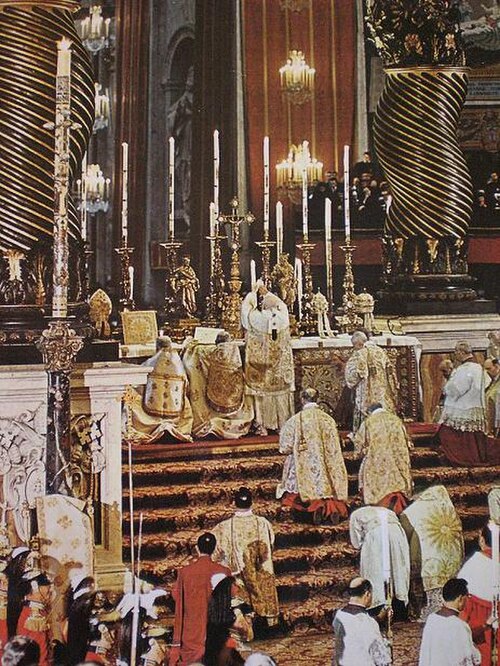
The Pope's Pontifical High Mass, when celebrated with full solemnity, was even more elaborate. As is still done in papal Masses on occasions such as the inauguration of a pontificate, the Gospel and Epistle were sung not only in Latin by a Latin Church deacon and subdeacon, but also in Greek by Eastern clergy, wearing the vestments of their own rite and observing its customs, such as placing the deacon's stole on the Gospel Book and bowing rather than genuflecting. This custom stresses the unity of the universal Catholic Church, formed by both the Eastern and the Western (Latin Church) Churches in full communion.
At the elevations of host and chalice, the Silveri symphony was played on the trumpets of the no longer existing Noble Guard. Through a misunderstanding of the name Silveri, English speakers sometimes referred to this as the sounding of silver trumpets. An asterisk – a common eucharistic implement in the Eastern Rites, in which it is shaped differently from the twelve-ray asterisk that was used in Papal Masses – was used to cover the host on the paten, when it was brought to the Pope at his throne for communion. The Pope drank the Precious Blood, the wine having been consecrated, through a golden tube. Even for the laity, the use of a tube is one of the four ways envisaged in the 1970 revision of the Roman Missal for receiving Communion from the chalice, cf. also General Instruction of the Roman Missal, 248–250. It was also customary for some of the bread and wine used at the Mass to be consumed by the sacristan and the cup-bearer in the presence of the Pope at the offertory and again before the Our Father (Pater noster) in a short ceremony called the praegustatio as a precaution against poison or invalid matter.[3]
アングロ・カトリックの伝統では、英国国教会の「教皇式高ミサ」という用語は、上述の伝統的なトリエント典礼で行われるミサを指すことがあります。典礼書「Ritual Notes」などは、共通祈祷書の礼拝にトリエント典礼を取り入れるための枠組みを提供します。より一般的には、この用語は、通常は司教座の前で司教によって行われるあらゆる高ミサを指すことがあります。教皇式高ミサは、4つの完全な形式の教皇式行事の1つであり、他の3つは、教皇式夕べの祈り、高位聖職者の臨席による高ミサ、高位聖職者の臨席による荘厳夕べの祈りです。より伝統的な形式では、礼拝に必要な奉仕者は、通常の侍者に加えて、ミサの助祭と副助祭、ダルマティカを着た助祭、司教付き司祭を務めるコープとサープリスを着た助祭です。 [ 4 ]

