
Loading article…
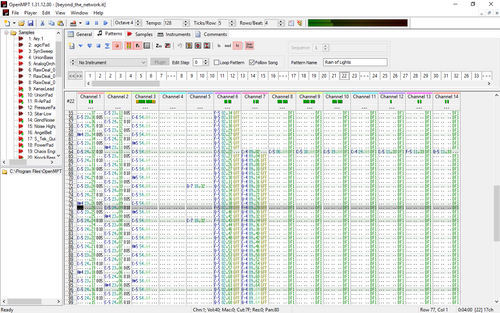
ミュージックトラッカー、または単にトラッカーは、ミュージックシーケンサーの一種です。音楽は、垂直タイムライン上の時系列上の複数のチャンネルに配置された個別の音符として表現されます。 [ 1 ] ミュージックトラッカーのユーザーインターフェースは、従来は数値ベースです。音符、パラメーターの変更、エフェクト、その他のコマンドは、キーボードを使用して、文字、数字、 16進数で構成されるコードとして、固定されたタイムスロットのグリッドに入力します。[ 2 ] 個別のパターンには独立したタイムラインがあり、完全な曲は、繰り返されるパターンのマスターリストで構成されます。
後期のトラッカーはモジュールファイルのみを使用する方式から脱却し、サウンド合成(汎用シンセサイザーやエフェクト、MIDI出力のホスト)とシーケンス(MIDI入力と録音)の両方に他のオプションを追加し、異なるユーザーインターフェースを備えた汎用シーケンサーへと進化しました。
2020年代においても、トラッカーミュージックは旧型ハードウェアプラットフォーム向けのデモシーン製品に採用されており、デモパーティーではトラッカーミュージックのコンテストが別途開催されることも少なくない。また、トラッカーミュージックは、過去数十年の美学を取り入れたゲームや、高度に適応性の高いオリジナルサウンドトラックを備えたゲームにも使用されることがある。
トラッカーという用語は、Karsten Obarski が作成し、1987 年に EAS Computer Technik がAmiga向けにリリースしたUltimate Soundtracker (最初のトラッカー ソフトウェア[ 3 ] ) に由来します。[ 4 ] Obarski は、友人が作成していたゲーム ( Amegas ) のサウンド トラックの制作を支援するためにこのプログラムを作成しました。[ 5 ] Obarski は、プログラムの作成にあたり SoundMonitor の縦型レイアウトからインスピレーションを得ましたが、インターフェースをよりシンプルにしようとしました。彼は 4 つのチャンネルに Melody、Accompany、Bass、Percussions というラベルを付けました。[ 6 ] Ultimate Soundtracker は商用製品でしたが、すぐにNoiseTracker (1989 [ 7 ] )などのシェアウェアクローンも登場しました。トラッカーで使用されている、サンプルを数値的にステップ シーケンスするという一般的な概念は、 1980 年代初頭のFairlight CMIサンプリング ワークステーションにも見られます。 1987年以前には、 MSX(ヤマハCX5M)やコモドール64向けに、クリス・ヒュールスベックのSoundMonitorなど、トラッカーに似た初期のプログラムがいくつか登場したが、これらはサンプル再生機能を備えておらず、コンピュータの内蔵シンセサイザーで音を再生する方式だった。その後、Rock Monitorのようなプログラムでは、RAMメモリにロードされた短いドラムサンプルなど、追加のサンプル再生機能もサポートされるようになった。
最初のトラッカーは、8ビットPCMサンプルの4つのピッチおよびボリューム変調チャンネルをサポートしていました。これは、AmigaのPaulaオーディオチップセットと、サンプリングされたサウンドを保存するために使用される一般的な8SVXフォーマットに起因する制限でした。しかし、ノートはサンプルであったため、この制限は音楽合成チップの制限ほど重要ではありませんでした。[ 8 ]
1990年代には、ソフトウェア制作全般がAmigaプラットフォームからPCに移行したため、トラッカーミュージシャンもPCに傾倒していった。[ 5 ]: 200 IBMと互換機は当初Amigaのようなハードウェアサウンド処理能力を持っていなかったが、 CreativeのSound Blasterシリーズの登場により、 SoundBlaster 16の発売とともにPCオーディオは徐々にCD品質(44.1kHz /16ビット/ステレオ)に近づき始めた。
PCトラッカーシーンで人気を博したもう1つのサウンドカードは、ハードウェアミキシングの伝統を受け継ぎ、32の内部チャンネルとサンプル保存用のオンボードメモリを備えたGravis Ultrasoundでした。一時期、比類のない音質を提供し、目の肥えたトラッカーミュージシャンの選択肢となりました。トラッカーミュージックのサポートが販売促進につながることを理解していたGravisは、参加者に約6000枚のGUSカードを無償提供しました。優れた開発者向けドキュメントと相まって、この取り組みによりGUSはすぐに多くのトラッキングプログラムやソフトウェアの不可欠なコンポーネントとなりました。必然的に、オンボードRAMとウェーブテーブル(またはサンプルテーブル)ミキシング機能を備えたSound Blaster AWE32とその後継機種の登場により、バランスはほぼ回復しました。
オーディオミキシングの責任はハードウェアからソフトウェア(メインCPU)へと移り、徐々に多くのチャンネルが使えるようになった。Amigaの典型的な4 MODチャンネルから、TFMXプレーヤーでは7チャンネル、Oktalyzerで最初に8チャンネル、その後圧倒的に人気が高まったOctaMED(Amiga、1989年)で8チャンネル、ScreamTracker 3(PC、1994年)で32チャンネル、FastTracker 2(PC、1994年)で16チャンネル、そしてImpulse Tracker(PC、1995年)とMED SoundStudio(OctaMEDのアップデート版)で64チャンネルへと制限が緩和された。Symphonie Proと呼ばれるAmigaトラッカーは256チャンネルまでサポートしていた。
そのため、ハードウェアミキシングは長くは続きませんでした。プロセッサの高速化とマルチメディア処理機能(MMXなど)の搭載、そしてDirectXのようなハードウェア抽象化レイヤーの普及に伴い、 AWEやGUSシリーズは時代遅れとなりました。DirectX、WDM、そして現在ではより一般的になっているASIOは、ハードウェアのブランドに関わらず、高品質のサンプリングオーディオを提供します。
また、Sound BlasterシリーズのOPL2およびOPL3チップを活用したサンプルベースのトラッカーから派生した製品もありました。All Sound Trackerは、Sound Blaster AWEシリーズのカードにおいて、OPLチップのFMシンセシスとEMU-8000チップのサンプルベースシンセシスを組み合わせ、さらに任意の追加ハードウェアへのMIDI出力も可能でした。
Jeskola Buzzは、1997年から2000年にかけてMicrosoft Windows向けに開発されたモジュラー音楽スタジオで、シーケンサーとしてトラッカーを使用し、信号発生器、シンセサイザーエミュレーター、ドラムマシン、サンプラー、エフェクトマシン、コントロールマシンなどの仮想マシン(Buzzmachine)によってサウンドが生成され、それらがモジュラー構成で接続されていました。各マシンには独自のトラッカーがあり、ドラムマシンはトラッカーのようなドラムパターンエディターを使用し、エフェクトマシンとコントロールマシンはパラメーターテーブルを介してトラッカーのように自動化することができました。

トラッカー音楽は、 Unrealシリーズ、Deus Ex、Crusader: No Remorse、Jazz Jackrabbit、Uplinkなど、1990 年代後半から 2000 年代初頭のコンピュータ ゲームで使用されていました。Protracker ( 1990 ) や OctaMEDなどの初期の Amiga トラッカーは、主に他のプラットフォームへの移植のためにさまざまなアップデートを受けています。Protracker は 2004 年に開発が再開され、Windows とAmigaOS向けにバージョン 5 をリリースする予定でしたが、AmigaOS 向けにはバージョン 4.0 beta 2 のみがリリースされました。
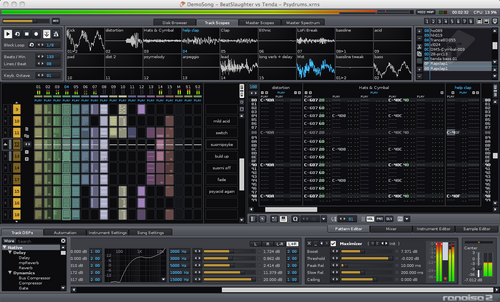
2007年、Renoise(PC、2002年)とOpenMPT (PC、1997年)は、他の音楽制作ソフトウェアのプロフェッショナルで安価な代替品としてComputer Music Magazineで紹介された。 [ 9 ]
現代のトラッカーには、Deflemask [ 10 ] 、 FamiTracker [ 11 ] 、 VGM Music Maker [ 12 ] 、 Furnace [ 13 ] (現在、複数のシステムからの複数のサウンドチップを同時に再生できる唯一のトラッカー(例えば、 Commodore 64とPC-98を同時に再生できる))、SunVox [ 14 ](モジュラーシンセエンジンと自由形式でダイナミックな長さのパターンタイムラインシステムを備えたミュージックトラッカー)などがあるが、これらに限定されない。
The earliest trackers existed to get closer to the hardware of a given machine, allowing memory-light playback of music ideal for games and similar programs.[15] Keeping in theme with this philosophy, a few "hardware trackers" have emerged: specialized hardware designed specifically to host tracker software, in turn designed to exploit the hardware of the machine. These hardware trackers are largely inspired by LittleSoundDJ,[16][17] a tracker created for the original Game Boy.
The first such hardware tracker released was the NerdSeq in 2018, a hybrid tracker-sequencer for Eurorack systems. As a module of said system, it cannot be used alone, and the "tracker" portion of the device is simply used as an interface to sequence, while the hardware is used to handle sampling and other functions.
The first standalone hardware tracker released was the Polyend Tracker in 2020, a USB-powered device with all the functions of a software tracker. It was met with mostly positive critical reception,[18][19] with critics citing a modest price point, standalone all-in-one capability, and intuitive controls. In 2021, DirtyWave released the M8 Tracker, a portable tracker that is more heavily inspired by Little Sound DJ.[20]
There are several elements common to any tracker program: samples, notes, effects, tracks (or channels), patterns, and orders.
A sample is a small digital sound file of an instrument, voice, or other sound effect. Most trackers allow a part of the sample to be looped, simulating a sustain of a note.
A note designates the frequency at which the sample is played back. By increasing or decreasing the playback speed of a digital sample, the pitch is raised or lowered, simulating instrumental notes (e.g., C, C#, D, etc.).
An effect is a special function applied to a particular note. These effects are then applied during playback through either hardware or software. Common tracker effects include volume, portamento, vibrato, retrigger, and arpeggio.
A track (or channel) is a space where one sample is played back at a time. Whereas the original Amiga trackers only provided four tracks, the hardware limit, modern trackers can mix a virtually unlimited number of channels into one sound stream through software mixing. Tracks have a fixed number of "rows" on which notes and effects can be placed (most trackers lay out tracks in a vertical fashion). Tracks typically contain 64 rows and 16 beats, although the beats, rows and tempo can be increased or decreased to the composer's taste.
A basic drum set could thus be arranged by putting a bass drum at rows 0, 4, 8, 12 etc. of one track and putting some hi hat at rows 2, 6, 10, 14 etc. of a second track. Of course, bass and hats could be interleaved on the same track, if the samples are short enough. If not, the previous sample is usually stopped when the next one begins. Some modern trackers simulate polyphony in a single track by setting the "new note action" of each instrument to cut, continue, fade out, or release, opening new mixing channels as necessary.
A pattern is a group of simultaneously played tracks that represents a full section of the song. A pattern usually represents an even number of measures of music composition.
An order is part of a sequence of patterns that defines the layout of a song. Patterns can be repeated across multiple orders to save tracking time and file space.
There are also some tracker-like programs that utilize tracker-style sequencing schemes, while using real-time sound synthesis instead of samples. Many of these programs are designed for creating music for a particular synthesizer chip such as the OPL chips of the Adlib and SoundBlaster sound cards, or the sound chips of classic home computers.
Tracker music is typically stored in module files where the song data and samples are encapsulated in a single file. Several module file formats are supported by popular audio players. Well-known formats include MOD, MED, S3M, XM and IT. Many of these formats can also be imported into existing trackers, allowing to view arrangement, instrumentation and the use of effect commands. This also makes the self-teaching of music composition using trackers easier and allows to extract instruments for later use in own songs, which was very common.[21]
!大手企業に負けない素晴らしい無料音楽ソフトウェア。
この曲がどのように作られたか、どのサンプルが使用され、どのように演奏され、どの楽器が連携して特定のセクションが作られたかなど、正確に見ることができます。