
Loading article…
内視鏡検査は、体内の様子を観察するために医学で用いられる手順です。 [ 1 ]内視鏡検査では、内視鏡を用いて体内の空洞臓器や腔の内部を検査します。他の多くの医療画像診断技術とは異なり、内視鏡は臓器に直接挿入されます。
内視鏡検査には多くの種類があります。体内の部位や検査方法によって、内視鏡検査は医師または外科医によって行われる場合があります。検査中、患者は完全に意識がある場合もあれば、麻酔をかけられる場合もあります。内視鏡検査という用語は、多くの場合、上部消化管の検査、すなわち食道胃十二指腸内視鏡検査を指すのに使用されます。[ 2 ]
同様の機器は、医療用途以外ではボアスコープと呼ばれている。
アドルフ・クスマウルは、喉に剣を突っ込んでもえずかない剣呑み芸人に魅了された。これが、観察のために中空の管を挿入するというアイデアにつながった。次に解決すべき問題は、当時まだろうそくや油ランプを光源として使っていたため、管を通して光を当てる方法だった。[ 3 ]
内視鏡という用語は、1855年2月7日にエンジニア兼光学技師のシャルル・シュヴァリエがデゾルモーの尿道鏡について初めて使用し、デゾルモー自身もその1か月後に前者の用語を使い始めた。[ 4 ]自発光内視鏡は、スコットランドのグラスゴー王立病院(主電源を備えた最初の病院の1つ)で、喉頭の検査を専門とするジョン・マッキンタイアによって1894/1895年に開発された。 [ 5 ]
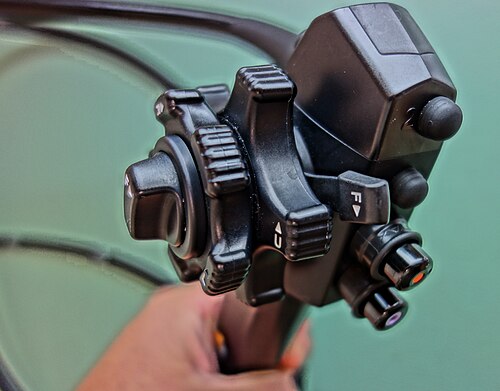
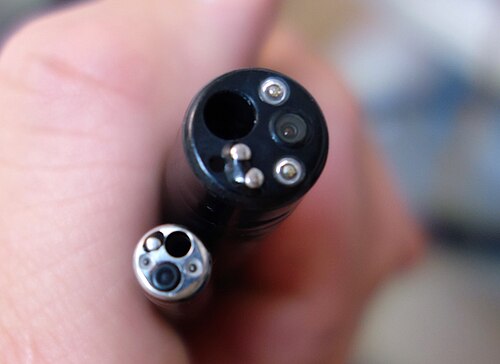
内視鏡検査は、吐き気、嘔吐、腹痛、嚥下困難、消化管出血などの消化器系の症状を調べるために用いられることがあります。[ 6 ]また、診断にも用いられ、最も一般的には生検を行い、貧血、出血、炎症、消化器系の癌などの状態を調べます。[ 6 ]さらに、出血している血管の焼灼、狭くなった食道の拡張、ポリープの切除、異物の除去などの治療にも用いられることがあります。 [ 6 ]
消化器疾患を専門とする専門家団体は、バレット食道の患者の多くが内視鏡検査を頻繁に受けすぎていると指摘している。[ 7 ]これらの団体は、バレット食道で2回の生検後に癌の症状がない患者は、必要に応じて生検を受け、推奨される頻度を超えないようにすることを推奨している。[ 8 ] [ 9 ]


医療従事者は、内視鏡を用いて以下の身体部位を検査することができます。
内視鏡検査は、以下のような多くの処置に用いられます。
内視鏡検査は、医師が内視鏡と呼ばれる器具を使って人体内部を観察できる簡単な処置です。内視鏡の先端に切開器具を取り付けることで、組織生検、食道静脈瘤の結紮、ポリープの切除といった軽微な処置を行うことができます。
The main risks are infection, over-sedation, perforation, or a tear of the stomach or esophagus lining and bleeding.[10] Although perforation generally requires surgery, certain cases may be treated with antibiotics and intravenous fluids. Bleeding may occur at the site of a biopsy or polyp removal. Such typically minor bleeding may simply stop on its own or be controlled by cauterisation. Surgery may become necessary. Perforation and bleeding are rare during gastroscopy. Other minor risks include drug reactions and complications related to other diseases the patient may have. Consequently, patients should inform their doctor of all allergic tendencies and medical problems. Occasionally, the site of the sedative injection may become inflamed and tender for a short time. This is usually not serious, and warm compresses for a few days are usually helpful. While any of these complications may occur, each of them occurs infrequently. A doctor can discuss risks with the patient about the particular need for gastroscopy.
After the procedure, the patient will be observed and monitored by a qualified individual in the endoscopy room or a recovery area until a significant portion of the medication has worn off. Occasionally, the patient is left with a mild sore throat, which may respond to saline gargles or chamomile tea. It may last for weeks or not happen at all. The patient may have a feeling of distention from the insufflated air that was used during the procedure. Both problems are mild and fleeting. When fully recovered, the patient will be instructed when to resume their usual diet (probably within a few hours) and will be allowed to be taken home. Where sedation has been used, most facilities mandate that the patient be taken home by another person and that they not drive or handle machinery for the remainder of the day. Patients who have had an endoscopy without sedation can leave unassisted.