
Loading article…
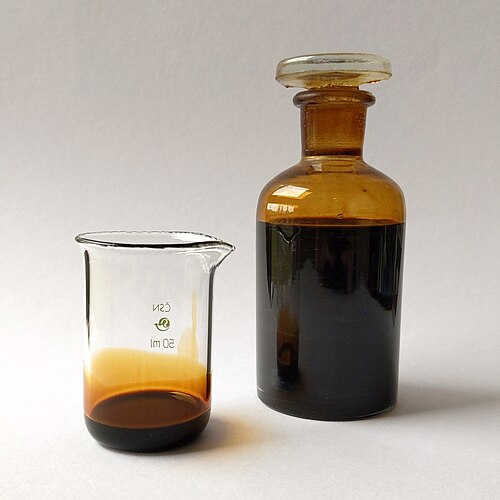

生物由来物質とは、生命体によって、または生命体から作られる物質のことです。この用語は元々、他の生物に毒性効果を持つ代謝物化合物に特有のものでしたが、[ 1 ]植物や動物のあらゆる構成成分、分泌物、代謝物を包含するように発展しました。[ 2 ]分子生物学の文脈では、生物由来物質は生体分子と呼ばれます。これらは一般的に、クロマトグラフィーや質量分析法を用いて分離および測定されます。[ 3 ] [ 4 ]さらに、生物由来物質の変換と交換は、環境、特に水路での輸送においてモデル化することができます。[ 5 ]
生物由来物質の観察と測定は、地質学と生化学の分野で特に重要である。地質堆積物中のイソプレノイドと脂肪酸の大部分は植物とクロロフィルに由来し、先カンブリア時代にまで遡るサンプルで見られる。[ 4 ]これらの生物由来物質は堆積物中の続成作用に耐えることができるが、他の物質に変化することもある。[ 4 ]このため、地質学者がさまざまな岩石の年代、起源、劣化過程を確認するためのバイオマーカーとして有用である。 [ 4 ]
生物由来物質は、1960年代から海洋生化学の一部として研究されており、[ 6 ]水中での生成、輸送、変換、[ 5 ]および産業用途での利用方法の調査が含まれています。[ 6 ]海洋環境における生物由来化合物の大部分は、シアノバクテリアを含む微細藻類および大型藻類によって生成されます。[ 6 ]抗菌特性のため、現在、防汚塗料などの産業プロジェクト[ 1 ]や医療[ 6 ]の両方で研究されています。

During a meeting of the New York Academy of Sciences' Section of Geology and Mineralogy in 1903, geologist Amadeus William Grabau proposed a new rock classification system in his paper 'Discussion of and Suggestions Regarding a New Classification of Rocks'.[7] Within the primary subdivision of "Endogenetic rocks" – rocks formed through chemical processes – was a category termed "Biogenic rocks", which was used synonymously with "Organic rocks". Other secondary categories were "Igneous" and "Hydrogenic" rocks.[7]
In the 1930s German chemist Alfred E. Treibs first detected biogenic substances in petroleum as part of his studies of porphyrins.[4] Based on this research, there was a later increase in the 1970s in the investigation of biogenic substances in sedimentary rocks as part of the study of geology.[4] This was facilitated by the development of more advanced analytical methods, and led to greater collaboration between geologists and organic chemists in order to research the biogenic compounds in sediments.[4]
Researchers additionally began to investigate the production of compounds by microorganisms in the marine environment during the early 1960s.[6] By 1975, different research areas had developed in the study of marine biochemistry. These were "marine toxins, marine bioproducts and marine chemical ecology".[6] Following this in 1994, Teuscher and Lindequist defined biogenic substances as "chemical compounds which are synthesised by living organisms and which, if they exceed certain concentrations, cause temporary or permanent damage or even death of other organisms by chemical or physicochemical effects" in their book, Biogene Gifte.[1][8] This emphasis in research and classification on the toxicity of biogenic substances was partly due to the cytotoxicity-directed screening assays that were used to detect the biologically active compounds.[6] The diversity of biogenic products has since been expanded from cytotoxic substances through the use of alternative pharmaceutical and industrial assays.[6]

日本海のタタール海峡における生物起源物質の輸送を研究したロシアの研究チームは、生物起源物質は外部からの流入、水塊内部での輸送、または水中での代謝プロセスによる生成のいずれかによって海洋環境に流入する可能性があることを指摘した。 [ 5 ]同様に、生物変換プロセスや微生物によるバイオマス形成によって消費されることもある。この研究では、生物起源物質の濃度、変換頻度、および回転率はすべて水の上層で最も高かった。さらに、海峡のさまざまな領域で、年間移動量が最も高い生物起源物質は一定であった。これらは、通常、自然水中に高濃度で存在するO2、DOC、およびDISiであった。 [ 5 ]海峡の外部境界からの流入が少なく、したがって移動量が最も少ない傾向にある生物起源物質は、NとPの鉱物成分と砕屑成分であった。これらの物質は海洋環境における生物変換プロセスに積極的に関与しており、年間排出量も少ない。[ 5 ]

Organic geochemists also have an interest in studying the diagenesis of biogenic substances in petroleum and how they are transformed in sediment and fossils.[4] While 90% of this organic material is insoluble in common organic solvents – called kerogen – 10% is in a form that is soluble and can be extracted, from where biogenic compounds can then be isolated.[4] Saturated linear fatty acids and pigments have the most stable chemical structures and are therefore suited to withstanding degradation from the diagenesis process and being detected in their original forms.[4] However, macromolecules have also been found in protected geological regions.[4] Typical sedimentation conditions involve enzymatic, microbial and physicochemical processes as well as increased temperature and pressure, which lead to transformations of biogenic substances.[4] For example, pigments that arise from dehydrogenation of chlorophyll or hemin can be found in many sediments as nickel or vanadyl complexes.[4] A large proportion of the isoprenoids in sediments are also derived from chlorophyll. Similarly, linear saturated fatty acids discovered in the Messel oil shale of the Messel Pit in Germany arise from organic material of vascular plants.[4]
Additionally, alkanes and isoprenoids are found in soluble extracts of Precambrian rock, indicating the probable existence of biological material more than three billion years ago.[4] However, there is the potential that these organic compounds are abiogenic in nature, especially in Precambrian sediments. While Studier et al.'s (1968) simulations of the synthesis of isoprenoids in abiogenic conditions did not produce the long-chain isoprenoids used as biomarkers in fossils and sediments, traces of C9-C14 isoprenoids were detected.[11] It is also possible for polyisoprenoid chains to be stereoselectively synthesised using catalysts such as Al(C2H5)3 – VCl3.[12] However, the probability of these compounds being available in the natural environment is unlikely.[4]

植物の生体物質を構成するさまざまな生体分子、特に種子滲出液中の生体分子は、実験室環境でさまざまな種類のクロマトグラフィーを使用して識別できます。 [ 3 ]代謝物プロファイリングには、ガスクロマトグラフィー質量分析法を使用して、ケルセチンなどのフラボノイドを検出します。[ 3 ]その後、逆相高速液体クロマトグラフィー質量分析法を使用して化合物をさらに区別できます。[ 3 ]
水域などの自然環境における生物由来物質の測定に関しては、水生態学的[ 13 ] CNPSiモデルを使用して、水平方向と垂直方向の両方で生物由来物質の空間輸送を計算できます。[ 5 ]このモデルは、水の交換と流量を考慮し、任意の月の任意の領域または水層の生物由来物質の速度の値を生成します。主な評価方法は2つあります。単位水量あたりの測定(mg/m³年)と、層全体の水量あたりの物質の測定(元素のt/年)です。[ 5 ]前者は主に生物由来物質の動態とフラックスと変換の個々の経路を観察するために使用され、海峡または水路の個々の領域を比較する場合に役立ちます。2番目の方法は月ごとの物質フラックスに使用され、層内の水量の月ごとの変動を考慮する必要があります。[ 5 ]
地球化学の研究では、生物起源物質は、対象となる岩石サンプルを削り取って粉砕し、40%フッ化水素酸、水、ベンゼン/メタノールを3:1の比率で洗浄するプロセスを経て、化石や堆積物から分離することができます。[ 4 ]その後、岩石片を粉砕して遠心分離し、残留物を生成します。次に、さまざまなクロマトグラフィーと質量分析分離によって化学化合物が抽出されます。[ 4 ]ただし、抽出には、指紋からのアミノ酸汚染物質[ 14 ]や他の分析処理方法からのシリコン汚染物質[ 4 ]がないことを確認するための厳重な予防措置が伴う必要があります。

海洋藻類が産生する代謝産物には、多くの抗菌特性があることがわかっています。[ 1 ]これは、海洋生物が化学的忌避物質として産生し、生物活性化合物を含んでいるためです。これらのタイプの二次代謝産物を産生する主な海洋藻類のクラスは、シアノバクテリア、緑藻類、紅藻類です。[ 1 ]観察された生物由来の産物には、ポリケチド、アミド、アルカロイド、脂肪酸、インドール、リポペプチドなどがあります。[ 1 ]例えば、最も豊富なシアノバクテリアの1つであるLyngbya majusculaから分離された化合物の 10% 以上が、抗真菌性および抗菌性を持っています。[ 1 ] [ 6 ]さらに、Ren らによる研究では、 (2002)は紅藻綱のDelisea pulchraが産生するハロゲン化フランノンをBacillus subtilisの増殖に対して試験した。[ 15 ] [ 1 ] 40μg/mLの濃度で適用すると、フランノンは細菌によるバイオフィルムの形成を阻害し、バイオフィルムの厚さを25%、生細胞数を63%減少させた。[ 15 ]
これらの特性は、環境に有害な化学物質を使用せずに防汚塗料を作るなど、人工材料に利用できる可能性があります。[ 1 ]環境に安全な代替品が必要とされています。TBT (スズ系防汚剤)は、水や環境に有毒化合物を放出し、いくつかの国で禁止されています。[ 1 ]生物由来化合物のクラスで、付着の原因となる細菌や微細藻類に対して大きな効果を発揮するものは、 Caulerpa prolifera (緑藻綱)によって生成されるアセチレンセスキテルペノイドエステルです。Smyrniotopoulos ら(2003)は、これが TBT 酸化物の最大 83% の有効性で細菌の増殖を阻害することを観察しました。[ 16 ]

現在の研究では、代謝工学技術を用いてこれらの生物由来物質を商業レベルで生産することも目指している。[ 1 ]これらの技術を生物化学工学設計と組み合わせることで、光バイオリアクターを用いて藻類とその生物由来物質を大規模に生産することができる。[ 1 ]異なるシステムタイプを使用することで、異なる生物由来製品を得ることができる。[ 1 ]
古化学分類学の分野では、地質堆積物中の生物起源物質の存在は、古い生物試料や現代の生物試料や種を比較する上で有用である。[ 4 ]これらの生物学的マーカーは、化石の生物学的起源を検証するために使用でき、古生態学的マーカーとしても機能する。例えば、プリスタンの存在は、石油や堆積物が海洋起源であることを示しているが、非海洋起源の生物起源物質は多環式化合物やフィタンの形態をとる傾向がある。[ 21 ]生物学的マーカーは、地質環境における生物物質の分解反応に関する貴重な情報も提供する。[ 4 ]地質学的に古い岩石と最近の岩石の有機物を比較すると、さまざまな生化学的プロセスの保存が明らかになる。[ 4 ]

Another application of biogenic substances is in the synthesis of metallic nanoparticles.[3] The current chemical and physical production methods for nanoparticles used are costly and produce toxic waste and pollutants in the environment.[22] Additionally, the nanoparticles that are produced can be unstable and unfit for use in the body.[23] Using plant-derived biogenic substances aims to create an environmentally-friendly and cost-effective production method.[3] The biogenic phytochemicals used for these reduction reactions can be derived from plants in numerous ways, including a boiled leaf broth,[24] biomass powder,[25] whole plant immersion in solution,[23] or fruit and vegetable juice extracts.[26]C. annuum juices have been shown to produce Ag nanoparticles at room temperature when treated with silver ions and additionally deliver essential vitamins and amino acids when consumed, making them a potential nanomaterials agent.[3] Another procedure is through the use of a different biogenic substance: the exudate of germinating seeds. When seeds are soaked, they passively release phytochemicals into the surrounding water, which after reaching equilibrium can be mixed with metal ions to synthesise metallic nanoparticles.[27][3]M. sativa exudate in particular has had success in effectively producing Ag metallic particles, while L. culinaris is an effective reactant for manufacturing Au nanoparticles.[3] This process can also be further adjusted by manipulating factors such as pH, temperature, exudate dilution and plant origin to produce different shapes of nanoparticles, including triangles, spheres, rods, and spirals.[3] These biogenic metallic nanoparticles then have applications as catalysts, glass window coatings to insulate heat, in biomedicine, and in biosensor devices.[3]

非生物起源の物質またはプロセスは、生物の現在または過去の活動によって生じたものではありません。非生物起源の生成物には、例えば、鉱物、その他の無機化合物、単純な有機化合物(例えば、地球外メタン、非生物起源も参照)などがあります。
{{cite book}}: CS1メンテナンス: 場所の発行元が見つかりません (リンク)