Loading article…

A French Empire-style mantel clock is a type of elaborately decorated mantel clock that was made in France during the Napoleonic Empire (1804–1814/15). Timekeepers manufacturing during the Bourbon Restoration (1814/1815–1830) are also included within this art movement as they share similar subjects, decorative elements, shapes, and style.
By the end of the 18th century, from the mid-1770s on, French clockmakers contributed to a new art movement: Neoclassicism. This style in architecture, painting, sculpture, and the decorative arts, that had come into its own during the last years of Louis XV's life, chiefly as a reaction to the excesses of the Rococo movement but also partly through the popularity of the excavations at ancient Herculaneum and Pompeii, in Italy.[1]
Clocks of this style did without the profuse ornamentation and elaborate designs of the preceding Rococo style so typical of the Louis XV reign.
The timekeepers manufacturing during the Louis XVI and the French First Republic historical periods incorporated this new artistic language with classical designs, allegories, and motifs. In the case of the Louis XVI pieces, stone (usually white marble, alabaster or biscuit) was combined with gilded and/or patinated bronze, although certain cases were completely cast in bronze. Some models were architectural (i.e., with no figures) while others displayed classical-style figurines.
During the 1790s, the production of gilded-bronze increased considerably as working conditions improved. The freedom of trade initiated by the French Revolution allowed many casters to develop large factories. Prior to this time, during the ancien régime, they were limited to small workshops and were strictly limited to casting bronze. The new factory environment allowed them the opportunity to execute all stages of bronze work including drawing, casting, gilding, assembly, and trade of art objects.[2] Artisans still benefited from pre-Revolution training and worked according to the standards of a luxury art from the ancien régime, but they had better means of production and organization.


金メッキ青銅を用いた高級品の製造は、19世紀初頭のフランスで最盛期を迎えたと言えるだろう。この素材自体は新しいものではなく、ルイ14世の治世からアンシャン・レジーム時代を通じてヨーロッパで国際的な評価を得ていた。その成功の理由の一つは、青銅が持つ技術的な特性にある。金や銀よりも安価で、成形や金メッキが容易な一般的な素材である。そのため、時計ケース、燭台、家具の装飾品などに好んで用いられるようになった。卓越した青銅鋳造職人や彫金師の技術によって、これらの品々は単なる時計ではなく、美術品へと昇華したのである。
この黄金時代は1820年代後半に終わりを迎えました。職人や労働者の世代が亡くなり、[ 2 ]より安価な金属(真鍮など)がますます使用されるようになり、青銅鋳造はより高度な機械化に入り、生産性の向上、コストと製造時間の削減のために職人技が犠牲になりました。
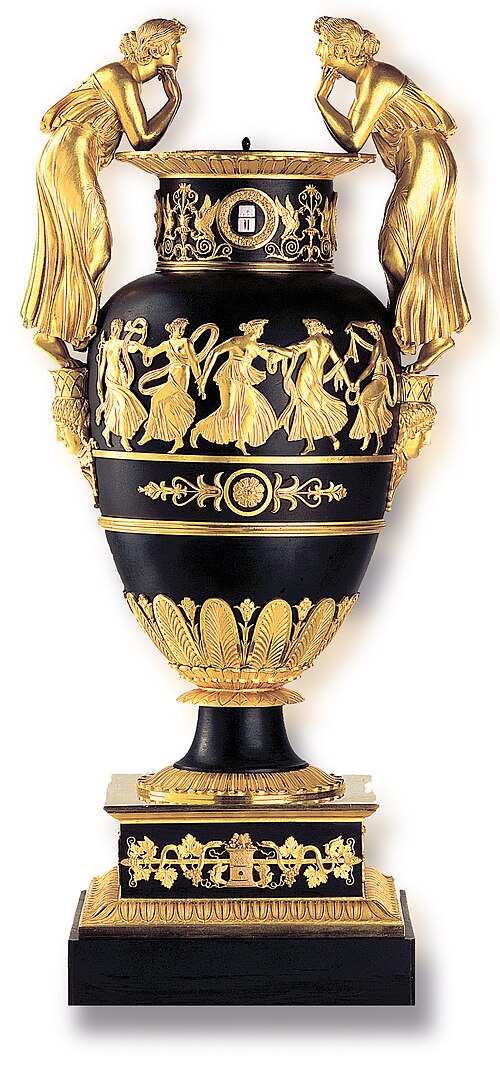
ブロンズは、帝政様式の時計に使用された主な素材であり、この時代には装飾に緑青と金メッキの技法が広く用いられました。 [ 3 ]これらの量産型振り子時計に使用された精巧な造形、金メッキ、緑青仕上げは比類のないものとされています。ほとんどの時計ケースは完全にブロンズで鋳造され、その他は大理石、アラバスター、斑岩で作られた石の台座と組み合わされていました。木材(マホガニーまたは果樹材)や彫刻されたクリスタル(後者は王政復古期に使用されました)も使用されましたが、使用頻度は低くなりました。
この時期、パリには鋳造職人、金箔職人、銀細工職人、彫金職人の工房が40から60軒ほどあった。 [ 4 ]鋳造職人は通常、下絵から蝋型を作り、この蝋型から石膏のネガティブ型を作り、それを複製した。次に、この石膏型を使って型を作り、そこに青銅を鋳造した。人物像と装飾を組み合わせることで、1つのデザインの複数のバージョンが制作された。
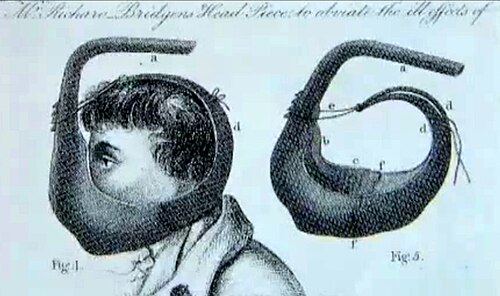
「ドリュール・オ・メルキュール」(火金めっき)の工程で有害な水銀蒸気にさらされたため、ほとんどの金めっき職人は水銀中毒で40歳まで生き延びることができませんでした。当時でさえ、彼らは水銀中毒を防ぐためにあらゆる予防策を講じていました。これらの対策には、パンを噛むことや、銀貨を埋め込んだ革片を舌の上に置くこと(銀貨は水銀に触れると変色する)などがありました。また、頭の後ろから空気を吸い込むためのマスクのようなものも考案されました。しかし、これらの対策はいずれも水銀中毒に対する十分な対策とは言えませんでした。
そのため、1830年頃からフランスの法律で水銀の使用は禁止されたが、1900年頃までは一般的に使用され続け、1960年頃のごく一部の工房でもまだ使用されていた。金メッキに代わるものとして、他の金メッキ技術(19世紀半ば以降の電気メッキなど)が用いられるようになった。
機構に関して言えば、18世紀末頃には、円形時計のムーブメントが信頼性の高い大量生産品となった。「ペンデュール・ド・パリ」(パリ式、またはフランス式時計ムーブメント)として知られるこのムーブメントは、アンクル脱進機を備えた8日間駆動で、絹糸で吊り下げられた振り子と、毎時と30分ごとに鐘を鳴らすカウントホイールが特徴だった。1840年代までには、このシンプルで非常に効果的な絹糸による吊り下げ機構は、様々な調整可能なバネ式吊り下げ機構に取って代わられつつあった。
18世紀に作られた時計の大部分には署名が記されていたのに対し、帝政時代の時計の多くは作者が不明なままであり、特定の作品を特定のブロンズ彫刻家に帰属させるのは困難であることを強調しておく必要がある。さらに、ブロンズ職人の間では作品を売買したり、他人のデザインを模倣したり改変したりすることが一般的であったことも付け加えておくべきだろう。署名がある場合、通常は文字盤に名前が記されており、それはブロンズ職人の名前だけでなく、販売店の名前やムーブメント製造者の名前である可能性もある。
小型の時計は通常ガラスのベルで覆われており、価格は150フランから、宮殿や大邸宅の広間を飾るための大型の時計では7,000フラン[ 5 ]まで様々だった。総価格には、製造工程に関わる様々な人々の労働費が含まれていた。
つまり、製作費の約90%は彫刻とケース製作に費やされたということだ。

これらの時計は、当時流行していた様式であるアンピール様式に従って製造された。アンピール様式は新古典主義の一段階であり、古代ギリシャと特にローマ帝国の古典美術に基づいている。[ 3 ]
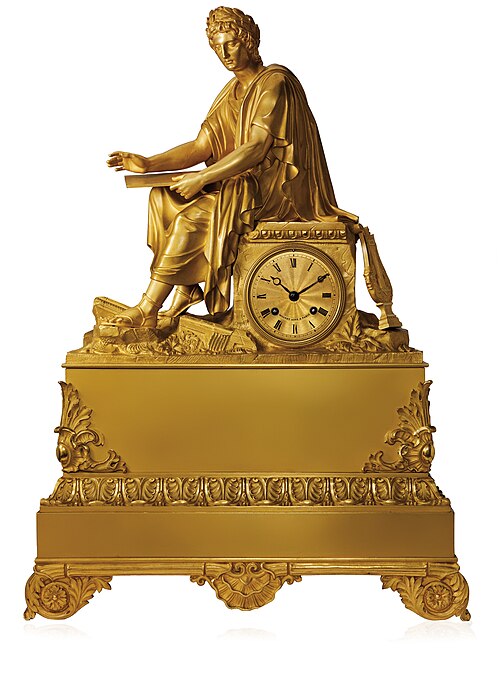
時計ケースの形状には多種多様なものがあったが、最も一般的で人気があったのは、長方形または長方形の台座を、形状や模様の異なる4本(またはそれ以上)の脚で支えた時計であった。台座の前面は通常、花輪、アカンサスの蔓、アクロテリオン、月桂冠、渦巻き模様、花などの古典的な装飾モチーフで飾られていたか、ギリシャ・ローマ神殿のフリーズのように、精巧に彫られた神話や寓話の場面が浮き彫りで描かれていた。台座の上(中央または片側)には時計の文字盤を収める台座が置かれていたが、他のモデルでは、車輪、岩、盾、地球儀、木の幹などに設置されていた。
これらの時計は、芸術、科学、崇高な理想を象徴する精巧なブロンズ像、神々、女神、ミューズ、キューピッド、古典文学の英雄、その他寓話的または神話的な構図で装飾されていました。アレクサンドロス大王、ユリウス・カエサル、ジョージ・ワシントン、ナポレオン・ボナパルトといった歴史上の人物、哲学者、古典作家などが主要なテーマとなることもありました。そのため、これらは(建築的な時計というよりは)人物像や彫刻をモチーフにした時計とも呼ばれています。

同様に、彫刻家が特定のデザインの構成を考える際のインスピレーションの源泉として、古典彫刻と著名な絵画の両方が挙げられる。前者の例としては、アントニオ・カノーヴァの「眠れるアリアドネとキューピッドのキスで蘇るプシュケ」や、クロード・ミシャロンのモデルによる「プシュケがアモールに冠を授ける」などが挙げられる。絵画では、ジャック=ルイ・ダヴィッドの「ホラティウス兄弟の誓い」、ピエール=クロード=フランソワ・ドロルムの「エロとレアンドル」などが挙げられる。
The classical gods served as models and symbols for the era. For instance, the chariot clocks or "pendules au char" were an exceptional category within the Empire clocks. Apollo, Diana and Cupid depicted as triumphant chariot drivers, were the most popular gods used. It was habitual during the Napoleonic times and particularly under the "Directoire" and "Consulat" regimes that clocks glorify the conduct of warfare.[4]
More domestic and romantic subjects, like the "temple of love", gained popularity after the downfall of the Napoleon's Empire. During the Restoration (1815–1830) the representation of warfare scenes was not as common as in the early Empire.
Finally, under the reign of Charles X (1824–1830), the case designs started gradually to develop away from a proportionate and strict classicism towards a baroque style which announced the eclecticism and historicisms in forms, so typical, on the other side, of the rest of the 19th century. That's why during the second half of that century and early 20th, among all of the different revival styles of mantel clocks available; Rococo, Louis XVI, etc., timepieces in the Empire style were made as well, normally they were replicas or adaptations based on preexisting models.
Empire clocks in general and the largest and most notable examples in particular from the top bronziers, such as Pierre-Philippe Thomire, Claude Galle, André-Antoine Ravrio, Louis-Stanislas Lenoir-Ravrio, etc., are considered more than just clocks. They are works of art as well, sculptural études, where the balance in composition and the study of objects, animals and the human bodies forms and expressions are carefully and meticulously reflected in the bronze figures, achieving a high degree of realism, perfectionism and delicacy.
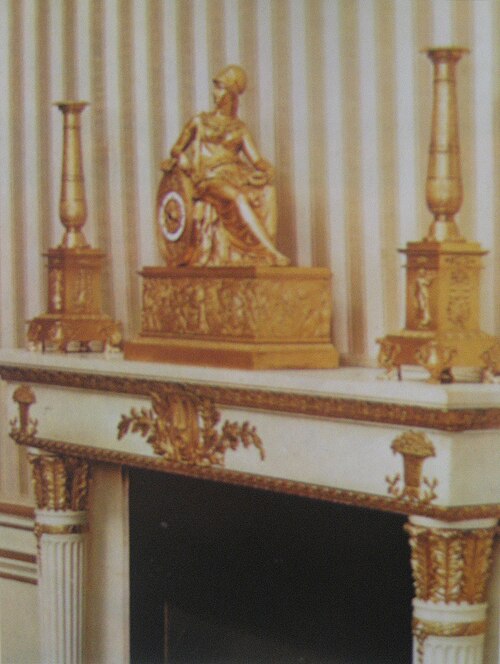
These timepieces were devised to decorate the console tables or mantelpieces of a given hall or room in palaces, European and American mansions, houses, offices, etc. Today many of them are part of royal collections and can be seen in palaces, official residences, embassies, ministries, museums all over the world, etc.
Even nowadays a few companies replicate this style, proving that the attention to detail, exquisite taste, superb workmanship, elegance and refinement achieved by the different artists and craftsmen involved in its manufacturing, are everlasting and timeless alike.
List of the most renowned bronziers active during the Napoleonic and/or the Restoration periods, in alphabetical order: