
Loading article…


音楽学校は、音楽の研究、訓練、調査を専門とする教育機関です。このような機関は、音楽学校、音楽アカデミー、音楽学部、音楽大学、音楽学科(より大規模な機関の場合)、音楽院、音楽大学、音楽院(/ kənˈsɜːrvətwɑːr / kən- SER - və - twar )などとも呼ばれます。指導内容は、楽器演奏、歌唱、作曲、指揮、音楽理論の訓練に加え、音楽学、音楽史、音楽理論などの学術・研究分野も含まれます。
音楽教育は、義務教育制度の中で提供される場合もあれば、パーセル音楽学校のような専門的な児童音楽学校で提供される場合もある。小学生は、音楽アカデミーや音楽学校などの放課後施設でも音楽教育を受けることができる。ベネズエラでは、青少年オーケストラ組織であるエル・システマが、ヌクレオと呼ばれる音楽学校を通じて、放課後に無料の楽器指導を提供している。
「音楽学校」という用語は、ロチェスター大学イーストマン音楽学校のような音楽学校、シベリウス音楽院やロンドン王立音楽院のような音楽アカデミー、ウェスタンオンタリオ大学ドン・ライト音楽学部のような音楽学部、王立音楽大学やバークリー音楽大学のような音楽カレッジ、カリフォルニア大学サンタクルーズ校音楽学部のような音楽学科、あるいはパリ音楽院やニューイングランド音楽院のような音楽院といった名称で、高等教育機関にも適用されることがあります。ヨーロッパの他の地域では、ケルン音楽舞踊大学( Hochschule für Musik und Tanz Köln )のように、高等音楽学校や音楽大学に相当する名称が使われることもあります。

音楽全般や音楽教育は数千年前から存在していたかもしれないが、その最古の歴史は推測の域を出ない。[ 1 ]歴史が記録され始めた頃でさえ、音楽教育よりも音楽について言及される頻度の方が高い。聖書の伝統では、ヘブライ語の祈祷には豊かな音楽が伴っていたが、トーラー(五書)はイスラエルの初期の生活における音楽の実践や指導については何も語っていない。しかし、サムエル記上10章では、アルフレッド・センドリーは「長期間にわたる体系的な準備なしには考えられないほど、徹底的に組織化され訓練された音楽グループからなる大規模な合唱団やオーケストラが突然、説明のつかないほど急増している」と指摘している。このことから、一部の学者は、預言者サムエルは預言者や聖人だけでなく、聖なる儀式の音楽家も教える学校の族長であったと考えている。[ 2 ]
ローマのスコラ・カントルム(教皇聖歌隊)は、グレゴリウス大教皇(540~604年)が4世紀から存在していたギルドを恒久化したときに設立された、歴史上最初の音楽学校である可能性がある(スコラは元々学校というよりギルドを指していた)。この学校は修道士、世俗聖職者、少年たちで構成されていた。[ 3 ] 909年に聖歌隊員を養成するために大聖堂学校として設立されたイングランドのウェルズ大聖堂学校は、今日でも聖歌隊員を養成し、器楽奏者を教えている。[ 4 ]
10 世紀から 12 世紀にかけてのサン・マルシャル学校は、リモージュのサン・マルシャル修道院にあった重要な作曲学校でした。トロペ、シークエンス、初期のオルガヌムの作曲で知られています。この点で、ノートルダム学校の重要な前身でした。[ 5 ]ノートルダム学校 (12 世紀後半から 13 世紀初頭) は、国際的に流通するようになった最古の多声音楽のレパートリーを開発しました。 [ 6 ]音楽学校に所属する少年合唱団であるスペインのエスコラニア・デ・モンセラートに関する最初の記録は1307 年に遡ります。
国立聖チェチリア音楽アカデミー( Accademia Nazionale di Santa Cecilia)は、イタリアに拠点を置く世界最古の音楽機関の一つです。ローマのオーディトリアム・パルコ・デッラ・ムジカに本部を置き、1585年にシクストゥス5世が発布した教皇勅書「Ratione congruit」によって設立されました。この勅書は、西洋音楽史において著名な2人の聖人、グレゴリオ聖歌の名の由来となったグレゴリウス大教皇と、音楽の守護聖人である聖チェチリアに捧げられたものです。当初は「会衆」または「同胞団」、いわば宗教的なギルドとして設立され、数世紀を経て、地元の音楽家や作曲家のためのフォーラムから、音楽研究(アカデミーを構成する100名の著名な音楽学者)、音楽教育(音楽院としての役割)、演奏(活発な合唱団と交響楽団)において国際的に評価の高いアカデミーへと発展しました。
The term conservatory has its origin in 16th-century Renaissance Italy, where orphanages (conservatori) were attached to hospitals. The orphans (conservati 'saved') were given a musical education there, and the term gradually applied to music schools.[7][8] These hospitals-conservatories were among the first secular institutions equipped for practical training in music. By the 18th century, Italian conservatories were already playing a major role in the training of artists and composers.[9]
In the city of Naples, a conservatorio was strictly a secular place for teaching and learning specializing in music education. There were already four conservatories in Naples active in the 16th and 18th century:
It is in these very institutions that the so-called Scuola Musicale Napoletana was developed, thanks to the work of musicians and educators like Alessandro Scarlatti (1660–1725) and Francesco Durante (1684–1755), who was also Pergolesi's and Paisiello's teacher.
The Palermo Conservatory was founded by the viceroy De Castro in 1617; the teaching of music was introduced there many decades later, with lessons in choral singing and violin.
It was the example set in Naples, where admission was by competitive examination and tuition was free, that was then copied, with modifications, in many European cities, including Paris (1795), Bologna (1804), Milan (1807), Warsaw (1810), Florence and Prague (1811), Vienna (1821), London (1822), the Hague (1826), Liège (1827); a bit later two conservatories were founded in Russia by Rubinstein brothers – Anton in Saint Petersburg (1862) and Nikolai in Moscow (1866). The second half of the 19th century saw the network expanding to the Americas, Rio de Janeiro (1847), Boston (1853), Baltimore and Chicago (1868), Havana (1885), and Buenos Aires (1893). Establishments for advanced training in music were organized in the 1940s in several Asian and African countries, including Iraq, Lebanon, and Kenya.[9]
To this extent, projects like El Sistema are more in line with the tradition set in Italy (where tuition at conservatories remains still free) than in an English-speaking country, where students have a very selective access to bursaries (see the Royal Academy of Music or the Royal College of Music in the UK).

Specialist music schools exist in many countries and whose purpose is to identify, and assist, children with exceptional potential, to benefit from world-class specialist training as part of a broad and balanced education, which will enable them, if they choose, to proceed towards self-sustaining careers in music.[11] These schools may be formally[12] or informally attached to a conservatory. Entry is typically between the ages of ages 8 and 18 and admission is through competitive audition. Schools may be public or independent; where schools are independent, pupils may be in receipt of governmental[13] or private scholarships. Typically as students progress through the school the time spent on music increases and on academic subjects decrease. These schools usually teach only instrumentalists but may also include choristers.
Some schools (like conservatories) are broader and may cover the performing arts: music, drama, dance.[14]
Many music schools are located within existing schools. The pattern is quite diverse and may include:
スコットランドの音楽専門ユニットでは、生徒はホスト校の学区よりも広い地域から集まります。生徒は音楽学校で専門的な音楽指導を受けますが、その他の授業はホスト校に完全に統合されます。音楽専門ユニットまたは学校への入学は競争的なオーディションによって行われ、これは実質的にホスト校への入学も意味します。[ 15 ]
多くの公立または私立学校には音楽科があり、その中には高い水準を達成している学校もあります。これらは音楽学校と呼ばれることもあります。イングランドの音楽大学は、音楽に特化するために私的および政府から追加の資金を受け取っている学校です。入学はホスト校への入学であり、音楽の能力は入学要件ではありません。[ 16 ]高い実績を上げている学校は、スポーツやテクノロジーなどの追加分野に特化している場合があります。

音楽学校は教会施設を利用して運営されることも多い。
多くの音楽院やその他の高等教育機関には、学齢期の子どものための大学進学準備部門やジュニア部門があります。[ 17 ]通常、カリキュラムには個人レッスン、オーケストラ、室内楽、音楽理論、音楽性、作曲、音楽技術が含まれます。授業は通常土曜日に行われ、子どもたちは平日は通常の学校に通います。
非政府系[ 18 ]または私立[ 19 ]の音楽学校は、4歳から20歳以上の生徒を対象に、一般教育制度とは別に音楽教育を提供しています。一般的に、生徒は週末または夜間にこれらの学校に通います。これらの学校は通常、個人、慈善団体、または営利団体によって運営されています。

A conservatory of music may also be known in English as conservatoire (chiefly in the UK[20]), conservatorium (in Australia[21][22]), academy or college. Some schools or conservatories are exclusively focused on music.[23] Others have a wider focus, for example covering music, drama and dance.[24] Conservatories are suitable for students who wish to develop their performance, conducting, or composition to a professional standard. Typically, they offer a high percentage of practical training combined with academic study and professional development for those considering a career in the creative arts. Individual teaching is the strength of most components.
Students have the opportunity to perform, conduct or have their music played on a regular basis, both informally and in public. This may be solo or as part of an orchestra, ensemble or band. Typically, conservatories focus on Western classical music. However, some schools focus on traditional instruments, such as Chinese instruments.[25] Others may have departments for traditional music which includes both traditional and classical instruments, for example bagpipes alongside the fiddle.[26] Alternatively, students can focus on jazz, world music or pop music.[27]
The time required to complete music degrees is generally not much different from degrees in other fields, i.e. 3–4 years for a Bachelor of Music degree, 1–2 years for a Master of Music degree, and 3–5 years for a Doctor of Musical Arts or Doctor of Music Degree. A PhD degree can be gained for areas such as musicology, music theory, music composition, music education, or music therapy. Some schools may offer a non-academic degree that is solely performance based, such as the (United States) A.D. or Artist Diploma; this may be offered at the undergraduate and/or graduate level.
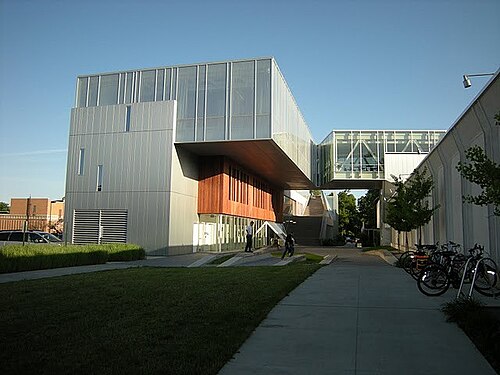

University music departments originally placed more emphasis on academic study of music, rather than performance. However, today, the division may not be so rigid, with many often placing greater emphasis on performance now than they did in the past. The specific balance of vocational training and academic study varies from one institution to another, and from one country to another. Some countries separately define their institutions between university status and vocational university status, whilst other countries do not define such a rigid division. In addition to offering degrees similar to those offered at conservatories, some universities offer non-professional music-related degrees such as a Bachelor of Arts in Music or a Bachelor of Arts in Music Education. A number of previously independent conservatories have become affiliated to universities [28]
Country-specific pages
Lists
National and international organisations
Diplomas
 Media related to Music schools at Wikimedia Commons