Loading article…
2008年1月3日から6月3日にかけて、共和党の有権者は2008年米国大統領選挙の大統領候補を選出した。アリゾナ州選出のジョン・マケイン上院議員は、2008年9月1日(月)から9月4日(木)までミネソタ州セントポールで開催された共和党全国大会で最高潮に達した一連の予備選挙と党員集会を経て、大統領候補に選ばれた。ジョージ・W・ブッシュ大統領は、憲法修正第22条で定められた任期制限のため、3期目に選出される資格がなかった。
指名獲得を目指す有力共和党員がひしめく混戦の予備選で、元ニューヨーク市長のルディ・ジュリアーニが当初は最有力候補だった。[ 2 ]しかし、元アーカンソー州知事のマイク・ハッカビーが予備選のわずか2か月前に勢いを増し、アイオワ州党員集会で勝利した。穏健派の上院議員で元大統領候補のジョン・マケインはニューハンプシャー州とフロリダ州の予備選で勝利した。ジュリアーニはフロリダ州で勝利できなかったため、選挙運動を中止した。
マケインはスーパーチューズデーの予備選でほとんどの勝利を収め、最終的に大統領候補指名を獲得した。2008年9月4日の共和党全国大会で正式に指名されたが、本選挙ではバラク・オバマに敗れた。
以下の表に関する注記:代表者数は最終的な推定代表者数です。[ 3 ]
予備選挙の大部分は「勝者総取り」方式で行われ、党大会の規則により、5州未満しか「確保」していない候補者は指名候補に名前を載せることができなかった。これにより、予備選挙期間は非常に短くなることが保証された。マケインはニューハンプシャー、サウスカロライナ、フロリダで勝利し、ほぼ無敵となった。スーパーチューズデーとポトマック予備選挙での決定的な勝利の後、マケインは指名候補となることが確実となった。候補者は代議員数順に記載されている。


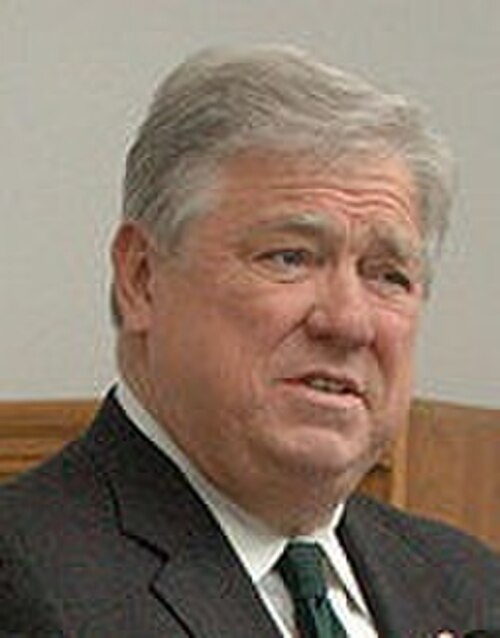


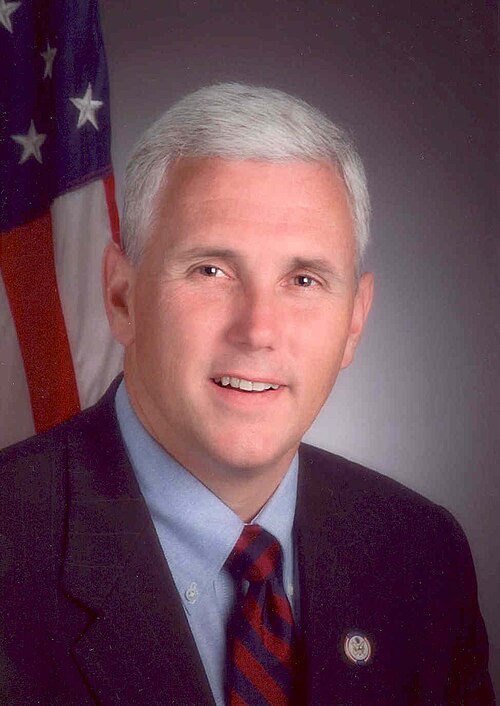


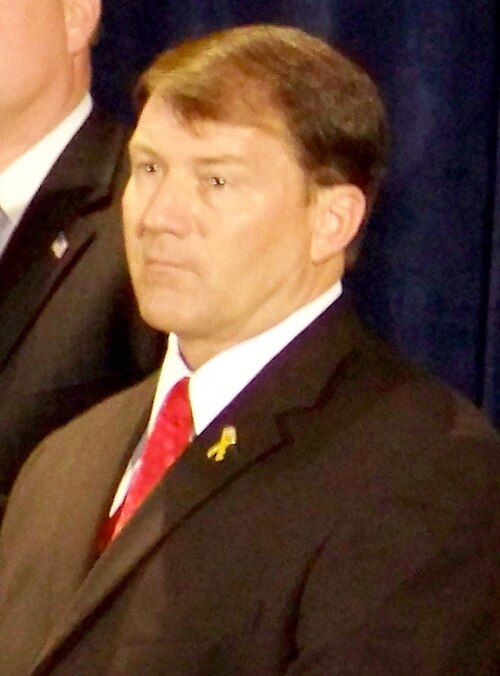




Republican candidates in the 2008 U.S. presidential election campaigned for the nomination of their party in a series of primary elections and caucus events.[9]
Unlike the Democratic Party, which mandates a proportional representation for delegate selection, the Republican Party has no such limitation. For states with primaries, some states choose to use the "winner-take-all" method to allocate delegates within a state, while others do winner-take-all within a specific congressional district, and still others use the proportional process. Unlike the Democratic Party, state party by-laws determine whether each delegate is pledged and for how long the delegate is pledged.
In caucus states, most state parties use a two pronged process. A straw poll, often called a presidential preference poll, is conducted of the attendees at the caucus. The results are released to the media and published on the state party website. Delegates are then elected to the county conventions. It is at the county conventions that delegates are elected to state conventions, and from the state convention to the national convention. At each level, delegates may be bound or unbound to a candidate. If unbound, delegates are not obligated to follow the results of the presidential preference poll. Thus, all estimates of delegates from caucus states are dependent on state party by-laws.
ディック・チェイニー副大統領が指名獲得を目指さないことを選択したため、現職大統領も副大統領も候補者ではない選挙は1952年以来初めてとなり、コンドリーザ・ライス国務長官 も自ら立候補を取り下げたため、2008年の大統領候補指名争いは混戦模様となった。正式には、2006年3月にジョン・H・コックスが2008年の選挙に立候補した最初の候補者となったことで始まった。民主党が上下両院を掌握したこととブッシュ大統領の不人気は、共和党にとって大きな争点となった。2007年初頭に発表された共和党の候補者は、ウィスコンシン州元知事で閣僚のトミー・トンプソン、バージニア州元知事のジム・ギルモア、カンザス州上院議員のサム・ブラウンバックであった。バージニア州元上院議員のジョージ・アレンは、中間選挙で敗北するまで有力候補と見なされていた。彼は2006年12月10日に、2008年の指名獲得を目指さないことを発表した。 1月初旬、マサチューセッツ州元知事のミット・ロムニー氏が予備選挙委員会の設立を発表した。その後、ロン・ポール下院議員、アーカンソー州選出のマイク・ハッカビー氏、ニューヨーク市選出のルディ・ジュリアーニ氏、ジョン・マケイン上院議員、ダンカン・ハンター下院議員、トム・タンクレド下院議員など、数名が出馬を表明した。 2月初旬に発表された世論調査では、ジュリアーニ氏が32%で首位、ジョン・マケイン氏が18%で2位だった。3月初旬には、ジュリアーニ氏が最有力候補となった。アラン・キーズ氏と元上院議員で俳優のフレッド・トンプソン氏は、 9月後半に選挙戦に参戦した。
最初に選挙戦から撤退したのは、7月にバージニア州元知事のジム・ギルモア氏だった。その後、アイオワ州エイムズで行われた予備選挙で6位に終わったトミー・トンプソン氏も8月に撤退。続いて、中絶反対派のサム・ブラウンバック氏が10月に撤退した。12月には、不法移民に断固反対するトム・タンクレド氏と実業家のジョン・H・コックス氏も選挙戦から姿を消した。
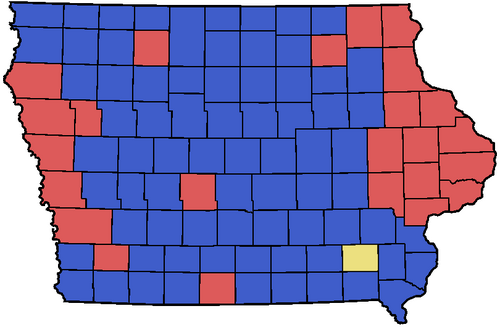
2008年1月3日、アイオワ州党員集会が始まった。リアル・クリア・ポリティクスによる最終的な平均世論調査結果では、マイク・ハッカビーが30%、ロムニーが27%、マケインとトンプソンが12%で同率、ポールが7%、ジュリアーニが6%だった。[ 10 ]出口調査データで調査対象となった人々のうち、45%が自分を非常に保守的だと答え、ハッカビーに35%、ロムニーに23%、トンプソンに22%の票を投じた。自分を「やや保守的」と答えた人々(43%)の間では、ハッカビーが34%、ロムニーが27%、マケインが18%の票を獲得した。[ 11 ]
最終結果によると、ハッカビーは州の大部分を制したが、ダベンポート、シーダーラピッズ、スーシティを含む州の西部と東部は例外だった。ロムニーは州の東部と西部を制し、ポールは南部の1つの郡を獲得した。アイオワ州の最終結果は、ハッカビーが34%、ロムニーが25%、トンプソンとマケインがそれぞれ13%、ポールが10%、ジュリアーニが4%だった。

ニューハンプシャー州予備選では、マケインとロムニーの両候補が同州に大きく賭けていた。マケインは、2000年に勝利した同州での草の根運動と、マケインの強みである独立系有権者層が最も多い同州に大きく賭けていた。隣接するマサチューセッツ州出身のロムニーは、ニューハンプシャー州で多くの人に知られており、同州に自宅も所有していた。予備選前の世論調査では、マケインがわずかにリード(32対28%)、ハッカビーがジュリアーニを3位(12対9%)に抑えていた。
予備選挙当日、マケイン氏は37対32%で勝利し、ハッカビー氏はジュリアーニ氏を11対9%で破り3位となった。結果を受けて、ハッカビー氏はサウスカロライナ州の予備選挙に注力することを決定したが、マケイン氏とロムニー氏はともにミシガン州に向かい、世論調査では両者の接戦が予想されていた。
アイオワ州とニューハンプシャー州で異なる勝者が出たこと、そしてミット・ロムニーが注目度の低いワイオミング州党員集会で勝利したことから、1月15日のミシガン州予備選は重要な戦いとして浮上した。ニューハンプシャー州後の世論調査では、マケインとロムニーの接戦が示され、ハッカビーが僅差で3位につけていた。[ 12 ] [ 13 ]多くの人が、ミシガン州をロムニーにとって最初の2つの選挙での失望の後、選挙戦を救う最後のチャンスと見ていた。[ 14 ] [ 15 ]ミシガン州での勝利は、マケインが指名獲得の「最有力候補」としての地位を確固たるものにする可能性があると言う人もいた。[ 16 ]マケイン陣営はニューハンプシャー州での勝利直後に新たに約100万ドルの資金を集めたが、[ 17 ]銀行の負債は依然として350万ドルあった。[ 18 ]
それにもかかわらず、いくつかの世論調査では、マケインがニューハンプシャーでの勝利によって全国的に大きな支持を得たことが示されました。1月11日のCNN全国世論調査では、支持率は34%で、わずか1か月前より21ポイント上昇し、ハッカビー(21%)とジュリアーニ(18%)を大きくリードしていました。[ 19 ]ミシガン州での選挙戦が終盤に差し掛かる中、マケインは同州とサウスカロライナ州でロムニーの納税記録を攻撃し、自身の納税記録を宣伝するダイレクトメールを送付し、注目を集めました。ロムニー陣営の広報担当者は、この広告を「事実に基づかないだけでなく、ずさんだ」と呼び、FactCheck.orgは「誤解を招く」と評しました。マケインはこれに対し、「これはネガティブキャンペーンではない。彼の実績を批判しているだけだ」と反論しました。「厳しい仕事だ」と付け加えました。[ 20 ] [ 21 ]
ミシガン州で最も重要な問題は経済状況だった。ミシガン州の失業率は7.4%で、全米で群を抜いて高く、歴史的な製造業基盤からの雇用喪失が続いていた。[ 22 ]マケインは「率直な意見」を述べ、「ミシガン州には戻ってこない仕事もある」と述べ、連邦政府の職業訓練計画やその他の対策を提案して補償しようとした。[ 22 ]ロムニーはマケインの発言を過度に悲観的だと捉え、代わりに自身の家系の伝統――「私の血には自動車産業が流れている」――や、ワシントンの部外者としてワシントンに行き、「ワシントンをひっくり返す」とアピールした。[ 22 ]
結局、マケインは予備選でロムニーに次ぐ2位となり、得票率はロムニーの39%に対し30%だった。[ 23 ]
ミット・ロムニーは世論調査で34%対19%と圧倒的に優勢で、ネバダ州での勝利が有力視されていた。彼は予想を上回り、51%の票を獲得し、ロン・ポールがジョン・マケインを抑えて2位となった。ロムニーはネバダ州で精力的に選挙運動を行ったが、サウスカロライナ州では選挙運動を行わなかった。一方、他の有力共和党候補であるジョン・マケインとマイク・ハッカビーはサウスカロライナ州に注力していた。ネバダ州は共和党が州から全国大会に送る代議員数を半減させる措置の対象ではなく、サウスカロライナ州も同様だった。しかし、ネバダ州はサウスカロライナ州よりも多くの代議員がかかっていた。ネバダ州での勝利は、総代議員数におけるロムニーのリードを広げた。ネバダ州のモルモン教徒人口の多さが、ロムニーの同州での勝利に貢献した。[ 24 ]
ダンカン・ハンター氏は、今回の党員集会で最下位になった後、指名獲得への立候補を取り下げた。
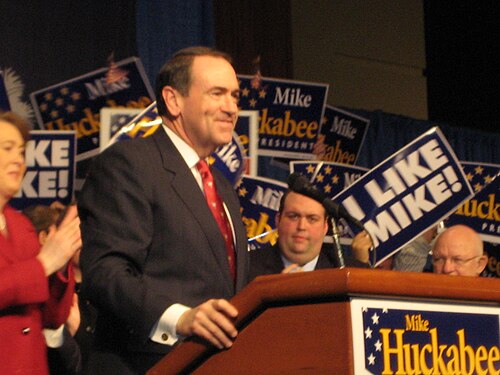
マイク・ハッカビーは、選挙運動を継続するためにはサウスカロライナ州で勝利する必要があった。RealClearPoliticsの報道によると、世論調査の平均支持率はマケインが27%で首位、ハッカビーが25%、ロムニーが15%、トンプソンが15%、ポールが4%、ジュリアーニが3%だった。トンプソンはマイク・ハッカビーを激しく攻撃し、彼の保守派としての資質に疑問を呈した。しかし最終的にマケインは14,743票、つまり3%の僅差で勝利し、フロリダ州でマケインが最有力候補となった。
フレッド・トンプソンは、アイオワ州での選挙運動直後、他の候補者がサウスカロライナ州で選挙運動を開始する前に同州での選挙運動を開始していたにもかかわらず、3位に終わった。彼は翌日、選挙戦から撤退した。
ルディ・ジュリアーニはフロリダ州で精力的に選挙運動を行い、スーパーチューズデーでの「好成績」の「出発点」としてフロリダ州を利用することを期待していた。[ 25 ]彼はほぼフロリダ州で選挙運動を行い、 2月5日より前に投票が行われるサウスカロライナ州やその他の州をほとんど無視した。予備選挙前に行われた世論調査では、ジョン・マケインがミット・ロムニーをわずかにリードしていることが示された。[ 26 ]ジュリアーニは事実上反対者なしで選挙運動を行っていたが、[ 27 ] 2008年のサウスカロライナ州共和党予備選挙の後、数人の候補者がフロリダ州に飛び、予備選挙が行われる1月29日まで選挙運動を開始した。[ 28 ] RealClearPoliticsは、予備選挙直前の数日間に行われた世論調査の平均支持率で、マケインが31%でわずかにリードし、ロムニーが30%、ジュリアーニが15%、ハッカビーが13%、ポールが4%と続いたと報告した。[ 29 ]元上院議員のフレッド・トンプソンと下院議員のダンカン・ハンターは、すでに選挙戦から撤退していたものの、フロリダ州予備選挙の投票用紙にはまだ名前が残っていた。
マケインは、当時共和党の知事だったチャーリー・クリスト[ 30 ]の土壇場での支持を得て、1月29日に5ポイント差で勝利した[ 31 ]。彼はフロリダ州の勝者総取り方式の選挙で57人の代議員全員を獲得した[ 32 ](2月5日以前に行われた予備選挙に関する共和党全国委員会の規則により、同州の代議員総数は半減していた)[ 33 ]。フロリダ州に大きく賭けていたジュリアーニは、翌日選挙運動を終えた[ 34 ] 。
候補者指名コンテスト開催回数– 21回
賭けられている誓約代表者数– 901 [ 35 ]
2月7日時点の代表者出席状況
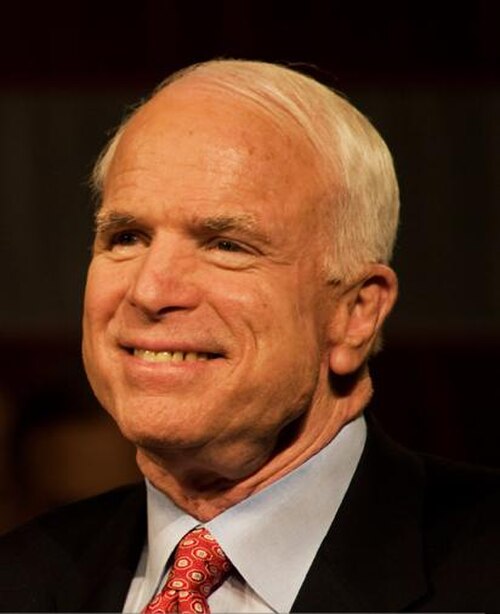
On January 31 McCain received the endorsement of California GovernorArnold Schwarzenegger[36] and began campaigning with him.[37] This was a key endorsement, as California was one of the Super Tuesday states and had more delegates than any other state. The same day, Governor Rick Perry of Texas threw his support behind McCain.[38] Perry had previously been a Giuliani supporter, while Schwarzenegger had refrained from endorsing either McCain or Giuliani because he counted both men as friends.[38][39] Meanwhile, Romney, still burning about McCain's Iraq withdrawal timetable charge, compared McCain to disgraced former President Richard Nixon, saying that McCain's claim was "reminiscent of the Nixon era" and that "I don't think I want to see our party go back to that kind of campaigning."[37]
McCain won his home state of Arizona, taking all 53 of the state's delegates and the largest of the Super Tuesday prizes, winning nearly all of California's 173 delegates. McCain also scored wins in Connecticut, Delaware, Illinois, Missouri, New Jersey, New York and Oklahoma. Huckabee also made surprise wins in states he had polled behind in previously like Georgia, Alabama, and Tennessee. Huckabee also won the first contest of Super Tuesday in West Virginia. Romney won his home state of Massachusetts. He also won Utah, Colorado, and Minnesota.[40]
The next day, McCain appeared confident that he would be the Republican nominee. Estimates showed him with 707 delegates – nearly 60% of the total needed to win the nomination. He began to appeal to disaffected conservatives, saying: "We share the common principles and values and ideas for the future of this country based on a fundamental conservative political philosophy, which has been my record."[41] He also suggested that the right wing of the party "calm down a little bit" and begin to look for areas of agreement. Meanwhile, Romney advisers privately expressed doubts about whether their candidate could realistically hope to defeat McCain, and it was unclear if Romney would spend significant money on key February 12 contests in Virginia and Maryland.
Both McCain and Romney addressed the Conservative Political Action Conference (CPAC) in Washington, DC on February 7, while Mike Huckabee spoke on February 9. Romney used his speech to announce the end of his campaign, saying, "Now if I fight on in my campaign, all the way to the convention – (cheers, applause). I want you to know I've given this a lot of thought. I'd forestall the launch of a national campaign and, frankly, I'd be making it easier for Senator Clinton or Obama to win. Frankly, in this time of war, I simply cannot let my campaign be a part of aiding a surrender to terror."[42] McCain spoke about an hour later, again appealing to right-wing uncertainty about his ideology.
He focused on his opposition to abortion and gun control, as well as his support for lower taxes and free-market health care solutions.[43][44] He told the CPAC audience that he arrived in Washington as "a foot soldier in the Reagan Revolution", and addressed the issue of illegal immigration – one of the major issues where conservatives have attacked McCain. He said that "it would be among my highest priorities to secure our borders first", before addressing other immigration laws.[45] Mike Huckabee spoke to CPAC two days later and said, "I know that there was some speculation that I might come here today to announce that I would be getting out of the race. But I want to make sure you understand. Am I quitting? Well, let's get that settled right now. No, I'm not. And the reason is simple – I never learned arithmetic. You see folks, while I didn't get a college degree in mathematics and writing, I majored in miracles. Mathematically impossible miracles. It is because I go back to that which helped crystallize in me a conservative viewpoint as a teenager when it wasn't easy or popular to be a Republican or a conservative in my hometown, because I do believe that America is about making choices, not simply echoing that of others. Let others join the "Me, too" crowd. But I didn't get where I am today and I didn't fight the battles in a state that, when I became its governor, was 90 percent Democrat, by simply echoing the voices of others. I did it by staking out a choice, stating that choice, making that choice and fighting for that choice, to believe that some things were right, some things were wrong, and it's better to be right and even to not win than it is to be wrong and to be a part of the crowd."[46]
2月9日、ルイジアナ州、カンザス州、ワシントン州で投票が行われた。ハッカビーはカンザス州で楽勝し、全国大会への同州の代議員36人全員を獲得した。投票数はわずか14,016票で、マケイン陣営は参加者の少ない党員集会について懸念を表明しなかった。しかし、カンザス州共和党には社会保守派が強い影響力を持っており、この結果は保守派の同上院議員に対する不満を浮き彫りにした。[ 47 ] [ 48 ] [ 49 ]ルイジアナ州ははるかに接戦だったが、ハッカビーはここでも勝利し、1パーセントポイント未満の差でマケインを破った。[ 50 ]ワシントン州の党員集会ではマケインが勝者と宣言され、18人の代議員が争われた。2月19日の予備選挙で同州の残りの19人の代議員が決定される。マケインがハッカビーにわずか242票差(3,468票対3,226票)で勝利し、開票作業は87%の投票区の報告で終了した時点で終了したが、[ 51 ]ハッカビー陣営は結果に異議を申し立てると表明した。[ 52 ] [ 53 ]
次に、 2月12日にポトマック予備選挙が行われ、バージニア州、メリーランド州、コロンビア特別区で投票が行われた。マケインは3つの選挙で圧勝し、争われる113人の代議員すべてを獲得した。[ 54 ] [ 55 ]
翌日、マケイン陣営はハッカビー氏の勝利は「数学的に不可能」とするメモを発表した。しかし実際には、それは不可能ではなかった。ハッカビー氏が1191人の代議員を獲得できなかったとしても、マケイン氏が1191人に達するのを阻止できれば、党大会は仲介者による決選投票となるはずだったのだ。
メディアがマケインを「推定指名候補」と宣言したことで、マケインは総選挙を見据え、民主党、特に有力候補のバラク・オバマに焦点を当て始めた。[ 56 ]
マケインがポトマックで圧勝した翌日、カンザスシティ・スター紙は、マケインが指名を獲得した場合に副大統領候補として名前が挙がっている人物のリストを掲載した。 [ 57 ]
On February 14, Mitt Romney officially endorsed McCain and asked his approximately 280 delegates to support him at the national convention. If all or most of Romney's delegates backed McCain, it would give him nearly enough to win the nomination, with several large states still yet to vote. Despite these developments, Huckabee vowed to stay in the race. "I may get beat, but I'm not going to quit," he said.[58][59] A few days later, McCain was endorsed by former President George H. W. Bush, in a move intended to shore up his support among base party elements.[60]
On February 19, McCain continued his winning ways, picking up wins over Huckabee in the Wisconsin primary and the Washington state primary.[61] McCain and Barack Obama engaged in a pointed exchange over Al-Qaeda in Iraq on February 27.[62]

Nominating Contests Held – 4
Pledged Delegates at Stake – 261[63]
Delegate Standing on March 5
CNN had cancelled a debate originally scheduled for February 28, saying that McCain was the "presumptive nominee." Mike Huckabee challenged John McCain to a debate before the March 4 primaries, and the Values Voter coalition stepped in, arranging for a debate hall and inviting both McCain and Huckabee, as well as Rep. Ron Paul to participate in a March 3 debate event.[64] After Governor Huckabee had accepted the invitation, Senator McCain said that he had a prior commitment and begged off. Huckabee had previous success with rural and Evangelical Christian voters. Huckabee was endorsed by Dr. James Dobson. McCain received an endorsement from Pastor John Hagee (which he later renounced on May 22). On March 4, Super Tuesday 2, McCain managed to win a large number of Evangelical voters along with his usual independent and veteran supporters. John McCain officially clinched the Republican presidential nomination on March 4, 2008, sweeping the primaries in Ohio, Texas, Rhode Island, and Vermont.[65] That night, Mike Huckabee withdrew from the race and endorsed McCain.[65] President George W. Bush invited Senator McCain to the White House for Bush's endorsement.
Unlike in the Democratic Party, Republican members of Congress (including Senate members, House members, and non-voting delegates), and state governors are not automatically made delegates to the party's national convention, however their endorsements can hold sway on voters in caucuses and primaries.
各州から選出される共和党全国委員会の委員2名、および各州、コロンビア特別区、プエルトリコ、アメリカ領サモア、グアム、アメリカ領ヴァージン諸島、北マリアナ諸島の党委員長は、党全国大会への自動選出代議員です。これらの特別代議員は、公式には支持政党を表明していませんが、公に候補者を支持することもできます。
共和党の2月5日ルール共和党全国委員会のルール では、どの州も2008年の予備選挙を2月5日より前に開催することは認められていなかった。ワイオミング州、ニューハンプシャー州、ミシガン州、サウスカロライナ州、フロリダ州の5州は予備選挙を前倒ししたため、その後、共和党全国委員会によって割り当てられた代議員の半分を剥奪された。[ 82 ]この罰は最終的には民主党の手続き と同じだったが、民主党は当初、違反したミシガン州とフロリダ州からすべての代議員を剥奪してから半分を着席させることを決定していた。共和党のルールはアイオワ州、メイン州、ネバダ州、ルイジアナ州には影響しなかった。これらの州は、2月5日以降に行われた地区大会または州大会まで正式には代議員を選出していなかったからである。アイオワ州の郡大会と州大会はそれぞれ2008年3月15日と6月14日に開催された。ネバダ州の州大会は2008年4月26日に開催されたが、代議員が選出される前に党幹部によって中止された。ネバダ州共和党の執行委員会は2008年7月25日に会合を開き、34名の代議員と31名の補欠代議員を任命した。ルイジアナ州の党員集会では、2月16日にバトンルージュで開催される州大会に105名の州代表が選出された。
多くの州が予備選挙や党員集会の日程を2月5日(スーパーチューズデー)に前倒しした。この日にほぼ半数の国民が投票したため、事実上の「全国予備選挙」として機能した。これは「スーパー・デューパー・チューズデー」 [ 83 ]や「津波チューズデー」 [ 84 ]とも呼ばれている。
{{cite web}}:|last=一般的な名前を持っています (ヘルプ)