
Loading article…
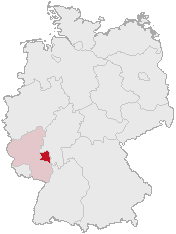
Rhenish Hesse or Rhine Hesse[1][2] (German: Rheinhessen, pronounced[ʁaɪnˈhɛsn̩]) is a region and a former government district (Regierungsbezirk) in the German state of Rhineland-Palatinate. It is made up of territories west of the Upper Rhine river that were part of the Grand Duchy of Hesse and its successor in the Weimar Republic, the People's State of Hesse from 1816 to 1945. The hilly countryside is largely devoted to vineyards, comprising the Rheinhessen wine region.

Rhine Hesse stretches from the Upper Rhine Plain on the west bank of the Rhine up to the Nahe and Alsenz rivers in the west and down to the mouth of the Isenach in the south. The region borders on the Rhineland in the northwest, on the Palatinate in the southwest, and on South Hesse beyond the Rhine. The Rhenish-Hessian Hills along the Selz river, also called the "land of the thousand hills", reach up to 358 m (1,175 ft) at the summit of the Kappelberg and about 330 m (1,080 ft) in Rhenish-Hessian Switzerland.
The Mainz Basin, a Cenozoicmarine basin, covered the area about 38 to 12 million years ago. The landscape is characterised by large Loess and Marl deposits. Due to the favourable climatic conditions of Rhenish Hesse, agriculture covers most of the region. As the Hunsrück and Taunus ranges protect it from cold winds, wine and fruit production is practised on a large scale.
この地域は、ラインラント=プファルツ州の州都マインツとヴォルムスを中心に、マインツ=ビンゲン行政区とアルツァイ=ヴォルムス行政区に囲まれています。その他の町としては、ビンゲン、アルツァイ、ニーダー=オルム、インゲルハイム、ニーアシュタイン、オッペンハイム、オストホーフェンなどがあります。多くの住民は、マインツ、あるいは隣接するヘッセン州のヴィースバーデンやフランクフルトに通勤しています。
ライン川沿いのヘッセン領は、843年のヴェルダン条約でルートヴィヒ2世(ドイツ王)に割り当てられたことで重要性を増した。この地域はライン・フランケン地方の中核領土の一部であり、中世盛期に建立されたヴォルムスとマインツの帝国大聖堂を擁していた。ヴォルムスのシナゴーグとユダヤ人墓地は、ヨーロッパ最古のものに数えられる。三十年戦争で荒廃したこの地域は、カトリックのマインツ選帝侯領とヴォルムス司教領、そしてプロテスタントのプファルツ選帝侯領の領地が入り混じった状態となった。
ライン・ヘッセンは、第一次対仏大同盟戦争中の1792年にフランス第一共和政によって占領されました。 1814年から1815年にかけてのウィーン会議において、ヘッセン大公ルートヴィヒ1世はヴェストファーレン領を放棄せざるを得ませんでした。その代償として、彼はライン川左岸の地区を獲得しました。この領土の獲得に伴い、彼は称号をヘッセン大公およびライン大公に変更し、この地域の名前が付けられました。連合国占領下のドイツでは、ライン・ヘッセンの土地は1946年に新設されたラインラント=プファルツ州の地区として編入されました。

各地域は、地理、気候、土壌、季節、そして経済状況に応じて独自の料理を発展させてきました。それらは、シンプルな家庭料理から祝祭日のための特別な料理まで多岐にわたります。ライン・ヘッセン地方にも数多くの名物料理があり、中でもヴェック、ヴォルシュト、ヴォイは、マインツのカーニバルなどを通じて、地域を超えた名声を得ています。
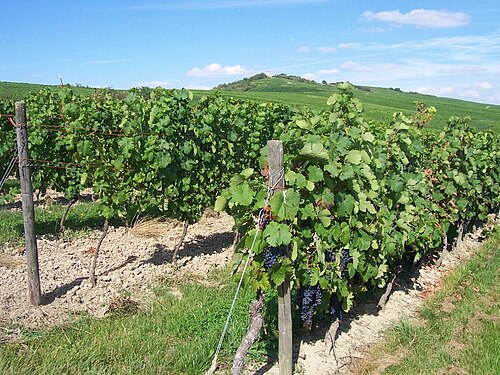
ライン・ヘッセンは、ドイツワインを生産する13の地域の中で最大規模を誇ります。ドイツ国外では、リープフラウミルヒの産地として最もよく知られています。主にリースリング、ジルヴァーナー、ミュラー・トゥルガウ、ケルナー、ショイレーベなどの白ブドウ品種から造られています 。最も有名な白ワイン産地は、オッペンハイムとニーアシュタイン近郊のライン・テラスです。ピノ・ノワール、ブラウアー・ポルトギーザー、ドルンフェルダー、そして近年確立されたリージェントなど、赤ブドウ品種もインゲルハイムとグンダースハイム周辺で栽培されています。