
Loading article…
ブリストル城は、11世紀後半にブリストルのエイボン川北岸に建てられたノルマン様式の城です。現在、ブロードミード・ショッピングセンター近くのキャッスル・パークには、出撃口を含む城跡が残っています。
ウィリアム征服王の治世中に建設され、後にロバート・フィッツハモンが所有したこの城は、重要な王家の城となり、幾度となく投獄や処刑が行われた場所となった。12世紀から13世紀にかけて、グロスター伯ロバートとヘンリー3世の治世下で城は改築され、さらに要塞化された。16世紀にはほとんど放置され、1656年にオリバー・クロムウェルの命令により取り壊された。
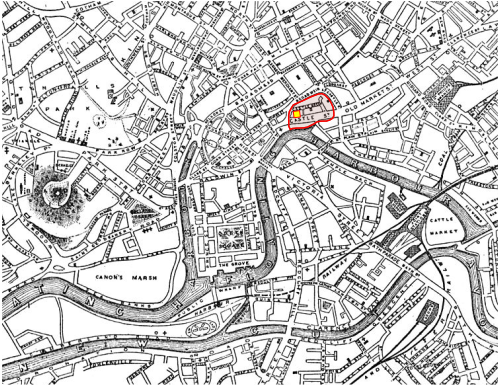
城は、南のエイボン川と北のフローム川に挟まれた、城壁に囲まれた町の東側の戦略的な場所に建てられました。東側では運河で両河川が結ばれて城の堀が形成され、北側には両河川の水位差を調整するための堰が設けられていました。ブリストルの町自体が両河川の合流点の角に位置していたため、城の堀の建設によって町と城は完全に水に囲まれ、非常に防御しやすくなりました。[ 1 ]

ブリストルに最初に建てられた城は木造のモット・アンド・ベイリー城で、おそらくウィリアム征服王の命令で建てられたもので、ウィリアムはブリストルの荘園を王領内に保持していた。ウィリアムの最も親しい同盟者の一人であるクータンス司教ジェフリー・ド・モンブレーは、ウィリアムの名においてこの城を支配していたようだ。 1086年のドゥームズデイ・ブックには、彼がこの自治都市から国王の収入の一部を受け取っていたと記録されている。現存する記録にこの城が初めて登場するのは1088年で、ジェフリーがウィリアム2世に対する反乱の拠点としてこの城を使用した時である。[ 3 ]
After William II triumphed, the English lands of the rebels were redistributed to his loyal followers. Among the recipients was Robert FitzHamon, who having thus gained a large swathe of Gloucestershire, including Bristol Castle, founded the feudal barony of Gloucester. His eldest daughter and heiress Mabel FitzHamon married Robert, 1st Earl of Gloucester, illegitimate son of King Henry I. On the death of her father in 1107, Mabel brought to her husband the feudal barony of Gloucester: thus he is generally known as "Robert of Gloucester".[4]


This great fortress was to play a key role in the civil wars that followed the death of Henry I of England. Henry's only legitimate son William drowned in the wreck of the White Ship in 1120, so Henry eventually declared his one legitimate daughter Matilda his heir. However her cousin, Stephen of Blois, usurped the throne on Henry's death in 1135. Matilda's half-brother Robert of Gloucester became her trusted right-hand man – the commander of her troops. Rebels rallied to his castle at Bristol.[5]
Stephen reconnoitred Bristol in 1138 but decided that the town was impregnable. As his chronicler reported: "On one side of it, where it is considered more exposed to siege and more accessible, a castle rising on a vast mound, strengthened by wall and battlements, towers and divers engines, prevents an enemy's approach."[6] After Stephen was captured in 1141, he was imprisoned in Bristol Castle until Robert of Gloucester was also captured and an exchange of prisoners was made.[7]
Bristol Castle was Robert of Gloucester's principal seat in England. He added greatly to its exterior fortifications and rebuilt the interior.[8]
城とグロスター伯爵の称号はロバートの息子ウィリアムに引き継がれた。 1173年、若きヘンリー王とその兄弟であるリチャード王子とジェフリー 王子がヘンリー2世に対して反乱を起こした際、ウィリアム伯爵は彼らの大義を支持した。反乱は翌年鎮圧され、ウィリアムはブリストル城を没収され王室の管理下に置かれるという罰を受けた。ブリストルは国内で最も重要な王室の城の一つとなった。幼少期にそこで教育を受けたヘンリー3世は、城に惜しみなく資金を投じ、西側の正門前に外郭、門塔、そして壮麗な大広間を増築した。1224年からブルターニュのエレノアは、1241年に亡くなるまで、比較的快適な環境の城に厳重に監禁され、天守閣に住居を与えられた。ただし、1225年から1227年の間に、おそらく塔か部屋に閉じ込められていた時期があった。[ 9 ]
グウィネズ最後の王子ダフィズ・アプ・グリフィズの二人の幼い息子は、 1283年のエドワード1世によるウェールズ征服後、ブリストル城に終身投獄された。ウィリアム・ル・スクロープ、ジョン・ブッシー卿、ヘンリー・グリーン卿は、1399年6月、亡命先から無事帰還したヘレフォード公(後のイングランド王ヘンリー4世)によって、裁判なしに処刑された。[ 10 ]
城の最初の詳細な記述は1480年に書かれた。[ 11 ]古物研究家のジョン・リーランドが1540年頃に訪れた頃には、ブリストル城は荒廃の兆候を示していた。城には「2つの中庭があり、外庭の北西部分には、グロスター伯爵がノルマンディーのカーンから運んできた石で建てられたと言われる大きな天守閣と地下牢がある。もう一方の中庭には魅力的な教会と多くの住居があり、南側に大きな門、左岸にはフローム川の河口に通じる石橋と3つの土塁がある。両方の中庭には多くの塔がまだ残っているが、すべて崩壊寸前である」[ 12 ] 。16 世紀までに城は使われなくなったが、市当局は王室の財産を管理できず、城の敷地は無法者の隠れ家となった。
In 1630 the city bought the castle and when the Civil War broke out the city took the Parliamentary side and partly restored the castle. However Royalist troops occupied Bristol and after it was recaptured in 1645, Oliver Cromwell ordered the destruction of the castle to prevent its reuse by Royalists.[13]
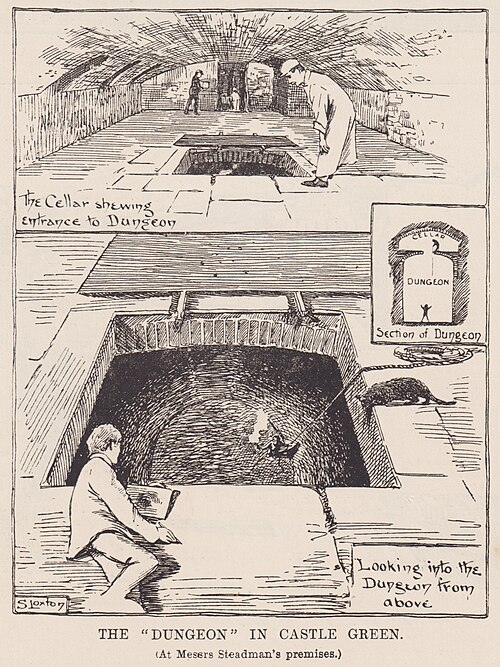

During the post-Civil War period, according to James Millerd's map of Bristol, the remaining parts of the castle were demolished by 1656. However one octagonal tower survived until it was torn down in 1927. It was sketched by Samuel Loxton in 1907.[14] There are some remains of the banqueting hall incorporated in a building which still exists above ground today, known as the Castle Vaults. In 1938 the Castle Vaults was used as a tobacconist's shop.[15]
The castle moat was covered over in 1847 but still exists and is mainly navigable by boat, flowing under Castle Park and into the Floating Harbour. The western section is a dry ditch and a sally port into the moat survives near St Peter's Church.[16]
A 16-metre (52 ft) long postern tunnel runs underneath the south west part of the castle.[17]
The area was redeveloped for commerce, and later largely destroyed in the Bristol Blitz. It was subsequently redeveloped as a public open space, Castle Park.[18]
The vaulted chambers of the Castle are a Scheduled Ancient Monument.[19]
{{cite book}}: CS1 maint: publisher location (link){{cite book}}: CS1 maint: publisher location (link){{cite book}}: CS1 maint: publisher location (link)