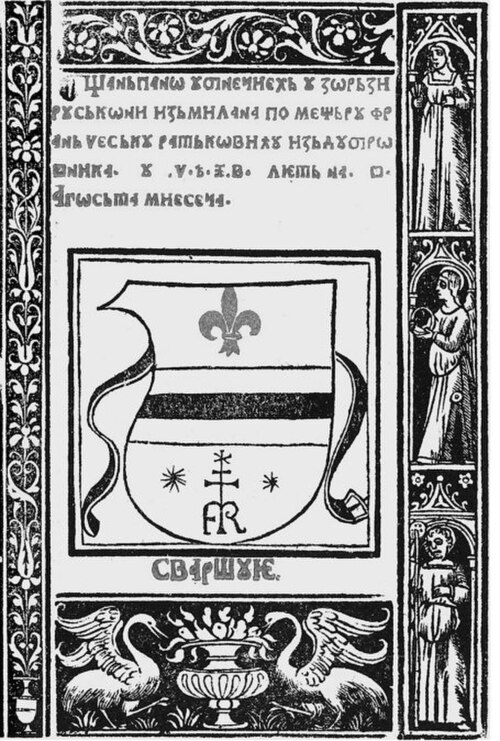
The comprehensive body of Bosnian literature, mainly portion associated with the Franciscan order, from the 16th to mid-18th century and early 19th century. This is by far the most abundant corpus of works written in Bosnian Cyrillic, covering various genres, but belonging to the liturgical literature: numerous polemical tractates in the spirit of the Counter-Reformation, popular tales from the Bible, catechisms, breviaries, historical chronicles, local church histories, religious poetry and didactic works. Among the most important writings of this circle are works of Matija Divković, Stjepan Matijević and Pavao Posilović.
After the Ottoman conquest, Bosnian Cyrillic was used, along with Arebica, by the Bosnian Muslim nobility, chiefly in correspondence, mainly from the 15th to 17th centuries (hence, the script has also been called begovica, "bey's script"). Isolated families and individuals could write in it even in the 20th century.
In conclusion, main traits of Bosnian Cyrillic include:
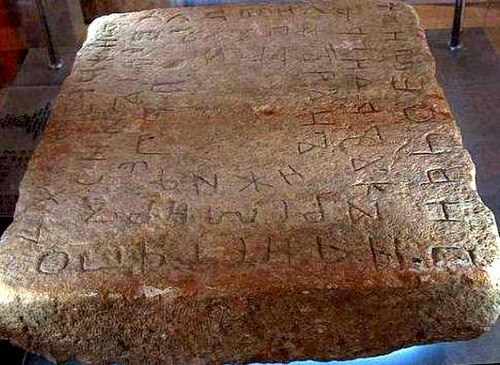
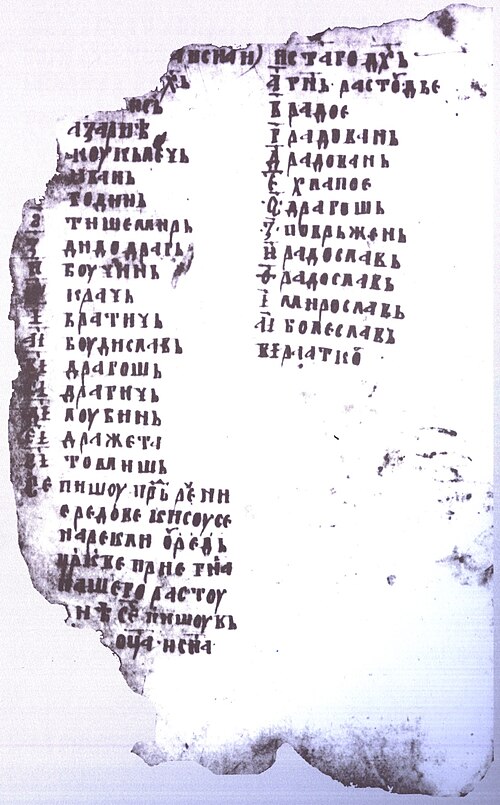
Its earliest monuments are from the 11th century, but the golden epoch covered the period from the 14th to 17th centuries. From the late 18th century it rather speedily fell into disuse to be replaced by the Latin script.
↑ヤクシャ・ラヴリッチ編(1972年)。ズボルニク・プロゼXVI。 Ⅹ7.ストリエチャ。 Pet stoljeća hrvatske književnosti (クロアチア語)。 Vol. 11.マティカ・フルヴァツカ- ゾーラ。 p. 21. UDC 821.163.42-3(082) 。2013 年 1 月 24 日に取得。Ofičje blažene gospođe (Dubrovački molitvenik iz 1512.)
1 2 3クナ、ヘルタ(2008)。「Srednjovjekovna bosanska književnost」(ボスニア語)。メジュナロドニ・フォーラム・ボスナ。 p. 66 .2025 年9 月 27 日に取得。
1 2クネゾヴィッチ、パヴァオ(2010 年 4 月 14 日)。「Sinteza srednjovjekovne književnosti Bosne i Hercegovine. Herta Kuna: Srednjovjekovna bosanska književnost. サラエボ、フォーラム ボスナエ、2008.、383 str」。フィロロジヤ(クロアチア語) (54): 111–116 . ISSN 0449-363X 。2025 年9 月 27 日に取得。
↑ヤヒッチ、ジェヴァド。ハリロヴィッチ、セナヒド。パリッチ、イスマイル (2000)。Gramatika bosanskoga jezika (PDF)。ゼニツァ: ドム・シュタンペ。 p. 49.ISBN97899584204672020年1月10日にオリジナル(PDF)からアーカイブされました。 2017年11月4日に取得。
1 2ヴラジャリツァ、エディナ(2018)。「Bosančica u ćiriličnoj paleografiji i njen status u filološkoj nauci」。クニジェヴニ・イェジク(ボスニア語)。29 (29)。 Institut za jezik: 7–27 . doi : 10.33669/KJ2018-29-01。ISSN 0350-3496 。2020 年5 月 7 日に取得。
↑ファイン、ジョン・VA(ジュニア)(2010)。『バルカン半島で民族性が重要でなかった時代:中世および近世初期の民族主義以前のクロアチア、ダルマチア、スラヴォニアにおけるアイデンティティの研究』ミシガン大学出版局、304-305頁。ISBN978-0-472-02560-22020年5月7日取得。ヤギッチは、17世紀の別の著者、ボスニア人のマティヤ・ディヴコヴィッチ(1563年 - 1631年)を引用している。ディヴコヴィッチはボスニアで生まれ、イタリアで教育を受け、その後ボスニアに戻ってフランシスコ会士となった。ディヴコヴィッチは通常、この言語を「イリュリア語」と呼んでいたが、時には「ボスニア語」と呼んでいた。ゲオルギイェヴィッチはこれに異議を唱え、ディヴコヴィッチは通常、この言語を「ボスニア語」、「スラヴ語」、または「我々の言語」と呼んでいたと述べ、ディヴコヴィッチが(ある作品を)ボスニアでスラヴ語を話すようにスラヴ語に翻訳したという一節を引用している。さらに、ラヴリッチはディヴコヴィッチの『Beside varhu evandjela nediljnieh priko svehga godišta』(ヴェネツィア、1614年)からの抜粋を提供しており、その中にはマカルスカ司教バルトル・カチッチ(ディヴコヴィッチはカドチッチと綴っている)への献辞全体も含まれている。その献辞の中で、ディヴコヴィッチは自分が使っている言語に2回言及しており、どちらも「スラヴ語」(Slovinski jezik)と呼んでいる。ディヴコヴィッチは、関係する人々に対して「スラヴ語」という言葉を使うこともあった。コンボルは、彼が1611年にヴェネツィアで『スラヴ民族のためのキリスト教教義』(Nauk krstjanski za narod slovinski)というタイトルの著作を出版したと指摘している。その序文で、彼はスラヴ民族のために正しい真のボスニア語で書いたと述べている。ゲオルギイェヴィッチはまた、彼が使用していたボスニア・キリル文字を「セルビア文字」と呼んでいたことも指摘している。
↑クレシミール・ゲオルギイェヴィッチ (1969)。Hrvatska književnost od XVI do XVIII stoljeća u Sjevernoj Hrvatskoj i Bosni (Katalog Knjižnica grada Zagreba - Detalji ed.)。マティカ・フルヴァツカ・ザグレブ。150、158、164、165ページ。2020 年5 月 7 日に取得。