
Loading article…


1975 年にエチオピアの君主制が終わるまで、エチオピアとエリトリアには2 つの階級の貴族が存在しました。メサフィント( Ge'ez : መሳፍንት masāfint、現代転写mesāfint、単数形 መስፍን masfin、現代のmesfin 、「王子」)は世襲の王侯貴族であり、支配階級の上層部を形成しました。メクワニント(ゲエズ語: መኳንንት makʷanint、現代語: mekʷanint、単数形: መኰንን makʷanin、現代語: mekʷanin 、またはアムハラ語: መኮንን mekonnen 、「役人」)は、貴族階級の大部分を占める、しばしば庶民出身の任命貴族であった。20世紀まで、宮廷で最も権力のある人々は、一般的に君主によって任命されたメクワニントのメンバーであったが、地域的にはメサフィントがより大きな影響力と権力を持っていた。ハイレ・セラシエ皇帝は、メサフィントの権力を大幅に制限し、その頃には実質的にエチオピア政府と同一になっていたメクワニントの利益を図った。
メクワニントとは、アビシニア政府または宮廷において特定の役職を与えられた官僚のことである。ラスの称号からバランバラスに至るまでの上位の階級も、メクワニントのメンバーに与えられた。しかし、メサフィントのメンバーは、同じ階級のメクワニントのメンバーよりも伝統的に優先権を与えられた。例えば、ヨハネス4世皇帝の息子でありメサフィントのメンバーであったラス・メンゲシャ・ヨハネスは、身分の低い生まれでメクワニントのメンバーであったラス・アルラ・エンギダよりも上位であった。両者の階級は同等であったにもかかわらずである。
また、主に年齢、歴任した役職、および各人が称号を得た時期に基づく序列に関する並行した規則も存在し、序列の規則はかなり複雑であった。メクワニントのメンバーの称号を持つ相続人の曖昧な立場と相まって、ハイレ・セラシエ皇帝は、近代化改革プログラムの一環として、またメサフィントから権力を集中させるという目標に沿って、伝統的な序列制度を、地位による序列、そして称号の取得方法に関係なく称号を継承した時期に基づく序列による序列を与える、簡略化された西洋風の制度に置き換えた。[ 1 ]
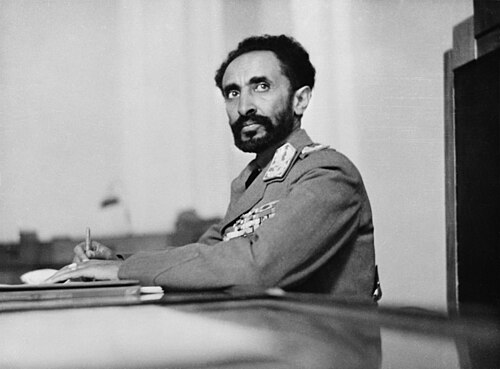
アクサム王国のエザナ王(西暦320年代~360年)にまで遡るアクサム王国の複数の王がこの様式を使用していたが、エチオピアの支配者は一般的に、イェクノ・アムラクによるソロモン王朝の即位までネグスという様式を使用していた。
エチオピア皇帝の正式な称号はネグサ・ナガスト・アンド・セヨウメ・イグジアベヘル(ゲエズ語: ሥዩመ እግዚአብሔር、「神に選ばれた者」)であった。モア・アンベッサ・ゼ・イムネゲデ・イェフダ(「ユダ族の征服するライオン」)という称号は常に皇帝の称号の前に付けられた。これは個人の称号ではなく、イエスの称号を指し、皇帝の名の前にキリストの地位を置くことで、皇帝の服従の行為を示した。ヨハネス4世の治世までは、皇帝はネグセ・ツィオン(ゲエズ語: ንጉሠ ጽዮን、nəgusä tsiyon、「シオンの王」)でもあり、その都はアクサムにあり、帝国の北部の大部分に対する覇権を与えていた。
皇帝は、正式な敬称であるGirmawi (ゲエズ語: ግርማዊ、gərəmawi、「皇帝陛下」)で呼ばれ、日常会話ではJanhoy [ nb 1 ] (ゲエズ語: ጃንሆይ janihoy、「陛下」、または文字通り「陛下」) と呼ばれ、自身の家や家族の間ではGetochu (複数形では我々の主人) と呼ばれ、三人称で名前を呼ぶときはAtseという接尾辞を付けて(実質的には「皇帝」、つまりAtse Menelik) 呼ばれた。
All formal speech concerning the Emperor was in the plural, as was his own speech; Haile Selassie, for instance, referred to himself in the first-person plural at all times, even in casual conversation and when speaking in French (however this was not the case when he spoke in English, in which he was not fully fluent).[2]
The Negesta Nagastat (Ge’ez: ንግሥተ ነገሥታት nəgəstä nägästât) was Empress Regnant in her own right, literally "Queen of Kings", or "Queen of Queens", or "female ruler of an empire."
Zewditu (reigned 1917–1930) was the only woman to be crowned in Ethiopia in her own right since ancient times. Rather than take the title itege, which was reserved for empress consorts, Zewditu was given the feminine version of nigusa nigist to indicate that she reigned in her own right. She was accorded the dignity of Girmawit ("[Her] Imperial Majesty") and the title of Siyimta Igzi'abher (Ge’ez: ሥይምተ እግዚአብሔር səyəmtä ’əgziabhēr, "Elect of God"). She was commonly referred to as nigist, translated as "Queen". The 1955 Constitution of Ethiopia excluded women from the succession to the throne so this title was effectively abolished.
An Itege (Amharic: እቴጌ ’ətēgē) was an Empress Consort. This refers to the wives of reigning emperors.
Empresses were generally crowned as consorts by the emperor at the Imperial Palace. However, Taytu Betul, consort of Menelik II, became the first Itege to be crowned by the Emperor at church rather than at the Palace. Her coronation took place on the second day of the emperor's coronation holiday. Menen Asfaw became the first Itege to be crowned by the archbishop on the same day and during the same ceremony as her husband, Haile Selassie. The Itege was entitled to the dignity of Girmawit ("Her/Your Imperial Majesty").
A Negus (Ge'ez: ንጉሥnəgus, "king") was a hereditary ruler of one of Ethiopia's larger provinces, over whom collectively the monarch ruled, thus justifying his imperial title. The title of Negus was awarded at the discretion of the Emperor to those who ruled important provinces, although it was often used hereditarily during and after the Zemene Mesafint. The rulers of Begemder, Shewa, Gojjam, Wollo, all held the title of Negus at some point, as the "Negus of Shewa", "Negus of Gojjam", and so forth.
During and after the reign of Menelik II virtually all of the titles either lapsed into the Imperial crown or were dissolved. In 1914, after having been appointed "Negus of Zion" by his son LijIyasu, Mikael of Wollo, in consideration of the hostile feelings this provoked among much of the nobility in northern Ethiopia (particularly Le'ul RasSeyoum Mengesha, whose family had resented being denied the title by Menelik), who were now technically made subordinate to him, instead elected to use the title of Negus of Wollo. Tafari Makonnen, who later became Emperor Haile Selassie, was bestowed the title of Negus in 1928; he would be the last person to bear the title.
Despite this, European sources referred to the Ethiopian monarch as the Negus well into the 20th century, switching to Emperor only after the Second World War– around the same time the name Abyssinia fell out of use in favour of Ethiopia in the west.
Leul or Leoul (Ge'ez: ልዑልlə‘ul, "Prince") was a princely style used by sons and grandson of Ethiopia's dynastic monarchs. It is equivalent to that of Your Highness and was formerly only used as a form of address. The term was introduced as an official title in 1916 by the former foreign minister Blatten Geta Heruy Wolde-Selassie; it was first applied to Dejazmatch Tafari and his wife Princess Menen, who were respectively designated Leul-Ras and Le'elt Woizero.
レエルト(ゲエズ語: ልዕልት lə'əlt 、「王女」)。この称号は、1916年にゼウディトゥが即位した際に使用されました。君主の娘と父方の孫娘のために出生時に留保されていました。通常、レウル・ラスの妻、および君主の女系の孫娘が結婚した際に授与されました。この規則の注目すべき例外は、ハイレ・セラシエ皇帝の兄との間の姪であるレウルト・イェシャシェワーク・イルマで、彼女は1918年にレウル・ラス・ググサ・アラヤ・セラシエと結婚した際にゼウディトゥから「殿下」の尊厳とともにこの称号を授与され、その後、1930年に叔父が戴冠した際に「皇帝殿下」の尊厳とともに再び授与されました。
アベトフン(アムハラ語: አቤቶኹን abētōhun ) またはアベト(アムハラ語: አቤቶ abētō、「王子」) –皇統の男性に与えられる称号。この称号は 19 世紀後半までに使われなくなりました。リジ・イヤスはこの称号をアベトホイ(アムハラ語: አቤቶ ሆይ 、「偉大な王子」)として復活させようとしたが、この形式は現在のイヤス主義者の主張者であるギルマ・ヨハネス・イヤスによって今でも使用されている。影響力のあるエチオピアの哲学者、君主主義者であり、ソロモン・ザグウェ皇室のゴンダル・ラスタ支部とシェワン貴族の一員であるリジ・テドラ・メラクも、2019年にエチオピア王室評議会からアベトの称号を与えられた。
ラス(アムハラ語:ティグリニャ語/ራስ 、ローマ字表記: ras、文字通り「頭」、アラビア語のRaisと比較)–強力な非皇帝の称号の1つ。歴史家のハロルド・G・マーカスはこれを公爵に等しいとしている。複合称号のレウル・ラス(アムハラ語:ልዑል ራስ)は、ゴッジャム、ティグレの王子、最後の統治者シェワン家のセラレ分家など、皇帝王朝の分家の長に与えられた。
アン・エメベット・ホイ(እመቤት ሆይ 'əmäbēt hōy、「偉大な王女」)は、レウル・デジャズマチの称号を持つ者の妻や、王族の血を引く他の高位の女性にのみ与えられる称号でした。
あるいは、エメベト(እመቤት 'əmäbēt、「王女」)は、君主の女系譜の未婚の孫娘(結婚すると通常レウルトの称号を与えられた)とレウル・ラスの娘に与えられた称号であった。
ビトウォデッド(アムハラ語: ቢትወደድ 、ローマ字表記: bitwädäd、文字通り「愛される者」)–ザラ・ヤコブが創設したと考えられている役職で、左派と右派の2名を任命した。これらは後に1つの役職に統合され、ラスの最高位である「ラス・ベトワダド」となった。マーカスはこの称号を伯爵に例えている。
Lij(アムハラ語:ልጅ 、ローマ字表記: ləj、文字通り「子供」)–世襲制の王族貴族であるメサフィントのメンバーの息子に生まれた時に与えられる称号。
[1998年出版のグレゴリー・R・コプリー著『エチオピアは神に手を差し伸べる:帝国エチオピアの独特な象徴、構造、そして現代世界における役割』(国際戦略研究協会刊、エチオピア王室評議会によりオンラインで公開)より抜粋]