
Loading article…
| テキサス・ロングホーンズ男子バスケットボール | ||||
|---|---|---|---|---|
| ||||
 | ||||
| 大学 | テキサス大学オースティン校 | |||
| 最初のシーズン | 1906 | |||
| 史上最高記録 | 1,899~1,142 (.624) | |||
| アスレチックディレクター | クリス・デル・コンテ | |||
| ヘッドコーチ | ロドニー・テリー(第1シーズン) | |||
| 会議 | SEC | |||
| 位置 | テキサス州オースティン | |||
| アリーナ | ムーディーセンター (収容人数:10,763) | |||
| ニックネーム | テキサス・ロングホーンズ | |||
| 色 | 焦げたオレンジと白[1] | |||
| 制服 | ||||
| ||||
| トーナメント前のプレモ・ポレッタのチャンピオン | ||||
| 1933 | ||||
| NCAAトーナメントファイナルフォー | ||||
| 1943年、1947年、2003年 | ||||
| NCAAトーナメント エリートエイト | ||||
| 1939年、1943年、1947年、1990年、2003年、2006年、2008年、2023年 | ||||
| NCAAトーナメント スウィートシックスティーン | ||||
| 1960年、1963年、1972年、1990年、1997年、2002年、2003年、2004年、2006年、2008年、2023年 | ||||
| NCAAトーナメントベスト32 | ||||
| 1979年、1989年、1990年、1991年、1994年、1995年、1997年、2000年、2002年、2003年、2004年、2006年、2007年、2008年、2009年、2011年、2014年、2022年、2023年、2024年 | ||||
| NCAAトーナメント出場 | ||||
| 1939年、1943年、1947年、1960年、1963年、1972年、1974年、1979年、1989年、1990年、1991年、1992年、1994年、1995年、1996年、1997年、1999年、2000年、2001年、2002年、 03、2004、2005、2006、2007、 2008年、2009年、2010年、2011年、2012年、2014年、2015年、2016年、2018年、2021年、2022年、2023年、2024年 | ||||
| カンファレンストーナメント優勝者 | ||||
| 1994年、1995年、2021年、2023年 | ||||
| カンファレンスレギュラーシーズンチャンピオン | ||||
| 1915、1916、1917、1919、1924、1933、1939、1943、1947、1951、1954、1960、1963、1965、1972、1974、1978、1979、1986、1992、 94年、1995年、1999年、2006年、2008年 | ||||






テキサス・ロングホーンズ男子バスケットボールチームは、テキサス大学オースティン校を代表して、 NCAAディビジョンIの大学 対抗男子バスケットボール大会に出場しています。ロングホーンズは、2023~24年シーズンを通じてビッグ12カンファレンスで競い、2024年7月1日にサウスイースタンカンファレンス(SEC)に移籍しました。
テキサス大学は1906年に男子バスケットボールの大学対抗戦を開始しました。 [2]ロングホーンズは、 NCAAディビジョンI の大学バスケットボールプログラムの中で総勝利数で17位、ディビジョンIで少なくとも60年間活動したプログラムの中では歴代勝率で27位にランクされており、歴代勝敗記録は1828勝1105敗(.623)です。[3]ビッグ12カンファレンスの男子バスケットボールプログラムの中で、テキサスは歴代勝利数と歴代勝率の両方でカンザスに次ぐ2位です。 [3]
ロングホーンズは男子バスケットボールで合計28回のカンファレンスチャンピオンシップを獲得し、NCAAトーナメントに合計38回出場しています(歴代9位の出場回数、40勝40敗の総合成績)[4] 。NCAAファイナルフォーに3回(1943年、1947年、2003年)、NCAA地域決勝(エリートエイト)に8回進出しています。 [5] [6] 2023-24シーズン終了時点で、テキサスは全国選手権に勝っていないNCAAトーナメントの勝利数(40)でディビジョンI男子バスケットボールプログラムの中で4位タイにランクされており、カンザス州立大学とノートルダム大学(それぞれ40)と同数で、オクラホマ(43)、イリノイ(45)、パデュー(49)に続いています。[4] [7]
テキサス大学のバスケットボール プログラムは創設後数十年間は大きな成功を収めたが、現代における成功は比較的最近のことである。プログラム開始後 5 年間に 2 シーズン負けた後、テキサス大学は 1912 年から 1950 年にかけて負けシーズンは 1 シーズンのみで、その期間中に勝率.703 を達成し、NCAA トーナメント開始後 10 年間に 2 回ファイナル フォーに、1 回エリート エイトに進出し、プレモ ポレッタ パワー ポールから1933 年の全米チャンピオンとして遡及的に認定された。1951 年から 1988 年まで、ロングホーンズは 14 回負け越し、勝率 .522 を記録し、拡大されたトーナメントに参加したのは 5 回のみであった。[8] [9]テキサス大学は、エイブ・レモンズ監督(1976-82)とトム・ペンダース監督(1988-98)の在任中に全国的にある程度の認知度を獲得したが、プログラムが最高レベルの知名度を獲得したのは、元ヘッドコーチのリック・バーンズ監督(1998-2015)の指揮下であった。バーンズは、テキサス大学をプログラムでの17シーズンで16回のNCAAトーナメント出場に導き、 [10]これには、学校記録となる14回連続出場(1999-2012)や、全体で15回の20勝シーズン、学校最高の13回連続20勝シーズン(2000-12)が含まれる。[5] [8]
チームは現在、新しいホームアリーナであるムーディーセンターでプレーしています。チームのコーチはロドニー・テリーで、クリス・ビアードが家庭内暴力の容疑で逮捕され、その後解雇された後、2022年12月に後任となりました。[11]
歴史
初期(1906年~1936年)
1906–13

テキサスの男子バスケットボール プログラムは、スコットランド出身のマグナス メインランドの指導の下、1906 年に始まりました。メインランドは工学部の大学院生で、テキサス フットボールチームのラインマンで、大学初の代表バスケットボール チームを組織し、コーチを務め、プレイしました。[12] [13]メインランドは、テキサス大学に来る前は、イリノイ州のウィートン カレッジの学部生として全国的に知られたバスケットボール選手でした。 [14]彼のウィートン チームは、1904 年のセントルイス夏季オリンピックで、競合する 3 つの大学バスケットボール チームのうち 2 位になりました。これは、この若いスポーツ (ただし、デモンストレーション スポーツとしてのみ)が取り上げられた最初のオリンピックでした。 [14]メインランドは、大学運動委員会を説得して、クラーク フィールド(テキサスのフットボール、野球、陸上競技のチームが当時開催されていたスタジアム)の南西隅に屋外バスケットボール コートを整備するために 125 ドルを確保し、大学初の代表バスケットボール チームの組織、コーチ、プレイを許可してもらいました。[15] [16]
ロングホーンズは1906年3月10日に初めてコートに立ち、クラークフィールドの新しい屋外ホームコートでベイラーベアーズを27対17で破った。 [17]テキサスは2週間後にウェイコに遠征し、ベアーズ(これも初年度)との3連戦を行い、メインランドの活躍で3試合すべて勝利した。 [18]ロングホーンズは最終的に、バスケットボールプログラムの初シーズンに予定されていた8試合のうち7試合に勝利した。 [ 8 ]
資金不足のため、テキサス大学体育協会は2シーズン後にこの新設プログラムを中止し、1908年シーズンにはテキサスにバスケットボールチームがなかった。体育協会は1909年にプログラムを復活させたが、これは主に、バスケットボールに対する学生の関心を高めるために運動したロングホーンズの選手、モーガン・ヴァイニングの尽力によるものだった。[2] [19] [20] [21]ヴァイニングの活動はテキサス大学の学生新聞『デイリー・テキサン』によって支援された。同紙は一貫してバスケットボールの復活を主張しており、その理由の1つは、バスケットボールがフットボールのオフシーズンに選手にとって良い体力トレーニングになると考えられていたことだった。[22]
言語学教授でドイツ出身、テキサス大学ロングホーンズ校のフットボール部ヘッドコーチであるWEメッツェンティン(1909-11)は、UTでのバスケットボールの中止に強く反対していたが[23]、プログラム再開後の3シーズン、ヘッドコーチの職に就いた。メッツェンティン監督の下でロングホーンズは27試合中わずか10試合(最後の18試合ではわずか4試合)を本拠地の屋外クラークフィールドでプレーした。クラークフィールドは表面がひどく凸凹しており、天候に完全に左右されやすいため[22]、バスケットボールの会場としては特に不向きだった。メッツェンティンは13勝14敗でシーズンを終えた。テキサス大学で負け越しの成績でコーチを退任したのは1959年になってからだった。[8]メッツェンシンが1911年シーズン後にコーチの職を辞し、テキサス大学体育協会の会長(体育局長の前身)に就任した後、元テキサス陸上競技コーチのJ・バートン・リックス氏が、前任者2人と同様に報酬なしでコーチを務め、ヘッドコーチとしての1シーズン(1912年)でテキサスを5勝1敗の成績に導きました。[24]
テキサスの陸上競技コーチも務めるカール・C・テイラー教授が、1913年シーズンのバスケットボールのヘッドコーチに就任した。テイラーはベン・ハー寺院の劇場を借り、ミニチュアのバスケットボールコートとアリーナに改造する手配をし、チームがホームゲームや練習のための屋内会場を持つようにした。UTはシュライナーズとスコティッシュ・ライト・フリー メイソンにシーズンあたり75ドルを支払った。[25]テイラーはドレイク大学在学中にバスケットボールの専門家として高い評価を得てUTにやって来た。[26]彼のテキサスチームは8勝4敗でシーズンを終え、サンマルコスでサウスウェスタンを70対7で圧勝したのを皮切りに、全米記録となる連勝記録の最初の3連勝に貢献した。[8] 1912年から1913年の学年度の終わりに、テキサス大学のカクタス年鑑は「バスケットボールはもはやテキサス大学ではマイナースポーツではない。今年カール・テイラー教授が研究を引き継ぎ、新たな命を吹き込むまで、バスケットボールは常にマイナースポーツとみなされてきた」と宣言した。[26]
1914–27

テキサス大学の最初の体育局長であり、サウスウェスト・カンファレンスの設立にも尽力したL・テオ・ベルモントは、 1914年から1915年にかけてヘッドコーチに就任し、バスケットボールチームを率いた2期のうちの最初の任期を務め、1914年と1915年のシーズンにロングホーンズをそれぞれ11勝0敗と14勝0敗に導き、1915年には初のサウスウェスト・カンファレンス優勝を果たした。[17] [27] [28]ベルモントのチームは25勝を挙げ、最終的に44試合にまで伸びた連勝記録に貢献した。
ベルモントは、チームの勝利記録を28に伸ばした後、アスレチックディレクターの仕事に集中するためにコーチを辞め、ロイ・ヘンダーソンをまだ無給だったテキサスのバスケットボールのヘッドコーチに任命した。ヘンダーソンのチームは、1916年にテキサスの3年連続の無敗シーズンを記録し、合計連勝を40に伸ばした。3年 連続無敗チームの要であり[29]、UTのスポーツ史に残る偉大な人物で、後にフットボールチームを7シーズン(1927年から1933年)コーチし、1925年から1960年までUT陸上チームのヘッドコーチを務め(25回のカンファレンスチャンピオンシップで優勝)、テキサスリレー[30]を設立した、シニアセンターのクライド・リトルフィールドは、1916年シーズンのプレーにより、後にテキサス州初のバスケットボールの全米選抜選手として遡及的に認定された。[31]
UTの卒業生で元理事のトーマス・ワット・グレゴリーは、 10年前に学生と教職員のために恒久的な体育館を建設する運動を始めていた[32]。バスケットボールチームが試合や練習もできる体育館だったが、7万5千ドルのプロジェクトのための資金調達は遅れていた。1914年にグレゴリーがオースティンを離れ、ウッドロウ・ウィルソン政権下で司法長官を務めたため、さらに遅れをとった。プロジェクトは棚上げされたが、必要性は依然として切実であり、1916年のシーズン終了後、UTアスレチック評議会は、翌シーズンの2試合目に完成した、仮設で簡素な木製の男子体育館の建設に8,500ドルを割り当てることを決定した。[33]
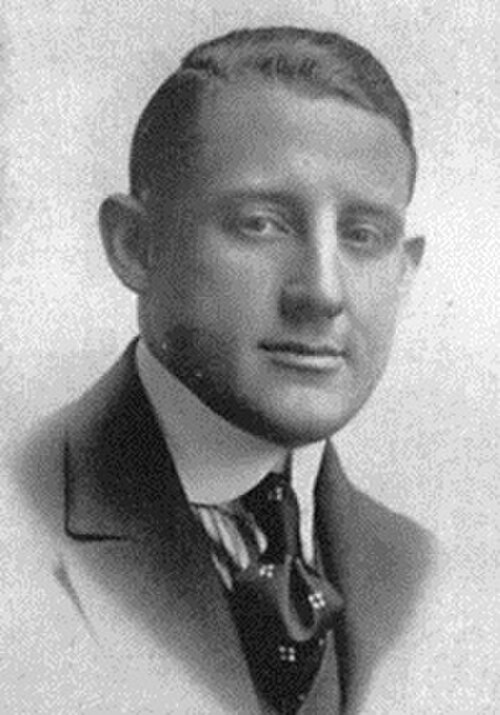
1916年、セオ・ベルモントはテキサスのフットボール、バスケットボール、陸上競技のプログラムを率いるため、ミズーリ州からユージン・ヴァン・ゲントを雇った。ヴァン・ゲントのテキサスにおける唯一のバスケットボールチームは、全体で13勝3敗の成績を収め、3年連続でサウスウェスト・カンファレンスのチャンピオンシップを獲得した。このシーズンのハイライトは、両校の運動関係が再開された後、テキサスとテキサスA&Mアギーズの間で行われた史上初のバスケットボールの試合だった。 [34]ロングホーンズは、2つのホームゲームとカレッジステーションでの2試合のうち1試合で勝利して、バスケットボールのライバル関係を開始した。ヴァン・ゲントの1917年のテキサスチームは、オースティンでライスに24対18で敗れるまで、1913年に始まったテキサスの連勝記録に最後の4勝を加えた。[17]テキサスの連勝は、ほぼ40年間、男子バスケットボールのNCAA連勝記録であり(フィル・ウールパートのビル・ラッセル率いるサンフランシスコのチームが1955年から1957年にかけて60連勝するまで)、今日でもディビジョンI史上5番目に長い連勝記録となっている。[20] [35]ヴァン・ゲントは、1917年4月に米国が第一次世界大戦に参戦した後、各スポーツで1シーズンコーチを務め(両方でカンファレンスチャンピオンシップを獲得)、軍に入隊した。[36]
ヴァン・ゲントがヘッドコーチを務めた1年の後、ロイ・ヘンダーソンがテキサスの監督としてさらに2シーズン務めた。1917年のチームから数人の選手が兵役に就いたため、1918年のロングホーンズのバスケットボールチームには2年生のアル・デヴィニーが戻ってきただけだった。ヘンダーソンはイントラミューラルで才能ある選手をスカウトし、それでもチームを編成したが、チームは14勝5敗で、テキサスの4年連続のSWCチャンピオンシップ優勝を1ゲーム差で逃した。ヘンダーソンは最後のシーズン(1919年)にロングホーンズを17勝3敗の成績に導き、2位のアギーズとの4ゲームシリーズを分け合ってSWCチャンピオンシップを獲得した。これはカンファレンスが存在した5年間でテキサスが4度目のバスケットボールカンファレンスチャンピオンシップとなった。[17]
1910年から1919年まで、テキサス大学は全体で勝率.789を記録した。[8]その10年間でより高い勝率を達成したのは、カリフォルニア大学、海軍大学、ウィスコンシン大学の3つのNCAA大学のみであった。 [20]
ユージン・ヴァン・ゲントは1920年のシーズンにヘッドコーチとして復帰する予定だったが、カリフォルニアでのビジネスチャンスを追求するためシーズン開始前に辞任した。[37]国内初の校内プログラムの開発と指導のために大学に赴任し、その後3シーズンテキサスのフットボールチームのコーチも務める ベリー・M・ウィテカーが、そのシーズンのヘッドコーチを務めることに同意した。テキサスは、1916年と1917年にプレーしたレターマンと退役軍人7名が復帰し、1920年もカンファレンスチャンピオンシップを争うことが期待されたが、7名の選手が怪我や病気のためシーズンの大半を欠場した。[38]最初の5試合に勝利した後、ロングホーンズは11試合中6試合を落とし、全体で10勝6敗でシーズンを終えた。これはテキサスにとって9年間で最悪のシーズンだった。
テオ・ベルモントはビル・ジュノーの退任後、ウィテカーをロングホーンズのフットボールのヘッドコーチに任命し、 [39]ベルモント自身はさらに2シーズン(1921年と1922年)バスケットボールのヘッドコーチの職を引き継ぎ、1921年には13勝5敗でシーズンを終えた。ベルモントは最後の年にテキサスを初の20勝シーズンに導いた。ロングホーンズは1922年に全体で20勝4敗、カンファレンス戦では14勝4敗でシーズンを終えた。シーズン後半に怪我や成績で5選手を欠き、その中にはSWCの得点王フィリップ・ペイトンもいたが、テキサスは1919年以来初めてSWCチャンピオンシップに勝つチャンスを持って最終戦を迎えた。 [40]ロングホーンズはカレッジステーションで、当時は将来テキサスのフットボールのヘッドコーチ兼アスレチックディレクターを務めるダナ・X・バイブルがコーチを務めていたアギーズに敗れ、アギーズは3年連続でSWCチャンピオンシップを獲得した。[41]ベルモントは1922年のシーズン終了後に管理職に復帰し、バスケットボールのコーチとしてのキャリアを58勝9敗の成績で終えた。彼の勝率.866は、プログラム史上最高の勝率のままである。[10]
ベルモントは、当時はまだ無給だった次のバスケットボールのヘッドコーチに、フットボールのアシスタントコーチのミルトン・ロムニーを選んだ。ロムニーの任期は、試合時間残り9分で14点リードしていたロムニーが主力選手をベンチに下げた後、ロングホーンズがホームでオクラホマA&M大学に28対27で敗れたことで、早い段階で不吉な展開を見せた。ロングホーンズは再び不釣り合いな数の負傷者を出し、バイク事故による足の骨折と頭蓋骨骨折でスターター2名を失った。[42]クレムソン大学のEJ「ドク」スチュワートをフットボールのヘッドコーチに選ぶのが長引いたことで、新聞が彼がバスケットボールチームの指揮も任されると報じ、ロムニーが残り7試合でレームダックになったことで、さらなる混乱と混乱を招いた。[42]テキサスは最後の6試合のうち4試合に負けて11勝7敗でシーズンを終えたが、バイブルズ・アギーズに勝利してシーズンを締めくくった。

医学部卒、ピアノ愛好家、元スポーツライター、かつては自動車販売店のオーナー、そしてベテランのフットボールとバスケットボールのコーチであるドック・スチュワートは、すぐに大学のさまざまな層の間で人気者になった。彼の雄弁さにより、テキサス大学英語学部長から仕事のオファーを受けた。フットボールチームを無敗のシーズンに導いた後、スチュワートはテキサスでまったく新しいスタイルのバスケットボールを導入することにした。それは、ボールの動きとマンツーマンディフェンスを重視し、基本的にドリブルを一切行わないものだった。[43]テキサスは、 TCU、オクラホマA&M、そしておそらくテキサスA&Mに次いで、カンファレンス戦で3位か4位で終わると予想されてシーズンに臨んだ。 [43]テキサスは、サウスウェスタンに対して1点差で勝利し、4点差で2回勝利してシーズンを開始した。サウスウェスタンは、ロングホーンズとの過去6試合で平均20点近く差で負けていたため、地元新聞は懸念を抱いた。[43]予想に反して、テキサスはカンファレンス戦でオクラホマA&Mに2勝し、他の6つのカンファレンスシリーズをスイープして14勝0敗となり、残り6試合でSWCチャンピオンシップの少なくとも一部を獲得した。これらはすべてオースティンを離れた場所での試合だった。ロングホーンズは次に列車で500マイル以上移動し、当時バスケットボール初年度だったアーカンソー・レイザーバックスとの長く厳しいバスケットボールのライバル関係を開始し、フェイエットビルで4点差と11点差で勝利した。[44]テキサスは無敗の記録にもかかわらず、カレッジステーションでアギーズに少なくとも1試合は負けると予想されていた。ロングホーンズは代わりにアギーズに24対14と17対11で勝利し、23勝0敗でテキサスとSWCの歴史上最後の無敗チームとなった。シニアガードのアブ・カーティスは、後に1924年シーズンのUT史上2人目のバスケットボールの全米ファーストチームに遡及的に選出された。[31]

スチュワートの多様な非スポーツ的興味への傾倒が、彼の在任期間中のフットボールとバスケットボールのチームの成績低下の根本的な原因であると推測する者もいる。[39]完璧な1924年のシーズンに続いて、スチュワートの次の3つのチームは17勝8敗、12勝10敗、13勝9敗で終わった。この低迷とフットボールチームの同様の成績低下が相まって、1926-27年シーズン後に人気のあったスチュワートは物議を醸す形で解任された。
1927–36
2シーズンの好成績(特に注目すべきシーズンは1シーズン)を除いて、テキサス大学はその後10年間の大半、バスケットボールで比較的目立たない成績を維持した。テキサス大学がその後の9シーズンで優勝したのはSWCチャンピオンシップの1回のみで、例外的に1932年から1933年の22勝1敗のシーズンで、このシーズンでテキサス大学ロングホーンズはプレモ・ポレッタ・パワー・ポール全国選手権(現在テキサス大学は優勝を主張していない)も遡及的に受賞した。[45]
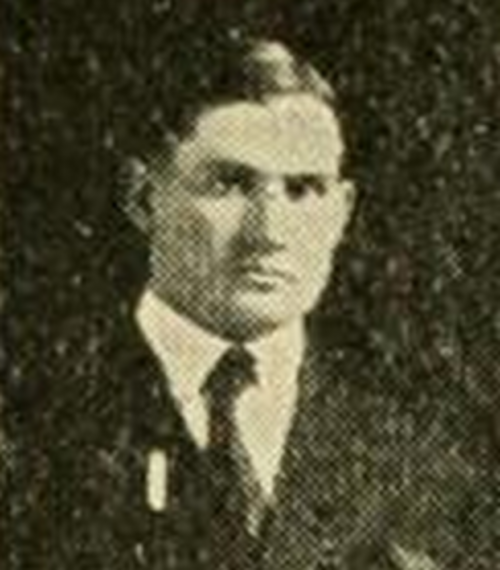
フレッド・ウォーカー(1927-31) は、EJ スチュワートの解任後、ロングホーンズの監督となり、ヘッドコーチとしての 4 年間で合計 51 勝 30 敗の成績を収めました。ウォーカーは、テキサスを 2 年目のシーズンに 18 勝 2 敗、カンファレンスで 10 勝 2 敗の成績に導きました。ウォーカーは、ロングホーンズが 4 年目のシーズンで 9 勝 15 敗という残念な成績に終わった後に解雇されました。
エド・オーレ(1931-34) は、スチュワートの下でテキサスでプレーしていたが、ウォーカーの解任後、テキサスを 3 シーズンコーチし、2 年目にはロングホーンズを 22 勝 1 敗の総合成績、カンファレンス優勝、遡及的に授与されたプレモ・ポレッタ・パワー・ポール全国選手権に導いた。3 年目に、オーレはシーズン終了時に辞任する意向を示し、新入生チームとアシスタント代表監督のマーティ・カロウに後任を任せるよう勧めた。
カロウ (1934-36) は、ヘッドコーチとしての2年間でテキサスを31勝16敗の成績に導きました。テキサスのアスレチックディレクターであり、ロングホーンズのフットボールヘッドコーチであるジャック・シェビニーとの関係は悪化し、カロウは1936年の夏にヘッドコーチを辞任し、その後すぐにアメリカ海軍兵学校の野球ヘッドコーチに採用されました。
ジャック・グレイとHC「ブリー」ギルストラップ時代(1937年~1951年)
戦前のジャック・グレイ時代(1937年~1942年)
テキサス大学での全米選抜チーム第一チームに選ばれた最終学年からわずか2シーズン、そしてテキサス大学の新人チームのアシスタントコーチを1年務めただけの後、絶大な人気を誇ったジャック・グレイは、1937年夏、25歳にしてテキサス大学の第14代男子バスケットボールヘッドコーチに採用された。[46]
グレイが率いた最初の2チームが合わせて24勝21敗だった後、1938-39年のチームは全体で19勝6敗となり、サウスウェスト・カンファレンスのチャンピオンシップを制し、UTに6年ぶりのバスケットボール・カンファレンス・タイトルをもたらした。このシーズンは、当時学校史上最も期待されていたインターセクショナル・マッチアップとなり、フォッグ・アレンのカンザス・ジェイホークスがオースティンにやってきた。 [47]ジェイホークスは第1試合で勝利に向かっているように見えたが、ロングホーンズが後半終盤に反撃し、36対34で勝利した。翌日の夜の第2試合は予想通りの展開となり、カンザスが49対35で楽勝した。カンザス大学とのシリーズ戦の後、テキサスは1937年に始まった全大学トーナメントに初めて出場するためオクラホマシティへ遠征した。 [47]ロングホーンズはトーナメントのブラケットを簡単に勝ち上がり、サウスイースタン州立大学(オクラホマ)、ウェストミンスター大学(ミズーリ)、カンザス州立教員大学、そしてトーナメントの優勝候補であるベイラー大学を破ったが、決勝戦でセントラルミズーリ州立教員大学に33対25で敗れた。テキサスはライスアウルズに番狂わせの敗北でカンファレンスの試合を開始し、その後オースティンでアーカンソーレイザーバックスを2試合迎えた。ロングホーンズは41対37で接戦の第1試合に勝利したが、第2試合では65対41で完全に打ち負かされた。テキサスはSWCの試合で1勝2敗からスタートし、次の1か月間オースティンでカンファレンスの試合を開催しなかったため、チームの目標であるカンファレンス優勝の干ばつを終わらせるという目標が危うくなった。ロングホーンズはウェイコでのベイラー大学への勝利でカンファレンスのロードゲーム4試合を開始し、その後ダラスでカンファレンス戦5勝0敗のSMUマスタングスと対戦した。グレイはマスタングスを「おそらく学校の歴史上最も強力なチーム」と称賛し、SMUのコーチであるホワイティ・バカスは自信を持って自分のチームがロングホーンズを倒すと発表した。[48]しかし、テキサスはSMUにカンファレンスシーズン初の敗北を33対27で与えた。ロングホーンズはTCUホーンドフロッグスとテキサスA&Mアギーズを破った。テキサスは残りの2つのカンファレンスロードゲームで勝利し、その後オースティンで行われた5つのSWC試合すべてに勝利し、最後にはアギーズを66対32で圧勝した。カンファレンス9連勝で、テキサスはSWCで10勝2敗となり、SWCチャンピオンシップの単独優勝を果たした。ロングホーンズは、初のポストシーズンNCAAトーナメントに出場した8チームの1つであり、そこで最終的にNCAAチャンピオンとなったオレゴンウェブフッツ(後にダックスとして知られる)の「トールファーズ」に56対41で敗れた。テキサスは、西部地域3位決定戦でユタ州立大学に51対49で敗れた。
.jpg/500px-Jack_Gray_(coach_at_UTexas).jpg)
1939-40年のチームに対する希望と期待は大きく、主力選手の1人を除いて前シーズンのSWCチャンピオンとNCAAトーナメントチームから全員が復帰した。[49]テキサスはシーズン開幕から7試合、平均18点差(最低でも11点差)で勝利し、その中にはテキサス工科大学レッドレイダーズとのホームシリーズでの2回の勝利も含まれていた。このホームシリーズは両校のバスケットボールでの初対戦となった。[50]グレイはプログラムの全国的な認知度を高めることと、シーズン序盤に今後のカンファレンスの試合に向けてチームを強化することの両方に熱心であり、その両方の目的でロングホーンズを全国の知名度の高い会場で著名なチームとのインターセクショナル競争に参加させようとした。[46] [49] マディソン・スクエア・ガーデンのディレクターであり、1930年代の大学バスケットボールの振興の先駆者であるネッド・アイリッシュは、グレイのロングホーンズを、南カリフォルニア大学とロングアイランド大学を含むダブルヘッダーの一環としてマンハッタン大学と対戦するよう招待していた。[46] UTアスレチックカウンシルは、この試合のためにチームがニューヨークへ遠征し、その後フィラデルフィアに立ち寄ってテンプル大学と対戦する費用を負担することに同意した。18,425人のファンの前で、ロングホーンズはマンハッタンを54対32で圧倒し、グレイが選手として普及させ、コーチとしても教え続けた片手シュートのスピードと正確さで、ニューヨークのスポーツメディアとバスケットボールファンから賞賛された。[49] [51]フィラデルフィアに進み、テキサスは2年前の最初のナショナル・インビテーション・トーナメントの優勝者であるテンプル大学に47対37で敗れた。[52]アーカンソーとの2回のロードゲームのうち1つとSMUとのロードゲームで延長戦で負けたテキサスは、18勝3敗でシーズン最後から2番目のゲームに臨み、プレシーズンカンファレンスの優勝候補であるライスオウルズとのカンファレンス戦では8勝2敗で引き分けた。ロングホーンズはシーズンの初めにライスのホームコートで50対46でこのチームを破っていた。[53] [54]グレゴリー体育館に詰めかけた8,000人以上の熱狂的なテキサス支持者の前で、ロングホーンズはオウルズに42対41で1点差で敗れ、2年連続でSWCチャンピオンシップを勝ち取る望みは打ち砕かれ、チャンピオンシップを分け合う可能性さえ大きく減った。シーズン最終戦でも、ロングホーンズはカレッジステーションで10勝11敗のテキサスA&Mチームに53対52で敗れ、最後の数秒でアギーズのバックアップセンターの長距離シュートで敗北し、またしても痛い敗北を喫した。[52] [53]テキサスは18勝5敗でシーズンを終え、ポストシーズントーナメントへの出場は逃した。プレモ・ポレッタ・パワー・ポールは遡及的に1939~40年のロングホーンズチームを全国17位にランク付けした。
次の2つのチームを合わせて28勝19敗、カンファレンス戦で12勝12敗の成績を収めた後、グレイは1942年4月に海軍への入隊を通知された。これはアメリカが第二次世界大戦に参戦してから4か月後のことだった。グレイのアシスタントであるエド・プライスも海軍に入隊していた。ロングホーンズのフットボールアシスタントコーチ、ハワード・「ブリー」・ギルストラップが戦争中チームのコーチに任命された。[55] [56]
ギルストラップ暫定ヘッドコーチ(1942年~1945年)
両コーチに加え、1941-42年チームのスターター3人が戦争に従軍していた。そのため、1942-43年シーズンのロングホーンズへの期待は低かった。[57]コーチと選手の喪失は乗り越えられない困難と予想されていたが、テキサスは予想を覆し、最初の16試合のうち13試合に勝利した。ギルストラップは、遠くから励ましと助言をくれたグレイとプライス、そしてこれまでに見たことのないほどの協力を見せてくれた選手たちの功績を称えた。ギルストラップは「システムについて私が知らないことがたくさんあり、選手たちはそれを理解していた。彼らは助けに来てくれました。彼らは選手であると同時にアシスタントコーチでもありました。私たちはただ一緒に解決しようとしてきたのです」と説明した。[58]シーズン後半にノーステキサスでTCUとSMUに敗れつまずいた後、ロングホーンズはベイラーベアーズとテキサスA&Mに勝利してレギュラーシーズンを終え、SWCチャンピオンシップの賞金を分け合い、2度目のNCAAトーナメント出場権を獲得した。ロングホーンズは最初の試合でトーナメントの共同優勝候補であるワシントンハスキーズと引き分けた。[59]テキサスは前半で13点差をつけられた後、ジョンハーギスの30得点とバックオーバーオールの15得点のおかげで59-55で逆転し、チーム初のファイナルフォーに進出し、トーナメントのもう1つの共同優勝候補であるワイオミングカウボーイズと引き分けた。[60]その後、ロングホーンズは序盤に13点のリードを失い、より大きく強いカウボーイズが立ち直って58対54で勝利し、ジョージタウン大学ホヤスを46対34で破ってNCAAチャンピオンシップを獲得した。[59] [60]テキサスは19勝7敗でシーズンを終えた。
1943-44年と1944-45年のシーズンにギルストラップのロングホーンズチームはそれぞれ14勝11敗と10勝10敗という成績を残し、1945年8月に太平洋戦争が終結するとジャック・グレイがヘッドコーチとして復帰した。 [61]
戦後のジャック・グレイ時代(1945年~1951年)
グレイが指揮を執った1945-46年のテキサスチームには、復帰したレターマンが5人しかおらず、そのうち誰もグレイの下でプレーしたことがなく、フォワードのジョン・ハーギスとロバート・サマーズがシーズンを通して欠場するため、チームは非常に小柄だった。[62]そのシーズン、ロングホーンズにはほとんど期待されていなかったが、テキサスは最初の7試合に勝利した。チームの守備とリバウンドにおける大きな弱点は、その年、守備を固め、間もなく連覇を果たすことになる全米チャンピオンのオクラホマA&M (後にオクラホマ州立大学に改名) と、その 7 フィート 0 インチのオールアメリカン センター、ボブ "フットヒルズ" カーランドに対して最も顕著に表れた。カーランドとアギーズ (後にカウボーイズとして知られる) は、小規模なロングホーンズを最初から最後まで圧倒し、オクラホマ シティで行われた 8 チームによるオールカレッジ トーナメントの開幕戦で 69 対 34 で勝利した。ロングホーンズはトーナメントの 2 戦目を、同じく SWC のメンバーであるライスに 55 対 52 で落とした。ロングホーンズは、TCU に対するロード勝利で SWC の新シーズンを開始した。テキサスは、フェイエットビルで高々とそびえ立つアーカンソー レイザーバックスとの 2 連戦で、オクラホマ A&M 戦よりも大幅に良い成績を残すとは予想されていなかった。ロングホーンズは、テキサスは第1戦で55対47で惜敗したものの、試合前の予想は翌日の夜に的中し、第2戦ではアーカンソーがテキサスを90対63で圧倒した。テキサスは5戦中4戦で敗れた後、最後の11戦で8勝3敗の成績を収め、16勝7敗でカンファレンス3位という好成績を収め、小柄な1945~46年チームに対するシーズン前の期待を大きく上回った。[63] [64]
UTバスケットボールチームのために、より大きなアリーナを建設する必要があるという予測についての議論が始まっていた。[63]ロングホーンズのバスケットボールは、グレイとギルストラップの指導の下で人気が著しく高まった。[65]戦時中は売り切れは特に一般的ではなかったが、大学は急速に成長しており、テキサスのバスケットボールが成功し続ければ、迫り来る収容人数の問題は明らかに予見できた。フットボールとバスケットボールは全国的に人気が高まっており、全国の運動部で支出と建設ブームが起こると予想された。UTではバスケットボールの具体的な計画は形にならなかったが、より大きなジムやアリーナの議論は次の3年間続いた。[66]
グレイの1946-47年テキサスチームは、1人を除くトップクラスの選手が全員復帰し、退役軍人と新入生チームの選手も加わり、アーカンソー、SMU、前回のSWCチャンピオンであるベイラーと並んで、SWCチャンピオンシップで優勝するチャンスが十分にあると考えられていた。[67]将来ネイスミス・バスケットボール殿堂入りし、5度のNBAチャンピオンに輝いたガードのスレイター・マーティンとフォワードのジョン・ハーギスがチームに復帰し、前シーズンに復帰したガードのロイ・コックスとアル・マドセンに加わった。4人とも、その年のレターマン3人は戦争に従軍していた。マーティン、コックス、マドセンは「マイティ・マイス」と呼ばれた。[67]ハーギスの復帰はプラスに働いたが、ロングホーンズは再び大きなチームではなかったが、スピードと得点力は優れていた。ロングホーンズはシーズン開幕から4連勝し、最後で最も近いスコアはデンバーのコンチネンタル・エアライナーズとの46対34の試合だった。このエアライナーズとの試合は、テキサスがセミプロのチームと対戦する最後の試合となった。セミプロのチームとの対戦は、1955~56年シーズンまでノンコンのスケジュールの定番となっていた。[67] [68]グレイは、ノンコンの残りの試合で実力で劣る地元チームと対戦するだけでは満足せず、次のシーズンに向けてチームを強化したいと考え、ロングホーンズは次に10日間、4,000マイルの列車の旅に乗り出し、バッファローのカニシウス、ニューヨーク市のロングアイランド、シカゴのデポールと対戦した。[67]テキサスはカニシウスを52対46で破り、その後ニューヨークへ移動し、この遠征で最も期待されていた試合、マディソンスクエアガーデンでのクレア・ビーのLIUブラックバーズとの試合に臨んだ。LIUブラックバーズは平均90得点を記録し、最近、前回優勝者のオクラホマA&Mを破っていた。18,453人のLIUを強く支持する観衆の前で、テキサスロングホーンズはブラックバーズを47対46で破った。テキサスは次にシカゴへ移動し、レイ・マイヤーのデポール・ブルーデーモンズと対戦した。同チームは2年前にNITで優勝しており、遠征最終戦で61対43の大勝を収めた。[69]オースティンに戻る前に、7勝0敗のロングホーンズはオクラホマシティに立ち寄り、オールカレッジトーナメントに出場した。テキサスはミズーリタイガースを65対46で圧倒したが、準決勝で2度連続で全国チャンピオンに輝いたオクラホマA&Mに40対39で1点差で敗れた。ロングホーンズは翌日の3位決定戦でオクラホマ・スーナーズを62対50で破った。[70]テキサスはレギュラーシーズンの残り期間中、時折挑戦を受けるのみで、残りの非カンファレンス戦3試合をそれぞれ29点、24点、12点差で勝利し、カンファレンス戦の最初の10試合のうち7試合を12点以上差で勝利した(SWCの最初の10試合は平均16.6点差)。[71]ロングホーンズはカンファレンスシーズン最終週末に、2位のレイザーバックスとの2試合で1勝すれば十分という状況で臨んだ。グレゴリージムに集まった8,000人以上のファンの前で、アーカンソーは第1試合の大半をリードしていたが、スレイター・マーティンが終盤に猛追し、テキサスに勝利とカンファレンス優勝を49対44でもたらした。[72] SWCチャンピオンシップで優勝しなければならないというプレッシャーが和らいだロングホーンズは、翌日の夜レイザーバックスを66対46であっさりと下し、レギュラーシーズンを全体で24勝1敗、SWC戦で12勝0敗で終え、ドック・スチュワートの1923-24チームが23勝0敗で終えて以来、初の無敗のカンファレンスシーズンとなった。テキサスはNCAAトーナメントの初戦でワイオミングと対戦するためカンザスシティへ遠征した。各チームから4人の選手が、ワイオミングがNCAAチャンピオンシップに進む過程でファイナルフォーで対戦した1943年のチームに所属していた。[72]テキサスは2回目の対戦の最後の数分までリードを許していたが、残り35秒でマーティンがロングシュートを決めて勝利の差をつけ、ロングホーンズは42対40で勝利して2度目のファイナルフォーに進出し、オクラホマと対戦することになった。シーズン序盤にスーナーズを12点差で破っていたにもかかわらず、ロングホーンズは2回目の試合の最後の1分で53対49とリードを許した。テキサスは残り数秒で5点を獲得し54対53とリードしたが、OUは時間切れで40フィートのシュートを決め、ロングホーンズを55対54で破った。[72]テキサスはマディソンスクエアガーデンに戻り、 OUとホーリークロスの間のNCAAチャンピオンシップゲーム(クルセイダーズが58対47で勝利)の前に、全国3位決定戦でニューヨーク市立大学と対戦した。 [72]テキサスはCCNYを54対50で破り、シーズンを26勝と2回の最後の瞬間の1点差での敗北で終えた。[54]
グレゴリー・ジムの座席数がチケットの需要を上回ると、新しいアリーナの建設を求める声が高まり始めた。同時に、オースティンのビジネスマンのグループは、間もなく建設されるインターリージョナル・ハイウェイ(州間高速道路35号線の前身)と23番街およびイースト・アベニューに隣接して1万人収容のアリーナを建設する計画を発表したが、最終的には実を結ばなかった。[70]次のシーズン中、テキサス大学開発委員会のメンバーは数十人の著名な卒業生と会い、メモリアル・スタジアムの南に約200万ドルの費用で2万人収容のコロシアムを建設する計画について話し合った。テキサス大学の建築家はすでにそのようなアリーナの設計を始めていたが、その取り組みは計画段階から先には進まなかった。[73]
.jpeg/500px-Slater_Martin_(1).jpeg)
1947-48年シーズン、スレイター・マーティンとアル・マドセンらがロングホーンズチームに復帰したが、このチームは前シーズンのファイナルフォーチームに比べると層が薄く、グレイ監督のローテーションにはわずか7人しかいなかった。6年ぶりに、新入生は代表チームでプレーすることを禁じられた。[74]テキサスは6勝0敗でシーズンをスタートし、テキサス工科大学レッドレイダーズに51対42で勝利し、 LSUタイガースに51対30で圧勝した。タイガースは、もう1つの速くて機敏なロングホーンズチームのスピードに対処できなかった。その後、北東部への遠征に乗り出し、2シーズンで3度目のニューヨークでの滞在となった。前シーズンの全国3位決定戦の再戦で、テキサスはマディソン・スクエア・ガーデンでCCNYビーバーズと対戦した。テキサスは前半に18点のリードを失ったが、CCNYの終盤の反撃に耐え、61対59で勝利した。[74]テキサスはフィラデルフィアでセントジョセフホークスを61対57で破り、その後オクラホマシティでオールカレッジトーナメントに出場した。そこでロングホーンズはジョージア工科大学イエロージャケッツを54対45で、アラバマクリムゾンタイドを40対31で破り、オクラホマA&Mとの決勝戦に進んだ。2年連続でアギーズはロングホーンズを32対31で破り、ボブハリスが再び最後の5秒で勝利のマージンをもたらした。[73]テキサスはカンファレンス戦を5勝0敗で開幕し、全体の成績を16勝1敗としたが、ベイラー、ライス、アーカンソーに3連敗し、SWCの王座防衛の見通しが打ち砕かれた。ロングホーンズは週末のフェイエットビル遠征でレイザーバックスとの2戦目を54対43で勝利し、連敗を止めた。ロングホーンズの次の試合であるベイラーとの試合までに、ベアーズはカンファレンス戦で11勝0敗となり、すでにSWCチャンピオンシップを獲得していた。テキサスは2位よりは良くなかったが、8,000人以上のファンが7,500席のグレゴリージムに詰めかけ、アル・マドセンが残り20秒でレイアップとフリースローを決め、ロングホーンズがベアーズにカンファレンスシーズン唯一の敗北を32対29で与えるのを見届けた。[75]ベイラーに対する勝利により、テキサスはカンファレンス戦を2試合残して1948年のNITへの招待を獲得した。[75] (ベイラーは1948年のNCAAトーナメントの決勝戦に進出し、ベアーズはアドルフ・ラップのケンタッキー・ワイルドキャッツに敗れた。テキサス大学は、両チームにとって初のNCAAチャンピオンシップゲーム出場となった。) 地元でのSMUへの番狂わせの敗北を辛うじて回避した後、カレッジステーションでテキサスA&M大学を54対34で圧勝し、9勝3敗でSWCプレイの2位でシーズンを終えた。ロングホーンズは翌朝ニューヨーク行きの列車に乗り、ニューヨーク大学の人気チーム、バイオレットズと対戦した。バイオレットズは、 1948年のドラフトで将来全体4位に指名され、16年間NBAのスターであり、ネイスミス・バスケットボール殿堂入りを果たしたドルフ・シェイズが率いる。テキサスは、後半半ばまでに7点差をつけられていたが、マーティンとマドセンの活躍で残り4分を切って43対39とリードしたが、ニューヨーク大学は最後の1分で同点に追いつき、残り6秒でロングシュートを決めて45対43で準々決勝を制した。[75]ロングホーンズは20勝5敗でシーズンを終え、テキサス大学が20試合以上連続で勝利したのは同校史上初の快挙となった。[8]
テキサスが全国舞台から退く(1951年~1976年)
プログラム開始から最初の5年間で2シーズン負け越したあと、テキサス大学は1912年から1950年まで1シーズンしか負け越しがなく、NCAAトーナメントの最初の10年間で2回のファイナルフォーと1回のエリートエイトに進出した。ロングホーンズは1951年から1976年まで10回負け越した。[8]
急激な衰退(1951~59年)
サーマン・「スルー」・ハルは、1951-52年シーズン前に男子バスケットボールのヘッドコーチとして雇われた。テキサスのヘッドコーチとしての5シーズンで、ハルはロングホーンズをサウスウェストカンファレンスのチャンピオンシップに1回導き(1953-54年)、通算成績60勝58敗(.508)でシーズンを終えた。1955-56年シーズンの後に、彼が率いた最後の2チームの合計成績が16勝32敗だったため、彼は解任された。これは、その時点までのロングホーンズバスケットボールの歴史の中で明らかに最悪の2年間であった。ハルは、プログラムの最初の5シーズン(1909-11年)で3年間バスケットボールチームを指導したWEメッツェンティン以来、テキサスの通算勝率が.600を下回った最初のコーチであった。[10]
ハルの解任後、1956-57シーズン前にマーシャル・ヒューズが次期男子バスケットボールヘッドコーチに就任した。ヒューズの下で、テキサス大学のバスケットボールチームは最低の成績を収めた。ヒューズはわずか3シーズンで解雇されたが、そのシーズンはいずれも負け越し、その前のシーズンよりも成績が悪かった。最終シーズンの成績はわずか4勝20敗で、当時のプログラム史上最悪の1954-55シーズンと並び、ロングホーンズが41勝78敗(.345)という5年間の無益な成績に終わった。[76]
不均一な回復(1959~67年)
1959年にヘッドコーチとして雇われたハロルド・ブラッドリーと、1967年から1976年までバスケットボールチームを指揮したレオン・ブラックの両コーチの下で、ロングホーンズは各コーチの下で2回ずつ、計4回のNCAAトーナメントに出場し、 17年間でサウスウェストカンファレンスで5回(うち3回は完全優勝)優勝を果たした。[8]
ブラッドリーの最初のシーズン、テキサス大学はSWCで優勝し、1960年のNCAAトーナメントに進出したが、スウィートシックスティーンでカンザス大学ジェイホークスに80対71で敗れた。テキサス大学はその後、ミッドウェスト地域3位決定戦でデポール大学に67対61で敗れた。テキサス大学はUPI コーチ投票でシーズンを13位で終えたが、これはAP通信の投票とコーチ投票がそれぞれ1948-49年と1950-51年シーズンに導入されて以来、バスケットボールチームがシーズンをランク付けされて終えたのは初めてのことだった。[77]
ブラッドリーの1962-63チームは再びSWCで優勝し、ジャック・グレイの1947-48年ロングホーンズ以来初めて20勝に到達した。テキサスはNCAAトーナメントに進出し、開幕戦でテキサス・ウェスタン・マイナーズを65-47で破ってスウィートシックスティーンに進んだが、そこでロングホーンズはエド・ジャッカーの2度全国チャンピオンで5年連続ファイナルフォー出場のシンシナティ・ベアキャッツに73-68で敗れた。[78]テキサスはその後、ミッドウェスト地域3位決定戦で、将来テキサスのヘッドコーチとなるエイブ・レモンズのオクラホマシティ・チーフスを90-81で破った。ロングホーンズはコーチ投票で12位でシーズンを終えた。[79]
1964-65年のロングホーンズはSMUとカンファレンスチャンピオンシップで同点となったが、カンファレンスのNCAAトーナメント出場権をかけたタイブレーカーで敗退し、ポストシーズンには出場できなかった。その後の2シーズン、ブラッドリーのテキサスチームは12勝12敗と14勝10敗の成績を収めた。ブラッドリーは1966-67シーズンを最後に引退した。[80] [81]彼はテキサスのヘッドコーチとして、123勝75敗(.631)、カンファレンス記録73勝39敗(.651)でシーズンを終えた。[10]
衰退の再開(1967~76年)
1967-68年シーズン前にレオン・ブラックを雇用したことで、テキサスは1950年代の失われた10年以来の進歩のほとんどが逆転する時期に入った。ブラックは3シーズン負け越し、1シーズン勝ち越しがなかったが、1971-72シーズンは19勝9敗でシーズンを終え、カンファレンスチャンピオンシップを分け合い、1972年のNCAAトーナメントに出場した。[82]ロングホーンズはヒューストン・クーガーズ(1971年にSWCメンバーシップが承認されたが、1975-76年までカンファレンスバスケットボールスケジュールでプレーしていなかった)を85対74で破り、スウィートシックスティーンに進出したが、そこでカンザス州立ワイルドキャッツに66対55で敗れた。テキサスはまた、地域3位決定戦でもサウスウェスタン・ルイジアナ(現在のルイジアナ大学ラファイエット校、大学対抗スポーツでは「ルイジアナ」のブランド名を持つ)に100対70で敗れたが、その試合と1972年と1973年のレギン・ケイジャン・トーナメントのすべての試合は、1973年8月にUSLが2年間の懲役刑を宣告された際にNCAAの記録から抹消された(テキサスは、その試合を棄権勝利ではなく、取り消された敗北としてカウントしている)。
1972-73シーズンに13勝12敗の成績を収めた後、ブラックのロングホーンズは3シーズン連続で負け越し、そのたびに前シーズンよりも勝利数が少なく敗北数が多かった。ブラックの1973-74シーズンのチームは、12勝15敗の成績にもかかわらずSWCチャンピオンシップを勝ち取り、NCAAトーナメントに進出したが、ロングホーンズは第1ラウンドでクレイトン・ブルージェイズに77対61で敗れた。 [82] [83]
1974-75年と1975-76年のそれぞれ10勝15敗と9勝17敗のシーズンを経て、ブラックはテキサスのヘッドコーチの職を辞した。[84]ブラックは、全体で106勝121敗(.467)、カンファレンス戦では63勝65敗(.492)の成績でシーズンを終えた。[10]ブラック以前にテキサスのヘッドコーチで全体で負け越し記録に終わったのは、WEメッツェンシン(1909-11)とマーシャル・ヒューズ(1956-59)の2人だけで、それぞれ3シーズンしかコーチを務めていなかった。[10]ブラックは9シーズンコーチを務めたが、勝ち越し記録でシーズンを終えたのは2回だけだった。[8]
エイブ・レモンズ時代(1976年~1982年)
レオン・ブラックの辞任後、テキサス大学のアスレチック・ディレクターでロングホーンズのヘッドフットボールコーチのダレル・ロイヤルは、空席となったポジションの主な候補者として、当時テキサス大学パンアメリカン校に在籍し、元オクラホマシティ大学のヘッドコーチを長年務めたエイブ・レモンズを選んだ。 [85]レモンズとオクラホマ出身のロイヤルは、年間およそ3万ドルの5年契約に合意し、[86] [87]レモンズはその後、プログラムの72シーズンで20人目のロングホーンズのヘッドバスケットボールコーチとして紹介された。
陽気な性格、機知に富んだ辛辣なウィット、そして類まれな名言の才能により、[88] [89] [90] [91] [92]、葉巻を吸うエイブ・レモンズはファンのお気に入りとして人気が高まり、テキサス大学でのバスケットボールでの彼の目立った業績はどれも予想通りだった。[93]彼とスタッフは、ロサンゼルス高校年間最優秀選手に選ばれた新人フォワードのロン・バクスターと、オーバーン大学から移籍してきた2年生のジム・クリヴァックスという、テキサスで最も成功したチームで中心的役割を果たすことになる2人 の選手を引き継いだが、[87]レモンズは、3年連続で負け越し、最後のシーズンは当時のチーム史上3番目に多い敗北を喫した瀕死のチームの指揮を執ることとなった。[8]レモンズは、1976-77シーズンのロングホーンズの見通しについて決して楽観的ではなかった。シーズン前のメディアセッションで、テキサスの第一チームがトップ20ランキングに値すると思うかと聞かれると、レモンズは「州内でのことですかね?」と答えた。[94] 6勝9敗でシーズンをスタートしたテキサスは、カンファレンスの弱いチームを相手に6連勝したが、最後の5試合で1勝4敗に終わった。シーズン最終戦の後のレモンズの落胆した気分にもかかわらず、[95]グレゴリー体育館での男子バスケットボール最終戦でベイラー大学に敗れたものの、彼の第一チームはシーズン成績を前年の9勝17敗から4試合改善し、シーズンを13勝13敗で終えた。[8]
1977-78シーズンのテキサス・ロングホーンズには、シーズン前は特に大きな期待は寄せられていなかったが、同チームはロングホーンズのバスケットボールの歴史上最も成功したシーズンの一つを送った。[96]ロサンゼルスでの開幕戦で南カリフォルニア大学に1点差で敗れた後、テキサスは3,700万ドルかけて建設された16,231席のスペシャル・イベント・センターを、オクラホマ・スーナーズに83対76で勝利し、8連勝のうちの初勝利を挙げた。[96] [97]テキサスは、前回全国チャンピオンのマーケット大学に65対56で敗れた後、さらに9連勝を記録し、その中には、有名な「トリプレット」(ガードのシドニー・モンクリーフ、ロン・ブリューワー、マービン・デルフ)を擁し、最終的にファイナルフォーに進出した第3位のアーカンソー大学を75対69で破った番狂わせも含まれていた。エディ・サットンのレイザーバックスに勝利したことで、レモンズ監督率いるロングホーンズはAP通信のランキングで15位に躍り出た。テキサスが同ランキングに登場したのは、AP通信バスケットボールのランキングが初めて行われた1949年のシーズンに1週間だけ20位に入って以来のことである。[98] [99]テキサスはAP通信のランキングで12位にランクされ、全体で22勝4敗、カンファレンス戦で14勝2敗の成績でレギュラーシーズンを終え、サウスウェスト・カンファレンス・チャンピオンシップをレイザーバックスと分け合った。[100]素晴らしいシーズンだったにもかかわらず、テキサスは32チームが参加するNCAAトーナメントに出場する望みを、 SWCトーナメント決勝でヒューストンに2点差で敗れ打ち砕かれた。ヒューストンはトーナメントへの自動出場権を獲得し、アーカンソーは特別出場権を獲得し、ロングホーンズは1978年のナショナル・インビテーション・トーナメントへの出場権を受け入れることになった。[101]テキサスはトーナメントを駆け抜け、ノースカロライナ州立ウルフパックとのNITチャンピオンシップゲームに進出し、最初の3ラウンドでテンプル、ネブラスカ、ラトガースを平均17ポイント以上で破りました。ロングホーンズはウルフパックに対して101対93の楽勝を記録し、ポイントガードのジョニー・ムーアと1978年のNIT共同MVPのロン・バクスターとジム・クリヴァックスのそれぞれ22、26、33ポイントの活躍でNITチャンピオンシップを獲得しました。 [97] [102] 1977-78シーズンの終了後、エイブ・レモンズは全米バスケットボールコーチ協会からナショナル・コーチ・オブ・ザ・イヤーに選ばれました。 レモンズはテキサス大学の歴史上、全米最優秀コーチ賞を受賞した唯一の男子バスケットボールコーチである。[20] [103]
4人の得点王が復帰したテキサス大学は、AP通信のランキングで6位、SWCチャンピオンシップの優勝候補としてほぼ満場一致で勝利し、 1978-79シーズンを迎えた。 [104]ロングホーンズはシーズン序盤に苦戦し、7勝4敗でスタートし、ビル・カートライト率いるサンフランシスコ・ドンズに21点差でロードで敗れた後、AP通信のランキングから脱落した。[97]テキサス工科大学にまたもロードで大敗した後、テキサス大学は立て直してロードで3連勝し、その後の13試合のうち12試合で勝利した。これには、ファイエットビルで10位のアーカンソーを3点差で破る番狂わせ、オースティンでシェルビー・メトカーフ率いる15位のテキサスA&Mアギーズを23点差で圧勝、3週間後にカレッジステーションで11位のアギーズを8点差で破るなどがある。[97]過去30シーズンで、テキサスはAPランキングの相手に合計6勝しか挙げられず、1年間に1勝以上したことはなかった。[105] 13試合中、ホームで14位のアーカンソーに負けたことが唯一の汚点だった。この試合では、テキサスの選手ジョニー・ムーアをコート上で叱責したレモンズとエディ・サットンの間で、SWCの伝説で有名な怒鳴り合いと小突進のエピソードが起きた。警察とアシスタントコーチが介入したが、レモンズは試合後にメディアに対し、もしサットンがもう一度選手に話しかける勇気があれば、「日曜日の服を引き裂き」、「ケツを清算する」と語った。[106]苦戦するSMUはレギュラーシーズン最終戦でテキサスに衝撃的な敗北を与え、ロングホーンズからSWCの王座を奪い、2年連続でアーカンソーとカンファレンスチャンピオンシップを分け合うことになった。[107]テキサスはSWCトーナメント決勝で9位のレイザーバックスに39対38で敗れた後、1979年のNCAAトーナメントで第4シードとなり、2回戦への出場権を獲得した。テキサスはトーナメントで第5シードのオクラホマに敗れ、シーズンを21勝8敗で終え、UPI コーチ投票で最終順位15位となった。[97]ロングホーンズは1978-79シーズン、ホームゲーム1試合あたり平均15,886人のファンを集め、これは学校とアーウィンセンターの記録であり、現在まで破られていない。[108]
1979年から1980年のテキサス・ロングホーンズでは、フォワードのロン・バクスターという唯一のスターター選手が復帰した。[109] 身長6フィート10インチのセンターで、将来ロングホーンズの名選手となるラサール・トンプソンは、新入生としてプログラムに参加した。[109]テキサスはレギュラーシーズンを全体で18勝10敗、カンファレンスで10勝6敗の成績で終え、[97] SWCの試合ではテキサスA&M大学とアーカンソー大学に次いで3位となった。 NCAAトーナメント選考委員会に落選したテキサスは、1980年のNITへの出場権を獲得した。これはレモンズがコーチを務めたテキサスチームが出場する最後のポストシーズントーナメントとなった。 [110]ロングホーンズはセントジョセフ大学に70対61で勝利したが、第2ラウンドでサウスウェスタンルイジアナ大学に77対76で敗れ、全体で19勝11敗でシーズンを終えた。 1980年のサウスウェストカンファレンス最優秀選手[112]
1980-81 シーズンのロングホーンズ チームは、シーズン前の成功の期待をほとんど抱いていませんでした。シーズンが始まる前から、チームは論争と混乱に巻き込まれていました。レモンズはアシスタントのスティーブ モーラーを即座に解雇し、2 人の間では、最近の期待外れの選手獲得結果について互いを非難するなど、公然とした激しい確執が起こりました。モーラーは、選手に対する公的および私的な批判に対するレモンズの抑制の欠如がチームに損害を与えていると非難しました。 1981年クラスで契約した4人の選手のうち、6フィート9インチのフォワード、マイク・ワッカーだけが有望視されていた。テキサスはホームでパシフィックに敗れて開幕した。レギュラーシーズンの頂点は、1月12日にフェイエットビルでアーカンソーに2点差で勝利したことだったが、その後すぐにTCU、SMU、ノーステキサス、ライスに敗れ、チームの下降傾向は覆らなかった。ロングホーンズは、残り2試合を残して10勝14敗とつまずいた。これまでファンや大学関係者に好かれていたレモンズの習慣的な皮肉と無差別な辛辣な言葉遣いは、批判を浴び始め、一部の人は、彼のいつもの皮肉っぽいコメントは、チームの不振を真剣に受け止めていなかった証拠だと指摘した。[113]それにもかかわらず、レモンズがテキサスで初めてファンの目立ったフラストレーションと批判に直面し始めたちょうどその時、彼のチームは、シーズン終盤の予想外の成功。レモンズのチームはレギュラーシーズンの残り2試合とSWCトーナメントの4試合中3試合に勝利し、準決勝で15位のアーカンソーに76対73で勝利し、負け越しを免れた。シーズン終盤の成功により、当面の不満は鎮まり、ファンや解説者は、ラサール・トンプソン、マイク・ワッカーの復帰、より健康で経験豊富なサポートキャストが近い将来に新たな自信をもたらし、プログラムの見通しに楽観的になったと指摘した。[113]
チームの成績とパフォーマンスは1977-78年シーズン以来低下していたが、1981-82年シーズン、新アスレチックディレクターのデロス・ドッズにとって最初の年であり、レモンズにとってテキサスでの最後の年となった時点で、レモンズが職を失う危機に瀕しているとは考えられていなかった。プレシーズンの予想ではテキサスは前シーズンよりも向上するだろうとされていたが、それでも1981-82年のロングホーンズがサウスウェストカンファレンスの覇権を争うことは期待されていなかった。テキサスはランキングなしでシーズンを開始し、シーズン最初の10試合に勝利した後、1月12日のAP通信のランキングで19位にランクインした。ホフハインツ・パビリオンで10位で最終的にファイナルフォーに出場するヒューストンに、オースティンで9位のアーカンソーに連続して2桁の勝利を収めたことで、テキサスは次のランキングで7位に躍り出た。翌週、サウスカロライナ大学に88対71で勝利し、全国放送されたこの勝利により、テキサス大学はAP通信のランキングで5位に躍り出た。これは同校史上最高位のランキングだった。1982年オールアメリカンに選ばれ、全米リバウンド王者で、最終的に1982年NBAドラフトで全体5位に指名されたラサール・トンプソンと、大きく成長した2年生フォワードのマイク・ワッカーの活躍により、ロングホーンズは14勝0敗という、当時NCAAトーナメント時代における同校の最高のシーズンスタートでシーズンをスタートした。しかし、2週間と5敗の後、ロングホーンズはランキングから完全に外れた。ベイラー大学に69対59で敗れ、ロングホーンズにとって今年初の敗北となった試合の前半で、ワッカーが膝の重傷を負ってチームを失ったことで、コート上でのチームの連携と自信が崩れ、最終的にシーズンを台無しにした。テキサスは最後の13試合のうち2試合しか勝てず、シーズンを16勝11敗で終えた。
3月9日、ロングホーンズの最終戦から8日後、デロス・ドッズはエイブ・レモンズの解雇を発表した。ドッズは理由を具体的に述べず、「今年と過去数年の一連の事件と、新しいリーダーシップと方向性の必要性」を漠然と挙げた。[89] [114] [115]このニュースは選手とファンから驚きと怒りを招いた。いくつかの苦労があったにもかかわらず、過去6シーズンにわたりテキサスバスケットボールの復活を主導してきたレモンズはショックを受けたと語った。[116]ワッカーの負傷後の崩壊があっても、彼の職が危うくなる兆候はなかった。しかし個人的には、ドッズは前年の秋にテキサスに着任して以来、重要な管理者や後援者から、人気のレモンズを解雇するよう圧力を受けていた。[117] UTの役員や寄付者の有力な一派は、レモンズが規律のないプログラムを統括しており、彼が過度に無責任に率直になっていると感じていた。例えば、門限を強制したり、練習を欠席した選手を処罰したりすることを拒否したことは、過去にも批判を集めていた。テキサス在学中に学業が進歩しなかったことも規律の欠如のもう一つの反映であり、UT役員にとってもう一つの恥辱だった。[118]レモンズがオースティンにスカウトした選手で彼の在任中に卒業したのは一人だけだった。[114] [115]さらに、UTの管理者や教員から他校の役員やコーチ、SWCの管理者や審判に至るまで、公の場で辛辣で無差別な侮辱や批判を行ったことで、レモンズはUTのスポーツに影響力を持つ多くの人々から次第に悪意と恨みを買うようになっていった。[119]レモンズはファンの間では人気者だったが、管理者や有力な寄付者からの支持は薄れていた。シーズン終了後、テキサス大学学長室と理事会は、年俸5万2000ドルで2年間契約が残っていたレモンズを解雇するようドッズに指示した。[116]解任されたヘッドコーチは静かに去ることはなく、ドッズを轢いた時に顔が見えるガラス底の車が欲しいとコメントし、「町を去る時にコートの裾に結んだヤドリギに気付いてほしい」と付け加えた。辛辣な別れにもかかわらず、レモンズは後年同窓会に再び招待され、1994年にはロングホーンズ名誉の殿堂入りを果たした。[114]
レモンズはテキサスのヘッドコーチとして、全体で110勝63敗(.636)、カンファレンスで58勝38敗(.604)の成績を残した。
ボブ・ウェルトリッヒ時代 (1982 ~ 1988 年)
2年目のアスレチックディレクター、デロス・ドッズは、バスケットボールプログラムの文化を変える決意を示し、テキサスの次期ヘッドコーチは選手の学業の進歩とコート外の規律の大幅な改善、選手と後援者との接触のほぼ完全な排除を監督することが期待されると述べた。[120]テキサスの選手たちは、空席となったコーチのポストにレモンズの長年のアシスタントであるバリー・ダウドを支持する請願書を提出したが、ドッズとテキサス大学の管理者はレモンズ時代とのつながりを全て断ち切るつもりだった。[114]ドッズは最終的に、陸軍とインディアナでボブ・ナイトの下でアシスタントコーチを務め、ナイトの推薦で来たミシシッピ大学出身の37歳のボブ・ウェルトリッヒをテキサスの次期男子バスケットボールヘッドコーチに選んだ。ドッズとウェルトリッヒは年俸95,000ドルの5年契約に合意し、ウェルトリッヒは1982年4月2日にヘッドコーチとして紹介された。[114]テキサスのヘッドコーチとしての最初の記者会見で、ウェルトリッヒは「タイトルは人格ではなく、良い人格で勝ち取るものだ」と述べたが、多くの人はこれをレモンズのプログラムの運営方法に対する批判と受け止めた。[121]
厳しく規律を重んじる姿勢からロングホーンズのファンから「カイザー・ボブ」というあだ名がつけられたウェルトリッヒは、[114]テキサスの選手の多く(自主的、非自主的を問わず)が去ったことですぐに人手不足に直面し、ロングホーンズが6勝22敗という惨憺たる成績を残した1982-83シーズンには、テキサス出身の男性チアリーダー、ランス・ワトソンをチームに呼び戻さなければならなかったことはよく知られている。 [118] [122] [123]ラサール・トンプソンはシニアシーズンをスキップすることを検討していたが、ウェルトリッヒが雇われた時点ではまだ決めていなかったが、最終的には1982年のNBAドラフトのためにチームを去った。[124]ウェルトリッヒの最初の3年間で12人以上のロングホーンズの選手がプログラムを去り、何人かはウェルトリッヒの過酷な練習や、チームを去る際に批判や侮辱に頼ってやる気を起こさせようとしていたことについて否定的なコメントをした。[121]残った選手の中には、ウェルトリッヒとそのやり方を公に擁護する者もいた。新監督の1年目が終わった後、3年生フォワードのビル・ウェンドランドは、以前は欠けていた精神的な規律が身についたと信じているとコメントした。[125]しかし、ウェンドランドも4年生の秋学期を過ぎるとプログラムを離れることになった。[118]
1982-83年のロングホーンズチームの6勝のうち、NCAAディビジョンIの相手に対しては3勝のみだった。非カンファレンス戦でハーバード大学とノースカロライナ大学シャーロット校に2勝、カンファレンス戦でオースティンでライス大学に47対45で敗れたのが1勝だった。カンファレンスレギュラーシーズンでのロングホーンズの15敗は、平均22.5点差だった。このシーズンは、テキサスにとって史上4、5、11、13番目に一方的な敗北となった。ヒューストンで第4位のクーガーズに106対63で敗れ、カレッジステーションでテキサスA&M大学に96対59で敗れ、ウェーコでベイラー大学に76対43で敗れ、フォートワースでテキサスCUに82対48で敗れた。ホーンドフロッグスに34点差で敗れた後、ウェルトリッヒは公の場で選手たちを痛烈に批判し、「とんでもなく嘘つき」と呼んだ。[126]テキサスは最後の18試合のうち17試合に負け、13連敗でシーズンを終えた。ロングホーンズの通算6勝22敗、SWC戦での1勝15敗は、チーム史上、1シーズンで被った総敗数とカンファレンス敗数としては最多である。
ウェルトリッヒの次の3チームは、全体的な成績が毎年向上したが、1983-84年のロングホーンズは前年と1試合差で、シーズンを7勝21敗で終えた。テキサスは、ディビジョンIの競争相手に4勝し、非カンファレンス戦でユタに62対61で勝利して21試合のロード負けを止め、カンファレンスの競争相手には3勝し、ベイラーに2回、ライスに1回勝った。ロングホーンズは、多くの敗戦でも一般的に競争力が増し、SWCでの13回の敗北は平均15.0ポイントで、前シーズンの平均敗北差を3分の1に減らした。テキサスは、最終的に2年連続で全国準優勝したヒューストンに2回敗れたが、ヒューストンで7位のクーガーズに11ポイント差で敗れ、オースティンで5位のヒューストンに同じ差で敗れたテキサスはオースティンでハーフタイムまでに19位のアーカンソーに45対27で負けていたが、試合終了間際にレイザーバックスのリードを68対66に縮め、アーカンソーが最後の2点を加えて勝利を確定させた。[127]それでも、1983-84シーズンは特に一方的な敗北がいくつかあり、SMUに103対72で負け、テキサス工科大学に74対47で負けたのは、プログラム史上3番目と9番目に悪いホームでの敗北となっている。ウェルトリッヒに対するファンの批判が高まり始めると、ドッズは「UTでのバスケットボールのことで一睡もできない」と公言し、「ボブが取った方向が正しいことに疑問の余地はないと思う。誰もこれが簡単だとは思っていなかった」と語った。[118]
ウェルトリッヒの残りの在任期間中も選手の離脱は続いたが、離脱のペースはかなり鈍化し、ヘッドコーチとしての3年目のシーズンが始まる頃にはチームの名簿は安定感、厚み、経験を積み始めた。ウェルトリッヒはシーズン開始前に、3年目のテキサスは過去2シーズンよりも「大幅に改善される」と述べていた。[128] 1984-85年のロングホーンズチームは前年のチームの2倍以上の勝利数を記録し、全体で15勝13敗、カンファレンスで7勝9敗の成績を収めた。ロングホーンズはほぼすべての試合で大幅に競争力を高めた。テキサスはシーズン3戦目でバトンルージュで9位LSUに87対79で苦戦し、カンファレンスシーズン中に最終的にSWCチャンピオンとなるSMUと接戦を繰り広げ、オースティンで3位ムスタングスに54対46で、カンファレンスの最後から2番目の試合で9位SMUに64対60で敗れた。ロングホーンズのレギュラーシーズン12敗のうち、9点差以上で敗れたのは2敗のみであった(14点差が最大敗北差)。テキサスはまたウェルトリッヒ監督の下でNCAAトーナメント出場チームに対する初の勝利を達成し、レギュラーシーズン最終戦でPac-10カンファレンスチャンピオンの南カリフォルニアを71対70で破った。ロングホーンズが本当に競争力がなかったのは、年間最終戦のSWCトーナメントでアーカンソーに66対46で敗れたときだけだった。
1985-86 シーズンのチームは、19 勝 12 敗でシーズンを終え、SWC チャンピオンシップを分け合ったが、ウェルトリッヒがテキサスで指揮を執ったシーズンの頂点を極めた。ロングホーンズは最初の 5 試合で 3 勝 2 敗の成績を収め、アウェーでサウスアラバマに 67 対 66 で敗れ、サザンカリフォルニアでは 84 対 62 で大敗した。ホームでオーラルロバーツに勝利した後、ロングホーンズはノーマンに遠征し、8 位で 7 勝 0 敗のオクラホマと対戦した。テキサスはスーナーズを延長戦に追い込み、残り 28 秒で 90 対 89 とリードしたが、OU のスティールとその後の 2 得点でスーナーズが 93 対 92 で勝利した。ウェルトリッヒはチームのバックコートでの意思決定を嘆き、試合後の記者会見で「ここ 2 回のアウェー戦は、最後の瞬間に負けたが、そこから何も学んでいない」とコメントした。[129]テキサスは3勝3敗でノーマンから戻り、オースティンで第9位、第7勝0敗のLSUと対戦した。ロングホーンズはハーフタイムで35対28とリードしていたが、タイガースが巻き返して72対65で勝利した。LSUのヘッドコーチ、デール・ブラウンは、この試合がチームにとってこれまでで最も難しい試合であり、テキサスチームは基礎がしっかりしていると述べた。[130]さらに2つのホーム勝利の後、テキサスはコットン・ステイツ・クラシックに出場するためにアトランタを訪れた。開幕戦で第7位のジョージア工科大学に35ポイント差で敗れた後(これはプログラム史上、中立地での試合で2番目に大きな敗北差である)、テキサスは第20位のデポール大学との敗退試合で今シーズン3度目の1ポイント差での敗北を喫し、63対62で敗れた。ロングホーンズは、前半にブルーデーモンズに対して10ポイントのリードを築いた後、再びリードを築き、その後リードを失った。[131] [132]テキサスはカンファレンス戦で4連勝し、ウェルトリッヒ監督の下で初めてアーカンソーに勝利したが、カレッジステーションでテキサスA&Mアギーズに55対54で敗れた。ダラスでSMUに63対56で敗れた後、テキサスはファイエットビルでアーカンソーに61対57で勝利するなどカンファレンス戦8連勝を果たした。バーンヒルアリーナでの勝利は1981年以来で、テキサスにとって1974年以来のレイザーバックスに対するシーズンスイープを達成した。2月15日、テキサスはエイブ・レモンズ監督の最終年以来初めてホームゲームのチケットが完売し、テキサスA&Mに58対47で勝利した。[133]ロングホーンズはダラスで行われたカンファレンス最終戦でTCUに55対54で敗れ、今シーズン5度目の1点差での敗北を喫した。ホーンドフロッグのガード、ジェイミー・ディクソンがブザービーターでバランスを崩しながら30フィートのジャンプショットを決めて得点した。[134]テキサスはTCUに敗れた後、オースティンで行われたカンファレンス最終戦でテキサス工科大学にシーズン6度目の1点差での敗北を喫し、SWCの試合では合計4敗中3敗目を喫した。これによりカンファレンス戦での単独首位の座は明け渡したが、最終的にはTCUとテキサスA&MとSWCチャンピオンシップを分け合った。カンファレンストーナメントの準決勝でA&Mに敗れた後、ロングホーンズは1986年のNITに招待された。これはロングホーンズにとってウェルトリッヒ監督の下での初のポストシーズン出場であり、1979-80年シーズン以来の出場となった。テキサスは第1ラウンドでニューメキシコを69対66で破ったが、第2ラウンドで最終的にNITチャンピオンとなったオハイオ州立大学に71対65で敗れた。
ロングホーンズは1986-87シーズンの開幕戦で、17位のノースカロライナ州立大学に69-68で1ポイント差で負け、アラスカ州アンカレッジに80-68で敗れた。シーズン3戦目では、テキサス大学は2位で前年度の全国チャンピオンであるルイビル大学を74-70で破り、ロングホーンズが学校史上最もランキングの高い相手に勝利した。[135]しかし、この勝利は次のシーズンについてはあまり前兆がなく、テキサス大学は全体で14勝17敗、SWCの試合では7勝9敗で、ウェルトリッヒ監督の5シーズンで3度目の負けシーズンとなった。カンファレンス戦でのロングホーンズの7勝のうち6勝は5点差以内で、9敗のうち6敗は10点差以上だった。
1987-88シーズン、レオン・ブラックのヘッドコーチとしての最後から2番目のシーズンとなった1974-75シーズン以来初めて、テキサス大学はランク付けされた相手と対戦しなかった。[110]それでも、ロングホーンズは非コンファレンス戦で6勝6敗に終わり、対戦した3つのNCAAトーナメント出場チームすべてに敗れ(アイオワ州立大学に100対83 、ホームでユタ州立大学に80対75 、チャタヌーガに71対70)、そしてホームで対戦した唯一のNIT出場チームであるニューメキシコ大学に86対74で敗れた。テキサスは、ポストシーズンを完全に逃すことになるマイアミ(フロリダ州)チームにアウェーで85対56で敗れ、非コンファレンス戦で最大の一方的な敗北を喫した。テキサスはSWC戦で10勝6敗で4位タイとなり、コンファレンストーナメント初戦でヒューストンに72対57で敗れた。ウェルトリッヒの6シーズン中5度目となるテキサスはポストシーズントーナメントに進出できなかった。ヒューストンに敗れた4日後、ウェルトリッヒは契約を2年残していたにもかかわらず解雇された。[136] [2] [137]
ウェルトリッヒはテキサス大学でヘッドコーチを務めた6シーズンで77勝98敗(勝率.440)の成績を収めた。彼の率いた6チームはいずれもNCAAトーナメントに出場できず、1985-86年のチームのみがポストシーズンに出場し、NITの第2ラウンドで敗退した。[138]全体的な成績の悪さとファンが魅力を感じない超スローテンポのプレースタイルが相まって、観客動員数は人気チームだったレモンズ時代に達成した高い数字から、ウェルトリッヒの最後のシーズンには平均4,000人強にまで落ち込んだ(当時のジョディ・コンラッドのレディ・ロングホーンズの観客動員数をはるかに下回った)。 [139] [140] [141] [142]
トム・ペンダース時代(1988年~1998年)
1988年4月6日、ロードアイランド大学から雇われ、ウェルトリッヒに代わってテキサスのヘッドコーチとなったトム・ペンダースは、衰退しつつあったロングホーンズのバスケットボールプログラムを急速に活性化させた。[143] [144]テキサスでの最初の試合でコーチを務める数ヶ月前、ペンダースはロングホーンズの男子バスケットボールに対するファンの熱狂を復活させようとした。彼は州内を歩き回り、テキサス大学の卒業生支部や後援会にすべて話しかけた。[145]ペンダースは自分のチームを「ランニング・ホーンズ」と呼び、過去6シーズンのバスケットボールとは対照的な、エキサイティングでテンポの速いプレースタイルを約束した。[139] [140] [146] [147]ペンダーズは早い段階でテキサスのファンに「シュートが決まった後、シュートが外れた後、ターンオーバー、タイムアウト、TVタイムアウトなど、何でも走るよ。走ってプレッシャーをかけ、94フィートのディフェンスをするよ」と約束した。[148]
ウェルトリッヒの入団とは異なり、彼の退団はプログラムからの選手の流出にはつながらなかった。ペンダースの最初のチームは前シーズンから4人のスターターが復帰し、才能ある転校生2人、ランス・ブランクスとジョーイ・ライトが資格を得たため、テキサスには将来のNBAドラフト指名選手3人とNBAでプレイする4人目のスターターを含む5人のスターティングメンバーが揃った。[149] [150] [151] [152]ペンダースは最初のチームを25勝9敗の総合成績に導き、テキサスでの10年間で初の20勝シーズンを記録し、当時の学校史上2番目に多い勝利数となった。彼はテキサスに高得点の攻撃をもたらすという約束をすぐに証明した。1988-89シーズンの最初の9試合で、ロングホーンズは5回100点以上を獲得した。ボブ・ウェルトリッヒがヘッドコーチを務めた175試合で、テキサス大学は1試合で100点以上を獲得したことは一度もなかった。90点以上を獲得したのは4回だけだった(そのうち2回は延長戦を経て90点以上を獲得した)。[153] [154]ロングホーンズはシーズン開幕を8勝1敗で飾り、その後オクラホマシティへ遠征して4チームによるオールカレッジトーナメントに出場した。テキサス大学の選手たちは、コーチングの哲学が前シーズンから一転し、大量のシュートを推奨するようになったことに驚きを隠さず、新しいプレースタイルで強豪チームを相手にどう戦えるか楽しみだと語る選手もいた。[155]テキサス大学は第1戦で、2年生ガードのジョーイ・ライトの32得点と、バージニア大学から移籍してきた3年生ガードのランス・ブランクスの終盤のフリースロー2本で、OSUカウボーイズを85対84で破った。[156] [157]この勝利により、テキサスはトーナメント決勝で、1988年の全国選手権で圧倒的な優勝候補ながら4点差で敗れてからわずか9か月しか経っていない、高得点で6位のオクラホマ・スーナーズと対戦することになった。ビリー・タブスのスーナーズは、テキサスと大学バスケットボールのエリートチームとの間に残された距離を明らかにし、ハーフタイムまでに63対37のリードを築き、124対95の楽勝に至った。[158]テキサスはカンファレンス戦で5点差以内の6試合に勝利し、12勝4敗の成績でSWCの2位となった。アーカンソーに2敗、ヒューストンとテキサスA&Mに各1敗だった。カンファレンスの試合の間には、NCAAトーナメントに出場するヴァンダービルトとの試合があり、テキサスは94対79で敗れ、マイアミ(フロリダ州)はロングホーンズが123対104で楽勝した。テキサスはSWCトーナメントでSMUとTCUの両方を延長戦で破り決勝に進出し、アーカンソーは10週間で3度目のロングホーンズを破った。テキサスはその後NCAAトーナメントで第11シードに選ばれた。10シーズンぶりの優勝を果たし、ロングホーンズは6位のジョージア工科大学イエロージャケッツを76対70で破り、1972年以来のNCAAトーナメント優勝を果たした。テキサスは第2ラウンドで6位で3位のミズーリ・タイガースに108対89で敗れ、シーズンを25勝9敗で終えた。これはウェルトリッヒの最終シーズンより9勝の改善である。ロングホーンズのコート上での成功は、ペンダースの魅力的でテンポの速いバスケットボールとテキサス・プログラムのたゆまぬ宣伝と相まって、前シーズンから平均ホーム観客動員数が149%近く増加(4,028人から10,011人へ)し、1988-89シーズンのNCAAディビジョンIバスケットボールで最大の増加となった。[139] [159]

1989-90年シーズン、テキサスはランス・ブランクス、1989年SWC年間最優秀選手のトラビス ・メイズ、ジョーイ・ライトの高得点ガードトリオを復帰させた。テキサスのスポーツ情報局は彼らを「BMW - 究極の得点マシン」と呼び、ディック・ヴィターレは国内で3番目に優れたガード陣と評した。[157] [160]ペンダーズ監督の2軍は24勝9敗でNCAAトーナメントに2年連続で出場した。これはロングホーンズのバスケットボール史上初であり、トーナメントの出場チームが64チームに拡大されて以来2度目のことだ。テキサスはシーズン5戦目でオースティンで24位のフロリダを105対94で破り、ペンダーズ監督の下でランク付けされた相手に初めて勝利した。ロングホーンズは、ランク付けされた相手とのレギュラーシーズンの残りの試合で、シャキール・オニール、スタンリー・ロバーツ、そして11位のLSUに中立地での試合で124対113で敗れ、ノーマンで4位のオクラホマに103対84で敗れ、フェイエットビルで6位のアーカンソーに109対100で敗れ、試合開始数分でメイズが指の負傷で退場した。そして最後に、オースティンで3位のアーカンソーに延長戦で103対96で敗れ、UTの伝説で「ストローリン・ノーラン」ゲームとして知られる有名な苦い敗北を喫した。[161] [162] [163]試合終了14秒前にロングホーンズが1点リードしていたが、アーカンソー州のヘッドコーチ、ノーラン・リチャードソンがレイザーバックスの選手に対する故意のファウルの判定を受けた後、ゆっくりとコートを離れてアーカンソー州のロッカールームへと歩いていった。[163] [164] [165] SWCの審判団は、リチャードソンがコートを離れたことに対してテクニカルファウルを宣告しなかったが、NCAAの主任ルール解釈者はこの判定を間違いとみなすだろう。 [166]それでもなお、テキサスは試合を支配しているように見えた。ブランクスが2本のフリースローを決めて3点リードしていたが、アーカンソー州のリー・メイベリーが残り4秒で、3ポイントフィールドゴール成功率で全国トップの争いの末、30フィートのショットを決めて86-86の同点に追いつき、試合は延長戦に突入した。その後リチャードソンがコートに戻ると、観衆からブーイングが鳴り響いた。そして、延長戦でアーカンソーがテキサスを17対10で破り、勝利を収めた。[164] [167]ヒューストンに2度敗れたテキサスは、12勝4敗の成績でカンファレンス戦3位となった。ロングホーンズはレギュラーシーズン中に、テキサスに雇われる前にペンダースがコーチを務めていたロードアイランドとデポールにも勝利した。ロードアイランド戦では、トラビス・メイズがロン・バクスターの通算得点を上回り、当時のテキサス大学史上最多得点者となった。[167]そのシーズン、SWCトーナメントでテキサスA&M大学に3度目の勝利を収めた後、ロングホーンズはヒューストン大学に89対86で3度目の敗北を喫した。21勝8敗のテキサスは、NCAAトーナメントで第10シードに選ばれた。第7シードのジョージア・ブルドッグスに100対88で楽勝した後、ロングホーンズはジーン・キーディ率いる第2シードのパデュー・ボイラーマーカーズを73対72で破り、18シーズンぶりにスウィートシックスティーンに進出した。テキサス大学は、28勝4敗のザビエル・マスケティアーズを102対89で逆転勝ちし、ブランクス、メイズ、ライトの3人が合わせて86得点を挙げ、43年ぶりにエリートエイトに進出し、SWCの宿敵アーカンソー・レイザーバックスと同シーズン3度目の対戦を果たした。試合終了12分前に16点差をつけられていたロングホーンズは、逆転を狙ったが、トラビス・メイズの最後の3ポイントシュートがリングに当たってわずかに及ばず、88対85で敗れた。[162]メイズは、通算2,279得点を挙げ、サウスウェスト・カンファレンスの歴代最多得点者としてシーズンを終えた。[168]テキサス大学は、トーナメント後のコーチ投票で12位にランクされ、1962-63年のチームと並び、プログラム史上最高のシーズン終了投票順位となった。
メイズとブランクスが1990年のNBAドラフトの第1ラウンドで指名されたため、ロングホーンズはエリートエイトチームの「BMW得点マシン」の3分の2を欠いて1990-91シーズンに突入した。それでもテキサスはプレシーズンのAPランキングで22位となり、ペンダーズの第3チームは23勝9敗でシーズンを終え、NCAAトーナメントに進出し、3年連続で23勝以上を挙げた。ゲインズビルでのフロリダ戦での勝利で開幕したテキサスは、バトンルージュで第20位のLSUに101対87で、オースティンで第16位のOUに96対88で敗れた。テキサスは3週間後にアセンズで第17位のジョージアに敗れるまでランキングを維持した。ロングホーンズはスティーブ・フィッシャーのミシガン大学ウルヴァリンズを76対74で破り、カンファレンス戦に入る前にトーナメント出場のアリゾナ州立大学に89対82で敗れた。ロードで第2位のアーカンソーに101対89で敗れた後、テキサスは10連勝し(SWCの対戦相手に9回、デポールに1回)、2月中旬に1週間AP通信の投票で24位に再浮上した。ペンダーズは、カンファレンスレギュラーシーズン最終戦で、オースティンでの第3位レイザーバックスに対するロングホーンズの99対86の勝利で、個人としてもプログラムとしてもアーカンソーに対する7連敗をようやく止め、テキサスは13勝3敗でカンファレンス戦を2位で終えた。テキサスは6日後、SWCトーナメント決勝でアーカンソーに敗れた。これは、カンファレンスの宿敵としてロングホーンズとSEC出場のレイザーバックスが対戦した最後の試合だった。テキサスはそれでもAP通信の最終ランキングで23位でシーズンを終えた。ロングホーンズがAP通信の最終ランキングに登場したのは1978年のNITチャンピオンチーム以来初めてであり、チーム史上2度目である。テキサスは1991年のNCAAトーナメントで第5シードとなり、ロングホーンズは3年連続で第1ラウンドを突破したが、第2ラウンドで第4シードのセントジョンズに84対76で敗れた。セントジョンズはシュート成功率61%、前半のシュート成功率は71.4%だったが、フィールドゴール成功率はテキサスの40%に抑えられた。[169] [170]
アーカンソーの離脱は、長期的にはSWCの終焉を早めることになるが、数十年間大学バスケットボールで重要な存在とはみなされていなかったこのカンファレンスを、大学バスケットボール界で事実上無関係な存在へと即座に追いやった。テキサスは、リーグ存続期間の残り5シーズンで、ランク付けされたカンファレンスの相手とわずか3試合しかプレーしなかった。すべて同じチームとの対戦で、すべて同じシーズンに行われた。近年、国内のエリートチームの中にとどまっていたのはヒューストンだけだったが、ガイ・ルイス時代は6年前に終わっており、ヒューストン大学は、有名な「ファイ・スラマ・ジャマ」チームが1982年から1984年にかけて3年連続でファイナルフォーに進出し、2回全国選手権に出場して以来、NCAAトーナメントに進出したのは2回だけだった。いずれの試合でも勝利はなかった。ペンダーズが復活させたテキサスのチームは、当然ながら、弱体化したSWCの主力となり、最後の5回のSWCチャンピオンシップのうち3回で優勝または共同優勝を果たした。
テキサスはアーカンソーの不在をすぐに利用し、ペンダース監督の1991-92シーズンは23勝12敗の成績でシーズンを終え、4年連続で23勝以上を挙げ、SWCチャンピオンシップを分け合った。テキサスは、首位得点者で最終的にNBAドラフト2巡目指名を受けたジョーイ・ライトと、ファーストチームオールSWCフォワードで2位得点者のロックスリー・コリーを卒業で失ったが、ロングホーンズは移籍ガードで最終的にファーストチームオールSWCに選ばれたBJ・タイラーと、1年生ガードのテレンス・レンチャーを加えた。レンチャーは得点力に優れ、1年生ながらファーストチームオールSWCに選ばれ、シニアイヤーの終わりまでにいくつかのプログラムおよびカンファレンス記録を保持した。ロングホーンズはニューヨーク市で行われたプレシーズンNITでワシントンとプリンストンに勝利してシーズンを開始したが、準決勝と3位決定戦でそれぞれ120対107と91対87で第18位ジョージア工科大学と第24位ピッツバーグに敗れた。テキサスはシーズンを通して非カンファレンスの対戦相手であるクレムソンとジョージアを破ったが、ノーマンで109対106で第17位オクラホマに、オースティンで94対77で第8位コネチカットに、エルパソで92対88でランク外UTEPに、ニューオーリンズで84対83でランク外LSUに、プロビデンスで92対79でランク外ロードアイランドに敗れた。ロングホーンズはそれでも11勝3敗のカンファレンス成績を残し、TCU、ベイラー、ライスにロードで負けたものの、ヒューストンとSWCチャンピオンシップを分け合った。テキサスはSWCトーナメントでテキサスA&Mとテキサステックを破り、ヒューストンとの決勝に進んだ。ロングホーンズはレギュラーシーズンの2試合でクーガーズに勝利したにもかかわらず、3回目の試合で91対72で敗れ競争力がなかった。テキサスはその後、NCAAトーナメントで第8シードに選ばれた。ロングホーンズは開幕戦でアイオワホークアイズに98対92で敗れ、ペンダース監督の下で行われたNCAAトーナメントの第1ラウンド8試合でテキサスが第2ラウンドに進出できなかった唯一の試合となった。
ペンダーズがテキサス大学に在籍した最初の4シーズンで95勝を挙げ、1シーズンで23勝以上を挙げた後、1992-93シーズンは怪我に悩まされ、テキサス大学は全体で11勝17敗、8チームによるSWCでは4勝10敗で7位に終わった。ポイントガードのBJ・タイラーは、得点とファシリテーターの両方で攻撃の鍵となる選手で、1991-92シーズンには2年生ながら平均18.3得点、6.5アシストを記録したが、シーズンの大半を欠場した。フォワードセンターの アルバート・バーディットは、1991-92シーズンにリバウンドとブロックでチームをリードし、1992-93シーズンには平均14.9得点、14.1リバウンド、4.2ブロックを記録したが、怪我のためにわずか12試合の出場にとどまった。ノースカロライナ州シャーロットで行われた4チームによるトーナメントの初戦でプリンストンに63対53で勝利した後、テキサス大学ロングホーンズは、ディーン・スミス率いる第7位で最終的に全国チャンピオンとなるノースカロライナ大学タールヒールズに、学校史上最も一方的な敗北を喫した。104対68で敗れた。テキサス大学は、ソルトレイクシティでユタ大学に87対76で敗れ、オースティンでイリノイ大学に89対72で勝利し、カンファレンス戦開始前の全大学トーナメントで第15位のオクラホマ大学に85対76で敗れた。テキサス大学はSWC戦で0勝4敗でスタートし、合計10回のカンファレンス敗退のうちホームでの敗北を喫した。カンファレンスシーズン中、ロングホーンズは中立地での試合でランク外の非カンファレンス対戦相手である LSU、アセンズでのジョージア、オースティンでのバージニアコモンウェルス(VCU) にそれぞれ 84-81、78-70、66-60 で敗れた。テキサスは SWC トーナメントでライスを破ったが、準決勝でヒューストンに敗れシーズンを終えた。
1992-93年シーズンは惨憺たる結果に終わったが、テキサスは1993-94年シーズンに向けて、才能と経験に富んだ健康な選手層を揃えて戻ってきた。1994年のNBAドラフトで将来20位指名されるポイントガードのBJ・タイラーと、1994年のドラフトで将来2巡目指名されるアルバート・バーディットは、それぞれ前シーズンの大半を欠場した後、完全な健康状態で復帰した(タイラーは最初の4試合を欠場した後)。テキサスはプレシーズンの投票ではランク付けされていなかったが、大幅に改善する可能性は明らかだった。シーズン開始前に、スポーツライターのジーン・ウォイチェホフスキーは、 1993-94年のロングホーンズをファイナルフォーの候補と評し、タイラー、バーディット、テレンス・レンチャーがSWCで最高の3選手であるとの見解を示した。[171]タイラーがまだ欠場していたため、テキサスは最初の4試合で苦戦し、リンカーンでのネブラスカ大学戦に78対75で辛勝したが、ロードゲームでルイジアナ州立大学に86対66で、ホームゲームでフロリダ大学に76対68でそれぞれ敗れた。ロングホーンズの苦戦は続き、テキサスはストーズで16位のコネチカット大学に96対86で、マウイではリック・ピティーノのケンタッキー・ワイルドキャッツに86対61で敗れ、最初の6試合で2勝4敗となった。テキサスはマウイでの最後の試合でノートルダム大学に勝利し、その後オースティンでオクラホマ大学と対戦した。オクラホマ大学との対戦で、ロングホーンズはついに1979年から続いた9試合連続の負けとペンダース監督の下での5試合連続の負けを止め、オースティンでスーナーズを87対75で破った。ロングホーンズは、前シーズンのユタ戦での敗北のリベンジを果たし、リック・マジェラス率いるユタ大学をホームでダブルオーバータイムで93対91で下し、その後イリノイで接戦の末に83対78で敗れた。最初のSWC戦で敗れた後、テキサスはレギュラーシーズンの次の19試合のうち18試合に勝ち、SWCトーナメントでも優勝した。唯一の敗戦は、ラボックでのテキサス工科大学とのダブルオーバータイムで128対125で敗れたときで、平均22.1ポイントの勝利だった(12ポイント未満の差は1度だけだった)。ロングホーンズは、SWCトーナメントを25勝7敗、カンファレンスで12勝2敗、SWCチャンピオンシップで完全優勝、APポール最終ランキングで20位で終えた。テキサスはNCAAトーナメントで第6シードとなり、ウェスタンケンタッキーを破った。テキサスは、1994年にミシガン大学を91対77で破り、2回戦に進出した。同大学は、過去2年間全国準優勝だった第3シードのミシガン大学と対戦した。ロングホーンズは、ウルヴァリンズに84対79で惜敗したが、ウルヴァリンズはエリートエイトに進出し、最終的に全国チャンピオンとなったアーカンソーに敗れた。アーカンソーは、1994年のNCAAトーナメント6回優勝のうち、2番目に僅差でミシガン大学を破った。テキサスは、26勝8敗でシーズンを終え、ジャック・グレイの1946-47年ファイナルフォーチーム、エイブ・レモンズの1978年NITチャンピオンシップチームと並び、プログラム史上最多勝利を収めた。アルバート・バーディットは、1993-94年シーズンのオールSWCファーストチームに選ばれた。BJ・タイラーはサウスウェスト・カンファレンスの年間最優秀選手に選ばれ、1982年のラサール・トンプソン以来、オールアメリカン賞を受賞した初のテキサス男子バスケットボール選手となった。
ペンダーズは、ルーク・アクステル選手の成績をメディアに違法に公開したスキャンダルを受けて、1998年4月3日に辞任した。ロングホーンズの選手であるアクステル、クリス・ミーム、ゲイブ・ムオネケ、バーナード・スミスは、テキサスのアスレチックディレクターであるデロス・ドッズと会談し、「ペンダーズと彼のプログラムに対する信頼を失ったと伝えた」[172] [173]。
テキサスでの10年間で、ペンダースのチームはNCAA男子ディビジョンIバスケットボール選手権大会に8回出場し、1回を除いてすべて第1ラウンドを突破しました。ペンダースは、プログラム史上、当時最も勝利数の多いコーチ(勝利数で)となり、通算成績は208勝110敗(.654)でした。
リック・バーンズ時代 (1998–2015)

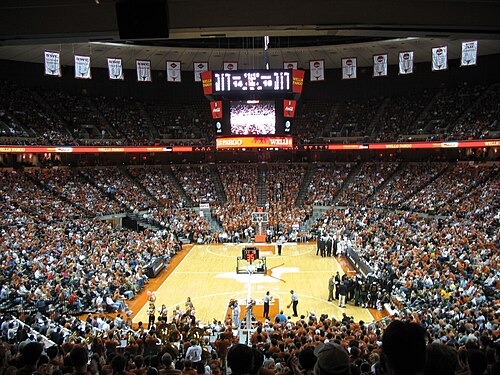
1998年4月12日、テキサス州史上23人目の男子バスケットボールコーチとして雇われたリック・バーンズは、クレムソン大学を去り、トム・ペンダースの辞任に伴い負け越しシーズンを終え「混乱状態」にあったテキサスのプログラムを引き継いだ。[172]
1998-99 シーズンの大半をわずか 7 人の奨学生でプレーし、シーズン開幕時の成績は 3 勝 8 敗だったにもかかわらず、バーンズは学校史上最も素晴らしいシーズン中盤の逆転劇を演出した。ロングホーンズは最後の 21 試合のうち 16 試合に勝利し、カンファレンス戦では 13 勝 3 敗の成績を収め、学校初のレギュラーシーズンビッグ 12 カンファレンスチャンピオンシップを 2 ゲーム差で制した。テキサスは 19 勝 13 敗の成績でその年を終え、 NCAA トーナメントでは第 7 シードとなった。
In 2002, Texas advanced to the NCAA Sweet Sixteen for the first time since the 1996–97 season, and for only the third time since the expansion of the tournament to 64 participants in 1985. The 2003 Longhorn basketball team matched the school record for most basketball victories in a season with their 26–7 mark and advanced to the NCAA tournament Final Four round for the first time in 56 years, and for the third time in school history. Along the way, Texas earned its highest ranking in school history in both the Associated Press and the ESPN/USA Today polls (No. 2 in both polls on Dec. 2, 2002) and received its first No. 1 seed in the NCAA Tournament. Sophomore point guard T. J. Ford became the first UT male player to earn the Naismith and Wooden Awards as college basketball's National Player of the Year in 2003.
Despite the early departure of Ford to the NBA as the eighth overall pick (Milwaukee Bucks), Texas compiled a 25–8 overall record in 2004 and advanced to the Sweet Sixteen round for a school-record third consecutive year. The four senior starters on the 2004 team graduated as the winningest class in school history (98 wins) to that point. In 2006, the Longhorns recorded the program's first 30-win season (30–7), claimed a share of the Big 12 Conference regular season championship, received a No. 2 seed in the NCAA tournament, and advanced to the Elite Eight (Texas fell to LSU in overtime), marking the fourth time in five years that Texas had advanced to at least the NCAA Sweet Sixteen. The 2006 class, which finished with 101 wins in four years, bested the 2004 class's mark of 98 wins to become the then-winningest class in the history of Longhorn basketball.
The 2005–06 season also marked the hundredth anniversary of basketball at UT. Special logos were placed on the uniforms to commemorate this anniversary.
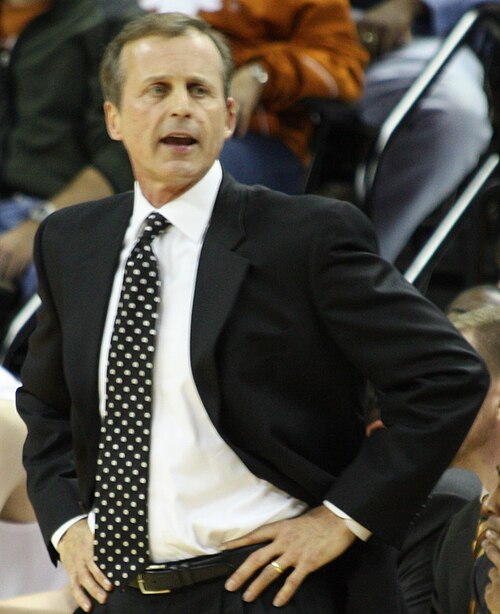
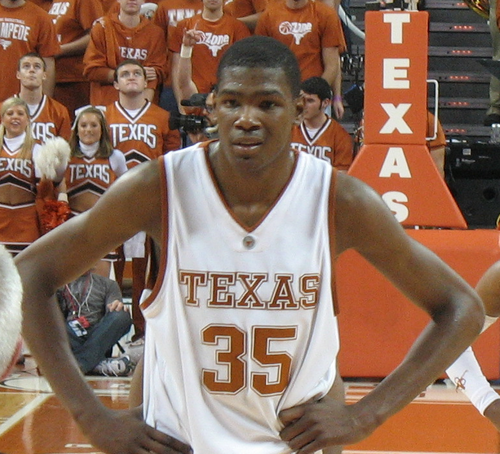
In 2006, the Longhorns introduced blue-chip recruit and future NBA superstar Kevin Durant to Austin. A recruiting class which included in-state talents such as Damion James and D. J. Augustin helped garner unforeseen levels of hype and scrutiny for the Texas basketball program. Durant's spectacular lone season at Texas resulted in his receiving unanimous National Player of the Year honors. The Longhorns, however, saw their season end at the hands of the USC Trojans in the second round of the 2007 NCAA tournament. Durant became the No. 2 overall pick in the 2007 NBA draft by the former Seattle SuperSonics, and was the 2014 NBA Most Valuable Player with the Oklahoma City Thunder.
In the 2009 NCAA tournament, Texas earned a No. 7 seed in the East Region. The Longhorns defeated the Minnesota Golden Gophers in the first round by a score of 76–62 behind the sharp shooting A.J. Abrams. The Longhorns' season came to a close with a 74–69 second-round loss at the hands of the Duke Blue Devils. The 2009 graduating class finished with 109 wins, besting the 2006 class's mark of 101 wins to become what remains the winningest class in school history.
During the 2009 recruiting cycle, Texas acquired top-tier prospects Avery Bradley and Jordan Hamilton. Partnered with veteran Damion James, center Dexter Pittman and a solid stable of guards, the Longhorns achieved their first-ever No. 1 ranking in 2010, roaring to a 17–0 start. Texas' fortunes turned upside-down with a 71–62 loss on the road to Kansas State and the ensuing 88–74 loss to Connecticut, beginning a 7–10 finish and raising the pressure for Barnes' Texas teams to reach over the hump, a recurring theme in the head coach's final six seasons in Austin. More of the same occurred in 2011, when Texas garnered two elite prospects in Canadians Tristan Thompson and Cory Joseph and had a similar scorching (23–3) start—only to lose the league to Kansas again and fall in the second round of the NCAA tournament to the Arizona Wildcats. Bradley left the program for the NBA in 2010, and Hamilton, Thompson, and Joseph followed suit in 2011.
In the 2012–13 season, Barnes' Longhorns finished 16–18 and missed their first NCAA tournament since 1997–98—the season prior to Barnes' arrival. This began a slow, yet cascading trend by fans and media to replace what had become Texas' winningest basketball coach. Not much change was expected, but turbulence within the Texas athletic department ensued following Dodds' retirement in 2013. New UT Athletic Director Steve Patterson set out to dramatically change the entire Longhorn program, with the resignation of popular football coach Mack Brown following the 2013 football season. Fans and media began to speculate that Barnes' job was at similar risk; even in recruiting—seen as Barnes' specialty—the program could not capture much of the elite Texas talent that had begun to emerge in recent seasons.
After a 2013–14 season in which the Horns defied very low expectations by finishing with a 24–11 record, tying for third place in the Big 12, and reaching the NCAA tournament, Barnes was named Big 12 Coach of the Year, and calls for his job tempered again. The 2014–15 season began with raised expectations from Longhorns fans and media, especially with the signing of top-ranked Dallas-area center Myles Turner. The Horns were ranked as high as No. 6 in the AP and coaches polls, yet only managed to finish sixth in the Big 12 in a very competitive season of conference play. The 20–14 Longhorns' loss to Butler in the opening round of the NCAA tournament marked the final game coached by Barnes at the university. After declining to meet Patterson's demand that he fire his assistants in order to save his job, Barnes was removed from his post as head basketball coach in late March.
Shaka Smart era (2015–2021)
After many days of deliberation and speculation over who would fill Barnes' post, which included names such as Wichita State coach Gregg Marshall (who was heavily courted by Alabama), Villanova coach Jay Wright, and Virginia's Tony Bennett, Texas reached an agreement with Virginia Commonwealth head coach Shaka Smart on April 2, 2015. Smart was introduced as the 24th Texas men's basketball head coach the following day at a press conference in Austin.
The Longhorns finished 20–13 in Smart's first season, including a fourth-place finish in the Big 12 Conference. The scheduled included the school's first-ever basketball game in China - a 77–71 loss to Washington. Point guard Isaiah Taylor returned to lead the team in scoring for the second straight season, averaging 15 points per game. The Longhorns struggled at times in the season after center Cameron Ridley went down with an injured foot[174] that caused him to miss all of conference play, returning for a brief stint in the conference tournament and in Texas' NCAA tournament game. Texas won four of its last six regular season games, including a 76–63 win over a top-five Oklahoma team in Austin,[175] but lost in the first round of the Big 12 Conference tournament to Baylor, 75–61. In the first round of the NCAA tournament, the Longhorns lost, as a half-court shot off the backboard lifted Northern Iowa to a 75–72 win.[176]
In 2017, the Longhorns went 11–22, finishing with their most losses since the 1983 season. Texas struggled with consistency early in the season, but after leading scorer Tevin Mack was suspended in January, the Longhorns went 4-12 the rest of the way, including seven straight losses to end the regular season. Mack, a sophomore guard, left the team and transferred to Alabama.[177] Freshman center Jarrett Allen led Texas the rest of the way, averaging 16 points and almost 10 rebounds in Big 12 Conference play. Allen declared for the NBA draft after the season, and the Brooklyn Nets selected him with the 22nd pick of the first round.
Under Smart, the Longhorns' recruiting situation improved dramatically, with players such as Matt Coleman, Andrew Jones, Mo Bamba, Jaxson Hayes, and Greg Brown standing out for the team during that time. Texas made the NCAA tournament in 2018, losing to Nevada in the first round, followed by an NIT win in 2019. The 2019–20 season was seen as a failure until a late-season rally by the Longhorns, which arguably saved Smart's job, along with the COVID-19 pandemic which canceled the NCAA tournament that year.
In 2020–21, the Longhorns won their first Big 12 tournament title, following a strong showing in a regular season marred by COVID-19 cancellations (including the Longhorns' own semifinal against Kansas). After defeating Oklahoma State for the Big 12 title, Texas suffered arguably its most infamous loss in school history, as the third-seeded Longhorns fell, 53–52, to 14th-seeded Abilene Christian in the first round of the NCAA tournament. Smart, under duress, decamped for Marquette on March 26.
Chris Beard era (2021–2023)
On April 1, 2021, Texas Tech head basketball coach Chris Beard accepted the head coaching position at Texas. Widely considered the top candidate from the moment Smart departed, Beard is a 1995 alumnus of the University of Texas and served as student manager under Tom Penders during his time on campus.
In Beard's only full season of coaching at the school, Texas managed 22 wins and an NCAA appearance, which ended in the second round at the hands of Purdue. The 2022–23 'Horns started strongly at 7−1 before Beard was suspended in December for allegations of domestic violence.
On January 5, 2023, Beard was fired as head coach amid a felony domestic violence charge, which was later dropped as the alleged victim recanted her initial statements.[11]
Rodney Terry as interim coach (2022−2023)
Rodney Terry, Beard's top assistant, was given the reins on an interim basis for the remainder of the season. Terry guided a senior- and transfer-heavy Longhorn team to a second-place Big 12 finish, behind perennial conference power Kansas. Silver linings in Terry's interregnum included an emphatic 75−59 victory over the Jayhawks in the final regular season game, which portended the team's eventual performance in the 2023 Big 12 tournament.
Texas would defeat Kansas in the tournament final to clinch an automatic bid in the NCAA tournament, the second time in three years this has occurred and the first tournament final win over Kansas in school history.
In the NCAA tournament the Horns would defeat Colgate, Penn State, and Xavier en route to the school's first Elite Eight appearance in 15 years; the squad would lead Miami by double-figures in the second half but ultimately fell short, 88–81. The team finished with a 22–8 record with Terry as interim coach.
Rodney Terry era (2023–present)
On March 27, 2023, Rodney Terry agreed to a deal to become Texas's full-time Head Coach.[178] Terry signed a 5-year, $15.3 Million contract.
Facilities
.jpg/500px-UTexas_Clark_Field_basketball_court_(1906-16).jpg)
Clark Field (1906–12, 1914–16)
Clark Field, originally known as Varsity Athletic Field, was an on-campus, outdoor stadium that was the original home of the Texas Longhorns men's basketball team, as well as the Longhorn football, baseball, and track teams.[179] The stadium opened in 1887. In its final years, the facility held 20,000 spectators.[180]
The Texas Longhorns men's basketball team moved indoors to the new Men's Gym in 1917.[181]
Ben Hur Temple (1913)
.jpg/500px-Ben_Hur_Temple,_Austin,_Texas_(1912).jpg)
Head coach Carl C. Taylor, seeking an indoor home venue for the basketball team, reached an agreement with the Ben Hur Temple in downtown Austin to rent the building's theater for basketball games and five hours of practice weekly for the 1913 season for $75.[25] The building was originally constructed in 1872 as an opera house for the Turnverein, a German gymnastics, social, and cultural society, and it had been purchased in 1912 by the Shriners and Scottish Rite Masons.[26][182] Basketball goals were mounted on the balcony and in front of the stage, boundary lines were drawn on the double-layer pine floor, and bleachers were erected on each side of the diminutive court, bringing seating capacity to roughly 350 people, including spectators in the balcony and on the stage.[26]
Due to the insufficient size of the court and capacity of the theater, the off-campus location, and the added expense of renting the facility, the basketball team returned to its outdoor home at Clark Field for the 1914 to 1916 seasons.[183]
Men's Gym (1917–28)

The university constructed the Men's Gym adjacent to Clark Field to serve as the temporary home of the Texas men's basketball team pending the construction of a permanent gymnasium. Built for a total cost of $8,500, the all-wood Men's Gym measured 115' by 105' and 23' high and featured a pinewood floor, an electric scoreboard, and seating for 2,500 spectators.[33][184]
The Texas men's basketball team played home games in the Men's Gym beginning with the 1917 season through the end of the 1927–28 season. On March 25, 1928, the Men's Gym caught fire and burned to the ground.[185] While the loss of the Men's Gym advanced the timeline for the construction of a new gymnasium for men's basketball, the team would be left without an on-campus home for the following two seasons, playing instead in the gymnasiums of the Texas School for the Deaf and Austin High School before moving into the new Gregory Gymnasium for the 1930–31 season.[181][186][187]
Texas School for the Deaf and Austin High School Gymnasiums (1928–30)
For the 1928–29 season, the university reached an agreement with the Texas School for the Deaf for the Texas men's basketball team to play its home games in TSD's recently constructed fieldhouse. The TSD fieldhouse had a seating capacity of just one-sixth of the Men's Gym, precluding the sale of tickets to the general public and requiring the use of a lottery for the allocation of tickets to students and existing season ticket holders.
Prolonged inclement weather delayed the completion of Gregory Gymnasium, originally intended to debut in the 1929–30 season with the Southwest Conference opening home game against Baylor, and, consequently, the Longhorns had to play home games away from campus for the entirety of the season. Texas played its nonconference games in the TSD Gym before moving into the recently completed 1,500-seat Austin High School Gymnasium for its five SWC home games.[188]
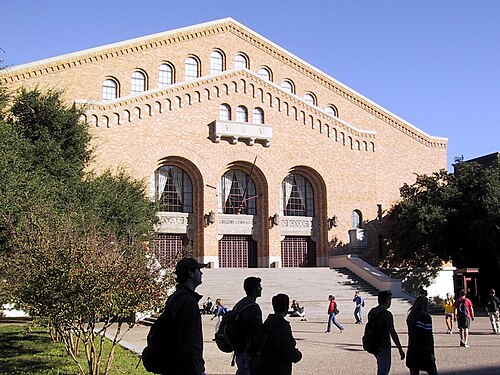
Gregory Gymnasium (1930–77)
Originally built in 1930, Gregory Gymnasium was named after its main advocate and planner, Thomas Watt Gregory. An alumnus of the university, Gregory served on the university's Board of Regents and as United States Attorney General (1914–19) before the gym was built.[32][189] Gregory Gymnasium is located on the UT central campus, a short distance southeast of the UT Main Building, Tower, and Main Mall and facing west onto Speedway Avenue, the campus's central north–south street.
The Texas men's basketball team played home games in Gregory Gymnasium beginning with the 1930–31 season until moving into the Special Events Center (later renamed the Frank Erwin Center) for the 1977–78 season.[108]
Frank Erwin Center (1977–2022)
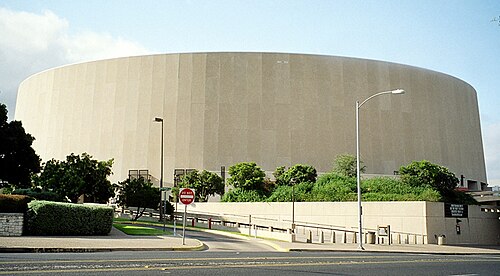
The Texas men's basketball team opened the Frank Erwin Center on November 29, 1977, with an 83–76 victory over the Oklahoma Sooners.[190] The Longhorns won their first 25 games in the Erwin Center before falling to Arkansas in February 1979.[97]
Built for a total cost of $34 million, the building is named for former UT alumnus and Board of Regents member Frank Erwin.[191][192] Originally known as the Special Events Center, the facility was renamed in 1981 to honor Erwin, who had died earlier that year.[190] The Erwin Center is located at the southeastern corner of the UT central campus and is bounded on the east by Interstate 35.
A two-level layout (the lower arena and upper mezzanine) currently accommodates up to 16,540 spectators for basketball games. UT undertook extensive renovations of the facility from 2001 to 2003 at a cost of $55 million, adding, among other things, new and renovated seating, new video and sound systems, new lighting, and 28 suites. As part of the project, UT constructed the Denton A. Cooley Pavilion, a state-of-the-art practice and training facility that sits adjacent to the Erwin Center.[192][193]
The master plan released in 2013 for the university's new Dell Medical School indicated that the Erwin Center would be demolished in a later phase of construction within 6–15 years. In 2022, the Erwin Center was replaced by the Moody Center[194][195][196]
Denton A. Cooley Pavilion practice and training facility (2003–2022)
Built during the final phase of the renovation of the Erwin Center, the Denton A. Cooley Pavilion opened in the fall of 2003.[193] The two-level, 44,000-square-foot building sits adjacent to the Erwin Center and serves as a state-of-the-art practice and training facility for the Texas men's and women's basketball teams. The Pavilion is named for Dr. Denton A. Cooley, a UT alumnus, basketball letterman (1939–41), and pioneering heart surgeon.[197][198]
The Texas men's and women's basketball teams have separate 9,000-square-foot practice court areas, each consisting of one full-court and one half-court practice area with seven basket stations. The practice facility also includes a locker room with a players' lounge, an instructional film theater, a 4,100-square-foot strength and conditioning area, an athletic training and hydrotherapy area, an academic resource and activity center, and a coaches' lounge and locker room.[197][198]
The Cooley Pavilion will be demolished and replaced during the same phase of construction of the Dell Medical School as the Erwin Center.[194][195][196]
Moody Center (2022–present)
Moody Center is a $375M, 15,000+ seat premier venue featuring over 150 nights a year of unique entertainment. Moody Center features the best and biggest names in the music industry while hosting The University of Texas Women's and Men's basketball games, family shows and other sporting and local events.[199]
New Texas basketball and rowing training facility
To replace the Cooley Pavilion, Texas is building a new basketball practice facility adjacent to the new Moody Center. This new facility will include locker rooms for both teams, training areas, 2 full-sized practice courts, weight room, and team offices. It will also be combined with a practice facility for the Texas Rowing team.[200]
Coaching records
Championships
National championships
Conference championships
Invitational tournament championships
Postseason
NCAA tournament results
Texas has appeared in the NCAA tournament on 38 occasions (9th-most appearances all time, and second only to Kansas among Big 12 Conference members).[4][7] The Longhorns' overall record in the Tournament is 40–41, with one loss vacated by NCAA action taken against a Longhorn opponent.[5][201]
*Following the introduction of the "First Four" round in 2011, the Round of 64 and Round of 32 were referred to as the Second Round and Third Round, respectively, from 2011 to 2015.[202]
NCAA tournament seeding history
The NCAA began seeding the Tournament in 1979.[203] Texas has appeared in 31 of the 45 seeded Tournaments (and in 30 of the last 35).[201]
NIT results
The Longhorns have appeared in the National Invitation Tournament (NIT) five times. Their combined record is 11–3. Texas won the NIT Championship in 1978 and 2019.[204]
CBI results
The Longhorns have appeared in the College Basketball Invitational (CBI) one time. Their record is 0–1.[205]
Polls
AP and coaches polls
Texas has been ranked in at least one of the final AP or coaches polls in 19 seasons since their introduction prior to the 1948–49 and 1950–51 seasons, respectively. The Longhorns have recorded five top-ten finishes and two top-five finishes in one or more of the final polls. Ten of Rick Barnes' teams, five of Tom Penders' teams, two of Abe Lemons' teams, and two of Harold Bradley's teams finished the season ranked.[8][206] As of November 27, 2018, Texas teams have been ranked in 252 of 1168 total weekly AP Polls (21.6%) since the inception of the poll in the 1948–49 season (37th all-time in AP Poll appearances), and in 295 of 1153 total weekly coaches polls (25.6%) since the inception of the poll in the 1950–51 season.[207][208]
Premo-Porretta Power Poll (pre-1949)
Texas has been ranked in the retroactively assigned Premo-Porretta Power Poll rankings in 11 seasons from the 1906 season through the 1947–48 season, the final season before the introduction of the AP Poll. Five Longhorn teams were ranked among the top-ten teams in their respective years, and three Texas teams received top-three rankings. Texas was selected as the poll's national champion for the 1932–33 season.[209]
All-time series records
All-time series records against Big 12 members
Texas men's basketball leads the all-time series against all Big 12 Conference opponents but Kansas (which leads 31–8), Kansas State (21–15), and Oklahoma (54–39).
In series against conference opponents since the advent of the Big 12, Texas trails only KU (which leads 27–7) and KSU (16–15).
All-time series records against former Big 12 members
Texas men's basketball leads the all-time series against all former Big 12 Conference opponents but Missouri (which leads 13–12).
Texas holds a winning record against all former Big 12 members in games played in Big 12 competition.
All-time series records against non-Big 12 former SWC members
In series against former Southwest Conference members who are not current members of the Big 12, Texas trails only Arkansas (which leads 87–68).
In contests against these opponents since the dissolution of the Southwest Conference, Texas holds the lead against all opponents but Southern Methodist, whom the Longhorns have not played since joining the Big 12. The Longhorns hold the advantage against every opponent in the last five games played and all opponents but Arkansas in the last ten games played against each respective opponent.
Records against all other collegiate opponents
Rivalries
Big 12 rivals
Oklahoma Sooners
With the formation of the Big 12 Conference in 1996, the Oklahoma Sooners became the Longhorns' main rival in basketball. Texas and Oklahoma are not traditional rivals in any sport other than football, due to their prior residence in different conferences (UT in the Southwest Conference and OU in the Big Eight Conference); nonetheless, the two basketball programs had already compiled a significant series history prior to formation of the Big 12, having met 14 times from 1947 to 1957, 11 times from 1986 until the beginning of Big 12 competition in 1997, and at various other times in the programs' histories. The Sooners entered the Big with a 29–13 lead in the all-time series, having won 10 of the 11 games played from 1986 to 1996.[211] In the Big 12, the competitiveness of the Texas and OU basketball programs—which are second and third in all-time Big 12 regular season conference wins, respectively—only accelerated the development of the basketball rivalry.[212]
The Texas Longhorns and the Oklahoma Sooners play one game in Austin and one game in Norman each year during the regular season. Oklahoma leads the overall series 54–39; Texas leads 26–25 in games played since the inception of the Big 12. Texas has held the upper hand in recent years, winning 23 of 35 meetings from 2003 to 2018.[5][211]
Kansas Jayhawks
Rick Barnes' tenure also coincided with the emergence of a rivalry between Texas and the Big 12 Conference's traditional national basketball powerhouse, the Kansas Jayhawks.[213][214][215] Under Rick Barnes, the Longhorns emerged as Kansas's most consistent competition for Big 12 Conference supremacy. From the inception of the Big 12 through February 18, 2018, Texas has produced a 223–139 (.616) mark against conference competition during the regular season, trailing only Kansas's record of 299–63 (.826).[5][212][216]
The first decade of the 2000s saw the peak of this new rivalry, with the Longhorns at one point trailing Kansas only 5–7 in games played over an almost-nine-season period, and with many of the contests being closely contested classics. Since the beginning of the 2008–09 season, Texas has been less competitive both nationally and in the rivalry, trailing Kansas 2–15 in games played since that time.[5][217]
Texas and Kansas played one game during the regular season until the 2011–12 season, when the two schools began meeting twice per year. Kansas leads the overall series 30–8 and has won 26 of the 33 contests since the Big 12 was formed. Current KU head coach Bill Self is 20–6 in games against Texas since becoming the Jayhawks' head coach prior to the 2003–04 season.[5][217]
Baylor Bears
The Longhorns' series with the Baylor Bears has featured more games played than any other UT basketball series; it is also the conference series most lopsided in UT's favor, with the exception of the Longhorns' series against former Southwest Conference opponent Rice and the much more abbreviated series against former Big 12 member Nebraska. Texas leads 162–90 in the overall series with Baylor.[5][218]
The intensity of the in-state rivalry has grown sharply in recent years with Baylor's emergence as a nationally competitive program under current head coach Scott Drew.[219][220] Through the end of the 2008–09 regular season, Texas held a 25–3 record against Baylor in Big 12 competition and a 24–0 record against the Bears under Rick Barnes. In games played since the 2009 Big 12 conference tournament semifinals, Baylor holds a 15–7 edge over Texas.[5][218]
Texas Tech Red Raiders
Texas and Texas Tech have played at least twice yearly since the 1957–58 season. The Longhorns and the Red Raiders play one game in Austin and one game in Lubbock each year during the regular season.
At the time that UT and Texas Tech entered the Big 12, Texas Tech held a 49–45 lead in the all-time series against Texas. Longtime Red Raider coach Gerald Myers' teams dominated the Longhorns for much of the 1970s and 1980s, with the only interlude of Longhorn success occurring during the six-year tenure of Abe Lemons (1976–82), who finished 8–4 against the Red Raiders.[221] By the time Tom Penders became the Texas head coach prior to the 1988–89 season, Texas Tech held a 43–32 lead in the series. Penders narrowed Texas Tech's lead to 50–49 during his tenure (1988–98). During Rick Barnes' 17 seasons as head coach (1998–2015), the Longhorns posted a 33–4 record against the Red Raiders, for a period of dominance unequaled at any other point in the series.[5][50]
Texas currently leads the overall series 86–57 and has won 41 of the 49 contests since the formation of the Big 12.[5][50]
Oklahoma State Cowboys
The formation of the Big 12 led to the development of a competitive rivalry between Texas and the Oklahoma State Cowboys, two programs that had already compiled a significant series history despite their residence in different conferences since OSU's departure from the Southwest Conference following the 1924–25 season. Between 1941 and 1979, Texas and OSU met 32 times, with the Cowboys winning 21 of the meetings. At the time of the formation of the Big 12, OSU held a 24–19 lead in the all-time series.[211]
The rivalry reached its peak in the early years of the Big 12, above all when the tenures of Rick Barnes and Eddie Sutton coincided at the two schools, a time when both programs were nationally prominent. From the 1999–2000 season through the 2004–05 season, at least one of the two teams was ranked in 13 of 14 total contests, and both teams were ranked at the time of eight of the 14 meetings.[222] In recent years, the rivalry has declined in intensity as both programs have receded from the national spotlight.
Texas and Oklahoma State have played at least twice yearly since 1997, the first Big 12 basketball season. The Longhorns and the Cowboys play one game in Austin and one game in Stillwater each year during the regular season. Texas currently leads the overall series 49–43 and holds a 30–19 lead in games played in Big 12 competition.[5][211]
Other rivals
Arkansas Razorbacks
Texas and Arkansas shared a bitter rivalry in basketball—stoked by the mutual enmity that characterized their primary rivalry in football—throughout most of the existence of the Southwest Conference. Until Arkansas' departure for the Southeastern Conference after the 1990–91 season, the Longhorns and the Razorbacks had played at least twice—and often three times—each year since the 1924 season. Texas and Arkansas each won or shared 22 SWC championships (nine more than the nearest competitor, SMU)—although Texas claimed seven of these in the years before Arkansas established its basketball program in 1924 and in the years after Arkansas left the conference.
The Texas–Arkansas basketball rivalry was particularly competitive in its first quarter-century, and both programs enjoyed substantial overall success during this time, with each appearing in two Final Fours and one Elite Eight with the beginning of the NCAA Tournament in 1939 through the end of the 1940s. Arkansas led the series 29–25 over this span.[223]
Both Texas and Arkansas faded from national significance with the end of the 1940s. From the 1949–50 season through the 1975–76 season, Arkansas won only two SWC championships, made only a single NCAA Tournament appearance, and posted an overall record of 312–338 (.480).[224] Texas fared modestly better during this time, winning seven SWC championships, making four NCAA Tournament appearances, and posting an overall record of 342–323 (.514).[10] The Longhorns and Razorbacks split their conference series during this period, with each winning 29 games.[223]
The rivalry grew especially heated from the mid-1970s onward as both schools' athletic departments poured additional resources into their basketball programs, both for coaching hires and for facilities, each seeking to revive programs that had receded from the national stage over the preceding quarter-century. While both Texas and Arkansas appeared to be on the verge of establishing nationally competitive programs with the hires of Abe Lemons and Eddie Sutton, respectively, only Arkansas managed to achieve sustained success in the following years, winning at least 20 games in 13 seasons from 1977 to 1991, with Sutton (1974–85) and Nolan Richardson (1985–2002) each reaching a Final Four and an Elite Eight. (Richardson would lead the Razorbacks to two more Final Fours and a national championship after Arkansas' departure from the SWC.) Arkansas dominated the series over this final phase of the SWC rivalry, winning 27 out of 37 games played during this period.[223]
Arkansas led the series 85–64 upon leaving the SWC; the Razorbacks currently lead the all-time series 87–68, with Texas having won four of the six games played since Arkansas joined the SEC.[223]
Texas A&M Aggies
Before the Texas A&M Aggies' departure for the Southeastern Conference at the end of the 2012 academic year, Texas and Texas A&M had played at least twice (and up to four times) yearly since 1917. During their concurrent membership in the Big 12, the Longhorns and the Aggies played two games during the regular season, with the venue alternating between the home courts of each school. Texas leads the overall series 137–86.[225]
By the time the Big 12 was formed, the in-state rivalry was at a low ebb. The Longhorns had won 18 of the previous 21 contests against the Aggies, dating back to the 1987–88 season. Texas continued to dominate the series in Big 12 play, winning 15 of the first 16 contests between the schools in their new conference.[211] By the time the Aggies hired Billy Gillispie prior to the 2004–05 season, the lopsided nature of the series—and the lack of Aggie fan interest in a program that had gone ten consecutive years without a winning season or postseason appearance under prior coaches—had long since diminished the stature of the once-heated rivalry.
With the rejuvenation of the Texas A&M basketball program under Billy Gillispie (2004–07) and Mark Turgeon (2007–11), the basketball rivalry between Texas and Texas A&M quickly intensified. The Aggies successfully defended their home court from Gillispie's first year through the 2009–10 season, Mark Turgeon's second-to-last season with A&M. The Longhorns defeated the Aggies in all three games in Turgeon's final season and in both games in Billy Kennedy's first season with the Aggies. Texas is 12–7 against Texas A&M since Gillispie was hired in 2004.[211]
The rivalry will be renewed when Texas joins A&M in the SEC prior to the 2024–25 season.
Individual honors, awards, and accomplishments
Honors, awards, and accomplishments by player

The individual honors, awards, and accomplishments listed in the succeeding subsections are aggregated by player in the following table. Players with only all-conference honors (other than conference player of the year), lower than first-team All-America honors, or later than second-round draft positions are not included.
Naismith Basketball Hall of Fame
Slater Martin is the only Longhorn men's basketball player to have been inducted into the Naismith Memorial Basketball Hall of Fame in Springfield, Massachusetts. Martin was inducted on May 3, 1982.[20]
Retired numbers
Three Longhorn men's basketball players have had their Texas jersey numbers retired: Slater Martin, T. J. Ford, and Kevin Durant.
The primary requirement for the retirement of a UT student-athlete's number is that the individual have won a widely recognized National Player of the Year award.[226] Former UT Athletic Director DeLoss Dodds stated that an exception was made in the case of Slater Martin because, as a Naismith Basketball Hall of Fame inductee, he was a legend in the sport of basketball but had competed before any of the widely recognized awards were established (the Sporting News Men's College Basketball Player of the Year was established in 1943, but it was not awarded from 1947 to 1949).[226][227]
National honors and awards (players)
National Player of the Year
T. J. Ford and Kevin Durant are the only Texas players to win one or more of the widely recognized National Player of the Year awards. Ford won the Naismith Trophy[228] and the Wooden Award[229]—as well as four of the other eight widely recognized awards[230][231][232][233]—in 2003 as a sophomore. Durant was the unanimous national player of the year in 2007 as a true freshman, winning all 10 awards.[234][235][236][237][238][239][240][241] Durant was the first freshman ever to win any of the National Player of the Year awards.[242][243]
Bob Cousy Collegiate Point Guard of the Year Award
The Bob Cousy Award is awarded annually by the Naismith Memorial Basketball Hall of Fame to the top point guard in NCAA Division I men's basketball. The award was presented for the first time following the 2003–04 college basketball season (the season following T. J. Ford's departure to the NBA). D. J. Augustin is the only Longhorn to win the Bob Cousy Award.[244]
Perry Wallace Most Courageous Award
The Perry Wallace Most Courageous Award is the men's version of the USBWA Most Courageous Award, presented annually by the United States Basketball Writers Association to one or more individuals (not necessarily players) who, in the organization's words, have "demonstrated extraordinary courage reflecting honor on the sport of amateur basketball."[245] First presented in 1978 as a single award, separate men's and women's awards were first presented in 2010. The award's bifurcation by sex or gender does not reflect that of the recipient, but is instead based on whether the recipient was involved with the men's or women's game. This award was originally not restricted to college basketball, but every recipient since 1980 has been associated with the college game. The men's award was renamed in 2021 in memory of Wallace, the first African American to play basketball in the Southeastern Conference.[246] Andrew Jones is the first Longhorn to receive this award; he shared 2022 honors with Justin Hardy, a player at NCAA Division III Washington (MO). Both averaged double figures in scoring for their respective teams in 2021–22 while battling cancer (leukemia for Jones, stomach cancer for Hardy).[247]
All-America honors
Twenty Texas basketball players have received All-America honors on 26 occasions; six have been recognized as All-Americans in two different seasons. Seven Longhorns have received consensus first-team All-America honors, and three others have received consensus second-team All-America honors. Thirteen Texas players have received first-team All-America honors in 14 seasons, with one Longhorn player having been selected as a first-team All-American twice.[248]
Conference honors and awards (players)
Conference Player of the Year
Texas players have won conference player of the year honors on ten occasions—eight times in the Southwest Conference[249][250] and twice in the Big 12 Conference.[251] Two Longhorn basketball players won SWC player of the year honors twice. Three Texas players have won Big 12 Defensive Player of the Year honors.[251]
First-team all-conference honors
Seventy-two Texas men's basketball players have received first-team all-conference honors on 96 occasions. Of these 72 players, 18 have received first-team all-conference honors in two seasons, and three players have received them in three seasons.[111]
First-team All-Southwest Conference
First-team All-Big 12 Conference
Freshman Player of the Year
Eight Longhorn freshmen men's basketball players have won conference freshman of the year honors—three players in the Southwest Conference and five players in the Big 12 Conference.[252]
Southwest Conference Freshman of the Year
Big 12 Conference Freshman of the Year
Conference tournament most valuable player
Five Longhorn men's basketball players have won conference tournament most valuable player honors—four players in the Southwest Conference tournament and one player in the Big 12 Conference tournament.[253]
Southwest Conference tournament Most Outstanding Player
Big 12 Conference tournament Most Valuable Player
Professional basketball
NBA draft history
As of July 30, 2021, 48 Longhorn men's basketball players have been selected in the NBA draft in the history of the program. Of these, 19 were selected in the first round, and 13 were selected in the second round. Among Big 12 programs, Texas trails only Kansas (33) in the number of players drafted in the first round all-time.
Since 1997, Texas has had 23 players drafted overall; of these, 15 were drafted in the first round. Among Big 12 programs, Texas trails only Kansas (34 picks overall, 22 first-round picks) in the numbers of players drafted overall and in the first round during this period. The 15 Longhorn players drafted in the first round from 1997 to 2021 exceed the all-time numbers of first-round picks at each Big 12 school but Kansas.
NBA players
As of April 7, 2024, 40 Texas players have played in the NBA in league history. Of these, 20 played at Texas under Rick Barnes. Ten Longhorn players currently play in the NBA.
All-time NBA players
Current NBA players
Non-NBA professional players
.jpg/500px-J'Covan_Brown_Texas_Longhorns_vs_Navy_Midshipmen_November_2010_(cropped).jpg)
All-time non-NBA professional players
Current non-NBA professional players
- James Banks III (born 1998), Israel Basketball Premier League
- J'Covan Brown (born 1990), Israel Basketball Premier League
- Marcus Carr (born 1999), Israel Basketball Premier League
- Matt Coleman III (born 1998), Hapoel Haifa of the Israeli Basketball Premier League
- Elijah Mitrou-Long (born 1996), Israeli Basketball Premier League
Olympians
Four Longhorn men's basketball players have competed in the Olympic Games in men's basketball on six occasions, with three players winning gold medals.[296][297]
Kevin Durant was the leading scorer on the United States men's basketball team that won the gold medal in the 2012 Olympics. Durant's 156 total points during the Olympic tournament set a record for most points scored by an American basketball player in Olympic competition, surpassing the record previously set by Spencer Haywood in the 1968 Olympics by 11 points. Durant also set the U.S. record for most made three-point shots in an Olympic competition with 34 (on 65 attempts). In addition to leading the U.S. team in scoring, he finished second on the team in rebounding, first in blocked shots, and second in steals.[296]
In the 2016 Olympics, Durant again led the U.S. men's team in scoring with 155 total points—one point fewer than his U.S. Olympic record from 2012—and in minutes played. He finished second on the team in steals, third in assists, and fourth in rebounding. Durant converted 25 three-point shots on only 43 attempts (.581).[297]
Coaching honors and awards
National Coach of the Year honors
Abe Lemons (1976–82) won the NABC National Coach of the Year award following his second season at Texas, a season that saw the Longhorns finish 26–5, win a share of the Southwest Conference title, and win the 1978 NIT Championship.[296] Texas had finished just 9–17 two years earlier in Leon Black's last season as head coach.
Rodney Terry was named Sporting News National Coach of the year for the 2022–23 season, becoming the first Texas coach to win the award since it was introduced in 1964.[298]
John R. Wooden Legends of Coaching Award
The Wooden Legends of Coaching Award is a lifetime achievement award established prior to the 1998–99 season. Selection for the award depends upon a number of on- and off-court factors, from coaching success and philosophy to evidence of good character to graduation rates. Rick Barnes won the Wooden Legends of Coaching Award following the 2008–09 season.[299]
Conference Coach of the Year honors
Abe Lemons was recognized as the Southwest Conference Coach of the Year for the 1977–78 season, the season that saw him win the NABC National Coach of the Year award. Tom Penders received Southwest Conference Coach of the Year honors in 1994 and 1995, and Rick Barnes was named Big 12 Coach of the Year in 1999, 2003, 2008, and 2014.[111]
District-level Coach of the Year honors
Rick Barnes won recognition as NABC District 9 Coach of the Year in five seasons (1999, 2001, 2003, 2008, 2014). Barnes was also a four-time recipient of USBWA District VII Coach of the Year honors (1999, 2001, 2003, 2011).[300][301][302]
Records
Team records include single-season, single-game, and NCAA Tournament records for the Texas program. Program records for individual players include career totals and averages as well as single-season totals and averages.
All records are current as of the end of the 2014–15 season.[303]
Team records
Single-season records
Games
- Longest winning streak: 23 (1923–24, entire season)
- Longest winning streak (conference): 20 (1923–24, entire season)
- Longest losing streak: 15 (Dec. 4, 1954 to Feb. 3, 1955)
- Longest losing streak (conference): 12 (Jan. 24, 1983 to Mar. 5, 1983)
- Most games played: 38 in 2007–08 (31–7)
- Most wins: 31 in 2007–08 (31–7)
- Fewest wins1: 4 in 1954–55, 1958–59 (4–20)
- Most wins without a loss: 23 in 1923–24
- Most losses: 22 in 1982–83 (6–22)
- Fewest losses: 0 in 1913–14 (11–0), 1914–15 (14–0), 1915–16 (12–0), 1923–24 (23–0)
Scoring
- Most points scored: 3,205 in 1988–89 (34 games)
- Highest scoring average per game: 94.3 in 1988–89 (34 games)
- Highest average scoring margin: +14.9 in 2005–06 (75.2 to 60.3)
- Fewest points scored2: 1,179 in 1949–50 (24 games)
- Lowest scoring average per game2: 46.8 in 1950–51 (1,264 in 27 games)
- Lowest average scoring margin2: −12.8 in 1954–55 (−306 in 24 games)
- Most field goals made: 1,173 in 1991–92 (35 games)
- Most field goals attempted: 2,537 in 1991–92 (35 games)
- Highest field-goal percentage: .507 in 1984–85 (745 of 1,468)
- Most 3-point field goals made3: 309 in 2007–08 (38 games)
- Most 3-point field goals attempted3: 800 in 2007–08 (38 games)
- Highest 3-point field-goal percentage3: .389 in 2006–07 (308 of 792)
- Fewest field goals made2: 445 in 1949–50 (24 games)
- Fewest field goals attempted2: 1,180 in 1952–53 (21 games)
- Lowest field-goal percentage2: .329 in 1951–52 (458 of 1,394)
- Fewest 3-Point field goals made3: 309 in 2007–08 (38 games)
- Fewest 3-Point field goals attempted3: 800 in 2007–08 (38 games)
- Lowest 3-point field-goal percentage3: .389 in 2006–07 (308 of 792)
- Most free throws made: 722 in 1989–90 (33 games)
- Most free throws attempted: 996 in 1989–90 (33 games)
- Highest free-throw percentage: .768 in 1968–69 (436 of 568)
- Fewest free throws made4: 289 in 1949–50 (24 games)
- Fewest free throws attempted5: 417 in 1972–73 (25 games)
- Lowest free-throw percentage: .570 in 1982–83 (302 of 540)
Defense
- Fewest points allowed (since 1947–48): 1,079 in 1947–48 (25 games)
- Fewest points allowed (since 1985–86): 1,905 in 1985–86 (31 games)
- Lowest scoring average per game allowed (since 1947–48):
- Lowest scoring average per game allowed (since 1985–86): 60.3 in 2014–15 (2,049 in 35 games)
- Fewest field goals allowed (since 1947–48): 367 in 1947–48 (25 games)
- Fewest field goals allowed (since 1985–86):
- Fewest field goals attempted allowed (since 1947–48):
- Fewest field goals attempted allowed (since 1985–86):
- Lowest field-goal percentage allowed2: .325 in 1951–52 (431 of 1,328)
- Fewest 3-point field goals allowed:
- Fewest 3-point field goals attempted allowed:
- Lowest 3-point field-goal percentage allowed: .295 in 2010–11 (162 of 550)
- Most points allowed: 2,983 in 1991–92 (35 games)
- Highest scoring average per game allowed: 87.7 in 1988–89 (2,981 in 34 games)
- Most field goals allowed: 1,149 in 1988–89 (34 games)
- Most field goals attempted allowed:
- Highest field-goal percentage allowed:
- Most 3-point field goals allowed:
- Most 3-point field goals Attempted allowed:
- Highest 3-point field-goal percentage allowed:
- Most turnovers forced6: 784 in 1993–94 (34 games)
- Highest turnovers forced Average per game6:
- Fewest turnovers forced6:
- Lowest turnovers forced average per game6:
- Highest turnover margin6: +8.2 in 1994–95 (14.3 to 22.5)
- Lowest turnover margin6:
Rebounds
- Most rebounds: 1,498 in 2005–06 (37 games)
- Highest rebounding average per game: 48.1 in 1970–71 (1,154 rebounds in 24 games)
Assists
- Most assists7: 568 in 1993–94 (34 games)
- Highest assists average per game7: 17.0 in 1978–79 (493 assists in 29 games)
Blocks
- Most blocked shots8: 265 in 2014–15 (34 games)
- Highest blocked shots average per game8: 7.79 in 2014–15 (34 games)
Steals
- Most steals8: 453 in 1993–94 (34 games)
- Highest steals average per game8: 13.32 in 1993–94 (34 games)
Personal fouls
- Most personal fouls: 783 in 1988–89 (34 games)
- Highest personal fouls average per game: 24.1 in 1995–96 (747 fouls in 31 games)
Turnovers
- Fewest turnovers9:
- Most turnovers9:
1Since 1914–15, the program's first season in the SWC.
2Since 1949–50 season.
3Since 1986–87 season.
4Since 1932–33 season.
5Since 1960–61 season.
6Since 1972–73 season.
7Since 1978–79 season.
8Since 1979–80 season.
9Since 1972–73 season.
Single-game records
Longest game
- Most overtimes: 4 at TCU, Jan. 7, 1961 (L 94–95)
Scoring
- Most points: 148 vs. Northern Montana, Nov. 27, 1978 (W 148–71)
- Most points scored in a road game: 136 at Oral Roberts, Dec. 1, 1992 (W 136–97)
- Most points scored in a half: 74 (both halves) vs. Northern Montana, Nov. 27, 1978 (148–71)
- Largest margin of victory: 101 vs. San Marcos Baptist, Jan. 10, 1916 (102–1)
- Largest margin of victory in a road game: 63 vs. Southwest Texas, Feb. 15, 1913 (70–7)
- Most points scored in a loss: 125 at Texas Tech, Feb. 20, 1994 (125–1282OT)
- Largest margin of defeat: 50 at No. 1 UCLA, Feb. 20, 1915 (65–115)
- Largest margin of defeat in a home game: 36 vs. Arkansas, Jan. 20, 1945 (38–74)
- Fewest points scored1: 29 at Texas A&M, Jan. 31, 1951 (L 29–32) and Jan. 16, 1959 (L 29–73)
- Most points, both teams: 253 at Texas Tech, Feb. 20, 1994 (L 125–1282OT)
- Fewest points, both teams:
- Most field goals made: 56 vs. Northern Montana, Nov. 27, 1978 (W 148–71)
- Most field goals attempted:
- Highest field-goal percentage2: .694 at Tulsa, December 19, 1959 (25 of 36)
- Highest field-goal percentage in a half3: .800 at Arkansas, Jan. 24, 1983 (12 of 15, 1st half)
- Fewest field goals made4: 4 vs. Arkansas, March 10, 1936 (L 16–27)
- Fewest field goals attempted5: 34
- Lowest field-goal percentage: .184 at TCU, Feb. 12, 1951 (9 of 49)
- Lowest field-goal percentage in a half:
- Most 3-point field goals made6: 18 vs. Kansas State, Jan. 12, 1997
- Most 3-point field goal attempts6: 40 vs. Baylor, Jan. 3, 1998; vs. DePaul, Jan. 26, 1995
- Highest 3-point field-goal percentage (minimum 10 attempts)6: .769 vs. DePaul, Jan. 19, 1991 (10 of 13)
- Fewest 3-point field goals made6: 0, seven times (last at UC Santa Barbara, Dec. 18, 1990)
- Fewest 3-point field-goal attempts6: 0 at TCU, Feb. 24, 1988
- Lowest 3-point field-goal percentage (minimum 10 attempts)6: .056 vs. Oklahoma State, Feb. 9, 2003 (1 of 18)
- Most free throws made: 40 vs. Baylor, Mar. 7, 1991; vs. Texas A&M, Feb. 22, 1955
- Most free-throw attempts: 50 vs. Baylor, Mar. 7, 1991; at Texas A&M, Jan. 12, 1954; vs. Oral Roberts, Dec. 8, 1987
- Fewest free throws made: 2 vs. Baylor, Mar. 14, 2014; vs. Kansas, Jan. 19, 2013; at UCLA, Dec. 2, 2007; at Providence, Dec. 31, 1996; vs. SMU, Jan. 23, 1985; vs. Rice, Jan. 28, 1981; at South Carolina, Dec. 23, 1980
- Fewest free-throw attempts: 3 vs. Rice, Jan. 28, 1981
- Highest free-throw percentage (minimum 10 attempts)6: 1.000 at Mississippi, Dec. 2, 1972 (16 of 16); vs. SMU, Jan. 20, 1996 (14 of 14); at Oklahoma, Feb. 6, 2008 (11 of 11)
- Lowest free-throw percentage (minimum 10 attempts): .263 at Texas A&M, Jan. 4, 1977 (5 of 19)
Defense
- Most turnovers forced8: 36 vs. Southwest Texas, Dec. 7, 1994
- Fewest turnovers forced8:
- Highest turnover margin8:
- Lowest turnover margin8:
Rebounds
- Most rebounds3: 70 at Oral Roberts, Dec. 1, 1992
- Fewest rebounds3: 15 vs. Rice, Feb. 10, 1985; vs. San Diego State, Dec. 20, 1983
- Most offensive rebounds3:
- Most defensive rebounds3:
- Highest rebound margin3: +39 vs. Samford, Nov. 16, 2005 (54–15)
Assists
- Most assists9: 37 vs. Northern Montana, Nov. 27, 1978
- Fewest assists9: 2 vs. Nevada, Mar. 17, 2005
Blocks
- Most blocked shots10: 13 vs. UTSA, Dec. 29, 2004; vs. California, Nov. 15, 2000
Steals
- Most steals10: 22 vs. TCU, Mar. 12, 1994; vs. Baylor, Feb. 15, 1994
Personal fouls
- Most personal fouls3: 38 at Nebraska, Jan. 3, 1996; at Louisville, Dec. 9, 1995
- Fewest personal fouls3: 5 vs. TCU, Feb. 3, 1948
Turnovers
- Most turnovers8:
- Fewest turnovers8:
1Since 1949–50 season.
2Since 1959–60 season.
3Since 1965–66 season.
4Since 1932–33 season.
5Since 1961–62 season.
6Since 1986–87 season.
7Since 1960–61 season.
8Since 1972–73 season.
9Since 1978–79 season.
10Since 1979–80 season.
NCAA tournament records
Scoring
- Most points: 102 vs. Xavier, 1990
- Largest margin of victory: 21 vs. North Carolina State, 2006; vs. UNC Asheville, 2003
- Most field goals: 36 vs. Iowa, 1992
- Most field goals attempted: 79 vs. Oklahoma, 1979; vs. DePaul, 1960
- Highest field-goal percentage: .610 vs. Indiana State (30 of 49), 1988
- Most 3-point field goals made: 13 vs. Miami (FL), 2008; vs. Iowa, 1992
- Most 3-point field goals attempted: 31 vs. Iowa, 1992
- Highest 3-point field-goal percentage (min. 10 attempts): .733 vs. Princeton (11 of 15), 2004
- Most free throws made: 31 vs. Xavier, 1990
- Most free throws attempted: 45 vs. Georgia, 1990
- Highest free-throw percentage (min. 10 attempts): .962 vs. New Mexico State (25 of 26), 2007
Rebounds
- Most rebounds: 52 vs. Connecticut, 2003
- Highest rebound margin:
Assists
- Most assists: 25 vs. Western Kentucky, 1994
Blocks
- Most blocked shots: 9 vs. Oakland, 2011
Steals
- Most steals: 16 vs. Michigan, 1996
Individual records
Career leaders
Totals
1 Since 1986–87 season.
2 Since 1972–73 season.
3 Since 1979–80 season.
4 Since 1979–80 season.
5 Assist numbers missing for 12 games for Dan Krueger.
Averages
1 Minimum 500 points.
2 Since 1949–50 season. Minimum 600 points.
3 Minimum 200 attempts.
4 Minimum 450 rebounds.
5 Since 1975–76 season.
6 Since 1979–80 season.
7 Since 1979–80 season.
8 Minimum 100 attempts.
Single-season leaders
Totals
1 Since 1986–87 season.
2 Since 1972–73 season.
3 Since 1979–80 season.
4 Since 1979–80 season.
Averages
1 Minimum 250 points.
2 Since 1949–50 season. Minimum 200 points.
3 Minimum 100 attempts.
4 Minimum 200 rebounds.
5 Since 1975–76 season. Must have played in more than half of season's games.
6 Since 1979–80 season. Must have played in more than half of season's games.
7 Since 1979–80 season. Must have played in more than half of season's games.
See also
Notes and references
- ^ "Colors | Brand | The University of Texas". Retrieved August 11, 2016.
- ^ a b c "Timeline: A history of Texas basketball". Austin American-Statesman. November 15, 2005. Archived from the original on January 1, 2007. Retrieved April 18, 2007.
- ^ a b "NCAA 2018–19 Men's Basketball Record Book" (PDF). NCAASports.com. p. 71. Retrieved November 10, 2018.
- ^ a b c "NCAA 2015 Men's Final Four Record Book" (PDF). NCAASports.com. pp. 41–55. Archived (PDF) from the original on May 18, 2015. Retrieved April 25, 2015.
- ^ a b c d e f g h i j k l "2014–2015 Men's Basketball Cumulative Statistics". texassports.com. Archived from the original on April 13, 2015. Retrieved April 25, 2015.
- ^ "2014–15 Texas Basketball Fact Book" (PDF). texassports.com. p. 6. Archived (PDF) from the original on January 8, 2015. Retrieved April 25, 2015.
- ^ a b "2015 NCAA Division I men's basketball tournament Bracket". ncaa.com. Archived from the original on April 19, 2015. Retrieved April 30, 2015.
- ^ a b c d e f g h i j k l m 2014–15 Texas Basketball Fact Book, p. 66
- ^ ESPN, ed. (2009). ESPN College Basketball Encyclopedia: The Complete History of the Men's Game. New York. p. 542. ISBN 978-0-345-51392-2.
{{cite book}}:|work=ignored (help)CS1 maint: location missing publisher (link) - ^ a b c d e f g h i j 2014–15 Texas Basketball Fact Book, p. 65
- ^ a b Kate McGee (5 January 2023). "UT fires head basketball coach Chris Beard after domestic violence arrest". texastribune.org. Retrieved March 27, 2023.
- ^ Little, Bill (2008). Texas Longhorns Men's Basketball: Great Moments in Team History. Kearney, Nebraska: Morris Book Publishing, LLC. p. 2. ISBN 978-0-762-74312-4.
- ^ "Foundation and Growth: Images of the University's Early Years: The first men's basketball team, 1906". The Center for American History (The University of Texas at Austin). Archived from the original on September 23, 2015. Retrieved April 28, 2015.
- ^ a b "Wheaton History A to Z". wheaton.edu. Archived from the original on May 10, 2015. Retrieved May 8, 2015.
- ^ Pennington, Richard (1998). Longhorn Hoops: The History of Texas Basketball. Austin, Texas: University of Texas Press. p. 3. ISBN 978-0-292-76585-6.
- ^ Little 2008, pp. 2–3
- ^ a b c d 2014–15 Texas Basketball Fact Book, p. 80
- ^ Pennington 1998, p. 4
- ^ Little 2008, pp. 4–5
- ^ a b c d e "Top 100 Moments in Texas Men's Basketball History". TexasSports.com. Archived from the original on September 26, 2007. Retrieved April 19, 2007.
- ^ "Longhorns spotlight: A salute to the former lettermen". TexasSports.com. 6 January 2006. Archived from the original on June 4, 2015. Retrieved May 3, 2008.
- ^ a b Pennington 1998, p. 6
- ^ Pennington 1998, p. 5
- ^ Pennington 1998, p. 8
- ^ a b "History of the Austin Scottish Rite". interactivetimeline.com. Archived from the original on 22 October 2017. Retrieved 5 June 2015.
- ^ a b c d Pennington 1998, p. 9
- ^ Little 2008, p. 10
- ^ "Handbook of Texas Online: Southwest Conference". www.tshaonline.org. Archived from the original on December 18, 2009. Retrieved April 19, 2007.
- ^ Pennington 1998, p. 13
- ^ Berry, Margaret C. "LITTLEFIELD, CLYDE". /tshaonline.org. Texas State Historical Association. Archived from the original on June 7, 2015. Retrieved June 6, 2015.
- ^ a b "NCAA Division I Men's Basketball Award Winners" (PDF). ncaa.org. p. 2. Archived (PDF) from the original on April 2, 2015. Retrieved June 6, 2015.
- ^ a b "Gregory Gym History". utrecsports.org. Archived from the original on May 5, 2015. Retrieved June 7, 2015.
- ^ a b Pennington 1998, pp. 14–15
- ^ Pennington 1998, p. 15
- ^ NCAA 2015 Men's Basketball Record Book, p. 55
- ^ Little 2008, p. 15
- ^ Pennington 1998, p. 18
- ^ Pennington 1998, pp. 18–19
- ^ a b "Texas Football: All-Time Head Coaches". texassports.com. Archived from the original on May 18, 2015. Retrieved April 29, 2015.
- ^ Pennington 1998, pp. 22–23
- ^ 2014–15 Texas Basketball Fact Book, p. 105
- ^ a b Pennington 1998, p. 24
- ^ a b c Pennington 1998, p. 25
- ^ Pennington 1998, p. 26
- ^ ESPN 2009, p. 542
- ^ a b c Little 2008, p. 18
- ^ a b Pennington 1998, p. 57
- ^ Pennington 1998, p. 58
- ^ a b c Pennington 1998, p. 60
- ^ a b c 2014–15 Texas Basketball Fact Book, p. 79
- ^ Little 2008, pp. 23–25
- ^ a b Little 2008, p. 25
- ^ a b Pennington 1998, p. 63
- ^ a b 2014–15 Texas Basketball Fact Book, p. 83
- ^ Pennington 1998, pp. 67–68
- ^ Little 2008, pp. 25–26
- ^ Pennington 1998, p. 68
- ^ Pennington 1998, p. 69
- ^ a b Little 2008, p. 26
- ^ a b Pennington 1998, p. 70
- ^ Little 2008, pp. 26–27
- ^ Pennington 1998, p. 75
- ^ a b Little 2008, p. 27
- ^ Pennington 1998, pp. 76–77
- ^ Little 2008, pp. 27–28
- ^ Pennington 1998, p. 76
- ^ a b c d Pennington 1998, p. 78
- ^ 2014–15 Texas Basketball Fact Book, pp. 78–80
- ^ Pennington 1998, pp. 78–79
- ^ a b Pennington 1998, p. 79
- ^ 2014–15 Texas Basketball Fact Book, p. 84
- ^ a b c d Pennington 1998, p. 81
- ^ a b Pennington 1998, p. 83
- ^ a b Pennington 1998, p. 82
- ^ a b c Pennington 1998, p. 84
- ^ 2014–15 Texas Basketball Fact Book, pp. 65–66
- ^ NCAA 2015 Men's Basketball Record Book, pp. 83–84
- ^ 2014–15 Texas Basketball Fact Book, p. 87
- ^ NCAA 2015 Men's Basketball Record Book, p. 84
- ^ "A roundup of the sports information of the week". Sports Illustrated. May 29, 1967. Archived from the original on August 17, 2016. Retrieved June 5, 2016.
- ^ Pennington 1998, p. 142
- ^ a b 2014–15 Texas Basketball Fact Book, p. 88
- ^ Pennington 1998, p. 165
- ^ Pennington 1998, p. 172
- ^ Pennington 1998, pp. 172–73
- ^ "The University of Texas System: Deputy Chancellor's Docket No. 7" (PDF). utsystem.edu. p. A-89. Archived (PDF) from the original on May 18, 2015. Retrieved April 29, 2015.
- ^ a b Pennington 1998, p. 173
- ^ Shrake, Edwin (January 17, 1977). "Shot Of Lemons To Cure The Blues". Sports Illustrated. Archived from the original on May 5, 2015. Retrieved April 29, 2015.
- ^ a b "Abe Lemons Gets the Boot at Texas; Former OCU Coach Says He's "Too Crusty" for Longhorns". The Daily Oklahoman. March 11, 1982. Archived from the original on May 5, 2015. Retrieved April 29, 2015.
- ^ Albert, Monica. "Stories of the Ages: Abe Lemons' Legacy". newsok.com. Archived from the original on May 5, 2015. Retrieved April 29, 2015.
- ^ "Obituaries: Abe Lemons, 79; Basketball Coach Beloved for His Humor". Los Angeles Times. September 3, 2002. Archived from the original on May 1, 2015. Retrieved April 29, 2015.
- ^ "Abe Lemons Is Dead at 79; Coached College Basketball". The New York Times. September 6, 2002. Archived from the original on May 18, 2015. Retrieved April 29, 2015.
- ^ Lyons, Gene (January 1977). "Basket Cases". Texas Monthly. Emmis Publishing, L.P. pp. 100–03.
- ^ "Football still king, but hoops teams in Texas grab attention". usatoday.com. April 4, 2003. Retrieved April 29, 2015.
- ^ Pennington 1998, p. 177
- ^ a b Pennington 1998, p. 178
- ^ a b c d e f g 2014–15 Texas Basketball Fact Book, p. 89
- ^ Pennington 1998, p. 180
- ^ 2014–15 Texas Basketball Fact Book, p. 100
- ^ 2014–15 Texas Basketball Fact Book, pp. 89–104
- ^ Pennington 1998, p. 182
- ^ Pennington 1998, pp. 182–83
- ^ "Oklahoma Sports Hall of Fame – Abe Lemons". oksportshof.org. Archived from the original on May 5, 2015. Retrieved April 29, 2015.
- ^ Pennington 1998, p. 184
- ^ 2014–15 Texas Basketball Fact Book, p. 101
- ^ Pennington 1998, p. 186
- ^ 2014–15 Texas Basketball Fact Book, p. 104
- ^ a b 2014–15 Texas Basketball Fact Book, p. 123
- ^ a b Pennington 1998, p. 188
- ^ a b 2014–15 Texas Basketball Fact Book, pp. 89–90
- ^ a b c 2014–15 Texas Basketball Fact Book, p. 141
- ^ 2014–15 Texas Basketball Fact Book, pp. 113–18
- ^ a b Pennington 1998, p. 195
- ^ a b c d e f Pennington 1998, p. 200
- ^ a b "Coach is Assailed on Studies". The New York Times. August 3, 1982. Archived from the original on May 5, 2015. Retrieved May 1, 2015.
- ^ a b Hairston, John (March 16, 1982). "Abe Lemons' Firing Was a Shock to Many". Gainesville Sun. Retrieved May 1, 2015.
- ^ Freehill, Lynn (September 1, 2010). "The Titan of Texas Athletics". The Alcalde. Archived from the original on May 1, 2015. Retrieved May 1, 2015.
- ^ a b c d "Texas Basketball in Turmoil". The New York Times. January 11, 1984. Archived from the original on May 18, 2015. Retrieved April 30, 2015.
- ^ UPI (March 11, 1982). "Longhorns Dismiss 'Crusty' Cage Coach" (PDF). The Daily Iowan. p. 1B. Archived (PDF) from the original on May 18, 2015. Retrieved May 1, 2015.
- ^ Pennington 1998, pp. 200–02
- ^ a b Wolff, Alexander (November 20, 1985). "Look Who's Gone Forth And Multiplied". Sports Illustrated. Archived from the original on May 5, 2015. Retrieved May 1, 2015.
- ^ "Texas basketball from A to Z" Archived 2007-01-02 at the Wayback Machine, Austin American-Statesman
- ^ Rosner, Mark (November 15, 2005). "How the Longhorns Got Hot" (PDF). Austin American-Statesman. Archived (PDF) from the original on May 18, 2015. Retrieved May 9, 2015.
- ^ AP (April 3, 1982). "Weltlich Takes Texas Job Offer". The Spokesman-Review. p. 18. Retrieved May 9, 2015.
- ^ The Cactus Yearbook – Class of 1983. Austin, Texas: University of Texas Press. 1983. p. 246.
- ^ Pennington 1998, p. 203
- ^ Favia, Tony (January 20, 1984). "College Basketball Roundup". United Press International. Archived from the original on March 4, 2016. Retrieved May 23, 2015.
- ^ "Basketball squads foresee successful 84–85 season". The Alcalde. 73 (2): 36. Nov–Dec 1984.
- ^ Hersom, Bob (December 15, 1985). "OU Works Overtime To Top Tough Texas". The Daily Oklahoman. Archived from the original on March 4, 2016. Retrieved May 23, 2015.
- ^ Times Wire Services (December 18, 1985). "College Basketball Roundup: Jacksonville Gives North Carolina a Scare". Los Angeles Times. Archived from the original on March 7, 2016. Retrieved May 23, 2015.
- ^ "DePaul 63, Texas 62". Associated Press. December 28, 1985. Archived from the original on February 20, 2017. Retrieved May 23, 2015.
- ^ Markus, Robert (December 29, 1985). "De Paul Savors Crumbs Of Win Over Lowly Texas". Chicago Tribune. Archived from the original on February 20, 2017. Retrieved February 20, 2017.
- ^ "Picture This – A Texas Sellout". Sun-Sentinel. February 20, 1986. Archived from the original on March 4, 2016. Retrieved May 23, 2015.
- ^ Murphy, Austin (March 3, 1986). "The Week (Feb. 17–23)". Sports Illustrated. Retrieved May 23, 2015.
- ^ "Men's Basketball knocks off No. 2/2 Oklahoma, 73-68". texassports.com. February 21, 2009. Retrieved February 20, 2017.
- ^ Bonk, Thomas (November 24, 1989). "He's Won the Heart of Texas: Penders came from Rhode Island to show Longhorns there is more to life than football". Los Angeles Times. Archived from the original on October 25, 2015. Retrieved May 27, 2015.
- ^ Lowry, Bob (March 15, 1988). "University of Texas Officials Announce Firing of Basketball Coach Bob Weltlich". UPI. Archived from the original on February 21, 2017. Retrieved February 20, 2017.
- ^ 2014–15 Texas Basketball Fact Book, p. 90
- ^ a b c "Tom Penders". cstv.com. Archived from the original on April 22, 2009. Retrieved May 1, 2015.
- ^ a b "Rick Barnes at Texas: Year by year & NCAA tournament history". Austin American-Statesman. March 30, 2015. Archived from the original on May 18, 2015. Retrieved May 9, 2015.
- ^ Penders, Tom; Richardson, Steve (2011). Dead Coach Walking: Tom Penders Surviving and Thriving in College Hoops. St. Louis, Missouri: Reedy Press. p. iii. ISBN 978-1-935-80602-8.
- ^ Taylor, Jean-Jacques (January 27, 1991). "Frustrated head coach can't inspire Texas after worst start in 17 years". Baltimore Sun. pp. 1–2. Archived from the original on February 13, 2017. Retrieved February 13, 2017.
- ^ "Penders to Texas". The New York Times. April 7, 1988. Archived from the original on May 18, 2015. Retrieved May 8, 2015.
- ^ Robbins, Danny (January 20, 1989). "Texas Is in Love With Run-and-Fun Basketball". Los Angeles Times. Archived from the original on May 27, 2015. Retrieved May 27, 2015.
- ^ Weiss, Dick (December 21, 1988). "New Coaches: This Is Their Moment; Wenzel, Barnes, Penders, Harrick All Facing Biggest Career Tests". Philadelphia Daily News. H. F. Gerry Lenfest. Archived from the original on March 29, 2016. Retrieved May 9, 2015.
- ^ Keever, Jack (Associated Press) (December 25, 1988). "Penders has the Texas Longhorns "Runnin'"". Lakeland Ledger. p. 11C. Retrieved May 27, 2015.
- ^ Reilley, Mike (March 21, 1997). "Texas Fixin' To Take On Louisville". Chicago Tribune. Archived from the original on May 9, 2015. Retrieved May 9, 2015.
- ^ Pennington 1998, p. 223
- ^ Drum, Keith (December 20, 1988). "Details of an eight-game showdown between members of the..." UPI. Archived from the original on May 27, 2015. Retrieved May 27, 2015.
- ^ Smith, Charlie (March 24, 1990). "Penders Adapts to Boots, Tacos, Texas Basketball". Tulsa World. Retrieved May 27, 2015.
- ^ Pennington 1998, p. 224
- ^ 2014–15 Texas Basketball Fact Book, pp. 135–49
- ^ Kensler, Tom (December 16, 1988). "All College "Pushovers' Are Absent". The Daily Oklahoman. Archived from the original on May 27, 2015. Retrieved May 27, 2015.
- ^ 2014–15 Texas Basketball Fact Book, pp. 90–91
- ^ Towle, Mike (December 29, 1988). "Texas Comes Out Smokin', Aims For Oklahoma". Chicago Tribune. Archived from the original on May 29, 2015. Retrieved May 27, 2015.
- ^ "College Basketball Roundup: UC Santa Barbara Defeats Arizona State". Los Angeles Times. Associated Press. December 30, 1988. Archived from the original on May 27, 2015. Retrieved May 27, 2015.
- ^ a b Baker, Chris (March 24, 1990). "Guards Put Longhorns in High Gear; Texas: Penders' wide-open offense utilizes his players' skills". Los Angeles Times. Archived from the original on May 12, 2015. Retrieved May 27, 2015.
- ^ "College Basketball Roundup: Boeheim's 300th Win a Big Deal to Almost Everyone but Boeheim". Los Angeles Times. Associated Press. December 31, 1988. Archived from the original on May 27, 2015. Retrieved May 27, 2015.
- ^ Kirkpatrick, Curry (November 20, 1989). "Bustin' Loose: The college game is on a rootin'-tootin' shootin' spree". Sports Illustrated. Archived from the original on May 27, 2015. Retrieved May 8, 2015.
- ^ Pennington 1998, p. 227
- ^ Pennington 1998, pp. 229–30
- ^ a b Wolff, Alexander (April 2, 1990). "The Hogs Were In Heaven". Sports Illustrated. Archived from the original on May 27, 2015. Retrieved May 27, 2015.
- ^ a b Maher, John (January 4, 2008). "From Abe Lemons to Shaq to the Austin Wranglers, the Erwin Center has showcased sports" (PDF). Austin American-Statesman. Archived (PDF) from the original on May 27, 2015. Retrieved May 27, 2015.
- ^ a b Rhoden, William C. (February 5, 1990). "Texas and S.W.C. Feeling New Fire". The New York Times. Archived from the original on May 27, 2015. Retrieved May 27, 2015.
- ^ Gay, Nancy (March 24, 1990). "Adversaries Chase Respect: Richardson, Penders Welcome Conference Showdown". Orlando Sentinel. Archived from the original on May 27, 2015. Retrieved May 27, 2015.
- ^ Pennington 1998, pp. 230
- ^ a b Pennington 1998, pp. 229
- ^ "NBA Draft: The Guards". Boca Raton News. June 24, 1990. p. 5D. Retrieved May 27, 2015.
- ^ "Ohio State Holds Off Pesky Georgia Tech". The Gainesville Sun. Associated Press. March 18, 1991. p. 2C. Retrieved May 27, 2015.
- ^ Bembry, Jerry (March 18, 1991). "St. John's fast-breaks away from Texas: Surprising strategy brings 84-76 win Midwest Regional". The Baltimore Sun. Archived from the original on May 29, 2015. Retrieved May 29, 2015.
- ^ Wojciechowski, Gene (November 23, 1993). "College Basketball National Preview: A 64-Team Question: Who Will Make Tournament?". Los Angeles Times. Archived from the original on May 18, 2015. Retrieved May 9, 2015.
- ^ a b "Rick Barnes Leaves Clemson for Texas". Associated Press. April 13, 1998. Archived from the original on May 18, 2015. Retrieved May 7, 2015.
- ^ "College Basketball – George Washington; Penders Hired". The New York Times. June 19, 1998. Archived from the original on May 18, 2015. Retrieved May 7, 2015.
- ^ "Texas center Cameron Ridley fractures left foot, out indefinitely". CBS Sports. 28 December 2015. Archived from the original on 30 January 2018. Retrieved 3 May 2018.
- ^ "No. 25 Texas overwhelms No. 3 Oklahoma late for 76-63 win". USA Today. 27 February 2016. Archived from the original on 30 January 2018. Retrieved 3 May 2018.
- ^ "Watch: Northern Iowa beats Texas on buzzer beater". Sports Illustrated. 19 March 2016. Archived from the original on 30 January 2018. Retrieved 3 May 2018.
- ^ "Texas scoring leader Mack transfers to Alabama". ESPN. 30 June 2017. Archived from the original on 30 January 2018. Retrieved 3 May 2018.
- ^ "Sources: Rodney Terry agrees to 5-year deal to be Texas' coach". ESPN. 27 March 2023. Retrieved 28 March 2023.
- ^ Little 2008, p. 5
- ^ "Clark Field History". utrecsports.org. Archived from the original on April 10, 2015. Retrieved April 28, 2015.
- ^ a b Little 2008, p. 13
- ^ Little 2008, pp. 6–7
- ^ Pennington 1998, p. 10
- ^ Little 2008, pp. 11–13
- ^ Pennington 1998, p. 34
- ^ Pennington 1998, pp. 34–39
- ^ ESPN 2009, p. 442
- ^ Pennington 1998, pp. 35–38
- ^ "Handbook of Texas Online: Gregory, Thomas Watt". tshaonline.org. Archived from the original on May 18, 2015. Retrieved April 28, 2015.
- ^ a b "Celebrating 35 Years". uterwincenter.com. Archived from the original on May 5, 2015. Retrieved April 28, 2015.
- ^ "Frank C. Erwin, Jr., Special Events Center". TexasSports.com. Archived from the original on April 17, 2015. Retrieved April 28, 2015.
- ^ a b "About the Erwin Center". uterwincenter.com. Archived from the original on May 12, 2015. Retrieved April 28, 2015.
- ^ a b "Come Early. Be Loud. Cash In". texasmonthly.com. 21 January 2013. Archived from the original on May 5, 2015. Retrieved April 28, 2015.
- ^ a b "Medical District Master Plan" (PDF). utexas.edu. Archived (PDF) from the original on May 19, 2015. Retrieved April 28, 2015.
- ^ a b "Dell Medical School Construction Plans Unveiled". utexas.edu. 8 May 2013. Archived from the original on April 27, 2015. Retrieved April 28, 2015.
- ^ a b "With Frank Erwin Center's days limited, many questions remain about venue's future". dailytexanonline.com. Archived from the original on May 5, 2015. Retrieved April 28, 2015.
- ^ a b "Denton A. Cooley Pavilion". TexasSports.com. Archived from the original on May 18, 2015. Retrieved April 28, 2015.
- ^ a b "Longhorns' lap of luxury". ESPN. 22 October 2003. Archived from the original on May 5, 2015. Retrieved April 28, 2015.
- ^ "ABOUT MOODY CENTER". Moody Center. Retrieved 13 March 2023.
- ^ "Texas Basketball and Rowing Training Facility". Texas Sports. Texas Athletics. Retrieved 28 March 2023.
- ^ a b 2014–15 Texas Basketball Fact Book, p. 154
- ^ "NCAA gets it right by changing silly tournament wording". sportingnews.com. 10 February 2016. Archived from the original on February 12, 2017. Retrieved February 12, 2017.
- ^ "In Tournament of Upsets, V.C.U. Has Overcome Longest Odds". fivethirtyeight.com. March 28, 2011. Archived from the original on February 13, 2017. Retrieved February 12, 2017.
- ^ 2014–15 Texas Basketball Fact Book, p. 157
- ^ 2014–15 Texas Basketball Fact Book, p. 96
- ^ NCAA 2015 Men's Basketball Record Book, pp. 83–90
- ^ "Men's Basketball – Total Appearances in the AP Poll: 1949 to 2018". collegepollarchive.com. Archived from the original on December 26, 2017. Retrieved November 24, 2017.
- ^ ESPN 2009, pp. 590–1186
- ^ ESPN 2009, pp. 533–87
- ^ 2014–15 Texas Basketball Fact Book, pp. 71–79
- ^ a b c d e f 2014–15 Texas Basketball Fact Book, p. 75
- ^ a b "2014–15 Big 12 Men's Basketball Media Guide" (PDF). big12sports.com. p. 80. Archived (PDF) from the original on March 24, 2015. Retrieved April 29, 2015.
- ^ "James' big second half helps No. 11 Texas doom No. 3 Kansas". usatoday.com. February 11, 2008. Retrieved April 29, 2015.
- ^ "Budding rivalry: Kansas, Texas to collide Saturday at Allen Fieldhouse". kusports.com. January 22, 2011. Archived from the original on May 18, 2015. Retrieved April 29, 2015.
- ^ "Top 10 College Basketball Rivalries". collegemagazine.com. February 2, 2012. Archived from the original on May 7, 2015. Retrieved April 29, 2015.
- ^ "2014–2015 Men's Basketball Cumulative Statistics". kuathletics.com. Archived from the original on April 14, 2015. Retrieved April 29, 2015.
- ^ a b 2014–15 Texas Basketball Fact Book, p. 73
- ^ a b 2014–15 Texas Basketball Fact Book, pp. 71–72
- ^ Bohls, Kirk (March 3, 2015). "Bohls: Is Texas-Baylor becoming the new Texas-Texas A&M rivalry?". Austin American-Statesman. Archived from the original on April 10, 2015. Retrieved April 29, 2015.
- ^ "Seven ejected as players scuffle in Texas' upset of Baylor". New York Daily News. March 3, 2015. Archived from the original on May 5, 2015. Retrieved April 29, 2015.
- ^ 2014–15 Texas Basketball Fact Book, pp. 88–91
- ^ 2014–15 Texas Basketball Fact Book, pp. 93–94
- ^ a b c d 2014–15 Texas Basketball Fact Book, p. 71
- ^ "2016–17 Arkansas Razorbacks Basketball Media Guide" (PDF). arkansasrazorbacks.com. p. 170. Archived (PDF) from the original on December 3, 2016. Retrieved February 11, 2017.
- ^ 2014–15 Texas Basketball Fact Book, pp. 77–78
- ^ a b "Men's Athletics retires nine jersey numbers". TexasSports.com. Archived from the original on February 20, 2012. Retrieved April 30, 2015.
- ^ "Sporting News Player of the Year Winners". sports-reference.com. Archived from the original on August 5, 2010. Retrieved May 2, 2015.
- ^ "Texas' T.J. Ford Named 2003 Naismith Player of the Year". big12sports.com. March 25, 2003. Archived from the original on February 11, 2017. Retrieved February 10, 2017.
- ^ Dufresne, Chris (April 13, 2003). "Texas' Ford Drives Off With Wooden Award". Los Angeles Times. Archived from the original on February 11, 2017. Retrieved February 10, 2017.
- ^ "Prospect Profile: T.J. Ford". nba.com. Archived from the original on July 1, 2017. Retrieved February 10, 2017.
- ^ "T.J. Ford (2002-03)". texassports.com. June 22, 2006. Archived from the original on February 11, 2017. Retrieved February 10, 2017.
- ^ "Sporting News college basketball Players of the Year, 1943-present". sportingnews.com. Archived from the original on February 11, 2017. Retrieved February 10, 2017.
- ^ Wolff, Alexander (March 17, 2003). "Toot the 'Horn". Sports Illustrated. Archived from the original on February 11, 2017. Retrieved February 10, 2017.
- ^ "Kevin Durant (2007)". texassports.com. 17 August 2007. Archived from the original on February 11, 2017. Retrieved February 10, 2017.
- ^ "Kevin Durant Wins 2007 John R. Wooden Award". woodenaward.com. Archived from the original on February 11, 2017. Retrieved February 10, 2017.
- ^ "Kevin Durant Wins 2007 Naismith Award". Big 12 Sports. 2 April 2007. Archived from the original on April 4, 2012. Retrieved February 10, 2017.
- ^ "Longhorns' Freshman Durant Named NABC Division I Player of the Year" (PDF) (Press release). National Association of Basketball Coaches. March 21, 2007. Archived (PDF) from the original on March 3, 2016. Retrieved February 10, 2017.
- ^ "USBWA names Durant, Bennett as player, coach of the year" (Press release). United States Basketball Writers Association. March 27, 2007. Archived from the original on September 28, 2007. Retrieved March 27, 2007.
- ^ "Durant Named Player of the Year" (Press release). Commonwealth Athletic Club of Kentucky. March 27, 2007. Archived from the original on June 30, 2017. Retrieved February 10, 2017.
- ^ "Durant is first freshman named AP player of year". ESPN. Associated Press. 30 March 2007. Archived from the original on February 11, 2017. Retrieved February 10, 2017.
- ^ "Sporting News college basketball Players of the Year, 1943-present". sportingnews.com. Archived from the original on February 11, 2017. Retrieved February 10, 2017.
- ^ 2014–15 Texas Basketball Fact Book, pp. 138–39
- ^ "Kevin Durant". woodenaward.com. Archived from the original on February 11, 2017. Retrieved February 10, 2017.
- ^ 2014–15 Texas Basketball Fact Book, p. 139
- ^ "Most Courageous Award". USBWA. Archived from the original on March 14, 2022. Retrieved March 14, 2022.
- ^ "USBWA Names Men's Most Courageous Award in Honor of Perry Wallace" (Press release). United States Basketball Writers Association. February 19, 2021. Retrieved February 27, 2021.
- ^ "Jones, Hardy to Receive Perry Wallace Most Courageous Award" (Press release). United States Basketball Writers Association. March 11, 2022. Retrieved March 12, 2022.
- ^ 2014–15 Texas Basketball Fact Book, p. 140
- ^ "Southwest Conference Player of the Year Winners". sports-reference.com. Archived from the original on December 6, 2016. Retrieved February 12, 2017.
- ^ "Men's Hall of Honor: Larry Robinson". texassports.com. Archived from the original on November 21, 2016. Retrieved February 12, 2017.
- ^ a b "2016-17 Big 12 Men's Basketball Media Guide" (PDF). big12sports.com. p. 76. Archived (PDF) from the original on February 11, 2017. Retrieved February 12, 2017.
- ^ 2014–15 Texas Basketball Fact Book, p. 142
- ^ 2014–15 Texas Basketball Fact Book, p. 159
- ^ "John Hargis NBL". basketball-reference.com. Archived from the original on 2017-10-21. Retrieved Oct 20, 2017.
- ^ "John Hargis". basketball-reference.com. Archived from the original on 2017-10-21. Retrieved Oct 20, 2017.
- ^ "Danny Wagner NBL". basketball-reference.com. Archived from the original on 2017-10-21. Retrieved Oct 20, 2017.
- ^ "Danny Wagner". basketball-reference.com. Archived from the original on 2017-10-21. Retrieved Oct 20, 2017.
- ^ "Slater Martin". basketball-reference.com. Archived from the original on 2012-07-21. Retrieved Oct 20, 2017.
- ^ "Jay Arnette". basketball-reference.com. Archived from the original on 2004-09-15. Retrieved Oct 20, 2017.
- ^ "Johnny Moore". basketball-reference.com. Archived from the original on 2013-01-02. Retrieved Oct 20, 2017.
- ^ "LaSalle Thompson". basketball-reference.com. Archived from the original on 2017-07-01. Retrieved Oct 20, 2017.
- ^ "Alvin Heggs". basketball-reference.com. Archived from the original on 2017-10-21. Retrieved Oct 20, 2017.
- ^ "Travis Mays". basketball-reference.com. Archived from the original on 2004-12-20. Retrieved Oct 20, 2017.
- ^ "Lance Blanks". basketball-reference.com. Archived from the original on 2004-12-20. Retrieved Oct 20, 2017.
- ^ "Dexter Cambridge". basketball-reference.com. Archived from the original on 2012-06-29. Retrieved Oct 20, 2017.
- ^ "B. J. Tyler". basketball-reference.com. Archived from the original on 2012-07-20. Retrieved Oct 20, 2017.
- ^ "Terrence Rencher". basketball-reference.com. Archived from the original on 2004-12-17. Retrieved Oct 20, 2017.
- ^ "Chris Mihm". basketball-reference.com. Archived from the original on 2017-07-05. Retrieved Oct 20, 2017.
- ^ "Maurice Evans". basketball-reference.com. Archived from the original on 2017-12-25. Retrieved Oct 20, 2017.
- ^ "Chris Owens". basketball-reference.com. Archived from the original on 2005-11-23. Retrieved Oct 20, 2017.
- ^ "T. J. Ford". basketball-reference.com. Archived from the original on 2017-07-04. Retrieved Oct 20, 2017.
- ^ "Royal Ivey". basketball-reference.com. Archived from the original on 2017-07-01. Retrieved Oct 20, 2017.
- ^ "James Thomas". basketball-reference.com. Archived from the original on 2017-07-09. Retrieved Oct 20, 2017.
- ^ "LaMarcus Aldridge". basketball-reference.com. Archived from the original on 2007-05-18. Retrieved Oct 20, 2017.
- ^ a b "P. J. Tucker". basketball-reference.com. Archived from the original on 2007-05-21. Retrieved Oct 20, 2017.
- ^ "Daniel Gibson". basketball-reference.com. Archived from the original on 2017-10-20. Retrieved Oct 20, 2017.
- ^ a b "Kevin Durant". basketball-reference.com. Archived from the original on 2008-01-20. Retrieved Oct 20, 2017.
- ^ "D. J. Augustin". basketball-reference.com. Archived from the original on 2017-10-23. Retrieved Oct 20, 2017.
- ^ "Avery Bradley". basketball-reference.com. Archived from the original on 2010-10-24. Retrieved Oct 20, 2017.
- ^ "Damion James". basketball-reference.com. Archived from the original on 2017-07-01. Retrieved Oct 20, 2017.
- ^ "Dexter Pittman". basketball-reference.com. Archived from the original on 2017-07-01. Retrieved Oct 20, 2017.
- ^ a b "Tristan Thompson". basketball-reference.com. Archived from the original on 2011-07-04. Retrieved Oct 20, 2017.
- ^ "Jordan Hamilton". basketball-reference.com. Archived from the original on 2012-01-21. Retrieved Oct 20, 2017.
- ^ "Cory Joseph". basketball-reference.com. Archived from the original on 2012-01-18. Retrieved Oct 20, 2017.
- ^ a b "Myles Turner". basketball-reference.com. Archived from the original on 2015-07-01. Retrieved Oct 20, 2017.
- ^ "Sheldon McClellan". basketball-reference.com. Retrieved Oct 28, 2021.
- ^ "Isaiah Taylor". basketball-reference.com. Archived from the original on 2017-10-20. Retrieved Oct 20, 2017.
- ^ a b "Jarrett Allen". basketball-reference.com. Archived from the original on 2017-10-23. Retrieved Oct 20, 2017.
- ^ a b "Mohamed Bamba". basketball-reference.com. Archived from the original on 2018-09-15. Retrieved Oct 18, 2018.
- ^ a b "Jaxson Hayes". basketball-reference.com. Archived from the original on 2019-06-22. Retrieved Oct 23, 2019.
- ^ "Kai Jones". basketball-reference.com. Retrieved Oct 28, 2021.
- ^ a b "Greg Brown". basketball-reference.com. Retrieved Oct 28, 2021.
- ^ a b "Jericho Sims". basketball-reference.com. Retrieved Oct 28, 2021.
- ^ "Donovan Williams". basketball-reference.com. Retrieved Jun 27, 2023.
- ^ a b "Timmy Allen". basketball-reference.com. Retrieved Apr 7, 2024.
- ^ a b c 2014–15 Texas Basketball Fact Book, p. 153
- ^ a b "Durant leads Team USA to Gold Medal". texassports.com. August 21, 2016. Archived from the original on August 22, 2016. Retrieved August 21, 2016.
- ^ "Terry named Sporting News National Coach of the Year". Texas Sports.
- ^ "2009 Recipient – Rick Barnes". woodenaward.com. Archived from the original on February 12, 2017. Retrieved February 12, 2017.
- ^ 2014–15 Texas Basketball Fact Book, p. 33
- ^ "2002-03 USBWA All-District Teams". sportswriters.net. Archived from the original on February 12, 2017. Retrieved February 12, 2017.
- ^ "USBWA Names 2010-11 Men's All-District Teams" (PDF). sportswriters.net. Archived (PDF) from the original on June 12, 2012. Retrieved February 12, 2017.
- ^ 2014–15 Texas Basketball Fact Book, pp. 106–37, 154–56
External links
- Official website