
Loading article…
第5空軍(5 AF)は、アメリカ空軍太平洋空軍(PACAF)の番号付き空軍である。1941年9月に創設され、日本の横田空軍基地に本部を置く同軍は、同軍で最も古くから継続的に活動している番号付き空軍である。[ 3 ]
第5空軍は、太平洋空軍司令部が日本に展開する前方部隊であり、在日米軍の航空部隊である。[ 3 ]太平洋空軍司令官から割り当てられた航空作戦を計画、実施、統制、調整する。また、そのような作戦に対する即応態勢を維持する。さらに、日本との共同航空作戦を計画、演習、実行することで、地域の安定性を高める。[ 3 ]

フィリピンの戦いを生き延びた14機のボーイングB-17フライングフォートレスは、 1941年12月17日から20日の間にミンダナオ島からオーストラリアのダーウィンへ向かい、極東空軍で脱出した唯一の航空機となった。1941年12月24日にフィリピンから撤退した後、極東空軍司令部はオーストラリアに移り、1942年2月5日に再編成され、第5空軍と改称され、戦闘機の大半はジャワ島の飛行場に拠点を置いた。当時、日本軍はほぼあらゆる場所で進撃しているように見えた。ジャワ島のマランに拠点を置く第19爆撃群の残りの重爆撃機は、日本軍の進撃を阻止しようと日本軍に対する作戦飛行を行った。1月と2月には、第7爆撃群の37機のB-17Eと12機のLB-30が一度に2機か3機ずつ加わった。稼働中の爆撃機は最大でも20機程度と小規模で、オランダ領東インドへの侵攻を阻止することはほとんどできなかった。日本の船舶群に対して勇敢ではあったものの無益な攻撃を仕掛けたが、戦闘で6機、事故で6機、地上で26機が破壊された。
The 7th Bombardment Group was withdrawn to India in March 1942, leaving the 19th to carry on as the only B-17 Fortress-equipped group in the South Pacific. About this time it was decided that replacement B-17s would not be sent to the southwest Pacific, but be sent exclusively to the Eighth Air Force which was building up in England. By May, Fifth Air Force's surviving personnel and aircraft were detached to other commands and the headquarters remained unmanned for several months, but elements played a small part in the Battle of the Coral Sea (7–8 May 1942) when the 435th Bomb Squadron of the 19th Bomb Group saw the Japanese fleet gathering in Rabaul area nearly two weeks before the battle actually took place. Because of the reconnaissance activity of the 435th Bomb Squadron, the US Navy was prepared to cope adequately with the situation. The squadron was commended by the US Navy for its valuable assistance not only for its excellent reconnaissance work but for the part played in the battle.
The situation in New Guinea during June of 1942, was critical. Port Moresby was the last remaining Allied foothold on the island and the Japanese seemed determined to take it at all costs. After their victory in the Java Sea Battle, in March of 1942, the enemy swarmed down through New Guinea’s northern coast like locusts—taking Wewak, Rabaul, Madang and Lae in quick succession. Following the capture of Lae the Japanese staged, by June, two determined attempts to take Port Moresby. In their first attempt they tried to move overland from Salamaua and Lae through the Owen and Stanley Range, but their forces bogged down in the heavy rains of the Markham Valley. The second attempt was a naval attack to cut Moresby off from Australia and land sea-borne troops on the southern coasts of the island.[4]
Headquarters Fifth Air Force was re-staffed at Brisbane, Australia on 18 September 1942 and placed under the command of Major General George Kenney. United States Army Air Forces units in Australia, including Fifth Air Force, were eventually reinforced and re-organised following their initial defeats in the Philippines and the East Indies. At the time that Kenney had arrived, Fifth Air Force was equipped with three fighter groups and five bombardment groups.
さらに、第5空軍は、1,602名の将校と18,116名の兵士からなる2つの輸送飛行隊と1つの写真飛行隊を指揮下に置いていた。
ケニーは後に南西太平洋地域の連合軍航空部隊司令官に任命され、ダグラス・マッカーサー将軍直属となった。ケニーの指揮の下、第5空軍とオーストラリア空軍は、マッカーサーの島嶼攻略作戦における航空戦力の先鋒を務めた。
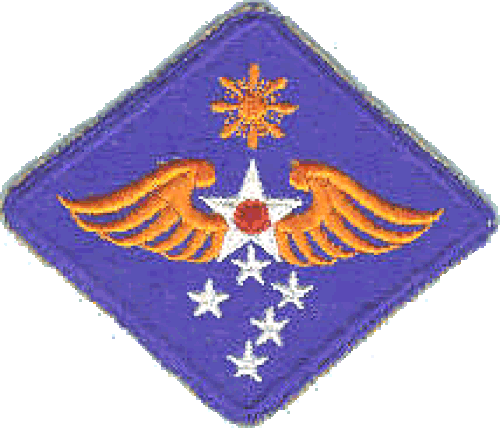
1942年11月4日、第5空軍はパプアニューギニアで日本軍に対する継続的な作戦を開始し、ニューギニア戦役(1942年~1945年)の重要な構成要素となった。第5空軍はフィリピン戦役(1944年~1945年)および沖縄戦(1945年)でも日本軍と交戦した。
第5空軍は、中部太平洋の第13空軍、ハワイの第7空軍とともに、 1944年8月3日に新設された米国極東空軍(FEAF)に配属された。FEAFは米国陸軍極東軍の指揮下にあり、連合空軍南西太平洋方面司令部としての役割を果たした。1945年までに、3つの番号付き空軍は太平洋全域の作戦を支援していた。FEAFは、太平洋における米国戦略空軍(USSTAF)の機能的同等物であった。

凡例:ACG – 航空コマンドー群、FG – 戦闘機群、NFS – 夜間戦闘飛行隊、BG (L) – 軽爆撃群、BG (M) – 中型爆撃群、BG (H) – 重爆撃群、RG – 偵察群、CCG – 戦闘貨物群、TCG – 輸送機群
戦争終結時、第5空軍は3,445機の撃墜という比類なき記録を誇り、その中心には国内屈指の戦闘機エースであるリチャード・ボン少佐とトーマス・マクガイア少佐がおり、それぞれ40機と38機の撃墜を記録した。また、第5空軍の10人の名誉勲章受章者のうち2人がこの2人であった。
第二次世界大戦終結直後の8月、第5空軍は連合国占領軍の一員として、1945年9月25日頃に日本の入間川空軍基地に移転した。同部隊は1950年12月1日まで日本に駐留し、占領任務を遂行した。


1950年、第5空軍は再び招集され、朝鮮戦争中は国連軍の主力戦闘航空部隊となり、 1953年に正式に戦争を終結させた朝鮮戦争休戦協定の締結に貢献した。
6月25日未明、北朝鮮は突如として韓国に対し総攻撃を開始した。侵攻に迅速に対応した第5空軍部隊は、ソウル上空で航空支援を行った。同部隊は1950年12月1日にソウルへ移転し、1954年9月1日まで韓国に駐留した。
この第一次ジェット戦争において、第5空軍に配属された部隊は、前例のない14.5対1という驚異的な戦果を挙げた。1953年に休戦協定が締結されるまでに、第5空軍は62万5000回以上の出撃を行い、北朝鮮と中国の航空機953機を撃墜した。また、近接航空支援は敵部隊の全死傷者の47%を占めた。
38名の戦闘機パイロットがエースとして認定され、その中にはアメリカ初のジェット機エースであるジェームズ・ジャバラ中佐や、朝鮮戦争で16機撃墜を記録したエースパイロット、ジョセフ・マコーネル大尉も含まれていた。さらに、第5空軍の隊員4名に名誉勲章が授与された。特筆すべきパイロットとしては、交換プログラムの一環として第5空軍で飛行した海兵隊のジョン・グレン少佐も挙げられる。
朝鮮戦争の終結に伴い、第5空軍は1954年に平時の通常の態勢に戻った。この戦争中に1200人が戦死し、368人が負傷したと推定されている[ 5 ]。
第5空軍は、日本の航空自衛隊と韓国空軍の設立において重要な役割を果たした。これらの活動やその他の平時における取り組みは、トンキン湾事件がベトナム戦争の勃発につながるまでの10年間続いた。
第5空軍は、南ベトナムとラオスにおける8年間の戦闘作戦において、航空機、乗組員、支援要員、物資を提供した。1972年以来、同司令部は、1983年の大韓航空007便撃墜事件に最初に現場に駆けつけたことから、1990年の湾岸戦争における人員と物資の派遣に至るまで、様々な問題において積極的または支援的な役割を果たしてきた。
この時期、第五空軍の規模も変化した。 1986年に第七空軍が創設されると、第五空軍は朝鮮半島から撤退し、日本との発展途上にある二国間関係の維持に力を注ぐようになった。
第5空軍は、 1995年の阪神・淡路大震災や1997年のグアムにおける超大型台風パカなど、国内外の自然災害に対応してきた。第5空軍は、地域全体で発生した洪水、台風、火山噴火、地震の被災者に対し、支援の手を差し伸べてきた。
第432戦術戦闘航空団は、 1984年7月1日から1994年10月31日まで三沢基地からF-16戦闘機を運用していた。同航空団の解隊に伴い、人員、航空機、その他の資産は第35戦闘航空団の再編に活用された。
2024年末現在、第5空軍の主要構成部隊は、沖縄県嘉手納空軍基地の第18航空団、三沢空軍基地の第35戦闘航空団、横田空軍基地の第374空輸航空団である。[ 6 ]嘉手納空軍基地には、F-15戦闘機、ボーイングKC-135空中給油機、E-3早期警戒管制機、HH-60Gペイブホーク救難ヘリコプターを含む、同軍最大の戦闘航空団である第18航空団が駐屯している。三沢空軍基地の第35戦闘航空団には、敵防空網制圧専用のブロック50型を運用する2個F-16飛行隊が含まれている。第374空輸航空団は、横田空軍基地に拠点を置いている。
A 2017 study by two US Navy commanders concluded that a surprise Chinese ballistic missile attack against airbases in Japan would destroy more than 200 U.S. aircraft on the ground.[7]
Fifth Air Force is not to be confused with a second "Fifth" air force created as a temporary establishment to handle combat operations after the outbreak of hostilities on 25 June 1950, in Korea. This numbered air force was established as Fifth Air Force, Advance, and organized at Itazuki AB, Japan, assigned to Fifth Air Force, on 14 July 1950. It moved to Taegu AB, South Korea, on 24 July 1950, and was redesignated Fifth Air Force in Korea at the same time. After moving, it apparently received command control from U.S. Far East Air Forces. The establishment operated from Pusan, Taegu, and Seoul before being discontinued on 1 December 1950.
Commands
Divisions
Wings (incomplete listing)
Groups

 This article incorporates public domain material from theAir Force Historical Research Agency