
Loading article…
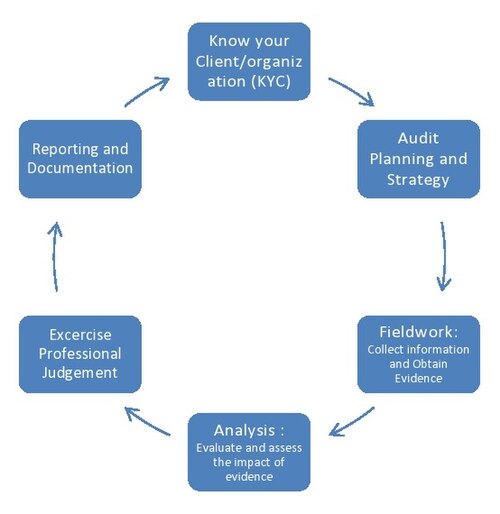
監査とは、「営利目的であるか否か、規模や法的形態に関わらず、意見表明を目的として実施される、あらゆる事業体の財務情報の独立した調査」である。[ 1 ]監査はまた、法律で義務付けられているとおり、事業体によって会計帳簿が適切に維持されていることを確認することも目的としている。監査人は、目の前の命題を検討し、証拠を入手し、調査結果を文書化し、監査報告書で命題を評価する。[ 2 ]
監査は、対象事項に重大な虚偽表示がないことを様々な利害関係者に第三者として保証するものです。[ 3 ]この用語は、法人に関する財務情報の監査に最も頻繁に適用されます。その他、一般的に監査される分野には、秘書業務とコンプライアンス、内部統制、品質管理、プロジェクト管理、水管理、省エネルギーなどがあります。監査の結果、利害関係者は、対象事項に対するリスク管理、統制、ガバナンスの有効性を評価し、改善することができます。
近年、監査は公共生活や企業生活の多くの分野にまで拡大している。マイケル・パワー教授は、この監査業務の拡大を「監査協会」と呼んでいる。[ 4 ]
最適監査とは、監査には費用がかかることを考慮に入れ、委託者にとって最適な監査方針を構築することを目的とする、経済理論とコンピュータ科学における研究分野である。
「監査」という言葉は、ラテン語の「聞く」という意味の「audire 」に由来する。 [ 5 ]
監査は古代から安全策として行われてきた。[ 6 ]中世、手書きの簿記が主流だった時代には、イギリスの監査人は帳簿の読み上げを聞いて、組織の職員が怠慢や不正を行っていないかを確認していた。[ 7 ] 1951年、モイヤーは監査人の最も重要な義務は不正を発見することだと指摘した。[ 8 ]チャットフィールドは、初期の米国における監査は主に簿記の詳細の検証と見なされていたことを記録している。[ 9 ]
ソビエト連邦共産党中央監査委員会(ロシア語: Центральная ревизионная комиссия КПСС)は、1921 年から 1990 年まで運営されました。
情報技術監査、または情報システム監査とは、情報技術(IT)インフラストラクチャ内の管理統制を検証するものです。得られた証拠を評価することで、情報システムが資産を保護し、データの整合性を維持し、組織の目標達成に向けて効果的に運用されているかどうかを判断します。これらの監査は、財務諸表監査、内部監査、またはその他の証明業務と併せて実施される場合があります。
財務情報を偽造する強いインセンティブ(課税、不当販売、その他の形態の詐欺を含む)があるため、個人的な利益のために財務情報を悪用する力を持つ多くの組織にとって、監査は法的要件となっています。従来、監査は主に企業や事業の財務システムや財務記録に関する情報の入手と関連付けられていました。財務監査では、企業や法人が法的義務やその他の適用される法定慣習や規制を遵守しているかどうかも評価します。[ 10 ] [ 11 ]
財務監査は、情報の妥当性と信頼性を確認するとともに、システムの内部統制を評価するために実施されます。第三者監査人は、対象となる個人、組織、またはシステムについて意見を表明します。財務諸表に対する意見は、得られた監査証拠に基づいて決定されます。
法定監査とは、企業または政府の財務諸表および記録の正確性を法的に義務付けられた審査のことです。法定監査の目的は、銀行残高、簿記記録、財務取引などの情報を検証することにより、組織がその財務状況を公正かつ正確に表現しているかどうかを判断することです。
Due to constraints, an audit seeks to provide only reasonable assurance that the statements are free from material error. Hence, statistical sampling is often adopted in audits. In the case of financial audits, a set of financial statements are said to be true and fair when they are free of material misstatements – a concept influenced by both quantitative (numerical) and qualitative factors. Recently, the argument that auditing should go beyond just true and fair is gaining momentum,[12] and the US Public Company Accounting Oversight Board has come out with a concept release on the same.[13]
Cost accounting is a process for verifying the cost of manufacturing or producing of any article, on the basis of accounts measuring the use of material, labor or other items of cost. The term "cost audit" refers to a systematic and accurate verification of the cost accounts and records, and checking for adherence to the cost accounting objectives. According to the Institute of Cost and Management Accountants, a cost audit is "an examination of cost accounting records and verification of facts to ascertain that the cost of the product has been arrived at, in accordance with principles of cost accounting."
In most nations, an audit must adhere to generally accepted standards established by governing bodies. These standards assure third parties or external users that they can rely upon the auditor's opinion on the fairness of financial statements or other subjects on which the auditor expresses an opinion. The audit must therefore be precise and accurate, containing no additional misstatements or errors.
In the US, audits of publicly traded companies are governed by rules laid down by the Public Company Accounting Oversight Board (PCAOB), which was established by Section 404 of the Sarbanes–Oxley Act of 2002. Such an audit is called an integrated audit, where auditors, in addition to an opinion on the financial statements, must also express an opinion on the effectiveness of a company's internal control over financial reporting, in accordance with PCAOB Auditing Standard No. 5.[14]
また、統一されたコンプライアンス資料を使用する新しいタイプの統合監査も利用可能になりつつあります(規制遵守のセクションにある「統一コンプライアンス」を参照)。規制の増加と業務の透明性の必要性から、組織は単一の監査イベントで複数の規制や基準を網羅できるリスクベースの監査を採用しています。これは、監査と監査ホスティングの両方のリソースで重複した作業を行うことなく、必要なすべてのガバナンス要件を満たすこと を保証する、一部のセクターにおける非常に新しいアプローチです。
評価の目的は、何かを測定したり、その価値を計算したりすることです。監査人の目的は、財務諸表がすべての重要な点で公正に表示され、重要な虚偽表示がないかどうかを判断することです。評価を作成するプロセスには独立した専門家による監査が含まれる場合がありますが、その目的は、財務諸表の公正性や業績の質について意見を表明することではなく、測定値を提供することです。[ 15 ]
財務諸表および非財務情報(コンプライアンス監査を含む)の監査人は、さまざまなカテゴリーに分類できます。
最も一般的に使用されている外部監査基準は、米国公認会計士協会(AICPA)の米国GAASと、国際監査・保証基準(IAAS)によって策定された国際監査基準(ISA)である。
人工知能と自動化の最近の進歩は、監査実務を変革しています。監査法人は現在、統計サンプルではなくデータセット全体を分析するためにデータ分析と機械学習技術を適用し、異常検出と効率性を向上させています。しかし、これらの技術は、データ品質、アルゴリズムの偏り、専門家の判断の必要性に関連する課題ももたらします。[ 19 ] [ 20 ]
パフォーマンス監査とは、政府機関や非営利団体のプログラム、機能、運営、または管理システムや手順を独立して調査し、利用可能なリソースの活用において、その団体が経済性、効率性、有効性を達成しているかどうかを評価するものです。安全性、セキュリティ、情報システムのパフォーマンス、環境問題などが、監査の対象となることが増えています。[ 21 ]現在では、セキュリティ監査や情報システム監査を専門とする監査専門家が存在します。非営利団体や政府機関では、使命目標の達成度を検証するパフォーマンス監査の必要性が高まっています。
Quality audits are performed to verify conformance to standards through reviewing objective evidence. A system of quality audits may verify the effectiveness of a quality management system. This is part of certifications such as ISO 9001. Quality audits are essential to verify the existence of objective evidence showing conformance to required processes, to assess how successfully processes have been implemented, and to judge the effectiveness of achieving any defined target levels. Quality audits are also necessary to provide evidence concerning reduction and elimination of problem areas, and they are a hands-on management tool for achieving continual improvement in an organization.
To benefit the organization, quality auditing should not only report non-conformance and corrective actions but also highlight areas of good practice and provide evidence of conformance. In this way, other departments may share information and amend their working practices as a result, also enhancing continual improvement.
A project audit provides an opportunity to uncover issues, concerns and challenges encountered during the project lifecycle.[22] Conducted midway through the project, a project audit provides the project manager, project sponsor and project team an interim view of what has gone well, as well as what needs to be improved to successfully complete the project. If done at the close of a project, the audit can be used to develop success criteria for future projects by providing a forensic review. This review identifies which elements of the project were successfully managed and which ones presented challenges. As a result, the review will help the organization identify what it needs to do to avoid repeating the same mistakes on future projects.
Projects can undergo two types of project audits:[21]
Other forms of project audits:
Formal: Applies when the project is in trouble, and the sponsor agrees that the audit is needed, sensitivities are high, and conclusions must be proved via sustainable evidence.
非公式:新しいプロジェクトマネージャーが配置され、プロジェクトに問題がある兆候がなく、プロジェクトが計画どおりに進んでいるかどうかを報告する必要がある場合に適用されます。非公式監査は公式監査と同じ基準を適用できますが、レポートがそれほど形式的または詳細である必要はありません。[ 23 ]
エネルギー監査とは、建物、プロセス、またはシステムにおけるエネルギーの流れを検査、調査、分析し、エネルギー節約を図ることで、出力に悪影響を与えることなくシステムへのエネルギー投入量を削減するものです。
業務監査とは、クライアント企業の業務運営を調査するものです。この監査では、監査人はクライアント企業の経営陣が目標を達成するために行っている業務の効率性、有効性、経済性を徹底的に調査します。業務監査は、内部統制の問題にとどまらず、経営陣が満足のいく内部統制システムに従うだけで目標を達成できるわけではないため、より広範な範囲を対象とします。業務監査は、商業的に不健全な可能性のあるあらゆる事項を網羅します。業務監査の目的は、3つのE、すなわち有効性(資源の無駄を最小限に抑えながら正しいことを行うこと)、効率性(可能な限り短い時間で作業を行うこと)、経済性(業務運営における利益とコストのバランス)を検証することです。
自己評価による統制は、業務監査を完了するための一般的なツールである。[ 24 ]
フォレンジック会計、フォレンジック会計士、またはフォレンジック会計とも呼ばれるフォレンジック監査は、会計と調査の両方を専門とする会計士が、不正行為、資金の紛失、および過失を明らかにするために行う調査監査です。